She Came on a Fiancée Visa to Florida — Her Husband’s Reptile Business Was Smuggling Endangered Tortoises
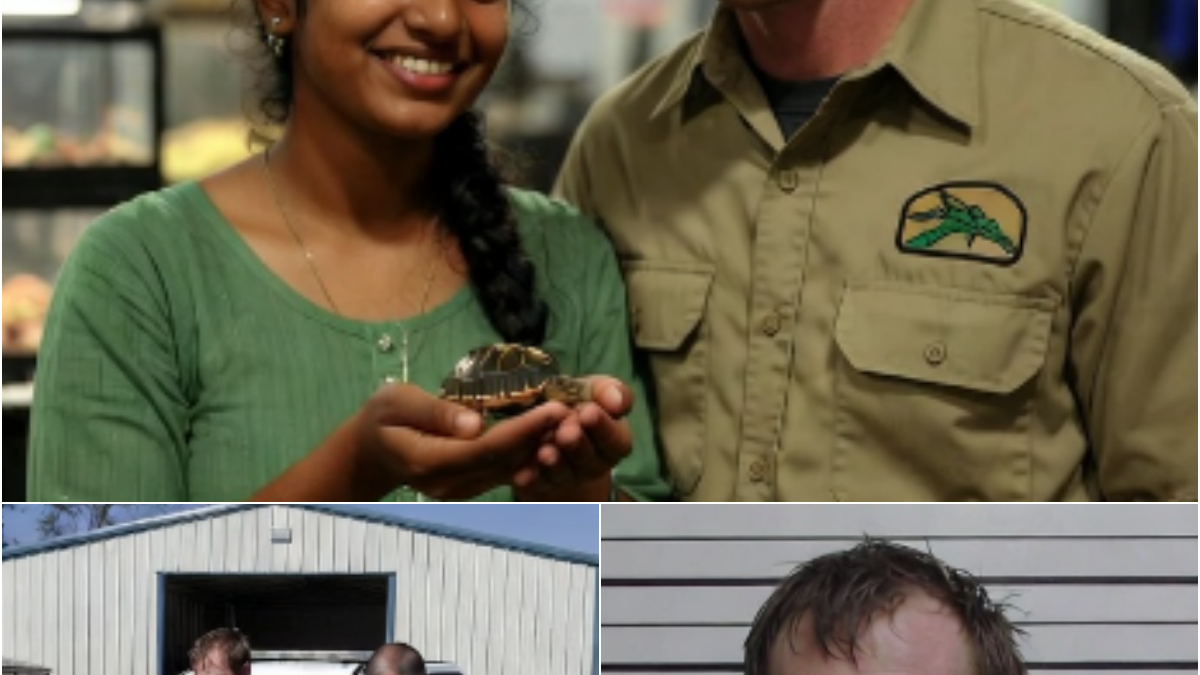
There is a particular kind of invisibility that settles over a household once a marriage has closed its front door. Whatever happens inside — an ordinary evening, a quiet cruelty, an entire criminal enterprise conducted out of a converted garage — becomes visible to exactly one outside witness at a time, usually the spouse who married in from somewhere else and has no independent life yet built around the house to compare it against. This is a story about what one of those witnesses eventually saw, in a garage in central Florida, and what it cost her to have seen it.
Ritu Sharma was born in Jaipur, Rajasthan, in 1996, the daughter of a schoolteacher and a government clerk, and grew up with what she would later describe, in a journal entry recovered during the investigation into her death, as “a particular fondness for anything with a shell” — an affection that began with a childhood pet tortoise her grandfather had kept in the family’s courtyard and grew, over the years, into a genuine interest in zoology, one she pursued as far as a bachelor’s degree in life sciences from a college in Jaipur, though family finances and, later, marriage, kept her from the graduate studies she had once hoped to continue toward. Her college thesis, a former professor recalled after her death, had focused specifically on habitat loss among reptile species in Rajasthan’s dry scrubland, a subject she had chosen, she told him at the time, because “everyone worries about the animals people find beautiful, and nobody worries enough about the ones that just look like rocks.”
She met Kyle Draven in 2019 through an online introduction service catering specifically to Indian-American matches, a service her aunt in Houston had recommended after Ritu, then twenty-three, had expressed interest in eventually settling abroad. Kyle, thirty-four at the time, ran a reptile breeding and sales business out of a property in Ocala, Florida — a legitimate operation, on paper, licensed through Florida’s Fish and Wildlife Conservation Commission to breed and sell a range of captive-bred reptiles to the pet trade, a business Ritu found, when Kyle described it during their early video calls, genuinely appealing given her own long-standing interest in exactly this kind of animal. Her mother, watching one of the video calls over Ritu’s shoulder, later recalled remarking that it seemed like “a strange kind of luck, that the one thing she’d always loved might actually become part of her life abroad” — a comment she repeated, unprompted, to investigators years later, unable to fully explain why it had stayed with her so clearly.
They married in Jaipur in early 2020, a modest ceremony delayed several months by pandemic travel restrictions, and Ritu’s K-1 fiancée visa petition, filed that same year, was approved in mid-2021, once international processing resumed. She landed in Orlando in August 2021, twenty-five years old, and the couple married formally at the Marion County Courthouse the following month, within the ninety-day window the K-1 visa requires.
The reptile business, Ritu discovered within her first several months in Ocala, was considerably larger and more lucrative than Kyle had described during their courtship — a sprawling operation of breeding enclosures housing several hundred animals at any given time, supplying both direct retail customers and a network of pet store wholesalers across the Southeast. She began helping with the business almost immediately, first with basic animal husbandry tasks she genuinely enjoyed, then, within a year, with the administrative side — inventory tracking, shipping logistics, and correspondence with what Kyle described, vaguely, as “specialty suppliers.”
The specialty suppliers, Ritu came to understand gradually over the course of 2022 and into 2023, were not always the domestic breeders their invoices claimed to be. A subset of the animals moving through the business — most conspicuously, a recurring shipment of Indian star tortoises, a species native to the dry regions of India and Sri Lanka and listed under CITES Appendix I, the strictest international protection category, prohibiting commercial international trade in wild-caught specimens entirely — arrived at irregular intervals from contacts Kyle communicated with through an encrypted messaging app rather than the business’s normal supplier channels, packaged and labeled, when they arrived, to resemble ordinary domestic livestock shipments rather than what customs declarations would have required them to be.
Ritu’s own background gave her a specific and uncomfortable clarity about what she was looking at. Indian star tortoises, she knew from her own zoology coursework years earlier, were being poached from wild populations across India at rates conservationists considered acutely alarming, smuggled out through a well-documented international trafficking network that fed, disproportionately, into the American and Southeast Asian exotic pet markets — a market her own husband’s business, she gradually understood, was not merely adjacent to but actively supplying.
She raised the subject directly with Kyle for the first time in March 2023, after finding a shipment of eleven juvenile star tortoises in the garage’s back enclosure, animals whose care instructions, handwritten on an index card taped to the enclosure, used terminology — “recently landed,” “acclimating from transit stress” — that made unmistakably clear these were not captive-bred specimens at all. Kyle’s explanation, she later told her sister in a phone call the following week, was that the shipment represented “a one-time opportunity” from a supplier he trusted, a story she did not believe even as she recorded it, by her sister’s account, “in the careful, neutral voice she used when she was building a case for something rather than actually asking a question.”
Ritu began documenting the business’s irregular shipments starting in April 2023, initially, according to the journal recovered after her death, out of a desire to understand the full scope of what she’d married into before deciding what to do about it, and increasingly, as the pattern became undeniable, out of a growing conviction that she needed to report it — to Florida Fish and Wildlife, to federal authorities, or, at minimum, to her own family, whom she had not yet told any of this.
Her journal entries through the summer of 2023 tracked a mounting internal conflict that her sister, in later testimony, described as consistent with everything Ritu had told her by phone during the same period: a fear, repeated across several entries, that reporting Kyle’s business would end not just the marriage but her ability to remain in the country at all, since her status, three years into the K-1-to-marriage-based process, still rested on a joint I-751 petition she and Kyle had not yet filed, due to expire that October. A second, distinct fear ran alongside it — one her sister described, more simply, as “she was starting to be afraid of him specifically, not just afraid of what leaving would cost her.”
Ritu confided the full extent of what she’d documented to exactly one person outside her own family: a Florida Fish and Wildlife Conservation Commission volunteer she’d met at a reptile expo in September 2023, a woman named Denise Okafor who ran a small nonprofit focused on invasive and trafficked species awareness and who, over several subsequent coffee meetings, gently encouraged Ritu to consider contacting the agency’s law enforcement division directly, offering to accompany her if she decided to. Ritu told Denise, at their final meeting on October 11th, 2023, that she intended to do exactly that “within the week, once I have the last of my documentation organized.”
Ritu Sharma was found dead at the Ocala property on the evening of October 19th, 2023, by Kyle himself, who called 911 and reported finding her collapsed near the reptile enclosures, describing what he characterized to responding paramedics as a probable accidental fall resulting in head trauma. The initial death investigation, conducted by the Marion County Sheriff’s Office, treated the scene largely consistent with this account for its first several weeks — an isolated rural property, no witnesses, and injuries the initial responding deputies did not immediately flag as inconsistent with an accidental fall onto the concrete enclosure flooring.
Denise Okafor learned of Ritu’s death through a mutual reptile-community contact ten days later and, alarmed by the timing relative to their final conversation, contacted the Marion County Sheriff’s Office directly to describe what Ritu had told her — the documented shipments, the intended report to Fish and Wildlife, the specific date, barely a week before her death, on which she had described her plan to formally come forward.
Detective Sergeant Bill Harmon reopened the case in November 2023 based on Okafor’s account, requesting a more detailed forensic review of the injury pattern than the initial responding deputies had performed. The medical examiner’s supplemental report, delivered in January 2024, identified injury characteristics — specifically, a distinct secondary impact pattern inconsistent with a single fall — that reclassified the death as a probable homicide staged to resemble an accident.
A subsequent search of the property, conducted under warrant in February 2024, recovered Ritu’s journal, hidden inside a storage container in the garage rather than the house itself, along with her personal laptop, on which investigators recovered the full documentation of the trafficked shipments she had been compiling, timestamped continuously through October 18th, 2023 — the day before her death. Federal Fish and Wildlife Service agents, brought in once the trafficking dimension became clear, separately confirmed, through the encrypted messaging records recovered from Kyle’s own devices, an ongoing smuggling relationship spanning at least fourteen shipments of CITES Appendix I species between 2021 and 2023.
Kyle Draven was arrested on March 4th, 2024, and charged with murder at the state level and, in a separate federal indictment, with multiple counts of wildlife trafficking under the Lacey Act and the Endangered Species Act. His state trial opened at the Fifth Judicial Circuit Court in Marion County in September 2025. The prosecution’s case rested on the reclassified forensic findings, Ritu’s own journal establishing both the trafficking evidence and her documented intent to report it, and Denise Okafor’s testimony placing the timeline of that intent squarely in the week before her death.
The defense argued the forensic reclassification remained subject to reasonable dispute and that no direct physical evidence placed Kyle at the specific moment of the fatal injury, a position that grew considerably harder to sustain once the prosecution introduced a recovered text message, sent from Kyle’s phone to an associate on October 18th, reading, in full, “R is going to blow the whole thing up, need to figure out what to do,” sent less than twenty-four hours before her death.
The jury deliberated for three days and convicted Kyle Draven of murder. He was sentenced in December 2025 to life imprisonment without parole. His separate federal wildlife trafficking case, tried afterward given the sequencing of state and federal proceedings, resulted in an additional conviction and a fifteen-year federal sentence, to run consecutively, in June 2026.
The eleven star tortoises recovered from the property in the initial 2024 search, along with several dozen additional trafficked animals identified across the business’s full inventory, were transferred to a federally accredited reptile conservation facility in Central Florida, where a veterinary team has spent the better part of two years attempting to rehabilitate animals whose wild-caught origins left many with parasitic loads and stress-related health conditions uncommon in captive-bred specimens. Roughly a third have since been included in an international repatriation program working, slowly, to return healthy specimens to protected habitat range in India, a process conservation officials involved describe as unlikely to fully undo the damage of the trafficking network Kyle’s business represented, but as the closest available approximation of restitution for a species that cannot itself testify to what was done to it.
Denise Okafor has continued her nonprofit’s work and speaks now, when invited, at conservation and law enforcement training sessions about the case, framing it, in her own words, not primarily as a wildlife trafficking case but as “a reminder that the person standing closest to a crime like this one is very often not a criminal herself, but someone the crime depends on staying quiet, and that the space between deciding to stop being quiet and actually managing it can be the most dangerous space a person ever stands in.”
Ritu’s own journal, portions of which her family has since donated to a conservation advocacy archive with her sister’s permission, ends on October 18th, 2023, with a single line, unremarkable in isolation and unbearable in context, describing nothing more than a plan for the following day: Tomorrow I finish organizing the folder. Then I call Denise.








