She Built a Crypto Empire While Waiting for Her Visa — Her Own Community Lost $38 Million
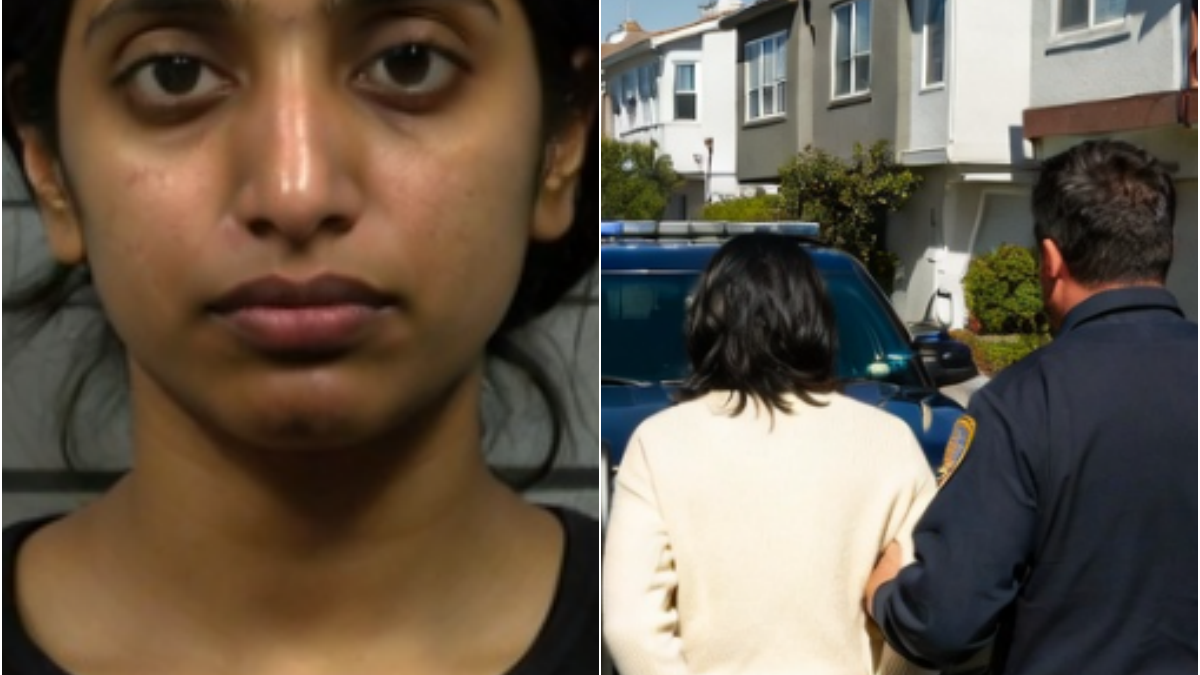
There is a specific vulnerability that exists inside trust economies — communities bound by shared origin, shared language, shared temples and weddings and WhatsApp groups — that has nothing to do with financial sophistication and everything to do with the simple fact that people extend a kind of verification to someone who looks and sounds like family that they would never extend to a stranger. Affinity fraud, the term for exploiting this specifically, is not a new phenomenon. What changes, generation to generation, is only the vehicle. This is a story about the vehicle being cryptocurrency, the community being the Indian diaspora across three American states, and the person running it being someone many of the eventual victims had, for years, watched grow up in photographs her own father proudly shared.
Pallavi Iyer was born in Bengaluru, Karnataka, in 1994, the only daughter of Suresh Iyer, an electronics engineer who immigrated to the United States on an H-1B visa in 2001, obtained a green card through employer sponsorship in 2006, and settled in Cupertino, California, building a stable career at a semiconductor firm while Pallavi remained in Bengaluru with her mother, the two visiting Suresh during summer breaks throughout her childhood in an arrangement the family had always understood as temporary, pending the day Suresh’s own status stabilized enough to bring them permanently. Those summer visits, by Pallavi’s own later description in an early YouTube video about her upbringing, had left her with “a specific kind of homesickness for a country I hadn’t actually lived in yet,” a line she repeated often enough in her content over the years that several former viewers, interviewed after her arrest, cited it as one of the details that had made her feel, to them, like someone whose journey mirrored their own family’s.
Suresh filed an F2B petition for Pallavi in 2013, the category covering unmarried adult children of lawful permanent residents, once she turned twenty-one and aged out of the derivative status she would otherwise have held as a minor dependent on any petition filed earlier. The F2B backlog for India, like several other family categories in this pattern, ran long — in Pallavi’s case, just over eight years between filing and an available visa number, a wait she spent in Bengaluru completing a finance degree at a respected local college, working briefly at an investment bank in a junior analyst role she found, by her own account, “competent but invisible,” and, by 2018, building an increasingly substantial personal brand as a financial content creator, first on YouTube and then, as the platform’s algorithm rewarded her specific niche, increasingly on Instagram and a dedicated Telegram channel that would eventually become the fund’s primary recruitment engine.
Her content, through 2018 and 2019, was conventional enough — explainer videos on mutual funds, basic personal finance advice aimed at young Indian professionals, delivered with a polish and confidence that built her a following approaching half a million by early 2020. What changed, starting in mid-2020, was the subject matter: cryptocurrency, then entering its first major wave of mainstream Indian retail interest, and a specific claim Pallavi began making with increasing frequency across her channels — that she had developed, through her finance background and a proprietary trading algorithm she described in vague but confident technical language, a cryptocurrency investment vehicle capable of delivering consistent monthly returns in the range of 4 to 6 percent, dramatically outperforming any legitimate investment product available to ordinary retail investors.
The fund, branded Suvarna Capital — suvarna meaning gold, a naming choice her marketing materials leaned into heavily — launched formally in late 2020, structured as a pooled cryptocurrency investment vehicle accepting contributions primarily from within Pallavi’s own audience, an audience skewing heavily toward the global Indian diaspora specifically, drawn not just to the financial pitch but to the specific comfort of investing alongside and through someone who spoke their language, understood their families’ particular relationship to risk and savings, and had, through years of consistent content, built exactly the kind of parasocial trust that affinity fraud has always depended on.
Suresh Iyer, watching his daughter’s growing online success from Cupertino with considerable pride throughout this period, had himself introduced several colleagues and members of the local Kannada cultural association to Suvarna Capital in early 2021, a fact that would later become one of the most difficult details of the entire case for him personally to sit with, though nothing in the eventual investigation suggested he had any awareness of what the fund actually was.
What the fund actually was, investigators would later establish in detail, was a classical Ponzi structure dressed in cryptocurrency terminology sophisticated enough to obscure the underlying mechanism from an audience largely unfamiliar with the technical distinctions that might otherwise have raised suspicion. The “proprietary trading algorithm” did not exist in any functional form. Early investor returns, paid out reliably and on schedule through 2021 and into 2022 — the specific feature that generated the glowing testimonials and word-of-mouth referrals that drove the fund’s rapid growth — were paid not from any actual trading profit but directly from the capital contributions of newer investors, the defining and unsustainable mechanism of every Ponzi scheme regardless of the specific asset class it claims to trade.
By the time the fund collapsed in early 2023, it had raised an estimated $38 million from just over 1,900 individual investors, the overwhelming majority of them Indian or Indian-American, spread across a network built almost entirely through personal referral chains within cultural associations, temple communities, and family WhatsApp groups across California, New Jersey, and Texas.
Pallavi did not run the fund’s actual technical infrastructure alone. A US-based partner, Vikram Oberoi, a crypto developer she had met through an industry conference in Dubai in 2019 and become romantically involved with over the following two years, managed the wallet infrastructure and the increasingly complex task of obscuring the fund’s actual cash flows as the gap between incoming and outgoing capital widened. Their relationship, conducted largely across the same distance separating Pallavi from her own father throughout this period, deepened alongside the fund’s growth, and by 2022 the two were engaged, planning a wedding they intended to hold once Pallavi’s long-delayed visa finally allowed her to relocate permanently to the United States and to Vikram, who was based in Austin.
The fund’s collapse, when it came, followed a familiar pattern — a wave of withdrawal requests in early 2023, triggered by a broader cryptocurrency market downturn that reduced new investor inflow below the threshold needed to keep paying existing withdrawals, exposing the underlying insolvency the scheme had depended on nobody testing simultaneously. Suvarna Capital halted all withdrawals in March 2023, citing “temporary liquidity constraints related to market conditions,” a statement that held for approximately six weeks before the fund stopped communicating with investors entirely.
Pallavi’s F2B priority date became current that same year, in the autumn of 2023, an almost unbearable coincidence of timing that meant her visa interview at the US consulate in Chennai took place in October 2023, seven months after Suvarna Capital had stopped paying investors and while an increasingly organized group of defrauded investors — many of them, again, personally known to her own father — had already begun filing complaints with the SEC and the FBI’s Internet Crime Complaint Center.
The visa itself was issued before any formal criminal referral had reached a stage sufficient to flag her at the consular level, a gap her eventual defense attorney would later argue reflected the genuinely staggered pace of financial fraud investigations relative to consular processing timelines rather than any deliberate evasion on Pallavi’s part. She landed in San Francisco in November 2023, reuniting with her father after a decade of a relationship conducted almost entirely across the distance the F2B backlog had imposed, and joining Vikram in Austin the following month.
The FBI and SEC’s joint investigation, building steadily through 2023 on the strength of investor complaints and blockchain forensic analysis tracing Suvarna Capital’s wallet activity, identified the fund’s Ponzi structure conclusively by early 2024, and identified both Pallavi and Vikram as its operators through a combination of wallet ownership records, the fund’s own marketing materials bearing Pallavi’s face and voice throughout, and financial records showing substantial personal transfers from investor funds into both their personal accounts, totaling, across the fund’s full operation, just over $6.1 million diverted for personal use rather than either investor returns or any actual investment activity.
Both were arrested in April 2024, five months after Pallavi’s arrival in the United States, and charged in the U.S. District Court for the Northern District of California with wire fraud, securities fraud, and money laundering. Their trial, severed given the differing scope of documented involvement, opened for Pallavi first, in January 2025.
The prosecution’s case centered on the fund’s marketing materials, walked through methodically alongside the blockchain forensic trail establishing exactly where investor capital actually went, and on victim testimony from several investors — including, in a moment the courtroom gallery found difficult to watch, two members of Suresh Iyer’s own Kannada cultural association, who testified to the specific trust Pallavi’s family connection to their community had engendered, one stating directly that she had invested her retirement savings “because Suresh’s daughter felt like someone’s daughter, not like a stranger asking for money.”
Pallavi’s attorney did not dispute the fund’s fraudulent structure. He argued for a distinction in culpability between Pallavi’s public-facing role and Vikram’s operational control of the actual fund mechanics, a distinction the jury did not find persuasive enough to outweigh the marketing evidence bearing her direct, sustained, and knowing participation throughout. The jury deliberated for four days and convicted her on all counts.
She was sentenced in April 2025 to twelve years in federal prison and ordered to pay restitution jointly with Vikram, convicted separately the following month and sentenced to fourteen years, reflecting his additionally established role in structuring the fund’s money laundering mechanisms. Combined restitution obligations of $38 million against the two defendants’ recovered assets — roughly $4.2 million, the bulk of it seized from accounts and property purchased with diverted investor funds — leaves the overwhelming majority of victims’ losses permanently unrecovered.
Pallavi’s newly issued green card, obtained just five months before her arrest, was placed into rescission proceedings on fraud-adjacent grounds tied to the criminal conviction rather than to the underlying petition itself, which remained, throughout, an entirely legitimate family reunification claim uncomplicated by anything her father had done or known.
Suresh Iyer resigned from his position at the semiconductor firm in mid-2024, citing what colleagues described as an inability to continue working alongside people whose retirement accounts his own daughter had emptied. He has since relocated from Cupertino to a smaller community in the Central Valley, and has, according to two former neighbors, stopped attending Kannada cultural association events entirely, a community he had belonged to for over two decades and that had, in the years before Pallavi’s arrival, been among the network’s most trusted and long-standing members — trust that her fund had, in the end, spent as thoroughly as it had spent the money itself.
We tend to think of financial fraud as something strangers do to us, a caution we teach specifically around unfamiliar names and unsolicited calls. What Suvarna Capital’s collapse demonstrated, to a community that had trusted it precisely because it did not feel like fraud from a stranger, is that the specific comfort of investing alongside people who share your language and your temple and your children’s playdates is not a form of due diligence. It is, when misused deliberately enough and for long enough, simply the most efficient delivery mechanism fraud has ever had.








