She Aged Out of Her Father’s Green Card Line at 21 — She Spent the Next Decade Living as Someone Who Had Died as a Baby
Look at this birth certificate. Issued in Sacramento County, California, in 1998, for a girl named Ashley Renee Coleman, who lived eleven days before a congenital heart defect ended her life in a hospital bassinet her parents had already begun decorating a nursery for. Ashley Coleman’s Social Security number was used, starting in 2019, to file tax returns, obtain a driver’s license, and eventually apply for a position requiring a federal background check — all twenty-one years after the actual Ashley Coleman had died, by a woman who had spent the first two decades of her own life under an entirely different name, in an entirely different country of origin, three thousand miles from Sacramento.
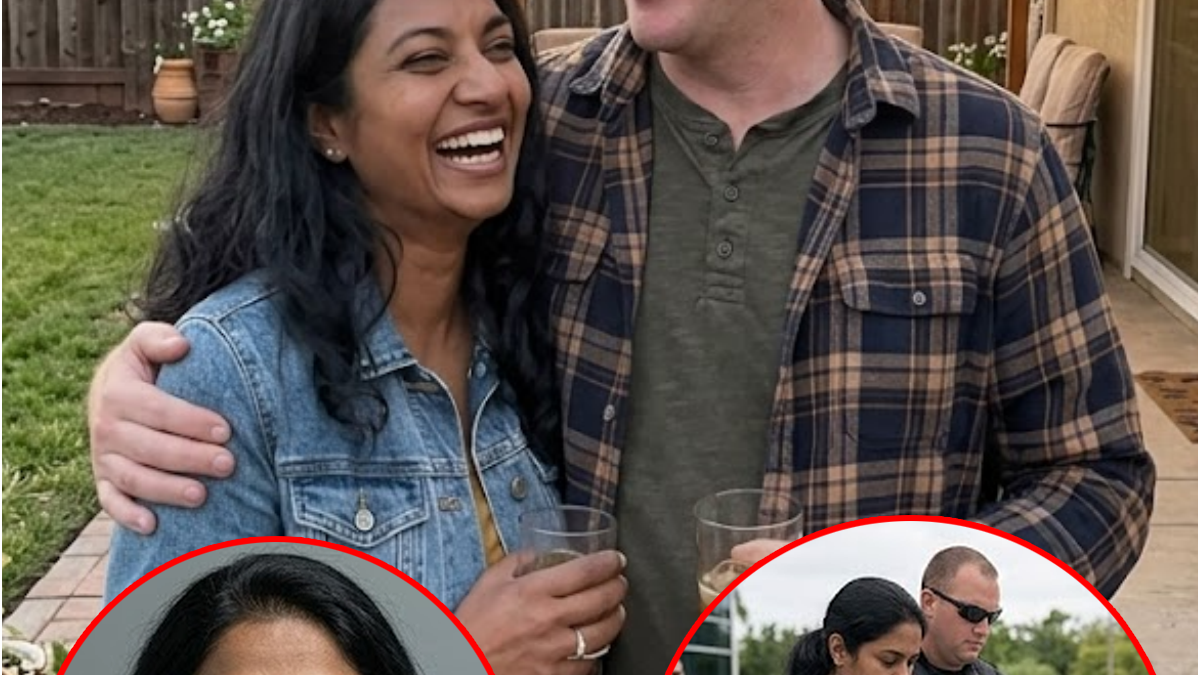
This is Riya Chandran. I think her case is one of the stranger and, in a specific way, saddest entries in this pattern, because the crime she eventually committed required almost nothing you’d normally associate with criminal intent. It required, mostly, a system that told her, on her twenty-first birthday, that the only country she had ever actually lived in was no longer legally required to have her.
Riya arrived in the United States in 2001, at age three, as the dependent child of her father, Vivek Chandran, an H-1B software engineer whose employer sponsored his own green card petition the following year, in 2002 — a petition that, given the combination of India’s country-specific backlog in the employment-based second preference category and the sheer volume of demand relative to annual visa allocation, would not actually result in an available visa number until 2019, seventeen years after it was filed. Vivek had taken the job, and the visa that came with it, believing, as he told his own family at the time, that the wait for permanent residency would run “maybe five years, seven at the outside” — an estimate that reflected the genuine consensus among immigration attorneys in the early 2000s, before the specific combination of demand and backlog that would eventually stretch Indian-national employment petitions into decades had fully revealed itself.
Riya, as her father’s dependent minor, held H-4 status throughout this entire period, growing up in Fremont, California, entirely and indistinguishably as an American child in every respect that mattered to her own daily life — American schools from kindergarten through high school, an American accent, American friends, a childhood memory that contained essentially nothing of the country she had technically never stopped being a citizen of. Her own mother, in an interview given years later, recalled that Riya had once, at around age nine, asked why the family still filled out a specific form every few years “if we already live here,” a question her mother had not, at the time, known how to answer in a way a nine-year-old could actually absorb. She turned twenty-one in 2019, the same year her father’s green card priority date finally became current.
The timing was the entire tragedy. Federal law defines a “child,” for derivative immigration purposes, as someone under twenty-one at the time a visa becomes available, with a specific formula — the Child Status Protection Act — designed to adjust for processing delays but which, in Riya’s specific case, given the exact sequence of dates involved, calculated her “CSPA age” at just over twenty-one by the time her father’s own green card was finally issued. She had aged out by a matter of months, a gap her father’s immigration attorney described to the family, in a meeting Riya remembered with unusual precision years later, as “the single most unfair arithmetic I have had to explain to a client in eleven years of doing this work.”
Riya’s own options at that point were narrow and, by any reasonable measure, inadequate to the actual shape of her life. She could apply for her own independent status — most plausibly an F-1 student visa, since she was, at the time, midway through a degree at a California state university — but doing so required demonstrating nonimmigrant intent, a legal requirement to show she did not intend to remain permanently, a standard her attorney told her would be genuinely difficult to satisfy honestly for someone who had lived in the country for eighteen consecutive years and had, in every meaningful sense, no other home to credibly claim an intent to return to.
She pursued the F-1 route anyway, successfully, and continued her degree under that status through 2020 and 2021. The deeper problem — that an F-1 visa offered no plausible long-term path forward, expiring with her degree and requiring, absent a subsequent employer-sponsored petition she had no clear route to securing quickly enough, an eventual departure from the only country she had any functional connection to — remained unresolved and, as her 2022 graduation approached, increasingly urgent.
It was during this period, in late 2021, that Riya was introduced, through an acquaintance from a support group for other “documented Dreamers” — the informal term that had emerged within immigrant advocacy circles for children in precisely her situation, raised in the US on long-pending derivative status only to age out before their family’s own green card process concluded — to a man who described himself as a document specialist, operating through encrypted channels and charging, for what he called “identity restructuring services,” a fee of $35,000.
The service he offered, and that Riya ultimately paid for in three installments over early 2022, was not a forged document in the conventional sense. It was access to the genuine, unused identity of Ashley Renee Coleman — an infant who had died in 1998 with a real, valid birth certificate on file with California’s vital records system, a Social Security number issued shortly after her birth and never subsequently flagged as deceased due to a data-matching gap between hospital death records and the Social Security Administration’s own database that, at the time, remained a known and exploitable vulnerability in a system federal auditors had flagged repeatedly for correction without it ever being fully closed.
I don’t think there’s a version of this decision that reads as anything other than what it was: identity theft, deliberate and sustained, built on the death of a child who could not consent to any of it and whose own family, when eventually contacted by investigators years later, had no idea their daughter’s identity had ever been used for anything at all. I also don’t think Riya, at twenty-four, weighing a choice between this and a departure to a country she had left as a toddler and had no adult memory of, experienced the decision as anything as simple as villainy. Her own later statement to investigators described it, starkly, as “the only version of staying that didn’t require someone else’s paperwork to say yes to me first.”
Riya began using Ashley Coleman’s identity in mid-2022, obtaining a California driver’s license under the name, opening bank accounts, and, by 2023, using it to apply for and accept a position as a data analyst at a mid-sized logistics company in the Bay Area — a job she performed, by every account from former colleagues, competently and without incident for nearly two years, living what amounted to an entirely ordinary American adult life under a name that had never belonged to her.
She married, in 2024, a man named Derek Fenwick, a colleague from the logistics company, who had no knowledge whatsoever of the identity’s actual origin and who would later describe, in a statement given after the case became public, learning the truth as “finding out the person I married for eighteen months might not have technically existed, while also somehow still being exactly the same person I’d fallen for.”
The fraud surfaced in early 2025, when Riya’s employer, expanding into a logistics contract requiring federal security clearance eligibility for several analyst positions, submitted her for a routine background investigation as part of the contract’s onboarding requirements — a standard process that, unlike an ordinary employment verification, cross-references a Social Security number against multiple federal databases with considerably more rigor, including, critically, the Social Security Administration’s own Death Master File, the specific database the original hospital-to-SSA reporting gap had historically failed to update reliably but which, following a 2021 modernization initiative prompted by a separate, unrelated fraud scandal, had by 2025 been substantially reconciled against decades of historical vital records data.
The background check flagged an immediate and irreconcilable conflict: the Social Security number Riya had used for three years belonged, according to the now-corrected federal database, to a person who had died in 1998. The logistics company’s security office referred the discrepancy to the FBI in March 2025.
FBI agents interviewed Riya in April 2025, and the underlying story — the aging out, the CSPA calculation, the F-1 route’s dead end, the $35,000 payment to the document specialist — emerged in full within a single interview, given, agents later noted, with an unusual lack of resistance that several involved would come to understand, over the following months, as something closer to exhaustion than genuine cooperation strategy.
Riya was charged in May 2025 with aggravated identity theft, Social Security fraud, and making false statements in connection with a federal contract eligibility process. She pleaded guilty to all counts in August 2025, and her sentencing, held that November, became one of the more closely watched proceedings among immigration advocacy circles that year, given how squarely her case sat at the center of a policy gap — the aging-out problem — that advocacy groups had been petitioning Congress to address, without success, for over a decade.
The sentencing judge, while bound by the aggravated identity theft charge’s mandatory two-year consecutive sentence, addressed the aging-out circumstances directly and at some length from the bench, noting that “nothing in this sentence should be read as this court’s endorsement of the immigration system’s treatment of individuals in the defendant’s original position, which this court finds genuinely difficult to defend as rational policy” — remarks that were widely quoted in subsequent advocacy coverage of the case, though they changed nothing about the sentence itself, which totaled three years and four months once the base fraud charges were added to the mandatory identity theft component.
The original Ashley Coleman’s family, located by investigators in Sacramento during the case’s preparation, issued a brief statement through an attorney expressing that “no explanation makes this easier to sit with, however sympathetic the circumstances,” a response several commentators covering the case noted as entirely understandable and, at the same time, a reminder that the sympathetic reading of Riya’s situation did not erase the real and separate harm done to a family that had spent twenty-seven years grieving a daughter whose identity had, without their knowledge, been quietly worn by someone else for the last three of them.
Riya will be deported upon completion of her sentence, to India, a country she has now visited exactly twice in her adult life, both times as part of the criminal proceeding’s documentation requirements rather than by any choice of her own. Derek Fenwick has filed for an annulment, on grounds his attorney has described only as “fairly obviously available, given the underlying facts,” a legal proceeding proceeding on a separate and considerably faster timeline than anything in Riya’s own immigration case ever has.
I keep thinking about the seventeen years — the actual length of her father’s green card wait, the specific number that made her, by a matter of months, too old for a system designed, on paper, to prevent exactly the kind of family separation it ended up causing anyway. Ashley Coleman did not choose any of this. Neither, in any meaningful sense of the word choice, did the three-year-old who landed in California in 2001 and grew up believing, correctly by every measure except one piece of arithmetic, that this was simply where she was from.








