Saudi Princess Disowned and Jailed by Family for Converting to Christianity After Vision of Jesus
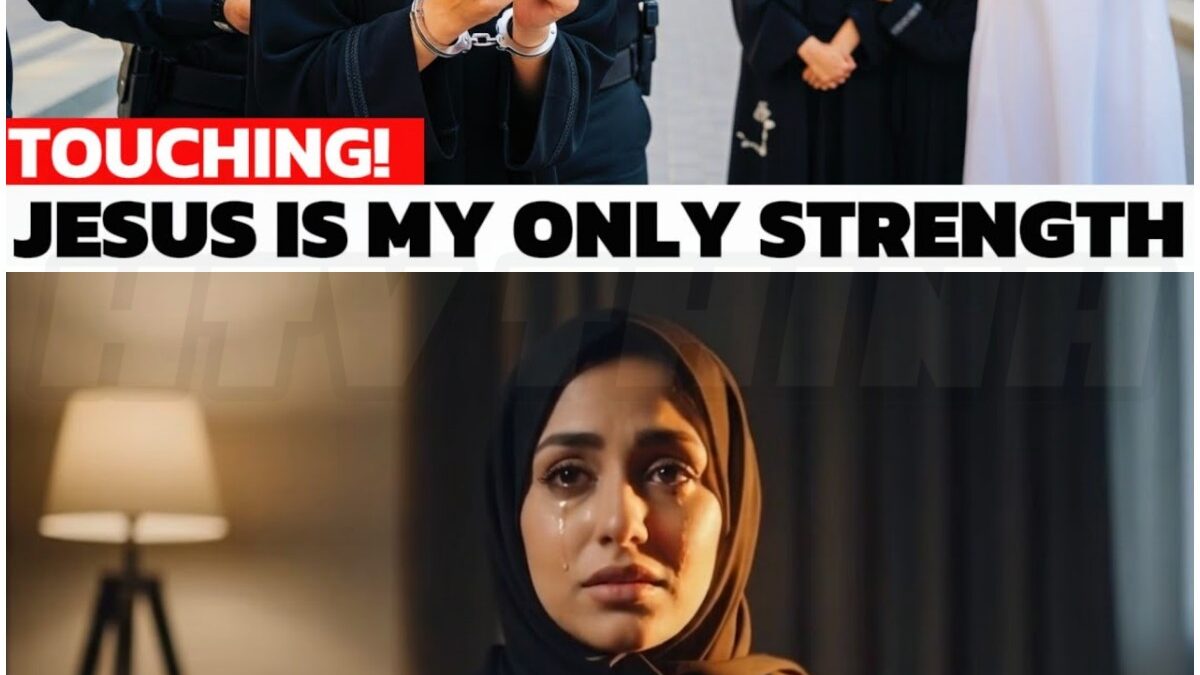
My name is Hamira Bint Khaled Al-Rashid. I was born into a world most people will never see. A world of marble floors, guarded gates, whispered conversations, and expectations heavier than gold.
From the outside, my life looked untouchable. I was a Saudi princess wrapped in silk, protected by power, raised inside palaces where fear never seemed allowed to enter. But fear lived there quietly.
It lived behind closed doors. It lived in what was never spoken aloud. From the moment I could walk, I was taught who I belong to.
My body, my future, my voice, my faith. None of these were ever described as mine. They were described as responsibilities.
Honor was not something you earned through kindness or truth, but through obedience. A daughter did not ask questions. A princess did not hesitate.
A woman did not choose. I learned early how to smile without meaning it. How to lower my eyes at the right moment, how to pray the right words while feeling nothing inside.
And for a long time I believed the emptiness I carried was my own failure. I believed God was distant because I was not worthy enough, disciplined enough, silent enough. Then something happened that shattered the life I knew.
It was not loud. It was not public. It was not spoken in anger.
It was something dark that entered my life quietly, wrapped in tradition, justified by authority, and protected by family loyalty. Something I was expected to endure without resistance, without complaint, without a voice. That was the moment my soul began to break.
I did not run. I did not rebel. I prayed harder.
I tried to disappear into obedience. But the more I tried to submit, the more I felt myself fading until one night, exhausted and desperate. I cried out to God, not with rehearsed words, not with ritual, but with raw honesty.
And that was the night everything changed. Because that was the night I saw Jesus. I did not know his name then.
I did not understand what he represented, but I knew one thing with absolute certainty. He saw me not as a title, not as a daughter, not as property, but as a person. And from that moment on, my life would never belong to fear again.
I was raised behind walls that glittered. Marble floors cooled my bare feet. Goldframed mirrors reflected a life people envied.
Guards stood at gates like statues. And I believed their job was to protect me. I did not understand that protection can look identical to imprisonment when you never choose your own door.
In our world, everything had a rhythm. The call to prayer stitched the day together. Family honor was spoken of like oxygen.
A woman’s reputation was not hers alone. It belonged to fathers, brothers, uncles, and the long memory of a surname. We were taught softness in our voice, obedience in our posture, and gratitude for privilege we did not earn.
And I tried. I tried to be the daughter that made my mother proud. I wore the abaya like a uniform.
And I learned how to smile without revealing what I felt. But at night, when the palace fell quiet, I would sit near the window and stare at the city lights of Riyad. Not because I wanted to rebel, because I wanted to breathe.
I wanted one honest thought that did not need permission. The strangest part was this. I had everything, yet I felt empty in a way luxury could not touch.
I did not yet have the language for it. I only knew that my soul felt thirsty, and no amount of silk could soften that thirst. The worst things in royal families are rarely shouted.
They are arranged. They arrive as tradition dressed in polite words. Mine began with a decision made without me in the room.
I was still young when my father said my marriage would secure stability, a suitable match, a family ally, a man older than me, respected, connected. Everyone spoke as if I should be honored. My mother’s eyes pleaded with me to accept it quietly.
She was not cruel. She was afraid. In our culture, fear can be inherited like jewelry.
I tried to tell myself it would be fine. I tried to believe I could endure what many women endure. But the truth surfaced in small humiliations, conversations that stopped when I entered, meetings I could not attend, rules that tightened around me as the wedding approached.
Then something darker happened. I learned that my life was not only being arranged, it was being controlled. My phone was checked.
My friends were filtered. My driver listened more than he spoke. Even my laughter felt monitored.
As if happiness itself had to be approved. One evening, an argument broke out between men in my family, and my name was mentioned like a bargaining chip. I realized I was not being protected.
I was being traded, not with money, but with loyalty.
That night, I locked myself in the bathroom, sat on the cold tile, and whispered a prayer that was not a formal prayer. It was a desperate one. If God sees me, please show me.
Please. I fell asleep with my face wet from tears. I refused to let anyone see.
And then I was somewhere else. It was a garden, but not like the ones behind our palace. The colors were too alive.
The air felt clean in a way I had never breathed before. I looked down and saw my feet bare against soft grass. I was not wearing black.
I was wearing white. And then I saw him. A man approached calm and steady as if the garden belonged to him and he had been waiting for me.
Light seemed to come from him. But it didn’t hurt my eyes. It settled over me like warmth.
I should have been afraid. In my world, women are taught fear. But in that moment, fear had no place to stand.
He looked at me like he knew everything I had never said out loud. He spoke my name, Hamira. Not shouted, not commanded, spoken like comfort.
I began to cry instantly. The kind of crying that comes from being recognized, from being seen. Then he held out his hands.
I saw scars, not fresh wounds, healed marks. Permanent, deliberate. My chest tightened with a grief I didn’t understand.
He said only a few words, but they landed like truth inside my bones. You are not alone. Then I woke up in my bed, gasping, shaking, the palace around me unchanged.
But I was changed. I sat upright until morning, terrified of what it meant and unable to pretend it meant nothing. For days, I tried to bury it.
I recited the prayers like normal. I ate with my family. I smiled.
I nodded. But the dream stayed vivid like a memory, not imagination. One night, with my door locked, I opened my laptop and used a VPN like people in our circles secretly do.
My hands trembled as I typed. Man in white, scars in hands, garden dream. The answers that appeared made my breath catch.
Jesus. At first, I slammed the laptop shut like it had burned me. In our world, curiosity itself can be punished.
But curiosity became hunger. Hunger became compulsion. I searched again.
Paintings, verses, testimonies. I kept seeing the same face, the same gentleness. I found the words Come to me all who are weary.
Weary. That word was me. I downloaded a Bible app and hid it behind a calculator icon.
I read in the bathroom with water running to hide the sound of my breathing. I started in John because someone online said to start there. In the beginning was the word.
The more I read, the more something inside me softened. Not into rebellion, into relief. like I had been holding my breath my whole life and had finally inhaled.
But the relief came with terror because I knew what conversion meant in my family. I knew what it meant in my country. And yet I couldn’t stop.
In daylight, I became an actress. I wore the abaya. I attended gatherings.
I listened politely while relatives spoke about the dangers of outsiders and western religion. I watched men condemn what they did not understand. and I felt my stomach twist.
At night, I prayed to Jesus in whispers, so quiet they barely existed. I didn’t know how to pray like Christians prayed. I didn’t have beautiful language.
I just spoke honestly, “Are you real? Was that you? Why me?” And something answered, not as an audible voice, but as peace, the kind of peace that makes no sense when your reality is tightening around you.
My mother noticed I was different. She asked if I was ill. She suggested doctors.
She suggested marriage would fix my sadness. I almost laughed at how tragic that was, as if another cage could heal a soul. I wanted to tell my sister.
I wanted to tell someone, but fear was a muzzle. I had heard stories of girls disappearing into rehabilitation, of passports being seized, of phones confiscated, of names erased. So I carried Jesus like a hidden flame and it grew.
There was a woman I remembered from years earlier, an expat nurse, kind, careful, a Christian. We had exchanged polite messages over time, never discussing faith in Saudi. Even friendship has boundaries.
It took me three days to send the simplest message. Can we meet for coffee? When she agreed, I felt like I had stepped onto a ledge. We met in a westernstyle cafe inside a compound where foreigners lived more freely.
I kept my eyes down, my voice low, my body tense. Security was not always visible, but it was always present. We spoke about ordinary things until my courage broke open.
I had a dream, I whispered. And I think I think it was Jesus. Her face changed, not with shock.
She looked around, then leaned closer. Hamira, she said softly. Be careful.
But yes, God can call you. I almost collapsed from hearing that sentence. Before we left, she slipped something into my bag like contraband.
A small New Testament, thin and light, heavy as a revolution. I carried it home like it was both treasure and a weapon. Weeks later, she asked if I was ready to meet other believers in Riyad.
I thought she was joking. She wasn’t. We drove to a small apartment with curtains drawn and voices kept low.
When I entered, I saw people from many nations, Filipino nurses, Indian engineers, Ethiopian workers, ordinary people with extraordinary calm. They sang quietly, not performance, worship. And I cried before I could stop myself.
No one looked at me like a princess. No one bowed. No one flattered.
They treated me like a human being, like a sister. A Saudi woman about my age hugged me and I stiffened from habit, then melted from need.
She whispered, “You are not alone.
That sentence undid me.”
They prayed for me. They warned me. They told me the cost was real.
Disownment, prison, worse. But they also spoke about Jesus as if he was present, not distant, as if he was close enough to hear a whisper behind palace walls. And I realized something.
I was more free in that small room than I had ever been in a mansion. The bad thing in my life didn’t stop. The marriage arrangement tightened.
My father’s tone became final. My mother’s fear became louder. And inside me, another truth grew louder, too.
I couldn’t keep living two lives. I couldn’t keep honoring a system that was crushing me while loving Jesus in secret. I asked God for guidance again and again.
Then I had another dream, shorter than the first. No garden this time, just the presence unmistakable and a question that landed like fire. Will you follow me if it costs you everything? I woke up with my heart racing and my answer already formed.
Yes, I didn’t know what everything would look like. I didn’t know how quickly it would come. But I knew I could not go back to emptiness.
I had tasted love that didn’t demand performance. I decided to tell one person, just one, my sister, the one I trusted most. It was the most naive decision of my life.
I chose a moment when our parents were away. My sister sat on my bed, worried about me, ready to comfort me in the only way she understood. My hands shook.
I need to tell you something, I said. I told her about the dream, the Bible. The way my heart felt alive for the first time.
Then I said the words that detonated my life. I believe in Jesus. I am Christian.
Her face changed like a door slamming. She cried. Not from tenderness, but panic.
She backed away as if my faith was contagious. She said I was possessed. She said I was destroying our family.
She said the word mortad apostate with horror. I begged her to wait, to keep it between us, to give me time, but duty one. She left my room with tears, and I heard her running down the corridor.
I stood there alone, and I knew the palace walls were about to become prison walls in the simplest, most literal sense. And yet, this is hard to explain beneath my terror. I felt peace, a calm that did not belong to me.
The footsteps came upstairs like thunder. My father’s voice was cold. My brother’s voices were harder than I had ever heard them.
When I opened the door, I saw rage, shame, disbelief. my mother behind them already grieving. My father asked one question.
Is it true? I could have lied. I could have saved myself in that moment with a sentence, but my mind flashed to the scars in the dream.
The cost that had already been paid for me, so I said, “Yes.”
The slap came fast. The room spun. Then they dragged me into the maj.
arrived. Cousins arrived. An imam arrived.
Men I grew up respecting stared at me like I had become filth. They asked when, they asked who, they asked what I had done. They threatened hellfire, disgrace, punishment, and through it all, I kept praying silently to Jesus, not for revenge, for strength.
Hours passed. Threats rotated through different mouths. Finally, my father said it plainly.
I was no longer his daughter. He told me my accounts would be frozen. My passport would be seized.
My name would be removed. I would be dead to them. Then he offered two choices.
Renounce Jesus and accept a marriage that would correct me. Or leave. Leave did not mean freedom.
It meant vulnerability. For a Saudi woman without protection, without paperwork, without family, the world is not kind. But I knew what I could not do.
I could not deny the one who found me when I was breaking. So I chose the path that looked like destruction. And my father’s face turned into something I will never forget.
Not just anger, but grief that had been sealed under pride.
That night, they locked me in my room. A princess behind a royal door. Suddenly a prisoner and yet I felt Jesus near.
They left food outside my door like I was dangerous. My mother came and cried through the wood, begging me to say words I did not believe so the family could restore honor. She told me she loved me and I believed her.
But fear was stronger than love in that house. My younger sister slipped a note under the door. I don’t understand.
I miss you already. That note broke me more than the slap. I prayed until my throat hurt.
I read verses until my eyes blurred. I held my small New Testament like it was a lifeline. And then in the night, a message came from my Christian friend.
We can help you, but you must be ready. Ready for what? Escape. The word sounded like fiction.
Like a movie. But I realized something. My family’s decision had already made escape necessary.
If I stayed, I would be fixed or erased. I chose life. I chose Jesus.
And I prepared with trembling hands for the most dangerous walk of my life. Plans were whispered in fragments. Timings, locations, deletions, what to carry, what to leave behind.
I had never packed my own bag in my life. Servants did that. Assistants managed details.
But now I learned quickly survival is intimate. I packed only what mattered. Plain clothes, a charger, cash my mother secretly sent through a brother who couldn’t meet my eyes, the small Bible, my phone.
I left jewelry. I left designer bags. I left evidence of who I had been.
And in a strange way, leaving those things felt like laying down a costume. I wasn’t a princess anymore. I was a woman with a decision.
The night before I knelt by my bed and prayed something simple. I am yours. Please don’t leave me.
And the peace returned steady and warm like the garden without needing the garden. Before dawn, the palace corridors felt endless. I moved quietly, listening for voices, watching for guards.
There was a distraction at the gate. Planned chaos. Guards argued.
A vehicle smoked. Someone shouted. I walked, not running.
Running would draw attention. I walked through the gate like I belonged to the morning. Then I was outside.
For the first time in my life, I stood on a street without a family name protecting me. I didn’t look back. I couldn’t.
Two streets away. A simple car waited. A woman I barely knew nodded once and I got in the back seat.
As we drove away, Riyad looked different through ordinary glass, not tinted, not insulated. I saw workers, traffic, shops, the real city, and I realized I was now one of the invisible people. And yet, I was not invisible to God.
The safe house was small, plain, quiet. The women there didn’t treat me like royalty. They fed me, hugged me, prayed over me.
Their kindness felt like a language I had never been taught. I cried until I felt emptied. Then I cried again from relief.
They explained the next steps. Temporary documents, a flight with transfers, a claim for asylum, a new identity. The word refugee struck me harder than disowned because disowned was personal.
refugee was total. But that night when worship songs rose softly in that cramped room, I felt something I couldn’t deny. Freedom.
Not political freedom. Soul freedom. The kind that exists even when you’re afraid.
The airport was the sharp edge of the plan. Cameras, databases, officers, lines that move too slowly. Every second felt like it could be the second I was pulled aside.
I kept my head down. I kept my breathing shallow. I prayed without words.
At the counter, the agent stared at my documents too long. My heart stopped. Then he stamped them like it meant nothing.
Security was worse. The metal detector beeped for someone else. And my body reacted like it was mine.
My palms were wet. Passport control was the final wall. The officer scanned.
He looked at the screen. He looked at me. Time stopped.
Then he handed my papers back. A small motion that felt like a miracle. I walked toward the gate and only then did I realize my knees were shaking.
When the plane lifted, I stared at the window until the city shrank into lights, then darkness. I didn’t feel victory. I felt grief.
I loved my family. I loved my sisters. I loved the culture that raised me.
even if it wounded me. I wasn’t leaving because I hated Saudi Arabia. I was leaving because I had found a truth that my world could not tolerate.
Somewhere above the clouds, I whispered, “Forgive them.”
Not because they were innocent, because bitterness would chain me to the past, and I had already lived in chains long enough. In a new country, I woke up to silence that felt unfamiliar. No servants, no compound, no family schedule, no guards, just me, plain walls, and a borrowed blanket.
It should have felt humiliating. Instead, it felt holy because for the first time, my life was not being watched by the family for control. It was being watched by God for care.
I opened my Bible and read as the sun rose, and I realized I had lost a crown, but I had gained a father. My story didn’t become easy after escape. There were interviews, questions, waiting rooms, officials, paperwork, doubt.
Then unexpectedly, detention, not a Saudi prison, a bureaucratic holding facility, cold and bright and loud, a place where humans become case numbers. And there I was again, behind locked doors. I cried the first night, not from fear, but from exhaustion.
Jesus, I whispered. I thought escape meant freedom. And in the quiet of that cell-like room, I remembered something from the Gospels.
Jesus had been imprisoned, too. Not because he lost, because love sometimes walks through darkness to reach the other side. Months later, a message reached me through a hidden channel.
A family member wrote, “If I renounced Christianity, they would consider forgiving me.
If I returned, my old life could be restored.”
The words were polished, controlled, full of conditions. I stared at the message for a long time because part of me wanted my mother’s arms, my sister’s laughter, the familiar scent of home. But I knew what returning would require.
It would require lying. And Jesus had already taught me how heavy a lie can be. So I wrote nothing back.
I prayed instead. Slowly my life began to rebuild. Not in glamour, in meaning.
I learned how to work, how to take public transport, how to buy my own groceries, how to speak without fear, how to be ordinary. I found a church where no one cared about my title. They cared about my healing.
I was baptized in open water with witnesses singing and I cried so hard I could barely stand. Not because I was sad, because I was finally not hidden. I started helping other women, immigrants, refugees, girls who carried trauma behind polite faces.
I listened the way I once needed someone to listen to me. My life became smaller on the outside but larger on the inside. And for the first time, I understood what joy actually is.
People ask if I hate my family. No, I grieve them. I pray for them.
I forgive them again and again. Because forgiveness is not an emotion. It’s a choice you renew when old wounds ache.
I do not mock my past. I do not pretend my culture is only darkness. I know the beauty of Saudi hospitality, the poetry, the loyalty, the love that can exist inside strict systems.
But I also know what fear can do to love. And I know what Jesus did to fear inside me. He did not rescue me by making my life easy.
He rescued me by giving me himself. So when I tell my story, I say it plainly. I was disowned.
I was jailed. I was made dead to my own name, but I became alive.








