Predator vs. Prey: The Brutal Math of the Wild
A Day of Calculated Choices
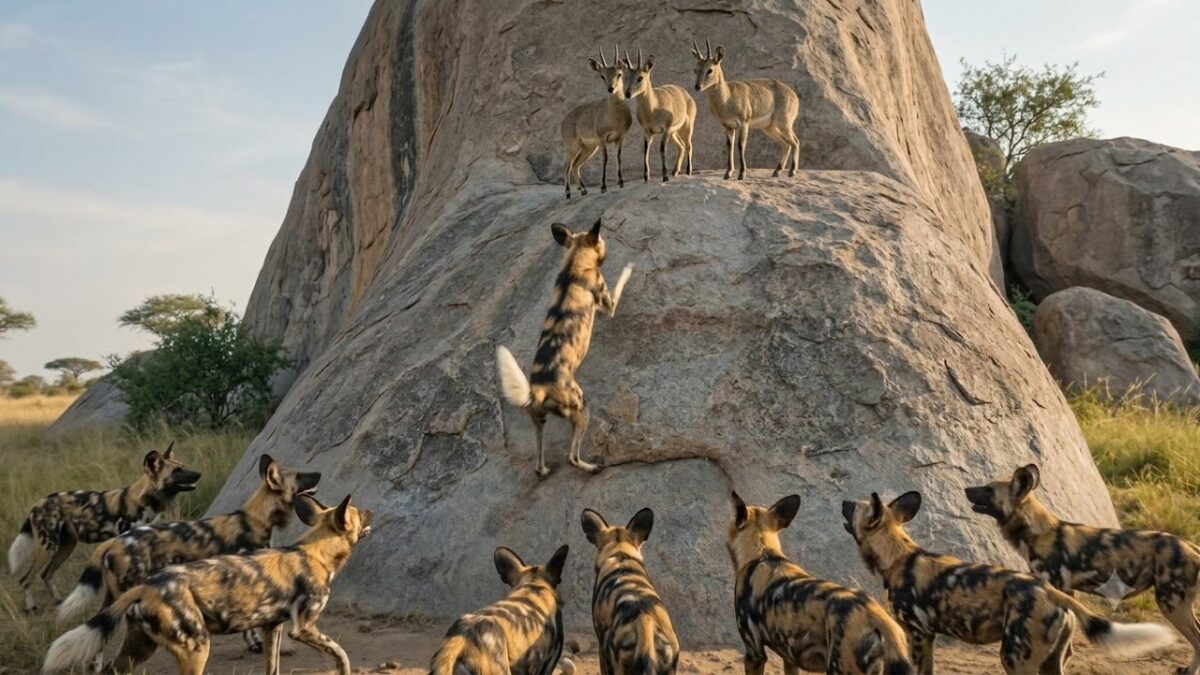
On the endless plains of the African savanna, survival often depends on finding the high ground. For this pack of African painted wolves, a hunt is underway. But today, their prey has found an impenetrable fortress.
A trio of dik-diks, some of the smallest antelopes in Africa, stand stranded atop a granite monolith. Below them, a sea of teeth and boundless energy. The painted wolves are nature’s most successful persistent hunters, but gravity is an opponent they cannot outrun.
One by one, they test the defenses, but the sheer face of the rock offers no foothold. Patience is a virtue, even for a predator. The pack waits.
The dik-diks watch. It is a silent standoff, written in the ancient rules of the wild. But the Savannah is vast and eventually the restless energy of the pack draws them away.
For now, the fortress holds. While the wild dogs burn energy on the ground, another apex predator takes a different approach, the leopard, a solitary phantom of the plains. Draped across the sturdy branches of an ancient tree, she avoids the blistering heat of the day.
In the wild, conserving energy is just as crucial as finding food. Up here, she is untouchable. A queen on a wooden throne drifting into a midday slumber.
But on the dusty trails below, a far more formidable force is on the move. A pride of lionesses. They move with a lethal synchronicity, a tactical unit scanning the horizon.
Their target? A lone wildebeest separated from the great herds, he is exposed, vulnerable. The lionesses drop into the tall grass, their golden coats dissolving into the landscape. Muscles tense, eyes locked, the ambush is set.
The wildebeest seems oblivious, but the prey of the savanna possess a sixth sense. He pauses, evaluates the wind, and makes a critical decision. He doesn’t run in panic, he simply walks away, a calculated retreat.
And the lionesses? In the brutal calculus of the savanna, the distance is too great, the heat too intense. The cost of a long sprint simply outweighs the reward. The hunt is officially called off.
They trade their killer instincts for a dust bath. Even the undisputed rulers of the plains know when it’s time to admit defeat and take a nap. As the afternoon shadows lengthen, The leopard stretches ready for the evening shift.
And back at the granite boulder, the dik-diks remain safe. The stone fortress provided not just sanctuary from the wolves, but sustenance. A tiny garden hidden in a crack of stone, a reward for their unwavering patience.
This is the reality of the African savanna. It is not just a theater of life and death, of predator and prey. It is an ecosystem in perfect delicate balance.
From the smallest blade of grass dancing in the wind to the butterflies gathering over the plains, every creature, every passing cloud mirrored in a fleeting puddle, plays a part in this ancient rhythm. Here, survival isn’t always about being the strongest or the fastest. Sometimes it’s about making the right choice at the exact right moment.
In the wild heart of Africa, life inevitably finds a way. Oh. Oh.








