He Checked the Cameras — and Uncovered His Son’s Secret That Destroyed Their Family
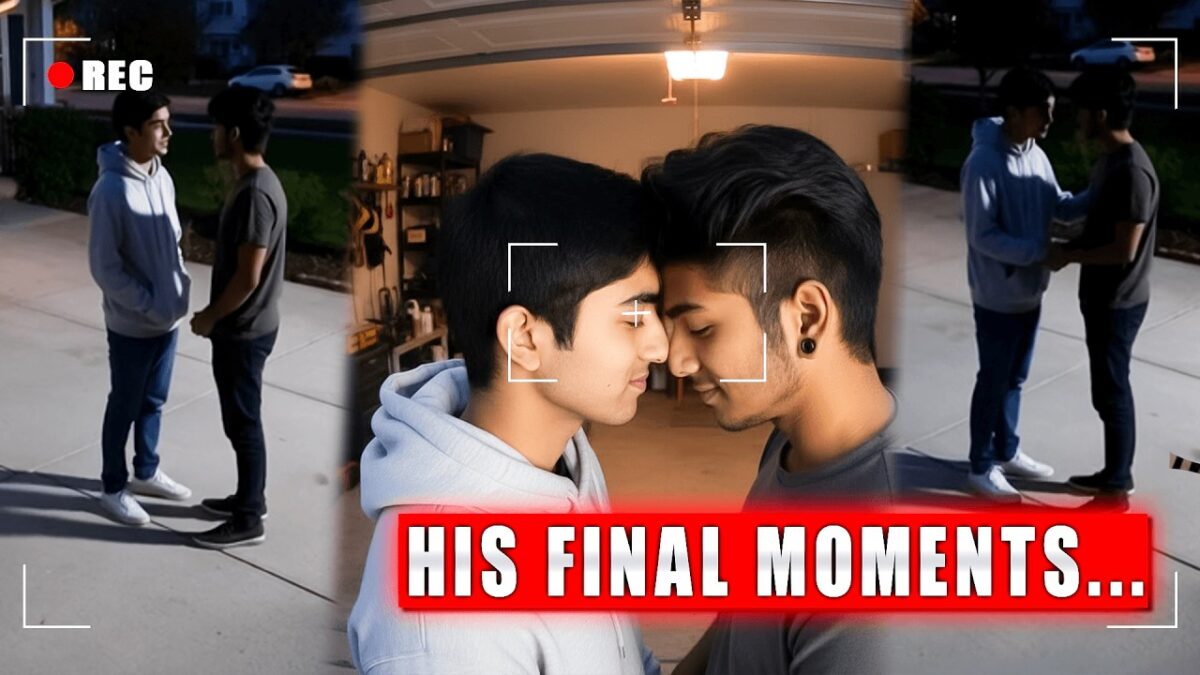
Today, we’re examining the deeply unsettling case of a college student from a quiet Seattle suburb who was found unresponsive in his own home after what first appeared to be a simple household accident. But as officers began looking closer, small details around the living room raised serious doubts about the family’s explanation. What started as a routine emergency call quickly widened into a sensitive investigation involving family tensions, hidden relationships, and digital evidence that no one expected to play a role.
For more than 20 years, Pamit and Manit Seagel had lived in a quiet suburb outside Seattle. Their house stood on a well-kept street lined with similar two-story homes built in the early 2000s. Most of their neighbors knew them as a reserved but stable family that maintained steady routines.
Pamid worked long shifts as a logistics supervisor at a distribution warehouse. Manitri held a part-time role at a dental clinic, balancing her hours around household responsibilities. Nothing about their daily life suggested instability or conflict.
Their only son, Arvin, was born in Washington State and represented a different direction from his parents’ immigrant path. He attended a local community college and recently began assisting in a small research lab on campus. According to instructors and supervisors, he was quiet, reliable, and rarely late to his shifts.
His academic performance was solid, though not exceptional, and he tended to keep a low profile in class. Most people who interacted with him described him as polite and soft-spoken. Inside the Seagull household, routines were predictable.
Pamid left for work before sunrise and returned early in the evening. Manreed handled most of the daily communication with relatives in India and maintained the family social obligations. Meals were eaten together whenever possible, usually in silence, with pramid reading news reports on his tablet and Arvin checking assignments.
There were no visible signs of conflict beyond minor generational friction common in many families. Arvin spent a significant portion of his free time with Ray Mahajan, a friend he had known since elementary school. Ray lived a few blocks away, and the two often met to study, share meals, or simply spend time outside the house.
Their friendship was long-standing and familiar to neighbors. Several had noted the pair walking home from the bus stop together for years. to Manit Ry was practically a second son.
She viewed their closeness as typical for young men who grew up in the same community. Pamjget saw the friendship differently. He came from a strict upbringing and held firm expectations about adulthood.
In his view, college years were a transition toward independence and responsibility. He believed Arvin should focus on improving his coursework, building career prospects, and preparing for long-term financial security. spending what he considered too much free time with Ry appeared to him like a distraction.
He did not confront Arvin directly, but his disapproval surfaced in short remarks, pointed questions, and a general rigidity around household rules. The tension between father and son grew slowly. It was not defined by explosive arguments, but by a persistent disconnect.
Arvin often kept his responses brief to avoid conflict. Pamjid interpreted this as avoidance. Manitri tried to balance the differences, encouraging her husband to show patience while reminding her son to be respectful.
She often acted as a buffer, preventing small issues from becoming serious disagreements. Despite moments of discomfort, the home functioned without major incidents. Neighbors never reported raised voices or emergency visits.
Police had no prior contact with the family. There were no financial problems, custody disputes, or known health issues. On paper, the Sigles were a textbook example of a hardworking immigrant household that had adapted to American life without losing its traditional values.
At the same time, certain patterns hinted at long-term pressure beneath the surface. Pamid monitored Arvin’s academic progress closely and occasionally compared him to cousins who had entered engineering or medical programs. Arvin, however, showed stronger interest in biology labs and part-time employment than in competitive high-pressure academic tracks.
The difference in expectations created small but steady friction. These were not open conflicts, yet they shaped the atmosphere in the home. By the start of the year, Arvin’s schedule grew busier.
He stayed longer on campus, citing lab hours or group assignments. He returned home later than usual and spent more evenings out with Rey. For Man Preit, this was normal behavior for a college student.
She never viewed it as a cause for concern. But for Pamjit, the pattern registered as a drift away from the structure he believed was necessary for his son’s future. Though he never voiced explicit suspicion, he noticed details more closely.
The late returns, the brief explanations, the increasing time spent outside the house. Nothing about these observations appeared criminal or alarming on their own, but they marked the early formation of a divide that would later become central to the case. At this stage, the family still functioned within ordinary boundaries.
There were no major incidents, no reports, and no visible indicators of danger. The seigulls lived what seemed like a stable, uneventful life. The kind of life that gives no warning before everything begins to shift.
The first noticeable change began with an off-hand comment from a neighbor. It happened during an ordinary afternoon when Manit was collecting mail. The neighbor, an older woman who often watched the street from her porch, mentioned seeing Arvin and his friend Rage standing a little too close near the driveway the previous evening.
She said it casually as if remarking on the weather, but the phrasing carried a tone that suggested judgment. Manit did not question it further. She assumed the woman had misread the situation and paid no attention beyond a polite nod.
The comment, however, reached Paramjid later that day. According to Manit, she repeated it only because it seemed harmless, but Pamid did not take it lightly. He asked for details such as when the neighbor had seen them and what exactly she meant by too close.
Man had no specifics to offer, and the conversation ended with uncertainty. for Pamjit though it planted a seed of concern.
That evening he confronted Arvin directly. The exchange was short.
He asked, “Are you and Ray hiding something?” Arvin reacted immediately, denying the suggestion and calling it ridiculous.
His tone was sharper than usual, and he refused to elaborate. The discussion stopped almost as quickly as it started, but the refusal to explain raised more questions for Paramit than it answered. It was the first time he noticed a defensive response instead of the usual brief neutral replies.
During the following week, Pamjid observed several changes in Arvin’s behavior. The most obvious was the shift in his schedule. Arvin began returning home significantly later than his typical routine.
When asked why, he offered explanations that were technically plausible extended lab work, group meetings, or transportation delays. But the frequency of these late arrivals was new. Each time Pamid asked for more detail, Arvin became visibly tense, sometimes cutting the conversation short before it could escalate.
Another detail that caught Pamjit’s attention was Arvin’s increased time on his phone or laptop, often closing tabs or minimizing screens when someone entered the room. None of this indicated wrongdoing on its own. Yet for Pamjget, each small observation contributed to a growing sense that something was being deliberately hidden.
He never voiced these suspicions openly, but his general frustration surfaced through short, rigid remarks and increased monitoring of household routines. The key development occurred late one night when Pamid decided to check footage from the exterior security cameras. The cameras had been installed years earlier after minor vandalism in the neighborhood.
Their primary purpose was to monitor the family vehicle and the garage area. He rarely reviewed the recordings unless prompted by a specific reason, but the recent uncertainties pushed him to look. The footage was organized into short motion activated clips.
Most showed routine activity, passing cars, raccoons at the trash bins, or Arvin arriving home alone. For nearly an hour, he found nothing unusual. Then he opened a clip recorded earlier in the evening.
This particular segment captured the driveway near the garage door. The video quality was standard, but the scene was clear enough. Arvin was standing beside the family car and Ry was with him.
The two appeared engaged in a quiet conversation. What struck Pamjit was not the discussion but their proximity. They were standing close, closer than what Pamjit considered normal for casual conversation.
As the clip continued, Ry reached toward Arvin’s hand. A moment later, their fingers interlaced briefly. It was a small gesture, but clear, deliberate, and impossible to misinterpret from Paramit’s cultural perspective.
He played the clip again several times to confirm he had not mistaken the movement. The gesture remained the same on each viewing. He paused the video at the exact moment their hands connected and steadied the frame in silence.
His reaction was physical. A tightness in his chest, a heat rising in his face. The feeling was a mixture of anger, confusion, and what he later described as a shock that made everything else in the room disappear.
He closed the laptop and sat in the dark for several minutes, trying to make sense of what he had seen. The gesture contradicted everything he believed about his son’s life and his expectations for the family’s future. He felt an immediate sense of cultural shame, the fear of what relatives or the broader community might say if they ever learned.
The footage did not provide context or explanations, only a single clear image that raised more questions than answers.
By the time he went to bed, Pamit’s thoughts were fixed on the clip. The neighbors comment, Arvin’s defensiveness, the late returns, all of it now appeared connected. He said nothing to Manit, choosing instead to keep the discovery to himself.
The recording became the turning point in his understanding of his son’s behavior, and from that night forward, his perspective shifted from concern to suspicion. After the night, when Parangid reviewed the security footage, the atmosphere inside the Seagull household changed sharply. The shift was not announced through a single argument, but appeared in day-to-day behavior.
Pamit’s interactions with his son became noticeably colder. He no longer spoke in a neutral tone. Each question sounded like an examination.
Arvin understood immediately that his father had seen something, even though no one explicitly mentioned the footage. The change showed itself first in the way Pamid monitored Arvin’s movements. He asked for specific return times, demanded explanations for any schedule adjustments, and questioned why Rey was still a regular presence.
He frequently used the phrase, “What are you hiding?” The pattern of questioning was persistent and direct.
Arvin, already aware of his father’s strong traditional values, attempted to respond with calm explanations. He repeated that nothing he was doing was dangerous or harmful.
During one tense conversation in the kitchen, Arvin finally stated, “This is who I am.
It was not an argument, only a factual statement meant to stop speculation.
Instead, it intensified the situation.”
Pramjid responded by calling it a betrayal of the family and a disgrace. Phrases that reflected his cultural background and personal expectations. These were not shouted statements.
They were delivered in a controlled flat tone that carried more weight than raised voices. From that day forward, every discussion between them followed a predictable pattern. Arvin attempted to clarify while Pamjget focused on the perceived impact on the family’s reputation.
Nothing Arvin said reduced the pressure. The emotional distance widened as both men realized they were speaking from fundamentally different positions. Man Pre observed the shift but did not initially understand the cause.
When she asked what had happened, neither provided a full explanation. She only knew that the household, once quiet and structured, now felt tense from morning until night. As the days passed, Pamit’s behavior grew more rigid.
His focus moved beyond casual questioning. He began checking the home security camera recordings daily. He justified it as routine monitoring, but the timing indicated otherwise.
He waited until late evening after the rest of the household had gone to bed and then reviewed the clips systematically, searching for any detail that might reinforce his suspicions. Arvin noticed the increased surveillance. He saw the camera logs being accessed and understood their purpose.
This added another layer of stress to the house. He tried reducing the time spent in shared areas, retreating to his room or staying longer on campus. However, this withdrawal only reinforced Pamit’s belief that something inappropriate was happening.
The distance instead of calming the situation escalated it. Manit attempted to act as a mediator. She encouraged her husband to give the boy space and she asked Arvin to be patient, but she lacked crucial context.
Without understanding the real source of conflict, she could not address it directly. Her attempts yielded no meaningful improvement. Pamjett remained focused on what he had seen in the footage, and Arvin continued to feel cornered.
The critical moment in this segment occurred when Pamjget found another relevant camera clip. Reviewing the footage of the garage area, the same camera that had captured the previous incident, he located a recording from earlier that afternoon. The clip showed Arvin and Ray standing inside the open garage.
They appeared to be having a quiet conversation. Body language indicated the discussion was calm, but the closeness between them matched what Pamid had seen before. Near the end of the recording, Ry placed a hand on Arvin’s shoulder and Arvin briefly leaned in.
The interaction ended with a short hug. There was no ambiguity in the footage. For Pamjit, this confirmed his fears.
The repeated pattern captured on a device he trusted made him believe the situation was deeper and more permanent than he had assumed. Observing the hug, he muttered a short phrase captured later in police statements. This has gone too far.
From a factual standpoint, the footage showed nothing illegal or dangerous. It was simply two young men expressing familiarity and comfort. However, in the context of Paramit’s cultural expectations, the video served as a final turning point.
He closed the footage abruptly and remained seated for several minutes, displaying physical signs of agitation, rigid posture, clenched jaw, and rapid breathing. The household tension reached its highest point after this discovery. Pamid became more withdrawn yet more controlling.
Arvin sensed that the situation was worsening, but did not know how to diffuse it. The divide between them, once defined by normal generational differences, had escalated into a sustained and volatile conflict driven by secrecy, surveillance, and cultural pressure. The stage was set for further escalation with both men unable to retreat from their positions and no effective mediator in the home.
By the end of that week, the tension inside the Seagull home had reached a level that could no longer be ignored. Pamjid had been observing his son with increasing suspicion, reviewing camera footage nightly and confronting him with short pointed remarks. Arvin in turn had withdrawn to avoid further conflict.
This silence however only heightened the pressure on both of them. On the evening of the incident, Pamja decided he needed a direct confrontation. According to later statements, he waited until dinner was finished and the house was quiet.
Man Pre had gone upstairs to prepare for the next day, leaving the living room empty. Pamid then called out to his son from the bottom of the stairs and instructed him to come down now. His tone was firm and left no room for delay.
Arvin walked into the living room with visible reluctance. The distance between them, both emotional and physical, was clear. There was no attempt at small talk.
Pamid immediately began questioning him, demanding explanations for the behavior he had observed and the footage he had reviewed.
He repeatedly asked, “Why are you doing this?” and insisted that Arvin had abandoned everything the family raised him to be.
Arvin attempted to keep the conversation controlled.
He said only what he considered necessary, including the statement, “I have the right to be myself.”
He did not raise his voice. He tried to remain factual, hoping to reduce the intensity of the situation, but his calm replies did not diffuse anything. Instead, they inflamed Pamjget, who interpreted them as defiance.
Witness accounts later described Pamjget’s reaction as emotionally charged and driven by a mixture of anger and cultural distress. He moved from questioning to accusations, claiming his son had been misled, that Rey had changed him, and that Arvin was throwing away the family’s values. Each accusation escalated in severity.
Over time, his voice grew louder. What began as a controlled confrontation shifted into a heated argument. Arvin tried to step back from the situation by saying he didn’t want to continue the conversation.
He turned slightly, indicating he wanted to leave the room. Pamid blocked him verbally, demanding he finish this. Now, at this point, the argument moved into what investigators later classified as a rapid emotional escalation triggered by long-term tension.
When Arvin attempted to walk away a second time, Pamid reached out and grabbed his arm. The gesture was forceful, but not immediately violent. It appeared intended to stop him, not to harm him.
Arvin reacted instinctively and pulled his arm away. The movement was abrupt. Their positions shifted quickly as both men lost balance.
In that brief moment, neither displayed control over the situation. The struggle lasted only seconds. As Arvin pulled away, Pangit pushed forward.
The momentum caused him to shove Arvin harder than intended. There was no indication of premeditation or a deliberate attack. It was a physical reaction within an already volatile emotional environment, but the force of the push was enough to send Arvin backward.
He fell toward a wooden side table positioned beside the living room sofa. The corner of the table struck him at the temple. The impact was sharp and immediate.
He collapsed to the floor without attempting to brace himself. When his head hit the hardwood, the noise echoed through the room. The sudden silence afterward was described later by Pamjit as the kind that makes everything stop.
Pamjget froze in place for several seconds. Unable to process what had just happened. The confrontation until that moment had been verbal and emotional.
The physical outcome had not been part of his intention or expectation. When he finally moved, he knelt beside his son and attempted to speak to him, but Arvin did not respond. Panic replaced anger almost instantly.
Several minutes passed before Pamid managed to retrieve his phone. His hands shook so much that he struggled to unlock the screen. When he finally dialed 911, his voice was unsteady.
According to the official recording, his first words were, “It was a mistake.
My son, he fell.”
The dispatcher had difficulty understanding him due to the tremor in his speech. He repeated the phrase several times, offering no details and no clear description of the events. The call conveyed confusion, shock, and urgency, but little else.
When he ended the call, he remained beside his son, waiting for emergency responders. The living room was silent, and the weight of the incident settled heavily over the house. The confrontation that began as a demand for answers had ended with consequences that neither man had intended, creating an irreversible turning point in the family’s life.
The first emergency responders arrived within minutes of the 911 call. Paramedics immediately checked Arvin’s condition while officers began documenting the scene. Arvin showed no response to verbal prompts or physical stimulation.
Medical personnel prepared him for transport and the officers turned their attention to understanding what had occurred in the living room. From the outset, there were details that did not match the explanation offered by Pamjget. When questioned at the scene, Pamjget stated that his son had slipped and fallen.
His voice remained shaky and he repeated the statement without adding specifics. Officers observed that he avoided eye contact and showed signs of acute shock. Although emotional distress was expected in such situations, the details in the room prompted further scrutiny.
Several objects were displaced, including a lamp on the floor and a framed photo knocked down near the sofa. On the side table where Arvin had struck his head, the corner showed fresh impact marks. These indicators suggested that more than a simple fall had taken place.
During the initial walkthrough, officers also noticed superficial scratches on Paramit’s forearm and the back of his hand. When asked about them, he gave a vague answer, saying he didn’t remember. The injuries appeared recent and were consistent with a brief physical struggle.
Combined with the disarray in the room, they contradicted the narrative of an accidental slip. Police protocol required securing the area as a potential crime scene. Officers separated Pamjid from the responders and asked him to wait in the dining room.
They then asked Manitri for any available information. She appeared confused and distressed, stating she had been upstairs and heard only raised voices, not the specifics of the argument. She could not provide clarity on how the injuries had occurred.
Because the home was equipped with exterior security cameras, investigators requested immediate access to the stored footage. Pamid initially hesitated but eventually directed them to the home office where the recordings were kept on a local server. Detectives extracted the past 48 hours of video data for analysis.
As officers reviewed the home environment, detectives began examining the footage. The cameras did not capture audio inside the house, but the surveillance system recorded environmental motion and noise levels through the exterior microphones. One clip from earlier that evening showed irregular sound spikes, muffled shouting patterns consistent with an argument.
The activity log reflected repeated motion signatures in the living room, indicating rapid movement before the collapse captured by the audio spike that followed. The footage from the garage recorded the day before played a significant role in shaping investigators understanding of the case. The video showed Arvin and Ray standing in close proximity, engaging in what appeared to be a private conversation.
Their body language indicated familiarity, and the hug near the end of the clip was noted as meaningful context. Investigators recognized the sensitivity around cultural expectations and the potential for internal family conflict arising from a hidden relationship. While the footage did not depict any wrongdoing by the two young men, it provided a plausible motive for a confrontation inside the home.
Detectives documented these findings carefully. They also compared the physical signs in the living room to common patterns of accidental falls versus forceful push-lated injuries. The location of the head impact combined with the displaced furniture aligned more with the latter.
The inconsistencies between the scene and Pamjit’s initial explanation led them to request formal questioning at the precinct. During the interview, which lasted several hours, Pamjit attempted at first to maintain the accidental narrative. However, when shown still frames from the camera footage and confronted with the evidence of a struggle, he became visibly emotional.
According to the investigative report, he lowered his head and stated quietly, “We argued.
I pushed him, but I didn’t mean to hurt him. Once he made this admission, detectives asked him to describe the sequence of events. He confirmed that the confrontation escalated verbally, that he grabbed his son’s arm to stop him from leaving, and that the push was a reaction made in anger rather than premeditation.
The admission matched the physical evidence found in the home, the condition of his hands, and the camera logs recording raised voices and sudden movement. The investigators documented his statement thoroughly and added it to the case file. By the end of the session, the initial claim of a simple fall had been replaced with a clear acknowledgement of physical force contributing to the fatal injury.
The facts of the incident were now consistent across the physical scene, the video data, and the confession, providing investigators with a complete and coherent account of what had actually occurred inside the living room that night. Once investigators completed their analysis of the scene, the video recordings and parammed its formal statement, the case moved to the King County Prosecutor’s Office. After reviewing the evidence, prosecutors classified the incident as involuntary manslaughter in a domestic dispute.
The conclusion was based on the combination of physical findings, the confirmed argument, the push acknowledged by Pamid, and the absence of intent to kill. The charge reflected the legal assessment that the fatal injury resulted from a sudden emotional escalation rather than a pre-planned act. In preparation for court, prosecutors organized the materials into three main categories.
The first category included the physical evidence from the living room, the displaced objects, the damage on the corner of the table, and the documented pattern of injuries on Arvin’s head and neck. The second category consisted of the digital data security camera logs, motion triggered audio spikes, and the footage from the garage. The third category focused on the family dynamic, particularly the tension between father and son, which investigators believed was central to understanding the motive for the confrontation.
The courtroom proceedings began several months after the incident. The hearing drew attention from local media due to the cultural complexities surrounding the case. Reporters noted that the conflict did not resemble a typical criminal assault, but was tied to long-term pressure within the household and the discovery of a personal truth that the father struggled to accept.
The prosecution emphasized that cultural factors could explain emotional reactions, but could not excuse physical actions that resulted in a death. During the opening statement, the prosecutor outlined the evidence clearly. He pointed to the video from the garage, describing it as context demonstrating why the confrontation escalated.
He then referenced the audio markers captured by the exterior system, showing a clear sequence of raised voices, rapid movement, and a sudden impact. According to the prosecutor, these recordings established that the event was not an isolated accident, but the final moment of a prolonged emotional conflict. When Pamjid appeared before the court, he did not contest the basic facts.
His defense attorney focused on his lack of criminal history, his steady employment, and the absence of intent. The attorney argued that the incident was the result of overwhelming emotional pressure, not malice. He asked the court to consider that Pamid had cooperated fully with investigators, had not attempted to flee, and had called 911 himself.
Manit was brought to the stand midway through the trial. She spoke quietly and often struggled to continue. Her testimony centered on her husband’s previous behavior, describing him as strict but not violent.
She stated that he had always cared about their son deeply, but had difficulty understanding Arvin’s identity.
She repeated through tears, “He loved him.
He just didn’t know how to handle it.”
Her statements were included in the court record as evidence of the emotional environment in the home. Rey was asked to testify as well. His appearance in court was brief but significant.
He explained that he and Arvin had been close for years and that Arvin had been afraid to reveal certain aspects of his life at home. Ray stated that Arvin hoped his father would eventually accept him. He concluded his testimony with a single sentence that remained quoted in the case file.
He believed his father would someday understand. The judge considered all evidence presented. The final ruling acknowledged the cultural and emotional components of the case, but emphasized personal responsibility and the irreversible outcome.
The judge stated that while the act was not intentional, it demonstrated reckless conduct during a heated confrontation. Pamid was sentenced to 8 years in state prison. The court described the sentence as balanced, reflecting both the seriousness of the offense and the absence of permeditation.
After the ruling was read, Pamja did not speak. His posture remained rigid and he kept his eyes lowered. Court officers escorted him out of the courtroom immediately after the proceedings ended.
Following the sentencing, media coverage declined rapidly. The case slipped out of the spotlight, leaving only the official files and the memories of those directly involved. The Seigel home, once described by neighbors as quiet and routine, became a symbol of how a private family conflict could escalate into a fatal event.
The security system installed to protect the property had instead documented the series of actions that destroyed the family structure. In the end, the house in the Seattle suburbs remained physically unchanged, but its meaning to the community shifted. It stood as a reminder of how a single moment of uncontrolled emotion combined with long-standing pressure could dismantle a family that had appeared solid from the outside.








