He Was Sponsored As an “Outstanding Researcher” — His Own Grant Reports Told a Different Story
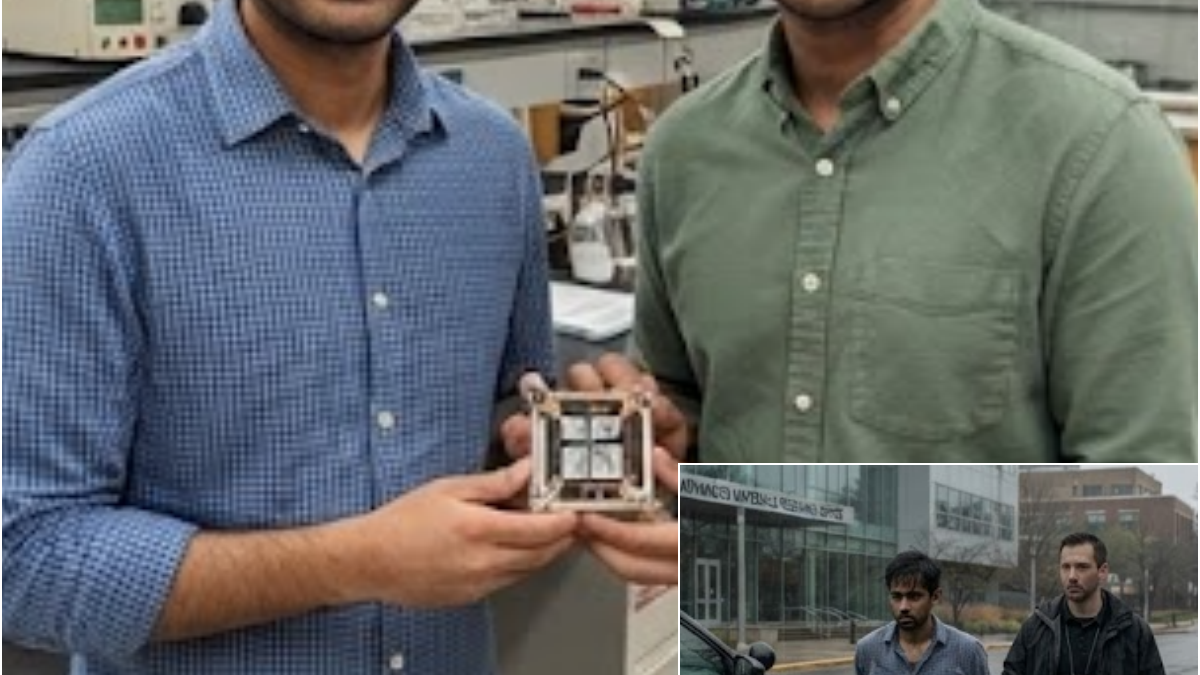
I think Karthik Iyer really was outstanding. That’s not me being generous before I tell you what he did. The federal government agreed with me, on paper, before any of this started, and by most measures they were right. What he did afterward doesn’t erase that. It just means the label and the man stopped matching each other somewhere along the way, and I don’t think even he could tell you exactly when.
Karthik came to the University of Illinois at Urbana-Champaign in 2016 on an F-1 student visa, straight from an undergraduate degree in materials science at IIT Madras, to start a PhD studying solid-state battery electrolytes — the kind of unglamorous, genuinely important research that nobody outside a narrow slice of engineering will ever hear about unless it works, and that takes a decade of unremarkable progress before it does. He was good at it in the specific way that gets noticed by people who fund things. By his third year, he had two first-author papers in journals that mattered to people in his field, and by his fifth, his advisor was telling him, without much hedging, that he had a real shot at something most PhD students never get near: an EB-1B petition.
EB-1B is the “outstanding professor or researcher” category, and it’s a strange, narrow door in an immigration system full of narrow doors. Unlike most employment green cards, it doesn’t require a labor certification proving no American could do the job — Karthik’s university just had to show, with a specific, well-defined evidentiary bar, that he was internationally recognized as outstanding in his specific academic field, and that they had a permanent research position lined up for him. He finished his PhD in 2021, took a postdoctoral research scientist position at the same university’s Beckman Institute, and his advisor, now his employer, filed the EB-1B petition on his behalf in early 2022. It was approved that October. I don’t think there’s anything in that part of the story that isn’t exactly what it looks like. He earned it.
The problem started with something almost embarrassingly small and structural, the kind of thing universities build into their own funding models without much thought for what it does to the people underneath it. Karthik’s permanent position, the one that made the EB-1B petition possible in the first place, was not funded by the university’s own operating budget. It was funded, like the vast majority of research scientist positions in American academic labs, entirely by external grants — in his case, two overlapping federal research grants, one from the Department of Energy and one from the National Science Foundation, both of which his advisor had won years earlier and both of which were, by 2023, entering their final funding cycles with no guaranteed renewal.
If both grants ran out before a new one was secured, Karthik’s position technically ceased to exist, which under the terms of his green card would not, strictly, void the petition already approved — but it would create exactly the kind of employment gap that immigration attorneys spend careers warning clients about, one that could complicate a future naturalization timeline, jeopardize his ability to sponsor his own parents down the line, and, in the more immediate and practical sense that weighed on him far more than any of that, simply mean losing the only research position he’d ever wanted, six months after finally getting the exact document that was supposed to make it permanent.
Karthik’s wife, Divya, had moved to Urbana with him in 2022, on the H-4 dependent visa tied to his own status before the green card came through, and had spent two years unable to work in her own field — she’d been an architect in Chennai — while she waited for an employment authorization document that only became available once his petition cleared. By early 2023, she’d finally started a small residential design consultancy of her own, their first real second income in years, and Karthik has said, in the one interview he gave after his release, that watching her finally build something of her own made the idea of going back to being a single-income household on the edge of a funding cliff feel less like an abstract bureaucratic risk and more like a specific, concrete thing he was about to take away from both of them.
Federal research grants require, as a condition of funding, detailed effort reporting: a certification, submitted periodically and signed under penalty of perjury, of what percentage of a researcher’s paid working hours were actually spent on the specific grant-funded project versus other work. It’s a mechanism designed to prevent exactly the kind of thing Karthik eventually did, and it exists because the thing it prevents is apparently common enough to need a federal certification requirement built around it.
In March 2023, facing the DOE grant’s final six months of funding and no renewal in sight, Karthik began certifying effort reports claiming he was spending 100 percent of his time on the DOE-funded project, while simultaneously certifying, on a separate but overlapping set of reports, that he was spending 60 percent of his time on the NSF grant — a combined effort allocation mathematically impossible for one person working one job, a detail that the university’s own grants compliance office should have caught immediately and, for reasons that later became a separate and smaller scandal of their own, simply didn’t, because the two grants were administered through two different departmental sub-accounts that didn’t cross-check each other’s paperwork.
I want to be careful here, because I think this is the part of the story people skip past too quickly to get to the part where it gets worse. What Karthik did in March 2023 wasn’t, in any straightforward sense, theft. He was doing the actual research the grants funded — the same experiments, the same lab hours, the same authorship on the same papers. He was double-counting his own real labor across two separate federal ledgers so that neither grant’s usage reports would show his position running out of allocated funding before a renewal came through, buying himself, and the position that his green card depended on, time. I don’t think that makes it legal. I do think it’s a meaningfully different thing from what he started doing four months later.
By July 2023, the DOE grant renewal had, in fact, come through — a genuine, above-board $1.4 million award, secured on the strength of Karthik’s own preliminary data, that should have ended the effort-reporting problem entirely. It didn’t, because by then Karthik had noticed something else: the overlapping certification structure he’d built to protect his position also let him draw a partial second salary, functionally, off both grants simultaneously without either program administrator seeing the full picture, since his actual paycheck came from a single university account that pooled both funding sources before disbursement, and the discrepancy only showed up in each grant’s individual usage report, which nobody outside the compliance office ever cross-referenced against the other.
He kept the double-certification running for eleven more months after the funding crisis that started it was already resolved, and where the money went in that period is the detail that turned this from a paperwork problem into a federal indictment. Roughly $61,000 in redundant salary draws over that period didn’t go toward rent or debt or anything resembling the desperation that had justified, at least to Karthik, the original March decision. It went into a battery-recycling startup he’d quietly begun incorporating with a former labmate in late 2023, seed capital for a company built, with a kind of tone-deaf irony nobody involved seemed to notice at the time, on exactly the kind of solid-state electrolyte research his federally funded academic salary was supposed to be advancing for the public benefit, not his own private equity stake.
The university’s internal audit that eventually caught it wasn’t looking for Karthik specifically. It was a routine, five-year compliance review of the Beckman Institute’s federal grant portfolio, the kind universities run periodically to satisfy their own federal oversight obligations, and it flagged his effort reports as a statistical anomaly in the fall of 2024 — one of several dozen flagged discrepancies across the department that year, most of which turned out to be clerical errors. His wasn’t. The university’s own internal investigators pulled eighteen months of timesheet data, lab access-badge swipe logs showing exactly which building and which specific lab bay he’d been working in at any given hour, and the incorporation paperwork for the startup, which listed his university email address as a founding contact, a detail his attorney later called, without much room to argue otherwise, “not a great look.”
The university referred the matter to the Department of Energy’s Office of Inspector General in January 2025, which opened a joint investigation with the National Science Foundation’s own inspector general given the overlapping grants involved. Karthik was interviewed voluntarily in February, made the mistake — on his attorney’s later assessment, a serious one — of initially describing the double-certification as an honest administrative confusion rather than disclosing the deliberate March 2023 decision that started it, a version of events the badge-swipe and startup-incorporation timeline demolished within roughly a week of federal investigators actually looking at it.
The badge data turned out to be unusually granular, because the Beckman Institute’s newer wing, where Karthik’s lab was housed, used a card-access system installed in 2021 that logged not just building entry but which specific lab bay and equipment room a badge unlocked, down to the minute — a security feature the university had added after an unrelated incident involving stolen research chemicals, with no one at the time imagining it would end up reconstructing a federal grant fraud case years later. Investigators built a near-complete hour-by-hour map of eighteen months of Karthik’s actual working time and set it directly against the effort percentages he’d certified to two different federal agencies, and the resulting spreadsheet, entered into evidence at his sentencing hearing, showed a gap between claimed and actual DOE-grant hours that widened steadily and almost linearly starting in July 2023 — the exact month, prosecutors noted, that the funding crisis the double-certification was supposed to solve had already been resolved by the genuine renewal award.
He was charged in May 2025 with making false statements to a federal agency and with theft of federal grant funds, the second charge specifically calibrated to the $61,000 diverted after the funding crisis was already resolved rather than the earlier period, which prosecutors and his own attorney both, for different reasons, treated as a meaningfully separate act. His attorney argued at sentencing that the original March 2023 decision reflected genuine, well-founded fear about his research position and, by extension, his immigration status, rather than any intent to defraud — an argument the judge appeared to find at least partially persuasive, since the sentence handed down in September 2025 was eighteen months, well below federal sentencing guidelines for the charged amount, alongside a five-year debarment from receiving any federal research funding as a principal investigator or co-investigator, a professional consequence that will likely matter to Karthik’s future far more than the shorter prison term.
His EB-1B green card, once the conviction was final, triggered removal proceedings under the aggravated felony provisions covering fraud offenses exceeding $10,000 in loss — a bar that exists specifically because Congress decided, decades ago, that this exact category of harm, dollar-denominated federal fraud, deserved no discretionary path back regardless of how much genuine, undisputed scientific value a person had otherwise produced. The startup he’d seeded with the diverted funds folded within four months of his arrest, unable to secure the additional financing round it needed once its co-founder’s name started appearing in federal court filings, and the battery-recycling process it had been built around — genuinely promising, according to two materials scientists who reviewed the abandoned patent filing for a trade publication afterward — sits, as far as anyone can determine, unpursued and unpatented by anyone else, exactly the kind of quietly wasted outcome that nobody except the researchers who might have used it will ever notice or mourn.
Divya’s own status, once his conviction triggered his removal proceedings, unraveled with it in a way that had nothing to do with anything she had done. Her own pending adjustment of status, filed as his dependent months before his arrest, was placed on indefinite hold pending the outcome of his case, and her design consultancy’s three active clients had to be handed off, mid-project, to another firm in April 2025 once it became clear she would not be staying in Illinois. She and their two children — born in the United States, and therefore citizens regardless of anything that happened to either parent’s status — returned to Chennai in November 2025, five months after Karthik’s sentencing, to live with her parents while his removal case worked through its final administrative stages, a household rearranged entirely around a decision made eighteen months earlier that Karthik, by his own account, made in under an afternoon.
I don’t think Karthik Iyer set out to become someone who stole from the government that had just decided, formally and on the record, that he was outstanding. I think he made one defensible decision under real pressure, discovered it had a door behind it nobody was watching, and walked through that door for reasons that had nothing to do with the fear that justified the first step. I don’t think that’s a rare shape for this kind of story to take. I do think it’s worth noticing how often the second decision gets excused by how sympathetic the first one was.








