He Was Ordained to Serve a Temple in New Jersey — Then He Started Selling the Title to Strangers
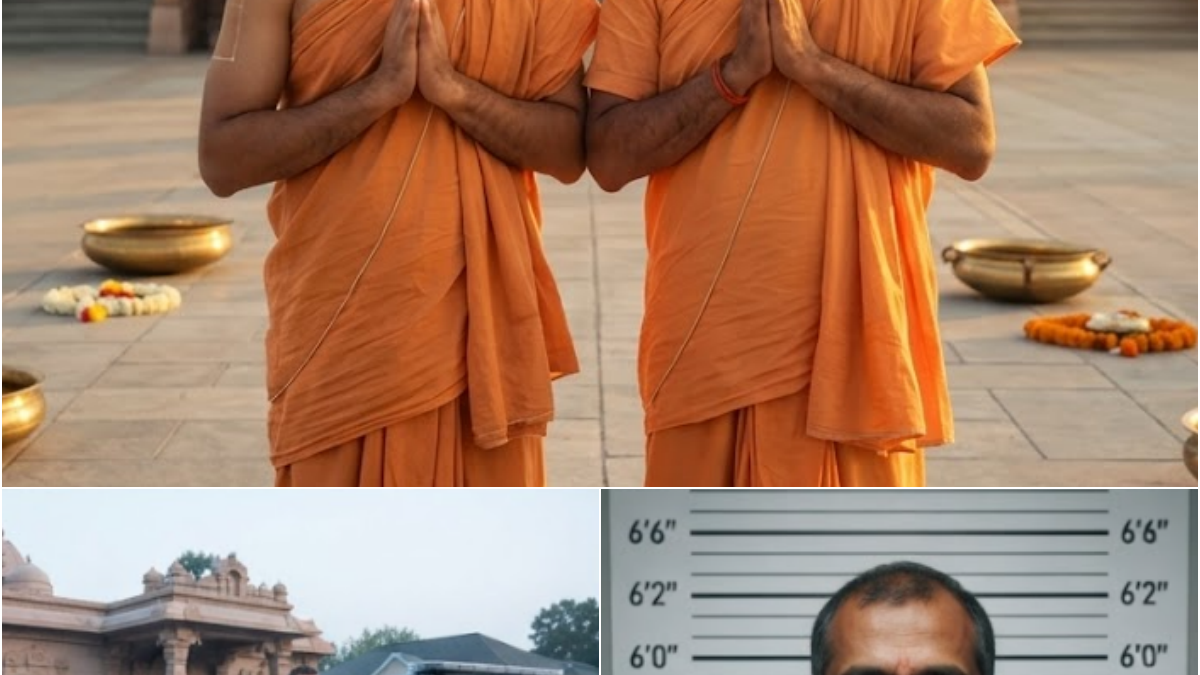
Dev Acharya got his green card for being a priest. He kept it by turning the priesthood into a product line. Make of that what you will.
I want to start with what was real, because most of it was. Devendra Acharya trained for eleven years at a Vedic seminary in Varanasi before anyone in New Jersey ever heard his name. He performed his first solo puja at nineteen. By the time a small Hindu temple in Middlesex County went looking for a full-time resident priest in 2017, Dev had a decade of documented liturgical training, fluency in Sanskrit ritual text most American-trained priests never fully master, and a reference letter from his own guru that took up four single-spaced pages.
The temple sponsored him under the EB-4 special immigrant religious worker category — a green card classification, not a temporary visa, that requires something most people don’t realize: two full years of continuous, compensated, full-time religious work before the petition can even be filed, verified through tax records, payroll, and a mandatory USCIS site visit designed specifically to catch the fraud this category has historically attracted. Dev’s petition, filed in 2019, cleared every hurdle. His green card was approved in 2021. Nothing about that part is in dispute.
His first two years in New Jersey were, by every account from the temple community, exactly what they were supposed to be. He lived in a small apartment attached to the temple grounds. He performed the morning and evening aartis without exception, officiated weddings and namkarans for the county’s growing Hindu community, and built a reputation, within three years, as the priest people specifically requested for funeral rites, a role that demands a level of ritual precision and emotional steadiness most younger priests spend a decade building toward. His wife, Kavita, joined him in 2020 on an H-4 dependent visa and found work as a pharmacist within eighteen months, and by the time their green cards came through together in 2021, the Acharyas looked, to everyone around them, like exactly the kind of quiet immigrant success story their community held up as an example.
The USCIS site visit that made his own petition possible happened in the spring of 2020, and Dev remembered every detail of it years later with a clarity that would eventually work against him. The officer arrived unannounced on a Wednesday afternoon, asked to see the temple’s payroll ledger going back eighteen months, asked Dev to demonstrate a specific ritual on the spot, checked his living quarters to confirm he actually resided on temple grounds rather than merely claiming to, and cross-referenced his seminary ordination certificate against a records request sent directly to the Varanasi institution. Dev passed every check without hesitation, because every element of it was true. He also, without quite meaning to, memorized the entire process — the specific documents requested, the specific questions asked, the specific order in which the officer worked through the checklist.
Here’s the part that is.
By 2022, Dev had become something the temple’s board hadn’t planned for: the only person in a fifty-mile radius who fully understood, from the inside, exactly what USCIS’s religious worker site visits looked for. He’d sat through his own. He’d watched the officer check payroll stubs, ask about his living quarters, verify his ordination lineage against seminary records. He knew the checklist better than most immigration attorneys who didn’t specialize in the category.
And in late 2022, a family friend asked him a favor. Her nephew, back in Uttar Pradesh, had religious training — not much, a few years at a smaller ashram, nowhere near Dev’s own credentials — and no viable path to a US visa otherwise. Could Dev’s temple sponsor him too? Just as a junior priest. Just to get him here.
Dev said yes. I don’t think that first yes was corrupt. I think it was the kind of favor immigrant communities do for each other constantly, the kind that fills gaps a broken system leaves open. The temple’s board, trusting Dev’s judgment as their senior priest, signed off. The petition went in. It was approved in 2023.
Then came the second request. And the third. By mid-2024, Dev had helped file religious worker petitions for six different men, only two of whom, according to what investigators later reconstructed, had anything resembling genuine ongoing religious duties at the temple. The other four were, on paper, junior priests, assistant ritual coordinators, and a “temple maintenance chaplain” — a title that does not, in any tradition anyone could locate, actually exist.
He charged each family $28,000.
The second man, sponsored in early 2024, was the one who made the arrangement into something closer to a business than a favor. His family approached Dev directly, having heard through community word-of-mouth that “the priest at the Middlesex temple can help,” a phrase Dev has said, in a jailhouse interview conducted months later, he first heard repeated back to him at a wedding he was officiating, from a stranger’s uncle, delivered with the same casual confidence people use to recommend a good electrician. By that point, Dev had stopped thinking of what he was doing as a favor at all. He had, without any single dramatic turning point he could later identify, started thinking of it as a service he happened to be uniquely positioned to provide, priced according to what the market — and it was, by then, unmistakably a market — would bear.
The math is worth sitting with for a second. Six petitions. $28,000 each. $168,000, for paperwork Dev could produce from memory because he’d already lived through the exact scrutiny it needed to survive.
He didn’t need the money. That’s the detail that made federal investigators, once they found him, genuinely curious about motive in a way they usually aren’t. Dev’s actual priestly salary from the temple was modest but stable. His wife worked as a pharmacist. They owned their house outright by 2023.
“He wasn’t drowning,” the Homeland Security Investigations agent who built the case, Special Agent Priya Ramaswamy, said later. “He just discovered he was sitting on something valuable, and once you know exactly how to make a fraudulent religious worker petition look identical to a real one, it turns out to be very hard to stop doing it for free.”
The temple’s board found out first, not the government. A donor complained, in early 2025, that the “maintenance chaplain” spent his days working construction jobs across three counties and had never once, as far as anyone could determine, performed a religious duty of any kind. The board quietly launched its own review. What it found alarmed them enough to notify USCIS’s fraud detection unit directly, in April 2025 — a decision that effectively ended any chance Dev had of controlling how this came out.
USCIS referred the matter to Homeland Security Investigations the same month. Agents didn’t need much time. The site-visit checklist Dev knew so well cuts both ways: it also means USCIS keeps detailed, comparable records of every religious worker petition tied to a single sponsoring organization, and once investigators pulled all seven — Dev’s original plus the six he’d helped file — the pattern was not subtle.
Four of the six men had continuous, documented full-time employment at construction companies, warehouses, and a car dealership during the exact hours their religious worker petitions claimed they were performing temple duties. Payroll records for their supposed temple compensation showed round, suspiciously identical monthly deposits that, once traced, led back not to the temple’s own operating account but to a personal account controlled by Dev himself — deposits he made and then had the men immediately withdraw and return to him in cash, creating a paper trail that looked, to an untrained eye, exactly like real wages.
“He built a fake payroll system inside a real temple’s real bank account,” Ramaswamy said. “That’s not amateur work. That’s someone who understood precisely what auditors check and built around it.”
Investigators also found something Dev himself had apparently never anticipated anyone looking for: a private spreadsheet, kept on his personal laptop under a folder labeled simply “records,” tracking each of the six petitions against its filing date, its $28,000 fee, and a column marked “risk,” in which Dev had rated his own confidence that a given case would survive a future site visit on a scale of one to five. Two of the six carried a risk rating of four. Dev had taken the money anyway.
“That spreadsheet told us more about his state of mind than anything else in the case,” Assistant US Attorney Colin Fitzgerald said in his opening statement. “This was not a man confused about what he was doing. This was a man keeping score.”
Agents arrested Dev Acharya at the temple itself, on a Tuesday morning in June 2025, twenty minutes before a scheduled morning aarti. He was charged with visa fraud, conspiracy to commit immigration fraud, and money laundering tied to the payroll deposits.
He did not go quietly into the standard defense. His attorney argued, at a bail hearing that August, that Dev genuinely believed the men he sponsored performed sufficient religious duties to qualify, that the payroll structure was clumsy but not deliberately fraudulent, that a man with eleven years of seminary training doesn’t casually decide to defraud the federal government for money he didn’t need.
The prosecution had an answer for that, and it was short. Text messages recovered from Dev’s phone, sent to the fourth sponsored man in March 2024, read: “just say prayers three times if anyone asks. nobody checks that.” Followed, four minutes later, by: “$28k this time, same as before.”
The jury saw that exchange on the second day of trial. His attorney’s argument about genuine belief did not survive it.
The trial ran eight days in the District of New Jersey. Two of the sponsored men testified against Dev under cooperation agreements, describing, in nearly identical language, being told exactly what to say if a USCIS officer ever asked them anything, and being coached, specifically, to keep any conversation about their “religious duties” brief and vague rather than detailed, since detail was what tended to unravel under scrutiny. One of them, a thirty-four-year-old man who had worked construction in Edison for three years while his petition described him performing daily temple rituals, told the jury he had visited the temple exactly four times in that period, each visit lasting under an hour, each one scheduled by Dev in advance for a date close to when a USCIS check-in was expected.
“I asked him if this was legal,” the man testified, according to the trial transcript. “He told me the paperwork was legal. He didn’t tell me what I would actually be doing was not.”
A third witness, the temple’s longtime treasurer, testified that she had signed off on payroll disbursements to all six men without independently verifying their work schedules, trusting Dev’s word as the temple’s senior religious authority the same way, she said, the board had trusted him on every other matter for six years. Under cross-examination, she was asked whether she had ever seen any of the four fraudulently sponsored men actually perform a ritual. She said no. She was asked why she had never asked to see it. “Because he was the priest,” she said. “You don’t audit the priest.”
Dev Acharya was convicted in November 2025 on all counts. He was sentenced in January 2026 to six years in federal prison, and his own green card — the real one, earned through eleven genuine years of seminary training and two genuine years of documented service — was placed into revocation proceedings under the same aggravated felony provisions that make immigration fraud, once the loss exceeds a set dollar threshold, a permanent bar with no discretionary relief available, no matter how legitimate the underlying credential once was.
The four men whose petitions were built on fabricated religious duties lost their own status entirely, placed into removal proceedings with no path back, families uprooted a second time for a scheme most of them, according to their own attorneys, hadn’t fully understood the mechanics of even while they were living inside it. The two men whose religious work investigators confirmed was genuine kept their green cards. The temple’s board, in a statement read at a community meeting that October, said they had “trusted the wrong kind of expertise” and had, since Dev’s arrest, implemented outside financial audits for every future petition the temple sponsors.
Dev’s wife filed for divorce in February 2026. She has not spoken publicly about any of it. What she has done, according to a family friend who spoke to a local Hindi-language newspaper on condition of anonymity, is keep working the same pharmacy job she’s held since 2021, in the same town, under the same name, because she decided, in her own words relayed secondhand, that she had done nothing that required her to hide.
The four families whose sponsored relatives lost their status have, collectively, filed no lawsuit against the temple or against Dev personally, according to court records, a fact their own attorneys have attributed less to forgiveness than to a simple calculation: suing a bankrupt man facing six years in federal prison recovers nothing, and drawing further attention to cases already flagged by federal immigration authorities carries its own risk for families still navigating the aftermath of their own petitions’ collapse.
I don’t think Dev Acharya woke up one day and decided to become a fraud. I think he spent eleven years becoming genuinely excellent at something sacred, discovered that excellence also happened to be a flawless blueprint for gaming a federal system, and couldn’t stop pulling on that thread once he saw how easily it came loose. I don’t think that makes what he did to those four families anything less than what it was. I do think it’s worth noticing how rarely the people who exploit a system’s weak points are strangers to it. Usually, they’re the ones who understood it best.








