He Married an American for a Green Card — Then She and Her Boyfriend Murdered Him
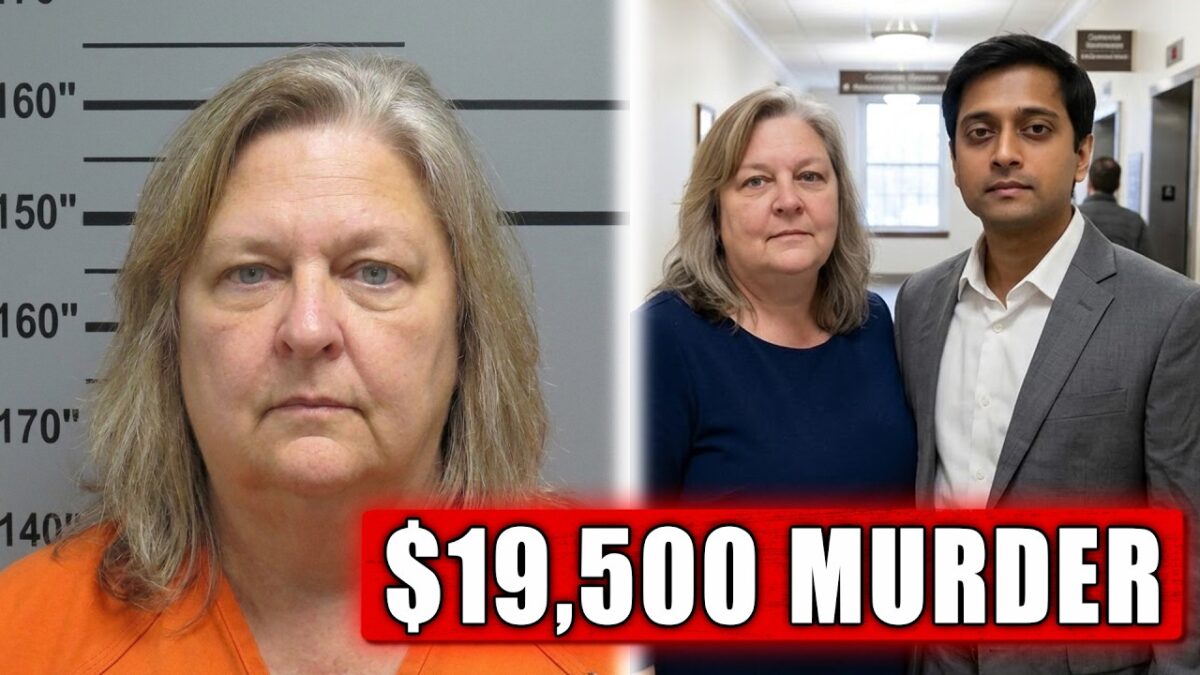
Look at this man. This is Rohan Mehta, 29, an H-1B software developer from Ahmedabad. August 30th, 2024, a house outside Columbus, Ohio.
He is married to a US citizen on the last stretch of a green card he has been paying for every single month for 2 and 1/2 years. He has no idea that this is his last night alive. At 11:41 p.m., $4,100 moves out of his checking account and into his wife’s.
6 minutes later, she calls 911. The coroner will later place his death at least 11 minutes before that transfer went through. A dead man does not unlock a phone.
This is Rohan Mehta, Dublin, Ohio, March 3rd, 2021. 26 years old, 5’7, 134 lb the last time a doctor bothered to weigh him. He grew up in Ahmedabad in a two-bedroom flat above his father’s hardware shop.
The kind of household where nothing was thrown away because everything might still be useful. His parents scraped together the fees for a mechanical engineering degree he never really wanted. And by the time he graduated, half his classmates had already pivoted into software.
He did the same. 6 months of coding boot camps paid for with a loan his uncle co-signed, then a junior developer job at a mid-sized IT outsourcing firm in Pune. The kind of company whose entire business model is renting out programmers to American corporations that don’t want to hire Americans for the price.
In September of 2019, the firm staffed him onto a project for an insurance company headquartered just north of Columbus. He landed at John Glenn International with one suitcase, a laptop bag, and an H-1B visa stamped weeks earlier by a Mumbai consulate officer who’d spent 90 seconds on his file. His employer put him up in a corporate short-stay apartment for the first 6 weeks.
Then he found a three-bedroom rental on Rings Road with two other Gujarati contractors from the same staffing firm, splitting rent three ways and taking turns cooking dinner on a rotation nobody had to write down because nobody ever broke it. He was not, by any account anyone gave later, an unusual man. Co-workers remembered him as polite and almost aggressively unremarkable.
The guy who brought his own lunch in a steel tiffin box, who left the office at 5:40 sharp to make the bus on France Road, who said thank you to the vending machine. He sent $400 home to Ahmedabad on the first of every month without fail through a remittance app his father had to be taught how to open. What was left over went into a savings account at a credit union on Sawmill Road where the balance climbed in increments too small to notice unless you were the one watching it, which he was.
He dated no one in the year and a half since he’d landed in Ohio. Not because he didn’t want to, his roommates would tell you later, half laughing and half ashamed of the memory, that he’d once spent 40 minutes deciding whether to message a woman from a matrimonial app before deciding against it. He was careful in the particular way that people become careful when a single mistake, a lost job, a canceled visa petition, a landlord who doesn’t renew a lease, can undo years of arithmetic in an afternoon.
His H-1B tied him to his employer the way a leash ties a dog to a post. Change jobs and the paperwork has to be refiled, sponsored again, approved again, and there was no guarantee it would be. By early 2021, the firm’s contract with the insurance company had been extended twice, and Rohan had quietly become the person new hires were told to ask when something broke at 6:00 a.m.
His manager, a man named Gary Fenwick, would later describe him as the kind of employee you forget is even an employee because nothing about him is ever a problem. It’s a strange thing to be complimented for, never making anyone’s life harder. It’s also a fairly precise description of a man nobody is watching out for.
He kept a small paper calendar taped inside his closet door, the kind banks used to hand out for free, and he crossed off the months since his employer had filed his perm labor certification, the first of several steps toward a green card he could get entirely on his own. No marriage required, no shortcuts. For someone born in India, the real wait sat behind that step, a visa backlog that could run a decade or more.
He never told anyone he was counting. There was no one at that point whose business it was to ask. On Sundays, he called his mother at 8:00 p.m.
Ohio time, roughly half past 5:00 in the morning in Ahmedabad, because she was awake by then to open the shop’s shutters, and he liked catching her before the day filled with customers. The calls rarely lasted past 9 minutes. She asked if he was eating.
He said yes. She asked if he had met anyone. He said he was busy with work, which was true and also the answer he gave every single week for 18 months straight.
None of this, not the tiffin box, not the calendar, not the $400 a month, hints at how it ends. That’s worth sitting with for a second. Nothing about Rohan Mehta’s first 18 months in Ohio predicts what’s coming.
That’s usually how it goes. The idea came from Anand Bhatt, a fellow contractor two cubicles over, in the break room of the insurance company’s Dublin office sometime in October of 2021. Anand mentioned, almost in passing, that a cousin of his in Reynoldsburg had done something like this two years earlier.
Married an American woman, paid her, got his green card, and was now filing for divorce on schedule. No hard feelings, business concluded. Rohan asked three follow-up questions that week.
Anand didn’t have a number to give him on the spot. His cousin’s wife did. One name passed down a short, informal chain of women in the Columbus area who’d done this kind of arrangement before and knew who else was willing.
By November, Rohan had it. The number belonged to a woman named Denise Holt, 54 years old, who lived alone in a three-bedroom ranch house on Alkire Road in Grove City, 15 miles southwest of where Rohan rented his room. She’d never done anything like this before, but she’d spent the two weeks before Rohan called reading through the same threads and Facebook groups the cousin’s wife had pointed her toward.
Exactly which documents USCIS wanted, what a joint bank statement needed to look like, what an interviewing officer tended to ask.
By the time he called, she’d already worked out most of her terms on paper. Denise’s own math was simpler than his. She worked part-time at a Kroger pharmacy counter on Hoover Road 26 hours a week, and the house on Alkire Road had come to her in a divorce settlement nine years earlier, along with a mortgage she was still four years from paying off.
$19,500 up front would knock out most of what was left on the principal. $850 a month would cover the rest of it and then some. She wasn’t looking for a second act.
She was looking for a second income that happened to also need something from her. They met in person for the first time on December 4th, 2021 at a Bob Evans off Stringtown Road and the meeting lasted 50 minutes. Denise did most of the talking.
She was a big woman, broad through the shoulders with the kind of voice that didn’t need to be raised to fill a room. And she laid out her terms the way someone reads a lease. $19,500 up front, paid before the wedding, plus $850 a month for as long as the marriage needed to look real to the federal government.
Typically, she said, “two to three years through the conditional card interview and passed it.”
Rohan had 11,000 saved. He borrowed the rest from two co-workers and his uncle in Ahmedabad, promising it back within a year. It’s worth pausing on why he said yes so quickly because it wasn’t recklessness.
He had done the math the same way he did everything else. A visa backlog stretching past a decade against a marriage that would resolve his status inside three years for a sum that came out to less than half of what he sent his parents in that same stretch of time. On paper, and Rohan thought in paper, it wasn’t even close.
They married on February 12th, 2022 at the Franklin County Probate Court on South High Street. A Saturday morning ceremony that took 11 minutes and was witnessed by a clerk pulled off her desk for the purpose. Rohan wore a gray suit he’d bought for the occasion.
Denise wore navy. There was no reception, no photographer beyond a phone camera, no families present on either side. His were 9,000 miles away and didn’t yet know the marriage had happened at all.
And hers, it would later come out, hadn’t spoken to her in 6 years. He moved into the house on Alcaer Road that same week, into the smaller of the two extra bedrooms. The one that still had a treadmill in it that nobody used.
Denise kept the master bedroom at the other end of the hall. For the first several months, by the account he’d later leave behind in his own writing, the arrangement almost exactly the way it had been pitched to him at that Bob Evans. Transactional, uneventful, nobody pretending it was anything else.
He paid on the first of the month. She signed what needed signing. It was, he wrote once, easier than he’d expected.
There was something almost unbearable about reading that particular sentence now, knowing what he didn’t yet know about how the next 2 years on Alcaer Road were going to go. The first increase came in August of 2022, 6 months into the marriage. Denise told him the property tax bill on Alcaer Road had gone up $400 for the year.
And that seemed fair enough to split. So, the monthly payment went from 850 to 950. Rohan didn’t argue.
There was no lease, no contract, nothing with both their names on it that a lawyer would recognize. Just an arrangement he’d agreed to at a Bob Evans. And the only leverage either of them had was how well the marriage looked to a stranger with a badge and a folder.
That, more than anything, kept him quiet. Marriage fraud is a federal offense under Title 8, punishable by up to 5 years and a quarter million dollar fine for both parties, not just the one who paid. Rohan hadn’t just entered into something exploitative.
He had, on paper, committed a crime alongside the woman now exploiting him, which meant the police station 11 minutes from the house on Al Qaeda Road was not a place he could walk into and expect to come out better off. By early 2023, a man named Wade Kobel had started showing up on weekends. Denise introduced him, when she introduced him at all, as a friend.
He was 41, drove a black F-150 with a cracked windshield he never fixed, and worked intermittently in HVAC installation. He didn’t live on Al Qaeda Road, but by that spring he was there often enough that Rohan started timing his own evenings around when Wade’s truck was, or wasn’t, in the driveway. The payment went up again in June of 2023 to 1,100, and this time Wade was the one who told him, standing in the kitchen doorway while Rohan ate dinner alone at 7:40 on a Tuesday.
He didn’t raise his voice. He didn’t need to. He said the number, said when it was due, and asked if that was going to be a problem.
And Rohan said, “No.”” Because it wasn’t a question with a real second answer available to him.
The first time it turned physical was October 9th, 2023, a Monday, according to the calendar entry Rohan made about it later, though not that night. He was 3 days late on the payment. Denise came into his room without knocking and shoved him hard enough into the door frame that he had a bruise on his shoulder for the better part of 2 weeks.
A detail a coworker would remember only because Rohan mentioned once that he’d hurt himself moving furniture. He started writing things down 11 days after that, in a password-protected notes app, rather than anything physical, dating each entry and recording amounts, dates, and what was said. Not because he had a plan for the pages by any account anyone could later reconstruct, but because writing something down was the only form of complaint available to a man who couldn’t file one anywhere that mattered.
Co-workers noticed things in pieces, never the whole picture. Anand asked once in early 2024 if everything was okay at home, and Rohan said it was fine, and that was the end of it. Not because Anand didn’t sense something, but because there is a particular kind of exhaustion that makes a person accept the first answer they’re given, especially when digging further might mean getting involved in something that was, after all, illegal from the day it started.
The interview that actually decided everything had happened months earlier, back when the marriage still looked ordinary from the outside. September 17th, 2023, at the USCIS field office in Columbus. Denise rehearsed him for two evenings beforehand.
The name of the vet who’d treated a cat neither of them owned, which side of the bed he slept on, what they’d eaten the night before. Small details real couples don’t think about, and fraudulent ones have to memorize. The officers separated them into two rooms for 20 minutes each, a standard step when a case draws any scrutiny, and asked questions Rohan had already answered to Denise’s satisfaction three nights running.
Both of their stories matched closely enough. The interview was approved that same afternoon. By the spring of 2024, the monthly number had reached $1,300, and Rohan had stopped keeping a running total of what he’d paid altogether, because doing the math had stopped being useful to him in any way he could act on.
The conditional card interview had come and gone the previous fall, which meant the marriage still had roughly a year and a half left on the books before either of them was free of it on paper. That was the number he held on to. He had no way of knowing that spring the actual number left was closer to four months.
The layoff came on August 26th, 2024, a Monday, in a company-wide email sent at 9:02 a.m. that used the phrase restructuring of the client services division and affected 61 people across three states, Rohan among them. His severance package amounted to 3 weeks of pay, $7,200 before tax, and it landed on August 29th in his own personal checking account, separate from the joint one he and Denise kept for the utility bills and grocery runs USCIS liked to see on a statement, the one only he had ever had the password to.
Under the terms of his visa, none of it changed his legal status. He was married to a US citizen. Losing a job meant losing a paycheck, not a country.
What it did mean was that he had no way to make the September 1st payment to Denise, and he told her so on the evening of the 26th, standing in the kitchen while she made dinner. She didn’t offer him any of She didn’t raise her voice, either. By that point, she rarely needed to.
She said they’d figure something out and mentioned, almost as an aside, that his old firm still owed him that severance check, regardless of whether he had a new job lined up by the time it landed. He spent the next four days sending out applications, 11 of them, according to the sent mail folder investigators would later pull from his laptop, and hearing back from none. His last diary entry, dated August 29th at 10:52 p.m., was four lines long.
It said he didn’t know what he was going to do. It did not say anything else. On the evening of Friday, August 30th, a neighbor two doors down on Alki Road would later tell detectives she saw Wade Kobel’s black F-150 pull into the driveway a little after 8:00 p.m.
She didn’t think much of it. It was a Friday, and the truck had been a regular enough fixture on that street for over a year that its presence wasn’t the kind of thing anyone made a note of at the time. Only after, when a note was asked for.
What happened inside that house over the next 3 hours and 43 minutes is something Franklin County investigators would spend the better part of a year trying to reconstruct piece by piece, because no one who was alive to describe it first hand was willing to describe it accurately. What’s known for certain starts at 11:47 p.m., when Denise Holt called 911 from the landline on Alki Road and told the dispatcher her husband wasn’t breathing right and she couldn’t wake him up. Grove City paramedics reached the house at 11:56 p.m.
Rohan was found on the floor of his bedroom, unresponsive, with an empty pint of Tito’s and a nearly empty bottle of over-the-counter sleep aid on the nightstand. He was pronounced dead at the scene at 12:14 a.m. on August 31st.
The responding officer, a patrolman named Corey Ashby, noted in his initial report that the deceased had recently lost his job and appeared, based on the account given by the wife on scene, to have been under significant emotional strain. Language that, read back later, would sound less like an observation and more like a conclusion someone had wanted him to reach. Denise told Officer Ashby that night that she and a friend had come home to find Rohan already like this, that they’d tried to wake him, and that she had no idea he’d been drinking that heavily.
She did not mention at that point the $4,100 that had moved out of Rohan’s personal account and into hers at 11:41 p.m., a transfer that could only have gone through from his phone using his thumb, his passcode, or his face. 6 minutes before she picked up the phone. Nobody asked her about it that night because nobody yet knew there was anything to ask about.
Franklin County protocol sent the body to the coroner’s office for a standard workup, the way any unattended death would be handled, regardless of how it looked on arrival. It was, at that stage, a formality. Denise called the coroner’s office twice that first week, asking when the body would be released, saying she wanted to move forward with cremation as soon as possible.
Which is the kind of request that, on its own, means almost nothing. Grief moves people toward finality in all sorts of ordinary ways. The office told her what it tells everyone.
Nothing moves until toxicology comes back. Typically, 4 to 6 weeks, sometimes longer. And there is no version of that timeline a grieving spouse gets to shorten by asking twice.
It would be 5 weeks before anyone treated the case as anything other than what it looked like on the night of August 30th. The toxicology report came back on October 6th, 2024, just over 5 weeks after Rowan died. And on its face, it didn’t say anything surprising.
Blood alcohol content of .21. A diphenhydramine level roughly six times the recommended single dose. Enough on its own to be dangerous mixed with that much alcohol, especially in a man who weighed 130 lb.
One line in the lab supplement drew Dr. Elaine Brower’s attention more than the numbers did. The diphenhydramine in his stomach contents showed up as fine, undissolved powder, rather than the tablet fragments swallowing normally leaves behind. Consistent, the report noted, with medication crushed and mixed into a drink rather than taken by hand.
She classified the manner of death as undetermined pending further review and flagged the file for a second look. That second look fell to Detective Lauren Kessler, Grove City PD, who pulled Rohan’s bank records as a standard step in any sudden financially adjacent death, and found the $4,100 transfer out of his personal account at 11:41 p.m. on August 30th.
She called Dr. Brower’s office the same afternoon and asked how confident the office was in a time of death based on lividity, gastric contents, and rigor onset at autopsy. The answer came back 2 days later. Death had most likely occurred between 11:10 and 11:30 p.m., a window that closed at least 11 minutes before that transfer went through, and possibly as much as 31.
A dead man does not unlock a phone. Kessler ran Wade Coble’s name that same week and found two prior misdemeanors out of Pickaway County. A 2017 disorderly conduct and a 2020 menacing charge, both resolved with fines, neither of which Denise had ever mentioned in the days she’d spent describing him to police as a family friend.
On October 9th, she requested Ring footage from three houses on Alkire Road. Only one neighbor still had it stored, and it showed Wade’s F-150 arriving at 8:04 p.m. And no vehicle leaving that driveway again before 11:47 p.m.
The minute Denise picked up the phone and dialed 911. A window that left no room for the version of that night she’d given Officer Ashby, in which she and a friend had come home to find Rowan already unresponsive. The footage was enough to get a warrant for Wade’s phone, executed on October 14th.
He’d deleted the relevant thread the morning after, but a Cellebrite extraction run by the Ohio Bureau of Criminal Investigations Crime Lab pulled it back off the device’s own storage, where deletion only unlinks a message rather than erasing it outright. It was a string of texts between him and Denise from the evening of August 30th. Nothing that spelled out what either of them was doing, no message that read like a plan, just two people checking in with each other in short, clipped lines every 15 or 20 minutes for close to 4 hours straight.
It was the kind of exchange Kessler would tell the grand jury later that made sense only if both people were watching the same thing happen in the same house in real time together. The diary surfaced 11 days after the Ring request, recovered through a data extraction warrant served on the notes app’s cloud backup since forensics had never been able to unlock the phone itself. No fingerprint left to try.
No known passcode. And no living face to hold up to it. It ran to over 60 entries from October of 2023 through August 29th, 2024.
Dollar amounts, dates, a shove into a door frame. Wade’s name attached to specific evenings and specific figures. Kessler cross-checked it against the account history anyway, because testimony from a dead man still has to be corroborated the same as anyone else’s.
And every entry from the 10 months the diary covered, $1,100 a month rising to 1,300 by that final spring, matched a real withdrawal within a day of the date he’d logged. Denise and Wade were brought in separately on October 24th, already sitting on the texts, the footage, and the diary. Denise said Wade had left before 11:00 and wasn’t there when things went wrong.
Wade said he hadn’t left the house until well after the ambulance was gone. Neither of them knew walking in that the question had already been settled twice over before either of them said a word. Denise Holt and Wade Kobold were arrested on November 8th, 2024.
Two weeks after their interviews and 11 days after a grand jury heard from Detective Kessler, Dr. Brower, the neighbor whose ring camera did more to solve this case than either of them ever managed to undo, and the deleted texts Wade’s own phone gave back up. The indictment charged both with aggravated murder and tampering with evidence and Denise alone with obstructing justice. Tied to the two calls she’d made pushing for early cremation before toxicology came back.
The one part of her story she never made consistent with anyone else’s. Ohio law required prior calculation and design for aggravated murder and assistant prosecutor Marcus Whitfield built his case on the diary. 10 months of entries describing an arrangement that had turned gradually and then not gradually at all into something closer to captivity than marriage.
His argument at arraignment was simple. Crushed medication doesn’t end up in a man’s stomach by accident. In a house he couldn’t safely leave monitored by two people trading texts every 20 minutes who then let his money finish moving before either of them called for help.
He didn’t need a confession. He had a timeline that closed on itself. Denise hired a private attorney Todd Sarver paid for with a home equity line on the Al Khayyer Road house by then a crime scene.
Wade got a public defender Renee Castillo. Both spent early 2025 arguing over who had done which part of it since the physical evidence didn’t leave much else to contest. Sarver leaned on the fact that no witness or camera placed Denise’s hand on anything that night.
And that the transfer went through Rohan’s own thumb or face however it got there. Castillo’s argument for Wade was blunter that he came around on weekends and did what he was told by someone with far more invested in the marriage than he was, and that the diary named him in exactly as many entries as it named her. The trial opened June 9th, 2025 in the Franklin County Court of Common Pleas before Judge Patricia Eune and ran 11 days.
Kessler spent most of a day walking the jury through bank statements and time of death windows with the flat patience of someone who’d built the case one document at a time. Dr. Brower testified that the diphenhydramine had turned up in his stomach as fine powder rather than swallowed tablets, a finding she called difficult to reconcile with voluntary use, testimony the defense objected to and the judge allowed. Anand Bhatt testified for under 20 minutes about a conversation in early 2024 in which he’d asked Rohan if everything was okay and been told it was fine.
The jury had already read the diary entry from three days later and the gap between what Rohan said out loud and what he wrote down alone did more work than anyone witness could. The jury deliberated four days and returned on June 23rd. Wade Kobel was convicted of aggravated murder and tampering with evidence, acquitted of the obstruction count that had never applied to him.
Denise Holt was convicted on all three counts. Under Ohio’s sentencing menu for aggravated murder, Judge Eune gave Wade 25 years to life and Denise 30, citing the financial pattern documented across nearly three years of the marriage. Evidence, she said, that this had never been one bad night, but the end point of a plan that had simply taken its time.
The federal marriage fraud charge, filed separately under title 8, was never seriously pursued. A 30-year state sentence makes a second prosecution redundant. It is a strange kind of justice.
The one crime Rohan feared enough to stay silent for 3 years turned out to be the one thing nobody ever bothered charging her with. Rohan Metha’s ashes were returned to his family in Ahmedabad that spring. His mother, reached by a reporter covering the sentencing, said only that she had always known the calls were too short.
She hadn’t known why. 9,000 miles had been distance enough for a son to sound fine every Sunday for 3 years. And no diary, no timestamped transfer can hand a parent that piece of time back.
What this case leaves behind isn’t a mystery. It’s a paper trail. A man who understood exactly how much his silence was worth to the two people profiting from it.
And who spent his last 10 months quietly building the one thing that could speak for him afterward. He never read the verdict. He wrote the evidence for it anyway.
One entry at a time. In a diary meant for no one but himself.








