He Invested $900,000 For a Green Card — Then Recruited Family Friends Into the Same Scam to Save His Own
Look at this spreadsheet. Eleven names. Eleven Indian families, most of them connected to each other through the same three social circles in Ahmedabad and Houston — a wedding here, a business association dinner there — each one wiring somewhere between $500,000 and $900,000 into the same regional center fund between March 2022 and September 2023.
The man who built that spreadsheet wasn’t the fund’s operator. He was investor number four. And by the time investor number eleven wired her money, he already knew — had known for the better part of a year — that the fund wasn’t real in the way any of them believed it was.
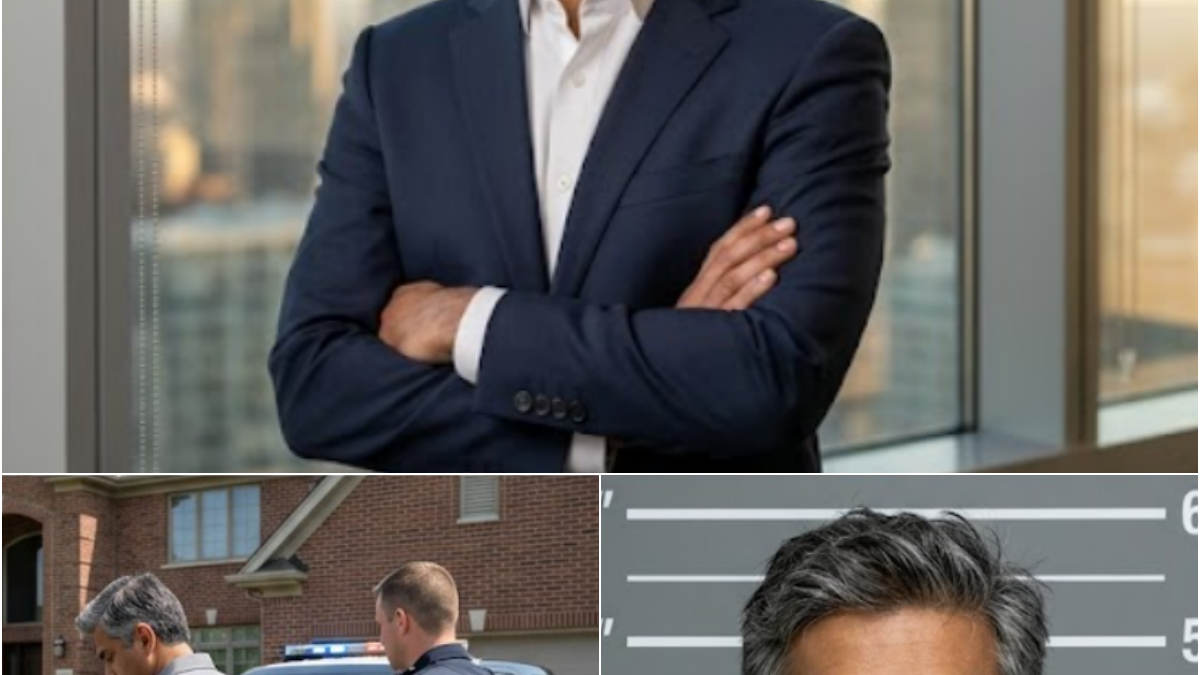
This is Rohan Kapoor. I want to walk through this one slowly, because the easy version of this story treats him as either a victim or a con man, and neither of those words, on their own, holds up against everything he actually did.
Rohan Kapoor was born in Ahmedabad, Gujarat, in 1979, into a family that had built a modestly successful textile export business over two generations, the kind of business that produced comfort without ever quite producing the wealth Rohan’s own generation had started to want more visibly. He studied commerce at Gujarat University, joined the family business in his early twenties, and spent the next two decades expanding it methodically — new buyers in the Gulf, then Europe, then, by his late thirties, a small but real export relationship with two American retailers that made him, by any reasonable measure in Ahmedabad’s business community, a successful man. He married in 2004, had two children by 2009, and built, by his own account to friends, a life he considered essentially complete, aside from the one open question every family in his circle eventually got around to discussing over dinner: what, if anything, they intended to do about America.
Success, in that community, had a specific next chapter attached to it by the early 2010s: an American green card, pursued not out of any urgent desire to relocate but as a kind of insurance policy, an option held in reserve for his two children’s education and, if it ever came to that, for a life outside India that the family could step into without friction. Rohan’s own father had spent three years in the late 1990s pursuing a work-based visa path that ultimately collapsed when his sponsoring employer went out of business, an old family disappointment that Rohan, without ever quite saying so directly, seemed determined not to repeat.
The EB-5 immigrant investor visa program offered exactly this — a path to permanent residency in exchange for an investment of at least $800,000 (the threshold at the time, in a designated targeted employment area) into a project that created a required number of American jobs, typically administered through a “regional center,” a Department of Homeland Security-designated entity that pooled investor capital into larger real estate or infrastructure projects on investors’ behalf. Unlike almost every other visa category that appears across stories like this one, EB-5 requires no sponsoring employer, no marriage, no scholarship — only capital, and a willingness to trust that the project receiving it is what its marketing materials describe.
Rohan began researching EB-5 opportunities in 2019, working through a network of immigration consultants who specialized in connecting Gujarati business families to regional centers across the US, an ecosystem that ran, in practice, almost entirely on word of mouth and shared trust — a consultant vouched for by a cousin’s business partner, a regional center recommended by someone two weddings removed. He attended two investor seminars in Ahmedabad, both hosted by consultants representing different regional centers, and spent nearly two years comparing options before, in late 2021, he was introduced, through exactly this kind of chain, to a Houston-based regional center called Bayshore Development Partners, which was raising EB-5 capital for a mixed-use hotel and retail complex near the Port of Houston, promising both the required job creation numbers and, eventually, a modest return on the capital itself once the project stabilized.
He invested $900,000 in March 2022 — money drawn partly from the textile business’s retained profits and partly from a loan against a commercial property the family owned in Ahmedabad, a decision his wife would later describe, in a brief statement to investigators, as one she had supported fully at the time and had no reservations about whatsoever. He filed his I-526 petition — the initial EB-5 petition establishing the investment and its job-creation plan — and was approved for conditional permanent residency in early 2023, a two-year conditional green card that would become permanent only once he filed a follow-up petition, the I-829, demonstrating that the investment had, in fact, created the required jobs and remained genuinely at risk in the project, the standard EB-5 requires throughout the conditional period.
The first signs of trouble surfaced in mid-2022, within months of his investment, though Rohan did not initially read them as trouble so much as ordinary delay. Bayshore’s promised groundbreaking, originally scheduled for that summer, slipped to the fall, then to early 2023, attributed each time to permitting issues, supply chain problems, financing gaps that the fund’s principal, a developer named Chad Whitfield, described in quarterly investor calls as “temporary and fully expected in a project of this scale.” Rohan, newer to the American commercial real estate landscape than he was to textiles, found this plausible enough. Several other investors on the same calls, some of whom he’d known socially for years before either of them had heard of Bayshore, expressed the same cautious patience.
By early 2023, patience had started to feel, even to Rohan, like something closer to willful blindness. He requested a detailed accounting of the fund’s expenditures in March 2023, a right explicitly reserved to investors under the fund’s own operating agreement, and received, after two months of delay, a set of financial statements that did not reconcile — construction expenditures listed that did not match any visible construction activity at the site, which Rohan, on a trip to Houston that April, drove past himself and found to be an empty, unchanged lot.
He hired a Houston-based forensic accountant privately, without informing Whitfield, in May 2023. The accountant’s findings, delivered to Rohan alone in June, were unambiguous: of the roughly $9.4 million raised from Bayshore’s first twelve EB-5 investors, only about $1.1 million had gone toward anything resembling the stated project. The remainder had been diverted — some into Whitfield’s personal accounts, some into an entirely separate, failing commercial property he owned elsewhere in Houston, some simply spent on operating costs, consulting fees, and payments to earlier investors structured, the accountant noted with some understatement, “in a manner consistent with a Ponzi-type redemption pattern.”
Rohan now had a decision to make, and it is the decision he made next, not the investment itself, that turned this from a story about being defrauded into a story about something else.
Reporting the fraud immediately — to the SEC, to USCIS, to any authority — would have almost certainly meant the end of Bayshore Development Partners, the loss of his own $900,000 with no realistic prospect of recovery, and, critically, the collapse of the specific job-creation numbers his own pending I-829 petition depended on to convert his conditional green card into a permanent one. EB-5 law requires the investment to remain “at risk” and the jobs to materialize; a fund exposed as fraudulent before an investor’s conditions are lifted typically means the investor’s own path to permanent residency collapses along with it, through no fault the immigration system is generally inclined to forgive.
Rohan did not report it. Instead, over the following ten months, he did something considerably harder to explain away: he continued attending Bayshore’s investor calls without disclosing what he knew, continued describing the project, in conversations with acquaintances back home and in Houston’s Gujarati business community, as a solid and well-managed opportunity, and personally introduced Whitfield to at least seven additional prospective investors between July 2023 and April 2024 — family friends, a former business associate from Ahmedabad, the younger brother of a man he’d known since university — each of whom went on to invest, collectively, just over $5.1 million into the same fund.
His own later explanation to federal investigators, given voluntarily and at length once the case against him became impossible to avoid, was that he believed, at the time, that new capital could still save the project — that Bayshore’s underlying real estate, even mismanaged, still had genuine value, and that fresh investment might allow enough of the promised jobs to materialize to protect not just his own I-829 petition but those of everyone he brought in behind him. He maintained, throughout, that he never personally profited from the referrals beyond a standard finder’s fee arrangement Whitfield had offered him — 2 percent of any capital he introduced, a fee Rohan collected on all seven new investments, totaling just over $102,000.
I don’t think that fee is what makes this a crime, exactly, or at least not the whole of it. I think what makes it a crime is that he knew, with a forensic accountant’s report sitting in his own files, exactly how unlikely his optimistic theory actually was, and let eleven families — the original four plus the seven he brought in — keep believing something he had already stopped believing himself.
Bayshore Development Partners collapsed entirely in late 2024, when Whitfield stopped returning investor calls altogether and the fund missed a scheduled distribution to its earliest investors for the third consecutive quarter. Three investors, independently and within the same month, filed complaints with the SEC in November 2024. The SEC’s enforcement division opened a formal investigation in December, quickly identifying the broader fraud pattern the forensic accountant Rohan had privately hired eighteen months earlier had already documented in full.
What brought Rohan into the investigation specifically, rather than leaving him classified simply as one victim among many, was the same forensic accountant — subpoenaed independently by SEC investigators once his name surfaced in Bayshore’s own client records, since Whitfield, in a bid for a lighter sentence, had begun cooperating and specifically named Rohan as someone who had “understood the situation better than most investors” well before the later rounds of fundraising occurred. The accountant, under subpoena, confirmed he had delivered his full findings to Rohan in June 2023, more than a year before the fund’s collapse, and more than ten months before the last of the seven referred investors wired her $650,000.
FBI agents interviewed Rohan in January 2025. He was cooperative, provided his own copy of the June 2023 forensic report without being asked twice, and did not, by any account from the interview, attempt to minimize what he’d done once confronted with the timeline laid out plainly in front of him. He was indicted in March 2025 on charges of securities fraud and wire fraud conspiracy, specifically tied to the period after June 2023 — prosecutors drew the line precisely there, treating his own initial $900,000 investment and his first eighteen months as a victim rather than a defendant, and treating everything after the forensic report landed on his desk as something else entirely.
The trial opened at the U.S. District Court for the Southern District of Texas in September 2025. The government’s case rested almost entirely on the timeline — the dated forensic report, the dated investor calls Rohan continued attending afterward, the dated wire transfers from the seven referred investors, and the $102,000 in finder’s fees, presented not as the motive for the scheme itself but as evidence that Rohan had a direct financial incentive to keep believing, or at least keep performing belief in, a project he had every reason to know was failing.
Rohan’s attorney did not dispute the timeline. He argued instead that his client’s state of mind through 2023 and early 2024 reflected genuine, if increasingly desperate, hope rather than knowing fraud — that a man whose entire family’s future immigration status depended on a specific project succeeding was not a reliable narrator of his own certainty about that project’s failure, and that the law required proof of intent to deceive, not merely proof of an optimism the jury, with hindsight, could easily judge as unreasonable. He called two of the seven referred investors as defense witnesses, both of whom testified, somewhat reluctantly, that Rohan had personally lost far more than either of them and seemed, in their own conversations with him at the time, to genuinely believe recovery was possible.
The prosecution’s response leaned on a single exhibit more than any other: a text message Rohan had sent to his wife in September 2023, recovered from a cloud backup, three months after the forensic report and two months into his referral activity, reading, in full, “I don’t think this recovers. Ashish is asking again about investing. I don’t know what to tell him.” He had told Ashish, three weeks later, that Bayshore remained “a solid long-term opportunity.” Ashish invested $780,000 the following month.
The jury deliberated for six days, the longest deliberation of any case in this entire series, and returned a split verdict that seemed, from the outside, to mirror the exact tension the trial itself had never fully resolved: guilty on the wire fraud conspiracy counts tied to all seven referrals, not guilty on the more serious securities fraud counts that would have required proving he’d acted, throughout, as something closer to a co-architect of the scheme rather than a complicit participant in its final stretch.
He was sentenced in November 2025 to seven years in federal prison and ordered to pay restitution jointly and severally with Whitfield — a legal structure that in practice meant Rohan, the more collectible defendant given his remaining Ahmedabad business assets, would bear the bulk of the $5.1 million owed to the seven families he’d referred, regardless of how the court apportioned blame between the two men on paper.
His own I-829 petition, still pending at the time of his indictment, was denied outright once the underlying investment was established as fraudulent and non-compliant with EB-5’s job-creation requirements — a denial that would have come regardless of the criminal charges, since the investment itself, tainted from the start, could never have satisfied the visa’s core conditions no matter what Rohan had or hadn’t known. His conditional green card status terminated automatically. Following his sentence, he faces removal proceedings, with no clear path back to any future US immigration benefit given the federal fraud conviction now attached permanently to his record.
Whitfield, the fund’s actual architect, pleaded guilty in a separate proceeding in October 2025 to the full scope of the original fraud and was sentenced to eleven years — the longer sentence, but one that came with its own asymmetry, since Whitfield, having spent the diverted funds years earlier on his own failing property and personal expenses, had almost nothing left for the restitution order to actually recover.
Rohan’s wife and two children returned to Ahmedabad in early 2026, ahead of his removal, to reopen a small section of the family’s original textile business that had been scaled back during the years he’d focused on Bayshore and, increasingly, on the case. His elder daughter, twenty-two at the time of his sentencing, gave one brief statement to a Gujarati-language business publication, declining to discuss her father’s guilt or innocence directly, saying only that the family “believed, for a long time, that patience was a kind of loyalty,” a sentence the publication ran as its headline without further comment, leaving it, as she apparently intended, for readers to finish interpreting on their own.
I keep returning to the text message — three months in, already certain it wouldn’t recover, still eleven months and six more investors away from stopping. There’s a version of this story where that message is the whole tragedy: a man who knew exactly what was happening and simply could not find, inside himself, the version of honesty that would have cost him everything at once instead of slowly, in installments, alongside everyone he brought down with him.








