Grandmother Confessed Her Firstborn Was Half-Bigfoot, The Child Lived in the Hills Until THIS
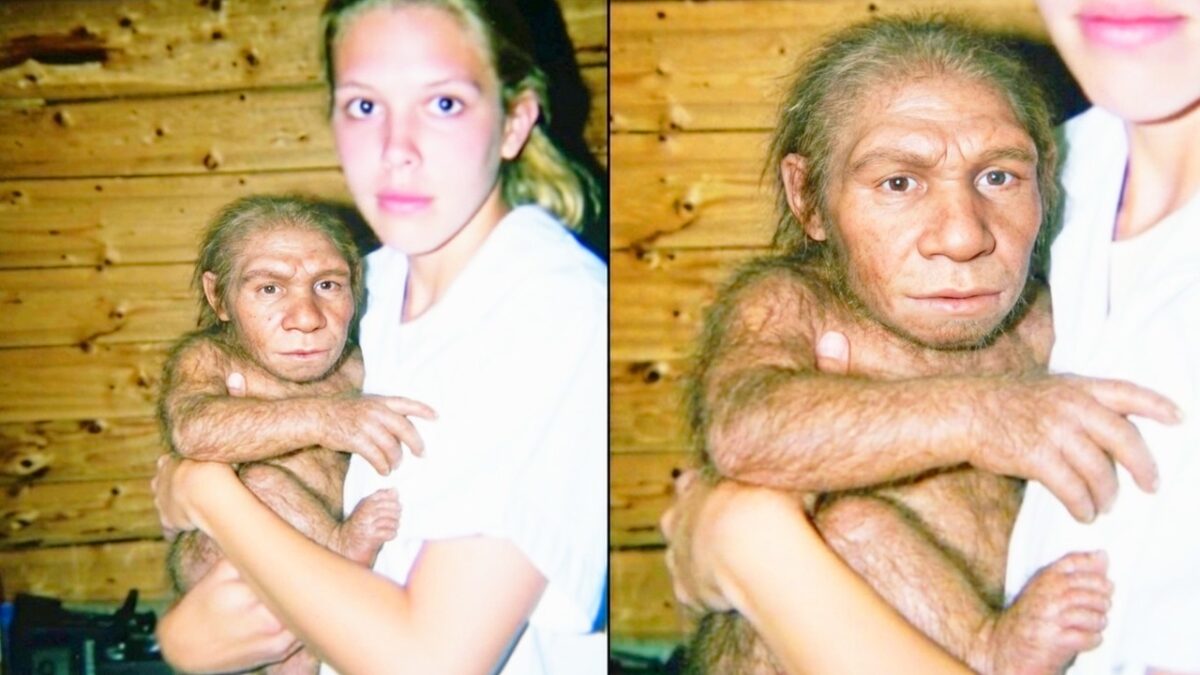
My grandmother waited until she was 89 years old and three days away from dying to tell me the one thing she had sworn she would take to her grave. She did not plan to tell me. I do not think she planned to tell anyone.
But morphine has a way of loosening the architecture of a person’s silence. And when the walls came down in that hospice room in Wesville, North Carolina, what poured out of Edna Burl was not delirium. It was the most precise and deliberate confession I have ever heard from another human being.
My name is Sarah Burrell Cop. I am 41 years old. I manage a feed and farm supply store in Canton, North Carolina, about 20 m west of Asheville.
I have lived my entire life within a 30 m radius of the house where I was born. And I have spent that entire life believing I understood my family. I understood nothing.
What my grandmother told me in September of 2019 in a room that smelled like antiseptic and cut flowers and the particular sweetness that gathers around people who are almost gone rearranged everything I thought I knew about the Burl family, about the mountains I grew up in, and about the strange unexplained things I had witnessed as a child that no one in my family would ever discuss. I need to start with who my grandmother was because context matters. If you do not understand, Edna Burl, the confession does not land the way it should.
It sounds like the ravings of a dying woman. It was not. It was the unbburdening of a woman who had carried an impossible weight for 57 years, and had finally decided that the carrying was worse than the telling.
Edna May Presley was born in 1930 in a one- room cabin on the side of Richland Bolsam Mountain in Hwood County, North Carolina. Her father was a timber man who worked the slopes for Champion Fiber. the paper company that owned or controlled most of the forest in that part of the state at the time.
Her mother raised seven children and kept a garden on a hillside so steep you had to brace your feet sideways to hoe the rose. They were mountain people in the truest sense, not poor by their own reckoning, because they had land and food and family, but poor by any standard that involved cash money. Edna was the fourth child in the first girl and by her own account she grew up tougher than her brothers because she had to.
She married my grandfather Howard Burl in 1951 when she was 21 and he was 24. Howard had come back from Korea the year before with a bronze star he never talked about and a limp in his left leg from shrapnel that would bother him for the rest of his life. He was a quiet man, a carpenter by trade, and he built the house on Kataluchi Road where my grandmother would live for the next 65 years.
That house sat on 60 acres of mountain land that backed up against the Great Smoky Mountains National Park, and the boundary between their property and government land was nothing more than a line on a map. The forest did not know where Howard Burl’s land ended and the park began, and neither did anything that lived in it. They had five children.
My mother, Patricia, was the youngest, born in 1968, but the first was a boy. A boy whose name my grandmother had never spoken aloud in my presence until that September afternoon in hospice. A boy who, according to every piece of family history I’d ever been told, died at birth in 1962 and was buried in an unmarked grave on the property.
I had grown up accepting that story the way you accept anything you are told as a child. It was simply a fact of family history. Grandma and Grandpa’s first baby died.
It was sad you did not ask about it. The subject was closed. Except the subject was not closed.
It had never been closed. It had been locked in a room that my grandmother guarded every single day of her life. And the key was a secret so enormous that it bent the shape of everything around it.
I need to tell you about that property, about those 60 acres in the wilderness behind them, because the land is as much a character in this story as any person. Cataluchi is a valley that sits in one of the most remote sections of the Great Smoky Mountains. Before the national park was established, it was home to a thriving community of mountain families.
Over a thousand people lived in that valley at its peak. But when the government took the land for the park in the 1930s and 1940s, the families were forced out and the valley went back to the wild.
By the time I was growing up in the 1990s, Cataluchi was one of the loneliest places in the eastern United States. The road in was unpaved for miles, gated at night, and surrounded on all sides by forests so dense and so old that the trees blocked out the sky. My grandparents property was on the eastern edge of this wilderness.
Their land climbed from a creek bottom up a steep ridge and beyond that ridge the national forest stretched unbroken for miles in every direction. As a child I spent summers on that property. My mother would drop me off in June and pick me up in August and I would run those hills with a freedom that seems impossible now.
I fished in the creek, picked blackberries along the fence line, helped my grandfather in his workshop, and listened to my grandmother tell stories on the porch while she snapped beans into a bowl. But there were rules. Rules that I understood were absolute, even though no one ever explained the reasons behind them.
Do not go past the big popppler tree on the ridge. Do not walk the creek bed north of the cattlegate. And above all, do not go into the woods after dark.
My grandfather enforced these rules with a sternness that was unusual for a man who was otherwise gentle and patient. The one time I wandered past the popular tree, I was maybe 8 years old, chasing a box turtle up the slope, and my grandfather appeared behind me so quickly and so silently that I screamed. He did not yell.
He picked me up and carried me back down the ridge without a word. And the look on his face was not anger. It was fear.
pure undisguised fear on the face of a man who had earned a bronze star in combat. That image stayed with me for decades, and I never went past the popular tree again. The sounds were the other thing.
Every child who spent time on that property heard them, though the adults pretended they did not exist. At night, especially in the fall, the mountains behind the house came alive with noises that did not belong to any animal I knew. deep knocking like someone hammering a log against a tree trunk in a slow deliberate rhythm.
Howls that started low and rose into a pitch that vibrated in your chest. And sometimes rarely a sound that I can only describe as singing, except it was not melody in any human sense. It was a sustained resonant tone that seemed to come from everywhere at once, filling the valley like water filling a bowl.
I asked my grandmother about the sounds once when I was nine. She was shelling peas on the porch and I had just heard the knocking start up on the ridge behind the house. She did not look at me.
Her hands kept moving through the pea pods and she said without any inflection. Those are just the old ones talking. I asked her who the old ones were.
She did not answer and I knew from the quality of her silence that there would be no more discussion. My grandmother was diagnosed with pancreatic cancer in June of 2019. The doctors in Asheville gave her four to six months, which turned out to be optimistic.
The cancer was aggressive, and by August, she had moved to hospice care in Wesville. My mother and her siblings rotated shifts. But I was there more than anyone because I lived the closest, and because in truth, my grandmother and I had always had a bond that went deeper than the others.
She had taught me to garden, to can vegetables, to read the weather by the shape of the clouds over cold mountain. She had given me the mountains, and I was not going to let her leave them without someone who loved her holding her hand. The confession came on a Wednesday afternoon, September 11th, 2019.
I remember the date because of the obvious significance, though the day’s meaning for me now has nothing to do with what happened in New York 18 years earlier. My mother had just left, and the room was quiet. The afternoon sun was coming through the window and falling across the foot of my grandmother’s bed.
She had been sleeping for most of the day, but she opened her eyes and looked at me with a clarity that startled me. The morphine haze was gone. Her eyes were sharp, present, and full of something I recognized as decision.
“Sarah,” she said, “I need to tell you about your uncle.”
“I assumed she meant one of her brothers.”
I started to say something about Uncle Vernon, who had died in 2003. But she shook her head with a force that surprised me given how weak she had become. Not Vernon, she said.
Your uncle, my firstborn, the one they told you died. I felt the room shift. Not physically, but the way a room shifts when the air pressure changes before a storm.
Something fundamental was about to be different. And my body knew it before my mind did. He did not die, Sarah.
He lived. He lived his whole life up in those hills behind the house. And he is still there.
I did not speak. I sat in the plastic chair beside her bed and I held her hand and I let her talk. And what Edna Burl told me over the next 3 hours with breaks for pain medication and brief descents into sleep was the story she had kept locked inside herself for 57 years.
It started in the spring of 1961. My grandmother was 31 years old, already a mother to two children. My uncle Gerald who was eight and my aunt Donna who was six.
Howard was working a construction job in Asheville that kept him away from the property Monday through Friday. My grandmother was alone on those 60 acres with the children during the week, managing the livestock, tending the garden, keeping the household, running the way mountain women did in that era, through relentless physical labor and an iron will. She told me she first saw it on a morning in late April.
She was hanging laundry on the line behind the house, and she looked up toward the ridge and saw a figure standing at the edge of the treeine. She said her first thought was that a hiker had wandered off the park trail, which happened occasionally, but even from that distance, maybe 200 yd. She could tell something was wrong with the proportions.
The figure was too tall, the shoulders were too broad, and it was not wearing clothes. It was covered in dark hair, reddish brown in the morning light, and it stood upright with a stillness that she said was unlike anything she had associated with a person or an animal. It was the stillness of something that knew exactly what it was doing, and what it was doing was watching her.
She dropped the laundry basket and went inside and got Howard’s rifle.
By the time she came back out, the figure was gone. She did not tell Howard when he came home that Friday. She told me she was not sure why.
Part of it was that she had convinced herself she had seen a bear standing on its hind legs, which was possible, though she knew in her gut it was not true. Part of it was something else, a feeling she could not articulate, a sense that what she had seen was not a threat, and that speaking about it would somehow change the nature of the encounter. She saw the Bigfoot again two weeks later.
This time she was in the garden, and it was closer, standing just inside the treeine at the edge of the clearing, maybe 100 yards away. She could see it more clearly now. It was male.
She was certain of that. The build was unmistakably masculine, enormous through the chest and shoulders, with arms that hung past its knees. The face was broad and flat, with deep set eyes that she said looked almost human, but not quite.
The brow ridge was heavy, the jaw was wide, and the skin visible on the face and palms was dark like leather that had been worked in the sun for years. It watched her for what she estimated was 10 minutes. She did not run.
She did not go for the rifle. She stood in her garden with a hoe in her hand, and she watched it back. And she told me with a directness that left no room for doubt, that she felt no fear.
What she felt, she said, was recognition. Not that she had seen this specific creature before, but that some part of her, some ancient buried part of her brain, recognized what it was, and understood that it meant her no harm. Over the following weeks, the Bigfoot appeared with increasing regularity.
Always at the edge of the clearing, always watching, always alone. My grandmother began leaving food. She told me she did not make a conscious decision to do this.
It happened the way instincts happen. She was carrying potato peelings and corn cobs to the compost pile one evening, and instead of dumping them in the pile, she walked to the edge of the clearing and set them on a flat rock. She did not know why.
She just did it.
The next morning, the food was gone, and in its place were three brook trout, gutted and cleaned, laid out on the rock in a neat row. My grandmother sat in her hospice bed and described this to me with a precision that eliminated any possibility of delusion. She remembered the exact species of fish.
She remembered the way they were arranged. She remembered the feeling that swept through her when she realized the creature had not just taken the food, but had reciprocated. A gift from the mountain, she called it.
And then she paused because she realized she had used a phrase that I had never heard before, but that clearly held enormous meaning for her. The exchange continued through the summer of 1961. Food left on the rock.
Food returned. My grandmother expanded her offerings beyond scraps. She left bread, apples, smoked meat.
The Bigfoot left fish, rabbit, once an entire haunch of venison that had been butchered with a skill that my grandmother said rivaled Howards. She never saw the Bigfoot take the food or leave his offerings. The transactions happened in the dark overnight, and the only evidence was what appeared on the rock each morning.
Then, in August the pattern changed. She went to the rock at dusk to leave a basket of tomatoes, and the Bigfoot was already there, standing beside the rock, waiting. She said her heart nearly stopped, not from fear, but from the shock of proximity.
He was less than 30 ft away, and at that distance she could see details she had missed from across the clearing. The hair on his body was not uniform. It was shorter on his face and chest, longer on his arms and back.
His hands were enormous, but shaped like human hands, with an opposable thumb and nails, not claws. And his eyes, which he could now see clearly in the fading light, were brown, dark, and deep, and unmistakably intelligent. He looked at her the way a person looks at someone they have been wanting to meet.
She set the tomatoes on the rock. He picked one up and ate it in two bites. She said the sound of him eating was so ordinary, so familiar in its mechanics that it made the extraordinariness of the situation feel almost normal.
He was just someone eating a tomato, except he was 8 ft tall and covered in hair and standing in a clearing in the Great Smoky Mountains. What happened over the following weeks, my grandmother said, was a courtship. She used that word deliberately, and she said it without shame or apology.
The Bigfoot came to the rock every evening and she met him there. They did not speak obviously, but communication happened through gestures, through offerings, through a kind of emotional transmission that my grandmother described as feeling him. She said she could sense his moods the way you can sense the mood of someone you have lived with for years.
except this understanding developed not over years but over weeks, as if the channel between them had always existed and simply needed to be opened. She told me that Howard was still away during the weeks. She told me this with her eyes fixed on mine, making sure I understood the logistics, the timeline, the opportunity, and then she told me what happened next in a single sentence that she delivered with the same flat, unflinching directness she had used for everything else.
He came to me in September, and I let him, and it was not force, and it was not fear, and I have carried it with me every day since.” She paused after saying this.
The morphine pump clicked. The sunlight had moved across the bed and was now falling on her hands which were folded over the blanket.
She looked at me and said, “I know what you are thinking.
I am not crazy. I was not crazy then and I am not crazy now. I was not thinking she was crazy.
I was thinking about the sounds on the ridge, about my grandfather’s face when he found me past the popppler tree, about the old ones talking, about every strange, unexplained thing I had absorbed during my summers on that property and filed away in the part of my mind where children store things that adults refuse to explain. The baby was born in May of 1962. My grandmother delivered him alone in the house, not by choice, but by necessity, because what came out of her could not be seen by a doctor, a midwife, or anyone else who might ask questions that had no safe answers.
She said the labor was fast, faster than either Gerald or Donna, and the pain was different, deeper, more concentrated. When the baby emerged, she knew immediately that her life had split into before and after, and that there would be no going back. He was large, nearly 11 lb, she estimated, though she did not have a scale.
He was covered in fine dark hair, not the downy lenugo that some human babies are born with, but a denser, coarser covering that was unmistakably his father’s. His face was broader than a human infant’s, with a heavy brow ridge already visible and a jaw that was wider than it should have been. But his eyes, she said, were Presley eyes.
Her eyes gray green with flexcks of gold around the pupils. And he looked at her with a focus and attention that she said was nothing like the unfocused gaze of a newborn. He saw her.
He knew her. She named him Amos. Not on a birth certificate, not in a church, not in any record that existed anywhere outside of her own heart.
Just Amos because it was a family name, her grandfather’s name, and because it meant carried by God. and she believed that whatever had brought this child into the world was something larger than her ability to comprehend. My grandmother told Howard.
She told me this and I understood even as she said it how extraordinary a decision that was. Howard Burl, a Korean War veteran, a Baptist deacon, a man whose world was built on straight lines and right angles and the absolute certainty that he understood how things worked. She told him everything and she showed him the baby and she waited for the explosion.
It did not come. My grandmother said Howard sat in the kitchen for a long time without speaking. Then he went outside and walked up to the ridge and stood at the treeine for half an hour.
When he came back in, he looked at the baby and he looked at Edna and he said, “We cannot keep him in this house.
People will know, but we are not going to abandon him either. He is yours and that makes him mine. I want you to sit with that for a moment.
A man in 1962 in the mountains of western North Carolina confronted with the most impossible situation imaginable. And his response was not rage, not rejection, but a practical assessment of the problem and a moral commitment to the child. My grandmother cried when she told me this part.
It was the only time in the entire confession that she cried. And I understood that she was not crying from the memory of the revelation, but from the memory of Howard’s grace. Together, they devised a plan.
They told the family and the community that the baby had been still born. Howard built a small coffin, and they held a burial on the property, and everyone who attended mourned a child who was alive and healthy, hidden in a room at the back of the house. For the first six months, my grandmother nursed Amos in secret, keeping him in the back room during the day and bringing him out at night when Gerald and Donna were asleep.
But Amos was growing at a rate that made the situation untenable. By 6 months, he was the size of a 2-year-old. His hair was thickening.
His strength was already remarkable. He could grip the bars of the crib how it had built with enough force to bend the wood. And he was making sounds, not crying the way human babies cry, but producing deep, resonant vocalizations that carried through the walls of the house and could be heard from the yard.
Keeping him hidden inside was becoming impossible. Howard made the decision. They would move Amos to the hollow beyond the south ridge, the deep sheltered depression in the terrain where the creek ran through limestone walls, and the canopy was thick enough to block the sky.
Howard spent two weeks building a shelter there, a solid structure of logs and stone tucked under a rock overhang, insulated with cedar boughs and animal hides, invisible from more than 20 ft away. And in November of 1962, when Amos was 6 months old, they moved him to the hollow. My grandmother walked that ridge every single day for the next 57 years.
Every day in snow, in rain, in the brutal August heat, when the humidity turned the air into something you had to push through rather than breathe. She brought food. She brought blankets.
She brought the fierce, desperate, unwavering love of a mother for a child who could never live in her house, never sit at her table, never be acknowledged as her son. She nursed him until he was over a year old, then transitioned him to solid food, which he took to with an appetite that required her to essentially double the family’s food production without anyone noticing. Howard helped.
He maintained the shelter, expanded it as Amos grew, built a fire pit that vented through a natural crack in the rock so the smoke would dissipate before rising above the canopy. He brought tools, clothing, supplies, and most remarkably, he developed a relationship with Amos that my grandmother described as fatherhood in every way that mattered. Howard taught Amos to use a knife to start a fire, to snare rabbits.
He talked to Amos the way he talked to his other children with patience and expectation and the quiet pride of a man watching someone learn. Amos grew fast.
By the time he was 5, he was as tall as a 10-year-old. By 10, he was over 6 ft. By 20, my grandmother said he stood close to 7 and 1/2 ft tall and weighed well over 400 lb, virtually none of it fat.
His body was covered in the same dark reddish brown hair as his father, but his face, while broader and heavier than a human face, was expressive and mobile in ways that were unmistakably human. He could smile. He could frown.
He could produce an expression of tenderness when he saw his mother coming over the ridge that my grandmother said broke her heart and healed it at the same time every single day for 57 years. My grandmother described Amos’ development with the same clinical precision that characterized everything else she told me. His language acquisition was slow by human standards, but steady.
Howard worked with him every weekend, teaching him words through repetition and association. By age 5, Amos could say about 20 words. By 10, closer to 80.
His comprehension always far outpaced his production. My grandmother said he understood virtually everything she said to him by the time he was a teenager, even if his responses were limited to short phrases and single words. His vocal anatomy made certain sounds impossible.
Hard consonants were difficult. Long vowels were easier. He called my grandmother ma, a sound he could produce clearly, and Howard was simply p.
Both words he had used since before he was two. His physical capabilities were extraordinary. My grandmother described watching him move through the forest with a silence and efficiency that defied his size.
He could cover ground at a speed that no human could match on that terrain, moving over rocks and through brush as if the obstacles did not exist. His strength was beyond anything she could quantify. She watched him move a fallen oak that Howard estimated weighed over a,000 lb, lifting one end and walking it sideways to clear a path to the creek.
He did this casually, the way you might move a chair that was blocking a doorway. He could see in the dark. This was not night adapted vision in the human sense.
My grandmother said Amos moved through the forest at midnight with the same confidence and precision that she moved through her kitchen at noon. His eyes reflected light the way an animal’s eyes do, a dim amber glow that she saw occasionally when she visited the hollow late in the evening, and he was waiting for her in the shadows, and he healed. A gash on his arm from a fall onto sharp rock closed in 3 days.
A deep puncture wound from a broken branch that my grandmother was certain gone into the muscle was completely healed within a week. No infection, no scarring. His body temperature ran hot, noticeably hot, when he held her hand, which he did every time she visited, pressing his palm against hers in a gesture that had become their ritual greeting.
His skin was warm enough to feel like a mild fever. But what my grandmother spoke about most was not his physical nature. It was his emotional life.
She described Amos as the most gentle being she had ever known. He had a deep, quiet sensitivity that manifested in small gestures of care. He would gather wild flowers and arrange them on the flat rock outside his shelter when he knew she was coming.
He would find unusually shaped stones or perfect acorns, and present them to her with a semnity that transformed the offering into ceremony. He carved figures from wood, crude but recognizable animals and people and shapes that my grandmother believed were his interpretations of things Howard had described to him about the world beyond the ridge. He experienced sorrow.
My grandmother said that when Howard died in 2007, the sound Amos made when she told him echoed through the hollow for what felt like hours. It was a sustained low frequency keening that she felt in her bones more than she heard in her ears. He went to the spot where Howard had always sat when he visited, a flat rock beside the creek, and he stayed there for 3 days, not eating, not sleeping, just sitting in the place where his father had been.
My grandmother brought him food and sat with him and said nothing because there was nothing to say. Grief needs no language. It is its own communication.
After Howard’s death, my grandmother was Amos’ only connection to the human world. She was 77 years old and walking that ridge every day, carrying food and supplies over terrain that would challenge someone half her age. I think about that now, and I understand the particular steel that mountain women are made of.
Nothing could have stopped her. Not age, not weather, not the arthritis that gnarled her hands so badly in her later years that she could barely open a jar. She walked that ridge because her son was on the other side of it, and that was the only fact that mattered.
As she spoke, I began reassembling my childhood. Every strange thing that had happened on that property reorganized itself into a new pattern, the way scattered iron filings align when you pass a magnet underneath the paper. the food.
My grandmother’s garden was enormous, absurdly large for two elderly people. She grew enough vegetables to feed a family of 10, and she canned more than any single household could consume in 5 years. As a child, I assumed she gave the excess to neighbors or to the church.
I now understood where it went. The sounds, the knocking and howling and singing on the ridge at night were not the old ones talking. They were Amos.
or rather they were Amos communicating with his father’s kind, the Bigfoot that still lived in the deep forests behind the property. My grandmother confirmed this without my asking. She said Amos had contact with others like his father.
She did not know how many or how often, but she heard them calling to each other on autumn nights, and Amos would sometimes disappear from the hollow for days at a time, returning with a calmness that suggested he had been in the company of his own, the popppler tree. My grandfather’s fear when he found me past it was not about the terrain or the dangers of the forest. The popppler tree was the boundary.
Beyond it, the path led to the south ridge and then down into Amos’ hollow. My grandfather was terrified that I would find my uncle. The locked room.
At the back of my grandparents house, there was a small room that was always locked. I was told it was storage. I accepted that without question.
My grandmother told me it was where she had kept Amos for the first 6 months of his life, and that she had never been able to use it for anything else afterward. The room held too much. She locked it the way you might lock a chapel, not to keep people out, but to preserve what had happened inside.
My grandmother finished talking around 6:00 in the evening. The light was gone from the window, and the room was lit by the amber glow of the bedside lamp. She was exhausted.
The telling had cost her something physical, and I could see the pain beginning to crest through the medication. But before she let herself rest, she looked at me with those gray green Presley eyes and said the thing that changed the trajectory of my life. I need you to take care of him, Sarah.
You are the only one I trust. Patricia would panic. Gerald would deny it.
Donna would call someone. But you have always understood the mountains. You have always listened when the rest of them just heard noise.
She squeezed my hand with a strength that should not have been possible in a woman her size and condition, and she gave me directions. Pass the popppler tree. Follow the ridge south until the terrain drops into the first hollow.
Stay left where the creek forks at the limestone ledge. Look for the rock overhang with the cedar growing out of the top. Call his name.
He knows the word for niece. Howard taught it to him years ago. My grandmother died on September 14th, 2019, 3 days after the confession.
I was holding her hand. The last thing she said, so quiet I had to put my ear next to her mouth to hear it, was tell Amos his mom loves him. The funeral was on Saturday.
The church in Canton was full. Edna Burl had been a fixture in that community for nearly 70 years, and people came from three counties to pay respects. I stood in the receiving line and shook hands and accepted casserles and heard stories about what a strong woman she had been.
What a good Christian, what a pillar. And the entire time I was thinking about a hollow in the mountains and a man named Amos, who did not know his mother was dead. I went on a Tuesday, September 17th, 2019.
I told my husband Daniel that I needed to spend a few days at the property to start sorting through my grandmother’s things, which was true in the way that technically accurate statements can conceal enormous lies. I packed a bag with food, apples, bread, peanut butter, a block of cheddar cheese, a bag of trail mix. I did not know what Amos ate.
I guessed based on what my grandmother might have brought him and what seemed practical to carry over rough terrain. The drive to the property took 40 minutes. The house was empty and cold, the way houses become when the person who animated them is gone.
I walked through the rooms and felt my grandmother’s absence like a physical subtraction from the air. The kitchen still smelled like her. Coffee and biscuits and the faint sweetness of the hand cream she used after washing dishes.
I stood on the back porch and looked at the ridge. The September light was golden on the canopy, and the first hints of full color were showing in the maples. The popppler tree was visible from where I stood, a massive tulip popppler that must have been 200 years old, its trunk wide enough that I could not have wrapped my arms around it.
The boundary, the line I had never crossed. I crossed it at 11 in the morning with the bag of food over my shoulder and my grandmother’s directions running through my head like a prayer. The terrain beyond the popular tree was exactly as she described.
The ridge climbed for a quarter mile and then dropped sharply into a hollow that was deeper and more enclosed than anything on the northern side of the property. The creek bed was rocky and steep, the limestone walls closing in as I descended, and the air changed as I went lower. It became cooler, damper, heavier, with the smell of wet stone and decomposing leaves and something else, something organic and warm that I could not identify, but that made my pulse accelerate.
I found the fork at the limestone ledge. I went left. The creek narrowed into a corridor of rock and fern, and the canopy overhead was so dense that the light went dim and green, like walking underwater.
I could hear water dripping from the rock walls, and somewhere ahead, the deeper sound of the creek flowing over stones, and underneath it all, a quality of silence that I recognized. Not the absence of sound, but the presence of attention. The same silence I had felt as a child lying in bed on summer nights, listening to the old ones talking on the ridge.
Something knew I was there. I saw the overhang from about 50 yards away. The ceda growing from its top was exactly as my grandmother described, a twisted old tree that had somehow rooted itself in a crack in the limestone and grown at an angle that made it look like it was reaching for the sky and the ground at the same time.
Beneath the overhang, I could see the remains of the shelter Howard had built. It had been expanded and maintained over the decades, a structure of stacked stone and logs that fit into the natural contour of the rock so seamlessly that it looked like a geological formation rather than something constructed. There were apple cores on the ground near a flat rock, some fresh, some old and brown.
My grandmother’s offerings, the evidence of 57 years of daily visits, decaying quietly into the earth.
I set the bag of food on the flat rock and I called out, “Amos, my name is Sarah.
I am Edna’s granddaughter.
Your mom sent me.”
My voice echoed off the limestone walls and faded into silence. I stood there. The silence was complete.
I could hear my own blood in my ears. A full minute passed, then another. Then something moved.
Not in front of me, but to my right. Higher up the slope. A section of the forest that I had been looking directly at, but had not seen correctly.
A shape that my eyes had registered as shadow and stone and bark rearranged itself, and a figure was standing there. He had been there the entire time, watching, evaluating, deciding whether I was safe. Amos was enormous.
I am 5’6 and I consider myself average in every physical respect. And the figure standing 30 feet from me made me feel like a child standing next to a building. He was well over 7 ft tall, his shoulders nearly 4t across, his body covered in dark reddish brown hair that was longer on his arms and back and shorter on his chest and face.
His face was broad and heavy with a pronounced brow ridge and a jaw that was wider than any human face I had ever seen. But his eyes were the thing. His eyes were gray green with flexcks of gold around the pupils.
My grandmother’s eyes. My eyes, Presley eyes, looking at me from a face that belonged to something the world said did not exist. He studied me for a long time, his head tilted slightly, the way a dog tilts its head when it hears a sound it is trying to understand.
And I could see his nostrils working, taking in my scent. I stood absolutely still, not because I was afraid, but because I understood instinctively that stillness was the right response, that movement might break whatever fragile assessment was happening in his mind. Then he spoke.
The word came out low and rough and shaped by a mouth that was not built for human speech, but it was unmistakable. Ma, he was asking about my grandmother. The word was a question and a hope and a fear all compressed into a single syllable.
And hearing it from the throat of this massive impossible being in a hollow in the Smoky Mountains, broke something open in my chest that I do not think will ever fully close, I shook my head. Amos, I said. Ma is gone.
She passed away last week. She loved you. She told me to tell you she loves you.
I do not know how much of that he understood his language. I think he understood some of it, but what I am certain he understood was the tone, the grief, the finality. His face changed.
The heavy brow lowered, the mouth opened slightly, and from his chest came a sound that I had heard from my bedroom window every autumn of my childhood, the keening, low, sustained, resonant, a frequency that vibrated through the rock walls of the hollow and through my body and through something deeper than my body. The mourning cry of a son who has lost his mother. It filled the hollow and climbed the walls and escaped into the sky above the canopy.
And I sat down on the nearest rock because my legs had stopped working. And I cried while my uncle sang his grief into the mountains that had held him his entire life. I visited Amos every day for the next 3 weeks.
Each visit lasted longer than the one before, and each one revealed more about who and what he was. His vocabulary was larger than I expected, well over a hundred words that I could recognize, and his comprehension of my speech was clearly far beyond what he could produce. He understood when I told him about the funeral, about the people who came, about the flowers and the hymns.
He listened with an intensity of attention that I have never experienced from another person. His entire body oriented toward me, his eyes tracking my face as if my expressions were as important as my words. He showed me his world, the spring up the hollow, where the water came out of the rock so cold it made my teeth ache.
The grove of pawpaw trees where he harvested fruit in the fall. the cave deeper in the hollow where he slept in winter, its floor thick with cedar boughs and dried grass, its walls hung with objects arranged on natural ledges, a tin cup that I recognized as one of my grandfathers, a carved wooden bird, smooth riverstones polished by handling and photographs, three of them, faded and water stained but protected under a ledge of rock. One of my grandmother as a young woman standing in the garden.
one of my grandfather in his workshop grinning at the camera and one of the two of them together on the front porch sitting in the chairs where I had spent a hundred summer evenings listening to the sounds on the ridge and being told they were owls. But there was a problem and it was the reason the title of this account specifies 2019. That fall, the logging operation that had been threatening the area for months finally pushed into the terrain beyond my grandmother’s property.
State land legally accessible, and the trucks began grinding up roads that had not existed 2 months earlier. The sound of chainsaws echoed through the hollows, and the vibration of heavy equipment could be felt in the ground a mile away. Amos was distressed.
I could see it in the way he moved, restless and agitated, pacing the hollow in wide circuits, stopping to listen to the machines with an expression that mixed confusion with something deeper, a kind of existential dread that I wouldn’t have thought possible in a being who had lived his entire life in one place. His home was being invaded, and he had no framework for understanding what was happening or why. The worst came in late October.
A logging crew pushed a skid road to within a quarter mile of the hollow. The noise was constant. Birds and animals fled the area.
The creek ran brown with sediment from the disturbed ground. And one afternoon I arrived at the hollow to find Amos gone. Not just absent from the overhang, but gone.
His shelter was empty. The objects on the ledges in his cave were missing. The fire pit was cold.
I searched for three days. I walked every inch of that hollow and the ridges above it, calling his name until my voice was raw. I found tracks heading north into the deepest, most inaccessible section of the national park, and I followed them as far as I could before the terrain defeated me.
The tracks led up and over a ridge that I could not climb without equipment into country so remote that the park service itself rarely went there. Amos had left, driven from the only home he had ever known by the sound of machines cutting down the trees that had sheltered him for 57 years. He had taken his possessions, the cup and the carvings and the photographs, and he had walked north into the wilderness, following an instinct that told him safety lay in distance.
I went back every weekend for 3 months. Every Saturday I made the walk to the hollow and left food on the flat rock and called his name into the silence. The food was always gone by morning, but I could not tell if Amos was taking it or if raccoons and bears were finding at first.
The hollow felt empty in a way that no amount of hoping could fill. Then, on a Sunday morning in January of 20 and 20, I found something on the flat rock that was not food. It was a small carving, a piece of wood worked with a sharp stone into a shape that I recognized immediately.
Two figures standing side by side, one tall, one short, the same kind of carving my grandmother had described Amos making for her and Howard. He had been here. He had come back at least briefly, and he had left me a gift, a message.
I am alive. I remember. We are family.
I have continued going to the hollow, not every day the way my grandmother did, because I do not have her iron constitution or her proximity to the property, which I now own and will never sell. But every weekend, weather permitting, I make the drive and the walk, and I leave food on the flat rock. Some weeks it is taken, some weeks it is not.
Twice in the past four years I have found carvings left in return. Small wooden figures that I keep on my dresser beside the photograph of my grandparents on the porch. I have heard Amos twice since the logging drove him out.
Both times at night, both times from a distance, that deep keening sound rising from somewhere in the mountains to the north. Each time it lasted only a few minutes, and each time I stood on the back porch of my grandmother’s house and listened the way I listened as a child. Except now I understood what I was hearing.
My uncle, my grandmother’s firstborn, calling out across the ridge. Whether to me or to his father’s kind, or to no one in particular, I do not know. I have told no one the real location.
I have changed names in this account, though not the essential facts. I am telling this story because my grandmother could not and because the weight of carrying it alone for the past 5 years has become its own kind of illness, not the kind that kills you. The kind that changes the shape of your life until you do not recognize it anymore.
My grandmother confessed her first born was half Bigfoot and the child lived in the hills until 2019. That sentence sounds like the title of something designed to provoke disbelief, and I understand that. But the truth it contains is not sensational.
The truth is about a woman who loved her son for 57 years under conditions that would have broken most people. It is about a man named Howard who chose to be a father to something the world would have called a monster. It is about a being named Amos who carved wooden figures and ate peanut butter and mourned his parents with a grief that was as human as anything I have ever witnessed.
And it is about the mountains themselves. The Smokeokies have kept this secret the way they keep all their secrets. In the deep hollows and the high ridges and the endless unbroken forest where the old ones still talk on autumn nights when the air cools down and the leaves start turning and the world is quiet enough to hear what has always been there if you know how to listen.
My grandmother told me to take care of him. I am trying. And if he is out there somewhere in those mountains, I want him to know that someone on this side of the ridge is still leaving apples on the flat rock and still listening for his voice and still carrying the secret that Edna and Howard Burl kept for nearly six decades.
The secret that family is not defined by what you look like or where you live or whether the world believes you exist. Family is defined by who shows up every day in snow, in rain, in the brutal August heat for 57 years. That is what the Burls did.
That is what I am still doing. And if Amos is listening, I want him to hear what his mother asked me to tell him, the last words she ever spoke. Tell Amos his m loves








