Elephant Covered in Ticks Gets Help From Tiny Mongooses
The Mongoose’s Risky Climb
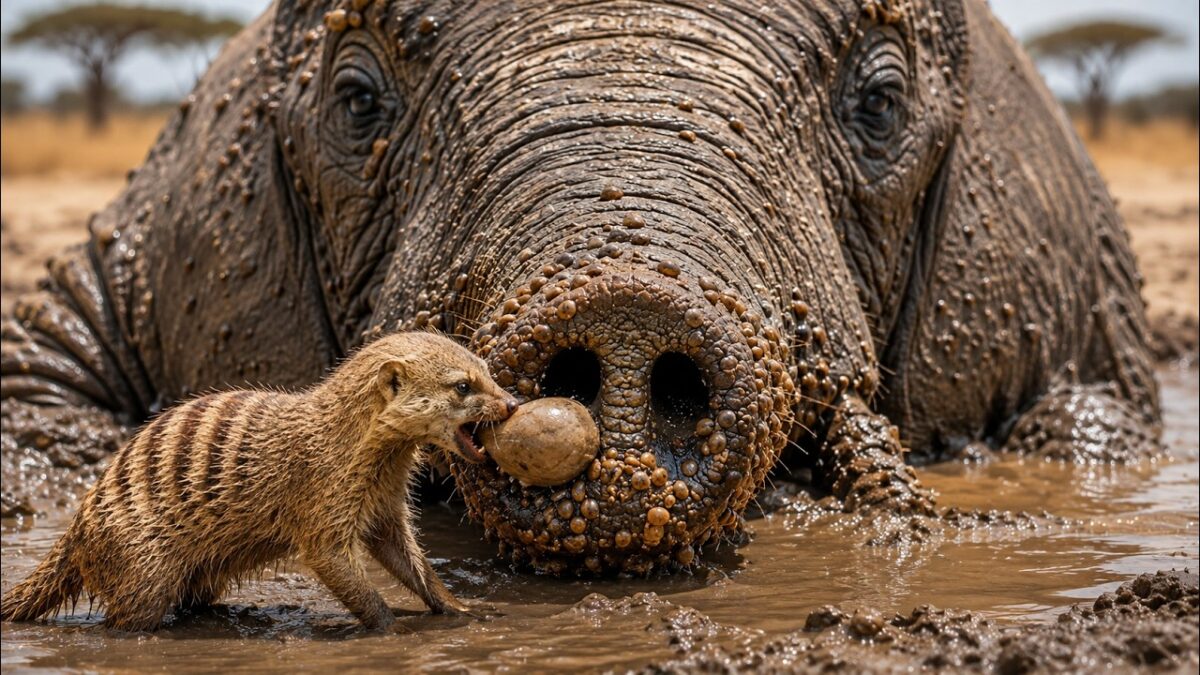
More than 10 banded mongooses were gathered beneath a giant African elephant. Most stayed near the roots of an old rubbing tree. But one young mongoose had climbed onto the elephant’s front leg.
Dark hard ticks crowded the folds behind the left ear. One swollen parasite was larger than the rest. The mongoose reached for it.
Then the elephant began to lift its head. To understand why it took this risk, we have to return to earlier that morning. Soon after sunrise, the mongoose pack spread through the dry woodland.
Each animal searched loose soil, fallen leaves, and exposed roots for beetles, termites, and other small prey. Banded mongooses forage together, but each keeps what it finds. The group provides many eyes for danger, while every meal still creates competition.
Then the mongooses reached a drying mud wallow. Huge footprints crossed the damp ground. Broken grass and fresh reddish mud marked the route of an elephant.
Large animals often expose hidden insects by crushing vegetation and disturbing the soil. The pack followed the trail. A mature African savanna elephant soon appeared between the trees.
Drying mud covered its shoulders, flanks, and lower legs. Elephant skin is deeply creased, helping it retain water and mud. This coating can reduce moisture loss, protect the skin from sunlight, and provide some defense against biting insects.
But it cannot remove every parasite. Dense hard tick clusters surrounded both ear bases, the neck folds, and the shoulders. Smaller groups continued to cross the back and upper legs.
Hard ticks attach firmly with specialized mouth parts and may remain protected inside folds the elephant cannot easily reach. The elephant was healthy and alert, but the infestation was severe. Several insects dropped into the grass.
Then one dark tick fell beside a root. Two juveniles raced toward it. The larger one arrived first and swallowed it.
The mongooses were not rescuing the elephant. They were exploiting food exposed by its natural behavior. Most stayed beside the roots, away from the elephant’s feet.
A single front foot was wider than a mongoose’s body. Even a calm step could be fatal. But one young mongoose noticed a larger reward.
Behind the elephant’s left ear, one swollen tick protruded from a deep fold. It was far beyond reach from the ground. The juvenile approached the front leg.
Each time the elephant shifted its weight, the mongoose stopped. When the leg became still, it placed its paws against the rough skin and began to climb. Deep wrinkles and dried mud provided temporary footholds.
The mongoose kept its body low while its claws searched for stable creases. Loose mud broke beneath its hind feet. No other mongoose followed.
The juvenile reached the shoulder, where the ticks became more concentrated. It pulled one small exposed tick free and swallowed it. That reward encouraged it to climb higher.
But the elephant’s breathing moved the shoulder beneath its feet. Then the huge left ear flicked. The mongoose flattened itself against the skin and froze.
When the ear became still, it moved toward the swollen tick. Then the elephant shifted its weight. The enormous foot lifted.
The mongooses scattered just before it came down beside the root. None was struck, but the tick rolled into crushed grass and disappeared. The dangerous climb had produced no meal.
The elephant repositioned itself and began rubbing again. This time, the juvenile stayed on the ground. It waited behind the roots directly below the rubbing point.
More dry mud broke loose. Small ticks and insects fell into the grass. One adult claimed the first parasite.
Another caught a beetle. Then a swollen tick dropped clear of the elephant’s feet. The juvenile reached it first and carried it away.
It had finally secured a reward without returning to the dangerous ear. The elephant eventually left the tree and continued through the woodland. Dark tick clusters still covered its ears, neck, and shoulders.
The mongooses had removed only a tiny fraction of the infestation. Any relief for the elephant was incidental and limited. This was not friendship or a deliberate cleaning partnership.
The elephant briefly tolerated the contact while rubbing. The mongooses were feeding. For small insect hunters, a giant animal can become a moving source of opportunity.
Its footsteps expose prey. Its mud carries insects. Its skin supports parasites.
But the closer the mongooses move to the giant, the greater the danger becomes. The juvenile found one final beetle beneath a dry leaf and followed the pack into the grass. Its search for the next meal had already begun.








