Bride Vanished on Her Wedding Day in 1989 – 31 Years Later, Her Mother Found Her in Adoption Records
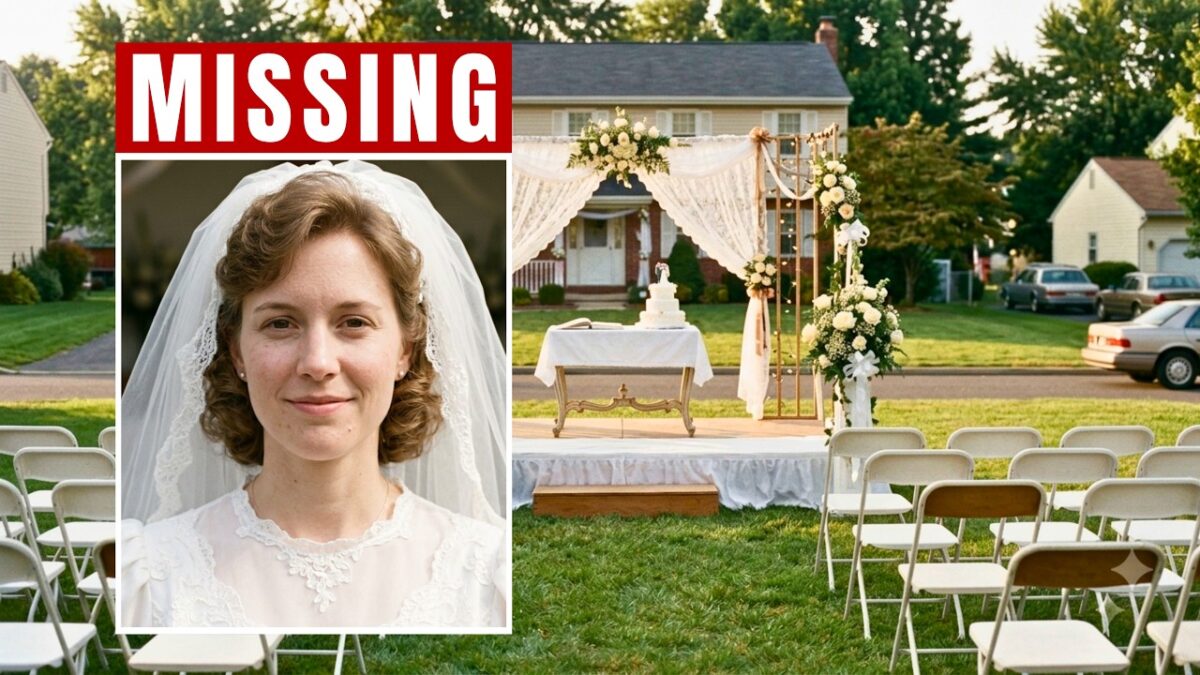
In the summer of 1989, in a quiet Pennsylvania town, a young woman vanished just hours before she was supposed to walk down the aisle. And the case quickly went cold.
But 31 years later, one small detail reopened the case. And it exposed a dark secret that changed everything, forever.
For Evelyn Whitmore, 1989 was supposed to be the happiest year of her life.
She lived in a peaceful suburban neighborhood in Bucks County, Pennsylvania. A place where people knew their neighbors, and violent crime was something you only saw on the evening news.
Evelyn was a single mother who had dedicated her entire existence to raising her only child, Clara.
Clara was 26 years old. A bright, organized, and deeply responsible young woman. She worked at a local administrative office, never missed a day of work, and called her mother every single evening, just to check in.
They were more than just mother and daughter. They were best friends.
Evelyn had worked double shifts for years, just to make sure Clara could go to college and build a good life. Now, all of those sacrifices were finally paying off.
Clara was engaged to be married to a man named Graham. A steady, polite local store manager. They’d been dating for 2 years, and to the outside world, the relationship looked like a perfect match.
The wedding was scheduled for a beautiful Saturday morning in early June.
The preparations had consumed Evelyn and Clara for months. They had picked out the perfect white roses. Arranged the catering. And spent hours tailoring a stunning lace wedding dress, which now hung carefully in Clara’s apartment.
Everything was perfectly in place.
Clara was a meticulous planner. She had color-coded binders for the wedding guests, strict timelines for the photographer, and a schedule she followed to the minute. This was not a young woman who left things to chance.
The night before the wedding, the family hosted a small rehearsal dinner.
The air was warm, filled with the sound of laughter and the clinking of glasses.
But Evelyn, who knew her daughter better than anyone else in the world, noticed something slightly off. Clara seemed distracted. While Graham was happily talking with his groomsmen, Clara was staring out the window, her mind clearly somewhere else.
Evelyn pulled her daughter aside on the porch and asked if she was feeling nervous.
Clara smiled. But the smile did not quite reach her eyes. She told her mother that it was just typical wedding jitters. The overwhelming reality of a major life change.
Evelyn believed her. It was entirely normal for a bride to feel overwhelmed the night before the biggest day of her life.
Before they parted ways for the night, Evelyn handed Clara a small velvet box.
Inside was a delicate silver locket, with a floral engraving. It had belonged to Evelyn’s grandmother. She placed it around Clara’s neck, and told her how proud she was of the woman she had become.
Clara hugged her mother tightly. She held on just a little bit longer than usual, her fingers grasping the fabric of Evelyn’s coat.
Looking back, Evelyn would spend decades thinking about that hug.
At the time, it felt like a beautiful moment of connection. But years later, she would realize it had felt like a goodbye.
The plan for the wedding morning was simple.
Clara was staying at her own apartment, on the other side of town. Evelyn was going to arrive at the church early to manage the flower deliveries. And Clara was supposed to meet her in the bridal suite at the church by 9 in the morning, to get dressed and take photos.
When the sun came up on Saturday, the weather was absolutely perfect. Not a cloud in the sky.
Evelyn arrived at the church at 7:00. She spent 2 hours making sure the pews were decorated and the seating arrangements were correct. By 8:45, the photographer had set up his equipment. The bridesmaids began to arrive, carrying their dresses in long garment bags.
By 9:15, Clara had not arrived.
Evelyn was not immediately panicked. Clara was likely running a little late. Perhaps caught up with a last-minute makeup touch-up, or delayed by a slow taxi.
But as the clock moved toward 9:30, a slow, creeping anxiety began to settle in Evelyn’s chest.
Clara was never late. Punctuality was one of her defining traits. She was the kind of person who arrived 15 minutes early to everything.
Evelyn walked to the church office and used the landline to call Clara’s apartment. It rang five times, and then the answering machine picked up. Evelyn left a cheerful message, telling Clara to hurry up, that everyone was waiting.
10:00 came.
The guests started to arrive and take their seats. The soft organ music began to play in the sanctuary. Graham stood at the front of the church, adjusting his tie, looking nervously down the center aisle.
Evelyn tried calling the apartment again. Still no answer.
By 10:30, the beautiful morning had turned into a nightmare of confusion. The whispers among the guests grew louder. Graham walked down the aisle to find Evelyn, asking if she had heard anything.
Evelyn’s hands were shaking. She told Graham she was going to drive to Clara’s apartment, to see what was holding her up.
Evelyn got into her car and drove across town, breaking the speed limit in a desperate rush. Her mind raced through every terrible possibility. Maybe Clara had slipped and fallen in the shower. Maybe she’d had a medical emergency, and couldn’t reach the phone.
When Evelyn arrived at the small apartment building, everything looked completely normal from the outside. The morning sun was reflecting off the windows. The street was quiet.
Evelyn hurried up the stairs to the second floor, and knocked loudly on Clara’s door.
No answer.
She knocked again, shouting Clara’s name. The silence from inside the apartment was deafening.
Evelyn reached into her purse with trembling hands and pulled out her spare key. She slid it into the lock and turned it. The door swung open.
Evelyn stepped inside, calling out for her daughter.
But the apartment was empty.
The air was still. The kitchen was clean. There were no signs of a struggle. No broken glass. No overturned furniture.
But as Evelyn walked down the short hallway toward the bedroom, her heart stopped.
Hanging on the outside of the closet door, still perfectly protected in its plastic garment bag, was Clara’s wedding dress.
Evelyn stood in the doorway, unable to breathe.
A bride does not leave on her wedding day without her dress.
Evelyn rushed to the bathroom. Clara’s makeup bag was sitting on the counter, untouched. Her toothbrush was still in its holder.
Evelyn ran back into the kitchen, and saw Clara’s everyday purse sitting on the kitchen island. She opened it frantically. Inside was Clara’s leather wallet. Evelyn pulled it open. Clara’s driver’s license, her credit cards, and a small stack of cash were all still inside.
If Clara had gotten cold feet and decided to run away, she would have taken her identification and her money. But she had left it all behind.
Evelyn began tearing through the apartment, looking for any clue. Any note. Anything that would explain what was happening.
She opened the bedroom closet, to see if Clara had taken any clothes. Most of her everyday clothing was still on the hangers. But Evelyn’s eyes instantly caught one glaring detail.
On the top shelf of the closet, there used to be a small, vintage brown suitcase. It was a dusty old bag that Evelyn had given Clara years ago. Something Clara kept for sentimental reasons, but never actually used. Nobody had seen her take that suitcase down in years.
Now, the shelf was empty.
The vintage brown suitcase was gone.
Evelyn sank onto the edge of Clara’s bed, her hands covering her face.
This did not make any sense. Why would Clara leave her wedding dress, her purse, her identification, and her money, but pack a small, old suitcase? Where could she possibly go, without her ID or her credit cards?
Evelyn grabbed the kitchen phone and dialed the police.
The dispatcher took the information. But her tone was calm, and slightly dismissive. A 26-year-old woman missing on her wedding day sounded like a classic case of a runaway bride. The police assured Evelyn that people get overwhelmed and step away all the time. And that Clara would likely return in a few hours, once she’d cooled down.
But Evelyn knew better.
Clara would never do this. She would never humiliate Graham. She would never abandon her mother without a word. And she certainly would not leave without her wallet.
An officer arrived at the apartment to take a formal report. He walked through the rooms with a notepad, asking routine questions.
Did she have a history of mental health issues? No.
Were there problems in the relationship? Not that Evelyn knew of.
Had she mentioned wanting to cancel the wedding? Never.
The officer seemed sympathetic, but unconcerned. He explained that, as a legal adult, Clara had the right to walk away from her life, if she chose to. And because there were no signs of forced entry or violence, they could not immediately launch a massive manhunt.
Evelyn argued passionately, pointing to the abandoned purse and the untouched wedding dress. The officer promised to put out a standard alert for her vehicle. A light blue sedan.
Evelyn returned to the church to deliver the devastating news.
The guests were slowly sent home. The beautiful catered food was packed away. The white roses were left to wilt.
Graham stood in the church parking lot, looking completely lost. Evelyn hugged him. Both of them crying. Neither of them understanding how their world had just shattered in a single morning.
The afternoon dragged by with agonizing slowness.
Evelyn sat by the phone in her own house, waiting for it to ring. She jumped at every sound, hoping it was Clara walking through the front door, ready to explain this terrible misunderstanding.
But the hours ticked away. And the sun began to set.
Then, at 6:00 in the evening, the phone finally rang.
It was the local police department. The officer’s tone was no longer dismissive. It was serious, and urgent.
They had found Clara’s car.
Evelyn practically dropped the phone. She demanded to know where her daughter was. But the officer explained that Clara was not with the car.
The light blue sedan had been discovered, abandoned, on the dirt shoulder of Route 31, a quiet highway several miles outside of town. A passing motorist had noticed it sitting there for hours, and called it in.
When Evelyn and Graham arrived at the scene, the area was already taped off.
The car was sitting perfectly parallel to the road. It had not crashed. The tires were fine. It had not run out of gas. The keys were gone, and the doors were unlocked. There was absolutely no damage to the vehicle, and no signs of a struggle in the dirt around it.
But it was what the police found inside the car that sent a cold wave of pure terror through Evelyn’s body.
Sitting side by side on the passenger seat, as if they had been carefully placed there on purpose, were Clara’s white satin wedding shoes.
Evelyn stared through the car window at those shoes, her mind spinning.
Clara had bought those shoes specifically for the ceremony. Why would they be sitting on the passenger seat of an abandoned car, on a rural highway? Had she changed shoes before she left the apartment? If so, why bring the wedding shoes at all, only to leave them behind? Had she been forced out of the vehicle barefoot?
The police began to realize that this was not a simple case of a bride changing her mind. Something much darker was unfolding.
An organized search of the surrounding woods and fields was launched. Officers with flashlights and tracking dogs scoured the heavy brush along the highway as the night grew darker.
Evelyn stood by the police cruisers, wrapped in a blanket, watching the beams of light sweep through the trees. The reality of the situation was crushing her. Her beautiful daughter, who was supposed to be dancing at her wedding reception at that very moment, was out there somewhere in the dark. Or worse.
The tracking dogs caught a faint scent near the car. But they lost it immediately, at the edge of the pavement.
This suggested to the investigators that Clara had not walked into the woods. She had gotten into another vehicle.
But had she been taken by force? Or had she gotten into someone else’s car willingly?
Late that night, Evelyn was escorted back to Clara’s apartment by a detective.
They needed to do a much more thorough search of the residence. They were looking for diaries, letters, phone records. Anything that might give them a hint about Clara’s state of mind. Or a secret life she might have been hiding.
Evelyn walked through the silent apartment, her eyes swollen from crying.
She went back into Clara’s bedroom, while the police searched the living room, looking through files and bank statements. Evelyn felt an overwhelming need to be close to her daughter’s things.
She sat on the floor next to Clara’s bed, and gently ran her hand over the bedside table.
Clara had a small, decorative wooden jewelry box that she had kept since she was a teenager. Evelyn remembered buying it for her at a craft fair.
Evelyn slowly opened the lid.
Inside, resting beneath a few cheap plastic bracelets and old rings, was a small, folded piece of white paper. It was not stationery. It looked like a piece of paper hastily torn from a notebook.
Evelyn’s hand shook as she reached in and pulled it out. She carefully unfolded the paper, under the dim light of the bedroom lamp.
Written in Clara’s unmistakable, neat handwriting, was a single, chilling sentence.
It was not a suicide note. It was not a goodbye letter.
It was a warning.
Evelyn read the words, and the blood ran cold in her veins. The note simply said:
If anything happens, don’t believe what they tell you.
Evelyn stared at the single sentence, written on the torn piece of notebook paper. Her hands trembled so violently that the paper shook in the dim light of the bedroom.
If anything happens, don’t believe what they tell you.
The words were unmistakably Clara’s, written in her neat, careful cursive. But the message felt like it had been written by a stranger.
This was not the voice of a happy bride preparing for her wedding day. This was the voice of a woman who was terrified.
Evelyn walked out of the bedroom, her breathing shallow and fast. The detective was in the living room, sifting through a stack of bank statements on the coffee table. She handed him the paper, without saying a word.
The detective read it slowly, his expression shifting from routine focus to intense curiosity. He read it a second time, then carefully placed the note into a clear plastic evidence bag.
But instead of proving to the police that Clara was in terrible danger, the note actually pushed the investigation in the exact opposite direction.
The detective looked at Evelyn with a sympathetic, but firm, expression.
He explained that, from a law enforcement perspective, they were looking at a young woman who had secretly packed a vintage suitcase. Left her wedding dress behind. Abandoned her vehicle without a scratch. And left a note telling her family not to listen to anyone else.
To the police, this did not look like a kidnapping. It looked like a carefully planned escape.
They began to seriously consider the possibility that Clara had simply decided to walk away from her life, her marriage, and her family, voluntarily.
Evelyn was furious. She argued with the detective, right there in the living room.
She pointed toward the kitchen, demanding to know why a woman running away to start a new life would leave her driver’s license, her credit cards, and her cash sitting on the kitchen island. How was she supposed to buy food? Rent an apartment? Even buy a bus ticket, without any money or identification?
The detective did not have a good answer for that. But he maintained that adults vanish by choice every day.
Despite their theory of a voluntary disappearance, the police had to follow procedure.
If Clara was running away, they needed to know what she was running from. And in almost every case of a missing bride, the first person investigators look at is the groom.
The next morning, detectives began digging deep into the background of the wedding itself. They contacted the vendors. The church. And the county clerk’s office.
It was there, hidden in the routine paperwork of marriage records, that a sharp clerk pointed out a massive red flag.
Two weeks before the wedding day, Clara had visited the county office, entirely alone. She had walked up to the counter, and quietly asked to place a permanent hold on her marriage license.
She did not cancel the church. She did not cancel the catering. She did not tell her family. And she did not tell her bridesmaids. But she made absolutely sure that, if the wedding did happen, the marriage would not be legally binding.
When the detectives discovered this, the entire focus of the investigation slammed directly onto Graham.
Graham was brought into the police station late Sunday afternoon.
The emotional toll of the last 36 hours was entirely visible on his face. He looked completely destroyed. His clothes were wrinkled. His eyes were red and swollen. He looked like a man who had not slept a single second since the morning of the wedding.
They placed him in a small, windowless interview room, and started asking the hard questions.
When the detectives confronted him about the canceled marriage license, Graham looked genuinely shocked. He swore repeatedly that he had no idea Clara had gone to the county office. He insisted that their relationship was perfect. That they rarely argued. That they were both deeply in love. He told the detectives that Clara was happy. Excited to build a life together.
But the detectives did not believe him. They pressed harder.
They brought up the rehearsal dinner. They mentioned that Evelyn had seen Clara looking distracted, almost haunted, the night before she vanished. They leaned across the metal table and asked Graham exactly what had happened after the dinner ended, when the two of them were alone.
Graham’s entire demeanor changed.
The sadness in his eyes was suddenly replaced by a heavy, guarded panic. He admitted that Clara had been terrified of something that night. He admitted that she had been crying in his car, trembling so hard she could barely speak.
But when the detectives demanded to know exactly what she had said to him, Graham completely shut down.
He refused to explain. He sat back in his chair, crossed his arms, and shook his head, tears silently falling down his face. He kept repeating the same frustrating sentence. He said that she had told him not to say it. And that he could not betray her trust.
The detectives threatened him. They warned him that his silence was actively hurting the search for his missing fiancée. They told him he looked incredibly guilty.
But Graham would not break. He stubbornly held on to whatever secret Clara had whispered to him in the dark, even if it meant becoming the prime suspect in her disappearance.
Because they had no physical evidence of a crime, and no body, the police could not arrest Graham. They had to let him walk out of the station.
But from that moment on, the shadow of suspicion followed him everywhere he went in the small town.
Days turned into two agonizing weeks.
The local community rallied around Evelyn. Missing person posters with Clara’s smiling face were taped to every storefront window, every telephone pole, and every bulletin board in the county. The local news ran her picture every evening.
But the leads were completely dry.
Then, just as the police were beginning to scale back their physical search of the woods, a massive break in the case finally arrived.
A young man named Tyler, who worked as a gas station attendant just a few miles down the highway from where Clara’s car had been abandoned, called the tip line.
He had been on vacation out of state during the week of the wedding, and had only just returned to see the missing posters scattered across town.
Tyler told detectives that he had been working the early morning shift on the Saturday of the wedding. It was a quiet morning, with barely any cars on the road.
Around 8:00 in the morning, exactly an hour before Clara was supposed to meet her mother at the church, a light blue sedan pulled up to the fuel pumps.
Tyler recognized the car. And he recognized the driver. It was Clara.
She rolled down her window and handed him a $10 bill to pay for the gas.
But then Tyler revealed something that blew the entire timeline wide open.
Clara was not alone in the vehicle.
There was a woman sitting in the passenger seat. Tyler described her as an older woman, maybe in her late 40s or early 50s. She was wearing dark, oversized sunglasses, and staring straight ahead through the windshield. She never looked at Tyler. And she never spoke.
Tyler had just assumed they were running late for a morning appointment, or getting ready for the wedding.
The detectives were thrilled. This was the first confirmed sighting of Clara on the morning she vanished. And it proved she was with an unidentified person.
They brought Tyler into the station to look through books of local photographs, hoping he might recognize the older woman from the community. He spent hours looking at faces. But he could not identify the passenger.
However, during a second, more detailed interview, Tyler began to recall the specific moments of the interaction at the window. And as he thought harder, he added one crucial detail to his original statement. A detail that made absolutely no sense to anyone.
Tyler remembered that, when he walked back to the car to hand Clara her change, she didn’t reach out for it right away. Both of her hands were occupied.
He recalled seeing Clara’s arms wrapped tightly around something resting on her lap, holding it close to her chest, in a deeply protective manner.
The detective asked Tyler what she was holding. Was it a purse? Was it the vintage suitcase?
Tyler shook his head. He said it was soft, and bundled up.
It was a pale yellow baby blanket.
The room went completely silent.
The detective stared at the young attendant, asking him if he was absolutely sure. Tyler nodded. He vividly remembered the soft texture of the fabric, and the faded yellow color. He remembered how tightly Clara was holding it. As if her life depended on it.
The investigation immediately hit a wall of massive confusion.
Why would a bride, just hours before she was supposed to put on her wedding dress, be driving down a highway, clutching a baby blanket? Who was the strange woman in the sunglasses? And where had they gone after leaving the gas station?
Evelyn was brought in and asked about the blanket. She was completely baffled. She did not know anyone in their immediate circle who had recently had a baby. Clara did not work with children. She did not babysit. And she certainly had not purchased any baby items that Evelyn was aware of.
The police secured a warrant to search Clara’s apartment a third time. They tore through cabinets, looked under the bed, emptied drawers. They found no baby clothes. No diapers. No toys. No other blankets.
Graham was questioned again. He seemed just as confused as everyone else. He swore he knew nothing about a yellow baby blanket, or an older woman in sunglasses.
The clue was a complete dead end. A bizarre, unexplainable piece of a puzzle that simply did not fit anywhere.
The weeks slowly turned into months.
The vibrant green leaves of summer faded into the crisp, dead browns of autumn. And eventually, a bitter, freezing winter settled over Pennsylvania.
The missing posters taped to the storefronts began to fade in the sun, their edges curling and tearing in the wind. The town slowly went back to its normal routine. Neighbors stopped asking Evelyn for updates, because they did not know what to say anymore.
But for Evelyn, time had completely stopped on that Saturday morning in June. Her life became an endless loop of waiting.
She left the porch light on every single night. She refused to change a single thing in Clara’s bedroom. The wedding dress remained hanging on the closet door, collecting dust in its plastic bag.
Evelyn spent her evenings sitting in the quiet living room, staring at the phone, waiting for it to ring. She refused to accept the police theory that Clara had simply walked away because she wanted a new life.
Clara loved her. Clara would never put her mother through this kind of agonizing torture. Something terrible had happened. And Evelyn was determined to wait until the truth came to light.
Then, roughly 6 months after the disappearance, the agonizing silence was finally broken.
It was a freezing Tuesday afternoon. Evelyn walked down the snowy driveway to check the mail, expecting nothing but the usual pile of bills and grocery store flyers.
As she flipped through the stack of envelopes with her freezing fingers, her heart suddenly lodged in her throat.
Tucked between a water bill and a magazine was a small, plain white envelope. There was no return address. The front simply said Evelyn Whitmore, in familiar, perfectly neat cursive.
Evelyn dropped the rest of the mail right there in the snow.
She stared at the postmark stamped in the upper right corner. It had been mailed from a postal sorting facility in Columbus, Ohio, just a few days prior.
Evelyn practically tore the envelope apart before she even made it back to the front porch. Inside was a single piece of lined paper. She unfolded it, her eyes racing across the ink.
The letter was short. It contained only a few sentences.
Mom, please stop looking for me. It only makes it harder. I am safe. I am healthy. But I can never come back. I made my choice. Please forgive me. And please let me go.
Evelyn collapsed onto the front step, clutching the paper to her chest, sobbing uncontrollably.
The tears were a mixture of absolute relief and devastating heartbreak. Her daughter was alive. She was somewhere in Ohio. But the words on the page felt like a knife twisting in Evelyn’s stomach.
She drove straight to the police station and slammed the letter down on the detective’s desk.
The authorities immediately took it seriously. They sent it to a regional crime lab for handwriting analysis, comparing it against the warning note found in Clara’s bedroom, and old bank checks they had on file.
The results came back a few days later. And they were conclusive.
The handwriting was a perfect match. The loops. The spacing. The slant of the letters. It had undeniably been written by Clara Whitmore.
For the local police, this was the final nail in the coffin of the investigation.
The detective sat Evelyn down and gently explained that the case was effectively closed, as an active criminal matter. Clara was an adult. She had proven, in her own handwriting, that she was alive and did not wish to be found. They could not force a grown woman to return home. And they could not spend resources searching for someone who was intentionally hiding.
They told Evelyn that she needed to find a way to accept Clara’s choice, and move on with her life.
Evelyn drove home that evening in complete silence. She sat at her kitchen table, staring blankly at the wall.
The authorities were satisfied. The town would finally have its answer. The tragic story of the runaway bride was complete.
But as Evelyn sat there in the dark, she knew, deep in her bones, that the police were entirely wrong.
She knew her daughter. She knew the way Clara spoke. The way she expressed herself. The way she formulated her thoughts. The phrasing in that Ohio letter was cold. Robotic. Entirely devoid of Clara’s true voice.
Yes, the handwriting belonged to Clara. The experts had proven that.
But handwriting can be forced. A person can be made to hold a pen.
Evelyn realized, with a cold, terrifying certainty, that the letter was not a message of freedom. It was a message of control.
It proved that Clara was alive, 6 months after she vanished. But it did not prove she was free. In fact, it proved the exact opposite. Someone had made her write those words. Someone was trying to stop the investigation.
And as Evelyn looked out her kitchen window, into the dark, snowy street, she realized the most horrifying part of it all.
If someone had forced Clara to write that letter to call off the police, then whoever had her was paying very close attention to what was happening back home.
31 years is a massive amount of time to wait for someone to come home.
It is an excruciatingly slow process. Watching the world move forward, while you remain entirely frozen in a single, unresolved moment.
For Evelyn Whitmore, the decades that followed that beautiful Saturday morning in June of 1989 were a blur of unimaginable grief.
She watched the quiet Pennsylvania town slowly change around her. The bakery where they had ordered Clara’s wedding cake was eventually sold and turned into a modern coffee shop. The church where Clara was supposed to walk down the aisle underwent major renovations, altering the very steps where Evelyn had waited for her daughter to arrive.
People aged. People moved away.
Graham, the man Clara was supposed to marry, stayed in town for a few years, living under a heavy cloud of community suspicion. Eventually, the weight of the whispers became too much for him. He packed his belongings, moved out of state, and married someone else. He started a new family, leaving the ghost of Clara behind him.
The local police department saw entire generations of officers retire. The original detective who had handled Clara’s case packed up his desk and handed the file over to a younger officer, who placed it in a cardboard box in the basement archives.
To law enforcement, the case was completely closed. The handwriting on the Ohio letter was a perfect match. In their eyes, Clara had simply walked away to start over. And they had absolutely no reason to keep looking for a woman who did not want to be found.
But Evelyn never stopped looking.
She refused to move out of her house. She kept Clara’s bedroom exactly as it had been on the morning of the disappearance. The wedding dress remained hanging on the closet door, the plastic garment bag slowly turning yellow with age.
The world transitioned from landline telephones to cell phones. From physical library archives to the internet. And as technology advanced, Evelyn adapted, purely out of desperation.
In her late 70s, when most people her age were enjoying a quiet retirement, Evelyn was spending her nights sitting in front of a glowing computer screen in her living room.
She taught herself how to navigate online missing persons databases. She scrolled through thousands of police sketches, unidentified Jane Doe reports, and regional news articles, looking for any trace of a woman who looked like her daughter.
She did this for years. Night after agonizing night. Finding nothing but dead ends, and heartbreak.
Then came 2020. 31 years after Clara vanished.
During the global shutdown, the state of Pennsylvania began a massive project to digitize decades of old paper records from county courthouses. They were scanning thousands of birth certificates, property deeds, marriage licenses, and court filings, making them searchable online for public record-keeping.
Evelyn, who constantly monitored local databases for any new information, discovered that the regional family court index had just been uploaded to the public system.
It was a late Tuesday night in October. The house was completely silent, except for the soft hum of the computer.
Evelyn clicked onto the newly digitized county archive website. She was not expecting to find anything. She had run this exact search thousands of times, on hundreds of different websites.
Her fingers automatically typed the familiar letters into the search bar. Last name: Whitmore. First name: Clara.
She pressed the Enter key and waited for the screen to refresh, fully expecting the usual bright red text that read Zero results found.
But this time, the screen flashed.
A single document appeared on the list.
Evelyn leaned closer to the monitor, her heart suddenly pounding against her ribs. She put on her reading glasses, her hands beginning to tremble.
The document was listed as a sealed file, from the Pennsylvania Family Court Division. But because it was part of an older digital index, the basic catalog information was visible to the public.
The document type was listed as an infant adoption surrender record.
The date of filing was February 14th, 1990.
And listed clearly on the digital line for the biological mother’s legal name was: Clara Whitmore.
Evelyn stopped breathing.
She sat frozen in her computer chair, staring at the glowing letters on the screen until they blurred through her tears. She read the date again and again. February 14th, 1990.
Evelyn grabbed a notepad and a pen from her desk. Her hands were shaking so badly she could barely hold the pen. She wrote down the date Clara disappeared: June 1989. Then she wrote down the date on the adoption record: February 1990.
That was a difference of just 8 months.
Suddenly, a massive, unexplainable piece of the 31-year-old puzzle snapped into place, with terrifying clarity.
Evelyn thought back to the young gas station attendant, Tyler. He had told the police that, on the morning Clara vanished, she was clutching a faded yellow baby blanket to her chest, holding it like her life depended on it.
The police had dismissed the blanket as a bizarre, meaningless detail. But as Evelyn stared at the timeline on her notepad, the truth hit her like a physical blow.
Clara had not been holding that blanket for a baby she already had. She had been holding it for the baby she was carrying.
Clara had been pregnant when she disappeared.
She had secretly known she was pregnant on the night of the rehearsal dinner. That was why she was so distracted. That was why she was terrified. And that was why she had quietly gone to the county clerk two weeks before the wedding, to put a hold on her marriage license.
She was protecting an unborn child.
Evelyn felt a wave of dizziness wash over her.
Her daughter had not vanished because she stopped loving her family. She had not disappeared just to run away from a wedding. She had disappeared to hide a child.
But why? From whom? And who was the older woman in the dark sunglasses, sitting in the passenger seat of Clara’s car that morning?
Evelyn knew she could not go to the police. They had dismissed her for three decades. And they would likely tell her that an adult woman has the right to place a child for adoption.
If she wanted answers, she had to find them herself.
The adoption file was legally sealed, meaning Evelyn could not access the names of the adoptive parents, or of the child. But the digital age had created new ways to reconnect broken families.
Evelyn spent the next few weeks registering her DNA with several major commercial genealogy websites. She filled out the profiles, uploaded a picture of herself, and wrote a short biography, explaining that she was looking for a grandchild born in Pennsylvania in February of 1990.
Then she waited.
The waiting was pure torture. Every time her email notification chimed, her heart jumped into her throat. Weeks turned into two long months. Evelyn began to lose hope, fearing that the child had never taken a DNA test, or had no interest in finding their biological family.
But 3 days after Christmas, Evelyn opened her email and saw a message sitting in her inbox from one of the genealogy websites.
It was an alert. A high-confidence DNA match had been found.
The system identified the match as female. And the relationship was listed as granddaughter.
The user’s profile name was simply: Megan.
Evelyn’s hands shook as she typed a direct message through the website’s portal. She kept it simple and honest.
She wrote that she believed she was Megan’s biological grandmother. That her daughter, Clara, had gone missing under tragic circumstances 31 years ago. And that finding this match was the most important moment of her life.
She hit Send, closed her eyes, and prayed.
The response came less than an hour later.
Megan wrote back. She explained that she was 30 years old, living a quiet life in a neighboring state, and that she had always known she was adopted. She said she had taken the DNA test years ago, hoping to learn about her medical history, but had never expected a close family member to reach out.
She was shocked. Overwhelmed. But incredibly open. She gave Evelyn her cell phone number.
They spoke on the phone that very evening.
The moment Evelyn heard Megan’s voice, a heavy, uncontrollable sob broke free from her chest. Megan’s voice sounded exactly like Clara’s. It had the same soft cadence. The same polite hesitation.
They talked for 3 hours.
Evelyn told Megan everything. About the wedding day. The abandoned car. The warning note. The yellow baby blanket. And the terrible 31 years of waiting.
Megan was deeply moved. But she also revealed something incredibly strange about her own adoption. She agreed to drive to Pennsylvania that weekend to meet Evelyn in person. And she promised to bring the only physical records she had from her adoption file.
They met on a quiet Saturday afternoon, at a small diner halfway between their towns.
When Megan walked through the glass door, Evelyn had to grab the edge of the table to steady herself. It was like looking at a ghost. Megan had Clara’s dark hair. Her exact smile. The same gentle posture.
The two women held each other in the center of the diner, crying silently, surrounded by strangers who had no idea they were witnessing the end of a 31-year nightmare.
They sat in a quiet booth in the back corner. Over two cups of untouched coffee, Megan opened a large leather bag and pulled out a manila folder, containing the few documents her adoptive parents had given her when she turned 18.
Megan explained that her childhood had been wonderful. Her adoptive parents were kind, loving people who had given her a safe and happy home. But they had always been completely transparent about the unusual circumstances surrounding the adoption.
Megan slid a piece of paper across the table. It was a copy of the original agency intake form, from 1990.
“My parents were given a very specific set of instructions when they brought me home,” Megan said softly, her eyes filled with sorrow. “The agency told them that my biological mother was very young, completely terrified, and in serious danger. The file contained a strict, non-negotiable request.”
Evelyn looked at the document. Typed at the bottom of the page, in bold letters, was a special condition clause.
It explicitly stated that the adoptive parents must never attempt to search for the biological mother. Never hire a private investigator. And never try to make contact. The agency warned them that attempting to find the mother could put the woman’s life at extreme risk.
“They told my parents that my mother loved me enough to give me a safe life,” Megan whispered. “But that she was running from something terrible. And that she could never, ever be found.”
Evelyn stared at the paper.
The narrative of the runaway bride was completely dead.
Clara had not abandoned her family out of selfishness. She had spent the last eight months of her pregnancy hiding in pure terror, protecting her unborn baby from someone so dangerous that she had to sign away her parental rights, just to keep the child safe.
But who was she running from?
The most obvious answer was Graham. Had he discovered the pregnancy, and threatened her? But if Graham was the father, why would he be a threat? And if Graham was not the father, then who was?
As Evelyn’s mind raced through these terrifying possibilities, Megan reached back into her leather bag.
“There’s one more thing,” Megan said, her voice dropping to a nervous whisper. “My parents told me that, a few weeks after they brought me home from the agency, a woman showed up at their house. They didn’t know who she was. She just knocked on the door one evening. She was crying. She begged them to let her see me. Just for 5 minutes. She promised she would never come back. My parents were terrified. But they felt so bad for her that they let her inside.”
Evelyn leaned forward, completely breathless. “Was it Clara? Did they say it was Clara?”
“They didn’t know her name,” Megan replied. “They said she just stood by my crib, and cried silently. But before she left, my adoptive mother took a picture. She felt like someone needed to document that this woman existed.”
Megan pulled a small, worn photo album from her bag. She opened it to the very first page. Carefully tucked behind a plastic sleeve was an old, faded Polaroid photograph. She handed the album to Evelyn.
Evelyn’s hands shook as she held the photograph up to the diner window, to catch the afternoon light.
The picture showed a wooden baby crib. Inside, a tiny infant was sleeping soundly, wrapped tightly in a familiar, faded yellow baby blanket.
Standing right beside the crib was a woman.
But the picture was poorly framed. The camera had been angled downward, capturing the woman’s chest and shoulders, but completely cutting off her face. There was no way to identify her features.
But as Evelyn stared at the image, her eyes locked onto a single, undeniable detail, resting against the woman’s collarbone.
Hanging from a delicate silver chain around the woman’s neck was a beautiful vintage locket. With a highly specific floral engraving on the front.
Evelyn let out a sharp gasp, covering her mouth with her hand to muffle her own cry.
She recognized the locket instantly. It was the exact same piece of family jewelry she had personally clasped around Clara’s neck on the porch, the night before the wedding.
The photograph proved the impossible. Clara had not died on the day she vanished. She had successfully hidden for months. She had safely delivered her daughter. She had held her baby one last time.
But if Clara was still alive, and wearing that necklace, months after she disappeared, where did she go after she walked out of that house? And what terrible secret had forced her to stay hidden in the shadows for the next 30 years?
Evelyn sat perfectly still in the back booth of the quiet diner, the faded Polaroid trembling between her fingers.
The rain had started to fall outside, streaking down the glass windows. But she did not notice it. Her entire world had narrowed to the small square of glossy paper in her hand.
The face of the woman standing by the crib was cut off, hidden forever by a poor camera angle. But the silver locket resting against the woman’s collarbone was undeniable.
Clara had been alive.
She had survived the morning of her wedding. She had carried her child to term, delivered her safely, and even managed to see her one last time, before vanishing into the shadows.
The relief that washed over Evelyn was so powerful it felt almost suffocating. Her daughter had not been taken by a violent stranger on the highway.
But that profound relief was instantly followed by a wave of cold, heavy dread.
If Clara had been alive and healthy in the winter of 1990, why had she never come home? Why had she never called? What could possibly be so terrifying that a young mother would willingly sign away her only child, and then erase her own existence for more than three decades?
Evelyn carefully handed the photograph back to Megan, who tucked it safely into her leather bag.
The two women looked at each other across the table, bonded by a shared tragedy and a desperate need for the truth.
They both knew they could not take this to the local police. The authorities had firmly closed the book on Clara’s case decades ago. They would simply look at the photograph, shrug their shoulders, reiterate that an adult woman had the legal right to place a child for adoption, and walk away.
If they were going to find out what really happened to Clara, they were going to have to do it themselves.
The next morning, Evelyn withdrew a significant amount of money from her retirement savings. She and Megan hired a private investigator named Arthur Vance.
Arthur was a retired state detective who had spent the last 15 years of his career specializing in cold cases, closed adoption paper trails, and missing persons. He was a quiet, methodical man, who listened to their story without interrupting.
When Evelyn placed the Polaroid on his desk and explained the significance of the silver locket, Arthur did not offer false promises. He simply opened a fresh legal pad, clicked his pen, and told them exactly where they needed to start.
Arthur explained that the adoption agency records were legally sealed by a court order, meaning he could not just walk in and demand the files. However, babies are born in hospitals. And hospital admissions from the early 1990s left a paper trail that could sometimes be traced, if you knew exactly what to look for.
Because they knew Megan’s exact date of birth, February 14th, 1990, Arthur had a very specific target.
He spent two weeks working his contacts, cross-referencing regional birth records and cash-paying hospital admissions in the counties surrounding the adoption agency. Most mothers used insurance, which required a matching Social Security number. But a woman hiding from the world would have to pay in cash.
On a rainy Tuesday afternoon, Arthur called Evelyn into his office. He had found a match.
Arthur slid a copied piece of paper across his desk. It was a basic, non-identifying hospital intake form, from a small county hospital about 40 miles from Evelyn’s hometown. The form showed that a young woman had checked into the maternity ward in the early hours of February 14th, paid her entire bill in cash, and delivered a healthy baby girl.
The name on the hospital record was Sarah Collins.
Evelyn shook her head, looking at the name. She did not know anyone named Sarah Collins.
But Arthur tapped his pen on the bottom half of the form.
He explained that even when someone uses a fake name to hide their identity, they rarely lie on the medical history section. When you are about to give birth, you have to tell the doctors the truth about your body, in case of an emergency.
Arthur pointed to two specific lines on the medical questionnaire.
Under Previous Surgeries, the patient had listed a childhood tonsillectomy, at age seven.
Under Known Allergies, the patient had written down a severe, life-threatening reaction to penicillin.
Evelyn stared at the paper, her breath catching in her throat.
Clara had had her tonsils removed exactly one month after her seventh birthday. And since she was a little girl, Clara had worn an emergency medical bracelet, because a single dose of penicillin could send her into anaphylactic shock.
The patient was not Sarah Collins.
The patient was Clara.
This discovery gave Arthur the leverage he needed.
Now that he knew the alias Clara was using, he could start tracking her movements in the real world. He began running the name Sarah Collins through regional housing records, utility bills, and short-term lease agreements from the summer of 1989, right after the wedding day.
It took another 3 weeks of exhausting searches. But Arthur’s persistence finally paid off.
He found a six-month apartment lease, signed under the name Sarah Collins, in July of 1989. The apartment was located in a small industrial town, just an hour north of where Clara’s car had been abandoned.
Arthur and Evelyn drove to the address the very next day.
It was a tiny, run-down brick building, sitting quietly above a vacant hardware store. The property was still owned by the same landlord. An elderly man named Mr. Henderson, who lived in a small house directly behind the building.
When Arthur showed Mr. Henderson an old photograph of Clara and asked if he remembered a tenant named Sarah Collins, the old man squinted through his thick glasses, and nodded slowly.
Mr. Henderson remembered her clearly.
He said she was a very quiet, polite young woman, who paid her rent strictly in cash and never caused any trouble. He remembered that she was visibly pregnant, and seemed incredibly nervous all the time. She always kept the window blinds pulled tightly shut. Never received any mail. And never spoke to the other tenants in the building.
But then Mr. Henderson revealed a detail that completely shattered their understanding of the timeline.
He insisted that Clara had not been managing this secret life on her own. Someone had been visiting her.
Every two weeks, a car would pull into the back alley behind the apartment. A woman would get out, walk upstairs to Clara’s unit, and stay for about an hour.
He remembered this specifically, because he had been sweeping the hallway one afternoon and overheard an argument through the thin wooden door. He had heard the visitor sternly warning the pregnant girl to be careful. Telling her never to answer the phone. And never to use her real name on anything. Not even at the grocery store.
Evelyn’s heart raced. She asked Mr. Henderson if he could describe the visitor. Was it a young woman? A man?
The landlord shook his head.
He said it was an older woman. Probably in her late 50s at the time. She was dressed professionally, always wore a long trench coat, and drove a dark-colored sedan.
And then he added the detail that made Evelyn’s blood run cold.
He said the visitor always wore large, dark sunglasses. Even when it was raining.
It was the exact same description the young gas station attendant had given the police, 31 years ago.
The mysterious woman sitting in the passenger seat of Clara’s car on the morning of the wedding was the same woman who had helped Clara hide in the secret apartment for months.
They rushed back to Arthur’s office.
Evelyn sat on the leather sofa, her mind frantically sorting through every person they had known back in 1989. She went through neighbors. Distant aunts. Family friends. But nobody matched the description of a stern, professional older woman who would have been willing to help Clara vanish.
Then Arthur asked a simple question.
He asked Evelyn who Clara reported to at her job.
Evelyn stopped completely. Her eyes widened, as a forgotten memory rushed back to the surface.
Clara had worked as an administrative assistant at a local corporate office. Her direct supervisor was the senior office manager. A woman named Patricia.
Patricia was a strict, highly organized woman who ran the office with an iron fist. She was in her late 50s. She always wore professional trench coats to work. And she had always been incredibly protective of Clara, treating her almost like a surrogate daughter.
During the original investigation, the detectives had briefly called the office to verify Clara’s employment. But they had never formally interviewed Patricia. They assumed that a young bride running away would only confide in her fiancé, or her best friends. They never considered that she might turn to her boss.
Arthur immediately ran a background check on Patricia.
She was still alive. Now in her late 80s, living in a quiet retirement community on the other side of the state.
Evelyn and Arthur drove out to the facility the following morning.
They found Patricia sitting in a sunroom overlooking a manicured garden, a knitted blanket resting over her lap. Time had softened her stern features. But her eyes were just as sharp as Evelyn remembered.
When Evelyn approached the wheelchair and gently said Patricia’s name, the older woman looked up. A flash of recognition crossed her face, followed instantly by a look of deep, overwhelming sorrow.
She did not ask why they were there. She simply closed her eyes and let out a long, heavy sigh. As if she had been waiting for this exact moment for 31 years.
Arthur pulled up a chair and placed the Polaroid of the baby crib on the small table next to Patricia.
He told her that they knew she was the woman in the dark sunglasses. They knew she had helped Clara rent the hidden apartment, under the name Sarah Collins.
Patricia looked at the photograph of the crib. And tears finally began to stream down her wrinkled cheeks. Her hands shook as she reached out and touched the glossy paper.
She confessed to everything.
Patricia admitted that Clara had come into her office a week before the wedding, completely hysterical. Clara had just discovered she was pregnant. But she was trapped in a nightmare.
She begged Patricia for help, crying so hard she could barely breathe. Clara said she could not tell her mother, because it would break Evelyn’s heart. And she could not tell Graham, because it would ruin his life.
Patricia, seeing a young woman on the verge of total collapse, agreed to help her.
They formulated a desperate plan.
Patricia was the one who drove the dark sedan to meet Clara on the morning of the wedding. She rode in the passenger seat to the gas station, then waited while Clara abandoned her own car on the highway. Patricia then drove Clara out of town, and used her own money to rent the secret apartment.
But then Patricia dropped a bombshell that completely changed the reality of the entire tragedy.
She looked Evelyn directly in the eyes, her voice trembling with emotion. She swore on her life that Clara never, ever planned to disappear forever.
The original plan was only supposed to be temporary.
Clara was going to stay in the hidden apartment until the baby was safely born. Surrender the child to a closed adoption agency, to protect it. And then, eventually, return home to her mother.
Clara was going to claim she’d suffered a breakdown from the pressure of the wedding, and needed time away to heal. She had every intention of coming back to Evelyn.
Evelyn sat frozen in her chair, the tears flowing freely down her face.
Her daughter had planned to come home. She had never wanted to leave her family behind.
“But if that was the plan,” Arthur asked, “why didn’t she come back? What happened during those months in the apartment that forced Clara to abandon her life permanently?”
Patricia looked away, staring out the window at the garden. Her hands gripped the armrests of her wheelchair.
She explained that about 5 months into the pregnancy, the plan completely fell apart. Someone had found the apartment.
Patricia said she had arrived to drop off groceries one evening, and found Clara sitting on the kitchen floor in the dark, absolutely terrified. Clara refused to say exactly who had visited her. But whoever it was had delivered a devastating threat.
They told Clara that if she ever showed her face in their hometown again, they would spare no expense to track down the adoptive family, and take the baby away.
Clara realized, in that moment, that she could never go back. Returning home meant putting her child’s life in permanent danger. She had to stay dead to the world, so her daughter could live in peace.
Evelyn was shaking with rage and heartbreak. She begged Patricia to tell her who had visited the apartment. Who had threatened her daughter.
Patricia reached into the pocket of her sweater. She pulled out a small, heavy ring of keys, and handed it to Arthur.
She told him that she did not know the name of the person who had visited the apartment. But she knew that, before Clara packed up and left the apartment for the final time, disappearing into the wind, she had written a letter.
Patricia had kept that letter locked inside a small metal safe in her closet for 31 years, honoring a promise she had made to a terrified young mother. She gave Arthur permission to open the safe.
Arthur walked into Patricia’s small bedroom, unlocked the metal box, and returned to the sunroom, holding a sealed white envelope. He carefully sliced it open, and pulled out a single sheet of lined notebook paper.
It was written in Clara’s unmistakable cursive.
As Arthur read the letter aloud, the darkest secret of the entire case finally spilled into the light.
In the letter, Clara confessed the terrifying truth about her pregnancy.
She revealed that she was completely certain Graham was not the father of her unborn child. She had made a terrible, tragic mistake, months before the wedding. And the identity of the biological father was the reason she was running.
She wrote that if the truth ever came out, it would completely destroy several families in their town. And the biological father’s family would never allow the child to be raised by strangers. They were powerful. And they would take the baby from her.
Evelyn’s mind spun out of control.
If Graham was not the father, then who was? And who had found the secret apartment to deliver that final threat?
Arthur drove Evelyn back to his office in complete silence.
The pieces of the puzzle were finally on the table. But they were forming a picture so disturbing that Evelyn could barely comprehend it.
When they walked into the office, Arthur went straight to his filing cabinet. He pulled out the thick folder containing the original police reports, and spread the documents across his desk.
He pulled out a photocopy of the letter from Ohio. The one that told Evelyn to stop looking, because Clara had made her choice.
Arthur laid the Ohio letter right next to the secret confession letter they had just retrieved from Patricia. He asked Evelyn to read the Ohio letter again. Very carefully.
Evelyn read the short, robotic sentences.
Mom, please stop looking for me. It only makes it harder. I am safe. I am healthy. But I can never come back. I made my choice. Please forgive me. And please let me go.
Arthur pointed to one phrase. It only makes it harder.
He looked at Evelyn, his eyes completely serious. He asked her if she remembered saying that exact phrase to anyone, during the terrible days right after Clara vanished.
Evelyn closed her eyes, forcing her mind back 31 years, to the agonizing week when the police were searching the woods near the abandoned car.
She remembered standing on her front porch, completely exhausted, crying into a coffee cup. And she remembered saying those exact words.
She had said, “People keep telling me to rest. But it only makes it harder.”
Arthur asked her who she had been talking to when she said it.
Evelyn’s eyes snapped open, a cold wave of absolute horror washing over her.
She had not been talking to the police. She had not been talking to Patricia. The only other person standing on the porch with her that morning, the only person who had heard her say that exact sentence, was Graham.
Arthur tapped his finger on the desk. The reality of the situation settled over the room like a heavy shadow.
The person who had forced Clara to write the Ohio letter had used a phrase from a private conversation that only Graham could have known.
The investigation had come full circle. The evidence was pointing directly back to the fiancé.
But it did not make any sense.
If Graham was not the biological father, why would he care about the baby? Why would he find the hidden apartment, threaten Clara to stay away forever, and then secretly arrange a letter from Ohio to call off the police?
What was Graham hiding?
The silence in Arthur Vance’s office was absolute.
Evelyn stared at the photocopy of the Ohio letter, the words blurring through her tears.
Graham. It all pointed back to Graham. The man who had stood beside her on the porch, crying with her, pretending to be a devastated fiancé, while he was secretly orchestrating her daughter’s permanent disappearance.
The betrayal was so deep, so completely sickening, that Evelyn actually felt physically ill.
But Arthur Vance was a methodical investigator. And he knew that assumptions were not evidence.
If Graham had been involved in hiding Clara, and threatening her to stay away, they needed to understand exactly why. What was his motivation? If he wasn’t the father of the child, why would he care enough to force his own fiancée to vanish forever?
Arthur spent the next 48 hours digging relentlessly into Graham’s life, circa 1989. He pulled old property records, employment histories, and bank statements from the county archives.
And when he finally laid the timeline out on his desk, the missing piece of the puzzle locked into place.
The truth was not just a tragic mistake. It was a massive, carefully protected family secret.
Arthur sat Evelyn down, and carefully explained what he had found.
Graham had not just worked as a local store manager. The store he managed was part of a large, highly lucrative regional chain, owned entirely by his father’s family.
Graham’s older brother, Robert, was the vice president of the company. Robert was married, wealthy, and positioned to take over the entire family business when their father retired. He was the golden child of the family, fiercely protected by their powerful, controlling father.
But Robert also had a well-known reputation around town for heavy drinking and aggressive behavior. A reputation his wealthy family constantly paid to cover up.
Arthur pulled a specific employment record from his file.
6 months before Clara and Graham’s wedding, Clara had briefly taken a part-time bookkeeping job at the main corporate office of Graham’s family business, to help pay for the wedding catering.
She had been working directly with Robert.
Evelyn covered her mouth with her hand. A soft, horrified gasp escaped her lips.
The terrifying confession in Clara’s letter suddenly made perfect, devastating sense.
Clara had written that she made a terrible mistake. That the biological father’s family would never allow the child to be raised by strangers. That they were powerful, and would take the baby from her.
Clara was not pregnant with a stranger’s child.
She was pregnant with Robert’s child. Graham’s older brother.
The nightmare scenario unfolded clearly in Arthur’s office.
Clara must have discovered she was pregnant just weeks before the wedding. Terrified of what Robert and his powerful family would do, she knew she could not go through with the marriage to Graham. But she also knew she could not simply walk away without raising questions. She needed to vanish completely, to protect the baby from Robert’s family.
But Graham had figured it out.
Arthur pieced together the final days, based on the timeline.
On the night of the rehearsal dinner, when Evelyn saw Clara crying in Graham’s car, Clara had likely broken down and confessed the truth to him. She told Graham about the pregnancy. And about his brother.
Graham’s reaction was not one of violence. It was one of absolute, self-preserving panic.
He knew his family. He knew that if his father found out about Robert’s child with his younger brother’s fiancée, the scandal would tear their wealthy family apart. He also knew that his family would fight fiercely for custody of their bloodline, pulling the baby into their toxic, controlling world.
So Graham made a choice. He decided to let Clara disappear. Not out of love, but to protect his family’s reputation, and keep the scandal buried forever.
Arthur explained that Graham must have tracked Clara down to the secret apartment, months later.
When he realized Clara was planning to surrender the baby, and then eventually return to her mother, Graham panicked again. If Clara came back to town, the truth might eventually slip out.
So Graham visited the apartment, just as the landlord had described. He threatened Clara. He told her that if she ever returned home, he would tell Robert exactly where the baby was, and the family would take the child away from the adoptive parents.
Graham forced Clara to write the letter from Ohio to call off the police, using a phrase he had heard from Evelyn on the porch. Then he mailed it from out of state, to throw investigators completely off the trail.
He forced the woman he had supposedly loved to become a ghost. Erasing her entire existence, just to protect his own family’s pride.
Evelyn was shaking.
31 years of agonizing grief. 31 years of waiting by the phone. 31 years of wondering what had happened to her beautiful daughter. All orchestrated by the man who had stood beside her, and wiped away her tears.
Arthur placed his hand gently over Evelyn’s trembling fingers.
There was still one piece of the puzzle left. Where did Clara go, after she left the apartment in 1990?
Arthur had run Clara’s alias, Sarah Collins, through every national database. The name completely vanished from all records, right after the baby was born. She didn’t rent another apartment. She didn’t get a driver’s license. The trail was completely cold.
But Megan, the granddaughter Evelyn had just found, held the final key.
Evelyn and Arthur met Megan at a quiet park the following afternoon.
Megan brought the leather bag containing her adoption files. Arthur explained the entire truth. About Graham. About his brother, Robert. And about why Clara had been so terrified that she had to insist on the clause demanding the adoptive parents never look for her.
Megan sat on the park bench, tears streaming quietly down her face, as she finally understood the massive sacrifice her mother had made, just to keep her safe.
Then Megan reached into the very bottom of her bag, and pulled out a thick, sealed envelope. The paper was yellowed, and fragile with age.
“My adoptive parents gave this to me when I turned 18,” Megan whispered, handing the envelope to Evelyn. “It was sealed in my adoption file. The agency told them that my biological mother had left very specific instructions. That it was never to be opened, unless my biological grandmother ever found me. She made the agency swear to keep it sealed, until you came looking.”
Evelyn’s breath hitched in her throat. Her hand shook violently as she broke the 31-year-old seal on the envelope.
Inside were three pages of notebook paper, covered in Clara’s neat, familiar handwriting.
Evelyn read the words. And the final wall of the mystery completely collapsed.
Clara explained everything.
She explained the terrible mistake with Robert. The overwhelming fear of his family. The heartbreaking realization that she could never go home. She wrote about Graham finding the apartment, and delivering the final threat that forced her into the shadows forever.
But it was the final page of the letter that broke Evelyn completely.
Clara wrote that she had never stopped loving her mother. And that she had never truly left.
She wrote that she could not bear the thought of never seeing her daughter grow up. So she had changed her name one final time. She had moved to the very same state where Megan’s adoptive parents lived. She had taken a job working in the background of the very same school district where Megan went to elementary school.
She had lived quietly, and invisibly. Watching her daughter from a distance. At school plays. Sitting in the back rows at graduations. Watching her grow into a beautiful woman.
And she had watched Evelyn, too.
Clara wrote that she had quietly driven back to their hometown in Pennsylvania twice over the decades. She had parked down the street in the middle of the night, just to see the porch light Evelyn had left burning for her. She wrote how deeply it broke her heart not to walk up those steps. But she knew that staying dead was the only way to keep them all safe.
The letter ended with a final, heartbreaking admission.
Clara wrote that, a few years ago, she had become very sick. She knew her time was running out. She wrote that she was not afraid of dying, because she knew she had successfully protected her daughter. She had left the letter with the agency, hoping that one day, long after she was gone, her mother would finally find the records, and know the truth.
The final lines read:
Mom, if you are reading this, it means you found her. I am so sorry I couldn’t come home. Please tell her I loved her every single day. And please know that I never, ever stopped loving you. Disappearing was never meant to be goodbye. It was the only way I could save her.
Evelyn lowered the letter, her chest heaving with deep, uncontrollable sobs.
She pulled Megan into a tight, desperate embrace on the park bench. The two of them, holding on to the only piece of Clara they had left.
The mystery was solved.
There would be no arrests. Graham’s intimidation and coercion were decades past the statute of limitations. And Robert had died years ago in a drunk-driving accident, never knowing he had a child.
The legal system could not offer them justice.
But Evelyn had found something much more powerful than a conviction. She had found the truth.
She finally knew that her daughter had not been a selfish runaway. She had been a fiercely protective mother, who had sacrificed her entire life, her identity, and her family, just to save her child.
That evening, Evelyn drove back to her quiet house in Pennsylvania.
She walked up the front steps, the porch light burning brightly in the darkness. She unlocked the door and walked inside. The silence of the house no longer felt like a heavy, suffocating tomb.
She walked down the hallway, and gently pushed open the door to Clara’s bedroom.
The wedding dress was still hanging on the closet door. The room was exactly as it had been on that Saturday morning in June of 1989.
Evelyn walked over to the closet. She reached out, and carefully unhooked the plastic garment bag from the door. She laid the dress gently on the bed, smoothing out the old fabric with a tender hand.
Then she walked over to the window, took a deep breath, and finally closed the blinds.
She walked back out to the front porch, looked out at the quiet street one last time, and reached up to the wall.
With a quiet click, Evelyn turned the porch light off.
31 years of waiting had finally come to an end.
The nightmare was over. The truth had set them free. Her daughter was gone. But her love, her sacrifice, and her legacy were alive. Living a beautiful life, completely free from the darkness of the past.
Sometimes the greatest mysteries are not solved by detectives, or forensic science. They are solved by the unbreakable, enduring bond of a mother’s love. Searching relentlessly through the dark. Refusing to give up. Until the lost are finally found.








