Babysitter Vanished After Putting the Kids to Bed in 1996 — A 911 Call Finally Revealed the Truth
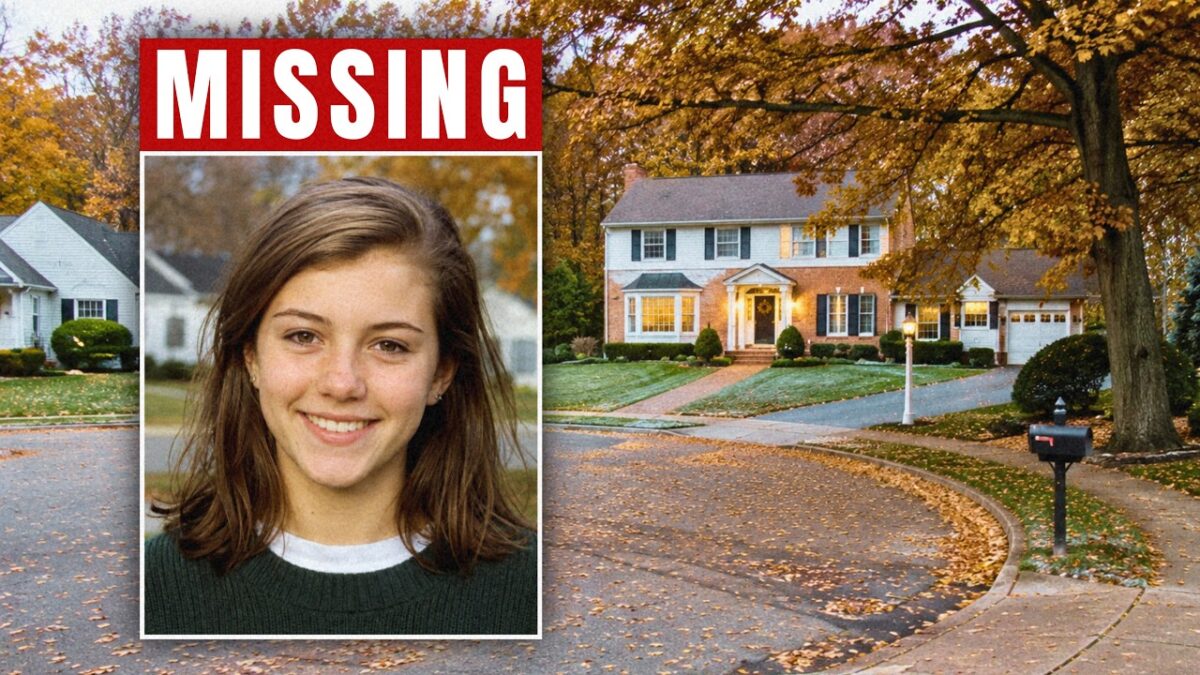
On a cold night in 1996 in a quiet suburb in Michigan, a young girl suddenly vanished and investigators had no answers. Nearly three decades later, a hidden clue came to light and it revealed something no one expected. The autumn of 1996 brought a bitter early chill to Grand Rapids.
The leaves had turned copper and gold, falling thick across the manicured lawns of Elmbridge Drive. It was the kind of affluent, peaceful neighborhood where doors were rarely locked during the day and neighbors knew each other by name. The streets were wide, lined with old oak trees, and the houses sat far back from the road, projecting a sense of total security.
Nothing bad ever happened in this part of town. It was a place insulated from the crime and chaos of the city. At the center of this quiet community lived the Caldwell family.
Arthur Caldwell was a highly successful commercial real estate developer, a man whose name was plastered on construction signs all over the county. His wife Deianne was a prominent fixture in local charity organizations. They lived in a sprawling two-story colonial home at the very end of a culde-sac.
The property was beautiful but imposing, backing up to a dense, sprawling patch of protected woodlands. They had two young children, six-year-old Leo and four-year-old Maya. Because of their active social and professional lives, the Caldwells frequently needed someone to watch the kids in the evenings.
That responsibility almost always fell to a local teenager named Khloe Vance. Khloe was 17 years old, and by all accounts, she was a remarkable young woman. She was a high school senior, an honor student, and a member of the track team.
But more than that, she was known for her immense sense of responsibility. Kloe didn’t spend her weekends going to wild parties or getting into trouble. She was saving every dollar she earned to pay for nursing school.
She lived just two miles away with her single mother, Susan, who worked long hours as a receptionist at a dental office. Kloe and her mother were incredibly close. They had a rule.
No matter where Khloe was or how late she was working, she always called home to say good night. On Friday, October 18, 1996, the Caldwells were scheduled to attend the annual Hospital Foundation Gala at a high-end hotel downtown. It was one of the biggest events of the year, a night of dinner, dancing, and endless networking.
Khloe arrived at the Caldwell house right on time, pulling her rusted powder blue Honda Civic into the long sweeping driveway at 5:30 in the evening. She was wearing her favorite oversized green sweater, carrying a heavy backpack stuffed with textbooks and chemistry notes. She had a major midterm exam on Monday and planned to study once the kids were asleep.
Arthur and Diane were rushing around the house getting dressed and gathering their things. Diane gave Khloe a quick rundown of the evening. There was leftover macaroni and cheese in the fridge for dinner.
The kids were allowed to watch 1 hour of cartoons and then it was straight to the bathtub. Bedtime was strictly 8:00. Diane handed Khloe a piece of paper with the hotel’s front desk number and the phone number of a nearby neighbor just in case of an emergency.
By 6:00, the Caldwells walked out the front door. Arthur told Khloe they would likely be home around 1:00 in the morning, told her to lock the door behind them, and drove off into the crisp autumn evening. For the first few hours, everything went exactly according to plan.
It was a perfectly normal, routine babysitting shift. Kloe heated up dinner and she and the kids ate at the large granite kitchen island. Afterward, they moved to the living room, sitting on the plush carpet to watch television.
When 7:00 rolled around, Kloe wrangled Leo and Mia upstairs for their baths. She helped them into their pajamas, brushed their teeth, and tucked them into their respective beds. Mia refused to sleep without her worn out stuffed rabbit, and Leo demanded that Khloe read him a story about dinosaurs before he would even close his eyes.
Chloe, patient and kind as always, sat in the hallway between their rooms, reading in a soft, soothing voice until the house grew quiet. By 8:30, both children were fast asleep. Kloe walked back downstairs.
The house was enormous, and without the noise of the children, it felt incredibly silent. The only sound was the low hum of the refrigerator and the gentle rustling of the wind against the back patio doors. She walked over to the front door, turned the brass deadbolt until it clicked, and then fastened the heavy security chain across the frame.
She checked the side door near the garage and the sliding glass door in the back. Everything was locked tight. The house was a fortress.
She set up her study materials on the kitchen island. She opened her chemistry textbook, arranged her highlighters, and began taking notes. Around 9:15, she picked up the kitchen wall phone and dialed her mother’s number.
Susan answered on the second ring. The conversation was brief and entirely normal. Chloe said the kids were asleep.
She was working on her chemistry homework and she would see her mother in the morning. Susan told her to drive safe, said she loved her, and hung up. That was the last time Susan Vance ever heard her daughter’s voice.
The hours ticked by. The neighborhood outside grew dark and completely silent. At 1:15 in the morning, Arthur and Diane Caldwell’s luxury sedan pulled back into the driveway.
The night had grown freezing, frost beginning to form on the edges of the lawn. As they walked up the driveway, they noticed Khloe’s powder blue Honda Civic parked exactly where she had left it. The front porch light was glowing warmly, casting long shadows across the brick exterior.
Arthur pulled his house keys from his coat pocket, stepped up to the massive wooden front door, and inserted the key. He turned it, hearing the lock disengage. But when he pushed on the door, it didn’t open.
It only moved about 2 in before stopping with a heavy metallic clank. The security chain was still fastened from the inside. Arthur frowned, pulling the door shut and trying again.
He pushed it open those two inches and peered through the dark crack, calling out into the hallway. Kloe, it’s us. We’re home.
There was no answer. Diane shivered in the cold, wrapping her shawl tighter around her shoulders. She assumed Khloe had fallen asleep on the couch and couldn’t hear them.
Arthur told Diane to wait by the front door while he walked around to the side of the house. He keyed his code into the garage door keypad. The heavy door rumbled upward.
He walked through the dark garage and used his house key to unlock the interior side door that led into the laundry room. He stepped inside. The house was perfectly warm but deathly quiet.
Arthur walked through the hallway and unlatched the chain on the front door, letting his wife inside. Diane immediately called out Khloe’s name again. The silence that answered them felt heavy.
It didn’t make sense. It just didn’t. They walked into the kitchen.
The overhead lights were off, but a small lamp on the counter was glowing. On the kitchen island, Khloe’s homework was spread out exactly as she had left it. Her chemistry textbook was open to chapter 4.
Her favorite blue pen was resting on a spiral notebook. Right next to the notebook sat Khloe’s purse. Her winter coat was draped over the back of a bar stool, and her car keys, attached to a bright yellow lanyard, were sitting right there on the granite counter.
“Chloe,” Deianne called out, her voice rising in pitch, a knot of unease forming in her stomach.
They walked into the living room. The large television was turned on, but there was no broadcast playing. It was just white static, a snowy, hissing screen casting a pale, flickering blue light.
across the walls and carpet. The volume was turned down low. Panic began to set in.
Diane rushed up the grand staircase, her high heels clicking rapidly against the hardwood. She threw open the door to Leo’s room. He was fast asleep, buried under his blankets, his chest rising and falling rhythmically.
She checked Maya’s room. Maya was curled up in a ball, clutching her stuffed rabbit, completely undisturbed. Diane checked the guest bedrooms.
She checked the upstairs bathrooms. Arthur searched the basement, flipping on every light switch. He checked the pantry, the laundry room, the closets.
They looked everywhere, but Khloe Vance was simply gone. Arthur and Diane stood in the kitchen starring at each other in total disbelief. How could she be gone? Her car was in the driveway.
Her coat, purse, and keys were sitting right in front of them. The temperature outside was hovering near freezing, and she had vanished without taking anything with her. But the most impossible detail, the detail that sent a cold spike of fear down Arthur’s spine, was the front door.
The security chain had been fastened from the inside. The back patio doors were locked from the inside. The side door had been locked.
All the windows on the ground floor were secured shut. No one could have left the house and locked that security chain behind them. It was a physical impossibility.
Arthur picked up the phone and dialed 911. Within 10 minutes, a patrol car arrived, its red and blue lights flashing silently against the quiet suburban homes. Officer Miller, a veteran cop who had worked in the town for 20 years, stepped inside.
He listened to the Caldwell’s frantic explanation, his expression growing more serious by the second. He walked the perimeter of the house, shining his flashlight into the dark woods out back, finding nothing but frostcovered leaves. He came back inside and began a slow, methodical sweep of the main floor.
He noted the open textbook. He noted the static on the television. Then, as Officer Miller was walking through the grand entryway, his flashlight beam caught something near the heavy oak front door.
He crouched down, narrowing his eyes. Pressed into the pristine white carpet just inches from the edge of the tile was a single damp footprint. It wasn’t made of blood, but of dark, wet mud.
And as Officer Miller looked closely at the shape and size of the tread, he realized something terrifying. The footprint was massive. It was a large, heavy work boot.
It absolutely did not belong to a teenage girl. Someone else had been standing in the house. Officer Miller stood up slowly, stepping back to ensure he didn’t disturb the muddy footprint.
The silence in the house suddenly felt heavy, suffocating. He immediately reached for the radio on his shoulder, his voice dropping to a serious, urgent whisper as he requested backup and a crime scene unit. Within minutes, the quiet sanctuary of Elmbridge Drive was shattered.
Police cruisers swarmed the culde-sac, their sirens cut off to avoid waking the neighbors, but the flashing red and blue lights illuminated the pristine lawns in a frantic rhythm. Arthur and Diane Caldwell were ushered out of the hallway and into the formal dining room, away from the footprint in the kitchen, where Khloe’s belonging still sat untouched. Deianne was trembling violently, her face pale as she clutched her husband’s arm.
Arthur paced the length of the long mahogany table, running his hands over his face, repeatedly asking the officers what was happening. But the officers didn’t have answers. They were just securing the scene.
At 2:30 in the morning, a plainlothed detective named Thomas Barnes walked through the front door. Barnes was a seasoned investigator who had seen his fair share of terrible things. But missing child and teenager cases always put a tight knot in his chest.
He introduced himself to the Caldwells, speaking in a calm, measured voice. He needed them to walk him through every single second of their evening, starting from the moment they left the house. Arthur recounted the gala, the drive home, and the terrifying realization that the front door was locked from the inside with the security chain.
Barnes listened carefully, writing in a small notepad. He left the Caldwells in the dining room and walked to the entryway to examine the single muddy footprint. It was massive, likely a size 12 or 13 men’s work boot.
The tread pattern was deep, the kind designed for heavy outdoor labor. The mud was dark, thick, and starting to dry into the white carpet fibers. Barnes shined his flashlight down the hall, looking for a second print, a third, a trail leading somewhere.
But there was nothing. It was just one solitary bootprint right near the door as if someone had stepped inside, stopped, and either taken their shoes off or carefully backed out. But how could they back out if the chain was locked from the inside? The detective walked over to the heavy oak front door.
He inspected the brass security chain. It was a solid metal fixture anchored deeply into the door frame with thick screws. The chain itself slid into a grooved track.
There was absolutely no way to slide the chain into place from the outside. Close the door and pull it tight. It required a person standing inside the house to physically slide the metal knob into the groove.
He checked the door frame for scratches, thinking someone might have used a wire or a specialized tool to manipulate the lock from the outside. The paint was perfect. Not a single scratch.
Barnes moved through the rest of the house, checking every possible exit. The sliding glass doors in the back were locked tight with a wooden dowel rod wedged into the bottom track for extra security. The side garage door was deadbolted.
Every ground floor window was securely latched. There were no broken windows, no kicked in doors, no signs of a struggle. Nothing was knocked over.
The house was completely impenetrable. Yet Khloe Vance was gone and a stranger’s muddy footprint was inside. Before Barnes could even begin to process the locked room paradox, another patrol car sped into the driveway.
Susan Vance, Khloe’s mother, practically fell out of the vehicle before it even came to a complete stop. The police had called her at home just 20 minutes earlier, asking if Khloe was there. Susan had immediately thrown a coat over her pajamas and driven straight to the Caldwell residence, her heart pounding with a sickening dread.
As she ran up the driveway and saw the yellow crime scene tape being strung across the porch, she let out a sound of pure agony. It was a guttural, terrifying cry that made every officer on the lawn stop what they were doing. Officer Miller intercepted her before she could run into the house, holding her gently by the shoulders.
Susan fought against him, crying hysterically, demanding to see her daughter. She pointed at the powder blue Honda Civic parked in the driveway, screaming that Khloe’s car was right there, that she had to be inside. Detective Barnes came out to the porch, his face deeply sympathetic.
He guided Susan away from the flashing lights and into the back of an open ambulance that had arrived on standby. He wrapped a blanket around her shaking shoulders and let her cry until she could barely breathe, sitting beside her in the cold night air. When Susan finally found her voice, she begged the detective to find her little girl.
She explained how responsible Khloe was, how she would never just leave, how she had called home at 9:15 and everything had been perfectly fine. Barnes gently asked if Khloe had a boyfriend, if there was anyone who might have been angry with her, or if she had mentioned any strange cars following her recently. Susan shook her head frantically.
Khloe was focused entirely on her nursing exams. She didn’t have time for a secret life. By 4 in the morning, the police realized they needed to speak to the only other people who had been inside the house that night.
Six-year-old Leo and four-year-old Maya. Diane Caldwell went upstairs with a female officer to gently wake the children. They were carried down to the living room, rubbing their eyes, confused by the strange people in uniform standing in their home.
Maya was too sleepy and frightened to say much, clinging tightly to her mother’s neck. But Leo sat on the edge of the sofa, looking up at Detective Barnes with wide, fearful eyes. Barnes knelt down so he was eye level with the little boy.
He spoke softly, asking Leo if he had heard anything after he went asleep. At first, Leo shook his head. He said Khloe read him a story about a Tyrannosaurus Rex, and then he fell asleep.
But as Barnes gently pressed, asking if a bad dream or a loud noise had woken him up later in the night, Leo’s expression changed. The little boy looked down at his bare feet, his voice barely a whisper. He said he had woken up because he was thirsty.
He didn’t get out of bed, but he heard something downstairs. Barnes leaned in closer. He asked Leo what it sounded like.
Leo said it sounded like the television. He heard that fuzzy hissing sound it makes when the cartoon channel goes off the air. And then he heard heavy footsteps.
Thump thump thump on the stairs. Diane gasped, pulling Maya closer to her chest. Barnes kept his eyes locked on Leo, asking if he heard anyone speaking.
Leo nodded slowly. He said he heard a man’s voice. It was very deep and very quiet.
The man had said one word. as they change. Leo thought he was in trouble for being awake, so he hid under his blankets and squeezed his eyes shut until he fell asleep again.
He never saw a face. He never saw the man. A heavy silence fell over the living room.
Someone had been inside the house while the children were sleeping. Someone had walked up those stairs. The terror of that realization washed over Arthur and Deianne like ice water.
As dawn broke over the quiet suburb of Grand Rapids, the investigation shifted outward. If someone took Chloe, they had to have left a trail outside. Search and rescue dogs were brought to the property.
The K9 unit was given Khloe’s oversized green sweater, which had been left draped over the kitchen stool. The dogs caught her scent immediately. They tracked it from the kitchen through the hallway and directly to the front door, but this only deepened the impossible puzzle.
The front door had been chained from the inside. The handler walked the dogs outside to the front porch. The dogs picked up the scent again, right on the welcome mat.
They followed it down the brick walkway across the frostcovered grass and straight to the edge of Elmbridge Drive. And then the dog stopped. They circled the asphalt, sniffing frantically, but the trail was completely gone.
Detective Barnes knew exactly what that meant. Chloe had walked out the front door, or she had been carried out and placed into a waiting vehicle parked on the street. But as the morning dragged on, the detectives hit wall after wall.
They knocked on every door in the neighborhood. Elmbridge Drive was a quiet street, mostly inhabited by older couples and wealthy professionals. No one had heard a scream.
No one had seen a strange car idling on the street. The houses were spaced far apart, and the darkness of the autumn night had concealed everything. The crime scene investigators processing the house found absolutely zero physical evidence of a struggle.
There was no blood, no torn clothing, no displaced furniture. They lifted fingerprints from the front door knob, the kitchen counter, and the telephone. Every print matched either the Caldwell family or Khloe herself.
The muddy footprint in the entryway was carefully photographed and measured, but it was incredibly generic. It belonged to a popular brand of work boots sold at dozens of hardware stores across the state. Thousands of men own that exact boot.
The lack of evidence was paralyzing. Khloe Vance had evaporated into thin air, leaving behind only an impossibly locked door, a static television, and a terrified community. For the next 3 days, Grand Rapids was consumed by the mystery.
Khloe’s smiling high school portrait was broadcast on every local news station. Missing person flyers were stapled to telephone polls, taped to grocery store windows, and handed out at street corners. Susan Vance stood in front of a podium at the police station, weeping openly on camera as she begged anyone with information to bring her daughter home.
The police looked deeply into Arthur Caldwell’s professional life. He was a wealthy developer, meaning he made business enemies. He had recently laid off a crew of construction workers after a project went over budget.
Detectives interviewed dozens of disgruntled former employees, searching for anyone with a grudge against the Caldwell family, but every single worker had an ironclad alibi for the night of October 18th. None of them owned a vehicle that was seen in the area, and none of them matched the profile of a random kidnapper. The investigation was rapidly stalling.
Every lead led nowhere. The sheer impossibility of the locked chain on the front door became a source of endless debate in the police precinct. Some officers theorized that Khloe had locked the chain and the intruder had somehow left through an obscure hidden route in the house.
The SWAT team returned to the Caldwell residence, crawling through the attic, inspecting the narrow ventilation shafts and checking the crawl space beneath the foundation. They found nothing. There was no secret exit.
By the end of the first week, Detective Barnes was sitting at his desk, starring at a mountain of useless case files, feeling a heavy sense of defeat. He rubbed his tired eyes, wondering if they were missing something right in front of their faces. Then his desk phone rang.
It was the forensics lab. The tech on the other end of the line had finally finished processing the telephone records from the Caldwell residence for the night of the disappearance. In 1996, tracing local phone records took time, requiring manual logs from the regional telephone company.
Barnes had requested the records to verify the exact time Khloe called her mother, which checked out perfectly at 9:15. But the lab tech had found something else. something completely unexpected.
“Detective,” the technician said, his voice tense.
“You need to look at this log.
There was another call made from the Caldwell house that night.”
Barnes sat up straight, grabbing a pen. When? At exactly 10:14 p.m. That’s nearly an hour after Khloe spoke to her mother and almost 3 hours before the parents got home.
Barnes felt a rush of adrenaline. Who did she call? Was it a friend? Did she dial 911? That’s the strange part, detective, the technician replied slowly. It wasn’t an outgoing call.
It was an incoming call. Someone called the Caldwell house at 10:14 and the call was answered. It lasted for exactly 42 seconds.
Barnes stared at his notepad, his mind racing. If Khloe answered the phone at 10:14, she was still alive and in the house at that time.
Do we have the origin number? Yes, the technician said, “We traced the number, and you’re not going to believe where the call came from.”
Barnes gripped the receiver tightly.
“Tell me.”
The call came from a pay phone. And it’s not just any pay phone, detective. It’s the pay phone located directly across the street from Susan Vance’s dental office.
A cold chill ran down Barn’s spine. Susan’s office was only 2 miles away from the Caldwell home, but Susan had been at her own house all night. Why would someone be standing at a pay phone near her mother’s workplace, calling the house where Khloe was babysitting right before she vanished? The mystery wasn’t just inside the Caldwell house anymore.
Someone had been watching them from the outside. Detective Barnes slammed the phone down, grabbed his heavy winter coat and sprinted out of the precinct. Within 10 minutes, his unmarked cruiser was tearing into the empty parking lot of the strip mall where Susan Vance worked.
He slammed it into park, his headlights illuminating the lone metal payphone standing near the edge of the sidewalk. The street was completely deserted. The autumn wind was howling, sending dry leaves scraping across the dark asphalt.
Barnes approached the pay phone slowly, his flashlight cutting through the darkness. The receiver was resting perfectly in its cradle. He carefully dusted the metal buttons, the handle, and the coin slot for fingerprints.
He shined his light on the ground, looking for tire tracks, cigarette butts, or a dropped receipt. He spent 3 hours walking the perimeter of the dark dental office, knocking on the doors of the few nearby businesses that were still open. No one had seen a car idling by the payphone at 10:14.
No one had seen anything strange. It was another terrifying dead end. Whoever had stood at that pay phone and called the Caldwell house had vanished just like Chloe.
As the weeks turned into months, the snow began to fall over Grand Rapids, burying Elmbridge Drive in a thick layer of white. The frozen ground seemed to swallow any remaining hope. The investigation slowly ground to a painful, agonizing halt.
The Caldwell family, deeply traumatized by the idea that someone had been standing inside their home while their children slept, sold their beautiful colonial house and moved across the country to California. They simply couldn’t sleep in those bedrooms anymore. But Susan Vance refused to leave.
She stayed in her small, quiet house, keeping her front porch light on every single night. She kept Khloe’s bedroom exactly the way she had left it on October 18th. The chemistry textbooks remained stacked on the desk.
The track uniform stayed folded in the drawer. Susan lived in a suspended state of grief, jumping every time the telephone rang, praying to hear her daughter’s voice on the other end of the line. 27 years passed.
The year was now 2023. The world had completely changed. But the mystery of the babysitter who vanished from a locked house remained the most famous unsolved cold case in the county.
Thomas Barnes was now 72 years old. He had long since retired from the police force, his hair entirely white, his steps a little slower, but he had never let the case go. He kept a complete copy of Khloe’s case file in his home office, starring at the crime scene photos until his eyes achd.
Every year on the anniversary of her disappearance, Barnes would drive to Susan Vance’s house. They rarely talked about the investigation anymore. They would just sit at her small kitchen table drinking black coffee, sharing the silent, heavy burden of not knowing.
It was a slow, agonizing poison that never truly stopped hurting. But in the autumn of 2023, the local police department received a federal grant to modernize their physical evidence rooms. This meant digitizing decades of fragile analog cassette tapes from the 911 dispatch archives before the magnetic strips degraded completely.
A young civilian audio technician named Evan was hired for the project. Evan had grown up in Grand Rapids. He knew the ghost story of Khloe Vance just like everyone else.
When his digitization schedule brought him to the dusty mildew smelling cardboard boxes labeled October 1996, he felt a strange sense of reverence. He carefully pulled out the paper master logs from that night. Evan found the exact tape containing Arthur Caldwell’s frantic call at 1:15 in the morning.
He loaded it into his digital converter and watched the audio waveforms appear on his computer monitor. But as Evan reviewed the physical paper log attached to the box, his finger stopped on a strange entry. According to the faded ink on the dispatcher’s ledger, there had been another 911 call recorded that exact same night.
It was placed at exactly 10:17. That was just 3 minutes after the strange pay phone call to the Caldwell house. Evan checked the origin address of the 1017 call.
His heart skipped a beat. It wasn’t dialed from a house. It was dialed from a public pay phone.
The exact same pay phone located in the strip mall near Susan Vance’s dental office. Back in 1996, the dispatcher had coded the 1017 call as a silent hang-up because the caller never spoke and because the location didn’t match the Caldwell residence. The two events were never linked.
Detective Barnes was never told about it. The tape had been tossed into a cardboard box where it sat untouched in the dark for 27 years. Evan’s hands were shaking slightly as he found the fragile cassette tape marked with that timestamp.
He carefully loaded it into the deck, put on his heavy studio headphones, and pressed play. At first, the audio was exactly as the paper log described. It was a wall of analog hiss.
He heard the 1996 dispatcher say, “911, what is your emergency?” There was no answer.
The dispatcher repeated the question twice more, but the caller didn’t hang up right away. The line stayed open for nearly a minute. All Evan could hear was the heavy blowing sound of wind against the payphone receiver, the distant rumble of a passing truck, and a faint rhythmic clicking sound.
Then the line went dead. It sounded like a useless prank call. But Evan knew that modern audio forensic technology could see right through the noise.
Evan imported the raw audio file into a state-of-the-art spectral deninoiser. On his monitor, the sound waves looked like a glowing multicolored heat map. He began mathematically isolating the different layers of sound.
First, he highlighted the frequency of the wind and deleted it. The hissing sound vanished. Next, he isolated the low rumble of the passing truck and pulled it out of the track.
As the background noise faded away, the true audio hiding beneath it was finally revealed. Evan realized the caller hadn’t just stood at the pay phone in silence. The caller had dialed 911, dropped the receiver, so it dangled by its metal cord, and then walked away.
The rhythmic clicking sound suddenly became crystal clear. It wasn’t a mechanical glitch on the tape. It was the unmistakable sound of a vehicle’s turn signal.
Click, pause, click, pause. Someone had pulled a car right up to the pay phone, left the engine running, reached out the window to dial the emergency number, and dropped the phone. Evan leaned closer to his monitor, his pulse pounding in his ears.
He boosted the vocal frequencies in the background. Someone was inside that idling car. He heard the deep, heavy sound of breathing.
And then he heard a voice. It was a man’s voice, slightly muffled by the distance to the dangling receiver. But the modern software made his words terrifyingly clear.
Evan immediately picked up his cell phone and found the number for retired detective Thomas Barnes. Within 20 minutes, Barnes burst through the doors of the police station basement. He was breathing heavily.
His face flushed from the cold rain outside. He didn’t even say hello. He just pulled up a chair next to Evan’s workstation and stared at the computer screen.
Evan didn’t explain. He just handed the old detective the studio headphones and pressed play. Barnes closed his eyes as the audio began.
He heard the dispatcher from 27 years ago. He heard the crisp, isolated click of the turn signal. And then he heard the man’s voice speaking from inside the car.
“She’s out cold,” the man’s voice said, sounding rushed and breathless.
“Keep her down.
Let’s go.”
Barnes felt a cold wave of pure horror wash over him. The timeline was finally clicking into place. At 10:14, someone had called the Caldwell house from this pay phone to make sure Khloe was there, or perhaps to lure her outside.
3 minutes later, at 10:17, they had her in the car unconscious. One of the attackers had dropped the payphone receiver after dialing 911, perhaps by accident in the rush to escape, leaving an accidental audio recording of the kidnapping. But as Barnes continued to listen, a second sound emerged on the tape.
It was a sound that made absolutely no sense. A sound that shattered everything they thought they knew about the case. Behind the man’s gruff voice coming from the passenger seat of that idling car was the unmistakable sound of a child crying.
It wasn’t a teenager. It was the high, terrified sobbing of a very small child. I want my mommy.
A little girl’s voice whimpered softly in the background. Please. Barnes ripped the headphones off his ears, his face turning entirely pale.
He stared at Evan in total, terrified disbelief. Khloe Vance was 17 years old. If Khloe was the one knocked unconscious in the car, then who was the little girl crying in the passenger seat? The Caldwell children, Leo and Maya, had been found perfectly safe, fast asleep in their beds when their parents arrived home at 1:15.
They had never left the house. So, who was the little girl in the car with the kidnappers at 10:17? And if the kidnappers were at the pay phone with their victims at 10:17, who had locked the heavy brass security chain on the Caldwell’s front door from the inside hours later, Barnes stood frozen in the dim light of the police station basement, the heavy studio headphones dangling from his trembling hand. The sound of that little girl’s voice was echoing in his mind, shattering 27 years of assumptions.
It didn’t make sense. It just didn’t. If Khloe Vance was the teenage babysitter who vanished, then the person knocked out in the back seat had to be her.
But the high-pitched, terrified whimpering of the child in the front seat threw the entire timeline into total chaos. Evan, the young audio technician, sat in his ergonomic chair, starring up at the old detective with wide, anxious eyes. The room was completely silent except for the low rhythmic hum of the computer towers and the steady patter of cold autumn rain against the high narrow basement windows.
Evan asked softly if Barnes recognized the child’s voice. Barnes didn’t answer right away. He walked over to the corner of the room, leaning his hands against the cold concrete wall, his breathing heavy and ragged.
He was running the details through his head, matching the new audio with the old memories of the most frustrating night of his career. He remembered walking into the Caldwell home at 2:30 in the morning back in 1996. He remembered seeing 6-year-old Leo sitting on the couch and 4year-old Maya clinging desperately to her mother’s neck.
The police had checked the children thoroughly. They were warm, safe, and completely unharmed. They had been tucked neatly into their beds.
But then the terrifying truth began to take shape in Barn’s mind. He spun around, walking back to Evan’s desk with a sudden, frantic energy. He told Evan to replay the child’s voice from the tape, but this time he wanted him to isolate the specific pitch and compare it to the old audio files of the family interviews.
Evan’s fingers flew across his keyboard, pulling up the digital archive of the witness statements taken the morning after the disappearance. He found the short audio clip of 4year-old Maya Caldwell crying in the living room while her mother tried to comfort her. He placed the two audio tracks side by side on his screen, color-coding the sound waves.
Barnes leaned over Evan’s shoulder, holding his breath as the technician hit the play button. First, they listened to the 1996 911 call from the pay phone. The little girl whimpered asking for her mommy.
Then, Evan played the clip of Maya from the police interview. The vocal frequencies, the slight lisp on the letters, the distinct breathless rhythm of her crying, they were a perfect match. There was absolutely no doubt about it.
The little girl in the car with the kidnappers at 10:17 on the night of October 18, 1996 was 4-year-old Maya Caldwell. The realization hit Barnes like a physical blow. For nearly three decades, the police had been operating under the assumption that a predator had targeted a beautiful 17-year-old high school honor student.
They had searched Khloe’s life, her friends, her school, and her mother’s acquaintances. But they had been looking at the entire case completely backward. Khloe Vance wasn’t the primary target of the kidnapping.
Maya Caldwell was. Barnes sank into a nearby chair, his mind racing as the pieces of the lockroom puzzle finally began to fall into place. The physical impossibility that had haunted him for 27 years was suddenly dissolving.
He looked at the whiteboard on the wall visualizing the colonial house on Elmbridge Drive. If Maya was in the car at 10:17, miles away at a pay phone, then the kidnapper had already taken both Kloe and Maya out of the house before that time. Khloe had likely fought to protect the little girl, resulting in her being knocked unconscious.
The kidnapper had carried them both out the front door, which explained why the tracking dogs followed Khloe’s scent down the brick walkway to the curb. But if they were already gone at 10:17, how did Maya end up back in her bed at 1:15 in the morning? And who locked the heavy brass security chain on the front door from the inside? Barnes stood up, packing the floor as the chilling logic revealed itself. The kidnapper had returned.
Something had gone horribly wrong during the abduction. Standing at that lonely pay phone across from the dental clinic, the kidnapper had realized the immense weight of what he was doing. He had an unconscious teenage girl in the back seat and a screaming, terrified 4-year-old daughter of a wealthy, powerful millionaire in the front seat.
He knew that kidnapping a child of the Caldwell family would bring down the full force of the FBI. He panicked. The kidnapper decided to eliminate the witness who could identify him, Chloe.
But he couldn’t bring himself to kill a 4-year-old child. Or perhaps he realized that returning Maya would buy him time. If Maya was back in her bed, the parents would return home and think the babysitter had simply walked off the job or run away.
It would delay a massive police investigation for hours, maybe even days. So later that night, the kidnapper drove back to Elmbridge Drive. He used his secret knowledge of the property to slip back inside, carrying the quiet, terrified little girl.
He walked up the grand staircase, his heavy work boots sinking into the carpet. He tucked Maya back into her bed. When six-year-old Leo woke up from the noise, the man stood in the dark hallway, whispered shh to terrify the boy into silence, and then walked back downstairs.
Before leaving the house for the final time, the man walked to the heavy oak front door. He slid the brass security chain into its groove from the inside, deliberately creating an impossible locked room mystery to completely baffle investigators and stall the timeline. Then he walked through the house, stepped through the laundry room, entered the garage, and walked out, closing the heavy garage door behind him using the exterior keypad.
It was a brilliant, cruel manipulation of a crime scene. Something felt wrong about how long it had taken to see it. Really wrong.
The man with the size 12 boots had been playing a game with them from the very beginning. Barnes knew he couldn’t waste another second. He needed to contact the family.
He reached into his coat pocket, pulled out his phone, and dialed a number he hadn’t called in years. He called Arthur Caldwell in California. The phone rang four times before a tired, elderly voice answered.
Arthur was now in his late 70s, his voice raspy and thin. Barnes didn’t give a lengthy introduction. He told Arthur that there had been a massive unprecedented breakthrough in the disappearance of Khloe Vance, and he needed Arthur and Diane on a speaker phone immediately.
Within moments, Dian’s voice joined the line, sounding anxious and fragile. Barnes spoke clearly, breaking down the discovery of the hidden 911 tape from the pay phone. He didn’t sugarcoat the truth.
He told them that their daughter, Maya, had been inside the kidnapper’s car that night. He explained the theory of how the intruder had returned Maya to her bed and locked the house from the inside. On the other end of the line, there was a long, agonizing silence.
Then Barnes heard Diane let out a jagged, heartbreaking sob. The horror of realizing that a monster had carried her helpless 4-year-old daughter out of the house, drove her around in the dark with an unconscious teenager, and then brought her back into their home was too much to bear. Arthur’s voice shook with an intense burning anger as he asked Barnes who could have done such a thing, who had the garage code, who knew their schedule.
Barnes asked them to think back to 1996, specifically about anyone who had intimate access to their lives and matched the physical description of a large man who wore heavy work boots. Arthur went silent for a moment, his mind traveling back through decades of business deals and personal relationships. Then Arthur mentioned a name, a name that sent a sudden jolt through the old detective.
Arthur explained that during the autumn of 1996, his real estate development company was working on its largest project to date, a massive commercial shopping center on the north side of town. The project was plagued by severe financial issues, and Arthur had discovered that his trusted business partner and head construction manager was secretly embezzling hundreds of thousands of dollars from the company escrow accounts. Barnes gripped his phone tightly, asking for the partner’s name.
Arthur said his name was Gordon Vance. Barnes froze, the air leaving his lungs. Vance, Arthur, is he related to Khloe and Susan Vance? Arthur shook his head over the phone, explaining that it was just a strange, terrible coincidence.
Gordon Vance was no relation to Khloe’s family. He was a wealthy, imposing man, well over 6 feet tall, who always wore heavy steeltoed boots because he spent his days managing construction crews on active dirt sites. Arthur had confronted Gordon about the stolen money on the morning of Thursday, October 17, 1996, just one day before Khloe vanished.
Arthur had threatened to take the evidence to the district attorney on Monday morning, a move that would have utterly ruined Gordon’s life, stripped him of his wealth, and sent him to federal prison for decades. The hidden connection was finally screaming in the dark. Gordon Vance was facing total ruin.
He knew Arthur’s schedule because they shared a corporate calendar. He knew the hospital foundation gayla was on Friday night. He had been to the Caldwell home dozens of times for dinner parties, meaning he knew the layout of the house, and he knew the garage keypad code.
He had a desperate psychotic motive to kidnap Arthur’s daughter for a massive ransom to replace the embezzled funds and force Arthur into silence. But Gordon Vance had an alibi. Barnes remembered it clearly from the old files.
On the night of October 18th, Gordon Vance had attended the exact same hospital gala downtown. Dozens of prominent local citizens had seen him drinking and networking in the main ballroom. Barnes hung up the phone with the Caldwells, his chest tightening with suspense.
He turned to Evan, telling him they needed to dig deeper into Gordon Vance’s alibi from that night. They walked up to the main floor of the precinct, accessing the physical record storage room. Barnes pulled the heavy cardboard box containing Gordon Vance’s 1996 interview files.
He spread the documents across a large table, reading through the typed statements line by line. According to the old police report, Gordon Vance claimed he arrived at the Gala downtown at 6:30 in the evening and didn’t leave until the event ended at midnight. Several business associates confirmed seeing him at dinner around 7:30 and again during the charity auction at 9:00, but Barnes noticed a massive glaring gap in the timeline that the original investigators had completely overlooked because they were focused on a random stranger predator.
The charity auction ended at 9:45 p.m. The formal dance portion of the evening didn’t begin until 11:00. During that hour and 15 minutes, the ballroom was dark, chaotic, and crowded with hundreds of guests moving between the bar, the restrooms, and the outdoor terrace.
No one explicitly stated they were standing next to Gordon Vance between 10:00 and 11:00. The downtown hotel was only a 10-minute drive from the strip mall where Susan Vance worked and another 5 minutes from the Caldwell residence on Elmbridge Drive. Gordon could have easily slipped out of the hotel side doors, walked to his vehicle, executed the desperate kidnapping, and driven back before anyone even noticed he was missing from the crowded ballroom.
Barnes felt a cold sweat breaking out on his neck. He began searching through the list of Gordon Vance’s registered vehicles from 1996. He found a line item showing that Gordon owned a dark green heavyduty Ford F-150 truck.
Barnes looked back at Evan, his voice trembling with a sudden realization. He asked Evan to pull up the digital audio file of the 1017911 call again. He needed to hear that rhythmic clicking sound one more time.
Evan clicked his mouse, looping the isolated audio of the vehicle’s turn signal. Click, pause, click, pause. It was a mechanical heavy sound.
Barnes closed his eyes listening to the cadence. He had spent his entire life around cars and trucks. In the mid1990, heavyduty Ford trucks had a very distinct loud metallic thermal flasher relay for their turn signals.
It sounded completely different from the soft plastic clickers found in standard passenger cars or Khloe’s rusted Honda Civic. The clicking sound on the tape was heavy, deep, and metallic. It was the exact sound of a Ford F150 turn signal from that specific era.
The pieces were locking together with terrifying precision. Gordon Vance was at that pay phone. But Barnes knew that a 27-year-old audio recording and a theory about a turn signal wouldn’t be enough to secure a conviction or find out what happened to Kloe.
He needed undeniable physical proof that Gordon Vance was physically at that pay phone or at the house during those critical missing minutes. Barnes began digging frantically through the very bottom of the old file box, pulling out the random, unorganized scraps of paper that were collected during the first weeks of the 1996 investigation. He found old restaurant receipts, gas station logs, and local patrol sheets.
Suddenly, his hand stopped. He pulled out a small yellow piece of carbon paper that had been tucked inside a plastic sleeve, completely ignored for nearly three decades. It was a manual traffic warning ticket.
On the night of October 18, 1996, at exactly 10:28 p.m., a county sheriff’s deputy had pulled over a dark green Ford F-150 truck for speeding down a dark rural county road just 2 mi north of Elmbridge Drive. The location was a direct, desolate path leading toward an abandoned, flooded gravel quarry that Gordon Vance’s construction company owned. Barnes felt his heart pounding violently against his ribs as his eyes raced down the faded yellow paper, searching for the driver’s signature.
This was the final clue, the ultimate piece of hidden history that shattered the entire mystery wide open. The driver who signed that speeding ticket at 10:28 p.m. wasn’t Gordon Vance.
The signature written in faded blue ink on the bottom line of the traffic warning ticket wasn’t the messy, aggressive scroll of Gordon Vance. It was neat, careful, and perfectly legible. It was the exact same handwriting Detective Barnes had seen on dozens of missing person flyers and police forms over the last 27 years.
The signature belonged to Susan Vance. Barnes felt all the air leave his lungs. He stared at the small piece of yellow paper, his hands shaking so violently he had to place it flat on the table.
The room around him seemed to spin. Evan, the audio technician, asked him if he was okay, but Barnes couldn’t find his voice. The shock was absolute and paralyzing.
Arthur Caldwell had told Barnes that Gordon Vance was no relation to Khloe’s family. Arthur had believed that with his whole heart. But Arthur was a wealthy businessman who only knew his partner in a corporate setting.
He didn’t know Gordon’s deep personal history. He didn’t know that long before Gordon became a millionaire developer. He was a struggling construction worker married to a woman named Susan.
Gordon Vance was Khloe’s father. Barnes gripped the edge of the table as the horrifying reality of the timeline finally snapped into perfect terrifying focus. Susan Vance hadn’t been sitting at home that night.
She was the one driving Gordon’s dark green Ford F150. She was the one who pulled the truck up to the Payphone directly across the street from her own dental office. But why? Why would a mother help kidnap a child from the very house where her own teenage daughter was babysitting? The motive was right there, hiding in plain sight.
Gordon was facing total ruin and federal prison because Arthur Caldwell had caught him embezzling money. Gordon needed a massive sum of cash immediately to replace the stolen funds and disappear. Or he needed leverage to force Arthur into silence.
He planned to kidnap Arthur’s four-year-old daughter, Maya, and demand a million dollar ransom. But Gordon couldn’t do it alone. He needed someone who knew the Caldwell’s schedule.
He needed someone who knew the lay out of the house. He needed someone he could control. He went to his desperate, struggling ex-wife, Susan, and offered her a cut of the money.
He manipulated her, promising that nobody would get hurt and that the money would pay for Khloe’s nursing school. and secure their future forever. Susan, blinded by financial desperation and the toxic influence of her ex-husband, had agreed to the unthinkable.
Barnes didn’t wait for backup. He didn’t call the chief of police. He gathered the yellow traffic ticket and a digital copy of the 911 tape, walked out into the freezing autumn rain, and drove his unmarked cruiser straight to Susan Vance’s house.
He pulled up to the curb. The front porch light was glowing brightly in the darkness, exactly as it had every single night for 27 years. For decades, the entire town had viewed that light as a symbol of a mother’s unbreakable hope.
But as Barnes walked up the driveway, the rain soaking his coat, he realized that light wasn’t a beacon of hope at all. It was a monument to unbearable guilt. He knocked heavily on the front door.
A minute later, the door creaked open. Susan stood there wearing a thick gray cardigan, her face deeply lined with age and sorrow. She looked surprised to see the retired detective standing in the rain, but she offered a soft, tired smile and stepped aside to let him in.
They walked into the small kitchen. It was exactly the same as it had always been. Khloe’s senior portrait still hung on the wall next to the refrigerator.
Barnes didn’t sit down. He stood across the small wooden table, looking at the woman he had spent nearly three decades trying to comfort. His chest was tight with a mixture of profound sadness and boiling anger.
Without saying a word, he reached into his coat pocket, pulled out the yellow traffic ticket from 1996, and slid it across the table. Susan looked down, her eyes focused on her own signature. For a long agonizing moment, the kitchen was completely silent.
The only sound was the heavy rain beating against the window panes. Susan didn’t act confused. She didn’t ask what the paper was.
The color simply drained from her face, leaving her looking hollow and broken. Her breath hitched in her throat, a terrible, ragged sound.
“He promised me,” Susan whispered, her voice trembling so hard she could barely form the words.
He promised me she wouldn’t be there. Barnes felt a cold tear slip down his own cheek. Tell me what happened, Susan.
Tell me everything. Susan collapsed into a kitchen chair, burying her face in her hands. The facade she had maintained for 27 years shattered completely.
Through heavy, agonizing sobs, the entire truth finally poured out into the dark room. She confessed that Gordon had come to her in a panic the day before the kidnapping. He told her about the stolen money and his plan to take Maya Caldwell for ransom.
He begged for her help, promising her $100,000. Susan told Gordon that Khloe was scheduled to babysit that Friday night. Gordon promised he would wait until Khloe fell asleep on the couch before he sneaked into the house.
He said Khloe would never even know he was there. On the night of October 18th, Susan drove Gordon’s truck to the pay phone near her office, waiting in the shadows. At 10:14, she used the pay phone to call the Caldwell house, checking to see if Khloe would answer.
When Khloe picked up, Susan hung up, signaling to Gordon that Khloe was awake. But Gordon didn’t wait. He was desperate and out of time.
He used the garage code he knew from his business dealings, slipped inside, and walked upstairs to take Maya. But Khloe Vance was a remarkable young woman. When she heard a stranger grabbed the little girl, she didn’t hide.
She fought back. She fought her own father in the dark hallway to protect a child that wasn’t hers. In the struggle, Gordon struck Chloe with the heavy metal flashlight he was carrying, hitting her much harder than he ever intended.
Khloe crumpled to the floor, completely unconscious. Gordon panicked. He couldn’t leave his unconscious daughter there to wake up and identify him to the police.
He grabbed Maya, threw Khloe over his shoulder, and carried them both out the front door, leaving the muddy boot print on the carpet. When Gordon arrived at the pay phone, and threw Khloe into the back of the truck, Susan realized the horrifying reality of what they had done. Seeing her daughter bleeding and unconscious, Susan broke down.
While Gordon was securing Chloe in the back, Susan grabbed the pay phone receiver and dialed 911, desperate to stop the nightmare. But Gordon caught her. He knocked the phone out of her hand, leaving it dangling by the cord.
“She’s out cold,” Gordon had yelled at Susan, forcing her into the driver’s seat.
“Keep her down.
Let’s go.”
Susan drove the truck in a state of pure terror, heading north toward Gordon’s abandoned gravel quarry. Along the way, a county deputy pulled them over for speeding. Gordon hid in the back under a tarp, holding a hand over Maya’s mouth to keep the child quiet.
Susan, terrified that Gordon would kill them all if she spoke up, lied to the deputy and signed the warning ticket herself. When they reached the desolate quarry, the nightmare reached its absolute darkest point. Kloe woke up.
She looked up and saw her father’s face. She saw her mother standing there. Khloe knew exactly what was happening.
Gordon realized his entire life was over. His own daughter would turn him in. So, standing in the cold mud of the quarry, Gordon Vance made a choice.
He chose his own freedom over his daughter’s life. He killed Chloe while Susan stood frozen in absolute terror, too afraid of Gordon to stop him. Susan’s voice broke into a high, piercing whale as she described watching Gordon bury her only child deep in the muddy banks of the flooded quarry, burying her beneath tons of heavy gravel and dirt.
Afterward, Gordon turned his cold, dead eyes to Susan. He told her that if they killed Maya, the police would never stop looking for them. But if they returned Maya to the house, the parents would assume Chloe had simply walked away or run off.
It would create total confusion and delay the investigation. Susan, completely broken and operating under the threat of death, held the terrified 4-year-old girl in her arms as they drove back to Elmbridge Drive. Gordon carried Maya upstairs and tucked her into bed.
He silenced little Leo in the hallway. Then to create the ultimate distraction, Gordon fastened the heavy brass security chain on the front door from the inside. He walked out through the garage, sealing the house behind him.
He had created an impossible locked room mystery that would keep the police chasing ghosts for nearly three decades. And for 27 years, Susan lived in the prison of her own making. She played the grieving mother on television.
She kept the bedroom untouched. She kept the porch light on. But it was never for hope.
It was because she was terrified of the dark, terrified of the memory of what she had allowed to happen to her brave, beautiful daughter. Barnes sat at the table, listening to the agonizing confession. Feeling a profound sickness in his stomach, he slowly reached for his radio.
He called for units to respond to the house. He watched as uniformed officers walked into the kitchen and gently placed handcuffs on the wrists of the woman he had comforted for 27 years. Susan didn’t fight.
She just bowed her head and wept, finally surrendering to the truth she had carried for a lifetime. Within hours, a massive police operation descended on the abandoned gravel quarry on the north side of town. The property had sat unused and overgrown for decades.
Heavy excavators and forensic teams worked through the freezing rain, digging deep into the muddy banks exactly where Susan had told them to look. By the next afternoon, they found her. Deep beneath the earth, wrapped in an old construction tarp, were the remains of 17-year-old Khloe Vance.
She was still wearing the oversized green sweater she had worn to work that night. The discovery sent shock waves through the entire state of Michigan. The local news stations interrupted their broadcasts to announce that the most famous unsolved mystery in the county had finally been broken.
Police immediately drove to an upscale assisted living facility in a wealthy suburb of Detroit. They found 78-year-old Gordon Vance sitting in a leather chair in the reading room. He looked up at the officers, his eyes cold and empty.
He didn’t ask why they were there. He simply stood up and held out his wrists. He was charged with firstdegree murder and kidnapping, crimes that would ensure he spent his final days behind the cold steel bars of a maximum security prison.
Susan Vance plead guilty to accessory to murder and kidnapping. At her sentencing hearing, she didn’t ask for a light sentence. She stood before the judge, her head heavy with shame, and accepted her fate.
She was sentenced to 40 years in state prison. The community that had once rallied behind her, raising money and searching the woods for her daughter, was left in a state of absolute disbelief and heartbreak. The Caldwell family, now living in California, finally received the phone call they had waited 27 years for.
Arthur and Diane wept openly when Barnes explained exactly how the Lock True mystery had been executed. But their tears weren’t just for the horror of the kidnapping. They wept for Chloe.
Maya Caldwell was now a 31-year-old woman with a family of her own. For her entire life, she had carried vague, terrifying memories of the dark, of a heavy truck, and of a teenage girl fighting to keep her safe. When she finally learned the full truth, she realized that she was only alive because a 17-year-old babysitter had refused to let a monster take her without a fight.
Khloe Vance had sacrificed her own life to save a little girl. A month after the arrests, a proper funeral was finally held for Khloe Vance. The entire town of Grand Rapids attended.
The church was filled with her old high school classmates, her former teachers, and hundreds of strangers who had been touched by her story. Arthur, Deianne, Leo, and Maya Caldwell flew across the country to stand at the front of the church. They placed a massive wreath of white roses on her casket, a silent promise that her bravery would never ever be forgotten.
The mystery of Elmbridge Drive was finally over. The impossible puzzle of the locked door was solved, but the truth left a heavy, lingering sadness over the quiet suburban streets. It served as a dark, haunting reminder about human nature.
We lock our doors at night to keep the monsters out. We check the windows, turn on the alarms, and build fences to protect the people we love from the strangers in the dark. But sometimes the greatest danger doesn’t come from a stranger breaking a window.
Sometimes the darkest evil exists in the people we trust the most, hiding behind familiar faces and false promises. And while a lie can stay buried in the dark for a very long time, the truth always has a way of finding the light.








