She Came to America on a Student Visa — A Man Promised to Make Her a Model It Ended in Murder
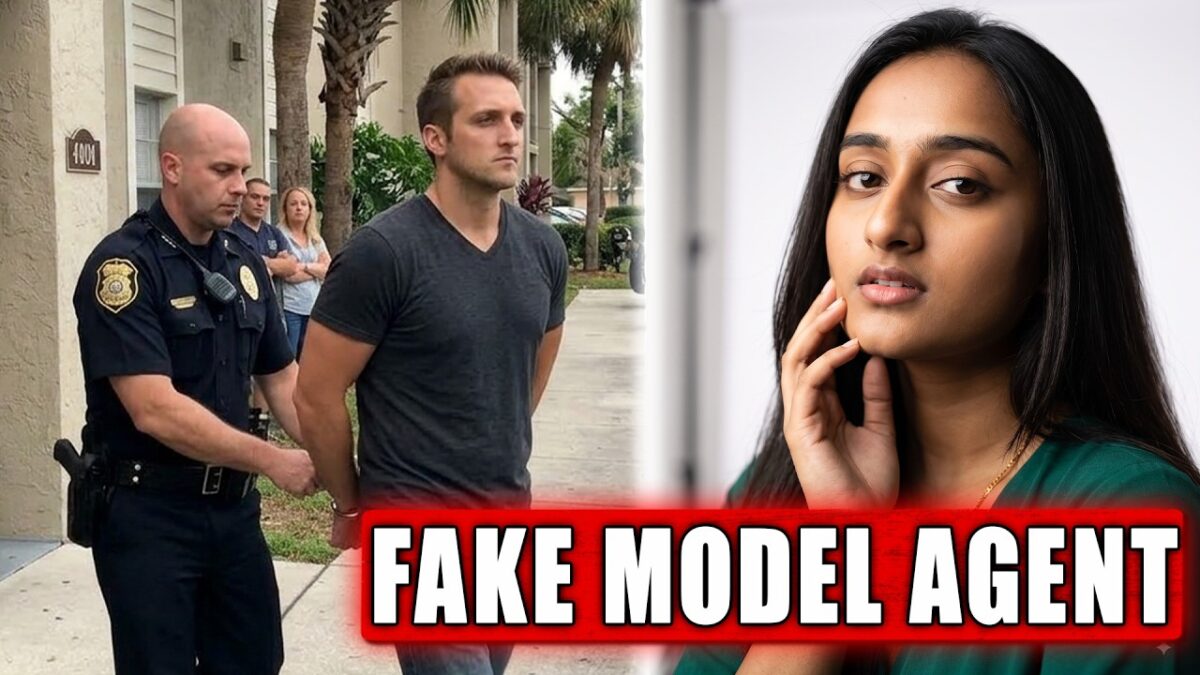
A gas station camera catches a black Dodge Charger at 9:12 p.m. No one watching that tape yet knows it’s evidence. Months earlier, Simran Oberoi landed in Tampa on a student visa, a master’s program in marketing, and a quiet second dream, modeling.
At a club downtown, a man told her she had exactly the look agencies pay for. He called himself a modeling scout. He wasn’t.
What that camera would eventually help prove ties her disappearance to a killing 3 years earlier and to a man who was certain he’d never be caught. Simran Oberoi, 22, landed at Tampa International Airport on August 14th, 2022. 19 hours removed from her parents’ living room in Pune, India.
She carried two suitcases, a folder of transcripts, and an F-1 student visa stamped 6 weeks earlier at the US consulate in Mumbai. Her acceptance letter came from Tampa Bay State University, a master’s program in marketing chosen over two other offers, mostly because a cousin’s friend had studied there once and said good things about the weather. Nobody warned her about August in Florida.
The air felt thick enough to chew. She moved into a two-bedroom apartment off Bruce B. Downs Boulevard, a short bus ride from campus.
Her roommate was a stranger before that, someone she’d spoken to twice on a video call, and never in person. Nisha Thakkar was from Ahmedabad, a second-year student in the same program. Within a week, she had become the closest thing Simran had to family anywhere in the state of Florida.
They split the rent, the grocery runs, the long, homesick phone calls that landed at odd hours. The time difference to Pune ran 10 and 1/2 hours, an inconvenience neither of them ever fully adjusted to. Simran called her mother most nights around 9:00 Eastern time.
Back home, that put it at 6:30 in the morning. Her father asked the same three questions every call. Was she eating? Was she safe? Was the money holding up? Classes started August 22nd.
She was good at the coursework and better at making it look effortless. The kind of student a professor remembers by name after the second lecture, without trying particularly hard to be remembered. Her F-1 status allowed up to 20 hours of work a week on campus, and she used every one of them.
Three afternoons a week, she shelved returns at the university library, a little above minimum wage. It wasn’t glamorous work. It covered groceries and the occasional ride-share when the heat made walking across campus unbearable.
Back home, Simran had modeled a little. Nothing serious. Nothing that paid real money.
A handful of local boutique campaigns in Pune. A few print ads for a jewelry brand her aunt happened to know the owner of. She still posted photos sometimes.
A rooftop shot in a green kurta. A candid one from a friend’s wedding, taken from an angle she had clearly asked for. A little over 600 followers.
Mostly people she already knew in real life, back home or on campus. It was a hobby, not an ambition. That was what she told her mother anyway, whenever the subject came up.
Her father had never liked the modeling much, even back home. He thought it was frivolous, a distraction from a real career. The marketing degree was supposed to be the real career.
Something with a job title her parents could explain to relatives. By late September, she had found a rhythm to the semester. Lectures in the morning, the library job after, dinner with Nisha most nights, usually something one of them had learned to cook badly and was slowly getting better at.
On weekends, a small group from her cohort sometimes met up near campus for dinner. Two Americans, a classmate from Nigeria, another from Vietnam, splitting a bill six ways, arguing over which restaurant nearby made the better naan. Simran hadn’t gone out much beyond that.
Tampa’s nightlife wasn’t something she had thought about before arriving. Between the coursework and the job, there wasn’t much room left in the week for anything else. Nisha had a theory about that.
She thought Simran simply hadn’t been asked out by the right person yet. Simran usually laughed that off.
“She had come to Tampa Bay State for a degree,” she’d say, “not a social life.”
That would change in October, when a classmate named Madison invited both of them to a birthday party downtown. Madison sat two seats away in a Tuesday seminar and had spent most of the semester trying to get Simran to come out with the group. It was the kind of night Simran almost said no to, out of tiredness more than anything else.
She said yes instead. By every account she gave afterward, it was an unremarkable decision. Nobody circles a date like that in advance.
Nobody walking into a club on a Friday night knows which conversation is going to matter a year later and which ones are going to be forgotten by Monday. The party was for a friend of Madison’s, a birthday at a club on North Franklin Street in downtown Tampa. The kind of place with a line outside even on a Friday that wasn’t particularly special.
October 14th, 2022. Simran wore a borrowed dress and shoes she’d regret by midnight. Nisha came along mostly so Simran wouldn’t have to leave early alone.
Neither of them expected much from the night. The club was loud in the way clubs are designed to be loud. Bass first, conversation second.
Everything lit in shifting blue and purple, the kind of lighting that makes every stranger look a little more interesting than they are. Simran was standing near the bar, waiting on a drink she hadn’t technically ordered yet, when a man struck up a conversation beside her. He introduced himself as Derek.
Derek Lang, 34, dressed a notch better than most of the room. A blazer over a plain shirt, the kind of outfit that read as effort without trying too hard to look like effort. He said he worked in the modeling industry.
Talent scouting mostly. Finding faces for agencies that didn’t have the time to find them himself. He mentioned freelance photography, too, and some driving work on the side.
The scouting, he said, was more of a passion project than a paycheck. He dropped a few names. An agency in Miami.
A magazine Simran hadn’t heard of, but assumed she probably should have. He told her she had exactly the look a client of his was searching for that month.
“Not conventionally pretty,” he said.
“Striking.
Editorial.
The kind of face a camera actually wanted rather than one it merely tolerated.” Simran laughed it off at first.
She’d heard some version of that line before from men with far less charm behind it. But Derek didn’t push. He asked about her, not just her face, where she was from, what she was studying, how long she’d been in Tampa.
He mentioned a portfolio website unprompted and pulled it up on his phone before she’d even asked to see it. The site looked legitimate enough. Professional photos, a handful of names Simran didn’t recognize, a contact page with an email address that matched his.
Nisha watched the exchange from a few feet away, arms crossed, saying nothing. She’d met plenty of men like Derek before, or thought she had. This one at least didn’t seem to be selling anything obvious.
Before the night ended, Derek asked for Simran’s Instagram, not her number. It felt safer that way, and she gave it to him without much hesitation. He said he’d send over some information about test shoots.
No pressure, no cost, just a chance to see if the camera agreed with him. Simran walked home that night already composing in her head the message she’d send her mother about it. She decided against sending it.
Some things, she thought, sounded better after they’d actually happened. The messages started 3 days later. A follow, then a direct message, casual and easy to answer.
He asked how her week was going before he asked anything about modeling at all. It read as considerate, patient, even. By the end of that first week, he had mentioned two more names, a stylist, a photographer he’d worked with before, both traceable, both real enough to check if she’d thought to look.
Simran didn’t check them. There was no obvious reason to, and no version of the conversation that suggested she should. He never asked for money, not a portfolio fee, not a registration charge, nothing that would have made Nisha’s warning bells go off if she had ever actually read the messages herself.
That, more than anything, was what made him good at this. He knew exactly what a scam was supposed to look like. He made sure never to look like one.
Simran told Nisha about him the next morning over coffee, mostly because she wanted someone to tell her it wasn’t ridiculous to be a little excited. Nisha’s reaction was mixed. Not alarmed, exactly, just the specific caution of someone who had heard enough stories to know luck rarely introduced itself at a bar.
She told Simran to be careful in the vague way roommates tell each other to be careful about most things. Simran said she would. By the first week of November, he had proposed a test shoot.
Nothing formal. His own equipment, he said, a rented studio space. An afternoon that would cost her nothing but time.
He wasn’t the first man to tell Simran Oberoi she was beautiful. He was, without either of them saying so out loud, the first one whose attention felt like it might actually go somewhere. The test shoot happened on Saturday, November 5th, 2022, at a rented studio space above a furniture store in Ybor City.
It was a small room, but well put together. Backdrop paper on a roller, three softbox lights, a rack of clothes on wheels pushed against one wall. A folding table held a laptop, a coffee thermos, and a tangle of extension cords taped down along the floor.
Derek had brought an actual photographer, a freelancer named Chris, who did the talking about angles and light while Derek mostly watched from a stool near the window. Chris had no idea what any of this actually was. To him, it was a 2-hour booking paid in cash.
Nothing unusual about the arrangement. The shoot went well, or well enough that Simran left convinced the whole thing was real. Derek promised to send the best shots to two clients by the end of the week.
He said one of them specifically liked natural unfiltered faces over anything too polished or airbrushed. Simran sent three of the photos to her mother that night with a caption that undersold how excited she actually was. She didn’t send any to Nisha right away.
She wanted to see Nisha’s actual reaction in person, not through a phone screen. Nisha’s reaction in person was more complicated than Simran expected. The photos were good.
Nisha said so. But something about the whole arrangement kept nagging at her once the excitement wore off. She searched Derek’s name online later that week out of a curiosity she didn’t fully explain to Simran.
What she found was thin. A personal Instagram with a few hundred followers. No agency listed anywhere she could find under any of the names he mentioned.
The clients he’d dropped were real companies, technically. But nothing tied Derek Lang to any of them in any search she tried. She brought it up carefully, not wanting to sound like she was accusing Simran of anything.
Simran had an answer ready before Nisha finished the thought. The industry didn’t work like a normal job search, she said. Scouts operated quietly, off the record, until a deal was actually signed.
She’d read something similar once in an article about how modeling agencies scouted new faces. It was enough to make the explanation feel borrowed from somewhere real. It was the kind of explanation that sounded reasonable enough to end the conversation, even if it didn’t fully answer the question.
Derek, for his part, had started asking her to keep things private. Not the modeling itself, just the specifics. Client names, meeting details, which agencies were supposedly in talks with him.
He framed it as standard practice, the way any negotiation stays quiet until it’s actually finalized. He asked her not to post the studio photos publicly yet. Another scout might try to poach the opportunity before anything was signed, he said.
Simran agreed without much argument. It made a certain kind of sense, and she wanted to believe it more than she wanted to question it. Through the rest of November, the messages kept coming.
Steady, warm, never pushy. He asked about her exams, remembered a detail about her father she’d mentioned only once weeks earlier. On November 16th, he told her he had real news.
A client wanted to meet her in person, an actual booking, not another test. It had to happen soon, he said, and it had to happen quietly before the client’s schedule filled up for the season. He suggested Friday night, November 18th.
He would pick her up himself since the meeting location wasn’t somewhere a ride-share app would easily find.
Simran asked once, “What kind of client needed to meet somewhere unmarked and hard to find?” Derek said it was a private estate, the kind of client who valued discretion above almost everything else.
It sounded to her like the sort of detail that belonged in the world she was hoping to join. Expensive, guarded, a little mysterious by design. Simran told Nisha only that she had plans Friday.
Not with whom, not exactly where. She told herself it wasn’t really a lie, just a detail she wasn’t ready to defend out loud a second time. She picked out an outfit 2 days early, a dark green dress, the same shade as the kurta from one of the photos he’d once complimented.
Nobody remembers the last ordinary evening while they’re still living inside it. Friday, November 18th, was supposed to be the night everything finally started. Derek pulled up outside the apartment on Bruce B.
Downs Boulevard at 8:40 p.m. on Friday, November 18th, 2022. Driving a black Dodge Charger with tinted windows, Nisha watched from the second-floor window as Simran walked down to meet him.
She didn’t get a clear look at his face, only the car and the dress she recognized from 2 days earlier. Simran texted from the car 4 minutes later saying she was on her way and would explain everything once she got back. That was the last message either of them exchanged.
Nisha texted again around 10:00 p.m., something small and unremarkable, the kind of message that doesn’t expect an urgent reply. By midnight, she’d sent three more. Nothing came back.
She told herself Simran’s phone had probably died or the meeting had run long or cell service was bad wherever this private estate was supposed to be. By 2:00 a.m., she wasn’t telling herself anything anymore. She was just awake, scrolling the same three unanswered messages over and over.
Saturday morning brought nothing. No text, no call, no early return through the apartment door. Nisha called Simran’s phone six times before 9:00.
Every call went straight to voicemail. The kind of dead silence that usually means a phone has been switched off entirely. She walked to campus around 11:00, checking the library where Simran worked, then the building where her Saturday study group sometimes met.
Neither place had seen her. By early afternoon, Nisha called the Tampa Police Department’s non-emergency line. Her hands unsteady enough that she had to start the sentence twice.
The dispatcher took basic information and told her an officer would follow up. It didn’t feel like enough, but it was what she was offered. An officer called back around 4:00 p.m.
and asked Nisha to come in and file a formal report in person. At the station, the first questions were about Simran herself. Was she an adult? Did she have a history of leaving without notice? Was there any conflict at home? Any reason she might want space? Nisha answered every question honestly and hated how reasonable each one sounded on its own.
She mentioned Derek, first name only, and the rough outline of what he’d claimed to be. A modeling scout, a test shoot, a client meeting somewhere private. She mentioned the car, black, a Dodge Charger, tinted windows, no plate number she’d thought to catch.
The officer wrote it all down. He also noted gently that adults were legally allowed to go somewhere without telling their roommate first. It read less like dismissal than procedure, the standard careful language used for a case that didn’t yet look like anything more than an unexplained absence.
Simran was entered into the missing persons system that evening, November 19th, categorized as an adult with no known risk factors. Nisha went home to an apartment that suddenly felt too large for one person. She didn’t sleep.
She sat with her phone on the pillow beside her, waiting for a screen that never lit up. Sunday passed the same way. No message, no call.
No sign that anyone besides Nisha was actively looking. Nisha called Simran’s mother in Pune that afternoon, choosing her words carefully, saying only that Simran hadn’t been reachable for a couple of days. She didn’t mention Derek.
She didn’t know yet how much there was to actually be afraid of. Some fears felt cruel to hand over a phone line before they were confirmed. On Monday, November 21st, with Simran 3 days unaccounted for and missing her Monday morning seminar for the first time all semester, the case was reassigned.
It landed on the desk of Detective Renee Castillo, who had spent 6 years working missing persons cases for young women who came to Tampa from somewhere else. She read the file once, then read it again. A stranger from a club, a modeling story with no agency behind it, a car with no plate number.
It was thinner than she liked, but something about the shape of it told her this wasn’t a woman who had simply decided to disappear for a while. The isolation, the timeline, the total absence of any digital trail after 8:44 p.m., when Simran’s phone had gone dark and stayed that way. Castillo’s first move that Monday afternoon was a records request for surveillance footage from every business within two blocks of the club on North Franklin Street.
It was a wide net, cast without much confidence. She had learned over 6 years that wide nets sometimes caught exactly the right thing. A highway maintenance crew found her on Wednesday, November 23rd, 2022, in a wooded drainage easement off State Road 60, roughly 19 miles east of downtown Tampa.
The medical examiner’s report, finalized the next day, listed the cause of death as strangulation. It also noted signs of a struggle and findings consistent with sexual assault. Prosecutors would later argue the attack itself had been sexually motivated from the start.
Under her fingernails, technicians recovered skin cells and trace DNA, not hers. What had been a missing persons case became a homicide investigation within hours of the discovery. Detective Castillo’s records request finally came back that same week.
Surveillance footage from six businesses near the club on North Franklin Street covering the night Simran and Derek first met. Most of it was useless. Grainy angles pointed at empty sidewalks, timestamps that didn’t line up with anything.
One camera mounted outside a parking garage half a block down had caught the two of them on October 14th. A man matching Nisha’s description of Derek talking with Simran near the entrance before they went back inside. It wasn’t much, but it was the clearest look anyone in the case file had ever gotten of his face.
For November 18th itself, Castillo turned to a different stretch of cameras. Businesses along the most direct route from the apartment on Bruce B Downs Boulevard out toward the Interstate and State Road 60. A gas station 4 miles from where the body was found had a camera facing its pumps angled toward the road.
At 9:12 p.m. on November 18th, a black Dodge Charger passed through the frame briefly at highway speed. The plate was only half legible.
Enhanced by the crime lab 2 days later, it was enough to narrow the registration to 11 vehicles statewide. One of them was registered to a Derek Allen Lang, 34, with an address 11 minutes from the apartment on Bruce B Downs Boulevard. Castillo ran his name through the department’s own systems first.
Nothing. No arrests, no prior charges, nothing that would have raised a flag on its own. She ran it again through VICAP, the FBI’s national database for linking violent crimes by pattern and method.
The match came back within a day. A case from 2019 out of a university 2 hours south. It involved a foreign exchange student who had also mentioned to a friend, a man claiming to be a modeling scout.
Her name was logged in the file as Yuki Tanaka, 23, originally from Osaka. She had also been found dead weeks after she disappeared. That case had never been closed.
No suspect had ever been named. Nobody at the time had connected it to Tampa because nothing on paper had ever connected Derek Lang to Florida’s other coast. He hadn’t used the same name back then, according to the little the 2019 file actually contained.
A different first name, the same practiced story. Both women were in their early 20s. Both were new to the country without close family nearby.
Both had been told, almost word for word, that they had exactly the look someone was looking for. Castillo requested a search warrant on November 28th for Derek’s apartment and for the Dodge Charger registered in his name. The car turned up in a shared parking lot behind his building, washed more recently and more thoroughly than a car usually gets washed in November.
It didn’t matter. Luminol testing in the trunk lit up faint traces of blood missed in whatever cleaning he’d done. Fibers recovered from the backseat matched the dress Simran had been wearing.
Her phone was never found. Chris, the freelance photographer from the studio shoot, had kept a simple booking log for tax purposes. It placed Derek’s name and the cash payment for that November session on record in black and white.
By December 1st, Castillo had a fingernail DNA profile and a blood trace in a car registered to one man. She had a matching vehicle on two separate cameras, a booking log with his name on it, and a second unrelated homicide with the same signature. It was more than thin now.
It was, in the careful language of the arrest warrant she filed that afternoon, probable cause. She also called Nisha that evening, only to say that there had been real developments, and that someone would be in touch soon with more. Nisha didn’t ask for details.
Some part of her had already stopped hoping for a different ending days earlier. Derek Allen Lang was arrested at his apartment on Thursday, December 1st, 2022, hours after Detective Castillo filed the warrant. He didn’t resist.
He also didn’t ask, at any point that evening, what specifically he was being arrested for. Hillsborough County prosecutors charged him with first-degree murder and sexual battery. Under Florida law that treats a killing committed during a sexual battery as first-degree murder on its own.
Within a month, Lee County reopened the 2019 case involving Yuki Tanaka. They used the same DNA profile and the same practiced cover story to file a second set of charges. Two counties, two dead women, one name connecting both files for the first time in 3 years.
Derek’s public defender argued, early on, that the physical evidence in Simran’s case was circumstantial. A car, a plate, a booking log, nothing technically that placed him at the exact scene of the killing itself. The DNA under her fingernails made that argument difficult to sustain for very long.
Prosecutors in both counties began preparing to seek the death penalty. It remains, under Florida law, a real possibility for a first-degree murder involving sexual battery. Facing two capital cases instead of one, Derek’s attorneys opened plea negotiations in the fall of 2023.
Those negotiations dragged through the winter, each side calculating the odds of a jury in two different counties. The deal, finalized the following spring, took the death penalty off the table in exchange for guilty pleas in both cases. On Monday, March 11th, 2024, Derek Lang pleaded guilty to first-degree murder and sexual battery in Hillsborough County and to first-degree murder in Lee County.
He was sentenced that same afternoon to two consecutive terms of life in prison without the possibility of parole. He offered no statement to either courtroom. He offered nothing, in fact, that resembled an explanation for any of it.
Simran’s mother read a victim impact statement before sentencing, four handwritten pages her husband had to finish reading for her halfway through. She spoke about a daughter who called every night at 9:00. She spoke about a phone that had simply gone dark on a Friday with no warning attached to it at all.
Nisha sat in the gallery for the Hillsborough County hearing, three rows behind them. It was a proceeding that lasted less than 40 minutes and the first time any of them had ever been in the same room as him. Afterward, Nisha finished her degree at Tampa Bay State the following December, a full year behind the schedule she and Simran had once planned out together over badly cooked dinners neither of them had gotten very good at.
She moved to Chicago for a marketing job not long after graduation. She still keeps, saved in her phone, the last photo Simran ever sent her. The green dress, taken in a mirror, two days before everything ended.
Yuki Tanaka’s family in Osaka learned the outcome of their daughter’s case through a phone call from a Lee County prosecutor. It came more than 4 years after she had first gone missing. Chris, the photographer, was never charged with anything.
He testified once in a pretrial deposition that he had genuinely believed the booking was legitimate work. Nobody who reviewed the case ever seriously doubted him. Derek, investigators found, had kept a folder of old test shoot photos on an external hard drive.
A handful of legitimate bookings mixed in among the rest. It was, in its own quiet way, part of what made the cover work for as long as it did. The initial police report on Simran’s disappearance still exists in the department’s files, unchanged, exactly as written on November 19th, 2022, an adult missing voluntarily, no known risk factors.
It is worth remembering how reasonable that sentence looked at the time and how wrong it turned out to be. Simran Oberoi came to the United States on a student visa, chasing a degree her parents could explain to relatives. She’d called the modeling nothing more serious than a hobby, right up until a stranger at a bar convinced her it could be something more.
It wasn’t the visa that failed her. It was the plain, ordinary fact of being new somewhere and alone and easy to promise things to. Derek Lang understood that better than anyone who was supposed to be protecting her ever did, until it was already far too late to matter.








