“You Were Never My Choice,” the Duke Said — She Curtsied and Walked Away Forever
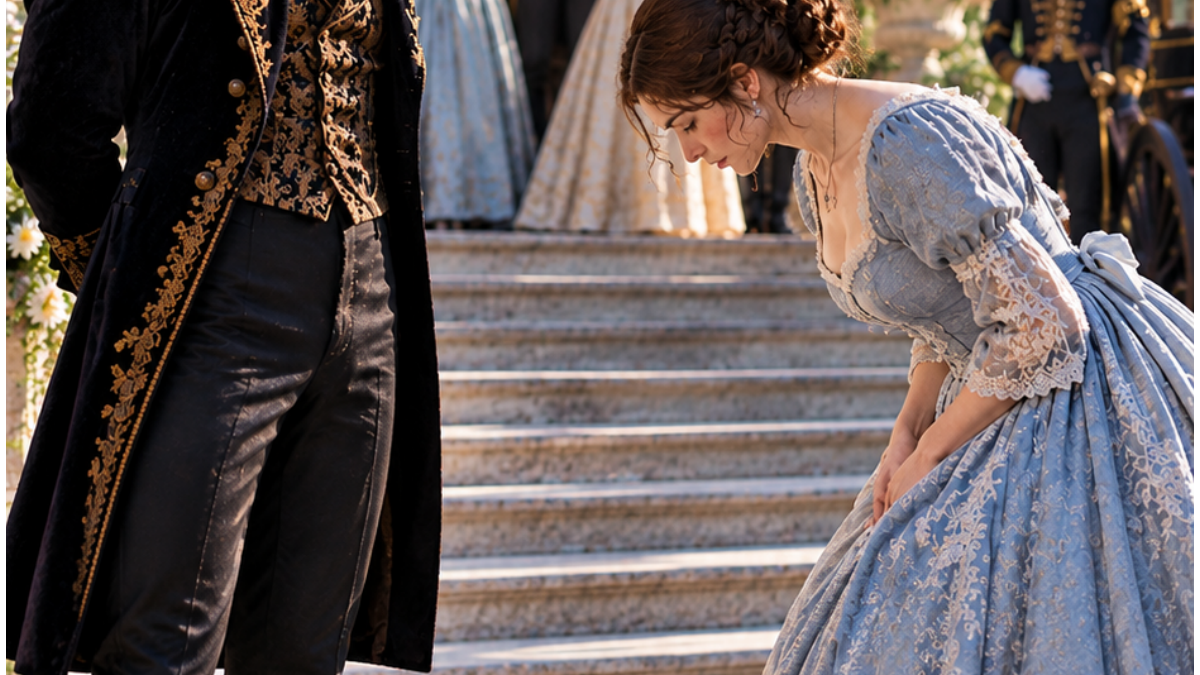
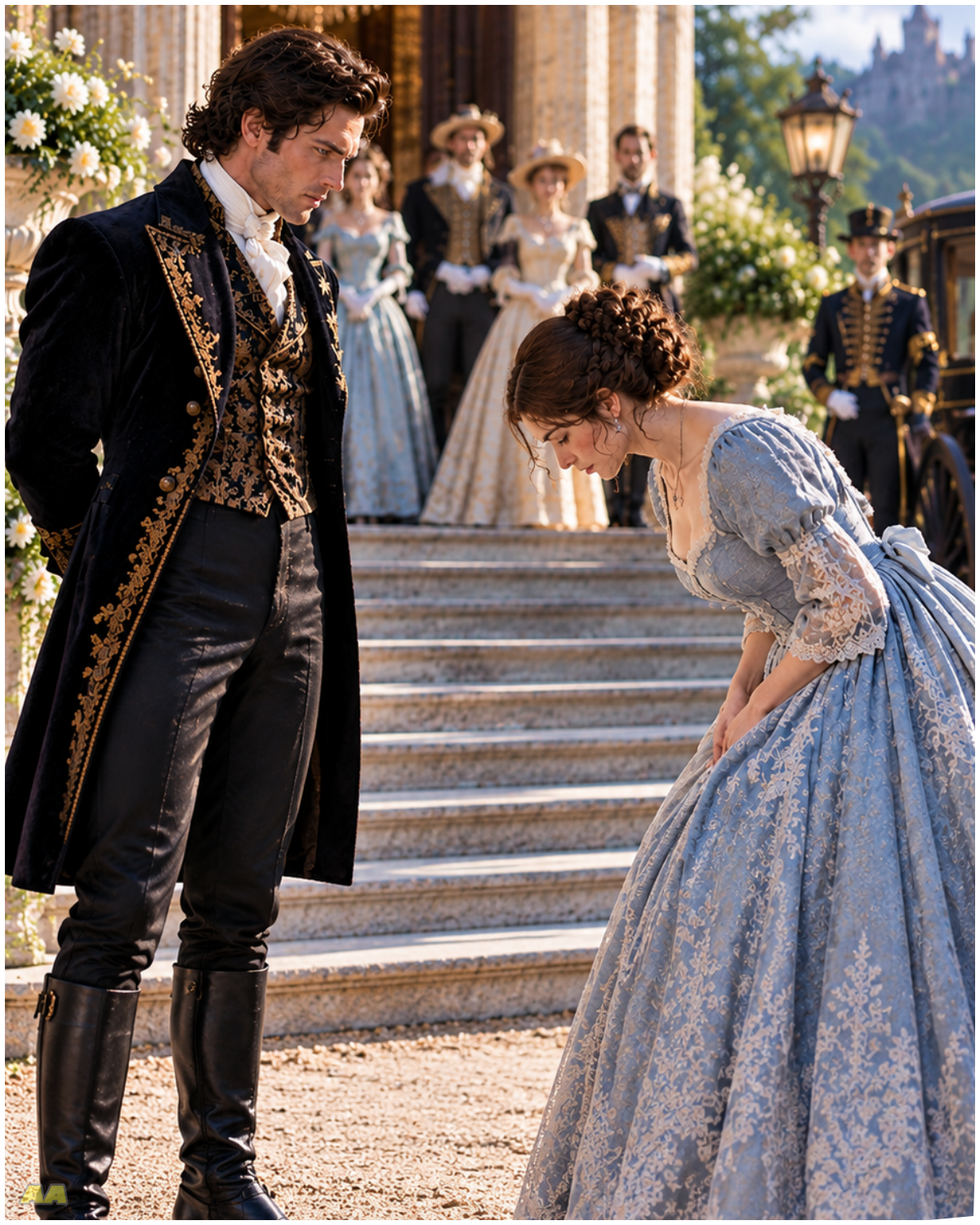
The Duke’s words were meant to end her hope.
Instead, they became the reason he would spend the rest of his life trying to earn the woman he had sent away.
You were never my choice.
The words crossed the ballroom with such cruel clarity that even the orchestra seemed to falter.
Eleanor Hart stood perfectly still.
For one terrible second, she forgot how to breathe.
Hundreds of candle flames trembled in the crystal chandeliers above her, throwing golden light across silk gowns, polished marble in the watching faces of London society.
Every important family in the county had come to Blackthornne Hall that evening, and every one of them had just heard the Duke of Ashborne reject the woman who had spent 3 years quietly believing she might one day belong beside him.
Eleanor lowered her eyes. Her fingers had gone cold.
She could hear whispers beginning around the room.
Poor girl. She should have known better.
A duke could never marry someone like her.
Eleanor swallowed the ache rising in her throat.
Then she curtsied. Not deeply, not desperately.
Only with the calm dignity of a woman who had finally understood something she should have understood long ago.
When she straightened, she did not look at the Duke.
She simply turned and walked away.
Behind her, Julian Ashkam did not move.
He had expected tears. He had expected anger.
Perhaps even pleading. He had prepared himself for all of it.
What he had not prepared for was her silence or the way she walked as though something inside her had died quietly without asking anyone’s permission.
The ballroom doors closed behind her.
And only then did Julian realize that he had made the first mistake of his life that he might never be able to repair.
3 years earlier, Eleanor Hart had entered Blackthornne Hall through the servants’s entrance, carrying one small and wearing a brown wool dress that had already been mended twice.
She had not come dreaming of becoming a duchess.
She had come because her mother was dying.
Her father had been dead for 4 years, leaving behind debts, an abandoned cottage, and a daughter who had learned early that pride did not fill an empty pantry.
Mrs. Hart had once worked as a seamstress in the village.
When illness took away her strength, Elellanor had searched for employment wherever she could find it.
The position at Blackthornne Hall had been the answer.
Housemmaid. Plain work, long hours, little pay, but respectable.
Elellanor had accepted without complaint.
On her first morning, she had been shown the servants quarters by Mrs. Bell, the elderly housekeeper who ruled the household with quiet authority.
You will rise before 6:00.
Mrs. Bell had told her.
Breakfast service begins at 7.
His grace dislikes noise. He dislikes lateness even more.
Eleanor had nodded. And whatever you do, Mrs. Belle added, lowering her voice, “Do not mistake kindness for invitation.” Eleanor had not understood the warning then.
She understood it soon enough.
Julian Ashkam was 29 years old and already one of the most powerful men in the county.
He had inherited the title at 22 after his older brother died unexpectedly.
Along with the title came an estate burdened with debt, a family name everyone expected him to protect, and a mother who believed marriage was less a matter of affection than duty.
Julian was known throughout London as distant, controlled, difficult to approach.
He rarely smiled in public.
He danced only when etiquette required it, and he had rejected three advantageous marriage proposals in his many seasons.
Eleanor first saw him on a rainy morning in October.
She was carrying a stack of freshly laundered linen down the West corridor when a door opened unexpectedly.
She nearly collided with him.
The linen slipped. A white sheet fell across the polished floor.
Eleanor froze. Julian looked down at the sheet, then at her.
She expected anger. Instead, he bent and picked it up.
You will ruin your back, carrying too much at once.
His voice was quiet. Eleanor stared at him.
I beg your pardon, your grace.
You heard me. He handed her the linen.
Their fingers touched for barely a second.
Eleanor pulled her hand back.
Julian noticed. Neither said anything.
He walked away. She watched him disappear around the corner.
It was a meaningless moment.
At least that was what Eleanor told herself.
But over the next months, she began noticing things about the Duke that other people did not seem to see.
He never raised his voice at servants.
He remembered the names of stable boys.
He personally inspected the estate accounts every Thursday.
He often wrote alone before dawn.
And sometimes, when he thought nobody was watching, he stood beside the portrait of his dead brother for long periods without moving.
Eleanor never asked why. She understood grief well enough to recognize it in another person.
Her mother died the following spring.
Eleanor received the news while polishing silver in the breakfast room.
Mrs. Bell found her sitting on the floor beside the pantry door, staring at the letter in her hands.
She did not cry. Not then.
She simply folded the letterfully and placed it inside her apron.
That evening, Eleanor asked permission to leave for the village.
Mrs. Belle expected her to request a week.
Instead, Eleanor said she would return the next morning.
She returned before sunrise. Her face was pale.
Her eyes were dry and something about her had changed.
Julian noticed. He noticed because she no longer hummed quietly while working.
He noticed because she avoided the main corridors whenever he was there.
He noticed because grief had made her quieter, but somehow stronger.
One evening, he found her in the library.
She was not supposed to be there.
She stood beside the writing desk holding a bundle of old estate records.
Julian stopped in the doorway.
What are you doing? Eleanor turned sharply.
I am sorry, your grace.
That was not an answer.
She lowered her eyes. I was returning these.
Julian glanced at the documents.
You can read. The question sounded harsher than he intended.
Eleanor’s expression tightened. Yes. Who taught you?
My father. What was he?
A school master. Julian looked at her differently.
You should not be handling estate records.
I know. Then why are you?
Eleanor hesitated because the figures were wrong.
Silence filled the room. Julian walked toward her.
What figures? She opened one of the ledgers.
The grain accounts. He studied the page.
What about them? The estate purchased 400 sacks last winter.
Yes, but only 312 were delivered.
Julian’s eyes narrowed. And you know this how?
I counted the invoices. Why?
Eleanor closed the ledger. Because I was asked to put away the household correspondence.
The invoices were mixed with it.
Julian stared at her. Did you tell anyone?
No. Why? Because I am a maid.
There was no bitterness in her voice.
That was what unsettled him.
She was simply stating the world as it was.
Julian took the ledger. Leave this with me.
Eleanor curtsied. She reached the door.
Miss Hart. She stopped. Thank you.
She looked back. It was the first time he had thanked her.
Something quiet passed between them.
Not love, not yet. Something more dangerous.
Respect. The following weeks brought changes to Blackthorn Hall.
Julian investigated the accounts. The missing grain was only the beginning.
There were discrepancies in coal deliveries, course feed, repairs, even taxes.
Someone had been stealing from the estate for years.
Julian became increasingly occupied with the investigation.
Eleanor knew nothing about it, but she noticed the tension in the house.
Men arrived after dark. Letters were burned.
The steward, Mr. Harwood, became nervous whenever Julian entered the accounts office, and Lady Margaret Ashkam, Julian’s mother, began speaking urgently about her son’s marriage.
One afternoon, Eleanor was delivering tea to the drawing room when she overheard Lady Margaret speaking with Lord Benedict Vale, a wealthy neighboring landowner.
Julianne cannot continue like this.
Lady Margaret said, “He needs an alliance.
He needs a wife.” Lord Veil replied.
Elellanor quietly placed the tea tray down.
Lady Margaret looked at her.
“Leave,” Elellanor curtsied. As she turned, she heard Lord Veil laugh softly.
She is hardly the sort of woman your son should be keeping in his household.
Eleanor kept walking. She did not hear Julian enter the room moments later.
She did not hear his mother ask whether he had become attached to a servant, and she did not hear Julian answer.
She is useful. It was the beginning of another misunderstanding because Eleanor heard only one part of the conversation later when Lady Margaret confronted her privately.
You have been encouraged by his grace’s attention.
Eleanor looked confused. I have done nothing.
Then continue doing nothing. Lady Margaret’s voice was cold.
My son may be careless with servants.
I am not. Eleanor lowered her head.
I understand. You are not his equal.
I know. Then do not forget it.
Elellanar returned to her duties.
But that night, she stood before the small mirror in her room and looked at herself for a long time.
She had never imagined herself equal to a duchess.
What hurt was realizing that someone else had apparently imagined she might and then laughed at the idea.
Days passed. Julian’s investigation deepened.
Eleanor’s life continued as before, but the Duke began finding reasons to speak with her.
He asked her opinion about the household staff.
He asked which servants had worked there longeSt. He noticed she could repair torn books.
She noticed he drank his tea without sugar.
He learned that she hated thunderstorMs. She learned that he never slept well after receiving letters from London.
Their conversations remained brief. Yet each one left something behind.
A question, a thought, a quiet awareness.
One evening, a storm trapped Julian and Eleanor in the old library.
The household had already gone to bed.
Rain struck the windows. Lightning illuminated the dark gardens.
Eleanor was carrying candles when thunder shook the house.
She stopped. Julian looked up.
You dislike storMs. I dislike being surprised by them.
That is not the same thing.
No. He watched her. You’re afraid.
Eleanor forced a smile. I am a maid.
Your grace. We are not permitted many luxuries.
Fear is not one of them.
He almost smiled. AlmoSt. Then another flash of lightning struck.
Eleanor flinched. Julian rose. He did not touch her.
He simply moved the candle closer.
You can stay here until it passes.
She looked at him. Why?
Because I asked you to.
That sounds like an order.
It was meant as an invitation.
For the first time, Eleanor smiled, a small smile.
But Julian remembered it long after the storm had ended.
That night, something shifted. Neither admitted it, but both felt it.
The Duke had begun looking for her.
The maid had begun looking for him, and neither understood how dangerous that could become.
The summer brought the Ashka estate’s annual garden gathering.
Lady Margaret insisted Eleanor help with preparations.
The servants worked from dawn.
Flowers arrived from London. Musicians were hired.
Guests filled the estate. Among them was Lady Charlotte Ren, the daughter of a wealthy earl and the woman Lady Margaret clearly hoped would become Julian’s wife.
Charlotte was elegant, educated, beautiful, everything society expected a duchess to be.
Eleanor tried not to notice how often Julian’s mother placed Charlotte beside him.
She failed. During dinner, Eleanor was serving wine when Charlotte laughed at something Julian said.
Eleanor looked up. Julian was not laughing.
His eyes were elsewhere on her.
Their eyes met. He looked away firSt. Eleanor nearly dropped the glass.
That was when Lady Charlotte noticed.
Her smile disappeared. The next morning, Eleanor found a torn dress waiting outside her room.
It was hers, the blue one she wore on Sundays.
Someone had cut the sleeve.
Mrs. Bell was furious, but Eleanor simply repaired it.
She refused to complain. Julian discovered what happened anyway.
He asked who had done it.
Eleanor would not say, “Why are you protecting them?” “I am protecting myself.” He frowned.
From what? From becoming a story.
A story. A servant accusing a lady.
A duke defending a servant.
Whispers become rumors. Rumors become scandal.
Julian had no answer because she was right.
For the first time, he understood the true distance between them.
It was not merely money.
It was consequence. He could walk into a room and make decisions.
She could walk into the same room and become gossip.
He could afford mistakes. She could not.
That realization changed him. He began protecting her differently, not publicly, not in ways that would humiliate her.
He simply made sure she was never placed alone with hostile guests.
He assigned her to the library rather than the ballroom during large gatherings.
He made certain her wages arrived on time, and when someone spoke cruy about her, he ended the conversation with one glance.
Eleanor noticed. She also began noticing the man beneath the title.
One afternoon, she found Julian in the stables with blood on his hand.
What happened? A horse objected to being saddled.
She looked at the animal.
He kicked you. Yes, you are smiling.
I have been kicked by better men.
She laughed before she could stop herself.
Julian stared at her. What?
Nothing. You were laughing. I apologize.
Why? Because your grace said something amusing.
He shook his head. I have never been accused of that before.
The laughter between them faded into silence.
The stable seemed suddenly smaller.
Eleanor became aware of how close they stood.
Julian looked at her face, then at the loose strand of hair beside her cheek.
His hand almost lifted. He stopped himself.
Eleanor stepped backward. Neither spoke, but something had happened.
Something neither could undo. Autumn arrived.
In with it came the first real danger.
Julian discovered that the missing money from the estate was not simply theft.
Someone had been moving funds through accounts connected to his late brother’s name.
Someone wanted the Ashcom estate to collapse financially and if the estate failed, control of several surrounding properties would pass to creditors.
One of those creditors was Lord Benedict Vale.
Julian confronted him. Vale denied everything, but Julian knew there was more.
Then he found a letter.
The letter was addressed to his late brother.
It mentioned a secret agreement in one name appeared twice.
Harwood, the estate steward. Julian returned to Blackthornne Hall late that night.
Eleanor was waiting outside the library.
You should be asleep. I found something.
She held out a small envelope.
Where did you get that?
It was beneath the lining of an old account book.
Julian opened it. His expression changed.
The letter contained a list of payments, names, dates, and besides several of them was a mark Julian recognized from his brother’s private correspondence.
His brother had been investigating the theft before his death.
Julian looked at Eleanor. Where did you find this?
In the old records room.
You should not have gone there.
I know. You could have been seen.
I was. Julian went still.
By whom? I don’t know.
A noise came from the corridor.
Both turned. Footsteps. Someone was approaching.
Julian extinguished the lamp. Eleanor barely breathed.
The footsteps stopped outside the door, then continued.
They waited. Finally, silence returned.
Julian looked at her. You are leaving this investigation.
No, that was not a requeSt. And I am not your servant when it comes to my own safety.
He stared at her. You think you are helping?
I know I am. This is dangerous.
So is being ignorant. His jaw tightened.
For several seconds, they faced each other.
Then Julian whispered, “You have no idea what I could lose.” Eleanor’s expression softened.
Perhaps not. She stepped closer.
But I know what I could lose.
He looked at her. My position, my home, my reputation, my employment.
She paused. And now I know I could lose you.
The words escaped before she could stop them.
Silence. Julian’s face changed. He reached for her hand very [clears throat] slowly.
Eleanor let him. His fingers closed around hers.
Nothing more happened. Yet it was more intimate than any kiss.
The next morning, Julian left for London.
He told Eleanor only that he had business to attend to.
He did not tell her he had received a warning.
He did not tell her that someone had threatened to destroy the person closest to him.
And he certainly did not tell her that the name in the warning had been hers.
When he returned 3 days later, he was different, colder, more distant.
Eleanor tried to speak to him.
He dismissed her. She tried again.
He walked away. She did not understand.
What she did not know was that Julian had discovered the truth.
The person behind the financial scheme was not Harwood.
Harwood had been taking money, but he was only a small part of the conspiracy.
The real architect was Lady Margaret’s trusted solicitor, and that solicitor had been using Eleanor’s name in forge documents.
If Julian publicly protected Eleanor, the scandal would destroy her.
If he distanced himself from her, perhaps he could protect her long enough to expose the scheme.
Julian chose distance. He chose badly because Eleanor did not know the reason.
She only saw rejection. Weeks passed.
Julian began preparing for an engagement to Lady Charlotte.
The announcement spread through London.
Elellanor read it in the newspaper.
She stared at the words until they blurred.
She folded the paper, placed it in the fire and returned to work.
Julian watched from the doorway.
He had hoped she would understand.
She did not, and perhaps he had no right to expect her to.
The engagement ball was held at Blackthornne Hall.
Eleanor was assigned to the evening service.
She wore her finest black dress.
Nothing more. Julian saw her when she entered the ballroom.
His heart tightened. He wanted to cross the room.
Instead, he remained beside Charlotte.
Eleanor did not look at him.
Lady Margaret approached. You should leave before midnight.
Eleanor curtsied. I will. You understand why?
Yes. Her voice was calm.
That frightened Lady Margaret more than anger would have.
The evening continued. Then the final humiliation came.
A guest asked Julian whether he intended to marry Charlotte.
Julian’s eyes moved toward Eleanor.
She stood near the doors, watching, waiting.
He remembered the warning. He remembered the forge documents.
He remembered the threat. He thought he was protecting her.
So, he said the crulest thing he could have said.
I have no intention of marrying a servant.
Eleanor’s face went pale. The room quieted.
Someone laughed nervously. Julian’s mother watched.
Elellanor looked directly at him.
For one second, he nearly broke.
Then he remembered what was at stake.
“You were never my choice,” he said.
The words landed like a blade.
Eleanor curtsied and walked away forever.
At least that was what Julian believed.
She left Blackthornne Hall before dawn.
She took only her clothes, her mother’s sewing box, in the small amount of money she had saved.
She did not leave a letter.
She did not say goodbye.
She simply disappeared. 3 weeks later, Julian discovered the truth.
The forged documents had been planted in Eleanor’s name because someone intended to make her the scapegoat for the entire financial crime.
The solicitor had confessed after being arrested in London.
Harwood had admitted his part.
In Lord Benedict Vale had been funding the operation, but one piece was missing.
The documents that could prove Eleanor’s innocence, they were gone.
Julian understood immediately someone had taken them after Eleanor left.
He searched her old room.
Nothing. He questioned the servants.
Nothing. Then Mrs. Bell handed him something.
A small sewing box. She left this behind.
Julian opened it. Inside was a folded piece of paper.
His name was written on it.
His hands shook as he opened it.
There were only six words.
I deserved the truth from you.
Julian sat down. For the first time since his brother’s death, he allowed himself to feel the full weight of what he had done.
He had thought love meant protecting someone from danger, but he had protected Eleanor by destroying her truSt. He had chosen his title over her dignity, his fear over honesty, his pride over love.
And now she was gone.
Julian began searching. He went first to the village where Eleanor’s mother had lived, then to the neighboring counties.
He followed rumors. A seamstress, a young woman traveling north, a woman with brown hair carrying an old wooden sewing box.
Weeks became months. Winter arrived.
At last he found her.
Not in London, not in the countryside, but in a small village nearly 40 mi from Blackthornne Hall.
Eleanor had opened a modest sewing shop.
It was barely large enough for two tables in a stove.
Yet when Julian stepped inside, he [clears throat] saw something he had never seen at Blackthornne.
She was happy. Not completely, but enough.
She was speaking with a young widow whose daughter’s dress needed altering.
Eleanor laughed. Julian stood outside the window.
For several minutes, he could not move.
Then he knocked. Eleanor looked up.
Her smile vanished. She stepped toward the door.
You should not be here.
I know. Why are you?
I came to apologize. You came too late.
Yes. The honesty stopped her.
He did not defend himself.
He did not explain. He simply stood there.
I was wrong, he said.
Eleanor looked away. You were cruel.
Yes, you humiliated me. Yes, you made me believe I had imagined everything between us.
Julian swallowed. I know. And now you expect me to forgive you?
No. She looked at him.
Then what do you expect?
Nothing. His voice broke slightly.
I only wanted you to know that what I said was a lie.
Eleanor’s eyes filled with tears.
Which part? All of it.
He stepped closer. You were never the choice I was making for my family.
He paused. You became the choice I wanted for myself.
She closed her eyes. The pain was still there, but so was something else.
Memory. The storm. The library.
The stable. His hand holding hers.
“I cannot go back,” she whispered.
“I know. I am not the girl who left Blackthornne.
I know. I will not return as your servant.
You will not. I will not live beneath your mother’s rules.
You will not. I will not marry you because you feel guilty.
I would never ask that.” She looked at him.
“Then what are you asking?” Julian breathed slowly for the chance to know you again.
Silence. Outside, snow began to fall.
Eleanor looked through the window.
Why now? Because I finally understand that love without trust is only another form of possession.
Her eyes returned to him, he continued.
I cannot undo what I did.
I cannot give you back those words, but I can spend the rest of my life proving that they were the greatest lie I ever told.
She did not forgive him that day, nor the next.
Julian stayed in the village for 3 days.
He rented a room at the local inn.
He did not pressure her.
He helped an old farmer repair a broken fence.
He bought cloth from Eleanor’s shop without asking for a discount.
He spoke to her only when she wished.
On the fourth morning, he left.
Before going, he placed a small envelope on her counter.
Inside was not money. It was a legal document.
He had transferred ownership of a small property near the village into her name.
No conditions, no obligation, no request, only independence.
Eleanor stared at it for a long time.
Then she understood. For the first time, Julian had used his power not to pull her closer, but to give her the freedom to walk away.
That was when something inside her finally softened.
Spring came. Eleanor continued her work.
Julian continued managing Blackthorn Hall.
They exchanged letters. At first, they were formal, then warmer, then honeSt. They spoke about books, weather, the estate, her sewing, his horses.
Eventually, they spoke about fear.
Julian told her about his brother, how guilt had convinced him that love was dangerous.
Eleanor told him about her mother, how poverty had taught her to accept less than she deserved.
Their letters became the safest place either of them had known.
But the story was not over because Lord Benedict Vale had escaped the country, and he wanted revenge.
One evening, Eleanor returned to her shop to find the door open.
Nothing appeared stolen. Then she saw the envelope on her table.
Inside was a copy of the missing document, the evidence that could finally prove the entire conspiracy and beneath it was a single sentence.
You should have stayed where you belonged.
Eleanor understood immediately. Vale knew where she was.
She sent for Julian. He arrived before Dawn.
He wanted to take her back to Blackthornne.
She refused, so he stayed.
For the first time, they faced danger as equals.
They discovered that Vale intended to seize the estate during an upcoming legal hearing.
The missing document could stop him, but they needed to deliver it personally.
They traveled together by carriage toward London.
The journey was tense. Yet something had changed.
“Julian no longer made decisions for Eleanor,” he asked, she answered.
When the carriage broke down in the rain, they repaired the wheel together.
When they reached an inn, he gave her the only dry room.
When she insisted on helping him remove mud from his coat, he laughed.
It was the first genuine laugh she had heard from him.
[clears throat] And this time she did not look away.
The legal hearing arrived. Val appeared confident.
He claimed Eleanor had forged the documents.
He claimed Julian had been manipulated by a servant.
But Eleanor stepped forward. She presented the original evidence.
Then Julian produced letters from the solicitor.
Harwood confessed. The conspiracy collapsed.
Val was arrested. Blackthornne Hall was saved.
But Julian did not immediately return to his old life.
He went back to the village with Eleanor.
He stood outside her little shop and he asked her one question.
May I court you? Eleanor smiled.
Properly? Properly? With patience? I will try.
With honesty, I promise. She looked at him for a long moment.
Then she took his hand.
Yes. Months later, Julian brought Eleanor to Blackthorn Hall.
Not through the servants’s entrance, through the front doors.
Lady Margaret was waiting. The old duchess looked at Eleanor, then at her son.
She understood immediately. This is what you have chosen.
Julian looked at Eleanor. No.
Eleanor’s heart sank for one terrible second.
Then he smiled. This is who I have chosen.
Elanor did not become a duchess overnight.
She did not suddenly forget the years of humiliation.
She did not abandon her independence.
Instead, she continued her sewing work.
She established a small school for village girls.
She managed several estate charities.
And gradually, Blackthornne Hall became a different household.
Servants were treated with greater respect.
Wages were improved. Accounts were open to inspection.
Julian changed because Eleanor had forced him to understand the world from the other side of his title.
And Eleanor changed because Julian had finally shown her that accepting love did not require surrendering dignity.
A year after their first proper courtship, they married.
The ceremony was small. There was no grand London spectacle, no endless procession of aristaxs, only family, close friends, and the people who had known Eleanor before anyone called her Duchess.
After the ceremony, Julian took her to the old ballroom, the same room where he had once broken her heart.
The chandeliers still glittered. The marble floor was unchanged.
Eleanor stood beside him. For a moment, neither spoke.
Julian looked around the room.
I remember the last time we stood here.
So do I. I wish I could erase it.
Eleanor shook her head. No.
He looked at her. Why not?
Because then you might forget what it taught you.
He lowered his eyes. She touched his hand.
You once told me I was never your choice.
I know. And you were wrong.
Julian smiled. Very. She looked toward the ballroom doors.
Do you regret saying it?
Every day. Good. He laughed softly.
Then Eleanor stepped closer. But I no longer need you to regret it.
Why? Because you spent so long proving that you meant the opposite.
Julian took her hand. This time there was no fear, no title between them.
No servants corridor, no whispers.
Only two people who had once been separated by a world of wealth, pride and expectation, and had found their way back to each other by choosing something far more difficult than love at first sight.
They had chosen honesty.
They had chosen dignity.
They had chosen forgiveness.
And when Julian kissed her, Eleanor did not feel like a poor girl standing inside a Duke’s world.
She felt like a woman standing exactly where she belonged, beside the man who had once told her she was never his choice, and who had finally learned that the greatest choices in life were not made for us by titles, families, or society.
They were made freely. A
nd every day afterward, he chose her again.








