What Diana Whispered To Her Bodyguard The Night She Met Dodi — He Kept It Quiet For 30 Years
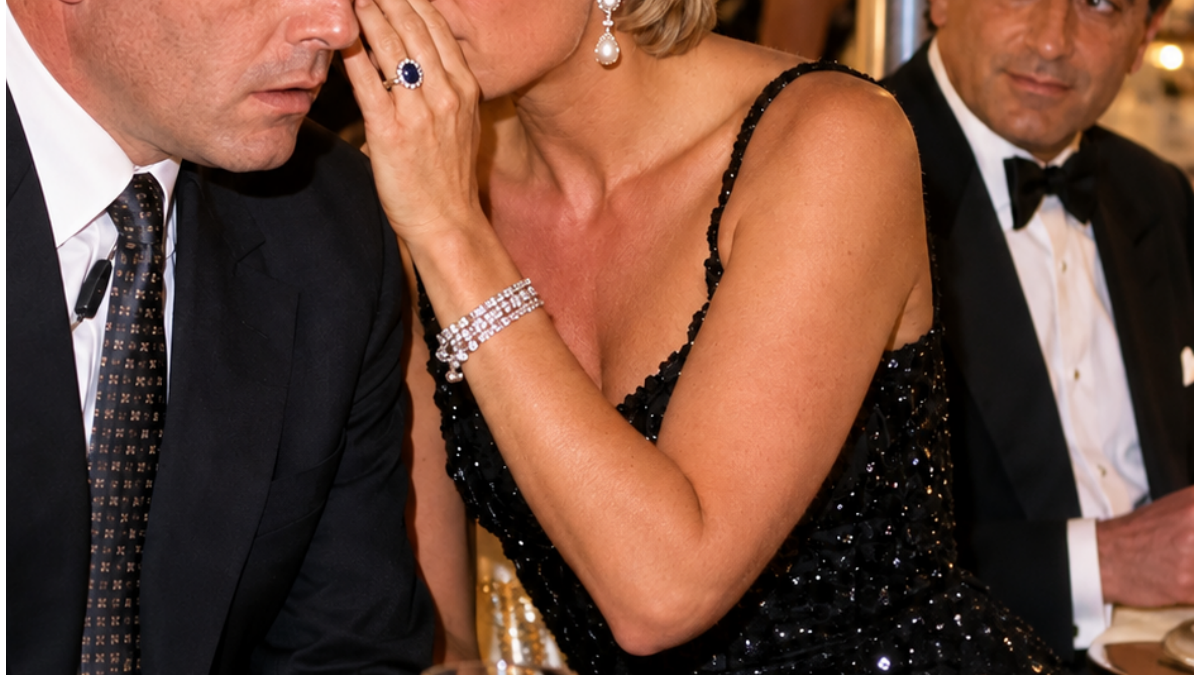
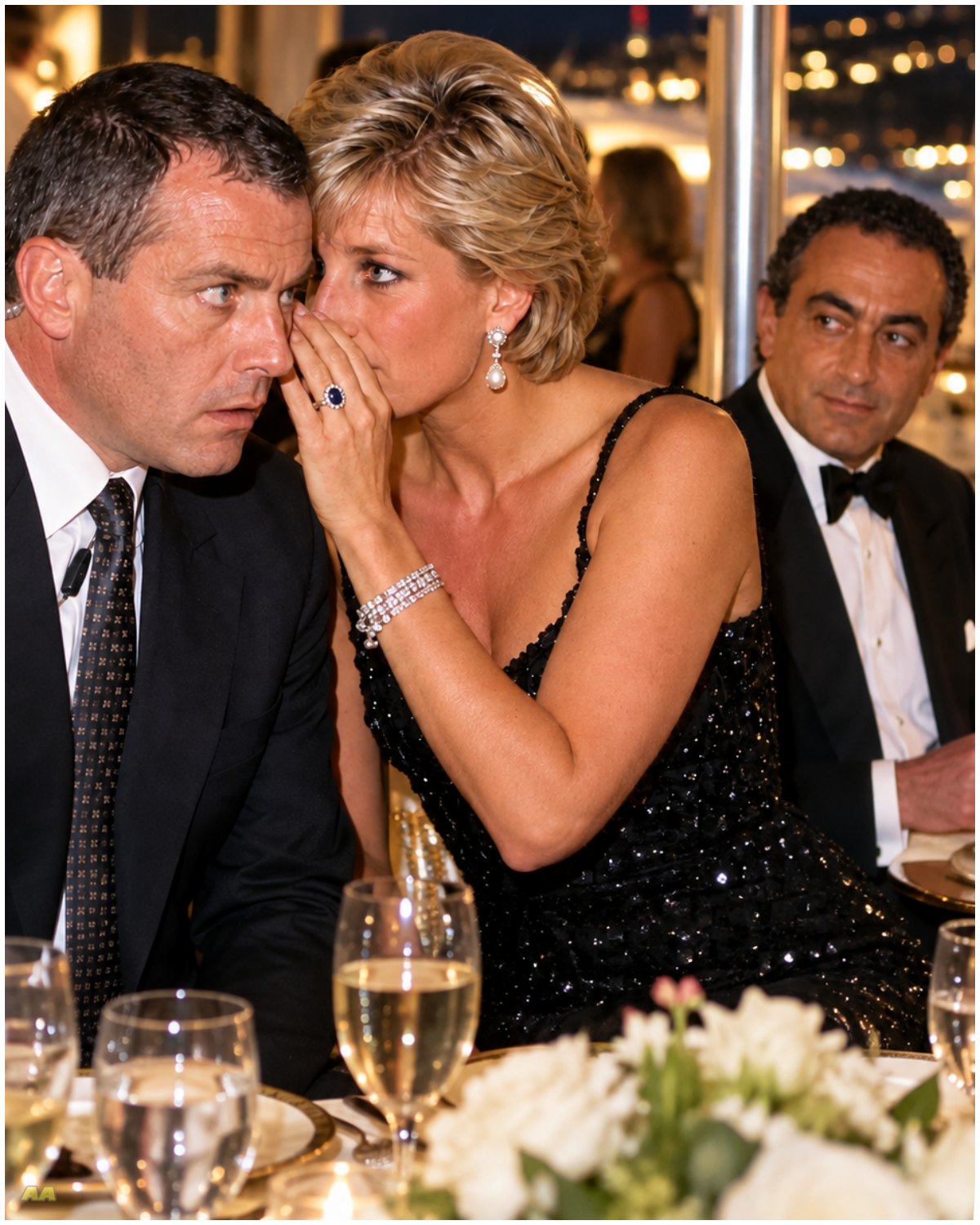
Maybe it’s just that he’s very kind to me.
Diana spoke those words about Dodi Fayed on August 27, 1997, 4 days before she died.
She didn’t say them to a journalist, she didn’t say them to a bodyguard in the darkness of a summer night.
She said them over the phone to Lucia Flecha de Lima, one of the friends she trusted moSt. And Lucia, who knew her way of speaking better than almost anyone, felt that something didn’t add up.
For almost 30 years, that romance has been told as a perfect scene: a night, a bodyguard, a whisper in the ear, a secret kept for decades.
It is a beautiful story, the kind of story the public wants to believe, but the police file, Diana’s phone calls, and the testimonies of those closest to her tell another story, and what they tell is much deeper.
Because the bodyguard who knew Diana’s fears, the man so many accounts place by her side at that moment, was not by her side.
When the romance with Dodi began, he had been out of her life for almost 4 years.
That is the first revelation of this story and it completely changes the meaning of the supposed secret.
You may know some fragments. The yacht in the Mediterranean, the kiss photographed from afar, the ring in Paris.
Here we are going to organize them with dates, documents, and the real voices of those who spoke with Diana in her final days.
By the end, you will know what her former bodyguard could truly know, what Dodi’s security team saw.
What did Diana tell her friends?
And why did a story repeated for decades confuse two men, two moments, and two very different needs of the same woman.
And you will discover what Diana was actually trying to say.
It wasn’t a prophecy about Dodi .
It was something she had been repeating for years through words, jokes, and decisions.
She wanted to feel cared for without being trapped again.
The first scene of this story does not happen in 1997, it happens in Sandringham in 1986.
Ken Wharfe was an experienced Scotland Yard police officer, newly assigned to a delicate mission: protecting two small children who would one day occupy a place in the line of succession.
When he first entered the room where the family was, he found William trying to play the piano and Harry pulling the stamens off some flowers.
Diana welcomed him with humor.
As Wharfe recalled, she didn’t envy his task because her children could be real rascals.
That comment said a lot about her.
She didn’t treat the new officer as an invisible figure stuck to the wall.
She brought him into the family fold from the very first minute.
From that day on, Ken didn’t just protect a princess.
He protected a mother who wanted her children to have something resembling a normal childhood .
Over time, Wharfe became one of Diana’s own lead protection officers.
His job consisted of studying routes, crowds, buildings, vehicles, and threats, and above all, remaining close without taking over her private life.
That distance is difficult to maintain even with a reserved person.
With Diana , it was much harder because she spoke with those around her, asked about their families, made jokes, and turned employees into witnesses of her daily life.
A bodyguard hears things he doesn’t seek to hear.
He sees the silence that remains after an argument.
He notices when someone’s mood changes upon entering the vehicle.
He learns which door slams too hard and which call leaves the room freezing.
But his authority ends exactly where the marriage of the person he protects begins.
Ken could pull Diana away from a crowd, but he couldn’t pull Camilla away from Charles’s life.
In those years, Highgrove became one of the places where security and pain brushed against each other every day.
It was the Prince of Wales’s country residence in Gloucestershire, but it was also very close to the social world in which Camilla Parker Bowles had been moving naturally for years.
Diana could be inside the house and at the same time feel outside the network of friends surrounding her husband.
Wharfe described in his memoirs and interviews the tension of protecting a woman whose public life seemed bright while her marriage was falling apart inside.
His testimony is not a perfect camera; it is the memory of a man who was close and who later interpreted what he had seen.
Even so, it reveals something essential.
Diana sought freedom, and freedom complicated her security.
She wanted to drive without a caravan of vehicles behind her.
She wanted to go into a shop, visit a friend, or go out to dinner without every movement becoming a police operation.
The protection team saw risks, Diana saw surveillance, and both sides had real reasons.
That loss of trust didn’t begin with Dodi; it came from much earlier and had a name.
During the first years of her marriage, Diana had had another very close bodyguard, Barry Mannakee.
With him, she had developed a closeness that the palace began to view as excessive, and in 1986 they transferred him to another poSt. In May 1987, Mannakee died in London.
He was riding as a passenger on a motorcycle that collided with a car pulling out of an intersection.
The investigation at the time treated it as a traffic accident.
Years later, the major British investigation into Diana’s death, known as Operation Paget, reviewed the case again and also found no conspiracy.
Here, a revealing detail emerges. Ken Wharfe stated that Diana even joked with him, saying that perhaps “your lot,” meaning the police or the system, had eliminated Manaki.
But Wharfe added that she didn’t truly believe that death was anything other than an accident.
Other witnesses remembered something different. According to them, as the years went by , Diana did express more serious suspicions.
That difference between memories matters, and a lot, for this story.
It shows how a phrase can change when repeated, how a fear can harden over time, and how two honest witnesses don’t always keep the same version of a conversation.
Ken knew a Diana who alternated between courage and distrust .
He saw her reach out to AIDS patients when much of the world still feared simple contact that didn’t transmit the virus.
He saw her crouch down next to children in hospitals and break the distance in every crowd, and he also saw her grow tired of the machinery that organized every meter of her life.
Real protection works on an uncomfortable idea.
Danger doesn’t have to present itself to justify the presence of the team.
A quiet day doesn’t prove the team was unnecessary; often it proves the team did its job well.
But for the person being protected, that same success can feel like constant surveillance against a threat that never appears.
Diana lived within that contradiction. At official events, she followed the instructions.
She understood that an unexpected approach in a crowd could have consequences, but she had a special talent for closing the distance with people, and if security put up a wall that was too visible, she felt that wall destroyed exactly what she did beSt. Wharfe learned to create space without extinguishing that connection.
His job consisted of reading not only the public, but her; to anticipate when she was going to stop, which face had caught her attention, what spontaneous movement she was about to make.
That experience doesn’t come in any manual.
It is built over years, just a few meters away from the same person.
Diana also wanted William and Harry to know life outside of protocol.
She took them to amusement parks, cinemas, and fast-food restaurants.
Many of those outings were organized with discreet agents, even if the photographs gave the impression of a mother completely alone with her children.
The normalcy was real, but it was carefully prepared .
The presence of the team didn’t prevent that experience; it made it possible.
Over time, however, Diana began to associate protection with the palace, and the palace with the conflict in her marriage.
An official vehicle could seem to her both a security measure and an extension of the institution that controlled her schedule, her reports, and her visits.
When trust is broken, even what was designed to help begins to seem hostile .
The separation from Charles in December 1992 aggravated the problem.
Diana stopped living as part of a royal couple and began building her own home, her own agenda, and her own circle.
She wanted to call someone and go out without that decision having to go through her husband’s machinery.
And official protection became the last physical link to that machinery.
In 1993, Ken Wharfe left Diana’s personal protection service.
The reasons for a professional departure almost never fit into a single scene, but his exit coincided with a period of deep fatigue and mistruSt. And Diana did not replace his experience with another stable team that had the same authority.
In December of that same year, 1993, Diana requested that her regular police protection be withdrawn.
The date is recorded in the Operation Paget report.
Keep that detail in mind, because it is the first key to this story.
When Dodi Fayed entered Diana’s life in the summer of 1997, Ken Wharfe was no longer by her side.
He had been gone for almost 4 years.
He could not keep for three decades any whisper heard in Saint-Tropez, on a yacht, or at the Ritz in Paris.
Simply because he was not there as her bodyguard.
What he could keep was something else: the knowledge of the previous years, Diana’s fear of losing control, her rejection of feeling watched, and her dangerous conviction that she could achieve privacy by giving up the structure that protected her.
One single person researches, writes, records the voice, edits, and publishes every story on this channel.
If you value this careful work, leave a like and subscribe.
It costs you nothing, but for that person, it is the sign that allows them to keep going, because what happened during those 4 years without protection explains much of what occurred later in Paris.
Withdrawing police protection did not leave Diana completely alone at all times.
Her children still had royal protection, and when she traveled with them, the police detail surrounding the princes also covered her.
During her official visits abroad, specific measures were organized.
The void appeared in her private life, exactly where she wanted the most freedom and exactly where the press had the most appetite.
She hired experienced drivers and advisors.
Colin Tebbutt. A former agent worked for her as a chauffeur and support.
Other professionals helped at specific times, but a group of helpful people is not the same as a permanent unit connected to the Metropolitan Police, capable of evaluating intelligence, enforcing procedures, and maintaining a stable chain of command.
Diana paid the price for that freedom long before Paris.
Photographers could follow her vehicles. Plans changed on the fly.
Friends and employees couldn’t always distinguish a nuisance from a real threat, and she had to decide for herself who to believe.
In October 1995 , Diana met with her lawyer, Lord Mishcon, and spoke to him about her fears.
Mishcon took a detailed note of that conversation.
According to Operation Paget, Diana told him she had received information about a possible car accident or some harm that could make her appear unstable.
Mishcon recommended she strengthen her security .
Patrick Jephson, her private secretary at the time, was present and tried to assess whether the source of that information was credible.
After Diana’s death, Mishcon handed that note to the head of the Metropolitan Police.
The subsequent investigation examined the document and its circumstances.
It did not find that the Paris crash was the conspiracy Diana feared.
In 2003, another document appeared. It was made public by Paul Burrell, her former butler.
It was a note attributed to Diana in which she spoke of a car accident, brake failure, and a head injury.
Operation Paget asked family, friends, employees, and former protectors about that note, and their responses did not match.
Ken Wharfe pointed out that the note had no greeting, which seemed very odd for Diana.
If it was for Burrell, he said, he expected it to be addressed to him.
Rodney Turner, who provided her with vehicles, recalled that Diana usually dated what she wrote.
Lucia Flecha de Lima expressed serious doubts.
Rosa Monckton could not relate the content to what was happening in Diana’s life at the proposed date.
Others thought it reflected a moment of fear, not a verifiable plan.
The investigation did not treat those doubts as a dismissal of Diana.
It compared the handwriting, the chronology, the behavior, and the testimonies.
And it pointed out something specific.
Diana continued to drive her own car and did not take measures consistent with a constant conviction that someone was going to tamper with it.
The goal here is not to mock her fear.
Diana lived under exceptional pressure. Her phone calls had been recorded, private conversations had been leaked, and she had been followed for years.
Some suspicions could logically grow in an environment where her privacy was indeed violated time and time again.
The goal is to distinguish between fear and proof.
And a good bodyguard understands that difference better than anyone.
They have to listen to the fear of the person they protect without ignoring it, but they also have to seek practical evidence without turning every intuition into a fact.
That is where the great confusion surrounding Ken Wharfe arises.
After Diana’s death, he spoke with enormous authority about her final security, but he did so as a former protector, not as a witness to the romance.
He repeated that professional police protection would have imposed other protocols.
He criticized the improvisation that night in Paris and maintained that Diana could still be alive if she had kept an experienced team.
Those words are a retrospective evaluation, not the account of a whisper heard next to Dodi .
To understand what really happened that summer, one must first know the family that made it possible.
The relationship between the royal family and Mohamed Al-Fayed did not begin in 1997.
Al-Fayed was a businessman of Egyptian origin, owner of Harrods department store in London and the Ritz hotel in Paris.
His fortune had opened many doors for him in Great Britain, but not all of them.
He sought the recognition of British high society and citizenship of the country for years, without ever achieving the full acceptance he desired.
He sponsored polo tournaments and moved close to circles where royalty, business, and the press observed one another.
It is often repeated that Diana and Dodi crossed paths at a polo match in 1986, when Dodi played on a team rival to Charles ‘.
Some chronologies present that moment as their first meeting, but the most solid documentation regarding the romantic relationship places the true beginning much later, in July 1997 , at Mohamed’s estate in Saint-Tropez.
A distant look on a polo field and an encounter that starts a relationship are not the same thing.
Dodi had grown up between privileges and airports.
His father’s fortune could turn any desire into immediate logistics.
A plane ready to take off, a suite prepared, a yacht changing ports, staff deployed in a matter of hours.
He had also made a name for himself in film.
He appeared as an executive producer of Chariots of Fire, the film that won the Oscar for Best Picture in 1982, and participated in other projects.
Descriptions of his actual level of involvement vary, but that world reinforced a life surrounded by celebrities, hotels, and promises.
He was a man accustomed to material abundance solving probleMs. Diana came from the exact opposite place, from an institution where abundance had never solved loneliness.
Palaces, jewels, trips, and staff had not managed to make her marriage work.
That is why Dodi’s gifts could please her without entirely convincing her.
She knew very well the difference between being surrounded and being understood.
And there is one detail that almost all romantic versions leave out.
When that summer began, Dodi. Was in a relationship with American model Kelly Fisher.
She stated that they were engaged, that they had announced it to their family in 1996 and that they had held a party in Beverly Hills in February 1997.
She described plans to live together in a house in Paradise Cove, near Malibu.
Operation Paget confirmed that a company linked to Dodi had bought that property in June 1997.
Fisher also recounted a visit to Villa Windsor, the Paris house where the Duke and Duchess of Windsor had lived and whose contents Mohamed Al-Fayed was preparing to auction.
She and Dodi walked through the rooms choosing furniture for their future home.
Hold on to that image, because that same house will appear again in this story on Diana’s last day.
Just a few weeks before the famous romance, another woman was choosing objects for a life she believed was already settled.
When the photographs of Diana and Dodi were published, Kelly Fisher gave a press conference in Los Angeles alongside lawyer Gloria Allred and announced a lawsuit against him.
For breach of promise. She withdrew the action after Dodi’s death.
Her story says nothing definitive about what Dodi felt for Diana, but it does show how quickly he changed course and how much private pain was left out of the frame of the kiss photo.
That fact does not turn Dodi into a caricature.
It demonstrates something simpler, that that summer began with unresolved personal matters.
And Diana was also arriving with her own.
In July 1997, Diana was not a woman without projects waiting for a romance to appear.
In January, she had traveled to Angola with the British Red Cross to support the campaign against landmines, and the image of her walking along a minefield went around the world .
Some British politicians criticized her for getting involved in politics.
She did not back down. In June, at Christie’s auction house in New York, 79 of her dresses were sold.
The sale raised millions of dollars for AIDS and cancer charities.
According to published reports, the idea had been pushed by William himself.
A son was helping his mother let go of the dresses linked to his parents’ marriage .
The gesture was practical and symbolic at the same time.
For years, every one of Diana’s dresses had been part of the royal spectacle.
Dresses for state visits, for dinners, for dances, for photographs that were meant to convey continuity.
Diana took the items the press used to define her life out of her closet and gave them a new purpose.
A dress would no longer represent a night alongside Charles.
It would pay for medical treatments.
She was building an identity of her own after the divorce.
She spoke of humanitarian projects, documentaries, and focusing on fewer causes, but with more depth.
She wanted to use fame as a tool, although she was still learning how to do it outside the royal structure.
And she was also coming out of a relationship that had meant far more to her than the public knew.
For nearly two years, Diana maintained a relationship with cardiac surgeon Hasnat Khan.
They had met in 1995 at the Royal Brompton Hospital in London.
Hasnat represented something radically different from everything Diana had experienced.
A man with an all-consuming profession, a close-knit Pakistani family, and no intention of living under the world’s spotlight.
Diana was drawn precisely to that seriousness.
Hasnat’s days were organized by surgeries, shifts, patients, and responsibilities that couldn’t be moved just because a camera was waiting at the door.
She could visit the hospital in discreet clothing , enter through inconspicuous doors, and spend hours in places where her title wasn’t the center of anything.
With him, she could sample a life where the man by her side had an identity that didn’t depend on her.
But that independence was exactly what the romance put at risk.
Becoming Diana’s public partner would have meant photographers outside his house, journalists investigating his family, and constant pressure on his work.
For a surgeon, privacy wasn’t a luxury.
It protected his patients, his colleagues, and his own focus in the operating room .
Diana truly tried to understand Hasnat’s world.
She traveled to Pakistan. She asked Jemima Khan, then married to former cricket captain Imran Khan, for advice on how a British woman could integrate into a Pakistani family .
In May 1997 she visited Lahore and met Hasnat’s relatives.
She wanted to show that she took cultural differences seriously.
That effort reveals something important. Diana wasn’t running away from commitment in absolute terMs. She was running away from repeating an institution that forced her to disappear into the needs of another.
With Hasnat, she began to imagine a future—or rather, she began to contemplate one because the relationship felt emotionally true and far from court life—but the reality was practical and brutal.
Where would they live? How would he continue working?
How would they protect William and Harry?
Could Diana move to another country when her children belonged to the line of succession and lived between two parents?
Love did not erase the map.
Years later, Hasnat testified to Operation Paget, dismantling another widely repeated version.
He said the royal family had not opposed the relationship and that Charles had even expressed his approval.
Hasnat received racist letters from the public, but he did not attribute that hatred to any official conspiracy.
The relationship ended before Dodi’s summer, though feelings do not fade on an exact date.
Some of Diana’s friends believed she remained emotionally attached to Hasnat .
Journalists and biographers like Tina Brown interpreted her public romance with Dodi as a mix of comfort, impulse, and a message.
That is an interpretation, not something Diana ever signed off on.
What the facts do show is a very rapid transition from a secret, difficult love to a visible, abundant romance.
With Hasnat, Diana had struggled against a lack of visibility.
With Dodi, she would struggle against an excess of it.
She arrived at the summer wounded, proud, and hungry for simple affection.
Dodi offered her immediate attention, flowers, gifts, planes, yachts, and constant calls.
He didn’t ask her to shrink her world to fit into his.
He had a world large enough to surround her.
But abundance is not the same thing as emotional security.
On July 11 , 1997, Diana arrived in St. Tropez with 15-year-old William and 12- year-old Harry as guests of Mohamed Al-Fayed.
They traveled on the family’s private jet and stayed at Mohamed’s seaside property.
For Diana, that invitation offered several things at the same time.
Vacation for her children, private security, luxury, sun , and sea.
And a visible response to what was happening in England, where Charles had begun integrating Camilla into his public life more openly.
That same month, Charles hosted a huge party for Camilla’s fiftieth birthday at Highgrove.
The invitation also solved a practical problem.
William and Harry were princes with police protection.
While they were there, the Scotland Yard officers assigned to them created a strong security structure around the whole group.
Operation Paget identified the protection officers who worked during that vacation and examined how they coordinated with Mohamed’s private team.
That coexistence between two systems could work as long as the princes were present.
The British police officers had experience, authority, and a clear responsibility.
Al-Fayed’s staff knew the property, the vessels, and the family’s movements.
Diana benefited from both without formally returning to having her own protection.
And here another date appears that almost all accounts forget .
Dodi was there when Diana arrived.
Operation Paget. Documented that he had been in Los Angeles and then in Paris with Kelly Fisher.
On July 14, Bastille Day, he watched the celebrations in the French capital with her.
Only later that same day did he fly to Saint-Tropez to join her family’s vacation.
That sequence destroys one of the most persistent myths of that summer.
At noon on July 14, Diana approached the journalists watching her from the water in a boat and told them they would soon be in for a big surprise with what she did next.
For years, that phrase has been told as a secret announcement about Dodi, but when Diana said it, Dodi had not yet arrived in Saint-Tropez.
The relationship had not even begun.
The big surprise could not be the confession of an engagement to a man who was not even there yet.
The press also used a photograph of Diana in a leopard-print swimsuit taken during those days as a supposed sign of pregnancy.
The chronology once again dismantles the insinuation.
A woman’s body became news before a single fact existed to support it.
That pattern followed Diana throughout her adult life.
First an image would appear, then someone would invent an intention for it, and finally that intention was repeated so often it took the place of the facts.
The meeting with Dodi took place in an environment carefully prepared by his father.
There were boats, staff, children, security, and photographers stationed on the coaSt. During those same vacations, Mohamed acquired a luxury yacht, the Jonikal, which would play a central role in the weeks that followed.
Luxury offered both a refuge and a stage.
At the same time, Diana could feel protected within the property, but the entire world could see her from the water.
And the photos from those days show something that romance tends to erase.
An active mother swimming and playing with her children.
Their presence shaped every decision Diana made.
Any future relationship would have to live with the fact that those two boys also belonged to the royal structure.
On July 20, Diana returned to London with William and Harry.
Dodi stayed in Saint-Tropez, and with the children, something else left too.
The strongest institutional reason for maintaining the same level of protection around Diana.
That difference disappears in almost all romantic accounts.
The first part of the summer was a family vacation with the princes and Scotland Yard agents.
What came next was a private relationship under the security of the Al-Fayeds.
The photographs could show the same sea, but the system behind the image was no longer the same .
Two days later, on July 22, Diana traveled to Milan for the funeral of her friend Gianni Versace, murdered in Miami a week earlier.
She sat among fashion figures next to Elton John, who could not hold back his tears.
The images showed a woman mourning a friend while her private life began to change.
That funeral was a reminder of something the tabloid press preferred to forget.
Diana kept moving through losses. From July 24 to 26, she spent a few days with her sister Sarah McCorquodale.
Then, on the 26th and 27th, she traveled to Paris with Dodi.
Diana stayed at the Ritz. Dodi.
In his apartment on Rue Arsène Houssaye, near the Champs-Élysées.
They still maintained a certain separation in practical details.
From August 1 to 6, they took their first trip together aboard the Jonikal, touring the French and Italian Mediterranean coaSt. On August 4, off Sardinia, Italian photographer Mario Brenna captured the image that would change the summer.
Diana and Dodi embracing on the deck in what the world would call “the kiss.” The Sunday Mirror published it on the cover on August 10, but that day Diana wasn’t on any yacht; she was in Bosnia.
This is an episode that almost all romanticized versions skip, and it says a lot about her.
From August 8 to 10, just two days after getting off the Jonikal, Diana traveled to Bosnia with the Landmine Survivors Network.
She brought no jewels or entourage.
She visited families devastated by landmines.
She listened to widows, mothers, and young people who had lost legs while walking in the fields.
She was accompanied by Bill Deedes, a veteran British journalist over 80 years old.
While the world debated a photo taken with a telephoto lens, Diana was sitting in humble homes in a country emerging from war, holding people’s hands.
People no one else was photographing.
That contrast explains almost everything. The press wanted to tell the story of a woman in love during the summer.
At the same time, Diana was living the summer of a woman who had found a mission, but the photo of the kiss was in circulation and had set off a race that no one could stop.
In the late 90s, an exclusive image of Diana could travel through agencies, Sunday papers, and magazines across several continents in a matter of hours .
The photographer didn’t need to understand the relationship; they only needed visual proof that no one else had.
Telephoto lenses turned physical distance into a false sense of closeness.
From another boat or from the shore, a photographer could capture a gesture without hearing the conversation surrounding it.
The public received the isolated gesture and completed it with their own story.
The photo became proof of love, of revenge, of commitment, and even of pregnancy, depending on who was looking at it.
But in reality, it only demonstrated one thing: that the relationship existed.
Diana knew that mechanism better than anyone.
Sometimes she hid, sometimes she looked straight at the lens, and sometimes she positioned herself so the image conveyed independence.
That is why some commentators maintain that she deliberately collaborated with certain photographers that summer.
Proof of concrete agreements is debated.
What is certain is that she understood the value of an image and knew that Charles and Camilla would also see those covers , but not even someone with her experience could control the meaning millions of people would project onto a photograph, and the kiss caused an escalation.
Once the romance was confirmed, another undercover photo of the two was no longer enough.
The press needed the next level: a ring, a fight, a pregnancy, a wedding.
Each headline had to top the last one.
A relationship of weeks was forced to produce events that should take years.
That pressure also changed the security situation.
More boats kept getting closer, and more motorcycles were waiting on land each time.
Every trip had to consider not just the destination, but the possibility that photographers would block the path, follow them, or get ahead.
Dodi’s agents were used to protecting a wealthy family.
Diana attracted a different intensity, coordinated by international media and multiplied by the commercial value of every gesture.
Any protection professional knows the press is not a terrorist threat, but they also know it can create dangerous conditions.
A running crowd, a motorcycle too close, a distracted driver.
All of that can cause harm without anyone intending to attack.
If security treats all photographers as enemies, it can provoke chases and impulsive decisions.
If they treat them as a mere nuisance, they underestimate the risk of their group behavior.
The professional response is usually to reduce improvisation.
Known routes, vetted drivers, support vehicles, realistic timing, and a team with the authority to uphold the plan.
Diana and Dodi’s summer was moving in the opposite direction.
Changes of port, flights, hotels, dinners, and personal decisions followed one another under increasing attention.
And in the meantime, Diana looked to her friends to think.
From August 15th to the 20th, Diana sailed the Greek islands with Rosa Monkton, one of her closest friends.
The choice is revealing. In the middle of a romance the press described as irresistible, she set aside almost a week to be with a trusted friend away from Dodi.
Rosa later testified before Operation Paget that they talked about Dodi’s gifts and a ring he wanted to give her.
Diana told her she wasn’t comfortable with that idea and that if she received the ring, she would wear it on her right hand.
The right hand mattered a great deal.
It avoided the symbol of commitment associated with the ring finger of the left hand.
It was a diplomatic solution: to accept the gesture without accepting the meaning others wanted to impose on it.
Paul Burrell recalled a very similar conversation.
He said that Diana asked him for advice because she didn’t want to offend Dodi if he gave her a ring.
Burrell suggested she accept it. And wear it on her right hand.
According to his statement, Diana thought it was a smart way out.
Two separate confidants kept the same problem in mind.
That carries more weight than any scene reconstructed decades later.
On August 21, Diana met up with Dodi again for a second voyage on the Jonikal.
Photographers followed them once more. Mohamed called frequently.
The relationship that seemed so private was unfolding within an infrastructure controlled by Dodi’s father and watched by the whole world.
Dodi’s affection could be sincere while at the same time being part of a larger family ambition.
His father desired closeness to Diana.
The princess’s presence elevated the Al-Fayed family in a way no purchase in London ever had.
That ambition doesn’t prove that Dodi didn’t feel affection.
It proves that the romance never belonged solely to two people.
And here returns the word that Diana chose.
On August 27, Lucia Flecha de Lima asked her over the phone if Dodi might be ” the one.” Diana replied “perhaps,” because he was very kind to her.
To Lucia, the answer seemed strange.
She later told the inquiry that a woman in love doesn’t usually describe a man solely as kind.
And she even suspected that Diana might have been speaking carefully because someone was listening on the boat.
That phrase contains affection, caution, and vigilance all at once.
It is not a declaration of commitment, nor is it dismissive.
It is the language of a woman who values how she is treated after years in which the treatment had hurt her, and it wasn’t the only call.
In those final days, Diana spoke with an entire network of people: on August 27, with Rosa Monckton and Lucia; on the 28th, with Paul Burrell; on the 29th, with her sister Sarah and Lady Annabel Goldsmith ; on the 30th, with several others, including Susan Cassem, Rita Rogers, and the journalist Richard Kay.
These calls form a circle of voices around her final days.
Operation Paget gathered them one by one, and none contain a clear announcement of a wedding.
Lady Annabel Goldsmith, a friend of Diana’s for years, asked her directly if she was about to do something reckless, like getting married.
Diana responded with a comparison that was very much her own.
She said she needed another marriage about as much as she needed a rash on her face.
The two of them burst out laughing.
Burrell recalled a similar phrase, and Richard Kay stated that at the beginning of August, Diana had been firm with him.
She had just come out of a marriage and had no intention of getting into another.
Her sister Sarah spoke with her on Friday the 29th.
Diana was upset about an interview published in the French newspaper Le Monde, in which, according to her, they had twisted her words regarding landmines and British politics.
Sarah suggested that perhaps Dodi could help her.
The way Diana responded made her sister think that the relationship was going through difficulties.
Susan Cassem, another friend, spoke with her on August 30th.
She noticed she was eager to return to London, to get back to her routine, to go to the gym, and to see her children.
They agreed to meet on Monday, although without a concrete plan.
Diana didn’t mention any engagement. Richard Kay received a call that lasted about 20 minutes.
Around 6:00 that same Saturday evening, Diana wanted to know what the Sunday papers were going to publish.
She didn’t speak of a wedding, an engagement, or any announcement.
Kay later thought that if something so big were on the way, she would have wanted to know how the press would react.
Rita Rogers, a psychic whom Diana had consulted for years, received a call in which she mentioned the photographers and a ring that Dodi had bought.
There was no conversation about marriage there either.
And Rodney Turner recalled that Diana had told him earlier that summer was ending and she would return to work on September 4th.
That phrase points in a very clear direction: home, children, gym, work commitments.
The file does not show a woman preparing for a new wedding.
It shows a woman who enjoyed the attention , who accepted gifts with caution, who talked to her friends, and who was thinking about returning.
I want to pause for a moment on your perspective.
If you had heard Diana say that Dodi was very kind, but also that she didn’t want another marriage, would you have seen a great love or a summer refuge?
Tell me in the comments. You know her story and your interpretation deserves to be part of this conversation, because now we arrive at the second major error behind the alleged whisper.
The man responsible for Diana’s close protection during those days was not Ken Wharfe, it was Trevor Rees-Jones, a former British Army paratrooper who worked for Mohamed Al-Fayed’s security team.
Other agents like Kieran Wingfield and Ruben Murrell were part of the same structure.
Their experience , their chain of command, and above all , their freedom to contradict decisions were not the same as those of a Scotland Yard team assigned to a royal figure.
The popular narrative confused the famous bodyguard with the bodyguard who was actually there.
Ken had the long history. Trevor had the final night.
Wharfe knew Diana’s habits, her tendency to emotionally involve the team, and her desire to break plans when she felt that security was dominating her life.
Rees-Jones knew Dodi’s circle, the Ritz, and the decisions of the Al-Fayed family.
One could analyze Diana from years of service.
The other was inside a private operation in the middle of a romance only a few weeks old.
Confusing them produces an irresistible narrative.
Diana meets Dodi, leans toward the man who protected her for years, and confesses something he keeps for three decades.
But the chronology does not allow for that scene in 1997.
And the truth does not lose strength by being more complex; it gains it.
On Saturday, August 30, 1997, Diana and Dodi took off from Sardinia and landed shortly after 3:00 p.m.
At Le Bourget airport, on the outskirts of Paris.
Photographers were already waiting for them.
From that moment on, every move of the day was made under pursuit.
First, they went to Villa Windsor, the same house where, weeks earlier, Kelly Fisher and Dodi had chosen furniture for their future home.
Diana and Dodi were there for a short time, then continued on to the Ritz.
During that afternoon, Dodi visited the Repossi jewelry store in Place Vendôme, just a few steps from the hotel.
Security camera footage and testimonies examined by Operation Paget showed that Ritz staff participated in picking up a ring .
That ring became the object around which every version of the story tried to organize itself.
Jeweler Alberto Repossi gave statements that changed over time regarding when it was chosen, who was present, and what it meant.
Operation Paget compared those statements with Diana’s conversations and the sequence of the purchase.
The piece belonged to a collection called Dis-moi oui.
In English, “tell me yes,” it seemed like a name written for a headline, but the trade name of a piece of jewelry does not prove the answer of the person who is to receive it.
The romantic burden was on the object before Diana saw it, and her friends already knew the problem beforehand.
Rosa Monckton had heard about the ring weeks earlier in Greece.
Burrell had already spoken to Diana about wearing it on her right hand.
The existence of a piece of jewelry didn’t suddenly appear that night as a shared decision.
It was part of a conversation in which Diana was looking for a way to accept without committing.
Mohamed Al Fayed later maintained that his son and Diana had told him of their engagement and planned to announce it that Monday.
The people closest to Diana offered a very different picture.
The ring existed. Diana’s intention to marry was never proven.
That separation between the object and the intent is fundamental.
A man can buy a ring without a woman having accepted a wedding.
A father can interpret a gift as an engagement without the recipient sharing that meaning.
And a display case can offer the press a story that no private conversation ever confirmed.
That night , Diana and Dodi spent some time at the apartment on Rue Arsène Houssaye and then tried to go out to dinner.
They had a restaurant reservation, but the pressure from the photographers made them change their plans.
They returned to the Ritz shortly before 10 p.m.
And tried to dine at the hotel’s L’Espadon restaurant.
The stares inside the dining room and the crowd of photographers outside forced them to retreat to the Imperial Suite, where they finished dinner in private.
Diana’s presence at the Ritz placed hotel staff in a situation that would have otherwise required much broader police coordination.
The hotel knew Dodi and his father, and the acting head of security at the Ritz was a man named Henri Paul.
Henri Paul had finished his shift that evening and had left, but when it was learned that the couple was returning to the hotel, he was called back.
He returned to the Ritz around 10 p.m.
That familiarity could build trust, but familiarity does not replace an independent assessment before getting behind the wheel.
Officers Kieran Wingfield and Ruben Murrell were involved in the group’s movements.
Trevor Rees-Jones remained closer to Dodi.
Operation Paget examined their roles, communications, and decisions to establish who had authority that night and what alternatives existed.
And one difficulty appears time and again in the file.
Dodi could change the plan. The staff worked for his family.
A Royal Protection officer has to be willing to go against the person they are protecting when the risk demands it .
A private employee may perfectly understand the danger and still not have the necessary standing to stop a decision by their boss’s son.
That difference seems like an administrative matter.
Until a night like this arrived , Dodi’s apartment was just a few minutes away by car.
But the route crossed streets where photographers could follow them.
Staying at the Ritz would have avoided the trip, though not the discomfort.
Leaving offered privacy at the end of the journey and danger along the way.
They decided to leave. A plan was prepared with a decoy vehicle.
Two cars would leave visibly from the main entrance on Place Vendôme to lure the photographers.
Meanwhile, Diana and Dodi would leave through the back door on Rue Cambon in another Mercedes.
A distraction plan like that can work if all its elements are under control.
Here, it created the opposite. A small group, no support vehicle, a driver brought in at the last minute, and a departure charged with urgency.
Behind the wheel was Henri Paul.
Subsequent tests showed he had consumed alcohol at a level well above the legal limit in France and that he had traces of medication in his blood.
In the vehicle were him, Diana, Dodi, and Trevor Rees-Jones.
The other agents were not inside the Mercedes.
Around 12:20 a.m. On August 31st, the car left the Ritz via Rue Cambon.
Some photographers were already there. We don’t need to reconstruct what anyone inside that vehicle was thinking.
The facts are sufficient. The Mercedes sped along the banks of the Seine and entered the Pont de l’Alma tunnel.
There, it lost control and crashed into a concrete pillar.
Dodi and Henri Paul died at the scene.
Trevor Rees-Jones survived with very serious injuries to his face and head.
Diana was taken to the Pitié- Salpêtrière Hospital.
Doctors fought for hours to save her.
She died shortly before 4:00 a.m.
She was 36 years old. The French investigation began immediately.
Years later, the British inquiry examined not only the crash, but all the conspiracy allegations that Mohamed Al-Fayed repeated for years.
Operation Paget, led by Lord Stevens, former head of the Metropolitan Police, gathered statements, documents, forensic analyses, and material from France and the UK.
Its report, published in December 2006, exceeded 800 pages.
That size matters. It demonstrates that the accusations were not dismissed with a single sentence.
Security cameras, timelines, routes, the Mercedes itself, a possible white Fiat Uno that grazed the vehicle, the actions of the photographers, Henri Paul’s alcohol and medication levels, medical care, the alleged pregnancy, the ring, and possible intelligence agency involvement were all reviewed.
The investigation also interviewed Diana’s family, her friends, her employees, doctors, and former agents.
William knew of no engagement plans.
Her aunt Sarah had heard no such announcement.
Her closest friends expected no wedding.
Hasnat Khan explained their relationship. Ken Wharfe spoke about security and Diana’s past fears.
The inquiry found no basis to conclude that Diana was engaged or pregnant.
Between 2007 and 2008, a judicial inquest in London heard evidence in public before a jury.
On April 7, 2008, the jury delivered its verdict.
Diana and Dodi were victims of an unlawful killing caused by the grossly negligent driving of Henri Paul and the pursuing paparazzi.
The jury also pointed to other factors: Henri Paul’s impaired judgment due to alcohol and the fact that the victims were not wearing seatbelts.
The seatbelt is one of the simplest and harshest details of this entire story.
It doesn’t belong to any sophisticated theory; it belongs to physics.
The absence of seatbelts on those who died contributed to the outcome.
A story this famous attracts explanations as grand as its fame, but the factors that kill on the road are usually well-known.
Speed, alcohol, late decisions, pursuit, and lack of restraint.
Celebrity does not change those forces.
And in those hundreds of pages, Ken Wharfe appears as a witness regarding Diana’s earlier life and certain documents related to her fears.
He does not appear as the man who received a confession on the night the romance with Dodi began.
His 30-year silence is not the silence of someone protecting a secret phrase; it is the space left by a story the public wanted to be true.
So, what did Diana really whisper to those who protected her?
Not just a single movie-like line.
Over the years, she expressed a constant need through decisions, jokes, anger, and confidences.
She wanted security without feeling like a prisoner.
She wanted intimacy without isolation. She wanted a man to be kind to her without that kindness becoming another institution that controlled her.
Ken Wharfe knew that need long before Dodi.
He saw it when Diana wanted to leave the planned route to get closer to a crowd.
He saw it when she took William and Harry toward a more ordinary life.
He saw it when the presence of agents felt like a barrier between her and the world.
He saw it when, at Highgrove, the physical protection and the pain of her marriage traveled in the same vehicle.
Trevor Rees-Jones lived the outcome of that same need within a different security system.
One that failed to enforce a more prudent departure from the Ritz.
And here is the harshest irony of all.
Ken Wharfe became one of the most cited voices on Diana’s death, precisely because he was no longer her bodyguard.
His authority came from knowing the standard that was missing that night.
He could explain what a police team would have done.
Check the driver, keep support vehicles , avoid an improvised exit, and limit the influence of anyone wanting to change the plan.
Wharfe insisted that the problem was not the bravery of the individual agents, but the structure.
A protector must be able to say no, and if their employment depends on the family wanting a specific exit, that independence is weakened.
In Paris, the plan changed to escape the photographers.
Security became reactive , and when protection chases the pace of the protected person, instead of setting boundaries, every minute reduces the options.
Diana had spent years rejecting the limits imposed on her by people she no longer trusted.
That personal history met a private system that night that needed to impose a limit exactly.
No one managed to do it.
That is the real bridge between Ken Wharfe and Dodi.
Not a romantic whisper , but a professional warning that is better understood after the tragedy.
Diana needed a team she could challenge , but one that still had the authority to keep her safe.
That relationship requires mutual truSt. Diana had lost that with the institution and had not had time to rebuild it outside of it.
There is another reason why the public so easily accepts the idea of a late confession.
Bodyguards occupy a perfect place in our memory.
They are close, but almost always silent.
They see doors closing, trips that don’t appear on any schedule, conversations the rest of the world never hears.
When one of them publishes a book years later, every memory seems to open a forbidden room, but being close doesn’t mean knowing everything.
An agent works in shifts. They can be a few meters away and not hear a sentence.
They can hear words without knowing what was said before.
They can recall a route with great precision and be wrong about the tone of a conversation.
That is why serious investigations compare testimonies instead of turning a single witness into an absolute narrator.
Wharfe is a valuable source regarding the years he protected Diana.
His memories of William and Harry, of Highgrove, of the trips and the clash between freedom and security help us understand her.
His authority diminishes when the events occur after his departure.
Recognizing that limit does not diminish the merit of his service, it puts it in its rightful place.
Trevor Rees Jones, however, was present that final night, but his injuries were so severe that surgeons had to reconstruct much of his face and his memory of the crash was deeply damaged.
In 2000, he published a book recounting what he could remember and refused time and again to become a protagonist in the theories surrounding that night.
The public wanted a complete narrative from the sole survivor.
Medicine and trauma did not provide it, and that absence opened space for others to fill the scene.
Sometimes the closest witness is the one who can tell the leaSt. The Ritz staff provided schedules and movements.
The photographers described the chase. The friends provided the calls, the experts reconstructed the speed and the damage.
None of them, by themselves, could tell the whole story.
The truth appeared in the overlapping of all those voices, and that method also protects Diana.
If we depend on a sensational phrase attributed to a single man, her life remains in someone else’s hands.
If we listen to the sum of her own calls, Diana regains her voice.
And her voice was not simple.
She could tell Lucia that Dodi might be the one because he was kind.
She could tell Annabel that she did not need another marriage.
She could ask Burrell for a solution for the ring.
She could ask Richard K about the Sunday papers.
Each sentence responded to a different person and a different moment.
Together they do not form a contradiction; they form a thought in motion.
If we gather those voices, the picture is clear.
Lady Annabel was direct. Rosa was practical.
Lucia captured the strange nuance of the word kind.
Sarah perceived difficulties. Susan heard a desire to return.
Richard K did not receive any announcement.
Rita Rogers heard about the ring, not a wedding.
Six different doors lead to the same room.
Diana had not decided to get married.
The discrepancy with Mohamed Al-Fayed’s version does not require making anyone a liar.
Mohamed had lost his son and built an interpretation that gave a purpose to his pain, but a statement repeated with conviction still needs external support.
And the people Diana called when she needed to think were not expecting any wedding.
Monday. Ken Wharfe could not confirm it either, not since 1993.
So when a story claims that the exact words of that night have finally been revealed, the right question is not whether the sentence sounds beautiful, the question is whether that man was there.
And the date answers: Wharfe left Diana’s personal protection in 1993.
The romance with Dodi began in July 1997.
Four years separate the witness from the scene, yet there is something Ken held onto for decades: the image of a Diana who needed closeness and could make an officer forget professional distance for a moment.
In later interviews, he explained that she invited agents into her family life to the point where it was hard not to feel part of the group.
That was her strength and also a risk.
When a protector starts to feel like a friend, they can better read the person’s mood, but it is also harder to impose a decision they don’t want.
Real protection requires affection without losing authority.
Ken had learned that balance over years.
Dodi’s team had weeks. That difference doesn’t accuse a single man.
It describes a preparation that is impossible to improvise.
On August 31st, the whole world wondered why the car had left, why it was going so fast, why no one was wearing a seatbelt, why Henry Paul was allowed to drive, and why a safer route wasn’t chosen.
Operation Paget and the judicial investigation responded with evidence, alcohol levels , movements, cameras, and testimonies.
No answer could bring back the minute before the departure.
That is why the whispers are so tempting.
They offer meaning where there were only accumulated decisions.
But Diana doesn’t need a phrase invented for her for her final story to have meaning.
Her real words are enough. He is very kind to me.
I don’t need another marriage. I go back to work on September 4th.
Three phrases, three different directions. Affection, boundary, future.
The first explains why she grew close to Dodi.
The second explains why the ring made her uncomfortable.
The third explains that she did not see that summer as the end of her story.
That is the revelation that 30 years of grand narratives have hidden.
Diana did not surrender her future in a single night.
She was testing it, protecting it, and changing it until the very last day.
The bodyguard’s supposed secret was not a wedding promise.
It was a truth that her decisions had been telling for years.
She did not want to belong to a system that confused protection with control again.
The tragedy is that on her final night, she needed protection more than ever.
Ken Wharfe could recognize that contradiction because he had lived it from the inside.
That is why his later testimony was so harsh.
He didn’t speak like a confidant who was finally selling a secret.
He spoke like a professional who saw a chain of failures where others looked for destiny.
And between the two men, between the bodyguard who knew her past and the one who survived her last night , remains Diana.
A woman who trusted by impulse, mistrusted by experience, and sought a life where she could close a door without anyone listening on the other side.
She didn’t find it in a palace, nor did she find it on a yacht surrounded by telephoto lenses.
For a few weeks, she found kindness, and then she tried to decide how much that word really meant.
Kindness deserves to be heard without mockery.
For someone who had lived through scorn, comparison, and years of uncertainty, kindness was no small thing; it was the first requirement.
Diana didn’t say it was enough; she said it existed.
Every relationship in her life had taught her something different; when she married Charles, she was 20 and had very little experience, and she learned late that a grand ceremony does not guarantee tenderness.
With Hasnat Khan, she learned that a deep bond can fail if the outside world makes a shared life impossible.
With Dodi, she was learning that generosity and attention alone do not answer the question of the future either.
None of those relationships had time to become a complete answer, and when she asked for advice about the ring, she showed she still distinguished between gratitude and consent.
She could accept a gift without making a promise.
She could enjoy the present without signing away the future that Mohamed, the press, or Dodi himself had in mind.
That was the Diana her friends heard from in her final week.
Vulnerable, yes, but not passive; tired, but making plans.
Grateful, but cautious. The great secret wasn’t locked away in a bodyguard’s memory.
It was scattered among her own words.
And there is something else that later accounts often miss.
To those friends, that was not her final call; it was simply the conversation of that day.
They didn’t underline every word or ask for a goodbye because they expected to speak to her again.
The normality of her responses confirms the normality of the future Diana was preparing for.
Almost 30 years later, we know something they didn’t, and that knowledge can distort every sentence into a portent.
The discipline lies in returning the words to the moment they were spoken.
And at that moment, Diana was not saying goodbye; she was deciding how to live.
She wanted to return to London, hug William and Harry, resume her commitments, and sort out what Dodi meant to her.
Monday was not a date to announce a wedding to the world.
It was a day when several people expected to see her, call her, or work with her.
That concrete future weighs more than any perfect scene created later, because it belongs to Diana and not to those who tried to explain her life when she could not respond.
So let’s not end in the tunnel.
Let’s leave Diana alive a few days earlier in the Mediterranean.
The sea is shining. Her children have already returned to England.
She holds a phone, calls a friend, and tests a phrase with care.
She doesn’t say she found a husband; she doesn’t announce any engagement.
She says a man is kind to her and then listens for the response.
That pause is the most important part of all.
Diana is still asking, still comparing, still choosing.
The woman in the photograph is not moving toward a known end.
She is trying to recognize the treatment she deserves.








