Three Ladies Came to Marry the Duke – He Asked for the One Who Left
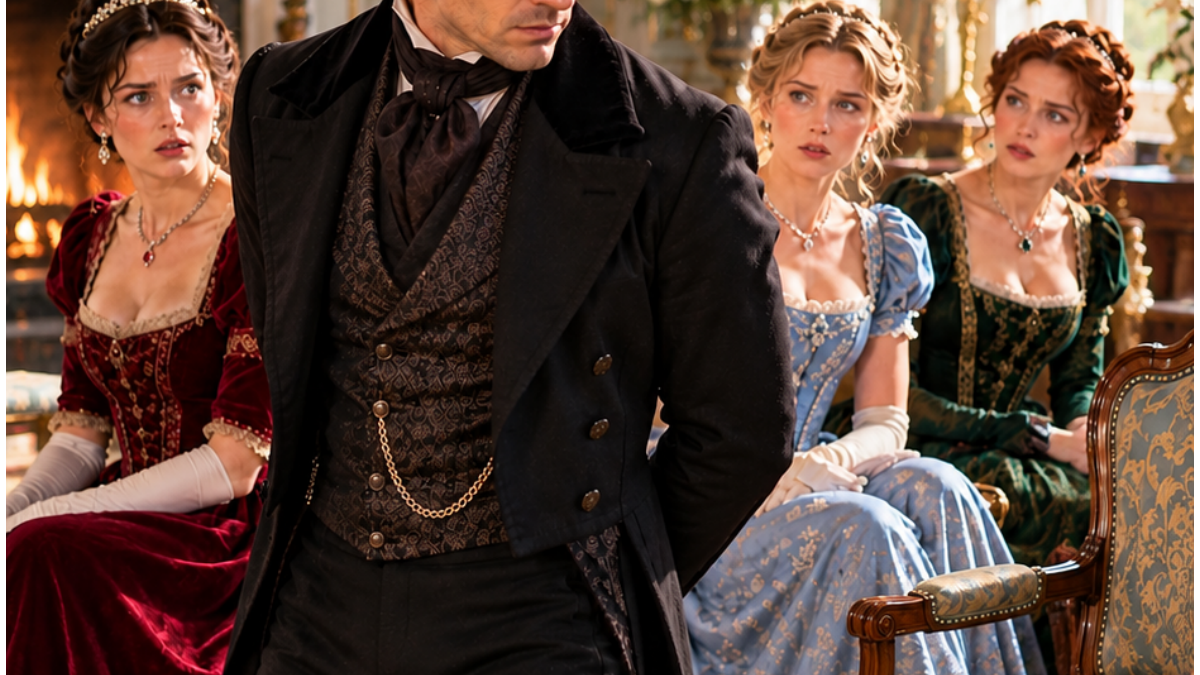
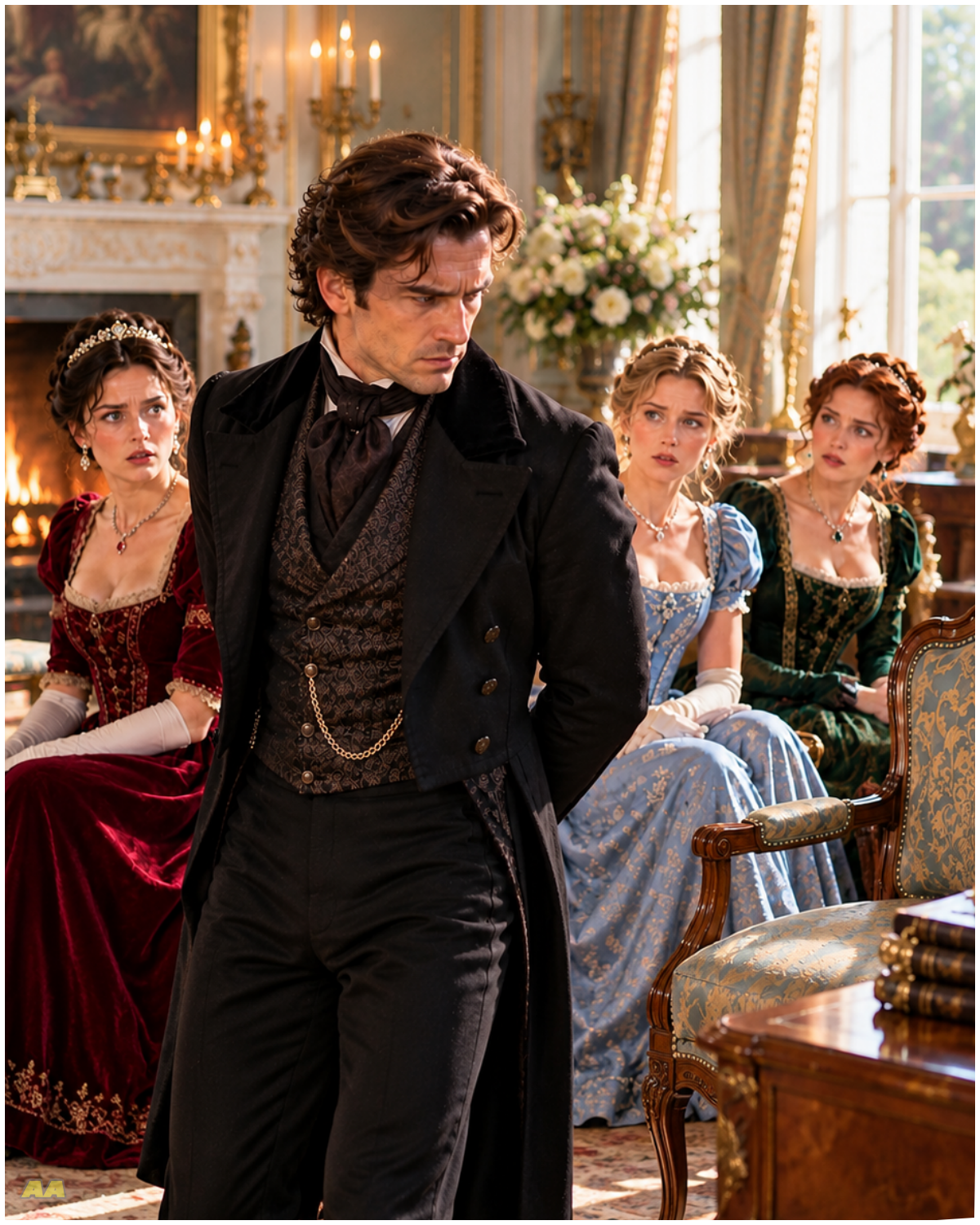
Where is Miss Whitmore?
The question stopped the drawing room more completely than a gunshot might have.
Lady Caroline Mercer’s gloved hand froze above her teacup.
Lady Beatatric Holloway looked toward her mother.
Lady Lydia Fairmont, seated nearest Nathaniel Blackwood, Duke of Ashborne, slowly lowered the smile she had practiced all morning.
Three young women had crossed half of England because one of them might leave Ashborne Hall as his future duchess.
Yet Nathaniel stood before the fire, tall and severe in black evening clothes, asking for a woman whose name appeared on no marriage settlement.
“Your grace,” his aunt said carefully.
“Miss Whitmore is not here.”
Nathaniel’s gray eyes moved to the empty chair beside the writing desk.
“I can see that.”
She left, his fingers tightened behind his back.
“When the butler hesitated, 3 days ago, your grace.” Nathaniel turned.
Why was I not told?
His aunt drew one breath because Nathaniel Clara specifically asked that you not be.
Three days earlier, Rain tapped softly against the tall library windows while Clara Whitmore sorted Lady Eleanor Blackwood’s correspondence into three neat piles.
At 30, Clara had learned that an unseen woman could hear a great deal in aristocratic houses.
People lowered their voices for a duchess.
They rarely bothered for a companion.
She wore a plain dove gray gown, her brown hair pinned simply at the nape, and was sealing an invitation when Lady Eleanor entered carrying a cream colored letter.
They arrived Friday.
Clara looked up.
Who? The Mercers, the Holloways, and the Fairmonts.
Lady Eleanor placed the letter down.
More precisely, their daughters.
Clara’s ceiling wax cooled untouched.
Everyone in high society knew why three unmarried ladies of excellent family would be invited to the country seat of an unmarried duke.
I see. Do you? Lady Eleanor studied her.
Clara reached for the next envelope.
Lady Caroline’s father has influence in Parliament.
The hallways have money.
The Fairmont family has both lineage and an alarming number of portraits.
Clara, I am being complimentary.
A reluctant smile touched Lady Eleanor’s mouth, then vanished.
Nathaniel did not arrange this, but he permitted it.
That silence answered enough. Clara pressed the seal into warm wax.
For nearly two years, she had served as companion to Nathaniels widowed aunt.
She had read to Lady Eleanor through headaches, corrected household correspondence, remembered which tenants had sons at sea, and learned that the Duke preferred silence to sympathy when old grief tightened his expression.
Nathaniel had never courted her.
He had never promised her anything.
That was precisely why she would not behave as though he had.
Footsteps sounded outside. Nathaniel entered without ceremony.
Rain darkening the shoulders of his riding coat.
His gaze found Clara first, then the invitations.
My aunt has told you.
She has.
He removed his gloves one finger at a time.
You disapprove of marriage? Clara asked.
That would be inconvenient for civilization.
His mouth shifted almost imperceptibly. Of this arrangement.
My opinion is unnecessary. I did not ask whether it was necessary.
Their eyes held. The fire cracked between them.
Clara looked down first, not from submission, but because the address she was writing suddenly required unreasonable concentration.
Three accomplished ladies are coming to meet you.
Your grace. I imagine one will suit Ashborne very well.
Ashborne, he repeated. Not me. Clara’s hand stopped.
Lady Eleanor quietly gathered her shawl and left them alone.
Nathaniel noticed. So did Clara. A duke rarely has the luxury of separating the two.
You believe I should marry for advantage.
I believe you will do what duty requires.
Something sharpened in his face. You make that sound unpleasant.
Duty often is. Nathaniel came nearer to the desk.
And what will you do while these formidable candidates inspect me?
Clara smiled faintly. Try not to laugh at them at you.
A breath that might have become laughter left him.
Then Clara folded the final letter and rose.
If you will excuse me, I promised your aunt I would finish her accounts.
She passed him without touching his sleeve.
Nathaniel turned as she reached the door.
Clara, she stopped. He almost never used her Christian name.
Will you be at dinner? Friday.
Her fingers rested on the brass handle.
For one dangerous second, she imagined remaining here while three suitable women considered the man whose silences she had learned too well.
No, your grace. Nathaniel frowned. Why not?
Clara opened the door. Because by Friday, I shall no longer be at Ashborne Hall.
The door moved barely an inch before Nathaniel’s voice stopped her.
You are leaving? Clara kept her hand on the brass handle.
Yes. Behind her, a log shifted in the great with a shower of sparks.
When did you decide this? This morning.
Before or after my aunt told you about our guests?
Clare returned. Nathaniel had not moved from the desk, but his gloves were crushed loosely in one hand.
After then there is a connection.
There is an inconvenience. His eyes narrowed.
Explain the distinction. Clara released the handle.
Lady Eleanor will have three families beneath this roof.
All observing one another and all wondering which young woman you favor.
She will not need a companion who has become familiar enough with the household to attract questions.
What questions? The kind, polite people never ask aloud.
Nathaniel crossed the room slowly and you intend to solve this by disappearing by accepting another position.
That stopped him. You already have one.
Mrs. Harkord in York needs a companion for the winter.
Lady Elellanor wrote to her on my behalf months ago when we believed she might spend the season with her daughter.
Months? His voice flattened. You considered leaving months ago.
I considered having choices. Clara’s gaze did not waver.
There is a difference. A small muscle moved in his jaw.
Does my aunt know? She knows.
I wrote to Mrs. Harkort this morning.
And you did not think I should know.
Why should you? The question landed between them more sharply than she intended.
Nathaniel’s fingers loosened around the gloves.
Clara drew a quiet breath. Forgive me.
That sounded ungrateful. It sounded honeSt. Then I withdraw the apology.
For a moment, his expression almost softened.
You believe your presence would interfere with my choosing a wife?
No, you just said, I believe my presence would interfere with me.
The rain whispered against the windows.
Nathaniel said nothing. Clara looked toward the fire rather than at him.
I have no fortune, no title, no family with influence to trade across a marriage settlement.
I will not sit at your aunt’s table while three women are measured against the needs of Ashbborne and pretend I have no feelings about being measured against nothing at all.
His breath changed just once. Clara, please don’t.
Don’t. What? She looked at him.
Then say my name as though it changes what I am.
He went very still. Clara hated the tremor in her fingers and folded them together until it disappeared.
I am not angry with you.
You have made me no promise.
You owe me none. But neither do I owe this house the spectacle of watching you choose someone else.
Nathaniel stepped closer. Not enough to touch her enough that she could see a drop of rain still caught at the edge of his dark hair.
And if I asked you to stay, her eyes searched his face.
For what reason? He opened his mouth.
Nothing came. Clara’s smile was small and unbearably gentle.
That is why I must go.
She left before he could find an answer.
The following morning, Lady Eleanor discovered Clara’s trunk open upon the bed and sat beside it without speaking.
She protested only once. Clara answered only once.
I would rather leave with affection than stay until affection becomes humiliation.
Lady Eleanor’s eyes filled, but she nodded.
Mrs. Harkort’s reply arrived before noon.
Clara could come immediately. By Thursday morning, a hired carriage waited beneath Ashborne’s stone portico.
Nathaniel did not appear. Clara told herself she was relieved.
She embraced Lady Eleanor, the servants who came quietly to say farewell, and climbed into the carriage without looking toward the upper windows.
Only when Ashborne Hall disappeared behind bare winter trees, did she allow herself to close her eyes.
Inside the house, Nathaniel stood alone in the library with the note she had left for his aunt lying unopened on the desk.
He did not touch it. On Friday afternoon, three elegant carriages rolled one after another into the courtyard.
Lady Caroline Mercer arrived in burgundy velvet, Lady Beatatrice Holloway in pale blue, and Lady Lydia Fairmont in dark green trimmed with sable.
By 5:00, all three sat beneath the chandeliers of the drawing room, composed and expectant.
Nathaniel entered. Three women rose. His gaze passed over them, then stopped on the empty chair beside the writing desk.
Where is Miss Whitmore? Lady Eleanor answered softly.
She left. His eyes remained on the chair.
When 3 days ago, Nathaniel turned toward his aunt.
Why was I not told? Lady Eleanor’s fingers tightened around her teacup.
Because Clara specifically asked that you not be.
Lady Lydia watched him with sudden intereSt. Nathaniel’s face revealed nothing.
But when Lady Caroline invited him to sit beside her, he remained standing.
“Your grace,” she prompted. He looked at the three perfectly suitable women waiting for him.
Then his eyes returned once more to Clara’s empty chair.
“Before we begin,” he said quietly, “I want to know why Miss Whitmore believed she had to leave.” Lady Eleanor set down her teacup with extraordinary care.
I think that is a question Miss Whitmore would prefer to answer herself.
“She is not here.” Precisely. Lady Lydia’s gaze moved between them, bright with curiosity, while Lady Caroline adjusted one burgundy cuff.
Perhaps Miss Whitmore had family obligations.
Your grace. Nathaniel looked at her.
She has none. The certainty in his answer produced a small silence.
Beatatrice Holloway broke it gently. Then perhaps we should not discuss a lady who cannot speak for herself.
Nathaniel studied her for a moment.
You are right. He finally sat and the machinery of polite courtship began.
Caroline spoke intelligently about Parliament and her father’s connections.
She knew which families could influence votes and which alliances would strengthen Ashbborne standing.
Beatatrice possessed something potentially more useful, money.
Her grandfather’s manufacturing interests had produced a fortune large enough that no one in high society mentioned where it came from anymore.
Lydia required neither explanation nor apology.
Her bloodline was impeccable, her manners effortless, her beauty obvious beneath candlelight.
Any one of them, Nathaniel thought, could become a duchess without instruction.
That realization should have relieved him.
Instead, when Caroline asked whether Ashbornne hosted many political dinners, he found himself remembering Clara murmuring over a seating plan.
If you place Lord Pembroke beside Sir Henry, dinner may become a duel before the soup.
His mouth almost moved. Your grace, Caroline asked.
Forgive me. Dinner brought no improvement.
Lydia praised the ancestral portraits. Beatatrice admired the silver.
Caroline asked sensible questions about the estate.
Nathaniel answered each one correctly and felt increasingly absent from his own table.
Twice he looked toward the place where Clara usually sat beside Lady Elanar.
Twice he found only empty space.
The next morning he entered the library before breakfast and stopped.
His correspondence lay arranged upon the desk, but not as Clara arranged it.
Invitations were mixed with estate letters.
A tenants request concerning his widowed daughter had been placed beneath advertisements from London merchants.
Nathaniel separated them himself. That one needs answering today, he said.
The footman blinked. Which one? Your grace.
Nathaniel’s finger rested on the tenants letter.
Mr. Wilks. Yes, your grace. He paused.
Clara would already have known. Later, he found Lady Eleanor alone beside the drawing room fire, rubbing one temple.
“Where is your tea?” he asked.
“I forgot to ring.” Nathaniel reached for the bell pole, then stopped.
Clara had never forgotten, nor had Lady Eleanor needed to remember.
At lunchon, Lydia entertained everyone with an account of a disastrous musical and bath.
Nathaniel laughed once because it was genuinely amusing.
Lydia noticed. So did Caroline. Their attention sharpened around him like silk being drawn tight.
We have finally discovered his grace can be made to laugh, Lydia said.
Apparently, under rare conditions, Nathaniel replied.
Then I shall consider it a challenge.
I wouldn’t, Lady Eleanor murmured into her wine.
Beatatrice hit a smile. That afternoon, Nathaniel rode with all three ladies and their appropriate attendance.
Caroline rode beautifully. Lydia rode boldly.
Beatatrice admitted without embarrassment that she disliked horses and preferred walking.
They were intelligent women, he realized with growing discomfort.
None deserved to be treated as a solution to a problem he had not yet defined.
When they returned, the butler met Nathaniel beneath the portico.
A letter for Lady Eleanor. Your grace.
Nathaniel recognized the handwriting before the silver tray reached his aunt Clara.
His hand tightened around his writing crop.
Lady Elellanar saw it. She took the letter upstairs unopened.
Nathaniel did not ask to read it.
At dinner, he spoke less than usual.
Afterward, he found his aunt in the small morning room feeding pages into the fire.
What are you burning? Lady Elellanar looked up.
Old correspondence. A white corner curled black among the flames.
Nathaniel crossed the room. Was Clara’s letter among it?
No. Where is it? Safe. The fire snapped.
Did she mention me? Lady Eleanor’s face softened with something dangerously close to pity.
No. Nathaniel stared at her. The answer disturbed him more than if Clara had filled three pages with accusations.
Not once. Not once. He turned toward the window.
Outside, darkness covered the lawns. What did she write about?
My health. The servants. Whether Mrs. Hail remembered to take broth to old Mr.
Wilks. She asked if Beatric’s journey had worsened her cough.
Nathaniel gave a humorless breath. She has never met Beatatrice.
Clara notices people before meeting them.
It is an irritating talent. Nathaniel’s gaze fell upon Lady Eleanor’s writing desk.
Beside the inkstand lay a small leather notebook he recognized as ClariS.
She left that. Lady Eleanor followed his eyes apparently by mistake.
He reached for it then stopped before touching the cover.
Send it to her. I intended to.
Tomorrow. Lady Eleanor watched him. Nathaniel, if you want an excuse to write to Clara, you need not manufacture one.
His hand withdrew. I have nothing to say.
Then that is fortunate. She picked up the notebook because Mrs. Harkort’s letter arrived with ClariS.
Nathaniel looked back. Lady Elellanor’s expression had changed.
Clara will not remain in York.
Long. Why? Mrs. Harkort has arranged an interview for her.
For what position? Lady Elellanar hesitated.
One that would take her nearly 300 miles from Ashborne.
300 miles. Nathaniel’s voice was quiet enough to make Lady Eleanor look at him more closely.
Approximately where? Northumberland. The fire shifted behind the great.
Nathaniel stared at the leather notebook in her hand.
Doing what? Companion to Lady Margaret Vale.
Her previous companion is marrying and Clara intends to accept.
Clara intends to interview. That was not my question.
Lady Eleanors brows rose. You are remarkably interested in the employment of a woman you allowed to leave without asking her to stay.
His jaw tightened. I did ask.
You asked her to stay without giving her a reason.
She held out the notebook. There is a difference.
Nathaniel took it at laSt. The worn leather was warm from his aunt’s hand.
Send this with the morning poSt. He turned toward the door.
Nathaniel. He stopped. Clara did not leave because she expected you to follow.
I know. Do you? He looked back.
Lady Elellanor’s voice softened. She left because staying would have required her to watch herself become smaller.
Nathaniel said nothing. The next morning, breakfast unfolded beneath polished silver and flawless manners.
Caroline discussed an upcoming parliamentary session with intelligence Nathaniel genuinely respected.
Beatatrice asked the steward’s wife about a charitable fund rather than merely praising it.
Lydia made Lady Eleanor laugh hard enough to put down her coffee.
There was nothing wrong with any of them.
That was becoming the problem. Nathaniel could imagine Caroline managing Ashborn’s political obligations.
He could imagine Beatatrice strengthening its finances.
He could imagine Lydia commanding every ballroom in London.
Yet, when he tried to imagine silence beside any of them, the picture failed.
Clara had never rushed to fill silence.
She had simply shared it. After breakfast, Nathaniel found a tenant waiting uncertainly in the entrance hall, cap twisting between weathered hands.
Mr. Wilks, the man startled. Your grace, you wrote to me about my daughter, sir.
Since her husband died, Nathaniel remembered the letter Clara would have placed at the top of his correspondence.
Come into the study. Mr. Wils hesitated.
Miss Whitmore usually told me whether I ought to wait.
The words were innocent. They struck anyway.
By noon, Nathaniel had discovered three more absences that were not absences at all.
A kitchen maid had lost the person who wrote letters to her mother.
Lady Elellanor had missed her medicine twice.
A footman had been too embarrassed to ask the housekeeper about wages owed to his injured brother.
Clara had known each of these things.
Nathaniel had known none. That evening, Lady Lydia found him standing beside the unused writing desk in the drawing room.
You were looking at that chair again.
Nathaniel turned. Lydia wore dark green silk, a single emerald at her throat.
Am I? Frequently, she came no closer.
Do not worry, your grace. I am not offended.
That suggests there is something to be offended by.
Three women were invited here, so you might decide whether one could become your wife.
And you have spent two days noticing a fourth woman’s absence.
Nathaniel’s expression cooled. Lydia smiled faintly.
There, that is the Duke everyone warned me about and yet you came.
My mother believes a cold Duke is preferable to a warm second son.
A surprised laugh escaped him. Lydia’s smile became genuine.
Miss Whitmore makes you laugh too, I suppose.
Miss Whitmore generally laughs at me.
How improper. Relentlessly, the shared amusement faded.
Lydia glanced toward the empty chair.
Does she know? Nathaniel’s fingers rested on its carved back.
Know what? Whatever it is you refuse to name, his hand withdrew.
There is nothing to name. Lydia studied him for one long second, then inclined her head.
Of course, she walked away before he could resent the kindness in her disbelief.
The following afternoon, Lady Eleanor summoned him to the library.
Clara’s notebook had been sent north that morning.
On the desk lay another letter bearing Mrs. Harkort seal.
The interview has been moved forward, Lady Elellanar said.
Lady Margaret is traveling north sooner than expected.
Nathaniel remains standing. When Clara leaves Jük on Monday if she accepts today is Saturday.
Yes. His gaze dropped to the letter.
Does she want the position? Lady Eleanor folded her hands.
Very much. Nathaniel’s face became unreadable.
Then there is nothing to discuss.
He turned toward the door. Lady Eleanor’s next words stopped him.
There is one other reason Clara chose to leave Ashborne.
Nathaniel looked over his shoulder. His aunt held his gaze.
And this one has nothing to do with those three ladies.
Then tell me. Lady Eleanor did not answer at once.
She crossed to the fire and adjusted the screen, though no sparks had escaped it.
Your father left Ashborne stronger than many estates, but not untouched by his ambitions.
Nathaniel’s eyes narrowed. I know the accounts.
You know the numbers. Clara knows what people say when they think no one important is listening.
He went still. What did she hear?
That your trustees expect you to marry money?
The clock on the mantle clicked into the silence.
That is gossip. Is it false?
Nathaniel looked toward the dark windows.
2 years of poor rents in the northern farMs. Drainage works more expensive than expected.
His father’s London properties tied up in litigation.
Nothing approaching ruin, but enough that a large marriage settlement would make every difficult decision easier.
No, he said, “Not entirely.” Lady Eleanor turned.
Clara heard Lord Mercer discussing Caroline’s dowry with your uncle.
She heard Beatatrice described as the sensible solution, and she heard someone say that even Lydia’s connections could secure favorable credit.
Nathaniel’s mouth hardened. Who does it matter?
Yes, only because you would rather be angry with a man than understand why Clara left.
His hand closed around the back of a chair.
Lady Eleanor continued more gently. She believed that if she remained here, people would assume she was trying to interfere with a marriage Ashborn needed.
She knows me better than that.
That is precisely the difficulty, Nathaniel.
She knows you well enough to fear you might choose duty, even if it made you miserable.
He released the chair and she decided for me.
No, she decided for herself. That distinction followed him into dinner.
Caroline sat at his right and spoke of a railway investment her father considered promising.
Beatatrice opposite him quietly corrected her mother’s exaggerated description of her dowy.
Lydia watched everyone with an expression suggesting she understood more than was comfortable.
Nathaniel found himself studying the women differently, not as candidates, but as people trapped inside the same arrangement.
After dessert, he asked Caroline to walk with him in the gallery.
Portraits of dead blackwoods stared down from gilded frames.
Your father has spoken to my uncle about a marriage settlement.
Nathaniel said Caroline’s step did not falter.
Yes. Were you aware of the discussion?
Yes. Of the figures? No. And does that trouble you?
She looked at him then. Would it trouble you if I asked whether Ashborne needs my money?
The honesty of it made him stop.
It would not. Then does it?
Nathaniel glanced toward the long black windows.
Ashbborne needs greater security than it presently has.
Caroline absorbed that without flinching. And you?
I beg your pardon. Do you need my money?
The question was clarike in its refusal to permit an easy answer.
No. Caroline gave a small nod.
Good, because I would prefer not to discover after 20 years that my husband married my father’s bank account.
Nor would I. Then perhaps we understand one another.
Later, Beatatrice admitted she had no desire to purchase a title with her grandfather’s fortune.
Lydia was even less delicate. “If you choose me, because my family can persuade bankers to smile upon you,” she said near the drawing room fire.
“I shall make an appalling duchess out of spite.” Nathaniel almost laughed.
“Is that a threat? A promise?” Across the room, Lady Eleanor hid a smile behind her embroidery.
For the first time, Nathaniel saw the cruelty beneath the supposedly convenient arrangement.
Three women had been delivered to Ashborne to solve problems they had not created.
Clara had simply refused to become a fourth.
Near midnight, his steward, Mr. Alden, requested a private word in the study.
He carried a narrow ledger beneath one arm.
The trustees met in London yesterday.
Your grace. Nathaniel poured neither of them brandy.
And the northern drainage debt has been called sooner than expected.
Nathaniel’s gaze sharpened. How soon? 8 weeks.
The fire gave a low crack behind him.
Amount named it. Nathaniel’s face did not change, but his thumb pressed hard against the edge of the desk.
We can meet half without selling productive land.
A little more, perhaps, and the remainder.
Mr. Alden hesitated. Your uncle believes a marriage settlement would reassure the creditors enough to extend the balance.
Nathaniel looked toward the closed study door beyond which three suitable women slept beneath his roof.
Of course he does. Alden lowered his voice.
There is something else. Your grace.
He placed the ledger on the desk but did not open it.
Lord Mercer has already made the trustees an offer conditional upon your engagement to his daughter.
Nathaniel looked at the closed ledger without speaking to me.
Lord Mercer approached your uncle firSt. Mr.
Alden’s voice remained careful. The trustees have accepted nothing.
But they listened. They are frightened.
Nathaniel’s eyes lifted. So am I, Alden.
Fear does not give them permission to auction my marriage.
He opened the ledger. Columns of figures ran beneath his finger.
Neat and merciless. 8 weeks. Enough time to make choices.
Not enough time to pretend choices carried no coSt. Prepare every alternative that does not involve a marriage settlement, sale of non-productive holdings, reduction of household expenses, refinancing, deferred improvements.
Some will be painful, then show me the pain accurately.
Alden bowed and left. Nathaniel remained until the fire collapsed into red embers.
By breakfast, Lord Mercer’s offer had acquired a different life.
No one mentioned figures, but Lady Caroline’s mother watched Nathaniel with new confidence, and two visiting neighbors arrived before lunchon, carrying congratulations no engagement justified.
Lydia heard one of them in the entrance hall.
How efficient, she murmured. Apparently, you have become engaged without troubling to propose.
Nathaniel’s mouth thinned. Not for long.
The engagement? The rumor? Lydia’s gaze sharpened.
You should move quickly. Rumors are like servants with excellent hearing.
They travel farther than anyone pays them to.
By afternoon, he had dictated three letters denying any understanding with the Mercers.
It was not enough. 40 mi away at Mrs. Harkord’s house in York, Clara folded a newspaper beside her untouched tea.
The society column contained only four lines.
The Duke of Ashbborne was said to be nearing an advantageous understanding with the accomplished daughter of a prominent political family.
No name was required. Clara knew it anyway.
Mrs. Harkort washed her over silver spectacles.
You needn’t read those things. Then they would still be printed.
Clara reached for her tea and discovered it had gone cold.
Lady Margaret’s carriage comes Monday morning at 9.
Good. Clara. Mrs. Harkort’s voice softened.
You may remain here longer if you wish.
Clara looked toward the rain trembling against the window.
That would only mean I was waiting for him.
Her fingers tightened once around the cup.
For my life to begin. She set it down carefully.
I would rather meet it halfway.
Back at Ashborne, Lydia entered the morning room after dinner carrying a letter.
This was delivered to my maid by someone from the village.
Nathaniel looked up from Alden’s accounts.
Why bring it to me? Because it concerns Miss Whitmore.
The room seemed to contract. How?
Lydia placed the letter on the table but kept two fingers upon it.
It claimed she deliberately left so you would follow her.
Nathaniel’s face went still. Who wrote it and signed then burn it?
I would have except my maid says another was delivered to Lady Caroline’s maid and Beatatrice received one herself.
Nathaniel Rose. What exactly does it say?
Lydia’s expression hardened. That Miss Whitmore cultivated your aunt’s dependence, made herself indispensable to you, then staged her departure when respectable marriage prospects arrived.
The silence afterward was broken only by the faint hiss of coal.
Absurd, Nathaniel said. Yes. Lydia removed her fingers from the paper.
But useful to whom? Someone who wants her absence to look like manipulation.
Nathaniel picked up the letter by one corner.
The handwriting was deliberately plain. Has Caroline seen hers?
Her mother has. His gaze snapped upward.
Lydia continued. And Lady Mercer has already written to friends in London.
Nathaniel swore under his breath. There is more.
Lydia hesitated. My maid heard Lady Mercer say that a woman capable of pursuing a duke by scandal should not be employed in a respectable household.
Nathaniel’s hand closed around the paper.
Clara is interviewing tomorrow. Then I suggest you discover how far this rumor has traveled before Lady Margaret hears it.
Within an hour, Alden had the names of the servants who received the letters and the messenger who delivered them.
The boy had been paid at the village in by a gentleman’s servant he could describe but not name.
Nathaniel sent riders in two directions and sat awake while Ashborne slept.
Near dawn, Alden returned with mud on his boots.
He laid a folded scrap beside the anonymous letter.
The inkeeper remembered the servant, “Your grace.” Nathaniel read the name written there.
His expression changed. “You are certain?” “Yes.” Nathaniel pushed back his chair.
“Have my horse saddled.” Alden glanced toward the windows, still black with night.
For York: Not yet. Nathaniel folded the evidence into his coat.
First, I am going upstairs to wake the person under my roof whose servant paid to destroy Clara Whitmore’s reputation.
Wake whom? Alden asked, though his face suggested he already knew.
Nathaniel looked at the name once more.
Lady Mercer. 20 minutes later, Caroline stood beside her mother in the blue drawing room.
Both women hastily dressed beneath borrowed shawls.
Lady Mercer’s outrage arrived before Nathaniel finished placing the anonymous letter on the table.
You dragged us from our rooms over servant gossip.
No, Nathaniel laid the inkeeper’s statement beside it.
I asked you here because your footman paid a village boy to distribute these.
Caroline went pale. Her mother did not.
That proves nothing. Then perhaps your footman will explain why he carried six copies.
In your handwriting. Caroline turned sharply.
Mother, Lady Mercer’s silence lasted one second too long.
Caroline stepped away from her. You did this.
I protected your future by destroying another woman’s by removing an adventurous who had already compromised your prospects.
Nathaniel’s hand flattened against the table.
Miss Whitmore compromised nothing. Lady Mercer lifted her chin.
Then why did you ask for her before you had properly greeted my daughter?
Caroline closed her eyes. Nathaniel did not look away because I wanted to know where she was.
Exactly. That was my choice. His voice dropped.
Not Clara’s scheme. Mine. The door opened behind them.
Lady Eleanor entered with Beatatrice and Lydia.
All three fully dressed despite the hour.
Nathaniel glanced at his aunt. You should be asleep and miss this.
Eleanor took a chair. Certainly not.
Lydia folded her arMs. Beatatrice remained near the door, her expression unusually cold.
Nathaniel faced Lady Mercer again. You will write to every person you contacted and state that your accusation was false.
You cannot command me. No. His gaze shifted to Caroline.
But your daughter may decide whether she wishes to remain beneath my roof after learning what was done in her name.
Caroline’s face burned. We leave this morning.
Her mother stared at her. Caroline, this morning.
Nathaniel inclined his head. My carriage will take you wherever you choose.
Lady Mercer’s mouth tightened. And what of the marriage settlement?
Your trustees will not be so proud when the dead is called.
Caroline flinched. Nathaniel did not. There will be no marriage settlement.
Lady Mercer gave a brittle laugh.
Then Ashborn may lose more than a companion.
That will be Ashborne’s burden. His eyes hardened.
Not your daughter’s purchase price. Silence followed.
Beatatrice looked down. Lydias expression softened by a fraction.
Lady Mercer gathered her shawl and swept from the room.
Caroline paused before Nathaniel. I am sorry.
You did not write the letters.
No, but I benefited from the assumption behind them.
She swallowed. Please tell Miss Whitmore I knew nothing.
I will. After the Mercers departed, Nathaniel asked Beatatrice and Lydia to join him in the library.
Morning light had begun to gray the windows.
You were invited here under circumstances I should never have permitted.
Beatatrice watched him quietly. Are you dismissing us?
I am releasing you from a competition none of us should have entered.
Lydia raised one eyebrow. A remarkably dal way to say you are rejecting three women before breakfaSt. Nathaniel almost smiled.
Two now. Caroline will appreciate the mathematical precision.
Beatatric’s lips curved. Then Nathaniel’s expression sobered.
Ashborne has financial obligations. I will meet them without marrying either of you for what your families can provide.
Can you? Beatrice asked. Not comfortably.
That was not my question. Clara could have said the same thing.
Nathaniel drew a slow breath. I do not yet know.
Beatatrice nodded, apparently satisfied by the truth.
By 8, Alden had begun preparing notices for the trustees.
Nathaniel would sell two small London properties tied to no productive estate income, postpone the west stable rebuilding, reduce his personal allowance, and seek extension on the remaining drainage debt against future rents.
It would cost him convenience and prestige.
It would not cost Ashborne its working farMs. And if the creditors refuse, Alden asked.
Nathaniel buttoned his riding coat. Then I find another answer.
York is nearly a full day in this weather.
Then stop talking to me. Lady Eleanor met him in the entrance hall with Clara’s leather notebook in her hands.
Nathaniel stared at it. I thought you sent that.
I did. It was returned this morning.
His face changed. Why? Clara was no longer at Mrs. Harkort’s address.
Nathaniel took the notebook, but her interview is today.
It was yesterday. The hall seemed suddenly silent.
Lady Margaret advanced her departure again.
Eleanor’s fingers tightened around his sleeve.
Nathaniel Clara accepted the position. He looked toward the waiting horse beyond the open doors.
Where is she now? On the north road.
How long ago? Nearly 4 hours.
Nathaniel slipped the notebook inside his coat and descended the steps.
Alden followed him into the cold.
Your grace. If you ride now, you may not catch her before the coaching road divides.
Nathaniel put one boot into the steerup.
Where? At Harrowate Cross. He swung into the saddle.
Alden caught the bridal for one final second.
And if you do catch her, what exactly are you going to ask her to do?
Nathaniel looked north toward the road disappearing beneath a colorless winter sky.
His hand tightened on the res.
That, he said quietly, is the one question I should have answered before she ever left.
Then I suggest you discover it before the crossroads, Alden said, releasing the bridal.
Nathaniel touched his heels to the horse and rode.
The cold cut through his gloves within an hour.
By noon, Sle had begun to strike his coat, and the north road had turned to dark mud beneath the horse’s hooves.
He changed mounts at a posting in without stopping to eat.
At Harogate Cross, two roads divided beneath a weathered stone marker.
One led northeast toward Lady Margaret Veil’s estate.
The other curved toward a market town.
Nathaniel rained in hard. A traveling carriage, he called to the osler.
Dark brown hired in York. A lady traveling with trunks.
The man scratched his jaw. Passed perhaps 20 minutes ago.
Your grace north road. Nathaniel was already moving.
He found the carriage where the road climbed between bare hedgeros.
One rear wheel had sunk into a rut and the driver stood ankle deep in mud beside it.
Clara was outside the carriage, holding her cloak closed against the wind, while another man wedged a plank beneath the wheel.
Nathaniel pulled up so sharply his horse tossed its head.
Clara turned for one breath. Neither moved.
Rain clung to Nathaniel’s dark hair.
Mud covered his boots nearly to the knee.
Clara’s face lost its color. “Your grace,” he dismounted, “CL.” Her eyes dropped to the exhausted horse, then returned to him.
“Has something happened to Lady Elanor?” No, Ashbborne still standing.
Then why are you here? Nathaniel took a step toward her and stopped when she instinctively tightened her cloak.
The small movement struck him harder than anger would have.
The letters accusing you were false.
Clara blinked. What letters? His jaw tightened.
She truly knew nothing. Lady Mercer circulated a claim that you left Ashborne to make me pursue you.
Clara stared at him, then gave one short, incredulous breath.
That is almost impressive. It reached London.
The humor vanished from her eyes.
Lady Margaret, I do not know whether she has heard it.
Nathaniel drew the folded evidence from his coat, but the source has been established.
Lady Mercer will retract it. Caroline knew nothing.
Clara looked at the papers without taking them.
You rode from Ashborne to tell me this partly.
What else? Wind moved between them.
Behind Clara, the driver grunted as the wheel shifted an inch.
Nathaniel’s hand went inside his coat again and emerged with the small leather notebook.
Clara’s lips parted. I wondered where that was.
He held it out. Their gloved fingers touched for barely a second when she took it.
You could have posted it. I tried.
Then why are you here? He looked at her for a long moment.
Because I asked you to stay once and gave you no reason.
Clara’s fingers closed around the notebook.
Nathaniel, let me finish badly before I lose the courage to finish it all.
That silenced her. He drew a breath.
Ashborne can function without you. My aunt will complain.
The servants will misplace things. I will answer the wrong letters and discover too late that someone needed help.
The corner of Clara’s mouth trembled despite herself.
That sounds catastrophic. I am told Duke survived worse.
His eyes stayed on hers. I did not ride here because the house needs you.
Her smile disappeared. Then why? Because I do.
The only sound was the wind moving through the hedges.
Nathaniel did not step closer. I noticed what you did when you were there.
I understood what it meant only after you left.
That failure is mine, not yours.
Clara’s eyes shown, but her voice remains steady.
And the three ladies, Caroline has gone.
Beatatrice and Lydia are leaving by choice.
I will marry none of them.
The debt still mine. Nathaniel Ashborn needs Ashborn needs a duke willing to pay for his own decisions.
His breath clouded between them. I will sell what is mine to sell, cut what is mine to cut, and negotiate the reSt. I will not purchase solvency with a wife.
Clara looked away toward the waiting carriage.
You have made all these decisions very quickly.
No, he swallowed. I made them very late.
The driver called that the wheel was free.
Clara’s hand tightened around the notebook.
Nathaniel stepped backward, clearing her path to the carriage.
Go to Lady Margaret if that is the life you want.
ClariS searched his face. You came all this way to tell me I may leave.
You never needed my permission. His voice roughened.
I came because the last time you walked away, I let silence answer for me.
He looked at the carriage door, then back at her.
I will not do that twice.
I want you at Ashborne. I want your inconvenient honesty, your terrible opinion of my seating arrangements, and every silence I did not understand until it was gone.
Clare’s breath caught. And if I still leave, Nathaniel’s face tightened, but he opened the carriage door for her.
Then I will wish you happiness and mean it.
She stood before him, close enough to touch, while sleep melted against his shoulders.
Then Clara placed one foot on the carriage step.
Nathaniel’s hand fell away from the door.
She paused slowly. She turned back toward him.
“There is something you still haven’t asked me.” Clara kept one foot on the carriage step.
Nathaniel waited, rain sliding from his hair to the collar of his coat.
“What haven’t I asked?” he said.
She turned fully toward him. “Whether I love you?” Something unguarded crossed his face.
“I was afraid the answer might make my promise harder to keep.” “Your promise to let you go if that is what you choose?” Clara stepped down from the carriage.
Then ask me. Nathaniel’s breath caught.
Do you love me, Clara? She looked at the man who had ridden through winter rain, not to command her return, but to give her the freedom he should have recognized from the beginning.
Yes. His eyes closed for one brief second.
I love you, she said. But I am still going to Lady Margaret.
His eyes opened. Clara almost laughed at his expression.
I accepted a position. I will not abandon a woman who expects me simply because a duke finally discovered his feelings.
A breath of astonished laughter escaped him.
Of course you won’t. Give me until spring and then then ask me again.
He took her gloved hand but did not pull her closer.
I will without three other ladies waiting in the drawing room.
That can be arranged. She smiled and without needing my non-existent fortune, especially that.
He bent and kissed her hand.
Clara touched his cheek, then kissed him once softly, deliberately, leaving no doubt whose choice it was.
When her carriage disappeared northward, Nathaniel remained beside the road until even the wheels could no longer be heard.
The months that followed demanded more of him than any convenient marriage would have.
Two small London properties were sold.
The West stable rebuilding was postponed.
Nathaniel reduced his personal allowance and dismissed none of the estate laborers whose families depended upon their wages.
Mr. Alden negotiated an extension on the drainage debt after Nathaniel placed future rental income and the proceeds of the London sales against it.
Ashborne was not suddenly rich, but neither was it bankrupt.
It would survive through discipline rather than a bride settlement.
Lady Mercer’s punishment was quieter and sharper.
Her written retractions followed the same social paths as her accusations, and Caroline refused to support any version that softened her mother’s responsibility.
The woman who had tried to destroy Clara’s respectability to secure a duchess’s coronet for her daughter found herself answering uncomfortable questions in every drawing room she had hoped to conquer.
Caroline eventually wrote Clara herself, apologizing without excuse.
Clara answered. By March, Beatatrice was corresponding with a gentleman who cared more about her opinions than her inheritance.
While Lydia sent Nathaniel a note announcing that she had survived Ashborne without marrying him and considered the achievement worthy of celebration.
On the first warm afternoon of April, Clara returned.
Nathaniel met her beneath Ashborne’s portico, but did not descend the steps until she had left the carriage by herself.
Miss Whitmore, your grace. His mouth moved.
Are we beginning again? I thought we might begin properly.
He offered his hand. She took it.
That evening, the same drawing room glowed with fire light.
No ambitious mothers waited. No marriage settlements lay upon the tables.
Lady Eleanor quietly disappeared after dinner, though Clara noticed her listening outside the door for several seconds before retreating.
Nathaniel stood beside the chair that had once been empty.
Clara, Ashbborne no longer requires a wealthy duchess to rescue it.
How disappointing. I have brought no fortune.
You have brought something considerably more troublesome.
An opinion. Several, I expect. He reached for her hands.
I cannot promise you an easy life.
I can promise never to make duty an excuse for cowardice again.
I will listen when you disagree with me, stand beside you when others do, and remember that loving you gives me no ownership over you.
Clara’s eyes filled. That sounds dangerously like a proposal.
It is. He lowered himself to one knee.
Clara Whitmore. Will you marry me?
She let him wait just long enough to make his gray eyes narrow.
Yes, Nathaniel. His laugh broke softly through the room before he rose and kissed her.
Months later, autumn sunlight lay golden across Ashborne’s lawns.
Clara sat beside Nathaniel beneath an old beach tree while Lady Eleanor pretended to read nearby.
No one spoke. No one needed to.
Nathaniel threaded his fingers through Clara’s and she rested her head against his shoulder as leaves drifted slowly around them.
For once, Ashbborne’s silence held no absence at








