The Palace Trembled as Kate Returned With Camilla’s Hidden Secrets | Emotional Stories
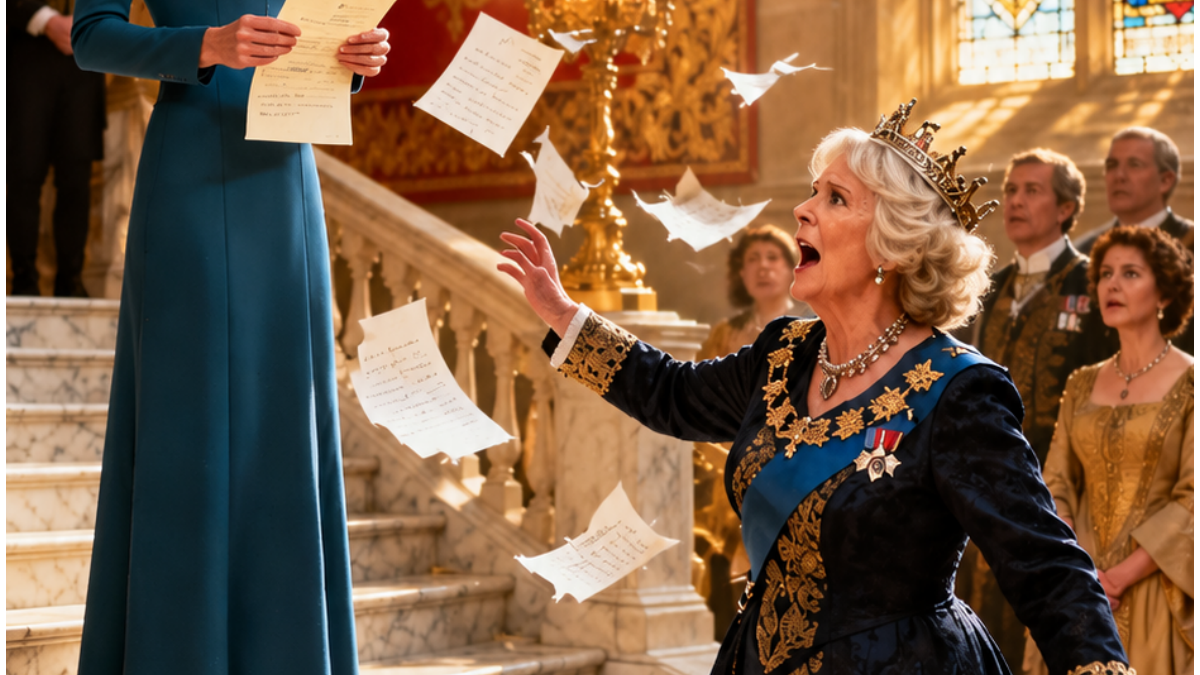
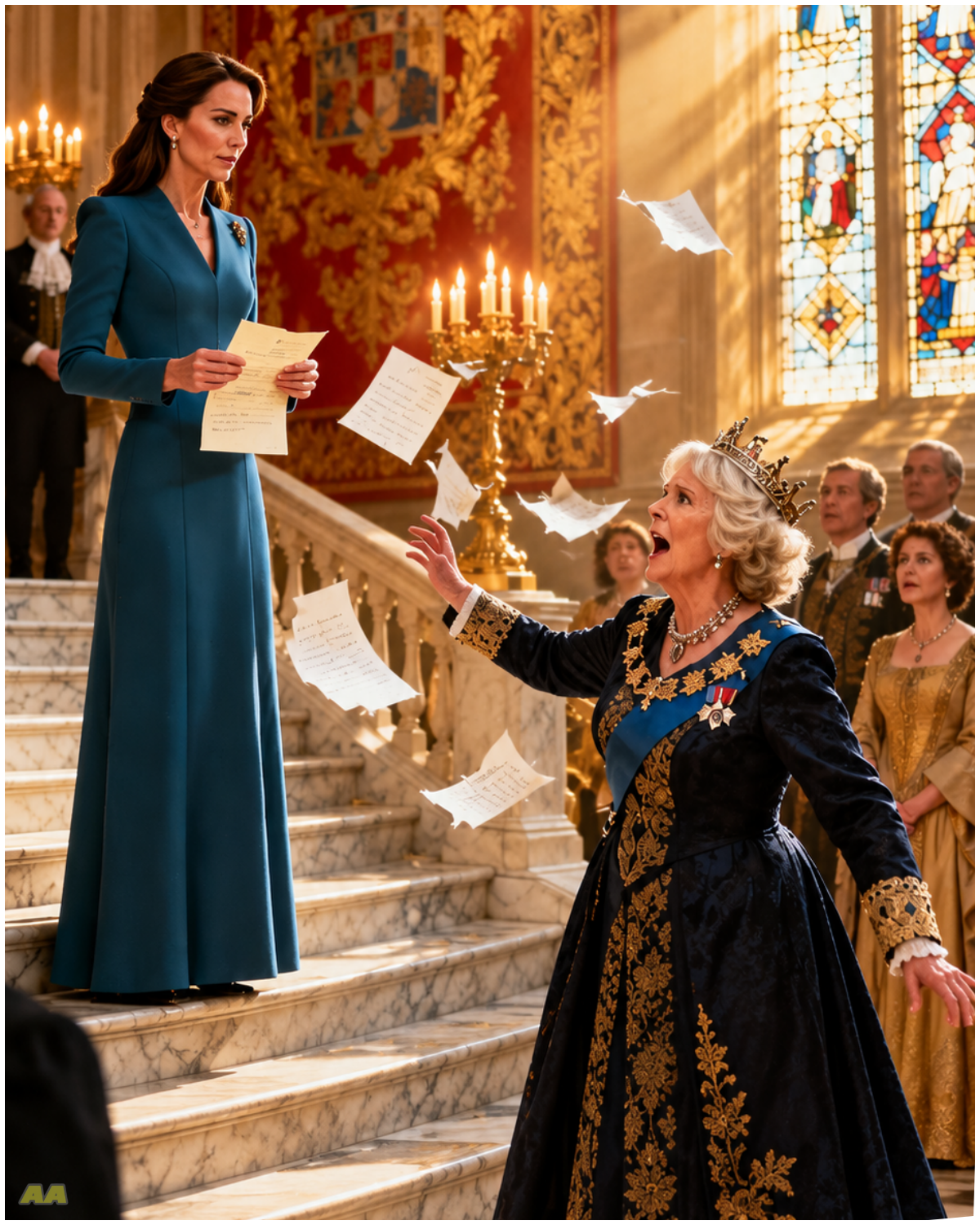
Behind the golden gates of Buckingham Palace, where every smile is calculated and every word measured, the most dangerous weapon isn’t a sword or a scandal, it’s the truth.
For 3 years, the royal family had carefully crafted a narrative of unity and tradition.
But one woman’s unexpected return would shattered that illusion forever.
Kate Middleton had vanished from public view under mysterious circumstances, leaving behind whispers of mental exhaustion and family obligations.
But when she stepped out of that black sedan on a rain soaked Tuesday morning in November, she carried more than just her designer handbag.
Hidden within her possession were documents, photographs, and recorded conversations that would expose the darkest corners of the monarchy’s recent history.
The palace had trembled before through divorces, deaths, and public relations disasters, but nothing had prepared them for what Kate was about to unleash.
Because sometimes the person you trust least is the one who knows you beSt. And sometimes the quiet ones are simply gathering ammunition for the perfect moment to strike.
What she discovered about Camila during her absence would not just rock the foundation of the royal family.
It would change the very course of the British monarchy forever.
This is the story of how a future queen became the palace’s most dangerous enemy and how secrets buried in the shadows finally found their way into the light.
The morning Kate Middleton disappeared from royal duties began like any other Tuesday in March 2024.
The palace staff prepared her schedule with military precision, arranging charity visits, photo opportunities, and carefully orchestrated public appearances.
But by noon, her private secretary, Sarah Chen, received a call that would send shock waves through the quarters of Kensington Palace.
The Princess of Wales will not be fulfilling any engagements for the foreseeable future.
Williams voice crackled through the secure phone line.
His tone was clipped. Professional, but Sarah detected something underneath.
A tremor that suggested this wasn’t a routine postponement.
Within hours, the palace machine swung into action.
Press releases spoke of personal family matters and temporary withdrawal from public duties.
The carefully worded statements satisfied no one, least of all the British tabloids who sense blood in the water like hungry sharks.
Kate had been growing increasingly distant from the royal bubble for months.
Those closest to her noticed the subtle changes firSt. Her longtime dresser, Maria Santos, observed how Kate would stare out of palace windows for extended periods, her mind clearly elsewhere.
During fittings, she barely registered fabric choices or color schemes that once sparked animated discussions.
The breaking point came during a private dinner at Clarence House 3 weeks before her disappearance.
Camila had invited Kate for what she termed a heart-to-heart between queens.
The evening started pleasantly enough with discussions about the children’s education and upcoming royal engagements.
But as the wine flowed and the staff retreated, Camila’s conversation took a darker turn.
“You must understand, Catherine, that this family operates on loyalty above all else,” Camila had said, swirling her glass of Bordeaux.
“Those who forget this simple principle find themselves isolated.”
Kate sensed an underlying threat in the words, though Camila’s smile never wavered.
The conversation drifted to historical royal wives who had struggled with their roles.
Each example Camila cited ended in exile, divorce, or worse.
The message was crystal clear, even if never explicitly stated.
That night, Kate couldn’t sleep.
She walked through the empty halls of Kensington Palace, her footsteps echoing against marble floors that had witnessed centuries of royal drama.
She found herself in William’s study, staring at portraits of his ancestors.
Each face seemed to judge her, questioning whether she truly belonged among them.
The next morning brought an unexpected visitor.
Margaret Thornton, a former palace employee who had worked closely with Diana, arrived under the pretense of delivering charity documents.
But her real purpose became clear when she slipped Kate a small envelope.
“Your mother-in-law knew things,” Margaret whispered as they stood in Kate’s private sitting room.
“Things that certain people would prefer remain buried. I kept copies of everything, just as she asked me to. I thought you should know they exist.”
Kate opened the envelope with trembling fingers.
Inside were photocopies of handwritten notes and Diana’s distinctive script along with what appeared to be telephone numbers and dates.
The words she could make out sent chills down her spine.
C’s financial arrangements, private meetings with RM, and most disturbing of all, the real reason Charles couldn’t marry her firSt. Margaret didn’t stay long.
Before leaving, she pressed a second envelope into Kate’s hands.
If you ever need the complete files, call the number inside.
But be careful, dear. Some secrets are worth killing for.
Kate spent the following days in a state of mounting paranoia.
She noticed staff members watching her more closely, conversations that stopped abruptly when she entered rooms, and changes in her security detail that were never properly explained.
When she mentioned these concerns to William, he dismissed them as stress related anxiety.
“You’re imagining things, Kate,” he said during one of their increasingly rare private moments.
The pressure of royal life affects everyone differently.
Perhaps you need some time away.
But Kate’s instincts told her otherwise.
She began paying closer attention to palace dynamics, noting relationships and power structures she had previously ignored.
Camila’s influence extended far beyond her official role.
Palace staff deferred to her in ways that seemed to supersede even Charles’s authority.
Key appointments, budget decisions, and even menu choices for state dinners all seem to require her approval.
The realization hit Kate like a physical blow.
Camila wasn’t just the queen consort.
She was the true power behind the throne.
And she had been consolidating that power for decades.
Kate’s investigation began innocently enough.
She started asking casual questions about palace history.
Expressing interest in royal traditions and protocols.
The librarian, Mr. Peton, was delighted by her sudden enthusiasm for archival materials.
He granted her access to restricted collections, believing she was simply trying to better understand her role.
What Kate discovered in those dusty volumes and protected files painted a picture far different from the official royal narrative.
Financial records showed mysterious payments to private investigators during the 1990s.
Communication logs revealed frequent contact between Camila and media moguls.
Most shocking of all were the medical reports relating to Diana’s final months.
Reports that suggested her famous paranoia might have been entirely justified.
The deeper Kate dug, the more dangerous the information became.
She learned about shell companies controlled by Camila’s family trust, about influence pedaling in government appointments, and about systematic campaigns to discredit anyone who threatened the carefully constructed image of royal propriety.
One evening, while reviewing documents in the palace library after hours, Kate heard footsteps in the corridor.
She quickly gathered her materials and switched off the reading lamp, plunging the room into darkness.
Through the keyhole, she watched as two security guards conducted what appeared to be a routine patrol.
But their conversation chilled her blood.
She’s been asking too many questions.
One guard muttered to his companion.
Mrs. Parker BS wants to know everything she’s accessed.
Kate realized then that her research hadn’t gone unnoticed.
Every book she’d requested, every file she’d reviewed, every question she’d asked had been reported back to Camila.
The net was closing around her, and she was running out of time.
The final straw came during a seemingly innocent tea with Queen Elizabeth II just two weeks before Kate’s disappearance.
The elderly monarch had always shown Kate’s kindness and support, so she felt safe confiding her concerns about palace irregularities.
Elizabeth listened carefully as Kate outlined her discoveries, her expression growing more grave with each revelation.
When Kate finished, the queen sat in silence for several long minutes, her weathered hands folded in her lap.
“My dear Catherine,” she finally said, her voice barely above a whisper.
“I fear you have stumbled upon truths that were meant to remain hidden.
The monarchy survival has always depended on carefully managed secrets.
Some of these secrets protect the institution, while others,” she paused, choosing her words carefully.
Others protect individuals who have perhaps forgotten their duty to the crown comes before personal ambition.
Elizabeth’s next words would haunt Kate for months to come.
You must be very careful, my dear.
Very careful indeed. The palace has many rooms, but very few hiding places.
That night, Kate made her decision.
She couldn’t remain within the royal bubble while investigating the very people who controlled it.
She needed distance, resources, and most importantly, she needed access to people who were beyond Camila’s considerable reach.
She began planning her exit strategy with the same meticulous attention to detail she had learned from years of royal protocol.
She would need to disappear completely, leaving no trail that could be followed.
More importantly, she would need to ensure that any evidence she had gathered would remain safe in her absence.
Kate reached out to old university friends who had built successful careers outside the aristocratic circle.
She contacted journalists she trusted, lawyers who specialized in whistleblower protection, and even private investigators who operated independently of the establishment networks.
Her plan was ambitious and dangerous.
She would fake a complete mental breakdown, using the palace’s own machinery against itself.
Royal Protocol demanded privacy around health issues, especially mental health.
This would give her the cover she needed to disappear while maintaining plausible deniability about her real activities.
The morning of her stage disappearance, Kate felt a mixture of terror and exhilaration.
She was about to burn bridges she could never rebuild, but she was also about to uncover truths that could reshape the monarchy forever.
Her last act before leaving Kensington Palace was to hide copies of her research and locations throughout London.
She had learned from Diana’s example that keeping all evidence in one place was a fatal mistake.
This time, the truth would be scattered across the city, protected by people who had no connection to the royal establishment.
As Kate’s car pulled away from the palace gates for what she knew would be the last time in months, she caught a glimpse of Camila watching from an upstairs window.
Even from that distance, Kate could see the calculating expression on her stepmother-in-law’s face.
The game had begun, and Kate intended to win.
But first, she needed to disappear so completely that even the palace’s considerable resources couldn’t find her.
Only then could she begin the real work of bringing Camila’s secrets into the light.
The palace released its carefully worded statement about Kate’s withdrawal from public life.
Just as she was boarding a private flight to Scotland under an assumed name.
By the time the press began speculating about her whereabouts, she was already deep in the Scottish Highlands, beginning the most dangerous investigation of her life.
Behind palace walls, Camila poured herself a glass of champagne and smiled.
She believed she had won the first battle.
But she had no idea that Kate’s war had only just begun.
Three months into her self-imposed exile, Kate Middleton had transformed from a polished royal princess into something far more dangerous.
A woman with nothing left to lose.
From her base in a remote Scottish castle owned by her university friend, Emma Rothell, Kate had assembled a team that would have impressed MI6’s recruitment department.
Emma Rothell brought more to the table than just friendship and sanctuary.
As a successful tech entrepreneur who had sold her company to Google for800 million pounds, she possessed resources that even the royal family couldn’t easily trace her shutdown.
More importantly, she harbored a deep resentment toward the establishment that had dismissed her father’s business empire as new money unworthy of serious social consideration.
“I’ve been waiting 20 years for a chance to stick it to these people,” Emma told Kate as they sat in the castle’s ancient library, surrounded by laptops, encrypted phones, and stacks of documents.
They treated my family like criminals just because we earned our wealth instead of inheriting it.
Now they’re about to learn what real power looks like in the 21st century.
Kate’s second recruit was James Morrison, a former investigative journalist who had been blacklisted by every major British publication after exposing a pedophile ring that reached into the highest levels of government.
The story had been buried.
The evidence mysteriously disappeared and James found himself persona nonrada in Fleet Street.
He now worked freelance, specializing in cases that the mainstream media wouldn’t touch.
The palace has been using the same playbook for decades, James explained during one of their late night strategy sessions.
Discredit the messenger, destroy the evidence, and wait for public attention to move elsewhere.
But they’ve never faced someone with your access and credibility.
You’re not some disgruntled former employee or vengeful ex-lover.
You’re the future queen of England, and that changes everything.
The third member of Kate’s inner circle was Dr. Sarah Chen, a forensic accountant who had previously worked for the Serious Fraud Office before being forced out after investigating financial irregularities in several high-profile charity organizations.
Her expertise in following money trails through complex international networks would prove invaluable in unraveling Camila’s financial empire.
“Money doesn’t lie, Doctor Chen told Kate as she spread financial documents across the dining room table.” “People lie.
Politicians lie. Even documents can be forged, but money leaves tracks that are almost impossible to completely erase.
Every payment, every transfer, every investment creates a digital footprint.
We just need to know where to look.
Their investigation began with the materials Margaret Thornton had provided, but quickly expanded into areas that shocked even Kate’s increasingly cynical worldview.
Using Emma’s technological resources and James’ investigative experience, they began mapping a network of influence and corruption that stretched far beyond the palace walls.
The first major breakthrough came when Dr. Chen discovered a series of payments from Camila’s private trust to a public relations firm called Sterling Communications.
The amounts were staggering, over 12 million pounds paid out over 15 years, but Sterling Communications appeared to be little more than a shell company with no visible employees or legitimate business operations.
“This isn’t unusual for high-end PR work,” Dr. Chen explained as she pulled up bank records on her laptop.
Wealthy clients often prefer to keep their media manipulation off the books, but the amounts here suggest something much bigger than reputation management.
James took over the Sterling Communications Investigation, using contacts in the media world to piece together the company’s true purpose.
What he discovered was a sophisticated operation that went far beyond traditional public relations.
Sterling Communications was essentially a private intelligence agency that specialized in destroying reputations and manipulating public opinion.
“They’re not just spinning stories,” James reported during one of their weekly video conferences.
They’re creating them from scratch.
“Fake scandals, manufactured controversies, strategic leaks designed to destroy specific targets, and they’ve been doing it for decades.” The Sterling Communications files, which James obtained through a combination of bribery and old-fashioned breaking and entering, revealed a systematic campaign to eliminate anyone who posed a threat to Camila’s position.
The targets included Diana’s friends, Charles’s former lovers, investigative journalists, and even members of Parliament who had asked uncomfortable questions about royal finances.
But the most shocking discovery was the extent of Sterling Communications penetration into the British media landscape.
The company had cultivated relationships with editors, publishers, and senior journalists across the spectrum.
They could plant stories, kill investigations, and shape public narrative with frightening precision.
“Look at this,” Emma said, pointing to a document on her screen.
“They have files on every major journalist in the country.
Personal weaknesses, financial problems, family scandals, sexual indiscretions.
This isn’t public relations. It’s systematic blackmail.” Kate felt physically sick as she read through the files.
She recognized names of journalists she had considered friendly, editors who had written supportive articles about her charitable work, even photographers who had seemed genuinely kind during royal events.
All of them had been cataloged, assessed, and where necessary, compromised.
The investigation took a darker turn when they began examining Camila’s relationship with foreign governments and business interests.
Dr. Chen’s financial analysis revealed a complex web of investments and partnerships that suggested the queen consort was essentially selling royal access to the highest bidder.
She’s been running the monarchy like a business, Dr. Chen explained as she outlined the financial flows on a whiteboard.
Foreign businessmen pay enormous sums for private audiences with Charles.
Defense contractors receive favorable treatment after making strategic investments in companies controlled by Camila’s truSt. Even government policy seems to be influenced by whoever is writing the biggest checks.
The evidence was overwhelming, but Kate knew that evidence alone wouldn’t be enough to bring down someone as powerful as Camila.
They needed something more dramatic, more undeniable.
They needed Camila to reveal herself publicly.
That opportunity came when Kate learned about an upcoming private meeting between Camila and a Russian oligarch who was under international sanctions.
The meeting was scheduled to take place at a remote country estate in the Cotswalts, far from prying eyes and official oversight.
“This is our chance,” Kate told her team during an emergency planning session.
“If we can document this meeting, we’ll have proof that she’s violating international sanctions for personal profit.
Even the palace won’t be able to spin their way out of that.” The plan was audacious and dangerous.
Using equipment provided by Emma’s tech contacts, they would infiltrate the estate and record the meeting.
Kate insisted on participating directly despite the obvious risks to her safety and reputation.
“I need to be there,” she told Emma during a heated argument about operational security.
“If this recording ever comes to light, people need to know that I personally witnessed these events.
My credibility is the only thing that gives this story weight.” The infiltration required weeks of preparation.
They studied the estate security systems, mapped guard rotations, and identified potential escape routes.
Emma hired a team of former SAS soldiers who specialized in corporate espionage, while James researched the backgrounds of everyone expected to attend the meeting.
The Russian oligarch Dmitri Vulkoff was a particularly unsavory character with ties to organized crime in the Kremlin’s inner circle.
His businesses had been sanctioned by the European Union in the United States for their role in moneyaundering and political manipulation.
The idea that the British royal family would secretly meet with such a person was explosive enough to bring down governments.
On the night of the meeting, Kate felt a mixture of terror and excitement as she crept through the estate’s grounds.
She wore all black clothing and carried recording equipment that was virtually invisible to standard security scans.
Her heart pounded as she approached the main house where lights blazed in the private dining room.
Through the window, Kate could see Camila seated at the head of a polished oak table, gesturing animatedly as she spoke with three men in expensive suits.
One of them was unmistakably Vulov, his distinctive scarred face matching the photographs they had studied.
The audio quality was excellent thanks to Emma’s sophisticated equipment.
Kate could hear every word of the conversation, and what she heard was even more damning than she had hoped.
Camila wasn’t just meeting with a sanctioned oligarch.
She was actively helping him circumvent international restrictions.
The channels we discussed are completely secure.
Camila’s voice came through clearly on Kate’s headphones.
Charles’s upcoming state visit to Kazakhstan will provide the perfect cover for your business interest there.
No one questions royal diplomatic initiatives.
Volkov’s heavily accented response was equally incriminating.
And the mining rights in Wales, you can guarantee government approval.
My dear Dmitri, Camila laughed.
You must understand that I don’t guarantee anything.
I simply ensure that the right people are properly motivated to make sensible decisions.
Kate recorded for nearly two hours capturing discussions of bribes, illegal weapon sales, and plans to manipulate British foreign policy for private gain.
The evidence was more comprehensive than she had dared to hope.
But as she prepared to leave, disaster struck.
A security guard making an unscheduled patrol spotted movement in the gardens and raised the alarm.
Kate found herself running through the darkness, pursued by armed men who had been instructed to shoot first and ask questions later.
She made it to the extraction point just as Emma’s hired team arrived to provide cover.
In the ensuing chaos, shots were fired and several people were injured.
Kate escaped with her recordings intact, but she knew that her cover was blown.
Camila would know exactly who had been spying on her private meeting.
Back at the Scottish castle, Kate reviewed the recordings with a mixture of triumph and dread.
She had the evidence she needed to destroy Camila’s reputation and possibly bring down the entire royal family.
But she also knew that she had crossed a line from which there was no return.
“They’ll kill me before they let this information become public,” Kate told her team as they prepared to leave Scotland for safer locations.
>> Camila has too much to lose, and she’s already proven she’s willing to use violence to protect her secrets.
>> Emma had already made arrangements for Kate to disappear completely with new identity documents and safe houses in several countries.
But Kate surprised everyone by announcing her intention to return to London.
I’m not running anymore, she declared as she packed the original recordings into a secure briefcase.
I started this to find the truth, but now I’m going to finish it by making sure the truth can never be buried again.
Her plan was simple but incredibly dangerous.
She would return to royal duties as if nothing had happened while secretly preparing to release all of her evidence simultaneously across multiple platforMs. The palace would have no way to suppress the story once it broke internationally.
But first, she needed to ensure that Camila couldn’t strike preemptively.
The Queen Consort had already proven her willingness to use violence, and Kate knew that her own life expectancy was measured in days rather than months.
As her plane prepared to land at Heathrow Airport, Kate made final preparations for the most dangerous gamble of her life.
She was returning to the palace not as the obedient princess she had once been, but as a woman armed with the power to destroy everything the royal family had spent centuries building.
Camila was waiting for her.
Of course, the queen consort had spent months preparing for this confrontation.
But she had no idea that Kate was returning not as a defeated enemy, but as the most dangerous person in the history of the British monarchy.
The real war was about to begin.
Kate’s [clears throat] black sedan pulled through the gates of Kensington Palace on a gray November morning, 3 months after her mysterious disappearance.
The woman who stepped out bore little resemblance to the fragile princess who had supposedly suffered a mental breakdown.
This cape moved with predatory grace.
Her eyes scanning the assembled staff with calculating precision.
The palace had prepared for her return like a military operation.
Every possible contingency had been planned, every conversation scripted, every photo opportunity choreographed to present the narrative of a recovered royal ready to resume her duties.
But Camila had made a critical error in her preparations.
She had planned for the return of a broken woman, not a warrior.
William waited on the palace steps, his face a mask of carefully controlled relief.
Behind him stood the senior palace staff, all wearing expressions of professional concern.
But Kate noticed immediately who was absent from the welcome committee.
Camila had chosen not to appear, sending instead her private secretary with a formal note expressing regret at being unable to attend due to pressing constitutional matters.
She’s afraid, Kate thought as she embraced her husband for the benefit of the photographers.
She knows exactly why I disappeared and she’s terrified of what I might have discovered.
The first few days of Kate’s return were a carefully orchestrated dance of normaly.
She attended charity galas, visited hospitals, and performed all the royal duties that had been waiting during her absence.
To the outside world, she appeared to be the same dedicated princess she had always been.
But those paying close attention noticed subtle changes.
Kate’s speeches carried new undertones of defiance.
Her charitable focus had shifted toward organizations that supported whistleblowers and investigated government corruption.
Most tellingly, she had begun making unscheduled visits to locations that made the palace security team nervous, newspaper offices, government buildings, and private meetings with individuals whose backgrounds hadn’t been properly vetted.
Dr. Jennifer Walsh, Kate’s new private physician, was actually a former MI6 operative who specialized in protecting high value assets.
Emma had arranged the placement through her extensive network of contacts in the intelligence community.
Dr. Walsh’s job was officially to monitor Kate’s mental health recovery, but her real purpose was to keep Kate alive long enough to execute her plan.
“They’re moving faster than we anticipated,” Dr. Walsh reported during one of Kate’s supposed therapy sessions.
“We’ve detected three separate surveillance teams, two attempts to access your private quarters, and what appears to be a systematic poisoning attempt through your food supply.” Kate felt no surprise at this news.
She had expected Camila to act quickly once the threat became apparent.
How long do we have?
Days, possibly hours. They’re getting desperate, which makes them dangerous, but also careless.
We need to move to the final phase immediately.
The final phase required Kate to do something no member of the royal family had ever attempted.
She was going to hold a press conference without palace approval and release evidence that would destroy the monarchy’s carefully maintained image.
But first, she needed to ensure that Camila couldn’t simply have her killed or declared mentally incompetent.
Eight solution was as audacious as it was effective.
She arranged to broadcast a revelations from within Buckingham Palace itself during a formal state dinner attended by world leaders and international media.
The state dinner honoring the German chancellor had been planned for months.
Every detail had been approved by multiple committees.
Every guest vetted by security services.
Every minute choreographed to project British royal grandeur.
It was the perfect stage for Kate’s dramatic revelation.
On the evening of the dinner, Kate moved through the reception like an actress preparing for the performance of her lifetime.
She greeted dignitaries with practice charm, posed for photographs with heads of state, and played her role as the perfect royal hostess.
But hidden in her evening bag was a device that would broadcast her evidence simultaneously to news organizations around the world.
Camila appeared nervous throughout the evening, though she hid it well behind her usual public mask.
She had positioned herself strategically near the exits and surrounded herself with security personnel who answered to her rather than the official palace protection unit.
She was ready for Kate to make some kind of move, but she had no idea of the scale of what was coming.
The dinner proceeded normally until Kate rose to make what everyone assumed would be a routine toast to Anglo-German friendship.
Instead, she activated the broadcasting device and began speaking words that would echo around the world.
Ladies and gentlemen, distinguished guests, members of the international press, Kate began, her voice carrying clearly throughout the palace ballroom.
I stand before you tonight, not just as the Princess of Wales, but as a woman who has discovered truths that threaten the very foundation of the institution you see around you.
The reaction was immediate and electric.
Guests looked at each other in confusion.
Security personnel spoke urgently into their radios and cameras that had been recording a routine diplomatic dinner suddenly captured the most explosive royal scandal in modern history.
Camila’s face went white as she realized what was happening.
She gestured frantically to her security team, but it was too late to stop the broadcast without creating an even bigger spectacle.
8 continued with devastating precision.
For the past 6 months, I have uncovered evidence of systematic corruption at the highest levels of the British monarchy.
The woman you know as Queen Camila has been using her position to sell royal access to foreign criminals, manipulate British government policy for personal profit and eliminate anyone who threatens her power through methods that include blackmail, financial ruin, and in some cases murder.
Some guests tried to leave, others pulled out their phones to record the historic moment, and security personnel struggled to maintain order while receiving contradictory commands from different authority figures.
But Kate wasn’t finished. I have in my possession recordings of Queen Camila meeting with sanctioned Russian oligarchs, discussing plans to circumvent international law for financial gain.
I have financial records showing millions of pounds in illegal payments to silence journalists and destroy reputations.
Most damning of all, I have evidence that Princess Diana’s death was not the accident the world was told it was.
The last statement sent shock waves through the assembled crowd.
Even hardened diplomats and experienced journalists gased audibly at the implication.
Kate had just accused the queen consort of involvement in the death of the most beloved member of the royal family.
Camila could no longer maintain her composure.
She stood abruptly, her chair falling backward as she pointed an accusatory finger at Kate.
“This woman is mentally ill,” she shouted over the growing den.
“She disappeared for months and has obviously suffered a complete psychological breakdown.
Everything she’s saying is the product of a diseased mind.
But Kate was prepared for this response.
I anticipated that my sanity would be questioned, she said, her voice still calm and measured despite the chaos around her.
That’s why I’ve arranged for all evidence to be simultaneously released to news organizations in 12 countries along with sworn affidavit from witnesses and expert analysis by independent investigators.
The truth will speak for itself.
At that moment, phones throughout the ballroom began buzzing with news alerts as major publications around the world began breaking the story simultaneously.
The evidence Kate had gathered over months of investigation was flooding into newsrooms from London to New York to Tokyo, far beyond the reach of palace damage control.
William appeared stunned by his wife’s revelations.
Clearly caught between loyalty to his family and the explosive evidence of their corruption.
He approached Kate with his hands raised in a gesture of either surrender or pleading.
Kate, please,” he said, his voice barely audible over the crowd noise.
“Think about what you’re doing.
Think about our children, our future.
There has to be another way to resolve this.” Kate looked at her husband with a mixture of love and pity.
I am thinking about our children, William.
I’m thinking about the kind of world they’ll inherit if we allow this corruption to continue.
Your father is a good man being manipulated by a woman who has turned the monarchy into her personal criminal enterprise.
The confrontation was interrupted by the arrival of armed police officers who had been stationed outside the palace.
They entered the ballroom with weapons drawn, clearly unsure of who was in charge or what their orders should be.
The sight of automatic weapons in Buckingham Palace created panic among the international guests, some of whom represented countries with tense relationships with Britain.
In the confusion, Camila made her move.
She had evidently decided that if she couldn’t control the narrative, she would eliminate the source of the problem.
She nodded to her personal security chief, a man named Marcus Webb, who had previously worked for private military contractors in Eastern Europe.
Webb drew his concealed weapon and aimed it directly at Kate.
For a moment, the ballroom fell silent as everyone realized what was about to happen.
The Queen Consort of England was ordering the execution of the Princess of Wales in front of world leaders and international media.
But Kate had anticipated this possibility, too.
Dr. Walsh, who had been positioned near the ballroom’s main entrance, fired a dart containing a powerful seditive that struck Webb before he could pull the trigger.
He collapsed immediately, his weapon clattering across the marble floor.
The sedative dart wasn’t the only surprise Kate had prepared.
As Web fell, hidden speakers throughout the palace began playing audio recordings of his previous conversations with Camila, in which she had explicitly ordered him to kill Kate if the situation became untenable.
The Princess of Wales represents an unacceptable risk to operational security, Camila’s voice echoed through the palace halls.
If she cannot be controlled through conventional means, you are authorized to use terminal methods, make it look like an accident or a suicide brought on by mental illness.
Even Camila’s most loyal supporters couldn’t deny the implications of that recording.
She had just been exposed ordering the murder of a member of the royal family in front of witnesses that included heads of state and international media.
The queen consort realized that her position had become completely untenable.
She was no longer fighting for power or influence.
She was fighting for her freedom and possibly her life.
Her response was as desperate as it was destructive.
None of this matters, she screamed at the assembled crowd, her carefully maintained composure completely shattered.
You think the monarchy survives on moral authority?
You think any of this pageantry means anything?
This institution has been built on lies, murder, and manipulation for centuries.
I just perfected the system.
It was a complete confession delivered in front of the most powerful people in the world.
Camila had essentially admitted to everything Kate had accused her of, destroying any possibility of maintaining plausible deniability.
In the chaos that followed, Charles himself appeared in the ballroom, clearly summoned by palace staff who were trying to manage the unprecedented crisis.
“The king looked older than his years as he surveyed the destruction of his family’s reputation and the apparent mental breakdown of his wife, Camila,” he said quietly.
His voice carrying despite the noise around them.
“What have you done?” The question seemed to break something inside her.
For a moment, the mask of royal composure slipped completely, revealing the ambitious woman who had spent decades clawing her way to the top of British society.
“I did what was necessary,” she replied, her voice from shouting.
“I built something from nothing.
I made you king, Charles.
I eliminated every obstacle, neutralized every threat, destroyed everyone who stood in our way.
And this is how you repay me?
Charles’s response would be remembered as one of the most devastating moments in royal history.
I never asked you to become a monster.
As dawn broke over London, the world woke to news that would reshape the British monarchy forever.
The evidence Kate had gathered was being analyzed by experts around the globe, confirming her allegations and revealing the full scope of Camila’s criminal network.
Camila herself was in custody, charged with conspiracy to commit murder, violation of international sanctions, and a dozen other serious crimes.
Her carefully constructed empire of influence and corruption was crumbling as former allies rushed to distance themselves from the scandal.
But Kate’s victory came with a terrible personal coSt. Her marriage to William was effectively over, destroyed by the revelations about his stepmother and his own failure to recognize the corruption surrounding his family.
The children she had sought to protect would grow up with the knowledge that their grandmother had tried to have their mother killed.
As she stood in the early morning light streaming through the palace windows, Kate reflected on the price of truth.
She had succeeded in exposing the corruption that threatened the monarchy.
But in doing so, she had also destroyed the fairy tale that had once been her life.
The palace no longer trembled.
It was in complete collapse.
And Kate Middleton, once the perfect princess, had become the woman who brought down a queen.
The morning after the state dinner catastrophe, London woke to a city transformed.
News crews from around the world had descended on the capital like an invading army.
Their satellite trucks lining every street near Buckingham Palace.
The story had exploded beyond anything the royal family had ever faced.
With headlines screaming accusations of murder, corruption, and treason, Kate found herself in the bizarre position of being simultaneously the most famous and most isolated person in Britain.
She had been moved to a secure government facility for her own protection as threats poured in from Camila supporters and unknown enemies who saw her revelations as an attack on the monarchy itself.
Prime Minister Jonathan Hayes had called an emergency session of Parliament where members from both parties demanded immediate answers about the scope of royal corruption and its impact on British governance.
The opposition leader went so far as to call for the complete abolition of the monarchy, describing it as a criminal enterprise masquerading as a constitutional institution.
But the most devastating reaction came from an unexpected source.
Queen Elizabeth II herself, the elderly monarch, who had remained silent during Camila’s rise to power, issued a statement that sent shock waves through the establishment.
After careful review of the evidence presented by the Princess of Wales, the Queen’s statement read, “I am compelled to acknowledge that serious crimes have been committed in the name of this institution.
I hereby strip Camila Parker BS of all royal titles and privileges and I call upon law enforcement to pursue justice without regard to her former position.
Elizabeth’s statement was more than just a public relations move.
It was a strategic master stroke that separated the monarchy from Camila’s crimes while positioning Kate as a hero who had saved the institution from corruption.
But it also revealed the depth of the queen’s knowledge about what had been happening within her own family.
Kate received word that Elizabeth wanted to meet with her privately.
The location chosen was Windsor Castle, far from the media circus surrounding Buckingham Palace.
As Kate’s motorcade approached the ancient fortress, she couldn’t help but wonder if this meeting would provide answers to questions that had haunted her for months.
Elizabeth received her in the castle’s private library, a room filled with centuries of royal history and secrets.
Despite being in her late 90s, the Queen’s mind remained sharp, and her eyes held the same calculating intelligence that had helped her navigate decades of political turmoil.
“You must understand,” Catherine, Elizabeth began without preamble, that I have been aware of Camila’s activities for some time.
“The question I faced was whether the damage from exposure would be greater than the damage from allowing her to continue.” Kate felt a mixture of anger and confusion.
“Your Majesty, she ordered my death.
She was systematically corrupting everything.” thing the monarchy is supposed to represent.
How could you allow that to continue?
Elizabeth’s response was delivered with the cold pragmatism of someone who had spent 70 years balancing competing interests and impossible choices.
Because, my dear, the alternative was civil war.
Camila had accumulated so much compromising information about government officials, business leaders, and even foreign heads of state that exposing her threatened to bring down not just the monarchy, but the entire British establishment.
The queen walked to a window overlooking the castle grounds.
Her frail figure silhouetted against the gray morning light.
What you accomplished at the state dinner was masterful, but it was also terrifying.
You forced my hand at a moment when I wasn’t certain we could control the consequences.
Kate began to understand the true scope of what she had unleashed.
Camila’s network of corruption hadn’t existed in isolation.
It was interconnected with systems of power and influence that reached into every corner of British society.
By destroying Camila, Tate had also exposed dozens of other powerful people who are now desperate to save themselves.
“The next few weeks will be crucial,” Elizabeth continued.
“Camila’s allies will try to discredit you, destroy the evidence, and shift blame to others.
Some of them are willing to kill to protect themselves.
Others will try to use this chaos to advance their own agendas.
You’ve opened Pandora’s box, and now we must deal with everything that flies out.” As if to emphasize the queen’s point, Kate’s phone buzzed with an urgent message from Dr. Walsh.
Immediate evacuation required. Multiple threats confirmed.
Trust no one. The meeting with Elizabeth was cut short as security personnel rushed into the library with news that armed men had been spotted approaching the castle.
Kate found herself being hustled into an armored vehicle while Elizabeth was moved to the castle’s secure bunker, a cold war era facility built to protect the royal family from nuclear attack.
During the high-speed journey back to London, Kate received updates on the rapidly deteriorating situation.
Three journalists who had been investigating Camila’s story had been found dead in apparent suicides.
Two members of Parliament who had called for expanded investigations had been arrested on trumped up corruption charges.
Most ominously, several key pieces of evidence from Kate’s investigation had disappeared from supposedly secured government facilities.
“They’re trying to erase everything,” Dr. Walsh explained as their convoy navigated through London traffic.
Camila might be in custody, but her network is still active.
They’re cleaning house, eliminating evidence and witnesses as quickly as possible.
Kate realized that her public victory at the state dinner had been only the beginning of a much longer and more dangerous battle.
The corruption she had exposed was like a cancer that had metastasized throughout British society.
Removing Camila was just the first step in what would need to be a complete reconstruction of the country’s power structures.
Their destination was a safe house in East London, far from the tourist attractions and government buildings that defined the capital in most people’s minds.
Eight found herself in a nondescript apartment above a Pakistani restaurant.
Protected by former special forces soldiers who had been hired by Emma Rothell’s security company.
From this unlikely base of operations, Kate began coordinating what amounted to a shadow war against the remnants of Camila’s network.
Using encrypted communications and anonymous financial transfers, she worked with journalists, investigators, and government officials who were willing to risk their careers and lives to pursue the truth.
The investigation revealed connections that shocked even Kate’s increasingly cynical worldview.
Camila’s corruption had extended into the judiciary with several judges receiving payments to influence their decisions in cases affecting royal interests.
The police had been compromised at multiple levels with senior officers acting as private investigators for the palace rather than public servants.
Most disturbing of all was the discovery that Camila had been sharing intelligence with foreign governments in exchange for business advantages and political support.
Classified information about British military capabilities, diplomatic strategies, and economic policies had been sold to the highest biders.
James Morrison, working from his own safe house in Scotland, uncovered evidence that Camila’s network had influenced the Brexit referendum by funding disinformation campaigns and illegal political contributions.
The decision that had reshaped British society for decades had been partially engineered by a woman seeking to profit from the resulting economic chaos.
She was playing a game where entire countries were just pieces on her chessboard, James reported during one of their encrypted video conferences.
Brexit, Scottish independence movements, even tensions with Ireland.
She had her fingers in all of it.
Always looking for ways to profit from political instability.
Doc Chen’s financial investigation revealed the true scale of Camila’s criminal enterprise.
Over 20 years, she had systematically looted the royal estate, siphoning off hundreds of millions of pounds through fake charities, inflated contracts, and outright theft.
The money had been laundered through complex international networks and invested in legitimate businesses that gave her enormous influence over British economic policy.
The royal family is essentially bankrupt.
Dr. Chen explained during one of their strategy meetings.
Everything you see, the palaces, the art collections, the land holdings, it’s all been mortgaged or secretly sold to finance Camila’s operations.
The monarchy exists now primarily as a front for organized crime.
As the investigation deepened, Kate began to understand why Elizabeth had been reluctant to act against Camila.
The Queen Consort hadn’t just been stealing money and selling influence.
She had made herself indispensable to the survival of the monarchy itself.
Her criminal network was so intertwined with the institution’s finances and operations that removing her threatened to bring down the entire system.
But Kate also discovered something that gave her hope.
Evidence that Charles had been completely unaware of his wife’s activities.
The king had been systematically deceived and manipulated, signing documents he didn’t understand and attending meetings where he was essentially a figurehead while Camila conducted the real business.
This revelation presented Kate with a strategic opportunity.
If she could prove Charles’s innocence while exposing the full scope of Camila’s crimes, she might be able to save the monarchy while destroying the corruption that had nearly consumed it.
The plan she developed was as audacious as anything she had attempted.
She would orchestrate Charles’s public testimony against his own wife.
Turning the king into the star witness in the prosecution of the queen consort.
Arranging the meeting required delicate negotiations through intermediaries who could be trusted not to betray Kate’s location.
Charles was essentially a prisoner in his own palace.
Surrounded by security personnel who weren’t certain whether they were protecting him or guarding him.
When they finally met in a secure room at a government facility outside London, Kate was shocked by the change in her father-in-law’s appearance.
Charles looked like a man who had aged decades in a matter of days, his face drawn and his eyes hollow with the weight of betrayal.
“I loved her,” Charles said simply, his voice barely above a whisper.
“Despite everything you’ve revealed, despite all the evidence of what she’s done, I still love the woman I thought she was.” Kate felt genuine sympathy for the man who had been so thoroughly deceived.
Your Majesty, you were manipulated by someone who spent decades perfecting the art of deception.
The woman you loved never really existed.
She was a carefully constructed fiction designed to gain access to power.
Charles’s testimony when it came was devastating in its emotional impact.
Speaking directly to television cameras in a special broadcast, the king detailed his gradual realization that his wife had been using him as a puppet while building a criminal empire in the shadows of the throne.
I signed documents I was told were routine administrative matters, Charles admitted, his voice breaking with emotion.
I attended meetings where I was assured I was representing British interests, only to discover that I was actually facilitating criminal enterprises.
I have been a fool, and my foolishness has brought shame upon an institution that represents far more than any individual.
The king’s testimony provided the final piece of evidence needed to dismantle Camila’s network completely.
With Charles cooperating fully with investigators, police and intelligence services were able to execute coordinated raids across the country.
Arresting dozens of conspirators and seizing evidence that had previously been protected by royal privilege.
But even as justice began to take its course, Kate understood that the real work was just beginning.
The monarchy would need to be completely rebuilt, its finances restructured, and its relationship with government redefined.
The fairy tale image of royal life that had sustained public support for centuries had been shattered, and something new would need to take its place.
As she stood in her East London safe house watching news reports of the arrests and raids that were dismantling Camila’s empire, Kate reflected on how completely her life had changed.
She had begun this journey as a princess, trying to understand her place in an ancient institution.
She was ending it as the architect of that institution’s complete reconstruction.
The palace no longer trembled.
It was being torn down and built a new.
And Kate Middleton, the quiet princess who had once been content to follow protocol and avoid controversy, had become the most powerful person in the history of the British monarchy.
6 months after the night that changed everything, Kate Middleton stood in the newly renovated throne room at Buckingham Palace, preparing for a ceremony that would have been unimaginable just a year before.
Today she would be crowned not as a traditional queen consort but as the first queen renant in British history to ascend to the throne while her husband lived.
The constitutional crisis triggered by Camila’s downfall had forced Parliament to confront fundamental questions about the nature of monarchy in the modern era.
After weeks of heated debate, they had reached a revolutionary conclusion.
The crown would pass not to William as previously expected, but to Kate herself in recognition of her role in saving the institution from complete destruction.
The decision hadn’t come easily.
Traditional monarchists argued that centuries of precedent couldn’t be overturned by contemporary politics.
Republican voices called for the complete abolition of the monarchy, arguing that the corruption scandal proved the institution was fundamentally irredeemable.
But a growing coalition of reformers saw an opportunity to create something entirely new.
A monarchy that could serve as a genuine force for transparency and accountability in British society.
Kate’s coronation would be unlike any in British history.
Instead of the ancient Westminster Abbey, the ceremony would take place in the newly constructed glass palace, a transparent structure built in Hide Park specifically to symbolize the new monarchy’s commitment to openness.
Every aspect of the event would be broadcast live with no private moments or hidden traditions that could conceal the kind of corruption that had flourished under Camila’s influence.
The months leading up to the coronation had been a whirlwind of institutional reconstruction.
Under Kate’s direction, the monarchy’s finances had been completely restructured with all assets transferred to a public trust overseen by Parliament.
The royal household had been reduced by 70% with most ceremonial positions eliminated and resources redirected toward charitable work and public service.
Most dramatically, Kate had insisted on the creation of an independent royal oversight commission staffed by former judges, journalists, and civil society leaders who would have unlimited access to royal activities and the power to investigate any allegations of misconduct.
The monarchy would operate under a level of scrutiny that would have been unthinkable in previous centuries.
Charles had abdicated gracefully, recognizing that his association with Camila’s crimes made his continued reign impossible.
In his final speech as king, he had praised Kate’s courage and endorsed the radical reform she was implementing.
“The crown has always been a symbol of service to the British people,” Charles had said in his farewell address.
“Catherine has shown us what true service looks like, even when it requires great personal sacrifice.
She has earned the right to lead this institution into a new era of accountability and purpose.” William had initially struggled with the decision to pass over his claim to the throne.
But he had eventually come to understand the wisdom of the choice.
His association with the old system, however innocent, would have made the necessary reforms more difficult to implement.
By stepping aside in favor of his wife, he allowed the monarchy to make a clean break with its corrupted paSt. “Kate saved the crown,” William had told the BBC in an exclusive interview.
“Now she deserves the chance to remake it in her own image.
I’ll be proud to serve as her consort and support her vision for what the monarchy can become.
The children had adapted to their changed circumstances with the resilience of youth.
George, Charlotte, and Louie understood that their mother had done something heroic, even if they couldn’t fully grasp the complexity of what she had uncovered.
They would grow up in a monarchy that operated more like a transparent public service organization than a secretive family dynasty.
As Kate prepared for the ceremony, she reflected on the price of the transformation she had engineered.
Her marriage to William had survived, but it had been fundamentally altered by the events they had experienced together.
They were no longer the fairy tale couple that had captured the world’s imagination.
They were partners in a complex political project that would define Britain’s future.
Her relationship with the rest of the royal family remained complicated.
Many extended family members blamed her for destroying the mystique and privilege that had protected them for generations.
Others, particularly the younger royals, embraced the changes and the opportunity to serve in more meaningful ways.
The investigation into Camila’s network had ultimately led to over 200 arrests across Britain and several other countries.
The Queen Consort herself was serving a life sentence for conspiracy to commit murder, treason, and dozens of other charges.
Her conviction had been swift and comprehensive with evidence so overwhelming that even her most expensive lawyers couldn’t mount an effective defense.
But the most satisfying moment for Kate had come when Camila, facing the certainty of life imprisonment, had finally revealed the full scope of her knowledge about Diana’s death.
The confession delivered in exchange for slightly better prison conditions had confirmed Kate’s suspicions and provided closure for millions of people around the world.
Diana had discovered financial irregularities in the prince’s truSt. Camila had admitted during her final interrogation.
She was asking questions that would have led to the discovery of my early operations.
I had no choice but to neutralize the threat she represented.
The admission had sent Charles into a deep depression that required months of therapy to overcome.
The man who had spent decades mourning his first wife now had to confront the fact that her death had been orchestrated by the woman he had later married.
As Kate walked through the palace corridors toward the ceremony, she passed portraits of her predecessors, generations of kings and queens who had ruled through divine right, inherited privilege, and carefully maintained secrecy.
Today she would break that chain and establish a new model of constitutional monarchy based on earned authority and transparent governance.
The glass palace was filled with representatives from around the world.
But the guest list looked very different from traditional royal events.
Instead of hereditary nobles and wealthy donors, the ceremony included teachers, healthare workers, social activists, and ordinary citizens who had been selected through a public lottery.
The message was clear. This monarchy would serve all people, not just the privileged elite.
Emma Rothell sat in the front row.
Her role as Kate’s key ally during the investigation having earned her a permanent position as an informal adviser to the new queen.
James Morrison had been appointed as the monarchy’s first director of transparency, tasked with ensuring that royal activities were reported accurately and completely.
Dr. Chen had become the chief financial officer of the royal trust, applying her forensic accounting skills to prevent the kind of corruption that had nearly destroyed the institution.
The ceremony itself was a masterpiece of symbolism and substance.
Instead of a crown encrusted with jewels that represented centuries of imperial conquest, Kay was presented with a simple platinum cirlet embedded with stones donated by ordinary citizens from across the Commonwealth.
The regalia she carried had been created by contemporary artists and crafts people representing the monarchy’s connection to living culture rather than dead traditions.
The oath she swore was entirely new.
Crafted by constitutional scholars and public participation.
Instead of promising to defend ancient privileges, Kate pledged to serve as a guardian of democratic values, a champion of the vulnerable, and a force for transparency in public life.
I solemnly promise to use whatever authority is vested in me by the people of this realm to promote justice, protect the innocent, and ensure that power serves the common good rather than private interest,” Kate declared, her voice carrying clearly through the glass structure and to television audiences around the world.
The response from the assembled crowd was unlike anything heard at previous coronations.
Instead of ritual responses affirming loyalty to the crown, the people present offered a pledge of mutual accountability.
We accept your service and promise to hold you accountable for the trust you have accepted.
Foreign dignitaries watched in fascination as Britain created something genuinely unprecedented, a monarchy that operated more like an elected democracy than a hereditary aristocracy.
Some saw it as an inspiring model for modernizing ancient institutions, while others viewed it as the death of monarchy as a meaningful concept.
The ceremony concluded with Kate’s first official act as queen, the signing of legislation that formally established the independent royal oversight commission and transferred all royal properties to public ownership.
The stroke of her pen completed the transformation she had begun with her investigation into Camila’s crimes.
As the crowds dispersed and the glass palace was dismantled for reuse and other public projects, Kate found herself alone with William and their children in the private apartments of Buckingham Palace.
The rooms have been stripped of most of their historical artifacts, which were now displayed in public museums rather than private royal collections.
“Do you think we did the right thing?” William asked as they watched news coverage of the ceremony from around the world.
The reactions were mixed but generally positive with many commentators describing it as the most significant constitutional change in British history.
Kate considered the question carefully before answering.
I think we did the only thing we could do once I discovered the truth about what was happening.
The old system was completely corrupted.
We could either let it destroy itself or try to build something better.
George, now old enough to understand some of the complexity of their situation, looked up from his homework with a serious expression.
Mommy, will people still call you your majesty?
Kate smiled at her son’s question.
They can if they want to, but I think I’d prefer if they just called me Kate.
Titles are less important than the work we do.
The evening news brought updates on the continuing prosecution of Camila’s co-conspirators and the ongoing efforts to recover stolen assets and repair damaged institutions.
The process would take years to complete, but the momentum for reform seemed unstoppable.
International reaction to Britain’s constitutional revolution had been overwhelmingly positive with several other monarchies expressing interest in similar reforMs. The transparency measures Kate had implemented were being studied by governments around the world as potential models for increasing accountability in public institutions.
But perhaps the most meaningful response came from ordinary citizens who wrote letters, sent emails, and approached Kate during public appearances to express their support for what she had accomplished.
Many of them shared stories of their own encounters with corruption and abuse of power and their gratitude for someone finally taking action against institutional wrongdoing.
As Kate prepared for bed in what had once been the most private quarters of the most secretive institution in Britain, she reflected on the journey that had brought her to this moment.
She had started as a commoner who married into royalty, became a princess who discovered uncomfortable truths, transformed into an investigator who exposed systematic corruption, and finally emerged as a queen who had revolutionized the very concept of monarchy.
The palace no longer trembled with hidden secrets and whispered conspiracies.
Instead, it hummed with the activity of public servants working to address society’s challenges and promote the common good.
The transformation wasn’t complete. It might never be complete, but it had begun with courage, persistence, and an unwavering commitment to the truth.
Kate Middleton had returned with Camila’s secrets and used them to build something unprecedented.
A monarchy that served its people rather than itself, a throne that elevated truth above tradition, and a crown that represented earned authority rather than inherited privilege.
A palace had trembled, but from its ruins had risen something stronger and more beautiful than what had come before.
And Queen Catherine I, the first of her name, and hopefully not the last of her vision, would spend the rest of her reign ensuring that the light of transparency never again dimmed in the quarters of power.
In the end, the greatest secret had been that change was possible even in the most ancient and resistant of institutions.
Sometimes it just required someone brave enough to speak the truth regardless of the consequences.








