The Millionaire Refused to Touch Her – Never Expecting One Night to Change Everything
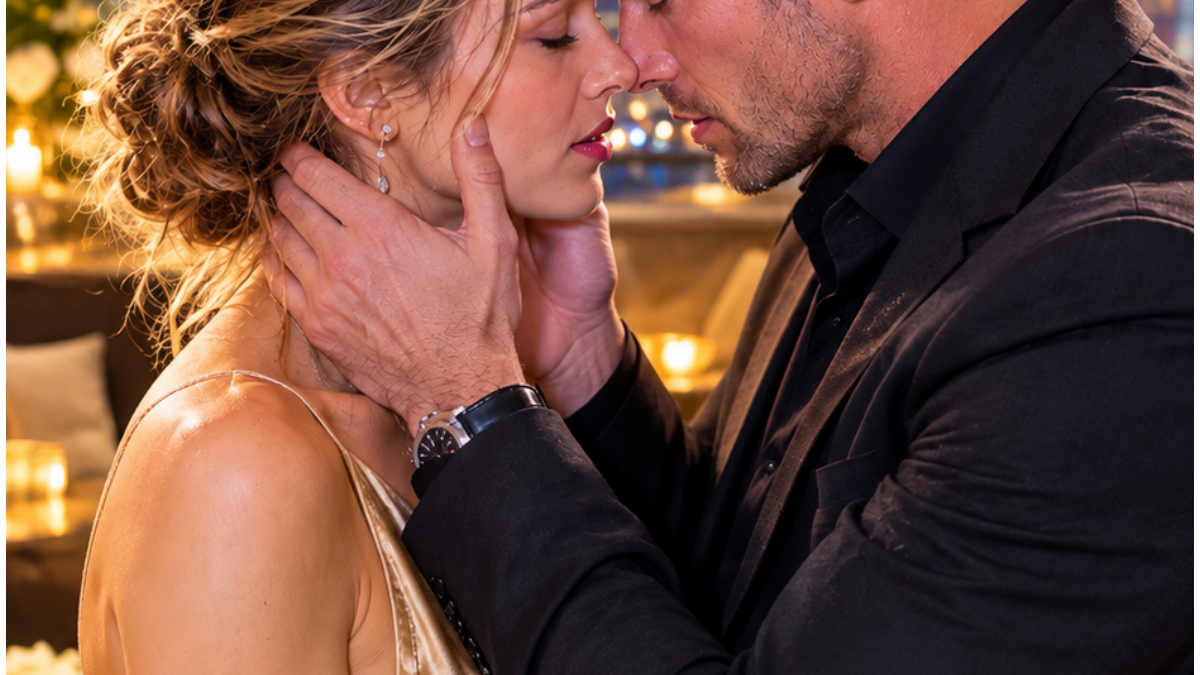

The millionaire refused to touch her until one night she cried and he couldn’t resit.
She knew this meeting would change everything, but she walked into that glass building anyway.
Aubry Lane adjusted her navy blazer one last time before stepping into the marble lobby of Row International.
The click of her heels echoed against the pristine floors as she approached the reception desk where a blonde woman with tired eyes barely looked up from her computer screen.
“I’m here for the 3 p.m. Appointment,” Aubry said, her voice steady despite the flutter in her cheSt. The receptionist’s fingers paused over the keyboard.
“You’re the companion.”
Aubry had heard that hesitation before, the slight pause that carried judgment, curiosity, and sometimes disguSt. But after 3 years in this business, she’d learned to let it roll off her shoulders like rain on glass.
Professional accompaniment services, she corrected gently.
Ms. Lane for Mr. Row.
The elevator ride to the 42nd floor felt endless.
Aubry caught her reflection in the polished steel doors, dark skin glowing under the harsh fluorescent lights, natural hair pulled back in a sleek bun, minimal makeup that highlighted her warm brown eyes.
She looked exactly like what she was, a professional woman who happened to make her living by being present, attentive, and utterly reliable.
Her phone buzzed. A text from her younger sister.
Another rich white guy who thinks he can buy friendship.
Aubrey almost smiled. If only it were that simple.
The doors opened to reveal a waiting area that screamed expensive minimalism, black leather chairs, abstract art that probably cost more than most people’s cars, and floor to-seeiling windows that offered a breathtaking view of the city skyline.
But what caught her attention wasn’t the luxury.
It was the man standing with his back to her, silhouetted against the afternoon light.
Damon Row was taller than she’d expected from the photos in Forbes magazine.
His dark hair was shorter now, almost military precise, and his shoulders seemed to carry an invisible weight.
He wore a charcoal suit that fit him perfectly, but something about his posture suggested he’d rather be anywhere else.
“Mr. Row!” Her voice carried just the right amount of professional warmth.
He turned slowly, and Aubry felt her breath catch.
The photographs hadn’t captured the intensity in his gray eyes, or the thin scar that ran from his left temple to his jawline.
There was something haunted about his face.
Something that made her chest tighten with unexpected sympathy.
“Miss Lane,” his voice was deeper than she’d imagined, rough around the edges, like he hadn’t used it much lately.
“Thank you for coming,” she noticed.
He didn’t extend his hand for a shake.
Instead, he gestured toward a conference room.
“Shall we discuss the terms?” The next 20 minutes felt like a business negotiation, which technically it was.
Damon’s assistant, a sharpeyed woman named Bethany, laid out the contract with clinical precision.
3 months 12 events, a companion for business dinners, charity gallas, and board meetings where appearances mattered.
The compensation is generous, Bethany said, sliding a paper across the mahogany table, but the expectations are non-negotiable.
Aubrey scanned the document, her eyes stopping at a particular clause.
No physical contact beyond what’s necessary for appearances.
Correct. Damon’s voice was flat, almost robotic.
A hand on the arm when entering a room.
Maybe a brief touch on the shoulder during photographs, nothing more.
She looked up at him.
Most of her clients wanted the illusion of intimacy, the suggestion that they were desirable, interesting, worth a beautiful woman’s time, but Damon seemed to be building walls before they’d even shaken hands.
May I ask why? The question slipped out before she could stop it.
For a moment, something flickered in his eyes.
Vulnerability, fear, but it vanished so quickly she might have imagined it.
I prefer clear boundaries, he said simply.
It’s better for everyone involved.
Aubry had worked with men who were afraid of their wives finding out, men who were socially awkward, men who just wanted someone to listen without judgment.
But she’d never met someone who seemed afraid of human touch itself.
I understand, she said finally, though she wasn’t sure she did.
The contract was signed with expensive pens and witnessed by Bethany, who looked like she’d rather be anywhere else.
As Aubrey prepared to leave, Damon walked her to the elevator, maintaining a careful distance of at least 3 ft.
“The first event is Friday,” he said.
“A pharmaceutical company merger dinner. I’ll have my driver pick you up at 7.”
“Of course.” She paused as the elevator doors opened.
“Mr. Ro.” “Yes, just so you know, I’m very good at my job. You won’t have to worry about anything.”
Something in his expression softened almost imperceptibly.
“I hope so, Miss Lane. I really hope so.”
As the elevator descended, Aubry found herself thinking about the way he’d stood so perfectly still, like movement itself was dangerous, about the scar on his face and the carefully controlled way he spoke, about the fact that he’d hired a companion who wasn’t allowed to touch him.
She pulled out her phone and deleted her sister’s text without responding.
Some things were too complicated to explain in a message.
The city streets blurred past the taxi window as she headed home to her small apartment, but her mind kept returning to those gray eyes and the weight they seemed to carry.
She’d been hired to be a presence, nothing more.
But something told her that Damon Row needed more than just someone to stand beside him at fancy dinners.
He needed someone who could see past the walls he’d built around himself.
And despite every professional instinct, telling her to maintain distance, Aubry found herself wondering what had happened to make a man so afraid of being touched.
3 days later, she would find out that some scars run deeper than skin.
What do you think happened to Damon that made him so afraid of human touch?
Have you ever met someone who seemed successful on the outside, but was clearly broken on the inside?
The black sedan arrived at exactly 7:00, just as Damon had promised.
Aubry smoothed her burgundy dress one final time before stepping out of her building.
The fabric hugged her curves perfectly, elegant enough for a corporate dinner, but not so formal that she’d look out of place.
She’d learned that balance was everything in this business.
The driver, a middle-aged man with kind eyes, held the door open for her.
Miss Lane, I’m Robert. Mr.
Row asked me to ensure you were comfortable.
As they pulled away from the curb, Aubry noticed the partition between the front and back seats was raised.
Privacy, she realized, even in his own car, Damon preferred barriers.
The Meridian Hotel downtown was the kind of place where senators and CEOs made deals over $30 cocktails.
Aubry had been to similar venues before, but tonight felt different.
Maybe it was the way her stomach tightened with an emotion she couldn’t quite name, or the fact that she’d checked her appearance in the mirror three times before leaving her apartment.
She spotted Damon immediately in the hotel lobby.
He stood near the marble fountain, checking his phone with the focused intensity of a man trying to avoid eye contact with the world around him.
His black tuxedo was impeccable, but she noticed the way he kept his hands in his pockets, the way he positioned himself so his back was to a wall.
“Mr. Row,” she said as she approached, her heels clicking against the polished floor.
“He looked up, and for just a moment, she saw something unguarded in his expression.
Appreciation, relief, but it disappeared so quickly she might have imagined it.
Aubrey, her name sounded different in his voice tonight.
Softer. You look appropriate, she almost laughed.
Most men would have said beautiful or stunning or at least nice, but Damon Row said appropriate as if compliments were dangerous territory.
Thank you, she replied, letting just a hint of amusement color her tone.
You clean up well yourself.
They walked toward the elevator and she noticed how he maintained that careful distance close enough to appear together far enough to avoid accidental contact.
Other couples brushed shoulders, touched arms, shared small intimacies without thinking.
But Damon moved like he was surrounded by an invisible force field.
The elevator was crowded with other guests heading to the same event.
A woman in diamonds stepped backward, accidentally bumping into Damon’s shoulder.
Aubry watched his entire body go rigid, saw the way his breathing became shallow and controlled, but he said nothing, just stepped slightly forward, putting more space between himself and everyone else.
“You okay?” Aubry whispered, low enough that only he could hear.
He nodded curtly, but she could see the tension in his jaw.
“Fine.” The Meridian’s ballroom was a symphony of crystal chandeliers and hushed conversations.
Pharmaceutical executives mingled with government officials.
Their wives and companions dressed in designer gowns that cost more than most people’s monthly rent.
Aubry had attended dozens of these events.
But tonight she felt like she was watching a play where everyone knew their lines except her.
Damon. A booming voice cut through the ambient chatter.
A man in his 60s approached with arms spread wide, clearly intending to embrace Damon in the kind of backs slapping hug that men of his generation considered appropriate business behavior.
Aubry watched Damon’s face go pale.
Without thinking, she stepped forward and extended her hand to the approaching man with a brilliant smile.
“You must be Mr. Henderson,” she said warmly, smoothly intercepting the intended embrace.
“I’m Aubry Lane. Damon’s told me so much about your work in medical distribution.
Henderson, clearly charmed, took her hand instead.
Well, aren’t you lovely, and please call me Frank.
Behind her, she heard Damon’s quiet exhale of relief.
For the next hour she became his shield, gracefully redirecting conversations, positioning herself between him and overly familiar business partners, creating just enough social buffer to keep him comfortable without making it obvious.
During dinner, she noticed other details.
How he held his fork like it might slip from his fingers.
How he never reached for anything that might require him to brush against someone else’s hand.
How he kept his cloth napkins smoothed perfectly flat on his lap, like even the texture of fabric mattered.
The merger should be finalized by December, he was saying to a woman across the table, but Aubry could hear the strain in his voice.
This was hard work for him.
Not just the business talk, but the proximity to people, the constant vigilance required to avoid unwanted contact.
When the woman accidentally knocked over her wine glass, red liquid spreading across the white tablecloth toward Damon’s plate, Aubrey acted instinctively.
She reached across the table to help clean up, her fingers brushing against Damon’s wrist for just a split second.
He flinched like she’d burned him.
The reaction was so subtle that no one else noticed, but Aubry felt it like a physical blow.
She’d barely touched him, just skin against skin for less than a heartbeat, but he’d recoiled like she’d struck him.
For the rest of the evening, she kept her hands carefully to herself.
Later, as they waited for Robert to bring the car around, Damon stood beside her in the cool night air.
The valet stand was busy, couples chatting and laughing as they waited for their rides.
But Damon was silent, his hands shoved deep in his pockets.
“I’m sorry,” he said finally, his voice barely above a whisper.
“For what? For earlier at the table.
He stared straight ahead, not meeting her eyes.
You were helping and I It’s okay, she said gently.
You don’t have to explain.
But even as she said it, she found herself studying his profile in the amber light of the hotel entrance.
The scar on his face was more pronounced in the shadows, and there was something about the way he held himself that reminded her of wounded animals she’d seen at the shelter where she’d volunteered in college.
Creatures that had been hurt so badly they couldn’t tell the difference between help and harm.
Robert appeared with the sedan and Damon gestured for her to get in firSt. As she settled into the leather seat, she realized he was being careful not to get too close, not to risk another accidental touch.
The ride to her apartment was quiet, but it wasn’t the comfortable silence of two people who understood each other.
It was the heavy quiet of words that needed to be said but couldn’t be.
When they pulled up to her building, Aubrey hesitated with her hand on the door handle.
“Damon?” “Yes.” “Whatever happened to you?
It wasn’t your fault.” She didn’t wait for his response.
She stepped out of the car and walked toward her building, feeling his eyes on her back until she disappeared through the glass doors.
But as she rode the elevator up to her apartment, she couldn’t shake the image of his face when she’d accidentally touched him.
Not anger, not disgust, but pure primal fear.
And that’s when she realized that some battles aren’t fought with weapons or words.
They’re fought with patience, understanding, and the gentle persistence of someone who refuses to give up.
Three events later, Aubry had become an expert at reading Damon’s silent language.
She knew that when he adjusted his cufflings twice in a row, someone was standing too close.
When he cleared his throat softly before speaking, he was buying time to compose himself.
And when he pressed his lips together in that particular way, he was fighting the urge to leave entirely.
Tonight’s charity auction at the Whitmore Museum was their biggest challenge yet.
The venue was packed. The crowd was wineered and tactile, and Aubry had already intercepted four well-meaning acquaintances who tried to clap Damon on the back.
“You’re like a bodyguard,” whispered Celeste Morrison, the wife of a pharmaceutical executive, as they stood near the silent auction tables.
“But prettier,” Aubry smiled politely.
Just attentive. Hm. Celeste’s eyes narrowed slightly.
How long have you two been together?
The question caught Aubry off guard.
They’d crafted a simple backstory, met through mutual friends, been dating for a few months, keeping things private.
But something in Celeste’s tone suggested she suspected more.
Long enough, Aubry replied carefully.
It’s just he never touches you.
Even couples who aren’t big on PDA usually have some kind of physical connection.
A hand on the small of the back, fingers intertwined.
But you two, she gestured vaguely.
You’re like magnets with the same charge.
Before Aubry could respond, Damon appeared at her elbow.
Ladies, his voice was tight.
Aubry, could I speak with you privately?
They walked toward a quieter corner of the museum, past Renaissance paintings and marble sculptures.
Damon’s breathing was shallow, controlled, and Aubry could see the tension in his shoulders.
“We need to leave,” he said quietly.
Now, what happened? Senator Walsh is here.
He’s He’s the type who thinks handshakes should last 30 seconds, and backpacks are mandatory.
Damon’s jaw clenched. I can’t handle him tonight.
Aubry studied his face. The scar on his temple seemed more pronounced under the museum’s harsh lighting, and there was something almost desperate in his gray eyes.
She’d seen him uncomfortable before, but this was different.
This was panic barely contained.
“Okay,” she said simply. “Let’s go.” Relief flooded his features.
Thank you. They made their excuses.
Aubry wasn’t feeling well. Perhaps something she’d eaten.
And within 10 minutes, they were in the back of Robert’s sedan pulling away from the museum.
But instead of heading toward Aubry’s apartment, Damon gave Robert an address she didn’t recognize.
I need to stop by my office, he explained.
There’s something I need to pick up.
The Row International Building was eerily quiet at 9:00 p.m., their footsteps echoing in the empty lobby.
Aubrey had been there for their initial meeting, but seeing it after hours felt different, more intimate, somehow, like she was being allowed into a private space.
Damon’s office was on the top floor, a corner suite with windows that offered a panoramic view of the city.
But what caught Aubry’s attention wasn’t the expensive furniture or the awards lining the walls.
It was the stack of notebooks on his desk.
At least a dozen of them, all identical black leather journals.
Some were thick with use, others barely touched.
They were arranged in a precise line like soldiers at attention.
“Sorry,” Damon said, noticing her gaze.
“I just need to grab something from my safe.” He moved to a painting on the far wall, a landscape that looked expensive but generic, and swung it aside to reveal a digital safe.
As he punched in the code, Aubry found herself drawn to the notebooks.
The top one was open, and she could see Damon’s handwriting.
Not the careful script she’d seen on business documents, but something more urgent, more personal.
The page was filled with words and phrases.
Some crossed out, others circled.
Can’t sleep again. Hands still shaking.
Bethany noticed during the board meeting.
Need to get better at hiding it.
Tried to order coffee this morning.
The barista’s fingers brushed mine when she handed me the cup.
Dropped it. Hot coffee everywhere.
She looked at me like I was insane.
3 months since the accident.
Dr. Kellerman says the physical therapy is going well, but what about the other stuff?
The stuff I can’t tell him about, Aubrey.
She looked up to find Damon standing frozen by the safe, his face pale.
He’d caught her reading, and the vulnerability in his expression was almost unbearable.
I’m sorry, she said quickly.
I didn’t mean to. It’s fine.
But his voice suggested it wasn’t fine at all.
I write things down. It helps me process.
Process what? For a long moment, he didn’t answer.
Then he closed the safe, leaving whatever he’d come for behind, and walked slowly to his desk.
He picked up the open notebook and closed it carefully, like he was handling something fragile.
“The accident?” he said finally.
“It wasn’t just physical injuries.
There were complications.” Aubry wanted to ask more, but something in his posture warned her not to push.
Instead, she watched as he gathered several of the notebooks and dropped them into his briefcase with quick, efficient movements.
You throw them away, she said suddenly, remembering what she’d observed during their first few events.
You write in them, and then you throw them away.
He paused, his hand hovering over the stack.
How did you um I noticed things.
It’s part of my job.
She took a small step closer, careful not to invade his personal space.
Why do you throw them away?
Because keeping them feels like like I’m planning to stay this way forever.
His voice was barely above a whisper, like I’m accepting that this is who I am now.
And who are you now?
He looked up at her then, and she saw something break open in his expression.
Someone who can’t be touched.
Someone who flinches when children run too close on the sidewalk.
Someone who hasn’t slept through the night in months because every time I close my eyes, I feel he stopped abruptly as if he’d said too much.
You feel what, Damon? But he was already moving toward the door, briefcase in hand.
We should go. Robert’s waiting.
The ride to her apartment was silent, but it was different from their previous quiet drives.
This silence felt full, heavy with things that had been partially said and truths that had been glimpsed but not fully revealed.
When they pulled up to her building, Aubry hesitated with her hand on the door handle.
Damon. Yes. Writing things down.
It doesn’t make you weak.
It makes you human. She got out of the car before he could respond.
But as she walked toward her building, she heard him call her name.
Aubrey. She turned back. He was standing beside the car now, and for a moment, she thought he might say something important, something that would explain the notebooks and the accident and the way he moved through the world, like he was made of glass.
Instead, he said, “Thank you for tonight for not pushing.
That’s what I’m here for.” But even as she said it, she knew it wasn’t entirely true anymore.
She wasn’t just there to be his professional companion.
She was there because something about his pain called to something in her that she didn’t fully understand yet.
As she rode the elevator up to her apartment, she found herself thinking about the notebooks, about the words she’d glimpsed written in his careful handwriting, about the way he’d looked when he’d found her reading them, not angry, but exposed.
And she realized that some people don’t need to be saved.
They need to be seen, understood, and given the space to save themselves.
The corporate retreat at Lake Tahoe was supposed to be relaxing.
Aubry should have known that anything involving Damon and the word relaxing would be a contradiction.
But as she packed her weekend bag, she found herself looking forward to 3 days away from the city’s suffocating formality.
Maybe in a different environment, away from the constant pressure of business dinners and charity gallas, she’d finally understand what haunted him.
The flight was turbulent, and she noticed how Damon’s knuckles went white every time the plane hit an air pocket.
He sat rigidly in his first class seat, hands pressed flat against his thighs, breathing through his nose like he was practicing some kind of meditation technique.
Not a fan of flying, she asked quietly.
Not particularly. His jaw was tight.
Not anymore. Not anymore. Another piece of the puzzle.
The resort was stunning. All natural wood and floor toseeiling windows that framed the lake like a living painting.
But Aubry could see Damon calculating distances, noting exits, positioning himself so that no one could approach from behind.
Even in paradise, he was on guard.
Their rooms were on the same floor, but at opposite ends of the hallway.
Professional distance as always. But as they checked in, Aubrey noticed something that made her stomach clench with sympathy.
I’ll need the room at the end of the corridor, Damon told the desk clerk, away from the elevators, and I’ll require a list of all guests staying on the same floor.
The young woman behind the counter looked confused.
“Sir, I’m not sure we can.
It’s a security requirement,” Aubry interjected smoothly.
“Mr. Row has had some incidents with overeager business associates.
It wasn’t entirely a lie.
But as they walked down the hallway, she realized the truth was probably much more complicated.
The first day’s activities were manageable.
A morning presentation about market trends, a networking lunch by the lake, an afternoon of team building exercises that mostly involved middle-aged executives trying to remember how to be competitive without being cutthroat.
Aubry stayed close to Damon, deflecting the golf invitations and suggestions for a friendly game of poker.
But she could see the strain building.
His smiles became more forced, his responses more clipped.
By evening, when the group gathered around a massive stone fireplace for drinks and conversation, he looked like a man hanging onto his composure by his fingernails.
Damon. A voice boomed across the lodge’s main room.
There’s the man of the hour.
Aubry looked up to see Gerald Stanton approaching, the CEO of a competing logistics company.
Stanton was the kind of man who thought volume made up for substance, and personal space was just a suggestion.
He had a martini in one hand and a cigar in the other, and his face was flushed from alcohol and altitude.
“Gerald,” Damon said carefully, rising from his chair near the fireplace.
“I’ve been meaning to congratulate you on the recovery,” Stanton continued, his voice carrying across the room.
“Hell of a thing, that accident.
But you’re looking good, man.
Really good.” Aubry saw every muscle in Damon’s body go rigid around them.
Other conversations had quieted. People were listening now, sensing drama.
“Thank you,” Damon replied, but his voice was strained.
“I mean, when I heard about the explosion at the facility in Denver, I thought for sure.” Stanton took a long swig of his martini.
But here you are, tough as nails, just like your old man.
Explosion. The word hit Aubry like a physical blow.
She glanced at Damon and saw that his face had gone completely pale.
“Gerald,” she said quickly, stepping forward.
Perhaps we could. Oh, don’t mind me, sweetheart.
Stanton waved his cigar dismissively.
Just a couple of old war horses talking shop.
You wouldn’t understand the kind of pressure we’re under, the risks we take.
Sometimes things go boom, you know.
He laughed at his own joke.
But Damon didn’t even seem to be breathing.
The thing is, Stanton continued, oblivious to the tension.
I heard there were other people in that building when it went up.
Employees, good people. His voice dropped to what he probably thought was a respectful tone, but carried clearly across the now silent room.
Terrible shame about the ones who didn’t make it out.
Aubrey watched in horror as Damon’s carefully constructed composure finally cracked.
“His breathing became shallow and rapid.
His hands started to shake, and she could see sweat beading on his forehead despite the cool mountain air.
“I think we need some air,” she said firmly, moving toward Damon.
But Stanton wasn’t finished. “Course.
I’m sure you did everything you could.
Can’t save everyone, right? Sometimes you just have to stop.
Damon’s voice was barely a whisper, but it cut through Stanton’s rambling like a blade.
Just stop. The room fell completely silent.
23 business executives and their companions, stared as Damon Row, the man known for his unshakable control, stood trembling by the fireplace like he was about to collapse.
Damon,” Aubry said softly, reaching toward him instinctively.
But the moment her fingers came close to his arm, he jerked backwards so violently that he knocked over his chair.
The crash echoed through the silent room, and suddenly everyone was staring not just at his emotional breakdown, but at the way he’d recoiled from her touch like she was poison.
“I need,” he started, then stopped.
His eyes darted around the room, taking in all the watching faces, the curious stares, the whispered questions already beginning.
I need to But he didn’t finish the sentence.
Instead, he turned and walked rapidly toward the exit, leaving Aubry standing alone by the overturned chair, feeling the weight of 23 sets of eyes, and the echo of truths she was only beginning to understand.
Stanton cleared his throat awkwardly.
“Well, that was intense. Is he okay?” Aubrey looked at him with barely contained fury.
“No, Gerald, he’s not okay, and you just made it worse.” She followed Damon’s path toward the exit, but by the time she reached the lobby, he was nowhere to be seen.
The desk cler pointed toward the elevators, and Aubrey found herself standing in the hallway outside his room, her hand raised to knock, unsure if she should intrude or give him space.
Through the door, she could hear muffled sounds.
Not crying exactly, but something that might have been worse.
The kind of breathing that comes when someone is trying desperately not to fall apart completely.
She knocked softly. Damon, it’s me.
Silence. I’m not going anywhere, she said to the door.
I’m going to sit right here until you’re ready to talk.
More silence. But after a few minutes, she heard footsteps approaching the door.
The dead bolt turned and the door opened just wide enough for her to see his face.
He looked destroyed. His hair was disheveled.
His shirt was wrinkled and his eyes were red rimmed and hollow.
You shouldn’t be here,” he said quietly.
“Probably not,” she agreed. “But I am.” For a long moment, they stared at each other across the threshold.
Then, almost imperceptibly, he stepped back and let her in.
And that’s when she realized that sometimes the bravest thing you can do is not save someone, but simply refuse to leave them alone in their darkness.
The hotel room felt like a confessional in the dim light of the bedside lamp.
Damon sat on the edge of the bed, his head in his hands, while Aubry settled into the chair by the window.
The distance between them felt both necessary and heartbreaking.
Close enough to talk far enough to keep him from feeling trapped.
See seven people, he said finally, his voice muffled by his palMs. Seven people died because of me.
Aubry’s chest tightened, but she kept her voice steady.
Tell me what happened. He lifted his head and looked at her, and she could see the weight of months of carrying this alone in his gray eyes.
The Denver facility was our newest warehouse.
State-of-the-art chemical storage, automated systems, everything computerized.
I was there for the grand opening.
Outside, the lake stretched endlessly under the moonlight, but neither of them was looking at the view.
There was a malfunction in the climate control system, Damon continued.
Something with the refrigeration units that kept certain chemicals stable.
The alarm started going off around 3:00 in the afternoon.
He rubbed his temples as if the memory itself caused physical pain.
Standard protocol was evacuation first, assessment second.
But I thought I knew better.
What did you do? I overrode the evacuation order.
The words came out like a confession at a tribunal.
The chemicals we had stored there were worth $12 million.
The insurance wouldn’t cover everything, and we had three major contracts depending on those supplies.
So, I made a decision.
I told the overnight crew to stay and help secure the materials.
Aubry felt her stomach drop.
She could see where this was going.
Could see the guilt and self-lame written across every line of his face.
The explosion happened at 6:47 p.m., he whispered.
I was in the main office when the whole east wing went up.
The force of it threw me through a plate glass window.
His hand unconsciously moved to the scar on his temple.
That’s how I got this.
But seven people, maintenance workers, security guards, warehouse staff, they were still inside.
Damon, I should have followed protocol.
I should have evacuated everyone immediately, but I was thinking about profits, about contracts, about the company’s reputation.
His voice broke slightly. Seven families lost someone because I made a business decision instead of a human one.
The silence that followed was heavy with grief and understanding.
Aubrey wanted to reach for him to offer comfort, but she could see how carefully he was holding himself together.
One wrong move, one unexpected touch, and he might shatter completely.
The survivor’s guilt, she said softly.
“That’s why you can’t touch anyone?” “Yeah,” he laughed, but there was no humor in it.
“Turns out almost dying while seven other people actually die does things to your head.
Makes you feel like you don’t deserve basic human comfort, like you’re contaminated somehow.
Have you talked to anyone about this?” a therapist, a counselor.
Dr. Kellerman handles the physical stuff, the shoulder mobility, the nerve damage in my hand from the glass.
But the other stuff, he shrugged helplessly.
How do you tell someone that you can’t stand to be touched?
Because every time skin contacts skin, you remember what it felt like to pull glass shards out of your arms while listening to people scream for help.
Aubrey felt tears prick her eyes, but she blinked them back.
This wasn’t about her emotions.
This was about him finally having someone who would listen without judgment.
The notebooks, she said, you write it down to get it out of your head.
It doesn’t work. He stood abruptly and walked to the window, putting more distance between them.
Every night the same nightmare.
Every day the same memories.
I hired you because I thought maybe if I could pretend to be normal, if I could go through the motions of having a social life, eventually I’d feel normal again.
And instead instead I realized how broken I actually am.
He turned to face her and the vulnerability in his expression took her breath away.
You know what the worst part is?
It’s not the nightmares or the flashbacks or even the guilt.
It’s the loneliness. It’s going months without any physical contact with another human being because your body has decided that touch equals danger.
Damon, you’re not broken. You’re traumatized.
There’s a difference, is there?
He moved closer to the chair where she sat, but stopped just outside of arms reach.
Because from where I’m standing, it feels like the same thing.
Aubry looked up at him, taking in the pain etched into every feature of his face, the way he held himself like he was afraid he might fall apart at any moment.
She thought about all the events they’d attended together, all the careful choreography he’d performed to avoid unwanted contact, all the nights he’d probably spent alone in his penthouse apartment, writing in notebooks he’d eventually throw away.
“Can I tell you something?” she said quietly, he nodded.
“I became a professional companion because I was tired of men who wanted to touch me before they knew me.
Men who thought physical intimacy was more important than emotional connection.
For three years, I’ve worked with clients who paid for the illusion of closeness without having to earn it.
She paused, choosing her words carefully.
But with you, I felt more genuinely cared for, more truly seen, than I have with anyone who was allowed to touch me.
Damon stared at her, something shifting in his expression.
You protect me at every event, she continued.
You notice when I’m uncomfortable.
You make sure I eat before you do.
You’ve never once made me feel like a commodity or an accessory.
And you’ve done all of that without laying a finger on me.
That’s just basic human decency.
No, Damon, that’s intimacy. Real intimacy.
The kind that has nothing to do with physical contact and everything to do with seeing someone for who they really are.
For a long moment, they just looked at each other across the small space of the hotel room.
Outside, a nightbird called across the lake, and somewhere in the distance, she could hear the faint sound of laughter from the lodge’s main room.
“What happens now?” he asked finally.
Now you stop carrying this alone, she said simply.
You find a therapist who specializes in trauma.
You stop throwing away those notebooks and start using them to heal instead of just survive.
And you stop punishing yourself for being human in an impossible situation.
And what about us? The contract?
Aubry stood slowly, careful not to move too quickly or get too close.
The contract is just paper, Damon.
What we have? This is something else entirely.
She walked toward the door, then paused with her hand on the handle.
For what it’s worth, those seven people, they chose to stay, too.
You didn’t force them. You made a mistake, but you didn’t murder anyone.
The sooner you understand that, the sooner you can start healing.
And as she closed the door behind her, she realized that sometimes the deepest love isn’t expressed through touch.
It’s expressed through the willingness to stand in someone’s darkness until they’re ready to find the light.
The morning after felt like stepping into a different world.
Aubry woke to sunlight streaming through her hotel room windows and the sound of her phone buzzing with a text message.
She expected it to be from her sister or maybe a work update from another client.
Instead, she found Damon’s name on her screen.
Thank you for last night.
Would you like to have breakfast?
No contract, no performance, just breakfaSt. She stared at the message for a long moment, understanding the weight of what he was asking.
Not Aubrey, the professional companion, but Aubrey, the person who had sat in his darkness and refused to leave.
She texted back, “I’d like that.” They met in the lodg’s smaller dining room, away from the main buffet, where the other retreat guests were nursing hangovers and making awkward small talk about the previous evening’s drama.
Damon was already seated at a corner table when she arrived, and she noticed immediately that something was different about him.
He still looked tired, still carried that weight in his shoulders.
But the rigid control was gone.
In its place was something raw, more real, like he’d finally stopped performing even for himself.
“You look,” she started, then stopped, not sure how to finish.
“Terrible,” he almost smiled. “I feel like I’ve been hit by a truck, but also like I can breathe for the first time in months.” She settled into the chair across from him, noting how he’d chosen a table that put his back to a wall and gave him clear sight lines to all the exits.
Some habits would take longer to change than others.
Did you sleep at all?
A little. I called Dr. Kellerman at 2:00 in the morning.
Damon poured coffee from the pot on their table, his hands steadier than she’d seen them in weeks.
Woke up the poor man, but he gave me the name of someone who specializes in trauma therapy, Dr. Ramona Hayes.
I have an appointment with her next Tuesday.
That’s good, Aubry said, meaning it.
That’s really good. I also called my lawyer and had him draft a letter to the families of the people who died in the explosion.
I want to set up a fund, something substantial.
College tuition for their kids, mortgage payments, whatever they need.
He paused, staring into his coffee.
It won’t bring anyone back, but it’s something.
Aubry felt her chest tighten with emotion.
Damon, that’s it’s what I should have done months ago before I retreated into my penthouse and started hiring companions to pretend I was functional.
The words stung a little, but she understood what he meant.
Is that what you think I am?
A pretense? He looked up at her then, and she saw something in his eyes that made her breath catch.
“No, you started as a pretense, but last night when you sat outside my door and refused to leave, that wasn’t professional.
That was real.” A waitress approached their table, and Aubry watched Damon’s automatic response, the slight tensing, the careful positioning, so the woman couldn’t accidentally brush against him while setting down their plates.
But he didn’t retreat entirely.
Didn’t build the wall of cold politeness she’d seen him use so many times before.
“Thank you, Miranda,” he said, reading her name tag.
“The eggs look perfect. It was a small thing, but Aubry recognized it as progress.
He was engaging with the world instead of just enduring it.
Can I ask you something?
She said after Miranda had left.
Anything. What happens now with us?
I mean, the contract technically runs for another 6 weeks.
Damon set down his fork and looked at her.
Seriously. What do you want to happen?
The question caught her off guard.
In 3 years of professional companionship, no one had ever asked her what she wanted.
I don’t know, she said honestly.
This is new territory for me too.
Would you would you consider staying?
Not as a paid companion, but as he struggled with the words, “As someone who might want to see where this goes, even though you can’t touch me, especially because I can’t touch you.” His voice was quiet but steady.
Because it means if you stay, it’s not for the wrong reasons.
It’s because you see something in me worth waiting for.
Aubry felt tears prick her eyes.
There’s a lot worth waiting for, Damon.
They ate breakfast slowly, talking about small things.
The view of the lake, the overseasoned eggs, the way the morning light made everything look softer.
But underneath the ordinary conversation was something extraordinary.
The feeling of two people choosing each other without conditions, without guarantees, without even the promise of conventional romance.
After breakfast, they walked down to the lake.
Other guests were starting their day with yoga classes and hiking trails, but Damon and Aubry found a quiet spot on a wooden dock that stretched out over the water.
I have another confession, Damon said as they sat side by side, careful to maintain the space between them.
I’ve been watching you these past few weeks, not in a creepy way, he added quickly, but observing.
Learning. Learning what? How you move through the world, how you’re kind to people even when they don’t deserve it.
How you notice things like when I’m struggling or when someone else is uncomfortable, how you make people feel seen.
He picked up a small stone and turned it over in his hands.
I realized that’s what I want to learn.
How to be present for people instead of just getting through interactions.
You’re already doing it, she said softly.
You did it for me from the very first day.
Did I? You hired me to make yourself look normal, but you’ve spent every event protecting me, making sure I was comfortable, ensuring I felt valued.
You’ve treated me like a person, not a service.
Damon skipped the stone across the water, watching it bounce three times before sinking.
My father always said that touch was the universal language.
That you could tell everything about a person by how they shook hands, how they hugged, whether they were comfortable with physical affection.
What do you think now?
I think he was wrong.
I think the universal language is attention, presence, the choice to really see someone.
He turned to look at her, and I think maybe I’m learning to speak it fluently.
They sat in comfortable silence, watching the water lap against the dockposts.
Somewhere in the distance, children were laughing as they played in the shallow water near the shore.
The sound made Damon tense slightly, but he didn’t get up, didn’t retreat.
“Progress,” Aubry murmured. “Baby steps,” he agreed.
As they walked back toward the lodge, Aubry found herself thinking about the conversation they’d just had, about the way he’d looked at her when he asked her to stay, about the possibility of building something real with someone who couldn’t offer her the physical intimacy most people took for granted.
But then she thought about the way he protected her at events, the way he listened when she talked, the way he trusted her with his deepest pain.
And she realized that maybe conventional romance was overrated anyway.
Maybe the most profound connections weren’t built on what two people could give each other, but on what they were willing to discover together.
3 weeks later, everything fell apart.
Aubry was folding laundry in her small apartment when her phone rang.
The caller ID showed Bethy’s name, and something about the timing, 9:30 p.m.
On a Thursday, made her stomach clench with worry.
Aubry, thank God you answered.
Bethy’s voice was tight with panic.
It’s Damon. He’s Something’s wrong.
What happened? There was an inspection today.
Osher showed up unannounced at the Seattle facility.
Apparently, someone filed a complaint about safety violations.
Damon was there for a routine visit.
And when the inspector started asking questions about Denver, Bethy’s voice cracked.
He had some kind of episode.
A bad one. Aubrey was already reaching for her keys.
Where is he now? His apartment.
He’s not answering his phone.
Won’t let building security do a wellness check.
I’m scared, Aubrey. I’ve never seen him like this.
20 minutes later, Aubry stood outside the elevator to Damon’s penthouse, her heart hammering against her ribs.
The building’s concierge had let her up after she’d explained she was a close friend.
But now, facing the pristine hallway that led to his door, she felt suddenly uncertain.
What if he didn’t want to see her?
What if this was too much, too personal, too far outside the boundaries of whatever they were building together?
She knocked softly. No answer.
Damon, it’s Aubry. Bethany called me.
Silence. She tried the handle and found it unlocked, which worried her more than if it had been bolted shut.
Damon was obsessive about security, about controlling his environment.
An unlocked door meant he wasn’t thinking clearly.
The penthouse was dark except for the city lights streaming through the floor toseeiling windows.
It was her first time in his personal space, and she was struck by how impersonal it felt.
Expensive furniture arranged with magazine precision, no photos, no personal touches, like a hotel room for someone who’d been staying there for months but had never moved in.
She found him in what must have been his home office, sitting on the floor with his back against the wall.
Dozens of notebooks were scattered around him, pages torn out and crumpled, his careful handwriting covering every surface.
His shirt was wrinkled, his hair disheveled, and his hands were shaking.
“Damon,” she said softly. He looked up at her with eyes that were red rimmed and hollow.
“You shouldn’t be here. Where else would I be?” She settled on the floor across from him, careful to maintain distance, but close enough that he could see her clearly in the dim light from the hallway.
They want to do a full investigation, he said, his voice.
Into Denver, into what happened, into every decision I made that day.
He laughed, but it sounded broken.
Apparently, some of the families have been asking questions.
They want to know why their loved ones were in the building when it exploded.
Oh, Damon, the inspector today, this woman named Martinez, she had this look in her eyes, like she already knew I was guilty of something, like she was just waiting for me to confess.
He picked up one of the crumpled papers and smoothed it out.
So, I started writing everything I remembered about that day, every conversation, every decision.
And you know what I realized?
What? I can’t remember if I actually ordered them to stay or if I just didn’t order them to leave.
There’s a difference, but I can’t.
My memory of those hours is fractured.
The trauma specialist, Dr. Hayes, says that’s normal.
But what if I’m wrong about everything?
What if I really did force people to stay?
Aubry watched him struggle with words that felt too big for his voice?
She wanted to reach for him, to offer physical comfort, but she knew that would only make things worse.
What does Dr. Hayes say about the investigation?
That it might actually be good for me.
That facing the truth, whatever it is, might help with the healing process.
He let out a shaky breath.
But what if the truth is that I’m exactly the monster I think I am?
Then we’ll deal with that, too.
He looked at her sharply.
We You think I’m going anywhere?
She shifted slightly, leaning forward.
Damon, I’ve sat with you through panic attacks and social anxiety.
I’ve watched you struggle to order coffee because you’re afraid the barista might accidentally touch your hand.
You think a legal investigation is going to scare me off?
It should. Well, it doesn’t,” she gestured to the scattered notebooks around them.
“What were you writing tonight?” “Letters,” he said quietly.
“To the families, trying to explain to apologize to I don’t know, make sense of something that doesn’t make sense.” Aubrey picked up one of the pages and read a few lines of his careful handwriting.
“Mrs. Patterson, I know nothing I say can bring back your husband, but I need you to know that not a day goes by that I don’t think about him, about all of them.
About the choice I made that cost so much.
These are beautiful, she said softly.
They’re pathetic. What am I going to say?
Sorry I killed your husband.
Here’s some money. You didn’t kill anyone, Damon.
An industrial accident killed people.
You made a decision that might have contributed to the circumstances, but you didn’t set off an explosion.
How can you be so sure?
Because I know you,” she set the letter down carefully.
“I’ve watched you agonize over whether to ask a server to refill your water glass because you don’t want to be demanding.
I’ve seen you tip Valet’s $50 because you feel guilty about asking them to bring your car around.
You are not a person who values money over human life, but I was that day.” No, you were a person trying to save jobs, trying to protect a company that employs thousands of people.
You made a judgment call in an impossible situation and it went wrong.
That doesn’t make you a killer.
They sat in silence for a while, surrounded by the evidence of his torment.
Outside, the city hummed with its usual late night energy, but the penthouse felt isolated, suspended above the world like a space station.
I’ve been thinking about stopping the therapy, Damon said eventually.
Why? Because what’s the point of getting better if I’m just going to end up in prison?
Aubry felt a flash of anger.
That’s the trauma talking, not you.
The real you knows that healing isn’t conditional on outcomes.
You don’t get to decide you’re not worth saving just because someone might decide to blame you for something that was fundamentally a systems failure.
How do you know so much about trauma?
The question caught her off guard.
She’d been so focused on helping him that she hadn’t thought about what she was revealing about herself.
My father, she said finally, he was a paramedic.
20 years of showing up to scenes where people died, where families were destroyed, where he couldn’t save everyone he wanted to save.
The survivor’s guilt almost killed him.
What happened? He learned that healing isn’t about forgetting or even forgiving yourself.
It’s about learning to carry the weight without letting it crush you.
She looked at him steadily, and he learned that you can’t do it alone.
Damon stared at her for a long moment, and she could see something shifting in his expression.
Not hope exactly, but maybe the possibility of hope.
Will you stay?” he asked quietly.
“Just until I fall asleep.
I haven’t slept through the night since the inspection.” “Of course.” She helped him gather the scattered notebooks, not reading the pages, but simply collecting them into neat stacks.
Then she settled into the chair in the corner of his bedroom while he lay down fully clothed on top of the covers.
“Aubrey, yeah, thank you for not running, for not deciding I’m too broken to fix.
You’re not broken, Damon. You’re wounded.
There’s a difference.” And as she watched him finally drift into exhausted sleep, she realized that sometimes love isn’t about healing someone.
It’s about refusing to abandon them while they heal themselves.
The law office smelled like leather and intimidation.
Aubry sat in the waiting room of Morrison.
Blake and associates, watching Damon pace by the windows like a caged animal.
His lawyer, Harrison Blake, had called an emergency meeting after the OSHA preliminary report landed on his desk that morning.
You don’t have to be here, Damon said for the third time, his voice tight with anxiety.
Yes, I do. Aubrey looked up from the magazine she wasn’t really reading.
We talked about this. Two weeks had passed since the night she’d found him surrounded by torn notebooks.
Two weeks of daily therapy sessions with Dr. Hayes, of sleepless nights and careful conversations over coffee they barely touched.
The investigation had moved quickly, and with each new development, Aubry watched Damon retreat further into himself.
“Mr. Row,” a secretary appeared in the doorway.
“Mr. Blake is ready for you.” Harrison Blake looked exactly like what central casting would order for a high-powered attorney, silver hair, expensive suit, handshake firm enough to crack walnuts.
But his expression, as they entered his office, was grim.
Sit down, both of you,” he said, gesturing to the chairs across from his massive mahogany desk.
“Both of us?” Damon’s eyebrows rose.
Harrison Aubrey isn’t actually She might be more involved than you think.
Blake opened a thick file folder.
The families have hired their own investigator, a former federal prosecutor named Catherine Walsh.
“She’s very good at what she does, and what she does is find someone to blame.” Aubry felt her stomach drop.
“What does that have to do with me?” Ms. Walsh has been interviewing everyone who’s had contact with Damon since the accident.
Colleagues, business associates, service providers.
Blake’s eyes met hers meaningfully.
Professional companions. The words hung in the air like smoke from a fire neither of them had seen coming.
She knows about our arrangement?
Damon asked quietly. She knows you’ve been paying Miss Lane to accompany you to social events.
What she doesn’t know yet is the nature of your relationship or how it’s evolved.
Blake leaned forward. But she’s going to find out.
And when she does, she’s going to use it to paint a picture of a man so psychologically damaged by guilt that he has to pay for human companionship.
That’s not Aubry started, then stopped.
Because technically that’s exactly what had happened, at least in the beginning.
It gets worse, Blake continued.
The preliminary OSHA report indicates that the evacuation protocols were indeed overridden from the main office computer.
Someone with administrative access counted the automatic evacuation sequence.
Damon went very still. I remember being at the computer terminal, but I was trying to assess the situation to understand what was happening.
The timestamp shows the override command was entered at 4:17 p.m.
Do you remember what you were doing at that specific time?
I Damon’s hands started to shake.
It’s all fragmented. The alarms, the flashing lights, people shouting.
I remember typing commands, but I thought I was trying to get more information from the system.
The family’s attorney is going to argue that you deliberately kept people in the building to protect company assets, and your emotional state since the accident is going to be used as evidence of consciousness of guilt.
Aubry watched the color drain from Damon’s face.
What are our options? We can settle, Blake said.
Pay out substantial sums to the families, admit no wrongdoing, and hope this goes away quietly.
No, Damon’s voice was firm.
I won’t buy my way out of responsibility.
If I did something wrong, I need to face it.
Damon, Aubry said carefully. Maybe we should think about No.
He turned to look at her, and she saw something in his eyes she hadn’t seen before.
Not fear or guilt, but determination.
I’ve been running from this for months, hiding in my apartment, paying you to pretend I’m functional, writing in notebooks I throw away because I’m too scared to face the truth.
But I can’t keep living like this.
Blake cleared his throat. There’s something else.
Miss Walsh has requested interviews with both of you separately.
What kind of interviews? Aubrey asked.
The kind where she tries to get you to say something that makes Damon look unstable, unreliable, or psychologically unfit to make rational decisions under pressure.
Blake’s expression was sympathetic but frank.
She’s going to ask about his behavior, his emotional state.
Whether you’ve witnessed episodes of guilt, anxiety, or impaired judgment, Aubry felt a surge of protective anger.
And she thinks I’m going to throw him under the bus.
She thinks you’re a professional who’s been paid to keep quiet about a client’s mental state.
She’s going to offer you immunity from any civil liability if you cooperate fully with their investigation.
The office fell silent, except for the tick of an expensive clock on Blake’s bookshelf.
Aubry looked at Damon, who was staring at his hands with the expression of a man watching his world collapse in slow motion.
“When does she want to interview me?” Aubry asked.
“Next Tuesday.” Damon’s interview is scheduled for Thursday.
“What should I tell her?” Blake and Damon both looked at her, and she realized they were asking different questions.
Blake wanted to know what legal strategy would best protect his client.
Damon wanted to know if she was going to abandon him when things got truly difficult.
Tell her the truth, Damon said quietly.
All of it. The panic attacks, the insomnia, the way I can’t touch anyone.
Tell her about the notebooks, about the therapy, about everything.
Damon, I don’t think that’s wise, Blake started.
I’m tired of hiding. Damon stood up abruptly.
I’m tired of managing the optics and controlling the narrative.
Seven people died, and I was responsible for the decision that put them in harm’s way.
Maybe I didn’t murder them, but I failed them.
And I’ve been failing everyone else ever since by pretending I’m handling it well.” He turned to Aubrey.
“If you tell them the truth about my condition, about how broken I’ve been, maybe they’ll understand that this isn’t about corporate greed or callousness.
Maybe they’ll see that I’ve been destroyed by this, too.” Blake shook his head.
“Or maybe they’ll see a man so psychologically compromised that he shouldn’t have been making safety decisions in the first place.
Then that’s what they’ll see.” Damon’s voice was steady now, calmer than it had been in weeks.
But at least it will be true.
As they left the law office, Aubrey found herself thinking about the choice she was facing.
She could protect Damon by minimizing his struggles by presenting him as composed and rational.
Or she could tell the truth about his pain, his guilt, his desperate attempts to find some way to live with what had happened.
“Are you sure about this?” she asked as they waited for the elevator.
“About which part? About me telling them everything?
About exposing how much you’ve been struggling?” Damon looked at her with those gray eyes that had learned to carry so much weight.
Aubrey, for months I’ve been trying to present a version of myself that could live with what happened.
But the only time I felt remotely human is when I’ve been completely honest with you.
Maybe it’s time to try that with everyone else.
The elevator arrived with a soft ding.
And as they stepped inside, Aubrey realized that courage wasn’t always about being strong.
Sometimes it was about being willing to be seen as broken.
And sometimes the most loving thing you can do for someone is help them stop pretending to be okay.
Katherine Walsh had eyes like a prosecutor and a smile like broken glass.
Aubry sat across from her in the sterile conference room, a court reporter positioned at a small table nearby, fingers poised over her machine.
The recorder between them hummed quietly, capturing every word for posterity and legal proceedings.
Miss Lane, Walsh began, her voice professionally warm but somehow predatory.
Thank you for agreeing to this interview.
I understand you’ve been working closely with Mr.
Row since his return to public life following the Denver incident.
That’s correct. And your role was to serve as his companion at social and business events.
Yes. Walsh consulted her notes, a gesture Aubry suspected was more for show than necessity, for which you were compensated at a rate of $1,500 per event, plus expenses.
The number sounded obscene when spoken aloud in this context.
Yes, that’s quite generous for what amounts to a few hours of conversation and appearance.
What exactly did Mr. Row expect for that compensation?
Aubry had anticipated this question, had rehearsed her answer during sleepless nights since Blake’s warning.
But sitting here under Walsh’s calculating gaze, the truth felt more complex than any prepared statement.
He expected professionalism, discretion, and someone who could help him navigate social situations that had become difficult for him.
Difficult how? This was it.
The moment where she could protect Damon by downplaying his struggles or honor his request to tell the complete truth.
Mr. Ro suffers from severe trauma- related anxiety and a condition that makes physical contact extremely distressing for him.
Social events that require networking, handshakes, or casual physical interaction had become almost impossible for him to manage alone.
Walsh’s pen stopped moving. You’re saying he hired you because he couldn’t handle normal business social interactions?
I’m saying he hired me because he was struggling with the psychological aftermath of a traumatic experience and he needed support to continue functioning in his professional role.
Support for what specifically? Aubrey took a deep breath.
Panic attacks, hypervigilance, severe touch aversion, insomnia, guilt-reated depression.
Should I continue? Please do.
For the next hour, Aubrey detailed everything she’d witnessed.
Damon’s careful positioning to avoid unexpected contact.
His elaborate strategies for navigating business dinners without having to shake hands.
The way he flinched when children ran too close to him on sidewalks, the night she’d found him writing frantically in notebooks he’d later destroy.
You paint a picture of a severely compromised individual, Walsh said when Aubry finished.
Someone whose judgment might be significantly impaired by psychological distress.
I paint a picture of someone dealing with survivors guilt and trauma in the aftermath of a tragic accident.
Ms. Lane, in your professional opinion, was Mr.
Row mentally competent to make critical safety decisions in the months leading up to the Denver explosion?
The question hit like a physical blow.
Aubry stared at Walsh, understanding suddenly the trap that had been laid.
Every detail she’d shared about Damon’s current struggles could be used to suggest he’d been unstable before the accident, too.
“I didn’t know Mr. Row before the accident,” she said carefully.
But you’ve observed his decision-making process under stress.
You’ve seen how he reacts to unexpected situations, to pressure, to circumstances he can’t control.
Aubry thought about the night at Lake Tahoe when Gerald Stanton’s careless words had shattered Damon’s composure completely.
She thought about the way he’d collapsed when the OSHA investigation began, surrounded by scattered notebooks and desperate attempts to remember details that trauma had fragmented.
But she also thought about the way he’d protected her at every event, ensuring she was comfortable and safe.
The way he’d recognized her exhaustion before she did, and insisted they leave early from a particularly draining gala, the careful consideration he brought to every decision, no matter how small.
Mister Ro is one of the most conscientious people I’ve ever met,” she said finally.
Even in his current state, struggling with trauma and anxiety, he considers the impact of his decisions on everyone around him.
He’s meticulous, thoughtful, and deeply concerned about the welfare of others, even when he’s having a panic attack.
Especially then, Walsh raised an eyebrow.
Explain. During a panic attack at a charity auction, his first concern wasn’t his own distress.
It was making sure we could leave without causing a scene that might embarrass me or reflect poorly on the other attendees.
Even at his most vulnerable, he was thinking about other people.
Or he was thinking about managing appearances to protect his reputation.
No. Aubrey’s voice sharpened. He was thinking about kindness.
There’s a difference. The interview continued for another 30 minutes.
Walsh probing for inconsistencies, for evidence of impaired judgment, for anything that might support the family’s case.
But with each question, Aubry found herself more certain of her answers, more confident in her assessment of Damon’s character.
When it was over, Walsh walked her to the elevator with the satisfied expression of someone who’d gotten exactly what she’d hoped for.
Thank you for your honesty, Miss Lane.
Your testimony will be very helpful.
As the elevator doors closed, Aubry felt a sick certainty that she just handed Walsh the ammunition to destroy Damon completely.
2 days later, she sat in the same conference room for Damon’s interview.
Harrison Blake had insisted she be present as a witness, though she suspected his real motivation was moral support.
Damon looked composed but fragile, like a piece of expensive china that had been carefully repaired but might shatter again under pressure.
He answered Walsh’s questions with painful honesty, admitting to confusion about the timeline, acknowledging that his memory of that day was fractured, confirming that he’d been struggling with decision-making since the accident.
“Mr. Ro,” Walsh said as the interview neared its end.
“Do you believe you were mentally competent to override safety protocols on the day of the explosion?” Blake started to object, but Damon held up a hand.
I believe I was trying to do the right thing with incomplete information under extreme pressure.
He said quietly. I believe I made a judgment call that turned out to be wrong.
Whether that makes me incompetent or just human, I guess that’s for others to decide.
Do you feel responsible for the deaths of those seven people?
Yes, Damon said without hesitation.
Not because I intended for anyone to die, but because my decision contributed to the circumstances that led to their deaths.
I will carry that responsibility for the rest of my life.
Walsh leaned back in her chair, even if a jury finds you legally liable, especially then.
When the interview concluded, Walsh packed her materials with the efficiency of someone who’d gotten everything she needed.
As she prepared to leave, she paused at the door.
For what it’s worth, Mr.
Row, I believe you’re genuinely remorseful.
But remorse doesn’t absolve responsibility.
After she left, Damon and Aubry sat in the empty conference room, surrounded by the weight of words that couldn’t be taken back.
“Do you think I did the right thing?” he asked.
“Telling her everything.” Aubry thought about the choice she’d made in her own interview, about the truth she’d shared and the consequences it might bring.
“I think you did the brave thing,” she said.
“And sometimes that’s more important than the right thing.” Outside the conference room windows, the city continued its relentless rhythm, indifferent to the small human dramas playing out in lawyers offices and corporate boardrooMs. But inside that room, two people sat with the knowledge that they’d chosen honesty over self-p protection, truth over strategy, and sometimes when everything else falls apart, that choice is the only thing that remains solid.
The call came at midnight on a Tuesday.
Aubrey jolted awake to her phone buzzing insistently on the nightstand.
Damon’s name glowed on the screen and she answered without hesitation, her heart already racing.
Aubry, his voice was strange, distant.
I need can you come over?
Something’s happened. She was dressed and in a taxi within 10 minutes, her mind racing through possibilities.
The investigation had been quiet for 2 weeks since their interviews.
Blake had warned them that silence usually meant the other side was preparing something significant, but Damon had seemed to be handling the waiting better than expected.
The penthouse was dark when she arrived, but she could see light coming from the balcony.
She found Damon standing at the railing 40 floors above the city, still wearing the suit he’d worn to work that morning.
On the glass table behind him sat an open bottle of whiskey and a thick manila envelope.
The settlement offer, he said without turning around, $47 million distributed among the seven families.
No admission of guilt. All records sealed.
Case closed. Aubry moved carefully onto the balcony, noting the way he gripped the railing with both hands.
That’s That’s good, isn’t it?
You can move on. Put this behind you.
Can I? He turned to face her, and she saw that his eyes were red rimmed, his face hagggered.
Because there’s a condition. I have to agree to resign from the company effective immediately and I can never work in logistics or industrial safety again.
Essentially, I’m being banned from the only career I’ve ever known, Damon.
But that’s not the worst part.
He picked up a second document from the table.
Walsh found something. A security video from the Denver facility that the investigators missed initially.
It shows me at the computer terminal.
And according to her expert witnesses, my body language suggests deliberate action, not confusion or panic.
Aubry felt her stomach drop.
What does that mean? It means she thinks she can prove I knowingly overrode the evacuation protocols.
Not that I was confused or traumatized or making a mistake under pressure.
That I made a conscious choice to keep people in that building.
His voice cracked slightly. And if she’s right, this goes from a civil case to potential criminal charges.
The night air was cool against her skin, but Aubrey felt heat building in her cheSt. You didn’t knowingly endanger anyone.
I know you didn’t. How can you know that when I don’t know that?
He moved away from the railing, pacing the length of the balcony like a caged animal.
I’ve been trying for months to remember exactly what I was thinking, what I was doing.
And the harder I try, the more fragmented it becomes.
That’s trauma, Damon. That’s what Dr. Hayes explained.
What if it’s not? The question exploded out of him with desperate intensity.
What if my memory is fragmented because I can’t face what I actually did?
What if I’m not a victim of circumstances, but exactly the monster everyone thinks I am?
Aubrey watched him struggle with words that had been eating him alive for months.
The careful control he’d maintained through therapy sessions and legal meetings was finally cracking, revealing the raw terror underneath.
“Why did you call me?” she asked quietly.
He stopped pacing and looked at her with an expression so vulnerable it took her breath away.
Because you’re the only person who’s seen me at my worst and stayed because when everyone else looks at me, they see either a victim or a perpetrator.
But you, he struggled for words.
You see me. What do you see when you look at yourself?
Someone who’s tired of being afraid.
Someone who’s tired of living half a life because he can’t face the possibility that he might be responsible for seven deaths.
He sat heavily in one of the balcony chairs.
I’ve been thinking about rejecting the settlement.
What? Going to trial? Letting a jury decide whether I’m guilty of criminal negligence or just tragic circumstances?
He looked up at her.
At least then I’d know for sure.
Aubry felt panic rising in her throat.
Damon, that’s not You could go to prison.
You could lose everything. I’ve already lost everything that matters.
My peace of mind, my sense of self, my ability to connect with people.
I’m living in a penthouse, but I might as well be in solitary confinement.
You haven’t lost everything. The words came out fiercer than she’d intended.
You haven’t lost me, haven’t I?
He stood again, moving closer to where she sat.
Aubrey, look at what this has done to your life.
You came here tonight at midnight because a man you can’t even touch called you in crisis.
You’ve spent months managing my panic attacks and holding my hand through therapy sessions and legal meetings.
What kind of relationship is that?
It’s the kind I chose.
But why? His voice broke completely now.
Months of suppressed emotion finally erupting.
Why would you choose this?
Choose me. I can’t give you anything that resembles a normal relationship.
I can’t hold your hand or comfort you when you’re sad or even share a bed with you.
I’m broken, Aubrey. Completely, irreparably broken.
She stood slowly, her heart hammering against her ribs.
Are you finished? He stared at her, surprised by the steel in her voice.
Because I have some things to say.
She took a step closer.
Close enough that he would have instinctively backed away from anyone else, but his feet remained planted.
You want to know why I chose this?
I chose this because for the first time in my adult life, someone saw me as a person before they saw me as a woman.
You’ve never once made me feel like an accessory or a prize or something to be conquered.
Aubrey, I’m not finished. Her voice was steady now, stronger.
You think you can’t give me anything?
You’ve given me more genuine intimacy than I’ve ever experienced.
You’ve shown me what it means to be truly seen, truly valued for who I am rather than what I can provide.
And you think that’s nothing?” Tears were running down her face now, but she didn’t stop.
You want to know what I see when I look at you?
I see a man who carries the weight of seven lives because he refuses to minimize their value.
I see someone who could have blamed the explosion on equipment failure or company negligence, but chose to take responsibility instead.
I see someone who spent months in therapy, not because he wants to feel better, but because he wants to become better.
She was close enough now that she could see the tears in his eyes, could feel the warmth radiating from his body.
And you want to know the truth about touch?
Her voice dropped to a whisper.
The truth is that I’ve never felt more connected to another human being than I do with you.
Without a single inappropriate touch, without crossing a single boundary, you’ve touched my heart in ways that a thousand casual lovers never could.
Damon’s breathing was shallow now, his eyes locked on hers.
I don’t deserve that. I don’t deserve you.
That’s not your choice to make.
She reached up slowly, telegraphing her movement, giving him every opportunity to step away.
That’s mine. Her fingers hovered an inch from his face, close enough that he could feel the warmth of her skin, but not close enough to make contact.
Can I? For a moment, she thought he might say no, might retreat into the safety of distance and control, but then almost imperceptibly he nodded.
Her fingertips touched his cheek, the barest whisper of contact, and she felt his entire body shudder.
Not with fear or revulsion, but with something deeper, more profound, like a dam breaking after months of holding back an ocean.
“I’m scared,” he whispered, his voice barely audible above the city noise far below.
“I know,” she whispered back, “but I’m not going anywhere.” And then, for the first time since that terrible day in Denver, Damon Row let himself be touched.
Let himself be held. Let himself be human.
Because sometimes the most profound transformation happens not when we overcome our fears, but when we finally find someone worth facing them for.
6 months later, the lavender field stretched endlessly under the French countryside sun, purple waves dancing in the gentle breeze.
Aubry stood at the edge of the property, watching Damon walk slowly between the rows of flowers.
He moved differently now, not with the rigid control of someone afraid of the world, but with the careful deliberation of someone who had learned to trust it again step by step.
The trial had lasted 3 months.
Catherine Walsh had presented her case with ruthless efficiency, painting Damon as a corporate executive who had prioritized profits over human lives.
But something unexpected had happened during those long weeks in the courtroom.
The families had begun to see him not as a villain, but as a man destroyed by the same tragedy that had taken their loved ones.
Margaret Patterson, whose husband had died in the explosion, had been the first to speak up during victim impact statements.
Instead of demanding vengeance, she had talked about the letters Damon had written to her.
Dozens of them over the months, each one seeking not forgiveness, but simply to ensure she knew her husband’s life had mattered.
This man has been punishing himself more severely than any court could.
She had told the judge, “What he needs isn’t prison.
What he needs is the chance to honor our loved ones by living a life worthy of the second chance they didn’t get.” The jury had found Damon guilty of negligence, but recommended probation instead of jail time.
More importantly, they had recommended that he be allowed to establish the Memorial Foundation he’d proposed, a fund dedicated to improving industrial safety standards and supporting families affected by workplace accidents.
But the real transformation had begun that night on the balcony when Aubry’s fingers had touched his face, and he had finally allowed himself to believe he was worth saving.
You’re thinking too loudly, Damon said, appearing beside her with that quiet way he had of moving through space now, not sneaking or hiding, but simply being present without demanding attention.
Just remembering, she replied, taking his hand.
The simple gesture still amazed her, how natural it had become, how right it felt after months of careful distance.
They had discovered that healing wasn’t linear.
There were still days when Damon couldn’t tolerate unexpected touch, when crowds made him anxious, when the nightmares returned with vivid intensity.
But there were also mornings when he woke up reaching for her hand.
Afternoons when he helped her cook dinner in their small Paris apartment, evenings when they sat together reading, her head on his shoulder, his fingers tracing patterns on her arm.
“The photographer should be here soon,” he said, checking his watch.
“Are you nervous?” Aubry laughed softly.
The magazine interview had been Damon’s idea, a way to share their story, to help other trauma survivors understand that healing was possible, even when it looked different from what people expected.
The foundation had received hundreds of calls from people struggling with similar challenges, and Damon wanted them to know they weren’t alone.
“Should I be nervous about our relationship being analyzed in print?” “Well, we are a bit unconventional,” he admitted with a smile that transformed his entire face.
The businessman who couldn’t be touched and the companion who taught him that love doesn’t require permission to access the heart.
They had been living in France for 2 months now in a small apartment near the Sbon where Damon was studying trauma counseling.
The decision to leave America had been practical.
The media attention was overwhelming and both of them needed space to figure out who they were when they weren’t defined by tragedy or professional arrangements.
But it had also been symbolic.
A chance to build something new in a place where no one knew their history.
Where they could simply be Aubrey and Damon, two people who had found each other in the wreckage of their separate struggles.
“I have something for you,” Damon said, reaching into his jacket pocket.
Aubry’s breath caught. They had talked about the future, about marriage, about the family they might build together, but she hadn’t expected.
“It’s not what you think,” he said quickly, seeing her expression.
“Well, not exactly.” He pulled out a small leather journal identical to the notebooks he used to fill with anxiety and throw away.
But this one was different.
This one was meant to be kept.
What is it? Our story, he said simply.
Everything that’s happened, everything we’ve learned, everything we want to remember.
I thought maybe we could write it together.
Not for anyone else, but for us, so we never forget how we got here.
Aubrey took the notebook, running her fingers over the smooth leather cover.
Inside on the first page, Damon had written in his careful handwriting, “For Aubrey, who taught me that the bravest thing you can do is not save someone, but simply refuse to abandon them while they save themselves.” “You wrote that about me, but you saved yourself,” she said softly.
“We saved each other,” he corrected.
“You just did it without ever making me feel like I needed saving.” The photographer arrived as the sun was beginning to set, painting the lavender field in shades of gold and purple.
They spent an hour capturing images.
Damon and Aubrey walking between the flower rows, sitting on the stone wall that bordered the property, sharing quiet moments that spoke of deep intimacy without requiring explanation.
But the photograph that would eventually grace the magazine cover was taken spontaneously when the photographer caught them in an unguarded moment.
Damon was laughing at something Aubry had whispered in his ear, his head thrown back with genuine joy, while she looked at him with an expression of pure love and admiration.
It was the image of two people who had learned that the most profound connections aren’t built on what you can give each other, but on what you’re willing to discover together.
Later that evening, they sat on their apartment balcony, sharing a bottle of wine and watching the lights of Paris twinkle in the distance.
Damon had his arm around Aubry’s shoulders and she was curled against his side.
Both of them amazed by how natural this felt.
“Do you ever think about what would have happened if we’d met differently?” Aubry asked.
“If you’d been healthy, if I’d been working a normal job,” Damon considered the question seriously.
“I think we would have missed each other completely.
I would have been too busy trying to impress you, and you would have been too guarded to let me see who you really were.
So, you’re grateful for the tragedy.
I’m grateful for what we built from it.
He pressed a kiss to the top of her head.
I’m grateful that we learned to love each other’s hearts before we ever touched each other’s skin.
Aubry smiled, thinking about the journey that had brought them here, the careful distance, the professional boundaries, the slow building of trust and understanding, the way they had learned to communicate with glances and gestures, to find intimacy in conversation and connection in shared silence.
I love you,” she said, the words still feeling miraculous after all these months.
“I love you, too,” he replied, his voice warm with contentment.
Even more than I love being able to say it while holding you.
As the night deepened around them, they sat together in comfortable silence.
Two people who had learned that the most beautiful love stories aren’t about finding someone perfect.
They’re about finding someone worth growing with, worth healing with, worth becoming better for.
Because sometimes the most profound touch is the one that reaches your soul before it ever reaches your skin.
The end. What did you think of this journey?
Have you ever met someone who taught you that love comes in many different forms?
Share your thoughts below. Your participation in the channel is very important.
Please leave your opinion in the comments.
Thank you so much for watching until the end.
If you enjoyed this story, don’t forget to subscribe to the channel, leave a like, and comment your thoughts.
Your participation is very important to us.
See you next time.








