The Duke Secretly Watched Her – Then Discovered She Could Communicate With His Deaf Sister
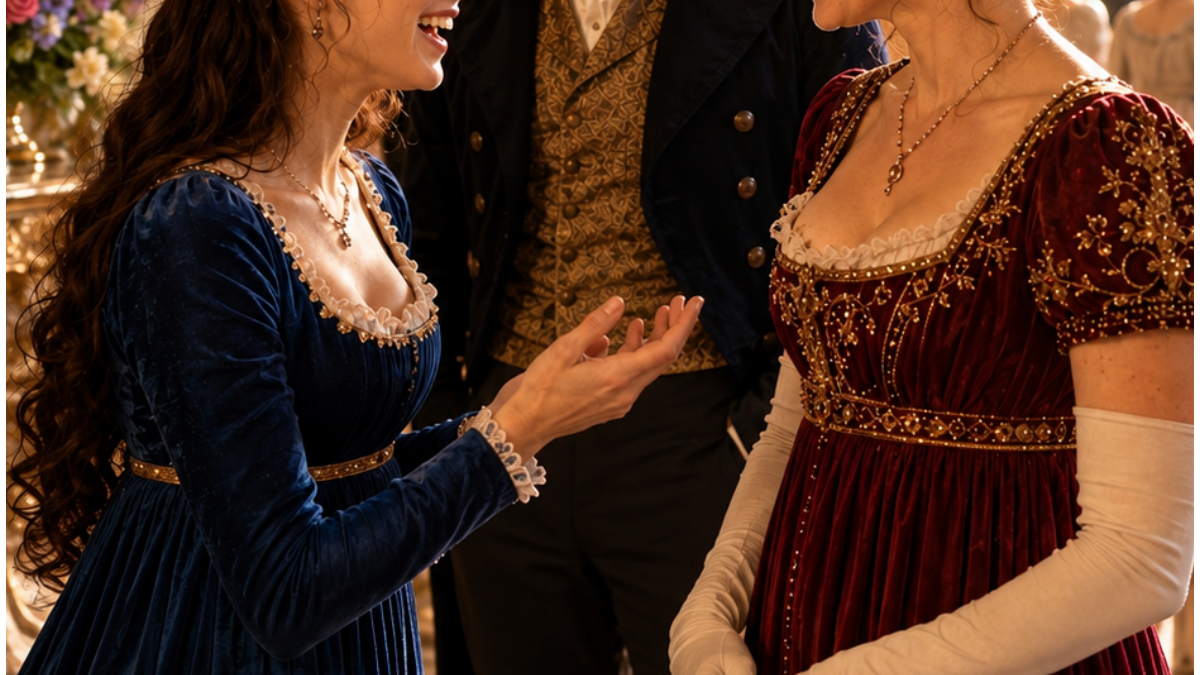
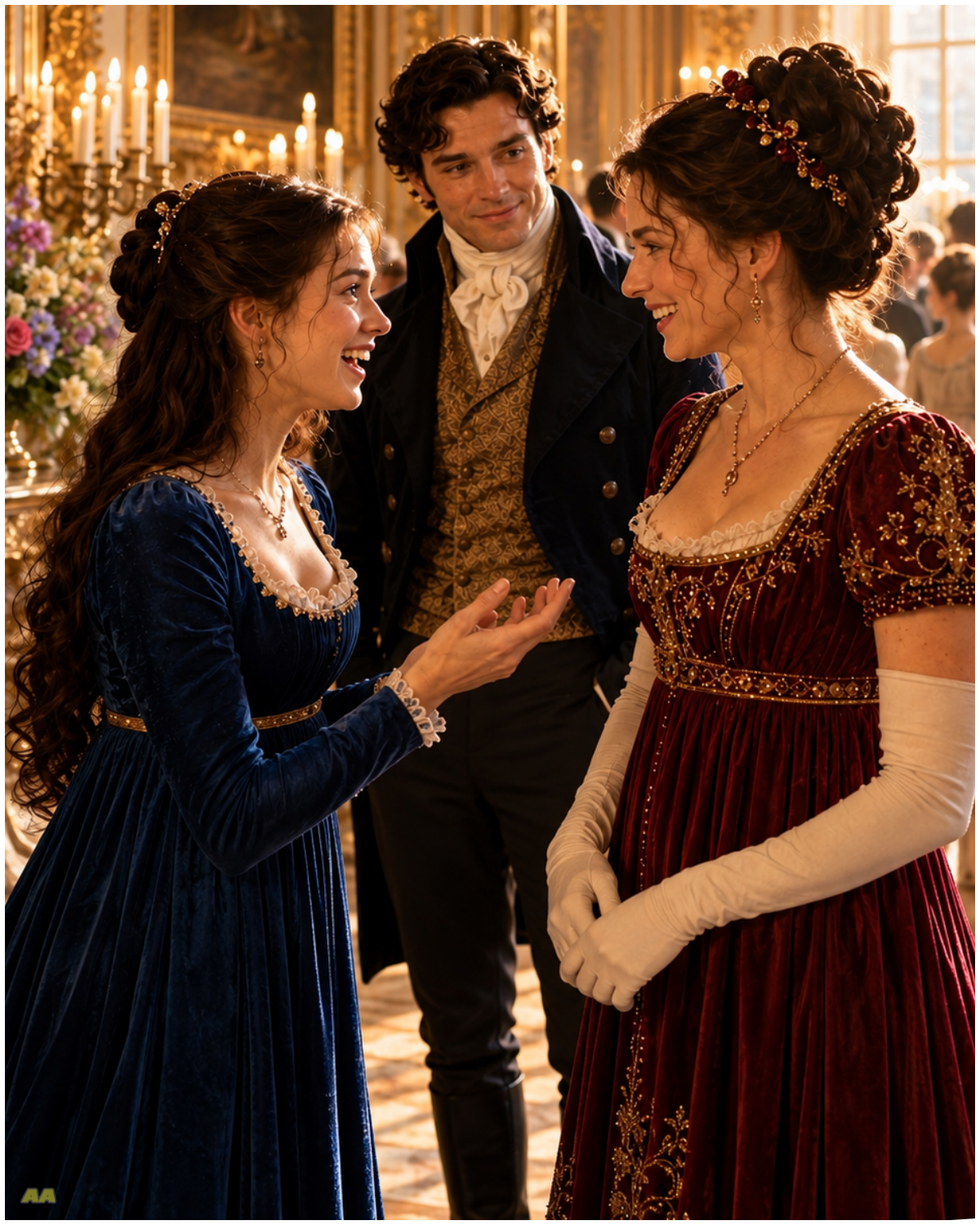
The man at the foot of the great staircase that a silver coin walk across his knuckles and watched the new arrival cross his hall as though the marble itself were on trial.
He was not who she thought him.
That was the first lie of the morning, and he carried it the way another man carries his hat without thinking, a thing grown to the hand.
The candidate had been told there was a steward at Ashburn who would receive her, settle her terms, and judge whether she would suit.
She had not been told that the steward in the indigo coat, leaning his broad shoulders against the cold nule post with a coin sliding over his fingers, owned every stone she stood upon.
She had not been told that the question of whether she would suit had nothing to do with ledgers and everything to do with a girl of 11, who would at any moment now come down those stairs and find out exactly what kind of person had arrived to be her companion.
Above them, on the half landing, where the light fell green through old glass, a child appeared.
She was small for 11 and quick for any age, dark-haired, her peacock blue pinn a skew at one shoulder, as though she had dressed in a hurry to beat the housekeeper to the banister.
She looked down at the woman in the ruby traveling cloak, with the frank, fearless curiosity of someone who had long ago decided that staring was the only honest way to learn a thing.
The man’s coin stopped on the back of his hand.
He had watched four women cross this hall in 3 weeks, and he had watched each of them, the instant they saw the child, do the same small, terrible thing.
Glance at the steward for instruction, soften their faces into pity, and raise their voices as though loudness were a bridge across silence.
The woman in the ruby cloak did none of it.
She sat down her single bag.
She looked up at the child on the half landing, and a smile broke over her traveled, tired face, like the first warm afternoon breaking over a frozen garden.
And then her hands moved, unhurried, certain, shaped by long practice, and she said in the only language the child on the stairs could hear, “Good morning.”.
The girl went absolutely still.
The man at the new post forgot for the length of one heartbeat that he was holding the coin at all.
He had built a test no one had ever passed, a question he had never once spoken aloud, and a stranger had just answered it on the first stare of the first morning.
With two hands and no instruction and no idea, she was being watched.
“Good morning,” the child signed back.
And then, because she was 11 and could not help herself, she added a second thing, too fast for the woman to catch, grinned, and clapped both hands over her own mouth as though she had told the secret.
“I’m afraid I missed the rest of that,” the woman said aloud, still smiling, her hands continuing the words as she spoke them, so that the girl could read either.
“You’ll have to be slower with me. I’m out of practice and I’ve come a very long way on a very bad road. The steward pushed off the new post. The coin disappeared into his fist.”
“You sign,” he said.
It was not a question, and it came out rougher than he meant it to because a thing he had stopped expecting from the world had just walked through his front door in a dusty cloak.
She turned to him and he had the brief disorienting sense of being measured by someone who did not yet know she was permitted to measure him.
You did not in your letter say she was death, the woman said, only that she was young and that the last three companions had not suited.
I have spent the carriage ride composing a great many disapproving things to say to a Mr.
Ash who would advertise for a companion and forget to mention the most important thing about the child.
Her chin lifted half an inch.
“And now I find she is the most delightful thing I have seen all week, and I have wasted an entire carriage ride being cross with you for nothing.”
Which is its own small tragedy, Mr. Ash.
I do not get cross often.
I should like to have used it well.
Somewhere above, the child was watching their mouths the way other children watch a punch and duty box.
Ash will do.
The steward said.
He found he could not quite look at her.
“And the omission was deliberate.”
“Then you are worse than I feared,” said Miss Rosel in vain, and bent to pick up her bag.
He should have stopped her at the threshold of the small study off the hall and conducted the interview as he had conducted the others, sitting behind the late Duke’s broad desk with the ledgers spread, asking the dry, cold questions that flushed the pitygivers and the place seekers into the open.
Instead, the Duke of Ashbborne, who had told four women and one entire household to call him Mr. Ash, the new man of business until further notice, found himself watching Miss Vain unpin her ruby cloak and shake the road dust from it, before she would consent to sit, and forgetting half of what he meant to ask.
The household had its instructions. The butler, Pel, who had carried the Duke as a christening infant, and would carry the deception to his grave, with a face like a closed door, had announced her arrival to Mr. Ash without the flicker of an eyelid.
Mrs. Goring, the housekeeper, had her marching orders, too.
Only the dowager, the Duke’s art, who kept the East Wing and a list of grievances as long as the gallery, had refused to play.
She thought the whole scheme an absurdity, unworthy of a duke, and said so twice a day.
But she also had a candidate of her own she meant to install, and so for the moment her objection slept.
You will want to know my qualifications, Miss Vain said, sitting at last, very upright, her gloved hands folded.
I kept a charity school for 2 years in my uncle’s parish, letters and figures, and a little geography for children whose people could not pay.
Before that, I taught my own brother, who was deaf from a fever.
He is the reason I sign at all.
I learned it the way you learned to breathe in a house where someone you love cannot hear you out of necessity and then out of habit and then because it was simply how we spoke.
She paused. He is gone now.
So you need not fear I shall be forever leaving to visit him.
The coin moved in the Duke’s fiSt. He did not turn it over.
I am sorry, he said, and found to his surprise that he meant it as a man and not as an examiner.
Most people are sorry in a way that asks me to comfort them for my own grief, said Miss Vain.
You said it plainly and stopped.
I noticed that, Mr. Ash. I notice it the way I notice when a person speaks to the child instead of to the wall above her head.
Her hazel eyes came up. You did not flinch when she signed.
You did not look at me to see how I would take it.
Most stewards would have. I am not most stewards, said the Duke with perfect, miserable honesty.
No, she agreed, studying his indigo coat, the breath of him filling the small chair, the educated clip of his vows that did not at all match a man who counted another man’s grain.
No, I begin to think you are not.
And she pressed her thumb once into the center of her own palm, a small private gesture he would learn to read in the weeks to come.
The way she studied herself before she said a thing she suspected she ought not to.
“May I ask, is the position offered, or am I still on trial?” You are hired,” said the Duke of Ashborne before he had decided to say it, and watched her face open in a way that made him want very badly to tell her his own name.
He did not. The girl’s name was Claraara, and within an hour, Miss Vain had learned three things about her that the four previous companions had not learned in three combined weeks.
The first was that Claraara was not, as the daer liked to announce to dinner guests in a carrying voice, afflicted.
She was 11, clever past her years, and bored to the marrow of her bones by a household that had decided silence meant she could not be reasoned with, only managed.
The second was that Claraara had taught herself a private vocabulary of signs for everything the household refused to give her words for.
A sign for Pello that involved an exaggerated straight back.
A sign for the daagger that Miss Vain pretended very hard not to find funny.
And a sign for the steward in the indigo coat that was Miss Veain noticed oddly gentle.
A small turn of an invisible coin over the back of the hand.
The third thing she learned was that Claraara had been watching the front hall from the half landing, not by accident, but by appointment with herself.
The child had decided to see the new woman’s face before the new woman could arrange it into the careful, sorry shape they all arranged it into.
And she explained this to Miss Vain with the grave satisfaction of a small general describing a well-laid ambush.
You watched me to catch me out, Miss Fain signed in the old nursery on the second floor, where the spring light came thin and gray through windows no one had opened in months.
You wanted to see whether I would be like the others.
Claraara’s hands flew too quick again, then slowed when Miss Vain shook her head and tapped her own wriSt. You signed before you knew I could see you doing it.
Claraara managed. The others wave at me big.
She minded a vast, slow, idiot wave, the sort one gives across a field to a deaf person, assumed also to be blind and possibly a horse.
You said good morning like I was a person.
You are a person, Miss Vain signed.
You are, in point of fact, a rather alarming person, and I’ve decided I am terrified of you, and we are going to get on extremely well.
The girl laughed, the open, unguarded, slightly too loud laugh of a child who has not been taught to be ashamed of the sound she makes.
And outside the halfopen nursery door in the cold corridor, the Duke of Ashbborne stood with his hand flat against the wall and listened to a sound he had not heard in his own house in longer than he cared to count.
He had begun the deception for a reason that had seemed in the gray weeks after he came into the title entirely sound.
The world performed for a duke.
He had watched it perform his whole life.
The bowing, the agreeing, the laughing at jokes that were not funny, the soft, flattering lies that closed around a pier like water around a thrown stone.
A duke could not learn the truth about anyone, least of all about a woman engaged to be alone all day with the one person in the world he had left to protect.
So he had taken off his name like a coat and become Mr.
Ash, the new man of business, and he had said a test he never spoke aloud.
Be kind to her when you do not think it will profit you.
Four women had failed it. They had coupooed and pied and raised their voices and looked to the steward for approval, and not one of them had spoken to Clara as though Clara were in the room.
This one had passed it before she had taken off her cloak.
He should have been glad, simply glad, the way a man is glad when a long sum at last comes right.
Instead, he stood in the cold corridor with his coin gone still in his pocket, and felt the first thin crack run through the floor of his own clever scheme.
Because the woman who had passed his test believed she had been hired by a steward.
And a steward was exactly the man he had no idea how to stop being.
The trouble, when it came, came in deep violet silk, and arrived in a traveling shares 3 days later, uninvited, with a maid and a great many boxes, and a letter of introduction from the daager that began, “My dear nephew,” and was therefore addressed to no one in the house.
“Miss Vain had yet met, “Mrs. Daunty.
The violetclad woman announced herself in the hall, drawing off her gloves finger by finger, beautiful in the polished, deliberate way of a woman who has decided her face is an instrument and learned to play it.
I am come at the da’s particular wish to assess the child’s progress and her situation.
She let the word situation hang.
I understand there has been some difficulty keeping a suitable companion.
One does sympathize. It is so very wearing the care of an afflicted child.
One needs the right sort of firmness.
The Duke, who happened to be crossing the hall in his steward’s coat, stopped.
There is no afflicted child in this house, said Miss Vain, who had come down the stairs behind him with Claraara’s small hand in hers.
Her voice was perfectly pleasant. It was the kind of pleasant that has a blade laid flat along the underside of it.
There is a deaf child. The two are not the same word, Mrs. Dorny, and the difference is the whole of the matter.
Mrs. Dorny’s smile did not waver.
How charming. The new companion has opinions.
She turned the smile deliberately on the Duke.
And you are the steward. You will tell your master when next he is at home that the da’s nominee has arrived.
I shall require the south rooMs. Her eyes traveled over his shoulders, his coat, the educated set of his mouth, and a faint line appeared between her brows, the line of a woman filing away a thing that did not fit.
Have we met? You have the look of someone.
I have one of those faces, said the Duke.
He counts the grain, said Miss Fain before she could stop herself, and then pressed her thumb hard into her palm, because she had not meant to defend the steward at all, and was not entirely sure why she had.
The daer came down to dinner that evening for the first time in a week, which the household understood to be a declaration of war.
She kept the East Wing and her grievances, and rarely troubled the dining room, but Mrs. Mrs. Dorny’s arrival had stirred her out, and she swept in on her stick in unreieved bombazine, and took the head of the table, as though the steward were a footman, and [clears throat] Miss Vain a draft from an unstopped window.
Claraara had been brought down, too.
Miss Vain had insisted upon it, gently and immovably, and the Duke, in his steward’s coat, had backed her with a single quiet word that the daagger had been too busy being affronted to weigh.
The child does not usually dine with company, the daer observed to the table at large, not to Claraara, 3 ft from Claraara’s face.
It unsettles her. She cannot follow the conversation.
And an unsettled child is a tax upon everyone’s digestion.
She follows it better than I do, said Miss Vain pleasantly, signing as she spoke, so that Claraara had every word.
She has just told me, for instance, that the soup is too salt, which I had been too polite to mention, and that your ladyship’s left eyebrow goes up by precisely the same degree whenever you are about to say something you believe to be crushing.
She finds it a great convenience.
It gives her warning. There was a silence at the table of the particular quality that precedes either an explosion or a laugh.
It was Claraara who tipped it.
The child, watching the daer’s face with open scientific interest, raised one small finger, pointed at the daer’s left eyebrow, and signed slowly, so that even Miss Vain’s translation could not keep ahead of the table’s dawning comprehension.
There, it is going up now.
Mrs. Dorny looked at her plate.
Pello at the sideboard developed an urgent and entirely fictitious concern with the decanter, and the steward in the indigo coat, who had no business at the family table at all, and had seated himself at the foot of it on his own quiet authority, made a sound into his wine glass that he converted not quite in time, into a cough.
“My grand niece,” said the daager, with awful dignity, is forward.
She is observant, said the Duke from the foot of the table in a steward’s voice that had stopped somewhere in the last fortnight, sounding very much like a stewards.
It is a different thing. Forwardness presumes.
Observation merely notices. The child has noticed your ladyship’s eyebrow.
I confess I have noticed it myself these 20 years, and lacked her courage to remark upon it.
The daagger turned upon him the full battery of a stare that had quelled three generations of the family, and the steward met it without the smallest hurry, and something passed between them that Miss Vain did not understand, but filed away with all the other irregular things.
For the daagger, who would brookke insolence from no servant living, brooked his, and looked away first, and called sharply for the next course, and the war for that evening, went to the deaf child, and the man who counted grain.
But Miss Vain saw the dowagger’s hand going up under cover of the conversation to touch a small brooch at her throat.
A mourning brooch platted hair under glass.
A thing kept close to the heart of a woman who let no one close to anything.
And she thought, “There is a grief in that one too, and it has gone hard, the way grief does when no one ever signs good morning to it.” and she was for one unwilling moment almost sorry for the dragon at the head of the table.
That night after Claraara was a bed and the house had gone to its small clicking ticking settling sounds.
Miss Vain found Mr. Ash in the disused music room at the end of the long gallery where she had not expected to find anyone sitting in the dark with a single candle and the silver coin walking over his knuckles.
You did not tell me there was to be an inspection,” she said from the doorway.
“I did not know,” he said, which was true and felt like a lie because he knew a great many other things he was not telling her.
She came in. The candle threw his shoulders enormous against the wall against the pale rectangles where pictures had once hung and been taken down.
“She frightened Claraara today,” Miss Vain said.
Not by raising her voice, by the opposite.
By talking past her very softly to me.
Does she understand what is said of her, do you suppose, 3 ft from the child’s face, as though deafness were a kind of dimness?
Her jaw was tight. Claraara understood every word.
She reads lips better than half the hearing people in this house read print.
She went up to bed without her supper, and she signed to me, “I am not the thing they think I am.
And I have spent 2 hours being angry, Mr.
Ash, and I do not know who to be angry at because the woman is the daagger’s choice, and I am nobody.
You are not nobody, said the Duke.
It came out of him low and certain, [clears throat] and in the candle light she looked at him sharply.
The way one looks at a sound that came from the wrong direction.
You keep saying things a steward would not say,” she said quietly.
The coin stopped for one long breath.
He stood at the edge of it.
The whole of it, the name, the test, the four women.
The deception spread across the household like a held breath.
And the truth came right up to the back of his teeth.
I read a great deal, he said instead.
In a large library that is not my own.
It ruins a man’s vocabulary for his station.
And he made himself smile, and the moment closed over the truth like water over a stone, and he hated himself mildly and thoroughly in the particular way of a man who has just been clever at the expense of the one person he did not want to be clever with.
She almost smiled back, “A steward who reads and signs without being asked,” and says, “I am sorry,” and stops.
She tilted her head. “You are a very irregular man, Mr.
To Ash. I cannot make my sums of you come out even.
Then we are matched, he said, for I cannot make mine come out even of a curit niece who corrects a duke’s nominee in his own hall and calls it nobody.
It is the Daajger’s hall, she said, by what you tell me.
The Duke, by all accounts, is never in it.
No, said the Duke of Ashbornne in the dark of his own music room.
I am told he is a great coward about his own house.
She laughed, a short, surprised, reluctant sound, as though he had got under her guard from an unexpected angle.
And the Duke counted it privately, the way Claraara counted his coin.
The first laugh, the one that mattered, the one he would measure all the others againSt. Spring came up the valley in the days that followed, and Ashborne, which had been shut and gray, began in small places to open.
It opened first in the old nursery, where Miss Vain flung up the painted shut windows on the first warm afternoon, and let the smell of turned earth and hawthorne come in over the duSt. She taught Claraara to sign the names of the flowers coming up in the south part below.
Lilac, not yet. Primrose there, the cherry will be a fortnight.
And Claraara, who had lived 11 years in a house that gave her no words for the things she could see out of every window, took the new signs the way a thirsty child takes water, and gave half of them straight back wrong on purpose, to see whether Miss Vain was the kind of teacher who would laugh.
Miss Vain was. They spent the better part of an hour inventing a sign for the daagger’s particular way of descending the great stairs, which Claraara insisted required both the straightbacked pillow sign and a small pursed motion of the fingers that meant unmistakably as though the floor had personally offended her.
And Miss Vain laughed so hard she had to sit down on the dusty window seat, and the spring came in over both of them, and somewhere below, in the cold gallery, a steward in an indigo coat stood listening again to a sound he had given up on.
It opened next in the music room where a tuner was got up from the town because Miss Vain had discovered by laying Claraara’s small hand flat against the body of the long silent pianoforte that a deaf child could feel a cord shudder up through her wrist, even if she could not hear it.
Clara had felt the first true cord and gone perfectly rigid, then turned her face up with an expression Miss Vain would have crossed three counties to put there.
Not surprise exactly, but recognition, as though the world had been keeping a thing from her that she had always half suspected was there.
After that, there was no getting her away from the instrument.
She would lay both hands flat on the wood and demand in fierce quick signs, “Louder, lower, the deep one again.” And Miss Vain would press the low keys until the whole frame hummed, and Claraara would close her eyes and feel the music with her palms, the way other children heard it with their ears.
It opened last and most reluctantly, in the steward’s careful, watchful presence at the edges of these afternoons.
Mr. Ash somehow always had business in the next room.
He somehow always came in at the moment the kettle had boiled, and he learned, clumsily at first, and then less so, to shape thank you, and well done, and again, with his own broad hands, because Claraara had refused, with 11-year-old finality, to teach him any others until he had mastered those three, and had stood over him with her arms folded like a small, severe drill master, while he got them wrong and wrong, and finally on on the fourth afternoon.
Right. You are holding your fingers like a man strangling a chicken.
Miss Vain told him on one of these afternoons, taking his right hand in both of hers to mend the sign, and then going very still, because she had not thought before she touched him, and now found she had a steward’s warm hand between her own, and no graceful way to put it down.
I have never been taught a thing by two people at once who both think me hopeless, said the Duke, who had stopped breathing in any useful rhythm.
Claraara thinks you tolerable, Miss Vain said.
She has a sign for you.
Did you know a coin turning?
She did it. The small turn of an invisible coin over the back of her hand.
Claraara’s gift given without anyone deciding to give it.
She made it the first week.
She watches your hands. She says, “You are the only one in the house who does not look at her as though she were broken.” Miss Vain’s voice caught very slightly on the last word, and she let go of his hand.
“I should not have said broken.
[clears throat] It is the da’s word.
It gets into the air of this house, and one breathes it without meaning to.” You take it out of the air faster than anyone I have ever met,” said the Duke.
It was at this point, and he was aware even as he did it, that he was 3 weeks past the moment a man of any honesty would have spoken, [clears throat] that the Duke of Ashbborne made his first joke in his own house in over a year.
Claraara had been signing with great wicked relish an account of the Dowager’s verdict on Miss Vehain’s plain gray morning gown.
A verdict that had involved the words charity and scarecrow, and the Duke, watching the child’s hands, said gravely, “Tell her the steward’s opinion is that the daagger has not the standing to remark upon another woman’s plumage, having herself dressed for 40 years like a bolster in mourning.” There was a silence.
Then Claraara, who had read it off his lips, made a sound that was very close to a shriek of delight and signed it back twice as fast and twice as rude.
And Miss Vain laughed. Really laughed.
The held back, startled, helpless laugh of a woman caught off her guard by a man she had filed under steward, irregular, harmless, and put her hand over her own mouth, exactly as Claraara had done on the first morning on the stairs, and looked at him over her fingers with an expression that was no longer measuring him at all.
“You made a joke,” she said when she had got her breath.
“Mr. Ash, you have been in this house wearing a face like a shut gate for 3 weeks, and you have just made a joke.
I had not had anything worth making one about, said the Duke, and meant it, and saw her hear that he meant it, and was glad and frightened in exactly equal measure.
The matter of the grain ledgers came up, because Claraara, of all people, noticed it firSt. The child had a habit of sitting in the estate office of an afternoon, while the steward pretended to work, perched on the broad windowsill, with her feet tucked under her, watching hands.
For Claraara read the world through hands, and a man’s hands at a column of figures, told her things his face did not.
She had been watching the underssteoken man named Reton, who came up twice a week from the lower farms, and one afternoon she slid down off the sill, crossed to Miss Vain, and signed with the absolute certainty of a child who has decided a thing.
That man lies with his fingers.
He puts his thumb over the bottom of the page when the Duke’s man looks.
Miss Vain, who had been mending a sign with the Duke and had a steward’s warm hand between her own at that precise and inconvenient moment, very nearly missed it.
“She says Renton covers the bottom of the ledger when you read over his shoulder,” she translated, letting go of the hand with rather more haste than grace.
“Is that does that mean anything to you, Mr.
Ash?” The coin stopped moving over the Duke’s knuckles.
It meant, as it turned out, a great deal.
3 days later, for the Duke would not move on a child’s reading of a man’s thumb without proof, and Miss Vain respected him the more for it.
The two of them sat in the music room after Claraara was a bed, with two years of grain accounts spread between them on the closed piano forte, and a single branch of candles burning down, and they found it together.
Miss Vain had the charity school mistress’s eye for a sum that did not want to be checked, and the Duke had the figures in his own head from boyhood, and between the two of them, somewhere past 11:00, the false bottom of Reon’s tidy columns gave way.
There, said Miss Vain, laying one inkstained finger on a figure.
He carries the Miklmmer surplus forward every year, and skims the difference before it reaches the page the Duke’s man initials.
It is small. It is patient.
It would never be caught by a man reading once a quarter over his shoulder.
She looked up. The candle light was warm on the side of her face, on the orbin of her hair come loose from its pins, and the Duke discovered he had been watching her work the sum for some minutes without remembering a single figure of it.
A clever man would have stopped at one bad year.
He has done it for six.
That is not cleverness, that is appetite.
You found in two evenings, said the Duke slowly, what my father’s whole estate office missed for 6 years.
I kept a charity school on £40 a year, and the goodwill of a parish that begrudged every shilling of it, said Miss Vain.
I can find a farthing missing from across a county in the dark.
It is not a gift, Mr.
Ash. It is poverty made into a skill because the alternative was children without their dinner.
She set down the pen. You will turn him off.
I will do better than turn him off.
I will pay back what he took to the farms he took it from with the figures you have just found laid open so the men can see it was theirs.
The Duke’s voice had gone low and certain again.
The steward gone out of it.
They have been short a Mikkelma surplus for 6 years and called it a hard county.
It was not a hard county.
It was a soft thief. They will know the difference by Lady Day.
Miss Vain looked at him a long moment across the spread ledgers and the burning down candles.
You keep doing that, she said.
A steward would have pocketed the gratitude of catching it and let his master pay it back as charity.
You speak of it as a thing owed, [clears throat] as though the men on those farms were people you had wronged by not noticing sooner.
She tilted her head, working a sum of her own that would not come out even.
It is the most irregular thing about you, Mr.
Ash, and I have cataloged a great many.
You speak of this house as though it were your fault.
For one long candle lit breath, he was on the very edge of it again, the whole of it, the name behind his teeth.
Their hands had come to rest near one another, on the closed lid of the pianoforte, his broad and ink marked, hers slim and stained the same, close enough that the warmth of one reached the other across half an inch of cold polished wood.
Perhaps,” said the Duke, “I am simply a steward who takes his master’s house too much to heart.” And he did not move his hand, and neither did she, and for the length of three slow heartbeats, the half inch of cold wood between them was the loudest thing in the room.
Then a log shifted in the great and the spell of it broke, and Miss Vain drew her hand back and began very busily to gather the ledgers.
But she pressed her thumb once hard into her own palm as she did it.
And the Duke, who had learned to read that gesture, knew that she had felt the half inch, too, and was studying herself against it, and the knowledge undid him more thoroughly than any confession could have.
She saw the deep violet woman unguarded only once, and it was an accident, and she never spoke of it.
It was very early, the second morning after the dinner, the corridors still gray, and the house not yet up.
Miss Vain had come down for water for Claraara’s wash jug, and passed the open door of the south sitting room Mrs. Dorny had claimed, and there, in the thin, cold light, was Mrs. Dotsy, not playing any instrument, not arranging her face for anyone because she did not know she was seen.
She sat at the small writing table by the window with her hair still down and a thing held flat in her two hands looking at it.
A miniature, Miss Vain thought. Watercolor on ivory, a young man’s painted face, and the violet woman’s thumb moved across it slowly over and over.
The way one moves a thumb across a thing one has long ago stopped seeing and cannot stop touching.
There was no triumph in her and no cruelty and no firm sort of suitability at all.
There was only a woman alone in a borrowed room with the morning cold on her shoulders, holding a face she would not put down.
Miss Vain stood at the threshold for the length of one breath.
Then she stepped back soundless and walked on with the water jug and let the deep violet woman keep her one unwatched moment because she of all people knew what it cost to be seen grieving by someone who had not earned the right.
The morning the post brought the daer’s letter to the editor was the morning the whole comfortable thing began very quietly to come apart.
It was not a kind letter.
The daagger finding her violetclad nominee somehow failing to displace the curit niece finding in fact that the household had taken to the curate niece with a warmth that did not bode well for the daagger’s authority over a nephew she rarely saw and never managed had decided to apply pressure from a direction Miss Vain could not reach.
She had written to a lady in town who wrote in turn a column of gentiel intelligence for a fashionable paper and the column when it came north three days later folded inside the Duke’s own newspaper contained a paragraph that no one in the household was meant to see and that Mrs. Dorny made very certain Miss Vain saw by leaving it open on the morning room table beneath the sugar dish.
It is whispered that a certain noble house in the north, lately come to a young duke much spoken of and little seen, has entrusted the care of its most delicate young charge to a person of no family and less fortune.
A charity school mistress, no less, picked up off the road for the novelty of her tricks.
One trembles for the child. One trembles indeed for the prospects of any house that opens its nursery to the unvouched for.
Miss Vain read it standing up with the sugar dish in her hand.
She read it twice. Then she set the sugar dish down with a care that was its own kind of violence and went to find the steward.
Because the steward was the only person in the house she trusted, and she had not yet stopped to ask herself why a woman trusts a man of business with her whole bruised heart inside a fortnight.
They have put Claraara in a newspaper, she said when she found him in the estate office with the ledgers he never seemed actually to write in.
Her voice was not pleasant now.
There was no blade laid flat under it.
The blade was out. They have put an 11-year-old child in a newspaper and called her delicate and called me tricks to make the Duke turn me off and hand her to a woman who thinks her afflicted.
I do not care what they write of me.
I’ve been called worse by better.
But they have written of her and she will read it, Mr.
Ash, because she reads everything, and I will not.
Her voice broke on the edge of itself, and she pressed her thumb so hard into her palm that he saw it whiten.
I will not have her grow up in a house that lets the world write one trembles for the child over her head and does nothing.
The Duke stood up. The ledger fell shut.
Something happened in his face that she had not seen there before.
The steward went out of it entirely, and what was left was older and colder and far more dangerous.
The face of a man who had spent his life learning exactly how much power he was permitted to use, and had just decided to use all of it.
It will be answered, he said.
By whom, she said bitterly. By the steward.
Forgive me. You are kind and you are clever and Clara loves you.
And you cannot answer a society column any more than I can.
We are neither of us anybody.
That is the whole of the matter.
You said it yourself. It gets into the air of this house unvouched for.
No family, nobody. And you cannot unwrite it, Mr.
Ash, however broad your shoulders are.
She turned for the door, blind with it.
I’m going up to her before that woman shows it to her firSt. Rosalind.
She stopped. He had never used her name.
A steward did not. The single word landed in the office like the chime of a clock striking an hour no one had expected.
And she turned and found him standing very straight in his plain coat with the silver coin clenched white in his fiSt. Looking at her as though he was standing at the edge of something with the ground already gone.
It will be answered. He said again, “Lo, because the house it speaks of is mine, and the child it pies is my sister, and the duke it says is much spoken of and little seen, is standing in front of you in a steward’s coat, and has been like a coward for one and 20 days.” The silence after it had a texture.
She could feel it on her skin.
You are the juke, she said.
I am the juke. She did not faint or weep or do any of the soft astonished things a different woman might have done.
She went instead the color of the morning frost, and she set her hand flat on the back of the nearest chair, the way a sailor sets her hand to a mast, not for comfort, but against capsizing.
And when she spoke, her voice had gone very quiet and very level, which he would come to learn was the most frightening thing she could do with it.
“How long?” she said. “Have you been watching me?” “Since you crossed the hall.” “You watched me with Claraara?” It was not a question.
She was working it out aloud, and every word of it landed on him like a stone laid carefully on a wall, on the stairs.
The first morning you stood by the post with your coin, and you watched me to see what I would do when I saw her, whether I would pity her or talk past her or look to you for instruction.
Her eyes came up, and there was something terrible in them, the worse for being so steady.
It was a test, the whole of it.
The four who came before me, the ones who did not suit, they did not fail a steward’s questions, they failed you.
You set them a test they did not know they were sitting, and you sat in judgment over how they treated a child in disguise for sport, not sport.
He came round the desk. Rosalind, Miss Vain, never sport.
I came into the title last autumn and I found a household that had spent six years deciding my sister was a tragedy to be managed and four candidates a year who said all the right things to the Duke and all the cruel ones to the girl the moment they thought no one of consequence was listening.
I could not learn the truth of anyone as the Duke.
The world performs for a duke.
I took the name off so that someone somewhere might be kind to her when they thought it would not profit them.
And one was, said Miss Vain.
And one was. And you let her go on believing she had been hired by a steward.
She said, for one and 20 days, while she taught your fingers to say well done, and laughed at your jokes, and trusted you with the only thing in this house she has to give, which is the truth of how she feels.
Because she thought you were nobody, too.
And nobody is safe, your grace.
Nobody is the only safe thing there is.
Her voice did not rise. It went, if anything, softer, and that was worse.
You did not test me. You deceived me.
There is a word for a man who watches a woman be her truest self because she believes herself unobserved.
And the word is not steward, and it is not clever.
And I taught my brother every word in the language, and I will not say that one to you in this room.” She pressed her thumb into her palm until it hurt and held herself upright by the back of the chair and made herself say the last of it.
“You wanted to know how I would treat Clara when I thought no one important was watching,” she said.
Now I know how you treat people when you think you can take your name off and set it down whenever it costs you nothing.
You let me [clears throat] fall.
She stopped. Her jaw worked. The word she would not say sat in the air between them, unspoken and far more present for it.
I came to be honest in a house of strangers.
You were the one stranger I was honest with.
And you were lying the entire time.
She turned and went up to find Claraara.
And the Duke of Ashbborne stood alone in the office with the unwritten ledgers and the cold spring light, holding a silver coin so hard the edge of it had cut a thin line across his palm, and understood far too late that he had built a test to catch the cruel, and had caught instead only himself.
What the column had not reckoned with, what the daagger had not reckoned with, and Mrs. Dorny least of all, was Claraara.
She had read the paper. Of course, she had read the paper.
Miss Vain had been right about that, as she was right about most things concerning the child.
Mrs. Jonyie had seen to it, in fact, that the page lay open in the schoolroom that afternoon, folded to the cruel paragraph, with a little note in violet ink at top it, in a hand a clever child could puzzle out.
You see how the world speaks of you.
Better the firm care of one who understands such cases than the petting of a stranger who will leave.
It was meant, Miss Vain understood, when she found the child standing over it, to do two things at once.
To frighten Claraara into the Daajger’s camp, and to drive the wedge of she will leave between the child and the only companion who had ever signed good morning to her on a staircase.
It didn’t either. Claraara was not crying.
That was the thing Miss Vain would carry afterward, that she came into the schoolroom braced for a weeping child and found instead a furious one, an 11-year-old standing very straight with her chin up exactly as Miss Vain stood when the blade came out, holding the violet note in one fiSt. They wrote that I am delicate, Claraigned, fast and hard and perfectly clear.
They wrote, “One trembles for the child.
I am not a thing to tremble for.” She thrust the note out.
And she, a vicious economical sign for Mrs. Donyy, she wrote, “You will leave.
Will you leave?” “No,” signed Miss Vain, and knelt, so their faces were level, the way she had knelt to her brother a hundred times in a kitchen long ago.
I will not leave you. Whatever else changes in this house, and a great deal has changed today, Clara more than you know.
I will not be the thing that leaves.
Good, Clara signed. And then, with the devastating directness of a child who was decided the time for being managed is over.
Then we will answer them. Answer them how, deareSt. The girl’s hands moved, and what they shaped made Miss Vain sit back on her heels.
Because Claraara had been in this house all her short life, Claraara knew, in the bone deep way of a child who reads every lip and misses nothing, exactly who lived in the great shut rooms, and rode out alone at dawn, and had lately taken to coming into nurseries in a steward’s coat to learn how to say well done.
Claraara had known for days what Miss Vain had learned only that morning and had said nothing because nobody had asked her.
Because no one in six years had thought to ask the deaf child what she knew.
Julian will answer them, Claraara signed with a small turning coin sign for the steward, and then a second sign, a flat hand brought down upon the head like the setting of a weight.
The sign Miss Vain realized with a slow, cold shock that Claraara had made up privately years ago for the brother who wore a coronet.
He is the Duke. He has always been the Duke.
He let you think otherwise because he is frightened of being loved for the wrong thing.
The hands paused. He is not frightened of much, but he is frightened of that.
A pause and then with a child’s terrible mercy.
You should be angry with him, but you should let him answer them firSt. He answered them in person, which is to say he stopped being a coward in the only way that costs a man anything publicly on ground of his own choosing, where the people who had done the harm would have to watch him undo it with his own hand.
The daer held a spring assembly at the end of that week, a long promised affair, the first opening of the great rooms since the old duke’s death.
The whole of the county come up the valley in carriages, to see at last the young Duke of Ashbborne, who was much spoken of and little seen.
She had planned it as her triumph, the nephew finally produced, the suitable Mrs. Dorny at his elbow in deep violet, the curit’s niece kept firmly upstairs with the afflicted child.
The proper order of the world restored to its proper grooves.
She had reckoned without her nephew, who had spent 1 and 20 days learning in a steward’s coat exactly what his name was for.
He came down the great staircase, the same stairs, the green glass, the half landing, in front of the entire assembled county, and he did not go to Mrs. Dorny’s violet elbow.
He went to the foot of the stairs where 3 weeks before a steward had leaned on the newle post and let a coin walk across his knuckles.
And he turned and held up one hand, and the room, which had been a sea of fans and speculation, went quiet for the Duke it had come to see.
“You have come a long way on bad roads,” he said.
“To meet a man you have read a great deal about and never once met.
So, I will introduce myself honestly, which I gather is a novelty in this house, and then I will say the one thing I climbed down these stairs to say, “A ripple.” The Daaj’s fan stopped.
I am Ashborne, and I have a sister.
He looked up. On the half landing where the light fell green.
Miss Vain stood with Claraara’s hand in hers.
Both of them in color the daagger had not approved.
Miss Vain in emerald, Claraara in her peacock blue.
Because the Duke had sent word that they were to come down, and to come down seen.
My sister is 11 years old, said the Duke to a room full of people who had read that one trembles for the child.
She is the cleverest person in this house, which I grant is a low bar in present company, but she would clear a high one.
She is deaf. She has been deaf since a fever when she was four, and a great many people, some of them my own kin, have spent the years since deciding that this makes her a tragedy, a delicacy, a thing to be managed and married off quietly and not brought down to the assembly.
They are wrong. I have lately been taught how wrong, by a person of no family and less fortune, who was good enough to my sister, when she believed no one of consequence was watching, to teach me to be ashamed of every other person who has crossed this hall, some of them, I am sorry to say, of my own household.” He turned deliberately, and found Mrs. Daunty in her violet and the lady who wrote the gentile column beside her.
Both gone the color of paper.
There was a paragraph, said the Duke pleasantly.
In a certain paper, one trembles for the child.
I have read it. So has the child.
She reads everything you understand. Deafness is not dimness.
Whatever you have been told. I will say only this to whoever held the pen and to whoever guided the hand that held it.
His voice did not rise. It went quieter, and the room leaned in to catch it, and that was the whole of his power, and he knew it now.
You may write what you please of a duke.
I am a broad target, and I do not greatly care.
But the next person who puts my sister in a newspaper as a thing to be pied will answer to me for it personally, and I am told.
The faint ghost of the steward’s dry humor crossed his face.
I am told by everyone who has had the misfortune to cross me that I am very, very dull about a grudge.
And then, because he had learned this too, in a cold nursery from an 11-year-old who would teach him no other words until he had these, the Duke of Ashbborne lifted his hands in front of the entire county, and signed, slowly, clearly, so that the only person in the room whose opinion he truly feared could read it off his hands and not his lips.
Will you come [clears throat] down?
You are wanted here. On the half landing, Claraara grinned, the open, slightly too loud, unashamed grin of a child who has just watched her brother stop being frightened of the thing he was most frightened of.
And signed back fast and wicked, “Took you long enough?” and came down the stairs into the bright assembled room with her chin up, a person in front of the mall.
Miss Vain came down, too, because she would not leave Claraara to cross that room alone.
But she came down with her own chin up and her own private blade laid flat, and she did not look at the Duke.
And when the assembly had broken into the great relieved roar of a county that has just been handed an enormous quantity to talk about, she drew Claraara to the supper room and stayed with the child, and gave the Duke nothing.
He found her there an hour later by the long windows, while Claraara was being made much of by not of county misses, who discovered that signing was the most thrilling new accomplishment, and were attempting it with terrible enthusiasm and considerable laughter, Claraara’s loudest of all.
That was bravely done, Miss Feain said without turning.
For her sake, I’m glad of it, for her sake.
Rosalind, you should not use my name in a public room, your grace.
People will talk. They’ve only just got the column to talk about.
Do not give them a fresh column before the ink is dry on the old one.
I will use your name,” he said low beside her, looking out at the dark spring garden where the lilac was not yet out.
“I in any room you will let me stand in, because it is the only honest thing I have said aloud in this house in 3 weeks, and I find I have lost the taste for the others.” He paused.
You have not forgiven me. No, you are right not to.
She turned at that finally and looked at him.
The broad shoulders she had once filed under steward harmless.
The slate gray eyes she had taught to read flowers.
The hand that had bled where the coin had cut it, and that he had not bothered to bind.
Do not be reasonable with me,” she said, and her voice was not level now.
It had a crack running through it, hairline, the kind that runs through frost before it breaks.
“It is the hardest thing to forgiven you, that you knew the whole time exactly how it would hurt, and you did it anyway because it was clever.
And now you stand there agreeing with me about how badly you wronged me as though agreeing were the same as never having done it.
You cannot disarm me by being right, Julian.
I will not have it. You do not get to be the duke and the steward and the penitant all at once.
Choose one and let me be angry at him.
[clears throat] I choose the one who has loved you, said the Duke of Ashbornne.
Since you signed good morning to my sister on a staircase and made me forget I was holding a coin and then because he had at last understood that his title’s only worth was the ground let him stand on when he told the truth and I will be angry at the other two on your behalf for the rest of my life if you will only let me near enough to do it she did not answer that but she did not walk away from it either and across the supper room Claraara who missed nothing, who had read it all of their faces from 40 ft away through a crowd, caught Miss Vain’s eye and made, very small and very smug the turning coin sign, and Miss Vain had to look very hard at the dark garden to keep her face in order, and did not entirely manage it.
It might have ended there, Frost cracking toward Thor.
It did not, because Mrs. Dorny had not yet been beaten.
She had only been embarrassed, and an embarrassed woman of deep violet silk and shallow conscience is a more dangerous thing than a triumphant one.
She found Miss Vain the next morning alone in the music room, where Miss Vain had gone to be by herself, and was instead being found by everyone, as the lonely always are.
The room smelt of cold ash from a fire no one had laid, and of the lilac that was not yet out, but had begun faintly to scent the air that came in at the open window.
Mrs. Dorny came in without knocking, and shut the door behind her with a small, definite click, and the deep violet of her gown was wrong against the morning light, too rich, like a winter thing brought into spring.
Her beautiful face was for once not playing any instrument at all.
It was simply tired, the powder gone thin at the temples, and that was the first true thing Miss Vain had ever seen in it.
“You think you have won,” Mrs. Dorny said.
“I think nothing of the kind,” said Miss Vain.
“I think a child was put in a newspaper, and a man came down a staircase.
Winning did not enter into it.” “He will tire of you,” Mrs. Daunty crossed to the window and her voice stripped of its performance was flat and oddly young.
They tire of the novel ones, the clever curit niece who signs.
It is charming now. It is a fresh thing.
It makes him feel he has rescued someone.
But a duke marries his own kind in the end, Miss Vain.
I have spent six years learning that lesson in houses exactly like this one.
And I have the column writer’s goodwill and the dowagger’s letter and a face that has not yet failed me.
And I am still standing in a music room being beaten by a woman who arrived on the public coach.
So you will forgive me if I do not believe in your happy ending.
I have been promised a great many.
None of them came. And Miss Vain, who had come downstairs furious and armored, looked at the other woman standing at the window with the morning light hard on her tired face and felt the blade in her own hand go heavy and useless.
Because she could not in the end stab a thing that was already bleeding.
“What did they promise you?” Miss Vain asked quietly.
Mrs. Dorny did not answer, but her hand had gone, without her seeming to know it, to the throat of her gown, to a thin chain there, and she drew up from inside the violet silk a small thing on the end of it.
A miniature watercolor on ivory, a young man’s painted face, the thumb of her free hand moving across it, the way one moves a thumb across a thing one has forgotten one is touching.
She caught Miss Vain watching and let it fall back and her face closed like a gate.
Nothing that concerns you, she said, and went out.
Miss Fain stayed where she was a long time.
She did not follow. After a moment, she crossed to the pianoforte and laid her hand flat on its body, the way she had taught Claraara, and felt the silence of it under her palm, and thought about a deep violet woman who had learned in houses exactly like this one, that to be kind where it did not profit her, was a luxury she could not afford, and who had spent six years becoming the thing that wrote one trembles for the child, because the world had once trembled over her, and she had decided never to be the one trembled over again.
She did not forgive Mrs. Dorny, but she understood her, which is a colder and more permanent thing, and she went up to Claraara’s lessons that morning, carrying it like a stone in her pocket.
For 3 days, the house held its breath.
The Duke kept his distance because Miss Vain had asked him to, and he had at last learned that the kindest thing a man with a coin and a name and broad shoulders can do is sometimes simply nothing.
Performed patiently. He sent no flowers.
He made no speeches. The household moved softly through those three days, the green bays door swinging on its careful hinge, the smell of beeswax and turned earth coming and going through the newly opened windows.
The long afternoons measured out in the small sounds a great house makes when it is waiting.
A clock on a half landing, a cold settling, rooks quarreling in the elms beyond the part.
He did instead a steward small invisible things.
He had the painted shut windows of the whole second floor unstuck, so the spring could come into the nursery wing freely, and the rooms that had smelt of dust and disuse for 6 years smelt now of hawthorne and cut grass, and the woods smoke that drifted up from the stable of an evening.
He had the music room’s pictures, which had been taken down in the greymons and stacked in an attic, brought down and rehung, so that the pale rectangles on the walls filled again with faces, and the room that had held only a candle and a silver coin, held now a whole family’s worth of watching eyes.
And he had a master sent up from town who knew the finger alphabet, not for Claraara, who needed no master, but for the household, for Pel and Mrs. Goring and the footmen and the undermaids, so that the deaf child in the great house need never again live among people who could not say good morning to her.
Miss Vain found this out by accident, coming upon a footman in the corridor, laboriously spelling C L A R A on his fingers under his breath, getting it wrong and trying again.
She went and stood in the doorway of the estate office where the Duke sat among his unwritten ledgers and she did not come in.
“You taught the footman to sign,” she said.
“Badly,” he said, not looking up.
“It will take months. Young Tom in the stable has a gift for it, and the rest are hopeless.
But she will grow up in a house where the walls speak to her, or I will know the reason why,” it seemed.
He stopped and turned the coin over once and set it down.
It seemed the only thing I had any right to do while you were busy not forgiving me.
I could not court you. I could not very well send the steward, and the duke is not welcome.
So I taught the footman the alphabet instead and waited and tried to be a man who deserved the thing I am not going to ask you for again until you tell me I may.
Miss Vain came in then and shut the door, which was its own kind of answer, and the silver coin sat on the ledger between them.
My brother’s name was Tom, she said, like your stable boy.
He was deaf from a fever for the same as Claraara, and I was nine.
And our parents were good people who loved him and never learned to say a single word to him with their hands.
Because it was a great deal of trouble.
And he managed, they said. He managed wonderfully.
She turned the chain of thought over carefully.
The way one turns a thing that still has an edge.
He spent his whole life in a house full of people who loved him and could not speak to him.
And he was lost to us at 19 in a hard winter, having had nine real conversations in his life.
All of them with me. Her voice was steady because she had decided it would be nine.
I counted them afterward. I had a great deal of time afterward to count things.
I came to this house to teach a deaf child her letters and earn an honest wage,” she went on.
And I found a girl who had been managed exactly the way Tom was managed in a house exactly as loving and exactly as silent.
And I thought, I cannot give Tom back his nine conversations, but I can be the hands this one is spoken to with.
That is all I wanted, Julian.
Not a duke. I did not come here for a duke.
I came here so that one deaf child somewhere would not grow up counting.
The Duke had gone very still.
And now there is a footman in the corridor, he said, spelling her name.
Badly, said Miss Vain. Badly, he agreed.
You did the one thing, she said, and her voice cracked at laSt. all the way through the frost going over into water.
The one single thing you could have done that I cannot be angry at.
You did not buy me off or charm me or outar argue me.
You went and taught your footmen to say good morning to your sister for her.
Not for me. You did not even mean for me to find out, and I cannot.
She pressed her thumb into her palm and gave up and let her hand fall open.
I have been trying for a fortnight to keep you the man who watched me from the new post because he was a safe thing to be angry at.
And you keep being instead the man who unstuck the windows.
I am both, said the Duke.
I told you you do not get to have only one.
But I will spend the rest of a very long life being the second one.
If the first one is forgiven.
He is not forgiven, said Miss Vain.
He is understood. It is colder and it lasts longer, and it is the best I have.
She looked at him across the silver coin.
It will have to be enough to be going on with.
It is the most honest thing anyone has ever said to me in this house,” said the Duke of Ashbborne.
“It is more than enough.” There came before the lilac, a morning that Miss Vain would remember for the rest of her life, as the first time she had let herself be happy in that house without bracing for the cost of it.
It was an early one before the household was properly up.
She had come down to the music room for the quiet of it, and found the Duke already there in his [clears throat] shirt sleeves, with no steward’s coat at all, coaxing a fire in the great that had no business going out in May, and Claraara, cross-legged on the hearthrug, in her night gown and a shawl, refusing to go back to bed, signing furious demands for him to make the deep cord again before breakfaSt. “She has appointed herself my conductor,” the Duke said, not turning round, his hands going clumsily through.
“Not yet. The fire first and getting the fire reads by mistake which made Claraara collapse sideways laughing.
“I cannot make her understand that a man may want his coffee before he becomes an orchestra.” “You signed that the fire was eating,” said Miss Vain, and could not keep the smile out of it.
“I signed what I felt. It is eating.
I have fed it half the morning room’s coal, and it gives me back nothing but smoke and a very superior child.” He sat back on his heels and looked up at her, and the early light was on him, and for a moment there was no duke, and no steward in the room at all.
Only a young man with smudged shirt sleeves and a banked fire and his small sister and the woman he had told the truth to and the whole great house quiet around them and for once not waiting for anything she came and sat on the window seat and Claraara migrated promptly to lean against her knee and the Duke got the deep cord going at last with one hand reached up backward to the keys and the three of them stayed there as the sun came up the and turned the part gold.
And nobody said a single important thing, and it was the best hour any of them had had in years.
“When the lilac comes out,” Miss Vain signed to Claraara idly.
“We shall have breakfast out of doors on the south lawn like sensible people in a warm country.
You said a fortnight ago it would be a fortnight,” Claraara signed back with enormous relish.
You are always wrong about the lilac.
The cherry too. You said the cherry would be a fortnight and it was 8 days.
She turned to her brother and reported with the gravity of a witness giving evidence.
She cannot read a garden at all.
She reads ledgers. She does not read gardens.
She reads gardens beautifully, said the Duke, who had read the whole exchange off their hands.
She merely refuses to give them credit on principle for arriving early.
It is the only ungenerous thing I have found in her, and I have looked.” Miss Vain felt the warmth of that go all the way through her and pressed her thumb into her palm, not against a hard thing this time, but against an unfamiliar one, happiness, which she had stopped trusting somewhere in a hard winter long ago, and which had just walked into a music room in shirt sleeves and a banked fire, and would not this morning be argued with.
When the lilac comes out, she said again aloud and signing both.
You shall both see how right I am about gardens.
And neither of them believed her in the slighteSt. And it was, she thought, the most married hour she had ever spent with a man she had not married.
And she let herself just this once, not count the cost of it.
He asked her in the south part on the first afternoon the lilac came out, which was the afternoon she had told Claraara a fortnight before that it would not and had been wrong by 3 days, and Claraara had not let her forget it.
He did not do it grandly.
He had learned by then that grandeur was the steward’s coat in reverse, a costume worn to keep the truth at a safe distance, and he had no more use for it.
He simply walked with her along the gravel that was warm under the spring sun, with Claraara running ahead to the lilacs and signing back over her shoulder a running commentary that they both pretended not to read.
And at the turn of the path he stopped and took the silver coin out of his pocket and held it out on his open palm where the old cut had healed to a thin white line.
“Clara’s sign for me is a coin turning,” he said.
Did you ever ask her why?
She said you were the only one in the house who did not look at her as though she were broken.
That is the kind half. The other half is this.
He turned it over once slowly, the old habit, and stopped it.
My father gave it to me the year before we lost him.
He told me that a duke is only ever one of two things to the people around him.
A coin to be got or a man to be known and that the whole trick of a life is finding the one person who wants the second when they could have had the firSt. He held it out further.
I took my name off because I had given up believing that person existed.
And then you signed good morning to a child you thought belonged to nobody.
And I stood at the new post with this in my hand and watched the thing I had stopped believing in walk across my hall in a ruby cloak.
His gray eyes did not leave her face.
I’m not asking you to want the coin, Rosind.
I’m asking you to go on knowing the man for a very long time.
As his wife if you will have him or as the most honest friend the worst behaved duke in England ever did not deserve if you will not.
But I had to ask you in the lilacs because you told Claraara they would not be out and I wanted you to be wrong about something for once where it did not matter so that you might one day be brave enough to be wrong about me where it does.
I love you, said Miss Vain, who had spent a fortnight not saying it, and discovered in the warm lilac smelling air that she had run entirely out of reasons.
There, I have said it first, so that you cannot claim the title of bravest person in this garden, which you would lord over me insufferably.
I love you. I came here for a deaf child, and I’m leaving with the child and the footman and the unstuck windows, and the most exasperating man I have ever been lied to by.
And I have made my peace with it, and I am going to be wrong about a great many things in your company for a very long time, and I expect you to be wrong about at least as many, beginning with the lilacs, which you said would wait for the asking, and which did not.
Down the path. Claraara, who had read every word of it off their hands and their faces, who had known before either of them, who had been signing good morning into an empty house her whole short life, and had finally been answered, let out the open, slightly too loud, entirely unashamed laugh of a person, and threw a handful of lilac into the warm, bright air, and ran back up the gravel to claim them both.
Mrs. Dancy left Ashburn the week the bands were first read, but she did not leave the way she had come.
She came to the morning room where Miss Vain sat with Claraara over the finger alphabet, and she carried a letter, and she laid it on the writing desk within Miss Vain’s reach, and she stood while Miss Vain took it up and broke the seal and unfolded it and read, because she had decided, it seemed, that this once she would do a thing in the open, and watch it land.
The letter was to the lady who wrote the gentiel column and it was short and the line Miss Wayne read aloud because Claraara was watching her lips and would want to know ran.
I was the hand that guided yours in the matter of the child at Ashbornne.
I withdraw it holy and with my name to it and I ask that you print this retraction with the same prominence you gave the original injury.
It was signed in full in a hand that did not waver.
Felicia Dorny. It will cost you the Daajger’s goodwill, said Miss Vain.
And the column writers, and your place in a dozen houses exactly like this one.
Yes, said Mrs. Dorny. She did not perform it.
Her face was simply tired, and for the first time unguarded.
I have been 6 years in houses exactly like this one, being the firm sort, the suitable sort, the sort who knows how such cases ought to be managed.
I watched you arrive and sign good morning to a child on a staircase.
And I have spent a fortnight hating you for it.
And three days realizing that I hated you because you did in one morning with no profit to yourself the single thing I had decided years ago I could not afford to do.
She looked at Claraara, and then with great care and visible clumsiness, the deep violet woman raised her own hands and signed badly slowly the footman’s halting alphabet, plainly learned in secret in the last 3 days.
I am sorry. Claraara watched her hands.
Then the child looked at the signature on the letter and back at the woman’s face and signed with an 11-year-old’s unsentimental fairness.
You said it with your hands.
That is the hardest way. I saw that it was hard.
She paused and added because she was Claraara.
Good morning is the easy one.
You should learn that one next.
Mrs. Mrs. Donyy made a sound that was half a laugh and half something else and inclined her head to the child as one incines it to a person and went out.
And whatever became of her in the houses exactly like this one, Miss Vain found she could wish her at last and against all her own armor an unguarded good morning of her own somewhere from someone who meant it.
They were married in the parish church the curit’s niece had grown up beside with the lilac just past its best and the hedge greenedged and the whole valley come up the road again this time Claraara noted with satisfaction on much better roads the Duke having mended them as a wedding gift to the county and an end to the bad road jokes Miss Vain had refused to stop making.
The Duke of Ashborne signed his vows.
He did not have to. The curate spoke them and the register recorded them and nobody in the law of England required the bridegroom to lift his hands at all.
But there was a person in the front pew in peacock blue who could not hear the words said over the two people she loved most in the world.
And so the Duke, who had once stood at a new post and let a coin walk across his knuckles because he had given up believing he would ever be known, turned from the altar in front of the assembled county and signed his vows a second time slowly and clearly to his sister.
I will, I do, I am hers.
So that Claraara should miss nothing of the best mourning of his life.
And Claraara, 11 years old and the cleverest person in the church, and beautifully, unbrokenly, loudly herself, signed back the only verdict that had ever mattered in that house, the one she had given on a green lit staircase to a stranger in a ruby cloak, who had answered her when no one else would.
Good morning. It was by then the most important thing anyone in the family ever said.
6 months on, when the autumn came and the lilac was long gone to leaf, the new Duchess of Ashbborne kept a half burned silver coin in the small drawer of the writing desk in the music room, where the pictures hung full on the walls again, and a deaf girl could feel the cords come up through her wriSt. And on the morning the first frost whitened the southpart, her husband came in from the cold, with his cheeks ruddy and his shoulders filling the doorway, and a fortnight’s worth of the county’s gossip to make her laugh at, and found his wife and his sister at the piano forte, with their hands flat on its warm wood, feeling a thing they could not hear.
He crossed to them and set the coin turning over his knuckles one last time where Claraara could see it and stopped it and put it away.
“Good morning,” he said, and signed it.
His sister grinned. His wife reached up and took his hand, the one with the thin white line across the palm, and pressed her thumb into it, steadying the way she did before she said a true thing.
Good morning, she answered in both her languages at once.
And the frost on the part caught the low autumn sun and turned every blade of it to gold.
If you have ever met someone who saw the whole of you on the very first morning, before you had arranged your face, before you knew you were being watched, then you already know why Rosalyn signed good morning to a child she thought belonged to nobody, and why a duke standing at a new post fell in love with two hands and a stranger’s kindness.








