The Duke Dined With His Mistress in Secret… Then Divorce Papers Arrived at the Table
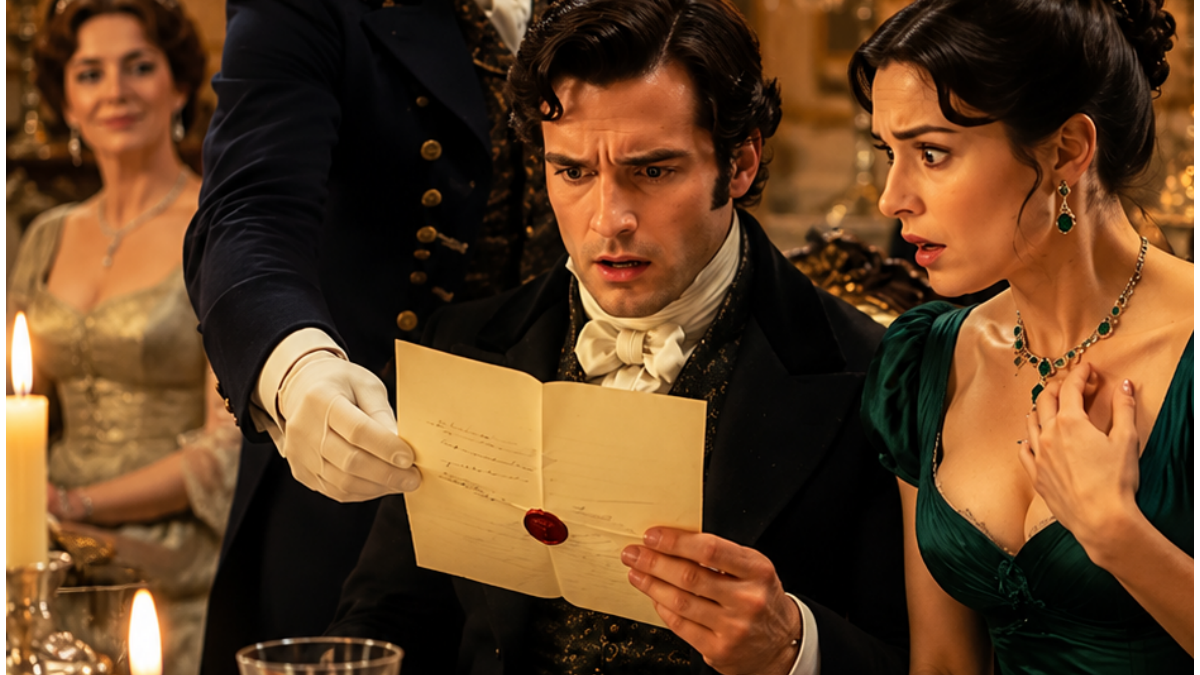
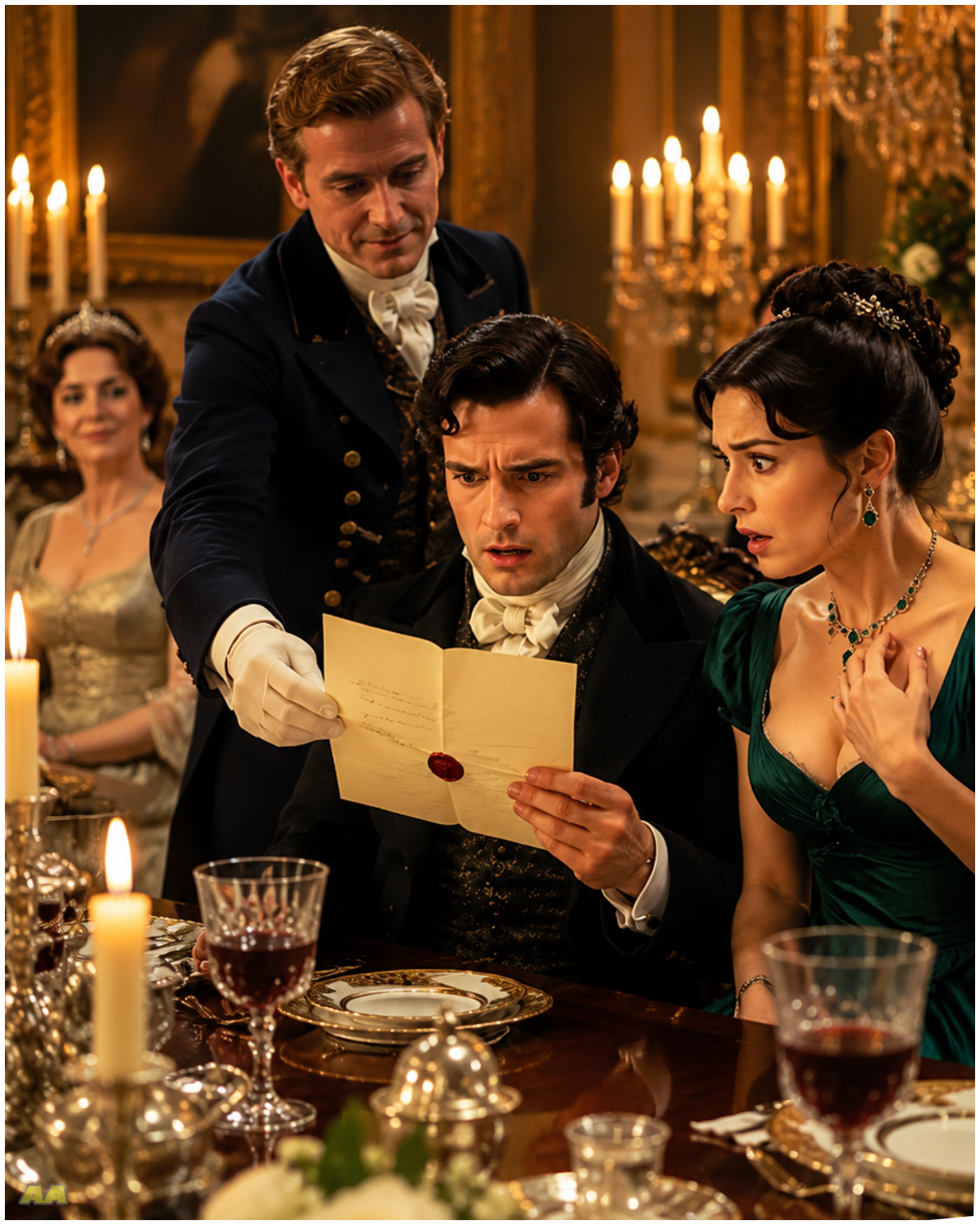
The fork stopped halfway to his mouth.
Sign it before the soup cools your grace or I shall be obliged to fetch the second copy from the kitchen.
The voice belonged to a woman in a plain gray dress standing at his elbow, and the paper she said beside his wine glass bore his own crest pressed into red wax.
He had perhaps 4 seconds to decide what kind of man he intended to be in front of the candles, the partridge, and the soft, astonished mouth of the woman seated across from him.
He chose in those four seconds to do nothing at all.
The four covered the candle guttered.
The woman across the table, whose name in this house was never spoken aloud, set down her glass with the careful precision of someone who has just understood she is no longer the most dangerous person in the room.
The servant, neither old nor young, neither smiling nor stern, folded her hands at her waist and waited.
She had the patience of a person who had carried trays through long corridors for many winters, and knew exactly how long a sauce kept its heat.
The Duke of Hairswood lowered his fork to the plate.
The small clink of silver on porcelain sounded, in that hush, like a verdict.
Outside the long windows of the east pavilion, the autumn rain had begun to whisper against the glass, the way rain in great houses always seems to whisper rather than fall, as though even the weather had been trained to discretion.
Inside three candles burned in a low silver branch, casting their light upon a small round table set for two.
Upon the partridge cooling in its own amber gravy, upon the pear tart untouched at the side, and upon a document folded once and sealed, and laid down with such quiet certainty that it might have been a card in a game played by people who had not invited him to sit.
The servant had not bowed.
That was the first thing he noticed when he allowed himself at last to notice anything.
She had come into the pavilion without knocking, which was already a small impossibility, and she had crossed the carpet without sound, which was a larger one, and she had spoken his title with the particular flatness of someone delivering rather than addressing.
He set his hand upon the table beside the folded paper, and did not yet touch it.
The woman across from him, whose dark blue gown had been chosen with great care for a supper no one else was supposed to know about, said his name.
Only that, just his name, in a low voice, the way one might steady a horse.
He did not look at her.
He looked at the servant.
He had seen this woman before.
He was certain of it.
He was certain in the way one is certain of a tune half remembered or a face seen once in a coach window.
She was perhaps 30. Her hair was the brown of winter bracken drawn back without ornament.
Her eyes were gray and gave away nothing.
Her hands folded were not the hands of a maid in the upper rooMs. The knuckles were a little reddened.
The nails were short. She wore no ring.
He found himself counting her the way he counted everything when surprised.
One woman in plain gray at three paces with one sealed paper in one room with two doors.
He had 4 seconds. He had thought he had used them all.
Now he had only this.
From whom? He said.
The word came out level, which pleased him in the small, distant way that small competencies pleased him in moments of large alarm.
“From her grace,” the servant said.
The woman across the table inhaled briefly and then mastered it.
The Duke did not move.
He let the silence hold.
The servant did not fill it.
He had been Duke of Hairswood for 11 years.
Before that he had been heir for 19.
Before that he had been a boy who counted the steps of the great staircase each morning because he liked the comfort of a number that did not change.
There were 62 steps. There had always been 62 steps.
There had been until tonight six things in the world he had believed himself to know with perfect certainty.
And one of them was that his wife, the Duchess Adelaide, did not know about the East Pavilion.
He looked at the paper.
He looked at the seal.
The seal was his own, which meant that someone in the house with access to his own ring had pressed it into the wax.
There were three people in the household with such access.
Himself, his steward, and Adelaide.
He picked up the paper.
He did not open it.
He waited in his palm as if its weight might tell him something its contents would not.
And then he set it down again, unbroken, beside his wine glass.
“You will wait outside,” he said to the servant.
“I will not your grace,” she said.
The woman across the table made a small sound that was almost a laugh and was certainly not amusement.
The Duke lifted his eyes to the servants at last, and there found in those quiet gray irises something that he had not been prepared to find in the face of a person in plain gray at his elbow.
He found that she was not afraid of him.
He had been afraid of many things in his life, chiefly disappointing his father, who was 12 years dead, and being unkind by accident, which he believed himself to have managed mostly.
But he had not often been on the receiving end of a refusal that landed so courteously.
He set his napkin upon the table beside the paper.
He rose.
The chair did not scrape because the carpet was thick and the legs were felted because this room had been arranged originally for the entertaining of intimate friends in the previous century, and intimate friends had required a floor that did not announce them.
He walked the four paces to the long window and looked out at the rain.
He did not see the rain.
He saw instead a morning 16 years ago when he had stood in a drafty chapel in his grandfather’s plain coat and watched a slight young woman in white come up the aisle on her uncle’s arm.
And he had thought with the calm of a boy who had been raised to expect arrange things to be endured rather than enjoyed, that her face was a kind face, and that her hands in their lace were trembling, and that he would try, when the time came, to be a man whose hands did not make hers tremble more.
He turned back from the window.
The servant had not moved.
The paper had not moved.
The candle had burned a finger’s breath lower.
He looked at the woman in the dark blue gown, at her white throat above the velvet, at the small ruby on a chain that he had given her at midsummer, because she had said lightly that she was tired of pearls, and he discovered that he did not at this moment wish to look at her at all.
He returned to the table.
He sat. He picked up the paper.
He broke the seal. He read it slowly.
He read it twice. When he had finished reading it the second time, he laid it down, smooth the crease with the side of his hand, and said, “Tell her, I will come.”
She did not ask you to come your grace, the servant said.
“She asked you to sign.”
He looked at her for a long moment.
The rain went on. The candle went on.
The partridge had stopped steaming.
He set his hand flat upon the paper as though to keep it from rising of its own accord and walking out of the room, and he said very quietly, “Then I will sign, and then I will come.”
The woman across the table said his name again, and this time her voice was thinner, and this time he heard it, but he did not answer.
He took up the steel pen that lay in a small porcelain stand in the center of the table because in this house even pavilions of secret suppers were furnished with the instruments of correspondence.
And he dipped it. He did not however set its point to the paper.
He held it above the line where his name was meant to go and he said to the servant, “What is your name?” She did not answer at once.
The Duke, pen still poised, looked up.
The servant met his eyes without flinching and said, “Mrs. Wenlow, your grace.” He nodded slowly as if the name had filled in a small empty square in a great ledger he had been keeping all his life without knowing.
Wenlow. He knew the name.
He knew it because it had been spoken to him once on a morning long ago by Adelaide herself in the gallery upstairs when she had paused beneath the portrait of his grandmother and said lightly almost to herself that her own people had had a wenlow who used to keep their hawks.
He had not asked further.
He had been 24. He had been thinking that morning about a new mayor.
He laid the pen down beside the paper.
He laid his hand upon his eyes for a brief moment, then lowered it.
He said, “How long have you been in this house, Mrs. Wenlow?” “19 years, your grace.” And in her grace’s particular service, 11, your grace, he nodded once more.
The arithmetic was easy. 11 years was the length of his tenure as Duke.
11 years was the length of his marriage’s second chapter.
The one that began when his father had died, and the great house had passed to him, and Adelaide had come down from the small upper room she had favored as a young wife, and taken her place at the long table in the dining hall, and the household had reordered itself around her quiet, deliberate hand.
Mrs. Wenlow had been moving through that household for 19 years.
He had not noticed her once.
He pressed his thumb to the broken seal, as though to confirm by touch what his eyes had told him, that the red wax had taken the imprint of his own creSt. The small leaping hair above the cross reads that this paper had been prepared with the full and deliberate use of his own authority against him.
And that the only person other than himself who could have used that ring was the woman whose name was at the bottom of the page in a hand he would have known on a scrap of paper found in a foreign country.
Adelaide’s hand was not pretty.
It was clear. It went forward across the page like a person walking, neither hurried nor slow.
And one always knew, reading her letters, exactly when she had paused to think.
There were two pauses in this document.
One after the words by mutual consent, one after the words for the avoidance of public injury to either party.
He had not until this moment thought of her as a woman who would think to spare him public injury.
He had thought of her, when he had thought of her at all in recent years, as a woman who endured him with grace and ran his house with a competence he had learned gratefully to take for granted.
He had thought of her as a person who had agreed at 20 to be his wife, and who had not since asked anything of him that he could not easily give.
He looked across the table at the woman in the dark blue gown.
Her name in the world was Lady Caroline Veins.
In his own private use when he wrote to her which was seldom and when he spoke to her which was often she was Carol.
She had been for 2 years the person whose conversation he most wished to hear at the end of a tiring day.
She had been for 2 years the person at whom he most wished to laugh.
She was looking at him now with the careful stillness of a clever woman who has seen a board tilt and is calculating swiftly and without panic where the pieces will fall.
He found that he did not blame her.
He found also that he did not know her.
He had known her for 2 years.
He had not until this moment known what her face would do at the sight of a folded paper laid down by a stranger in gray.
Her face did very little.
It composed itself. It became by degrees a face that might have been painted where a painter to ask her to sit for patience.
He looked at the paper again.
He took up the pen.
He did not sign. He said instead to Mrs. Wenlow, “Where is her grace at this hour?” “In the small library, your grace alone.” Mr.
Tarant is with her. Mr.
Tarant was the steward. He had been the steward for 20 years.
He had been Adelaide’s chief instrument in the running of the house for 11 of those.
And he was, the Duke understood with a small, cold clarity, the second of the three people in the household with access to the ring.
He had not thought ever of Mr.
Tarrant as a man capable of conspiracy.
He had thought of him as a long dry person who liked accounts and disliked weather.
He understood now that long dry persons who liked accounts and disliked weather were often the most capable conspirators of all.
He set down the pen for the second time.
He rose for the second time.
The chair did not scrape.
The carpet had been chosen, he reflected, with great forethought by some long deadad arranger of intimate suppers.
He bowed briefly to the woman in the dark blue gown, the small, precise bow he had been taught at 15 to use when leaving a room in which he had done nothing to be ashamed of.
He had nothing at this instant of which to be ashamed in any way that the world would understand, since the world had not yet been told.
The world might be told tomorrow.
He [snorts] understood that this depended very largely upon what he did in the next half hour.
He turned to Mrs. Wenlow.
Lee lead, he said. She did not ask you to come your grace.
Mrs. Wllo repeated evenly. I know, he said.
I am coming anyway. Mrs. This is when Lo inclined her head, the smallest acknowledgement, and turned and walked towards the door.
He followed her. He paused at the door.
He looked back. Caroline was watching him.
She had not risen. She had not asked.
She had not pleaded. She had, in the seconds since he had stood, gathered around her the small, composed dignity of a person preparing to be alone in a strange room.
He felt then a thing he had not expected to feel.
He felt sorry for her.
Not for her as the person who had sat across from him through long witty evenings.
Not for her as the person whose laugh had charmed him into forgetting for hours at a time that he had a wife in another wing of a great house.
He felt sorry for her as a person who had agreed two years ago to a private arrangement with a man she had believed to be in possession of his own life and who had just discovered in front of a servant in gray that he was not.
I will send word, he said.
She nodded once. He went out.
The pavilion door closed behind him with the soft, unaccusing click of a thing engineered for discretion.
The long corridor that led back towards the great house was darker than he remembered, since the boys had not been told to light all the wall lamps tonight, the supper being meant to be unseen.
Mrs. Wenlow walked three paces ahead of him without looking back.
He walked behind her in his evening coat with his hands clasped perhaps a little tighter than he would have liked behind his back.
He counted the doors as they passed.
He had always counted things.
There were 11 doors between the pavilion and the inner court.
He had known this since he was nine.
He could see in his mind the small boy he had been walking this corridor at the sight of his grandfather, counting under his breath.
The number had not changed.
Tonight he was grateful fiercely and irrationally that the number had not changed.
The rain on the high windows was louder here because the corridor ran along the outer wall of the older wing and the windows were taller and the glass was older.
He could see faintly his own reflection moving along beside him, the dark coat, the white linen at the throat, the face of a man of 40.
The face did not look to him like the face of a man whose wife had just sent a sealed paper into his hands by means of a servant he had not known he had.
The face looked composed. He was glad of that.
He was determined to keep it composed for as long as required.
He had, he thought, perhaps a quarter of an hour.
He did not waste it.
As he walked, he allowed himself for the first time in nearly 2 years to think honestly about his wife.
He thought of her at 20 in the chapel.
He thought of her at 25 walking the south terrace at dusk, naming the new roses by the names she had given them herself, all of which had been the names of girls she had known at school.
He thought of her at 30, sitting up late in the small library with a ledger spread across her knees because the steward was a bed with a fever and the quarterly accounts were due.
He thought of her at 33 in the gallery, naming the Wenlows, who had once kept her people’s hawks.
He thought of her at 36, the year his father died, taking up the keys at the long supper as though they were heavier than he had imagined keys could be.
He thought of her last week at breakfast, looking up at him over the rim of a porcelain cup and asking mildly whether he intended to ride out in the afternoon.
And he thought now, with a small chill at the back of his neck, that her eyes that morning had had in them an expression he had not bothered to interpret.
He had thought at the time that she was thinking about the menus.
She had not been thinking about the menus.
Mrs. Wenlow turned left at the small landing where the corridor branched and he followed.
The small library lay at the end of the east passage behind two doors.
The outer of carved oak, the inner of pale paneling.
The outer door was open.
The inner door was closed.
A thin line of yellow light lay along the bottom of the inner door, and within the murmur of voices, low and steady, did not pause as their footsteps approached.
Mrs. Wllo stopped at the inner door, raised her hand, and tapped once with her knuckle.
The murmur ceased. A voice he had known for 16 years said evenly, “Yes.” Mrs. When Lo opened the door, stood aside and said, “His grace.” He stepped into the small library.
The small library was in fact not small.
It had been named the small library 120 years ago when the great library had been built at the other end of the house.
And the name had stuck because in great houses names did.
The room was lined to the ceiling with books in dark calf, its windows curtained in heavy green, its chairs deep and old, and at its center stood a round table covered with papers and lit by a single oil lamp with a green glass shade.
Mr. Terren sat at one side of the table.
Adelaide sat at the other.
She did not rise. She did not, in fact, do anything in particular when he came in.
She sat down her pen neatly beside the inkwell, and she looked up at him and she said, “Good evening, Edmund.” “Good evening,” he said.
He found his voice steady, which surprised him.
Mr. Tarant rose, bowed, and remained standing.
Adelaide gestured with a small movement of her hand to a chair across from her.
The Duke did not sit.
He laid the folded paper on the table between them beside the lamp.
He said, “I have not signed it.” “I know,” she said.
“Mrs. Wenlow would not have let you had you tried.” He glanced briefly at Mrs. Wenlow, who had taken up a position near the door with the discreet stillness of a long trained servant, who has just performed a difficult errand, and intends to perform several more before the night is out.
Adelaide said, “Sit down, Edmund.
You look tired.” He sat.
He had not meant to.
He found that her voice still had, after 16 years, the small authority of a person who knew his own first weariness before he did, and that he was, in this moment, very tired.
He did not let the tiredness show on his face.
He set his hands upon the table, palms down, the way his grandfather had taught him to set his hands when listening.
And he said, “Tell me.” She did.
She told him plainly. She told him without ranker.
She told him in the voice of a woman who had thought a long time about what she meant to say, and had decided at last that the kindest way to say it was the cleareSt. She said that she had known about Lady Caroline Vain for 11 months.
She said that she had not minded at first in the way she had been raised not to mind such things and that she had told herself very firmly that she would not mind and that she had practiced not minding through a winter and a spring.
She said that in May while planting out the south terrace she had discovered that she did mind.
She said it as if it were a small regrettable fact she had finally been obliged to face about herself.
I am sorry, Edmund, she said.
I had hoped to be a more modern person.
He looked at her. He looked at her properly for what he understood with a small, clean shame to be the first time in a great while.
Her hair, which had once been very dark, had begun to gray at the temples in a soft, slow way that suited her.
Her hands, folded now upon the papers, were thinner than he remembered.
Her eyes, which had always been a clear hazel, were tired, but not, he saw, angry.
She was not angry. He [snorts] understood in that moment with a small precise clarity that he would have preferred her to be angry.
Anger would have been a thing he knew how to answer.
He said, “Why now?” She said, “Because last week I learned that you had taken her in August to the house at Hairswood Marsh.” He went very still.
The house at Hairswood Marsh was a small lodge his father had used in the shooting season.
It had not been opened for guests in 18 years.
He had taken Caroline there for 3 days in August because Caroline had said half ingest that she had never seen marsh light and because he had thought foolishly that no one would notice.
He understood now that someone had noticed.
He understood also that the someone was the woman in plain gray at the door and that her 19 years in this house had not been spent failing to notice things.
He looked at Mrs. Wenlow.
Mrs. Wenlow looked back at him, neither apologetic nor smug.
He said to Adelaide, “I see.
I do not require an apology,” Adelaide said.
“I do not require an explanation.
I have prepared the papers because I have decided that I should prefer after all these years to live in a manner that I can recognize as my own.
The terms are unusually generous to you.
Mr. Tarant will confirm. Mr.
Tarant inclined his head. The Duke had not in 11 years seen Mister Tarrant incline his head in confirmation of anything that had not first passed across his own desk.
He understood with the same small clean shame that he had been signing things for 11 years that he had not bothered to read with the attention he had given just now to the folded paper in the pavilion.
He understood that Adelaide had read them all.
He said, “What terms?” She named them.
The house at Harswood Marsh would be hers.
The Daer house at Greavves would be hers.
The income from her own family settlements which he had administered on her behalf would revert to her control.
She did not require the principle of his estate.
She did not require the title.
She did not require, she added with a small dry smile that was almost the smile he remembered from the gallery 16 years ago, the leaping hair.
She would take the hawks.
He could not at first remember what hawks she meant.
Then he did. There were two old hawks in the muse.
They had been, by long tradition, the ladies hawks.
He had not thought of them in years.
He had not, he realized, asked after them in years.
He had not asked after a great many things in years.
He said, “Adela.” She waited.
He did not know what he had meant to say next.
He had said her name as a man says the name of a country to which he has not traveled and intends suddenly to travel.
She waited a moment longer then said gently, “You do not have to answer tonight.
I am not asking you to answer tonight.
I am asking you to sign.
The signing is a matter of arrangement, not of feeling.” He looked at the folded paper.
He thought of Caroline alone in the pavilion with the partridge growing cold in the rain on the long windows.
He thought of the boy he had been at 9 counting 11 doors.
He thought of the morning 16 years ago in the chapel and of a young woman’s lace trembling hand.
He said, “Will you give me an hour?” She considered him.
She did not consider him with the air of a woman weighing a requeSt. She considered him with the heir of a woman a man.
At last she said, I will give you until morning.
I will not give you the hour.
An hour is too short for you, Edmund, when you are thinking.
By morning, either way, the papers will go to Mr.
Greavves in town. Mr. Greavves was her family’s lawyer.
He had been her family’s lawyer since before she had been born.
The Duke had met him twice.
He had thought him both times a kind man with no opinions.
He understood now that Mr.
Greavves had been waiting perhaps for months with opinions of a very precise sort.
He nodded. He rose. He bowed briefly to his wife, the bow he had been taught to use when leaving a room in which something difficult had been done with civility.
He turned to go. At the door, he stopped.
He looked back. He said, “Adelaide, did you wish me to find you in this room tonight with Mr.
Tarant and the papers and Mrs. Wllo at the pavilion?” She said, “Yes.” He said, “Why?” She said, “Because I wished you for once to see the running of your own house.” He went out.
He walked back along the corridor with the 11 doors.
He counted them again because he could not stop himself.
At the seventh door, which led to a small stare down to the kitchens, he stopped.
He had not intended to stop.
He stood for a long moment with his hand on the iron latch, and he thought with a small rye pang that the kitchens at this hour would be lit and warm and full of people who had known the running of his own house far better than he ever had.
He did not go down.
He went on at the pavilion.
He paused outside the door.
The rain had thickened. He could hear it now, plainly against the glass within.
He could hear nothing else.
He opened the door. Caroline was still seated where he had left her, her wine glass refilled, although she had not drunk from it, the partridge taken away, a small plate of pears in its place.
She looked up at him.
He did not sit. He crossed to her side of the table, drew out the chair beside hers, and sat there, so that they were no longer opposite, but together, looking at the long window and the rain.
Tell me, she said. He told her.
He told her quietly. He told her in a voice he had not used with her before.
The voice of a man who has been spoken to as a husband and has found after long absence from the role that the role still fits, though awkwardly, like a coat left too long in a cedar press.
She listened without interrupting. When he had finished, she did not speak at once.
She turned her glass on the cloth half a turn, then another.
She said at laSt. She is a remarkable woman, your wife.
He said, “Yes, I had thought Caroline said that I had understood our arrangement.
I find I had not understood it at all.” “I had not understood it,” he said, “Either.” She nodded.
They sat in the silence of two people who had been until an hour ago accompllices and who now understood that they had been all along two strangers polite enough not to ask each other difficult questions.
After a while, Caroline said, “What will you do?” He thought about it.
He thought about it honestly, which was he realized a thing he had not done about his own life in a very long time.
He said. I will sign.
Caroline looked at him. She did not look surprised.
She looked, if anything, relieved in the small, still way of a woman who had been spared a more difficult conversation than the one she had prepared.
She said, “And then he said, I do not know.” That is the most honest thing you have said to me in two years, Edmund,” she said.
He laughed a single soft breath of a laugh, the way he had used to laugh when he had been 19 and had not yet learned that laughter in a great house was a thing to be measured.
He said, “I am sorry, Carol.” She said, “Do not be sorry to me.
I have not been wronged.
I have been mistaken.” She paused.
We have been mistaken. He understood that this was in its way a generosity.
He took it gratefully. He rose.
He helped her to rise.
He walked with her to the side door, the door that led into the small lane behind the pavilion, where a closed carriage waited for her, as it had waited many times before, with a coachman who had been paid not to remember the streets he had driven.
He kissed her hand. He did not kiss her face.
He did not, he thought, have the right.
She did not seek it.
She stepped up into the carriage, drew her cloak around her, and looked at him from the small, dim window.
Edmmond, she said. “Yes, be kind to her,” he said.
“I will try.” The carriage went.
He stood for a moment in the rain at the side door, bareheaded, and let the rain land on his hair and on the back of his neck.
Then he turned and went back into the pavilion and closed the door and stood for a moment with his hand on it.
And then he walked back to the small library.
The small library was empty except for Adelaide.
Mr. Tarant had gone. Mrs. Wllo had gone.
The lamp had been trimmed.
The papers had been gathered into a neat stack at the center of the table with the folded document on top and the pen lay beside it and the ink well stood open.
Adelaide was on the window seat in the green curtain shadow with a book in her lap although she was not reading it.
She looked up when he came in.
He came to the table.
He drew up the chair across from where she had been sitting.
He sat. He took the pen.
He uncovered the inkwell. He read the paper through a third time.
Slowly, he signed his name.
The pen made a small sound on the paper, the sound of a thing being finished.
He laid down the pen.
He blotted the ink with the small block of green felt that lay beside the inkwell.
He folded the paper. He laid it precisely in the center of the table.
“He did not rise,” he said without looking at her.
May I ask you something?
She closed the book. She said, “Yes.” “Why, Mrs. Wenlow?” Adelaide came down from the window seat.
She crossed to the table.
She did not sit. She stood opposite him, her hand on the back of the chair where Mr.
Tarant had sat. She said, “Because Mrs. Wenlow has carried my private correspondence for 11 years and has never once read a line of it that I did not place before her because Mrs. Wenlow’s mother kept my mother’s hawks when I was a girl.
Because Mrs. Wenlow once, when I was new to this house and very unhappy, found me weeping in the linen room at 3:00 in the morning and did not speak of it for 19 years.
Because if I had sent a footman, you would have laughed at him, and I did not wish to make a fool of a man who has only ever done his work well.
He sat for a long time with his hands flat on the table, looking at the folded paper.
He said, “I did not know.” She said, “I know you did not know, Edmund.
That is in part the trouble.” He looked up at her.
He looked at her properly.
The second time in a single night, which was twice more than he had looked at her properly in a year, he said, “I am sorry, Adelaide.” She did not answer at once.
She looked at him with that same quiet weighing that was not the weighing of a request, but of a man.
At last, she said, “Thank you.
I have wanted for some time to hear you say so.
He said, I should have said so long ago.
Yes, she said, but you have said so now.
She paused. She said, it is a beginning of a kind, although it is not the beginning either of us imagined.
He said, what will you do?
She said, “I will go to the Dower House in the morning.
I will take Mrs. Wllo.
I will take the hawks.
I will write in a month to ask after you.
I will receive you if you come with civility.
I will not, Edmund, come back.
I am too old to be unhappy in a room I am pretending to manage.” He nodded.
He understood that this was not cruelty.
He understood that he had earned it.
He understood also with a small stinging surprise that he was glad she had spared him a kind of pity that would have been the worst cruelty.
He said, “May I write to you?” She said, “Yes, often.” She considered him.
She said, “Not at firSt. Later often.
It will do us both good to learn what we mean to say to each other when no one is required to say anything at all.
He rose. He bowed once.
She inclined her head. He went to the door.
He paused. He looked back.
He said Adelaide. Thank you.
She said, “For what?” He said, “For coming to find me yourself.
I would have wished at the end to be found by you rather than left.
She did not answer. She did not need to.
The look that she gave him then, in the green shade of the lamp, was the look she had given him in the chapel 16 years ago, when, as a slight young woman in white, her hand had trembled in his, and he had decided, without knowing it, that he would try to be a man worth her trembling.
He understood now that he had not quite tried.
He understood also that he intended to begin.
He did not sleep that night.
He sat by the fire in the long library and watched it burn low.
At 4:00 he rose and walked out into the wet garden and stood beneath the south terrace, where the roses, all named for girls she had known at school, were past their last bloom, and the rain had stopped, and the stars had come out in the broken places of the cloud.
He walked back to the house at first light.
He met Mrs. Wllo in the corridor outside the small library.
She was carrying a small leather case.
She inclined her head to him gravely and he after a moment inclined his head to her gravely in return.
He said, “Mrs. Wlllow.” She said, “Your grace,” he said.
Thank you. She did not ask for what.
She bowed her head once more and went on.
By 8:00, the carriage was at the door.
By half past, Adelaide had come down in a traveling dress of dark wool with her hat in her hand.
He stood in the hall to see her go.
Mr. Terren stood beside him, his long dry face composed, and the Duke, looking sideways at him, found that he could not be angry.
He laid his hand on Mr.
Tarant’s shoulder briefly, the first time he had ever laid his hand on the man.
And Mr. Tarant did not move, but his eyes, the Duke saw, brightened.
Adelaide came to him. She gave him her hand.
He took it. He kissed it.
He helped her into the carriage himself.
He stood in the gravel as the wheels turned, watching the carriage move down the long avenue under the elms, and when it had gone, he did not go back inside at once.
He stood for some time looking at the road.
The Duke of Hairswood went on after that morning to be Duke of Hairswood for many years.
The story of what happened next is not for tonight the story we mean to tell.
It would take other evenings.
We may sit, if you wish, by other fires and unfold those evenings slowly.
For now, it is enough to say this.
Mr. Terrarant remained the steward for the rest of his life and was in the end buried at the Duke’s own expense in the churchyard at Harswood beneath a stone that read simply he kept the accounts honestly which had been the Duke’s own choice of inscription and had made the village smile in a kind way.
Mrs. Wenlow went with Adelaide to the Dower House, and from there, after seven years, to a small cottage of her own on the edge of the estate, where she kept bees and three hawks of her own line, the descendants of the two old hawks that had gone with her grace.
She was, the Duke heard, much loved in her village, and she lived to be very old, and she never in all those years spoke a word of what she had carried in 19 years of service that was not her own to speak.
Lady Caroline Baines married 18 months later a clever young man from the city who made her by all accounts perfectly content.
Although she remarked privately to her sister at the wedding breakfast that contentment in her experience was a thing one only recognized after one had stopped pretending to want something else.
The hedge of laurels along the east pavilion grew the next summer with what gardeners describe as an obliging vigor, and was, after some debate, allowed to grow tall enough to hide the pavilion entirely from the great house, so that the windows of the small library could no longer see, even by accident, the place where, on a wet autumn night, a folded paper had been laid down beside a wine glass, and a partridge had cooled in its own amber gravy.
And the Duke and the Duchess after that morning did write.
Not at first, later often.
They wrote in the slow, careful, courteous way of two people who had agreed at last, to learn what they meant when nothing was required.
And after some years, when they had grown old enough to find each other interesting again, without needing to be married to do so, they began to take walks in the long evenings of summer on the south terrace, naming the new roses by the names she had once chosen, and laughing sometimes at small things that no one else would have found funny.
They did not remarry. They did not need to.
They had at last become what they had not managed to be when they had been bound by a ring and a roof and the running of a house.
They had become friends. And when at last, very late in his life, the Duke lay dying in the small library on a shay drawn up by the window so that he might look out at the south terrace.
It was Adelaide who sat beside him in a chair brought down from her own house.
And it was her hand, no longer trembling, that he held, and it was her face he saw last in the green shade of the lamp.
He said near the end.
Adelide. She said, “Yes.” He said, “I have wanted for a long time to thank you.” She said, “For what?” He said, “For coming to find me yourself.” She did not answer.
She did not need to.
The look she gave him then was the same look she had given him on a wet autumn night long ago in a room with a folded paper at its center.
And he understood, as he had understood then, that he had been seen.
And so, listener, if you have ever sat at a small table with a person you loved in the soft light of three candles, and felt a folded paper laid down between you by a hand you had not noticed, and known that the running of your own life had been quietly going on all this while without your attention, then you know something of what it is to be the Duke of Hairswood on that wet autumn evening.
And if you have ever been the one in plain gray who carried the paper, knowing that the paper was not yours, but the carrying was, then you know something else that may be more important.
Which moment, I wonder, stayed with you.
Was it the moment the fork stopped halfway to his mouth, with the partridge cooling and the rain just beginning at the glass?
Was it the moment Mrs. Wenlow said her name at last with the patience of 19 years in her quiet hands.








