She Married a Ruthless Mountain Man to Survive — Then Found the Kindest Heart in the Wild
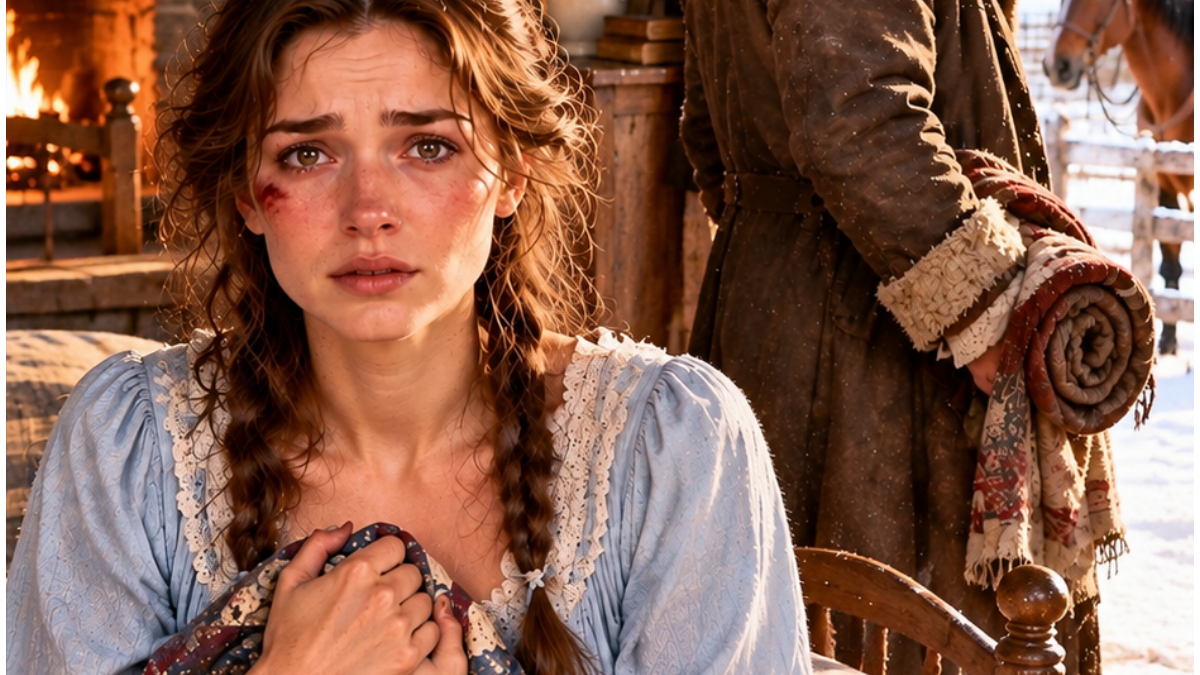
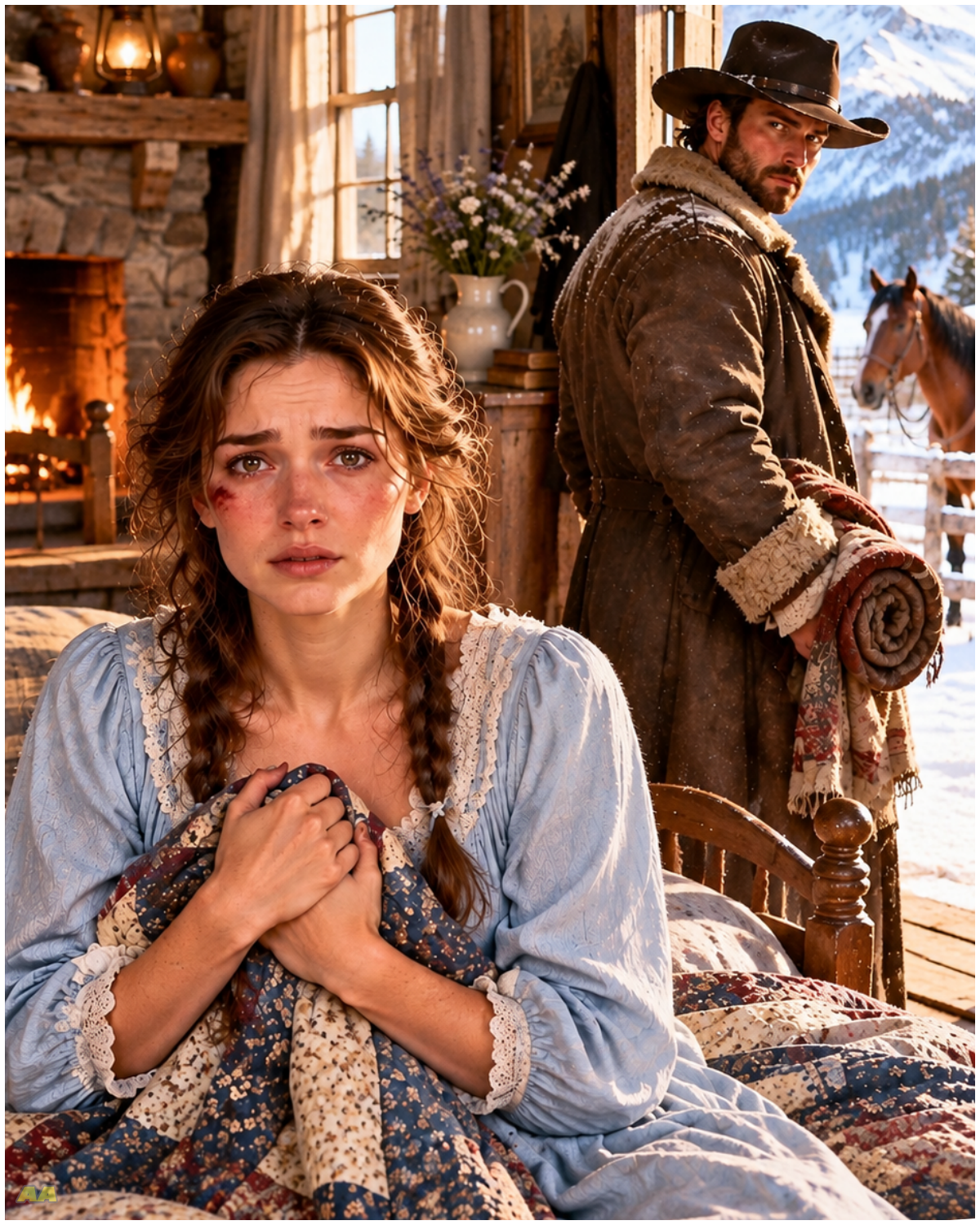
Eleanor Whitaker read the letter twice, folded it with shaking hands, and pushed it deep into her coat pocket so nobody in the trading post would see her cry.
The man she had crossed half a country to marry had thrown her away before he ever looked at her face.
Her money was nearly gone.
The last stage coach had already left.
Winter was coming, and the only man in Silver Creek willing to stand between her and the wolves was the one everyone told her to fear.
But that letter was a lie and the man who wrote it was watching her.
You’re the Whitaker woman.
It wasn’t a question.
The woman behind the counter said it the way people say a debt is due.
Eleanor set down her carpet bag.
Her back achd from 4 days on a stage coach bench and her gloves had worn through at the fingertips somewhere past PBLO.
She straightened anyway.
I am Elanor Whitaker.
I’m here for Mister Nathaniel Crowe.
He said I could ask for him at the trading poSt. The woman, broad and gay-haired with a pencil tucked behind one ear, didn’t smile.
She reached under the counter and slid an envelope across the wood.
Came in Tuesday.
He said you’d be by.
Eleanor looked at it.
Her name was written on the front.
Just her name. No miss, no dear Tuesday, she said.
But I wrote him from Kansas City that I’d be here Friday.
That’s what he figured. Three men near the stove had stopped talking.
Eleanor could feel them listening. The way you feel cold coming under a door.
She opened the envelope. One sheet, four lines.
Miss Whitaker, I have reconsidered. This arrangement will not continue.
I trust you will find your own way home.
Encrow. She read it again. Her lips moved on the words without sound.
I trust you will find your own way home.
Home. She almost laughed. There was no home.
She had sold the last of her mother’s furniture to buy the ticket.
She had given up the room she rented above a milliner’s shop in Ohio.
She had told the few friends she had left that she was going west to start over.
And they had looked at her the way people look at a woman who has already failed once and is about to do it again.
“Is he here?” she asked.
Her voice came out thinner than she wanted.
“In town?”
“I’d like to hear it from him.”
“Gone,” said the woman.
“Gone where?”
Didn’t say. Packed a mule Wednesday morning and went up the North Road.
He didn’t say anything else. Anything at all.
The woman hesitated.
It was brief, a flicker, but Eleanor had spent 11 years reading the moods of a man who hit harder when he was quiet.
And she saw it.
No, the woman said, “Nothing else.”
Eleanor folded the letter.
She put it in her pocket. She did not cry.
Not there. Not with three strangers by the stove and this woman’s cool eyes on her.
Is there a boarding house? There’s the Voss Hotel.
How much? $2 a night. Eleanor did the arithmetic without meaning to.
She had $11.40 sewn into the lining of her bag.
Five nights, maybe six if she skipped supper and the stage back eaSt. Next one’s Thursday week.
If the pass stays open, weather’s turning.
And if it doesn’t stay open, the woman shrugged.
Then it’s April. One of the men by the stove chuckled.
He was younger than the others with a split lip that hadn’t healed right.
She could always work it off, Hattie.
Voss is always looking for girls. Shut your mouth, Pike, said the woman named Hattie without much heat.
Eleanor turned and looked at him. She didn’t say anything.
She just looked long enough that his grin wavered.
Then she picked up her bag and walked out.
The Voss Hotel was a two-story building with glass in every window, which in Silver Creek told you everything about who owned the town.
The man at the desk had a waxed mustache and a ledger he kept his hand flat on as if someone might steal it.
Name: Eleanor Whitaker. His hand stopped moving.
Whitaker, he repeated. He looked up at her and his expression changed the way milk changes.
I’m afraid we’re full. Your board says you have four rooms vacant.
The board is out of date. Then update it.
I’ll wait. He closed the ledger. Ma’am, I’ve been asked not to rent to you.
Eleanor felt the floor tilt a little.
Asked by whom? By the owner. I’ve never met the owner.
I’ve never been to this town in my life.
What could he possibly have against me?
The clerk leaned forward and dropped his voice.
And what was worse than the words was that he seemed almost kind about it.
It’s known around town, ma’am, that you’re a divorced woman.
Mr. Voss runs a respectable house. He doesn’t want talk.
Eleanor stood very still. She had told exactly one person in the Colorado territory about her divorce.
She had written it in her third letter to Nathaniel Crowe because she had promised herself she would never again begin a marriage on a lie.
She had written it plainly. I was married for 11 years to a man who was not kind to me.
The court in Columbus granted me a divorce in the spring of 1,884.
I understand if this changes your mind, he had written back.
It does not change my mind. It makes me respect you more.
And now the hotel clerk in a town she had never seen knew it.
Who told Mr. Voss? She asked. I couldn’t say you could.
You won’t. The clerk didn’t answer. Eleanor picked up her bag again.
It was getting heavier each time. She stood on the boardwalk outside the hotel with the wind coming down off the mountain.
And for the first time since Ohio, she let herself be afraid.
Not the thin polite kind of fear.
The real kind. The kind that sits in your stomach and whispers numbers.
$11. No room. No stage. Snow coming.
A town that already knew her secret and had already decided what she was.
She walked back to the trading post because it was the only door she knew.
Hadtie looked up when the bell rang.
The men by the stove were still there.
Pike grinned. Voss, turn you out. Eleanor ignored him.
She went to the counter. Miss Puit, Hattie Puit, Mrs. Puit, is there anyone in this town who rents a room?
A widow with a spare bed? A family.
I can pay. I can work. I can sew.
I can keep books. I can put up preserves.
I can Nobody’s going to take you, honey.
It was the honey that did it.
It was the first soft word anyone had said to her all day, and it came wrapped around a door slamming shut.
Why not? Hadtie glanced toward the stove, then back.
Because Harlon Voss holds paper on half the houses in this valley, and he’s made it known.
Made what known? That your trouble. I’ve been here two hours.
I know it. Eleanor put both hands flat on the counter.
Her fingers were trembling and she pressed down to make them stop.
Mrs. Puit, I am asking you plainly.
What did Nathaniel Crowe say to you?
Because a man who wrote me 11 letters about his apple saplings and the name he was going to give his milk cow doesn’t leave town on a mule without a word.
Hadtie’s jaw worked. He didn’t say nothing, she said finally.
But he was scared. Scared of what?
I don’t know. I swear to you, I don’t.
He came in Monday to buy cartridges and he couldn’t hold the coins still.
And Tuesday that letter showed up in my box and Wednesday he was gone.
Showed up. He didn’t hand it to you.
Hadtie opened her mouth. Closed it. No, she admitted.
It was just there when I opened up behind Eleanor.
A chair scraped. Seems to me, said Pike standing.
The lady’s got herself a problem. His friend stood too.
Bigger, older. A man with a flat patient face of someone who’s done this before.
Seems to me she’s got nowhere to sleep, said the big one.
Dutch Kesler, ma’am. Pleased Eleanor didn’t turn around.
Mrs. Puit it. I’ll take a pound of crackers and a tin of sardines.
Now that’s no supper for a lady, said Dutch.
He was closer now. She could smell him.
Whiskey and wet wool. We got a fire going up at our claim.
Plenty of room. Pike here. Don’t snore much.
No thank you. Wasn’t really asking. His hand closed around her upper arm.
Eleanor had been grabbed before. She knew the exact pressure.
The way a grip tells you what a man intends.
This one intended to see how far he could go.
Her body went cold and still in the old way, the way it used to in the kitchen in Columbus.
When she learned that fighting made it last longer, and then just as fast, something else rose up underneath the cold, something she had spent two years building back, brick by brick.
“Take your hand off me,” she said.
Now, Dutch smiled. “Or what?” The bell over the door rang.
Nobody said anything. That was the strange part.
Pike’s grin just slid off his face like wet paint.
Hattie Puit set her pencil down very carefully, and Dutch’s hand, still on Eleanor’s arm, went loose.
Eleanor turned her head. The man in the doorway had to duck a little to come through.
He wore a coat that had been patched so many times it was more patched than coat.
There was a scar that ran from his left temple down past the corner of his mouth, pulling it slightly so that he looked like he was always on the edge of saying something unkind.
He had a rifle over one shoulder and a sack of something over the other.
He didn’t look at Eleanor. He looked at Dutch’s hand.
“Leave,” he said. That was all one word.
He didn’t raise his voice. He didn’t move the rifle.
Dutch let go. Just being neighborly. Thorn Ridge, I know what you were being.
Didn’t know she was spoke for. She isn’t.
Leave. Dutch looked at Pike. Pike was already at the door.
Dutch followed and at the threshold he turned back.
And there was something ugly in his face now.
Voss ain’t going to like you putting your nose in this.
Voss can tell me himself. The door banged.
The bell swung and swung. Eleanor realized she had been holding her breath.
She let it out slowly. Her arm achd where Dutch had held it.
The man Thornridge set his sack on the counter.
Salt flour. Coffee if you’ve got it.
Hattie and 44 rimfire. Caleb said Hattie.
And there was something odd in her voice.
Something careful. This here’s Miss Whitaker. She was meant to marry Nate Crowe.
I heard. He still hadn’t looked at Elellanor.
Thank you, Elellanor said. Don’t. I beg your pardon.
Now he looked at her. His eyes were gray, lighter than she’d expected, and there was no warmth in them at all, but there was no hunger either.
That was the first thing she noticed.
Every man in this town had looked at her today like she was something on a shelf.
This one looked at her like she was a person he’d rather not have to deal with.
Don’t thank me, he said. Dutch will be back tonight with more of them probably.
You shouldn’t be in town after dark.
I don’t have anywhere else to be.
Then find somewhere. I’ve tried. Mr. Voss has seen to it.
I can’t. Something moved behind his eyes.
Just for a second. Voss, he said.
Do you know him? Everybody knows him.
He paid for his goods. He shouldered his sack.
He went to the door. And Eleanor, who had not asked a man for anything in two years, heard herself say, “Wait.” He stopped.
He didn’t turn around. Mrs. Puit says Nathaniel Crowe was frightened before he left.
Do you know why? A long pause.
No, said Caleb Thornridge. And he walked out.
Eleanor stood there. Hattie Puit busied herself with the coffee tin, not meeting her eyes.
Who is he? Caleb Thornridge. Got a place up above the valley.
8 miles. Traps. Hunts. Comes down maybe once a month.
People seem afraid of him. People are afraid of him.
Why has he hurt someone? Had he was quiet a long time.
Not that I ever saw, she said finally.
But there’s talk. He near killed a man in 82.
Some say he’s got a temper that had frightened the devil.
He don’t come to church. He don’t come to dances.
He don’t talk to nobody. Man lives like that.
People fill in the reSt. That wasn’t what I asked.
Has he hurt someone? Hattie looked at her.
The man he near killed was beating a mule to death in the middle of Main Street.
And the mule was the least of what that man was beating.
Eleanor didn’t say anything. Look, said Hattie, and her voice dropped.
I got a store room in back.
It ain’t much. Floor’s cold, but I’ll let you sleep there tonight.
And you don’t tell a soul. Not a soul.
You hear me? Because if Voss finds out I crossed him, I lose this place by Christmas.
Eleanor felt tears push up behind her eyes.
Hot and sudden, and she held them back so hard her throat hurt.
“Thank you. Don’t thank me neither. Just be gone by daylight.” The storoom smelled of lamp oil and burlap.
Eleanor spread her shawl over a stack of flower sacks and sat down on it and took out the letter.
She read it again by the light of a candleSt. Miss Whitaker, I have reconsidered.
This arrangement will not continue. I trust you will find your own way home.
Encrow. Then she opened her carpet bag and took out the bundle of letters tied with blue ribbon.
11 of them. She had read them so many times the folds were soft as cloth.
She untied the ribbon. She laid the first one out beside the new one.
Dear Miss Whitaker, I am a plain man and I will not pretend to write pretty.
I have 40 acres on the North Fork and a cabin I built myself.
She looked from one to the other.
Her breath stopped. In all 11 letters, Nathaniel Crow wrote his capital N with a little hook at the top like a sheep’s crook.
It was the kind of thing you notice when you have read a man’s handwriting a hundred times in the dark.
When you are trying to decide whether to trust him with the rest of your life.
The N at the bottom of the rejection letter was straight.
Two plain lines and a slash. She laid out the second letter, the fourth, the ninth.
The hook was there in every single one.
Not in this one. She read the rejection letter again slowly and now she saw other things.
The auras were wrong. The tess were crossed too high.
Nathaniel always misspelled arrangement with one R.
He’d done it four times. He did it so reliably she’d started to find it dear.
This letter spelled it perfectly. Eleanor sat back against the flower sacks.
Nathaniel Crowe did not write this. Somebody else did.
Somebody who knew she was coming Friday.
Somebody who wanted her gone before she ever stepped off the stage.
Somebody who had told the whole town she was a divorced woman before she arrived.
And Nathaniel was the only person she had ever told, which meant either Nathaniel had shown someone her letters or someone had taken them from him.
Somewhere past midnight, the door to the trading post rattled.
Eleanor sat up. The candle had burned out.
She held perfectly still. Voices low. Men, she’s in there.
Pike seen the light. Hattie will squall.
Hattie can squall all she wants. Voss said, “Get her out of town tonight or he’d know why.” Elanor’s heart was slamming so hard she felt it in her teeth.
She got to her feet. She felt along the wall in the dark for anything.
A broom handle, a shovel, a length of pipe, and her fingers closed on the iron hook Hattie used to drag feed sacks.
The front door creaked open. Hadtie’s voice sharp and high.
Dutch Kesler, you get out of my store.
Where’s the Whitaker woman? Gone. Left on foot an hour ago.
Liar. Footsteps coming toward the bank. Eleanor raised the hook and then a different sound.
A voice from outside. Not loud, but it carried the way a rifle shot carries across cold water.
Dutch. The footsteps stopped. Thought you went home.
Thorn Ridge. Changed my mind. This ain’t your business.
You made it my business at supper.
A silence. Eleanor could hear men breathing.
She could hear her own heart. There’s four of us, said Dutch.
I can count. Voss wants her gone.
Then Voss can come ask her himself.
In daylight, like a man, another silence longer.
Then the scrape of boots, the bang of the door, the jingle of harness outside, and horses moving off down the street.
Eleanor lowered the hook. Her arms were shaking so hard she dropped it.
The storeroom door opened a lantern. Caleb Thornridge stood there and behind him had Puit with her hand pressed to her cheSt. Caleb looked at the hook on the floor then at Eleanor.
You’d have used that, he said. Yes, he nodded slowly as if she’d answered a question he’d been wondering about.
Why did you come back? She asked.
He didn’t answer right away. He looked at Hattie.
Give us a minute. Hadtie hesitated. Caleb a minute, Hattie.
She went. Caleb set the lantern on a barrel.
He stayed in the doorway. He didn’t come in.
Eleanor noticed that. He kept the whole room between them.
You asked me if I knew why Nate Crow was scared.
He said, “You told me no.” I lied.
Eleanor waited. Nate came up to my place 2 weeks ago.
Walked 8 miles in the dark. He wanted me to hold something for him.
What a tin box. Said if anything happened to him, I should give it to you.
Eleanor’s hands went to her mouth. Is she couldn’t finish?
I don’t know. Caleb said, I don’t know if he’s dead or run off or hiding.
I know he was scared of Haron Voss.
I know. He said Voss had been asking about you, asking what you were like.
Whether you had people back east who’d come looking.
Why would Voss care about me? I don’t know that either.
What’s in the box? I didn’t open it.
It wasn’t mine to open. Eleanor stared at him.
This man who people in town crossed the street to avoid had carried another man’s secret for 2 weeks and never looked inside.
Where is it at my place? Then I need to go to your place.
No, mister Thornridge. You heard Dutch Voss wants you gone.
If you come up the mountain with me, it won’t take him a day to have the whole valley saying you’re living with a man you’re not married to.
You think a divorce got you shut out of a hotel?
Wait and see what that does. I don’t care what they say you will.
When the stage is running again and nobody back east will hire a woman with that on her.
You’ll care then. Eleanor stood there in the lantern light.
She thought about the numbers. $11.40. No room, no stage.
A man named Harlon Voss, who had never met her and wanted her gone badly enough to send four men in the middle of the night.
A tin box 8 miles up a mountain that might tell her why.
And a stranger in a doorway who had lied to her and then come back to tell her the truth.
“Mr. Thorn Ridge,” she said. “How long until the snow closes the road to your place?” He frowned.
“10 days, maybe less. Nobody goes up.
Nobody comes down. Not till April most years.
So if I were up there, Voss couldn’t reach me.
Neither could anybody else. Do you need help up there?
He looked at her like she’d said something in a foreign language.
I manage. That isn’t what I asked.
Something almost like a smile tugged at the unscarred corner of his mouth.
It didn’t make it all the way.
You’re persistent. I’m out of options. It looks the same from the outside.
He was quiet a while. I’ve got a cabin, he said.
Stock trap lines, hides that need working.
Books I don’t keep because I never learned to keep them right.
Mending I don’t do food that would go bad by February if somebody knew how to put it up proper.
He stopped. Yes, I could use help, but that doesn’t fix your problem.
It would if we were married. The words hung in the lamp smoke.
Caleb Thornridge didn’t move. He didn’t blink.
For a long moment, Elellanor thought she had made the worst mistake of her life.
Worse than Columbus. Worse than the ticket weSt. Then he said very quietly.
Say that again. Eleanor made herself stand straight.
I’m not asking for a husband, Mr.
Thornidge. I had one. I don’t care to repeat it.
I’m proposing an arrangement, a legal marriage, so that Harlon Voss and every gossip in this valley has nothing to say.
I’ll keep your house and your books and your stores.
You’ll give me a roof until spring.
When the road opens, we’ll decide. If either of us wants out, the circuit judge can undo it as easy as the preacher did it.
I’ve been through a divorce. I know exactly how it’s done.
You’d marry a man you met this afternoon.
I was about to marry a man I’d never met at all.
At least I’ve seen you. You’ve seen me run off drunks.
“That’s all I’ve seen you stand in a doorway instead of walking into a room with a frightened woman in it,” Eleanor said.
“I noticed. I’ve spent 11 years noticing what men do with doorways.” He looked away from her at the lantern, at the floor.
People will say, “You married a monster,” he said.
People have said worse about me. Before I even got here, I’m not easy to live with.
Neither am I. Not anymore. I won’t be what you need.
I don’t need you to be anything.
I need a roof, a locked door, and a tin box.
You’re the only man in this territory who has all three.
The silence stretched so long that Hattie Puit stuck her head around the corner.
“Well,” she whispered. “Is anybody going to say anything?” Caleb turned his head.
Hattie, is Reverend Tillery still in town?
Hadtie’s eyes went wide as dinner plates.
He’s sleeping it off at the livery.
Leaves for Leadville in the morning. Wake him at first light.
Caleb Thornidge. You are not wake him.
He looked back at Elellanor. His face gave away nothing.
My terms, he said. Go on. Your money stays yours.
You don’t give me a scent of it.
Not now, not later. My land stays mine.
You don’t sign anything about it. You don’t lie to me.
If you want to leave, you tell me.
And I’ll take you down myself the day the road opens.
And you never He stopped, his jaw tightened.
You never do anything in my house because you think you owe it to me.
Not cooking, not cleaning, nothing. You work because we agreed to work.
Not because you’re afraid of what happens if you don’t.
You understand? Eleanor couldn’t answer for a second.
Something had caught in her cheSt. In 11 years of marriage, no one had ever told her she didn’t owe them.
“I understand,” she said. “Then we have terMs.” He nodded once short like a man closing a gate.
Then he took his hat off for the first time and turned it in his big scarred hands and said without looking at her, “Nate Crow was a decent man.
Whatever happened to him? I’m sorry it cost you.
Thank you. I told you not to thank me.
You also told me you didn’t know why Nathaniel was scared.
I decided not to listen to you then either.
This time the smile made it almost all the way.
Reverend Amos Tiller married them at 6:15 in the morning in the back of Hattie Puit’s trading post with his collar on crooked and coffee on his breath and Hattie herself as the only witness.
He read the words faSt. He got Eleanor’s middle name wrong.
When he said, “You may kiss the bride.” Caleb Thornridge put his hat back on instead.
And Tillery blinked and Hattie snorted into her handkerchief.
“Sign here,” said the reverend. “Both of you,” Eleanor signed.
Eleanor Anne Whitaker. Her hand was steady.
Caleb signed below her. “Slow, careful letters, the hand of a man who didn’t write often.” Tillery blotted the page.
I’ll file it in Leadville. You’ll have your copy by spring.
Well, congratulations. I suppose he hurried out.
Hadtie came over and gripped Elanor’s hands in both of hers.
You’re a fool, she whispered. The bravest fool I ever met.
God help you. Eleanor didn’t have time to answer.
The front door of the trading post opened and the bell rang.
And a man walked in who didn’t need to duck.
Didn’t need a rifle. Didn’t need anything at all except the quiet way the room rearranged itself around him.
He was maybe 50. Silver at the temples, a good black coat, a gold watch chain, gloves that had never touched a shovel.
He smiled at Hattie and Hattie went pale.
Morning, Mrs. Puit. I heard there was a wedding.
He turned the smile on Eleanor. And you must be the bride.
Harlon Voss. I’ve been so looking forward to meeting you.
Caleb stepped forward. Not in front of her, beside her.
Close enough that his sleeve touched hers.
Voss Thornridge. My my confess I didn’t see this coming.
You of all men. Voss looked Eleanor up and down.
Slowly, politely. The way a man looks at a horse he’s already decided not to buy.
Well, no matter. I only came by to settle a small piece of business for you two love birds head up the mountain.
We don’t have business, said Caleb. Oh, I think we do.
Voss reached into his coat and drew out a folded paper.
Mrs. Thornridge, I believe this belongs to you.
He held it out. Eleanor didn’t take it.
What is it? A promisory note for $140.
Your stage fair from Kansas City and your rail fair before that and a small agency fee.
All advanced to you by Mr. Nathaniel Crowe against your promise to marry him.
Voss smiled wider. Mr. Crowe sold me the note last week along with a few other things.
I never signed a note. Your signature says otherwise.
He unfolded the paper and held it up where she could see it.
And there at the bottom in ink that had gone brown with a few weeks age was her name.
Eleanor A. Whitaker in handwriting that was not hers.
But it was close. It was very, very close.
Close enough to fool a judge who’d never seen her write the loop on the e the slant.
Someone had practiced. Someone had had her letters to practice from.
That isn’t my signature, she said. Her voice was steady.
She did not know how. Take it up with the circuit court, said Voss pleasantly.
In April, in the meantime, a debt is a debt, and a debt owed by a wife, Mrs. Thornidge is a debt owed by her husband.
Married 15 minutes ago. I understand. He turned to Caleb.
$140. Thorn Ridge. Or I’ll take it in kind.
I’ve always admired that water on your upper meadow.
Caleb said nothing at all. Eleanor looked at him and for the first time since the doorway last night, she saw something crack in his face.
Not anger, something worse. He had heard it too.
A debt owed by a wife is a debt owed by her husband.
She had just married him to save herself.
And in doing it, she had handed Harlon Voss a way to reach the one thing Caleb Thornidge had.
Caleb, she said, low, I didn’t know.
I swear to you, I didn’t know.
He still didn’t look at her. He was looking at the forged signature on the note in Voss’s hand, looking at it very hard.
Too hard. Then he said something so quiet only she heard it.
I’ve seen that hand before. Elellanar turned to him.
What? But Caleb Thornridge was already reaching for the note and Harlon Voss was already pulling it back and the smile on Voss’s face had gone thin and sharp as a skinning knife.
Voss folded the note and slipped it back inside his coat before Caleb’s hand could reach it.
Careful, Thornidge, grabbing a man’s papers in front of a witness.
That’s the kind of thing a judge remembers.
So is forgery. Forgery? Voss laughed softly.
That’s a big word from a man who signs his name like a school boy.
Mrs. Puit, did you hear me threaten anyone?
Hadtie didn’t answer. Her hands were nodded in her apron.
I didn’t think so. Voss tugged at his gloves.
$140. I’ll give you until the first snow closes the pass.
After that, I’ll file a lean on the upper meadow, and the sheriff can sort it out come spring.
Eleanor heard herself speak before she’d decided to.
What’s the date on it? Voss paused.
I beg your pardon, the note. What date is written on it, and where was it signed?
The 3rd of October. Here in Silver Creek, before Mr.
Crow’s own eyes, I’m told. The 3rd of October, Eleanor repeated.
She turned to Hattie. Mrs. Puit, when did I arrive in this town?
Hadtie blinked. Yesterday, Friday the 9th, and before that, well, you came in on the PBLO stage.
I did, and before PBLO, I was on the Missouri Pacific out of Kansas City.
And on the 3rd of October, Mr.
Voss, I was standing in the ticket line at the Union Depot in Columbus, Ohio, with 40 other people and a railway clerk who wrote my name in his book.
She kept her voice level the way she used to when she balanced a ledger that someone else had cooked.
I have the ticket stub in my bag.
It’s stamped. So unless I was in two places at once, that note was not signed in Silver Creek, and whoever wrote it didn’t know when I left home.
The trading post went silent. Voss’s smile stayed exactly where it was.
Only his eyes changed. They went flat and careful, and Eleanor understood that she had just made an enemy out of a man who had until that moment merely considered her an inconvenience.
A clerical error, he said. Mr. Crow must have misdated it.
Then let Mr. Crow come and say so.
Mr. Crow said Voss is not available.
Where is he? I’m sure I don’t know.
He touched his hat. Congratulations on your marriage, Mrs. Thornidge.
I do hope it lasts the winter.
So many of them don’t. Up there he left.
The bell rang behind him. Hadtie sat down hard on a cracker barrel.
Lord have mercy. Nobody talks to Harlen Voss like that.
Nobody. Caleb was looking at Eleanor. He had a strange expression.
Like a man who has just watched a rabbit turn around and bite a wolf.
You kept the ticket stub. He said, “I keep everything.
It’s a habit you learn when somebody’s always telling you that you misremembered.
He didn’t say anything to that. But he picked up her carpet bag before she could reach for it.
And this time she let him. They were 2 m out of town before either of them spoke again.
Caleb walked at the mule’s head. Eleanor rode badly, clutching the saddle horn every time the trail tipped.
“You said you’d seen that hand before,” she said.
“I did.” where I’m not sure yet.
You looked sure. I looked. He kept walking.
I don’t say a thing till I know it.
Too many people in that town say things they don’t know.
That’s fair. But it’s my name somebody forged and it’s my land he wants.
He glanced back at her. So, we’re both in it now.
Eleanor was quiet a moment. I’m sorry, Caleb.
About the meadow. You’d have what? Slept in Hadtie’s storeroom till Dutch broke the door down.
I’d have found another way. There wasn’t one.
Voss made sure he stopped the mule to let it blow.
He’d have come at my meadow sooner or later.
He’s been trying for 6 years. You just gave him a new door to knock on.
Don’t carry that. It isn’t yours. She studied the back of his head, the ragged hair over his collar.
How many times are you going to tell me what’s not mine to carry?
As many as it takes. The first shot came from above them.
It cracked off a rock two feet from the mule’s head, and the mule screamed and reared, and Eleanor felt the saddle tip out from under her.
She didn’t even have time to cry out.
A hand clamped around her waist and dragged her sideways, and she hit the ground with Caleb’s whole body between her and the slope.
“Stay down, Caleb down,” a second shot.
Dirt sprayed over them. The mule bolted up the trail with her carpet bag still strapped to it.
Caleb rolled off her, came up on one knee with the rifle already at his shoulder, and fired once fast at a rockout crop a 100 yards up.
The echo slammed back and forth across the canyon.
Silence, then faintly boots scrambling on shale.
A man cursing horses. Caleb didn’t lower the rifle until the sound was completely gone.
Then he stayed another full minute, not moving, breathing slow.
Eleanor lay in the dirt with her heart trying to climb out of her throat.
Was that Dutch? Dutch can’t shoot that close.
That was somebody who meant to miss.
Meant to miss? If he’d wanted you dead, you’d be dead.
Caleb finally stood. He held out his hand.
That was a message. She took his hand and let him pull her up.
Her knees wouldn’t hold and she grabbed his coat sleeve to keep from going down again.
He didn’t pull away. He stood there like a post and let her lean.
What kind of message? She whispered that he can reach us.
Even here, Voss. Voss doesn’t do his own shooting.
He looked up the slope. But he pays men who do.
Eleanor made herself let go of his sleeve.
She brushed dirt off her skirt with hands that would not stop shaking.
My bag. Everything I own is on that mule.
The letters. The ticket stub. She’ll stop at the creek.
She always does. How do you know?
Because I raised her. She’s smarter than most people.
She knows where the water is. The mule was standing in the creek, drinking as if nothing had happened.
The carpet bag was soaked through at the bottom.
Eleanor tore it open on the bank and pulled out the bundle of letters.
The ribbon was wet. The outer two were damp at the edges.
The rest were dry, and the ticket stub, tucked inside her Bible, was fine.
She sat back on her heels and laughed.
It came out ragged. Half a sob.
Caleb crouched a few feet away watching her.
Most women would be crying, he said.
“I am crying. It just sounds like laughing.” She wiped her face with a muddy wriSt. Do you know how many times I’ve had to prove I’m not lying?
And the one time I have proof, a man shoots at me and a mule runs off with it into a creek.
The corner of his mouth moved. Welcome to the mountain.
It was nearly dark when they reached the cabin.
Eleanor had expected something like a den.
Bones on the porch. Hides nailed everywhere.
The stink of a man who lived like an animal because people said he was one.
Instead, there was a wood pile stacked so straight it looked planained.
There were tools on pegs, everyone oiled.
There was a root cellar door with a latch that shut clean.
Inside the pots hung in order of size.
The flower barrel had a lid weighted with a flat stone to keep mice out.
A shelf of books, maybe 20 of them, spines cracked from reading.
Eleanor stood in the middle of it all with her wet bag and didn’t know what to say.
It’s not much, Caleb said. It’s clean.
You sound surprised. I am. Everyone in town said she stopped.
Said I lived in a cave and ate raw meat.
He was building up the fire. They’ve been saying it for years.
It’s easier than finding out. Why haven’t you ever corrected them?
He fed a stick into the flames.
Because a man people are afraid of doesn’t get bothered.
Is that what you want? Not to be bothered.
It’s what I had. He said it plainly, “Not bitter, just true.
And Elellanor heard the past tense in it, and wondered if he’d noticed.
There was one bedroom.” She saw it when he lit the second lamp.
A narrow door off the main room, a real bed inside, a quilt on it that someone long ago had pieced by hand.
Everything else was one room, the stove, the table, two chairs, the shelves, a bench under the window, one bed.
Something cold moved through her. She had known.
Some part of her had known since the moment she said married and had a storoom.
She had told herself it didn’t matter.
She was a grown woman. She had been a wife.
She knew what men thought a wife was for.
And she had told herself she could stand it once more.
For a roof, for the winter, for safety, the way you’d pay a toll on a road you had to travel.
She set the bag down. She went to the wash basin and poured water and washed the mud from her hands and face.
She took the pins out of her hair one at a time and laid them on the shelf in a row.
Her fingers were steady. That was the old skill.
Keep the hands steady. Keep the face still.
Get through it. She went into the bedroom.
She sat on the edge of the bed.
She began to unbutton her collar. What are you doing?
He was in the doorway. He hadn’t come in.
He stood exactly where he’d stood in Hadtie’s store room.
The whole room between them. Eleanor didn’t look at him.
I know what’s expected. Expected. We’re married.
I’m not a girl, Caleb. I know how this goes.
He didn’t move. She kept unbuttoning. Third button.
Fourth. Her fingers were starting to fumble now.
And she hated them for it. Stop, he said.
She stopped. When she finally looked up, she didn’t see what she’d braced for.
No hunger, no impatience, no anger at being made to wait.
He looked sad. That was the only word for it.
He looked like a man who had just been shown a wound on someone else and couldn’t stand the sight.
“Why are you afraid to tell me no?” he asked.
Eleanor opened her mouth. Nothing came out.
Last night, you held an iron hook in the dark, ready to put it through Dutch Kesler’s skull.
This morning you stood up to Harlon Voss in front of the whole town.
Today somebody shot at you and you laughed about the mule.
His voice was low and now you’re sitting on my bed with your hands shaking.
Doing something you don’t want to do because you think you owe me.
Why can’t you say no to me, Eleanor?
What did somebody do to you that made that word so hard?
She stared at him. Nobody had ever asked her that.
Not her mother, not the minister in Columbus, not the judge who granted the divorce.
Not one single person in 11 years had ever looked at her and asked why.
Her eyes burned because the last time I said it, she whispered.
I couldn’t lift my arm for a week.
Caleb closed his eyes. He stood there a long time.
When he opened them again, something had gone very still in his face, the way a lake goes still before ice.
I’m going to say this one time, he said.
And then I’m never going to have to say it again because you’re going to believe me.
Nothing in this house costs you anything.
Not that, not ever. If a day comes when you want something from me, you’ll tell me.
And if that day never comes, it never comes.
That’s all. That’s the whole of it.
He picked up a folded blanket from the foot of the bed.
He went to the main room. He took his coat off the peg.
Where are you going? By the stock, Caleb.
It’s freezing. I’ve slept colder. That’s absurd.
There’s a bench right there by the stove, and you’d lie in there all night listening for my feet on the floor.
He pulled the coat on. I won’t do that to you.
Bar the door behind me. The bars on the left.
This is your house. Then I get to say, “Who sleeps where in it?” He went out.
The door shut. She heard his boots on the porch, then the crunch of frost, then the soft complaint of the mule as he settled in beside her.
Eleanor sat on the bed with her collar half undone and her hair loose down her back.
And for the first time since she’d opened that letter at the trading post, she cried, really cried.
Not for Nathaniel, not for the money, not for the forged note.
She cried because a stranger with a scarred face had just handed her something she hadn’t known she’d been starving for the right to say no.
She got up. She crossed the room.
She dropped the bar across the door.
And then after a long minute, she lifted it again and left it off.
She was up before dawn and she had coffee boiling when he came in stamping snow off his boots.
He stopped when he smelled it. You didn’t bar the door.
No. He looked at her. She looked back.
Sit down, she said. It’s hot and I want to see that box.
It was a plain tin cash box.
The kind a storekeeper keeps under the counter with a dent in one corner and a small brass lock.
Caleb set it on the table between them.
No key, he said. Nate kept it.
He nodded. Eleanor pulled a hair pin from her hair.
She bent the end against the table edge, slid it into the lock, and felt for the lever the way her father had shown her once when she was nine.
And he’d lost the key to the church collection box.
Caleb watched her. Where did a preacher’s daughter learn that?
From the preacher click. He wasn’t always a good man before he found the Lord.
The lid came up. On top was a folded piece of paper with her name written on the outside.
The E had a hook at the top like a shepherd’s crook.
The same as every Nathaniel ever wrote.
Eleanor’s hands went still. That’s his. That’s really him.
She opened it. Eleanor, if you are reading this, then I was right to be afraid.
And I am sorry. I wanted to meet you at the stage.
I wanted to show you the apple trees.
I am not a brave man, but I tried to be.
Vos has been after my claim since AuguSt. He says, “I sold it to him.
I never did.” He showed me a deed with my name on it, and I never signed it.
It is not my hand, but it is close.
Somebody in this town can write anybody’s name.
He has been asking about you. He found out from the postmaster that you were coming.
He asked to see your letters. I would not show him.
Then they went missing from my cabin.
I think he means to use your name the way he used mine.
The paper under this one is why I had it done in Leadville so no one here would know.
Keep it hidden. Do not trust any paper in Silver Creek that has my name or yours on it.
Caleb Thornidge is the only man I know Voss cannot buy.
If you need help, go to him.
He will seem hard. He is not.
Nathaniel. Elellanor read it twice. Then she handed it across the table without a word.
Caleb read it. His jaw worked. When he got to the last line, he set the letter down very carefully, as if it might break.
“Damn fool,” he said quietly. “He should have come to me sooner.
He came to you when it counted.” Caleb lifted out the second paper.
It was an essay report. Official stamp, Leadville, September 22nd.
He read it. Then he read it again.
Then he put it down flat and pressed his palm on it.
What does it say? It says there’s silver on the north fork.
His voice had gone rough. Not traces, a vein.
A ser followed the dip. It runs northeaSt. He looked up at her.
Northeast from Nate’s claim is my upper meadow.
Eleanor felt the blood leave her face.
That’s why he wants the water rights.
She said, “Not for the water, for what’s under it.
And he can’t take your land. Not while you’re alive and you won’t sell.
No. So he takes it through debt.
Through a wife’s debt, she put her hand over her mouth through me.
Caleb, he must have planned it. The rejection letter.
Shutting me out of the hotel, sending Dutch to scare me.
He wanted me desperate. He wanted me to marry you.
No, said Caleb. He wanted you gone.
Dutch was going to put you on a wagon out of town last night.
Voss didn’t plan the wedding. He just saw it and changed his hand.
How can you be sure? Because he looked surprised.
Voss doesn’t look surprised. I’ve known him 11 years.
That’s the first time I ever saw it.
Eleanor sat back. Her heart was pounding.
Then the note was meant for Nathaniel or for some other use.
And when I married you, he saw a door open.
They sat there with the coffee going cold.
There’s one more thing in the box, Caleb said.
At the bottom wrapped in oil cloth was a small key brass stamped with a number.
14. A lock box, said Eleanor. At a bank.
There’s no bank in Silver Creek. Then Leadville.
Road to Leadville closes the same day ours does.
He turned the key over in his fingers.
6 days maybe. Then we go before it closes.
Voss will be watching the road. Then we’ll be careful.
He looked at her for a long moment.
You were shot at yesterday. Near, not at.
You said so yourself. He almost smiled.
He didn’t quite. Then he stood up without a word and went to the shelf of books.
He pulled out a heavy Bible, much older and more worn than hers, and opened the back cover.
Tucked inside was a single folded paper, yellow with age.
He brought it to the table. He laid it down beside Voss’s forged note.
The one they didn’t have, the one Eleanor could still see in her mind.
And she understood before he said anything.
It was a quit claim deed. Dated May 1,880.
Transferring 160 acres of lower valley land.
The Thorn Ridge homestead with all water and improvements to Harlon J.
Voss signed Josiah Thornidge. My father Caleb said.
Eleanor looked at the signature, the loops, the slant, the way the capital letters leaned forward, eager, the way the forger had leaned her own e.
It was the same hand. The exact same hand, Caleb, she breathed.
My father was thrown from a wagon in the spring of 79, he said.
His voice was very quiet and very even.
The voice of a man who has told himself a story so many times, he no longer feels it.
His back broke. His hands were crushed under the wheel.
He never held a pen again, never held a fork.
I fed him every meal for the three years he had left.
He touched the paper. And a year after the accident, this showed up in the land office.
Signed in his hand, clear as day.
Voss said P signed it in exchange for doctor bills.
The judge believed him. I was 22.
I didn’t know how to fight a paper.
Eleanor couldn’t speak. I asked P about it, he cried.
That’s the only time I ever saw him cry.
He said he never signed it. He couldn’t have signed it.
Caleb’s hand closed slowly on the edge of the table.
And nobody believed a and his boy.
So we moved up here to the land nobody wanted.
And I built this place and he died in that bed in there.
The quilt, the handmade quilt on the only bed.
Eleanor understood now why Caleb Thornridge didn’t come down the mountain.
Why he didn’t talk to people. Why he let them think he was a monster.
The last time he trusted a paper and a judge in a town.
They had taken everything his father built and handed it to the man who stole it.
That’s what you saw, she said softly.
In the trading post, you saw your father’s signature.
I saw the man who wrote it.
Caleb said, “I’ve been looking for him for 6 years, and yesterday he signed your name.
Do you know who it is?” He didn’t answer.
“Caleb, do you know? I have a guess.
Tell me.” He looked at her. Something wrestled behind his eyes.
“Not till I’m sure,” he said again.
“If I’m wrong, I hang a man who didn’t do it.” “I won’t do what they did to P.” She reached across the table.
She didn’t think about it firSt. She just put her hand over his where it gripped the wood.
He went completely rigid. She felt it through her palm.
Every muscle in his hand locked. She almost pulled away.
Then very slowly, his fingers loosened under hers.
Neither of them said anything. Neither of them moved.
They sat there in the gray morning with a forged deed and a silver assay and a dead man’s quilt in the next room and his hand under hers.
And it was the most honest thing that had happened to either of them in years.
It was Eleanor who pulled back first, not because she wanted to because she didn’t know what to do with how much she didn’t want to.
We’ll go to Leadville, she said. Day after tomorrow, we’ll open the lock box.
Whatever Nathaniel left there, we’ll use it.
And if Voss is waiting on the road, then you’ll shoot near him.
And I’ll keep the ticket stub. For the first time since she’d met him, Caleb Thornridge laughed.
It was short and rusty, like a door that hadn’t been opened in a long time.
He looked almost shocked at the sound of it himself.
That night, he went back out to the leanto.
She didn’t argue, but she left a hot stone wrapped in flannel on the porch step for him.
And in the morning, the flannel was folded neatly on the table, and there was a second cup set out beside hers.
He didn’t say anything about it. Neither did she.
They spent the next day getting ready.
He cleaned both rifles. She sewed Nathaniel’s letter and the assay report into the lining of her coat, flat against the seams, where no one would ever think to look.
She went through the cabin stores and made a liSt. And when he saw it, he stared.
You counted the beans. You have 340 lbs of beans and 11 lbs of salt.
That’s not a winter, Caleb. That’s a siege with no flavor.
If we’re snowed in till April, we’ll want for salt by February.
I’m getting more in Leadville. I’ve never run out.
You’ve never fed, too. He didn’t have an answer for that.
He just looked at her the way he had in the trading post, like a man watching something he didn’t understand, but was starting to want to.
Late that night, Eleanor woke to the mule braaying.
She lay still. The fire was down to coals.
Wind moved in the chimney. Then a sound on the porch, heavy, uneven, something dragging.
She was out of bed with her shawl around her before she knew she’d moved.
She took the fire iron from the hearth.
Her bare feet were freezing on the planks.
A fist struck the door weakly. Caleb, a man’s voice cracked barely more than a breath.
Caleb, for God’s sake. Let me in.
It wasn’t Caleb’s voice. Caleb was in the lean to Caleb would have come to the door and said her name.
Eleanor raised the iron. Who is it?
A long silence. Then from the other side of the wood, a sound like a man trying not to weep.
Elellanor, the voice said. Elellanor Whitaker, is that you?
They told me you’d gone home. Her whole body went cold.
She knew that voice. She had never heard it in her life.
But she knew it. The way you know a face from a photograph.
The way you know handwriting you’ve read a hundred times in the dark.
Out in the yard, she heard the leanto door slam open and Caleb’s boots hitting frozen ground at a run and the unmistakable sound of a rifle being cocked.
“Get away from that door,” Caleb shouted.
“Caleb, it’s me. It’s Nate.” Eleanor dropped the fire and threw back the bar.
Nathaniel Crow fell across the threshold into the lamplight, and the front of his shirt was black and wet from collar to belt.
“Get his feet, Caleb, his feet. Get him inside.
Caleb dropped the rifle against the wall and caught Nathaniel under the arMs. Together, they dragged him across the floor toward the stove.
He was heavier than he looked. All dead weight, his boots scraping the planks.
Bed, Elellanor said. Put him on the bed.
He’ll bleed all over. Then he bleeds on a bed instead of the floor.
Move, Caleb moved. They got him onto the quilt.
Eleanor tore his shirt open with both hands and the buttons went skittering across the floor and underneath there was a hole in his left side.
Just above the hip, ragged and dark and still seeping.
Nathaniel’s eyes rolled toward her. He was younger than she’d pictured.
30 maybe. Sandy hair plastered to his forehead with sweat.
A face that looked like it had never learned how to hide anything.
“You’re prettier than your letters,” he whispered.
Hush, I mean it. You wrote like a school teacher.
I figured you’d have a bun and spectacles.
I have a bun. I lost the spectacles in Kansas.
She pressed her palm flat over the wound and he gasped.
Caleb water. Clean rags. Whiskey if you have it.
And your sharpest thin knife. You’re going to cut on him.
The ball’s still in there. I can feel it.
If it stays, he dies of the poison in a week.
Caleb stared at her. You’ve done this before.
Once on a man who put a hole in his own foot cleaning a pistol drunk.
She didn’t look up. My husband. He wouldn’t pay for a doctor.
Water. Caleb. He went. Nathaniel’s hand found her wriSt. His grip was weak and hot.
Eleanor. I didn’t write it. That letter.
I swear to God I didn’t. I know.
You know your N. You put a hook on your N.
Whoever wrote that letter didn’t. He stared at her.
Then, of all things, he started to laugh, and the laugh turned into a groan, and his whole body clenched.
A hook, he gasped. 11 letters of my heart poured out on paper.
And you caught me by my N.
Don’t talk. I got to talk. In case I don’t wake up, his fingers tightened.
Dutch Kesler shot me. Monday night, North Road.
I was coming down to meet your stage early.
I wanted to be standing there when you got off.
Had my good shirt on and everything.
His mouth twisted. Dutch was waiting in the trees.
Hadtie said you left Wednesday with a mule.
Wasn’t me. Somebody took my mule. Somebody wanted the town to think I ran.
He coughed. I crawled into the old pike shaft on the north fork.
Lay there two days, drank snow off the timbers.
Then I heard two of Voss’s men riding past talking about a wedding.
He turned his head and looked at her.
Really looked? Said the Whitaker woman married Caleb Thornridge.
Eleanor’s hands stopped. Behind her, the kettle lid rattled on the stove.
Caleb was standing there with an armful of rags.
Not moving. “Is it true?” Nathaniel asked.
“Yes,” said Eleanor. Nathaniel closed his eyes.
For a long moment, nobody said anything.
The fire popped. “Well,” Nathaniel said finally, very quietly.
“If I had to lose to somebody,” Caleb set the rags on the bedside table.
He put the whiskey bottle down. He laid a thin bon knife across a clean cloth, and then he turned and walked out of the room without a word.
Eleanor heard the front door open and shut.
She wanted to go after him. She didn’t.
There was a man bleeding under her hands.
Drink this, she said, and put the bottle to Nathaniel’s lips.
All you can then bite down on this strap, and don’t you dare move.
It took 20 minutes. It felt like 3 hours.
Nathaniels screamed twice into the leather and fainted once, and Eleanor was glad of the faint because it let her work.
Her hands were slick to the wriSt. The blade kept turning against something hard, and the hard thing kept sliding away, and she said words under her breath that a preacher’s daughter was never supposed to know.
Then the tip of the knife caught it.
She eased it up. Slowly, a lead ball flattened on one side, dropped into the basin with a small, flat tink.
Eleanor sat back on her heels and started to shake.
The door opened behind her. Caleb. He’d been standing on the porch the whole time.
She could tell from the snow on his shoulders and the way his face was red from cold.
He looked at the basin. He looked at her hands.
You did it. I think so. Is he alive?
He’s alive. If the fever doesn’t take him, Caleb came and crouched beside her.
He took one of the clean rags and dipped it in the warm water.
And then he did something she didn’t expect.
He took her wrist gently and began to wash the blood off her hands, finger by finger, not looking at her face, just her hands.
She let him. “Why’d you go outside?” she asked quietly.
“He kept washing. He was your intended.
He was a man I wrote letters to.
He came down that mountain in his good shirt to meet your stage.
I know he got shot for it.
I know, Caleb.” He rung out the rag.
Spring comes, the road opens. The circuit judge can undo it, you said.
Easy as the preacher did it. His voice was flat and careful.
I won’t stand in the way. If that’s what you want.
Nate’s a good man. Better than me.
He’s got apple trees. Eleanor pulled her hand out of his.
He looked up startled. Don’t you do that, she said.
Her voice shook and she let it.
Don’t you decide what I want before I’ve had a chance to want it.
I’ve had that done to me my whole life.
My father decided. My husband decided. Harlon Voss decided.
I won’t have you deciding, too. Not you.
Caleb didn’t move. I’m sorry, he said finally.
You’re right. I know I’m right. I meant I’m sorry I hurt you.
That undid her a little. She looked away.
I don’t know what I want yet, she said.
That’s the truth. I’ve been in this territory 4 days and somebody’s lied to me, shot at me, forged my name, and bled on my hands.
I’m not deciding anything about my heart tonight.
So don’t you go walking out into the snow over it.
All right, promise me. I promise a pause.
Eleanor, what? You’ve got blood on your she laughed.
It came out wet. He dipped the rag again and very carefully, as if he’d never done it for another living soul, wiped it off.
Nathaniel woke up near noon the next day.
He was white as tallow, but his eyes were clear, and the first thing he did was ask for the tin box.
“You got it,” he said when Caleb set it on the quilt.
“Good, good, you open the note and the assay,” said Eleanor.
“Then you know about the silver.” “We know about the silver.
We know about the forged deed on your claim.
We know about Caleb’s father. She pulled a chair to the bedside.
What we don’t know is why Harlon Voss cares so much about a divorced woman from Ohio.
Nathaniel’s face changed. He looked at Caleb, then back at her.
You don’t know, he said. Know what?
He closed his eyes. I thought when you married him.
You must have figured it out. That’s why I thought you did it.
To protect yourself, Nathaniel, tell me. He took a long breath.
It hurt him. She could see it.
Voss came to my cabin in September.
With a paper, he said it was a will.
My will, leaving my claim, the whole 40 acres and everything under it to my intended bride.
Eleanor Anne Whitaker signed in my hand.
Witnessed he swallowed. I never wrote a will in my life.
I asked him what the hell he was doing with it.
He just smiled and said, “A man never knows when his time’s coming.” The room went very quiet.
Eleanor felt it before she understood it.
A cold weight settling in her stomach.
“He wanted you dead,” she said slowly.
“And me here?” “Yes, because if you die, the will says I inherit the claim.” She could see it now.
The whole shape of it like a ledger that finally balances in the worst possible way and he holds a note that says I owe him money and a woman alone with a debt and a silver claim she doesn’t know about signs it over to settle the debt said Caleb his voice was like iron dragged over stone or dies of a fever in Hadtie’s storoom nobody asked questions about a divorced woman nobody knew Elanor put both hands flat on her knees to keep them Still, that’s why he asked if I had people back, she whispered.
Who’d come looking? That’s why, said Nathaniel.
And the rejection letter, the hotel, Dutch coming for me in the night.
He wanted you scared and alone and ready to sign anything.
Nathaniel looked at Caleb. He never counted on you.
Nobody counts on me, Caleb said. That’s the point of me.
But Eleanor saw his hand. It was clenched so tight on the bedpost that the knuckles had gone white as bone.
“Then he still needs you dead,” she said to Nathaniel.
“The will doesn’t matter while you’re alive, and he needs you to stay a Whitaker,” said Nathaniel.
“Or near enough. A married woman’s property goes to her husband.” A thin smile.
“You married the one man in the valley Voss couldn’t buy, and you did it the day before he could close the trap.
You wrecked his whole plan without even knowing it.
No, said Caleb. He’ll just change the plan into what?
Caleb looked at Eleanor. If she’s a widow, he said.
The claim and the meadow both go to her.
And a grieving widow in debt signs anything.
Nobody breathed. Hell come for you, Elellanor said.
Not me. You let him come, Caleb.
Let him come up this mountain in December.
Caleb straightened. I’ve been waiting 6 years.
The snow started that afternoon. It came soft at first, big lazy flakes, and then by dark, it was coming sideways.
And by midnight, the wind was a living thing that threw itself against the walls and howled in the chimney.
“Roads closed,” Caleb said, coming in white from the shoulders down.
“Ladville’s gone. Nothing moves till spring now.
The lockbox,” said Eleanor. “It> went down to the cellar >> with a lamp that night and pulled out the ledger for 1,879.
It took Eleanor 4 hours. Hadtie brought coffee.
Nathaniel sat on a crate and read out dates while Eleanor ran her finger down the columns.
April the 9th. Josiah Thornidge’s accident was April the 11th.
April the 9th. One flat bastard file 10 in one pint whiskey charged to account of HJ Voss signed for by D Kesler.
Eleanor sat back on her heels. Hadtie leaned over her shoulder and read it.
Her hand came up to her mouth.
Oh dear God, Hattie whispered. Owen wrote that.
My Owen, he wrote it down and never knew what it was.
He wrote it down, said Eleanor. That’s all a bookkeeper can do.
Write it down and hope somebody reads it someday.
Hattie started to cry. Pike came to see her.
Two weeks later, he stood at the bottom of the stairs in the trading post with his hat in his hands and he looked about 15 years old.
Aunt Hattie says, “You’re fixing to go to Leadville when the road opens.” He said, “For the judge.” I am.
I got to tell you something firSt. He swallowed.
It was me on the trail. That day you went up with Caleb.
It was me shooting. Eleanor went very still.
Voss told me to put one in Thorn Ridge.
I couldn’t do it. I aimed at the rocks.
His voice cracked. And it was me and Dutch and Burl Haynes that came up for the Reverend on Snowshoes.
Voss said to just fetch him. Just bring him and his papers down.
But when we got to Carver grade, Dutch said Voss wanted it done there.
Right there. Said it’d make a nice story.
The same place as the old man.
He was crying now openly, not even wiping it.
Tillery begged. Ma’am, he got down in the snow and begged.
And Dutch just picked him up like a sack of feed and he couldn’t finish.
Why are you telling me? Eleanor asked quietly.
Pike looked at her. Because that first day in here when I said that thing about you working for Voss, you just looked at me.
You didn’t say nothing. You just looked.
He wiped his nose with his sleeve.
Nobody ever looked at me like I was worth being ashamed of before.
Like I was supposed to be better than that.
I’ve been thinking about it all winter.
The road to Leadville opened on the 19th of April.
Eleanor and Nathaniel were on the first stage.
The lock box at the First National Bank held three things.
Nathaniel’s original claim patent recorded and stamped.
A copy of the assay and a sworn affidavit dated September the 24th signed before a Leadville notary with a hook topped N stating that Nathaniel Crowe had never made any will, had never sold his claim, and had never borrowed one cent against the travel expenses of Miss Eleanor Anne Whitaker, which he had paid in full as a gift out of his own pocket.
Elellanor read it standing at the bank counter and had to sit down on the floor.
You paid it, she said. The fair, the whole thing.
You never meant for me to owe you.
Of course not, said Nathaniel, looking embarrassed.
What kind of man charges a woman to come marry him?
Voss did. Voss isn’t a man, Nathaniel said.
He’s a ledger with a coat on.
The circuit court sat in the Silver Creek schoolhouse on the 2nd of May.
The whole valley came. They packed the benches and stood along the walls and crowded the windows from outside.
Eleanor sat in the front row in her mended gray dress with Hattie on one side and Nathaniel on the other.
And when they brought Caleb in, thin and pale from two months in the Leadville jail, the whole room turned to look at him.
He looked for her first before the judge, before anyone.
She was already looking back. Judge Hollis Crane was 60 and bald and had a voice like a creaking gate.
He listened to Voss’s lawyer for an hour.
Then he listened to the sheriff. Then he called Eleanor.
Voss’s lawyer, a slick young man from Denver, stood up before she’d even sat down.
Mrs. Thornidge, is it true you were divorced in the state of Ohio in the spring of 1,884?
A murmur went around the room. Yes.
On what grounds? Eleanor looked at him.
Then she looked at the judge. Cruelty, she said.
11 years of it. I lost two children to it.
I have the court papers. If you’d like to read them.
I keep everything. The lawyer faltered. I only meant to establish your character.
You’ve established it, said Judge Crane Dryley.
Sit down, counselor. She told it all.
The forged letter and the missing N hook.
The hotel. The note dated when she was in Columbus.
The ticket stub which she handed up to the bench.
Tully’s practice sheets. The will with Caleb dying in March.
The confession. The flat bastard file on the 9th of April.
Charged to HJ Voss signed by D.
Kesler in Owen Puit’s honest hand. Hadtie stood up and swore to the ledger with her chin up and her eyes streaming.
Nathaniel stood up and showed his scar and his affidavit.
And then Pike walked to the front of the schoolhouse and his knees were shaking so hard you could hear his boots and he told the whole valley what happened at Carver grade.
When he was done, Dutch Kesler stood up in his chains and screamed at him, called him a liar, a coward, a traitor.
And then when the baiff grabbed him, Dutch turned on Voss.
You said it was clean. You said nobody’d ever know.
$20. 20 lousy dollars and you said I’d never hang for it.
The room exploded. Judge Crane banged his gavvel until it cracked.
When it was quiet again, he looked at Harlon Voss for a long, long time, Mr.
Voss, he said. I have been riding this circuit for 19 years.
I have seen a great many clever men.
I have never seen one undone by a flat bastard file and a hook on the letter N.
He took off his spectacles. Sheriff, take him into custody.
Charges of fraud. Forgery, conspiracy, and two counts of murders.
Mr. Kesler as well. Voss didn’t fight.
He stood up and straightened his coat.
As they led him past the front row, he stopped and looked down at Eleanor.
I should have let you get on the stage, he said.
You should have, she agreed. But you didn’t.
And I kept the ticket. They took him out.
The rest came fast after that. The judge ordered every deed Tully had forged reviewed.
The Harmon place, the Linquist claim, Beachers Water, the Thorn Ridge homestead in the lower valley, 160 acres with all water and improvements returned to the air of Josiah Thornidge.
The charge against Caleb was dismissed with the court’s apology.
They took off his irons right there in front of everyone.
He didn’t move for a moment. He stood rubbing his wrists, looking at the floor like a man who didn’t know what to do with his own hands when they were free.
Then he walked straight down the aisle to the front row.
The whole schoolhouse went quiet. He stopped in front of Elellanor.
He didn’t touch her. He stood there the way he always did, giving her the whole room.
There’s one more matter, said Judge Crane behind him, clearing his throat.
The marriage certificate filed in this case signed by one Amos Tully, a man with no ordination and no authority to perform any marriage in this territory.
He looked at them over his spectacles.
Mr. And Mrs. Thornridge, I obliged to inform you that in the eyes of the law, you are not and never were married.
Eleanor heard the gasp go around the room.
She didn’t look at the judge. She looked at Caleb.
He was already looking at her and she saw the old thing come back into his face.
The thing she’d seen in the trading post that first morning.
The certainty that people leave. The roads open, he said quietly.
Stage goes Thursday. I promised I’d take you down myself if you wanted to go.
He swallowed. I keep my promises. I know you do.
You’re free. Eleanor. Really free. No debt, no husband, no paper holding you anywhere.
You can go anywhere in the world.
I know. So I’m asking. His voice cracked, not telling, asking, “What do you want?” The whole valley was watching.
Every person who had whispered about the divorced woman, every person who had crossed the street to avoid the mountain man, every person who had called him a monster and called her damaged.
Eleanor stood up. When I got off that stage, she said loud enough for all of them.
Every soul in this town had already decided what I was.
A woman nobody wanted. A woman somebody had already thrown away.
She looked around the room. Some of them looked down and the only man who didn’t decide anything about me was the one you all told me to be afraid of.
She turned back to Caleb. I came to this valley to survive.
I didn’t come looking for love. I didn’t think I had any left.
I thought it had all been beaten out of me in a kitchen in Ohio.
Her eyes filled. And then you stood in a doorway and wouldn’t come in.
And you slept in the snow so I’d know I could say no.
And you sewed my dress and pretended it was mice.
And you taught me that surviving doesn’t make you broken.
He couldn’t speak. She could see him trying.
I’m not choosing you because I need a roof.
She said, “I’m not choosing you because I owe you.
I’m choosing you because I love you, Caleb Thornidge.
And for the first time in my whole life, nobody’s making me.” She held out her hand.
He took it like it was the first thing he’d ever been given.
Judge Crane cleared his throat again very loudly.
Well, as it happens, a circuit judge in this territory has the lawful authority to perform a marriage.
And I have a pen and unlike some I sign my own name.
The schoolhouse broke into laughter. Then applause.
Then Hattie Puit was sobbing into Nathaniel’s shoulder.
And Nathaniel was laughing and wincing and holding his side.
And Pike was standing against the back wall, grinning with his whole face wet.
They were married for real at a quarter 4 on the 2nd of May.
1,887 in the Silver Creek Schoolhouse in front of the whole valley.
Eleanor signed her name, Eleanor Anne Thornridge.
Her hand was steady. Caleb signed below her slow, careful letters, and this time when the judge said, “You may kiss the bride,” he did.
They went to see Nathaniel’s apple trees in June.
They were small and crooked and covered in white blossoMs. And Nathaniel showed them every single one and named them.
And nobody laughed. They moved down to the lower valley that fall into the land Josiah Thornidge had built with his own two hands, and they brought the handmade quilt with them.
Caleb still didn’t go to dances. He still didn’t talk much in town, but he started coming down every Saturday instead of once a month.
He started nodding to people. Hattie swore she saw him smile at the beacher children one afternoon and nearly dropped a sack of flour.
Eleanor kept the books for half the families in the valley by the next spring.
She kept every receipt, every ticket, every note, and every morning.
For the rest of their lives, there were two cups of coffee on the table.
Years later, people would still tell stories about the ruthless mountain man who lived above Silver Creek.
How he once ran off four armed men with a single word.
How he walked into a courtroom in irons and walked out free.
How nobody ever dared cross him. But the people who knew him best told a different story.
They said Caleb Thornridge was never cruel.
He was only a man who had been left and learned to live like no one would ever stay until a woman who had been broken by the world got off a stage coach with nowhere to go and chose to stay anyway.
The mountain never softened him. She simply stood beside him long enough for everyone else to finally see what had been there all along.
A kind heart and a woman brave enough to claim








