She Loved the Duke Since Childhood – Until She Was Forced to Serve at His Wedding!
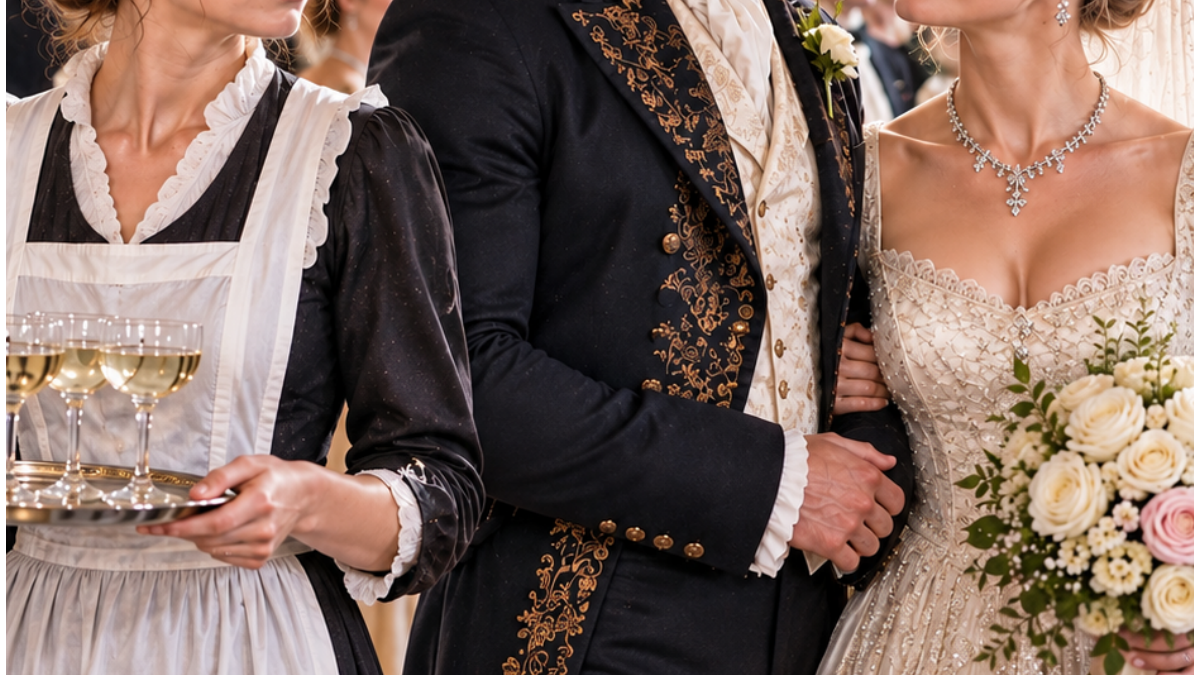
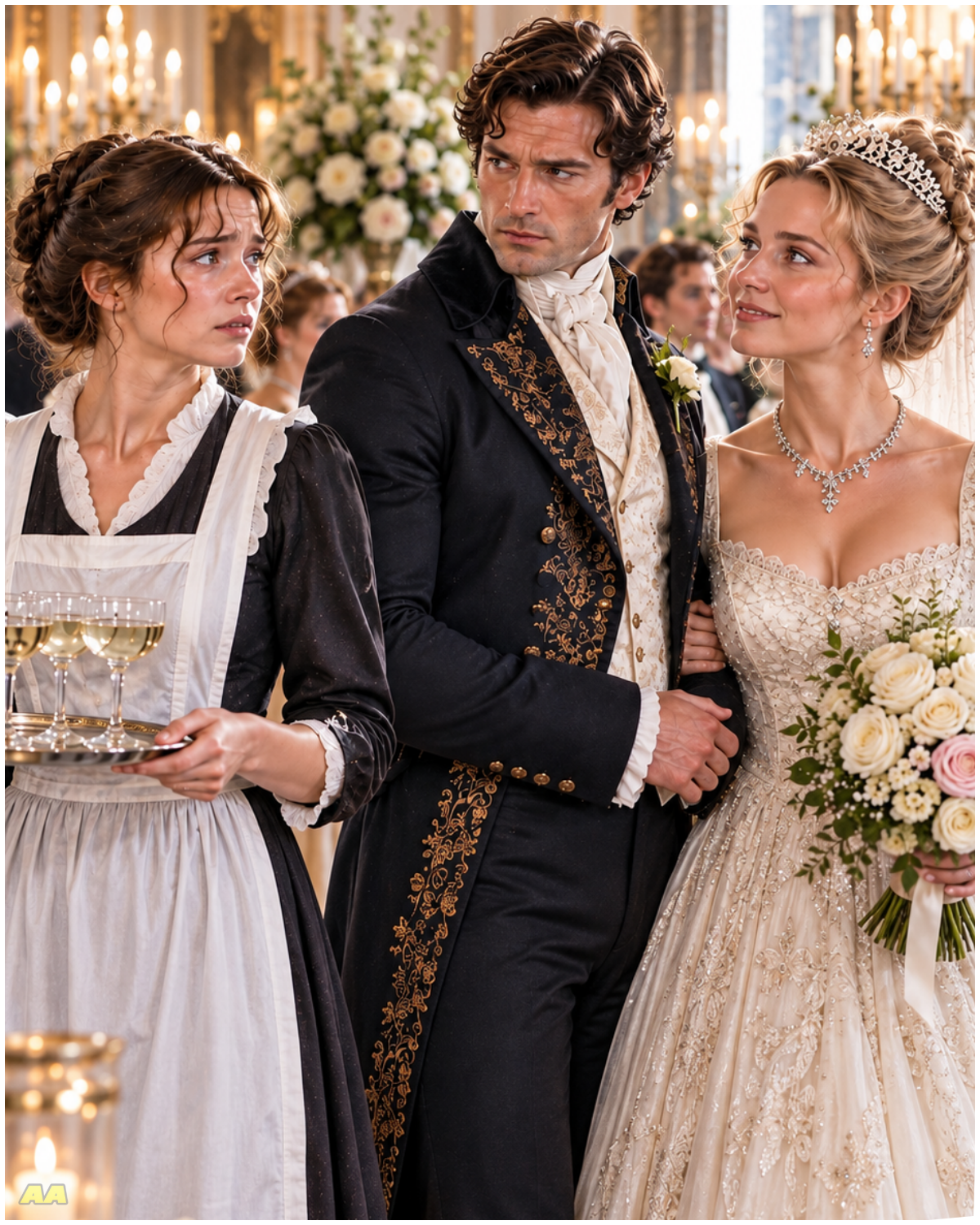
Nan Harker had been at Avaril 12 years and had loved the Duke for every one of them and had never once supposeded that anything would come of it.
She was not a girl who hoped.
She was an upper housemaid of four and 20 who had come to that house at 12 with a box she could not lift, and she knew exactly what she was and exactly what he was.
And she had carried the thing the way a person carries a bad knee.
Then on the morning of his wedding, she was put on the trays and at 7:00 in a back passage, she said the sentence that finished her.
It costs you nothing and it means everything.
He had carried her box up the back stairs.
And that was the whole of it.
She was extremely honest about that with herself for 12 years and never once allowed it to become anything larger, and she wrote it down once at about 20 in the back of a book of Mrs. Denches that she was supposed to be copying a list into, and then scratched it out so hard that she went through the page.
She had been 12. She had come from the parish at Norton with a box that had been her mother’s and had about four things in it, and she had got it as far as the bottom of the back stairs, and had not been able to get it further, and she had been standing there for about 4 minutes, trying not to cry, when a young man came down them two at a time.
He was 18. He was not the Duke then, and would not be for another four years, and he was in his shirt sleeves, and had plainly been out since about 6.
He had said, “That is a great deal too heavy for you.”
And he had picked it up and carried it to the second floor and put it down outside the room and had said, “There.” Which one are you?”
Nan Harker, sir. Well, Nan Harker, he had said, and had gone away down the stairs again.
That was the whole of it.
And there was never one thing more in 12 years.
And Nan Harker was entirely clear about that at 4 and 20 and had been clear about it at 15 and at 18 and at 1 and 20.
He had forgotten it inside a week.
She had never once supposed otherwise.
What she had was about 400 other things, and none of them was anything either.
He said good morning to her on the stairs about twice a week, and had done for 12 years.
He had asked her once, when she was about 17, whether her arm was better, because she had scolded it in the still room, and had had it bound up for a fortnight, and she had said, “Yes, thank you, sir.”
And he had gone on.
He had thanked her by name about nine times in 12 years, which she knew because she had counted, and which she was ashamed of counting, and had gone on counting anyway.
And once when she was 20 and he was 6 and 20 and had been duke about 2 years, she had come into the library at about 10 at night to do the fire and had found him asleep in a chair with about four papers on the floor.
And she had picked the papers up and put them on the table and had built the fire up and had gone out.
And he had never known she had been in the room.
She had thought about that for about 4 years.
She was extremely clear about what it was and she never once dressed it up.
It is not hope. She wrote in her own head about 400 times because she never wrote anything down after the book.
I am not a fool and I have never been a fool.
He is a duke and I do the great.
There is not one arrangement in England in which anything happens.
And I have known that since I was about 13, and the girls who do not know it are the ones who get into trouble, and I have watched two of them.
It is a thing I have got.
Like Mrs. Dench’s hip, it does not go and it does not get better, and it does not stop me doing anything.
And about once a month, it is bad, and the rest of the time I do not think about it at all.
That last part was not entirely true, and she knew it, and it was the only thing about the whole of it that she ever lied to herself about.
There were three things about Aval that a person who had not been in service would never have understood, and Nan Harker had understood all three of them by about 14.
The first was that she saw him more than his own family did.
That was simply arithmetic. The old duke had been alive until she was 16 and had been at Avaril about 4 months in the year.
His mother had been in London a great deal.
There had been a sister who married at 20 and went to Yorkshire and came back about twice.
And Nan Harker had done the West Passage every morning for 12 years, and James Corv came down it at 7, and she had passed him about 400 times a year for 12 years, and had said good morning to him about half of those.
She had seen that man on more mornings than his mother had.
The second was that she knew a very great deal about him, and none of it was anything.
She knew he took his tea without sugar and had since he was about 20 because she had carried the tray up about 900 times.
She knew he read in bed and put the candle out at about 1, and that the whole household had given up telling him it was bad for the hangings.
She knew he had a bad shoulder from a fall when he was 2 and 20, and that it went in the cold, and that he had never once mentioned it to anybody in her hearing.
She knew because she did the great that he burned his own letters and did not leave them for anybody, which about four men in a hundred do.
And she knew that he had cried exactly once in 12 years on the night the old duke died in the library at about 2:00 in the morning and that he had done it entirely silently and that she had been outside the door with the coal and had stood there for about 4 minutes and had then gone away and come back an hour later.
She never told one living soul about that until she was 60.
And the third thing was that none of it was knowledge.
She wrote about that once at about 20 in the back of the book before she scratched it out.
I know about 400 things about that man and I do not know him at all and those are entirely different and the girls in the kitchen do not understand the difference and I have got nobody to explain it to.
I know what he takes in his tea.
I have got no idea what he thinks about anything.
And he does not know one single thing about me and never will.
And that is not unkind of him because there is no arrangement in this house in which he could.
She had been in love once besides which almost nobody ever knew.
There was a man called Sam Rudd who was second footman at Aval when she was 19 and he was 2 and 20 and he was extremely good-looking and perfectly pleasant and he asked her four times over about a year.
She said no every time and could not properly explain why and she was honest with herself about it in the fourth year afterward and never once dressed it up.
I did not say no because of his grace.
I want that written down because it would be a very fine thing to say and it is not true.
I said no because Sam Rudd was going to be a butler somewhere in about 9 years and I should have been the butler’s wife and I could see the whole of it.
The four rooms and the four children and the being at somebody’s back door until I was 60 and I could see it so clearly that it frightened [clears throat] me and I have got no idea whether that is because of his grace or not and I have thought about it for 4 years and I never shall.
Sam Rudd went to a place in Somerset when she was 1 and 20 and married a girl there inside 18 months and Nan Harker heard about it in the kitchen and was perfectly pleased for him and thought about it for about a week.
Miss Louise Afain came to Avaril 3 weeks before the wedding.
That was the ordinary arrangement.
The bride and her mother and an aunt came down and stayed in the house while the last of it was settled and there were about 40 extra people in that building for 3 weeks and the whole of the staff went to about 14 hours a day.
Nan Harker was put on the west rooms which meant Miss Feains.
She said afterward that she had braced for it for about a month and that none of the bracing had been the smallest use and that the actual difficulty had not been what she expected at all.
She had expected to hate her.
What happened instead was that Nan Harker went into a bedroom at 7 in the morning on the first day and found a girl of 1 and 20 sitting on the edge of the bed already dressed at 7 in the morning in a house where nobody of her sort was up before 10.
“Oh,” said Miss Fain, “I am extremely sorry.
Am I in your way?
I can never sleep in a strange house and I have been up since about 5 and I have been trying to work out how to get a cup of tea without ringing at 5 in the morning and making somebody get up.
Nan Harker stood in that doorway.
I can get you tea, miss.
Not if it is any trouble.
It is my work, miss.
It is not trouble. Nan came in and began on the curtains.
And if you are up at 5:00, you may ring at half because the kitchen fire is in from 4:00 and there is always somebody and you will not be getting anybody out of bed.
Is that true or are you being kind?
It is true, Miss. I would not be kind about a thing like that because you would find it out in a week and then you would not believe anything else I told you.
Miss Feain laughed and Nan Harker went on with the curtains and thought, I cannot hate her.
She is going to be extremely easy to work for and she is going to say thank you every single time and she is going to be sorry about the tea for 3 weeks and I have got to do these rooms for 20 days.
The first thing was the linen.
That was the fourth morning and it was nothing at all and Nan did not think one thing about it at the time.
The pillow slip was wet, not damp, wet, in one place, about the size of a hand, and Nan Harker had been doing bedrooms for 12 years, and had stripped about 4,000 beds, and knew exactly what she was holding.
She put it in the basket and said nothing to anybody.
Because a housemaid who says anything to anybody about a wet pillow slip is a housemaid who does not laSt. And because it is not a thing that means anything by itself.
Brides cry. Girls of 1 and 23 weeks from their weddings cry about four times a week and always have and it does not signify.
It was wet on the sixth morning and on the seventh.
The second thing was the great.
Miss Feain had a fire in her room in the evenings because it was the spring and the west side was cold.
And Nan did that great at about 6 every morning.
And from about the eighth day there was paper in it.
Not much, about a half sheet a night, burned down properly, and Nan Harker rad out about four of them over a week, and never once looked at one.
She was extremely fierce about that afterward and said it to four separate people over the years and never varied it.
I did not read them.
Not one, not a corner of one.
And I want that said because everybody assumes it.
And it is the whole of the difference between what I did and what they say I did.
I know what a burned letter looks like in a great and I know how much paper it is.
And that is all I knew.
And it is all I ever knew.
A person burns a letter for about four reasons, and one of them is that they have written a thing they must not send, and the third thing was the window.
That was about the 14th day, and it lasted perhaps 4 seconds, and it was the whole of the business.
Nan had come in with the water at about 7, and Miss Feain had been at the window, which she often was, and had not turned round when the door opened, which she never did.
She always turned round. She always said good morning.
She was a girl who could not be in a room with a servant and not speak to her.
She did not turn round.
And Nan Harker, standing 4 ft inside a bedroom door with a can of hot water, looked past her at the yard below to see what she was looking at.
There was a man crossing it.
He was about 5 and 20 and he was in black and he had come out of the chapel end and Nan knew him.
A Mr. Ray who was a cousin of Miss Feains on her mother’s side and who was in orders and had come down with the family and had been in that house a fortnight.
He was crossing the yard with a book under his arm and he did not look up.
And Louisa Feain stood at that window and watched him go the whole length of it and Nan Harker stood behind her with a can of water and watched Louisa Feain’s face in the glass.
She said afterward to about three people in her life and to one of them 50 years later that she had known in about two seconds and that it had not been a suspicion and had not been a guess.
I know that face. I have got that face.
I have had it since I was about 15 and I have seen it in a glass about 400 times and there is not one woman in England who could look at it and mistake it for anything else.
It is not that she likes him.
Girls look pleased when they like somebody.
That is a girl watching a man walk across a yard who is going to walk across a great many yards for the rest of her life and never once be hers.
And she is not going to say one word about it to anybody as long as she lives.
Louisa Fain turned round about 4 seconds later and her face was entirely ordinary.
Good morning, Nan. Is that hot?
You are very good. Good morning, miss.
And Nanharker put the water down and went out and got to the end of the passage and had to stand still for about a minute.
There was one more thing in those three weeks, and it was the worst of them, and it happened on the 17th day, and lasted about a minute.
Miss Feain asked her about him.
It was in the evening at about 9 and Nan was doing the fire and Louisa Feain was at the dressing table with her hair down and she said to the glass and not particularly to anybody.
Nan, you have been in this house a long while, 12 years, miss.
Then you have known his grace since he was quite young.
Nan Harker knelt at that grate with the tongs in her hand.
I have been in the house, miss, she said.
That is not the same as knowing him.
No. Louisa Feain was looking at her own hands.
No, I suppose it is not.
I am sorry. That was a stupid thing to ask you, and I have been in a great many houses, and I know perfectly well that one does not.
It is only that I have been here a fortnight and I have got nobody at all to ask and I have found out that I do not know one single thing about the man I am marrying in 9 days and that there is nobody in England I can say that to Nan Harker put a piece of coal on that fire.
She said afterward to about two people and one of them 50 years later that this was the moment and not the window at all and that she had spent about 40 years being slightly ashamed that she had not seen it at the time.
She has just asked me for help in a bedroom at 9 at night with her hair down in about nine words and she has done it the only way a girl of 1 and 20 can do it which is sideways and to a glass and I said that is not the same as knowing him and put a piece of coal on the fire.
What she actually said at the time was, “He is a good man, miss.” And Louisa Feain said, “Yes, everybody says that.” And neither of them said anything else.
And Nan Harker finished the great and took the tongs and went out and stood in that passage afterward for about half a minute with her hand flat on the wall.
Everybody says that she has been told he is a good man by about 40 people in a fortnight and not one of them has told her anything else because there is nothing else anybody knows to tell her.
And I have got about 400 things I could have said.
That he takes no sugar.
That he reads until one.
That he cried in the library the night his father died and did it so quietly that I only knew because I had the coal.
And I could not say one of them because a housemmaid does not and because every single one of them would have told her exactly how much I have been watching him for 12 years.
She wrote about that in the laundry years later in the worst month and it was the only entry in the whole of that year that she could not read afterward without stopping.
I have thought about the fire in the bedroom about 400 times in this place.
If I had told her one true thing about him that night, one, any one of them, she would have had something.
She would have gone into that church knowing that the man she was marrying reads in bed and cried once and takes no sugar, and it is nothing at all, and it is a great deal more than she had, and she might have found a way to want him.
I do not say she would have.
I say she might, and I shut it off, and I shut it off to protect myself.
And 9 days later, I went down to a passage at 7 in the morning, and everybody has been calling that brave ever since.
I was not brave on the 17th day.
I was a woman kneeling at a great keeping a secret.
And if I had been braver on the 17th, there might not have been a Thursday at all.
She had a week and a half, and she did nothing at all with it.
And she went over that week and a half for the rest of her life because she had it wrong at first and she was honest about that too.
She is in love with her cousin and she is marrying a duke and about 400 women in England did exactly that last year and about 390 of them made a perfectly good business of it.
It is not my affair.
It has got nothing to do with me and there is not one thing I could do about it that would not be monstrous.
And I want it not to be my affair.
She wrote thought on about the 16th day and it was the most honest sentence she produced in 3 weeks.
I want it to be nothing because if it is nothing then I do not have to look at what I should do about it.
And if it is something then I am a housemaid who has to decide.
What changed it was Mrs. Dench on the 19th day saying something entirely ordinary in the linen room.
She is a nice girl, said Mrs. stench.
I will say that for her, and I do not say it often.
She has been in this house a fortnight, and she has not once spoken to anybody as though they were furniture, and I have had four of them through here in 22 years, and she is the only one.
Yes, ma’am. And she is going to be extremely unhappy, said Mrs. Dench, folding.
Nan Harker stopped with a sheet in her hands.
Ma’am, his grace. Mrs. Dench did not look up.
He is a good man, and I have known him since he was a boy, and there is not one thing wrong with him, and he has been in this house 3 weeks with that girl, and he has not once, in the whole of that time, asked her a question about herself.
Not one, nan, I have waited at that table nine times.
He is perfectly civil and he talks about the arrangements and the roads and her father’s people and she answers him beautifully and neither of them has said one thing to the other that could not have been printed in a newspaper and she is one and 20 and she will do it and she will do it well and in about 9 years she will be a woman who says of course my dear and I have seen four of those and I shall not see another one without minding.
Mrs. Dench put the sheet down.
But it is not our business, she said.
And I have said too much, and you will not repeat one word of it, and that is the end of it.
Nan Harker stood in that linen room.
And the thing that went through her, the thing she said afterward had been the whole of it, and which she never once pretended had been noble, was this.
It is not that she does not want him.
It is that he does not know.
He has been in a house 3 weeks with a girl of 1 and 20 and he has not asked her one question about herself and he is going to marry her on Thursday and he has not the faintest idea that she is standing at a window in the mornings and in 9 years he will find out not from her.
She will never tell him and she is exactly the sort who never would.
He will find out the way men do all at once at about 40 in a room and it will be too late for both of them and I am the only person in this house who knows.
She did nothing for two more days.
She said afterward that those two days had been worse than the wedding morning and she had never been able to explain why to anybody and that the reason was one she only worked out when she was about 50.
Because for 2 days I knew I was going to do it and I spent the whole of them trying to find a reason that was not the true one.
The true one was that I could not stand in that gallery on Thursday with a tray and watch it happen and know and that is not a good reason.
>> [clears throat] >> That is a woman who cannot bear to be in a room, and I have never once claimed it was anything better, and about four people over the years have tried to give me a better one, and I have not let them.
She got up at 4 on the Thursday because she had not been asleep since about 1:00, and she did her own work until 6.
That was deliberate, and she was clear about it afterward.
She did the whole of her morning first, the west passage and the two grates and the water, because she had worked out at about 3:00 in the morning that whatever else happened that day, about 40 people were going to want their breakfast, and it was not their fault.
And at a/4 to 7:00, she went down to the estate passage and stood in it.
She knew he would come.
That was the one piece of the whole thing she was certain of, because James Corv had gone out at 7 every morning of his life, that she had been in that house, and he came down the estate passage to do it, and she had passed him in it about 400 times in 12 years.
He came at about 3 minutes paSt. He was dressed for the morning, and not for the wedding, and he had a stick, and he was going out.
And he saw a housemaid standing in the passage and said, “Good morning, Nan.” and got about 4 feet past her before she said anything.
“Your grace,” he stopped. Nanharker said afterward that she had prepared nine sentences over 2 days, and had thrown all of them out at about 2:00 that morning, and that what came out of her in that passage had not been prepared at all.
“I want to say something to you, and it will take about a minute, and it is going to cost me my place,” she said.
And I have thought about it for 4 days and I have not found a way of saying it that does not sound like exactly what everybody is going to say it is.
The Duke of Avaril turned round.
Nan, please let me get to the end, sir, because I shall not manage it if I am stopped and I have got to say the whole of it.
He stood in that passage and did not say anything.
Miss Feain does not want to marry you.
Nobody in that passage moved.
I have done her rooms three weeks, said Nan Harker.
I am not going to tell you the things I have seen because two of them are the sort of thing a servant sees and does not repeat.
And I am not going to start today.
But I have watched a woman look at somebody she cannot have.
And I know exactly what that looks like.
And I am not going to tell you how I know.
James Corv stood in his own back passage on the morning of his wedding.
That is a very serious thing to say.
He said it is the most serious thing I have ever said in my life and I have been two days deciding to say it.
Who is it? I am not going to tell you that either, said Nan Harker.
Nan, I have got no proof, sir.
I want that said out loud before anything else because you are going to ask me for some and there is not any.
I have not read one letter.
I have not listened at one door.
Nobody has told me anything, and I have not asked anybody anything.
And if you take me to Mrs. Dench this minute, I have got nothing whatever to show you.
I have got 3 weeks of doing a bedroom, and I know what I know, and it is worth exactly nothing, and I am aware of that.
The Duke of Avil looked at a housemaid in a passage for what she afterward reckoned was about 10 seconds.
Then why have you told me?
He said. And Nan Harker discovered that she was going to answer that honestly because she had come down those stairs at a/4 to 7 having decided that if she was going to be finished, she would at least be finished for the true thing.
I beg your pardon. You have been in a house with that girl 3 weeks, sir.
And you have not once asked her a question about herself.
Not one. And I do not say that to be insolent.
And I know exactly how it sounds coming out of me.
You are going to marry her at noon and you are a good man and you will be good to her.
And in about 9 years you will find out all at once in a room at about 40 and it will be too late for the pair of you.
And I have got about 4 hours in which somebody could ask her and there is one person in England who is able to and it is not me.
She stopped. That is the whole of it, said Nan Harker.
I have said it, and I shall not say another word about it as long as I live, and I know precisely what happens to me now, and I have known since Tuesday, and I came down anyway.
James Corv put his hand on the wall.
Say the last part again.
Which part, sir? The nine years.
Say it again. Nanharker said it again.
And the Duke of Avaril stood in that passage with his hand flat on the wall and said in a voice she had never heard from him in 12 years.
My mother said, “Of course, my dear to my father, for 19 years, and I have been listening to it since I was about six.
Nobody in that passage said anything at all.
Go and do your work.” He said, “Nan, go and do your work and do not speak to anybody.
And I am not going to tell you what I am going to do because I have not the smallest idea.
What he did was ask her.
He did it at about 8 in the small drawing room with the door open and Miss Feain’s aunt in the next room and it took about a quarter of an hour and it was the best thing James Corv ever did in his life.
He never told Nan Harker one word of what was said in it.
That was deliberate and he explained it to her years later in about nine words.
It was hers and you had already given me the whole of yours.
What Louisa Fain told her much later and in full was that he had come in and sat down and had said, “Loua, I am going to ask you a question, and I have not asked you one in 3 weeks, and I have understood this morning that this is entirely my doing.
Do you want to marry me?
And Louisa Feain, who was 1 and 20 and had been up since 5 and had burned about 14 letters in 3 weeks, had sat in that chair and had not been able to say anything for about 4 seconds.
And then she had said no and had begun to cry so hard that her aunt came in from the next room.
It came apart over about 4 hours and it came apart quietly.
That was almost entirely Louisa’s mother, who was a woman of about 50 that Nan Harker had thought very little of for 3 weeks, and who turned out on the day to be worth about four of anybody else in that house.
Mrs. Fain heard the whole of it at about 9 in her daughter’s bedroom in about 4 minutes, and did not say one word of reproach to anybody.
What she said was, “Then we shall put it about that Louisa is ill, and she is going to be ill for about a fortnight, and by the time she is well, the whole thing will have been put off and not broken off, and in about 4 months, it will be understood on both sides that it did not answer.” “Mama, you may cry afterward.
There are about 200 people coming to this house at 10 10 and I have got an hour and a half and I am not going to have my daughter be the girl who ran away from a duke at the altar for the next 30 years.
She was extremely good at it.
There was a physician sent for and there was a great deal of coming and going and the 200 people were met at the doors by servants with a message and about 90 of them never got out of their carriages.
And by about 2:00 in the afternoon, it was, as far as that county ever knew, a wedding put off on account of the bride’s health.
There was one difficulty, and it was Nan Harker, because about nine people in that house knew that an upper housemaid had stopped the Duke in the estate passage at 7 in the morning, and that he had gone up to Miss Feain at 8, and that the whole thing had come to pieces by 10:00.
Mrs. Dench sent for her at about 6:00 that evening.
“Sit down,” she said. Nanharker sat down.
“I have been 22 years in this house,” said Mrs. Dench.
“And I have had about 400 girls through my hands, and I have never once had this, and I have been 4 hours working out what to say to you, and I have not got it.
So, I shall ask you a question, and I want the truth, and I shall know if I do not get it.” Did you read anything?
No, ma’am. Did you listen at a door?
No, ma’am. Did anybody tell you anything?
Nobody has told me one word, ma’am.
And I have not asked one question of anybody in 3 weeks.
Mrs. Dench sat back. Then what did you have?
I did her rooms, said Nan Harker.
That is the whole of it, ma’am.
And I am not going to tell you what was in them because it is hers and it is not mine.
And I saw her at a window and you went to his grace on the strength of a window.
Yes, ma’am. Mrs. Dench put both hands on the arms of her chair.
Nan, she said, I have got to ask you the other thing, and I am going to ask it plainly because you have been in this house since you were 12, and you have never been anything but straight with me.
Was it for him? Nan Harker sat in that chair, and there was about 4 seconds of silence.
I do not know, ma’am, she said.
Mrs. Dench closed her eyes for a moment.
That is the worst possible answer.
It is the only one I have got, and I have been 4 days looking for a better one, said Nan Harker.
I could sit here and tell you it was for her, and there is a version where it is true.
I have watched that girl burn letters in a great for a fortnight, and I did not want it to happen to her.
And there is another version where a woman who has been in this house 12 years could not stand in that gallery with a tray and watch it.
And I have not been able to get that one out of the way.
And I have tried. So I do not know, man.
And if I tell you I do know, then I am lying to you in this room to save my place, and I have not got much left, and I should like to keep that.
Mrs. Dench looked at her for a long time.
Well, she said, “That is the first thing anybody has said to me today that I believe entirely.” The Duke of Avaril refused to dismiss her, and that was the thing that finished it.
He said so to Mrs. Dench on the Friday in the estate room in about four sentences, that Nan Harker had done nothing whatever wrong, that he was extremely aware of what he owed her, that she was to stay in that house, and that there was to be no more said about it.
And Mrs. Dench, who had been 22 years in that house, and who was fond of him, said the thing he had not thought of.
Your grace, may I say something that you will not like.
Say it. You have just made it a great deal worse for that girl, and you have not seen it.
James Corv put down his pen.
There are about 40 people below stairs, said Mrs. Dench.
And every one of them knows that an upper housemaid went to you in a passage at 7 in the morning and that your wedding did not happen.
And now they know that you have refused to turn her off, which is a great kindness, sir, and it is the correct thing.
And I am not saying you should have done otherwise.
But you have got to understand what it looks like from a scullery.
A housemmaid stops a duke’s marriage on the morning of it, and the duke keeps her on.
There is one story in England that fits those two facts, and every single person in this house has arrived at it by now, and there is not one thing you or I can do about it.
James Corv sat in his own estate room.
Then what would you have me do?
Nothing, said Mrs. Dench. That is the whole of my difficulty, sir.
If you turn her off, she is ruined, and it is monstrous.
If you keep her, she is talked about and she will be talked about for 30 years.
And if you speak to the household about it, then everybody in it knows that it wanted speaking about.
There is no arrangement. She did a thing that has got no good ending for her, and I think she knew that on Tuesday, and I have thought about that a great deal since last night.
Louisa Feain came to find her on the sixth day, which nobody had expected, and which Mrs. Dench was extremely put out about.
She came down to the linen room herself at about 4:00 in the afternoon, having asked a footman where it was, and stood in the door of it in a house where she was still nominally a guest, and where the whole arrangement had come to pieces 6 days before.
“Miss Feain, I am going home tomorrow,” said Louisa.
My mother has arranged it, and I have been ill for a week, and I am to be ill in Wiltshire instead, and I have got about a quarter of an hour, and I have come to say four things to you.” Nan Harker put down the sheet she was folding.
“Miss, you should not be down here.” “No, I should not, and I have thought about that the whole way down those stairs, and I have come anyway, and I want to begin with the thing I have been most afraid of.” Louisa Feain stood in that linen room.
“Did you do it for me?” she said.
Nan Harker stood very still.
“I want the truth,” said Louisa.
“And I want it because I have got to live with this for the rest of my life, and I would rather live with the true one.
And I want to say before you answer that there is no answer you can give me that will make me less grateful, and that I shall not think one thing the worse of you, whatever you say.” And Nan Harker standing in a linen room at 4 in the afternoon with a sheet half-folded gave the same answer she had given Mrs. Dench and would give about four people over 60 years.
I do not know Miss Louisa Feain closed her eyes for a moment.
Thank you, she said. Miss, no, I mean it, and I want to explain it because I have been 6 days dreading that you would say yes.
She came further into that room.
If you had told me you did it for me, then I should have been in debt to you for something nobody could ever repay and I should have spent 30 years trying and I have watched my mother be in that position with somebody and it eats people and I do not know is a thing I can live beside.
It means you are a person and not a saint and I would a very great deal rather be helped by a person.
That is not how it will be told, Miss.
No, said Louisa Feain. It will be told about 400 different ways and about 390 of them will be filthy.
And I have thought about that since Thursday and it is the second thing I came to say.
You are going to be talked about and I am not.
And that is entirely the wrong way round and there is not one thing I can do about it this week.
So I am going to tell you what I can do and it is very little.
I am going to remember.
That is all. I am going to be alive somewhere and I am going to know exactly what happened in this house on Thursday.
And if there is ever any day for the rest of my life when that is of the smallest use to you, you will write to me and I shall come and I know what that is worth today, which is nothing at all.
Nan Harker folded the sheet the rest of the way.
It is not nothing, miss.
It is nearly nothing. And both of us know it and I am one and 20 and it is the whole of what I have got.
Louisa was at the door.
The third thing is that I am sorry and I shall only say it once because you will not want it four times.
You have lost something this week that I have not and I got the whole of the benefit and I want that said out loud in this room by the person it was done for.
And the fourth miss Louisa Feain stopped in that doorway.
His name is Robert,” she said.
Nanharker looked up. “You have not asked me and you never would.
And I have understood since Thursday that you knew and did not tell him, [clears throat] and I have thought about that a very great deal.” Louisa’s chin was up, and her voice was not entirely steady.
He is my cousin and he is in orders and he has got about 140 a year and I have not said one word to him about any of it and I shall not for a very long time and possibly never.
And I have told you because you are the only person in England who knew and kept it and I would rather you had it from me than went on carrying a thing you had guessed.
She went out and Nan Harker stood in that linen room with a folded sheet and understood about 4 seconds too late as she understood most things that year that a girl of 1 and 20 had just come down two flights of back stairs in a house where she was being pied to give a housemmaid the only thing she had which was the truth about herself.
“She has just told me the one thing that could ruin her,” Nan wrote about a year later in the laundry.
She has put it in my hands on purpose 6 days after I put a thing in hers.
Nobody ever tells that part of it.
Everybody in that county knows what I did on Thursday.
Not one person alive knows what that girl did in a linen room on Tuesday, and it was the braver of the two, and I have thought so for a year.
Nan Harker stayed 9 days.
She said afterward that she had known on about the second one and had made herself do the whole nine because she had wanted to be able to say for the rest of her life that she had not run.
It was not cruelty. She was extremely careful about that afterward and about four people over the years tried to make it into a story about wicked servants and she stopped every one of them.
Nobody was cruel to her.
Nobody said one word. What happened was that she came into the servants hall on the Friday evening and about 14 people looked up and the conversation did not stop.
It changed in the way conversation changes into something that anybody may join.
And that went on for 9 days.
Nobody cut her. Two of the girls were kinder to her than they had ever been, which was worse.
The cook gave her the best of the supper twice, which was worse than that.
And on the ninth day, a scullery made of about 15 called Bet, who had been at Avaril about 4 months, and who Nan had been teaching to do a great, said to her in the passage, not unkindly, and with the whole of a 15-year-old’s honest curiosity.
Nan, is it true you are to be married to his grace?
Nan Harker went up to Mrs. Dench that night and gave notice.
You are not obliged to go, said Mrs. Dench.
No ma’am, I am not obliged.
And he has said so, and I have thought about that every day for 9 days.
I have got about four things to weigh, and I have weighed them.
And here is where I have come to.
If I stay, I am the housemmaid who stopped the wedding, and I shall be that in this house for 30 years, and in about 4 years there will be a new duchess in it, and somebody will tell her about me inside a fortnight, and I could bear the whole of that.
I want you to know I could.
I have been in this house 12 years and I am not frightened of being talked about.
What I cannot bear is Bet asking me in a passage, Mom, because she was not being wicked and she was not being sly and she is 15.
And she asked me a plain question that everybody in this house has been thinking for 9 days.
And I stood in that passage, and I had to say no to a child about the thing I have not said out loud to any living creature in 12 years.” Mrs. Dench sat at her own table for a long moment.
“I shall give you a character,” she said.
“Ma’am, you cannot, not one that is any use.
You cannot write that I left after 12 years without saying why.
And the first house I take it to will write to you, and you will not lie for me, and I would not ask you to.” “No,” said Mrs. Dench.
“I would not lie for you, and I have been sitting here for a minute hating that about myself, and it is the truth, and you are entitled to it.
I shall write that you were 12 years in this house, and were entirely honest and hardworking, and left of your own accord, and I shall write it as warmly as I can.
And any woman in this county who reads it will write to me and ask why a girl of four and 20 left a place she had been in 12 years.
And I shall have to answer.
And what I shall answer is that you did nothing whatever wrong.
And that I was sorry to lose you and it will not be enough.
And both of us know it.
Nan Harker went out of Avaril on a Tuesday morning with a box she could carry perfectly well by herself.
She had £4 and a character that could not be used.
And she went to Norton because it was the only place in England she knew the name of.
Norton was the parish she had come from at 12.
There was nobody in it belonging to her.
Her mother had died when she was 9, and there had never been a father anybody could name.
And she went there because a woman of four and 20 walking out of a house with a box has got to say a place to the carrier.
She got lodging at 4 pence a night at a house by the church and she had it for 9 days and then went to three pence in a worse one.
She looked for a place for 6 weeks.
She was extremely exact about that period afterward.
And she never once made it sound romantic.
6 weeks, four houses that would see her and the same thing every single time.
And she had known it would happen before she ever got on the carrier’s cart.
And it had happened anyway.
And it had been worse than knowing.
The character was read. It was a good character, and Mrs. Dench had written it as warmly as she could, and there was not one thing in it that was not true.
And every woman who read it asked the same question inside about 4 minutes.
12 years at Aval, and you left of your own accord.
Yes, ma’am. Why? And Nan Harker had four answers and had tried all of them by the third house.
The truth got her out of the room in about a minute.
There was a difficulty about his Grace’s marriage and I gave notice is a sentence that no woman in England is going to follow up in a small county and the second house wrote to Mrs. Dench and got a perfectly honest answer that helped nobody and did not write to Nan again.
A refusal to answer was worse.
A woman who will not say why she left a place she was in 12 years has said the whole thing and a lie was no use at all because Avaril was 9 miles off and everybody in that county had a cousin in service.
She wrote it out in the fifth week.
She had begun writing things down again by then on the backs of things because there was nobody at all to say them to.
I have got the best character in this county and it is worth nothing.
And the reason it is worth nothing is that it is true.
If Mrs. Dench had turned me off for stealing, I should be in a place by now.
There are about four houses in this county that will take a girl who was turned off for stealing because everybody knows what stealing is and everybody knows what to do about it.
Nobody knows what to do about me.
I have not done anything.
That is the whole of the difficulty and I have been five weeks finding it out.
There was one house that would have had her and she refused it and she never told Louisa Feain about that and never told anybody else either.
It was the third of the four and it was a Mrs. Otley atranom who was about 5 and 40 and had two daughters and wanted an upper housemaid and who read that character and asked the question and got the truth and who then sat back in her chair and looked at Nan Harker for about 4 seconds and said something nobody else in that county said.
You are the girl from Avaril?
Yes, ma’am. I heard about it in the spring from about four people, and every one of them had it differently.
And I want to tell you that the version I liked best was the one where a housemmaid told a duke his bride was in love with somebody else and lost her place for it.
Mrs. Otley put the character down.
I shall take you. Nanharker stood in that room.
Ma’am, on one condition, and I am going to put it plainly because I do not think you are a fool.
You will not speak of it, not to my girls and not to my servants and not to anybody in this parish ever.
And if it is ever raised in this house, you will say that you left Avaril because you wished for a change.
I have got two daughters of 17 and 19 who are going out next year.
And I am not having a housemmaid in this house with a story attached to her.
And I want you to understand that this is the only terms on which any woman in this county is going to take you and that I am being a great deal more honest with you than the rest of them will be.
Nanharker stood in that room for about half a minute.
No ma’am, she said, I beg your pardon.
I am extremely obliged to you and you are the only person who has told me the truth in 5 weeks and I am not going to take it.
You have got no other offer.
I have got no other offer and I have got £4 and I know exactly what I am doing, said Nan Harker.
And I want to say why, ma’am.
Because you have been straight with me, and you are owed it.
I did a thing on a Thursday morning, and I have never once been sorry for it, and I have not got much left.
If I take a place where I have got to say I left Avaril because I wished for a change, then I have got to say it every time anybody asks for about 30 years to your girls and to your cook and to everybody in that parish.
And I should be lying about the only thing I have ever done that was worth anything.
I have not got a character and I have not got a place and I have got £4.
I am not giving up the last of it for £8 a year.
Mrs. Otley looked at her for a long moment.
You are going to have a very hard time, she said.
Yes, ma’am. I am aware of it, and I have been aware of it since about the second week.
Well, Mrs. Otley picked up the character and handed it back.
I shall tell you one thing, and then you may go.
I have been in this county 5 and 40 years, and I have never once refused a thing I wanted because of what I should have to say about it afterward.
And I have got two daughters going out next year who are going to do exactly as they are told.
And a girl of four and 20 with 4 has just stood in my morning room and turned down a place because of a sentence.
Nanharker walked the four miles back to Norton and cried for about a mile and a half of it and took the laundry the following week at four shillings.
She wrote about Mrs. Otley twice in 40 years, and the second time was when she was about 60.
I have thought about that room more than any other part of it, including the passage.
The passage was 4 days of deciding and about a minute of doing, and I have never once been in any doubt about it.
The morning room at Cranom was about half a minute, and I have been in doubt about it for 40 years, and I still do not know whether I was right.
And I think that is because it was the only time in the whole business when I had an actual choice, and I could see both roads.
£8 a year and a bed and a lie I should have told about 400 times or nine months of soda and my own hands ruined and the shop at the end of it which I did not know about and could not have counted on.
I have got the shop.
That is not an argument and I know it is not because I did not know about the shop when I said no to her.
She took work at the Norton Laundry in the sixth week at four shillings a week and no keep.
It was the worst 9 months of her life, and she said so plainly for 50 years afterward, and never allowed anybody to make it into a lesson.
The laundry was six women and about 14 hours a day in a stone room.
And Nan Harker was four and 20, and had been an upper housemaid at a great house, and had done about 9/10 of her work standing up in clean rooMs. And she went into that laundry in the spring, and could not straighten her hands properly by the autumn, four shillings a week, and her lodging was 1 and six.
She wrote almost nothing in those nine months.
And what she did write she kept and it was four lines from about the fifth month.
I am not sorry. I want that written down because I have been asked it twice this week by women in that room who do not know one thing about it and are only being kind.
I would do it again on the Thursday morning.
I have gone through it about 400 times in this laundry and I get to the same place every time and the places that I could not have stood in that gallery.
I am not sorry and I am extremely unhappy and I have found out this year that those two things sit together perfectly well and that nobody ever tells you so.
Louisa Feain found her in the November.
That was entirely Louisa’s doing and it took her about 4 months and Nan Harker did not find out how it had been done until years afterward and when she did she thought about it for a long time.
Louisa had written to Mrs. dench in the June, a perfectly proper letter from a young lady to a housekeeper, thanking her for a fortnight’s civility in the spring, and had put one line at the bottom asking after the upper housemaid, who had done her rooMs. Mrs. Dench had answered that Nan Harker had left of her own accord in the spring and had gone to Norton and that she had not heard from her since.
And Louisa Feain had then written to the recctor of Norton and to the woman at the Forpen lodging and to two other people and had got nowhere for 4 months because Nan had moved twice.
She found her through the laundry books in the November and she came herself.
Nan Harker came out of that stone room at 7 in the evening in the dark and there was a carriage in the lane and a young woman of 2 and 20 standing beside it in the wet.
Miss Fain Nan Louisa Feain looked at her for about 4 seconds.
Your hands, it is the soda, miss, it goes off in the summer.
And Louisa Feain, who was two and 20 and had been extremely well brought up and had never in her life done anything unbecoming in a public lane, put both hands over her face and cried.
They had it out in an inn parlor at Norton over about 2 hours, and it was not comfortable for either of them.
I have been 4 months looking for you, said Louisa.
I want to begin with that because I do not want you to think I have only just remembered.
Mrs. Dench told me in the June that you had left in the spring of your own accord, and I sat in my mother’s house for about 4 days, understanding what that meant, and being unable to do one single thing about it.
And then I began writing letters.
You need not have, do not, said Louis Feain.
I am going to say the whole of this, and it has taken me 4 months, and you are not going to be gracious at me in the middle of it.
You went to him on the morning with nothing at all, no letter and no proof and nothing anybody could stand behind.
And you did it knowing perfectly well what it would look like.
And you did it about an hour before I should have had to walk down that aisle.
And I have known since the June exactly what it cost you.
And I have known since about the fourth day that you knew what it would cost you before you went down those stairs.
So I am not going to say thank you because thank you is a thing you say for a kindness and this was not a kindness.
It was about 9 mi past a kindness and there is no word for it and I have been 4 months looking for one.
Nan Harker sat in that parlor.
May I ask you something miss?
You may ask me anything as long as I live.
Are you all right? Louisa Feain began to laugh and it went wrong about halfway through.
Nanharker, she said, you have been in a laundry for 9 months, and your hands are like that, and you have asked me whether I am all right.
It is a plain question, miss.
Then I shall answer it plainly.” Louisa put her hands round her cup.
“Yes, and it is a great deal better than that, and I am going to tell you the whole of it, because you have earned it, and because there is nobody else in England I could say it to.
My cousin is Mr. Rey and he is in orders and he has got about 140 a year and we have understood one another since I was 17 and neither of us has ever said one word about it out loud to anybody.
And I am going to marry him in the spring.
Nan Harker put her cup down.
Your mother. My mother has behaved better than anybody in this business except you.
And I did not expect it and I have had to revise about 9 years of my opinions.
Louisa was smiling. She said in the summer that she had spent 1 and 30 years married to a man she had been given and that she had done it perfectly well and would do it again and that she had watched me on a Thursday morning in the spring and had decided that she was not going to make her daughter do it and that 140 a year is not a great deal and that we should manage and that she would rather I was poor and awake than rich and asleep which is very nearly the only interesting thing my mother has ever said.
Nan Harker sat in an inn parlor at Norton and found that her eyes had gone.
“That is what I came out of that laundry for,” she said.
“I want you to know it, miss.
And then I shall not raise it again.
I have been nine months in that room, and I have not once been sorry, and about four times a week, I have wondered whether it came to anything, and it has come to something.
That is all I wanted, and it is a great deal more than I expected.
Nan said Louisa I am going to offer you a place and I want you to hear the whole of it before you refuse it because you are going to refuse it and I have got about four arguments and I should like to use all of them.
Miss, I have got 140 a year coming and a rectory and I shall want one servant and I want it to be you and I have wanted it since the June.
And before you say it, yes, I know exactly what it looks like, and I do not care one straw what it looks like, and neither does Mr.
Ray, and there is nobody else in England whose opinion signifies.
Nan Harker sat very still for about half a minute.
No, she said nan. And I am going to tell you why, miss.
And it is not pride.
And I want that understood because it is going to sound like pride.
If I come to you, then I am the woman who stopped a duke’s wedding and was taken in by the bride.
And that is a story, and it will follow both of us for 30 years.
It will follow you worse than me.
In about 4 years, somebody in that parish will work it out.
And there will be a thing about your household that people are careful not to mention.
And you are going to be a recctor’s wife, and you cannot afford one.
And there is the other half, and it is the true one.
She looked up. I should be your servant, miss, in a rectory on 140 a year, doing everything, and you would never once be able to look at me without thinking about a Thursday morning.
And I should never once be able to ask you for anything and in about 2 years we should both be extremely unhappy about it and neither of us would be able to say why.
You do not want a servant you are in debt to nobody does and it is not a wicked thing to say.
Louisa Feain sat in that parlor for a long moment.
Then what will you take?
She said because I am not going out of this town and leaving you in that laundry and I shall sit in this room until it is light.
If I have to. And Nan Harker, who had thought about almost nothing else for 9 months in a stone room, and who had never once expected to be asked, and had built the answer anyway, said the thing she had built.
A loan, she said, £20 at 4% on a note drawn properly, and I shall pay it back over about 7 years, and I shall not miss a payment.
There is a woman at Norton called Mrs. Peach who has a linen shop and no children and she is about 3 and 60 and she wants to give it up and I have been in that shop about nine times in 9 months and I have talked to her about it four times.
She wants £20 for the stock and the goodwill, and she will let me have the room over it at £4 a year.
And I have done the whole sum about £400 times in a laundry, and it will clear about 5 and30 a year in the third year if I do not make a mistake.
That is what I want, miss, not a place.
£20 on a note that I have got to pay back and it will be exactly as much use to me as a gift and about nine times better.
Louisa Feain looked at her.
You have had this arranged for months.
I have had it arranged since about the August, said Nan Harker, and I have never once had £20, and I never expected to have £20, and I went on doing the sum every night in that lodging anyway, because it was the only thing I had got to think about that was not a Thursday morning.
She was quiet for a moment.
And I want to say one more thing, miss, and then we shall talk about the note.
If you give me £20, I shall have to be grateful to you for the rest of my life.
And I have found out this year exactly what gratitude does to a person and I have not got the constitution for it.
If you lend it to me, then in about 7 years I shall have paid you and we shall be square and after that we may be whatever we like.
Louisa Feain drew that note herself and Mr.
Ray witnessed it and Nan Harker paid it off in 6 years and 2 months and never missed a payment.
She kept it. It was in the box with her mother’s things until she died, and her own daughter found it, and did not know what it was.
The shop was the whole of the third and fourth years, and she never once made it sound easy.
She had £20 and Mrs. Peach’s stock, which she went through herself over 4 days in the January, and which turned out to be about a third rubbish, tape nobody had wanted in 9 years, and a bolt of a color that had gone out before Nan was born, and about £4 worth of thread that was perfectly good.
She sold the rubbish at a loss in the first month, and was extremely frightened about it for a fortnight, and then found she had been right.
I have lost about £3 and I have got the shelves, she wrote.
A shop with a third of it in stock nobody wants is a shop that looks like an old woman’s and every woman in this town has been walking past that window for 9 years knowing exactly what is in it.
They have got to look in that window and see something they have not seen before.
That is the whole of the first year and it is worth £3.
She was in that shop from 7:00 in the morning until 8:00 at night for 4 years, and she did the books herself at 9:00.
She made four expensive mistakes in the first 2 years, and she wrote every one of them down, which was a thing she had got from nobody, and had worked out on her own in a laundry.
She bought too much black in the first autumn because there had been four funerals in the town in 6 weeks and she had thought it would go on and it did not and she had black on those shelves for 2 years.
She let a woman have credit in the second year on nothing but a face and lost about two by it and never let anybody have credit on a face again as long as she lived.
And put a rule up in her own head that she said out loud to about four people over 60 years.
I do not lend and I do not refuse.
Everybody in this town pays me the same and nobody has ever had to ask me twice for anything.
And she made one very good decision in the second year and it was the making of the whole thing.
There were about 400 women in Norton and about 9/10 of them made their own things and every single one of them had to go to Marberry or wait for a peddler for anything that was not tape or thread.
Nanharker began in the second spring keeping four things nobody in Norton kept.
Good needles, decent scissors, buttons that were not horn, and a book of patterns that she bought secondhand for nine shillings, and that anybody might sit and look at for as long as they liked.
The patterns were the thing, she put a chair by the window.
I have got a chair in my shop, and a book on a shelf, and about nine women a week sit in it, she wrote in the third year, and about six of them buy something, and three of them do not, and the three of them come back.
Mrs. Peach never had a chair in 9 and 30 years.
I have thought about that a good deal, and I think it is because she did not want them sitting about, and she was perfectly right that they sit about, and she never once worked out that a woman who has sat in a shop for a quarter of an hour will not walk past it again.
By the fourth year she cleared five and30 and had paid Louisa four years of the note and she had a girl in three afternoons a week called Hessie who was 15 and whom Nan taught the whole trade to over about 6 years and who eventually had the Norton shop after her.
She was extremely proud of the shop and she was extremely lonely in it and she wrote about that once and never again.
I have got a shop and a room and a chair by the window and about 400 people in this town who know my name and I have not had one conversation since the spring that was not about tape.
Mrs. Ray comes twice a year and it is the best two days I have and I count them from about the January and that is the whole of it and it is a very great deal more than a laundry.
And I have found out this year that a thing can be a great deal more than a laundry and still be four walls.
He wrote to her in the second year and she did not answer it and that was the only unkind thing she ever did to James Corv and she knew it at the time.
The letter came in the November and it was four lines and it had plainly been about nine attempts.
Miss Harker, I have been told where you are.
I am not going to come and I am not going to write again unless you answer this and I want you to know that I have understood why both of those are necessary.
I hope you are well.
I am not. JC Nan Harker read that in a stone room at the back of a laundry with about 4 minutes of her dinner left and put it in her apron and read it about 40 times over the following week and did not answer it.
She wrote out her reasons that winter on the back of a bill and kept it for 60 years.
I am not going to answer it and I have been a week deciding and here is the whole of why.
He has written four lines and the last one is I am not.
That is a man asking me for something and he does not know he is doing it.
And if I answer that letter I shall spend the rest of my life being written to by a duke who is unhappy and I have got nothing.
I have got four shillings a week and hands I cannot straighten and I am four and 20.
And if I begin answering letters from Avil, then that is what I have got instead of a life.
And in about 9 years I shall be a woman in a lodging house who gets a letter four times a year and lives on it.
I have seen one of those.
There was a woman at Avaril in the still room when I was about 16 who had a man in the militia who wrote to her and she was about 40 and she had been getting them for 20 years.
I am not going to be her and that is not pride and it is not spite and I am sorryer about this than about anything else I have done because he wrote me four honest lines and I am going to leave them in an apron.
She told him about it in the shop in the sixth year when he asked her as he asked her about 900 things whether she had got his letter.
I got it. You did not answer it.
No, sir. May I ask why?
And you may tell me it is not my business.
And Anne Harker told him the whole of it standing behind that counter including the woman in the still room.
And it took about 4 minutes.
James Corv listened to all of it.
That is the best reason anybody has ever given me for anything, [clears throat] he said at the end.
And I have been 2 years being quietly hurt about it and I should like about a fortnight to stop.
You may have a fortnight.
And I want to say one thing back and then we shall talk about something else.
He had his hat in his hands.
You were entirely right and I have understood it in the last 4 minutes.
I wrote that letter at about 1:00 in the morning and I put I am not at the bottom of it because I wanted you to write back and I have spent 2 years telling myself that it was an honest letter and it was honest and it was also a man of 6 and 30 with 9,000 acres reaching for the one person who had ever said a true thing to him and not thinking for one second about what it would cost her.
You had four shillings a week.
I had four shillings a week and I had avaril and I wrote you four lines about being unhappy.
James Corv looked at that counter.
I should not have written it, and I am glad you did not answer.
And it has taken me 6 years and about a minute to get there.
He came to Norton in the fourth year, and she had known he would eventually, and had not known when.
She had heard about him in the ordinary way, which was that everybody in that county heard about everything, and a linen shop is the worst place in England for not hearing things.
He had not married. That was the thing that came into that shop about four times a year for 4 years in the mouths of women buying tape.
That the Duke of Avaril was four and 30 and had not married and that it was extremely odd and about nine different explanations and Nan Harker had sold tape to every one of them and had said nothing whatever.
He came on a Tuesday in the autumn at about 4:00 in the afternoon and he came alone and on a horse.
The shop was about 12 ft by 14 with a counter and a window and Nan Harker was behind that counter and the bell went and James Corv came in and had to take his hat off because of the beam.
Nan, he said, your grace and then neither of them said anything at all for about 4 seconds and Nan Harker discovered that she was perfectly all right and was extremely surprised about it.
May I? He looked round that shop.
Is there somewhere? There is a room upstairs and I am not going to take you up to it, said Nan Harker.
And I want to say why before you think it is coldness.
There are about 400 people in this town and about nine of them are outside that window at this minute.
And I have got a shop that I have paid 4 years of my life for, and I am not going to have it be a shop that a duke goes upstairs in.
You may stand there and I shall stand here and we may talk perfectly well across a counter and if anybody comes in you will be a gentleman buying a handkerchief and I shall sell you one.
James Corv stood in the middle of that shop.
That is the most sensible thing anybody has said to me in 4 years.
He said it is not sensible sir.
It is that I have got 400 people to live among and you have not.
He told her the whole of it, and it took about half an hour, and she let him, because she had worked out inside about a minute, that he had come 9 miles to say it, and that she was not going to be the person who stopped him.
He said that he had spent 4 years going over that Thursday morning.
He said that he had understood in about the first fortnight that he had come extremely close to a thing that would have ruined two people and that the only reason he had not was that a housemmaid had stood in a passage at 7 in the morning with nothing at all in her hands.
He said that he had gone through his own conduct in those 3 weeks about 400 times and had found that Nan Harker had been exactly right.
That he had not asked Louisa Feain one question about herself in 3 weeks and that he could not now remember one thing she had told him because she had never told him anything because he had never asked.
And he said that he had not married because he had not been able to work out how to do it differently, and that he had spent four years watching himself be perfectly civil to about nine women, and had recognized it every single time.
And I have got no business saying it in your shop, and I have known that the whole way here.
Nanharker stood behind her counter.
Is that all of it?
No. Then say the rest, sir, because I have got about an hour before I shut, and you may as well.
I want you to come back to Avaril, said James Corv.
Nan Harker did not say anything at all for about 4 seconds.
As what, she said, and James Corv, who had thought about that question the whole of 9 mi, and had prepared an answer, and had been extremely pleased with it, opened his mouth, and found that he could not say it.
I do not know, he said.
No, said Nan Harker. I did not think you did, and I want you to know that this is the best answer you could have given me, and I am going to refuse you anyway, and I shall tell you the whole of why.
She came out from behind that counter for the first time.
I have got a shop, she said.
It is 12 ft x4 and it clears about5 and30 a year and there is a room over it that is mine and I got it out of a laundry and a loan from Mrs. Ray and 6 years of not missing a payment and it is the first thing I have ever had.
I came into your house at 12 with a box and I went out of it at 4 and 20 with the same box and everything in between belonged to somebody else.
The bed I slept in and the room I did it in and the clothes I stood up in and I was not badly used and I want that said and not one stitch of it was mine.
So I am not going back to Aval not as a servant and not as anything else and not for you and I have known that since about the second year and I have known you would come since about the third Nan.
And here is the part I have thought about most, sir, and I want you to hear it, and then I shall sell you a handkerchief.
You have come 9 miles to a linen shop because you cannot manage to be married.
That is the whole of it.
And you have said it very well and very honestly, and I believe every word.
And I am not a way of being married differently.
I am not the woman who is not like the nine women.
That is a thing you have got in your head about me.
And it has been there for years and it has got almost nothing to do with what I am because you do not know one single thing about me and you never have.
James Corv stood in that shop.
That is not fair. He said it is entirely fair and I shall prove it in about 4 seconds.
What is my name? Nan Harker.
It is Anne. Anne Harker.
Nan is what Mrs. Dench called me on my first morning because there were two Ans in that house and I was the younger and that was 12 years old and I have been nan to everybody in England ever since and it is not my name.
You have said it about 400 times in 16 years and you have never once asked.
She went back behind the counter.
That is all it is sir.
I am not angry and I have not been angry since about the second year.
You do not know me.
You know a housemaid who did a thing on a Thursday morning and you have been thinking about her for 4 years and she is not me.
She is about a quarter of an hour of me and it is the only quarter of an hour you have got.
He came back in the spring.
He did not write first and he did not stay long and he bought a handkerchief which Nan Harker charged him one and threen for and which he paid.
And he asked her one question and went away.
What did your mother do?
She was in the laundry at the Norton workhouse, sir, and she died when I was nine of a thing in the lungs, and there was never a father anybody could put a name to, and I have never once minded about that, and I want that said.
Thank you, said James Corv, and put his hat on and went out.
He came about four times a year for 6 years.
He never once stayed more than about half an hour, and he never once went upstairs, and he bought something every single time.
And by about the third year, the whole of Norton had got used to it, and had settled on an explanation that was almost entirely wrong, and that suited Nan perfectly well.
What he did in those half hours was ask her questions.
She counted them for a while and then stopped counting at about the fourth year.
And she said afterward that she had stopped because she had noticed she was doing it and had recognized the girl who had counted nine thank yous in 12 years and had not liked the look of her.
He asked about the shop and about the stock and about what a linen draper does in a bad year.
And he asked about Mrs. Peach who died in the second year and left Nan a clock.
He asked what she had thought about in the laundry.
He asked in about the fifth year what she had been afraid of when she was 12.
And Nan Harker told him that it had been the back stairs at night because they were unlit.
And she had come from a parish house where there had been nine people in a room and she had never once slept alone until she was 12.
And James Corv had stood in that shop and had not been able to say anything for about half a minute.
And in the sixth year, he asked her the only question that ever got past her.
Anne, he said he had called her Anne since the spring after the first visit, and it had taken her about a year to stop looking round.
Why did you come down to that passage?
Nan Harker put down the tape she was measuring.
You have asked me that before, sir.
I have asked you what you saw.
I have never asked you why you came down.
And Anne Harker stood behind a counter in a shop she owned and discovered that she was going to answer it after 6 years because he had finally asked the question in the right shape and because she had been waiting 16 years for somebody to ask her anything about herself because I could not stand in that gallery with a tray and watch it.
She said that is not a reason.
No sir, it is not a good reason and I have never once pretended it was.
And about four people have tried to give me a better one and I have stopped every single one of them.
An [clears throat] James Corv put both hands on that counter.
Why could you not stand in the gallery?
And there it was. Nanharker looked at a man of 40 across 4 ft of counter and understood that he had got there after 6 years and about 140 questions entirely on his own without one word of help from her and that she now had about 4 seconds to decide the whole of the rest of her life.
Because I have loved you since I was 12 years old, said Anne Harker.
And you carried my box up the back stairs and said four words to me and forgot it inside a week.
And I have never once told a living creature, and I was not going to tell you.
And that is the whole of it, and it is not the sort of thing anybody thinks it is.
I have never once hoped.
I knew what I was at 13, and I have never been a fool about it for one single day.
And on that Thursday morning, I could not stand in a gallery and hold a tray and watch you marry a girl who did not want you.
And I went down to that passage for her and for you and for myself, and I have never been able to sort out which was which, and I have stopped trying.
The shop was entirely quiet.
16 years, said James Corv.
16 years, and you have told me now.
Because you asked me properly, said Anne Harker, and it is the first thing anybody has ever asked me that I did not want to answer, and I have found out in the last 4 seconds that this is what being known is, and that I have not had it before, and that I am 4 and 30.” He asked her the next day, and she refused him.
That was the third time, and she was extremely clear about it afterward, and about four people never understood it, including Louisa Ray, who argued with her about it for 2 hours in a rectory kitchen and got nowhere at all.
“You have just told him,” said Louisa.
“I have told him a true thing about myself.
That is not the same as agreeing to be a duchess, and I have got about nine reasons, and I shall give you the two that signify.
Give me them.” The first is that he asked me the day after, said Anne Harker, not 4 months after when he had thought about it.
The day after in my own shop, having lain awake about it.
And a man who asks a woman a thing like that the day after has asked the answer and not the woman.
And the second is that I have got a shop and he has got Avaril.
And if I say yes tomorrow, I am a linen draper who married a duke.
And there is one single story in England about that and I shall be in it until I die.
I have been in one of those already.
I did four years in a laundry and 9 months out of it getting shut of the last one.
And I am not walking into another.
Then what do you want?
I want him to ask me in about 3 years, said Anne Harker.
When I have got two shops and not one, and when he has been coming to this town for 9 years, and when there is not one person in this county, who has not got entirely used to it, and I want him to ask me somewhere that is mine, he asked her in the ninth year, in the second shop, which was at Marbury, and which she had opened 2 years before, and which cleared more than the first one.
He was 3 and 40, and she was 7 and 30.
He did it across a counter because she had told him about 4 years earlier that a counter was the only piece of furniture in England at which she and he stood on the same ground and he had thought about that sentence for a very long time.
Anne Harker, he said, I have been coming into your shops for 9 years and I have bought about 400 handkerchiefs and I have got a drawer full of them and my man thinks I am mad.
I have asked you about 900 questions and you have answered every one of them and I have never once had to be told anything twice and I am going to ask you again and it is the third time and if you say no I shall go on coming and buying handkerchiefs until one of us dies.
That is not much of a proposal.
It is the whole of what I have got.
I am three and 40 and I am not romantic and I never have been and you would know it was arranged if I tried.
Anne Harker stood behind her own counter in her second shop.
“Yes,” she said. They were married at Norton quietly in the autumn, and there were about 40 people in that church.
Louisa Ray was there, and so was Mr.
Ray, who read the service, and so was Mrs. Dench, who was 1 and 70 by then, and who cried and was extremely annoyed about it, and so were four women from the Norton Laundry.
The county said what the county was always going to say, and Anorv did not care one straw about any of it, and she said afterward that this was the entire benefit of having been talked about for 9 years before it happened.
She kept both shops. That was in the settlement and it was not negotiable and James Corv never once tried to negotiate it and the Norton shop was hers until she died and the Marberry one went to her eldest daughter.
There were three children and the eldest was a girl.
She asked her mother once being about 17 and having got the whole story out of Mrs. Ry in pieces over about 4 years because Anorv never told any of them one word of it.
Whether it was true that she had been a housemaid at Avaril, it is true.
I was there 12 years and I came at 12 and I did the great on the west side and I was an upper housemaid when I left and there is not one thing in that I am ashamed of.
And is it true that you stopped Papa’s wedding?
An Corv put down what she was holding.
I told your father a true thing on a Thursday morning, she said, and he asked Miss Feain a question and she answered it.
That is what happened. And everybody in England has a different version, and I do not correct any of them.
And I shall tell you the part nobody knows, and I shall tell it to you once, and you may do what you like with it.
I did not do it because I was good.
I did it because I could not bear to be in a room and I lost my place and my character and I spent 9 months in a laundry for it and I have never once been sorry and I have never once been able to call it a fine thing either.
You are going to be told, my love, about 4,000 times in your life that a person does the right thing for a good reason.
It is not true and it has never been true and it was not true of me.
I did the right thing for a reason I have never been proud of and it came out well and I have had 60 years to think about that and I have not got any further than this.
Do the thing anyway.
Do not wait until your reason is clean because it never will be.
And there is not one person in England whose reasons are.









