“She Isn’t Worth Fighting For,” the Duke Said – By Dawn, He Was Begging at Her Door
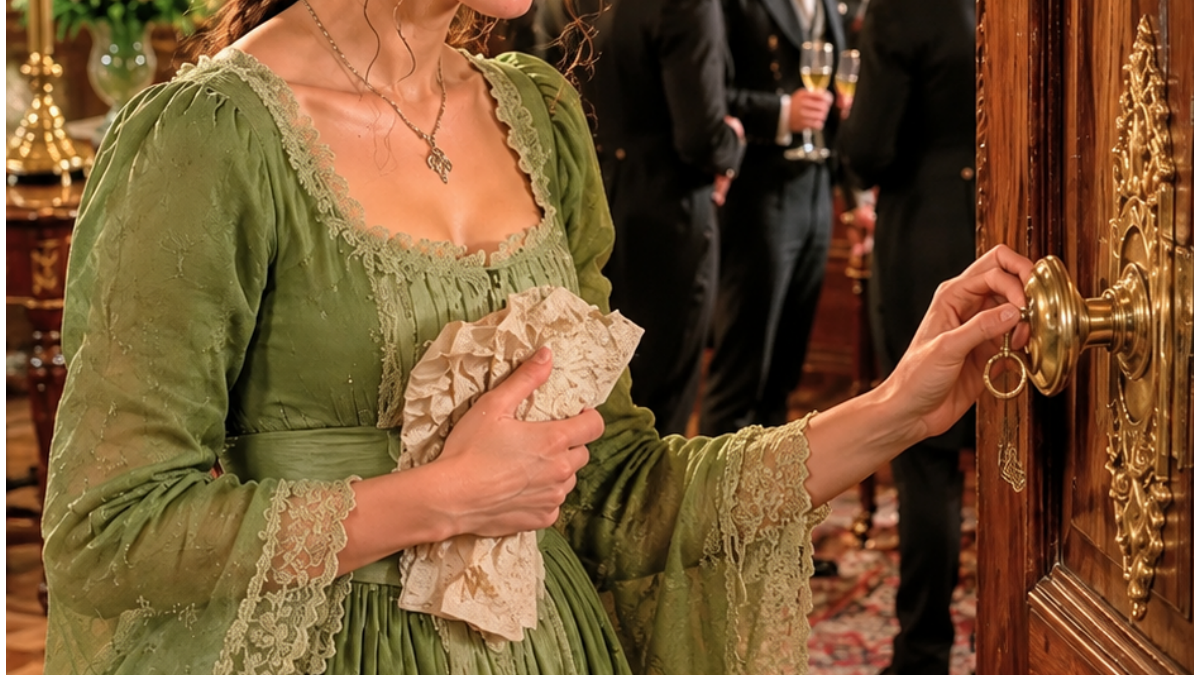
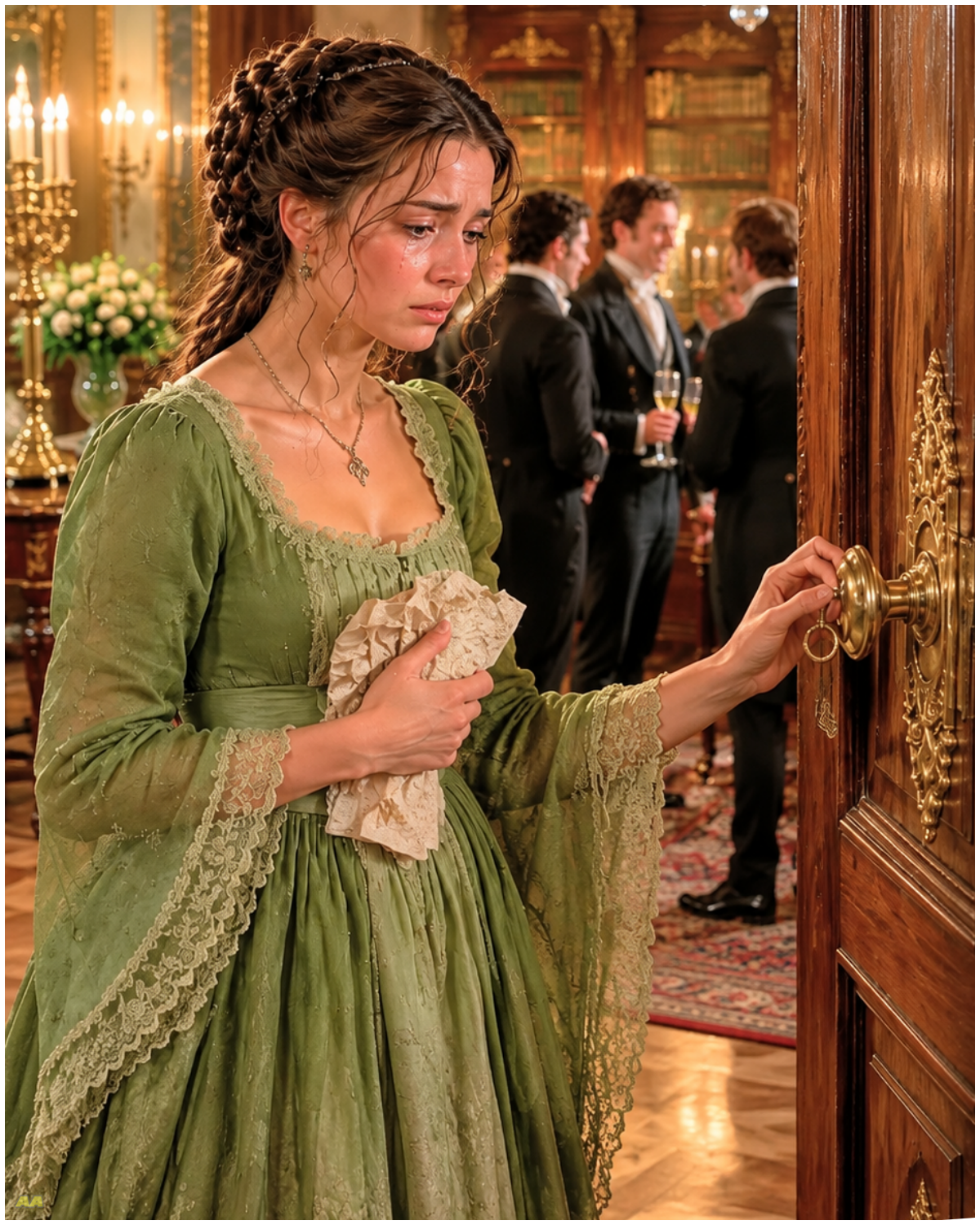
Cecilia Drummond set down her glass without a sound, lifted her chin, and walked straight past the man who had just called her worthless in front of all of Boston.
She isn’t worth fighting for.
The Duke had said calm, certain, cruel.
She heard every word.
She did not weep.
She did not break.
She only smiled polite and terrible and kept walking.
By the next morning, that smile would bring a duke to his knees at her door.
The ballroom at the Harrington estate was loud with summer, fiddles, laughter, the clink of cut crystal, 200 people pretending the heat didn’t matter.
And in the middle of all of it, Edmund Carile said the words that would unmake him.
She isn’t worth fighting for.
He said it quietly. He always said everything quietly.
A man who held a title like Duke of Stormier never needed to raise his voice.
The room leaned toward him on its own.
Beside him, Henry Bellamy frowned.
That’s a hard thing to say of a lady your grace.
It’s a true thing. Edmund didn’t even glance across the floor to where she stood.
A widow with a merchant’s name and no fortune behind it.
Charming, I’ll grant you, but charm settles no accounts.
A man would be a fool to ruin himself over Cecilia Drummond.
And if a man already cared for her, he cared.
Then I’d tell him plainly.
Edmund turned his glass slowly in his fingers.
She is not worth the trouble she’d cost him.
What Edmund did not know, what he would not know.
For several more minutes and would regret for the rest of his life was that the music had ended one breath before he spoke, that the dancers had stilled, that a small pocket of silence had opened up behind him like a trap door, and that Cecilia Drummond was standing inside it.
She had come to return a fan.
That was all. Mrs. Harrington had dropped it, and Cecilia, being the sort of woman who noticed small things and tended to them, had bent to retrieve it and crossed the room to give it back.
She arrived just in time to hear a duke pronounce sentence on her worth as though reading it off a ledger.
She did not gasp. She did not flush.
Several people watching her would later swear she didn’t so much as blink.
“Your fan, Mrs. Harrington,” Cecilia said, and her voice came out even warm entirely under her own command.
“You’ll want it. It’s stifling tonight.” Mrs. Harrington took it with a hand that trembled.
“Cecilia, dear, it’s a lovely party.” Cecilia smiled.
You always did know how to fill a room.
And then she turned. Not fast, not slow.
She turned the way a woman turns when she has decided in the space of a single heartbeat that not one soul in this room will ever see her bleed.
She walked toward the doors and the crowd opened for her.
And behind her, she heard the music stumble back into motion as 200 people remembered to breathe.
Edmund Carile finally looked up.
He saw her back, the straight line of her shoulders, the set of her head.
He saw Henry Bellamy’s face go white and Mrs. Harrington’s go red.
And he understood all at once the way a man understands he has stepped off a roof exactly what had happened.
She heard, Bellamy said. Edmund said nothing.
Edmund, she heard you. I’m aware.
Then go after her man for God’s sake.
And say what? Edmmond’s voice was still quiet.
But something had cracked under it now, fine as a hairline in good glass.
That I didn’t mean it.
I meant every word an hour ago.
A man cannot unmean a thing in front of 40 witnesses.
Then you’re a coward as well as a fool.
That landed. Edmund’s jaw tightened, but he stayed where he was, holding his glass, watching the door swing shut behind a woman he had just publicly dismissed as worthless.
And feeling for the first time in years the floor of his own certainty give way beneath him outside the summer night was thick and close.
Cecilia walked the length of the Harrington Drive without calling for her carriage because she did not trust her hands not to shake when she lifted them.
And a lady who shakes is a lady people pity.
She would not be pied.
Not by them, not by anyone.
She made it to the low stone wall at the edge of the garden before she stopped.
And there, where no one could see her, she pressed one gloved hand flat against the cool stone, and let herself feel it all of it, the full weight of the thing, for exactly as long as it took to count to 10.
She isn’t worth fighting for.
She had been worth fighting for once.
Her husband had thought so.
Thomas Drummond had married her against his family’s wishes, called her the finest bargain he ever made, laughed when she balanced his ledgers better than his clerks, and then Thomas had died three winters back of a fever that took him in 9 days, and left her with a good name, a modest house, and the slow education of discovering exactly how a widow is valued by polite society.
Not much, that was the answer.
Not much at all. But she had not expected to hear it said aloud.
Not so plainly, not by him.
Cecilia, she straightened before she turned.
By the time she faced the voice, her expression was smooth as river ice.
It was Philippa Carile Edmunds, breathless, her skirts gathered in both fists from running.
Cecilia, I am so sorry.
I heard. Everyone heard. My brother is Philippa stopped searching for a word large enough.
He is an idiot. He is the cleverest idiot God ever made.
And I am ashamed to share his blood tonight.
You needn’t be ashamed of anything.
Philippa, you didn’t say it.
But I know him and I know that voice he uses, that flat awful I’ve decided voice.
And Cecilia, I am telling you something is wrong.
He doesn’t speak that way unless he’s frightened of something.
Frightened. Cecilia almost smiled. Of me?
I don’t know, but I’ve watched Edmund my whole life, and a man doesn’t burn a bridge that hard, unless he’s terrified of the river underneath it.
Philippa stepped closer, her voice dropping.
There’s something he isn’t telling about your husband’s estate, about Thomas’s accounts.
I’ve heard him speaking with the lawyers twice now, and both times your name came up, and both times he sent me out of the room.
Cecilia went very still. My husband’s accounts were settled three years ago.
Were they? The two women looked at each other in the dark.
Philippa Cecilia said slowly. What does your brother know about Thomas’s accounts that I don’t I can’t say what I haven’t been told, but I can tell you this.
Whatever it is, it’s bad enough that Edmund Carile would rather have all of Boston believe he’s a cruel man than have you ask him a single question about it tonight.
Philippa pressed something into her hand, a folded slip of paper.
That’s the name of the lawyer, Caldwell on State Street.
If I were you, I’d see him before my brother does.
And then from the house, a footman calling Philippa’s name, and the girl was gone in a rustle of silk, leaving Cecilia alone with a stone wall a summer night and a folded scrap of paper that had just turned her humiliation into something far more dangerous.
She did not weep on the drive home.
She read the name on the paper four times by the light of the carriage lamp, and she did not weep, she thought.
Edmund Carile did not sleep that night.
He sat in his study with a single candle and the letter he should never have read, the one from Caldwell delivered that very afternoon.
The one that explained in cramped legal hand exactly what kind of ruin sat waiting under Cecilia Drummond’s quiet dignified life.
Thomas Drummond had died owing money, a great deal of money.
Not to tradesmen, to men, hard men.
Men who had been content to let a grieving widow alone for 3 years because the debt was quietly being serviced by an anonymous benefactor.
The benefactor was Edmund. He had been paying it for 2 years.
He had never told her.
He had never meant to tell her.
And tonight, when Henry Bellamy, kind, steady, unsuspecting Henry Bellamy, had begun to speak of courting her, of marrying her, of joining his good name to hers, Edmund had understood with sick clarity what that meant.
Marriage meant lawyers. Lawyers meant ledgers.
Ledgers meant the debt would surface, and the men who held it would surface with it, and they would not be gentle with a husband they could squeeze.
So he had done the only thing his frightened, calculating, ruinous mind could devise in the moment.
He had made her unmarriageable.
He had made her worthless out loud in front of everyone, so that no good man would chain his fortune to hers and walk into the trap Edmund could see, and they could not.
He had broken her in public to keep her safe in private, and he had not for one single second considered that she might be standing close enough to hear the blade go in.
You fool,” he said to the candle.
“You unforgivable fool.” Because there was no version of this, he could explain.
Tell her the truth, and she’d know he’d been managing her life from the shadows for 2 years, like a man with a marionette.
Say nothing, and she’d carry the wound of his words to her grave.
There was no door out of this room that didn’t lead somewhere worse.
He was still sitting there, turning it over and over when the knock came.
It was not yet dawn.
The sky outside had only just begun to gray at the edges.
His butler appeared candle in hand, apologetic.
Your grace, there’s a a messenger, a boy.
He says it’s urgent at this hour.
He says the lady was most particular, sir.
The butler held out a single folded note.
He says she’s waiting on your answer.
Edmund opened it. Three lines in a hand, he recognized, though he’d never seen it before.
Neat controlled every letter exactly where it meant to be.
Your grace, I have spoken with Mr.
Caldwell. I know what you have been doing with my late husband’s debts, and for how long.
Come to my door before the city wakes.
We have a great deal to settle, you and I.
And I would rather the neighbors not see a duke arriving to call on a worthless woman.
See Drummond. Edmund read it twice.
Then he laughed, short, helpless, almost admiring, and the sound surprised him so much he stopped at once.
She had moved faster than he had.
She had gone to Caldwell that very night in the dark in her ball gown, and pulled the whole story out into the open before he’d so much as finished pitying himself.
She had known him for a coward and a meddler within hours.
And instead of weeping, instead of hiding, instead of doing any of the soft, broken things he’d braced himself to feel guilty over, she had summoned him to her door, on her terms, as though he were the one with something to lose.
He looked at the note.
He looked at the gray sky.
He thought of every word he’d said in that ballroom, and how completely he had misjudged the woman they were meant to wound.
Have the carriage brought round, Edmund said.
Now, sir, it’s barely now.
He was already reaching for his coat and Harrove.
He paused at the door, the note still in his hand, his certainty in ruins around his feet.
Don’t wait up. I don’t expect this will be a short conversation.
He stepped out into the thin gray morning into a city not yet awake toward a small house on a quiet street where a woman he had called worthless stood waiting not to be apologized to to collect.
The carriage came to a stop on a street so quiet Edmund could hear his own pulse.
He’d rehearsed nothing on the ride over which was itself a kind of confession Edmund Carile never went anywhere without knowing exactly what he meant to say.
But there was no script for a man arriving to be judged by a woman he’d ruined.
So he climbed down and he walked up the short path and he knocked on the door of the small house before he could think better of it.
She opened it herself. No servant, no candle in hand, just Cecilia Drummond still in the gown she’d worn to the ball as though she had not gone to bed at all.
You came, she said, you summoned me and you obeyed.
Something flickered behind her eyes.
Not warmth, not triumph, just a cold accounting.
That tells me a great deal already, your grace.
A man with nothing to hide doesn’t come running before the sun.
May I come in? No.
She didn’t move from the doorway.
What we have to say can be said here, where I can see your face in the light, and where you’ll remember that you stood on my step like a tradesman instead of sitting in my parlor like a friend.
You forfeited the parlor in the Harrington Ballroom.
Edmund inclined his head. That’s fair.
I’m not interested in fair.
I’m interested in true. She folded her hands in front of her, perfectly composed.
Mr. Caldwell received me at midnight.
Do you know what it costs to get a lawyer out of his bed at midnight?
Your grace. I imagine it costs the lawyer’s discretion.
It costs everything the lawyer knows.
Her voice didn’t rise. It got quieter, which was worse.
So, let me tell you what I learned, and you’ll tell me where I’ve gone wrong, because I would very much like to have gone wrong somewhere.
My husband died owing $4,000 to men whose names Mr.
Caldwell would not write down.
For 3 years, I believed those debts were settled.
They were not settled. They were being paid every quarter on time in full by an anonymous gentleman whose money came through a bank in Edmund Carile’s name.
She paused. Tell me I’m wrong.
You’re not wrong. The word landed between them and neither of them touched it for a moment.
Two years. Cecilia said, “You have been paying my husband’s debts for 2 years and you never once told me.” No.
You let me believe I was free.
You let me build a whole life on a floor you were quietly holding up underneath me, and you never said a word.
No. Why? And there it was.
The question he had no good answer to the one he’d turned over all night in the candlelight.
Edmund opened his mouth, and what came out was the truth, which surprised him as much as it surprised her.
Because if anyone learned those debts still existed, the men who hold them would come for whoever stood closest to you.
A husband, a suitor, anyone foolish enough to attach his name to yours.
I kept it quiet to keep them away from you.
And tonight, she said, “What changed tonight that you had to stand in a ballroom and tell the whole of Boston I wasn’t worth fighting for?” He hesitated.
That was his mistake. She saw the hesitation and she stepped into it like a swordsman finding the gap.
“Henry Bellamy,” she said softly.
“He spoke to you, didn’t he?
He told you he meant to court me.” “Cecilia, he told you he meant to marry me, and you knew that the moment he did, his lawyers would open the books, and the books would open the debt, and the debt would open the door to those men.” Her eyes had gone bright and terrible.
So you destroyed me. You burned my name to the ground in front of 40 people so that no good man would ever come close enough to find out the truth.
You didn’t insult me, your grace.
You protected me. You just did it by humiliating me in public and never asking whether I’d have preferred to be consulted.
Edmund said nothing because there was nothing to say that wasn’t a smaller version of yes.
Do you know what that is?
She went on. That is a man deciding he knows better than I do how to manage my own ruin.
That is a man treating me like a problem to be handled instead of a woman to be told the truth.
I have buried a husband.
I have balanced books that grown men couldn’t read.
I am not a child you shield from the storm by locking her in the cellar.
I am the one who’d have weathered the storm if you’d had the decency to tell me it was coming.
You’re right. I know I’m right.
I didn’t ask you here to agree with me.
She drew a breath, and when she spoke again, her voice had changed.
The heat banked down into something steadier and far more dangerous.
I asked you here because I have accounting to do and you’re going to help me do it.
How much is left? What the debt?
How much remains? Cecilia, that isn’t how much?
A little under $1,900. She nodded slowly as though filing it.
And the men who hold it, you said they’d been content to leave a widow alone so long as the payments came.
What happens when the payments stop?
The question turned the air cold.
They won’t stop, Edmund said.
I’ll keep. They will stop.
She said it like a fact already written because I will not take one more dollar from you.
Not now that I know.
Every quarter you’ve paid was a quarter I owed you without my consent.
And I will not spend the rest of my life in debt to the man who called me worthless to save me.
So they will stop and you’re going to tell me plainly what those men will do when they do.
Edmund looked at her for a long moment.
And then because she had earned it because she was the only person in 3 years to demand the truth from him.
To his face he gave it to her whole.
They’ll come here, he said, to this house first with politeness, then with men.
They’ll offer to forgive the debt in exchange for the deed to your home.
And when you refuse, they’ll begin to make it impossible for you to refuse.
They have done it before to widows softer than you, and to some who were harder.
There is a man named Royce who handles their collections, and Royce does not knock twice.
For the first time, something moved in her composure.
Not fear exactly, but the recognition of a real enemy.
She absorbed it. She set it where it belonged.
Then we have until the next payment is due, she said.
When is that? 11 days.
11 days. She nodded once.
All right. All right. Edmund stared at her.
Cecilia, I’m telling you, these men will take your house and your name and think nothing of it.
The simplest path, the only sensible path is to let me continue to.
The simplest path is the one you’ve already walked and look where it’s put us both.
She lifted her chin. No, I’m done being managed.
I’d rather lose the house standing up than keep it on my knees.
So, here’s what’s going to happen.
Your grace. And you’re going to listen because for the first time tonight, I am going to tell you how a thing will go.
You are going to give me the names.
All of them. Every name Caldwell wouldn’t write down.
You’re going to write down for me.
And then you are going to go home and you are going to do nothing.
Nothing until I tell you otherwise.
That’s madness. You can’t face Royce alone.
I won’t be facing him alone.
I’ll be facing him informed, which is more than I’ve been for three years thanks to you.
She held his eyes. You owe me that, not money.
You can keep your money.
You owe me the truth and the names and then the courtesy of getting out of my way.
That’s the price of what you did in that ballroom.
Will you pay it or won’t you?
And Edmund Carlile, who had never in his life let another person dictate the terms of anything, heard himself say, “I’ll pay it.” Then come back tomorrow, noon, with the names.” She stepped back to close the door.
“And your grace,” he stopped.
“Wear something plain,” she said.
“I meant what I said about the neighbors.
As far as Boston is concerned, you find me worthless, and we are going to keep it exactly that way.
It may be the only thing protecting me that you’ve ever gotten right.
The door closed. Edmund stood on the step in the gray light and discovered he was smiling again and could not for the life of him have said why.
He came back the next day at noon.
He came back the day after that.
And somewhere in those 11 days, the thing that neither of them would have predicted began quietly to happen.
They started to work. She made him write the names.
There were four. Two were money lenders of the ordinary cruel sort.
But the third name stopped Cecilia cold when she read it and Edmund saw it stop her.
You know this one, he said Marcus Vain.
She set the paper down very carefully.
He was my husband’s partner.
The shipping concern. Thomas trusted him like a brother.
Then I’m sorry to tell you your husband trusted wrong.
Vain holds the largest portion of the debt.
He bought it up quietly within a month of Thomas’s death.
Within a month, Cecilia’s hands had gone still on the table.
Thomas wasn’t cold a month when Marcus Vain started buying up the debts that would let him take everything we built together.
It happens more than you’d think.
A partner dies, the survivor consolidates.
By the time the widow understands what’s happened, it’s done.
It is not done. She looked up and there was something new in her face.
Now, not the cold control she’d worn at the door, but the first clean spark of an idea.
Edmund, the shipping concern. Did Thomas and Vain keep separate books or shared?
I don’t know. Why? Because Vain is a careful man, and careful men keep two sets of figures, the ones they show and the ones they hide.
If he was buying up my husband’s debts within a month of the funeral, he was planning it before the funeral.
And if he was planning it before, there’s a paper trail.
There’s always a paper trail.
Thomas used to say, “A man who could read a ledger was worth 10 who could read Latin.” She stood suddenly restless alive in a way Edmund hadn’t seen.
I balanced those shipping books for 2 years before Thomas died.
I know how Vain’s mind moves on paper.
If there’s a lie in those accounts, I can find it.
And if you find it, then a debt isn’t a debt.
It’s blackmail dressed up in a ledger.
And a debt built on fraud doesn’t have to be paid.
It has to be exposed.
She turned to face him fully.
I don’t need you to save me your grace.
I never did. I need you to get me into a room with Marcus Vain’s books.
Can a duke do that?
And Edmund, who an hour earlier had still believed his role in this was to stand quietly aside and let her lose with dignity, felt the whole shape of the thing change in his hands.
A duke, he said slowly, can do a great many things, including ask a shipping man for a tour of his offices as a potential investor, while his clerk is conveniently at his lunch.
For the first time since the ballroom, Cecilia Drummond almost smiled at him.
It did not laSt. Nothing between them lasted long in those days because every hour spent close enough to plot was an hour spent remembering what he’d said and why she’d never quite forgiven it.
But the work pulled them together even as the wound held them apart.
And that was its own kind of torture for both of them.
For Edmund, it was the torture of watching a woman he’d called worthless prove herself line by line the most formidable person he had ever met.
She read ledgers the way other people read faces.
She found on the second evening a discrepancy in the shipping accounts that Caldwell’s own clerks had missed for 3 years.
A cargo logged as lost at sea that had in fact been quietly sold.
The profit vanished into an account that traced back not to the company but to Marcus Vain alone.
He’s been robbing the partnership for years, Cecilia said, tapping the figure.
Thomas’s share of these profits should have come to me.
Instead, Vain pocketed them, then turned around and bought up the very debts those profits would have settled.
Do you understand what that means, Edmund?
That he stole from your husband twice.
It means I don’t owe Marcus Vain $1,900.
Her eyes were bright. Marcus Vain owes me.
For Cecilia, the torture was subtler and worse because the man across her table at midnight sleeves rolled hair in his eyes arguing with her about interest rates and bills of lading was not the cold duke who’d pronounced sentence on her in a ballroom.
This man laughed when she caught him in an arithmetic error.
This man listened when she spoke and changed his mind when she was right, which she was learning he did far more readily in private than his reputation suggested.
This man, had she slowly understood, been carrying her debt in secret for 2 years, not out of arrogance, but out of a clumsy, wordless, badly expressed care he had never once known how to say out loud.
She hated that she could see it.
It would have been so much easier to keep hating him.
On the seventh night, with four days left, Henry Bellamy came to call.
She had not invited him.
He arrived with flowers and a careful, hopeful expression, and Cecilia answered the door to find him standing there, hat in hand, looking like a man who had been working up his courage all day.
Mrs. Drummond, I hope I’m not intruding.
Mr. Bellamy. She did not invite him in either.
She was learning the value of a doorstep.
It’s late. I know. I know it is and I know what’s been said about you and that’s that’s exactly why I’ve come.
He drew a breath. I don’t believe a word of it.
What the Duke said. I’ve thought about little else and the more I think on it, the less sense it makes because the Cecilia Drummond I know is worth fighting for.
And I came to tell you that I that I’d be honored to.
Mr. Bellamy, stop. She said it gently, but she said it.
Don’t finish that sentence, please.
He stopped stricken. May I ask why?
And here was the moment that told her more than any ledger how far she had come in seven days.
Because the old Cecilia, the bruised one from the night of the ball, might have said yes to Henry Bellamy.
He was kind. He was safe.
He was a steady man with a good name who believed in her when a duke had not.
And there was a version of this story where a hurt woman takes the safe harbor and is grateful.
But she didn’t want a harbor.
She wanted the truth and the fight and her own name cleared by her own hand.
And she would not drag a good unsuspecting man into a war with Marcus Vain just to feel less alone.
Because you’re a kind man, she said, and I won’t repay your kindness by tying you to trouble you can’t see.
There are things about my circumstances you don’t know, Mr.
Bellamy. Dangerous things. And the one true thing the Duke ever did for me was to keep good men like you clear of them.
He did it cruy and I’ll never forgive him for the manner of it.
But he wasn’t entirely wrong about the danger.
She softened. Go home. Find a woman whose worst trouble is which gown to wear.
You deserve that. And so does she.
Whoever she is. Bellamy looked at her for a long moment and something in him seemed to understand.
He’s been here hasn’t he?
He said quietly. “The Duke?” She didn’t answer.
“I saw a plain carriage on this street two evenings running.
I didn’t think anything of it.” He nodded slowly, turning his hat in his hands.
He ruins your name in public and visits you in secret.
“Mrs. Drummond, whatever game that man is playing, it isn’t a game.” She held his eyes.
“It’s the opposite of a game.” “Good night, Mr.
Bellamy. You’re a better man than this city deserves.
He left. She closed the door and she stood with her back against it for a moment, eyes shut.
Because turning away, the safe thing is harder than anyone admits, even when you know it’s right.
When she opened her eyes, Edmund was standing at the foot of the stairs.
He’d come in through the back as he always did now, and he’d heard.
She could tell from his face that he’d heard all of it.
You sent him away, Edmund said.
I did. He was offering you everything I took.
Safety, a name, a future without Marcus vain in it.
His voice was strange. You could have said yes.
I could have. Then why didn’t you?
And Cecilia, who had a hundred clever answers ready, found that none of them would come.
Because the honest one was standing at the foot of her stairs with his sleeves rolled and his careful armor gone, and she was not at all ready to say it out loud that somewhere in seven nights of ledgers and arguments and grudging growing respect, the man she’d come to want beside her in the fight was the very one who’d started it.
Because I don’t run from a thing, she said instead, and I haven’t finished what I came to do.
Marcus Vain robbed my husband and he meant to rob me and I am going to walk into a room and make him give it all back.
I’m not interested in safety, Edmund.
I’m interested in justice. There’s a difference and most people never learn it.
Edmund crossed the room slowly.
He stopped an arm’s length from her close enough that she had to tilt her head to hold his gaze far enough that neither of them had to name what the closeness meant.
When this is done, he said quietly.
When vain is finished and your name is clear, I want to say something to you.
Not now. I haven’t earned it now, but when it’s done, then earn it, she said, and her voice was not quite steady, and she hated that it wasn’t.
Get me into that room, your grace.
Earn it, and then we’ll see what you have a right to say.
He held her eyes one moment longer.
Then he stepped back and the spell broke and there were two people with a fraud to expose and four days to do it in.
But neither of them slept much that night.
The plan was set for the 10th day.
Edmund would call on Vain as an investor.
Cecilia would come as his clerk’s assistant, a plain dress, a satchel of papers, eyes down the one role in all of Boston that led a woman into accounting house and made her invisible at the same time.
She would have a quarter of an hour no more with Vain’s ledgers while Edmund kept the man talking.
A quarter of an hour to find the matching entry that would prove the stolen cargo, the falsified loss, the whole rotten architecture of a partner’s betrayal.
A quarter of an hour to turn a worthless widow into the woman who brought down Marcus Vain.
You’re certain you can find it that fast, Edmund said.
I’m certain I built the system Vain copied.
I helped Thomas set those books up the year we married.
If Vain kept the same structure and careful men always do, it’s why they’re careful.
Then I’ll know which page before I open the cover.
She fastened the satchel. 15 minutes is generous.
Keep him talking for 10 and I’ll have it.
And if he recognizes you for the first time, a shadow of real worry crossed her face.
Then we’ll find out exactly what Marcus Vain is willing to do to a woman who knows too much.
But he won’t. He never once looked at me in all the years Thomas and I sat across his table.
To Marcus Vain, I was the wife who poured the coffee.
He couldn’t pick me out of a crowd if his life depended on it.
Her jaw set, and that your grace is the second mistake he’s going to regret.
She did not say the firSt. She didn’t have to.
The first mistake had been a man in a ballroom who’d looked at her and seen a woman not worth fighting for, and in doing so had lit the fuse on the very fight that was about to take everything from his enemy, and though neither of them would say it yet, give something back to them both.
4 days, one room, 15 minutes, and a widow who had finally stopped being managed, walking straight toward the man who’d stolen her future with nothing in her hands but a satchel of papers and the cold, clear certainty that she was about to win.
The plan held for exactly 11 minutes.
Marcus Vain’s counting house sat above his warehouse on Long Wararf, and Vain himself came down to meet his investor with the broad, easy warmth of a man who had never once in his life expected to be caught.
Your grace and honor. I confess I was surprised to get your note.
Vain was all teeth and handshake.
A man of your standing interested in shipping, I’d have thought you above trade.
No man is above profit, Mr.
Vain. Edmund kept his voice idle board exactly the voice of a duke who’d never worked a day.
I’m told your concern moves more tonnage than any house in Boston.
I like a thing that’s the largest of its kind.
Show me the operation with pleasure.
Vain’s eyes flicked just once to the plain young woman who’d come in behind the Duke with a satchel and her eyes on the floor.
Your clerk, my man Caldwell’s assistant, he keeps my figures, so I needn’t keep them myself.
Edmund didn’t even glance at her.
Don’t mind her. She writes down whatever I tell her to, and otherwise doesn’t exiSt. Isn’t that right?
Yes, sir. Cecilia said in a flat voice, an octave below her own.
And Marcus Vehain’s gaze slid off her the way water slides off oil cloth.
It worked. That was the thing she would remember afterward, how completely, how instantly it worked.
She had sat across this man’s table at a dozen dinners.
She had poured his coffee and laughed at his jokes and once memorably corrected his arithmetic in front of her husband, and Marcus Vain looked straight through her now and saw a clerk.
Three years a widow had taught Cecilia exactly how invisible a plain woman could be.
Today she was going to use it like a blade.
The ledgers are kept upstairs, Vain was saying, leading Edmund toward the wide front room.
I’ll have my boy fetch the current book if you’d care to see the volumes.
I’d care to see the warehouse first, Edmund said smoothly.
A man can write anything in a ledger.
I want to see the cargo with my own eyes before I trust the figures.
He clapped Vain on the shoulder.
Walk me through it. Your clerk can wait up here with mine and copy out whatever summary you’d have me review.
It was beautifully done. Cecilia could have kissed him for it.
Vain hesitated just a flicker.
The careful man’s instinct that something was slightly off, and then the flattery and the prospect of a duke’s money won out, as Edmund had wagered it would.
This way, your grace. Vain turned toward the warehouse stairs.
He paused only to call to a thin clerk hunched at the corner desk.
Puit pulled the summary ledger for his grace’s people.
Stay with them. And then he was gone down the stairs with Edmund, his voice booming about tonnage and tariffs, and Cecilia Drummond was standing in Marcus Vain’s counting house with a satchel, a watchful clerk named Puit, and the clock against her.
11 minutes, maybe less. Puit set a heavy ledger on the table between them and stood over it like a man guarding a tomb.
His grace wanted a summary copied.
He did. Cecilia opened her satchel unhurried and drew out paper and pen with hands she had ordered to be steady, though his grace also wanted me to check the summary against the source.
He’s been cheated before by men who summarize generously.
She let that land, then glanced up with a small conspiratorial weariness.
You’d be amazed what dukes worry about.
Would you have the full accounts for the last three years?
The summary alone won’t satisfy him and I’d rather not be sent back.
Puit frowned. The full accounts are Mr.
Bhain’s private and his grace is a private investor considering a very large sum.
She kept her voice light bored.
A clerk doing a clerk’s tiresome job.
If Mr. Vain would rather I tell the Duke his books aren’t open to inspection, I’ll write that down instead.
Shall I? It was a small cruelty, and it worked the way small cruelties work on small men.
Puit pad at the thought of being the clerk who lost his master a duke’s investment, and within the minute he was unlocking a cabinet and laying three more volumes on the table.
You’ll have to be quick, he muttered.
Mr. Vain doesn’t like the older books out.
I’m always quick. She was already opening the first and then her hands did stop just for a breath because the moment the cover fell open, she knew.
She knew this hand. She knew this structure, the columns, the abbreviations, the particular way the cargo entries were keyed to the dates.
Marcus Vain had not merely copied her husband’s bookkeeping system.
He had kept the exact one she and Thomas built together the first year of their marriage, down to the little notation in the margin Thomas had invented for goods sold abroad.
Vain had stolen the system along with everything else, and in his arrogance, he had never thought to change a line of it.
He had handed her the key to his own ruin, and never known he’d done it.
8 minutes left, maybe seven.
Her finger moved down the columns faster than Puit could follow, faster than she’d let herself hope, because she wasn’t reading the book the way a stranger would.
She was reading it the way its architect would.
She knew exactly which page held the cargo manifests, exactly where a careful thief would have to fold his lie into the truth to keep the totals from screaming.
There, the autumn of the year, Thomas died.
A cargo of indigo and cotton logged as lost at sea off the Carolina’s total loss.
No salvage, the partnership’s share written down to nothing.
She remembered that shipment. She remembered Thomas worrying over it from his sick bed.
And she remembered Vain sitting at their table afterward grave-faced, telling the dying man not to fret that these things happened, that the sea took what it wanted.
The sea had taken nothing.
The page proved it because three entries down in a different account in the same hand.
A cargo of identical weight and identical description had been sold in Charleston 6 weeks later sold for a handsome profit.
The money logged not to the partnership but to a private account marked only with Vain’s initials.
He had told a dying man the cargo was loSt. He had let a widow write it off as ruin.
And he had pocketed every dollar himself, then turned around and used those same dollars to buy up the debts that would let him swallow what little of the partnership remained.
Cecilia’s heart was pounding so hard, she was sure Puit could hear it.
She did not let it show on her face.
Three years of pouring coffee for men who looked through her had taught her how to keep a face still while everything behind it caught fire.
“This entry,” she said, tapping the false loss, keeping her voice a clerk’s flat drone.
The lost cargo. Was there an insurance claim filed?
His Grace will want to know the house’s exposure to maritime loss.
I wouldn’t know, miss. That’s before my time.
No matter, I’ll note the figure.
What she noted, in fact, was the page, the date, the account number of Bhain’s private ledger, and the exact entry of the Charleston sale, copying it all out in her own swift shortorthhand.
While Puit watched her write what he believed were summary totals, she copied a second corroborating entry from the following spring.
A third, she was building a chain that no court and no careful man could break link by link with the clock burning down and her own pulse roaring in her ears.
She had 4 minutes and she had enough.
And that was the moment the warehouse door below banged open and Marcus Vain’s voice came up the stairs sharper now the warmth gone out of it.
And I’ll thank you to tell me your grace why a man who claims never to touch trade knows the precise tonnage my Carolina run carried in 15.
A paw a heavy tread on the stair.
That’s a particular figure for an idol investor.
Almost as if someone fed it to you.
Cecilia’s blood went cold. Edmund had slipped.
One detail too many. One number he shouldn’t have known.
And Vain, careful Vain, who trusted nothing, had caught it.
Puit. Vain’s voice climbing. Puit locked the books.
Now she had seconds. What happened next happened faster than thought.
Cecilia did not lunge for the satchel or betray a flicker of haste that would have damned her.
Instead, she closed the ledger, calmly slid her own copied pages beneath the blank summary sheet on top, and stood up with the board faintly put upon air of a clerk whose work has been interrupted by men who don’t respect a schedule.
“I’ve barely started the summary,” she complained to just as Vain and Edmund reached the top of the stairs.
“His grace will not be pleased to come back empty-handed twice.
Vain filled the doorway. His eyes went to the open books to prove it, to the plain young woman gathering her papers, and for one terrible second they sharpened, fixed on her face, searching it.
Do I know you, girl?
Cecilia met his eyes and gave him nothing.
I shouldn’t think so, sir.
I keep Mr. Caldwell’s books on State Street.
We don’t move in the same rooMs. It was the truth told flat, and the very flatness of it was her armor.
A guilty woman would have looked down.
A frightened woman would have stammered.
Cecilia held his gaze with the dull patience of a clerk who’d been asked a stupid question, and Marcus Vain, who had looked through her at a dozen dinners, and never once seen the woman pouring his coffee, could not place her now.
But he didn’t trust it.
She could see he didn’t.
The books were open, he said slowly to prove it, though his eyes never left her.
The old books? Who told you to bring out the old books?
She, the Duke’s man, wanted the source figures.
Puit stammered. To check against the summary, sir, she said his grace had been cheated before.
Did she? Vain’s voice dropped to something quiet and dangerous, and Cecilia understood that the careful man had stopped being charming, and that charming men are never so dangerous as when they stop.
What an unusual thing for a clerk to insist on seeing three years of private accounts.
Hand me your satchel, girl.
The room went very still.
Mr. Vain. Edmund stepped forward, and his voice had changed, too.
The board duke was gone, and in his place was a man whose authority filled a room without trying.
You’ll not search my people.
They answer to me. If you have a question about my interest in your house, you ask me.
Your people walked into my counting house and pulled my private books.
Your grace. Vain didn’t back down an inch.
Forgive me if I find that requires explanation before any money changes hands.
Either the satchel opens or this conversation is finished and you’ll both leave by the door you came in.
And there it was, the trap closing the whole plan balanced on a single satchel.
If Cecilia handed it over, Vain would find her copied entries and know exactly what she’d done.
If she refused, he’d know just as surely, and she’d never make it out the door.
Edmmond’s eyes met hers across the room for the briefest instant, and she saw in them the same calculation, the same dawning dread.
So Cecilia did the one thing neither man expected.
She held the satchel out to Vain herself.
“By all means,” she said, and let it hang in the air between them, open at the top papers visible.
Though I’d remind you, Mr.
Vain that whatever his grace’s clerk has copied, his grace has already seen with his own eyes downstairs in your warehouse, where you walked him past the very cargo your books call lost at sea.” She paused and let the first crack of her true voice show through the indigo and cotton off the Carolas.
Autumn 15. You told a dying man the sea had swallowed it.
It’s sitting in your hold this very morning, repacked under a Charleston bill of lighting.
I saw it when his grace did.
The lie was magnificent. She had not seen the cargo.
She had no idea what sat in vain’s hold, but she had seen the false loss and the real sale on the page, and she gambled everything on the chance that a man who’d hidden one cargo had grown careless about hiding others, and on the certainty that a guilty man hearing his crime named aloud would react before he could think.
Marcus Veain went white. It lasted only a heartbeat.
But Cecilia saw it, and Edmund saw it, and most importantly, Vain saw that they saw it.
And in that single involuntary flinch, the careful man confessed everything without saying a word.
Get out, Vain breathed. Mr.
Vain, get out of my house.
His voice cracked like a whip.
Both of you now before I send for men who will put you out.
Edmund didn’t move. He looked at Vain for a long, deliberate moment, and then he smiled slow and cold, the smile of a duke who had just watched his enemy lose.
“As you like,” he said.
“Come along. We have what we came for.” They walked out unhurried down the stairs, past the warehouse into the bright warf morning, and Cecilia did not let herself breathe until the door was 40 ft behind them, and the satchel was clutched to her chest with both arMs. You saw his face, she said low and unsteady.
I saw it. Edmund’s hand found her elbow, steadying her without quite seeming to guiding her toward the waiting carriage.
Cecilia, you reckless, brilliant woman.
You don’t know what’s in that hold.
You made the whole of it up.
I made up the cargo.
I didn’t make up the page.
She climbed into the carriage and clutched the satchel and finally finally let her hands shake.
I have it, Edmund. The false loss and the real sale in the same hand, 6 weeks apart.
The money to his private account.
It’s there. It’s all there.
He robbed Thomas. He robbed me.
And now I can prove it.
Then we go to Caldwell, Edmund said, swinging up beside her.
Today, this hour, we get sworn copies made and lodged where Vain can’t reach them.
And then we The carriage lurched to a halt before it had gone 20 yards.
A man stood in the road, big, patient, hat low.
He did not move aside, and the driver’s startled call did not move him either.
He simply stood there blocking the warf road and looked up at the carriage window with the flat, incurious eyes of a man who hurt people for wages, and had long since stopped feeling anything about it.
Edmund went rigid beside her.
“Cecilia,” he said quietly, “don’t say a word.
Who is that? That Edmund said, and for the first time since the ballroom, she heard real fear in his voice.
Is Royce. The man called Royce stepped up to the carriage window unhurried and touched the brim of his hat with two fingers in something that was almost courtesy and entirely a threat.
Mrs. Drummond. His voice was soft, almost gentle, and somehow that was the worst of it.
We ain’t met, but I’ve carried your name in my pocket a good while now.
His flat eyes moved to Edmund and the corner of his mouth turned up.
And your grace. Mr. Vain sent word ahead.
Said you’d be leaving in a hurry.
Said you’d be carrying something of his.
The satchel. He knew about the satchel.
Whatever you’ve got copied in that bag.
Royce went on in the same soft, patient voice.
Mr. Vain would consider it a personal kindness if it didn’t reach State Street.
He’s a reasonable man. He authorized me to make you a reasonable offer, he paused.
Or an unreasonable one. Your choice, ma’am.
But I think on it quick, because either that satchel comes to me here, gentle in the road, his hand settled flat on the carriage door, or it comes to me later at your house after dark, and I won’t be near so polite about the asking.
And Cecilia Drummond, with three years of debt and a dead husband, and the proof of a thief’s whole rotten heart, clutched against her chest, looked into the flat eyes of the man Vain had sent to take it all away, and understood that the fight she’d thought she was winning had only just truly begun.
Cecilia did not hand him the satchel.
Instead, she leaned toward the open window, and when she spoke, her voice was as soft and patient as Royce’s own.
You carry my name in your pocket, Mr.
Royce. I’ll tell you what I carry in mine.
She tapped the satchel once.
A man’s whole life of theft written in his own hand.
Now you can take this bag from me here in the road in broad daylight in front of a duke and a driver and every dockand on Long Wararf.
And then Marcus Vain will have robbed a partner, defraed a widow, and ordered a robbery in the open street.
And a man can hang for less than two of those three.
Or you can carry word back to your employer that Mrs. Drummond sends her regards and would advise him to find a very good lawyer.
Royce’s flat eyes didn’t change, but his hand she noticed did not push the carriage door open either.
That’s a brave speech, ma’am.
It isn’t brave. It’s arithmetic.
You’re a careful man’s hired hand, Mr.
Royce. And careful men don’t pay for trouble they can’t survive.
Go and ask Marcus Vain whether he’d rather lose $1,900 or his neck.
Then come back and tell me which he chose.
She wrapped on the carriage roof.
Drive on. For one long heartbeat, Royce didn’t move.
Then slowly, almost respectfully, he stepped back from the door and touched his hatbrim again, and the carriage lurched forward and left him standing in the road behind them, a patient shape growing small in the duSt. Cecilia held her composure until they’d turned off the wararf.
Then she sagged against the seat and pressed the satchel to her chest and shook hard all at once, the way a person shakes only after the dangers behind them.
“You shouldn’t have said the part about hanging,” Edmund said quietly.
“He hadn’t taken his eyes off the road behind them.
You’ve shown Vain exactly how dangerous you are.
He won’t underestimate you again.
He already sent a man to rob me in the street.
He stopped underestimating me an hour ago.
She steadied her breath. And I’d rather he be afraid of me than think me soft.
Soft is what got me 3 years of his silence.
Afraid men are unpredictable, Cecilia.
Afraid men do desperate things.
Edmund finally turned from the window and his face was grim.
We have to get those copies sworn and lodged today.
The moment they’re filed with a court, the satchel stops being the only thing that matters.
Right now, while it’s only paper in your lap, you’re the only obstacle between vain and safety, and men like Royce solve obstacles.” The words sat heavy and in the carriage.
She understood what he was telling her without his having to say it plainly.
As long as she alone held the proof, she alone was the target.
“Then drive faster,” she said.
Caldwell received them in shirt sleeves, took one look at their faces, and sent his clerk for the swearing book.
He read Cecilia’s copied entries twice, and on the second reading, his weary lawyer’s face went still in a way she’d learned to recognize as a man finding something he’d half hoped didn’t exiSt. “You’re certain of this hand,” he said.
“You’re certain it’s Veins.” “I’m certain because I taught his partner the system he stole it from.” That’s Marcus Vainh’s own writing, Mr.
Caldwell. The false loss and the true sale 6 weeks apart, the proceeds to his private account.
It’s not a misunderstanding. It’s not a clerk’s error.
It’s a man telling a dying friend the sea took his cargo while it sat in a Charleston warehouse turning a profit Vain pocketed himself.
Caldwell set the pages down.
Mrs. Drummond, do you understand what you’re holding?
I understand it clears my debt.
It does a great deal more than clear your debt.
He removed his spectacles and rubbed his eyes.
Your husband and Vain were equal partners.
Every dollar vein skimmed from the partnership half was rightfully Thomas’s and is now rightfully yours.
Three years of it. The lost cargos, the false losses, the private sales.
If even a quarter of what’s in these pages holds up, Marcus Vain doesn’t owe you the forgiveness of a debt.
He owes you a fortune.
He’s been a thief sitting on stolen money that belongs to you.
And he’s been buying up your debts with your own husband’s stolen earnings to keep you too poor and too frightened to ever come looking.
Cecilia sat down. She hadn’t meant to.
Her legs simply decided it for her.
A fortune, she repeated. If we can prove it, and that’s the war, Mrs. Drummond, not the having of it, the proving sworn copies today.
The originals are still in Vain’s counting house, and a man who’d send Royce to a public road won’t hesitate to burn his own books the moment he understands what you’ve taken.
We have a window. It is closing.
Sign here and here, and let me get these before a magistrate while the ink still wet.
She signed. Edmund signed as witness to what he’d seen in the warehouse.
Caldwell’s clerk made three fair copies, two of which went into the firm’s strong box, and one of which Caldwell carried out the door himself, hatless toward the courthouse, leaving Edmund and Cecilia alone in the office with the long afternoon light and the strange hollow quiet that follows a thing that can’t be undone.
It started now, Edmund said.
Whatever happens, it started. By tonight, every magistrate in Boston will know Marcus Vain stands accused, and there’s no calling that back.
Good. Cecilia stared at the strong box.
Then he can’t make it disappear by making me disappear.
No. Edmund’s jaw tightened. He can only make you pay for it.
She should have gone to a hotel.
Caldwell told her as much urged her not to sleep in her own house that night, where Royce knew the door and the dark.
But Cecilia Drummond had spent three years being made small in that house, and she would not be chased out of it now, on the very day she’d finally struck back.
She would sleep in her own bed under her own roof, and if Marcus Vain wanted to test her there, he was welcome to learn what a cornered widow was worth.
Edmund refused to leave her.
You’re not staying, she told him at her door, the satchel of remaining notes still in her arMs. “Think, Edmund.
The one thing protecting me is that Boston believes you find me worthless.
If your carriage sits outside my house all night, that protection is gone.
And you’ve handed Vain the very weapon he needs a duke caught lying about a widow he claimed to despise.
You’ve spent a fortnight keeping a secret.
Don’t waste it now. And if Royce comes, then I’ll deal with Royce.
Cecilia. He caught her hand.
It was the first time he’d touched her without the excuse of steadying her, and they both felt the difference.
I have stood aside and let you run this from the first night because you were right.
It was yours to run and I had no standing to do otherwise.
But I will not stand aside and let you face that man alone in the dark.
There is no version of being right that’s worth that.
Let me stay. Not in the house.
The carriage house out of sight.
You’ll never know I’m there unless you need me.
And if you don’t need me, I’ll be gone before the milk comes.
And no one the wiser.
She looked at their joined hands.
She thought about pride and about the difference between accepting help and being managed and about how thin that line had become in two weeks of midnight ledgers.
The carriage house, she said finally out of sight.
And Edmund, if Royce comes, you don’t move unless I call.
Do you understand? This is still mine to win or lose.
I won’t have it said the widow was saved by a duke.
Not after everything. It won’t be said.
He pressed her hand once and let it go.
You have my word. Royce came at half 2.
She heard it because she’d been awake.
She’d known she would be sitting in the dark of her parlor with a single banked candle and her father’s old pistol in her lap.
A pistol Thomas had laughed at her for keeping, and taught her to load anyway.
The latch of her back door turned soft and slow, the touch of a man who’d opened a great many doors that weren’t his to open.
I’d stop there, Mr. Royce,” Cecilia said into the dark.
The latch went still. “You’re a careful man, so I’ll be plain with you.
I’m sitting in my own chair in my own house with a loaded pistol pointed at my own back door, and I’ve fired it before at things smaller than you, and missed by less than you’d like.” Her voice didn’t shake.
She’d decided somewhere in the long dark that it wouldn’t.
The copies are sworn and lodged with a magistrate as of 4:00 this afternoon.
Whatever you came to take, it’s already too late to take it.
There’s nothing in this house worth your trouble anymore, except my life and Mr.
Royce. If you take that, you take it knowing Marcus Vain gave you up the moment the constables came.
Because that is precisely the kind of man he is.
He let my husband die thinking a friend had grieved him.
He’ll let you hang thinking he ever knew your name.
The door did not open further, but it did not close either.
“That’s a lot of words, ma’am,” Royce said softly from the other side.
“For a woman with a pistol, she’s only fired at things smaller than me.” “It is.
Here’s a shorter one.” She thumbmed the hammer back, and the click carried in the dark like a bone breaking.
Go. The silence stretched. She could hear him breathing on the other side of the door.
Could feel him weighing it the way he’d weighed the satchel in the road.
The careful man’s hired hand doing the arithmetic of his own survival.
And then, slow and unhurried, the latch eased back into place, and the floorboards of her porch took his weight one step at a time away and were quiet.
She did not lower this pistol for a full 10 minutes.
When she finally did, her whole arm was cramped from the holding, and she realized her face was wet, and she let it be wet because there was no one there to see and pity her.
But there was. She heard the carriage house door and the quick tread across the yard.
And then Edmund was in her kitchen in her parlor, crossing to her in the dark with no candle and no caution.
And he took the pistol gently from her hand, and set it on the table, and pulled her up out of the chair and into him.
And she let him, which surprised them both.
“You didn’t call,” he said into her hair.
His voice was wrecked. “He was at your door, and you didn’t call me.
I told you I wouldn’t.
It was mine, too.” “It was yours.
I know it was yours.” He held her at arms length, and even in the dark, she could see his face had come undone.
The careful duke gone entirely.
And I stood in that carriage house and listened to a man try your door.
And I kept my word and did not move.
And it was the hardest thing I have ever done in my life.
Cecilia. Cecilia. I have to say it now.
I can’t wait until it’s finished.
I might not get the chance, and I will not die having let you believe one word of what I said in that ballroom.
Edmund, I called you worthless.
The word came out of him like a confession dragged up by the roots.
I stood in front of 40 people and I called you worthless and it was the crulest lie I’ve ever told.
And I told it because the truth terrified me.
The truth is that I have never in my life met anyone worth half so much.
The truth is I’d been paying your debt for 2 years not to protect you.
I told myself it was to protect you.
But that was a lie too.
I paid it because I could not bear a world where you weren’t free.
And I never told you because if I told you, you’d have to look at me and decide what I was.
And I was a coward who would rather you not look at all than look and find me wanting.
She was very still in his hands.
You were worth fighting for.
He said, “You were always worth fighting for.
I was simply too much of a coward to be the one who fought.
So, I told the whole world you weren’t so that no braver man would shame me by doing what I couldn’t.
That’s the truth, Cecilia. That’s the whole ugly truth of it.
I didn’t break you to protect you.
I broke you because I was afraid of how much you mattered.
And there it was. The thing beneath the thing, the real fracture under all the careful management, not strategy, not protection, fear.
He had ruined her in public because loving her in private had frightened a controlled man past his own control.
And he had reached for cruelty because cruelty was the one thing that let him keep his distance.
Cecilia pulled back from him.
Get out, she said. Edmund went white.
Cecilia, you heard me. Get out of my house.
Her voice was shaking now, but not with fear.
With something hotter and harder than fear.
Do you understand what you’ve just told me?
You didn’t humiliate me to save me.
You humiliated me to save yourself.
You took the worst night of my life and made it a monument to your own cowardice.
And now, now, with a man’s footsteps still warm on my porch, with my husband’s murderer in spirit, lodged before a magistrate.
Now, you decide it’s the moment to unbburden your conscience.
You’re not confessing for me, Edmund.
You’re confessing for you. You want to feel forgiven before this is over.
And I will not. Her voice cracked.
I will not be the thing that makes you feel better about the crulest thing anyone has ever done to me.
The silence after was the loudest thing in the house.
You’re right. Edmund said at last very quietly.
God help me. You’re right.
I came down those stairs to comfort myself and I dressed it up as honesty.
He stepped back from her.
I’ll go. Yes, but I won’t stop.
He stopped at the door, a shadow against the grayer dark of the kitchen beyond.
Not the confession. You’re right about the confession.
I had no business. I mean, the fight.
Whatever you decide about me, whatever I am to you when this is over.
Nothing. I’ll spend the rest of my life proving I’m not the coward who spoke in that ballroom.
Not so you’ll forgive me because you were right about that, too.
A man’s word means nothing unless his actions pay for it.
So I’ll pay every day whether you ever open your door to me again or not.
And he was gone out the back across the yard.
And she heard the carriage house and then the carriage soft on the night street taking him away.
Cecilia stood alone in her dark kitchen with a loaded pistol on the table and a sworn fortune lodged before a magistrate and a man’s confession ringing in her ears.
And she did not know for the first time in two weeks whether she had just protected her heart or broken it.
The trial of Marcus Vain was not in the end a trial at all.
It never reached a courtroom because the morning Caldwell’s filing landed on the magistrate’s desk.
Three of Vain’s own clerks, Puit among them, a frightened man who’d watched a careful master grow careless came forward to swear they’d been ordered to falsify the very entries Cecilia had copied.
Bain’s whole edifice had been built on men.
He frightened and frightened men.
It turned out run the instant the frightening stops.
Within a week, the private account was seized.
Within two, the magistrate ruled the partnership’s stolen earnings forfeit, and the half that was Thomas Drummonds by right passed at long last to his widow.
It came to more than $11,000.
Cecilia Drummond, who a fortnight before had been a worthless widow, drowning quietly in a dead man’s debt, was now one of the wealthier women in Boston, not by rescue, not by marriage, not by any hand, but her own, which had read a ledger faster than a thief, could hide his lie.
The same society that had watched a duke pronounce her worthless now found a great many reasons to call.
She received none of them.
She had learned exactly what their welcome was worth.
Marcus Vain fled the city before the constables could take him, and the man called Royce was never found.
And Henry Bellamy sent a single kind note of congratulation that asked for nothing, which was, “Cecilia thought the most decent thing any man in this story had managed.” And of Edmund Carlile, she heard nothing at all.
He did not call. He did not write.
He sent no flowers, no notes, no carefully worded appeals.
For 6 weeks, the Duke of Stormier simply vanished from her life as completely as if the ballroom had been the end of them.
And Cecilia told herself in the long, quiet evenings of her newly comfortable house, that this was what she had demanded, and that the hollow it left was the price of being right, and that she did not.
She did not find herself listening for a carriage on the night street.
Then Philippa came. She arrived without warning on a warm evening at the end of summer and she did not waste time on pleasantries.
He’s selling stormier house. Philippa said the moment the door was shut.
The London property the family seat 300 years Cecilia and he’s putting it on the market and he won’t tell me why.
And I am at my wit’s end.
So I’ve come to ask the only person who might know.
She searched Cecilia’s face. What did my brother do?
Cecilia’s heart had gone strange in her cheSt. I don’t know what you mean.
You do? You always know exactly what you mean.
You’re the most precise woman I’ve ever met.
So, don’t you dare go vague on me now.
Philippa’s eyes were bright. He came back from somewhere 6 weeks ago looking like a man who’d buried something.
He won’t go to a single party.
He’s dismissed half his staff.
And now the house Cecilia, that house is everything our family is.
A man doesn’t sell 300 years of his name unless he’s raising money for something that matters more than all of it.
She caught Cecilia’s hands. What does he need $11,000 for?
Because that near as my brother’s lawyers can be made to whisper is exactly the sum he’s trying to raise.
The number went through Cecilia like cold water.
$11,000. The exact amount the magistrate had restored to her, the exact fortune that Marcus Vain had stolen, and Edmund Carile had once paid the debts of quietly in secret for 2 years because he could not bear a world in which she wasn’t free.
“No,” Cecilia whispered. “What? What is it?” But Cecilia was already on her feet, already reaching for her shawl, already understanding with terrible clarity what a careful, ruined, penitent man would do when he’d been told his words meant nothing unless his actions paid for them when he’d sworn he would spend the rest of his life proving it not to be forgiven, but because forgiveness wasn’t the point.
He was selling 300 years of his name to raise the exact sum she’d loSt. So that if her fortune ever slipped, if Vain’s seized accounts were somehow clawed back, if the whole hard one victory came undone, there would be money standing ready in the dark beneath her, holding up her floor the way he’d held it up before.
He was doing it again, the exact same thing.
In secret, asking nothing, expecting nothing, telling no one.
Except this time he wasn’t doing it instead of being brave.
This time it was the bravest thing she’d ever heard of a man doing.
Philippa, Cecilia said, and her voice was not steady at all now, and for once she didn’t care.
Where is your brother right now?
He was at the harbor.
That was where Philippa’s coachman finally tracked him after Cecilia had spent the better part of an evening chasing a ghost across Boston, the stormier townhouse dark and half emptied.
His club, where they hadn’t seen him in weeks.
The offices of the agent handling the sale of the London house shuttered for the night.
It was nearly 10:00 before a stable boy remembered a tall gentleman who’d hired a horse and asked the road to the shipping keys and said he meant to see a vessel before it sailed on the morning tide.
A vessel sailing on the morning tide.
He’s leaving, Cecilia said. Philippa, he’s not just selling the house.
He’s leaving. He can’t be.
But Philipa’s face had gone the color of ash.
He wouldn’t go without telling me.
He wouldn’t. She stopped because they both knew that a man who’d sell 300 years of his name in silence was precisely a man who’d leave a country without a word.
Cecilia did not wait for the carriage to be brought round properly.
She climbed up beside Philippa’s startled coachman herself and told him to drive for the keys and not to spare the horses and the whole long rattling way down to the water.
She sat with her hands nodded in her lap and tried to make sense of the thing crashing around inside her cheSt. He was raising $11,000.
He was selling everything. He was boarding a ship.
And he had told her that night in her kitchen with Royce’s footsteps still warm on the porch, that he would spend the rest of his life proving he wasn’t the coward who’d spoken in the ballroom, not to be forgiven, but because a man’s word meant nothing unless his actions paid for it.
She had thought it was a fine speech.
She had not understood until Philippa said the number aloud that he’d meant it as a plan.
He was going to make himself poor to leave her rich and safe.
And then he was going to remove himself from her life entirely so that she’d never have to look at him and decide what he was.
Because that she finally understood was the only apology a man that proud knew how to make.
Not to ask for anything.
To simply pay in full and disappear and let the paying be the whole of the message.
Faster. She told the coachman, “Please.” The key was a forest of masts and lantern light.
When they reached it, the air thick with tar and salt, and the low calling of men loading by night.
Cecilia was down before the carriage had fully stopped asking the first dockhand she found and the second and the third a tall gentleman dark coat.
A single trunk sailing on the morning tide until a man pointed her toward the far end of the longest pier where a merchant ship rode high against the dark water and a lone figure stood at the foot of the gangway watching his trunk go aboard.
She knew the set of his shoulders before she could see his face.
She’d know it anywhere now.
Edmund. He turned and for a moment, one long terrible moment, he simply looked at her as though he couldn’t trust that she was real.
As though he’d conjured her out of the very thing he was trying to leave behind.
Cecilia. His voice was rough.
What are you? You shouldn’t be here.
The harbor at night isn’t.
Don’t. She crossed the last of the distance between them, and she was breathing hard, and she didn’t care.
Don’t you dare tell me where I shouldn’t be.
I have spent the entire evening chasing you across this city and I am going to ask you one question and you are going to answer it honestly because you owe me honesty if you owe me anything at all.
She stopped an arms length from him.
Are you selling Storm your house?
His jaw tightened. That’s family business.
Are you selling Storm your house?
Yes. To raise $11,000. He went very still.
And in that stillness, she had her answer before he ever opened his mouth.
“Who told you that?” he said quietly.
“It doesn’t matter who told me.
What matters is that it’s the exact sum the magistrate restored to me.
To the dollar Edmund. 300 years of your family’s name, and you’re selling it to raise the precise amount I won back from vain.” Her voice was shaking now, and she let it.
You’re doing it again. You’re putting money in the dark beneath my feet so that if I ever fall, there’s a floor.
You did it for two years in secret and told me it was protection.
And I told you it was cowardice and you agreed with me.
And now here you are doing the very same thing except more of it.
All of it. Everything you have and then you’re getting on a ship.
So I’ll never even know.
Cecilia, tell me I’m wrong.
The words cracked out of her the same demand she’d thrown at his door 6 weeks before in another life.
You told me once that a man can’t unmean a thing in front of 40 witnesses.
Well, I’m one witness and I’m standing right here.
So, tell me. Tell me I’ve got it wrong.
Tell me you’re not ruining yourself in silence for a woman who threw you out of her kitchen.
For a moment, he said nothing.
The water moved against the pilings.
Somewhere a gull cried in the dark.
You’re not wrong, Edmund said.
And there it was. The whole of it laid bare on a midnight pier.
Why? She whispered. Why would you?
Because you were right. He didn’t move toward her.
He stood exactly where he was holding himself still, the way he’d held himself still in her kitchen.
A man who’d learned at terrible cost that his nearness was not a gift he had any right to offer.
Every word you said that night was right and I’ve thought of nothing else for 6 weeks.
You said I confessed to comfort myself.
You said I wanted to feel forgiven before it was over.
And the more I turned it over, the more I understood that the only honest thing, the only thing that wasn’t about me was to make certain you’d never need anyone again.
Not me, not Bellamy, not a magistrate’s ruling that some clever lawyer might someday overturn.
His voice dropped. Vains accounts were seized, Cecilia, but seized money can be unseased.
Rulings get appealed. Fortunes vanish.
I’ve watched it happen to widows softer than you and harder than you both.
And I could not. I cannot live in a world where that might happen to you.
And I’d done nothing because I was too busy nursing my own broken heart to make sure you were safe.
So you’d beggger yourself. It’s only money.
It’s 300 years, Edmund, and you’re worth more than 300 years.
He said it simply without drama.
The way a man states a fact he’s long since stopped arguing with himself about.
I told you in your kitchen that I’d spend the rest of my life proving I wasn’t the coward who spoke in that ballroom.
Not so you’d forgive me.
Because you were right. That forgiveness wasn’t mine to ask for.
So this is me proving it the only way I know how.
Quietly asking nothing, taking myself out of your sight, so the proof can’t be mistaken for a bid for your hand.” He glanced toward the ship.
I was going to make sure the money was settled where you’d inherit it, whether you ever spoke my name again or not.
And then I was going to go somewhere you’d never have to think of me and live small and call it the best thing I ever did.
The cruelty of it, the beautiful backwards infuriating cruelty of it took her breath away.
You stupid man, Cecilia said.
Edmund blinked. You magnificent, stupid, impossible man.
She was crying now openly, and she didn’t care who on the whole Black Harbor saw a wealthy widow weep on a pier.
You think disappearing is the brave thing?
You think the proof has to be that you leave Edmund leaving is the one thing you’ve always known how to do.
You left first in that ballroom.
You left first every night you crept out of my kitchen before the milk came.
You’ve spent your whole life leaving first so no one could leave you.
And now you’ve dressed it up in 300 years of family silver and called it love.
She dashed the tears off her face with the back of her hand.
It isn’t love. It’s the same cowardice in a finer coat.
The brave thing, the hard thing was never to vanish.
It was to stay. To stand in front of me with nothing, no fortune, no title, no grand gesture to hide behind and let me look at you and decide what you are.
You said that night you’d rather I not look at all than look and find you wanting.
You’re still saying it. You’re saying it with a ship.
He stared at her as though she’d struck him.
I don’t want your $11,000.
She went on fierce and trembling.
I want it. It’s mine.
I read a thief’s ledger faster than he could hide his lie.
And I faced down Royce in my own dark kitchen with my father’s pistol.
And I did not need rescuing then.
And I do not need a floor built under me now.
I have never needed you to save me, Edmund.
Do you understand? That was never what I wanted from you.
Then what? His voice broke.
What did you want? And there it was, the question at the bottom of everything.
The one she’d refused to answer at the foot of her own stairs 6 weeks before when he’d asked why she’d sent Bellamy away, and she’d had a hundred clever evasions ready, and not one of them true.
She was done evading. I wanted you to fight with me, she said.
Not for me, not instead of me.
With me. I wanted the man who rolled up his sleeves at my table at midnight and argued about bills of lading and laughed when I caught his arithmetic.
I wanted the man who stood in Vain’s counting house and put himself between me and that satchel without a second’s thought.
That man, that’s the one I Her voice failed.
She made it go on.
That’s the one I fell in love with, you impossible coward somewhere between the false losses and the Charleston sale.
And I have spent six weeks furious at you for making me love a man who’d already decided he wasn’t worth the loving.
And now you’re on a pier with a ship about to do it one final magnificent idiotic time.
The world had gone very quiet.
You love me, Edmund said.
Not a question. A man testing a word he’d never let himself believe he’d hear.
God help me. Yes. Against every shred of my better judgment, and every lesson, three years of widowhood taught me about trusting a powerful man’s silence.
She lifted her chin, even with tears on her face, even now.
But I will not love a ghost, Edmund.
I will not love a man who proves himself by leaving.
So you have a choice to make right here on this pier, and you have until that tide turns to make it.
You can get on that ship and be the bravest, poorest, most thoroughly admired coward in the history of Boston.
A man who loved a woman so much he removed himself from her life and called it a gift.
Or, or he echoed. Or you can take your trunk off that ship and keep your 300 years and come back to my kitchen and sit at my table and let me look at you in the daylight with no fortune and no grand gesture between us and find out finally what I see when I do.
She held out her hand.
It was shaking. She let it shake.
Stay, Edmund. That’s the brave thing.
That’s the thing you’ve never once done.
Stop leaving firSt. Stay. [snorts] For a long moment, he didn’t move.
And she thought with a plunging, sickening certainty that she’d misjudged him after all.
That a man who’d spent 33 years learning to leave before he could be left would not could not unlearn it on a midnight pier with the tide already turning.
Then Edmund Carlilele turned to the sailor at the top of the gangway.
“My trunk,” he said, and his voice carried clear across the water.
“Bring it back down. I’m not sailing.” “Sir, the tide.
Let it turn. Let the ship go.
Bring me my trunk.” And then lower turning back to her, something breaking open in his face that she had never seen there before.
Not the careful duke, not the penitent ghost, but a man, simply a man, choosing for the first time in his life to stand still and be seen.
I’ll keep the house. I’ll keep all of it.
I don’t want it without you in it, but I’ll keep it because you’re right.
Giving it away was only running with better manners.
Home. He came toward her then at last and stopped close enough that she had to tilt her head to hold his eyes the way she had at the foot of her stairs the day this all began.
I don’t have a grand gesture, Cecilia.
You’ve taken them all away from me.
I’ve got no fortune to lay at your feet that you didn’t earn yourself no rescue to offer a woman who saved herself twice over.
No fine words left that you haven’t already seen through.
His voice dropped to nothing.
“All I’ve got is me standing here, asking to stay.
Will that do that,” Cecilia said, and put her trembling hand in his and held on is the only thing that was ever going to do.
He didn’t kiss her there on the pier.
That came later, and it was theirs, and the harbor didn’t need to see it.
What the harbor saw was a tall man and a widow standing very close in the lantern light, while a ship slipped its moorings and sailed for England without him carrying an empty birth and 300 years of a family name that would after all be staying right where it belonged.
They were married in the autumn quietly in the same city that had once watched a duke pronounce her worthless.
The same society that had cut her dead now begged for invitations and got none because Cecilia Carile had learned exactly what their welcome was worth and had no further use for it.
She kept her own council and her own counting house.
And within 2 years, the shipping concern that Marcus Vain had so nearly stolen was the largest in Boston again, run by a woman who could read a ledger faster than any man alive, and a husband who’d finally learned that the bravest thing he could do was hand her the pen and sit beside her while she worked.
Philippa cried at this wedding.
Henry Bellamy sent a kind note and married a banker’s daughter the following spring, and was by all accounts happy.
Marcus Vain died in poverty in a southern port, and the man called Royce was never heard from again.
And if either of them ever learned that the worthless widow they’d tried to bury had become one of the wealthiest, most formidable women in New England, no one ever recorded their reaction, and no one cared to.
And sometimes in the long winter evenings, Edmund would find his wife at her desk over the books.
And he would remember the night he’d stood in a crowded ballroom and called her worthless because the truth of how much she mattered had frightened a coward past his own control.
He would remember the ship he hadn’t boarded and the floor he hadn’t built and the leaving he hadn’t done.
And he would understand every time with a gratitude that never once dulled that the great fortune of his life had not been the title he was born to or the house he’d nearly thrown away.
It had been a woman who refused to be saved and who taught a man too proud to stay that the only thing worth fighting for was the courage at last to stay and be seen.
Cecilia Drummond had heard a duke call her worthless in a room full of people who believed him.
And she had spent the rest of her life proving to the whole watching world and to the man who loved her that the only verdict on a woman’s worth that has ever mattered is the one she writes herself.
Off.








