“She Can’t Understand Us,” They Laughed – Then the Duke’s Bride Silenced Them in Fluent Italian
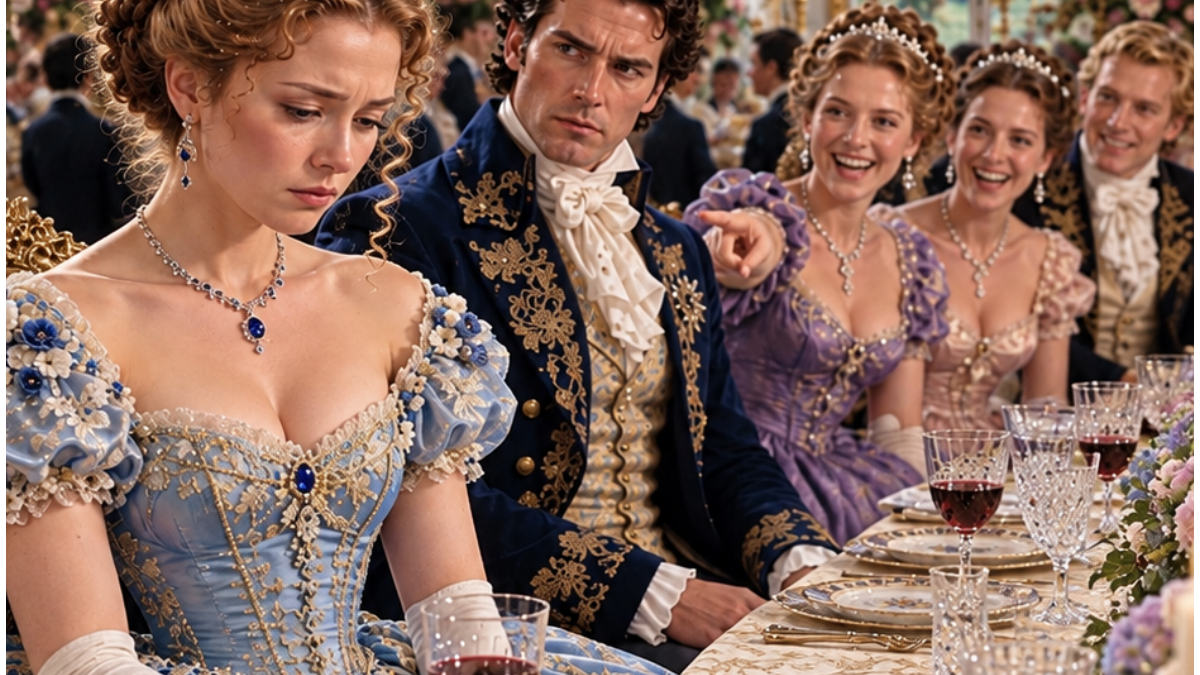
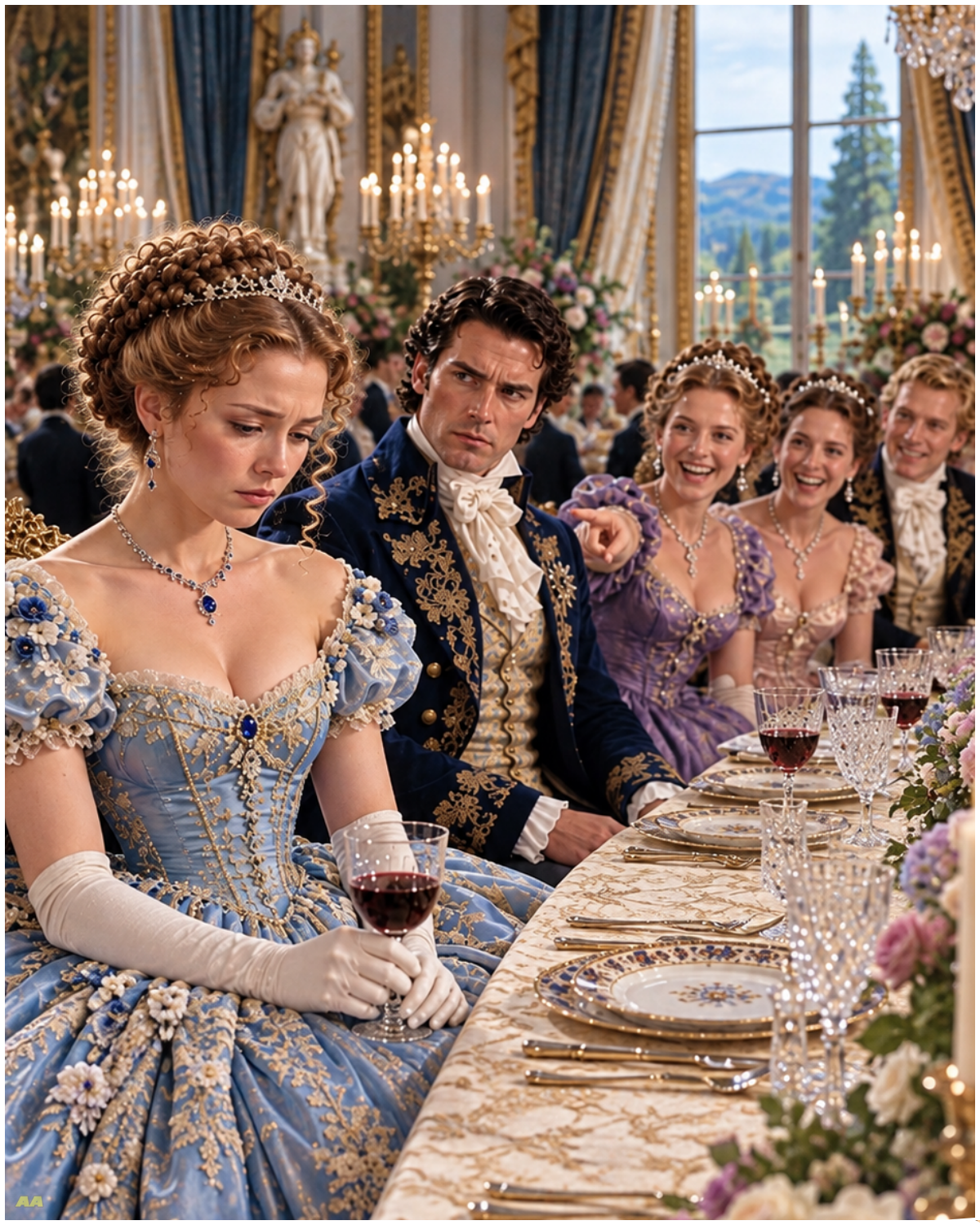
The candles in Lady Pembery’s dining room burned so brightly that every diamond at the table seemed to be laughing, too.
There were 24 guests that night, 24 crystal glasses, 24 silver place settings, and one woman at the center of it all who was supposed to be the joke.
Her name was Clara, and until 3 weeks earlier she had been nobody.
Now she was the Duchess of Ravensworth.
Every person at that table believed she had stolen the title the way a pickpocket steals a watch.
Across from her, Lady Cordelia Vane leaned toward the guest of honor, an elegant Italian princess with silver in her hair.
Cordelia smiled sweetly and spoke in rapid polished Italian.
Non preoccupate principessa, non capisco una parola.
Don’t worry, princess, she doesn’t understand a word.
The ladies nearest her laughed behind their fans.
The princess did not laugh.
Clara kept her eyes on her plate, her hands folded, and her face as calm as still water.
They thought she was a servant girl in a borrowed gown.
They thought she was deaf to everything they said.
They were about to learn that they had been wrong about every single thing, from the language to her past, to the real reason the coldest duke in England had married her.
Within 10 minutes, that laughing room would be so silent you could hear the candle wax drip.
By the end of the night, a family secret buried for 11 years in Florence would be dragged into the light, and one of the proudest women in London would never be received in polite society again.
To understand how, we have to go back 3 weeks to a small chapel in Bath and a wedding no one in England could explain.
If you love stories where quiet women win, tell me in the comments where you’re listening from tonight and settle in.
This one has a twist I don’t think you’ll see coming.
In the spring of 1817, the most talked about man in London was a man who almost never talked.
Julian Ashford, the Duke of Ravensworth, was 34 years old, tall, dark-haired, and so reserved that the ladies of the ton had nicknamed him the Iron Duke’s colder cousin.
He had inherited his title at 22 after his father and older brother died within a single winter.
He attended the House of Lords, managed four estates, danced exactly twice per season, and had never once been seen to smile at a debutante.
Every ambitious mother in England had tried to marry her daughter to him.
For 3 years, the favorite had been Lady Cordelia Vane.
Cordelia was everything a Duchess was supposed to be.
She was golden-haired and graceful.
She had studied with the finest masters and could paint, sing, and play the harp.
She spoke French like a Parisian and Italian like a Roman.
Her mother, the widowed Lady Pembery, had spent a fortune making her perfect and all of London agreed that by the end of the season she would be the Duchess of Ravensworth.
Then, one morning in April, a short notice appeared in The Times.
The Duke of Ravensworth to Miss Clara Bellamy of Bath.
London read it twice and then read it again.
Nobody knew who Miss Clara Bellamy was.
It took the gossips 4 days to find out and what they found delighted them.
Miss Clara Bellamy was 26, which was nearly on the shelf.
She had no fortune, no title, and no family worth mentioning.
For the past 5 years she had worked as a paid companion to an elderly blind widow in Bath, a Mrs. Hartley.
Her duties were to read aloud, pour tea, and fetch shawls.
“A servant,” Lady Pembery said when she heard.
“He has married a servant.”
The wedding took place in a small stone chapel in Bath with only six guests.
The Duke’s elderly aunt came, as did the blind Mrs. Hartley, and a vicar who kept losing his place in the prayer book.
When Clara walked down the aisle in a simple dove gray gown, the Duke’s aunt was heard to whisper that the girl looked like a governess on her way to an interview.
Clara heard her. She heard most things.
She simply had a lifelong habit of not letting anyone know it.
She was not beautiful in the way Cordelia was beautiful.
She was slender with dark hair she wore plainly and a face that was quiet rather than striking.
But her eyes, a warm and unusual shade of hazel, took in everything.
And when she spoke, which was rarely, her voice had a low, musical quality that made people stop and listen without quite knowing why.
After the ceremony, as the carriage carried them toward London, the Duke sat across from his new wife in silence for nearly an hour.
Finally, Clara spoke. “Your Grace, may I ask you something?” “You may call me Julian.
We are married.” Julian, the name felt strange in her mouth.
“Why did you choose me?” He looked at her for a long moment, and something moved behind his gray eyes, something she couldn’t read.
“Because you were the only person in Bath,” he said at last, “who didn’t want anything from me.”
It was an answer, but it wasn’t the whole answer.
Clara knew that the way you know a door has been left slightly open.
She would not learn what lay behind it until the night of the dinner.
And when she did, it would change everything she believed about her marriage.
That night, in the enormous, silent bedchamber of Ravensworth House in Grosvenor Square, Clara unpacked her single trunk.
At the very bottom, wrapped in an old shawl, was a small rosewood box.
Inside were a bundle of letters tied with faded blue ribbon, a pressed flower gone brown with age, and a sheet of music with handwritten notes in the margins.
The letters were written in Italian.
Clara touched them gently, the way you might touch the hand of someone sleeping.
Then she closed the box, hid it at the back of the wardrobe, and whispered something so softly that no one could have heard it.
Those letters hold a secret Clara has carried for 11 years, and will open them together before the night is over.
If you’re enjoying the story so far, you’re always welcome to leave a like or subscribe.
It helps these stories find their way to others who enjoy them.
Now, let’s follow Clara to London.
London society did not attack Clara directly.
That was not how the ton worked.
It attacked with smiles. Within a week of her arrival, the invitations began.
There were morning calls, afternoon teas, and musical evenings.
Every one of them was a trap dressed as a courtesy, and every one was attended by Lady Cordelia Vane.
At the first tea, in Lady Penbury’s pale blue drawing room, Cordelia greeted her like a dear old friend.
“Your Grace, how wonderful. We’ve all been simply dying to meet you.
She took Clara’s hands and looked at her gown, which was a plain, well-made lilac muslin, with an expression of great sympathy.
And what a practical dress.
You must tell me your modiste, or did you make it yourself?
I’ve heard companions are wonderfully clever with a needle.
The other ladies tittered. Clara smiled politely.
It was made in Bath, Lady Cordelia.
Bath, Cordelia repeated, as if it were the name of an illness.
How charming. It went on like that for an hour.
Did the Duchess paint? A little.
Did she play? A little.
Did she speak French? Clara said she had some French, and Cordelia immediately launched into a long, rapid speech in French about the weather, the season, and the new fashion for turbans, then waited with a bright, expectant face.
Clara answered in simple, careful sentences, deliberately plain.
Cordelia turned to her mother with a tiny, satisfied smile, as if to say, “You see?” Here is the thing no one in that room understood.
Clara’s French was perfect, so was her German, so was her Latin, and her Italian, the language of her childhood, of her mother’s lullabies, and her father’s music lessons, was better than that of anyone in London.
She hid it deliberately, and she had a very good reason.
Clara Bellamy had been born in Florence.
Her father, Edmund Bellamy, was an English music master who had gone to Italy as a young man to study composition and never come home.
There he fell in love with Julia Rinaldi, a Florentine soprano with a voice so lovely that the city’s nobility invited her to sing at their weddings and christenings.
Clara grew up in a narrow yellow house on the Via de’Bardi, above the River Arno, in a home full of music, books, and laughter.
She spoke Italian before she spoke English.
She could recite Dante before she could do suMs. Then, when Clara was 15, everything ended.
An English lord who was visiting Florence with his family hired her father to give singing lessons to his young daughter.
One evening a diamond necklace belonging to the Lord’s wife went missing.
The Lord accused Edmund Bellamy of stealing it.
There was no proof, but there didn’t need to be.
An English Lord’s word against a music master’s was no conteSt. Her father’s pupils vanished overnight.
His reputation was destroyed. Within the year, Clara’s mother caught a fever in the damp winter and died.
Her father, broken and penniless, brought Clara back to England where he died of what the doctor called a weak heart and what Clara always called grief.
She was 17, alone, and carrying a name that some people still whispered about.
She never learned the name of the Lord who had accused her father.
Her father had refused to speak it.
Names are poison, Clara, he told her near the end.
Don’t carry them. Carry the music instead.
So, Clara learned a hard lesson.
People who feel superior to you will tell you everything as long as they believe you are beneath understanding it.
She learned to be quiet and to look ordinary.
She learned to listen and that is exactly what she did now.
As the season wore on, the attacks sharpened.
At a musical evening, Cordelia accidentally spilled punch down the front of Clara’s gown just before Clara was asked to play.
At a ball, a rumor spread that the Duke had married her because she was carrying another man’s child.
It was false and cruel and it was traced, very quietly, back to Lady Penbury’s drawing room.
Through all of it, Julian said almost nothing.
He escorted her to every event.
He stood beside her like a dark wall, but he never defended her aloud and some nights, alone in her room, Clara wondered whether he regretted his choice.
Then, one evening, something changed.
She was sitting in the library at Ravensworth House after a particularly miserable ball, holding a book she wasn’t reading.
Julian came in, stopped, and looked at her for a long moment.
They were cruel tonight, he said.
They’re cruel every night. Yes.
He crossed the room and sat in the chair opposite her.
It was the closest he had ever sat to her.
My mother used to say the ton is a pack of wolves in silk.
It smells weakness the way wolves smell blood.
Then I must be bleeding a great deal.
No, he said quietly. That’s what they don’t understand.
You never bleed. I’ve watched you for 6 weeks, Clara.
You take every blow and you never show them a thing.
He paused. I only wish you’d let them see more of who you are.
She looked up sharply. What do you mean?
For a second, she thought he would tell her the rest of the truth, the part he had held back in the carriage.
Instead, he looked at the book in her lap and a faint smile touched the corner of his mouth.
It was the first smile she had ever seen on his face.
You’re holding it upside down, he said.
Then he stood, bade her good night, and left.
Clara looked down. The book was a volume of Italian poetry and it was not upside down.
She sat very still for a long time, her heart beating faster.
Did he know? And if he knew, how?
The invitation arrived on thick cream card with gold edges.
Lady Pembery requests the pleasure of the company of the Duke and Duchess of Ravensworth at dinner on Thursday, the 12th of June in honor of her Serene Highness, Principessa Serafina Albrizzi of Florence.
Clara read the name twice.
Florence. The Principessa Albrizzi was the most celebrated foreign guest of the season.
She was a widow of about 60 from one of the oldest families in Tuscany and she had come to London on a diplomatic visit with her late husband’s cousin, the Florentine envoy.
Every hostess in London wanted her and Lady Pembery had won her.
Everyone understood what the dinner was really for.
Cordelia would sit near the Principessa and dazzle her in flawless Italian, showing all of London and above all the Duke of Ravensworth exactly what kind of woman should have been his Duchess.
Two days before the dinner, Clara’s lady’s maid, a sharp-eyed Irish girl named Molly, came to her with a pale face.
Your Grace, I shouldn’t be telling you this, but my cousin is in service at Pembery House and she heard Lady Cordelia talking to her mother in the morning room.
Go on. Molly twisted her apron.
Lady Cordelia said, and these are her words, “Your grace, by the end of Thursday night, Ravensworth will see exactly what he married, and so will everyone else.” And her mother laughed and said, “Just make sure it’s done quietly, darling, like last time.” Clara went cold.
“Like last time.” Did your cousin hear anything else?
“Only that there’s to be some sort of surprise.
That’s all she caught before they sent her out.” That night, Clara told Julian she felt unwell and might not attend.
He studied her face. “Are you afraid of them?” “No,” she said, and it was the truth.
“I’m afraid of what I might do, like last time.” Hold on to those words.
They’ll matter more than you think.
If stories like this bring you a little comfort, you’re warmly invited to subscribe and join us for the next one.
And I’d love to hear what you think.
Should Clara stay silent at that dinner or finally speak?
Let’s see what she chooses.
He was quiet for a moment.
Then he said something that surprised her.
“Come, and if the moment arrives when you’re tempted to stop hiding, don’t resist it on my account.” He hesitated.
“I’ll be seated at the other end of the table.
Lady Pembery has made sure of that, but I’ll be watching.” On Thursday evening, Clara dressed in a gown of deep green silk, the richest thing she had ever worn, and a single strand of pearls that had belonged to Julian’s mother.
Molly pinned her hair and stepped back.
“You look like a duchess, your grace.” Clara looked at her reflection.
Then she walked to the wardrobe, took out the little rosewood box, untied the blue ribbon, and slipped one thing inside her reticule.
It was the sheet of handwritten music.
She didn’t fully know why she did it.
She only felt, the way you sometimes feel the weather turning, that tonight her past would be sitting at that table with her.
She had no idea how right she was.
Pembery House blazed with light.
Footmen in powdered wigs lined the staircase.
The dining room held a table so long it seemed to vanish into candle glow, laid with silver, crystal, and hothouse roses.
As Lady Pembery had arranged, the duke was seated far down the table beside a deaf old admiral.
Clara was placed near the head, directly across from Cordelia, with the Principessa between them at Lady Pembery’s right hand.
The Principessa Albrizzi was small and straight-backed, dressed in black silk and old lace, with dark, intelligent eyes.
When she was introduced to Clara, she held her hand a moment longer than necessary, and looked at her face with a slight, puzzled frown, as if trying to place her.
“Duchessa,” she said in accented English, “a pleasure.” “The pleasure is mine, your highness,” Clara replied in English.
The first course was served, a clear turtle soup, and Cordelia began her performance.
She turned to the Principessa and spoke in Italian, fluently and gracefully.
She talked about Florence, the Uffizi, the paintings of Botticelli, and the view from the Boboli Gardens.
The Principessa answered warmly. Guests up and down the table fell quiet to listen, impressed.
Lady Pembery glowed. Then Cordelia glanced across the table at Clara and made a small show of politeness.
“Oh, forgive us, your grace.
We’re being terribly rude, speaking Italian.
You don’t speak it, I suppose?” Every eye turned to Clara.
She hesitated for one heartbeat, a pause that almost no one noticed, and then said simply, “Please, don’t stop on my account.” It wasn’t a yes, and it wasn’t a no, but Cordelia heard what she wanted to hear.
She smiled like a cat and turned back to the Principessa.
The second course arrived, turbot in lobster sauce, and the conversation changed.
It happened gradually, the way cold water creeps up a beach.
Still in Italian, still smiling, Cordelia began to talk about Clara.
“È incredibile, vero?” she murmured.
“It’s incredible, isn’t it? Six weeks ago she was fetching shawls for a blind old woman in Bath.
Now look at her, wearing the Ravensworth pearls.” One of the ladies nearby, Miss Lavinia Crew, who also had Italian, giggled into her glass.
The Principessa said nothing. Her face grew very still.
Cordelia went on lightly. “Guarda tela.
Mangia come una governante. Look at her.
She eats like a governess.
So careful, so terrified of using the wrong fork.
Clara lifted the correct fork and continued eating.
Some say he married her out of pity, Lavinia whispered in Italian.
Others say she trapped him.
Oh, I know why he married her, Cordelia said, and her voice sweetened, which was always when it was most dangerous.
She was cheap. A duke with a cold heart doesn’t want a wife.
He wants a housekeeper who won’t complain.
And a companion from Bath is very good at not complaining.
Lavinia laughed out loud, then covered it with a cough.
Across the table, Clara sipped her wine.
The Principessa set down her spoon.
In Italian, quietly she said, Signorina, forse non è gentile.
Young lady, perhaps it isn’t kind.
Cordelia waved a hand. Non si preoccupi, Principessa, non si capisce.
Don’t worry, Princess. She can’t understand us.
Look, she added, and turned her brilliant smile directly on Clara.
In English, very sweetly, she said, Isn’t the turbot delicious, your grace?
It’s lovely, Clara said. Cordelia turned back to the Principessa, triumphant.
You see? Like talking in front of a spaniel.
Several of the ladies who understood laughed openly now, and the ones who didn’t understand laughed, too, simply because the others were laughing.
The sound rippled down the table like wind through wheat.
Far down the table, Julian had stopped eating.
He did not speak Italian as well as Cordelia did, but he spoke enough.
His hand had tightened around the stem of his glass so hard that his knuckles were white.
And Clara, Clara sat perfectly still as she always had.
Inside, she was counting. She had learned the trick as a girl in Florence.
When her father’s pupils’ mothers sneered at them in the street after the accusation, her mother had held her hand and whispered, Conta, tesoro.
Conta fino a dieci, e poi decidi.
Count, my treasure. Count to 10, and then decide.
She had counted many times that evening, and each time she had decided to stay silent.
The insults were nothing new.
She had heard worse in Bath, in lodging houses, in servants’ halls.
Words could not hurt her anymore.
But Cordelia was not finished, and the next thing she said was not an insult.
It was a confession. Lowering her voice so that only Lavinia, Lady Pembery, and the Principessa could hear, and still in Italian, Cordelia said, “And after tonight, the whole of London will know what she really is, a thief.” The Principessa frowned.
“Che cosa intende?” “What do you mean?” Cordelia’s eyes sparkled.
“Mama’s sapphire brooch is missing.
It went missing this evening, just before dinner.
And at the end of the meal, when the ladies withdraw, Mama will discover it’s gone and raise the alarm.
Terribly distressing. The servants will be questioned, and then someone will think to look in the reticules.” She smiled.
“And guess whose reticule it’s sitting in right now.” Lavinia’s hand flew to her mouth, not in horror, but in delight.
Lady Pembery said very softly, “Cordelia, basta.
That’s enough.” But she was smiling, too.
“A companion from Bath,” Cordelia murmured, “poor, grasping, and desperate.
Who would doubt it? Ravensworth will have no choice but to send her to the country in disgrace.
And by next season, he’ll need a proper Duchess.” Then she added the words that stopped Clara’s heart.
“It worked perfectly on the music master in Florence, after all.
Papa always said the English will believe anything of a servant.” For a moment, Clara could not hear anything at all.
The candlelight blurred. The laughter down the table faded into a dull roar, like the sea inside a shell.
The music master in Florence.
11 years. 11 years of wondering who had done it.
11 years of carrying her father’s shame without ever knowing the name of the man who caused it.
And the answer had just been tossed across a dinner table, between the turbot and the lamb, as carelessly as a crumb.
Lord Pembery, Cordelia’s late father.
It had been Cordelia herself, then a little girl of nine or 10, who had taken singing lessons from Edmund Bellamy in a rented palazzo on the Arno.
It had been Lady Pembery’s necklace, and if Cordelia’s words meant what Clara thought they meant, there had never been a theft at all.
There had only been a lie.
Clara felt something inside her that had been folded tight for 11 years slowly begin to open.
Under the table, very carefully, she opened her reticule.
Her fingers found the handwritten sheet of music, and beside it, something hard, cold, and sharp-edged that had not been there when she left home.
A brooch. She felt the weight of it an hour ago when a footman helped her with her cloak and bumped against her arm a little too clumsily.
She had wondered then, now she knew.
She counted to 10. This time she decided differently.
Clara set down her fork.
The small click of silver on porcelain was not loud, but somehow it carried.
Then she raised her eyes, looked directly at Lady Cordelia Vane, and spoke.
Her voice was low, clear, and perfectly calm, and every word was in Italian so pure and elegant, so unmistakably Florentine, that it sounded like music.
Vi sbagliate, Lady Cordelia. Capisco ogni parola.
You are mistaken, Lady Cordelia.
I understand every word. The silence that followed was not ordinary silence.
It was the silence of a room where two dozen people have simultaneously forgotten how to breathe.
Cordelia’s smile stayed on her face a second too long, the way a painting stays on a wall after the house has caught fire.
Then it drained away. Lavinia Cruz glass tipped and spilled red wine across the white cloth, and no one moved to mop it.
Clara did not raise her voice.
She did not need to.
She turned first to the Principessa and inclined her head respectfully, continuing in Italian, “Forgive me, Your Highness, for letting this go on so long.
I was raised to believe it’s rude to interrupt, but I was also raised to believe it is a sin to stay silent while a lie is being told.” Then she lifted her reticule onto the table, opened it, and drew out a brooch of large dark sapphires set in gold.
It caught the candlelight and threw blue sparks across the silver.
A gasp went down the table.
Clara placed the brooch gently beside Lady Pembery’s plate.
“I believe this belongs to you, my lady.” she said in Italian.
Then, for the benefit of the guests who didn’t speak it, she repeated in English, calmly and clearly, “Lady Pembery, I believe this is your brooch.
It was placed in my reticule tonight while I was being helped with my cloak.
I thought you would want it returned now before anyone had to be questioned since your daughter has just explained to the Principessa exactly how it got there.” Lady Pembery’s face turned the color of candle wax.
“This is outrageous.” Cordelia said in English, her voice rising and cracking.
“She’s lying. She stole it and she’s trying to Lady Cordelia.” The voice came from the Principessa, and though she was small and old, it cut through the room like a blade.
She spoke in slow, deliberate English so that everyone would understand.
“I heard every word you said.
So did your mother, and so did Miss Crewe.
You told me yourself where the brooch was and why.
Do not insult this table by pretending otherwise.” Cordelia opened her mouth and closed it again, but the Principessa was no longer looking at Cordelia.
She was looking at Clara, and her dark eyes had filled with something that looked almost like fear or hope.
“Your accent.” she said slowly in Italian.
“That is not an accent learned from a master in London.
That is Florence. That is the Oltrarno, the other side of the river.
Who taught you to speak like that, child?” Clara took a breath.
Her hand moved to the reticule again, and this time she drew out the old sheet of music, yellowed and soft, covered in handwritten notes, and laid it on the table.
“My mother, your highness. Her name was Giulia Rinaldi.
My father was Edmund Bellamy, the English music master.
We lived on the Via de’ Bardi, in the yellow house by the bridge.” The Principessa’s hand went to her mouth.
For a long moment she said nothing.
Then she reached out with trembling fingers and touched the sheet of music very gently, the way Clara herself had touched the letters on her wedding night.
“Julia,” she whispered, “Dio mia, Julia’s daughter.” She looked up and there were tears in her eyes.
“Your mother sang at my wedding,” she said, in English now, so the whole room could hear.
“In the church of Santo Spirito, 32 years ago. She was my dearest friend. When her husband was accused, I was in Naples with my own husband, who was dying. By the time I returned to Florence, the family had gone to England and Julia was dead. I searched for you both. I wrote to London. Nobody could tell me where the Bellamys had gone.”
She turned slowly and looked at Lady Pembery with an expression of pure ice.
“And I know something else,” the Principessa said.
“Three months after the English family left Florence, a diamond necklace was sold to a jeweler on the Ponte Vecchio to pay a gambling debt.
The jeweler recognized it because he had made it.
He came to my husband’s family to ask what should be done, since the English lord had already gone home.
The necklace was never stolen, Lady Pembery.
Your husband pawned it and blamed the music master because it was easier than admitting to his wife that he had lost it at cards.”
The room was so silent that, just as I promised, you could hear the candle wax drip.
“I kept that jeweler’s written statement,” the Principessa went on quietly.
“For 11 years I kept it, hoping one day to find Edmund Bellamy and give him back his name.”
Her voice broke slightly.
“I am too late for him, but I am not too late for his daughter.” Lady Pembery rose from her chair.
Her lips moved, but no sound came out.
She sat back down heavily as if her legs had given way.
And Cordelia, the golden, perfect Cordelia, who spoke French like a Parisian and Italian like a Roman, sat frozen at her place, understanding for the first time in her life that there was nothing she could say, in any language, to save herself.
A chair scraped at the far end of the table.
Every head turned. The Duke of Ravensworth was on his feet.
He walked the full length of that long table slowly, in complete silence, past 20 stunned faces until he stood behind his wife’s chair.
He placed one hand on her shoulder.
It was a small gesture, but in that room it was louder than a cannon.
Lady Pembery, he said, and his voice was quiet and very cold.
My wife and I will be leaving.
The Principessa’s account of the brooch will be repeated, I have no doubt, in every drawing room in London by noon tomorrow.
I will not need to add anything to it.
He paused, but I want you to understand one thing clearly.
If any member of your household ever speaks my wife’s name again, in any language, they will answer to me.
Then he looked down at Clara, and his face changed completely.
The ice was gone. What replaced it was something she had never seen there before, and had not dared to hope for.
He spoke to her in Italian.
It was not polished like Cordelia’s, it was slower and a little rough around the edges, the Italian of a man who had learned it for a reason.
Sei stata magnifica. Non devi più nasconderti.
My più, you were magnificent.
You never have to hide again.
Never again. Clara stared at him.
You speak Italian. Badly, he said.
I’ve been practicing for a year.
A year? But we met only He smiled, the second smile she had ever seen from him, and this one reached his eyes.
Come home, he said in English.
I’ll tell you everything in the carriage.
The Principessa rose, too, and embraced Clara, holding her the way a mother holds a daughter who has been lost for a long time.
She pressed Clara’s cheek and whispered, “Domani. Vieni da me domani.”
Ho tante cose da raccontarti su tua madre.
Tomorrow. Come to me tomorrow.
I have so many things to tell you about your mother.
Clara nodded, unable to speak.
Then the Duke and Duchess of Ravensworth walked out of Pembery House together, her hand on his arm and her head high.
Behind them the 24 guests sat in the wreckage of a dinner party that London would talk about for the next 50 years.
The carriage rolled through the dark, quiet streets of Mayfair.
For a long time neither of them spoke.
Then Clara turned to him.
“Tell me, tell me the part you left out.”
Julian looked out of the window, then back at her.
“Last spring,” he said, “I went to Bath to settle some estate business. One afternoon it rained, and I stepped into the pump room to wait it out. There was a young woman in the corner reading aloud to an old blind lady. She wasn’t reading English. She was reading Dante in Italian, the passage from the Paradiso about the love that moves the sun and the other stars.”
Clara’s breath caught.
She remembered that afternoon and that passage.
Mrs. Hartley’s late husband had loved Italian poetry, and the old lady liked to hear it read aloud, even though she couldn’t understand a word, because it reminded her of him.
“You read it so beautifully,” Julian said, “that half the room stopped talking to listen.
And the moment you noticed, you stopped.
You closed the book and switched to English and made yourself invisible again, as if you’d been caught doing something wrong.” He shook his head slowly.
“I’d spent 12 years surrounded by women who performed every accomplishment they had loudly for my benefit.
Women who spoke Italian to impress a duke.
And here was someone with a real gift who hid it because she wanted nothing from anyone.
I came back to Bath four more times that year just to see you.
I hired an Italian master in London so I could understand what you were reading.
And when I finally asked Mrs. Hartley about you, she told me your name.” He hesitated, “and I recognized it.
Bellamy. There had been talk years ago at my club about an English lord in Florence and a music master.
The story never quite held together.
Pembery was a known gambler, and I always wondered.” He met her eyes.
“I didn’t know for certain, Clara. I didn’t know the Principessa would be there tonight or what she knew. But when Lady Pembery invited us, I thought if the truth was ever going to come out, it would come out in that house, because liars always get careless when they think no one is listening.”
Clara was quiet for a long time.
“So that’s why you told me not to resist on your account.”
She said at last. “You were hoping I’d speak.”
“I was hoping you’d stop believing you had to be small.” He took her hand.
It was the first time he had ever reached for it.
“I didn’t marry you because you were cheap, or quiet, or because you’d never complain. I married you because the first time I heard your voice, it was reading about love that moves the stars, and I thought, ‘There is the only honest person in England.'”
Clara laughed, and the laugh turned into tears.
He pulled her gently against his shoulder, and she let him.
“You could have told me.” She whispered.
“You wouldn’t have believed me. You needed to see it for yourself, that you were never beneath them. You were simply too kind to prove it.”
By noon the next day, as Julian had predicted, every drawing-room in London had heard the story.
Lady Pembery and her daughter left for their estate in Northumberland within the week.
They were not officially disgraced, since the ton never did anything officially, but invitations stopped arriving.
Hostesses were suddenly not at home when they called.
By the following season, the name Cordelia Vane was spoken only as a warning.
The Principessa Albrizzi presented the jeweler’s sworn statement to the Florentine envoy, who forwarded it with a formal letter to the English courts.
Six months later, a small notice appeared in The Times, not far from where Clara’s marriage had once been announced.
It stated that the late Mr. Edmund Bellamy, music master, had been wholly innocent of the theft alleged against him in Florence in the year 1806, and that his good name was fully restored.
Clara cut out the notice and placed it in the rosewood box beside her mother’s letters.
The following spring, the Duke and Duchess of Ravensworth traveled to Florence.
They stayed with the Principessa in her palazzo above the Arno, and one warm evening Clara walked alone down the Via de’ Bardi until she found the narrow yellow house by the bridge.
It was still standing and still yellow, with geraniums on the windowsill.
She stood outside it for a long time.
Then she took the old sheet of music from her reticule, the song her mother had written for her when she was born with her father’s notes in the margins and she sang it softly to the house where she had been happy.
A few passersby stopped to listen.
An old woman selling flowers on the corner crossed herself and said the voice sounded just like a singer she used to hear at Santo Spirito many years ago.
When Clara finished, Julian was standing at the end of the street waiting for her.
He had been there the whole time.
She walked back to him, took his arm and said in Italian, “Adesso si mamma. Now mamma. Now it’s time.”
The ladies of London had laughed and said she couldn’t understand them.
They were right about one thing.
Clara Bellamy had never understood cruelty.
She only understood every word of it and she chose until the very moment it mattered to stay silent.
When the moment came, one quiet sentence in her mother’s language returned her father’s name, her mother’s friend and her own voice to her and showed her that the coldest duke in England had loved her from the first word he heard her read.








