Running Away From Her Ex She Bumped Into The Mafia Boss — Everyone Was Shocked When He Did This
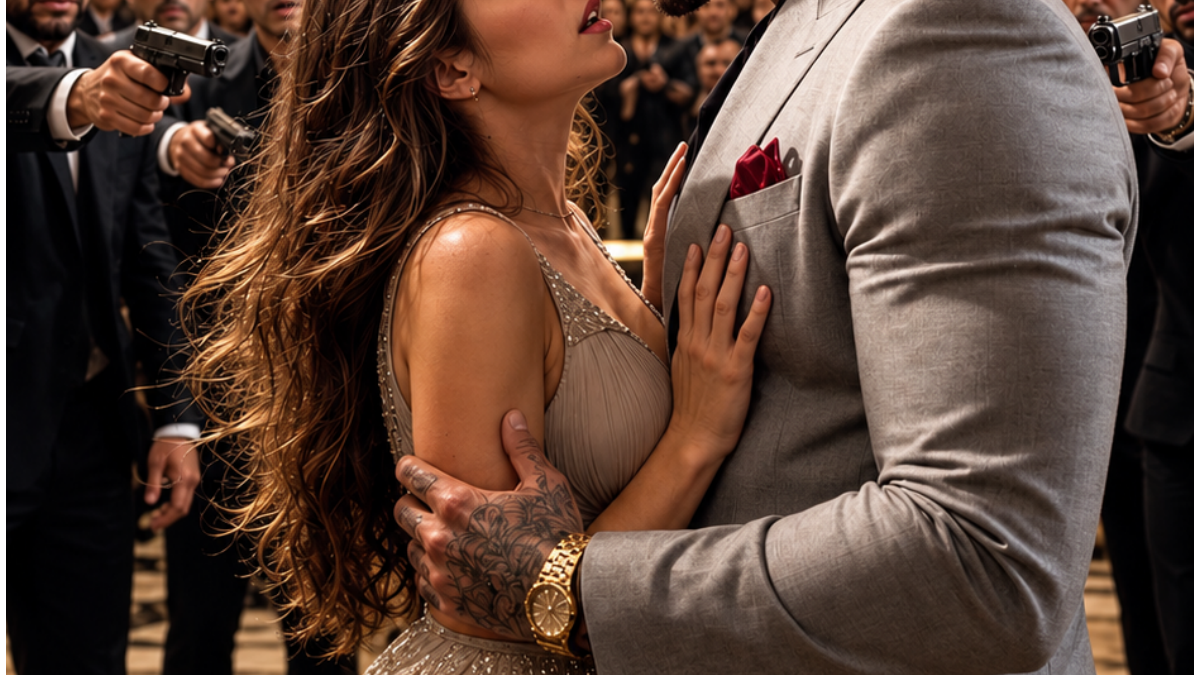

I made my decision and I will make mine.
I was just trying to get away from my ex when I ran into the wrong man.
Or maybe the only man who could save me.
When Owen caught up with me in the middle of the street and tried to drag me back, I figured no one would do anything.
No one ever did. But then a stranger took my hand, put me behind him, and stared down the man who’d turned my life into a nightmare.
The scariest part, it wasn’t the silence that took over the street.
It was watching my ex go pale with fear.
Because the man who decided to protect me that night wasn’t just powerful.
He was the man who could destroy anyone who dared to lay a hand on me.
Hi, I’m Lena. A special shout out to those of you watching book one for free here on the My Stories platform.
Completely adree and uninterrupted.
Chapter 1. The Night That Stopped the Street.
The rain had been falling for three hours when I shoved the key into the lock of the bookstore’s back door and turned it a second time, just to be sure.
Mia had left earlier, complaining that her hair would turn into straw if she spent one more minute under that gray Chicago sky.
I stayed. I always stayed.
Closing the bookstore alone had become my one decent ritual in four years.
Sweeping the floor as the last customers left, turning off the lights one by one, back to front, checking the new release shelves with the same attention as always.
It was predictable. It was mine.
Mrs. Witam, the owner of the place, had left me a crumpled note on the counter asking me not to forget to turn off the display window light.
I didn’t forget. I turned everything off, grabbed the coat that was too thin for the damp night, and pushed the back door open onto the narrow street that connected Damon Avenue to the alley where the dumpsters were.
The asphalt had that dark reflective color it gets when the rain pours long enough to look like varnish.
I knew I’d be soaked before I was halfway there.
That’s when my phone buzzed in my coat pocket.
I knew who it was before I looked.
I always knew. Owen Carter had a way of making the phone buzz differently, as if he knew, even from a distance, that I’d hesitate before ignoring it.
I ignored it. Four rings, then silence.
I let my breath out slowly, the way I do when I need to remind myself that he isn’t in the room.
I walked faSt. The raincoat clung to my back and the hood wasn’t helping against the wind coming down from Milwaukee Avenue.
Cold and damp and carrying that smell of wet concrete that only big cities have.
I was going to cut through the intersection.
It was faster. It was busier.
And busier meant witnesses. The one thing that still worked against him.
It was at the corner of Milwaukee and north that I felt it.
It wasn’t a sound. It was the way a step behind mine matched my rhythm a little too soon.
People who are just walking don’t do that.
People who are following do.
I’d learned the difference over the past 2 years.
I sped up without turning my head.
My heart started doing that thing I hated.
Pounding in my ears, my mouth, my fingers.
I crossed against the light.
A car honked. I barely registered the honk because two steps later I slammed into someone.
It was a low impact against the side of my shoulder.
I stumbled. A briefcase hit the ground.
Papers flew. White sheets, black ones, a leather folder that smacked the sidewalk and slid across the wet asphalt.
A pen slipped out of some breast pocket and rolled to the gutter with that slowness that seems deliberate, as if the moment had decided to stretch itself out.
I’m sorry, I started, still not looking up, my knees bending slightly to help.
I’m sorry. I didn’t see.
And that’s when I felt Owen’s hand on my arm.
He pulled me, not like someone calling attention, like someone laying claim.
His fingers sank in exactly where they always sank.
In the same spot on my bicep where I’d learned to hide bruises under long sleeves.
My body remembered before my head did.
The whole muscular wiring locked up.
Serena. His voice came out, breathless.
With that controlled tremor I knew by heart.
And that was never a sign of real desperation.
Just well packaged rage. You don’t answer.
You never answer. Why don’t you answer?
The street had people. Plenty of people.
I saw glances. Saw people slow down as if deciding whether to step in.
No one steps in in Chicago.
No one steps in anywhere.
I knew that. Even so, part of me kept waiting.
That’s when I lifted my eyes to apologize again.
This time to the man I had knocked into.
He was already looking at me, a black suit beneath a dark overcoat that the rain didn’t seem able to truly soak.
Dark hair combed back with the care of someone who has time for that kind of detail.
Four men around him. Three standing, one crouched, gathering the scattered papers.
The three standing had stopped breathing.
Or at least that’s how it looked because none of them moved.
None of them spoke, and the only sound between them and us was the rain hitting the asphalt.
His gaze dropped slowly and precisely from my face to Owen’s hand on my arm.
There was no shout. There was no warning.
There was only a strange stillness, as if the rain had lowered its volume out of respect, as if the whole street had received an order I hadn’t heard.
He let go of the papers he was still holding.
Really let go, opened his fingers, and let them fall onto the wet ground without looking down, without hesitating.
The crouched man immediately stopped collecting them.
The other three didn’t blink.
And then he took my hand.
It wasn’t a grab. It was a deliberate, calculated choice with a weight of intention that I felt in my bones.
His fingers touched mine in a way I had no vocabulary to describe, firm, but asking permission at the same time, like a contradiction that somehow worked.
He pulled my wrist carefully out of Owen’s reach, and my body went with the hand, as if the rest of me had decided to trust before my head had finished thinking.
He put me behind him.
Owen opened his mouth. I heard the air pass through his teeth.
That buildup I know so well.
The prelude to an arrogance he never knew how to hold back.
Who? He started. Then he really saw the face of the man in front of me.
It was a second, maybe less.
I saw it from the side, the angle of Owen’s jaw locking, his shoulders pulling back an involuntary millimeter.
The blood drained from his face like ink running out of a wet cloth.
Owen went pale in a way I had never seen in the two years I lived with him.
The two years. He was the thing that scared me.
The man in front of me spoke low.
So low that for a moment I doubted he’d spoken at all.
That it wasn’t just the wind.
Leave. Two words. No explicit threat.
No volume. No apparent weight.
Just a quiet statement like someone saying it’s raining and expecting the other person to agree.
Owen took a step back, then another.
He looked at me over the man’s shoulder as if he were going to say something.
And the man in front of me tilted his head just slightly to the right, a movement of an inch at most, and Owen turned and disappeared into the crowd before I could count to three.
The street stayed still. I remember an elderly woman on the sidewalk across the way, holding a scarlet red umbrella, whispering something to her companion with her hand over her mouth.
I remember a teenager standing with his phone in the air who slowly lowered the device without recording anything.
I remember the sound of the rain coming back as if someone had hit mute on purpose and forgotten to turn it on again for a while.
Mostly I remember my hand still inside his warmth it gave off despite the cold.
He let go slowly like someone giving advanced notice.
He turned to me. Dark brown eyes so calm they didn’t match anything I just seen.
There was a thin scar near his left eyebrow, almost imperceptible, the kind that only shows up when the light hits from a specific angle.
“Are you all right?” he asked.
His voice was lower than it had been with Owen.
More human somehow. I opened my mouth and discovered I didn’t know how to answer.
One of the men stepped forward, gathered the soaked briefcase with the same silent efficiency as before, gathered the papers, gathered the pen.
A black sedan pulled up to the curb with the discretion of someone who knew exactly the right second to appear.
No screech of brakes, no visible hurry.
The driver got out, tall, broad-shouldered beneath a dark jacket, with an expression that suggested he’d seen too much to be startled by rain or by stopped streets.
“Boss,” the driver said, with one eyebrow slightly raised in my direction.
Everything okay? It is, answered the man in the overcoat without taking his eyes off me.
The lady can get in.
I looked at the car.
I looked at the street.
I looked at the people who were still standing there pretending they weren’t.
I don’t, I started. You don’t have to, he cut in with a gentleness that sounded more precise than any urgency.
I’m asking, “Please, it was the word please.”
That disarmed me completely.
A man who commands an entire street with two inches of a tilted head doesn’t ask please.
That man had asked. I got in.
The back seat smelled of old, well-kept leather, and of a discreet, dense men’s cologne I couldn’t name, wood, maybe, or amber, or just the smell of someone who never needs to announce himself.
The driver shut the door with a care disproportionate to his size, and circled around to his side without hurrying.
The man in the overcoat got in on the other side.
He sat at a comfortable distance, not intrusive.
Where do you live? He asked.
Above the bookstore, I answered before even wondering whether I should.
Domin and Schiller. He didn’t comment.
He just nodded. Dante started the car without a sound.
We drove in silence along the wet Milwaukee, the sedan’s headlights cutting through the drizzle that had replaced the heavy rain.
I looked at my hands in my lap, noticed they were shaking, hid one inside the other.
He noticed. He didn’t comment on that either.
He took a white handkerchief from his jacket’s breast pocket and held it out without looking directly at me with that neutral gesture of someone who offers without ever forcing you to accept.
I accepted. I dried my face.
I hadn’t realized it was wet with rain and other things.
Thank you, I said in a voice that sounded strange inside my own head.
For the handkerchief, he asked, and there was a trace of something almost like humor, discreet enough that I doubted it.
Or for the rest.
For the rest, he nodded again.
He didn’t give me a smile back, just a minimal tilt of the head, as if acknowledging the thanks and at the same time saying there was no debt to record.
The car stopped in front of the bookstore before I’d worked up the courage to ask his name.
The lights of my apartment were off up above.
The roof dripped onto the canvas awning with a steady, dull rhythm.
He took a card from the inside pocket of his jacket.
He held it out to me with two fingers, without ceremony, just a name printed in black letters on a cream background.
Sans serif clean Bellini. No phone number, no address, no title, just the surname.
If he shows up again, he said in that low voice that seemed to work better than any volume.
You call this card. There’s no number, I noted.
He looked at me with what could almost have been a smile if he’d allowed himself one.
There will be if you need it.
I got out of the car without quite understanding what he meant by that.
I climbed the steps of the side stairway that led to my apartment.
The card clutched between my fingers, the handkerchief still in my other fiSt. I didn’t look back.
I heard the sedan’s engine purr softly up the street and disappeared toward Milwaukee.
In no hurry, the door closed.
I locked it. I locked it again.
By reflex, I locked it a third time and kept my hand on the knob for another second just to make sure its weight was real.
The apartment was dark. I didn’t turn on the light.
I sat on the couch with the soaked coat still on my shoulders, water dripping from the fabric onto the upholstery, and stared at the card in the faint light coming through the window glass, the diffuse yellow of the street light that always lit poorly and was always enough.
I picked up my phone.
My fingers were shaking. I opened the browser and typed slowly, letter by letter, as if each one might carry a different weight than the ones before.
Mateo Bellini, Chicago. The screen lit up my face in the dark apartment.
The first headlines loaded together, too fast, and I read one, then another, then I stopped reading.
I dropped the phone onto the cushion beside me.
I looked at the card again at the single word in black letters on a cream background.
The man who had stopped an entire street with two words, who had put my hand behind him without knowing me, who had asked me please to get into his car, was the man whose name no one in Chicago said out loud, and I had just run into him.
Chapter 2. The man who came back in the morning.
I woke to knocking on the door before the alarm.
It was Mia, of course, only she knocked like that.
Three knocks. Pause. Three knocks.
As if the door owed her money, and she’d already started charging intereSt. Serena Moretti, I know you’re in there.
Open this door before I use the spare key you forgot you gave me.
I opened it. Mia came in with wet hair and two cups of coffee and looked me up and down with the sharp talent of a best friend who sleeps with the lie detector running.
The smell of latte filled the apartment before she’d finished crossing the threshold.
“You slept in your clothes?” I dozed off.
“You slept in your clothes, Serena.” I took the coffee from her hand and dragged myself to the tiny kitchen, my bare feet freezing on the wooden floor.
The card was on the table where I’d left it in the middle of the night.
I flipped it face down with the tip of my finger before she could see.
Too late. Mia had a special talent for noticing small defensive movements.
She said it was friendship instinct.
I said it was having nothing better to do.
And what’s that card? A customer card.
A customer card is blank like that.
It’s a weird customer. She drank her coffee with narrowed eyes, and I was grateful she chose not to push it that second.
Mia knew how to pick her moments.
It was one of her best qualities, and she had many.
She spent another 20 minutes watching me with that expression of someone deciding between speaking and letting the silence do the work.
The silence won. I went down the inside stairs to open the bookstore at 10:00.
The previous night’s rain had stopped and left the air with that smell of wet asphalt I liked more than I should.
The morning light came in faintly through the display windows, cutting through the dust suspended between the shelves.
I liked the bookstore at that hour before any customers.
It was the one moment of the day when the silence felt like mine.
Mrs. Whitam showed up around noon bringing cookies that were too dry and left before I had to pretend I’d liked them.
I helped three customers. I restocked an entire shelf of historical fiction.
I mentally replayed every second of the night before about 40 times.
With the obsessive precision of someone who does it, knowing it won’t help at all.
I had decided to forget.
I’m very good at deciding to forget things, not so good at carrying out the decision.
It was4 to 3:00 in the afternoon when the door’s little bell rang, and I lifted my eyes from the order book with the automatic smile of someone who’s worked in a bookstore for years and learned to seem available even when she isn’t.
It was him in a charcoal gray suit this time.
No overcoat. The afternoon light came in through the windows and hit the thin scar on his left eyebrow in a way I hadn’t seen the night before.
A pale line, almost discreet, that only showed up at that specific angle of light.
Behind him, through the glass, I saw the black sedan parked at the curb as if it were part of the landscape.
Dante inside, reading something on his phone, indifferent to the entire universe.
“Good morning,” Mateo said. “Un good afternoon,” I corrected without thinking.
He tilted his head slightly, acknowledging the mistake with a stillness that seemed to be his default tone.
There was no awkwardness in the gesture, just the precise adjustment of someone who doesn’t waste energy on defensiveness.
Good afternoon. I walked behind the counter, more out of a barricade instinct than any real need.
He noticed. He didn’t comment.
He walked slowly to the poetry section without asking where it was, as if he’d already mapped the bookstore through the windows before coming in.
I heard his steps on the wooden floor, heavy, even in no hurry at all.
Do you read poetry? I asked and regretted the tone a second later.
It came out more sarcastic than I’d meant.
Almost never, he answered without taking offense.
Today, yes. Can you recommend one?
I came out from behind the counter without realizing I’d done it.
I walked to the shelf, my fingers running over the spines out of habit, stopping at a copy with a faded blue cover.
An American author from the ’60s, an old edition I’d bought at a clearance sale and never managed to resell because it was too good to sit in the discount section.
I held it out without comment.
He read the author’s name, read the title, turned the book over, read the back cover blurb with that slow attention that made me wonder if he read everything that way, as if every sentence needed to be weighed before being led in.
Why this one? Because it has the most short words, I answered.
I figured it’d be useful for someone who talks so little.
It was the first time I saw the sketch of a real smile on his face.
It wasn’t a smile. It was the shadow of one.
The tension in his lips loosening for half a second before it vanished.
But I saw it. I’ll take it.
I went back to the register.
He came after me in no hurry.
I rang up the book with steady hands.
And that’s when he asked without changing his tone without any preamble.
Has he come back? I didn’t need to ask who.
No, I answered. He looked at me for a full second.
He nodded with that specific calm of someone who already knew the real answer and was giving me the deliberate space to lie if I needed to.
If he comes back, he said, “Lo, you remember the card?” “I remember.” He paid in cash, new bills, folded with the care of someone who never carried a wrinkled wallet.
“He took the book in one hand, adjusted his jacket with the other, and left without any parting phrase that could sound like a move.
Just the door’s little bell trembling in the cold air and the black sedan pulling away from the curb before I’d even turned back to the register.
I kept staring at the door longer than I should have after the bell stopped trembling.
On Saturday, Mia convinced me.
Convinced is a strong word.
She dragged me to her cafe two steps away.
She said that if I spent one more day alone inside the apartment, she’d officially declare me a corpse and open probate.
The cafe was crowded, and I hate a crowded cafe.
The noise of cups and overlapping conversations made my heart beat a notch faster than necessary.
That’s why I saw it immediately when I walked in.
The table at the back near the steam fogged window.
The dark hair combed back.
The blue covered book open in his hands.
A cup of black coffee at the edge of the table untouched.
Mia nudged me with her elbow.
Isn’t that the guy who bought the book from you?
I sold the book to him.
It’s the same guy. Mia, go over there.
Mia. She shoved me with all the subtlety of a supermarket door.
I pretended it had been my own choice to walk to the back table, dodging chairs and children and backpacks tossed on the floor.
He looked up when my shadow covered the open page.
“Good afternoon,” he said, marking the page with his finger, without closing the book.
“Do you read everywhere?” “Wherever the book is, I am.” I sat in the chair across from him without him asking, without really deciding to.
He didn’t comment on that either.
I was starting to understand that he rationed words with the same discipline he rationed movement.
Nothing wasted, nothing by chance.
Mia sent a coffee to my table without my asking.
With a folded note under the cup that I pretended not to read, he asked what it said without taking his eyes off my face.
Nothing important. I lied. You lie badly.
I know. And there, for the first time in longer than I had the courage to count, I laughed.
It was a short laugh, almost a jolt, more surprise than amusement.
I heard my own laugh, as if it had come from someone else, from an earlier and less tired version of me.
I saw his eyes change.
It was subtle. Anyone not paying attention wouldn’t have seen it, but something gave way behind those dark brown eyes for a second.
A small crack, opening and closing so fast that I almost doubted I’d seen it.
He looked away to the coffee.
He picked up the cup.
He drank. We talked for another 40 minutes.
Light things, no weight, books mostly.
He asked how I chose the stock and I went on answering without realizing I was answering for real, without calculating every sentence before letting it go.
He asked about the bookstore.
I asked about the blue covered book, he admitted with that ironic stillness, I was learning to recognize that he wasn’t understanding half of it.
You should have picked a worse one, he said.
I picked the hardest one.
Why? To see if you’d come back.
The words came out before I could intercept them.
I felt my face heat in a way I hoped wasn’t visible in the cafe’s dim light.
He looked at me for two long seconds, the cup still in his hand, the book forgotten on the table.
He didn’t answer. He just tilted his head slightly as if he were filing the sentence away somewhere internal that I couldn’t see or deduce.
He left before 6. He paid for both tables without asking.
Mia came and sat in the chair he’d vacated, still warm with his heat, with the expression of someone about to write a book who already had the title picked out.
Serena, don’t say anything. I don’t need to say anything.
I went up to the apartment earlier than I should have.
Night fell fast with that ungrateful speed of November in Chicago, and the wind started hitting the windows hard enough to make the glass rattle.
I took a hot shower until the hot water ran out.
Ate bread and cheese standing in the kitchen.
Sat on the bed with a book that stayed open to the same page for 40 minutes without my reading a single full line.
The phone buzzed on the nightstand.
Unknown number. Short message. Do you really think I’m going to leave, Owen?
I felt the air go cold inside my chest, sweeping away the warmth still left from the shower.
I read it three times.
I deleted the message. I blocked the number.
I blocked his previous one and the one before that.
Even though I knew he’d find another, Owen always found another.
It was the only kind of persistence he knew.
I went to the door.
I locked it. I locked it again.
I locked it a third time.
I hesitated with my hands still on the lock, listening to the sound of the street below, the wet tires on the asphalt.
I locked it a fourth time.
I went back to bed.
I turned off the light.
I heard the wind hit the bookstore’s display window below and counted to 100, then to 200, then stopped counting because it never worked.
Anyway, it was the next morning when I went down to open the bookstore with the cold key still in my palm, that I saw it.
On top of the counter, leaning against the order book exactly where I’d left it the night before, was a cream colored envelope.
No return address, no stamp, no mark of any kind to indicate how it had gotten there, as if someone had placed it with deliberate care while the world slept.
I opened it with fingers that were too careful.
Inside, a stiff card printed in elegant, precise black letters, an invitation to a charity event for the Bellini Foundation at the group’s gallery.
Wednesday night. Dress code. Address in a serif type face.
No note, no signature, just the invitation.
I set it on the counter and stared at it for a length of time I couldn’t measure.
Then I looked at the bookstore door, still locked from the inside with the key only I had.
The lock intact, the glass without a single mark, and for the first time in a long time, what I felt wasn’t fear.
Chapter 3. Gallery, hand, and crisis.
The envelope stayed on top of the bookstore counter for 3 days.
I pretended not to see it while restocking the shelf of Russian novels.
Pretended not to think about it while counting the register.
Pretended not to memorize the curve of the cream paper while closing the door every night.
Mia gave up commenting after the second afternoon.
She just walked past it with a raised eyebrow that said more than any 4-minute voice message could.
On Wednesday morning, I picked up the envelope and turned it over between my fingers.
The paper had the weight of something expensive, the kind that absorbs printing without wrinkling, that doesn’t fold at the corner when your hand presses it.
The invitation had no note, just a date, the address of a gallery downtown, a time, and the crest of an olive tree embossed in relief, no signature, no name, as if whoever sent it knew I would already know.
You’re not going alone, Mia said from the other side of the counter with a steaming cup in her hands after reading the invitation over my shoulder for the third time.
I mean, you’re going alone, but I picked the dress.
I haven’t even decided whether I’m going.
Yes, you have, she answered without taking her eyes off her coffee.
You just don’t know yet that you’ve decided.
I hated how right she was.
In the afternoon, she dragged me up the stairs to my apartment and dumped three bags onto my narrow bed.
She pulled out a black dress with a high neck, sleeveless with a slit in the hem that stopped above the knee, modest in front, low cut in the back, elegant enough to disappear in a gallery, provocative enough for him to notice.
“Mia, I don’t want him to notice.” “Liar,” she sang, tossing a pair of low heels onto the floor.
“We don’t put on a silk turtleneck to go unnoticed, honey.
We put it on so he knows that we know.” I laughed.
Really laughed quietly. And the embarrassment of the sound came right after.
It was a laugh I’d forgotten lived in me.
A little horse a little surprised at itself.
“You’ve been laughing a lot lately,” Mia commented, suddenly serious.
“I like it. Just don’t forget to stay scared enough not to do anything stupid.” That cut through me in a way she probably didn’t intend.
I kissed her cheek and promised I wouldn’t forget.
At 7:30, the car stopped in front of the bookstore.
It wasn’t the armored sedan from the rainy night.
It was a lower model, equally black, equally silent, parked at the curb with that precision of someone who never needs to rush anything.
The engine barely made a sound.
Dante opened the back door without saying a word, just with a half nod that acknowledged that yes, I was me and that yes, he’d been waiting for me.
“Good evening, Miss Moretti. You know my last name.
I know a lot of things,” he answered, closing the door with excessive care.
Some I’d even rather not know.
It was the first thing I’d heard him say in 2 weeks, and it was funnier than it should have been.
I clutched the small purse in my lap as the car glided through the wet downtown streets.
Through the tinted windows, Chicago passed in a blur of golden lights and fogged glass.
I couldn’t decide whether I was colder or warmer than I should be.
Drops of old rain still slid down the glass, and I watched their paths as if there were some answer in the route.
The gallery was in a restored brick building hidden between two skyscrapers with a discrete facade that didn’t say its own name.
Inside it was something else.
High ceilings, white walls, twisted iron sculptures placed in the corners like silent sentinels.
Paintings that seemed to breathe, each one lit by a directed spotlight that created precise shadows in the textures of the paint.
A string quartet played something slow near the second arch.
The melody low enough not to compete with the conversations, but loud enough to fill the silences.
Waiters circulated with glasses of champagne without making a sound, as if they’d been trained for it from the start.
I saw him before he saw me.
Mateo was near the second wall, talking to a man who was shorter, older, with white hair cropped close and thin gold rimmed glasses, black suit, white handkerchief in the pocket, the same signate ring on his right hand.
The gesture he made while speaking was minimal, a slight opening of the palm that ended arguments without needing volume.
When he turned his head, it was as if the whole room turned down its volume.
He saw me. He didn’t smile.
He didn’t need to. He crossed the room slowly with a calm that was almost an insult to anyone in a hurry.
He stopped a step away from me and looked me up and down without any disguise, like someone appraising a work and in no rush to deliver a verdict.
“You came,” he said. “Did you doubt it?” I waited.
It wasn’t the same thing.
I understood. He introduced me to the man with the glasses.
Salvator Greco. He’s worked with me for a long time.
Salvator. Serena Moretti. Piaer. Salvatore murmured, lifting my hand to chest level without touching it.
Atrov Unamiko. He stopped there.
He smiled as if I should finish it.
I didn’t finish it. He laughed softly, satisfied with something only he knew, and drifted off toward another conversation with the slowness of someone who knows no one will leave without saying goodbye to him.
Does he always do that?
I asked. Always. I think he believes the half he keeps is the good part of the proverb.
And is it? I’ve never had the courage to ask.
It was almost a smile he gave me.
AlmoSt. I took the glass a waiter offered me and held it without drinking.
We talked about nothing for a few minutes.
About the large painting on the back wall, which looked like a city sinking, broad brush strokes of blue and gray that made it impossible to tell whether the place was going down or the water was rising.
About the quartet, which at that moment attacked something by Devojac with a low, controlled urgency, about the cold outside, which had returned after 2 days of truce.
He was the one who turned away firSt. Dance with me.
It wasn’t a question, but it also wasn’t an order.
It was something in between that I couldn’t name.
I don’t dance well. I dance enough for both of us.
He held out his hand.
I looked at his hand before accepting.
The wide palm, the long fingers, the matte gleam of the ring.
I placed mine on top.
It looked smaller than it was.
We went to the open space near the quartet.
He rested his right hand on my waist, low proper, and lifted his left with mine.
He kept a hands width of distance between our bodies.
And even so, I felt his heat pass through the fabric of the dress as if the distance were a lie.
The scent was discreet and clean, something woody I couldn’t name and couldn’t ignore.
I tried to focus on the musicians, on the light, on the painting of the sinking city.
It didn’t help. You’re holding your breath, he murmured, too close to my temple.
I know. Why? Because I don’t know who I am anymore when I’m near you, I said before thinking.
He stopped just for a second.
Then he resumed the step slower, as if he needed to process what I’d accidentally put into the air.
“What happened to you before?” he asked, his voice low.
No vulgar curiosity, no weight of exchange, just the question said into the air like someone opening a window and waiting.
4 years, I said, looking at the top button of his shirt instead of his face.
I started out thinking jealousy was caring.
I ended up thinking fear was love.
Along the way, I lost my friends, lost weight, lost the habit of locking the door just once.
He didn’t interrupt. I hadn’t even realized I’d needed someone not to interrupt.
The words came out the way things kept too long come out.
A little clumsy, a little relieved to finally exist outside of me.
Now I lock it four times.
I finished. On bad nights, five.
And tonight, tonight I came here.
His fingers pressed my waist gently.
No more than that, but it was enough to make my breath tremble on the way out.
Low in a sound I hoped the music covered.
The music ended before the next one started.
My phone buzzed in my purse.
I should have ignored it.
I knew I should have ignored it.
It was his hand letting go of my waist slowly.
That gave me the wrong courage to look.
Unknown number again. The fourth number of the week.
I answered a step away from him with the cold certainty of someone who already knows who’s on the other end.
No matter how many SIM cards they swap, “You look pretty like that, Serena.” Owen’s voice came into my ear as if he were standing behind me.
“I’m at your door. I can’t sleep without seeing you come home.” The room started to tilt.
The yellowish lights turned too yellow, too hot, too close.
The sound of the quartet arrived muffled, like underwater.
The champagne in my glass stopped sparkling.
My right hand searched for something to hold and found nothing.
It found his. I don’t know at what moment Matteo took the phone out of my hand.
I know that suddenly I was being guided down a narrow hallway behind a heavy curtain.
I know the air changed, drier, quieter, without the perfume of the glasses and the expensive clothes.
I know a door closed behind us and the music died.
A small closed office, an annex of the gallery with a lamp lid on the desk that cast half shadow over everything.
It smelled of hours old coffee and old paper, the kind of smell that under normal conditions I’d find comforting.
He sat me in a leather chair and knelt in front of me.
He didn’t get too close.
He kept his hands in the air, palms turned up like someone introducing himself to a frightened animal.
Like someone who knows that any sudden movement dissolves whatever calm is left.
Breathe with me. He’s at my door.
He’s nowhere. Breathe. He won’t stop.
Breathe, Serena. The first time he said my name out loud was in that room.
I breathed because he asked.
He waited. Not 5 seconds, not 10.
He waited whole minutes with his knee on the floor and his palms open.
In no hurry, giving no sign that there was anywhere else he needed to be.
The only noise was my breathing coming back to where it belonged and the low hum of the air conditioner in the corner.
When the rhythm slowed enough for me to hear my own pulse, he held out his right hand slowly and took mine.
Just that, the warm palm, the thumb resting on my wrist, counting something I didn’t know he was counting.
It was the first touch that mattered.
“Do you want him to stop existing?” he asked low, looking at our hands instead of my face.
“I can do that. Today, you’ll never hear that name again.” The question was asked with the same calm with which he’d asked for the dance.
No threat, no theater, just a possibility set on the coffee table between us, as if it were a simple thing.
And the worst part was that coming from him, it sounded like a simple thing.
I closed my eyes. For one dishonest second, I wanted to say yes.
It was exactly that second that gave me my voice back.
No, I answered. I want to exist as myself, he lifted his eyes.
I had never seen anyone look at me like that, as if the answer had explained something he’d been asking himself for years.
Then exist, he said. I’ll take care of the rest without asking for anything in return.
Without asking for anything in return.
I believed him, not because he sounded convincing.
I believed him because his hand stayed in mine, and neither of them was shaking.
We went back down the same hallway.
Salvatore appeared somewhere along the way with a black cardigan that he draped over my shoulders without comment, as if he already knew I’d be cold when I came out of that room.
The wool was thick and smelled faintly of tobacco and cedar, and I pulled it close without worrying about looking composed.
Dante was waiting at the back door with the car already running.
Matteo took me to the bookstore door without saying anything more.
When I got out, he got out, too.
The sidewalk was wet, and the street lights reflected on the asphalt in wide puddles that looked like broken mirrors.
He didn’t come up. Lock it twice tonight, he said with the door open between us, the cold pre-dawn air coming in from outside.
I’ll be out here. You don’t have to.
I know. He waited to hear the first turn of the key before turning his back.
I locked it a second time.
I didn’t lock it a third.
I stood with my hand on the cold metal for a long moment, listening to his steps move away on the damp asphalt before letting go.
The next day, when I went out to get bread in the late morning, the street was a washed out gray.
The kind of light Chicago uses to start over.
Dante was parked in the car across the way, motionless as always.
He didn’t get out. He didn’t wave.
He was just there as if he were part of the landscape or as if someone had asked him to stay.
Chapter 4. The kiss and the worst day.
The two weeks following the event at the gallery unfolded into something resembling normaly.
They were the strangest two weeks of my adult life.
Not because anything big happened, but because nothing big happened.
It was the absence of catastrophe that disoriented me.
I woke without a nightmare three mornings in a row.
I answered the phone without holding my breath before seeing the number on the screen.
I closed the bookstore at 8 without looking twice at the street before lowering the gate.
He called every night, always after 9, always for 10 or 15 minutes, always saying less than he listened.
I’d tell him about Mrs. Witcom mixing up the name of a regular customer for the fourth time that week, about the smell of cold coffee that soaked into the back shelves, about the copy of Naruda someone had returned with a dried flower inside it as a bookmark.
He’d tell me about the coffee he’d had, the poetry book he was finishing, the silence of the penthouse when he came home late.
He never talked about what he did between the calls.
I never asked. There were two discreet dinners at a tiny Japanese restaurant on Division Street where the chef knew him and pretended not to.
There was a long walk along the lakefront one Saturday afternoon with the Chicago wind cutting through my coat and whipping my hair across my face and Dante following 15 steps behind with his hands in his pockets while Mia sent explosive voice messages begging for photos I never took.
There was a night I fell asleep on the phone with him on the other end of the line.
And when I woke, the call was still active with his calm breathing on the other side, slow and steady, as if he’d simply decided not to hang up.
I was sleeping better. That was the deepest difference, the one I felt before I could name it.
I was sleeping better. The following Saturday, he took me to dinner at an Italian restaurant in River North that closed its doors for the two of us.
Just the two of us.
There was no other customer.
There was no background music.
There was no waiter circulating between tables.
Just an older man in a white apron who served the dishes in silence and disappeared between courses as if the air had swallowed him.
The candles were tall cream wax and gave off a discrete scent of vanilla that I’d associate with that night forever.
The walls were exposed brick, the flower vases simple, the linen tablecloth with an ironed crease.
It was the most elegant restaurant I’d ever set foot in.
I knew that and pretended not to.
You closed a restaurant, I said.
After the second course, I made a reservation.
You reserved the entire restaurant.
The night was full. He cut a piece of bread with that precision he had in everything without urgency.
I didn’t want to share you with a full room.
I looked at him across the small table.
The low candle light turned the dark brown of his eyes into something warmer, almost amber at the edges.
His shirt was open at the first button, the collar slightly loosened.
The rolled sleeves showed the thin leather bracelet he wore under his watch.
The most casual detail of a man who never seemed completely informal.
At some point during those two weeks, I had started memorizing details like that without realizing it.
“Can I tell you something?” I asked.
“My, you can tell me anything.” I rested the fork on the edge of the plate.
I breathed through my nose before speaking like someone testing the weight of a sentence before letting it loose in the air.
I don’t feel afraid when I’m with you.
The sentence hung between the two of us for a long while.
He didn’t pick it up right away.
He chewed. He took a sip of red wine slowly, his eyes on the glass for a second before coming back to me.
He set the glass down with a care that didn’t match hands that size.
Are you sure? He asked.
Why do you always ask that?
Because I need to hear it more than once.
I’m sure. He looked at me for another second.
With that attention, he gave to few things, and that when he gave it, left the other person feeling like the only one in the room.
Then he stood, circled the table with the chair scraping softly on the wooden floor, and pulled his chair over to sit beside me instead of across from me, not in my lap.
Beside his knee touched mine under the table, through the fabric, and that was all for a while.
The heat of the contact was greater than the simple geometry of the touch justified.
He lifted his hand and ran it along my cheek slowly with the caution of someone who knows what his hands can do and chooses.
In that second to do the opposite, his fingers moved down to the edge of my jaw.
They stopped there, holding without pressing.
May I? You may? He leaned in.
He leaned. I closed my eyes before I felt his mouth.
And when I felt it, I realized he was holding his own weight with his palm flat against the back of my chair, his arm locked so as not to bear down on me.
The kiss was slow, slower than I expected from someone with that name, with that reputation, with that presence that made whole rooms go quiet.
No hurry, no apparent hunger, nothing beyond the precise intention not to frighten me.
When he pulled back, I had one hand on the lapel of his shirt without remembering having put it there.
The fabric was warm, his heartbeat beneath my palm at a rhythm that wasn’t slow.
“Can I do it again?” he asked.
“You can do it as many times as you want,” he laughed.
“Really?” Laughed. Low. The sound muffled by the closeness, too close to disguise, and did it again, this time in no hurry at all.
He took me home afterward.
He didn’t come up. I stood at the door with the key in my hand, my hair still mused from the wind that had come through the half-open car window, watching his sedan move away down the dark, damp Chicago street in the early evening.
When I went in, I locked the door just once, once.
I rested my forehead against the wood and stayed like that for a second, listening to the silence of the hallway, trying to remember the last time I had locked a door just once in my life.
I couldn’t remember. That seemed to me in that moment the most beautiful thing I couldn’t remember.
Pre-dawn came too faSt. I woke thirsty for water around 2:30.
My throat dry, the apartment quiet with that specific quiet of winter pre-dawns when even the wind seems to have gone to sleep.
The fridge was empty. I’d forgotten to shop on Friday.
The 24-hour market was on the corner, three doors down with harsh white neon light and a camera above the door.
I’d already gone alone dozens of times over the past few months, at worse hours than that.
I put my coat on over my gray sweatshirt, grabbed the key, went down the inside stairs.
The street was deserted, the asphalt gleaming with the puddles the finite rain had left before stopping.
I crossed the sidewalk, crossed the street, went into the market, grabbed the bottle of water, paid without looking at the change.
It took 3 minutes. They were the last three calm minutes of the night.
When I came back to the narrow parking area between the market and the side of the bookstore, I saw his silhouette firSt. Owen, he wasn’t alone.
Two men behind him, leaning against a dark car I didn’t recognize, with the look of men hired to stand still and seem big.
A third coming out from behind the dumpster on my right side, cutting off my route to the bookstore stairs before I’d even taken a step.
“Look what showed up,” Owen said, taking a step forward with that smile I’d sworn I’d never see again.
I was waiting. “Get out of here.
We’re going to take a drive, baby.
Talk. Get out of here, Owen.” His hand came at me.
I dodged to the side, and the third man caught me by the elbow with a strength that didn’t need gentleness to exiSt. The water bottle fell and rolled to the gutter.
I had my phone in the inside pocket of my coat.
I slipped my free hand in, pressed the last contact without being able to really see the screen.
I didn’t need to. Mateo, I shouted, my mouth pressed against the fabric of the coat before Owen’s hand found the phone in my pocket and hurled it against the asphalt.
The screen cracked with a dry snap.
That word cut through three things at once.
It cut through Owen’s calm, who looked at me as if I’d spoken a new language, in a tongue he didn’t recognize, and that somehow made him smaller.
It cut through the earpiece of my dropped phone, with the call still going for a few more seconds before the screen went dark for good, and it cut across the night to the other end of the city, where I’d find out later.
Dante was parked in a car a block and a half from the market because he had decided on his own that the night was darker than it should be.
“You think that name saves you, huh?” Owen hissed, his hand closing around my chin with a familiar pressure that turned my stomach.
You’re calling the man who stole you from me.
I was never yours. His hand pressed harder.
I tasted iron inside my cheek.
And it was at that exact second that the headlights turned the corner, tearing through the darkness of the parking area with a low white light that seemed urgent before the car even stopped.
It wasn’t the armored sedan.
It was Dante’s. Lower, faster, fishtailing on the wet asphalt with a screech of tires that echoed between the brick walls and stopping sideways across the mouth of the parking area.
Both doors opened before the car finished stopping.
Mateo got out without a coat.
It was the first time I’d seen him like that, without the suit over his white shirt, without the usual armor of a man who was never caught off guard.
The leather bracelet showed around his right wriSt. The signate ring closed when the hand closed.
He didn’t say anything. The whole thing lasted less than I can describe.
Dante went for the two leaning against the car with an efficiency that had no spectacle to it.
Matteo went straight for the man holding my elbow.
There was a short deep sound of something breaking.
The man fell. There was another.
Another fell. Owen backed up three steps, releasing my chin with that whiteness in his face I’d known since the night on Milwaukee.
Bellini, Owen said, his voice all wrong with the tone of someone who miscalculated something that can’t be recalculated.
Wait, Bellini, wait. I didn’t.
Matteo hit him once. Owen went to the ground.
He hit him again. With Owen on the ground without theatrical violence, without apparent rage in his expression, just a cold, deliberate precision that was much worse than any fury.
Owen stopped trying to get up.
And no, I heard Mateo say.
Low, his voice almost calm, to the man on the asphalt.
You never touch her again.
I was standing pressed against the cold brick wall of the market, my back against the rough, damp surface, my legs shaking from the inside out.
For just a second, watching the man who had entered my life strike another man with that dark certain calm.
I felt an old echo rise.
Something that felt like fear that had the texture of the wrong kind of fear.
The old fear. The learned fear.
He turned to me. There was blood on his right hand.
It wasn’t his blood. He looked at me the same way he had looked at me in that office annex of the gallery, kneeling a meter away on the dark carpet with his palms turned up and no demand in his body.
The old echo passed. Sirens began to sound in the distance, still far off, coming from somewhere to the north.
I found out later that Salvatorei had already called.
Found out later that Salvatorei always called before Mateo needed to ask.
Mateo came to me with his left hand, the clean one, and touched my chin in the exact spot where Owen had pressed.
His fingers were careful, checking without demanding.
“You’re here,” he said. “I am behind him.” Dante was pressing the two men against the car’s hood with the expression of someone who clearly would rather be somewhere else.
Owen remained lying on the asphalt, groaning at a decreasing volume.
The sirens grew louder. The blue lights began to hit the wet brick walls, and everything started to feel like a scene I was watching from somewhere slightly above myself.
Matteo lifted his right hand slowly, turned the palm up so I could see.
The blood gleamed under the street light.
He held it out to the fine rain that had begun to fall again, letting the water run down the backs of his fingers and carry away what it could, in no hurry, as if he were waiting for me to see what happened when the rain arrived.
He looked at me again.
The question existed in the silence before it existed in the words.
Then it existed in the words, too.
You’re still not afraid of me.
I looked at his hand.
I looked at the asphalt where Owen lay.
I looked at the stain running down his finger along with the water, the rain carrying it away slowly, patiently down to the dark asphalt below, and I realized somewhere very deep in me.
Something I didn’t know I had already learned to feel.
I’m afraid of a life where you’re not nearby, I answered.
That’s different. He stopped breathing for a second.
I saw it. I saw the exact second when the man the whole world feared forgot how to breathe because a book seller from Wicker Park had said the wrong sentence at the right time.
He rested his forehead against mine.
The clean hand came to my rain wet hair.
The other, still damp and carrying what the rain hadn’t managed to take entirely, stayed suspended in the air between the two of us, not touching me, as if he knew that hand belonged to another kind of moment, and that this wasn’t that moment.
The sirens arrived in the parking area.
Chapter 5. The day after the worst day.
The penthouse smelled of rain coming in through the open glass doors, and I still had Sunday’s stained dress stuck to my body.
Dante had gone up first, turned on the living room light like someone who’d known the place for years and left me on the large dark leather couch with a blanket folded over the back.
Matteo wasn’t there. He’d stayed downstairs in the building’s garage, talking to his head of security, Lorenzo Bruno, in a voice I’d never heard before.
Low, no edge, but with a weight that came down through the elevator walls to where I was.
I looked at my hands.
There was dried blood on the sleeve, and it wasn’t mine.
I gripped the fabric between my fingers just to confirm I was awake.
The blanket smelled of lavender and something older, like cedar kept too long.
Tea, said Dante, appearing at the kitchen doorway with a steaming cup.
He pushed it into my hand.
Chamomile, the boss’s recipe. He makes tea, I asked, and my voice came out horsearo.
Strange, as if I hadn’t used it in days.
He has someone make it and says he made it.
Dante raised an eyebrow. He counts it as the same thing.
I almost laughed. AlmoSt. The cup burned my palms, and it was good to burn.
I kept my hands closed around the ceramic, cold on the outside and hot on the inside, letting the steam rise up over my face.
Matteo appeared before I managed to drink, still in the black suit, his tie crooked for the first time since I’d known him, his right sleeve crumpled where Dante had pressed to stop a cut I hadn’t even seen happen.
He stopped in the living room doorway and I realized from the way he looked at me slow head to toe like someone checking an inventory that he’d spent the entire trip from the parking area until then bracing himself to find me whole.
You’re here, he said. Lo, it wasn’t a question.
It was confirmation he needed to hear from his own mouth.
I am, I answered. He walked to the couch, stopped a meter away like someone asking permission without a word.
I leaned my shoulder against the back rest to make room.
He sat, his right hand stayed resting on his knee, closed, the knuckles still faintly red from the rain and from what had happened downstairs.
Salvatore arrived 20 minutes later.
I heard the main door open, heard the brief greeting he exchanged with Dante at the entrance.
And when I saw him coming into the living room, he already had a leather folder under his arm and an expression that mixed 60 years of fatigue with some kind of rare calm.
He wore a gray shirt under his black jacket, no tie, like someone who’d been pulled out of his house in the middle of the night and didn’t even care.
His white hair was slightly disheveled.
He was the only man I’d ever seen walk into a room at 3:00 in the morning and still look completely in the right place.
Miss Moretti, he tilted his head to me before anything else.
I’m sorry about the night.
Thank you, I said, not quite knowing why I was thanking him.
Salvator settled into the armchair across from me.
He opened the folder on the coffee table with the calm of someone who’d made that gesture a thousand times on a thousand pre-dawn mornings.
The yellow light of the lamp outlined the shadow of the pages.
I looked at the folders and understood without needing to ask that there was the rest of my life being organized into three stapled sheets.
“Owen Carter is under arrest,” he said, and he looked straight at me when he spoke the name, like someone returning the wrong person to the right address.
Aggravated attempted kidnapping, assault, illegal possession of a weapon, conspiracy with the three he hired.
All three have already confessed to reduce their sentences.
The case is already with a judge I’ve known for 15 years.
He won’t get out at the preliminary hearing.
And Mateo’s defense is covered.
Defense of a third party with witnesses, the market’s cameras, and the statements already on record.
Nothing splashes onto him. I swallowed.
The chamomile had gone cold in my hand.
How long? I asked. 10 years minimum.
Salvator didn’t blink. Probably 15 pred with the aggravating factors.
And this afternoon will request the permanent restraining order.
He can never come within 200 m of you again.
Alive or free. The word never fell into the room like a key turning an old lock.
I felt it in my chest, heavy and solid, like a real thing.
And if he gets out.
The question came out on its own.
15 years from now. If he gets out.
Salvator didn’t answer right away.
He looked at Mateo. Mateo looked at me.
He won’t get out. Mateo said low.
And if he does, he won’t find you.
I promised. I nodded. I didn’t trust my voice to say anything more.
Salvator gathered the papers without hurry, closed the folder, stood.
He laid his hand on Mateo’s shoulder in passing with the intimacy of someone who’d watched him grow up and murmured something in Italian I didn’t understand and that didn’t finish Lupo Torna and headed for the door leaving the sentence hanging in the air as he always did like cigarette smoke that takes a while to fade.
The door closed with a soft click.
The sound of the elevator descending was swallowed by the penthouse’s silence.
It was only when the last echo faded that I realized I was crying.
It wasn’t a pretty cry.
It was the kind that comes from four stored up years.
From the day I gave up reading books out loud because he said I made a child’s voice.
From the time he read my diary out loud to me as if it were funny.
From the three times I tried to go back to my dead mother’s house and slept in the car because I was too ashamed to call Mia.
It was 4 years of crying coming out all at once through my throat, my hands, my chest that I’d kept closed so long I’d almost forgotten what was inside.
I slid down from the couch to the floor without realizing it.
Knees on the cold wood, hands on my face, and the sound coming out of me had no shape.
Matteo came down with me.
He didn’t hug me. He didn’t say, “Calm down.” He didn’t try to fix it.
He just sat on the floor beside me, his suit creasing against the wood, and stayed, his right hand came to rest in the space of floor between the two of us, palm up, not touching, an offer with no demand.
I looked at the hand a few minutes later when the crying turned into just breathing.
And I put mine on top.
His fingers closed slowly with a firmness that neither pulled nor pressed, just held.
I lost four years, I said.
Low to the floor. A four.
You didn’t lose them, he answered.
You survived. That’s different. I closed my eyes.
The sentence went in and stayed.
We stayed there for a length of time I couldn’t measure.
The rain had stopped outside and the city purred beneath us like a tired animal.
At some point, he shifted, leaned his back against the couch, and gently pulled me by the shoulder until I rested against his shoulder, still on the floor, still in the crumpled suit.
He smelled of rain, expensive soap, and something older, warmer that I couldn’t name, but that made me not want to pull away.
“Tell me about him,” I said after a long time.
“About your father?” Mateo took a while to answer.
I felt his chest rise and fall once slowly, like someone ordering his own thoughts before opening his mouth.
There’s not much to tell, he said finally.
He died when I was 31.
He left a surname, a company, a city, and some decisions I wouldn’t have made.
I inherited it all the same day.
Did you love him? He was silent another second.
The open window brought in a damp wind that moved the curtain and then stopped.
I wish he’d been different.
I think that’s a way of loving.
The sentence stayed hanging in the air between the two of us.
I kept it without knowing why.
Something in it bothered me lightly, like a pebble in a shoe that doesn’t hurt yet, but that you know is going to hurt.
And your mother? He asked after she died when I was 19.
I took a deep breath.
Cancer faSt. There wasn’t time for anything.
Did she leave anything for you?
I thought it was strange, but I’d never talked about that out loud with anyone.
Not even with Mia. A box, I said quietly.
Wooden her things. Documents, I think.
Photographs. I never opened it.
Why not? I don’t know.
I looked at the ceiling.
I think that if I didn’t open it, I could still pretend there was a piece of her waiting for me.
You know, while it’s closed, it’s still hers.
He squeezed my fingers once.
He didn’t say anything. His silence wasn’t empty.
It was the kind of silence that respects what you just said without trying to correct it.
His phone buzzed on the armchair.
He ignored it. It buzzed again.
He sighed. It’s Mia, I said before even checking.
I picked up my phone, which Dante had left charging on the table.
Five missed calls and 14 messages.
The first one was in all caps.
So was the laSt. I answered.
Serena Moretti. I swear to God.
Mia shouted so loud that Matteo heard it from across the room.
I’ve been in front of the bookstore for an hour.
The police won’t tell me anything.
I saw blood in the parking lot.
I called your phone 40 times.
I had already started mentally identifying bodies.
I’m okay. I said, and my voice broke again.
Me. I’m okay. I’m with Matteo.
Silence on the other end for two seconds.
You’re with him at his place.
I am in one piece.
In one piece, Mia breathed.
I heard her breathe. Heard that air coming out of her with a relief that had cost hours of waiting in the cold of the pre-dawn.
Okay. Her voice trembled. Okay, I’m going to cry now, but it’s a good cry.
Okay, don’t hang up. Just stay on the line a minute.
Let me hear you breathing.
I didn’t hang up. Matteo rested his chin lightly on the top of my head.
His breathing slow and steady against my hair.
And the three of us stayed in silence on the open call.
Me, him, Mia, breathing on the other end like someone who’d finally stopped running.
When we hung up, the sky already had the color of bright morning.
The city below was beginning to move.
That low hum of the first shift that rises up the buildings like a tide.
“Do you want to go home?” he asked.
I thought about the question.
I really thought about it.
Home was the apartment above the bookstore with the smell of Mia’s coffee rising through the wall and the door I’d locked so many times I knew the sound of each turn of the key.
Home was the place where I’d learned to sleep again.
It was safe in a way.
I want to stay, I said.
But I need time to understand, to choose.
I don’t want this to happen because I got scared.
I want it to happen because I wanted it to.
He nodded just once. There’s a guest room, he said.
Clean towels. The door locks from the inside.
I’ll sleep on the couch.
You don’t have to. I’ll sleep on the couch.
He repeated. It wasn’t an imposition.
It was a gift. That night, after a shower that was too long and a gray shirt of his that smelled of cedar, and that he handed me folded with an almost comic seriousness, I closed the guest room door.
I locked it from the inside.
I sat on the edge of the bed and looked at the smooth ceiling, listening to the silence of the apartment around me, which was different from the silence of my apartment.
Wider, less anxious, as if the walls here held nothing I needed to fear.
Out of habit, I got up to lock it again.
I stopped halfway. I went back.
I lay down. I locked it just once.
I woke before the alarm, before the sun, before the city.
I walked barefoot across the cold carpet of the penthouse, crossed the hallway, stopped in the living room doorway.
Matteo was on the couch in his suit, shirt loose at the chest, tie hanging over the arm of the chair, black shoes lined up on the floor like two soldiers at reSt. He slept with his head tilted slightly to the side, his right hand open over his sternum, his breathing slow and steady in the morning silence.
I stood there, I don’t know how long, and I realized, watching his chest rise and fall, that for the first time in 4 years, I was looking at a man sleeping without checking where the door was.
Chapter 6. The choice to stay.
Tuesday began with the smell of burnt coffee.
Mateo was in the kitchen when I came out of the guest room, still in his gray shirt falling to mid thigh.
And the scene was so out of character that I stopped in the doorway just to take it in.
He was barefoot on the cold marble floor, sleeves rolled to the elbow, a frying pan in his right hand, and the expression of a man who’d been personally betrayed by his breakfast egg.
The morning light came in from the side through the kitchen window and gave everything that golden unreal look of first days.
The kind of light that makes things look more beautiful than you’re allowed to believe.
Good morning, I said, leaning against the door frame.
He turned. It took him half a second to register the shirt.
And when he did, he pretended he hadn’t.
He failed completely. Good morning, he answered in the tone of someone who doesn’t trust his own voice.
I burned it. I saw.
I never burn things. You never cooked.
He looked at me from under his lashes.
He almost smiled. And the almost was the best part.
That gap before the smile actually appears when you can still see the effort.
Technical detail, he said. I crossed the cold kitchen floor barefoot, felt the icy marble under the soles of my feet, grabbed another frying pan from the cabinet on the first try, and opened the fridge like someone who already lived there.
The ease of the gesture startled me for a second.
Then it passed. I made two scrambled eggs with what I found.
Put them on his plate without ceremony.
Pushed it toward him across the counter.
He looked at the plate.
He looked at me. He didn’t say anything, but his silence was the kind that says a lot.
The day went by slowly with that quality of days that have nowhere to go.
We read together on the living room couch.
Me leaning against his shoulder with my legs folded onto the seat.
Him holding a poetry book I recognized immediately.
It was the same one I’d sold him weeks earlier.
With that irony I pretended was protection, and that was really just fear disguised as distance.
The pages had reading marks, several in different corners, some with pen lines in the margins that I couldn’t read from where I was.
You actually read it, I said quietly.
I said I would. Men say all kinds of things.
I’m not all kinds of men.
I stayed quiet. He turned the page carefully, like someone used to taking care of fragile things without making a fuss about it.
In the afternoon, Mia showed up.
She came up in the private elevator with Dante, who she said she’d convinced in 5 minutes to let her up.
Though Dante later swore she’d simply walked into the elevator and said hi before he could react.
She walked into the penthouse like someone walking into her own home, dropped three bags of bagels on the marble counter with a satisfying thud, and hugged Mateo before hugging me.
He stiffened for half a second.
He accepted the hug. You’re much less scary in person, she declared, releasing him and stepping back a pace to appraise him seriously.
I’d like to put it on record.
The rumors exaggerate way too much.
Thank you, said Mateo, with the face of someone who’d been complimented in a language he didn’t speak.
Mia looked at me, at him, at me again with that thin little corner of the mouth smile that meant she’d already reached her own conclusions and didn’t need any more information.
M okay. I brought bagels for three, but I’m going to eat mine downstairs with Dante because you two are doing a cosplay of a couple in love and I’m emotionally lactose intolerant.
She left before I could respond.
I heard her voice already in the hallway announcing, “Dante, bagel!” with the same energy as someone leading an expedition, Dante’s unenthusiastic reply from outside, and the elevator door closing with a soft, definitive click.
Matteo looked at me. Your friend is I know.
I wasn’t going to say anything bad.
I know that, too. The afternoon turned into early evening without warning.
With that quick November transition in Chicago, when the sky darkens before you finished what you were doing, the sky over the loop went copper colored, then red orange, then heavy dark blue.
I’d been quiet for the last hour, and he’d respected the silence without asking anything, without filling the space with words I hadn’t asked for.
It was a rare ability.
I was beginning to realize most people can’t stand another person’s silence.
I got up from the couch.
I walked to the balcony.
The city was below, lighting up window by window as if it were getting dressed for something.
The Chicago wind in November bit at my cheeks and came in through the collar of his shirt that I was wearing.
But I stayed, rested my hands on the cold concrete railing, and let the wind do what it wanted with my hair.
He came a minute later.
He stopped beside me without touching, without taking up more space than I’d left available.
He waited. I chose, I said, looking at the city.
I thought about it a lot today and yesterday and last night before I fell asleep.
Okay, I’m not with you because you saved me.
I turned my face to look at him.
I’m not with you because I got scared of being alone after Owen.
I’m not with you because I owe you something.
He didn’t interrupt. He stood there with the wind hitting the side of his face, waiting for me to finish what I’d started.
I’m with you because I want to be.
I took a deep breath, the cold air filling my lungs.
Uh, this is the first time in my life I’ve said that for this reason.
I want to. I chose.
He stood there a second and I saw something give way in his jaw, attention he’d been carrying too long.
He raised his hand slowly, touched his fingertips to my face like someone checking whether I was real, and rested his forehead against mine.
The city disappeared beneath us.
“You’re sure,” he said. “Lo, it wasn’t a question this time.” “And I am.” The kiss was different from the firSt. It didn’t have the care not to frighten me.
It had no held back weight and no pause in the middle to check whether I was still okay.
It was still slow, but it was a slow chosen by two.
With no permission asked in the middle, I took his hand and held it against my waist so he’d know I was there, all of me, and he understood without my needing to explain.
We went in. The bedroom door closed behind us.
The next morning came slowly in gray light filtered through the heavy curtain, and I woke before he did.
I lay there a while just looking at the exposed concrete ceiling I’d never noticed was so high.
The sheets smelled of cedar, expensive soap, and something new that didn’t have a name yet.
That was the two of us together.
He slept on his stomach with his arm draped over my waist, a heavy, quiet weight, his breathing slow and rhythmic against my shoulder.
I couldn’t remember the last time I’d woken without doing the automatic check, where the keys were, where the phone was, how many times the door had been locked, whether the noise I’d heard was real or from a dream.
Nothing had been checked. There had just been sleep in a way I didn’t know I was still capable of.
I got up slowly so as not to wake him.
I picked up the shirt from the floor, put it on, and went to the kitchen.
I made coffee.
I got it right this time.
The penthouse already knew me a little, and I already knew where everything was.
He appeared in the kitchen 15 minutes later, barefoot in dark cotton pajama pants I didn’t even know he owned.
His hair must for the first time since I’d known him.
He stopped in the doorway.
He looked at me in a way I had no vocabulary to name, but that settled in my chest with the consistency of true things.
“Good morning,” I said, handing him the cup.
He accepted it without taking his eyes off my face.
He raised his free hand, brushed away a strand of hair that had fallen onto my cheek, tucked it slowly behind my ear with a delicacy that didn’t match the rest of him, and that for exactly that reason was the truest part.
“I didn’t know it was possible,” he said to wake up like this.
I smiled. I didn’t answer.
I didn’t need to. We went to the balcony with the two cups.
The city was still waking, smoke rising from the buildings, a plane leaving a white trail in the sky over Lake Michigan, which from here looked like a mirror.
I sat in the row iron chair, legs folded beneath me, holding the cup with both hands for the warmth, and for 3 seconds my mind went to two places I hadn’t expected.
I thought about my mother’s box, the dark wooden one under the bed of the apartment above the bookstore with 8 years of dust gathered on top.
I’d talked about it out loud for the first time the day before yesterday on the living room floor.
My heart still in the wrong rhythm.
I’d talked about it to him, and something inside me now wanted to go get that box, not to open it.
Not yet, just to bring it close, to have it near instead of stored under something as if it needed a hiding place.
I also thought about the sentence he’d said that same night in the quiet voice of someone speaking about old weight about his father.
I wish he’d been different about inheriting decisions he wouldn’t have made.
The two thoughts passed in 3 seconds.
Two little drops on a winter window.
I drank the coffee. He came back with the thermos, set it on the little table between us, sat in the chair beside me, rested his knee against my knee as if it were the most natural gesture in the world.
He took my hand. He laced his fingers with mine.
The city breathed beneath us.
The sun rose a little higher over the lake, and the thoughts went away before I even noticed where they were headed.
“What are you thinking about?” he asked.
I looked at him. I looked at the horizon.
I looked at his hand and mine, his fingers longer, his palm warmer than I’d expected.
“Nothing,” I answered.
“Nothing for now.” And for the first time in many years, it was entirely true.
Lena here. That wraps up book one and I’ve already finished book two.
You can get access to it for a really small fee.
I thought Matteo Bellini was my new beginning.
The man who pulled me out of the hell of my ex, who swore me protection with that gold ring on his finger, the curved bee gleaming against my skin as he kissed my hand.
But then the old woman handed me my mother’s wooden box.
Inside it, a photo of the father.
I never knew his work record from the Bellini group and carefully folded the execution order from 2006 signed with the same B that Matteo uses everyday.
The surname that saved me was the same one that ordered my blood killed.
Mateo looked at the document and didn’t deny it.
He recognized his father’s handwriting at once.
He didn’t defend himself. He just stared at me with those eyes.
I loved and said he would carry the weight.
My heart broken, too. How could I love the son of the man who executed my father?
How could I let the same ring that sealed his death still touch my skin?
I left that night with the order burning in my pocket and his scent still on my clothes.
“Don’t look for me yet,” I asked.
Away from him, investigating on my own, I uncovered a truth that changed everything.
And now as I head back, danger is already growing at the port.
An ambush closing in on the Bellinis.
Matteo walking in alone.








