Princess Anne Demands Full Report — Guard’s Revelation Stuns Everyone | Emotional Stories
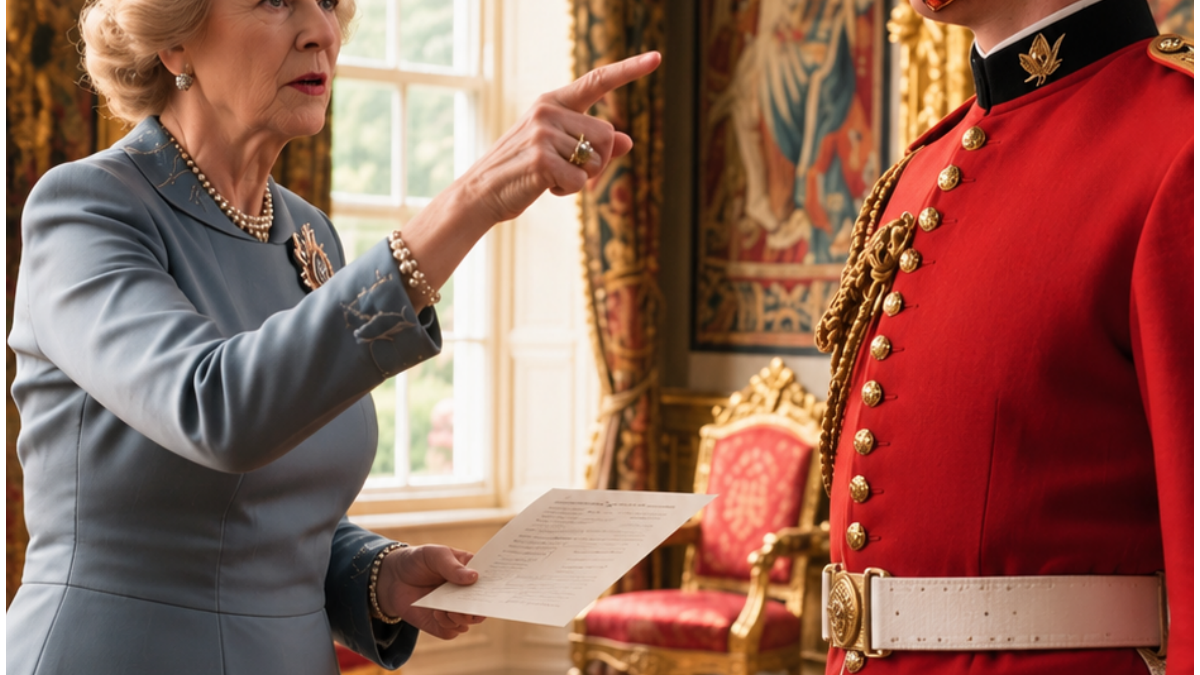
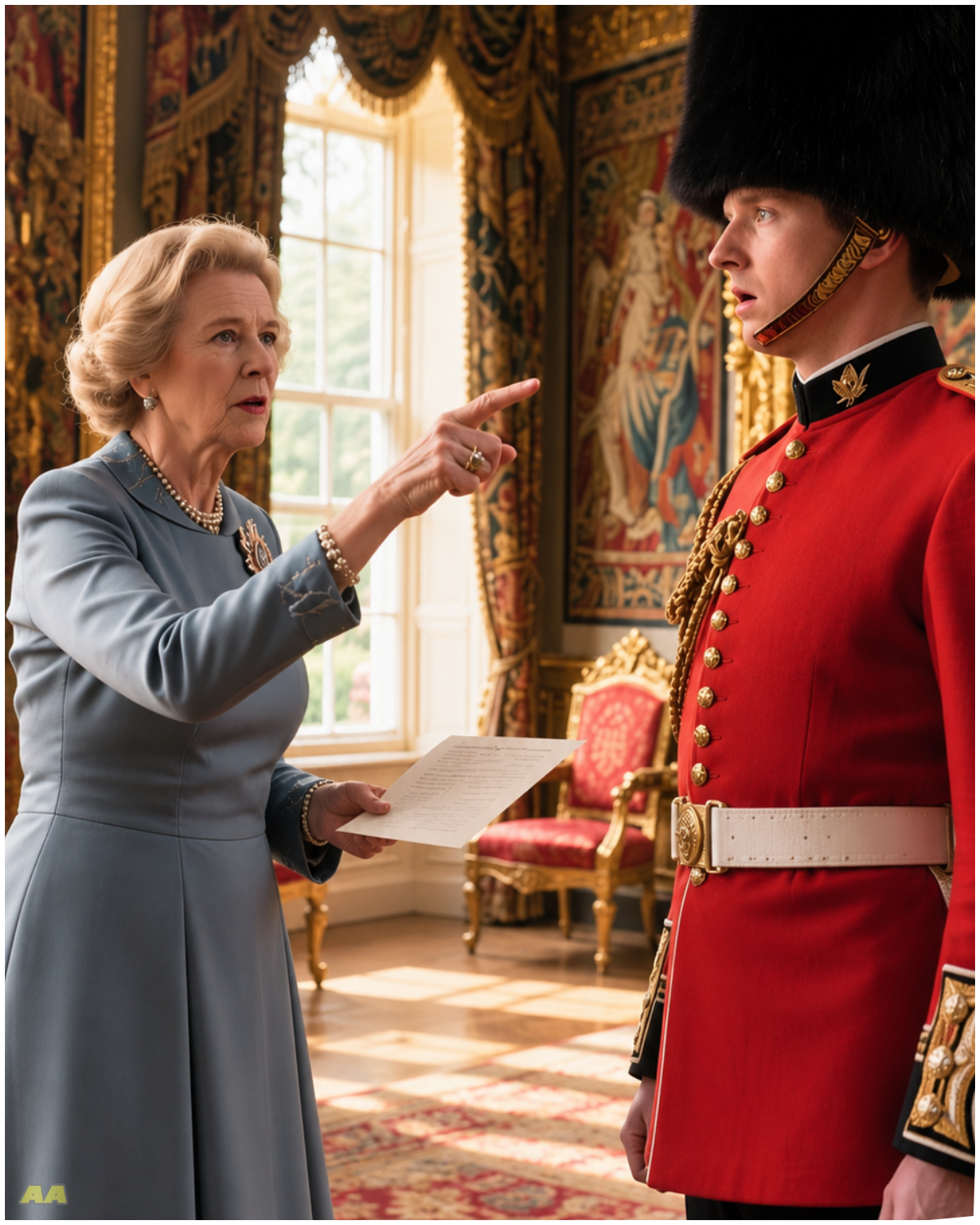
The October morning mist clung to the grounds of Gatkam Park like a delicate shroud, masking the usual bustle of activity around Princess Annes private residence.
Inside the Georgian manor house, the Princess Royal sat at her mahogany desk, methodically working through the morning correspondence that had arrived with the dawn.
Her reading glasses perched precisely on her nose, she maintained the same disciplined approach to paperwork that had characterized her entire royal career.
At 67, Princess Anne remained as formidable as ever.
Her silver hair pulled back in the practical style she had favored for decades.
The walls of her study bore testament to a life lived in service.
Photographs with heads of state, certificates from countless charitable organizations, and awards recognizing her tireless work with Save the Children and other humanitarian causes.
The morning light streaming through the tall windows illuminated dust moes dancing in the air, creating an almost ethereal atmosphere that would soon be shattered by events neither she nor anyone else could have anticipated.
Detective Chief Inspector Malcolm Thornbury had been driving through the Glouester countryside for nearly an hour, his unmarked police vehicle cutting through the morning traffic with practiced ease.
The call had come in at 7:30 that morning, urgent and cryptic.
A member of Princess Anne’s security detail had requested an immediate meeting, claiming to possess information of national importance.
The detective had initially been skeptical.
In his 25 years with the Metropolitan Police, he had fielded countless claims from attention seekers and conspiracy theorists, but the caller’s credentials had checked out and his security clearance was impeccable.
As Thornberry pulled through the gates of Gatkcom Park, he couldn’t shake the feeling that this morning would be different from any other in his distinguished career.
The estate stretched before him, a perfect example of English countryside grandeur, with its rolling fields where Princess Anne’s beloved horses grazed peacefully.
The detective had met the Princess Royal on several occasions during his time with the Royal Protection Unit, and he respected her reputation for straight talking and nononsense efficiency.
If someone in her inner circle was making serious allegations, it warranted immediate attention.
Security guard James Morrison had barely slept the previous night, his mind churning with the weight of what he had discovered.
For 18 months, he had served on Princess Anne’s protection detail, a position he had worked toward for his entire career in law enforcement.
Morrison had started as a constable in Manchester, working his way up through various departments before specializing in royal protection.
The work had always been his calling.
The combination of highlevel security protocols and service to the crown represented everything he valued about British institutions.
But what he had uncovered in recent weeks had shaken him to his core.
Morrison paced his small flat in the nearby village of Mincchin Hampton, going over the events that had led to this moment.
It had started 3 weeks earlier with what seemed like a routine security review.
The Princess Royal had requested a comprehensive assessment of all personnel and protocols following a minor incident at a public engagement.
Morrison had been tasked with reviewing surveillance footage and security logs, a mundane assignment that should have taken no more than a few days.
The first anomaly had appeared in the footage from a charity event in September.
Morrison had been watching the crowd shots, looking for any potential security concerns when he noticed something unusual.
A man in the background had appeared at three separate events over the course of two weeks.
Always positioned where he had a clear view of the Princess Royal, always carrying the same distinctive leather briefcase.
The man’s behavior wasn’t overtly threatening, but his repeated presence at supposedly random public appearances was statistically impossible to explain.
Morrison had run the man’s image through facial recognition software and discovered an identity that didn’t quite add up.
The background check revealed gaps in employment history, addresses that led nowhere, and references that couldn’t be verified.
More disturbing still, when Morrison had attempted to flag the individual in the system, he found that someone with highlevel clearance had already marked the file as classified with access restricted to a select group of senior officials.
The investigation had continued over the following weeks with Morrison working carefully to avoid drawing attention to his activities.
He had discovered financial irregularities in the charity accounts associated with several of Princess Anne’s patronages.
Subtle manipulations that suggested someone with intimate knowledge of the princess’s schedule and commitments.
The amounts weren’t massive, a few thousand here and there, but the pattern suggested a sophisticated operation designed to exploit the Princess Royal’s charitable work.
The breakthrough had come when Morrison had cross-referenced travel records with security logs.
He discovered that the mysterious man had been present not just at public events, but had somehow gained access to restricted areas during private meetings.
The implications were staggering. Either there was a massive failure in security protocols, or someone with inside knowledge was facilitating unauthorized access to the Princess Royal’s private activities.
Morrison knew he was in over his head.
The evidence he had gathered suggested a conspiracy that reached into the highest levels of the royal household, possibly involving foreign intelligence services or organized crime.
The detective had tried to follow proper channels, but his immediate supervisor had dismissed his concerns and advised him to focus on routine duties.
It was then that Morrison had made the difficult decision to go outside the normal chain of command.
Princess Anne finished her morning correspondence and moved to the breakfast room where her longtime housekeeper, Mrs. Elizabeth Hartwell, had prepared her usual simple meal of porridge and fresh fruit.
The Princess Royal had always maintained modest personal habits despite her position, a trait that endeared her to staff members who appreciated her lack of pretention.
Mrs. Hartwell had served the household for nearly 15 years, having come to work for Princess Anne after retiring from her position with the Queen Mother.
The breakfast room overlooked the garden where Princess Annes Jack Russell terriers played in the morning sunshine.
The princess had always found solace in the company of animals, whether her dogs or the horses that remained her greatest passion.
This morning, however, she seemed distracted, occasionally glancing toward the window as if expecting something unusual to occur.
Mrs. He, Arrow, supposedly recognized his influences before sudden times.
This is the book. It’s about history.
Hartwell noticed her employer’s press.
The housekeeper went about her duties with quiet efficiency, ensuring that everything was perfectly arranged should unexpected visitors arrive.
Detective Thornbury parked his vehicle near the main entrance and was immediately approached by a member of the security team.
The officer escorted him through the formal reception area, past oil paintings of previous generations of royals, and into a sitting room where he was asked to wait.
The detective took the opportunity to observe his surroundings.
Noting the careful balance between royal grandeur and livedin comfort that characterized Princess Anne’s private spaces.
The sitting room reflected the Princess Royal’s practical nature.
Comfortable furniture arranged for conversation rather than ceremony.
Bookshelves lined with volumes on equestrian subjects and agricultural management and family photographs that spoke to a life balanced between public duty and private affection.
Thornberry had always admired Princess Anne’s reputation for accessibility and straight dealing, qualities that would serve her well in the conversation that was about to unfold.
James Morrison stood in the estate’s security office, reviewing his notes one final time before the meeting that would change everything.
He had organized the evidence methodically, creating a timeline that clearly demonstrated the pattern of suspicious activity.
Photographs, financial records, security logs, and witness statements were arranged in chronological order, telling a story that became more disturbing with each piece of evidence.
The security guard understood that what he was about to reveal would have consequences far beyond his own career.
The implications reached into the highest levels of government and could potentially embarrass the royal family.
But Morrison’s oath as a law enforcement officer compelled him to act regardless of the personal coSt. He had spent sleepless nights considering alternative explanations for what he had discovered, but every avenue of inquiry led to the same inescapable conclusion.
As he prepared to present his findings, Morrison reflected on the chain of events that had brought him to this moment.
His dedication to duty had always been absolute, inherited from a father who had served in the military, and instilled in his son the importance of service above self.
The irony wasn’t lost on him that this same dedication was now forcing him to potentially undermine the very institution he had sworn to protect.
Princess Anne finished her breakfast and returned to her study where she found a message from her private secretary indicating that an urgent meeting had been requested by security personnel.
The Princess Royal was accustomed to such requests.
Her position required constant vigilance and she had learned to trust the judgment of her protection team.
However, something about the tone of the message suggested this was more than a routine security briefing.
The princess had survived an actual kidnapping attempt in 1974, an experience that had given her a realistic appreciation for the threats that came with her position.
She had faced the gunman with characteristic courage, later receiving praise for her calm response to mortal danger.
That experience had taught her to take security matters seriously while maintaining the accessibility that was essential to her public role.
As she waited for the meeting to begin, Princess Anne reviewed her schedule for the coming days.
She had commitments with several charities, a visit to a rural college, and preparations for an upcoming overseas trip.
The Princess Royal maintained one of the busiest schedules in the royal family, often undertaking more engagements per year than much younger members.
Her work ethic was legendary.
Driven by a deep sense of duty inherited from her mother and a genuine commitment to the causes she supported.
Detective Thornberry was joined in the sitting room by Morrison, whose nervous demeanor immediately caught the detectives attention.
The security guard carried a thick folder of documents and appeared to be struggling with the weight of what he was about to reveal.
Thornbury had interviewed countless witnesses and suspects over his career, and he recognized the signs of someone carrying a burden of knowledge they wished they didn’t possess.
The two men reviewed the protocol for the meeting with Thornbury explaining that anything discussed would be treated with appropriate confidentiality while ensuring that proper investigative procedures were followed.
Morrison nodded his understanding, but his hands shook slightly as he arranged his documents.
The detective made a mental note to approach the questioning carefully, recognizing that the security guard was clearly under considerable stress.
When Princess Anne entered the room, both men rose respectfully.
The Princess Royal’s presence commanded attention without effort.
Decades of public service had given her an authoritative bearing that was both approachable and unmistakably regal.
She gestured for the men to be seated and took her place in a chair that allowed her to observe both their faces clearly.
Gentlemen, Princess Anne began in her crisp, clear voice.
I understand there are matters of some urgency to discuss.
I would appreciate a straightforward briefing on whatever concerns have prompted this meeting.
Her tone was business-like, but not unfriendly, establishing the expectation that the conversation would be conducted with appropriate seriousness and efficiency.
Morrison swallowed hard and opened his folder, his hands steadying as he focused on the task at hand.
Your royal highness,” he began, “I have uncovered evidence of what appears to be a systematic infiltration of your security arrangements and possible exploitation of your charitable activities.” The words hung in the air like a physical presence, and Morrison could see the immediate sharpening of attention in both the Princess Royals and Detective Thornber’s expressions.
The morning mist outside had begun to clear, revealing the full beauty of the Glostershure countryside.
But inside the sitting room at Gatkcom Park, a shadow had fallen that would fundamentally change how Princess Anne viewed the safety and security of her public role.
The revelation that James Morrison was about to present would expose a web of deception and betrayal that reached into the very heart of the institutions meant to protect the royal family.
As Morrison began to lay out his evidence piece by piece, the magnitude of what had been uncovered became clear.
This was no simple security breach or isolated incident of misconduct.
What the security guard had discovered was evidence of a sophisticated operation that had been ongoing for months, possibly years, involving multiple individuals and potentially foreign actors, with interests that ran contrary to British national security.
The conversation that followed would last for hours as Morrison presented document after document, photograph after photograph.
Each piece of evidence building toward an inescapable conclusion that would shake the foundations of trust within the royal protection system.
Princess Anne listened with characteristic composure, asking pointed questions and requesting clarification where needed, but her expression grew more serious with each revelation.
Detective Thornberry took careful notes, already beginning to formulate the investigation strategy that would be needed to pursue the leads Morrison had uncovered.
The implications were staggering. If even half of what the security guard had discovered proved accurate, it represented the most serious breach of royal security in decades.
The detective knew that before the day was over, this quiet morning meeting would have escalated into a major police investigation involving multiple agencies and potentially international cooperation.
As the morning wore on and Morrison’s presentation continued, it became clear that this was just the beginning of what would prove to be a complex and far-reaching investigation, the security guard’s meticulous work had uncovered the tip of what appeared to be a much larger iceberg, one that threatened not just the security of the Princess Royal, but potentially the integrity of the entire royal protection system.
The grandfather clock in Princess Anne’s sitting room chimed 11 times as Detective Thornbury spread Morrison’s evidence across the mahogany coffee table.
Each document seemed to tell a piece of a larger, more sinister story than any of them had initially imagined.
The Princess Royal leaned forward in her chair, studying a series of photographs that showed the same mysterious figure at five different charity events over the past 6 months.
Her expression remained composed, but those who knew her well would have recognized the slight tightening around her eyes that indicated her growing concern.
Morrison’s hands had stopped trembling as he fell into the familiar rhythm of presenting evidence.
His police training had taken over, allowing him to compartmentalize the emotional weight of his discoveries and focus on the facts.
Your royal highness, if I may direct your attention to these financial records, he said, indicating a spreadsheet that showed subtle discrepancies in the accounts of three different charities under Princess Annes patronage.
The amounts involved are relatively small individually, but the pattern suggests someone with intimate knowledge of your schedule and commitments.
Detective Thornbury examined the financial documents with the practiced eye of someone who had spent years investigating white collar crime.
The manipulation was sophisticated, designed to avoid triggering automatic fraud detection systems while steadily siphoning funds over an extended period.
This level of detail requires inside knowledge, he observed, looking up at Morrison.
Someone would need access to advanced schedules, venue information, and financial systeMs. We’re looking at multiple levels of compromise.
Princess Anne stood and moved to the window, gazing out at her horses grazing peacefully in the morning sun.
The contrast between the tranquil scene outside and the disturbing revelations inside struck her forcefully.
For a moment, she allowed herself to think about the implications beyond the immediate security concerns.
These weren’t just crimes against her person or property.
They represented a betrayal of the trust placed in institutions that served the crown and by extension the British people.
Guard Morrison,” she said, turning back to face the room.
“I want you to walk me through your discovery process.
How did you first identify these anomalies, and what steps did you take to verify your findings?” Her questions were precise and methodical, reflecting the analytical mind that had served her well in decades of public service.
The Princess Royal understood that the credibility of the investigation would depend on the thoroughess and objectivity of Morrison’s work.
Morrison opened a second folder, this one containing his investigation timeline and methodology.
“It began during the routine security review you requested following the incident in Bath,” he explained, referring to a minor disruption during a public engagement 3 weeks earlier.
“I was analyzing crowd surveillance footage when I noticed the same individual appearing at multiple events.
Initially, I assumed it was coincidence.
Many people follow the royal family and attend multiple engagements.
The security guard pulled out a series of enhanced photographs showing the mysterious man at different angles and locations.
However, when I ran the images through facial recognition software and attempted to identify him through normal channels, I encountered resistance.
His background check revealed inconsistencies that couldn’t be explained by clerical errors.
More concerning, when I tried to flag him in our security database, I discovered that his file was already classified at a level above my clearance.
Detective Thornberry studied the photographs carefully.
The man appeared to be in his 40s, well-dressed but unremarkable in a way that suggested professional training in surveillance techniques.
“Did you attempt to identify him through other means?” he asked already formulating theories about what they might be dealing with.
“I did,” Morrison replied, his voice gaining confidence as he detailed his investigative work.
I contacted colleagues in other royal protection units to see if he had appeared at events involving other members of the royal family.
The results were disturbing. He had been present at engagements involving the Prince of Wales and the Duke of Cambridge, always maintaining the same low profile, always carrying similar equipment.
Princess Anne returned to her seat, her expression thoughtful.
You mentioned financial irregularities. How does this individual’s presence connect to the charitable funds?
The question went to the heart of what troubled her most, the potential exploitation of organizations dedicated to helping others.
Morrison shuffled through his papers and produced a detailed analysis he had prepared.
The financial discrepancies occur primarily around events where this individual was present.
Small amounts are diverted from donation processing or administrative accounts, always below the threshold that would trigger automatic reviews.
The timing suggests coordination between his presence and the financial manipulation.
The pattern Morrison had uncovered was both elegant and disturbing in its execution.
Someone had clearly studied the administrative processes of royal charities, identifying vulnerabilities that could be exploited without detection.
The amounts were small enough to avoid notice but consistent enough to generate significant sums over time.
More troubling still, the sophistication suggested this was not the work of opportunistic criminals, but rather a coordinated operation with specific objectives.
Detective Thornberry made extensive notes as Morrison continued his presentation.
The implications were expanding beyond simple theft to potential intelligence gathering, money laundering, or even foreign interference in British charitable activities.
Have you identified any other individuals who might be involved in this operation?
He asked. Morrison hesitated before answering, and both Princess Anne and Detective Thornbury noticed his discomfort.
“That’s where the situation becomes more complex,” he said carefully.
“Some of the financial irregularities appear to require access to internal systems that would only be available to someone within the Royal Household Administration.
I’ve identified several individuals with the necessary access, but I haven’t been able to determine which, if any, might be involved.” The room fell silent as the implications of Morrison’s statement settled over them.
The possibility of an insider threat within the royal household was far more serious than external surveillance or even financial fraud.
It suggested a level of compromise that could threaten not just Princess Anne’s security, but the integrity of the entire royal establishment.
Princess Annes expression remained carefully neutral, but she was already considering the broader ramifications.
If Morrison’s suspicions proved correct, it would necessitate a comprehensive review of all personnel with access to sensitive information.
The damage to morale and institutional trust could be severe, potentially affecting the royal family’s ability to carry out their constitutional duties effectively.
Detective Thornbury, she said, “What would you recommend as our next steps?” I assumed this matter will need to be escalated beyond this room.
The Princess Royal’s tone made it clear that she expected a thorough and professional investigation regardless of the potential consequences for individuals or institutions involved.
Thornberry closed his notebook and looked directly at the Princess Royal.
Your Royal Highness, based on what Guard Morrison has presented, I believe we’re dealing with a sophisticated operation that requires immediate attention from multiple agencies.
I’ll need to contact special branch and potentially MI5 depending on whether foreign involvement is suspected.
We’ll also need to coordinate with the Royal Protection Command to ensure your security while the investigation proceeds.
Morrison felt a mixture of relief and anxiety as the responsibility for the investigation began to shift to more experienced hands.
He had done his duty in bringing the matter to light, but he was also acutely aware that his discoveries would have far-reaching consequences for many people, including innocent individuals who might fall under suspicion during the investigation.
Princess Anne stood and walked to her desk where she picked up a secure telephone.
I believe it’s time to inform my private secretary and initiate the appropriate protocols, she said.
Guard Morrison, I want to commend you for your diligent work and your courage in bringing these matters to my attention.
Detective Thornbury, I trust you’ll keep me informed of developments while maintaining appropriate operational security.
As Princess Anne made her calls, Morrison and Detective Thornbury began discussing the practical aspects of expanding the investigation.
They would need to preserve evidence while avoiding actions that might alert any conspirators to the fact that their activities had been discovered.
The balance between thoroughess and discretion would be crucial to the success of whatever operation ultimately emerged from this morning’s revelations.
The conversation was interrupted by the arrival of Sir Jeffrey Peton, Princess Anne’s private secretary, who had been summoned from his office in London.
A career civil servant with decades of experience in royal administration, Sir Jeffrey had dealt with numerous crises over the years, but his expression upon hearing the preliminary briefing suggested this situation was beyond his usual experience.
Your royal highness, Sir Jeffrey said after absorbing the essential details, “I believe we need to consider the potential impact on your upcoming engagements.
If there are indeed security concerns of this magnitude, we may need to modify or cancel several events while the investigation proceeds.
His practical approach to crisis management was exactly what Princess Anne had expected.
But she was reluctant to let the conspiracy, if that’s what it proved to be, disrupt her public duties.
Sir Jeffrey, I understand the security concerns, but I’m not inclined to let these criminals, whoever they may be, dictate my schedule, Princess Anne replied firmly.
However, I recognize that we need to take appropriate precautions.
Perhaps we can work with Detective Thornbury to develop modified security protocols that allow my engagements to continue while providing additional protection and surveillance opportunities.
Detective Thornberry appreciated the Princess Royal’s determination to maintain her public role, but he was also concerned about the risks involved.
Your Royal Highness, if I may suggest a compromise, we could proceed with some of your scheduled engagements while using them as opportunities to gather additional intelligence about this operation.
With proper surveillance and security measures, your public appearances could actually help us identify other individuals involved in the conspiracy.
The suggestion appealed to Princess Anne’s sense of duty and her natural inclination to take an active role in addressing problems rather than simply being protected from them.
The idea of using her public engagements as part of the investigation process transformed her from a potential victim into an active participant in exposing and stopping the criminal activity.
Morrison, who had been listening to the discussion, spoke up hesitantly.
If I may, your royal highness, I’ve prepared a detailed analysis of your upcoming schedule, identifying events that might be particularly vulnerable to exploitation.
With your permission, I could brief Detective Thornber’s team on the specific security considerations for each engagement.
Princess Anne nodded approvingly. Excellent, Guard Morrison.
I want you to work closely with Detective Thornbury throughout this investigation.
Your knowledge of our security procedures and your analytical skills have already proven invaluable.
The recognition meant a great deal to Morrison, who had risked his career by bringing these concerns forward.
As the morning stretched into afternoon, the small group in Princess Anne’s sitting room continued to refine their understanding of the threat they were facing and develop strategies for responding to it.
Phone calls were made to appropriate authorities.
Security protocols were reviewed and modified, and contingency plans were developed for various scenarios that might unfold as the investigation proceeded.
The peaceful atmosphere of Gatakam Park seemed increasingly surreal as the magnitude of the potential conspiracy became clearer.
Outside, gardeners continued their work, horses grazed in fields, and life proceeded with the same quiet dignity that had characterized the estate for generations.
Inside, however, the discovery of a sophisticated criminal operation had shattered the assumption that traditional British institutions were immune to the kind of complex threats more commonly associated with international espionage or organized crime.
Detective Thornberry coordinated with his superiors in London, arranging for specialized surveillance teams and forensic accountants to be assigned to the case.
The investigation would require resources and expertise beyond what local police could provide, particularly if foreign intelligence services were involved.
The detective was already anticipating the challenges of conducting a sensitive investigation while maintaining the secrecy necessary to avoid compromising ongoing operations or alerting potential conspirators.
As the day wore on, additional evidence continued to emerge from Morrison’s meticulous investigation.
Bank records revealed suspicious patterns of international transfers.
Surveillance footage showed coordination between multiple individuals at different events, and communications intercept suggested a level of organization that confirmed their worst fears about the scope of the conspiracy.
Princess Anne remained remarkably composed throughout the briefings, asking probing questions and offering insights based on her decades of experience in public life.
Her ability to separate personal concerns from operational necessities impressed both Morrison and Detective Thornbury, who recognized that they were dealing with someone who understood both the gravity of the situation and the importance of responding professionally and effectively.
By late afternoon, the foundation had been laid for what would become one of the most complex and sensitive investigations in recent royal history.
The small group gathered in Princess Anne’s sitting room had uncovered evidence of a conspiracy that threatened not just individual security, but the integrity of charitable institutions and potentially national security itself.
What had begun as a routine security review had evolved into something far more significant with implications that would extend well beyond the walls of Gatkcom Park.
Three days had passed since the initial meeting at Gatkham Park, and the investigation had expanded far beyond what anyone had initially anticipated.
In a secure conference room at New Scotland Yard, Detective Chief Inspector Thornbury presided over a briefing that included representatives from Special Branch MI5 and the Royal Protection Command.
The evidence Morrison had uncovered had triggered a multi- agency response that was treating the matter as a potential threat to national security.
Commander Sarah Blackwood from Special Branch stood at the head of the room, pointing to a complex diagram that mapped the connections between the suspicious individuals, financial irregularities, and security breaches.
What we’ve discovered in the past 72 hours confirms our worst fears, she announced to the assembled investigators.
This isn’t a simple case of fraud or stalking.
We’re dealing with a sophisticated intelligence operation that appears to have been running for at least 2 years.
The revelation had come through enhanced analysis of the evidence Morrison had gathered, combined with additional intelligence that had been flagged once the investigation began in earneSt. Financial records examined by forensic accountants revealed a network of shell companies and offshore accounts that suggested professional moneyaundering capabilities.
Communications intercepted through lawful surveillance showed coordination between multiple operatives using coded language that indicated advanced tradecraft.
Agent Michael Davies from MI5 took over the briefing.
His expression grave as he addressed the security implications.
We’ve identified at least six individuals who appear to be part of this network, including the man originally spotted by Guard Morrison.
Three of them have been traced to addresses that don’t exist, and their identities appear to be sophisticated cover stories supported by forged documentation that required significant resources to create.
Princess Anne had insisted on being briefed regularly on the investigation’s progress despite security concerns about her continued involvement.
She arrived at the secure facility accompanied by Sir Jeffrey Peton and two protection officers, her demeanor as composed as ever, but her eyes reflecting the seriousness of the situation.
The Princess Royal had refused suggestions that she cancel her public engagements, instead working with investigators to modify her schedule in ways that might help expose the conspiracy.
Morrison sat quietly in the back of the room, still somewhat overwhelmed by the magnitude of what his investigation had uncovered.
The security guard had been temporarily reassigned to work directly with the investigation team.
His detailed knowledge of royal security procedures, making him invaluable to understanding how the breaches had occurred.
The recognition of his contribution had been professionally satisfying.
But the personal cost was becoming apparent as friends and colleagues began to distance themselves from someone involved in such a sensitive matter.
“Your Royal Highness,” Commander Blackwood said as Princess Anne took her seat at the conference table.
“We’ve made significant progress in understanding the scope of the operation.
But we’ve also uncovered some disturbing new developments that require your immediate attention.” The commander’s tone suggested that whatever she was about to reveal would be particularly troubling.
Princess Anne nodded for the briefing to continue, her hands folded calmly in her lap despite the tension in the room.
Please proceed, Commander. I prefer to have all the facts regardless of how unpleasant they might be.
Her straightforward approach to difficult information had always been one of her defining characteristics inherited from her mother and refined through decades of dealing with complex situations.
Agent Davies activated a secure display screen that showed a series of intercepted communications and financial transfers.
We’ve discovered that the primary targets of this operation weren’t just your royal highness’s charitable activities.
The conspirators appear to have been gathering intelligence on multiple members of the royal family with particular focus on security procedures, travel arrangements, and private communications.
The financial theft was apparently a secondary objective, possibly used to fund other aspects of their operation.
The implications of Davey’s revelation settled over the room like a physical weight.
What had initially appeared to be a relatively contained security breach involving Princess Anne had expanded into a comprehensive intelligence gathering operation targeting the royal family as a whole.
The threat assessment had just escalated from serious to potentially catastrophic.
Detective Thornbury leaned forward in his chair, studying the evidence displayed on the screen.
Have we identified the ultimate objectives of this intelligence gathering?
Are we dealing with foreign state actors, criminal organizations, or something else entirely?
The detectives experience with international cases had taught him that understanding the motivation behind such operations was crucial to predicting future actions and preventing additional breaches.
Commander Blackwood exchanged glances with Agent Davies before responding.
That’s where the situation becomes even more complex.
The operational patterns suggest foreign intelligence involvement, but we haven’t been able to definitively identify which country or organization might be responsible.
The sophisticated trade craft could indicate Russian or Chinese intelligence services, but the specific targets and methods don’t fit their usual operational profiles.
Morrison had been reviewing his original notes during the briefing, and he raised his hand tentatively.
If I may, there’s something else I discovered that might be relevant.
When I was analyzing the timing of the financial irregularities, I noticed they coincided with specific international events, trade negotiations, diplomatic visits, and treaty discussions where members of the royal family played ceremonial or advisory roles.
The observation was significant because it suggested the conspirators were interested in more than just royal family movements or charitable activities.
If they were targeting events with diplomatic or economic implications.
It indicated a level of strategic thinking that elevated the threat assessment considerably.
Princess Anne had been listening carefully to the briefings and now she spoke with the authority that came from decades of experience in public service.
Commander Blackwood, Agent Davies, what you’re describing sounds like an attempt to compromise the constitutional role of the monarchy in ways that could affect British foreign policy and international relations.
This goes far beyond personal security concerns.
The Princess Royal’s analysis was astute and troubling.
The British monarchy’s ceremonial role in international relations, while largely symbolic, still carried significant soft power that could influence diplomatic outcomes.
If foreign intelligence services were attempting to gather information about royal family involvement in state functions, it suggested an interest in understanding and potentially manipulating British diplomatic processes.
Sir Jeffrey Peton, who had been taking careful notes throughout the briefing, looked up with obvious concern.
Your royal highness, if this analysis is correct, we may need to consider the implications for your upcoming state visit to Australia.
The timing and high-profile nature of the trip could make it an attractive target for whatever objectives these conspirators are pursuing.
The mention of the Australian visit triggered a new wave of concern among the investigators.
State visits involved extensive advanced planning, coordination with foreign security services, and exposure to thousands of people over multiple days.
If the conspiracy included attempts to compromise such events, the risks to both personal security and national interests could be enormous.
Agent Davies pulled up additional intelligence files on his secure tablet.
We’ve already begun coordination with Australian intelligence services and they’ve identified similar patterns of suspicious activity around recent royal visits to their country.
It appears this operation may have an international scope that we’re only beginning to understand.
The revelation that the conspiracy extended beyond British borders transformed the investigation from a domestic security matter into an international intelligence case.
The complexity of coordinating with foreign agencies, sharing sensitive information, and protecting ongoing operations while pursuing the conspirators would require resources and expertise from the highest levels of British intelligence services.
Morrison felt increasingly out of his depth as the discussion moved into areas of international espionage and state security.
However, his detailed knowledge of the initial evidence remained crucial, and he found himself being consulted regularly about the timeline and methods of discovery.
The security guard was beginning to realize that his career would never return to the routine duties he had once found comfortable.
Princess Anne stood and walked to the window of the conference room, which offered a view of the tempames and the palace of Westminster beyond.
The sight of the familiar landmarks reminded her of the broader responsibilities that came with her position, extending far beyond personal security to the constitutional role of the monarchy in British society and international relations.
Ladies and gentlemen, she said, turning back to face the room, it’s clear that we’re dealing with a threat that goes to the heart of our institutional integrity.
I want to be directly involved in developing our response strategy, not just briefed on decisions made by others.
This conspiracy, whatever its ultimate objectives, represents an attack on the crown and by extension on the British people.
Commander Blackwood nodded respectfully. Your Royal Highness, we would welcome your continued involvement, but we must also consider the security implications of your participation in what is becoming a complex counter intelligence operation.
We need to balance your legitimate role in addressing threats to the monarchy with the operational security requirements of our investigation.
The tension between Princess Anne’s determination to take an active role and the investigator’s duty to protect her was becoming a central theme of the expanding operation.
The Princess Royal’s extensive experience in public service and her detailed knowledge of royal procedures made her insights valuable, but her high profile also made her a potential target for whatever escalation the conspirators might attempt.
Detective Thornberry had been studying the latest intelligence reports and he looked up with an expression of concern.
There’s another aspect we need to consider.
If these operatives have been gathering intelligence on royal family activities for 2 years, they may have information that could be used to compromise ongoing investigations.
We need to assume that our own security procedures may have been observed and potentially penetrated.
The detectives observation highlighted a fundamental challenge in counter intelligence work.
The difficulty of conducting an investigation when the targets might have advanced knowledge of investigative procedures and capabilities.
It would require constant adaptation and the development of new operational methods that couldn’t be predicted or countered by adversaries who had been studying British security practices.
Agent Davies activated another display showing a timeline of suspicious activities correlated with known royal engagements.
We’ve identified several patterns that suggest the conspirators have been testing our response capabilities and gathering information about our investigation procedures.
Some of the financial irregularities appear to have been deliberately obvious, possibly to see how quickly they would be detected and what investigative methods would be employed.
The possibility that Morrison’s discovery had been anticipated or even deliberately facilitated added another layer of complexity to an already challenging situation.
If the conspirators had been monitoring the effectiveness of their own operation and studying the response it generated, they might be several steps ahead of the investigation in ways that could compromise future operations.
Princess Anne returned to her seat, her expression thoughtful as she processed the implications of what she had heard.
It appears we’re dealing with adversaries who have been planning this operation for a considerable time and who may have resources and capabilities beyond what we initially assumed.
The question becomes whether we continue to react to their initiatives or whether we can find ways to seize the operational advantage.
The Princess Royal strategic thinking reflected her military training and decades of experience in complex situations.
Her suggestion that the investigation shift from defensive to offensive operations appealed to the professional instincts of the intelligence officers present, but it also raised new questions about risk assessment and operational security.
Commander Blackwood consulted her notes before responding.
Your Royal Highness, we’ve actually been considering similar approaches.
With your permission and cooperation, we believe we could use your upcoming public engagements as opportunities to draw the conspirators into situations where we have better surveillance capabilities and operational control.
The proposal to use Princess Anne as an active participant in counterintelligence operations was unprecedented in recent royal history.
While members of the royal family had occasionally been involved in intelligence matters during wartime, the idea of deliberately exposing the Princess Royal to risk in order to advance an investigation required careful consideration of both security and constitutional issues.
Sir Jeffrey Peton looked uncomfortable with the direction the discussion was taking.
Your Royal Highness, while I understand the operational advantages of such an approach, I must express concern about the precedent it would set and the potential risks to your personal security and the dignity of your office.
Princess Anne smiled slightly at her private secretary’s concerns, appreciating his protective instincts while recognizing the extraordinary circumstances they were facing.
Sir Jeffrey, I’ve been in dangerous situations before, and I’ve never allowed security concerns to prevent me from fulfilling my duties.
If my participation in this investigation can help protect the monarchy and serve the national interest, then I consider it my responsibility to participate.
The meeting continued for several more hours as the team refined their understanding of the threat and developed preliminary strategies for responding to it.
The complexity of the conspiracy was becoming clearer, but so too were the opportunities for turning the investigation into an active operation that could expose and neutralize the entire network.
As the afternoon wore on, additional intelligence arrived from various sources, painting an increasingly detailed picture of a sophisticated operation that had been years in the planning.
The discovery Morrison had made was proving to be just the beginning of uncovering a conspiracy that threatened not just the royal family, but potentially British national security itself.
The grand ballroom at Guild Hall was being transformed for Princess Anne’s upcoming charity gala.
But the workers arranging flowers and adjusting lighting had no idea they were preparing the stage for one of the most ambitious counterintelligence operations in recent British history.
Hidden among the legitimate event staff were undercover officers from special branch, their equipment disguised as standard audiovisisual gear.
The charity gala, originally planned months earlier, had become the perfect opportunity to draw the mysterious conspiracy into a controlled environment where British intelligence services would have every possible advantage.
Commander Sarah Blackwood stood in the security command center that had been established in the guild hall basement, surrounded by banks of monitors showing feeds from dozens of hidden cameras.
The past week had been intensive with teams working around the clock to transform a routine royal engagement into a sophisticated surveillance operation.
Every aspect of the evening had been carefully planned to provide maximum intelligence gathering opportunities while maintaining the appearance of a normal charitable function.
Princess Anne had spent the morning in final preparations, working with agent Davies to review the operational plan and her role in what intelligence professionals called a honey trap operation.
The Princess Royal had proven remarkably adept at understanding the nuances of counter intelligence work, asking sophisticated questions about surveillance techniques and operational security that impressed the experienced MI5 agent.
Her determination to take an active role in exposing the conspiracy had never wavered despite continued concerns from her security detail and private staff.
Morrison had been assigned to work directly with the surveillance team.
His intimate knowledge of royal security procedures proving invaluable in identifying potential vulnerabilities that the conspirators might attempt to exploit.
The security guard had undergone intensive training in the past week, learning advanced surveillance techniques and communication protocols that would allow him to function effectively as part of the intelligence operation.
The transformation from routine security duty to active counter intelligence work had been challenging but professionally fulfilling.
The guest list for the charity gala had been carefully constructed to include individuals who might attract the attention of the conspiracy while providing cover for the undercover officers who would be monitoring the event.
Prominent business leaders, government officials, and international diplomats would provide the kind of high value intelligence targets that foreign operatives might find irresistible.
Each invitation had been tracked through multiple security databases to ensure that any attempts to infiltrate the event could be detected and monitored.
Detective Thornbury reviewed the operational timeline one final time, coordinating with teams positioned throughout London who would be tracking any suspicious individuals attempting to approach the venue.
The investigation had revealed that the conspiracy included extensive surveillance capabilities, and the detective expected that the evening’s events would draw significant attention from the operatives they were attempting to identify and capture.
In a safe house across London, the investigation team had established what they believed to be the identities of at least three key figures in the conspiracy.
Enhanced surveillance and financial analysis had revealed connections to known intelligence operatives from two different foreign countries, suggesting a level of international cooperation that was both unprecedented and deeply concerning.
The evening’s operation would be their best opportunity to gather definitive evidence about the scope and objectives of the foreign intelligence operation.
Princess Anne arrived at Guild Hall 2 hours before the scheduled start of the gala, using the time to conduct final security briefings with her protection team and review the communication protocols that would be used throughout the evening.
She wore an elegant blue evening gown that had been selected not just for its appropriateness to the occasion, but also for its compatibility with the sophisticated surveillance equipment she would be carrying.
The Princess Royal had been fitted with state-of-the-art communication devices that would allow her to maintain constant contact with the surveillance team while appearing to engage in normal conversations with guests.
A nearly invisible microphone would transmit everything she heard, while a small camera disguised as jewelry would provide video feeds of her interactions.
The technology was the most advanced available to British intelligence services, normally reserved for the most sensitive international operations.
Agent Davies positioned himself among the catering staff.
His appearance transformed by professional makeup and costumeuming that made him nearly unrecognizable even to colleagues who knew him well.
His role would be to monitor Princess Anne’s interactions while coordinating with the surveillance team’s position throughout the venue.
The MI5 agent had extensive experience in undercover operations.
But the high-profile nature of the evening’s event and the potential consequences of failure made this assignment particularly challenging.
As guests began arriving at the guild hall, the surveillance operation shifted into active mode.
Every person entering the venue was photographed by multiple cameras and subjected to immediate background checks through sophisticated facial recognition software.
The guest list had been carefully vetted, but the investigation team expected that the conspirators would attempt to infiltrate the event through various means, including the use of fraudulent credentials or the recruitment of legitimate guests.
Commander Blackwood monitored the incoming surveillance feeds from her command center, noting the arrival of several individuals who had been flagged as persons of interest during the investigation.
The conspirators were indeed taking the bait, but their operational discipline was evident in the careful way they approached the venue and positioned themselves within the crowd.
This was clearly not their first attempt at infiltrating a highsecurity royal event.
The charity gala officially began with Princess Anne’s arrival in the main ballroom where she was greeted by thunderous applause from the assembled guests.
To the attendees, this appeared to be a routine royal engagement celebrating the work of several important charitable organizations.
In reality, every moment of the Princess Royal’s interaction with the crowd was being carefully monitored and analyzed by intelligence professionals looking for signs of the conspiracy in action.
Morrison, positioned near the main entrance in his role as security coordinator, immediately noticed the presence of the mysterious individual who had first triggered his investigation weeks earlier.
The man appeared confident and relaxed, suggesting either remarkable composure under pressure or a lack of awareness that he was now the subject of intensive surveillance.
The security guard activated his communication device to alert the surveillance teams of the targets presence and location.
Princess Anne moved through the crowd with her characteristic grace and professionalism, engaging in conversations that appeared spontaneous, but had actually been carefully choreographed to provide opportunities for intelligence gathering.
Several guests had been identified as having potential connections to the conspiracy, and the Princess Royal’s interactions with them were designed to elicit information while providing evidence that could be used in eventual prosecutions.
The sophistication of the surveillance operation became apparent as the evening progressed.
Every conversation was recorded, every interaction analyzed, and every suspicious movement tracked by teams of professionals who had spent months preparing for this moment.
The technology being employed represented the cutting edge of intelligence gathering capabilities, allowing the investigators to monitor multiple targets simultaneously while maintaining comprehensive situational awareness.
Agent Davies, maintaining his cover as a member of the catering staff, observed a series of subtle hand signals between three different guests who had arrived separately, but were clearly coordinating their activities.
The level of operational discipline being displayed confirmed the investigators assessment that they were dealing with highly trained intelligence operatives rather than simple criminals or amateur conspirators.
Commander Blackwood received regular updates from her teams positioned throughout London, tracking the movements of additional suspects who were monitoring the guild hall from external positions.
The scope of the surveillance operation they were observing suggested that the conspiracy included significantly more operatives than had been initially estimated.
The evening was revealing the true scale of the foreign intelligence operation targeting the royal family.
Princess Anne had been briefed to watch for specific individuals and behaviors that might indicate active intelligence gathering operations.
As she moved through the reception, she noticed subtle photographic activity that went beyond normal social media documentation of the event.
Several guests appeared to be systematically documenting the security arrangements, staff positions, and crowd control measures being employed at the venue.
The most significant development occurred when Princess Anne was approached by a distinguished gentleman who introduced himself as representing an international development organization.
The conversation that followed was polite and appropriate for the social context, but the Princess Royal recognized several key phrases that the investigation team had identified as potential coded communications.
She maintained her composure while ensuring that their exchange was fully captured by her surveillance equipment.
Detective Thornbury, monitoring the operation from an adjacent building, coordinated the response to several attempted security probes that occurred throughout the evening.
Teams positioned around the guild hall detected multiple attempts to test their perimeter security, photograph restricted areas, and identify escape routes that could be used in future operations.
The pattern of activity confirmed that this was an active intelligence gathering mission rather than passive observation.
The charity auction that formed the centerpiece of the gala provided additional opportunities for the surveillance teams to observe suspicious behavior.
Several bidding patterns appeared designed to facilitate communication between different operatives rather than genuine attempts to acquire the charitable items being offered.
The investigators documented these interactions while allowing them to continue in order to gather additional intelligence about the conspiracy’s communication methods.
Morrison had been observing the crowd dynamics throughout the evening, noting subtle changes in positioning and attention that suggested coordinated surveillance activities.
His training in royal protection had made him particularly sensitive to the kinds of behaviors that indicated potential security threats, and what he was observing confirmed their worst fears about the sophistication of the operation targeting Princess Anne.
As the evening progressed, the surveillance teams began to identify connections between the activities they were observing and the evidence that had been gathered during the initial investigation.
Financial records, communication intercepts, and behavioral analysis were combining to create a comprehensive picture of an intelligence operation that had been active for far longer and involved far more resources than anyone had initially suspected.
Agent Davies received authorization to begin the next phase of the operation, which involved more active engagement with the suspected operatives.
Using his catering cover, he began positioning himself to overhehere conversations and observe activities that could provide definitive evidence of criminal activity.
The risks were increasing as the operation moved from passive surveillance to active intelligence gathering, but the potential intelligence gains justified the escalation.
Princess Anne concluded her formal remarks to the gala attendees with a speech that had been carefully crafted to include subtle references that would have special meaning to anyone conducting intelligence operations against the royal family.
The investigation team would analyze responses to these coded messages to identify additional conspirators and assess the full scope of the foreign intelligence presence at the event.
The evening was approaching its climax and Commander Blackwood prepared to authorize the arrest phase of the operation.
The evidence being gathered was already sufficient to justify taking several suspects into custody, but the intelligence value of continued observation had to be balanced against the risks of allowing known foreign operatives to continue their activities.
The decision would need to be made carefully as premature action could compromise ongoing investigations while delayed action might allow crucial evidence to be destroyed or operatives to escape.
As guests began preparing to depart from the guild hall, the surveillance teams noted increased communication activity among the suspected operatives.
The pattern suggested that they were preparing to transmit intelligence gathered during the evening to their handlers, providing an opportunity for British intelligence services to intercept communications and potentially identify additional members of the conspiracy.
The charity gala had succeeded beyond the investigators most optimistic expectations, providing a wealth of intelligence about the foreign operation targeting the royal family while maintaining operational security that had prevented the conspirators from realizing they were under surveillance.
The evidence gathered would form the foundation for arrests, prosecutions, and diplomatic actions that would significantly disrupt the foreign intelligence operation.
Princess Anne maintained her professional demeanor throughout the concluding ceremonies, but those familiar with her expressions would have noticed the satisfaction in her eyes as she realized the success of the evening’s intelligence operation.
The Princess Royal had played a crucial role in what would prove to be one of the most significant counterintelligence coups in recent British history, demonstrating that the monarchy could be an active participant in protecting national security rather than merely a target requiring protection.
The dawn raids began at precisely 6:00 on the morning following the charity gala as coordinated teams from special branch MI5 and the Metropolitan Police executed simultaneous arrests across London and three other major cities.
The intelligence gathered during the previous evening’s operation had provided investigators with sufficient evidence to move against the entire network of foreign operatives who had been targeting the royal family for the past 2 years.
Commander Blackwood coordinated the operations from New Scotland Yard, watching as months of careful investigation culminated in one of the most significant counterintelligence successes in recent British history.
Princess Anne received the preliminary results of the raids during her morning briefing at Gatkcom Park, where she had returned after the successful conclusion of the charity gala operation.
The Princess Royal listened with satisfaction as Sir Jeffrey Peton read the initial reports detailing the arrest of 11 individuals, including the mysterious figure who had first caught Morrison’s attention weeks earlier.
The scope of the conspiracy had proven even larger than anticipated, involving operatives from three different foreign intelligence services working in unprecedented cooperation.
Detective Thornberry led the interrogation team that began questioning the primary suspects within hours of their arrests.
The evidence gathered during the surveillance operation provided investigators with significant leverage in convincing several conspirators to cooperate with authorities.
The financial records, communication intercepts, and photographic evidence created an overwhelming case that made denial feutal for all but the most disciplined operatives.
The first major breakthrough came when forensic analysis of seized computers revealed the full scope of the intelligence gathering operation.
The conspirators had been systematically collecting information not just about Princess Anne, but about the entire royal family’s security procedures, travel arrangements, and charitable activities.
More disturbing still, the analysis revealed attempts to gather intelligence about British diplomatic activities, and trade negotiations where royal family members played ceremonial or advisory roles.
Morrison found himself thrust into a role he had never anticipated when he was called upon to testify before a closed session of Parliament’s Intelligence and Security Committee.
The Security Guard’s meticulous investigation work and his courage in bringing the conspiracy to light had made him a key witness in understanding how foreign intelligence services had penetrated royal security arrangements.
His testimony would prove crucial in implementing reforms designed to prevent similar breaches in the future.
Agent Davies presented a comprehensive briefing to senior government officials that revealed the international implications of the conspiracy.
The cooperation between foreign intelligence services that had been uncovered represented a new model of espionage activity that posed significant challenges to traditional counterintelligence methods.
The case would require diplomatic responses as well as criminal prosecutions, potentially affecting Britain’s relationships with several countries whose intelligence services had been involved in the operation.
The interrogations revealed that the conspiracy’s ultimate objectives had gone far beyond simple intelligence gathering.
The foreign operatives had been working to identify vulnerabilities in British security arrangements that could be exploited during times of international crisis.
Their interest in royal family activities was motivated by understanding how the monarchy’s constitutional role could be leveraged or compromised during diplomatic negotiations or periods of national emergency.
Commander Blackwood briefed senior government ministers on the security implications of what had been discovered.
The sophistication of the operation and the resources that had been dedicated to it suggested that foreign intelligence services viewed the royal family as a significant strategic asset worth extensive investment in surveillance and potential manipulation.
The case would necessitate a comprehensive review of royal security procedures and potentially changes in how the monarchy participated in state functions.
Princess Anne insisted on being fully briefed on all aspects of the investigation’s conclusions despite concerns from security officials about exposing her to sensitive intelligence information.
The Princess Royal’s direct involvement in the counter intelligence operation had demonstrated her capability to handle classified matters and her insights into royal procedures proved valuable in understanding how the security breaches had occurred and how they could be prevented in the future.
The financial investigation revealed that the conspiracy had successfully diverted hundreds of thousands of pounds from royal charities over the course of their operation.
Forensic accountants traced the stolen funds through multiple international accounts, discovering that the money had been used to finance additional intelligence operations targeting British interests around the world.
The theft had been carefully calibrated to avoid detection while generating significant resources for expanded espionage activities.
Sir Jeffrey Peton coordinated with government officials and royal household staff to implement immediate security reforms based on the lessons learned from the investigation.
New protocols were established for vetting personnel with access to royal family information.
Enhanced surveillance capabilities were deployed around royal residences and additional oversight mechanisms were created for charitable organizations under royal patronage.
The legal proceedings that followed would set precedents for prosecuting foreign intelligence operations conducted on British soil.
Crown prosecutors worked with international legal experts to develop cases that could secure convictions while protecting sensitive intelligence sources and methods.
The challenge was to achieve justice while maintaining operational security for ongoing counter intelligence activities.
Morrison’s role in uncovering the conspiracy earned him recognition from the highest levels of government, including a personal commendation from the prime minister and an invitation to Buckingham Palace, where he was decorated for his service to the crown.
The security guard’s career trajectory had been permanently altered by his discovery, leading to assignments with elite counter inelligence units, where his analytical skills and attention to detail would be put to use on cases of national importance.
Detective Thornbury found himself assigned to a new joint task force dedicated to investigating foreign intelligence activities targeting British institutions.
The case had revealed gaps in existing counter inelligence capabilities that required new approaches and enhanced cooperation between different agencies.
The detectives experience with the royal conspiracy investigation made him an ideal candidate to lead efforts to identify and disrupt similar operations.
The international implications of the case required careful diplomatic handling as the British government decided how to respond to the involvement of foreign intelligence services.
Formal protests were lodged with several countries.
Intelligence cooperation agreements were suspended in some cases and retaliatory measures were implemented against foreign operatives operating in Britain.
The consequences extended well beyond the criminal prosecutions to affect broader international relationships.
Princess Anne’s role in the successful counterintelligence operation had demonstrated the monarchy’s potential to contribute actively to national security rather than simply being protected by it.
The Princess Royal worked with security officials to develop new protocols that would allow royal family members to participate in intelligence gathering activities when appropriate while maintaining the security and dignity of their constitutional roles.
The media coverage of the case necessarily limited by security considerations focused on the successful disruption of a foreign conspiracy without revealing the full extent of the intelligence operation that had uncovered it.
Public statements emphasized the effectiveness of British security services and the robust protection of national institutions.
While classified briefings provided Parliament with more complete information about the scope and implications of what had been discovered, the charitable organizations that had been targeted by the conspiracy required extensive rehabilitation to restore public confidence and ensure that donated funds would be properly protected in the future.
New oversight mechanisms were implemented.
Financial controls were strengthened and security procedures were enhanced to prevent similar exploitation.
The reforms would serve as a model for protecting charitable institutions throughout Britain.
Agent Davies was promoted to a senior position within MI5’s counter intelligence division, where his experience with the Royal Conspiracy case would inform broader efforts to identify and disrupt foreign intelligence operations.
The success of the operation had demonstrated the value of patient methodical investigation combined with innovative operational techniques that could turn surveillance targets into active intelligence gathering opportunities.
The long-term security reforms implemented as a result of the investigation would fundamentally change how royal family activities were planned and executed.
Enhanced background checks for all personnel, improved communication security protocols, and sophisticated surveillance capabilities would provide multiple layers of protection against future foreign intelligence operations, while allowing the monarchy to continue fulfilling its constitutional and charitable roles.
Commander Blackwood received recognition for her leadership of one of the most complex and sensitive investigations in recent British history.
The successful conclusion of the operation had required coordination between multiple agencies, innovative investigative techniques, and careful balance between operational security and the need to gather actionable intelligence.
The case would be studied as a model for future counter intelligence operations.
Princess Anne reflected on the experience during a private moment in her study at Gatkcom Park, surrounded by the same peaceful countryside, where the investigation had begun weeks earlier.
The discovery of the conspiracy had been deeply disturbing, representing a violation of trust and security that struck at the heart of British institutions.
However, the successful response had demonstrated the resilience and effectiveness of the systems designed to protect the monarchy and the nation.
The final arrests in the case occurred 6 months later as ongoing investigation revealed additional conspirators who had been operating and supporting roles throughout the intelligence operation.
The patient work of following financial trails and communication networks had identified sleeper agents who had been positioned for potential activation during future crisis.
Their detention eliminated a significant long-term threat to British security.
Morrison now working with elite counter intelligence units, often returned to Gatkcom Park to brief Princess Anne on related investigations that built upon the foundation of his original discovery.
The security guard’s transformation into a specialized investigator had opened new career opportunities while maintaining his connection to the Royal Protection Mission that had first motivated his careful attention to security anomalies.
The case had lasting implications for how Britain approached the protection of its most important institutions and individuals.
The sophistication of modern intelligence threats required equally sophisticated responses that combined traditional security methods with innovative operational techniques.
The successful disruption of the royal conspiracy had provided valuable lessons that would inform British counter intelligence efforts for years to come.
The final chapter of the investigation concluded with the conviction of all 11 primary conspirators on charges ranging from espionage to fraud to conspiracy against the crown.
The sentences reflected the seriousness of their crimes and served as a warning to other foreign intelligence services that similar operations would be detected and prosecuted to the fullest extent of British law.
The success sent a clear message about Britain’s determination to protect its institutions and sovereignty against foreign interference.
Princess Anne’s involvement in the counterintelligence operation had demonstrated that even in the 21st century, the monarchy could play an active role in defending the realm.
Her courage and professionalism throughout the investigation had earned the respect of intelligence professionals and contributed significantly to one of the most important security successes in recent British history.
The Princess Royal had once again proven that service to the crown meant more than ceremony and tradition.
It required the courage to face real threats and the determination to protect the institutions that served the British








