“Is It Wrong That I Liked It?” Whispered the Bride — “No,” Said the Duke. “It’s Honest.”
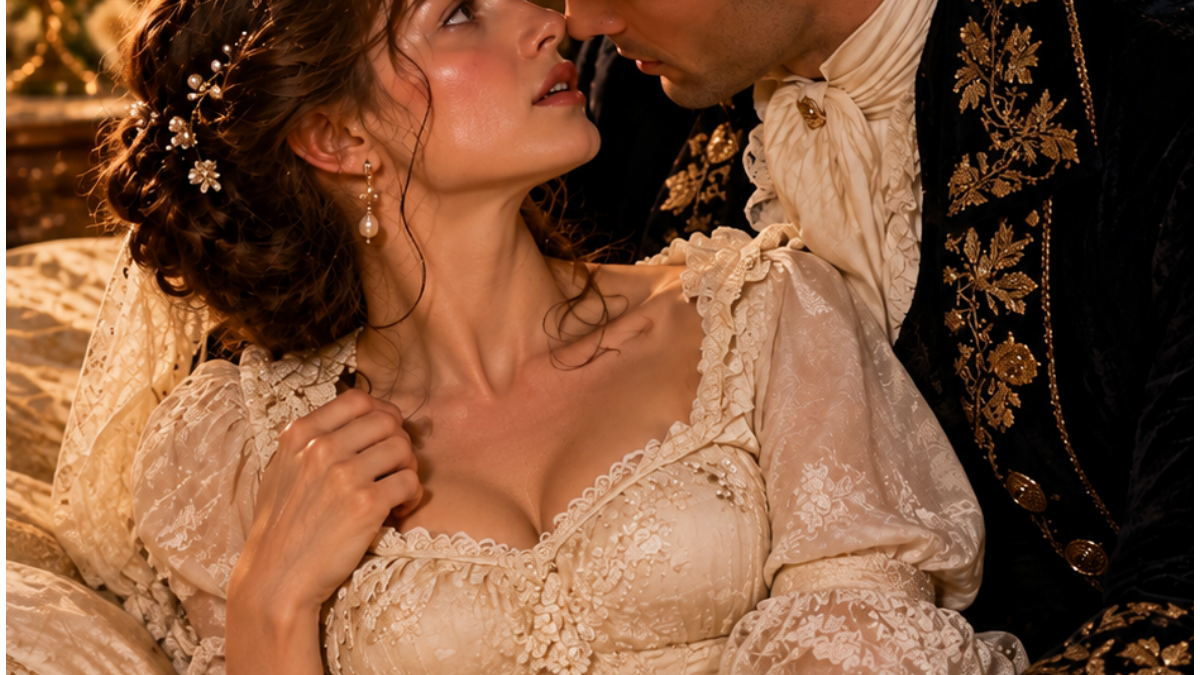
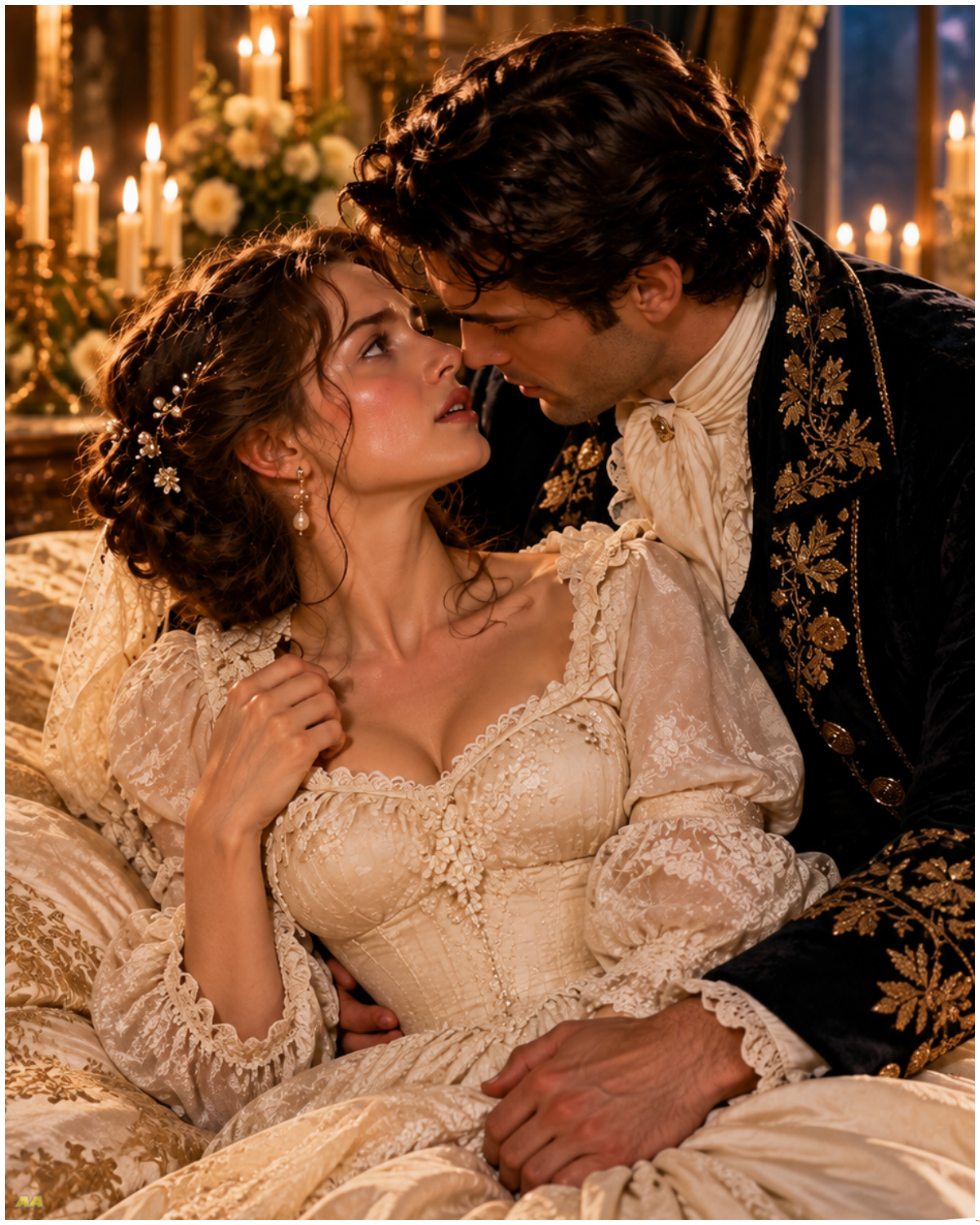
Charlotte Vain had been three and 20 and three weeks from her wedding to Edmund Harkort, when she learned precisely what he thought of a woman who admitted, even in the privacy of a stolen engagement kiss, that she wanted rather more than propriety strictly permitted.
Good God, Charlotte, he had said, drawing back from her with an expression of such genuine distaste that she had felt the whole of her chest cave inward at the sight of it.
You sound like a common tavern girl, not a gentleman’s intended.
I should think a lady capable of rather more restraint than that.
She had apologized.
She remembered apologizing, though she could no longer properly recall the words she had used, only the hot, humiliated flush that had climbed her throat, as Edmund straightened his creat with fastidious precision, and informed her, in the same mild tone he might have used to correct a servant’s poor table setting, that he hoped she would learn to conduct herself with rather more decorum once they were married, for both their sakes.
The engagement had ended four months later over a matter of her father’s declining fortune rather than anything to do with that particular evening.
But Charlotte had carried Edmund’s words with her regardless, tucked away somewhere beneath her ribs, where they continued years later to whisper their quiet verdict whenever she felt anything approaching genuine desire, unrestrained.
Common, not a lady at all.
She had not expected, arriving now at Thornfell Castle as the new Duchess of Thornfell, that those old words might follow her into a marriage built on rather warmer foundations than her engagement to Edmund had ever offered.
Nathaniel Gray, seventh Duke of Thornfell, had courted her with a directness that bordered on refreshing after Edmund’s careful performative correctness, asking her opinion on matters of estate management, laughing genuinely at her own dry wit rather than merely tolerating it, kissing her on the single occasion propriety had permitted it before their wedding, with a thorowness that had left her rather more breathless than she cared to admit even to herself.
She had married him three weeks past in a small ceremony overlooking the Northumberland coast, and had spent their wedding night discovering, to her own considerable surprise, that whatever Edmund had once condemned in her, seemed to delight rather than disgust her new husband entirely.
It was the morning after, watching grey dawn light creep across their bed chambers stone walls, while Nathaniel slept soundly beside her, that the old shame finally caught up with her, arriving unbidden and entirely unwelcome in the midst of what ought to have been simple, uncomplicated happiness.
Nathaniel,” she whispered, not quite trusting her voice to carry further than his own ear, though he stirred immediately at the sound of his name, blinking sleep heavy eyes opened to find her watching him.
“Lotty,” his voice was rough with sleep, but his attention sharpened instantly at whatever he read in her expression.
“What is it?” She hesitated a long moment, old habits of careful restraint waring, with the strange new vulnerability of a marriage bed shared with a man who had thus far given her no reason whatsoever to expect Edmund’s particular brand of judgment.
“Is it wrong?” she whispered finally that I liked it.
Nathaniel went very still, something careful, and considering moving behind his eyes as he properly registered the question and the fear beneath it.
He reached up slowly and brushed a strand of hair from her face, his thumb tracing gently along her cheekbone.
“No,” he said simply.
“It’s honest.” Charlotte felt something in her chest loosen at the simplicity of the answer, though old habits of doubt rose almost immediately to question whether she had heard him correctly, whether such easy acceptance could possibly be genuine, rather than merely the practiced courtesy of a new husband unwilling to trouble his bride so soon into their marriage.
She studied his face in the gray morning light, searching for any trace of the careful, condescending correction Edmund had once offered so readily, and found instead only steady, unguarded warmth.
“You are not merely saying that to spare my feelings,” she asked, unable to entirely suppress the doubt, even as she voiced the question.
“I do not say things I do not mean, Lotty. Particularly not on matters as important as this one”, Nathaniel said, drawing her closer against his chest.
“I meant it last night, watching you discover something about yourself, I suspect you had never properly permitted yourself before. I mean it now, hearing you brave enough to ask the question aloud rather than simply carrying it silently.”
Whoever taught you to doubt your own honest feeling did you a very great disservice, and I find myself rather determined to spend our marriage correcting it.
I did not expect marriage to feel quite like this, she admitted, resting her head against his shoulder, listening to the steady rhythm of his heart beneath her ear.
Nor did I, if I am entirely honest, he said, something warm and ruthful in his tone.
I expected a suitable match, conducted with proper courtesy on both sides.
I did not expect to fall so completely in love with my own wife within the first weeks of our acquaintance, nor to find myself quite this invested in dismantling whatever old cruelty still shadows her happiness.
I find I rather welcome the surprise regardless.
He did not press her further that morning, seeming to understand, with an intuition that surprised her, that the question had cost her rather more courage than its brevity suggested.
Instead, he simply held her, murmuring nothing beyond quiet reassurance, until the morning’s early tension gradually eased from her shoulders, and she found herself, somewhat, to her own surprise, drifting back towards sleep in the circle of his arMs. It was over breakfast some hours later that Nathaniel finally raised the subject again, his tone carefully casual, though Charlotte could see, watching him, that the casualness was deliberate rather than genuine.
“You need not tell me anything you are not ready to share, Lotty,” he said, buttering a piece of toast with more attention than the task strictly required.
But I confess I find myself rather curious.
What taught you to ask a question like that one this morning?
It did not sound to my ear like a question born of nothing.
Charlotte set down her own cup, considering how much of Edmund’s cruelty she wished to share with a husband she had known in truth rather less time than she had known her former fiance.
“I was engaged before you,” she said finally to a gentleman named Edmund Harkort.
The engagement ended over financial matters rather than any particular scandal.
But I learned during our courtship precisely what he thought of a woman who admitted to wanting anything beyond what strict propriy demanded of her.
“What did he say to you?” Nathaniel asked, his voice carefully, even though Charlotte could see something harder moving behind his careful composure.
She told him haltingly the substance of that evening, Edmund’s distaste, his careful correction, the particular humiliation of being told by the very man she had believed she would marry, that her own genuine feeling made her something less than a proper lady.
Nathaniel listened without interrupting, his jaw working with evident restraint, and when she finished, he reached across the small table to take her hand.
I am sorry you carried that alone.
For however many years since, he said quietly.
I am rather glad his fortune failed him, whatever hardship it caused your own family at the time, if it meant you were spared marrying a man who would have spent the whole of your life teaching you to distrust your own honest feeling.
“I did not expect marriage to feel so different,” Charlotte admitted.
I believed, marrying you, that I understood what to expect, having already been engaged once before.
I did not anticipate how completely different the whole experience might prove, given a husband willing to call my own honesty a virtue rather than a fault.
I intend to keep calling it exactly that, Nathaniel said, “For as long as you require the reminder, Lotty, however many mornings it takes.” They sat together a while longer over the cooling remains of breakfast, and Charlotte found herself, somewhat to her own surprise, sharing rather more of her broken engagements aftermath than she had originally intended, the quiet months spent doubting her own judgment, the careful way she had learned to measure her own words before speaking them at subsequent social gatherings, the particular relief and terror, both that had accompanied Nathaniel’s courtship, relief at his evident war, warmth, terror that she might somehow ruin it the same way she apparently ruined things with Edmund.
“I do not think you ruined anything with Edmund,” Nathaniel said firmly once she had finished.
“I think Edmund revealed himself entirely unsuited to appreciate what he had been offered, and I find myself considerably more grateful for his poor judgment than I ever expected to be toward a man I have never properly met.” You make it sound rather simple, Charlotte said.
A small genuine smile touching her mouth despite the conversation’s weight.
I do not think it’s simple at all, he said.
Only true. I have watched you these three weeks of our marriage, Lotty, and I have found nothing whatsoever in your character that warrants the shame Edmund apparently taught you to carry.
I find myself rather looking forward to the slow work of helping you set it down entirely, whatever time that requires.
Thank you, she said softly, reaching across the table to take his hand.
I do not think I properly understood until this morning how much I needed someone willing to say so plainly.
The weeks that followed brought Charlotte gradually into the rhythm of her new household, Thornfell Castle’s staff receiving their young duchess with a warmth she found genuinely touching after Edmund’s family’s rather colder formality during her previous engagement.
Mrs. Paru, the housekeeper, took evident pride in showing Charlotte through the castle’s considerable history, and the younger maids, initially rather shy of their new mistress, gradually warmed into an easy familiarity that made the great stone castle feel within a fortnight, rather more like a home than any house Charlotte had previously occupied.
Nathaniel, for his part, continued the same pattern of careful attentiveness that had first drawn her to him during their courtship, seeking her opinion on a state matters with genuine interest, walking with her most mornings along the coastal path that ran below the castle’s ancient walls, gradually, patiently proving through a hundred small, consistent gestures that his reassurance that first morning had not been mere kindness offered in a vulnerable able moment, but genuine settled conviction.
“You watch me rather carefully,” Charlotte observed one morning as they walked the coastal path together, wind off the North Sea, tugging at her cloak.
“I find I rather enjoy watching you,” Nathaniel said, something warm in his tone.
“Though I confess, I have also been watching for whatever small moments still carry Edmund’s old shadow, hoping to offer whatever reassurance those moments require, whenever they arise.
You need not manage me quite so carefully, Charlotte said, though she found the admission carried genuine gratitude rather than any real complaint.
I am not so fragile as that particular management might suggeSt. I do not think you fragile in the slightest, he said.
I think you strong enough to have survived Edmund’s cruelty with your own honest nature still largely intact, which required rather more resilience than fragility ever could have managed.
I only wish to ensure you need not summon that particular resilience alone, now that you have a husband glad to share the summoning with you.” Charlotte found herself walking beside him along the wild North Thumbland coast, thinking that she had perhaps underestimated marrying so quickly after her previous engagement’s disappointment, how thoroughly a genuinely kind husband might reshape her whole understanding of what marriage could offer a woman who had once believed herself fundamentally unsuitable for it.
Their days settled into a comfortable rhythm over the following weeks.
Mornings spent walking the coastal path or reviewing estate correspondence together.
Afternoons given over to whatever small pleasures presented themselves.
Charlotte discovering a genuine fondness for the castle’s modest but welltocked library.
Nathaniel teaching her with evident patience the particular skill of managing a spirited horse along the cliff trails without the anxious grip her earlier riding lessons had instilled.
Evenings brought dinner and quiet conversation that grew week by week considerably more open than the careful courtesies of their first days together had allowed.
I find myself rather astonished, Charlotte admitted one such evening, at how thoroughly ordinary happiness can feel once one stops constantly bracing for its withdrawal.
I do not think I properly understood before this marriage how much energy I had spent simply waiting for the other shoe to drop, as my old governness used to say.
I hope you find yourself waiting rather less as the weeks continue.
Nathaniel said, “Though I confess, I do not expect Edmund’s particular shadow to dissolve entirely overnight, whatever patient reassurance I offer in the meantime.
It dissolves rather more each week,” Charlotte said.
“I notice it less often now than I did even a fortnight ago.
I think perhaps that is progress enough for the present.
I think it is considerable progress indeed.
Nathaniel agreed, and I find myself rather proud to have witnessed even this much of it already.
It was a letter arriving some 6 weeks into their marriage that first threatened the careful peace Charlotte had begun building at Thornfell, an invitation to a house party hosted by Lord and Lady Peton, old friends of Nathaniel’s family, whose guest list Charlotte discovered upon reading further, included a name she had not expected to encounter again so soon into her new marriage.
Edmund Harkort,” she said aloud, staring at the elegant script with a sudden coldness settling in her stomach.
“He is to be among the Peton’s guests.” Nathaniel, reading over her shoulder, went very still.
“We need not attend if his presence troubles you.” “The Penetans are your oldest friends,” Charlotte said, though her voice carried rather less certainty than she wished it to.
I would not have you decline their hospitality on my account over a man who scarcely deserves the consideration.
I would decline considerably more than a house party’s hospitality, Lotty, rather than watch you suffer through an evening in that particular man’s company unprepared, Nathaniel said firmly.
This is not a matter of mere social obligation.
If his presence there threatens your own peace, we shall simply decline.
Whatever explanation the Pembbertton require.
Charlotte considered the offer a long moment, turning it over with more care than she had initially expected the decision to require.
Part of her wished fiercely to simply avoid the whole uncomfortable prospect entirely, retreating to Thornfell’s safe familiar walls rather than risk Edmund’s cutting judgment resurfacing after months of careful healing.
But another part of her, considerably more stubborn, found herself rather unwilling to allow a man who had caused her so much private shame to also dictate years later where she might or might not travel.
I think, she said finally, that I should like to attend after all.
I find I am rather tired of arranging my own life around avoiding Edmund Harkort’s presence in it.
Then we shall attend together, Nathaniel said.
And I promise you, Lotty, whatever he says or does, you shall not face it without me standing directly beside you.
The days leading up to their departure for the Pembbertton’s estate brought a peculiar mixture of anticipation and dread that Charlotte found difficult to properly untangle, even in her own private thoughts.
She caught herself more than once rehearsing possible conversations with Edmund in her head, imagining various cutting responses she might offer should he attempt his old cruelty again, only to discard each rehearsed response as either too defensive or too eager to prove something she no longer believed required proving.
“You are thinking rather loudly again,” Nathaniel observed one evening, catching her lost in thought over her needle work.
I am trying to decide how I ought to conduct myself, should Edmund attempt to speak with me directly, Charlotte admitted.
I do not wish to appear as though his opinion still wounds me, and yet I find myself uncertain how to appear otherwise without simply performing a confidence I do not entirely feel.
Perhaps you need not perform anything at all, Nathaniel suggested gently.
Perhaps you might simply be yourself, Lotty.
Whatever that self happens to feel in the moment, uncertain or confident, or somewhere between the two.
I do not think Edmund’s opinion of your genuine reaction carries any weight worth managing around.
That is rather easier counsel to receive than to properly follow, Charlotte said.
Though she found the observation eased something in her chest regardless.
I do not expect it to be easy, Nathaniel said.
I only offer it as the truer path, whatever difficulty it requires.
The Peton’s house party unfolded over three days of the usual country entertainments.
Croquet on the lawn, an evening of cards, a modest ball on the final night, and Charlotte found herself, for the first two days successfully avoiding any direct encounter with Edmund beyond the barest necessary courtesies exchanged across a crowded drawing room.
She had spent those first two days watching him from careful distances, cataloging almost despite herself how little he seemed to have changed since their broken engagement.
The same fastidious attention to his own cravat.
The same faintly superior manner with which he addressed servants and social inferiors alike, the same practiced charm he deployed liberally among the party’s other guests, none of whom, she suspected, had any notion of the particular cruelty that charm could curdle into behind closed doors.
Nathaniel had remained close throughout those first two days, never quite hovering, but always somehow within easy reach.
And Charlotte found herself grateful for the steady, unobtrusive presence, even as she told herself she required no particular protection from a man who held no real power over her any longer.
It was on the third evening during the house party’s culminating ball that Edmund finally cornered her properly, catching her alone near the refreshment table while Nathaniel was occupied across the room in conversation with their hoSt. “Your grace,” Edmund said, his tone carrying the same faintly condescending pleasantness she remembered from their broken engagement.
I confess I did not expect to find you married quite so grandly.
Given the rather modest circumstances your father’s fortune left you in.
The Duke of Thornfell must find you rather less troublesome than I once did to have overlooked such considerations entirely.
I do not think my husband overlooks anything at all regarding my character.
Mr. Harkort,” Charlotte said, keeping her voice steady despite the old familiar flush of humiliation, threatening to climb her throat.
“He simply values rather different qualities than you once claimed to.” “Ah, yes,” Edmund said, something knowing and cruel entering his smile.
“I recall precisely which qualities gave me pause.
If you take my meaning, I do hope, for the Duke’s sake, that marriage has taught you rather better restraint than our own courtship ever managed to instill.” Charlotte felt the old shame rise with a force she had not expected.
Years of Nathaniel’s patient reassurance, suddenly feeling fragile against Edmund’s familiar, practiced cruelty delivered directly to her face, after so long merely echoing in memory.
She opened her mouth to offer some defense, uncertain even as she did precisely what words might properly serve, when a voice considerably more authoritative than her own, cut smoothly across the conversation.
She had not seen him approach, too consumed by the sudden, dizzying collision of past humiliation and present reality to notice anything beyond Edmund’s familiar, condescending smile, but she felt his presence beside her now, with the particular, steadying certainty of a man who had promised days before that she would not face this moment alone.
The relief of it nearly undid the careful composure she had been struggling to maintain, and she found herself grateful in that instant for every one of his earlier reassurances that had prepared her, however imperfectly, for exactly this confrontation.
I find, Nathaniel said, arriving at her side with a protective closeness that left no ambiguity regarding his position, that my wife requires no restraint whatsoever.
Harkort beyond whatever restraint she herself genuinely chooses.
I consider her honesty among her finest qualities rather than any fault requiring correction.
I confess I am rather curious what particular deficiency in your own character required you to teach a woman shame for simply being genuine.
The small cluster of nearby guests, who had drifted close enough to overhear the exchange, fell into an uncomfortable, fascinated silence, Edmund’s earlier confident smile faltering visibly beneath Nathaniel’s direct, unflinching challenge.
I meant no particular offense.
Your grace, Edmund said, some of his earlier condescension curdling into hasty backpedaling.
Only an old observation from our former acquaintance, offered in the spirit of offered in the spirit of cruelty, I think, rather than anything so generous as genuine concern,” Nathaniel interrupted, his voice carrying clearly enough now that considerably more of the ballroom’s attention had begun to fix upon the small drama unfolding near the refreshment table.
I do not know precisely what you said to my wife during your courtship, Harkort, but I have watched the shadow of it follow her into our own marriage clearly enough to understand it caused genuine harm.
I would ask that you keep whatever remaining opinions you hold regarding her character entirely to yourself for the remainder of this evening and every evening hereafter.
Edmund, thoroughly chasened now before the assembled crowd’s evident attention, offered a stiff, humiliated bow, and retreated without further comment.
And Charlotte found herself watching him go, feeling something loosen in her chest that she had not realized, remained so tightly wounded until this precise moment of its release.
“You did not need to do that so publicly,” she said quietly.
Once the immediate crowd’s attention had begun to disperse back toward its previous entertainments.
“I did actually,” Nathaniel said, turning to face her properly, his earlier controlled anger softening now into something considerably gentler.
I have watched you carry his old cruelty quietly for 6 weeks of our marriage, Lotty, and I found I could not stand by and watch him repeat it directly to your face without answering it plainly, whatever the public setting required.
Thank you, Charlotte said softly, feeling tears she had not expected rise unbidden.
I do not think I properly understood until this moment how much weight his old words still carried until I watched you dismantle them so completely before an entire ballroom.
Lady Pembbertton herself, Charlotte noticed, had drawn near enough during the latter part of the exchange to have overheard its substance and offered Charlotte a small sympathetic pat on the arm as the crowd finally began to properly disperse.
I never did care for that harket fellow, she murmured.
Low enough that only Charlotte could hear.
I am glad to see him so thoroughly put in his place, my dear, whatever the circumstances required it.
Then let that dismantling be thorough, Nathaniel said, drawing her gently toward the terrace doors, away from the ball’s continued bustle.
Come, I find I should like a private word with my wife, away from quite so many curious eyes.
The night air outside carried the particular salt tinged chill of Northland’s coast, even here, some miles inland from Thornfell itself, and Charlotte found herself grateful for the terrace’s relative privacy.
The ball’s music and chatter muffled now to a distant, comfortable murmur behind the closed doors.
I meant every word I said to him,” Nathaniel said once they had found a quiet corner away from the terrace’s other occupants.
“I do not think your honesty of fault, Lotty.
I have thought it since very nearly our first proper conversation.
Among your finest qualities, the directness with which you share your genuine opinion, the warmth you offer without careful calculation, the particular honesty you brought even to that first frightened morning question, when a lesser woman might have simply swallowed the question entirely rather than risk voicing it aloud.
I do not think I properly believed you that first morning, Charlotte admitted.
I believed your reassurance, kind, but I did not yet trust it entirely.
Some part of me still bracing for the moment your patience might reveal itself as merely a longer version of Edmund’s eventual correction.
“And now,” Nathaniel asked, watching her carefully in the moonlight.
“Now I think I finally believe you,” she said, having watched you defend that same honesty so completely before an entire ballroom at genuine cost to your own comfortable evening.
“I do not think a man performs that particular defense, unless he means every word of the reassurance behind it.”
He reached up to cup her face gently, his thumb tracing her cheekbone with the same tenderness he had offered that very first morning.
I mean it entirely, Lotty, and I intend to go on meaning it for the whole of our marriage, whatever future Edmund Harkorts our path might eventually cross.
You are allowed to want things.
You are allowed to feel things fully and say so honestly without shame attached to any part of it.
I love you, Charlotte said, the words arriving with a certainty that surprised her in its completeness.
I do not think I have said it properly yet, in all the business of settling into this new marriage, but I find myself entirely certain of it tonight.
I love you, too, Nathaniel said, drawing her close.
Entirely, and without a single reservation.
They stood together a long while on the quiet terrace, the ball’s music drifting faintly through the closed doors behind them, and Charlotte found herself thinking that whatever anxiety had accompanied their journey to the Pembbertton’s estate, she would not, given the choice, undo a single moment of it, not the confrontation itself, however uncomfortable, nor the public defense that had followed, nor this quiet, private aftermath now unfolding beneath a sky, scattered with more stars than she had ever properly noticed above London’s smoky rooftops.
“We ought to return inside eventually,” she said, though she made no move to do so.
“Eventually,” Nathaniel agreed, equally unhurried.
“Though I confess I find myself rather reluctant to share you with the rest of the ball just yet,” Lotty, having only just properly claimed this particular moment for ourselves.
She laughed softly, leaning into his warmth, and found herself for the first time in longer than she could properly recall, entirely without the old watchful anxiety that had once shadowed even her happiest moments.
Then let us stay a while longer, she said.
I find I am rather in no hurry either.
They returned to Thornfell the following afternoon, and it was Nathaniel who suggested some days later the small private ritual that would come to mark in Charlotte’s own private memory, the true conclusion of Edmund Harkort’s long shadow over her happiness.
I thought, he said, producing a small folded letter Charlotte recognized with a start as one of Edmund’s own old correspondents, salvaged years before from some forgotten drawer, and kept, she realized with some embarrassment, as a kind of private penance she had never properly examined the purpose of, that we might finally be rid of this, if you are willing.”
They walked down to the shore together at dawn the following morning, the tide pulling back from Thornfell’s rocky beach in the pale early light, and Charlotte took the letter from him with hands that trembled only slightly.
“I do not need it any longer,” she said, reading over the familiar, cramped handwriting one final time before folding it closed.
“I do not think I have needed it in rather a long while, if I am honest. I only did not know until now how to properly set it down.”
She released it into the retreating tide, watching the pale paper catch briefly on the current before the sea claimed it entirely, carrying Edmund’s old cruelty out beyond the point where either of them could see it any longer.
How do you feel? Nathaniel asked, watching her carefully.
Lighter, Charlotte said, genuine surprise coloring the observation.
Rather considerably lighter than I expected, given how small a gesture it actually was.
Some of the most important gestures are rather small, Nathaniel said, drawing her close as the dawn light strengthened over the water.
I find myself glad to have witnessed this particular one, Lotty, whatever its modest size.
They stood together a long while, watching the tide continue its slow retreat, and Charlotte found herself thinking, with a certainty she had not possessed even a year before, that whatever shame Edmund Harkort had once taught her to carry, she had found, in its place, something considerably more valuable, a husband who called her honesty a gift rather than a fault, and who had proven in a hundred small and several genuinely large gestures that some men are worth wanting things from without a single moment’s apology.
“Is it wrong?” she asked softly, echoing her own words from that very first morning, though this time the question carried curiosity rather than fear that I find myself rather happy this morning, watching an old letter disappear into the tide.”
Nathaniel laughed low and warm, and pressed a kiss to her temple.
No, he said it’s honeSt.








