“I Never Chose Her,” the Duke Said – Then His Fiancée Walked Away
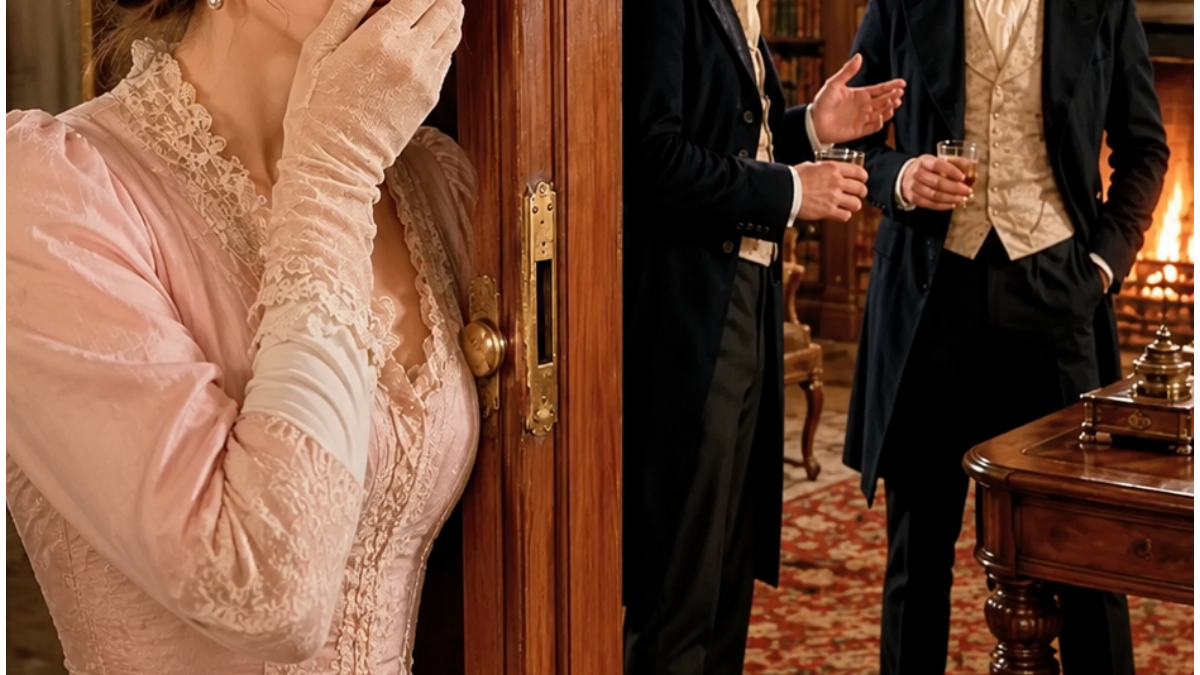
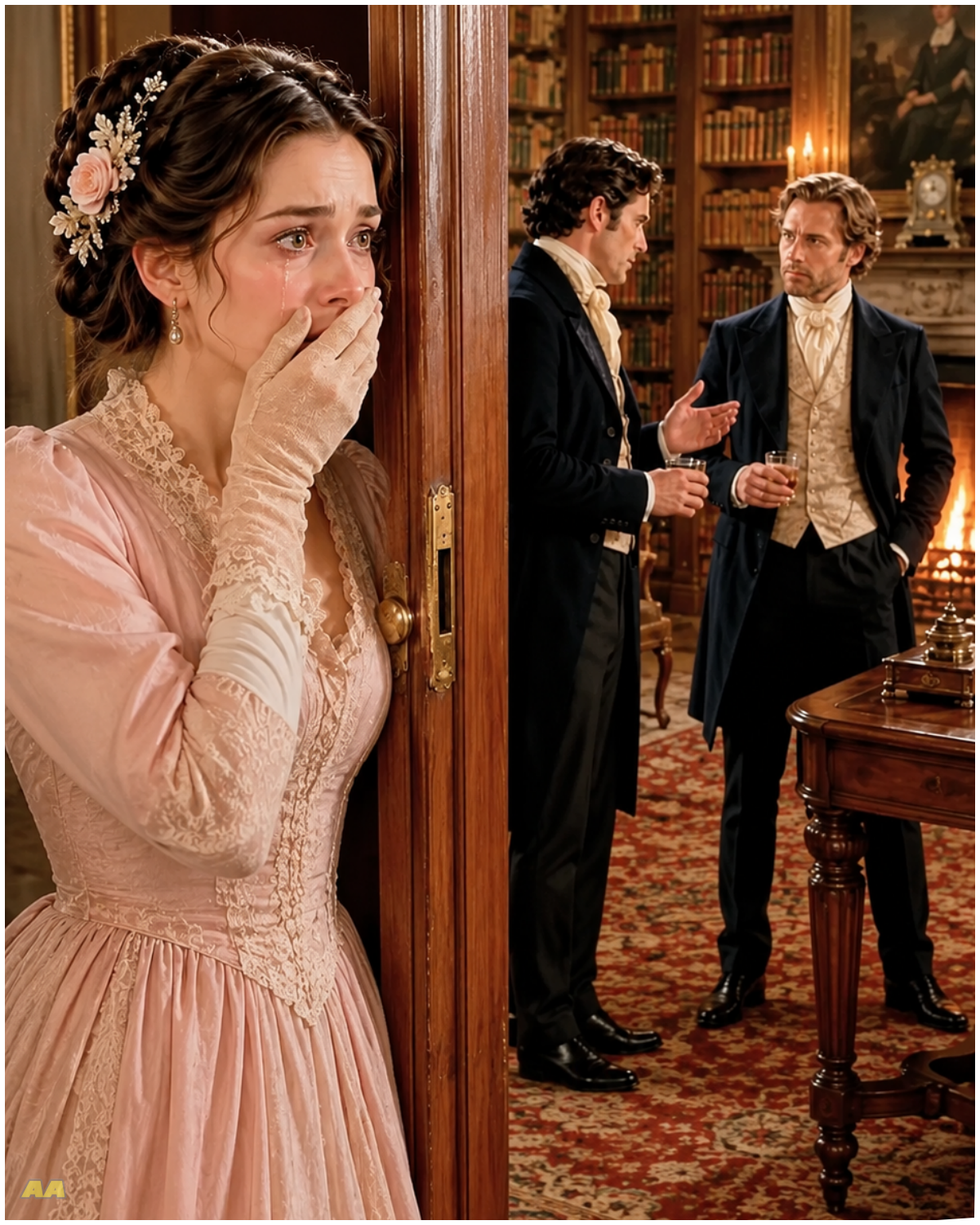
I never chose her. Charlotte’s fingers went still on the door handle.
The wedding papers slipped from her grip and scattered across the hallway floor.
Five words. That was all it took to unmake 10 years.
She did not push the door open.
She did not call his name.
She stood in the dark hallway of Asheford Manor 6 weeks before her own wedding and listened to the silence that followed her fiance’s confession and understood with absolute clarity that the silence was the rest of his answer.
If this story moves something in you, subscribe to our channel and follow Charlotte all the way to the end.
Drop a comment and tell us what city you’re watching from.
I want to see how far this story has traveled.
I never chose her. Charlotte heard it the way you hear a gunshot in a quiet room.
Not just with your ears, but with your whole body.
Every nerve snapping to attention at once.
The sound arriving before your mind catches up to what it means.
She had been walking down the upper hallway of Ashford Manor with the wedding settlement papers folded under her arm, her boots barely making a sound against the floor.
Her mind on nothing more dramatic than whether Nathaniel would be done with his accounts before supper.
The library door was pulled nearly shut.
She could see the warm amber line of fire light along its edge.
She had been about to knock.
Then she heard Edward’s voice firSt. Tell me honestly, Nathaniel.
Edward Carile had a voice built for honesty low.
Unhurried, the kind that made a room feel smaller and safer at the same time.
He had been Nathaniel’s closest friend since before Charlotte could remember and the only person alive who could ask Nathaniel Ashford a direct question and actually receive a direct answer.
If your families had never arranged any of this no agreement, no expectation, no 20 years of everyone simply assuming, would you have chosen Charlotte?
The silence that followed was long enough for Charlotte to count her own heartbeats.
1 2 3 4. She counted to 11 before Nathaniel spoke.
I never chose her. Plain as stone, no cruelty in them.
No hesitation, not even the decency of a pause that might have suggested the question caused him difficulty.
Just five words delivered in the steady, deliberate tone of a man stating something he considered a simple fact.
The settlement papers slipped from Charlotte’s arm and hit the floor.
She caught them before they scattered.
She did not know why she caught them.
Some part of her body kept functioning even as the rest of her stopped entirely.
Her hands gathering the papers. Her fingers straightening the edges, her lungs pulling in one careful breath and then another while her mind stood very still in the dark hallway and did nothing at all.
Inside the library, Nathaniel kept talking.
She could hear his voice continuing more words.
More sentences building on the first five, but the first five had taken up every available inch of space inside her chest, and there was nothing left to receive anything else.
She heard the shape of his voice without hearing its content.
She heard Edward respond. She heard the fire shift in the great.
She heard none of it. What she heard again and again.
Underneath every other sound was the answer to a question she had spent 10 years being too afraid to ask directly.
I never chose her. She had asked it in a hundred other ways.
She had asked it by watching his face across dinner tables and reading what she wanted to read there.
She had asked it by cataloging every small act of attentiveness, the way he remembered how she preferred her tea.
The morning he had the old garden path repaired without her asking twice.
The evening he sat with her while she read aloud from a book she loved, simply sitting, simply present, making no effort to leave.
She had asked it by holding those moments up against each other like pieces of a picture and telling herself the picture was love.
She had been telling herself a story.
She understood that now standing in the hallway with the recovered papers pressed against her sternum and her heart beating with a strange distant steadiness as though it had not yet received the news.
She had been looking at a careful man and calling it devotion.
She had been looking at thoroughess and calling it love.
And he had never corrected her, not once, not ever, because why would he?
She suited the life he needed to live.
She was appropriate and capable, and she understood the demands of his position, and she had made herself so very easy to keep that he had never needed to choose her.
He had only needed to not choose otherwise.
Charlotte did not push the door open.
She did not step into the library.
She did not give herself or Nathaniel or Edward the scene that some furious, humiliated part of her could feel building at the base of her throat like a wave before it breaks.
She straightened her spine. She squared the papers under her arm.
She removed the engagement ring from her left hand.
The gesture was startlingly easy. One smooth motion, the ring sliding off as though it had always known it did not quite fit, and she walked back down the hallway the way she had come.
She set the ring on the hallway table beside the blue ceramic lamp she had always liked.
She set the settlement papers beside it.
She straightened both with the automatic precision of someone who has been raised to leave a room the way she found it.
Then she walked to the front entrance, descended to the stone steps into the cold night air, and kept walking.
She did not run. She did not look back.
She did not allow herself either the comfort of tears or the performance of composure.
She simply moved through the dark with the particular focus of a woman who has decided not in anger, not in anguish, but in the quiet, devastating clarity of a thing, finally understood that she is going home.
Eleanor found her in the stables.
20 minutes later, already giving quiet instructions to the groom about the carriage.
The young maid stopped in the stable doorway and took one look at Charlotte’s face and asked exactly one question.
Are you all right, miss? I’m well enough, Charlotte said without turning around.
I need to go home tonight.
Will you come? Yes, Miss Eleanor said immediately and asked nothing else.
That was why Charlotte trusted her.
They were on the road within the hour.
The night was cold and clear, the kind of cold that makes the stars look closer than they are.
And Charlotte sat in the carriage with her hands folded in her lap and her eyes open and her mind working in that quiet methodical way it worked when she was solving a problem she could not afford to be emotional about.
The problem stripped of everything but its essential facts was this.
She had built her future on a foundation that the man she built it with had just confirmed in his own words was never her own.
She had not been chosen. She had been selected.
There was a difference. And she had spent 10 years not letting herself see it.
And now she could not unsee it.
And that was simply the situation.
She had to decide what to do with the situation.
Running home to her father was not a decision.
She told herself. It was a beginning.
The decision would come after when she was steady enough to make it with her whole mind and not just the part of her mind that was currently occupied with the effort of not falling apart in front of Eleanor.
Eleanor, she said somewhere in the second hour of darkness.
Miss, don’t tell anyone what happened tonight until I’ve spoken to my father.
Of course, miss. Not because I’m ashamed.
She looked at the window at the dark shapes of trees moving past because I haven’t decided what I think about it yet.
And I don’t want other people’s opinions before I have my own.
A pause. That seems very wise, Miss Eleanor said.
Charlotte almost smiled. It seems like the only thing I’m sure of at the moment, she said.
So, I’m holding on to it.
Margaret Ashford found the ring on the hallway table at 9.
She had been looking for Nathaniel to tell him the cook had prepared the cold supper he preferred on long working evenings.
She picked up the ceramic lamp to move it and the ring was underneath, sat there with a deliberateness that made her stop entirely.
She stood in the hallway for a moment.
Then she picked up the ring.
Then she picked up the settlement papers and understood what she was holding.
She walked to the library without hurrying because Margaret Ashford had not hurried anywhere in 30 years and she was not going to start now.
She opened the library door without knocking because Nathaniel was her son and she had earned that much.
He was at his desk. Edward was in the chair by the fire.
Legs extended glass in hand. They both looked up when she entered.
Where is Charlotte? She said. Nathaniel’s eyes went to the ring in her open hand before he had time to compose his expression.
“And what moved across his face in that unguarded half second was something Margaret filed away without comment.” “She was bringing the settlement papers,” he started.
“She should have been here. She was here,” Edward said quietly.
“He was not looking at Nathaniel.
His eyes were fixed on the fire.” “She was in the hallway, Nathaniel.
When I asked you, he stopped.
He set his glass down. I’m sorry I didn’t hear her.
I didn’t know. The silence in the library was a different animal from the silence that had preceded it.
Nathaniel stood. He moved around the desk.
He took the ring from his mother’s hand and looked at it.
And Margaret watched him with the particular patience of a woman who has spent decades studying a person and still sometimes finds something new.
How long was she standing there?
He said again. “Not quite a question.” “Long enough,” Edward said.
Nathaniel was already past his mother and through the library door before Edward finished the sentence.
Margaret listened to the sound of his boots in the hallway quick contained the particular rhythm of controlled urgency and then the sound of the front door and then nothing.
She crossed to the window. She could see the pale gravel of the drive in the moonlight and Nathaniel standing at the top of the front steps and the empty drive stretching away from him in both directions with no carriage.
No lantern, no figure moving through the dark.
She watched her son stand there for a long time, not moving, just looking at the road.
Then she turned away from the window and sat down.
Charlotte reached her father’s estate on the third morning.
She had slept badly and eaten little and said almost nothing across the miles.
And when the carriage came up the drive and she saw Samuel Whitaker standing on the porch, not because he had been told she was coming, but simply because he was almost always there in the early hours.
Watching his land the way he had watched it his whole life, something in her chest unclenched so suddenly it almost hurt.
He came down the steps before the carriage stopped.
He opened the door himself. He looked at her face.
He did not say, “What happened?” He did not say, “I knew it.” “I always worried, I told your mother.” He put his arms around her and held on.
And Charlotte stood inside that embrace with her eyes closed and her hands fisted in the back of his coat.
And for the first time since she had heard those five words, she allowed herself to feel the full weight of them.
She did not cry. She thought she might.
She had braced for it at intervals across the long journey.
Had felt the pressure building and then receding like weather that threatens without breaking.
But what came now was not tears.
What came was the particular feeling of ground settling after something has moved through it.
Not peaceful, not fine, but real and hers and something she could stand on.
“The ring is at Ashford Manor,” she said, her voice steady against her father’s shoulder.
All right, he said. I’m not going back.
He pulled back enough to look at her.
His eyes the same dark brown as hers.
The eyes she had been told her whole life that she inherited from him along with his stubbornness were doing what they always did.
Which was see everything and demand nothing.
Charlotte, he said. Did he hurt you?
Not the way you mean. She said he waited.
He told the truth. She said he just didn’t know I was listening.
She held his gaze. I need you not to go to Ashford Manor.
I need you not to write to him.
I need this to be mine to deal with.
Samuel Whitaker looked at his daughter for a long moment.
This is your life, he said.
It has always been your life.
I have no business interfering in it.
Papa, her voice finally cracked. Just slightly, just at the edges.
You have every right to. I have the right to love you and trust your judgment, he said firmly.
That’s what I intend to do.
He cuppuffed her face briefly in both his rough weathered hands the way he had done when she was small and frightened and needed to be reminded she was not alone.
“The rest is yours,” she breathed.
“Thank you,” she said. “Come inside,” he said.
Elellanor looks like she needs coffee and a chair.
And so do you. The first week back, Charlotte dismantled not herself, her circumstances.
She did it the way she did everything, methodically, completely, without requiring assistance.
She wrote to the dress maker.
She wrote to the floriSt. She wrote to every invited guest who would need to be uninvited individually in her own hand, clearly and without excessive explanation.
The wedding would not proceed. She was grateful for their kindness.
She wished them well. She did not explain.
She did not apologize for anything that was not hers to apologize for.
Her mother, Marion, hovered. She orbited Charlotte’s writing desk with the anxious, helpless energy of someone who needed desperately to do something and couldn’t identify what.
“Let me address the envelopes,” Marion said on the third day.
And Charlotte handed her a stack because it gave her somewhere to put her hands and her worry.
“Will you tell me?” Marian asked on the fourth day.
He said I was never chosen.
Charlotte said without looking up from the letter she was writing.
That’s the whole of it. Marian was quiet for a moment.
Charlotte Mama. She looked up. I know what you want to say.
Save it for when I ask for it.
Marian pressed her lips together, nodded and left the room with the quiet dignity of a woman swallowing several things at once.
Charlotte went back to her letter.
She was not angry. That was the part she kept examining, holding up to the light like something she needed to understand before she put it down.
She was not angry. She was not even hurt in the simple sharp way.
She would have expected the way a wound hurts when it’s fresh.
What she felt was more like the aftermath of a long low fever.
Quiet, clear, stripped of certain things she had been carrying without knowing how heavy they were.
She had spent 10 years being the woman who fit perfectly into Nathaniel Ashford’s life.
She had learned the rhythms of his household and the preferences of his tenants and the expectations of his world, and she had adapted to all of it so completely, so willingly that she had not noticed how little time she had spent simply being Charlotte.
She noticed now. On the sixth morning, she rode out to the Havford farm without telling anyone she was going.
Mrs. Havford was in her kitchen when Charlotte arrived, dealing with the drip from a bucket she had positioned under a section of the sagging roof.
She looked up when Charlotte appeared in the doorway, and her expression cycled through surprise, confusion, and genuine alarm with impressive speed.
Miss Whitaker, I didn’t know you were is everything.
The roof is leaking, Charlotte said.
It’s been Yes, Miss difficult. How long, Mrs.?
Havford hesitated. Two seasons, Miss. Charlotte looked at the bucket.
She looked at the ceiling. She looked back at Mrs. Havford, who had the expression of someone expecting to be told this was not the right channel for this kind of complaint.
I’m sending the carpenter tomorrow morning, Charlotte said.
Is there anything else that needs looking at while he’s here?
Mrs. Havford blinked. The east wall of the barn has a gap that lets the wind through something terrible.
I’ll tell him. Charlotte stepped fully into the kitchen.
Sit down, Mrs. Haverford. Tell me what you need.
The older woman sat slowly. As though she wasn’t entirely sure she was permitted to.
Then she folded her hands on the table and began to talk.
Charlotte listened. She stayed 2 hours.
By the time she left, she had three pages of notes and misses.
Havford had the specific lip expression of someone who has been genuinely heard for the first time in a long time.
Charlotte rode back to her father’s estate with mud on her boots and her hair half down from its pins.
And she felt for the first time since the hallway at Ashford Manor something that was not grief.
She felt useful. She felt like herself.
That same afternoon at Ashford Manor, Nathaniel read the letter, not the settlement papers, the smaller envelope that Eleanor had pressed under the edge of the folder before they left, the one Margaret had found separately, the one she had brought to him without a word, the one he had turned over in his hands for 20 minutes before he finally broke the seal.
Charlotte’s handwriting was precise and even the way it always was.
The letter was not long. Nathaniel, I want you to know that I do not leave with anger.
Anger would require me to believe you deceived me intentionally.
And I do not believe that you are not a dishonest man.
I leave because I heard something true.
And I cannot build a life on a foundation I now know was never there.
I could have lived without grand declarations.
I could have lived without poetry or ceremony or proof performed for an audience.
I could not live knowing I was never chosen, not because I require it for vanity, but because I have learned only now that I require it for peace.
I am grateful for every kindness I always will be.
Please do not let guilt make you pursue what obligation began.
Charlotte, he read it three times.
Then he folded it precisely along its original crease and held it in both hands and looked at the fire.
She thinks I felt obligated, he said.
Edward, who had been sitting in the chair by the window reading nothing, looked up.
She thinks everything I did was because of the arrangement, Nathaniel said.
She thinks he stopped. Nathaniel, I was going to answer you.
His voice was steady, but there was something underneath it that Edward had not heard there before.
Something compressed and pressurized, something that had been building with no release.
That night, you asked me whether I would have chosen her, and I said what I said.
And then I was going to explain what I meant, that the question was built wrong, that you were asking me to imagine a life where Charlotte Whitaker never existed in it from the beginning.
And I couldn’t do that, and the answer came out wrong because of it.
He looked at the folded letter.
She didn’t hear the explanation. No, Edward said quietly.
I should have, he stopped himself.
He pressed his thumb against the fold of the letter.
I thought she could see it.
Everything I did, I thought she could see what it meant.
She could see kindness, Edward said.
She could see competence and care and attention.
She couldn’t see a choice. Those aren’t the same thing.
The fire shifted outside. The wind came up through the grounds the way it always did at this hour.
The sound Charlotte had told him once, she loved that sound like the estate breathing.
He had never told her he knew that about her.
He had never told her that he had memorized it.
That he had filed it away alongside a hundred other small particular things.
The book she returned to when she was anxious.
The way she drumed two fingers against her knee.
When she was trying not to say something, she was deciding whether to say the way she looked when she thought no one was watching and she was simply happy.
He had carried all of it in silence and called it knowing her.
He had never understood until this moment that kept entirely inside yourself is indistinguishable from nothing.
What do I do? He said it was the first time in Edward’s memory that Nathaniel Ashford had asked anyone that question.
The words came out sounding unfamiliar even in Nathaniel’s own voice, like a phrase in a language he was learning to speak.
Edward leaned forward. Before you do anything, he said carefully.
You have to answer one question honestly.
Not to me. To yourself, he met Nathaniel’s eyes.
Do you want her back because you love her or because you cannot stand to lose the future everyone planned?
The fire burned. The wind moved through the grounds outside.
Nathaniel sat with the question for a long time.
Long enough that Edward did not push, did not fill the silence.
Just waited with the patience of a man who knew the difference between a question being avoided and a question being genuinely worked through.
I have always loved her, Nathaniel said finally.
I have loved her so long I stopped noticing I was doing it.
The way you stopped noticing your breathing.
He looked up. That’s not an excuse.
I know it isn’t, but it’s the truth.
Then the question, Edward said, “Is whether you can prove it, not to me, not to her family.
Not to anyone who has an opinion about this arrangement.” He held Nathaniel’s gaze, to her.
Nathaniel opened the desk drawer. He placed Charlotte’s letter inside carefully, as though it were a document of importance, which it was.
Then he opened the other drawer, the one where he kept the miscellaneous accumulation of small daily things, and found what he was looking for within a few seconds.
A folded piece of paper soft at the creases from being opened and refolded many times.
A list written in his own hand years ago of things Charlotte had mentioned in passing that he had not wanted to forget.
Tea plain never sweetened afternoon garden path.
She favors the east side. The stones are uneven on the weSt. Fix before spring.
The Havford roof asks Cooper about it.
She likes the window in the blue room open even in winter.
Just an inch. She is not afraid of storMs. She finds them useful for thinking.
He had 17 entries. He had fixed 11 of them without ever telling her he had a liSt. I have been choosing her, he said quietly.
Every day in every way I knew how.
He set the paper on the desk and I never once told her so.
Edward looked at the list for a long moment.
Then that he said is where you start.
The carpenter arrived at the Havford farm the next morning before breakfaSt. Charlotte had sent word the previous evening and she had not asked her father’s permission to do it because it was not her father’s farm to manage.
It was hers to help. And that was a different thing entirely.
She had written the note herself.
Sealed it herself and sent one of the stable boys into town with it before supper.
Mrs. Havford came to the Whitaker estate two days later with a jar of preserved peaches and eyes that were red at the edges.
“You didn’t have to do it so fast, Miss” she said, standing in the front hallway with the jar held in both hands like something she wasn’t sure she deserved to give.
“We’d been managing.” “I know you had,” Charlotte said.
You shouldn’t have needed to. Mrs. Haverford looked at her for a moment with the particular expression of someone recalibrating an assumption.
The other families, she said carefully.
The Drummonds and old Tom and the rest, they’ve got things too.
Miss things they haven’t said. I know.
Charlotte said it. I’m going to all of them a pause.
Miss Whitaker misses. Haverford said, “If you don’t mind my asking, are you all right?” Charlotte held the woman’s gaze.
I’m working on it, she said honestly.
But I’ll be all right. Yes, it was the truest thing she had said to anyone in a week.
She went to the Drummond farm that afternoon and found the youngest child, a boy of six named Peter, sitting on the front step with a cough that rattled in his small chest like something that did not belong there.
His mother, a thin, anxious woman named Ruth, who had the look of someone perpetually braced for bad news, appeared in the doorway when Charlotte rode up and immediately began apologizing for the state of the yard.
“Stop!” Charlotte said, not unkindly, dismounting before the groom could help her.
“Tell me about Peter.” Ruth Drummond blinked.
Slowly, she began to talk. The cough had started 6 weeks ago.
The doctor in town cost more than they could manage in a slow month.
She had been giving him honey and warm water and hoping it would pass.
And it was passing slowly, but slowly was not fast enough when it was your child and the nights were still cold.
Charlotte listened to all of it without interrupting.
Then she said, “I’m going into town tomorrow.
I’ll speak to Dr. Finley. I’ll cover the coSt.” Ruth’s face did something complicated.
Pride first, the instinctive flinch of someone who doesn’t accept charity, and then something softer underneath it.
Something that looked like the specific relief of a woman who has been carrying something alone and has just been offered help carrying it.
I can’t ask you to Ruth started.
You didn’t ask, Charlotte said. I offered there’s a difference.
She said it simply without performance.
And Ruth Drummond heard it that way.
And that was the end of that.
Charlotte rode into town the following morning and spoke to Dr. Finley for 40 minutes and came back with medicine and written instructions in clear plain language.
And she sat at Ruth Drummond’s kitchen table and went through the instructions line by line until she was certain Ruth understood each one.
Peter sat on his mother’s lap the whole time and regarded Charlotte with the unfiltered.
Assessing gaze of small children who have not yet learned to pretend they are not looking.
“You have red boots,” he said.
“I do,” Charlotte said. “Mama said we was getting a new lady up at the big house.” “Ruth made a strangled sound.” Peter, “It’s all right,” Charlotte said to Ruth.
She looked at Peter. “Plans change sometimes,” she said.
“That’s not always a bad thing, Peter considered this with great seriousness.” Papa says when plans change, you make new ones, he said.
Your papa, Charlotte said, sounds like a wise man.
She rode home from the Drummond farm that afternoon with her hair loose and mud on her riding coat and something in her chest that was not grief and not happiness, but something in between them, something with movement in it, something that had direction.
She had not felt direction in a week.
She had felt only the specific paralysis of a life that had been organized around a future that no longer existed.
The new plans, she thought she was going to have to make new ones.
She just had to figure out what she wanted them to look like.
Her father found her in the study that evening with the estate ledgers open and three years of tenant records spread across the desk.
Samuel Whitaker looked at the spread of papers at his daughter’s inkstained fingers.
At the two empty teacups that indicated she had been sitting there long enough to need refilling twice.
“You found the ledgers,” he said.
“They were in the third cabinet,” she said.
Without looking up, “Papa, the Herford roof been documented as needing repair for two full years.” “Why wasn’t it done?
I meant to get to it.” Old Tom’s apprenticeship letter.
He’s been waiting since last autumn.
The Drummond’s well runs slow in the dry months.
There’s a note in here from three summers back about rerouting the drainage.
It was never followed up. Charlotte, her father sat down across from her with the careful movement of a man choosing his approach.
What are you doing? She finally looked up.
I’m finding out what needs doing, she said.
And then I’m going to do it.
He was quiet for a moment.
You know this land isn’t yours to manage.
It will be someday, she said.
And you clearly need help managing it now.
She held his gaze steadily. Unless you’d like to argue with me about it.
Samuel looked at his daughter at the ink on her fingers.
The open ledgers, the two empty teacups, the particular set of her jaw that she had inherited from her grandmother and deployed with devastating effectiveness in arguments she intended to win.
“No,” he said. “I don’t believe I would.” She went back to the ledgers.
Charlotte, he said after a moment.
H I’m glad you’re here, he said it quietly.
Simply without making it bigger than it was.
Whatever the reason, she did not look up again.
But something shifted in her posture, a softening, slight and brief, and then she was back to the ledgers.
Pen moving, she said. Go to bed, papa.
He laughed low and genuine and left to it.
Meanwhile, 60 mi away, Nathaniel Ashford was dismantling his own assumptions one by one and finding the process considerably more uncomfortable than anything he had undertaken in recent memory.
He started with the list 17 iteMs. 11 resolved without comment.
Six remaining things he had noted and not yet acted on.
Not because he had forgotten them, but because they had not yet risen to the level of urgency his schedule permitted.
He looked at those six items and understood them differently now than he had when he’d written them.
She favors the east path in the garden stones on the west side uneven.
Address before spring. It was September.
He had written that note the previous February and had not addressed it because February had given way to March with the northern boundary dispute and March to April with the grain contract negotiations and at some point the uneven stones on the west garden path had simply remained uneven.
And Charlotte had continued to favor the east path and he had never thought to connect those two facts in a way that required urgency.
She walked the east path because the west one hurt to walk on and he had known that and he had written it down and he had not fixed it.
He called Cooper the estate mason that afternoon.
The west garden path he said.
Cooper blinked. Sir, the stones are uneven.
I want it addressed, of course.
Sir, I can get to it next tomorrow.
Nathaniel said. Cooper looked at him for a moment with the expression of a man rec-calibrating his schedule and his understanding of what constituted urgency simultaneously.
Tomorrow, sir. Yes. Nathaniel went back to the liSt. He went through the remaining five items with the same systematic attention, made arrangements for each, and when he was done, he sat at his desk with the list in his hands and looked at what it was.
Evidence of what he had paid attention to, of what he had noticed and retained, of what he had chosen over and over again in a hundred small deliberate ways without ever once telling her he was doing it.
Edward came in around midday without knocking, Edward never knocked.
A habit Nathaniel had stopped objecting to somewhere around their 20th year of friendship and dropped into the chair across from the desk and looked at the liSt. “What’s that?” he said.
“Something I should have shown her,” Nathaniel said.
Edward leaned forward and read the first few iteMs. His expression shifted by degrees, not dramatically, but clearly he sat back.
“How long have you been keeping that?” he said.
“Four years,” Nathaniel said. Edward was quiet for a moment.
Nathaniel, he said with a particular tone he reserved for things that were obvious to everyone except the person most in need of hearing them.
You understand that most men don’t do that?
I know. Nathaniel said, “Most men don’t notice any of those things, let alone write them down.” I know.
So, when you said that night, when I asked you, I know what I said.
Nathaniel set the list down. I said it wrong.
I said the first thing that came out instead of the true thing, and she heard it before I could correct it, and that is entirely my fault.
What was the true thing? Edward asked.
Nathaniel picked up his pen and turned it between his fingers.
The way he did when he was deciding something that I could not imagine being asked to choose her, he said finally because choosing implies a moment of decision and I don’t have that moment.
I don’t remember a time before I would have chosen her.
He paused. That’s what I was going to say.
That the question assumed there was a version of me that might have chosen differently.
And there isn’t one. Edward stared at him.
He said slowly. What you need to say that to her.
I know. Not not eventually. Not when the timing is better or the circumstances are.
I know. Edward. Nathaniel’s voice was controlled, but only juSt. Underneath the control was something that Edward recognized, having seen it perhaps twice in their long friendship.
The particular agitation of a man who understands exactly what he needs to do and is being prevented from doing it by his own uncertainty about whether he has the right.
I know I need to say it to her.
I’m trying to determine whether she’ll hear it.
She’s Charlotte. Edward said she’ll hear it.
She left the ring on the table, Nathaniel said.
She didn’t break the door down.
She didn’t demand an explanation. She simply removed herself quietly.
He looked at his friend. That’s not a woman who’s waiting to be talked around.
No, Edward said. It isn’t. He held Nathaniel’s gaze.
It’s a woman who respects herself enough not to fight for a place she doesn’t know she’s wanted.
He paused. Show her she’s wanted.
Not not needed, not appropriate, not convenient, wanted.
Nathaniel said nothing. But his hand found the list again.
It was Margaret who broke the silence between the two households.
She wrote to Samuel Whitaker on the 10th day, not to Nathaniel’s instruction, not with his knowledge, and not to negotiate anything.
She wrote as one parent to another in the plain language of people who had known each other long enough to stop being diplomatic.
Samuel, I will not insult you or Charlotte with reassurances I’m not in a position to make.
I only want to know that she is well.
My son made a serious error.
I do not say that to excuse it.
I say it because you deserve to know that I understand what happened and I am not here to argue otherwise.
Whatever comes next belongs to them, not to us.
I have told Nathaniel the same.
Margaret Samuel read the letter twice.
Then he wrote back. Margaret, she is well.
She is also reorganizing my entire estate management system, and I suspect by spring she’ll be running the county.
This is not a complaint. She has not asked me to intervene, and I won’t.
I trust your word that the same is true on your end, Samuel.
He did not show Charlotte the exchange.
He folded both letters and put them in his coat pocket and said nothing because Charlotte had asked him to let this be hers and he intended to honor that.
What he did do that same evening was sit across from her at the supper table and say you’ve been writing letters.
Charlotte looked up from her food several to anyone in particular to the county agricultural office.
She said there’s a drainage project they’ve been planning for 3 years that would benefit six farms in this valley.
It keeps getting delayed because no one has submitted the formal petition with enough signatures.
She speared a piece of potato.
I’ve got four signatures. I need 12.
Samuel set down his fork. Charlotte, it’s a reasonable project, Papa.
The documentation supports it. I just need to visit the other landholders and I know it’s reasonable.
He leaned forward slightly. I’m asking whether you’re all right, not whether the project is reasonable.
She met his eyes for a moment.
She was quiet and he could see her working through it.
The instinct to say fine and the competing instinct toward honesty and the particular effort of a woman who has spent two weeks being more honest with strangers than she has been with herself.
I’m better, she said. But better, she paused.
I keep waiting to be angry.
I expected to be angry. No, she shook her head slowly.
I keep examining it, and there’s just there’s grief, and under the grief, there’s something that almost feels like relief, and that part frightens me more than anything else.
Samuel watched her carefully. What kind of relief?
Charlotte put down her fork. The kind, she said quietly.
That comes when you stop waiting for an answer you’ve been afraid to ask for.
She looked at her hands. I spent 10 years not asking him directly whether he loved me.
Because some part of me already knew that asking would force me to hear the truth, and I was too afraid of what the truth might be.
She looked up. I’m not afraid of it anymore.
It’s done being a secret. She exhaled.
I just have to figure out what I am without it.
Her father said nothing for a moment.
You know what I think? He said finally.
You’re going to tell me regardless, she said almost smiling.
I think he said carefully that the woman sitting across this table has never needed Nathaniel Ashford to decide who she is.
She’s always known. He held her gaze.
I think the question isn’t what you are without it.
I think the question is what you want to do now that your hands are free.
Charlotte looked at him for a long moment.
Then she picked up her fork.
I want to get those 12 signatures, she said.
Samuel picked up his fork, too.
Then we’ll get them, he said simply.
And that was that. She got the 12th signature on a Thursday afternoon.
From a weathered, skeptical landowner named Hol, who had been refusing petitions of all varieties for 11 years on principal and who spent the first 20 minutes of Charlotte’s visit trying to outlast her patience.
He did not outlast her patience.
You’ve read the engineering report, he said for the second time, as though repetition might produce a different answer.
I wrote a summary of it, Charlotte said.
If you’d like, I can leave it with you and you can compare it to the original.
Hol looked at her over the rim of his coffee cup.
He was a large man, slowmoving, with a particular stillness of someone who has been right often enough that he no longer feels the need to hurry toward conclusions.
Most folks who come out here wanting my name on something, he said, don’t know what’s in the documents they’re carrying.
I know, Charlotte said. You’re Samuel Whitaker’s girl.
I am. You were engaged to the Ashford boy a beat.
Charlotte held his gaze without flinching.
I was, she said evenly. Hol looked at her for another long moment.
Something shifted behind his eyes, not sympathy.
Exactly. But a kind of recognition, the look of a man recalibrating.
12 signatures, he said. Yours would be the 12th.
He setat down his coffee cup.
He held out his hand for the petition.
He signed it without reading it again.
Which from Hol Charlotte understood instinctively was the highest possible compliment.
Thank you, she said. Don’t thank me, he said, handing it back.
Get it filed before the end of the month or it’s invalid.
It’ll be filed by Friday, she said.
He almost smiled. Samuel Whitaker’s girl, he said again, but differently this time, like it meant something other than what it had meant the first time.
She rode home with the petition in her saddle bag and the particular likeness of someone who has completed a thing they were told was unlikely and has found it.
In the doing to have been merely difficult, she filed it on Friday.
On the 15th day, a letter arrived at the Whitaker estate addressed in handwriting Charlotte recognized immediately.
She was in the study when Eleanor brought it in, and she looked at it for a full 10 seconds before picking it up.
She turned it over. Her name on the front in Nathaniel’s precise controlled title.
No estate seal, just Charlotte. She set it on the corner of the desk and looked at it and did not open it.
Eleanor hovered near the doorway with the expression of someone exercising heroic restraint.
“You can go, Eleanor,” Charlotte said.
“Yes, miss.” Elellanar said and went, though more slowly than strictly necessary.
Charlotte looked at the letter for another two minutes.
Then she picked it up and broke the seal.
The letter was three pages long.
He had crossed out several lines.
She could see the deliberate strikethroughs.
Whole sentences canled and restarted, which was unusual enough for Nathaniel that it stopped her before she had read four lines.
She had seen his correspondence her whole life.
He never crossed things out. He wrote in drafts, multiple versions until he had what he wanted.
And then the final version was clean.
This was not a final version.
This was the process itself exposed, sent to her unpolished.
That detail undid her more than anything that followed.
She read it all the way through.
Then she read it again. Then she set it down on the desk and pressed both hands flat against the wood and breathed.
He had not asked for forgiveness.
He had not asked her to return.
He had written to tell her what he had meant to say in the library.
All of it. The complete answer.
He had not had time to finish before she walked away.
He had written to tell her about the liSt. He had copied it out for her.
All 17 items in his own hand with the dates beside each one.
He had told her in writing that he could not locate the moment of choosing her because there was no such moment because there had never been a version of him that considered otherwise.
And at the end in the final lines that had no strikethroughs because they had been written last and written simply.
I am not asking you to believe me because I’ve written it down.
I know that words on paper at this point are insufficient.
I know that I have spent years allowing actions to speak for feelings I never named aloud.
And I understand now that what I thought was clarity was actually silence.
I am not writing to ask for anything.
I am writing because you deserve to know what was in the sentence I never finished.
Whatever you decide I will respect, but you should know the whole of what I meant.
Nathaniel Charlotte sat with the letter for a long time.
She was not swept away by it.
She noticed that about herself, the part of her that had once accepted small gestures as declarations of love that had once been satisfied with the shape of affection without its name was not the part of her sitting at this desk anymore.
That woman had left a ring on a hallway table and driven 60 mi in the dark.
She was not coming back without evidence that the thing she was returning to was different from the thing she had left.
But the list, she kept returning to the liSt. 17 iteMs. Four years of noticing.
11 things fixed in silence. The east garden path, her preferred tea, the window she liked open an inch in winter, even when it made no practical sense.
She had not known about the liSt. In 10 years of paying attention to Nathaniel Ashford, of watching him the way she watched everything she cared about closely, thoroughly without letting herself be obvious about it, she had not known about the liSt. She had thought she knew the shape of him.
Apparently, the shape went further than she had been able to see.
She folded the letter along its original creases.
She placed it in the inside drawer of her writing desk, the one that locked.
She sat for another minute with her hands in her lap.
Then she stood and went back to work because there were four more tenant visits to complete before the week was out.
And she had told the Drummond boy she would bring Peter’s follow-up medicine on Wednesday without fail.
And Charlotte Whitaker did not break a promise to a six-year-old.
But she did not throw the letter away.
Edward arrived at Ashford Manor on the 17th day to find Nathaniel doing something Edward had never seen him do in 35 years of knowing him.
He was talking to people, not issuing instructions, not reviewing documents or receiving reports or conducting the formal managed interactions that constituted Nathaniel’s usual relationship with his household.
He was standing in the kitchen yard with three of the estates tenant farmers and he was listening and then he was asking questions and then he was listening again.
Edward stood in the kitchen doorway and watched this for a few minutes before any of them noticed him.
What he was watching he thought was a man learning something.
Not a skill, not an estate management technique.
Something that should have been simpler than it was the sake act of asking people what they needed and then making room in himself to hear the answer.
One of the farmers, a broad-shouldered man named Curtis, who had been on the Ashford land for decades, said something that made Nathaniel nod slowly, not the practiced nod of a man acknowledging information.
The genuine nod of someone receiving something that lands.
Edward went back inside and waited.
Nathaniel came in 20 minutes later, saw Edward and stopped.
“You’re early,” he said. “You were late,” Edward said.
“What were you talking to Curtis about?” Nathaniel poured himself a glass of water.
He told me, he said carefully, that the Eastfield drainage has been redirecting flooding onto his family’s vegetable plot every spring for 6 years.
He said he mentioned it to the previous estate manager and was told it was being looked at.
He drank. It was not being looked at.
What are you going to do?
Fix it, Nathaniel said. Before winter, so it doesn’t happen next spring.
Edward watched him. Charlotte would have caught that, he said.
In the ledgers. Nathaniel set down the glass.
I know, he said quietly. They stood in the kitchen in silence for a moment.
That was not uncomfortable, but had weight in it.
She hasn’t written back, Nathaniel said.
It’s been 2 days since you sent the letter.
I know how long it’s been.
Then stop counting, Edward said. And keep doing what you’re doing.
Nathaniel looked at him. What am I doing?
Becoming someone who deserves to be chosen, Edward said simply.
Whether she sees it or not.
A pause. She might not come back, Nathaniel said.
Not asking, just stating it the way he stated things he had worked through and accepted.
Even when acceptance costs something. She might not, Edward agreed.
“I know that, do you?” Nathaniel met his friend’s eyes.
“I’m not doing this to get her back,” he said.
“I’m doing this because it’s right.” He paused.
Because she saw things I should have seen, because she cared about people on this land the way I should have cared.
And I let the ledgers and the boundary disputes and the quarterly accounts take precedence over the people those things were supposed to serve.
He exhaled. She was right about all of it.
She just she couldn’t have known she was teaching me something while she was doing it.
Edward was quiet for a moment.
Nathaniel, he said, “What? Tell her that.” He held his friend’s gaze.
Not the polished version. Not the version you’d write to a solicitor.
The version you just told me with the roughness still in it.
Nathaniel looked at the glass on the counter.
He thought of the strikethroughs in the letter he had sent the evidence of his own process.
Left in because removing it would have been a performance of control he no longer wanted to offer her.
I already sent one letter, he said.
Then send another, Edward said. And then another after that if it comes to it.
She spent 10 years waiting for you to show her who you were.
You can manage a few letters.
Something shifted in Nathaniel’s expression. Not quite a smile Nathaniel did not smile often.
And when he did, it was brief and precise, but something that moved through his eyes.
A kind of settling, he said occasionally, almost useful.
I know, Edward said. It surprises me, too.
Charlotte’s second letter from Nathaniel arrived on the 21st day.
This one was shorter. One page, no strikethroughs.
Charlotte Curtis has been dealing with flooding on his vegetable plot every spring for 6 years because of the Eastfield drainage.
I didn’t know. I should have known.
I’m fixing it before winter. I have found in the past 3 weeks six things on this estate that needed attention for longer than they should have.
I found them the same way by asking instead of assuming.
I don’t know why it took me this long to understand that attention without conversation is only half of what the people on this land deserve.
I think I applied the same logic to you.
I paid attention. I acted on what I noticed.
I never asked and I never explained because I thought the actions were self-evident.
They weren’t. I understand that now.
I am not writing to pressure you.
I’m writing because I told Edward I would keep doing what I’m doing whether or not you see it and I find that I also want you to see it.
That want is not something I know how to resolve.
So I’m leaving it here instead.
Nathaniel Charlotte read it once. Then she walked out to the Drummond farm because Wednesday was Wednesday and Peter was expecting his medicine and a six-year-old’s expectation was not something she was willing to disappoint.
Peter answered the door himself when she rode up, which suggested he had been watching the road.
He was wearing a coat that was slightly too large for him, and his color was better than it had been the week before.
And he regarded her arrival with the satisfaction of someone whose prediction had been confirmed.
“You came back,” he said. “I said I would,” Charlotte said.
Some people say they will and they don’t.
He said with the worldweary authority of 6 years of observation.
I know, Charlotte said. I try not to be one of those people.
He held the door open for her with great ceremony.
She handed his mother the medicine inside and stayed for tea and listened to Ruth Drummond talk about the drainage petition with an animation that suggested the news of its filing had spread through the valley faster than Charlotte had anticipated.
Mr. After Holt signed it, Ruth said with a reverence usually reserved for miracles.
People are saying that’s the first time Holt has signed anything since.
Since always near as anyone can tell, Charlotte said Ruth laughed genuine surprised, a laugh that filled the small kitchen.
Charlotte rode home in the late afternoon light, and the letter was waiting in her coat pocket where she had put it.
And the thing that was building in her chest was not anger and not forgiveness and not the old waiting for him feeling she had spent so long mistaking for love.
It was something new, something that had not been there before she left.
Something that required a woman who had fixed a leaking roof and gotten Holt’s signature and written a drainage petition and kept her promise to a six-year-old.
A woman who had learned the shape of herself without anyone else’s life to organize around.
She was not ready to name it yet, but she was not throwing the letters away.
The fourth letter arrived on a Tuesday.
Charlotte knew it was from him before Elellanor handed it over because Eleanor had developed a particular expression for Nathaniel’s correspondence, carefully neutral in a way that required visible effort.
And that expression appeared in the doorway of the study at half 8 in the morning.
While Charlotte was reviewing the drainage’s response from the county office, the county had written back 3 weeks faster than anyone had predicted, which Charlotte suspected had something to do with the fact that she had submitted the petition with a 40-page supporting document that left very little room for bureaucratic delay.
She set the county letter down and took Nathaniel’s.
This one was two pages. His handwriting was slightly less controlled than usual.
Not sloppy. Nathaniel Ashford was constitutionally incapable of sloppy but looser like a man writing quickly before he could talk himself out of it.
Charlotte, the county approved the drainage project.
I saw the announcement in the gazette this morning.
I recognized the names on the petition.
Holt’s signature was third from the bottom.
I don’t know how you got Holt to sign anything.
The man refused to sign a collective letter of a congratulations for the county sheriff’s retirement on the grounds that he didn’t personally sh the sheriff to have an opinion on his retirement.
But whatever you said to him, I would very much like to know.
More than that, I want you to know that I have been reading about drainage engineering, not because it is relevant to anything I currently need to manage because you cared about it.
And I find that things you care about have become things I want to understand.
That is not something I was able to say 3 months ago.
I’m not certain I knew it 3 months ago.
The Eastfield drainage correction is complete.
Curtis’s vegetable plot will not flood this spring.
Nathaniel Charlotte read it twice. Then she said it in the locked drawer with the others four letters now lined up in the order they had arrived and went back to the county’s response and drafted her reply before noon.
She did not write back to Nathaniel.
Not yet. Not because she had nothing to say, but because she had too much, and she was not yet certain which parts of it were ready to be said.
But that evening, when her father asked her at supper how she was, she said, “Better than yesterday,” and meant it in a way she had not meant it the previous 3 weeks.
Samuel did not push further. He passed her the bread and talked about the east pasture fence, and Charlotte was grateful for him in the quiet, bottomless way she had been grateful for him her whole life.
What Charlotte did not know on the Tuesday of the fourth letter was that 60 mi away, Nathaniel had spent the previous 48 hours making the most significant discovery of his adult life, and it had nothing to do with drainage engineering.
It had to do with a document he had found in his father’s study.
A room he had not entered with any serious intention in 3 years.
A room that still smelled of his father’s pipe tobacco and the particular mustiness of papers undisturbed too long.
He had gone in looking for the original land survey maps for the east field correction.
He had found those in the third cabinet right where they should have been.
And behind them in a folder that had no label.
He had found something else entirely.
The original marriage agreement. He had assumed for reasons he had never examined carefully in the way that assumptions passed down through family life rarely get examined carefully that the agreement between the Ashford and Whitaker families was binding.
A formal legal arrangement with obligations attached.
The kind of document that constrained futures, the way boundary surveys constrained land.
He sat at his father’s desk and read it for the first time.
He read it again. He set it down and looked at the far wall for a long moment, and then he picked it up and read the relevant paragraph a third time to be certain he had understood it correctly.
The arrangement herein described shall exist only through the freely given consent of both parties at the time of the marriage itself.
No obligation of estate, property, or family honor shall be held to supersede the individual decision of either party.
Should either party determine at any point prior to the formal ceremony that the arrangement does not reflect their free choice, the arrangement shall be considered dissolved without prejudice to either family.
He had not been trapped for 11 years since the day his father had sat him down and explained with a particular gravity of a managing a legacy that there was an arrangement with the Whitakers that would serve both families.
Well, Nathaniel had understood himself to be operating within a constraint.
He had not resented it. He had not felt the constraint as a cage.
He was not a man who experienced duty as imprisonment.
But he had held the arrangement in his mind as the frame around his future, the pre-existing structure into which his own choices had to fit.
He had never questioned it because he had never needed to question it.
Charlotte was Charlotte. The arrangement had pointed him toward someone he would have moved toward anyway.
And so the question of whether the arrangement was binding had never mattered enough to examine except that it had mattered to Charlotte.
Because if he had known, if he had understood clearly and explicitly that no document compelled him that every morning he woke up in this house was a morning he had chosen this life and chosen this future and chosen her.
He would have told her not in a letter, not as a declaration engineered for the right moment.
Simply told her, “The way you tell someone something that seems so obvious, you almost forget it needs saying.
I am here because I want to be here.
I have always wanted to be here.” He had never said it because he had not known until this moment that the wanting had been entirely his own.
He picked up the document. He carried it to the library, sat down at his desk, and wrote the fastest letter he had written in his adult life.
Then he stopped. He set the pen down.
He looked at what he had written and understood.
With the clarity that sometimes arrives late and arrives hard, that a letter was not enough.
A letter was how he had been doing things for 21 days.
Letters were safe. Letters could be set in a drawer and not answered.
Letters allowed Charlotte to receive what he offered at a distance, which was what she was doing, and he respected it.
But he also understood now that what he was carrying was not a letter’s worth of information.
It was a conversation. He needed to go to her.
He needed to look at her and tell her the truth face to face the way he should have been doing for years and let her decide what to do with it while he was standing in front of her where she could see his face and know he meant every word.
He found Edward in the east corridor coming in from the grounds with mud on his boots and a plan about fencing that he was clearly prepared to discuss at length.
I’m going to the Whitaker estate.
Nathaniel said Edward stopped walking. When?
Tomorrow morning. Edward looked at him for a moment.
Has she asked you to come?
No. Has she written back at all?
No. Nathaniel, I found the original marriage agreement.
Nathaniel said behind the survey maps, he held Edward’s gaze.
It was never binding. The document explicitly states that the arrangement required the free choice of both parties at any point up to the ceremony.
There was no obligation. There was never an obligation.
He paused. She left because she believed I had been compelled by duty.
Because she heard five words and believed they confirmed what she had always feared that she was a function of the arrangement rather than a choice.
He paused again. She was wrong and I can prove it and I am going to go tell her in person because she deserves to hear it from my mouth, not read it off a page.
Edward was quiet for a long moment.
What if she doesn’t want to hear it?
He said not combatively carefully. The way a good friend says the hard thing because no one else will.
Then she tells me that herself, Nathaniel said, and I respect it.
And I leave. He met Edward’s eyes, but I will not let her make her decision based on incomplete information.
She deserves the whole truth. She always did.
Edward studied him. All right, he said.
Tomorrow morning. Yes. You’re not going to sleep tonight.
Probably not. Nathaniel agreed. He didn’t.
He was not the only one awake.
Charlotte had been in her father’s study until midnight.
Working through the county’s response to the drainage petition and drafting the detailed implementation proposal the engineering office had requested.
This was not insomnia. This was simply the kind of work that expanded to fill the hours available.
And since she had been waking at 5 and working until late for 3 weeks running, the hours available were considerable.
She had developed over the course of those weeks a rhythm that she recognized from very early in her life from the years before Nathaniel before the arrangement before she had organized her horizon around someone else’s future.
It was the rhythm of a woman who knows what she is doing and why she is doing it and who does not require anyone’s validation to continue.
She had not realized how much she had missed it until it came back.
At 11, she stretched her neck, set down her pen, and picked up the county letter one more time to check a figure in the engineering estimate.
In doing so, she accidentally swept the locked drawers key off the corner of the desk.
She picked it up, looked at it for a moment.
Then she unlocked the drawer and took out the four letters and read them in order the way she sometimes did when she was trying to understand something she had not yet worked out.
She had read them often enough that she knew roughly where each line fell on each page.
What she was looking for was not the content.
She knew the content. What she was looking for was the pattern, the first letter, the explanation, the list, the truth about what he had meant in the library.
Careful, deliberate, the letter of a man who had thought hard about what he wanted to say.
The second shorter, rougher at the edges, the drainage project.
Curtis’s vegetable plot. I find that things you care about have become things I want to understand.
Less deliberate, more honest for being less deliberate.
The third one page, he had heard about the Drummond boy from someone she didn’t know who.
Possibly his mother, possibly some channel of information she was not aware of, and he had written only to say that he was glad Peter was improving, and that he had made a note about the county’s rural medical access report, which apparently documented a significant gap in affordable care for farming families and that he was considering whether there was something the Asheford estate could do to address it.
He was not asking for credit.
He was simply telling her the way you tell someone something because you have gotten into the habit of telling them things and the habit has not broken yet even though the circumstance that created it has.
The fourth the drainage gazette announcement.
Halt things you care about have become things I want to understand.
Charlotte folded all four letters along their creases and put them back in the drawer and locked it.
She sat in the quiet study with the key in her hand and faced for the first time with complete honesty what she actually felt.
She was not indifferent. She had told herself across 20ome days of productive work and tenant visits and county petitions and Peter Drummond’s improving cough that she was maintaining appropriate distance that she was allowing herself to heal that she was not yet ready to decide anything.
All of that was true. What was also true and what she had been very carefully not examining directly was that she looked for his letters that when Eleanor appeared in the doorway in the morning, she registered in the first half second whether there was an envelope in her hand that she had read all four letters more times than she could honestly count.
That the thing in her chest that she had not been ready to name was becoming harder to pretend she could not identify.
She put the key back on the corner of the desk and went to bed.
She lay awake for a long time.
Nathaniel arrived at the Whitaker estate at midm morning.
He had ridden rather than taken the carriage, which meant he arrived dusty and less composed than he would have preferred, which was probably, he thought, more honest than arriving in a carriage looking managed and controlled.
He had spent long enough being managed and controlled.
He tied his horse at the gate and walked up to the front of the house and knocked.
A maid he didn’t know answered.
He gave his name. The maid’s expression did the thing expressions do when they receive information that requires rapid recalibration.
And she asked him to wait and disappeared.
He waited on the front step for 4 minutes, which was long enough to reconsider everything and short enough that he didn’t.
Samuel Whitaker opened the door. The two men looked at each other.
Samuel Whitaker was not a man who wasted his face on expressions that served no purpose.
What his face said, looking at Nathaniel, was something measured and not unfriendly and entirely clear.
I know why you’re here, and I have not yet decided what I think about it.
Mr. Whitaker, Nathaniel said. Nathaniel Samuel said a pause.
She’s in the study, Samuel said.
I’ll tell her you’re here. I won’t tell her to see you.
He held Nathaniel’s gaze. That is her decision to make.
I know, Nathaniel said. I’m not asking for anything else.
Samuel looked at him for another moment.
Then he stepped back and led him into the hallway.
He came back 5 minutes later.
“She’ll see you in the garden,” he said.
“The east side, Nathaniel,” Samuel said.
As Nathaniel moved toward the hallway that led to the back of the house, he stopped.
She is the best thing I have ever had the privilege of knowing, Samuel said quietly and without drama.
If you understand that, actually understand it.
Not as a statement about her value in relation to your circumstances, but as a fact about who she is, then you may have something worth saying.
He paused. If you don’t understand it yet, this is not the right morning.
Nathaniel met the older man’s eyes.
I understand it, he said. I understood it too late.
I’m trying to correct that. Samuel studied him for a moment longer.
Then he nodded once and moved aside.
Charlotte was standing near the old oak at the east side of the garden when Nathaniel came through the gate.
She had known he was coming for approximately 5 minutes, which was enough time to decide not to run, not to pretend she wasn’t there.
And not to prepare a speech.
She was done with preparation. Preparation was what had gotten her through 10 years of almost love.
And she did not want almost anything anymore.
She turned when she heard his footsteps on the path.
He looked tired, more tired than she had ever seen him, and she had seen him at the end of harvest negotiations that ran 3 days without a proper night’s sleep.
There were shadows under his eyes and dust on his coat and he had not.
She noticed with a small involuntary catch somewhere in her cheSt. Taken the time to make himself look composed before coming to see her.
He stopped 6 ft away. He did not come closer without permission.
That restraint was so precisely characteristically him that it almost made her look away.
You didn’t write back, he said.
No, she said. I understood that.
I know you did. A silence fell between them that was not comfortable but was honeSt. She had decided she preferred that.
I found something. He said, “I need to show you.” He reached into his coat and produced a folded document.
He held it out to her.
“Before I say anything else, before you hear anything I came to say, I need you to read this firSt.” She took it.
She unfolded it. She read the relevant paragraph once.
Then she read it again. The silence this time was a different kind.
It had weight in it. The weight of something rearranging itself.
The weight of an assumption collapsing.
She looked up. This was in the original agreement.
She said, “Yes, you didn’t know.
I didn’t know.” He said, “I believed the arrangement was binding.
I had believed it for 11 years without examining it.” Because he stopped.
Because it pointed me towards something I already wanted and I never needed to question a constraint that was taking me somewhere I intended to go regardless.
Charlotte looked at the document again.
She was doing what she did when she received information that changed the shape of something processing it quietly completely before responding.
He recognized it. He had always recognized it.
The particular quality of her stillness when her mind was working hard.
You intended to go there regardless, she said.
Yes, even without the arrangement, Charlotte.
His voice was quiet and entirely steady.
I told Edward I could not locate the moment of choosing you because there was no such moment because there was never a version of me that considered otherwise.
That was the truth. That was what I was saying in the library.
In the answer, I didn’t get to finish.
He paused. What I didn’t know, what I understand now is that telling the truth inside my own head is not the same as telling it to you.
She held the document in both hands and looked at him.
You’ve been fixing things, she said.
Yes, the Eastfield drainage. Curtis’s vegetable plot.
Yes, the county medical access report.
Something moved through his expression. Edward mentioned that.
Your mother mentioned it. Charlotte said she wrote to my father.
My father mentioned it to me while pretending he wasn’t mentioning it.
She paused. I’ve been receiving updates through three separate channels.
None of you intended to be a channel.
A pause. Of course you have, Nathaniel said.
And there was something in his voice that was not quite dry and not quite warm, but was both.
The particular tone of a man who is surprised by something he probably should not be surprised by.
I want to ask you something, Charlotte said.
Ask me anything. The liSt. She met his eyes.
You’ve been keeping it for 4 years.
17 iteMs. You fixed 11 of them without telling me you had a liSt. She paused.
Why didn’t you tell me? He was quiet for a moment.
Not calculating his answer. She knew the difference between Nathaniel calculating and Nathaniel actually working through something.
Genuinely working through it. Because I didn’t think it needed saying,” he said finally.
I thought if I noticed what mattered to you and I acted on it, that was sufficient.
That was love as I understood it.
Attention, action, care that showed itself in doing rather than declaring.
He looked at her. I had never been given a model for the other kind.
The kind that speaks. No one in your family said it aloud, Charlotte said.
It was not a question. No, he said.
Mine either, she said quietly. My mother shows love by solving probleMs. My father shows it by asking the right questions.
Neither of them says it directly very often.
She paused. I think that’s why I spent 10 years reading your actions and calling it enough because I was raised to read actions too.
She looked down at the document in her hands.
But there’s a a difference between knowing someone loves you through their actions and knowing you were chosen.
And I needed the second thing.
I needed to know that I was not simply efficient.
Appropriate, a good fit for the life you already had.
You were never efficient to me.
He said, “You were never appropriate.
You were never a good fit.” His voice did not change in volume or pace.
He was not a man who raised his voice for emphasis.
But there was something in it that she had not heard there before.
Something stripped of the layer of control he habitually kept in place.
You were the person I looked for when I walked into a room.
You were the opinion I wanted when something complicated needed thinking through.
You were the reason the East Garden path mattered.
Not because you asked me to fix it.
But because the idea of you walking on uneven stones and not saying anything about it, because you didn’t want to trouble me, he stopped.
I could not stand that idea.
I have never been able to stand the idea of you being uncomfortable on my land.
Charlotte was very still. Nathaniel, she said, I know it’s not enough, he said.
I know that saying it now after you heard what you heard.
After you left the ring on the table and drove 60 mi in the dark, I know that words in a garden are not a resolution.
I’m not asking you to resolve anything.
He held her gaze. I’m asking you to know the truth, the complete truth.
Not the five words, the rest of the sentence.
He paused. I never chose the arrangement.
I chose you. I chose you every day for 10 years without knowing how to say it.
And I will spend however long you require, proving that those are not the same statement.
The oak tree moved in the wind behind her.
Somewhere across the garden, a bird settled and then lifted again.
Charlotte looked at the man in front of her, the dusty coat.
The sleepless eyes, the particular stillness of someone who has used up all his usual defenses and is standing in front of her with nothing left to manage himself with.
She had spent 23 days becoming a woman who did not need him.
She had done it, she thought.
She had proven it to herself in every practical way available.
The petitions, the tenant visits, the ledgers, the letters she had not answered.
She had proven that she could fill her own life with her own purpose and feel.
At the end of the day, like herself, what she had not anticipated was what it would feel like to stand in front of him and discover that the woman she had become without him was also a woman who had things to say to him.
Things that were not grief and not recrimination, and not the careful gratitude of her leaving letter.
Sit down, she said. He blinked.
There’s a bench. She nodded toward the old stone bench at the edge of the oak’s shade.
“Sit down, Nathaniel. You look like you’ve been awake for two days.” A pause.
One day, he said, “Sit down,” she said again.
He sat. She remained standing for another moment.
Then she sat beside him, not close.
Not the proximity of reconciliation, but the proximity of two people who are willing to occupy the same space and see what happens next.
I need to tell you something.
She said, “All right, I’m not ready to go back.” She said, “I want to say that clearly before anything else.” I’m not ready.
I don’t know if I will be.
I don’t know what ready looks like yet.
And I’m not willing to pretend I do.
I’m not asking you to go back, he said.
I know, she paused. But I also want you to know that I read your letters all of them.
Several times she looked at the garden instead of at him and the liSt. When I read the list, I she stopped.
She pressed her hands flat against her knees the way she did when she was managing something.
I didn’t know about the liSt. I thought I knew the shape of you.
I’ve been paying attention to you for 10 years and I didn’t know about the liSt. I should have told you.
He said, “Yes,” she said. “You should have.” She turned and looked at him directly.
But the fact that it existed, the fact that you wrote it and kept it and acted on it for 4 years without any expectation of credit, that tells me something I didn’t know before.
He met her eyes and waited.
It tells me, she said carefully, that the man I thought I was reading was not the whole man.
That there were pages I didn’t have access to.
She paused. I’m not forgiving you today.
I want to be honest about that.
What you said in that library.
The sentence I heard it broke something.
And broken things take time to mend regardless of the explanation behind them.
She paused again. But I am willing to I am willing to let you show me the pages I didn’t have.
If you are willing to stop keeping them to yourself.
Something passed through Nathaniel’s face that she had no word for.
It was not relief. Relief was too simple.
It was not hope. Hope was too fragile.
It was something more foundational than either something that looked like a man coming back into himself after a long time away.
I’ve been learning, he said quietly, to say the thing out loud instead of only doing it.
I know, she said. I’ve been reading the evidence.
A silence fell that was different from all the silences before it.
It had room in it. It had possibility in it which was not the same as resolution but was something Charlotte had not felt in the direction of Nathaniel Ashford in 23 days and she did not want to overstate it but she also did not want to pretend it wasn’t there the drainage petition he said what about it the implementation proposal the engineering office requested have you submitted it she blinked at the shift not yet I’m working on the cost allocation section.
It’s more complex than the original submission because there are three separate county jurisdictions involved and each one has she stopped.
Why? Because the Ashford estate borders two of those jurisdictions, he said.
And I have been in correspondence with the county engineering office for years about a separate road improvement project that crosses the same land.
He paused. If our proposals were coordinated, the cost allocation becomes significantly simpler.
Both projects would benefit. Charlotte looked at him.
You’ve been reading about drainage engineering.
She said, “I told you that in the letter.
I thought you meant generally. I meant specifically.” He said, “I pulled the county records 3 weeks ago.
I’ve been following the petition’s progress.” Something that was not quite a smile moved across her face.
Not yet. Not a full smile.
Not the return of something. Not a signal that the distance between them had closed.
But something. You’re going to have to talk to the engineering office, she said.
I know, he said. And submit a formal coordination proposal.
I know that, too. By the end of the month, she said, “Or the timeline shifts and the whole cost structure has to be recalculated.
Then I’ll have it submitted by Friday,” he said.
She looked at him steadily. “Can you actually do that?
Can you review it before I submit it?” He said.
The something moved across her face again, and this time it lasted a fraction longer.
“Send it to my father’s address,” she said.
“I’ll look at it. It was not forgiveness.
It was not a reopened future.
It was a woman who had built herself into someone new, extending one precise, practical bridge across a distance she had not yet decided whether to cross.
Nathaniel recognized it for what it was.
He did not try to make it more.
“Thank you,” he said. “Don’t thank me yet,” she said.
“I’m a thorough reviewer. I find things I know you do,” he said.
And this time, there was no ambiguity in his voice.
Just the clean, simple warmth of a man who has always known exactly who he is talking to.
That’s why I’m asking you.” She walked him back to the front gate.
They did not touch. They walked with the careful distance of people who are deciding what the space between them means.
And neither of them tried to narrow it prematurely.
At the gate, he untied his horse and turned to face her.
I’ll have the coordination proposal to you by Friday, he said.
I’ll read it over the weekend, she said.
He nodded. Then he said, Charlotte, she waited.
The West Garden path, he said.
At Ashford Manor. I had it repaired while you were gone.
She looked at him. The east side was always fine, he said.
You always took the east side.
I should have fixed the west side years ago, so you had a choice.
She stood at the gate and held that statement and understood it for what?
It was not a metaphor, not a grand gesture, just the plain literal truth of a man who had spent three weeks learning to say the plain literal truth of things.
I know, she said quietly. I know you should have.
A pause. I know, he said.
And there was something in those two words and acceptance.
A reckoning, the particular weight of a man who is not asking to be forgiven, but is willing to carry the thing he did wrong for as long as it needs carrying.
He mounted his horse. He looked at her one more time from that height with the afternoon light doing what afternoon light does.
And she looked back at him with the eyes of a woman who has learned at considerable cost the exact weight of her own worth.
Friday, she said. Friday, he said.
He rode out through the gate and down the drive without looking back because he was not a man who looked back at things that required looking forward.
Charlotte stood at the gate until she could not hear the horse anymore.
Then she turned and went back inside, passed her father in the front hallway, who was very carefully not watching the gate, and back to the study and the county correspondents and the cost allocation section that needed finishing.
But she was already thinking about the west garden path, not as a metaphor, as a a stone path repaired on a property she had not yet decided whether to return to.
Repaired because the man who lived there could not stand the idea of her choosing the east side every time because the west side was not worth walking on.
She had spent 23 days building herself into a woman who did not need a choice made for her.
What she had not expected was to find that she was also a woman who recognized a real one when she finally saw it.
The coordination proposal arrived on Thursday, one day early.
Charlotte noticed that immediately, not because punctuality was remarkable in itself, but because Nathaniel Ashford operated on a precise internal schedule that rarely produced early deliveries.
He delivered things when they were ready, not before.
The fact that this arrived Thursday meant he had been working on it since he left her father’s gate on Tuesday afternoon and had not stopped until it was done.
She did not acknowledge that detail out loud, but she noted it.
The proposal was 43 pages. Charlotte sat down with it after supper with a fresh cup of tea and a pen for marginalia and did not look up for 2 hours.
It was good. That was the first thing she admitted to herself.
Sitting back at the end of the second hour with seven pages of notes and cold tea at her elbow.
It was genuinely substantively good. The cost allocation problem she had been wrestling with for a week had been approached from an angle she had not considered.
Using the Ashford Estates’s existing road improvement survey data to establish a shared baseline that reduced the jurisdictional overlap from a complication to an asset.
It was elegant in the way that good engineering thinking is elegant which is to say it was invisible until you saw it.
And once you saw it, you could not understand why you had been approaching the problem any other way.
She wrote her review over the course of Friday morning.
She found three points that needed strengthening.
One section where the county jurisdictional language was slightly imprecise in a way that could create delays and one paragraph so well constructed that she read it twice and then wrote this is exactly right in the margin because she believed in giving credit where it was owed.
She sent it back Friday afternoon with a cover note.
Nathaniel, three revisions needed marked in the margins.
The jurisdictional language in section 4 will cause a problem at the county level.
I’ve suggested alternative phrasing. The cost allocation framework in section two is better than my approach.
I’m incorporating it into the final submission.
Submit your revised version no later than Wednesday.
I’ll submit the petition update the same day if we time them correctly.
The county office receives both in the same batch and processes them together.
See not Charlotte. Just she had not planned that it simply came out that way.
And she looked at it for a moment before deciding it was honest and leaving it.
His revised version came back Monday morning.
All three revisions addressed the jurisdictional language corrected with a precision that suggested he had spent part of the weekend reading county procedural law which she found both characteristic and quietly remarkable.
There was no personal note attached, just the document and at the bottom of the cover page in handwriting that was slightly less formal than his usual correspondent script.
Section two was your framework. I only extended it.
She read that line four times.
Then she picked up her pen and got to work on the final submission.
They submitted on Wednesday. As planned, Charlotte filed from the county office in town in person because she preferred to hand documents directly to the person responsible for processing them rather than leave them at the front desk where they could be misfiled or delayed.
She had learned that from watching her father manage correspondence for 30 years, and it had served her consistently.
The clerk at the county office was a young man named Davies, who had processed her original drainage petition 3 weeks prior and had visibly not expected to see her again so quickly.
“Miss Whitaker,” he said with the expression of someone recalibrating.
“Mr. Davies,” she set the submission on the counter.
The coordinated proposal for the drainage implementation and the Asheford road improvement project.
They should be processed together. The cost allocation depends on it.
Davies looked at the document. He looked at the Ashford estate header on the attached coordination proposal.
He looked back at Charlotte with an expression that was trying very hard not to be anything other than professionally neutral.
Both parties have signed off. He said, “Both parties have signed off,” Charlotte said.
“And the the coordination between the two estates, it’s been confirmed,” Charlotte said pleasantly.
“Is there anything else you need from me?” Davies took the submission.
He stamped it. He gave her the receipt.
“The engineering office will be in touch within 10 days,” he said.
“Thank you, Mr. Davies,” Charlotte said, and walked out.
She was halfway down the front steps when she nearly collided with Margaret Ashford.
They stopped simultaneously, looked at each other.
A pause that lasted precisely long enough for both women to understand that the other had not expected this encounter and that neither of them was going to pretend otherwise.
Charlotte. Margaret said, “Mrs. Ashford.” Charlotte said.
Margaret looked at the county office door.
Charlotte had just come through. Then at Charlotte’s face, her expression was doing the thing it always did, which was reveal nothing while processing everything.
Was that the drainage petition? Margaret said the coordinated implementation proposal.
Charlotte said with the road improvement project.
A pause. He told me he was working on it.
Margaret said he didn’t tell me you were working on it together.
We’re not working together. Charlotte said, “With a precision that Margaret, who had been a careful woman for 60 years, recognized immediately as significant, we submitted complimentary proposals that benefit from coordinated processing.
It’s a practical arrangement.” Margaret looked at her for a moment.
“Charlotte,” she said in the particular tone that meant she was about to say something direct and had decided the situation warranted it.
I owe you an apology, Charlotte went still.
I arranged the match, Margaret said.
I was certain it was right.
Certain enough that I did not examine whether the arrangement itself might become a problem.
I believed Nathaniel would understand in time what I had seen immediately.
She paused. I should have told him years ago to say it out loud.
I knew he wasn’t. I assumed it would sort itself.
She met Charlotte’s eyes. It didn’t sort itself.
You left a ring on my hallway table and drove 60 mi in the dark because I assumed it would sort itself.
Charlotte was quiet for a moment.
Mrs. Ashford, she said, you didn’t put those words in his mouth.
No, Margaret said, but I created the architecture that allowed him to believe actions were sufficient without language.
I raised him to show love through competence and provision.
And I never once told him that the person receiving that love might also need to hear it.
She paused. That is on me.
It was the most Charlotte had ever heard Margaret Ashford say about anything personal.
She understood what it had cost and she did not minimize it.
I appreciate that, Charlotte said quietly.
Margaret nodded once. Then she said he is trying.
I know. Charlotte said he’s not trying for the right outcome.
He’s just trying. Margaret’s voice was careful.
Trying to be different, not to win something back.
She held Charlotte’s gaze. I want you to know I can see the difference because I know my son and I have not always seen that in him before.
Charlotte said nothing for a moment.
So can I, she said finally, quietly, the admission smaller than she intended, landing larger than she expected.
Margaret looked at her with something that was not quite a smile, but lived in the same country as one.
Good, she said simply. And then the milliner on the square has new ribbon.
The blue green. I thought of you when I saw it.
You always wore that color. Well, and just like that, the conversation was over.
Return to the ordinary surface of things.
And Margaret walked past her up the steps and into the county office.
And Charlotte stood on the bottom step in the autumn air and felt something move through her chest that was not grief and not hope and not anything she had a clean word for.
It was the feeling of a door that has been locked for a long time being unlocked from the inside.
She did not go to Ashford Manor that week.
She went to the Drummond Farm instead on Thursday because Peter’s follow-up appointment was Thursday and she had said she would come.
Peter was on the front step again when she rode up.
Same oversized coat significantly improved color and the expression of someone who had been waiting but was too dignified to admit it.
You’re late. He said I’m exactly on time.
Charlotte said dismounting. I’ve been sitting here 20 minutes.
He said that’s called being early.
Charlotte said that’s different from me being late.
Peter considered this with his characteristic gravity.
Mama said you might not come anymore, he said, because things changed.
Charlotte looked at him steadily. I said I would come, she said.
Things don’t change that. Peter nodded, satisfied, and held the door open with ceremony.
Ruth Drummond had made tea and set out a plate of biscuits that indicated this visit had been anticipated and prepared for.
She poured for Charlotte and asked about the petition before Charlotte had taken her coat off, which told Charlotte that the news of Wednesday’s submission had traveled through the valley at its usual velocity, which was to say approximately the speed of sound.
“Is it true the Asheford estate is involved?” Ruth asked, pouring with an air of elaborate casualness.
“The proposals are coordinated,” Charlotte said, accepting the cup.
Coordinated meaning, meaning both submissions benefit from being processed together, Charlotte said, which is good for the county and good for everyone the project affects.
She met Ruth’s eyes across the table.
Including your drainage situation, Ruth pressed her lips together in a way that suggested she had approximately seven follow-up questions and was heroically limiting herself to none of them.
That’s good news, Ruth said. It is, Charlotte agreed.
Peter who had positioned himself between the two women with the strategic instincts of a child who understands that adults >> interesting things when they believe the child is not paying attention said without looking up from the biscuit he was examining.
Papa says sometimes people who are apart figure things out.
Ruth made a sound. Peter I’m just saying what papa said.
Peter said with impeccable innocence. Charlotte looked at the six-year-old for a moment.
Your papa, she said, continues to be a wise man.
Peter smiled. It was a gaptothed, wholly satisfied smile, the smile of a child who has successfully said the exact thing he intended to say.
Charlotte had a sudden, vivid conviction that Peter Drummond was going to be formidable by the time he was 30.
She stayed for an hour. She left with the particular warmth of a woman who has been somewhere she was genuinely wanted and has allowed herself to receive that without qualification.
The letter she had been half expecting arrived Friday morning.
Not from Nathaniel, from Edward. She recognized his handwriting on the outside.
She had seen enough of his correspondence over the years to know it immediately.
The slightly impatient forward lean of letters from a man who writes fast and edits rarely.
Charlotte, I am writing without Nathaniel’s knowledge because there is something I need to say to you that he will not say himself and I have decided that falls to me.
I asked him the question that destroyed everything.
I asked it thoughtlessly, not cruy, not strategically, just carelessly.
The way old friends ask each other things they have not fully considered.
I have been living with that carelessness for 7 weeks.
What you heard was the beginning of an answer.
I heard the reSt. He said, and I am giving you his exact words because they deserve to be exact that the question was built wrong.
That asking whether he would have chosen, you assumed there was a version of him that might have chosen otherwise, and there wasn’t one.
He said he could not locate the moment of choosing you because the choosing had happened so long ago.
It had become part of how he was oriented in the world.
He said this 2 minutes after you walked away.
I know this does not undo what you heard.
I know an explanation is not the same as the years of being told directly that you mattered, but I need you to know that I heard the rest of the sentence and the rest of the sentence was the whole truth.
I am sorry for my part in this.
You deserved better than a carelessly asked question in a hallway.
Edward Charlotte read it twice. She folded it.
She sat with it in her hands.
Then she did something she had not done since the night she left Ashford Manor.
She allowed herself to cry. Not the dramatic oporatic grief of someone falling apart.
Just the quiet necessary release of a woman who has been carrying something with exceptional competence for nearly two months and has just received the specific piece of information that loosens the last lock.
She cried for approximately 4 minutes.
Eleanor came in, assessed the situation with a single glance, left silently, and returned with fresh tea and a handkerchief, all without saying a word.
Charlotte loved her for it with fierce specificity.
She dried her eyes. She drank the tea.
She put Edward’s letter in the drawer with the others.
Then she sat for a long time with her hands in her lap and let herself think clearly about what she actually wanted.
Not what was appropriate, not what was safe, not what would protect her from the specific pain of having believed something and been wrong about it.
What she actually wanted underneath all the protection she had constructed with such practical efficiency over the past seven weeks.
She wanted to go back not because the wound was healed, not because she had forgiven everything and resolved everything and tied it neatly into something she could manage.
She wanted to go back because the woman she had become over the past seven weeks, the woman who fixed roofs and got halt signature and filed petitions and kept promises to six-year-olds and reviewed 43-page engineering proposals was a woman with enough of herself intact to go back without losing herself again.
She was not returning to step back into the life she had left.
She was going back to offer an entirely new one built on entirely new terMs. and she needed Nathaniel to understand that before she walked through that gate.
She picked up her pen. She wrote him a letter, the first one she had written him since the leaving letter 7 weeks ago.
It was four sentences long. Nathaniel, I would like to meet at Asheford Manor on Saturday afternoon.
Not to return to talk. Bring the original agreement.
Charlotte, she sent it before she could reconsider.
He wrote back within 6 hours.
One sentence, I will be there.
Saturday arrived with the particular clarity of autumn mornings that have decided to be honest about how cold winter is going to be.
Charlotte rode to Ashford Manor herself, without Eleanor, without her father’s company, without anyone to manage the approach or soften the arrival.
She had made that choice deliberately.
Whatever happened in the next few hours was going to happen between her and Nathaniel, and she wanted to arrive as herself and no one else.
The groom at the Ashford stables was a young man she had known since he was 12.
He took her horse with a carefully neutral expression that told her the entire household had been informed of uh of this visit and had collectively decided to behave as though they had not.
Margaret was not visible. That told Charlotte that Margaret had intentionally removed herself, which was the most respectful thing she could have done.
Nathaniel met her in the front hallway.
He looked better than he had in the garden at her father’s estate less hollowed, though still not rested.
The particular alertness of a man who has been waiting for something, and has not allowed himself to assume what form it would take.
He did not reach for her hand.
He did not embrace her. He stood in the hallway of his own home and looked at her with an openness she recognized as costing him something.
Because Nathaniel Ashford had spent 35 years keeping his interior firmly interior and this version of him visible, unguarded, simply present was still clearly effortful.
She recognized the effort. She respected it.
“Thank you for coming,” he said.
“Thank you for being here,” she said, which was not a small thing to say.
And he heard it as such,” he said.
She looked at the library door.
She thought of the last time she had stood outside it, and the papers on the floor and the ring on the hallway table.
“Not the library,” she said. “The sitting room,” he nodded.
He led her there without comment.
They sat not across from each other.
That would have felt like a negotiation, but at right angles.
The configuration of people who intend to talk to each other rather than add each other.
He had the original agreement on the low table between them.
She had brought Edward’s letter folded in her coat pocket.
She put it on the table beside the agreement.
He looked at it. He recognized the handwriting on the outside.
He wrote to you, he said.
Yes, I didn’t ask him to.
I know, she said. That’s why it mattered.
He looked at the letter for another moment.
Then he looked at her. Ask me anything, he said.
I told you that in the garden I meant it.
Charlotte looked at her hands. Then back at him.
Did you ever consider? She said carefully.
That you might not want to marry me at any point in the 11 years of the arrangement.
A pause. No, he said. Not once, he held her gaze.
I considered whether I deserved you.
Several times. I considered whether you would be better served by a man more capable of he gestured slightly.
Meaning himself, meaning the silence and the restraint and the things left unsaid than this.
But I never considered not wanting to.
Charlotte was quiet for a moment.
The night I left, she said, “When you came outside and the drive was empty.
What did you think?” Something passed through his face.
I thought, he said slowly, that I had been standing in the same place my entire life and had never noticed the view from it.
And now I was looking at the space where you had been and understanding for the first time what I’ve been facing.
Charlotte looked at him. That’s the most you have ever said to me about what you felt.
She said, I know, he said.
I know. He did not look away.
I am trying to correct that.
Not for a reason, just because it’s true.
And you asked and I am learning that the honest answer to a direct question is simpler than I made it.
Charlotte reached over and picked up the original agreement.
She held it in both hands the way she had held it in her father’s garden and she looked at the relevant paragraph and she thought about what it meant.
This changes the story I was telling myself.
She said quietly. What story? That you were a good man doing his duty.
He said that you were kind to me because I was yours by arrangement and you were determined to discharge that arrangement.
Well, she looked up. That’s the story I was living in when I walked away.
That your kindness was courtesy and your attentiveness was competence and your love, if it existed at all, was secondary, incidental, something that had grown up alongside the arrangement without being its own thing.
And now he said, she set the agreement back on the table.
Now I know it was its own thing, she said.
I know the list existed. I know you extended the drainage framework.
I know you spent a weekend reading county procedural law so you could correct four lines of jurisdictional language.
She paused. I know you had the West Garden path repaired so I would have a choice.
He said nothing. He just looked at her with the steady, stripped down attention of a man who has learned that filling silence is not always an improvement on silence.
I’m not the same woman who left,” she said.
“I know,” he said. “I need you to understand what I mean by that.
I don’t mean I’ve changed into someone different.
I mean, I know myself now in a way I didn’t before.
I know what I need. I know what I will not accept.
I know that I am capable of building a life entirely on my own terms if I need to and I am not afraid of that anymore.
She held his gaze. I will not go back to being a woman who organizes herself around your life and hopes you notice her doing it.
I would not want you to, he said without hesitation.
Nathaniel Charlotte, his voice was quiet and absolute.
The woman who filed that petition.
The woman who got Holt’s signature.
The woman who brings medicine to the Drummond boy and reviews engineering proposals and runs your father’s estate management from the study while he pretends not to notice.
He looked at her with the full unguarded weight of someone who has finally learned to use his words for their intended purpose.
That is who I want beside me.
Not a woman who fits into my life.
A woman who builds things alongside me, things neither of us could build alone.
The room was very quiet. That’s what you want, she said.
That is what I choose, he said.
And the difference between those two sentences was the whole distance they had traveled.
Charlotte looked at him for a long time.
I found something out about myself, she said.
Finally. When I was gone, tell me.
I found out that I am very good at leaving.
She said, “I am organized about it and I am dignified about it and I do not make scenes and I manage the logistics efficiently and I take care of everyone else while I’m doing it.” She paused.
I am less practiced at the other thing.
What other thing? He said softly.
Staying? She said, “Not by arrangement.
Not by expectation. Not because it would cause problems to leave.
By my own free decision because I want to because the person I’m staying for has earned it and I know my own worth well enough to know what earning it looks like.
She looked at her hands then back at him.
I want to try the other thing.
Nathaniel’s whole face changed. Not dramatically, not the transformation of someone overcome.
Not the performance of relief. Just a quiet profound shift like ground after a long rain settling into something more solid than it had been.
Charlotte, he said, not today, she said immediately.
I mean not returning today. Not going back to where we were.
I mean beginning something, something new, something that belongs to both of us because we both decided it not because anyone arranged it.
Yes, he said simply. Slowly she said, “However you need,” he said, “and you will say things,” she said.
“When you feel them, you will not make me read your actions and guess at the meaning.
You will tell me. I will tell you,” he said.
“I am already telling you. I know.” She said, “That’s why I’m here.” They walked in the garden after not planned.
It simply happened the way some things happen between people who have found their way back to a shared ease.
The natural extension of a conversation that had said its essential things and was now making room for the ordinary.
The west garden path had been repaired cleanly.
Charlotte noticed it the moment they came through the garden gate new stones.
Level and flush the same gray as the originals.
She did not comment on it.
She walked on it and he walked beside her and that was comment enough.
They had been walking for perhaps 10 minutes when he said without preamble.
I should have told you years ago.
Not the list, not the explanation, just that I loved you.
Charlotte kept walking. Yes, she said.
You should have. I’m telling you now, he said.
She stopped. He stopped beside her.
And she turned and looked at his face in the autumn afternoon light.
And he looked back at her with the simple unreserved honesty of a man who has burned his last defense and is standing on the other side of it and finding to his considerable surprise that it is warmer here.
I know you are, she said.
Is it enough? He said, she looked at him for a long moment, held the question.
Gave it the respect of actual consideration rather than the fast reassurance that would have been easier and less true.
It’s a beginning, she said. That’s enough for today.
He nodded. They walked on at the end of the west path where it turned back toward the house.
Charlotte stopped again. She looked back at the length of the path they had just walked level.
Solid all the way from the gate.
It’s a good repair, she said.
Cooper did it, Nathaniel said. He said the stones had been uneven since before my father’s time.
All those years, she said. All those years, he agreed.
And it only took someone deciding it mattered, he said.
Charlotte looked at him. Something that had been almost smiling for three weeks finally completed itself genuine.
Unguarded. The real smile of a woman who has found her way back to something worth returning to.
Yes, she said. That’s exactly right.
She did not take his arm.
She was not ready for that yet.
And he did not reach for her because he had finally learned to wait for what was freely given rather than what could be implied.
But she stood beside him at the end of the west path in the autumn afternoon, and for the first time in 7 weeks, the space between them was not distance.
It was room room for something to grow in slowly at its own pace on terms they were going to have to negotiate with honesty and patience and the particular hard one wisdom of two people who had learned at considerable cost exactly what love without language looks like and what choosing out loud on purpose in plain words can change.
The beginning was not a grand moment.
It was a Tuesday. Charlotte rode to Asheford Manor on a Tuesday morning, three weeks after the West Garden path with a folder of county correspondence that required Nathaniel’s signature on three documents related to the coordinated drainage project.
And she knocked on the front door the way a woman knocks when she has decided she is not a guest, but is not yet ready to call herself something else.
Mrs. attach the housekeeper opened the door with an expression of such carefully composed normaly that Charlotte understood immediately the entire household had been briefed and drilled and had agreed collectively to behave as though this were unremarkable.
She appreciated it more than she could say.
Mr. Ashford is in the east office.
Miss Mrs. Hatch said thank you.
Charlotte said and walked in. She knew the house.
She had always known the house, had known it since childhood, had known which floorboards creaked and which doors stuck in wet weather, and which hallway caught the afternoon light at an angle that made the old portraits look briefly alive.
Walking through it now felt different than it had before, not because the house had changed, but because she had.
She was not walking through the house of her arranged future.
She was walking through a house she was choosing to enter.
There was a substantial difference. Nathaniel looked up from his desk when she came through the office door.
He had ink on his right hand and a ledger open in front of him and the expression of someone who had heard her footsteps in the hall before she arrived and had been managing his reaction to them for approximately 15 seconds.
The county correspondents, she said, setting the folder on his desk.
I saw the dispatch arrived this morning.
He said three signatures needed. The third document has a clause in section 7 that I’d recommend reading before you sign the county.
Has inserted language about maintenance responsibility that was not in the original proposal and favors their timeline over ours.
He pulled the folder toward him without looking away from her face firSt. A beat.
Then he opened it. She sat down across from him.
Not because he invited her to, but because she had decided she was permitted to, and watched him read.
He read the way he always had completely, precisely, with a stillness that indicated full attention and no performance of it.
He got to section 7. She saw the moment he found the claws, a slight pause.
A fractional tightening around his eyes.
They moved the maintenance window, he said, by 6 weeks, she said, which pushes the first inspection past the spring thaw.
Which means if there are construction defects, we won’t find them until after the wet season has already demonstrated them.
That’s not acceptable, he said. No, she said.
I have a revised clause drafted.
It’s on the last page. He turned to the last page.
He read her revision. The corner of his mouth moved in a way that was not quite a smile, but was adjacent to one.
“This is better than the original,” he said.
“I know,” she said. He looked up.
“You’re going to be very difficult to negotiate against,” he said.
“And there was something warm in his voice that was also entirely sincere.” “You’ve had 11 years to notice that,” Charlotte said.
“I noticed,” he said. “I simply didn’t understand until recently how fortunate that made me.” She looked at him across the desk, the ink on his hand, the open ledger, the morning light doing what morning light does and felt the particular clean satisfaction of a woman who has arrived somewhere on her own terms and found it exactly as she expected.
Sign the first two, she said.
I’ll have the revised third document to the county by end of week.
He signed. She took the folder.
She stood to leave. Charlotte, he said.
She turned. Will you stay for lunch?
He said not casually, not the reflexive hospitality of a hoSt. Directly with the specific quality of asking that he had been practicing for 3 weeks and was becoming slowly better at.
She looked at him for a moment.
Yes, she said. I’ll stay for lunch.
It was in its way. The most important yes, she had said in 7 months.
The weeks that followed were constructed from small things.
She came on Tuesdays for the county correspondence.
She stayed for lunch. Then she began staying past lunch because there was always something else to discuss.
The road improvement timeline. The rural medical access question he had raised in his third letter and had apparently not abandoned the gap in affordable care for farming families that the county report documented and that he had spent the intervening weeks researching.
With the same systematic thoroughess he brought to everything.
The county has no mechanism for it, he said on the third Tuesday, with the tone of a man who has read extensively about a problem and arrived at the point of finding the reading insufficient.
The existing medical provision system relies on charity, which means it relies on whoever happens to feel charitable in a given season.
That’s not a system, that’s luck.
There’s a model in Virginia, Charlotte said.
Three counties formed a cooperative agreement pulled resources.
Shared contract with a physician, rotating visits to each county quarterly.
It reduced the gap significantly in the first year.
He looked at her. How do you know about that?
I wrote to the Virginia County Administrative Office, she said.
3 weeks ago. They sent me the documentation.
A pause. When did you write to them?
He said, “The same week you mentioned the rural medical access report in your third letter.” She said, “He was quiet for a moment.
You were researching it.” He said, “Before you came back, I was interested in it.” She said it was a real problem.
Real problems don’t wait on personal circumstances.
He looked at her with the full unhurried attention she had spent years misreading as courtesy and had only recently understood was something more specific.
The look of a man who is paying attention to someone because that someone is genuinely continuously worth the attention.
Charlotte, he said, “Nathaniel, I would like to pursue this.” He said, “The cooperative model with you as a joint project.” She said, “As a joint project,” he confirmed.
She opened her folder. She took out the Virginia documentation.
She set it on the desk between them.
Then we should start here, she said.
They started there. Edward came to Ashford Manor on a Thursday in November and found, to his complete lack of surprise, Charlotte’s horse in the stables and Charlotte herself in the library arguing with Nathaniel about the optimal radius for the cooperative’s service area.
He stood in the library doorway for a moment, unnoticed.
Nathaniel was on his feet a rarity during working discussions which indicated the level of engagement with his hand flat on the county map on the library table.
Making a point about jurisdictional boundaries, Charlotte was across the table from him, standing with equal firmness, her own pen marking a different boundary, her expression carrying the specific energized quality of a woman in an argument she is enjoying.
The western boundary cuts off the Holt property, she was saying.
And Holt has 43 tenants. The western boundary puts us into a second county’s jurisdiction, Nathaniel said.
Which means a separate agreement, separate administrative process, which I can handle, she said.
I know you can handle it, he said.
The question is whether adding 3 months to the administrative timeline is worth.
Yes, she said. Charlotte 43 tenants, she said.
Yes. He looked at her. She looked at him.
There was a beat of silence that had the texture of two people recognizing that the argument was over.
Fine, he said. Western boundary extended.
Thank you, she said, and made the mark on the map.
Edward cleared his throat. They both looked up.
Edward, Nathaniel said with the particular composure of a man caught being fully himself and declining to apologize for it.
Don’t stop on my account, Edward said.
This is the most entertaining thing I’ve seen in weeks.
He looked at Charlotte. You extended it to Holt’s property, didn’t you?
Of course, Charlotte said. Of course, Edward agreed.
He came fully into the room and dropped into his usual chair by the fire.
Someone should have asked Hol what he needed years ago.
Someone did, Charlotte said. Recently, I know, Edward said.
The whole county knows. He looked between them at the map, at the marks, at the particular quality of the space between them that had changed since the last time he had seen them in the same room.
He said nothing about it. He was wise enough to know that what was growing between them did not benefit from commentary.
What do you need me to do?
The second county agreement, Nathaniel said immediately.
You know the county commissioner. I went to school with his son, Edward said.
Close enough, Nathaniel said. I’ll write to him this week, Edward said.
He settled back in his chair with the ease of a man who has been useful and intends to continue being so.
Then, because he was Edward and restraint had always been relative.
I’m glad you’re here, Charlotte. She looked at him across the library table.
I know you wrote to me, she said, about what you heard in the library.
He met her eyes. I know you know.
You didn’t tell him you were going to, he said.
Why not? Because it wasn’t his apology to make, Edward said simply.
He was responsible for the answer.
I was responsible for the question.
Both of those needed addressing separately.
Charlotte looked at him for a moment.
Thank you. She said it mattered.
I know it did. He said, “You’re here.” Nathaniel, who had been listening to this exchange with the attentiveness of a man receiving information about a conversation he had not known took place, said quietly, “What did he say in the letter?” Charlotte looked at him.
“He told me the rest of your answer,” she said.
“A pause.” “All of it,” he said.
“All of it,” she said. Something crossed his face.
Gratitude aimed at Edward but held in check in the way he held most things in check which was to say visibly if you knew where to look.
“Thank you,” he said to Edward.
“Don’t thank me,” Edward said. “Just say the rest of your sentences from now on.
Save us all the trouble,” Nathaniel looked at Charlotte.
“I’m working on it,” he said.
“I know you are,” she said.
And the warmth in those four words was its own kind of answer.
The twist came on a December morning in the form of a letter Charlotte did not expect from a source she had not anticipated and it arrived at the Whitaker estate while she was reviewing the cooperative’s first formal budget proposal with her father’s help.
It was from the county administrative board.
They had reviewed the coordinated drainage petition, the road improvement proposal, and the preliminary documentation for the medical cooperative.
They were writing to inform Miss Whitaker that the board wished to formally recognize the initiative and to extend invitation for her to present the cooperative model at the January County Assembly, where representatives from four neighboring counties would be in attendance.
Four counties. Her father read the letter over her shoulder and said nothing for a moment.
January, he said. Four counties. Yes, Charlotte.
He set his hand briefly on her shoulder.
The light solid contact of a man who does not make gestures carelessly.
This is what you built. She sat with the letter in her hands and understood with a clarity.
She had not expected to arrive this quietly.
That he was right. Not just the petition, not just the cooperative, all of it.
The Havford roof, Peter Drummond’s medicine, Holt’s signature, the Virginia documentation, the extended western boundary.
She had built something, not by arrangement, not in service of someone else’s life, with her own hands, in her own name, because she had found herself in possession of empty time, and had refused to waste it.
I need to tell Nathaniel, she said.
I imagine he’ll be pleased. Her father said in a tone of elaborate understatement.
She was at Ashford Manor within the hour.
She was not riding fast because she was upset.
She was riding fast because she was the kind of person who cooed quickly toward things that mattered.
And this mattered and she was not going to pretend otherwise.
Nathaniel was in the east office when she arrived.
He was always in the East office on Monday mornings, a pattern she had mapped without intending to over the past several weeks.
And he stood when she came through the door because she was moving with the purposeful velocity that he had learned indicated either a problem requiring immediate attention or news of significant importance.
She put the letter on his desk.
He read it. He looked up.
January 15th, he said, “Four counties,” she said.
You’ll present the cooperative model. Yes.
To four counties worth of representatives who will either adopt it or not pass on your presentation.
Yes, she said. And yours? Our names are both on the filing documentation.
He looked at her. They want you to present, he said.
Not us. I want you there.
She said. The word want sat between them for a moment with the particular weight it had acquired over the past several weeks of careful.
Deliberate reconstruction. I’ll be there. He said simply without condition.
I know you will. She said.
She sat down. She pulled out her notes.
We have 6 weeks. She said the presentation needs to be comprehensive enough convince representatives from counties with different administrative structures.
I’m going to need the original Virginia documentation, our budget proposal, the timeline, and a clear explanation of how the jurisdictional agreement works.
I’ll start on the jurisdictional summary today, he said.
I need it by Friday. You’ll have it Thursday, he said.
She looked at him over the table.
Something that had been building for weeks quietly, steadily, with the particular patience of something that is growing toward the light from a very deep root was pressing against the surface of her composure with increasing insistence.
She decided to let it. Nathaniel, she said.
He looked up from the notes he had already begun.
I want to say something, she said.
He set the pen down. He gave her his full attention, which was the particular quality of attention that had never been courtesy, and she had always known it.
When I was gone, she said, those seven weeks, I learned something I needed to learn.
I’m not sorry I left. I know, he said.
But I want you to know that the woman who came back is not the woman who left because she had no other option.
She came back cuz she chose to.
She held his gaze, and she intends to keep choosing it clearly, out loud, in plain words.
He looked at her across the desk with everything that had been building in him since September, since the hallway and the ring and the empty drive, and he did not manage it or contain it or translated into something more controlled.
He let her see it. Charlotte Whitaker, he said with the deliberate complete attention of a man who has finally learned what his words are for.
I love you. I have loved you for long enough that I genuinely cannot locate when it started, which I believe means it started before I was paying attention to my own interior life, which is a failure of self-nowledge I intend to spend a considerable amount of time correcting.
He paused. That is the rest of the sentence.
The whole of it. Unedited. Charlotte looked at him.
That took you four months, she said.
I know, he said. And seven letters, six, he said.
See 7 weeks of repair work.
That was not strategic. He said that was simply right.
One West Garden path that should have been done years ago.
143page engineering proposal. 44. He said.
The revised version added a page.
Nathaniel, her voice had something in it that was not quite a laugh and not quite tears and was entirely real.
I love you, too. I have loved you for long enough that I am also unclear on the start date, which suggests we have both been paying insufficient attention to ourselves for approximately a decade.
He stood up from his desk.
She stood up at the same moment.
They met in the middle of the office floor, and she took his face in her hands, and he put his hands at her waist, and she kissed him, not tentatively, not with the careful restraint of someone testing a thing she is uncertain of, but with the full deliberate certainty of a woman who has made a decision she intends to stand behind.
He kissed her back with everything he had, which was considerable, and which he had been keeping to himself for far too long.
When she finally pulled back, she kept her hands on his face and looked at him from the distance of an inch.
“The next time you have something to say,” she said.
“Say it,” he said immediately, she said.
“Not in a letter, not through action, with your actual words.” “To my actual faith,” he said.
“I mean it.” Nathaniel, I know you do, he said.
And then because he was learning, I mean it, too.
The January assembly was not what Charlotte had expected.
She had expected resistance. She had prepared for it, had built her presentation with the meticulous care of someone who knows that good ideas do not automatically overcome institutional inertia, and that the gap between a sound proposal and an adopted proposal is frequently navigated through the quality of the argument and the credibility of the person making it.
What she had not prepared for was halt.
He was in the third row when she walked in.
His large frame occupying the chair with the settled permanence of a mountain.
He had not told her he was coming.
She had not known he knew about the assembly.
She caught his eye across the room and he gave her the smallest possible nod, which from Hol was approximately equivalent to a standing ovation.
She set her papers on the table at the front of the room and looked out at 47 representatives from five counties and felt for precisely 3 seconds the specific weight of being the only woman standing at a table where decisions were made.
Then she thought of Peter Drummond and Ruth’s face when Charlotte stayed to listen and Mrs. Haverford with the bucket under the leaking roof for two seasons and the east garden path and the west garden path and the ring on the hallway table and the woman who had driven 60 mi in the dark and come out the other side knowing exactly who she was.
She stood straight. She began to speak.
She spoke for 40 minutes without notes after the fir she knew the material.
She had built the material and she spoke about it the way you speak about something you have constructed from the ground up and understand in your bones.
She answered 12 questions from the floor.
Three of which were pointed and one of which was actively adversarial.
And she answered all of them with the clear unrattled confidence of someone who has already considered the objections because she raised them herself firSt. Nathaniel sat in the second row and did not speak unless she directed a point to him.
And when she did, he answered precisely and deferred back to her without making it a difference, which was the right balance, and which she noted with the specific appreciation of a woman who has learned to recognize a man actively practicing something new.
When she finished, the room was quiet for a moment.
Then Holt spoke from the third row.
I’ve been in this county for 60 years, he said in the slow, deliberate way of a man who is aware that what he says carries weight and is prepared to use it.
Never signed a petition. Never attended one of these assemblies.
He paused. I signed the petition.
I’m here. He looked around the room at the other representatives.
Make of that what you will.
The vote was 39 in favor.
Eight abstensions. No opposition. Charlotte stood at the front of the room and received it with her spine straight and her chin level and her father’s steadiness and her grandmother’s posture and the particular dignity of a woman who has earned the result she is receiving and knew it and allowed herself to know it without minimizing.
Nathaniel found her afterward in the hallway outside the assembly room where she had stepped to collect herself for exactly 90 seconds before the follow-up conversations that would require another hour of her attention.
He stopped in front of her.
He looked at her face. 39, he said.
39, she confirmed. Halt, he said.
I know, she said. Charlotte. He said her name the way he had been saying it for the past several weeks with a directness and a warmth that still each time landed somewhere in her chest and stayed there.
You just changed the medical care landscape for five counties.
We did. She said you built it.
He said I extended a boundary and wrote a jurisdictional summary.
You built it. She looked at him.
Are you going to argue with me about credit?
No, he said. I’m going to state a fact.
She held his gaze for a moment.
Then let’s go back in. She said there are eight abstensions I intend to convert by end of day.
He looked at her with the particular expression she had decided was the one she liked best on him.
The one that was not quite a smile, but had arrived at the same place a smile would have come from.
The expression of a man who is genuinely uncomplainingly happily in the presence of someone who impresses him.
Lead the way, he said. She did.
They were engaged for the second time on a Thursday evening in February.
In her father’s garden with no arrangement and no precedent and no one expecting anything.
It was not a ceremony. It was a conversation.
They had been walking the way they had begun to walk regularly in the evenings when the work of the day was done and the county correspondence was answered and the cooperative’s first quarterly report had been filed and there was simply time.
The kind of time Charlotte had not allowed herself before unstructured, unproductive, simply present.
She had been learning to let herself have it.
He had been learning to offer it without a reason.
He stopped walking. She stopped beside him.
I want to ask you something.
He said properly this time. In plain words to your face with nothing arranged by anyone but me.
She turned to look at him.
He was not nervous exactly. Nathaniel did not do nervous in the conventional way.
But there was something in his bearing that was different from his usual steadiness of vulnerability.
Chosen and deliberate. The specific courage of a man who has learned that the right kind of openness is not weakness.
Charlotte, he said, I would like to spend my life building things with you.
Not because our families arranged it.
Not because it is the appropriate and expected course.
Because you are the most capable, most honest, most genuinely useful person I have ever known.
And I am a better man for having loved you.
And I would like to spend the rest of my life continuing to become better.
Beside you in whatever direction you decide to point us next.” He paused.
“Will you marry me?” “Because you choose to for no other reason than that.” Charlotte looked at him in the February evening air.
She thought about the ring on the hallway table, the 60 mi in the dark.
Peter Drummond’s front step, the 43-page proposal, the West Garden path, 39 votes.
She thought about the woman she had been before she left and the woman she was now and the distance between them and how that distance was not loss but growth and how the man in front of her had done his own growing in the same season.
And how arriving at the same place by different routes was sometimes exactly the right foundation for something meant to laSt. Yes, she said because I choose to.
He reached into his coat pocket and produced the ring.
Not purchased new the original ring, the one from the hallway table that she had left behind in September.
She looked at it. You kept it, he said.
Not because I assumed. Because I hoped.
She held out her hand. He put it on her finger.
It fit the way it had always fit.
She had forgotten that. She looked at it for a moment on her hand in the winter light.
And it looked different than it had in the hallway on the night she left not the same object under different circumstances, but a genuinely different thing because the meaning of it had changed and meaning is what makes a thing what it is.
Nathaniel, she said Charlotte, the cooperative will need a building, she said.
For the physicians quarterly visits, I’ve identified a property in the east part of the county that the board could lease.
Charlotte. There was warmth in his voice that was also laughter.
Quiet and genuine. I’m just saying it should be discussed.
It will be discussed. He said tomorrow.
Tonight we are simply engaged. She looked at him.
Simply engaged simply and entirely. He said by choice.
For no other reason, she took his hand.
All right, she said. Tonight we are simply engaged.
They stood together in her father’s garden in the February cold.
And the ring was warm on her finger and the distance between them was gone.
Not because the hard things had unhapped, not because the wound had been unmade, but because two people had done the harder work of growing toward each other honestly and had arrived at something real.
Their wedding was held in April on the Whitaker property in the presence of people who loved them.
No political arrangement, no family negotiation, no guest list built from obligation.
Samuel Whitaker walked his daughter in and held her hand too long before letting go and did not apologize for it.
Margaret Ashford sat in the front row and looked at her son standing at the end of the garden path and allowed herself for perhaps the first time in her careful life to simply feel glad.
Edward was best man. He gave a toast that was generous and honest and contained only one reference to the library in September, which he acknowledged immediately and with a contrition so genuine that the assembled guests laughed and he had demo looking more relieved than he had any right to be.
Charlotte wore the blue green, the color Margaret had noticed in the milliner’s window.
It suited her exactly as Margaret had said it would.
Peter Drummond was there with his mother because Charlotte had asked Ruth specifically because Peter had been part of the story without knowing it and she wanted him present when it ended the way it was always supposed to end.
He sat in the third row and regarded the proceedings with his characteristic seriousness and afterward informed his mother loudly enough for several adults to hear that the lady in the blue dress looked like someone who would always come back when she said she would.
Ruth hushed him. Charlotte, who had heard, did not look away from Nathaniel as she smiled.
At the end of the ceremony, after the words were said, and the ring had been placed, and the thing had been made official and real and entirely, irrevocably chosen, Charlotte leaned close to her new husband and said, quietly in plain words, to his fate, “I am glad I stay.” and Nathaniel who had spent 35 years learning to say the things that mattered and four months practicing it and the rest of his life intending to do it better.
So am I everyday out loud.
She believed him. She had learned at considerable cost and with considerable grace exactly what believing him was worth.
And the greatest love is not the one you are born into or arranged toward or expected to accept.
The greatest love is the one you look at clearly with your whole self intact, knowing what you need and what you will not accept and what you have built without anyone’s help and choose.
Freely, completely on purpose.








