“I Can Replace You by Dawn,” He Said – “Then Do It,” She Replied and Walked Away
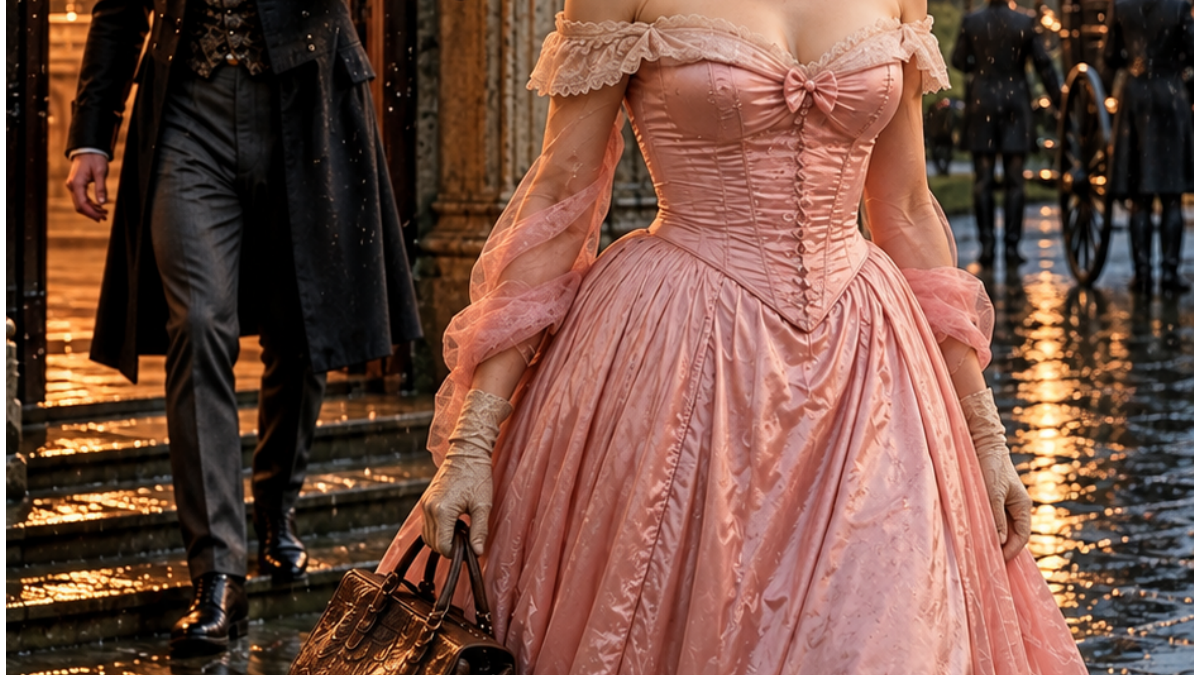
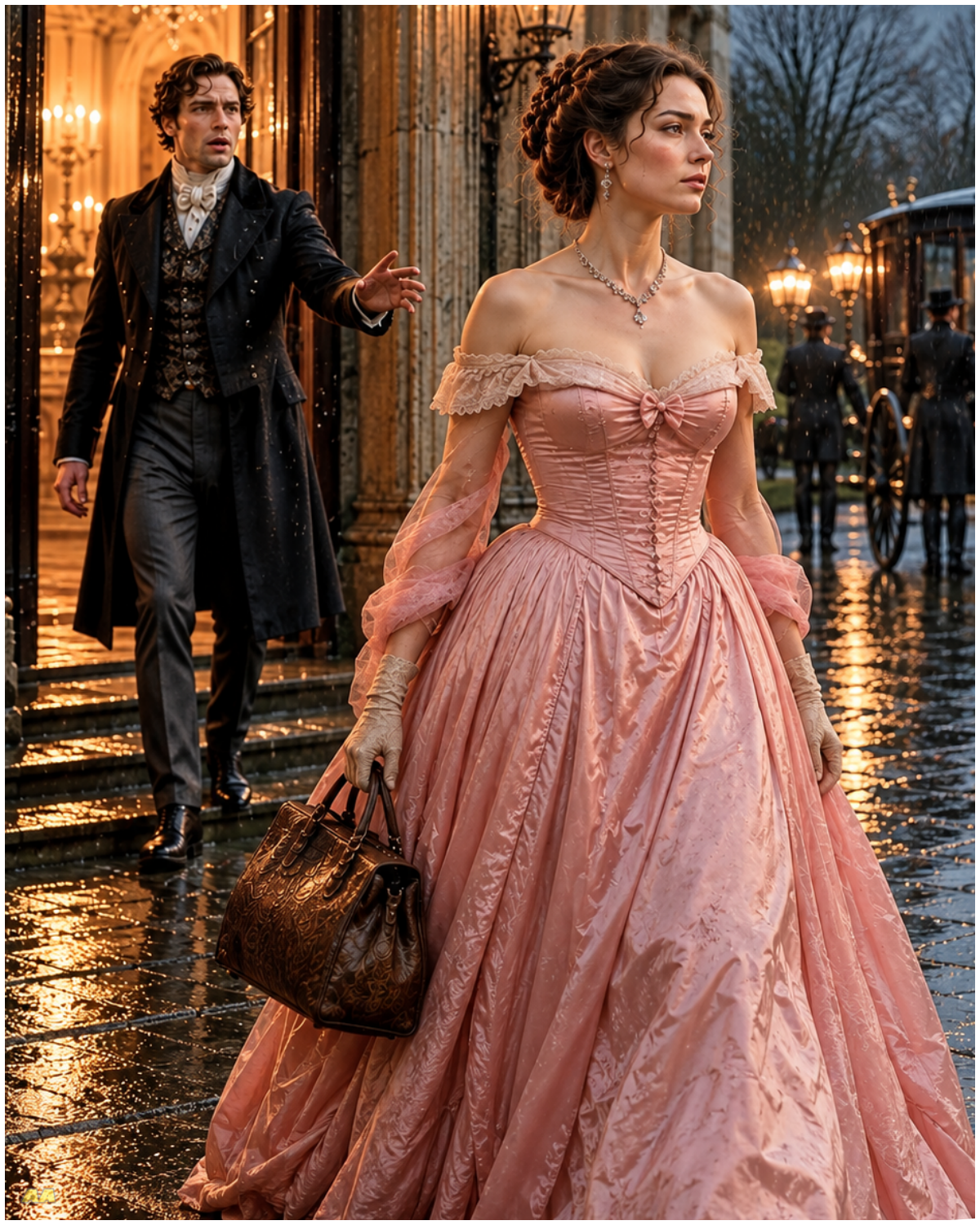
She placed the iron key on his desk without a word.
Not with anger, not with tears, with the quiet devastation of a woman who had just been told she was disposable and had decided in that exact moment that she believed him.
“Then do it,” Clara Whitmore said.
Nathaniel Hawthorne stared at her.
The most powerful landowner in Virginia, a man who had never watched anyone walk away from him.
“She walked away. He did not stop her.”
And that was the moment Nathaniel Hawthorne lost the only thing in his life that money could never buy back.
Clara Whitmore had exactly three things left in the world.
A small suitcase, a letter folded twice inside her coat pocket, and a name that used to mean something in Richmond, Virginia, before the debts, before the creditors, before her father died and left behind a life that turned out to be built on borrowed ground.
She had walked 2 miles from the coaching in to reach the iron gates of Hawthorne Estate.
She had not taken the public coach because she could not afford to spend the fair and still have enough left for the week.
She had not told anyone she was coming because there was no one left to tell.
She had simply risen before dawn, dressed carefully in the cleanest dress she owned, repinned her hair twice because her hands were shaking, and walked.
By the time the gates came into view, her hands had stopped shaking.
Clara Whitmore did not allow herself to be frightened for long.
It was a rule she had made for herself in the winter of 1,816, standing in her father’s study, while a creditor explained in precise and not unkind language exactly how much was owed and exactly how little remained.
She had stood very still and listened to everything he said and thanked him for his time.
And then she had waited until he left before she sat down on the floor and allowed herself exactly 10 minutes to be completely undone.
10 minutes. Then she got up.
That was the arrangement she had made with herself.
And it had held for two years.
She had sold what she could.
She had taken rooms.
She had worked three families, three positions.
Three careful arrangements that had each come apart for reasons that had nothing to do with her competence and everything to do with the way reputation moved through a city like Richmond, fast and merciless and indifferent to the truth.
The first family had let her go on a Friday afternoon with an envelope of wages and an apology that was clearly rehearsed.
“The situation with your family’s debts has become known in our circle,” Miss Whitmore.
“We’re sure you understand,” she understood.
The second family had not even bothered with the apology.
The third family, the Hargroves, who had been the kindest, whose children she had genuinely loved teaching, had relocated to Philadelphia and asked if she would come with them.
She had thought about it for 2 days.
She had looked at her mother’s portrait on the windowsill.
She had thought about her father buried in Richmond clay.
She had written back and said she was not able to leave Virginia at this time and thanked them for the offer.
Then she had written 41 letters.
37 received no reply.
Three sent polite refusals.
One just one had written back.
The letter from Hawthorne estate was brief.
Mrs. Aldridge, the housekeeper, had written that Mr. Hawthorne required a qualified tutor for his 8-year-old daughter, Elizabeth, that the position offered room and board in addition to a fair monthly wage, and that applicants should present themselves in person for consideration.
Clara had read it four times.
Then she had packed her suitcase and taken the coach to the county.
The gatekeeper, an older man named Thomas, looked at her suitcase and then at her face with the practiced caution of a man who had learned not to predict anything about the people who came to these gates.
Name? He asked. Clara Whitmore. I have an appointment with Mrs. Aldridge.
You walked from town? I did.
He opened the gate without further comment.
But something in his expression shifted.
Not quite respect, but something in its neighborhood.
And he said, “A mind of the gravel on the east side. It’s freshlaid. It was a small thing. The kind of small thing that in Clara’s current life landed with considerable weight. Thank you,” she said, and meant it more than he probably knew.
“Mrs. Aldridge met her in the front hallway.”
60some. Iron gray hair, the bearing of a woman who had managed a large household for so long that competence had become indistinguishable from personality.
She looked at Clara with eyes that were assessing and not unkind, and she shook her hand with the firmness of someone who considered a handshake a diagnostic tool.
“You’re the Whitmore girl,” she said.
“I am. I’ll be direct with you, Miss Whitmore. We’ve had five tutors in 18 months. Most of them were better qualified than you on paper.”
She waited, watching Clara’s face.
“Does that concern you?” “It tells me something about the child,” Clara said.
“Not about the tutors.” Something shifted behind Mrs. Aldridge’s eyes.
She said, “Come with me.”
She led Clara upstairs to a sitting room and knocked once on a door.
“Elizabeth, come and say hello.”
The child who appeared in the doorway was small for eight, with her father’s dark hair and eyes that held the watchfulness of someone who had learned very early that adults were largely unpredictable and mostly disappointed by her.
She wore a white dress with a blue sash.
Her hands were folded in front of her with the practiced stillness of a child who had understood that quiet was the safest thing she could be.
She looked at Clara with flat, careful eyes.
“Hello.” Hello, Clara said. You have ink on your left hand.
Elizabeth blinked. She looked down. There was in fact a dark smear along the side of her index finger.
I was drawing, she said. Defensive already, eyes cutting to misses.
Aldridge, what were you drawing? A pause.
A horse. What color? A longer pause.
The defensiveness flickered, replaced by something more uncertain, more genuine.
Gray with a black man. Does he have a name?
Elizabeth stared at her. This was clearly not how tutors were supposed to begin.
Phantom, she said at last quietly, as if the word were something she wasn’t sure she should be offering.
That’s a good name, Clara said.
Does he run fast? The carefully composed expression cracked just slightly, just for a second.
He’s the fastest horse in Virginia.
Then I hope you’ll show me the drawing sometime.
I’d like to see what a horse that fast looks like.
Mrs. Aldridge made a sound, not quite a cough, not quite approval.
Something carefully in between. I’ll take you to Mister Hawthorne, she said.
The study was at the far end of the East Wing.
Mrs. Aldridge knocked, waited for the single word, enter, opened the door, and stepped back.
Clara went in alone. Nathaniel Hawthorne was standing behind his desk reading a document he did not look up from immediately.
He let her stand not long but long enough to make the point.
Clara recognized it for what it was.
A practiced thing, small and automatic, the kind of power move that came so naturally to men like him.
They’d likely stopped noticing they were doing it years ago.
She did not fidget. She did not look around the room.
She folded her hands and kept her eyes on him and waited with the patience of a woman who had learned that the people worth dealing with eventually looked up.
He finally looked up. Tall, lean, dark hair with silver beginning at the temples.
Gray eyes that moved over her with the quick efficiency of a man accustomed to assessing things and arriving at conclusions faSt. His jaw was set.
His face was the face of a man who had arranged his interior life so precisely that nothing showed on the surface unless he permitted it.
“Miss Whitmore,” he said, “Mr. Hawthorne, sit down.” She sat.
He remained standing. Also practiced. “You’ve held three positions in two years,” he said.
“None lasting more than 8 months.
Why? The first family released me when my father’s debts became known in their social circle.
They felt the association reflected poorly on them.
She kept her voice level and her eyes steady.
The second made the same decision.
The third relocated to Philadelphia. They offered to bring me with them.
I declined. He looked at her.
You declined a steady position in Philadelphia.
Yes. Why? I have responsibilities in Virginia.
She held his gaze. My mother is buried in Richmond.
I’m not ready to leave. Something moved through his expression brief contained.
And the debts currently being addressed slowly.
She did not look away. I want to be clear about something, Mr.
Hawthorne. I am not here because I am desperate.
I am here because I need work and I am very good at what I do.
Those are different things. Silence, he set the document down.
You should understand the terms of this position clearly, he said.
His voice was even deliberate. I have high expectations for my daughter’s education.
The previous tutors did not find Elizabeth cooperative.
I’m not worried about that. Why not?
Because a child who refuses five tutors in 18 months isn’t difficult.
Clara said she’s trying to tell someone something.
I’m interested in hearing what it is.
He looked at her for a moment.
That stretched past comfortable. People in your position, he said, are easy to replace, Miss Whitmore.
You should understand that clearly before accepting any terMs. Clara looked at him.
She did not flinch. She did not perform offense.
She simply looked at him with the clear, steady gaze of a woman who had been told worse things by more frightening people.
I understand the terms, she said.
You don’t need to make them unpleasant to make them clear.
Something crossed his face fast, gone before she could name it.
$12 a month, he said. Room and board provided.
Sunday’s free. He paused. And Miss Whitmore, if this arrangement proves unsatisfactory, if Elizabeth does not respond or you prove unable to manage the position, I will not wait.
I will replace you by dawn if I muSt. That is not a threat.
It is simply how this household operates.
The room held that statement. Clara reached forward and picked up the small iron key.
Mrs. Aldridge had left on the corner of his desk.
She turned it once in her hand, feeling the weight of it.
“Then we had better make sure it works,” she said.
She stood, tucked the key into her pocket, and walked out.
Her room was small and clean, narrow bed.
Writing desk, a window facing eaSt. She sat on the edge of the bed and let herself breathe.
She took out her mother’s portrait, a small oval miniature with a hairline crack along the lower right corner, and set it on the window sill.
“All right, mama.” as she said quietly, “Let’s see what this is.” She did not push Elizabeth in the first week.
She watched, she learned. She learned that Elizabeth went rigid when she felt tested and came fully alive when she believed no one was paying attention.
She learned that the child carried books around the house, not to read them, but to have something to hold in her hands.
She learned that Elizabeth had a favorite place, a window seat at the far end of the upstairs hallway, and that she spent hours there looking out at the south field with an expression that was too old for her face and too tired for her years.
She learned that the door at the end of the east corridor was always closed.
She learned this because Elizabeth always walked faster past it.
Because once coming up the stairs, Clara caught a glimpse of the child standing before that door with her palm pressed flat against the wood.
Just standing there, not knocking, not opening it, just pressing her hand to the surface as if feeling for something on the other side.
Clara said nothing, but she knew what that door was.
She knew what a closed door felt like when the person behind it was gone and the door stayed shut because opening it would make the absence real.
Lessons moved to the garden in the second week.
Not because of any theory, because on the third morning, Elizabeth appeared at breakfast with dirt under her fingernails and the slightly guilty expression of a child expecting to be corrected.
And she said very carefully. I was looking at the soil near the roses.
To see if it was different.
Is it? Clara asked. Elizabeth blinked.
Yes. More worMs. Then let’s find out why.
Elizabeth stared at her. The particular startled look of a child who is offered something expecting rejection and received genuine curiosity instead.
After that, Clara brought the lessons outside when the weather allowed.
They measured things. They counted things.
They mapped the kitchen garden and estimated yields.
Clara folded mathematics into the gardening and history, into the landscape and literature into everything, woven so gradually and naturally that Elizabeth barely noticed she was being taught.
She noticed she was happy. That was the thing she noticed.
It was a Thursday afternoon when Nathaniel first saw it.
He came around the side of the house and stopped.
His daughter was in the kitchen garden with Clara.
Both of them crouched over something in the soil, and Elizabeth was laughing.
Not the polite performed laugh of a child fulfilling a social obligation.
The real kind, the involuntary kind, the kind that surprised the child producing it.
“It tickles,” Elizabeth was saying, pulling her hand back.
“It’s more startled than you are,” Clara said, amused.
“It’s never met anything your size.
It doesn’t have eyes. It has sensors.
It can feel your warmth. From its perspective, you are enormous.
I’m not enormous. To a worm, Clara said, “You are absolutely enormous.” Elizabeth laughed again, and the sound of it went through the afternoon air like something that had been held back a long time and was only now finding its way out.
Nathaniel stood still. He told himself it was encouraging, professionally encouraging, evidence that the tutor was performing adequately.
He turned and went back toward the house without speaking, but he did not stop hearing that laugh for the rest of the afternoon.
It followed him through two meetings with his foreman, through the review of the week’s tobacco accounts, through dinner alone at the long table in the dining room.
He poured a second glass of brandy, which he almost never did.
He told himself that meant nothing.
In the third week, Victoria Caldwell arrived.
She came on a Wednesday in a well-appointed carriage with her mother and two servants, and the particular ease of a woman who had learned to move through the world, as if it were arranged for her convenience.
29. Dark-haired, beautiful in the precise, deliberate way of someone who had been raised to understand beauty as a form of leverage.
She had been positioning herself in Nathaniel Hawthorne’s orbit for 2 years.
Clara encountered her in the front hallway during introductions.
Miss Whitmore, Victoria’s smile was perfectly calibrated.
Her eyes ran a fast, comprehensive inventory from the hem of Clara’s dress to the top of her head and landed their verdict in under 3 seconds.
“How lovely! I understand the tutoring position has been quite difficult to fill.” “Elizabeth is a wonderful student,” Clarisa said.
She needed the right approach. Of course, the smile held.
It must be such a comfort having a position here, especially given a small pause precisely placed the circumstances of your family.
It’s so admirable really, the way you’ve managed.
It was the kind of cruelty that left no mark, the kind that wore kindness as a coat and struck while smiling.
Clara looked at her. It’s been an interesting experience, Clara said evenly.
If you’ll excuse me. She went upstairs.
She found Elizabeth in the window seat.
Who is she? Miss Caldwell, a neighbor.
Elizabeth watched the carriage below with the dispassion of a child who had learned to read rooms before she could read books.
She wants father to marry her.
Elizabeth, everyone wants something, Elizabeth said with the flatness of a statement rather than an opinion.
She wants the estate. Father wants, she stopped.
I don’t know what father wants.
She said it like it was the answer to a question she’d been sitting with for a long time.
I don’t think he knows either.
Clara was quiet for a moment.
Come on. We haven’t done geography today.
I hate geography. You hate the maps.
The actual geography is interesting. How?
Because geography is just the story of the land.
Where things began, how they moved, why people went where they went.
It’s history with better illustrations. Elizabeth considered this seriously, the way she considered most things.
“All right,” she said, and closed the book she’d been pretending to read, and followed Clara to the schoolroom.
And geography, for the first time in Elizabeth Hawthorne’s life, became something other than a set of lines to be memorized and forgotten.
Victoria moved through the house for 3 days, with the patience and precision of a woman executing a long considered plan.
She was charming at meals. She admired the portrait gallery.
She brought Nathaniel’s mother’s small gifts, preserves, dried flowers, a slim volume of religious verse.
She sat beside Nathaniel in the parlor after supper, and spoke in the soft, considered way of a woman, demonstrating that she knew how to occupy a room without overwhelming it.
She was very good at it.
And on the second evening of her visit, she found a moment alone with Nathaniel in the hallway outside the dining room.
Found it the way she found all her moments through patience and positioning.
And she said quietly, almost gently.
She’s very capable, your Miss Whitmore.
Nathaniel looked at her. She is.
It’s just Victoria tilted her head slightly as if reluctant to continue and doing so only out of genuine concern.
People have noticed Nathaniel in town.
The way she moves through the house, the way the staff responds to her.
People talk, you know how they are.
I wouldn’t want there to be any misunderstanding that reflected poorly on you or on Elizabeth.
Nathaniel’s jaw tightened imperceptibly. There is nothing to misunderstand.
Of course not, the smorm. Certain.
I just thought you should know because I care about your reputation and your family.
She touched his arm briefly, deliberately, and moved past him toward the parlor.
Nathaniel stood in the hallway for a long moment after she’d gone.
He told himself Victoria was simply being practical, that she had a point that appearances mattered in this county, that he should probably be more deliberate about the professional boundaries of the arrangement.
He told himself this very convincingly.
He almost believed it. Margaret Hawthorne found Clara in the library that evening.
Clara was reading, actually reading, a book of maps open across her knees, sitting quietly in the chair by the window.
She looked up when Margaret came in.
“You’re not what I expected,” Margaret said, settling into the chair across from her with the ease of a woman who had decided she no longer needed to perform propriety.
“What did you expect?” Clara asked.
“Someone more frightened.” The position doesn’t tend to attract women with much left to lose.
Margaret studied her with the direct gaze of someone accustomed to reading people accurately.
You have something left to lose.
My own opinion of myself, Clara said.
I found it’s the hardest thing to replace.
Margaret was quiet for a moment.
Then Victoria spoke to my son this evening.
Clara kept her expression neutral. I see.
She expressed concern about your presence in the household.
Vague concern, the kind that is designed to be difficult to refute.
Margaret’s voice was dry. She is not unintelligent.
No, Clara agreed. Nathaniel will struggle with what she said.
He is a man who cares considerably about what this county thinks of him and considerably more than he is willing to admit.
Margaret looked at her directly. I want you to know that I see what you have done for Elizabeth in 3 weeks.
I see it clearly. Clara was quiet for a moment.
Elizabeth is easy to love. She said she just needed someone to show her she was worth the effort.
Something shifted in Margaret’s expression brief and real.
My son needs the same thing.
He has simply done a thorough job of making that need invisible.
She stood. I’m telling you this not as advice, merely as information.
She left. Clara sat with the book of maps open in her lap and did not read a single word for a long time.
Victoria Caldwell left Friday morning. Her carriage rolled down the main road and disappeared at the treeine, and Nathaniel watched it go from the window of his study with an expression that Clara, had she been there to see, it would not have been able to easily read.
It was not relief. It was not satisfaction.
It was the expression of a man who had just had something clarified for him that he had not intended to examine.
He turned from the window. He picked up his document.
He set it down. He walked to the other window, the one that faced the garden, and saw Clara and Elizabeth below.
Elizabeth was holding something up in both hands, presenting it for inspection with the solemn importance of a child offering a verdict.
Clara leaned in, examined it with complete attention, asked something that made Elizabeth tilt her head, and then respond with an emphatic nod.
Nathaniel watched them for longer than he intended.
He pulled himself away. He went back to his desk and read the same paragraph five times without retaining a single word.
It was the last day of July when Elizabeth fell.
She had been climbing the fence at the edge of the kitchen garden.
She was absolutely not supposed to be climbing the fence, and Clara had said so three times with increasing clarity.
But Elizabeth was 8 years old and had decided privately that the fence was in fact extremely climbable and that the prohibition was therefore somewhat theoretical.
She caught her left wrist on the top rail on the way down.
Hit the ground hard on her side.
Clara heard the sound and was around the corner before Elizabeth had finished her first sharp breath.
She was already kneeling, already taking the wrist gently in both hands.
Let me see. Can you move your fingers?
Elizabeth moved her fingers. I’m fine, she said in a voice that was not even slightly fine.
I know you are, Clara pressed carefully along the wriSt. Does this hurt here?
A little. It’s not broken. Clara kept her voice level, kept her hands steady.
You’ve bruised it and frightened yourself.
And the second one is always worse than the firSt. She shifted, not kneeling over Elizabeth anymore, but sitting fully on the ground beside her, which brought them to the same level.
You can cry if you need to.
There’s only me here.” Elizabeth considered this for approximately 3 seconds.
Then she cried, not the controlled, minimal crying of a child who had learned that adults preferred her contain.
The real kind, the kind that came from somewhere far deeper than a bruised wrist from the long months of silence and careful dignity and a closed door she pressed her palm to but never opened.
Clara held on. She did not say hush.
She did not say you’re fine now.
She held on and waited and let the child feel whatever needed to be felt.
And the afternoon settled around them in the quiet kitchen garden.
When it was over, Elizabeth leaned against Clara’s side, gone still.
I miss mama, she said. I know.
Clara said. Do you miss yours?
A long silence. Does it stop?
Elizabeth asked. Clara was quiet for a moment.
The missing doesn’t stop. But it changes.
It gets quieter. It becomes something you carry instead of something that carries you.
Elizabeth absorbed this with the seriousness it deserved.
Father doesn’t know how to carry it.
No, Clara said gently. Not yet will he learn.
Clara did not answer right away.
She looked at the child beside her at the tear streaked face, the ink stained hand, the old eyes in the young face, and she said, “I think he wants to.
I think he’s just afraid of what comes after the carrying.” Elizabeth thought about this.
Then she sat up straight, wiped her face on her sleeve with practical efficiency, and said, “I’m going to have to apologize for the fence.” >> Yes.
And probably lose the apple tart tonight.
Probably worth it, Elizabeth said with complete dignity.” Clara laughed.
And it was this both of them laughing dustcovered and sitting on the ground together that Nathaniel Hawthorne walked around the corner and saw.
He stopped. His daughter’s face was dirty and tear streaked and more alive than he had seen it in years.
The woman beside her looked equally disheveled and entirely at ease with that fact.
They were laughing together in the afternoon heat, sitting in the dirt, and something about the sight of it, the complete unccurated realness of it, struck Nathaniel in a place he had been carefully guarding for 6 years.
He cleared his throat. Both of them looked up.
Elizabeth calculated her situation in under a second.
Clara met his eyes simply directly.
Without performance, without apology, without the small social adjustments that most people made when Nathaniel Hawthorne’s gaze landed on them.
She just looked at him steady and open, and that unguarded quality hit him somewhere he had not expected.
Elizabeth climbed the fence, Clara said.
Her wrist is bruised, but I don’t believe it’s serious.
She has something she’d like to say to you.
Elizabeth, who had been going to say nothing of the sort before this sentence, straightened up with remarkable composure.
I’m sorry, father. I shouldn’t have climbed it.
Nathaniel looked at his daughter. Then back at Elizabeth.
Come inside, he said. Let Mrs. Aldridge see that wrist, he extended his hand to Elizabeth.
She took it. Then without planning it, without deciding to, he extended his other hand to Clara.
She looked at it for a half second.
She took it. He pulled her up from the dusty ground, and for the brief moment her hand was in his.
Nathaniel Hawthorne felt something he had spent six years building.
Walls against warm, solid, and absolutely unwelcome in its precision.
He let go. He walked Elizabeth toward the house without looking back.
But behind him, he heard Clara stop walking.
He did not turn around. He kept moving, his daughter’s small hand in his, and he did not let himself wonder why he was so certain, without looking, that Clara was still standing exactly where he’d left her.
He was right. Clara stood in the kitchen garden, looking at her own hand.
Not with confusion, not with hope, with the careful attention of a woman who has felt a current run through her when she was not expecting it, and is deciding deliberately whether to acknowledge what it was.
She decided to call it nothing.
She put her hands in her pockets.
She walked back toward the house.
Above the field, the afternoon light was going gold.
Somewhere in the tobacco rose, one of the field hands was singing something low and slow, the words indistinct from this distance, just the shape of it carrying across the heat.
And somewhere in the west wing of Hawthorne estate in his private study, Nathaniel Hawthorne sat down at his desk and stared at a blank piece of paper for 11 minutes without writing a single word.
On his desk to the right of the paper, the estate account ledger lay open to a page of figures he had been adding and readding all week.
He had not made a single error, but he kept checking the numbers because checking numbers was something he knew how to do.
And the thing he had just felt in the kitchen garden, that warm, precise, thoroughly inconvenient thing, was not something he knew how to do anything about at all.
He closed the ledger, and for the first time in 6 years, Nathaniel Hawthorne was not afraid of what he’d loSt. He was afraid of what he might be about to want.
Nathaniel Hawthorne did not sleep well that night.
He had not slept poorly in years.
Sleep was something he managed the way he managed everything else efficiently, completely without complaint.
He retired at 10, rose at 5, and in the hours between he was gone from the world as thoroughly as a man could be.
It was one of the few things that had not changed after Catherine died.
Until now, he lay in the dark and stared at the ceiling and told himself he was thinking about the tobacco accounts.
The Eastfield yield was down slightly from last year and he had a meeting with his foremen Thursday morning and there were figures he wanted to review before then.
That was what he was thinking about the figures.
He was not thinking about a woman’s hand in his brief, warm, entirely unremarkable pressure of it before he let go.
He was not thinking about that at all.
He got up at 4:30 and went to his study and reviewed the tobacco accounts until dawn came through the window, and the figures were exactly as he’d left them, and he had added nothing useful to his understanding of them.
Clara, two floors up, slept soundly, and woke with the particular clarity of someone who has made a decision and is at peace with it.
She had called it nothing. She had put her hands in her pockets.
That was the end of it.
She dressed, pinned her hair, and went downstairs to find Elizabeth already awake and waiting outside the schoolroom door with her drawing journal tucked under her arm and the expression of a child who had something to show and was trying very hard to appear as though she didn’t care whether it was seen.
Good morning, Clara said. Good morning.
Elizabeth held out the journal with studied casualness.
I finished Phantom. Clara opened it.
The drawing was extraordinary, not in the technical sense, not in the way of formal instruction, but in the way that mattered more than technique.
The horse on the page was alive.
It moved. You could feel the speed in the lines, the particular defiance of an animal that answered to nothing.
Elizabeth had drawn it from memory and imagination, and something deeper than either, and she had gotten it exactly right.
Elizabeth, Clara said. It’s not very good, Elizabeth said immediately, bracing.
It is very good, Clara said.
It is in fact one of the best drawings I have ever seen from someone your age.
This horse is real. You made him real.
She looked up. That is not a small thing.
Elizabeth stared at her. She was not accustomed to being told that something she made was real.
Father says drawing is a pleasant occupation.
Elizabeth said carefully, the way she always said things her father had said carefully, as if testing whether they would hold up under examination.
Your father is right, Clara said.
It is also more than pleasant.
It is a way of seeing the world more clearly than most people ever manage.
She handed the journal back. Will you draw Phantom again sometime?
I’d like to see how he looks when he’s running.
Elizabeth took the journal. She looked at it for a moment.
Then she said, “With the directness of a child who had decided to trust something, I’ll draw him for you.” “Not for anyone else, just for you.
I’d be honored,” Clara said. And they went into the schoolroom, and the day began.
It was Bess who told Clara about the Henderson boy.
Bess was the cook, wide-shouldered, warm-voiced, with the particular authority of a woman, who understood that the kitchen was the true center of any household, and organized her world accordingly.
She had taken to Clara in the easy matter-of-fact way of someone who recognized a person doing their job without theater and their conversations in the early mornings.
Clara coming down for tea before Elizabeth woke.
Bess already an hour into her day had become a quiet fixture of the week.
Jeremiah Henderson, Bess said, cracking eggs without looking at them.
8 years old, lives 2 mi east other side of the Caldwell property line.
His mama does washing for three families.
Father’s gone. Nobody says where, but everybody knows.
What happened to the boy? Clara asked.
Sick since spring. Some kind of fever that came and didn’t fully leave.
Doctor’s been out twice. Said he’ll recover, but it’s slow and his mama can’t afford to stop working to sit with him.
Bess set the bowl aside and looked at Clara directly.
Mrs. Aldridge mentioned it because the mother sent a note asking if anyone at the estate knew of a woman who might sit with him a few hours in the afternoons.
I thought of you. I only have the afternoons free on Wednesdays.
Clara said I know. Clara was quiet for a moment.
Mrs. Aldridge, I’ll go Wednesday. Bess nodded once satisfied and went back to her eggs.
Nathaniel passing the kitchen doorway on his way to the east wing heard the last four words of that exchange.
He did not stop. He continued to his study and sat down and opened the tobacco ledger.
And then he sat for a moment doing nothing.
And then he opened the ledger properly and began to work.
He was not moved by it.
He was simply noting as an employer that his employees had good character.
That was all. Wednesday came. Clare walked the two miles to the Henderson property after Elizabeth’s morning lessons, carrying a small basket that Bess had packed without being asked broth, bread, two apples, a small jar of honey.
The Henderson house was plain and clean in the way of a home maintained by someone with very little time and a great deal of pride.
The mother, a lean woman named Ruth, with calloused hands and cautious eyes, met Clara at the door.
“Mrs. Aldridge says, “You’re the tutor at Hawthorne’s,” Ruth said.
“Not unfriendly. Just careful I am.
I have Wednesday afternoons free.” “I thought I could sit with Jeremiah if that would help you.” Ruth looked at her for a long moment.
The particular assessment of a woman who had learned not to accept help without understanding its coSt. “I can’t pay you.
I’m not asking you to,” Clara said.
Another moment, Ruth stepped aside. “He’s been trying to read,” she said.
Can’t get comfortable enough to hold a book for long.
Then I’ll read to him,” Clara said and went in.
Jeremiah Henderson was a thin boy with dark circles under his eyes and a fever brightness that was fading slowly like a fire going down.
He looked at Clara with the weariness of a sick child who had been examined too many times by too many serious adults.
“Are you a doctor?” he asked.
“No,” Clara said, sitting down beside him.
I’m a teacher, but I’m off duty today.
I thought I just read for a while if you don’t mind the company.
He considered this. What book? What do you like?
He thought about it seriously. Adventures, he said.
Not the kind with lessons at the end.
The best kind never have lessons at the end.
Clara said they just have what happens next.
She opened the book she’d brought, Robinson Crusoe, which had exactly the kind of forward momentum a sick 8-year-old needed, and she read.
She read for two hours. And by the end of the first hour, Jeremiah had stopped watching her sideways and had fallen into the story.
The way children fall into things when they stopped protecting themselves from them completely without reservation with his whole small face.
When she left, Ruth was waiting at the door.
The cautious eyes had changed slightly.
“Same time next week,” Ruth asked.
“Same time next week,” Clara said.
She walked back to Hawthorne Estate in the afternoon heat.
And she was so focused on the road and the light and the particular exhaustion that came from doing something that mattered that she almost didn’t see the rider on the road ahead of her until he was close enough to speak.
Nathaniel Hawthorne sat on his horse and looked down at her with an expression she couldn’t immediately read.
“You walked,” he said. “I did.” To the Henderson property.
“Yes,” a pause. He looked at her at the empty basket on her arm, at the dust on her hem, at her face, and something moved through his expression that she could not catalog before it was gone.
“That’s 2 miles,” he said. I know how far it is, Clara said with a mildness that was not quite pointed, but was not entirely without edge either.
Another pause longer. The horse shifted underneath him.
Nathaniel did not move. You could have taken one of the estate horses, he said finally.
For a reasonable errand, I would not have objected.
Clara looked up at him. I didn’t know that was permitted.
It is, he said. Now you know.
He turned the horse and rode back toward the estate without further comment.
Clara watched him go. She stood on the road for a moment in the afternoon heat, looking at the retreating shape of him, and something she had decided to call nothing stirred in her chest with an inconvenient amount of persistence.
She called it nothing again. She went home.
August arrived, and the heat settled over Virginia like a judgment.
Inside Hawthorne estate, something was changing.
Not dramatically, not in ways that were easy to name, but in the accumulated weight of small things.
The kitchen was louder. The hallways had more movement in them.
Elizabeth laughed at breakfast sometimes, and the sound of it moved through the rooms and changed the quality of the air.
The staff noticed. George, whose arm was healing well, told his brothers that the new tutor was different from the others.
One of the housemmaids told Bess that Miss Elizabeth had said please and thank you three times at supper without being reminded.
Bess told Mrs. Aldridge, who said nothing, but filed it away with the particular satisfaction of a woman who had long suspected what this household needed and was watching her suspicion confirmed.
And Nathaniel noticed. He noticed in the way he noticed everything precisely thoroughly and with a running argument against his own observations that was becoming increasingly difficult to sustain.
He told himself that an improved household atmosphere was simply a sign of competent staff management.
He told himself that Elizabeth’s happiness was the expected result of finding a suitable tutor.
He told himself that none of this had anything to do with the specific woman who was producing these results.
He was very good at telling himself things.
He was becoming less good at believing them.
The first real crack appeared on a Tuesday morning when he came down earlier than usual and found Clara in the hallway outside his study, not eavesdropping, not waiting for him, just standing at the window at the end of the hall with a cup of tea in her hands and her eyes somewhere far out in the south field.
She had not heard him on the stairs.
She stood the way people stand when they believe they are alone.
Not performing anything, not arranging herself, just standing, thinking whatever she was thinking with her tea going cold in her hands.
He stood at the top of the stairs and watched her for 10 seconds that he had no business watching.
Then he cleared his throat. She turned, no startlement, or if there was, she absorbed it without showing it.
Good morning, Mr. Hawthorne. Miss Whitmore.
He came down the hallway. You’re up early.
Elizabeth is as well. She’s been awake since before 5.
I thought I’d give her some time to herself before lessons.
He stopped a few feet away.
Why is she awake so early?
Clara was quiet for a moment, deciding something.
She has trouble sleeping some nights, she said.
Not all nights, but some. I’ve been leaving a small lamp burning in the hallway outside her room.
It seems to help. He looked at her.
How long has this been happening?
Since I arrived, her voice was careful, honeSt. Possibly before.
I don’t know, he processed this.
Why wasn’t I told? Because Elizabeth asked me not to, Clara said.
And because she’s not in distress, just awake.
There’s a difference. She met his eyes with the directness he was becoming familiar with and still had not fully adjusted to.
She reads when she can’t sleep or she draws.
She brings herself back. She’s better at managing herself than most adults I’ve known.
Nathaniel said nothing for a moment.
He was thinking about his 8-year-old daughter lying awake in the dark, managing herself, asking the tutor not to tell him.
She shouldn’t have to manage herself, he said.
The words came out rougher than he intended.
No, Clara agreed. She shouldn’t, but she’s been doing it for a long time and she’s quite good at it.
And what she needs now is not more management from the outside.
She needs to know that someone sees her.
A pause. I see her. She knows that it’s making a difference.
The hallway was very quiet. Thank you, Nathaniel said.
He said it like a man who didn’t say it often and was aware of that fact.
You’re welcome, Clara said. She went downstairs to refill her tea and left him standing in the hallway with the particular feeling of a man who has just been shown a room in his own house that he didn’t know existed.
The first twist came on a Thursday and it came from a direction Nathaniel had not anticipated.
A letter arrived from Richmond from the law offices of a man named Harlon Bates who had been one of Thomas Whitmore’s professional associates.
Nathaniel received his own mail first, as always, and the letter for Clara was brought to him by mistake by the young housemmaid who sorted the poSt. He noticed the name.
He handed it to Mrs. Aldridge to deliver without reading it.
He spent the rest of the morning not thinking about it.
Clara read the letter in her room before afternoon lessons.
She sat on the edge of her bed and read it once, then read it again, then folded it carefully along its original creases, and sat for a moment with it in her hands.
The letter informed her that one of her father’s creditors, a man named Cole, who held the largest single note against the Whitmore estate, had accelerated his demand.
The original arrangement had allowed for extended repayment.
Cole had sold the note to a third party and the new holder was not interested in arrangements.
Full payment was required within 90 days.
The amount was more than Clara would earn in 4 years.
She sat with this information for a long time.
Then she put the letter in the small box she kept beneath her spare dress at the bottom of her suitcase, stood up, smoothed her skirt, and went to find Elizabeth.
Elizabeth was in the school room already at the desk drawing something she covered quickly when Clara came in.
“It’s not finished,” she said. “I’m not looking,” Clara said and sat down across from her and opened the geography text to the page they’d left off.
And the lesson began. And Clara’s voice was steady and her attention was full.
And Elizabeth would never have known watching her that anything was wrong.
That was the thing about carrying things.
You could do it without letting people see the weight.
But in the kitchen that evening, Bess looked at Clara once and said, “You eat anything today?” “Yes,” Clara said.
Bess set a plate in front of her anyway.
“Eat more,” she said. And that was the end of it.
It was Bess who without intending to put something in motion.
She mentioned the following morning while making biscuits that Clara had received a letter from Richmond yesterday and had not been herself since.
She mentioned it to Mrs. Aldridge because she was worried.
Mrs. Aldridge noted it with the quiet efficiency of a woman who noted everything and said nothing she didn’t intend to say.
She mentioned it to Nathaniel during the household accounts review Friday morning, not as gossip, not as drama, but as information.
Miss Whitmore may be dealing with a personal difficulty, she said.
I thought you should know in case it affects the position.
Nathaniel looked at her. What kind of difficulty?
I don’t know the specifics, Mrs. Aldridge said carefully.
But I believe it’s financial and I believe it’s serious.
She left him with that. Nathaniel sat at his desk for 40 minutes after she went and he told himself that an employes’s personal finances were not his concern.
He told himself that sympathy for a difficult situation did not require him to involve himself in it.
He told himself for the third time that week that Clara Whitmore was an employee and her difficulties were her own.
Then he stood up, went to find her, and said, “Walk with me.” Clara looked at him.
I have lessons in 20 minutes.
This won’t take 20 minutes. They walked in the garden, not the kitchen garden, the wider formal garden on the south side, where the paths were gravel and the roses were past their peak, but still holding color.
Nathaniel walked with his hands behind his back and said nothing for the first minute, which told Clara that he was building towards something he wasn’t certain how to say.
If you have a difficulty, he said finally, I would prefer to know about it.
She kept walking. Why? Because I run a household and I prefer to know when something affects the people in it.
I’m managing, Clara said. I didn’t ask if you were managing.
I asked if there was a difficulty.
She stopped walking. She turned and looked at him with the directness that he was by now fully expecting and still not fully prepared for.
Why do you want to know, Mr.
Hawthorne because it affects the position or because you want to know.
The question landed between them. He held her gaze.
Both he said it was the most honest thing he had said to her.
Clara looked at him for a long moment.
Something shifted in her expression not softening exactly more like recognition.
The look of someone who has heard a note of truth and is deciding what to do with it.
One of my father’s creditors sold his note.
She said the new holder wants full repayment in 90 days.
It’s more than I can manage.
How much more considerably? She said it without self-pity without apology.
Just quacked. I can advance your wages, he said.
Several months if necessary. That won’t cover it, Clara said.
And I won’t take money I haven’t earned.
He looked at her. It would be a loan.
I appreciate the offer, she said.
And she meant it. He could hear that she meant it.
But the answer is no. She started walking again.
I’ll find another way. He fell into step beside her.
And if you don’t, you can’t know that.
No, she agreed. But I found a way through everything else.
I don’t have much reason to believe this will be different.
She glanced at him sideways briefly, almost inadvertently.
I notice you didn’t ask me to leave.
He said nothing. Most employers, Claraara continued, would consider a tutor with serious financial difficulties a liability.
Something that reflects poorly on the household.
Most employers, Nathaniel said, would be concerned with that.
And you’re not? A pause. I’m more concerned, he said slowly, as if choosing each word with unusual care, with what this household would lose if you left.
The gravel crunched under their feet.
A bird somewhere called once and went quiet.
Clara did not look at him, but her step did not change and her breathing did not change.
And she said very quietly, “You should be careful with sentences like that, Mr.
Hawthorne.” I know, he said. They walked back to the house in silence.
And it was not a comfortable silence, and it was not an awkward silence.
It was the silence of two people who have said more than they intended and are deciding independently what to do about it.
He thought about it for 3 days.
He reviewed the accounts. He rode the property.
He had his Thursday meeting with the foreman and made decisions about the Eastfield yield and was told by his foreman that things were looking well for the fall.
He was productive and present and entirely professional.
And on Saturday morning, he called for Mrs. Aldridge and asked her to quietly ascertain the name of the creditor who had purchased the Whitmore note.
Mrs. Aldridge looked at him with an expression that gave nothing away.
And what shall I do with that information, sir?
Bring it to me, he said.
That’s all. She brought him the name by afternoon.
He sat with it for another day.
He did not tell himself this was simple employer concern.
He had finally run out of convincing arguments for that particular position.
He sat with the name of the creditor and the amount of the note and he thought about Clara walking two miles to read to a sick boy because there was no one else.
And Clara sitting in kitchen garden dirt to let his daughter cry.
And Clara’s face when she said, “I will find another way.” Not brave.
Exactly. Just certain. The certainty of someone who has been finding ways for so long that they’ve stopped questioning their ability to find them.
He thought about what Margaret had said.
He needs someone who makes a house become a home.
He thought about the letter he was already composing in his head to the creditor.
He told himself he was being practical.
He told himself this was a business decision.
The tutor’s stability directly affected the household.
It was simply good management. He almost believed it.
What he did not anticipate was Elizabeth.
Sunday was Clara’s free day. She attended the small church in the village and spent the afternoon reading or walking, and the house held its breath slightly in her absence, which everyone pretended not to notice.
But on this Sunday, Elizabeth found her father in his study after church, and stood in the doorway with her drawing journal and said, “Father, can I show you something?” Nathaniel looked up from his desk.
Elizabeth in his doorway was not a frequent occurrence.
She usually moved past his study with the sideways caution of a child who has learned that adult spaces have invisible rules she might violate without meaning to.
“Come in,” he said. “She came in.
She opened the journal and held it out to him across the desk.
I drew this for Miss Clara,” she said.
“But I thought you should see it, too.” He took the journal, phantom gray, black man, running at full speed across the page, every line alive with movement and urgency.
And something that was almost joy.
He looked at it for a long time.
Elizabeth, he said, “It’s not,” he said.
“Don’t say it’s not very good.” “It is very good,” he looked at her.
“Where did you learn to draw like this?” “I always could,” Elizabeth said with a small shrug that was devastating in its simplicity.
“Nobody ever asked before.” The quiet in the study was very loud.
“I see,” Nathaniel said. He said it carefully.
The way a man speaks when he’s been handed information he should have had years ago.
Elizabeth took the journal back. She started to leave.
Then she stopped in the doorway and turned around.
Father, she said, “Yes, Miss Clara is going to have to leave, isn’t she?” It was not a question.
It was the sentence of a child who had been listening to adult conversations through walls for years and had developed a finely calibrated sense for when the ground was becoming unsteady.
Why would you think that? He said.
Because something’s wrong, Elizabeth said. She smiles the same, but she goes very quiet when she thinks I can’t hear her.
And she got a letter. She looked at him with the old eyes and the young face.
The other tutors always left. They always left.
And it was always because something happened that nobody told me about.
Nathaniel sat down his pen. Miss Clara is not leaving, he said.
Elizabeth looked at him. How do you know?
Because I’m not going to let that happen, he said.
And then he stopped because those words had come out of somewhere he hadn’t meant to reach into and they were more true than he’d intended them to be.
And Elizabeth was 8 years old and watching him with those eyes that didn’t miss anything.
“Okay,” Elizabeth said. She left. Nathaniel sat in the study for a long time after she was gone.
Then he picked up the letter he’d been drafting to the creditor and finished it.
Clara found out on a Monday.
She found out because Ruth Henderson told her she had come for her Wednesday visit.
Jeremiah was much improved now, sitting up, asking for the next chapter with the urgency of a boy who had remembered that stories were worth being well for.
And on her way out, Ruth stopped her.
Something strange happened, Ruth said. Cole’s man came by Saturday.
The one that bought your father’s note came to tell me not me but he was talking to people on this road that the I settle.
Clara went still paid out. Ruth said somebody bought it and cleared the debt.
Cole’s man didn’t say who just that it was done.
She looked at Clara with the careful eyes.
You didn’t know? Clara did not answer.
She walked back to Hawthorne estate and went straight to his study and knocked once.
Come in. She went in. She closed the door behind her.
She stood in front of his desk and looked at him and said, “You settled my father’s debt.” Nathaniel looked up from his papers.
His expression was very composed. “What makes you believe that?” “Because there is no one else,” Clara said.
“And because you asked Mrs. Aldridge for the creditor’s name.” She kept her voice level, but there was something beneath it.
Not anger, not gratitude. Exactly. Something more complicated than either.
You had no right to do that.
The note was a matter of public record, he said.
Anyone could purchase it. That is not the point.
What is the point, Miss Whitmore?
The point, she said, is that you made a decision about my life without asking me.
Without telling me, the point is that you spent a significant sum of money on my behalf and said nothing.
And I do not know what you expect in return.
And I do not know what this means.
And I do not. She stopped.
She pulled herself back. I do not know how to be in your debt.
He stood up. He came around the desk and stood in front of her.
Not close enough to be improper, but close enough that she could see his face clearly.
And it was not composed the way she’d expected it to be.
Something real was in it. Something that had been in there for a while, she thought, behind all the management and the ledgers and the deliberate control.
It is not a debt, he said.
It is done and it is not a debt.
It is he stopped too. It is me doing the only thing I knew how to do about a situation I could not otherwise affect.
Clara looked at him. Why? The word sat between them.
He held her gaze. Because Elizabeth said you were going to leave, he said, “And she was not wrong.
And I found that I was not.
I was not willing to.” He stopped again.
His jaw tightened. This was clearly not a man who was accustomed to not finishing sentences.
“I did not want you to leave,” he said finally.
“Simple, undecorated, more honest than anything she had expected from him.
The study was very quiet. Clara looked at him for a long time.” She looked at him with the same steadiness she had brought into this house from the very first day, clear and direct, and entirely her own.
You understand, she said quietly, that paying a debt does not make you entitled to anything.
I know that, he said. And you understand that I will not stay because I owe you.
I will stay because I choose to.
I know that, too, he said.
I’m not asking for anything, Miss Whitmore.
I am simply asking you to stay.
She did not say yes. She did not say no.
She looked at him for one more long moment, and something moved through her expression that she did not try to hide some complicated mixture of feeling that was too layered and too real to be flattened into a single word.
Then she said, “I have lessons to prepare.” She turned and walked to the door.
Her hand was on the handle when his voice came quiet, not asking for her to stop, just saying the thing.
Clara, her name, not Miss Whitmore, just her name in his voice for the first time.
She stopped. She did not turn around.
Thank you, he said. For Elizabeth, for this house, for what you’ve he stopped.
Just thank you. Her hand stayed on the door handle for a moment that stretched longer than it should have.
You’re welcome, Mr. Hawthorne, she said, and she walked out.
In the hallway, she stood for a moment with her back against the wall beside his closed door and her hand pressed flat to her cheSt. and she stood there until her breathing steadied.
She called it nothing, but her hand stayed at her chest for a long time before she dropped it.
And in his study, on the other side of the door, Nathaniel Hawthorne sat back down at his desk.
He picked up his pen. He held it over the page he had said her name.
He had not meant to. He was absolutely certain he would do it again.
He said her name again 3 days later.
Not intentionally. Not in any moment that could be called significant on its own.
They were in the hallway outside the school room.
Clara coming out, Nathaniel coming up the stairs and they nearly collided at the top step and he caught her arm to steady her.
And she said, “I’m sorry.” And he said, “Clara before he said anything else.” He let go of her arm immediately.
Miss Whitmore, he corrected. “Are you all right?” “Fine,” she said.
“Thank you.” They went in opposite directions, but she heard it.
And he knew she heard it.
And for the rest of that day, they moved through the house with the careful precision of two people who have become suddenly acutely aware of where the other one is in any given room.
Elizabeth noticed. Elizabeth noticed everything. She said nothing about it.
But at supper that evening, she looked between Clara and the empty chair where her father would sit later, and she ate her apple tart with the expression of someone assembling a puzzle that was beginning to show its picture.
Margaret noticed, too, she had been noticing for weeks.
She said nothing to either of them because Margaret Hawthorne understood that some things moved at their own pace and interference only damaged the mechanism.
But she watched and she waited.
What none of them anticipated was Victoria Caldwell returning.
She arrived on a Friday morning in the second week of August unannounced with a single servant and the particular composure of a woman who does not believe she needs an invitation to go where she has decided to go.
She told Mrs. Aldridge she was simply passing through on her way to visit her aunt in the next county and had thought to stop and pay her respects.
Mrs. Aldridge informed Nathaniel. Nathaniel received this information in his study with an expression that gave nothing away and said, “Show her to the parlor.” Clara heard the carriage from the upstairs hallway and felt before she even saw who it was.
The particular change in air pressure that certain arrivals produce in a household, the way everything quietly rearranges itself around an unwanted variable.
She kept Elizabeth in the school room an extra half hour that morning.
Victoria in the parlor wasted no time.
“You look well, Nathaniel,” she said when he came in.
She was sitting with perfect posture and the kind of ease that was its own form of aggression.
“The estate looks well.” “Everything seems,” she paused with the timing of a woman who had rehearsed this settled.
“It’s been a productive summer,” Nathaniel said.
He remained standing. “I heard about the Witmore debt,” Victoria said.
The room went still. “Words,” she continued, her voice warm and concerned and precise as a blade.
“People are talking, Nathaniel, not unkindly.” “Well,” a small smile.
“Some unkindly, a man of your position, paying off a serving woman’s debts.
People construct narratives.” “Miss Whitmore is not a serving woman,” Nathaniel said.
His voice was even. “She is my daughter’s tutor, a qualified and capable one.” “Of course she is.” Victoria sat down her teacup with a delicate sound.
I’m not suggesting anything improper. I’m simply telling you what people are saying because I care about your family’s name.
About Elizabeth’s future, she let that land for a moment.
A girl of Elizabeth’s position needs to move in good society.
And good society, she spread her hands is attentive to these things.
Nathaniel looked at her. Thank you for your concern, he said.
The courtesy in it was impenetrable.
I’ll have Mrs. Aldridge show you out when you’re ready.
Victoria’s composure did not crack, but something behind her eyes sharpened.
Of course, she said, “Give my regards to your mother.” He left her in the parlor.
He went upstairs. He did not go to his study.
He went to the window at the end of the north hallway, the one that looked out over the stable yard, and he stood there for a long time with his hands at his sides and his jaw set and the sound of Victoria’s words arranged and rearranging themselves in his head.
People are talking. He told himself it didn’t matter what people said.
He told himself that. He told himself that several times.
What he didn’t know was that Victoria had not come only to speak to him.
Before her carriage left the estate, she stopped in the front hallway on the pretext of retrieving a glove she claimed to have left and found Clara coming down the stairs.
Miss Whitmore, the smile was perfect, just the person.
I wanted to say goodbye properly.
Clara stopped on the third step from the bottom.
She held the stair rail and looked at Victoria Caldwell with clear eyes and said, “Goodbye, Miss Caldwell.” “You’ve made quite an impression on this household,” Victoria said.
“Everyone speaks well of you.” A pause precisely calculated.
“It must be a comfort after everything your family has been through.” “It’s been a good position,” Clara said.
“I’m sure it has.” Victoria pulled on her glove with slow, deliberate movements.
I do hope it continues to be.
These situations can become complicated. When lines become unclear, she looked up.
You’re a sensible woman. I imagine you know exactly what I mean.
I imagine I do, Clara said.
Then I’ll leave it there. Victoria smiled.
Good day, Miss Whitmore. Do take care of yourself.
She left. Clara stood on the third step for a long moment after the front door closed.
Her hand was tight on the stair rail, not from fear.
From the particular controlled anger of a woman who has been issued a warning dressed as concern and is deciding very carefully what she intends to do about it.
She decided to do nothing, to say nothing, to go back upstairs and teach geography and let Victoria Caldwell’s carefully placed words dissolve in the afternoon air.
She was almost successful. What undid her was not Victoria.
It was Nathaniel. That evening after Elizabeth was in bed, Clara was in the library with a book she wasn’t reading when Nathaniel appeared in the doorway.
He came in without asking the first time he’d done that, and he sat down in the chair across from her, and he looked at the anat was different from anything she’d seen on his face before, >> not composed, uncertain.
Victoria spoke to you, he said.
Not a question she did, Clara said.
What did she say? The same thing she said to you, I expect, with a different angle.
He was quiet for a moment.
She’s not entirely wrong, he said.
And Clara felt the words before she fully processed them.
Felt them the way you feel cold water all at once.
About the talk, about the the appearance of things.
She set her book down. Is that what you believe?
She said. Her voice was level that this is about appearances.
I believe, he said slowly, that I have responsibilities to this estate, to Elizabeth’s future, to the what this family represents in this county.
He was watching her face. I have to consider those things.
Of course, Clara said, I’m not saying I know what you’re saying, she said.
Still level, still careful. You’re saying that Victoria Caldwell came here and reminded you what you stand to lose if you are seen to.
She paused. If people believe that you are in any way, Clara, Miss Whitmore, she said quietly, “Please.” He stopped.
She looked at him. And what was in her face was not anger.
It was something more controlled than anger, and therefore more devastating.
It was the look of a woman who has just watched something she had been careful not to want begin to become exactly what she was afraid it was.
“I understand your position, Mr. Hawthorne,” she said completely.
I have never misunderstood it. She picked her book back up.
Think you should go to bed.
You have the foreman in the morning.
He didn’t move. That’s not what I meant to say, he said.
That’s not He stopped. I don’t know what I’m saying.
I think you know exactly what you’re saying, Clara said.
You’re saying that the opinion of this county matters more than.
She stopped herself. She smoothed the page of her book with one careful hand.
It doesn’t matter. Good night, Mr.
Hawthorne. He stood. He stood there for a long moment, and she kept her eyes on the page she wasn’t reading.
And the fire in the great made the only sound in the room.
I’m sorry, he said. Good night, she said again.
He left. Clara sat in the chair and did not read a single word for a very long time.
The next four days were professional, perfectly, scrupulously, carefully professional on both sides.
Nathaniel was courteous at the meals they shared with Elizabeth and Margaret.
Clara was pleasant and composed. Elizabeth, who has the social radar of a child raised in a house full of managed emotions, went very quiet and watchful.
Margaret watched everyone and said less than usual, which for Margaret was remarkable.
Bess told the housemmaid that something had shifted.
The housemaid told George. George said nothing to anyone but his older brother who said, “Men like that always find a way to wreck the good thing.” His brother said, “Give it time.” George wasn’t sure time was the variable anyone was working with.
The second twist came from a direction no one had considered.
It came from a man named Silas Porter.
Porter was a small soft-spoken attorney Frriman who arrived at Hawthorne estate on a Tuesday morning with a leather satchel and an apologetic heir and asked to speak with Miss Clara Whitmore regarding her late father’s estate.
Mrs. Aldridge brought him to the parlor and sent for Clara.
Clara came in and looked at the man and felt the particular bracing that happens in the body when you recognize that something is coming that you will need to be very steady for.
Miss Whitmore, Porter said rising. Thank you for seeing me.
I was your father’s attorney, the junior associate.
I doubt you remember me. I remember you, Clara said.
You were kind at the funeral.
He sat back down with the air of a man who has been carrying something for a while.
I owe you an apology, he said, and an explanation.
And some information that I should have brought to you a year ago, but that I was I was not at liberty to share until certain matters were resolved.
Clara sat very still. Your father, Porter said carefully, was not simply an attorney, Miss Whitmore.
He was also in the last years of his life a silent investor in several properties.
Those investments were structured in a way that that was not immediately apparent from the surface accounts.
The debts that were presented to you at his death were real, but they were not the complete picture.
“What is the complete picture?” Clara asked.
Porter opened his satchel. What he laid on the table between them was a document, a property deed, county registered, signed, dated 3 years before Thomas Witmore’s death.
Clara looked at it. It was the deed to a property in Richmond.
A modest one, not an estate, not Hawthorne scale, but a house and 4 acres of good land registered in a holding company that had until 7 weeks ago been tied up in a legal dispute with a third party.
The dispute had been resolved. The holding company, which her father had controlled, had passed to Clara as his sole heir.
“You own it,” Porter said simply, “free and clear.
I should have found a way to tell you sooner.
The legal situation was the other party was litigating aggressively and I couldn’t.
He stopped. I’m sorry, Miss Whitmore.
I truly am. Clara looked at the deed for a long time.
She looked at it the way you look at something you’ve been waiting for.
So long you’ve stopped believing in it with a kind of stunned careful attention, as if it might dissolve.
“This is real,” she said. “It’s entirely real,” Porter said.
“You can verify it at the county office tomorrow if you like.
The property is yours. There’s a tenant, currently a farmer, paying fair rent, and that income has been held in a separate account these past months, waiting for the dispute to clear.
The amount he produced a second paper is here.
Clara looked at the number. It was not a fortune, but it was security.
It was ground. It was something solid to stand on.
She put the papers down on the table with steady hands and said, “Thank you, Mister Porter.
I’m sorry it took this long, he said again.
I know, she said. I believe you.
Porter left. Clara sat alone in the parlor for a long time.
And the thing she felt, the thing that moved through her while she sat alone with those two pieces of paper was not simple relief.
It was more complicated than relief.
It was the feeling of a woman who has spent two years believing that her only ground was the ground she worked for with her hands and who has just discovered that there was ground beneath that ground hidden waiting.
And it was the feeling uncomfortable clarifying that she no longer needed Hawthorne estate the way she had needed it when she walked through those iron gates in July.
She sat with that for a while.
Then she folded the papers carefully, put them in her pocket, and went upstairs to find Elizabeth.
She did not tell Nathaniel, “Not that day, not the next.” She went on with lessons.
She went on with Wednesday visits to Jeremiah, who was nearly well now and reading on his own, and had informed Clara with great dignity that he intended to read every adventure story ever written.
She went on with early morning tea and conversations with Bess and geography lessons and phantom drawings and the accumulated texture of a life she had built inside this house over 6 weeks.
She went on but something had changed in her and she knew it and she did not know yet what to do with the knowing.
Nathaniel felt the change without understanding it.
He felt it the way you feel a shift in weather, something in the air, something in the quality of the silences.
Clara was the same in every visible way.
Competent, warm with Elizabeth, professional with him.
But there was something new in how she held herself.
A kind of quiet settledness that had not been there before.
He watched her across the dinner table, Elizabeth between them, talking about something she’d read about the Louiswis and Clark expedition, making arguments with her hands the way Clara did, and something in his chest did something complicated that he had stopped trying to name.
He was afraid. He understood that now.
He had been afraid for 6 years, afraid of loss, afraid of the specific devastation of loving something and having it taken.
And he had built a very efficient life around that fear and called it competence.
He had managed everything. He had replaced what could be replaced.
He had told himself that management was the same as living.
And then Clara Whitmore had walked through his gates with a small suitcase and a letter, and his daughter had started laughing again, and his house had started sounding like something other than a place where grief had come to live permanently.
And he had said her name and he had paid a debt he had no business paying and he had sat in a library with her and said exactly the wrong thing because Victoria Caldwell’s voice had gotten into his head and he had let it and he had watched the look on Clara’s face when he said it and he had known in the moment of seeing it that he had done real damage.
He was afraid of doing more.
That was the problem. He was so afraid of losing it that he was destroying it himself preemptively the way a man might burn his own field to prevent someone else from burning it.
Margaret told him this on a Thursday evening, not in those words.
Margaret did not traffic in metaphor.
She simply sat across from him in his study after supper.
She rarely came to his study.
That alone should have warned him.
And she said, “You’re going to lose her.” He looked up, “Not to another man,” Margaret said.
Not to circumstance, to yourself. You’re going to say the wrong thing one more time, and she’s going to decide that the right thing isn’t coming.
She looked at him with the eyes of a woman who had watched him since birth and loved him without illusion.
She is not Catherine. I know that, he said.
You’re treating her like she is, like she’ll be taken from you, like you should protect yourself by keeping your distance.
She folded her hands. Clara Whitmore is not going to disappear on you.
She’s going to walk away. That’s different.
And the difference is that it’s preventable.
He said nothing. You paid her debt, Margaret said.
And then you sat in the library and let Victoria Caldwell’s gossip come out of your mouth.
She shook her head once. Nathaniel, you are a better man than that.
I’m not sure I am. He said quietly.
Honestly, that’s the first true thing you’ve said in a week, Margaret said.
She stood. Fix it before you run out of time to fix it.
She left. He sat in his study until very late.
He found her the next morning, early before Elizabeth was up before Bess was fully underway in the kitchen while the house still held the particular quiet of not yet morning.
Clara was in the hallway at the east window with her tea.
Same place he’d found her once before.
She saw him coming and did not look away.
I owe you an apology, he said.
You do. No argument, no softening of the ground before his feet.
Just yes. He stopped beside her.
What I said in the library about Victoria, about appearances, I said it because I was afraid.
Not because I believed it. I want to be honest about that.
She turned slightly. Of what this is, he said.
He held what it’s been becoming.
Of what happens when I he stopped started again.
I have not I have not allowed myself to want anything in a very long time, Miss Whitmore.
And that has been manageable until this summer.
Clara looked at him for a long moment.
I received some news this week, she said quietly.
He waited. My father had a property, a deed I didn’t know about, held in a legal dispute.
It’s been resolved. The property is mine.
She said it simply without drama.
I’m no longer in the position I was when I came here.
The debt is settled by you and the property is mine.
I have options that I didn’t have in July.
The hallway was very quiet. I see.
He said, “I’m telling you,” Clara said.
“Because I think you should know that what I do next, whether I stay or whether I go, is not a decision made by necessity.
It will be a decision made by choice.” She looked at him steadily.
“I want you to understand that.
I understand it, he said. Do you?
Yes. He was very still. It changes things.
It changes everything, she said. He looked at her.
Does it change what you want?
The question was direct, more direct than anything he had said to her before.
She could see what it cost him, the asking, the exposure of it, the way he was standing there without any of his usual armor.
She looked at him for a long moment.
No, she said it doesn’t change what I want.
He let out a breath. But she said he waited.
But wanting something and trusting someone are different, she said.
I want to trust you, Mr.
Hawthorne. I think you’re a better man than you were in that library.
I think you know it, too.
She turned fully toward him, and her voice was quiet and direct and entirely her own.
But I need to know that the next time someone like Victoria Caldwell puts a word in your ear, you won’t be standing in front of me saying it.
She will, Clara said. People like her always come back.
And the question is not whether she’ll try.
The question is who you’ll be when she does.
Nathaniel held her gaze. I’ll be the man who already knows the answer, he said.
Something shifted in her expression. Something very small and very real.
Prove it. She said he got the chance sooner than either of them expected.
Victoria came back two days later, not in person this time, but in the form of a letter.
A long letter delivered to Nathaniel on a Saturday morning written in Victoria’s careful hand and covering three pages with the patient, thorough work of a woman dismantling something she had decided was a threat.
The letter laid out in precise social language the talk that had been circulating about Hawthorne Estate and Miss Whitmore.
It included names, not accusations. Just mentions the way you mention things to let someone know the shape of the conversation.
It suggested that the situation had become something that reflected poorly on Elizabeth’s prospects.
It concluded with a gentle offer.
Victoria herself was prepared to take up the position of mistress of Hawthorne estate.
If Nathaniel felt that a more appropriate domestic arrangement was needed, she framed it as practicality.
She framed it as concern for Elizabeth.
She had also, the letter mentioned at the end almost as an aside, sent a version of her concerns to Judge Alderman, who oversaw the county’s social welfare arrangements and had in the past involved himself in cases where a child’s domestic environment was considered irregular.
Nathaniel read the letter once. He folded it.
He sat for exactly two minutes.
Then he called for paper and wrote three letters himself.
One to Victoria, one to Judge Alderman, and one to his own attorney in Richmond.
He sealed all three and sent them out with his fastest rider before noon.
Then he went to find Clara.
She was in the schoolroom with Elizabeth, both of them bent over a map.
Elizabeth pointing at something with her index finger and making an argument with characteristic intensity.
Clara was listening with the full attention she always gave Elizabeth.
Not the polite managed attention of an adult tolerating a child, but the genuine article.
He stood in the doorway for a moment.
Elizabeth, he said, “Will you give us a few minutes?” Elizabeth looked at him.
She looked at Clara. She read the room with those old eyes and said, “I’ll go see if Bess needs help with anything.” She left.
Clara straightened. She looked at him and waited.
Victoria sent a letter. He said she has also contacted Judge Alderman about Elizabeth’s domestic arrangements.
She implies they are irregular. He watched Clara’s face.
She is suggesting that your presence here is inappropriate.
Clara held very still. What did you do?
I wrote to my attorney, he said.
And I wrote to alderman directly.
And I wrote to Victoria. He held her gaze.
I told her that my household is my own, that my daughter’s domestic arrangements are exceptional and not subject to outside interference and that any further contact of this nature would be addressed through legal channels.
You did that, said I did before you spoke to me.
>> Yes, he did not apologize for the order of it because it was not your problem to solve.
It was mine and I wanted you to see that I could solve it.
A pause that I chose to solve it.
Clara looked at him for a long time.
Is alderman likely to know? Nathaniel said he knows this county.
He knows Victoria’s motives. My letter to him was direct and it will be sufficient.
He did not waver. Elizabeth is safe.
You are safe. Victoria has played her card and found it returned.
Something in Clara shifted visible reel.
Not the look of a woman being protected.
The look of a woman who has watched a man choose the right thing without being asked and is reckoning with what that means.
Thank you, she said. You told me to prove it, he said simply.
That was the first opportunity. She looked at him.
He looked back and between them the air had changed, not relieved, not resolved, but alive with something that had been building since July and was becoming increasingly difficult to call nothing.
It was Elizabeth’s voice from downstairs calling up that Bess needed to know how many for supper that broke it.
I should get back to the lesson, Clara said.
Of course, he said. She moved past him toward the map on the table.
He was almost out the door when she said Nathaniel.
He stopped. Not Mr. Hawthorne, just his name and her voice for the first time.
He turned around. She was looking at the map, her back to him, her hand resting on the table.
That was the right thing, she said quietly.
What you did? He stood in the doorway for a moment.
I know, he said. He left and Clara stood at the map table with her hand pressed flat on the paper and she did not move for a long moment and her eyes were not on the geography at all.
3 days later, it fell apart.
Not because of Victoria, not because of Judge Alderman or letters or county gossip.
It fell apart because of the thing that had been building underneath all of it.
The tension that had nowhere clean to go.
The wanting that neither of them had properly named, the fear that had not actually left, only retreated.
It started with a small thing, the way the worst arguments always do.
Clara had taken Elizabeth into the village on an errand paper for drawing.
Bess’s list from the dry goods store and they had been longer than expected because Jeremiah’s mother had stopped them in the street and Clara had spent 20 minutes talking with her while Elizabeth stood patiently drawing in her journal.
They were late returning for supper.
Nathaniel was waiting in the front hall when they came in.
Not angry or not what he called angry what he called reasonable concern.
He said you were expected at 4.
We were delayed. Clara said, helping Elizabeth with her coat.
Mrs. Henderson, I was not informed, he said.
Clara looked at him. I didn’t know I needed to inform you of every delay.
When you take Elizabeth into the village, I’ve taken Elizabeth into the village six times this summer, Clara said.
Without incident, without anyone requiring notification.
That is not the point. What is the point?
She asked. And her voice was still calm, but there was something underneath it.
A tiredness, a recognition. The point is that I am her father and I.
You were worried, Clara said. Not accusing, just naming it.
I understand that. I’m sorry we didn’t send word.
That was thoughtless and I apologize.
She kept her voice steady. But that is not what this tone is about.
He stared at her. What tone?
The tone that sounds like control, she said quietly.
The tone that sounds like like something that has nothing to do with whether Elizabeth and I were late from the village.
Elizabeth had gone very still in the hallway.
Clara looked at the child. Elizabeth, go wash up for supper.
Elizabeth looked at her father. She looked at Clara.
She went upstairs without a word, with the particular quickness of a child, removing herself from a room where something real is about to happen.
Nathaniel and Clara stood in the hallway.
You’re right, he said. Stiffly, I was concerned.
I know you were, she said.
But you need to decide something, Mr.
Hawthorne. She looked at him directly.
You need to decide whether you are going to keep building walls every time something frightens you.
Because I can see it happening.
I can see you pulling back every time we get close to something real.
She paused. I can live with that.
I’ve lived with harder things, but I won’t pretend not to see it, he looked at her.
What do you want me to say?
He asked. I don’t want you to say anything, she said.
I want you to stop being afraid.
I don’t know how, he said.
And the honesty of it, the rawness of it was so stark and so unlike everything she had come to expect from him that it stopped her.
I know, she said after a moment, more gently.
I know you don’t. He looked at her with the face she’d seen only in pieces before this, the real one underneath all the management.
And it was not the face of a man who was cold.
It was the face of a man who was frightened and did not know what to do with that knot.
Had never learned what to do with that and had built everything he owned around not having to find out.
I’m going to say something wrong again.
He said it’s what I do.
Yes, she said probably. And you’ll I don’t know what I’ll do.
She said. That’s the honest answer.
They stood in the hallway for a long moment.
Then Nathaniel said, “Stay for supper.” Clara looked at him.
“Stay for supper,” he said again.
“All of us, Elizabeth, mother, you and I, just stay.” It was such a small ask, such a quiet, undefended ask from a man who did not know how to ask for thing.
“All right,” Clara said. They went into supper.
It was not perfect. There was still something careful between them, something that had not fully healed from the hallway.
But Elizabeth talked about the Louiswis and Clark expeditions all through the meal.
And Margaret made dry observations about the nature of exploration that made Clara laugh.
And Nathaniel watched Clara laugh and said nothing, and the evening was not perfect, but real.
But then 3 days after that dinner, Victoria Caldwell delivered her final strike.
Not through a letter this time, through a person.
A woman arrived at Hawthorne Estate on a Tuesday afternoon, not Victoria herself, but a woman from the county social welfare office, sent by Judge Alderman’s clerk, carrying a formal letter of inquiry regarding the domestic arrangements at the estate and specifically regarding the role and conduct of one Miss Clara Whitmore in the education of Elizabeth Hawthorne.
Clara was in the schoolroom when Mrs. Aldridge brought the news.
She went downstairs. The woman misses.
Pratt, rigid and tight-mouthed, sat in the parlor with her letter and her sense of authority and looked at Clara with the assessing eye of someone who had already formed a conclusion and took collecting evidence to confirm it.
Miss Whitmore, she said, I have a few questions.
Of course, Clara said. Nathaniel appeared in the parlor doorway 2 minutes later.
He had been told by Mrs. Aldridge with the particular speed of a household that looked after its own.
He looked at Mrs. Pratt. He looked at Clara.
He looked at the letter in Mrs. Pratt’s hands and everything that had been building in him.
The fear, the wanting, the six years of management, the walls, the three days of something approaching honesty, all of it compressed into a single moment.
And then he walked into the room and said to Mrs. Pratt, I’ll answer your questions.
Mr. Hawthorne, the inquiry is specifically regarding.
I know what it regards, he said.
And I am telling you that I will answer every question you have.
Miss Whitmore is the finest educator my daughter has ever had, and the most honest person in this household, and anyone who has told you otherwise is pursuing a private interest that has nothing to do with my daughter’s welfare.
His voice was level. Absolute. Ask your questions.
Mrs. Pratt looked at him for a moment.
She looked at Clara. Clara was watching Nathaniel.
Mrs. Pratt asked her questions. Nathaniel answered them clearly, thoroughly without hesitation.
He described Elizabeth’s progress, the change in the household, Clara’s professional conduct, her relationship with his daughter.
He spoke with the precision of a man who had been assembling this testimony in his head for longer than he’d admitted to himself.
Mrs. Pratt left 40 minutes later with a very different letter to write than the one she had arrived expecting to write.
The parlor was quiet. Nathaniel turned from the door.
Clara was still in her chair looking at him.
You didn’t have to do that, she said.
Yes, I did, he said. She looked at him for a long moment.
Something was moving through her face.
Something layered. Something real. Nathaniel, she said.
He went very still at the sound of it.
I She started, but then Elizabeth appeared in the doorway, drawn by the unusual quiet and the strange visitor, looking between them with those eyes that missed nothing and already knew everything.
“Is everything all right?” “Yes,” Nathaniel said.
“Yes,” Clara said. Elizabeth looked at both of them.
“You both answered at the same time,” she said.
“That’s either very good or very bad,” Clara laughed.
She couldn’t help it. Nathaniel looked at Clara laughing and felt the fear in him not gone, not resolved, still there, still real, but smaller than it had been an hour ago.
Smaller than it had been all summer.
He thought, “I am not going to wreck this.” He thought, “I am going to find a way not to wreck this.” He had never wanted anything that badly.
And then he thought slowly with the precision of a man who had just understood something that wanting it that badly was exactly what had made him 3 days later say the thing that broke it because fear when it is wounded does not become less dangerous.
It becomes more. And Nathaniel Hawthorne standing in his parlor on a Tuesday afternoon in August looking at the woman he had been loving since July without letting himself say the word was still afraid.
He just hadn’t realized yet how much damage a frightened man could do with a single sentence that was still coming.
It happened on a Wednesday. Not a dramatic Wednesday.
Not a Wednesday with storm clouds or bad omens or any of the things that should accompany the worst mistake a man can make.
It was an ordinary Wednesday morning in late August with the heat still pressing down on Virginia like something that intended to stay.
And Nathaniel Hawthorne destroyed the best thing in his life between breakfast and noon.
It started with a visitor he had not expected.
A man named Richard Ashworth arrived at the estate just after nine, a business associate from Richmond, older, wealthy, the kind of man whose opinion moved in certain circles the way water moved downhill, finding every crack.
Ashworth had written out specifically to discuss a land acquisition.
Nathaniel had been considering on the county’s western border and he arrived with his own opinions about the acquisition and several other things besides s and he was the kind of man who delivered opinions the way other men delivered invoices with the expectation of settlement.
Nathaniel received him in the study.
They talked business for 40 minutes.
The acquisition was sound. The terms were favorable.
Nathaniel had been leaning toward it for weeks.
That part of the conversation was simple.
Then Ashworth sat down his glass and said, “I heard something interesting in Richmond last week.” Nathaniel waited.
“About your household,” Ashworth said. About the tutor situation, he said it with the careful casualness of a man who has been waiting to say a thing and is now saying it.
“You settled a woman’s debts, Nathaniel, a woman in your employee.
You understand how that reads. I understand how small minds read it.
Nathaniel said, “Small minds vote on county boards.” Ashworth said, “Small minds are on the church committee that your mother chairs.
Small minds are the ones who decide whether Elizabeth Hawthorne is received well when she’s old enough to enter society.” He leaned forward slightly.
“I’m not criticizing you. I’m telling you what I know because I’ve known your family 30 years.
And what I know is that a man in your position cannot afford to be seen regardless of the reality to be conducting himself in a way that invites speculation.
Nathaniel said nothing. The woman has her own property now.
Ashworth said, I heard that too.
She doesn’t need the position and the longer she stays, the more the talk.
She stays because she is excellent at her work.
Nathaniel said his voice was controlled and because my daughter needs her.
Your daughter, Ashworth said carefully, is 8 years old.
She will adjuSt. He stood, picking up his hat.
I’ve said what I came to say.
The land deal is sound. Think it over.
He moved to the door. Think over the other thing, too.
He left. Nathaniel sat in his study.
He sat there for a long time.
He told himself Ashworth was wrong.
He told himself that Richard Ashworth’s opinion was exactly the kind of opinion he had never allowed to govern his decisions.
He told himself that he had already proven 3 days ago in this very parlor that he was capable of choosing correctly when it mattered.
He told himself all of this and then he went and found Clara anyway.
She was in the garden with Elizabeth, both of them at the small table they’d moved outside in the heat, working through a mathematics lesson that had somehow become a conversation about trade routes and why certain goods cost more in one city than another.
Elizabeth was leaning forward with her elbows on the table, a posture that would have been corrected by every previous tutor, making an argument about why tobacco should be worth more than it was.
Clara saw him coming. Something in her face changed.
Not dramatically, just a small shift.
The particular alertness of someone who has learned to read weather.
Elizabeth, she said, give your father and me a moment.
Elizabeth looked at him. She looked at Clara.
She picked up her journal and walked toward the house with the dignity of a child who was absolutely going to listen from just inside the door.
Nathaniel waited until she was gone.
Then he said, “Richard Ashworth came this morning.” “I know,” Clara said.
Mrs. Aldridge mentioned a visitor about the situation here, about how things appear.
He held her gaze. He suggested that the longer you remain, the more difficult the talk becomes.
Clara was very still. I see.
She said, “I want to be clear that I don’t agree with him.” Nathaniel said, “I want to be clear that his opinion.” But Clara said, “He stopped.
There’s a butt coming.” She said quietly.
“I can hear it. He looked at her and the thing that was happening in his face.
She could see it. The old machinery of fear engaging.
The walls going up.” The management replacing the man, she saw all of it happen in real time.
And she could not stop it.
And he could not stop it either.
I think he said carefully that we should consider whether the current arrangement is still appropriate.
The word landed like something dropped from a height.
Appropriate, Clara said, given the circumstances.
What circumstances? Her voice was still level, still quiet, but the temperature of it had changed.
The circumstances that were the same last Tuesday when you stood in this parlor and defended me to Mrs. Pratt, those circumstances.
Ashworth is not Mrs. Pratt. He said, “No, Clara agreed.
Ashworth is someone whose opinion you’re afraid of.” That’s a different thing entirely.
I’m not afraid. You are? She said, “You are afraid.
You have been afraid since July.
And every time something good happens between us, you find a reason to retreat from it.” And I have been patient, Nathaniel.
I have been patient because I could see what you were carrying.
And I understood it but I cannot.
She stopped. She pulled herself back visibly deliberately.
What exactly are you suggesting? I’m suggesting he said that perhaps we need to be more careful about the nature of the arrangement about what is what is appropriate given our respective positions.
Our respective positions, Clara said. Yes.
She looked at him for a long moment.
And what was in her face in that moment was not anger.
It was something quieter and more final than anger.
It was the look of a woman who has just heard the last thing she needed to hear in order to understand something completely.
You’re telling me, she said slowly and clearly that I should remember my place.
That is not what I That is exactly what you said.
Still quiet, still terrifyingly controlled. You said respective positions.
You said appropriate. You are telling me that a man of your standing and a woman of my circumstances should maintain what?
Correct professional distance, no confusion of categories.
She took one breath. You are telling me that Richard Ashworth came to your study this morning and told you I was a liability and you believed him.
I didn’t say you should know, Clara said, and her voice was so steady it hurt to hear it that you can replace a tutor.
You can find another woman to teach Elizabeth her geography and her mathematics and to sit with her when she can’t sleep and to show her that she is worth someone’s full attention.
You can find someone to do all of that,” she stood.
But you cannot replace what this has been and you know that which is why you’re standing there saying appropriate and respective positions instead of what you actually mean.
Clara, what do you actually mean?
Nathaniel. Her voice broke open just slightly on his name.
Not with tears, with the force of someone who is holding something together by will.
Say it plainly, just once. Say what you actually mean.
He stood there. He stood there and he could not say it.
He could not say, “I am terrified of losing you the way I lost Catherine.” And he could not say, “Ashworth’s voice sounds like every fear I’ve had for 6 years.” And he could not say I am destroying this on purpose because destroying it myself feels safer than waiting for it to be taken.
He could not say any of the true things because they required a kind of openness that 6 years of management had not left in him.
And so instead because fear does not become less dangerous when it is wounded and he had known this was coming and had not been able to stop it.
He said, “You should remember, Miss Whitmore, that your position here is not permanent.
You are an employee, and an employee can be replaced.” The words came out of him like something he had not chosen.
But they came out. The silence afterward was the loudest thing Nathaniel Hawthorne had ever heard.
Clara looked at him, not with tears, not with rage, with the quiet, complete devastation of a woman who has just had something she feared confirmed, and who had hoped, despite herself, to be wrong.
“By dawn,” she said. Her voice was very calm.
I believe that was the original term.
He said nothing. She reached into her pocket.
She took out the iron house key, the same key she had taken from his desk.
On the first day, the key she had kept all summer, as if it were something that mattered, and she set it on the garden table between them.
The sound it made was very small.
“Then do it,” she said. She turned around, she walked back toward the house, and Nathaniel Hawthorne stood in the garden and watched her go and did not say a word.
And it was the greatest failure of his life, and some part of him knew it in real time.
Knew it while it was happening and still could not make his mouth form the words that would have stopped it.
She did not look back. Inside the house, Elizabeth had not been just inside the door.
She had been exactly inside the door, close enough to hear everything, with her drawing journal pressed against her chest and her face, the face of a child who has just had her worst expectation confirmed.
Clara came through the door and nearly walked into her.
They looked at each other. “You’re leaving,” Elizabeth said.
Clara did not insult her by denying it.
“I need to pack a few things,” she said gently.
“He said.” Elizabeth’s voice was tight, controlled, a child performing the same management she had learned from her father.
“I heard what he said. I know he’s wrong,” Elizabeth said.
Fierce and quiet. “He’s wrong, and he knows he’s wrong, and he said it anyway.” Sometimes, Clara said carefully, people who are afraid say the wrong thing.
That doesn’t make it not wrong.
No, Clara said. It doesn’t. Elizabeth stared at her.
Are you going to come back?
Clara looked at the child at the dark hair and the old eyes and the inkstained hands and all eight years of a person who had been managing herself in a house full of silence since she was 2 years old.
She looked at her and told her the truth.
“I don’t know,” she said. But Elizabeth, listen to me.
What has changed between you and me has not changed.
That is yours. You keep it.
Elizabeth’s composure cracked. Just slightly. One fast crack like ice under pressure.
I don’t want to keep it, she said.
I want you to stay. Clara put her hand on the child’s face briefly, gently.
I know, she said. I know, sweetheart.
Then she went upstairs. She packed in 20 minutes.
She was practiced at packing quickly.
It was a skill she had developed in the winter of 1,816 and had not had cause to use since July, and she moved through it with the efficiency of someone who knows that if she slows down, she will feel too much of what she cannot afford to feel right now.
She took her three dresses, her father’s black stone, her journal, her mother’s portrait from the windowsill.
She gets stood for a moment with a portrait in her hand and looked at the crack along the lower right corner and felt very deeply and very briefly the specific grief of a woman who has just left somewhere she had without entirely meaning to begun to think of as home.
10 minutes she told herself. She did not have 10 minutes.
She had to get to the coaching in before the afternoon coach left.
She went. Nathaniel did not come inside for 2 hours.
He stood in the garden for a while.
Then he walked to the stable yard.
Then he rode out to the east field and sat on his horse at the property line and looked at the tobacco rose and understood with a particular clarity that comes too late exactly what he had done.
He had heard her on the stairs when she left.
He had heard the front door.
He had not moved. When he came back inside, Mrs. Aldridge was waiting in the front hall.
She said nothing. She just looked at him with a expression of a woman who has managed this household for 15 years and has seen many things and is choosing at this moment to let her face say all of them.
Where is Elizabeth? He asked. In her room, Mrs. Aldridge said she hasn’t come out.
He went upstairs. He knocked on Elizabeth’s door.
Elizabeth silence. Elizabeth, I know you’re in there.
More silence then. I know what you did.
He pressed his hand flat against the door.
“Yes,” he said. “I know you do.
I don’t want to talk to you right now.” Her voice was controlled and furious in the particular way of a child who has decided that anger is safer than grief.
“I’m busy.” “All right,” he said.
He stood at the door for a moment.
“I’m sorry, Elizabeth. You should tell her that,” Elizabeth said.
“Not me.” He had nothing to say to that.
He went back downstairs. He went to his study.
He sat at his desk. He looked at the tobacco ledger, which was exactly where he’d left it with the same figures he’d been adding and readding since July, and he put his hands over his face and sat like that for a long time.
Margaret came to him just before supper.
She did not knock. She walked in and sat down across from him and looked at him with eyes that had known him since birth and loved him without the comfort of illusion.
Well, she said, don’t, he said.
I warned you, she said. I know.
I told you no, mother. His voice was raw.
I know what you told me.
Margaret was quiet for a moment.
What did you say to her?
He told her. Margaret was silent for a long time after he finished.
Long enough that the quality of the silence shifted, moved from judgment into something more complicated, more sorrowful.
“You said she could be replaced,” Margaret said finally.
“Yes, Nathaniel.” Her voice was not angry.
It was worse than angry. It was the voice of a woman who is genuinely deeply disappointed.
After everything she I know, he said, “I know exactly what I did.” “I don’t need you to tell me no.” Margaret said, “You don’t.” She looked at him.
“But you need someone to tell you what comes next because you will sit in this room and review your ledgers and manage this estate and wait for the feeling to become manageable.
And it will not become manageable.
And you will have wasted the only real thing that has happened in this house in 6 years.
He said nothing. She has her own property now, Margaret said.
She is not without options. She does not need to come back.
If she comes back, it will be because she chooses to.
And you giving her a reason to choose it will require more than an apology.
I know that. Do you? Margaret leaned forward.
Because you are sitting in this chair with the look of a man waiting for someone else to solve his problem.
And no one is going to solve this one.
Not me. Not Elizabeth. Not time.
She stood. You made the mess.
You will have to unmake it.
And you will have to mean it.
She left. Nathaniel sat alone. Downstairs.
He could hear Bess moving in the kitchen, the sounds of supper being made for fewer people than yesterday, the particular quiet of a household that has had something taken out of it.
And knows it. He could hear Elizabeth’s footsteps eventually on the stairs.
She came down for supper. She sat at her usual place.
She ate. She did not speak to him unless he addressed her directly.
And when he did, she answered in short, complete sentences with the terrible courtesy of a child who has decided to be more polite than is comfortable.
He missed Clara’s voice at the table more than he had thought it possible to miss a sound.
The next morning was worse. The morning after was worse still.
By the end of the first week, Nathaniel Hawthorne understood what he had built, what 6 years of management and control had actually constructed because he was living in it again.
The house was exactly as it had been in June.
Quiet. Ordered. Correct. The new tutor was found through an agency in Richmond.
Her name was Miss Fen. She was experienced and credentialed, and she arrived with excellent references and a methodical manner.
Elizabeth refused to speak to her, not dramatically, not with the rage or defiance of a child making a scene.
With the worst thing, the flat, careful silence of a child who has already decided that opening up is not worth the cost and has closed herself back down with the quiet efficiency of someone who learned how to do this very young.
Miss Fen reported to Mrs. Aldridge after 3 days that Elizabeth was unresponsive and that she was uncertain how to proceed.
Mrs. Aldridge reported to Nathaniel. Nathaniel went to Elizabeth’s room.
She was in the window seat, the one at the end of the hall, the one where she watched the Southfield, and she did not move when he came in.
He sat down across from her.
“Miss Finn says you won’t participate in lessons,” he said.
Elizabeth looked out the window. “She talks at me,” she said.
She doesn’t talk to me. He said nothing.
Clara talked to me. Elizabeth said, “She listened.
She Elizabeth stopped. She was quiet for a moment.
Very controlled.” She brought Phantom to life.
Do you know what I mean?
Not the drawing. She saw Phantom before I even showed her.
She saw him because she saw me.
She turned and looked at her father with eyes that were not a child’s eyes.
Right now, nobody else sees me, not the way she did.
Nathaniel held very still. I see you, he said.
You’re trying to, Elizabeth said. Not cruy, honestly.
But you’re still learning how. She looked back out the window.
Clara already knew. The hallway was very quiet.
I’m going to fix this. He said, “You can’t fix it by finding another Miss Fen.” Elizabeth said.
“That’s not what’s broken.” He looked at his daughter, really looked the way Clara had shown him to look.
And what he saw was eight years of a person who had been more perceptive than anyone had given her credit for.
Carrying more than a child should have to carry.
Managing herself in a house full of silence and doing it with a grace that he had not built and could not claim.
When did you get so wise?
He said, and his voice came out rougher than he intended.
Elizabeth looked at him. Something small and real moved across her face.
Clara says, “Wisdom is just pain that you’ve had time to think about,” she said.
She says, “Most people have it.
They just don’t know what to call it.” He stood up.
He went back to his study.
He sat down. He picked up a piece of paper.
He put it down. He picked it up again.
The first twist nobody saw coming was what happened in the village.
Nathaniel heard it from Thomas, the gatekeeper, who heard it from one of the field hands, who had a brother who worked at the coaching inn.
Clara had not left the county.
She had taken a room at the inn for 2 days, and then she had gone to the Henderson property, and Ruth Henderson had offered her the use of a spare room, and Clara had accepted.
And she was now, as of 4 days after leaving Hawthorne Estate, teaching a small group of children from the surrounding farms in the Henderson barn on Tuesday and Thursday mornings, having organized it herself in under a week.
She had started a school, not a formal school, not with funding or a building or official sanction.
Just Clara Whitmore in a barn with four children whose families couldn’t afford formal education, teaching them reading and mathematics and history and whatever else seemed useful.
Because apparently that was what Clara Witmore did when she had no institution behind her and no one had asked her to.
She had not left. She had not gone to Richmond to manage her property.
She had not retreated from this county or from these people.
She had simply reorganized herself and kept going the way she had reorganized herself in the winter of 1,816 and in every difficult moment since.
With the particular persistence of a woman who does not let the ground shift under her without finding new ground to stand on.
Nathaniel sat with this information for a full day.
Then he rode out not to see her.
He did not go to the Henderson property.
He rode the county roads the long way, past the church in the mill and the dry goods store, past the places where Clara had been moving through this community since July, reading to sick children.
Walking two miles because she couldn’t spare the fair, talking to Ruth Henderson in the street while Elizabeth drew in her journal.
He saw the county the way Clara moved through it.
He had lived here his whole life, and he had never seen it this way.
The second twist arrived by letter.
It came on a Thursday addressed to Nathaniel from Silus Porter, the attorney who had brought Clara the property deed.
The letter was brief and business-like and informed Nathaniel that the tenant on Clara’s Richmond property had indicated interest in purchasing the land outright, and that if Clara chose to sell, the sum would be more than sufficient to establish her independently in whatever city she chose.
Porter had written to Nathaniel because Porter had apparently heard that Nathaniel had settled the original debt and wanted to ensure that any subsequent transaction did not create complications regarding that settlement.
Nathaniel read the letter. He read it twice.
Clara could sell that property and go anywhere.
She could go to Philadelphia with the Harroves.
She could go to Richmond and build a life entirely her own.
She could go to any city in Virginia and never think about Hawthorne Estate again, and she would have the ground to do it.
And she was in a barn 2 mi away, teaching other people’s children.
He sat with that for the rest of the day.
That evening, Margaret came to him again.
She had a way of appearing when the information had had time to land, and the man was ready to do something with it.
You know she’s still here, Margaret said.
I know. Do you know why?
He looked at his mother. Tell me what you think.
I think Margaret said carefully that a woman with options who stays in the county where she was hurt is not staying because she has nowhere else to go.
She looked at him steadily. I think she is staying because she has not decided to go.
And I think there is a difference.
What does that mean? He said for me it means Margaret said that the window is not closed but it will close because she is building something new and she is building it without you and the further along that building gets the less she will need to consider the question.
She leaned forward. You have time but some she won’t forgive an apology.
He said she told me herself.
She said she needed proof. Then find the proof.
Margaret said, “Not words, not money.
Something she cannot argue with.” She paused.
“You know what it is?” he did.
He had known since the morning he’d stood in his study after Ashworth left and had chosen against everything he understood about himself to let fear win.
“He knew what the proof was.
He was afraid of what it required.” That was, he understood now, exactly the point.
What happened next came from Elizabeth.
She appeared in his study on a Friday evening with her drawing journal under her arm and the expression of a child who has decided to take matters into her own hands and is prepared to accept the consequences.
I wrote her a letter, Elizabeth said.
He stared at her. You wrote, “I asked Thomas to take it to the Henderson property this morning.” She stood very straight.
I told her that Miss Fen talks at me and not to me and that the lessons are very boring and that I have been drawing Phantom every day, but I can’t show them to anyone because the only person I wanted to show was hers.
She took a breath and I told her that I missed her and that you missed her too, even if you hadn’t said it.
Nathaniel stared at his daughter. You told her I missed her, he said.
It’s true, Elizabeth said. I watch you at dinner.
You keep looking at her chair.
She met his eyes with perfect composure.
It’s not subtle, father, he opened his mouth.
He closed it. Did she write back?
He asked. Elizabeth said. She held out a folded piece of paper.
His name was on the outside.
Not Mr. Hawthorne. His name. He took it.
He looked at it for a moment.
Go to bed, Elizabeth, he said.
Are you going to read it?
Go to bed. She went with the dignity of a child who has done what she came to do and is content to let events proceed.
He sat alone in his study with the letter in his hand.
He opened it. It was brief.
Four sentences. Clara’s handwriting clear and precise.
The handwriting of a woman who meant every word she put down.
Tell Elizabeth that Phantom runs fastest when no one is watching.
Tell her to keep drawing and to keep asking questions and to remember that the person she is right now is exactly the right person to be.
I am glad she has you even when you are very foolish.
I do not know what comes next.
I think you need to figure that out.
He read it three times. He set it down on the desk.
He put his head in his hands.
He stayed like that for a long time.
Not crying. Not quite, but something adjacent to it.
Something that had been building for 6 years and was finding its way out through the specific crack that Clara Witmore had made in the wall.
The crack that had been there since July and that he had spent 3 months pretending not to see.
When he lifted his head, the study was dark except for the lamp on his desk.
He picked up a piece of paper.
He thought for a long time about what to write began not an apology.
She had told him she didn’t want words, not a promise.
He had broken her trust with promises already, the implicit kind, the kind that live in actions and then get contradicted by sentences that start with respective positions.
He wrote something else. He wrote what he had never written to anyone.
What he had not said out loud since the night Catherine died.
And he had sat in a chair beside her bed and understood for the first time what it meant to be completely and helplessly without defenses.
He wrote the truth, not the managed version, not the version that considered Ashworth’s opinion or the county’s talk or the appropriate respective positions of a landowner and a tutor.
The real thing, the thing he had been carrying since July and calling by other names because he did not know yet how to call it by its actual name.
He wrote, “I am afraid of losing you.
I am more afraid of this than I have been afraid of anything since Catherine.” And I let that fear speak instead of me.
And what it said was unforgivable.
And I know that. I am not asking you to forgive it.
I am asking you to let me show you that the fear is not all of what I am.
He wrote, “I know what this requires.
I know it requires more than a letter, but I needed you to know that I know that before I come,” he wrote, “I am coming when you are ready to see me.
I will wait until then.” He sealed it.
He gave it to Thomas before dawn with instructions to deliver it to the Henderson property at a reasonable hour.
Then he went back inside and went to his study and opened the tobacco ledger and tried to work.
He lasted 20 minutes before he put it down.
He was not a man who was accustomed to waiting for things.
He was accustomed to deciding and acting and managing outcomes.
He was accustomed to control. And what he was doing right now, writing a letter and putting it in someone else’s hands and waiting, was the opposite of control.
It was the opposite of everything he had built.
It was the most honest thing he had done in 6 years.
He sat with that. He looked at Clara’s letter on the desk, the four sentences, the clear handwriting.
I think Yun need to figure that out.
He thought he had. The question was whether he had figured it out in time.
3 days passed. He heard nothing.
Miss Fen reported that Elizabeth was slightly more engaged in lessons.
Not fully, not the way she’d been with Clara, but slightly.
She had shown Miss Fen one of the phantom drawings.
Not offered it, just shown it briefly and then put it away.
Miss Fen had said it was lovely, and Elizabeth had nodded, and that had been the end of it, but it was something.
George’s arm was fully healed. He was back in the fields.
He told his brother that the house felt different now.
His brother said, “Different how?” George thought about it.
“Like when you’ve been somewhere warm and then you have to go back outside,” he said.
His brother said nothing to that.
Bess made extra biscuits on Sunday and left them on the counter.
And when Nathaniel came down and looked at her, she said, “Elizabeth likes them.” “Don’t read into it.” He didn’t read into it, but he ate three.
On the fourth day, Mrs. Aldridge came to his study.
“There is someone at the gate,” she said.
He looked up. “Miss Whitmore,” Mrs. Aldridge said.
Her voice was carefully neutral. She walked from the Henderson property.
She is at the gate. She has not asked to come in.
Nathaniel stood up so fast his chair moved.
She’s just standing there, Mrs. Aldridge said.
Thomas said she’s been standing there for about 10 minutes.
He was out the door before Mrs. Aldridge finished the sentence.
He came around the side of the house and saw her.
She was standing just outside the iron gate, not on the property.
Not knocking or calling or doing anything at all, just standing there with her hands in her coat pockets and her eyes on the middle distance.
The way she stood when she was thinking something through and had not yet decided what to do with the conclusion.
He walked to the gate. He opened it.
He stood on one side of it and she stood on the other.
And they looked at each other across the distance of an open gate on a late August morning in Virginia with the heat already building and the fields going gold in the background and everything that had happened between them sitting right there in the air.
“You came,” he said. “I’m standing outside your gate,” she said.
“I haven’t come in yet.” “All right,” he said.
She looked at him. I read your letter.
You meant it. Every word. She was quiet for a moment.
Do you understand what you did?
Not the words. The thing underneath the words.
Do you understand it? I let Ashworth’s fear become my fear, he said.
And I turned my fear into a sentence about your position.
And that sentence told you that when it mattered, I would choose the county’s opinion over what I know to be true.
He held her gaze. I know that.
I knew it when I said it.
Then why? Because I am afraid.
He said, I am afraid of wanting something and losing it.
I have been afraid of that for 6 years and I have built everything around not having to face it.
And then you came here in July with a suitcase and a letter.
And Elizabeth started laughing. And I have been trying to manage something that is not manageable.
He stopped. I cannot manage this.
I’ve tried. I am telling you that I know I cannot manage it.
And I am asking you not to forgive me.
Not today, but to come in.
She looked at him. The gate is open, he said.
She looked at the open gate.
She looked at him. She stood on the other side for a long moment with her hands in her pockets and her eyes on his face, reading him the way she read everything thoroughly, without performance, looking for the real thing underneath the surface.
She took one step forward. She stopped.
“I have conditions,” she said. “Tell me,” he said.
“I came back for Elizabeth,” she said.
That is the first condition. Whatever happens or doesn’t happen between you and me, Elizabeth, is why I walked back here.
She is not a reason. She is the reason.
I know, he said. The second condition, Clara said, is that when you are afraid, and you will be afraid, Nathaniel, because that is who you are right now, you come and tell me so.
You do not say respective positions.
You do not let Richard Ashworth’s voice come out of your mouth.
You tell me you are afraid.
That is harder than it sounds, he said.
I know, she said. He held her gaze.
And the third she looked at him for a long moment.
Don’t say my name unless you mean it, she said quietly.
Every time. Mean it. Something in him.
Something that had been clenched for 6 years loosened.
Clara, he said. She heard it.
The way it was different from the managed, corrected, careful version.
The way it meant what she had asked it to mean.
She stepped through the gate. She was on the property.
She looked at him with the steady, direct look he had known since the first day, and she said, “Don’t wreck it this time.” “I won’t,” he said.
She did not say, “I believe you.” She did not say, “I forgive you.” She walked past him toward the house, and the gate stood open behind her, and the morning held them both in its difficult, generous light.
From the upstairs window, Elizabeth Hawthorne was watching.
She saw Clara come through the gate.
She pressed her hand against the glass and then she ran for the stairs.
Elizabeth hit the bottom of the stairs at a dead run and nearly collided with Clara in the front hallway.
She stopped herself one step short.
She stood there breathing hard with her drawing journal clutched against her chest and her dark hair half escaped from its pins and her face doing something complicated, something that was trying very hard to be composed and was failing completely.
“You came back,” Elizabeth said. “I came back,” Clara said.
Elizabeth looked at her for exactly one more second.
Then she crossed the remaining step and put her arms around Clara’s waist and held on.
And Clara held on in back and neither of them said anything for a long moment because there was nothing that needed saying that wasn’t already being said.
Nathaniel came through the front door behind them and stopped.
He stood in the doorway and watched his daughter hold on to Clara Whitmore with the grip of a child who has learned not to trust that good things stay and is choosing this once to trust anyway.
He did not say anything, but something in his face, the last of whatever armor had survived the past 10 days, came down.
Mrs. Aldridge appeared at the end of the hallway, took one look at the scene, turned around, and went back to the kitchen to tell Bess, who said finally so quietly it was barely a word at all.
The first days back were careful.
Not cold, nothing like the professional correctness of the week before everything fell apart, but careful.
Clara moved through the house with the awareness of someone who has been away and returned and is relearning the geography of a place that has changed slightly in her absence.
Or perhaps she has changed in the place’s absence, or perhaps both.
She took up lessons with Elizabeth again, as if she had never left.
Elizabeth’s drawing journal was full of phantom sketches from the 10.
Every one of them slightly more urgent than the laSt. As if the horse had been running harder the longer Clara was gone.
Clara spread them all out on the schoolroom table and studied each one in order and said he was getting faster.
I had more time to draw.
Elizabeth said that’s not why. Clara said he was getting faster because you were feeling more.
The feeling goes into the lines.
Elizabeth looked at the drawings. She looked at Clara.
I was scared you weren’t coming back, she said.
I know, Clara said. Were you scared?
Clara was quiet for a moment.
Yes, she said, but not of the same thing, Elizabeth waited.
I was scared of coming back for the wrong reasons, Clara said honestly.
I was scared of coming back because I missed this house and this life instead of because it was the right thing to do.
She met Elizabeth’s eyes. “Those are different things.
Do you understand?” Elizabeth thought about it with the seriousness she brought to things that mattered.
“You wanted to make sure you were choosing,” she said slowly.
“Not just landing where the wind put you.” “Exactly,” Clara said.
Elizabeth nodded. She gathered the drawings and organized them back into her journal with the precision of someone filing important documents.
Clara, she said without looking up.
Yes, father read your letter six times.
I counted. Clara said nothing. He kept it on his desk.
Elizabeth said under the corner of the ledger like he didn’t want anyone to see it, but he didn’t want to put it away.
She closed the journal. I thought you should know, Clara looked at the child for a moment.
Thank you, she said quietly. You’re welcome, Elizabeth said with perfect composure and opened her geography text.
Nathaniel kept his distance for three days.
Not coldly, he was present at meals, present in the house, and when he passed Clara in the hallway, or encountered her in the garden, he was genuine in a way that was new.
The management was gone, or most of it.
And what was underneath it was a man who was trying to do the thing she’d asked him to do, which was to tell her when he was afraid instead of letting the fear come out sideways.
He was not good at it yet.
But he was trying. She could see the trying.
And it was different from watching someone perform honesty.
It was watching someone learn a language they’d never been taught slowly and with real difficulty and without giving up.
On the third day, he came to the schoolroom doorway while Elizabeth was at her independent study and said, “May I speak with you?” Clara looked up, “Elizabeth, give us 10 minutes.” Elizabeth gathered her journal and left with the discretion of a child who had developed a finely tuned instinct for these moments.
Nathaniel came in. He did not sit.
He stood with his hands at his sides, no desk to put between them, no ledger to review, and he said, “I am afraid right now.
I want you to know that.
Clara set down her pen. Afraid of what?
She asked of saying the wrong thing again.
He said of wanting to tell you something and it coming out the way it came out in the garden.
He met her eyes. I have been thinking for the past 3 days about what I want to say to you.
And every version of it sounds like management.
Like I am packaging the thing to make it easier to receive.
And you asked me not to do that.
I did. She said. “So, I’m going to say it badly,” he said.
“And I need you to hear what I mean underneath the bad saying of it.” She waited.
“I love you,” he said. The words came out the way words come out when someone has not said them in a very long time.
Rough, slightly off balance with none of the polish that practice gives.
“Just the thing itself without decoration.
I have been in love with you since July,” he said.
Since the kitchen garden. Since you sat in the dirt with my daughter and held on while she cried.
Since you stood at my desk and told me that you didn’t need to make terms unpleasant to make them clear.
He paused. Since the very first day, if I’m being honest, you walked into that room and looked at me like I was someone who could be read, and no one had looked at me that way in 6 years.
The school room was very quiet.
I said what I said in the garden, he continued because Ashworth was in my head and I was afraid and I am not offering that as an excuse.
I am telling you what happened.
So you understand that the person who said it was not the person who is standing here.
They are the same man. I know that.
But one of them is the man I’ve been hiding behind for 6 years.
And the other one is the man who wrote that letter at 2 in the morning because he finally had no more walls to stand behind.
He stopped. He looked at her with the face that had no armor left.
I’m done managing this, he said.
Whatever it is, whatever you’ll allow it to be, I am done managing it.
Clara looked at him for a long time.
She looked at him the way she looked at everything thoroughly without performance, finding the real thing under the surface.
And what she found was the thing she’d been watching emerge since July.
Slowly and painfully and at great cost to both of them.
A man who was finally more honest than he was afraid.
“I know,” she said quietly. “Is that enough?” he asked.
“And the vulnerability in the question, the complete absence of any expectation about the answer was the most unguarded thing she had ever heard from him.” “I don’t know yet,” she said honestly.
“But it’s more than you’ve given me before, and I’m still here,” she held his gaze.
“That should tell you something. He nodded.
“It does,” he said. He left.
And Clara sat alone in the school room for a few minutes, and she put her hand flat on the desk, and she felt the solid, real weight of what had just happened, the thing she had decided to call nothing back in July.
The thing she had been carrying since the kitchen garden, and she let herself, for the first time, call it by its name.
Best told Mrs. Aldridge that afternoon.
She didn’t know what had been said.
She hadn’t been listening. She was very clear about that.
But she’d seen Mr. Hawthorne’s face when he came downstairs and she’d seen Clara’s face at supper.
And she said to Mrs. Aldridge, “Something shifted.” Mrs. Aldridge said, “About time.” George’s older brother, who was in the kitchen returning a borrowed tool, heard both of them and said nothing.
But he went back to the Eastfield and told George, and George smiled for the first time in 10 days.
The first real test came from Richard Ashworth.
He arrived unannounced on a Saturday in early September, which was itself an act of aggression because men like Ashworth knew that unannounced arrivals communicated something, and he was shown to the parlor, and Nathaniel received him there with the particular stillness of a man who had been expecting something like this.
Clara was upstairs with Elizabeth. She heard the carriage and knew without needing to be told who it was.
She kept the lesson going. Downstairs, Ashworth sat with his hat on his knee and the expression of a man delivering a final assessment.
She’s back, he said. She is, Nathaniel said.
The talk, Richard. Nathaniel’s voice was quiet and absolute.
I need you to understand something.
I have considered your opinion. I have given it more weight than it deserved.
And I have done damage, real damage to someone who did not deserve it because I let what this county thinks matter more than what I know to be true.
He looked at Ashworth directly. That’s done now.
Ashworth studied him. You understand what you I understand exactly what I’m doing.
Nathaniel said, “I’m choosing something I should have done in AuguSt.” He stood.
The land deal stands if you want it.
My personal affairs are my own.
I won’t be revisiting either of those positions.
Ashworth looked at him for a long moment.
Then he stood, put on his hat, and said, “You’ve changed.” “Yes,” Nathaniel said.
“I have.” Ashworth left. Nathaniel stood in the parlor for a moment.
Then he went upstairs. He stopped in the schoolroom doorway.
Clara was at the board writing something.
Elizabeth was at her desk writing something back.
They had developed a kind of rapidfire written exchange during certain lessons, argument by chalk and pen, which Elizabeth loved because it felt like a debate, and Clara loved because it made Elizabeth think faster.
Neither of them looked up immediately.
Father Elizabeth said without looking up.
You stood in the doorway for 11 seconds before anyone acknowledged you.
Clara says that’s a sign of someone who has something to say but hasn’t figured out how yet.
Clara says a great many useful things.
Nathaniel said Clara set down the chalk and turned around.
He looked at her. Ashworth came.
I heard the carriage. She said he won’t be back.
Nathaniel said not about this. Clara looked at him for a moment.
Then she turned back to the board.
Elizabeth, she said, “What’s the population of Richmond in 1,818?” Around 12,000, Elizabeth said, still writing.
“Why? Because your father has just made a decision that affects how we understand the social geography of this county.
And social geography is just history happening in real time.” She glanced over her shoulder at Nathaniel with something in her eyes that was warm and direct and entirely her own.
That’s a lesson for today. He held her gaze.
Elizabeth looked between them. She returned to her paper with the expression of a child who has decided she is perfectly happy being ignored for the moment.
September moved through Virginia like the heat.
Finally deciding to be honest about leaving.
The mornings came cooler. The tobacco rose went from green to gold.
The estate moved into harvest rhythm and the days filled with the particular purposeful energy of a household doing the work it was built for.
And inside that rhythm something else was building.
It built the way the best things build not dramatically, not in grand gestures but in the accumulation of small true moments.
Nathaniel coming to find Clara when he was afraid instead of letting the fear speak for him.
Not always, not perfectly, but more than before.
And every time a little more easily than the laSt. Clara letting herself stay when something warm happened between them instead of calling it nothing and putting her hands in her pockets.
Elizabeth drawing Phantom running alongside a second horse she hadn’t given a name yet and showing it to Clara first and then to her father and watching both of them look at it with the look of people who understood what she meant.
Margaret watched all of it with the satisfaction of a woman whose instincts had been right.
She said nothing about it directly, but she started joining them for supper more regularly.
And she told stories at the table, stories about Nathaniel as a boy, about Catherine when she first came to the estate, about Elizabeth’s first word, which had been not mama or papa, but more.
Delivered with great authority at the dinner table when she was 11 months old.
Elizabeth was outraged. “That is not my first word.” “It absolutely was,” Margaret said.
“You knew exactly what you wanted from the beginning.” “What did I want more of?” “Biscuits,” Margaret said.
“You have always had excellent taste,” Clara laughed.
Nathaniel looked at his daughter’s outraged face and his mother’s serene one, and Clara, laughing between them.
And something that had been locked in him for 6 years moved, not broke, not shattered, just moved.
The way a door moves when someone finally tries the handle from the right direction.
The twist that changed everything came from a direction nobody had expected.
Silas Porter came back. He arrived on a Tuesday in the second week of September again with his apologetic air and his leather satchel.
And this time he asked to see both Clara and Nathaniel together, which was unusual enough that Mrs. Aldridge raised an eyebrow and went to find them both.
They sat across from Porter in the parlor, not quite together, not quite apart, in the particular careful proximity of two people who are still navigating what they are to each other.
Porter opened his satchel. I owe Miss Whitmore another apology, he said.
And another piece of information, he put two documents on the table.
When your father died, Miss Whitmore, I told you the debts were real.
They were. But there was another piece I didn’t know about at the time.
A piece that only came to light last month when the law offices were going through some old correspondence.
Clara leaned forward. Your father had a partnership, Porter said.
A silent one with a man named James Alderton in a shipping concern out of Norfolk.
Alderton died in 1,814. Your father believed the partnership dissolved at Alderton’s death.
It did not. Alderton’s heir, his son, who has been running the concern since, has been operating on the original partnership terMs. He paused.
Your father’s share of that partnership has been generating income since 1,814.
Four years of income unaccessed, sitting in a Norfolk account.
He pushed the second document forward.
The sum is here. Clara picked up the paper.
She read the number. She set it down.
She looked at it for a moment.
That’s she started. Considerable. Porter confirmed.
Yes, the parlor was very quiet.
Nathaniel looked at the paper. He looked at Clara’s face.
The careful, stunned attention of a woman absorbing information that changes the shape of her world.
He waited. It’s enough, Clara said slowly.
To build a real school. Porter blinked.
I beg you a proper school, Clara said.
She looked up from the paper.
Not a barn on Tuesdays and Thursdays.
A building, a teacher’s salary, books.
She looked at Nathaniel. There are 12 children in this county who have no access to any education beyond what I’ve been doing in the Henderson barn.
12 that I know of, probably more.
Nathaniel looked at her. You want to build a school, he said.
I want to build a school, she confirmed.
He was quiet for a moment.
I have land on the western boundary, he said.
Near the village, it’s not being used.
It has a good well. Clara stared at him.
It would need a building, he said.
I know people who build things.
Nathaniel, you have the money for the operation, he said.
I have the land and the connections to put up a building before winter.
He held her gaze. That is not a gift.
That is a partnership if you want it.
Porter was looking between them with the expression of a man who came to deliver legal news and has ended up in the middle of something considerably larger.
Clara looked at Nathaniel for a long moment.
A partnership, she said. Equal terms, he said.
Your school, your direction, my land and my labor on the building.
He paused. And whatever else you’ll allow.
The last four words were quiet, separate from the reSt. Just for her, she looked at him.
She looked at Porter. She looked at the paper in her hands.
Draw up whatever documents you need, she said to Porter.
I’ll be in touch about the Norfolk account this week.
Porter nodded, gathered his things, and left with the efficient relief of a man who has delivered difficult news that has somehow become good news and is glad to be finished with it.
The parlor was quiet. “You didn’t have to offer the land,” Clara said.
“I know,” he said. “You don’t have to be involved in the school at all.” “I know that, too.” He looked at her steadily.
“I want to be not because it impresses you.
Because it’s the right thing and because he stopped.
Because it’s yours, and I want to be part of what’s yours.” Clara held his gaze.
“That is a very significant sentence,” she said.
“I know,” he said. “I meant it.” she stood.
She walked to the parlor door.
She stopped with her hand on the frame and looked back at him over her shoulder.
“Come and look at the land with me tomorrow,” she said.
“Bring Elizabeth. She’ll have opinions about where the building should go.” “She always has opinions,” he said.
“That’s because you raised her right,” Clara said.
“Even when you were doing everything else wrong,” she left.
He sat in the parlor alone for a moment, and the thing he felt was not the careful managed approximation of happiness that he’d been producing for 6 years.
It was the real kind, inconvenient and large, entirely outside his control.
He did not try to manage it.
He let it be exactly what it was.
They walked the western boundary land the next morning, all three of them.
Elizabeth had opinions as predicted. She wanted the building to face south for the light.
She wanted a separate room for drawing and natural history.
She wanted a bell, a proper bell mounted outside because a school without a bell was not a real school.
Where did you learn that? Clara asked.
I read, Elizabeth said with dignity.
She reads everything, Nathaniel said. I wonder where she learned that, Clara said.
And Elizabeth looked at her with a smile that was entirely her own, not performed, not managed.
Just the real expression of a child who knows she is seen and loved and is finally old enough to know how rare that is.
Nathaniel watched them move across the land together.
Clara pacing out where the building might go.
Elizabeth following and gesturing and arguing about the bell placement.
And he felt the future the way you feel something solid under your feet when you’ve been standing on uncertain ground for a long time.
Not perfect, not without difficulty, but real in his and built on something he had actually earned.
He walked over to where Clara had stopped, looking at the curve of the land toward the treeine.
“What are you thinking?” he asked.
“I’m thinking,” she said. “That 12 children is just the beginning.” Yes, I expect it is.
She looked at him sideways. You know, this is going to take years.
I know. And it will not always be convenient.
Clara, he said her name the way she’d asked him to say it with the weight of meaning it.
Nothing worth having is convenient. She looked at him for a moment.
No, she said it isn’t. Elizabeth came back to them slightly out of breath.
I found the perfect spot for the bell, she said.
Come and see. They followed her.
The second great twist arrived without warning and changed every remaining calculation.
It arrived in the form of Judge Alderman himself.
He came to Hawthorne estate on a Thursday afternoon, not with Mrs. Pratt, not with a letter of inquiry, but alone in his personal carriage, and he asked to speak with Nathaniel.
Mrs. Aldridge brought him to the study, and Nathaniel received him with a careful composure of a man who had learned from his last interaction with this particular situation.
Alderman was older than Nathaniel, broad-shouldered, with the weathered authority of a man who had been making difficult decisions in this county for 30 years.
He sat down without ceremony and said, “I owe you a direct conversation.” “All right,” Nathaniel said.
Victoria Caldwell approached me in AuguSt. Alderman said, “Made certain suggestions about your household.” I sent Mrs. Pratt because procedure requires it when a formal concern is raised.
Pratt’s report was entirely in your favor.
He paused. I should have left it there, but Victoria is persistent and her family has history in this county, and I allowed a second inquiry to be opened.
He looked at Nathaniel. I’m closing it.
There is no basis for it and there never was.
I know that Nathaniel said, “I also want to tell you something else,” Alderman said.
He reached into his coat and produced a folded document.
“I received this yesterday from six families in the eastern part of the county.
They are requesting county sanction for a small school to be established on the western Hawthorne land.” They cite Miss Whitmore as the intended teacher and describe what she’s been doing in the Henderson barn as evidence of her capacity.
He set the document on the desk.
I’ve reviewed it. There is no legal impediment.
The county would benefit from having it.
Nathaniel looked at the document. Does Clara know about this petition?
He asked. The family submitted it themselves.
Alderman said she didn’t ask them to.
Apparently, they decided collectively that they wanted their children taught by the woman who walked two miles every week to read to Jeremiah Henderson and then organized a barn school because there was nothing else.
He paused. People in this county see more than you might think, Mr.
Hawthorne. And what they’ve been seeing since July is a woman worth seeing.
Nathaniel picked up the document. He read through it.
Six families, 12 children named a formal request for county recognition signed in plain handwriting by people who worked hard for everything they had and had decided collectively that Clara Whitmore was worth putting their names on a piece of paper for.
He set it down. Thank you.
He said, “Thank her.” Alderman said, “I just approve the paperwork.” He stood.
For what it’s worth, and I recognize it may be worth very little given the circumstances.
I’m sorry for the misses Pratt visit and for the second inquiry he met Nathaniel’s eyes.
Miss Whitmore deserved better from this county, including from you.
He left. Nathaniel sat alone with the petition on his desk for a long time.
Then he went to find Clara.
She was in the library reading.
Actually reading this time, not that not reading she’d done months ago when Margaret had found her there.
A book of natural history opened to a page about migration patterns, which was almost certainly research for the school curriculum she was already building in her head.
He came in, he set the petition on the table beside her book.
She looked at it, she read it, she read it again.
The Henderson family is on here, she said.
Her voice had changed slightly, something underneath it that she was keeping controlled.
Ruth Henderson and five other families,” he said.
Clara set the petition down carefully.
She pressed her hand flat on top of it, the gesture she made when she was feeling something she needed to be steady for.
“They did this themselves,” she said.
They did. She was quiet for a moment.
When she looked up, her eyes were bright.
Not tears, not quite, but the thing just before tears, the thing that comes when you have been working very hard for a long time on trust and evidence.
And one more piece of evidence lands.
I came to this county with one letter, she said.
One letter out of 41. I know, he said.
I thought she stopped. I thought for a very long time that I was fighting the county, that this place had decided what I was worth and I was arguing against the verdict.
She looked at the petition. I was wrong.
I wasn’t fighting the county. I was waiting for the county to see.
They see you, he said quietly.
They have been seeing you since July.
Most of them. The ones worth seeing.
She looked at him and the thing that was in her face in that moment.
The thing she had been calling nothing since a kitchen garden in July.
The thing she had protected carefully through every frightening moment since, was not hidden anymore.
It was right there, visible, real.
The specific expression of a woman who has been carrying something important and has just decided finally that the person in front of her has earned the right to see it.
Nathaniel, she said he went very still.
She stood up. She took one step toward him and she put her hand against his chest, not dramatically, just a hand flat and warm over his heart and she looked up at him and said, “I love you.
I have loved you since AuguSt. Probably since the garden, possibly since the first day.
I didn’t say it because I wasn’t sure you could hold it.
I’m saying it now because I think you can.
He covered her hand with his.
He held it there against his chest and he looked at her with the face she had been watching become real since July fully open, fully present.
Nothing managed or arranged or protected.
I can hold it, he said.
I know, she said. That’s why I said it.
He brought her hand up and pressed his mouth to her knuckles.
Brief, deliberate, the gesture of a man who means what he does.
And when he lowered it, he didn’t let go.
I want to ask you something, he said.
She waited. Not now, he said.
Not today. I want you to build your school firSt. I want you to see it standing with a bell on it because Elizabeth will not accept a school without a bell.
I want you to teach your first day in a real building with your name on the county records and six famil family’s children sitting in front of you and I want you to have all of that as entirely your own not connected to me not because of me before I ask.
Clara looked at him before you ask what you know what he said.
She did. She looked at him for a long moment with the full attention she brought to things that mattered.
All right, she said. All right, you’ll wait.
He said. Or all right, you know the answer.
She smiled. It was the first time he had seen her smile like that.
Not the warm, professional smile of a woman doing her job well.
Not the amused smile at Elizabeth’s pronouncements, but the specific, unguarded, completely certain smile of a woman who knows exactly where she is and has decided she wants to be there.
Both, she said. He held her hand a moment longer.
Then Elizabeth appeared in the library doorway because Elizabeth always appeared in doorways at significant moments which was either very good instinct or very deliberate strategy.
And by now they both knew it was deliberate.
And she looked at the two of them standing together with her father holding Clara’s hand and said, “Is something happening?” “Yes,” Nathaniel said.
“Good things are complicated things.” Both Clara said.
Elizabeth looked between them with those eyes that missed nothing.
“Did you tell him yet?” she said to Clara.
Clara blinked. “Tell him that you love him,” Elizabeth said.
“I’ve been waiting for that since August,” she crossed her arMs. “You both took a very long time.” Nathaniel looked at his daughter.
Clara looked at his daughter. Elizabeth looked back at both of them with the serene patience of someone who has been the most perceptive person in a room for a very long time and has simply been waiting for everyone else to catch up.
Go to bed, Nathaniel said. It’s 4:00 in the afternoon.
Elizabeth said, “Go find something to do.” He said, “Something’s happening in this library and you want me to leave?” Elizabeth said.
“I understand. I’m going.” She turned.
I’m not actually going to leave the doorway for at least 30 more seconds, just so you know.
Elizabeth, Clara said. Leaving, Elizabeth said, and left with the careful, deliberate footsteps of someone moving away from a doorway at precisely the speed that communicated.
She would have stayed if she could.
Clara shook her head. Nathaniel looked at her.
She knew before either of us, he said.
She always knew, Clara said. She just waited for us to figure it out.
He looked at the woman in front of him at everything she had walked into his house carrying, and everything she had built here, and everything she had given him back that he hadn’t known was gone.
“I wasted a great deal of time being afraid,” he said.
“Yes,” she said. “You did. I intend to make up for it.” “I know you do,” she said.
“You’ve already started.” The school went up in October.
It took 3 weeks. Because Nathaniel knew people who built things, and because George’s older brother turned out to be an excellent carpenter, and because six families contributed labor and materials with the quiet efficiency of people who have decided something matters and are acting accordingly.
The building was simple and solid.
It faced south because Elizabeth had been right about the light.
It had a separate corner for natural history and drawing because Elizabeth had been right about that, too.
And it had a bellcast iron mounted on a post outside the front door, clearly audible from half a mile in any direction.
Because on the question of the bell, Elizabeth had never been anything other than completely right.
The morning Clara opened the school for the first time.
She stood outside the door while 12 children filed in past her 11 from the county families and one 8-year-old with a drawing journal who had absolutely insisted on being the first student enrolled.
Nathaniel stood at the edge of the yard with Margaret.
Margaret watched her granddaughter disappear through the school door and said, “She’s going to run this county someday.” “I know,” Nathaniel said.
Clara will teach her how. I know that, too.
Margaret looked at him sideways. When are you going to ask her?
I told her I’d wait until the school was built, he said.
The school is built, Margaret said.
I know, he said. Nathaniel. After Margaret nodded, satisfied and went inside to take her place in the back row because she had also absolutely insisted on being present for the first day, which no one had attempted to argue with.
He waited until the children went home at noon.
He waited until the yard was empty and the bell had stopped ringing from Elizabeth’s enthusiastic demonstration of its range.
And Clara was inside stacking the day’s materials with the quiet efficiency of a woman who has just done important work of her life and is already thinking about tomorrow.
He came in. He held a small box.
Not a grand box, not something ostentatious.
A plain wooden box the kind a craftsman makes because the thing inside matters in the outside doesn’t need to announce it.
She looked at the box. She looked at him.
You said today, she said after the school was built, he said the school is built.
She sat down what she was holding.
He crossed the room. He stopped in front of her.
He opened the box. Inside was a ring simple gold with a small stone that caught the light the way clear things catch light without pretention.
I have a speech he said.
I practiced it but I think if I give the speech I’m going to say the wrong thing somewhere in the middle of it because that is what I do and I want this to go correctly.
He met her eyes. So I am just going to say it plainly please.
She said will you marry me?
He said, “Not even a question because he was saying it the way you say something you are entirely certain of.
Not tentative, not asking for permission, just saying the true thing in the most direct way available.
I want to build this with you, the school and everything after the school.
I want Elizabeth to grow up watching what it looks like when two people choose each other on purpose every day and mean it.
I want to be chosen by you and to choose you and to spend the rest of my life getting better at both.
He paused. I am going to say the wrong thing sometimes.
I am going to be afraid sometimes and not handle it well.
But I will tell you when I am afraid and I will never again let that fear speak for me.
Clara looked at the ring. She looked at him.
You practiced that. She said I did.
He said it was a very good speech.
Thank you. You said you weren’t going to give it.
I gave most of it, he said.
I left out the parts where I lost my place.
Something moved through her face, warm and real and entirely her own.
Yes, she said. Yes, the speech was good.
Or, yes, I’ll marry you, she said.
Obviously. Yes. He put the ring on her finger.
She looked at it on her hand.
He looked at it on her hand.
Clara, he said, “Don’t cry,” she said.
Her own voice had gone slightly unsteady.
“I’m not crying,” he said. You’re very close to crying.
I am a Virginia landowner, he said.
I do not. The door burst open.
Elizabeth stood in the doorway out of breath with her drawing journal clutched to her chest and an expression of absolute vindication on her face.
I saw through the window, she said.
She said, “Yes, Elizabeth.” Nathaniel said, “I’ve been outside the window for 20 minutes.” Elizabeth said without remorse.
The speech was very good, father.
You stumbled a little in the middle, but you recovered.
“I told you I left out the parts.” “The ring is beautiful,” Elizabeth said to Clara.
“Thank you,” Clara said, steadying her voice.
“Did you draw it from outside the window?” Elizabeth opened her journal.
She had drawn both of them her father with the box.
Clara looking at the ring, the quality of light through the school window making everything clear.
And in the corner, very small, she had drawn Phantom running full speed black main streaming alongside the second horse she had never named.
She had given it a name now.
Under the second horse, in Elizabeth’s careful handwriting, Clara.
Nathaniel looked at the drawing. Clara looked at the drawing.
Neither of them spoke for a moment.
Then Clara reached out and pulled Elizabeth in by the shoulder and held on.
And Elizabeth let herself be held with the complete trust of a child who has stopped protecting herself from good things.
And Nathaniel put his arms around both of them.
And the three of them stood in the school that Clara built with the morning light coming through the south-facing windows.
And it was not perfect, and it was not without difficulty.
And there were still hard things ahead.
And Nathaniel would still sometimes be afraid and would still some and sometimes the wrong thing.
And Clara would still sometimes call things nothing when they were very clearly something.
And Elizabeth would continue to appear in doorways at significant moments for the rest of her life.
But they were choosing each other on purpose with full knowledge of what the choosing cost and what it gave.
And that was not a small thing.
In the spring of 1,820, Hawthorne Estate held a wedding beneath the blooming trees.
Small, deliberate, exactly what Clara wanted and nothing more.
Ruth Henderson stood at the back with Jeremiah beside her, now fully well and reading on his own and already lobbying for more advanced texts.
Bess cried, which she denied to her dying day.
George’s older brother shook Nathaniel’s hand and said, “You got there eventually.” Margaret sat in the front with the serenity of a woman who has been right about something for a very long time.
Elizabeth stood beside Clara. She wore a blue sash the same blue as the dress she’d worn the first day.
Clara walked into Hawthorne Estate, which was not a coincidence.
When it was done, when Nathaniel had said the words that made Clara his wife, and Clara had said the words that made him hers, Elizabeth looked up at both of them with those old eyes in her young face and said quietly, “I knew from the worm.” “From the worm,” Nathaniel said.
The first day, Elizabeth said, “When Clara said I was enormous to the worm, nobody had ever said anything like that to me before.” She looked at Clara.
That’s when I knew you were going to stay.
Clara looked at the child who had been the reason she walked through the gate and the reason she walked back through it, and the reason she had learned that staying was sometimes the bravest thing a person could do.
“I was always going to stay,” Clara said from the worm.
The man who had once believed that everything that anyone could be replaced by dawn stood in the morning light with his wife’s hand in his and understood finally and completely the one truth that six years of management had never been able to teach him.
Some things could not be replaced.
Some people could not be replicated or revised or arranged into something more convenient.
Some loves arrived quietly without asking permission and took up residence in the space between who you had been and who you were still learning to become.
Clara Whitmore had walked 2 miles to his gate with one suitcase and 41 letters and a name that used to mean something.
She had left that gate as Clara Hawthorne.
And Nathaniel Hawthorne, who had spent 6 years certain that control was the same thing as living, spent the rest of his life grateful for the morning.
She placed that iron key on his desk, looked him in the eye, and showed him exactly what a woman who knows her own worth looks like when she decides she has had enough.
Not because she needed him to see it, because she had always known it herself.
And that was the whole of it.
That was the truth the summer of 1,818 had been building toward from the very first day.
That dignity once genuinely possessed cannot be taken only offered and only to someone who has finally learned to be worthy of receiving








