Her Future Mother-in-Law Kicked Her Out of the Palace – Then the King Stepped In
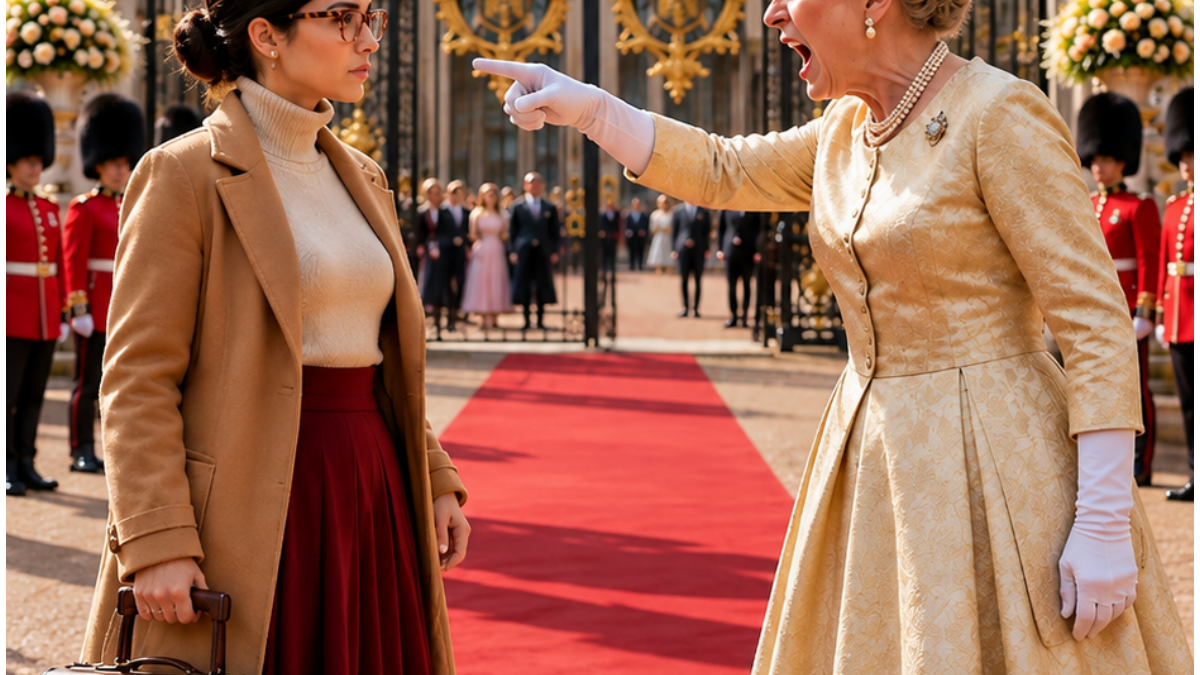
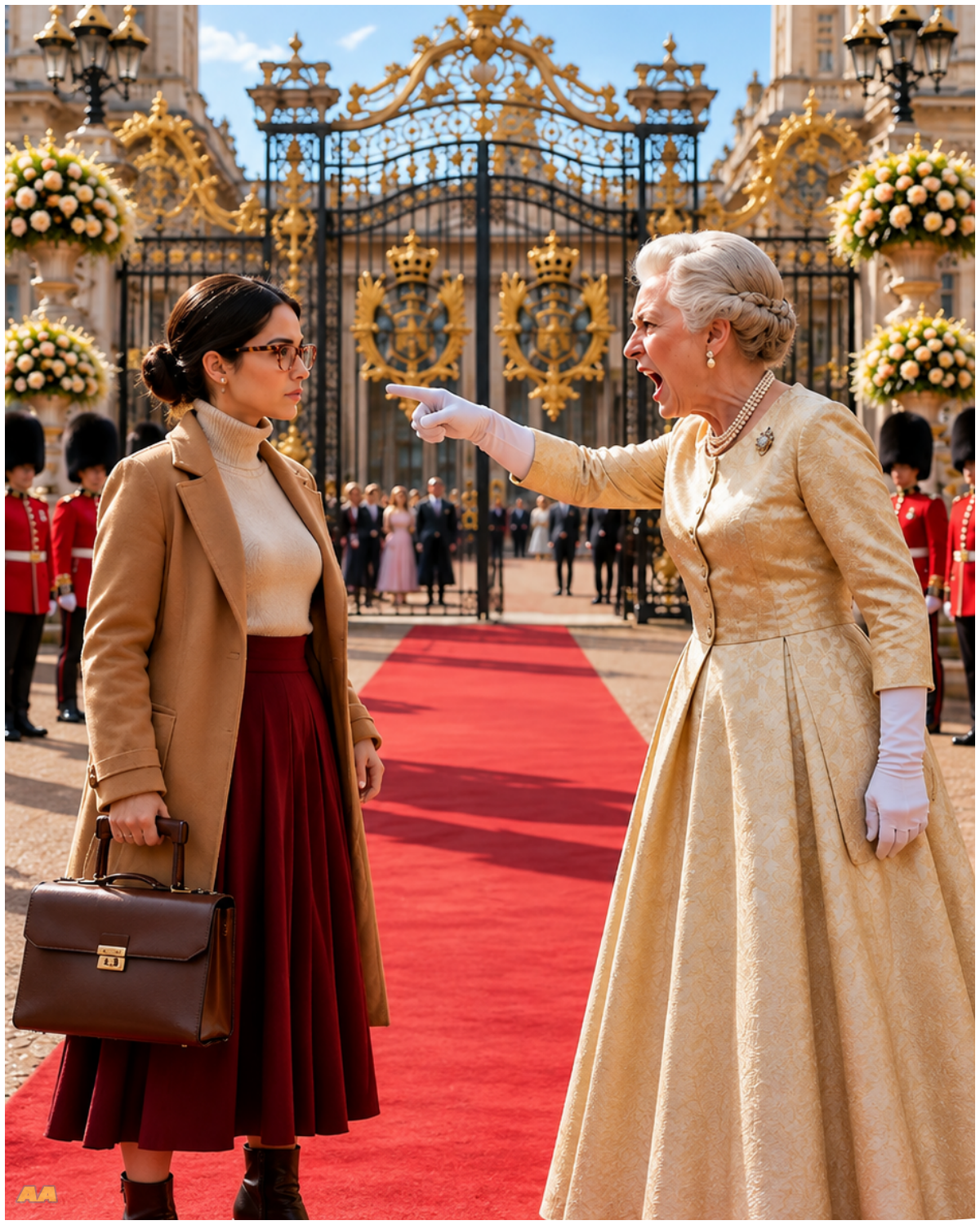
She stood shivering in the freezing rain, the heavy wrought iron gates of the royal estate slamming shut in her face.
Genevieve had just been banished, stripped of her dignity by a ruthless queen who deemed her unworthy of the crown.
But as the royal wedding bells prepared to chime the very next morning, the king himself would step off the altar, halting the entire ceremony for her because Genevieve carried a secret capable of destroying the entire monarchy.
The air in the subterranean archives of St. Jude’s Palace always smelled faintly of vanilla and decaying paper, a scent that Genevieve Brooks had come to find deeply comforting.
At 27, Genevieve was one of the youngest lead archivists ever employed by the crown.
She was a woman of quiet brilliance, armed with a dual doctorate in European history and archival science from Oxford, but lacking the aristocratic pedigree that usually accompanied a palace staff badge.
Her days were spent beneath the opulent gilded halls of the royal residence, meticulously restoring correspondence from the 17th century and cataloging the forgotten secrets of a bloodline that had ruled for generations.
Genevieve preferred the ghosts of the past to the living royals upstairs.
The modern monarchy was a rigid, heavily televised machine currently ruled by King Alistair and his formidable wife, Queen Margaret.
The tabloids were obsessed with the royal family, specifically with the heir apparent crown prince Arthur.
Arthur was the golden boy of the nation, handsome, philanthropic, and burdened by the crushing weight of a thousand years of expectation.
Genevieve had never met the prince, nor did she care to.
Her world was one of white cotton gloves, magnifying glasses, and acid-free folders.
That was until a rainy Tuesday in late November.
The heavy oak doors of the archive room creaked open, a sound so rare that Genevieve nearly dropped the fragile parchment she was examining.
She looked up, adjusting her tortoise shell glasses, expecting to see a lost intern, or perhaps one of the senior curators.
Instead, stepping out of the shadows and into the dim fluorescent hum of the basement was Crown Prince Arthur.
He looked entirely out of place among the rows of steel shelving.
He was dressed in a sharp charcoal gray bespoke suit, but his tie was loosened and his dark hair was slightly damp from the London rain.
He held a leatherbound notebook in his hand, looking around with a mixture of curiosity and frustration.
“Can I help you, your highness?” Genevieve asked, her voice steady despite the sudden spike in her heart rate.
She stood up smoothing the front of her practical wool skirt, consciously deciding not to curtsy.
She was a scholar, not a cordier of Arthur turned his piercing blue eyes, locking onto hers.
For a moment he seemed taken aback, perhaps by her lack of deference, or simply by the fact that she didn’t immediately dissolve into a blushing mess.
“I’m looking for the 1942 architectural drafts of the East Wing,” Arthur said his voice.
A rich authoritative baritone that echoed slightly in the cavernous room.
My mother is insisting on renovations and I need to prove to her that the loadbearing walls she wants to tear down were reinforced during the blitz.
The digital catalog sent me down here.
Genevieve raised an eyebrow.
The digital catalog is notoriously flawed, your highness.
Those drafts aren’t in the architectural wing.
They were misfiled under wartime defensive strategies in the 1970s.
Give me a moment. She moved past him, her proximity close enough that she could smell the crisp cedar and bergamont scent of his cologne.
She navigated the labyrinth of shelves with practiced ease, climbing a rolling ladder to retrieve a heavy dustcovered cylindrical tube.
When she returned and unrolled the massive blueprint onto her viewing table, weighing down the corners with brass-lled weights, Arthur stepped up beside her.
As they leaned over the intricate blue lines of the palace’s skeleton, their shoulders brushed, Geneviev pointed out the structural reinforcements explaining the historical context of the 1942 bombings and how the palace had been secretly fortified.
Arthur didn’t just listen in he engaged.
He asked sharp, intelligent questions.
He didn’t treat her like a servant.
He treated her like an equal.
You know this building better than the people who live in it, Miss Brooks, she provided.
Genevieve Brooks, and it’s my job to know it, your highness.
Please call me Arthur, he said, a genuine smile breaking across his usually guarded face.
Down here among the dust I think we can dispense with the titles.
That afternoon was the spark that ignited a dangerous fire.
Arthur began finding excuses to visit the archives.
He would bring her coffee, black, no sugar, exactly how she liked it, and they would spend hours discussing history, politics, and the suffocating reality of his public life.
For Arthur, Genevieve was a breath of fresh, unfiltered air.
She didn’t flatter him. She challenged him.
She possessed a fierce intellect and a compassionate heart, completely untouched by the sicopantic games of the aristocracy.
For Geneviev, Arthur was a revelation.
Beneath the polished media trained exterior was a man of deep thoughtfulness, plagued by the loneliness of his position.
He was trapped in a gilded cage and in the quiet sanctuary of the archives, Genevieve became his escape.
Months passed and their secret friendship inevitably bled into a profound, desperate romance.
They stole moments in the shadows of the palace.
Midnight walks through the private hedge mazes, whispered conversations in the back rows of the royal theater, and stolen kisses in the dim light of the archival basement.
Arthur was recklessly in love.
He began to talk of the future of a modern monarchy, of a life where he could choose his own partner.
But Genevieve knew the reality.
The palace was a machine, and machines did not care for matters of the heart.
The machine had already chosen Arthur’s bride, Lady Josephine Crawford.
The daughter of a powerful duke, a woman bred from birth to wear a tiara.
Josephine was beautiful, icy, and perfectly compliant.
Everything a traditional queen was supposed to be.
Genevieve constantly warned Arthur about the danger they were in.
But love had made the crown prince defiant.
“I won’t marry Josephine,” he swore to Genevieve one evening, holding her face in his hands in the damp darkness of the archives.
“I will tell my father.
I will tell the parliament.
I want you Genevieve only you.
It was a beautiful naive promise and it was the exact moment the walls closed in on them because in the royal palace there are no true secrets.
The walls have eyes, the staff have ears and Queen Margaret saw everything.
The summons came on a chilling Thursday morning.
Genevieve was cataloging a series of 18th century trade agreements when a pair of royal guards dressed in full ceremonial uniform appeared at the door of the archives.
They did not ask. They instructed Genevieve was to accompany them immediately to Queen Margaret’s private drawing room in the West Wing.
Genevieve’s stomach plummeted. The walk through the palace felt like a march to the gallows.
She was led up the grand marble staircases past centuries of portraits depicting stern monarchs who seemed to glare down at her in collective disdain.
The queen’s drawing room was an exercise in overwhelming opulence.
Deep crimson walls, gold leaf molding, and priceless antiques filled the space.
Queen Margaret sat perfectly upright in a highbacked silk chair, sipping Earl Grey tea from a bone china cup.
She was a woman of terrifying poise, her silver hair was immaculately styled, her posture rigid, and her pale blue eyes held the warmth of a frozen lake.
“Sit, Miss Brooks,” the queen commanded, not bothering to look up from her tea.
Genevieve took a seat on the edge of a velvet sofa opposite the queen.
Her hands were trembling, but she forced herself to clasp them tightly in her lap, maintaining a neutral expression.
I will not insult your intelligence by pretending this is a social call.
Queen Margaret began setting her teacup down with a sharp, delicate clink.
I am fully aware of your extracurricular activities with my son.
Genevieve swallowed hard. Your Majesty Arthur and I do not use his given name.
The Queen snapped, her voice barely rising above a conversational tone, yet cutting through the air like a whip.
You will refer to him as his royal highness as befits your station.
You are a clerk, Miss Brooks, a glorified librarian who dusts old paper for a living.
You are not and will never be a suitable companion for the future king of this nation.
With all due respect, your majesty, Genevieve found her voice, her chin tilting up slightly.
That is a decision for the crown prince to make.
A slow, chilling smile spread across Queen Margaret’s lips.
It was a smile completely devoid of joy.
Oh, my dear naive girl.
You think you are starring in a fairy tale?
You think love conquers centuries of tradition, duty, and geopolitical alliances.
Let me disabuse you of that notion right now.
The queen reached over to a silver tray on the table beside her and picked up a thick manila folder.
She tossed it onto the glass coffee table between them.
It landed with a heavy thud.
“Open it,” Margaret ordered. With shaking hands, Genevieve reached forward and opened the folder.
Inside were photographs, highdefin covertly taken photographs of her and Arthur.
Arthur kissing her forehead in the gardens.
Genevieve slipping out of the side entrance of his private apartments at dawn.
But that wasn’t what made Genevieve’s blood run cold.
Beneath the photos were financial documents, tax returns, bank statements, but they weren’t hers.
They belonged to her father, Thomas Brooks.
Thomas ran a modest logistics company that had recently secured a highly lucrative multi-million pound contract with the Ministry of Defense.
A contract that had saved his business from bankruptcy and secured the pensions of 50 hard-working employees.
Osha next to her father’s papers were medical records belonging to Genevieve’s younger sister, Lily.
Lily was currently in her second year of medical school, entirely funded by a highly competitive grant administered by a charity foundation.
A foundation. Genevieve suddenly realized that was patronized by the queen herself.
Your father’s defense contract, Queen Margaret said smoothly, admiring her own manicured nails.
It is currently under review by a committee over which I have considerable influence.
It would be a terrible shame if irregularities were found forcing the government to terminate the contract and demand immediate repayment.
I imagine the ensuing bankruptcy would destroy him and your sister Lily.
Such a bright girl. It would be a tragedy if her Graham was revoked due to a sudden shift in the foundation’s priorities.
Medical school debt is so crippling these days, isn’t it?
Genevieve stared at the queen, horrified.
You’re threatening my family over a relationship.
I am protecting the crown.
Margaret corrected her coldly. Arthur’s marriage to Lady Josephine has been orchestrated for 5 years.
It solidifies our alliance with the Crawford estate, merges critical assets, and presents a flawless image to the public.
You are an infection in a perfectly healthy system, Miss Brooks, and infections must be eradicated.
The queen slid a pristine piece of embossed palace stationery across the table along with a solid gold fountain pen.
This is a letter of resignation, the queen explained.
It also includes a non-disclosure agreement.
You will sign it. You will pack your belongings immediately.
You will be escorted off the grounds and you will never contact my son again.
Furthermore, you will write a personal note to Arthur telling him that the pressure of the media was too much that you never truly loved him and that you have accepted a substantial financial payout to leave quietly.
He won’t believe that. Genevieve whispered tears, finally breaking free and tracking down her cheeks.
He knows me. He will believe the £2 million I have already transferred into a numbered offshore account under your name, Margaret replied.
An account the palace security will conveniently discover and show to him when he comes looking for you.
You will break his heart, Miss Brooks.
Because if you do not, I will break your father.
I will break your sister.
And I will ensure you never work in your field again.
You have three minutes to sign.
Genevieve looked at the pen.
She thought of her father, a proud man who had worked his entire life to build his small company.
She thought of Lily, studying late into the night, dreaming of becoming a surgeon.
She loved Arthur, God. She loved him with every fiber of her being, but she could not sacrifice her family’s survival for her own fairy tale.
The machine was too big.
The queen was too ruthless with a suffocating sob lodged in her throat.
Genev picked up the pen.
Her hand shook violently as she scrolled her signature across the documents.
She then took a blank piece of paper and with tears blurring her vision, wrote the lie that would destroy the man she loved.
Arthur, I’m sorry. I can’t do this.
The money is enough for me to start over.
Please don’t look for me.
Gee. 10 minutes later, Genevieve was flanked by two massive security guards.
She wasn’t even allowed to return to the archives to collect her personal belongings.
She was marched out the back service entrance of the palace.
It was pouring rain. As she stepped out onto the wet pavement, the guards aggressively shoved her forward.
The heavy row iron gates of the palace annex slammed shut behind her with a sickening clang.
The dead bolts locking into place.
Genevieve stood shivering in the freezing rain, entirely alone.
She looked back through the iron bars at the looming silhouette of the palace, the place where her heart was now imprisoned.
She had been banished, stripped of her dignity, her love, and her life’s work.
In a matter of 20 minutes, the next morning, the tabloids exploded, but not with news of Genevieve.
The headline on every newspaper in the country read, “Royal engagement announced Crown Prince Arthur to marry Lady Josephine Crawford.” Through a small television in a dingy cafe, Genevieve watched the press conference.
Arthur looked pale, his jaw set tightly, his eyes devoid of the warmth she knew so well.
He looked like a man who had been hollowed out.
The queen had shown him the fake bank account.
She had shown him the letter.
The betrayal in Arthur’s eyes as he forced a smile for the cameras broke Genevieve completely.
3 months passed. They were the darkest, most agonizing months of Genevieve’s life.
She had relocated to a tiny damp flat in the outskirts of Edinburgh, Scotland, putting as much physical distance between herself and London as possible.
True to her word, Queen Margaret had left Genevieve’s family alone.
Her father’s contract was secure, and Lily’s medical school tuition was paid in full.
But Genevieve was a ghost of her former self.
Blacklisted from every major museum and historical institution in the country due to unseen strings pulled by the palace.
She was forced to take a minimum wage job, sorting returned books at a local public library.
Every day was a torment.
The impending royal wedding was a global obsession.
Commemorative plates were printed. Television specials analyzed Lady Josephine’s wedding dress designer.
The media praised the couple as the epitome of modern royalty, blinding the public to the absolute misery Genevieve knew Arthur was enduring.
Genevieve tried to move on.
She tried to forget, but she had one anchor left to her old life.
On the day she was banished, Genevieve had been wearing her oversized cardigan.
Deep in the pocket was a small leatherbound journal she had been translating in the archives right before the guards took her away.
It was a private diary belonging to King Edward Arthur’s late grandfather.
Taking it from the archives was technically a federal offense, but she hadn’t taken it intentionally.
Now it was her only possession from the palace.
For weeks, it sat on her small kitchen table, gathering duSt. She couldn’t bring herself to open it.
It smelled too much like the basement where she and Arthur had fallen in love.
But one rainy Sunday, driven mad by the incessant wedding coverage on the television, Genevieve grabbed the diary, made a pot of black tea, and sat down to read.
King Edward had been known as a stoic traditional monarch, but his private thoughts written in tight cursive scroll revealed a man plagued by paranoia and political maneuvering.
Genevieve translated the archaic phrasing, her archivist instincts, slowly waking up from their months long depression.
She reached the entries from 1998, the year Arthur was just a boy and the year Lady Josephine’s father, the Duke of Crawford, was appointed to the Royal Privy Council.
Genevieve’s eyes scanned the pages and suddenly she stopped, her breath hitched in her throat.
She read the paragraph again and then a third time.
October 14th, 1998. The Crawford estate is entirely bankrupt.
Lord Crawford confessed it to me in the smoking room tonight.
He has squandered his family’s centuries of wealth on degenerate gambling and failed ventures in Eastern Europe.
But that is not the tragedy.
To cover his debts, Crawford has taken massive unforgivable loans from the Petrovich Syndicate.
Blood money, arms money. He is completely owned by them.
He begged me for a royal bailout.
I refused. To tie the crown’s finances to a man beholdened to international criminals is treason.
I will quietly remove him from the council by year’s end.
His bloodline is tainted by this debt.
We must sever all ties with the Crawfords.
Margaret, however, disagrees. She sees Crawford’s desperation as something we can control.
I must ensure Margaret never uses this to her advantage.
Genevieve dropped the book. Her hands were shaking violently.
She scrambled to her laptop, pulling up every public record news article and financial footprint she could find on the Duke of Crawford and the Petrovic Syndicate.
The Petrovic family wasn’t just a gang.
They were one of the most dangerous far-reaching armsdealing syndicates in the world.
The pieces slammed together in Genevieve’s brilliant mind with terrifying clarity.
Queen Margaret knew. She had always known the Queen wasn’t forcing Arthur to marry Josephine just for a pristine image.
She was doing it for leverage.
The Crawford family was deeply inextricably in bed with a global crime syndicate.
If Arthur Mary Josephine, the future queen of the nation, would be the daughter of a man owned by the black market.
The Petrovvic syndicate could effectively blackmail the British monarchy.
They would have an untouchable shield.
And Queen Margaret, in her twisted pursuit of ultimate control, was orchestrating the whole thing, likely getting kickbacks or using the syndicate’s power to silence her enemies.
It was high treason. Genevieve looked at the calendar pinned to her wall.
The royal wedding was in exactly 8 days.
Panic seized her. This was no longer just about a broken heart.
This was about the collapse of the monarchy.
Arthur was walking blindly into a trap that would completely destroy him and his legacy.
“If he said I do,” he would be legally and politically bound to an international criminal conspiracy.
“I have to warn him,” Genevieve said aloud to the empty room.
“But how the queen had orchestrated a flawless wall of security around the prince.
Genevieve’s phone number was blocked.
Any letter she sent to the palace would be intercepted by the royal male screeners who were undoubtedly on the queen’s payroll.
If she went to the press, she would look like a jealous, crazy ex-girlfriend, spouting conspiracy theories, and Margaret would bury her her father and Lily before the ink was even dry.
She couldn’t call the police.
The police reported to the crown.
Genevieve paced the small apartment, her mind racing through her knowledge of the palace, its protocols, its security, and its history.
She knew the blueprints. She knew the secret routes built during the Blitz.
She knew the codes to the archival vaults that hadn’t been changed in 30 years because no one but her ever used them.
She looked back down at King Edward’s diary.
It was the only physical proof she had.
It wouldn’t be enough to convince the press, but it would be enough to convince Arthur.
He knew his grandfather’s handwriting.
He knew how to read the palace’s internal ciphers.
If she could just get the book into his hands, he would understand.
But getting the book to Arthur meant Genevieve would have to break into the most heavily guarded building in the country during the highest security event of the decade.
She would have to bypass the queen’s private guard, navigate the underground tunnels, and intercept the crown prince before he reached the altar.
Genevieve went to her closet and pulled out a dark duffel bag.
She packed the diary, a flashlight, her old set of palace master keys she had claimed were lost months ago, and a sleek black dress.
She had been a quiet, compliant commoner her entire life.
She had let Queen Margaret strip her of everything without a fight to protect her family.
But this was bigger than her family now.
You thought I was just a librarian, Margaret, Genevieve whispered, zipping the bag shut with a harsh metallic rip.
Let’s see what happens when the librarian brings the receipts.
She bought a one-way train ticket to London.
The countdown to the royal wedding had begun, and Genevieve Brooks was going to crash it.
London was a city possessed.
As Genevieve stepped out of King’s Cross Station, she was immediately swallowed by a suffocating sea of Union Jack’s commemorative bunting and feverish anticipation.
The royal wedding was only 48 hours away.
Every billboard displayed the flawless digitally enhanced faces of Crown Prince Arthur and Lady Josephine.
The air buzzed with the manic energy of a historic event, but to Genevieve it felt like a collective descent into madness.
She pulled the collar of her dark trench coat up against the biting wind, her duffel bag heavy against her hip.
She couldn’t go anywhere near the main gates of St. Jude’s Palace.
The perimeter had been expanded by 2 mi, completely locked down by armed Metropolitan Police and the Queen’s private security detail.
Drones buzzed overhead like mechanical wasps.
To the rest of the world, the palace was an impenetrable fortress.
But Genevieve was not the rest of the world.
She was the archivist who knew the building’s bones.
Her destination wasn’t the palace itself, but an unassuming centuries old parish church a mile away.
St. Jude the Martyr. According to the 1942 architectural drafts, she and Arthur had poured over the church’s crypt housed a concealed entrance to the subterranean evacuation tunnels built during the Blitz.
The tunnels were designed to ferry the royal family away from the palace during German bombing raids.
They had been officially sealed and struck from public record in the late 1960s.
Geneviev slipped into the church under the guise of a tourist seeking refuge from the rain.
She waited in the shadowy pews until the elderly vicer retreated to his office, then silently descended the stone steps into the crypt.
The air here was dead heavy with the scent of damp earth and ancient stone.
Using the flashlight from her bag, she navigated the labyrinth of family tombs until she found it a heavily rusted iron grate covering what looked like an old drainage pipe tucked behind the marble sarcophagus of a forgotten duke.
She pulled a crowbar from her duffel bag purchased at a hardware store in Edinburgh and wedged it under the great.
With a sharp crack that echoed terrifyingly loud in the silent crypt, the rust gave way.
She hauled the heavy iron aside and slid into the darkness.
The tunnel was a claustrophobic nightmare.
It was barely 5 ft high, forcing Genevieve to walk in a grueling hunched crawl.
The floor was slick with inches of stagnant freezing water, and the walls were lined with rotting timber supports.
Rats scured away from the beam of her flashlight, their red eyes flashing in the dark.
Every muscle in her body screamed in protest, but her mind was fiercely focused on Arthur.
She remembered the hollow, defeated look in his eyes during the engagement press conference.
She remembered the warmth of his hands in the archives.
She pushed forward, ignoring the chills seeping into her bones.
After what felt like hours, the incline shifted upwards.
The dirt walls transitioned to reinforced concrete.
She had crossed the perimeter.
She was beneath the palace grounds.
Suddenly, her flashlight beam caught a glint of modern metal.
A heavy reinforced steel door blocked the path.
In the center of it was a digital keypad.
Queen Margaret’s security team had found the tunnel and updated the defenses.
Genevieve’s heart pounded against her ribs.
She didn’t have a code, but she knew the palace’s internal grid.
She shone her light upward and saw the exposed wiring conduit running along the ceiling, feeding power to the lock.
She reached into her bag, pulling out her heavy lead weighted archival shears.
With terrifying precision, she jammed the shears into the conduit, severing the primary power line.
Sparks rained down, stinging her cheek, and the tunnel plunged into absolute darkness.
But a second later, a loud, heavy clack echoed through the space.
The electromagnetic lock designed to fail safe into an open position during a total electrical blackout to prevent trapping royals underground had disengaged.
Genevieve pushed the heavy door open she was in.
She emerged behind a false wall in the subb wine cellers.
Above her, the ceiling vibrated with a muffled thumping of a string quartet and the murmur of a thousand voices.
It was the night of the pre-wedding gala in the grand ballroom.
Genevieve stripped off her muddy trench coat, changing into the sleek black dress she had packed, tossing a stolen catering apron over it that she snatched from a laundry cart in the corridor.
She tied her hair back into a severe invisible bun.
If she walked with purpose head down, carrying a tray, she became entirely invisible.
In a palace full of aristocrats, the working class were just furniture.
She navigated the servants corridors, her heart hammering against her ribs.
Her objective was the West Wing where Arthur’s private apartments were located.
She needed to slip the diary onto his pillow or intercept him before he went to sleep.
As she passed the service doors leading to the outdoor smoking balcony, a harsh hushed voice caught her attention.
The timeline is non-negotiable. Richard, the ceremony happens tomorrow or the photographs of your Eastern European ventures go to the press by noon.
Genevieve froze. She recognized the name.
Richard was Lord Richard Crawford, the Duke of Crawford, Lady Josephine’s father.
She pressed her back against the cold stone wall, peering through the narrow glass slit in the service door.
Lord Crawford was sweating profusely, his usually fid face pale and drawn.
He was furiously puffing on a cigar.
Standing opposite him was a towering broad-shouldered man with a scarred jawline dressed in a tuxedo that didn’t quite hide the bulk of a shoulder holster.
Genevieve recognized him from the frantic internet research she had done in her dingy flat.
It was Nikolai Soalof, the Petravitz syndicate’s chief lieutenant in London.
“You have my word,” Crawford stammered, pulling a silk handkerchief from his pocket to mop his brow.
Josephine is ready. The queen has managed Arthur completely.
Once the ring is on her finger, the crown’s maritime shipping routes through the English Channel will be open to your cargo uninspected, protected by royal decree.
So smirked a cruel, cold expression.
See that it is. Our employer does not tolerate delays.
You owe us 70 million, Crawford.
The only reason you are still breathing is because your daughter looks pretty in a tiara.
Genevieve’s blood ran cold. The reality of the situation was far worse than King Edward’s diary had implied.
This wasn’t just a financial blackmail scheme.
It was a total security compromise of the nation’s borders, and Queen Margaret was actively facilitating it to maintain her iron grip on the Crawford family and by extension the crown.
Genevieve carefully pulled her phone from her pocket and hit record, capturing the last terrifying seconds of the conversation.
Through the crack in the door, she had the diary.
Now she had the audio.
She turned to slip away, but collided hard with a solid wall of muscle.
A tray of champagne flutes she had been using as a prop crashed to the floor, shattering into a hundred glittering pieces.
“Watch your step, girl!” a gruff voice commanded.
Genevieve looked up in sheer panic.
Standing over her was Commander William Hayes, the head of palace security.
He was a terrifyingly perceptive former SAS operative, who reported directly to the king, but was currently handling the wedding logistics.
Genevieve kept her chin tucked to her chest, falling to her knees to frantically gather the broken glass.
I apologize, sir. So clumsy of me.
I’ll clean it immediately. Hayes stared down at her, his eyes narrowed.
He took a step closer, his gaze dropping to her shoes.
In a rush, she hadn’t completely managed to wipe away the thick gray mud from the underground tunnels.
“Look at me,” Hayes ordered his hand resting instinctively on the radio at his belt.
Genevieve’s lungs seized. She was caught.
If Hayes ran her face through the security database, the queen would have her thrown into a black sight before the hour was up.
Commander Hayes, a sharp voice echoed down the corridor.
Hayes turned. One of the queens private inquiries was jogging toward them.
Commander, her majesty requires your presence in the ballroom immediately.
There is a discrepancy with the seating chart for the foreign dignitaries.
Hayes sighed in irritation, his grip loosening on his radio.
He looked back down at Genevieve, who was trembling violently.
“Clean this up and get proper shoes.
You’re a disgrace to the uniform.” “Yes, sir,” Genevieve whispered to the floor.
The moment Hayes’s footsteps faded, Genevieve bolted.
She abandoned the West Wing.
“The security was too tight.
She couldn’t get to Arthur tonight.” She retreated to the only place she knew was safe.
The subterranean archives. She locked herself in the vault, curled up beneath a desk with King Edward’s diary clutched to her chest, and waited for the dawn.
The morning of the royal wedding broke with a deafening peel of bells from St. Jude’s Cathedral.
The noise reverberated down into the archives, waking Genevieve from a fitful, nightmare plagued sleep.
It was 800 a.m. The ceremony began at 11:00 a.m.
Genevieve splashed cold water on her face in the small archival restroom.
She looked at her reflection.
She was pale, her eyes rimmed with dark circles, but there was a fierce, unyielding fire burning in her pupils.
She was no longer the quiet scholar terrified of the queen.
She was the only thing standing between the man she loved and absolute ruin.
She formulated a new plan.
Reaching Arthur was impossible. Queen Margaret had surrounded him with a failance of guards.
But Arthur wasn’t the ultimate authority in the palace.
His father was. King Alistair was known as a distant largely ceremonial monarch content to let his wife run the internal politics of the family while he handled the public statecraft.
But he was also deeply, fiercely protective of the institution’s integrity.
If he saw his father’s diary, if he heard the recording, he could stop the wedding.
Legally, the monarch had the absolute power to withhold consent for a royal marriage, even at the altar.
Genevieve left the archives and blended back into the chaotic rush of the palace staff.
The halls were a blur of florists, tailor, and caterers.
She managed to slip into the laundry staging area and steal a thick, heavy velvet cloak belonging to the cathedral choir.
Throwing it over her dress, she pulled the hood low over her face.
She joined the procession of coristers boarding the private shuttles heading to St. Jude’s Cathedral.
The energy inside the massive Gothic cathedral was suffocating.
Thousands of exotic flowers lined the aisles.
Heads of state a-lists celebrities and global aristocrats filled the wooden pews.
Their jewels catching the stained glass light.
Genevieve slipped away from the choir as they took their places in the loft.
She navigated the narrow stone back corridors of the cathedral, heading toward the sovereigns antichamber, the private room where King Alistister would wait before making his grand entrance down the aisle.
She reached the heavy oak door of the anti-chamber.
Two royal guards stood at attention.
Their faces completely impassive beneath their bare-kinned hats.
Genevieve took a deep breath.
There was no sneaking past them.
She had to create a breach.
She noticed a heavy brass thorable, a vessel used for burning incense resting on a stone plinth near the door.
The coals inside were still smoldering.
With a swift, calculated movement, Genevieve knocked the thorable off the plinth.
It hit the stone floor with a spectacular crash.
Hot coals and thick blinding white smoke instantly billowed into the corridor.
The guards broke their formation, coughing and stepping forward to stamp out the embers before they caught the ancient tapestries on fire.
In that momentary 3-second window of chaos, Genevieve slipped behind them, shoved the heavy oak door open, and threw herself into the sovereign’s antichamber.
The room was quiet, smelling of beeswax and polished wood.
But King Alistair was not alone.
Standing beside the king, adjusting the medals on his sovereign uniform, was Queen Margaret.
Margaret turned at the sound of the door opening.
Her eyes widened in genuine shock, a rare break in her icy facade before instantly hardening into absolute murderous fury.
“You,” the queen hissed her voice vibrating with venom.
“Guards!” King Alistister barked, stepping in front of his wife.
Before the guards outside could rush in, Commander William Hayes stepped out from the shadows of the corner of the room, his gun instantly drawn and leveled squarely at Genevieve’s cheSt. “Hands where I can see them,” Hayes roared.
Genevieve froze her hands shooting up into the air.
Her heart was beating so fast she thought she might pass out.
“Your Majesty,” she screamed, looking directly past the gun and straight into King Alistister’s eyes.
“The Crawford family is bankrupt.
They are owned by the Petroic Syndicate.
If Arthur marries Josephine, the crown is tied to the black market.
Silence this lunatic. Queen Margaret ordered her composure slipping as she glared at Hayes.
Arrest her. Throw her in the tower.
I have proof, Genevieve yelled, her voice echoing off the vaulted ceilings.
She slowly, agonizingly lowered one hand toward her pocket.
Hayes stepped forward, pressing the barrel of his weapon against her shoulder.
Don’t move a muscle, girl.
Let her pull it out, commander.
King Alistister suddenly commanded. His voice was calm, but it held the crushing weight of absolute authority.
He looked at Genevieve, his brow furrowed.
You have 5 seconds to produce this proof before you are charged with high treason.
Alistister, you cannot be serious, Margaret snapped, stepping forward.
She is a disgruntled gold digging former employee.
She is lying. Ignoring the queen, Genevieve slowly pulled the worn leatherbound diary from her pocket and held it out.
It’s King Edward’s private journal from 1998.
Genevieve said her voice shaking but resolute.
He knew about Lord Crawford’s debts.
He was going to expel him, but he died before he could.
And I have audio of Lord Crawford confirming the deal with Nikolai Soalof last night in your own palace.
King Alistair’s face drained of color.
He looked at the diary.
He recognized his father’s embossed seal on the leather cover.
“Give that to me,” King Alistister instructed Hayes.
Hayes took the diary from Genevu’s trembling hand and passed it to the king.
Alistister opened the book to the bookmarked page.
As his eyes scanned his late father’s handwriting, the silence in the room became lethal.
Margaret’s face tightened. The mask had slipped.
She realized she had lost control of the narrative.
Just then, the grand clock in the cathedral tower began to chime.
11:00, the ceremony was supposed to begin.
King Alistair slowly closed the diary.
He looked at his wife, a deep sorrowful disgust, filling his eyes.
Then he looked at Genevieve.
“Commander Hayes,” the king said, his voice deadly quiet.
“Secure the queen in this room.
She is not to leave under any circumstances.” Alistister.
Margaret screamed, dropping all pretense.
You cannot do this. The world is watching.
You will destroy our image.
You have already destroyed our honor, Margaret, the king replied coldly.
He turned his back on his wife and looked at Genevieve.
Miss Brooks, come with me.
We have a wedding to stop.
The nave of St. Jude’s Cathedral was a breathtaking spectacle of power, wealth, and centuries of unyielding tradition.
2,000 of the world’s most influential figures, foreign royals, prime ministers, Hollywood elite, and billionaires from Mayfair to Manhattan, sat in hushed reverence.
The air was thick with the scent of 10,000 white gardinas imported specifically from the Mediterranean for this exact hour.
At the altar stood Crown Prince Arthur, draped in the ceremonial midnight blue uniform of the Royal Air Force, his chest heavy with medals of honor.
He felt he no longer deserved.
To the two billion people watching the live BBC broadcast around the globe, he looked like a fairy tale prince waiting for his happily ever after.
But inside Arthur was a hollow shell, his jaw was locked, his blue eyes devoid of the spark that had once charmed a nation.
Beside him stood Lady Josephine Crawford, a vision in a custom Alexander McQueen gown woven with silver thread and Brussels lace.
She looked flawless, her face set in a serene, practiced smile.
She was a woman who had been trained for this exact moment since birth.
But Arthur couldn’t look at her.
All he could see in his mind was a sheet of embossed palace stationery and Genevieve’s handwriting telling him she had taken the money and run.
The Archbishop of Canterbury raised his hands, his voice echoing through the vaulted ceiling, amplified by hidden microphones.
“Dearly, beloved,” the Archbishop in tone the words rolling over the silent congregation.
We are gathered here today in the sight of God and in the face of this congregation to join together this man and this woman in holy matrimony.
Arthur closed his eyes. The trap was closing.
He was about to surrender his life to a lie to a woman he didn’t love all for the sake of the machinery that had crushed the only real thing he had ever known.
If uh any man can show just cause why they may not lawfully be joined together, let him now speak, or else hereafter forever hold his peace.
It was the most prefuncter traditional line of the ceremony.
A rhetorical question that had not been answered in a royal wedding for 500 years.
The archbishop took a breath preparing to move to the vows.
I canned. The voice was not a shout, but it possessed a baritone of such immense commanding authority that it cut through the silence like a gunshot.
A collective gasp rippled through the 2,000 guests, heads snapped around in a synchronized wave of shock.
Standing at the top of the center aisle, having bypassed the grand procession entirely, was King Alistister.
He was not accompanied by Queen Margaret.
Instead, flanked by a squad of MI5 operatives, and Commander William Hayes, the King, marched purposefully down the long red carpet.
And walking right behind the king, clutching a weathered leather book to her chest, was a woman the world did not recognize, but who made Arthur’s heart completely stop.
Genevieve. She looked entirely out of place in her plain black dress among the sea of fascinators and savile rose suits, her hair messy, her face pale.
But as she met Arthur’s gaze down the length of the cathedral, her eyes were burning with a fierce protective fire.
“Father!” Arthur breathed, stepping away from Josephine, utterly bewildered.
King Alistair reached the altar, his face a mask of absolute terrifying fury.
He did not look at his son.
He looked directly at the control booth situated in the high balcony.
Cut the broadcast, the king commanded.
The BBC director in the booth froze, staring down in horror.
I said, “Cut the feed now on my authority as your sovereign.” King Alistister roared a terrifying display of raw power from a man the public only knew for his gentle waving demeanor.
Within seconds, the red lights on the television cameras scattered around the cathedral blinked off.
Two billion screens around the world suddenly cut to a holding graphic of the royal crest, accompanied by confused anchors scrambling to explain a technical difficulty.
With the eyes of the world blinded, the king turned to the altar.
Lady Josephine had gone completely white, her serene smile vanishing into a tight grimace of panic.
In the front pew, her father, Lord Richard Crawford, attempted to stand, his face slick with sudden sweat.
“Your Majesty, what is the meaning of this?” the Archbishop stammered, his hands shaking as he clutched his prayer book.
“The ceremony, the ceremony is over,” King Alistister stated, his voice echoing coldly in the massive space.
“There will be no wedding today.” Chaos erupted in the pews.
Whispers turned into alarmed murmurss.
Alistister, have you lost your mind?
Lord Crawford demanded, stepping out of the pew, trying to maintain a facade of aristocratic outrage.
You are embarrassing the crown.
You are embarrassing my daughter.
I am saving the crown from a traitor.
The king snapped his eyes locking onto Crawford like laser sights.
King Alistister snatched the leather diary from Genevieve’s hands and held it up.
My father’s private journal detailing your utter bankruptcy in 1998.
Richard detailing your unforgivable debts.
Lord Crawford swallowed hard taking a step back.
That uh that is ancient history, your majesty.
Slander from a man losing his faculties in his final years.
Is it? King Alistister signaled to Commander Hayes.
Hayes stepped forward, pulling a small, sleek audio device from his tactical veSt. He linked it to the cathedral’s PA system with a swift practiced motion.
He pressed a button. Suddenly, the hushed, terrified voice of Lord Crawford echoed through the cathedral’s speakers, crisp and damning.
You have my word. Josephine is ready.
Once the ring is on her finger, the crown’s maritime shipping routes through the English Channel will be open to your cargo uninspected, protected by royal decree.
Then came the cold, cruel reply of Nikolai Soalof.
You owe us £70 million, Crawford.
The only reason you are still breathing is because your daughter looks pretty in a tiara.
A deathly silence fell over the 2,000 guests.
The magnitude of the treason hung in the air, suffocating and absolute.
The Crawford family wasn’t just bankrupt.
They had attempted to sell the security of the United Kingdom to an international crime syndicate using the future king as their unwitting collateral.
Josephine stumbled backward, her hands flying to her mouth.
Whether in genuine shock or horror at being caught, no one could tell.
MI5 has already dispatched tactical units to your estate in Belgravia.
Richard a king Alistister said his voice laced with venom.
Nay, they have also apprehended Nikolai Soalof at a private airfield just outside London.
Your syndicate friends are done.
And so are you, your majesty, please?
Crawford begged, falling to his knees on the marble floor, his aristocratic pride instantly crumbling into pathetic desperation.
Arrest him, the king ordered.
Three plainclo officers from Scotland Yard surged from the side aisles hauling a sobbing Lord Crawford to his feet binding his wrists behind his back.
The highest echelons of British society watched in stunned horrified silence as a Duke of the realm was dragged out of the cathedral like a common criminal.
Arthur stood paralyzed at the altar, his mind spinning.
The geopolitical disaster, the treason, the crime syndicate.
It was all a blur.
All he could focus on was the woman standing a few feet away from him.
Genevieve was shaking tears welling in her eyes as the adrenaline of the last 24 hours finally began to crash.
Arthur completely ignored protocol. He ignored the archbishop, his father, and the thousands of whispering guests.
He stepped down from the altar, closing the distance between him and Genevieve.
You’re here,” he whispered, his voice cracking as if she were a ghost he was afraid to touch.
“You left the letter, the money in the coot’s account.” Genevieve let out a broken sob.
I didn’t take a dime, Arthur.
Your mother set it up.
She threatened my father’s business.
She threatened my sister’s medical grand at UCL.
She told me if I didn’t write that letter and vanish, she would destroy my family.
I had to protect them.
I’m so sorry. Arthur’s face morphed from confusion to a profound heartshattering realization.
The mother he had trusted, the woman who had guided his entire life, had orchestrated the complete annihilation of his happiness.
She had handed him over to criminals just to maintain control.
He didn’t care who was watching.
He pulled Genevieve into his arms, burying his face in her hair, holding her so tightly, it knocked the breath out of her.
It was an embrace that broke every rule of royal decorum and it was the most real thing that had happened in that cathedral in a hundred years.
King Alistair watched them for a moment, a deep sorrow in his eyes.
He turned to the congregation.
Please evacuate the cathedral immediately in a calm and orderly fashion.
The king announced, “The royal family faces a grave security threat that has now been neutralized, but protocols must be followed.
The media will be briefed in due time.
As the panicked, murmuring crowd began to filter out under the direction of palace security, King Alistister gestured to Commander Hayes.
Bring Arthur and Miss Brooks to the private veSt. We have unfinished business.
The vestry behind the altar was a small ornate room smelling of old books and frankincense.
Once the heavy door clicked shut, sealing them away from the chaos, Arthur turned to his father.
His eyes were blazing with a rage Genevieve had never seen in him.
“Where is she?” Arthur demanded, his voice shaking.
“Where is my mother?” King Alistister sighed suddenly, looking every bit of his 68 years.
He walked over to a highbacked wooden chair and sat down heavily.
“She is under armed guard in the sovereigns anti-chamber,” the king replied his voice devoid of emotion.
“She cannot leave. She will never wield power in this family again.
She committed treason. Father Arthur yelled, pacing the small room.
She knew about the betrovic syndicate.
She forced this marriage knowing Crawford was compromised just so she could have blackmail material over the future queen.
She should be in a cell next to him.
If we put the queen of the United Kingdom on public trial for treason.
Arthur the monarchy will not survive the decade, King Alistair said sharply, slamming his hand down on the armreSt. The public trust would be irrevocably shattered.
Parliament would dissolve us. Everything your ancestors built would be turned to ash.
Arthur stopped pacing, staring at his father in disbelief.
So what? She gets away with it.
She destroys my life, sells out the country, and we just sweep it under the rug to protect the institution.
I said she would never wield power again.
The king corrected his eyes hardening.
Margaret’s reign is over. Tomorrow morning, the palace will release a statement that the queen has suffered a severe debilitating stroke brought on by the stress of the thwarted security threat.
She will be quietly permanently relocated to inveral house in the Scottish Highlands.
It is a remote estate.
She will have no internet, no phones, and no visitors outside of immediate family.
She will live the rest of her life in absolute suffocating isolation.
A gilded cage in the middle of nowhere.
It was a brilliant, brutal political maneuver.
A public execution without shedding a drop of blood.
Margaret would be erased from the world, rendered entirely irrelevant, unable to scheme or manipulate ever again to a woman whose entire existence was predicated on absolute power and public adoration.
It was a fate far worse than prison.
The king turned his attention to Genevieve.
He studied her for a long moment.
She stood tall, refusing to shrink back, her chin held high despite the exhaustion radiating from her bones.
You broke into the most heavily fortified estate in Europe.
The king stated a hint of awe bleeding through his stoic exterior.
You bypassed a gridlock, evaded my head of security, and interrupted a global broadcaSt. You are either a mastermind or completely reckless, Miss Brooks.
I am an archivist, your majesty, Genev replied evenly.
I just know how to read the history you all decided to bury.
I couldn’t let Arthur throw his life away.
I couldn’t let him be a pawn.
King Alistair smiled. It was a small, sad smile, but it was genuine.
You saved him, and you saved the crown.
I owe you a debt that cannot possibly be repaid with wealth or titles.
Your family’s safety is guaranteed.
What? The queen’s foundations and committees will be entirely audited and cleared of her influence.
Your sister will finish medical school and your father’s business will flourish without the shadow of the throne hanging over him.
Genevie felt a massive crushing weight lift off her cheSt. She exhaled a shaky breath, closing her eyes as tears of relief finally slipped down her cheeks.
“Thank you, your majesty,” she whispered.
“No, Miss Brooks,” the king replied, standing up and bowing his head slightly to her, an unprecedented gesture from a reigning monarch to a commoner.
“Thank you.” The fallout from the canceled royal wedding was the greatest PR firestorm the British monarchy had ever faced.
True to King Alistair’s word, the palace spin doctors went into overdrive.
The official narrative was a masterclass in obfuscation.
A credible, highly classified terrorist threat orchestrated by foreign actors had been intercepted at the 11th hour by MY5.
Lord Crawford had unfortunately been implicated in inadvertent financial dealings with these actors and was cooperating with authorities.
Lady Josephine, entirely innocent but traumatized, withdrew from public life.
Quietly moving to Switzerland to escape the meal glare, and Queen Margaret the palace announced with deep sorrow, had suffered a tragic medical event due to the shock of the threat.
She was retired to the Scottish Highlands to live out her days in peace, forever shielded from the public eye.
The tabloids ate it up.
The public praised the king’s decisive action and mourned the queen’s sudden illness.
The monarchy survived the scandal, pivoting the narrative from corruption to national resilience.
But behind the towering iron gates of St. Jude’s Palace, everything had changed.
Without Margaret’s suffocating grip, King Alistister began to aggressively dismantle the archaic toxic machinery that had ruled the family for decades.
He opened the palace finances to independent audits.
He modernized the staff protocols and most importantly he handed over a massive portion of his daily sovereign duties to Crown Prince Arthur.
Arthur flourished. He was no longer the hollow media trained puppet the world had seen at the altar.
He was driven compassionate and deeply committed to bridging the gap between the ancient institution and the modern world.
And he didn’t do it alone.
Genevieve refused any titles or official public roles.
She had zero interest in becoming a polished waving duchess, cutting ribbons at hospitals.
Instead, she returned to her true passion, but on her own terms, she was officially appointed as the head director of the Royal Archives and Historical Trust, a position previously held only by ancient aristocratic scholars.
She was given a massive budget to digitize the palace’s hidden history, making centuries of suppressed documents accessible to the public and historians worldwide.
She transformed the damp, forgotten subterranean basements into a state-of-the-art research facility.
She also became Arthur’s most trusted, albeit entirely unofficial adviser.
When he wasn’t navigating parliament or state dinners, he was down in the archives with her.
They would sit on the edge of the viewing tables drinking black coffee surrounded by the scent of vanilla and ancient paper discussing policy and the future of the nation.
It was a rainy Tuesday afternoon, exactly one year to the day since Crown Prince Arthur had first walked into the archives looking for the 1942 blueprints.
Genevieve was carefully cataloging a newly recovered set of Victorian era trade letters, wearing her practical tortoise shell glasses and a comfortable wool sweater.
The archives were quiet, save for the gentle hum of the climate control units.
The heavy oak doors creaked open.
Genevieve smiled without looking up.
She knew the sound of his footsteps.
Arthur walked in, shedding his tailored suit jacket and tossing it over a chair.
He looked exhausted from a 3-hour meeting with the prime minister regarding agricultural subsidies.
But the moment he saw Genevieve, the tension instantly melted from his shoulders.
I have decided, Arthur announced, walking up behind her and wrapping his arms around her waist, resting his chin on her shoulder.
I am abolishing the privy council’s oversight on royal marriages.
I had my legal team draft the papers this morning.
My father is signing them tonight.
Genevieve stopped her work, turning her head slightly to look at him.
You’re changing a 300-year-old constitutional law.
I am, Arthur murmured, pressing a soft kiss to her neck.
Because the next time I stand at an altar, I refuse to have a single politician aristocrat or camera in the room.
And I absolutely refuse to marry anyone who doesn’t know how to hotwire a subterranean blast door.
Genevieve laughed a bright, genuine sound that echoed beautifully in the cavernous room.
She turned around in his arms, looping her hands around his neck.
“Is that a proposal, your highness?” she asked, raising an eyebrow playfully.
“It’s a statement of fact,” Arthur replied his blue eyes entirely serious, brimming with a deep, unbreakable love.
He reached into his pocket.
He didn’t pull out a velvet box holding a priceless blood diamond family heirloom.
Instead, he pulled out a simple, elegant, vintage gold band.
He had found it in a small antique shop in Oxford, completely disconnected from the crown’s tainted treasury.
He didn’t drop to one knee.
He didn’t make a grand speech for an invisible audience.
They were just two people, et standing in the quiet sanctuary where they had first truly seen each other.
“I love you, Genevieve,” Arthur said softly, slipping the gold band onto her finger.
“Oh, I don’t want a queen. I just want my partner for the rest of my life. Will you marry me?”
Genevieve looked down at the simple ring.
It wasn’t heavy with the weight of an empire.
It was light. It was real.
She looked up at the man who had fought through hell to find his way back to her.
She thought of Queen Margaret rotting away in her gilded cage in Scotland, completely powerless against the very thing she had tried to destroy.
Love had conquered the machine.
Yes, Genevieve whispered, pulling him in for a kiss.
Yes, Arthur, I will.There were no massive cathedral bells, no cheering crowds of millions, but no BBC cameras broadcasting their faces to the world.
There was only the quiet hum of the archives, the ghosts of the past resting silently on the shelves, and two people finally free to write their own history.
And this time it would be a story worth telling.








