Her Family Laughed When She Married a Ranch Hand – Until Her Father Learned His Secret
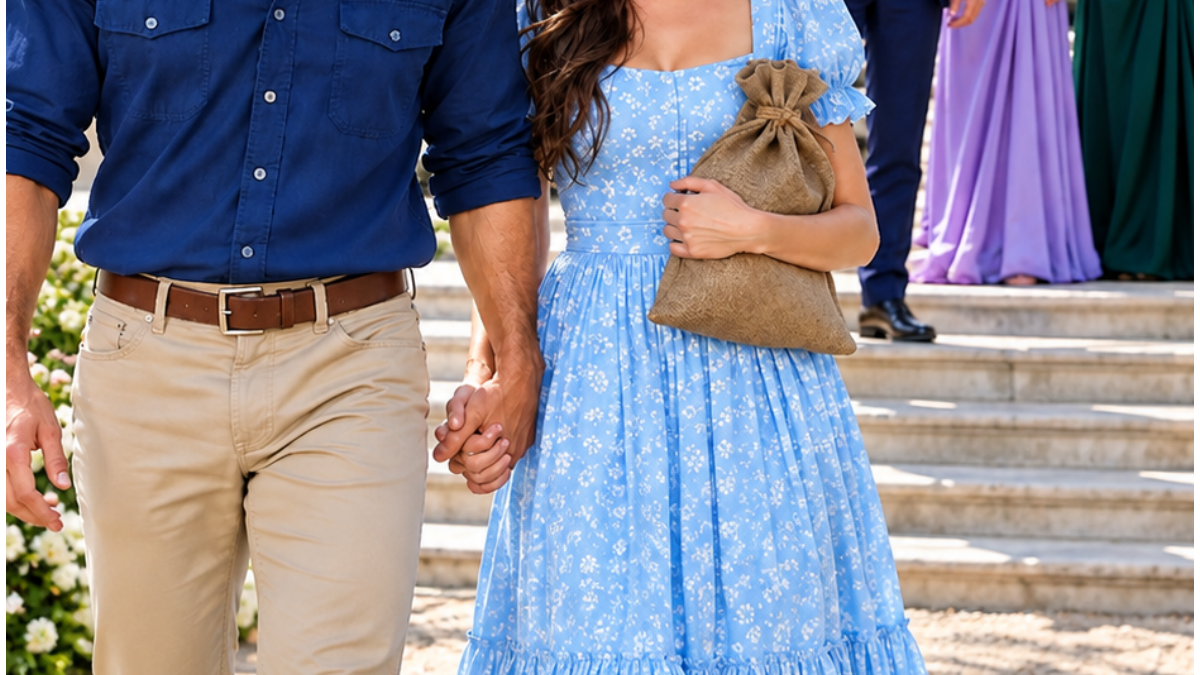
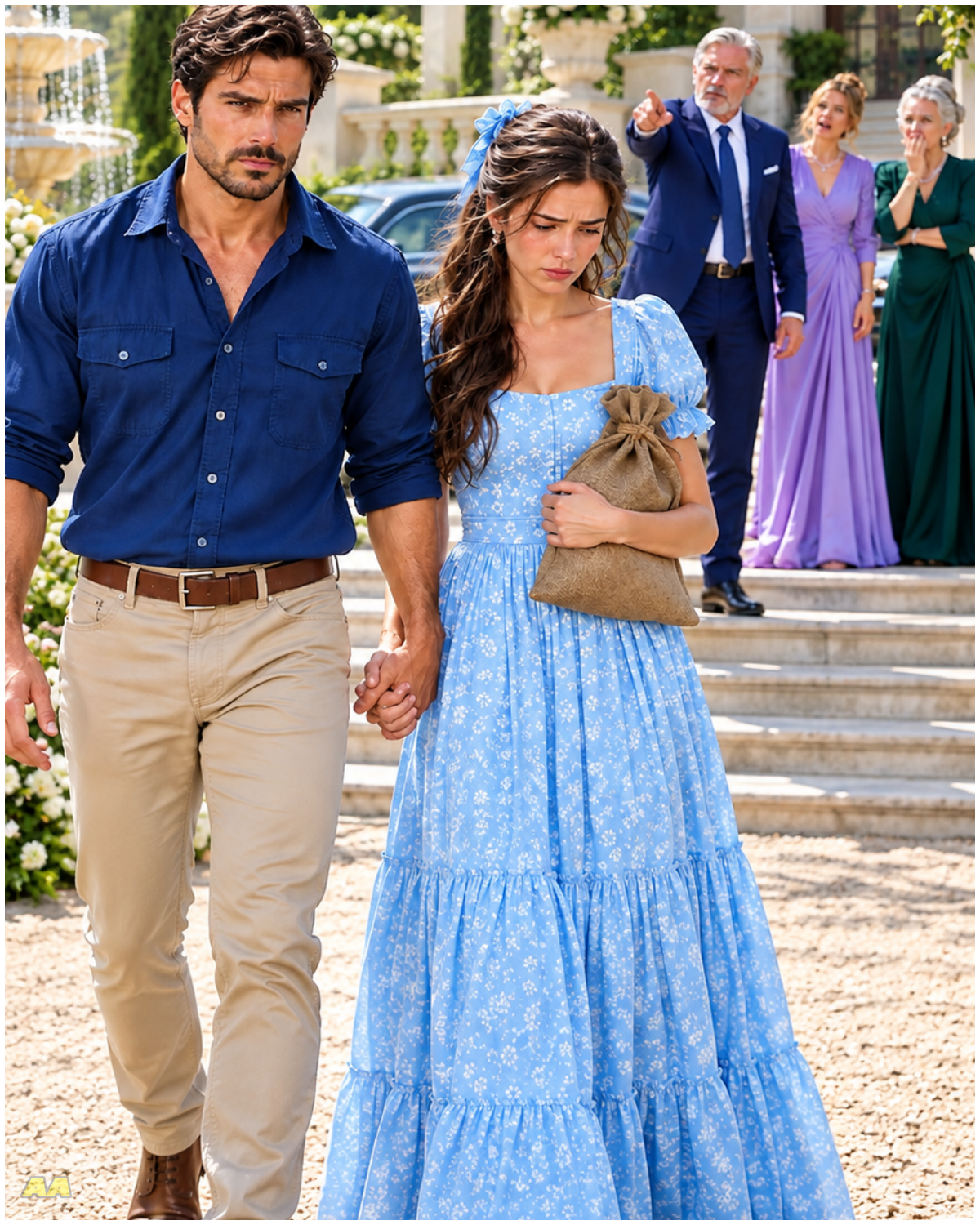
The laughter at the wedding reception stopped the moment Elanor’s father saw the old photograph in the ranch hands wallet.
His hands began to tremble and the color drained from his face.
Four months, everyone in Elanor’s wealthy family had mocked her for marrying a man who smelled of horses, wore worn out boots, and worked from sunrise to sunset on a ranch.
They called him a nobody. They said she had thrown away her future for a poor farm worker.
But that night, Eleanor’s father stared at the photograph again and whispered something that made everyone in the room fall silent.
Where did you get this? Three months earlier, Eleanor Whitmore had stood in the grand marble hallway of her family’s mansion while her mother cried.
Her older brother laughed and her aunt shook her head in disappointment.
Eleanor had just announced that she was marrying Caleb Reed, a ranch hand who worked at the Whitmore family’s country estate.
The news had spread through the family like a storm.
To them, marriage was not simply about love.
It was about reputation, wealth, connections, and keeping the Witmore name at the top of the social ladder.
Elellanor had grown up, surrounded by expensive paintings, crystal chandeliers, private schools, and people who measured one another by the size of their houses.
But somewhere along the way, she had learned that a beautiful house could still feel painfully empty.
Caleb was the opposite of everything her family expected.
He owned almost nothing. His pickup truck was old, his boots were cracked, and his hands were rough from years of hard labor.
He woke before dawn to feed horses, repaired fences in freezing rain, and spent long afternoons caring for animals that most wealthy people only admired from a distance.
He rarely talked about himself. If someone asked where he came from, he simply smiled and said he had moved around a lot.
Eleanor had first noticed him during a violent thunderstorm when one of the ranch horses broke through a damaged section of fencing.
While everyone else stood safely beneath the covered porch, Caleb ran into the rain.
Without hesitation, he risked his own safety to bring the terrified animal back.
That moment changed something inside. Eleanor. She began noticing the little things about him.
He always carried extra food for stray dogs.
He fixed broken equipment without expecting praise.
He quietly paid the medical bill for an elderly ranch worker whose family could not afford it.
When Eleanor once found him sitting beside a sick horse, late at night, he stayed there for hours, gently stroking its neck until the animal finally settled.
There was something about Caleb that money could not purchase and status could not imitate.
He treated people with dignity whether they could give him anything in return or not.
Eleanor’s family, however, saw only his boots.
Her father, Richard Whitmore, was a powerful businessman who had built an enormous agricultural empire across the state.
He had started with one small piece of land inherited from his grandfather and transformed it into a company worth hundreds of millions of dollars.
He believed he had given his children every opportunity in life.
And because of that, he expected them to make choices that protected the family legacy.
When Elellanor told him she loved Caleb, Richard did not ask what made her happy.
He asked what Caleb owned. The answer was almost nothing.
That was enough for Richard to reject him.
At dinner one evening, Eleanor sat quietly.
While her family discussed her upcoming wedding as though it were a terrible business decision, her brother Daniel joked that Caleb would probably arrive at the ceremony on horseback because he could not afford a proper car.
Her aunt suggested that Eleanor was going through a phase.
Her mother pleaded with her to reconsider before she embarrassed the family.
Richard said nothing for most of the meal.
He simply stared at his daughter with disappointment.
Eleanor finally stood up and told them that Caleb might not have money, but he had something none of them seemed to understand.
He had shown her kindness when nobody was watching.
He had never asked about her family’s wealth.
He had never tried to impress her.
He had simply loved her. Richard’s response was cold.
He told Eleanor that love did not pay bills, build businesses, or protect a family name.
Eleanor looked at her father and quietly answered that perhaps that was exactly why love mattered.
She left the mansion that night with tears.
In her eyes, the wedding was small.
There were no extravagant decorations, no famous guests, and no luxury hotel ballroom.
Eleanor wore a simple ivory dress, and Caleb wore a dark suit that had been carefully pressed, but was clearly not expensive.
Only a few close friends attended. Eleanor’s family stayed away except for her father who arrived late and stood at the back of the small church without saying a word.
After the ceremony, Caleb took Eleanor’s hand and they began their new life in a modest farmhouse near the ranch.
It was difficult. Their kitchen had old wooden cabinets.
The heating system broke twice during the winter.
Caleb worked long hours and Eleanor struggled to adjust to a life where nobody came to clean the house and nobody cared what brand of clothes she wore.
But strangely, she had never been happier.
They cooked together. They planted vegetables. They drank coffee on the porch at sunrise when money was tight.
They laughed about it instead of blaming each other.
Caleb never complained about his circumstances. If anything, he seemed grateful for every ordinary moment.
One evening, Elellanor asked him why he never talked about his childhood.
For a moment something changed in his eyes.
There was pain there deep and carefully hidden.
He told her only that his father had taught him never to judge a person by what they owned.
That answer stayed with her. Months passed.
Richard refused to speak to his daughter except through brief messages.
Daniel occasionally sent cruel jokes about her life.
Eleanor’s mother secretly called her from time to time, but even she seemed embarrassed by the marriage.
Eleanor missed her family, but she refused to return simply to satisfy their expectations.
Then one autumn morning, something unexpected happened.
Caleb received a letter. Eleanor found him standing alone near the barn holding a thick envelope.
His face had gone completely pale. She asked what was wrong, but he folded the letter and put it inside his jacket.
He told her everything was fine. It was not.
For the next several days, Caleb became unusually quiet.
He spent long hours away from home and made several private phone calls.
Eleanor began to worry that perhaps her family had been write about him hiding something.
One evening, she found him in the barn looking at an old wooden cheSt. The chest was covered with dust and appeared to have been untouched for years.
Caleb opened it and removed several documents, an old photograph, and a leather folder.
Eleanor did not pry. She simply stood beside him.
Caleb finally admitted that his past was more complicated than he had told her.
His father had once been a wealthy landowner, not merely a rancher, but one of the most successful cattle breeders in the region.
Eleanor was stunned. Caleb explained that his father had disappeared when Caleb was young after a bitter dispute with several business partners.
His mother had died shortly. Afterward, leaving Caleb to grow up with relatives who wanted nothing to do with him.
He had spent years moving from place to place, working wherever he could, deliberately avoiding the family business.
But there was something else. His father had left behind a trust and that trust had recently been located.
Caleb had been listed as the sole beneficiary.
Eleanor stared at him in disbelief. But Caleb did not look happy.
He looked frightened. He told her that the inheritance was not what mattered to him.
He had spent his entire adult life trying to escape the world of wealthy families because he had seen how money could destroy relationships.
He had watched people fight over land, betray one another, and treat human beings like numbers on a balance sheet.
That was why he had chosen to work as a ranch hand.
He wanted to know what life felt like without everyone knowing his last name.
Eleanor reached for his hand. She told him that whatever happened next she had married Caleb, not his money.
But Caleb did not yet know that his secret would soon become impossible to hide.
A week later, Richard Whitmore received an urgent call from his attorney.
There was a legal dispute involving several acres of land connected to the Whitmore agricultural empire.
The land had been purchased decades earlier from a family whose ownership records were complicated.
The attorney told Richard that a newly discovered heir was challenging part of the property claim.
Richard demanded the heir’s name. When the attorney said it, Richard froze.
Caleb Reed. Richard immediately dismissed the possibility.
He insisted that Caleb was simply a ranch worker with no connection to the old family, but the attorney sent him a copy of the documents.
Richard stared at them for several minutes.
The name of Caleb’s father appeared on the first page.
Richard remembered him years earlier before. Richard had become the powerful businessman everyone knew he had worked alongside Caleb’s father on a major cattle project.
The two men had been close friends.
Then a financial dispute had torn their partnership apart.
Richard had eventually built his fortune. While Caleb’s father vanished from the business world, Richard had always believed the man had died penniless.
He had been wrong. The documents revealed that Caleb’s father had owned a controlling interest in a vast tract of ranch land.
When he disappeared, the ownership had been placed into a legal trust until his son could be found.
And now the son was Caleb. Richard sat alone in his office, staring at the paperwork.
The ranch hand his family had mocked was not a nobody.
He was the rightful heir to a fortune that could rival Richard’s own.
But Richard’s shock was not caused by the money.
It was caused by a memory. Years earlier, Caleb’s father had given Richard an old photograph of himself standing beside his young son.
On the back, he had written a sentence.
Richard had never forgotten. If anything happens to me, make sure my boy knows that his worth is not measured by what I leave him.
Richard suddenly remembered something else. He had broken that promise not personally perhaps but through the choices he had made.
He had spent decades believing that success meant having more than everyone else.
He had raised his children to value status.
He had taught Elena without realizing it that love should be carefully weighed against money.
And now his daughter had married the very man who represented everything Richard had failed to understand.
That evening, Richard drove to the ranch.
He expected to see a wealthy air surrounded by lawyers and expensive vehicles.
Instead, he found Caleb repairing a fence in the cold wind.
Richard stood several yards away and watched him work.
Caleb eventually noticed him. Neither man spoke for several seconds.
Richard finally asked Caleb if he knew who his father had been.
Caleb said yes. Richard asked why he had hidden it.
Caleb answered that he had not wanted anyone to love him because of his inheritance.
Those words struck Richard harder than any accusation could have.
Then Caleb reached into his jacket and pulled out the old photograph.
Richard recognized it immediately. His hands began to tremble.
He stepped closer and looked at the young boy in the picture.
It was Caleb, but on the back of the photograph was another message written in his old friend’s handwriting.
Richard read it silently. It said that if his son ever returned, he should be welcomed not because of his inheritance, but because he was family.
Richard’s eyes filled with tears. For the first time in decades, the proud businessmen who had negotiated million-dollar deals and intimidated entire boardrooms could not hide his emotions.
He told Caleb that he had been wrong, not about the inheritance about him.
He admitted that he had judged him without knowing his story.
He admitted that he had hurt Elellanor because he was more concerned about appearances than her happiness.
And most painfully he admitted that he had forgotten what his own father had taught him about treating people with dignity.
Caleb did not immediately forgive him. Forgiveness was not something that could be demanded simply because someone finally realized they were wrong.
But he listened. That mattered. A few weeks later, Richard invited Eleanor and Caleb to dinner at the mansion.
For the first time since the wedding, the entire family sat around the same table.
Daniel was unusually quiet. Eleanor’s mother kept wiping tears from her eyes.
Richard stood at the head of the table and made an announcement that surprised everyone.
He said that the Witmore family would no longer measure people by their wealth, profession, clothing, or social position.
Then he looked directly at Caleb. He told everyone that the man they had mocked as a ranch hand had spent his entire life choosing hard work over over privilege, kindness over recognition and honesty over appearances.
But Caleb stopped him before the conversation became about his inheritance.
He said that he did not want anyone treating him differently because of his money.
He wanted the family to understand something simpler.
A ranch hand could be honorable. A billionaire could be lonely.
A wealthy family could be broken. And a person with almoSt. Nothing could still have everything that truly mattered.
Silence filled the room. Then Eleanor’s mother stood and walked toward her daughter.
She apologized, not dramatically, not perfectly, just honestly.
She told Eleanor that she had been afraid of what people would say.
And in worrying about strangers. She had failed to listen to her own daughter.
Eleanor hugged her. Daniel eventually apologized too.
It was awkward, imperfect, and emotional, but it was real.
Months later, Caleb used part of his inheritance to establish a foundation that provided medical assistance and scholarships to ranch workers and their families.
He refused to put his name on the building.
Instead, he named it after his father.
Richard helped him. The two men began working together, but this time their relationship was not built on business or money.
It was built on something far more valuable respect.
Eleanor often thought about the day her family had laughed at her wedding.
She remembered the whispers. She remembered the judgment.
She remembered the feeling of standing alone while everyone told her she had made the wrong choice, but she also remembered Caleb waiting for her outside the church, holding out his hand.
She had chosen him when she believed he had nothing.
And in the end, she discovered that she had never been marrying a ranch hand.
She had been marrying a man who knew the value of hard work, loyalty, humility, and love.
His inheritance had changed his financial future.
But it was his character that had changed their lives.
One spring morning, Eleanor and Caleb stood together on a hill overlooking the ranch.
The grass moved gently beneath the warm breeze and horses grazed in the distance.
Caleb slipped his hand into hers. Elaner looked across the land and smiled.
She realized that sometimes life removes everything people think they need so they can finally discover what they truly cannot live without.
Not money, not status, not approval, but someone who stays when the world walks away.
Someone who sees your heart when everyone else is looking at your clothes.
Someone who chooses kindness even when nobody is watching.









