He Wanted A Quiet Wife — Then His Wild Bride Arrived And Changed Everything
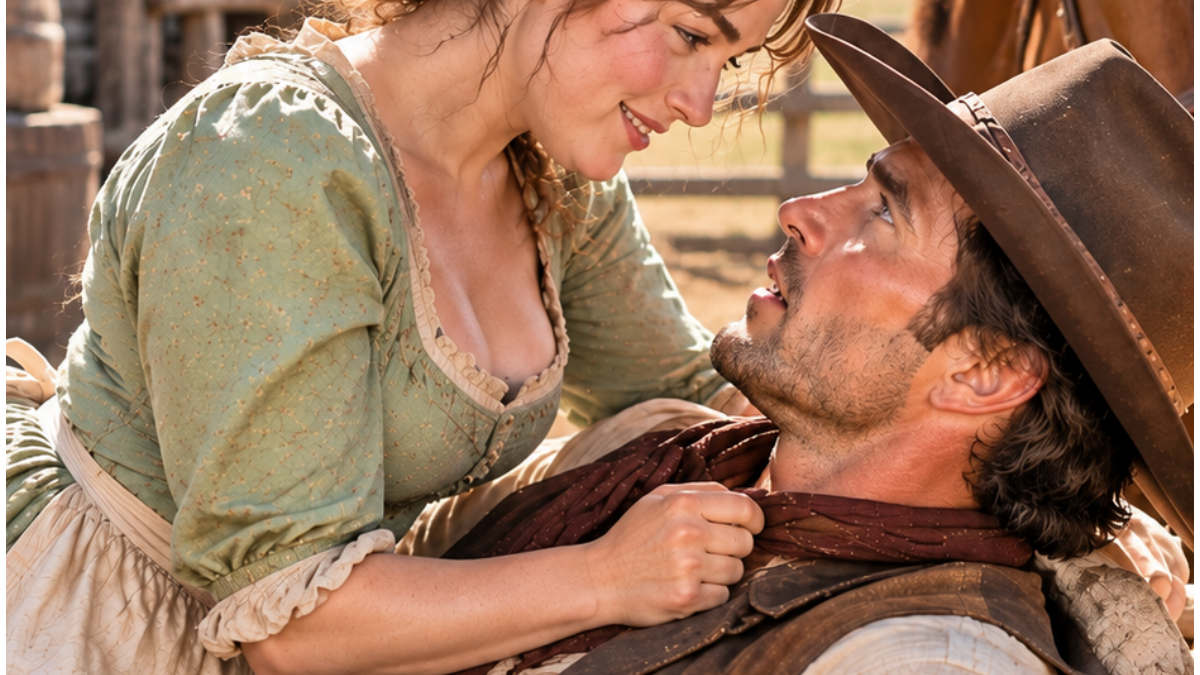
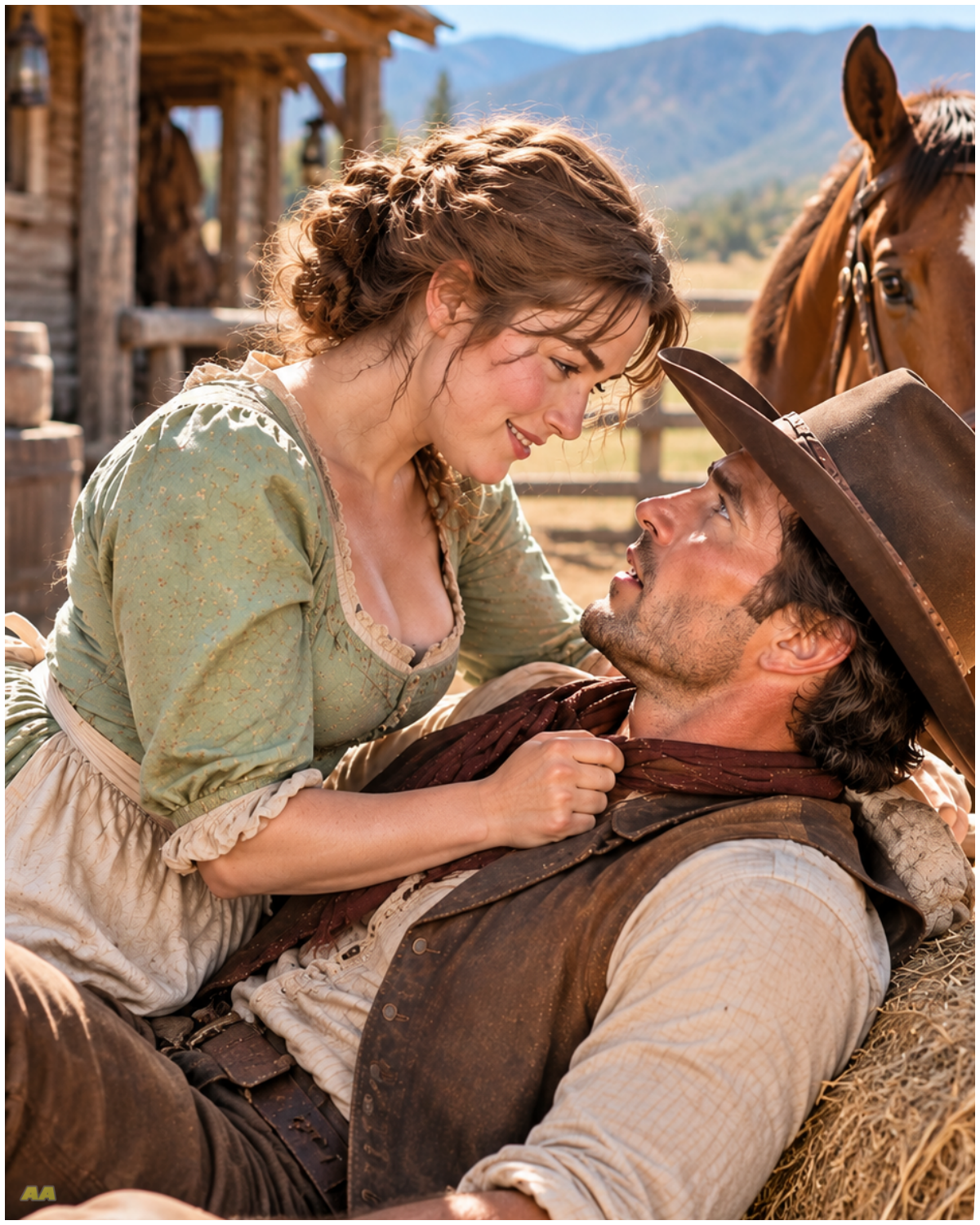
Get off my horse.
The man’s voice cracked through the midday heat like a whip.
But the woman already had the rains, already had her boots in the stirrups, already had the terrified animal pointed straight into traffic.
She didn’t look back.
She rode.
Gideon Mercer stood frozen on the platform of Red Willow station, holding the suitcase of a woman he had never met, watching his mail order bride steal a stranger’s horse and disappear into a wall of summer dust 30 seconds after stepping off the stage coach.
Silas Boon pulled his hat off slowly.
“That your quiet wife?”
Gideon’s jaw locked.
“Apparently.”
Gideon Mercer had spent three months crafting the most reasonable advertisement in the history of matrimonial correspondence.
He had rewritten it twice. He had read it back to himself in the kitchen alone at 11:00 at night with a cold cup of coffee going stale beside the lamp.
And both times he had decided, “Yes, that is exactly what I need.”
Those are exactly the right words.
Rancher 39, New Mexico territory.
Widowerower, honest operation and stable, seeking a sensible woman, gentle of temperament, comfortable with ranch life, no appetite for unnecessary excitement, quiet preferred.
He had not put quiet, preferred lightly.
He had meant it the way a man means a thing he has thought about deeply and arrived at through genuine experience with the alternative.
His late wife Margaret had not been a difficult woman.
She had simply been unhappy in the West from the first month to the last.
And she had been too proud to say so until the unhappiness had eaten through everything they had tried to build together.
She had gone back to her family in Ohio 6 years ago.
She had died there two years later of a fever, and Gideon had grieved her with a particular kind of guilt that had no clean name, because he had grieved not only the woman, but the years they had wasted being wrong for each other.
He was not making that mistake again.
Quiet preferred meant.
I know what I’m doing.
I know what I need.
Send me a woman who fits the life already here.
Not a woman who needs the life rebuilt around her.
3 weeks after mailing the advertisement, a letter arrived from Missouri.
The handwriting was clean and direct.
No flourishes.
My name is Adelaide Vale.
I am 30 years old. I grew up around horses my uncle traded and trained them.
And I worked his operation from the time I was old enough to be useful.
I can keep accounts. I can manage a household on a tight figure.
I am not interested in idleness and I am not afraid of hard country.
I have read your advertisement carefully and I believe I understand what you are looking for.
She had not mentioned being quiet.
He had told himself that was simply because it went without saying.
He had been wrong about that.
The way a man is wrong about something he very much wanted to be right.
The noon stage coach arrived at 7 minutes past 12 trailing a rooster tail of red dust.
And Gideon was already there hat in hand standing straight the way a person stands when they told themselves this is a practical arrangement and they are not going to be nervous about a practical arrangement.
Silas stood two feet to his left doing nothing useful except existing.
You look like you’re waiting for a verdict, Silas said.
I’m waiting for the stage.
Same thing this morning.
I reckon. The coach rocked to a stop.
The door swung. An older woman in a gray traveling dress descended first, followed by two men who moved like drummers, one of them already scanning the street for the nearest saloon.
And then last, a woman stepped down who made the whole street rearrange itself in Gideon’s eyes without moving more than three feet.
She wasn’t remarkable in any one way.
Chestnut hair pinned up under a plain traveling hat.
Gray green eyes that moved over Main Street the way a buyer’s eyes move over a horse at auction.
Not admiring, assessing, she had one bag.
Her posture was the kind that doesn’t need to announce itself.
She found his face across the crowd in about 4 seconds.
She gave him a single nod.
I see you. I’ll be there shortly.
Not nervous, not eager, not performing a single thing.
Gideon had time to think, “All right, maybe this was a reasonable idea after all.”
And that was when the bay geling three buildings down snapped its lead, tangled its harness in a wagon wheel, and exploded into the middle of Main Street at full panic.
People scattered left and right. A child got yanked off the boardwalk by her mother.
The freight wagon it had been hitched to caught the wheel rut at the wrong angle and the whole rig tipped sideways with a crack of wood loud enough to be heard two blocks over.
The geling was running blind, whites of his eyes showing the twisted harness dragging and banging behind him and making the terror worse with every stride.
Gideon shoved forward wrong side of the crowd.
Horse already passed him already 40 feet down the street and building speed toward the open road at the south end of town behind him he heard the soft thud of a bag hitting the ground he turned Adelaide Vale had not moved toward him she had moved toward the nearest hitching rail where a spotted gray geling stood watching the chaos with pricricked ears she pulled the knot free with one smooth motion grabbed the main and swung hung up without touching the stirrup.
“Ma’am!” Gideon shouted.
“She was already moving. She did not chase the runaway hard.”
That was the thing that stopped him mid-stride.
She wasn’t riding like someone trying to catch a horse.
She was riding like someone who understood a frightened animal isn’t a problem you solve by adding more speed to it.” She brought the gray alongside at a matching pace.
20 ft to the right and she started talking.
He couldn’t hear the words from where he stood.
He could see her shoulders loose.
Deliberate, not tense. He could see the way she kept the gray steady without crowding the geling space.
The way a person does when they’ve spent a lifetime understanding what panic looks like in an animal and what it needs to stop.
She turned him at the last possible moment before the south road opened up one slow degree at a time.
The gray drifting almost imperceptibly into the geling’s path until the angle was changed and the corral gate at the edge of Harmon’s yard was straight ahead.
And then the gate was open and the runaway was through it and the gate was swinging shut behind him and Adelaide pulled the gray up short and the whole street went silent except for the sound of the captured horse blowing hard against the corral fence.
For a moment nobody moved. Then somebody in front of the general store started clapping and a few more voices joined it and Gideon stood in the middle of Main Street with a woman’s suitcase in his hand and the particular feeling of a man who he has just watched carefully considered plan for a predictable life get rearranged in under four minutes.
Adelaide stepped down from the gray, straightened her hat, walked back to collect her bag without hurrying, and closed the remaining distance between them with the not just done anything remarkable and sees no reason to treat it as if she has.
She stopped 2 feet in front of him.
Mr. Mercer, she said, not a question.
He looked at her for a moment.
That horse, he said, was not yours.
No, she agreed. And the horse you rode to catch it wasn’t yours either.
Also correct. You took a stranger’s animal without asking.
She met his eyes without blinking.
I did. I’ll apologize to the owner directly.
A beat. Would you have preferred I let the geling run through the south road and into the open desert.
Gideon opened his mouth. Closed it.
I asked you for a quiet woman, he said finally.
The words came out lower than he’d intended, which was probably fortunate for both of them.
She tilted her head exactly one degree and I traveled 900 m across the country alone to get here.
She let that sit for a moment.
At what point in that sentence did I sound quiet to you, Mr.
Mercer? Behind him, Silus Boon made a sound he converted immediately into a cough.
The wagon ride to the ranch covered seven miles of dust and silence.
Not the empty kind of silence, the kind with mass to it.
The kind that happens when two people both have a great deal to say and are independently calculating the cost of saying it firSt. Gideon drove.
Adelaide sat beside him with her, watching the country with those assessing eyes, and he watched the road and told himself he was not rattled.
He had been thrown by horses larger than this situation.
He was fine. You’re angry? She said at the 2-m mark.
I’m not angry. Your knuckles have been white since we left town.
He looked at his hands. Loosened his grip.
I’m not angry, he said again.
I’m He stopped. What was he?
He searched himself honestly. Because he was at his core, an honest man, even when it was inconvenient.
I’m unsettled, he said finally. She nodded once.
Like that was a reasonable thing to be.
I want to tell you something, she said.
And I want you to actually hear it, not just wait for it to end.
Go ahead. I read your advertisement three times.
I know what it said. Every word.
She kept her eyes forward. I answered it deliberately with full knowledge of the words in it.
I did not deceive you about anything I wrote in my letters.
I told you I understood horses.
I do. I told you I can keep accounts.
I can. I told you I was not afraid of hard country.
A pause. I am not. You didn’t know.
I didn’t mention the horse. She turned to look at him directly.
Because a person writing a letter cannot list every situation they might respond to in an unexpected way.
You asked if I was sensible.
Catching that animal before it ran into the desert was sensible.
You asked if I was capable.
Catching that animal before it ran into the desert was capable.
Her voice was even not defiant.
What you wanted was for those qualities to look a certain way.
That part I can’t help. Gideon stared at the road.
He had a number of responses available to him.
He went through them. Most of them didn’t survive examination.
Why did you answer it? He asked.
The advertisement honestly. She was quiet for a moment.
The wagon creaked. A hawk tilted on the updraft above the ridge to the eaSt. Because it said useful in every line except the ones using different words, she said, “Because a working ranch in the territory is a place where what a person can actually do matters more than how they’re supposed to look doing it.” She looked at her hands in her lap.
“I have spent the better part of 30 years in situations where the second thing was considered more important than the firSt. I needed that to change.” Gideon sat with that for a while.
Then, and the quiet part. I’m quiet about things that don’t need saying.
She glanced at him sideways. Turns out there are fewer of those than most people think.
Something shifted in his chest that he chose not to examine too closely.
We have rules on the ranch, he said.
I expect so. We rise at 4:30.
Cattle get checked before breakfaSt. Nobody goes to the north pasture alone.
The fence near the ridge is unstable in sections and I haven’t had the hands to fix all of it.
Feed schedule is posted in the barn.
He paused. I run a clean operation.
I keep my word. I expect the same.
That’s reasonable. And I need to know he stopped himself.
Say it, she said. He looked at her.
Are you going to fight me on every decision I make regarding this ranch?
She held his gaze for a long level moment.
I’m going to tell you when I think you’re wrong, she said.
I am not going to pretend otherwise because it would make things more comfortable.
A beat. But no, I’m not going to fight you on every decision.
I’m going to fight you on the wrong ones.
She paused. So far, you haven’t made any.
I haven’t made any decisions yet today.
You drove the wagon straight without cutting the rocky corner on the east bend.
It would have been faster but harder on the wheels.
She looked forward. That’s a decision.
It was the right one. He stared at the road.
He had cut that corner without thinking about it.
He had cut it from habit.
He had been cutting it correctly for 11 years.
He had no idea what to do with a woman who noticed that.
One more thing, she said, and this one matters.
What? Which rules are mine? He turned to look at her.
What? You’ve listed your rules. The ranch schedule, the fence, the feeding.
Those are yours. They make sense.
She held his eyes. But if this is supposed to become my home, too, then I’d like to know what part of it is mine to decide.
Where does your authority end and mine begin?
Her voice didn’t rise. It didn’t need to because I didn’t come 900 m to live in someone else’s life.
Gideon, I came to build one.
The sound of his given name in her voice.
Used for the first time without asking, landed somewhere unexpected.
He drove in silence for a full/4 mile.
Then I’ll think on that. Fair enough, she said, and she looked back at the road and let him think.
He had not told her about the money.
That was the thing sitting cold and solid in the back of his chest the whole rest of the drive.
He had not lied. He had not written anything false in his letters, but a man who describes his operation as modest but honest while sitting on 14 months of deficit and a bank note coming due in 6 weeks is not being entirely forthcoming either.
And Gideon Mercer knew the difference between silence and honesty and knew exactly which one he had been practicing.
He told himself there would be a right moment to bring it up.
He told himself this the way a man tells himself things he knows aren’t true.
The reverend came from Red willow at 4:00.
The ceremony took place on the porch in the long amber light of a July afternoon with Silas as witness and two wooden chairs and the sound of cattle moving in the far pasture.
Gideon stood in front of a man of God and a woman he had known for approximately 3 hours and said, “I do.” and meant it in the specific stubborn way.
He meant most things, not romantically, not certainly, but with the full weight of a man who is given his word and intends to keep it regardless of what it costs.
He watched her say, “I do.” She said it without hesitation, without performance, without glancing away.
That steadiness hit him somewhere he hadn’t been prepared for.
He looked at this woman, this stranger in his yard with her practical hat and her traveling dust and her gray green eyes and thought she knew exactly what she was walking into.
She said yes anyway and he didn’t know quite what to do with the respect that arrived alongside that thought.
Unwanted and precise, Silas produced a jar of preserved peaches from somewhere no one asked about.
They drank coffee. They watched the sun go horizontal.
Nobody said much. When the reverend left and Silas drifted toward the bunk house, Adelaide set her cup down and walked inside to look the house.
Gideon sat on the step. He heard her footsteps moving through the kitchen.
Measured, taking inventory, the sound of the sideboard drawer, the left one, where he kept the correspondence and the bills, and then a longer silence.
She appeared in the doorway. She had the ledger book in her hands, not accusatory, not alarmed.
The way a person holds a thing that reframes everything they thought they were looking at.
She looked at him. He looked at her.
The feed merchant on page four, she said.
You’ve been paying 20% above market rate for at least 8 months.
His stomach dropped. That’s what he charges.
That’s what he charges you. She turned a page.
This lone march extension was any interest to negotiated Adelaide Gideon.
Her voice was even no anger.
Something worse clarity. How much do you owe the bank in Red Willow?
He told her. He told her the number and the date and the full 14 months of it.
The drought cutting his grass, the beef prices dropping, the feed costs climbing, the slow, quiet disaster of a ranch bleeding out one season at a time while he kept his head down and worked harder and hoped that the birds would change because he didn’t know what else to do.
She listened without interrupting. When he finished, she set the ledger on the porch railing between them, turned it so he could see the page she’d found, and pointed to a column of figures.
You have 44 days, she said.
43. 43. She didn’t blink. Why didn’t you say this in your letters?
There it was. Flat and unavoidable as a wall.
He looked at the ledger. A man doesn’t invite a woman across 900 m leading with his failures.
No, she studied him. But a man about to make a woman his partner might consider telling her what she’s partnering into.
The word partner landed between them like something new.
“Not accusing, not soft either, just real.
You’re right,” he said. “I should have told you.” She held his gaze for a moment.
Then she looked out at the pasture, the dry summer burned grass going orange in the last light.
“Is there anything else?” she asked.
“Any other piece of this I should know before we’re further in.” “A neighboring rancher named Crowell has been watching this property for a while.
He makes offers. Why does he want it?
I’m not entirely sure. She nodded slowly.
Filed it. All right, she said.
He waited. All right. What? All right.
We have 43 days and we should understand exactly what we’re dealing with before we waste any more of them.
She picked up her coffee cup.
I’m going to need access to every bill, every contract, every letter from the bank, and I want to see the property map tonight.
She looked at him with the expression of a woman who considers that a strange question.
Yes, she said. Tonight, she was already at the kitchen table when he came downstairs at 4:30 the next morning.
Three sheets of paper covered in numbers, a candle burned to a stub.
The ledger opened to a page he didn’t recognize because he hadn’t looked at it that closely in 6 months.
Pencil behind her ear. He stopped in the doorway.
You didn’t sleep, he said. I slept until 2.
She didn’t the freight merchant. What competition exist between here and Las Vegas?
He walked to the stove. He needed coffee before he had this conversation.
He needed coffee the way a man needs solid ground under his feet.
Callaways and Pedra’s half days ride.
He said, “Do they take new accounts?
I’ve never needed to ask.” She made a note.
Also, the bank note. Is it held personally Driscoll or underwritten to a board account?
Board account. Driscoll manages it. Her pencil stopped moving for one second.
Better, she said with a certainty that made him straighten.
Better. How? A board account has multiple decision makers.
Multiple decision makers means there’s a process and a process means there’s a way in.
She looked up at him for the first time.
Something moved across her face. Not excitement exactly.
But the particular focus of a person who has located the edge of a problem and can now see what shape it has.
Sit down, Gideon. The coffees made.
He sat. He looked at the papers spread across his kitchen table.
The numbers organized in columns he hadn’t thought to create.
The notes in the margins, cross-referencing figures from three different pages of the ledger.
She had been doing this since 2:00 in the morning.
He thought about the advertisement he had written.
Sensible, gentle, no appetite for excitement.
He thought, “What did this woman read in those words that I didn’t put there?” And then immediately, what if she read exactly what was there and I was the one who didn’t understand what I was asking for?
He drank his coffee. She turned to a new sheet of paper and began a fresh column.
Outside the desert, dark was giving up its grip on the horizon.
Going pale and then pink, and the ranch was starting to make its early morning sounds.
Cattle moving, something rattling in the barn, a bird announcing the day from somewhere in the cottonwoods.
Inside the woman he had married for quiet was building a plan in the lamplight with a pencil and a stubbornness that he was beginning to understand was not a problem he had acquired.
It might be the only thing standing between him and losing everything he’d spent 11 years building.
He wasn’t entirely sure how he felt about that.
He was starting to think grateful might be part of it.
Thaddius Crowell arrived on the fourth day.
He came on a clean quarter horse that cost more than Gideon’s entire wagon rig.
And he smiled when he rode up the same way certain men smile not at you.
Exactly, but at the situation around you, the way you might smile at a chessboard when you can see three moves ahead.
Gideon was at the gate. Silas was near the barn.
Adelaide appeared on the porch without being called, drying her hands on a workcloth and stood watching with her arms loose at her sides.
Crowell touched his hat at her.
A long assessment, brief and polished.
Then he looked at Gideon. Heard you took a wife, he said.
Congratulations, Mr. Crowell. Gideon kept his voice flat.
What brings you out? Crowell didn’t answer immediately.
He dismounted the way powerful men do without urgency.
As if time were a thing he owned and the rest of the world rented.
He produced a folded document from his coat pocket and extended it with two fingers.
Surveyed offer $8,600. Stock included. He watched Gideon take the paper without opening it.
That’s generous math in a dry summer.
Gideon, I’m not selling. Of course not.
Cra’s smile didn’t shift. You built something here.
A man doesn’t walk away from what he built.
He glanced toward the eastern pasture.
To the burned grass, the low water trough, the mended fence section that hadn’t been mended well enough.
He looked at all of it without appearing to look at any of it.
September has a way of changing a man’s arithmetic.
He let the sentence stand where it landed.
Then he touched his hat toward Adelaide.
Ma’am, he said, “Welcome to New Mexico territory.” She looked at him with those gray green eyes that never performed a single thing.
Mr. Crowl, she said. He mounted, rode back the way he’d come.
Still unhurried, still smiling at the chessboard.
When the dust settled, Adelaide came down from the porch and stood beside Gideon.
Both of them watching the empty road.
He’s been watching this property for longer than a few months, she said.
How do you know? Because he didn’t look at the grass or the water trough to assess them.
She kept her eyes on the road.
He looked at them the way someone looks at things they already know.
He wasn’t gathering information today. She paused.
He was delivering a message. Gideon felt something cold move through his chest that had nothing to do with the heat.
What message? That he already knows about September and that he’s counting on it.
She turned toward the house. I need the property map now.
She found it in under an hour.
The survey map across the kitchen table lamplight despite the afternoon sun outside because the windows faced west and the glare came in sideways and made the lines hard to read.
She leaned over it with both hands on the edges and moved her eyes across the property lines.
The water notations, the neighboring boundary markers.
Gideon watched her find it. He could see the moment it happened.
The particular stillness that comes over a person when disperate facts suddenly resolve into a single clear shape.
Cottonwood draw, she said. Seasonal creek bed dries up most summers.
Where does the water route go when it runs?
He traced it with his finger.
North fence line through the lower east pasture out through the southern corner.
She placed one finger on Crowell’s northern holdings, another finger on his southern grazing territory marked on the neighboring survey.
Between them the Mercer property and through the Mercer property.
Cottonwood draw. She was quiet for a long moment.
He doesn’t want your ranch, she said.
Gideon looked at her. He wants the corridor.
Her voice was level. Precise. Own your land.
He owns the only viable water route connecting his two operations.
Cattle movement without a 4-hour detour.
Watering rights for every smaller operation within range of that draw.
Strategic control of this entire section of the territory.
She straightened. You’re not in debt trouble, Gideon.
You’re in the middle of a land play.
She held his gaze. Your land is worth significantly more than he offered you, and he is absolutely counting on September to get it for nothing.” The kitchen was very quiet.
Outside, the summer pressed against the walls.
Gideon looked at the map at the water route running through the middle of his property like a line someone else had drawn.
At the careful, patient geometry of what Thaddius Crowell had been building for God knows how long.
That changes everything, he said. Yes.
Adelaide looked back at the map.
So does this. She pointed to a notation in the southwest corner of the survey.
Small text. The previous owner’s handwriting.
Faded but legible. Irrigation ditch or 1,879 Eastern Pasture Diversion.
Gideon leaned closer. That ditch has been clogged for years.
Hasn’t run since before I bought the property.
She looked at him. How long would it take to clear it?
He did the math in his head slowly.
The way a man does when an impossible thing is starting to look at very narrow angles possible.
Three men, he said. A week, maybe less if the main blockage is in the upper section.
She nodded, turned to a clean sheet of paper.
Then that’s where we start. She began to write the list taking shape under the pencil.
Systematic, no wasted motion. And Gideon watched her and felt the particular sensation of a man who went looking for one thing and found himself standing in front of something he didn’t have a word for yet.
He had asked for quiet. He had not known when he wrote that word.
That what he was actually asking for was someone who could walk into the middle of his slow disaster and see not ruin but geometry.
Not an ending, but a set of solvable problems arranged in the wrong order.
He had not known that what he needed and what he thought he wanted were two entirely different things.
He was starting to understand that this woman, this impossible, impractical, unbiddable woman who had stolen a horse 4 minutes after arriving, had known it before she even answered his advertisement.
The lamp burned between them. The map lay open on the table.
And for the first time in 14 months, Gideon Mercer allowed himself to think that September might not be the end of something.
It might be the beginning. The list Adelaide had made that night covered both sides of a single sheet of paper.
And by the time Gideon read it the following morning, she had already added three more items in the margin.
He stood at the kitchen table reading it while she finished her coffee.
And he had the specific experience of a man discovering that someone has reorganized his house while he slept everything in a more logical place, but nothing where he expected it.
The freight contract, he said, “You want to renegotiate it this week before the end of the week?” She said, “Every week we wait is money we don’t have going to a man who’s already overcharging us.
Callaways in Padress is half a day’s ride.
Then we leave early, she set her cup down.
Also, the two horses you have marked for sale in the ledger.
The chestnuts second and third stall.
What about them before you sell them?
I want to look at them.
He looked up from the paper.
They’re sound horses. I’m sure they are.
She met his eyes without flinching.
I’d still like to look at them firSt. He told himself he wasn’t going to argue about horses with a woman who had been on his property for fewer than 5 days.
He told himself that with complete conviction and then heard himself say after breakfaSt. After breakfast, she agreed.
That was how their morning started.
Not with warmth. Exactly. And not with hostility.
With the particular rhythm of two people who are both used to working alone and are discovering with some friction that working together requires a different set of muscles.
Silas watched all of it from a careful distance and kept his opinions to himself, which was the most useful thing he did in those first two weeks and possibly the hardeSt. The horses were in the second and third stall the way Gideon had said.
Two chestnuts, four and six years old, both well-formed, both reasonably calm.
When he brought Adelaide into the barn that morning, he stood back and watched her move around the first one with the quiet efficiency of someone who has done this a thousand times, not performing competence, simply using it.
She ran her hands down the front legs first, checked the knees, asked Gideon to walk the horse forward 20 feet and back.
She watched the movement. His left front, she said.
Gideon frowned. What about it? Watch the shoulder when he walks.
There’s a hitch. Small, but it’ll worsen under heavy work.
She stepped back. How much were you planning to sell him for?
$60. He’s a working horse, not a racer.
The buyer will find the hitch within a month and come back angry.
She moved to the second stall.
This one’s fine. Sell this one.
She looked at him over the chestnut’s back.
The other one needs two months of light work and specific handling before he goes to market or you’ll get $30 and a reputation.
He stood very still for a moment.
He had looked at that horse himself.
He had looked at him twice.
He had not seen a hitch.
He walked the horse forward again, watched the left shoulder this time, and there it was barely visible.
A slight favoring, the kind of thing you miss if if you’re not looking for it with the right eyes.
Two months, he said, maybe 6 weeks if the work is consistent.
She came around and stroked the horse’s neck.
I can handle him in the mornings.
It won’t take much time. He should have said, “Thank you.” That was the correct response.
What came out instead was, “You could have told me about the hitch without making me walk him in front of you.” She looked at him steadily.
I could have, but then you’d have had only my word for it.
A pause. This way you saw it yourself.
He absorbed that. Fine, he said, not warmly meant it.
She almost smiled. She was getting harder to read every day, which was the opposite of what he’d expected.
The next thing she broke was a wind lass.
This happened on the ninth day and it happened because she decided to repair it herself rather than wait for Gideon.
And she decided to repair it herself rather than wait because waiting felt to Adelaide Veil approximately like surrendering.
And she had certain feelings about surrender that were not productive.
Gideon came around the side of the barn and found her standing over the mechanism with a wrench in her hand and a broken collar fitting on the ground at her feet and the specific expression of a person who has made miscalculation and is currently absorbing the dimensions of it.
He looked at the windlass. He looked at the fitting.
He looked at her. That he said takes a specific socket to remove without shearing the collar.
I’m aware of that now. It’ll need to be replaced.
That fitting comes from the hardware man in Red Willow and he orders it from Santa Fe and that take 10 days.
I know I asked. Her jaw was set.
Her voice was completely controlled which he was learning was its own kind of weather system.
I was wrong. I should have waited and asked you how the mechanism worked.
The apology landed without decoration. No explanation added to soften it.
No excuse trailing behind it to take the weight off.
Just the plain fact of it stated directly and then silence.
Gideon had been married before. He had been in business with men for 11 years.
He had known in that time exactly three people who could apologize without turning the apology into a defense of themselves.
He looked at her. I’ll send Silas for the fitting tomorrow, he said.
She nodded. And next time he added, “Ask me before you take the machinery apart.” “Next time,” she said.
I will. He picked up the broken fitting.
He turned it in his hands.
He said before he could decide not to.
“The socket you need is on the left side of the toolbench.” Second hook from the end for future reference.
She looked at the toolbench. Looked back at him.
Something shifted in her expression. Not gratitude exactly, but a recognition, an acknowledgement that he had just offered something he didn’t have to offer.
“Thank you,” she said. He walked back around the barn and she stood there for a moment, alone with the broken mechanism and something she was feeling that she didn’t quite have a word for yet.
And then she went back to work.
The cattle escaped on the 14th day.
It was Adelaide’s gate, left improperly secured.
She had been carrying a water bucket in each hand and had hooked the latch with her elbow in a hurry and the latch had not fully caught and by the time anyone noticed 11 head had gone through the south fence and were distributing themselves across the neighboring scrubland with complete contentment.
Gideon said nothing when he saw it.
He just looked at the open gate, looked at the scattered cattle, and turned for his horse.
Silas appeared from somewhere. I’ll take the east draw.
North Ridge, Gideon said. He looked at Adelaide, who was already saddling the spo spot Mare she’d been working with.
South, she confirmed. They spent 4 hours in the July heat rounding up 11 cattle from that did not cooperate and brush that grabbed at everything and pulled.
When they came back with the last two strays, Gideon got down from his horse and secured the gate himself properly.
Methodically without looking at her. Then he looked at her.
He had a speech prepared. She could see at the measured careful anger of a man who has thought about what he wants to say while doing 4 hours of additional work in brutal heat.
Before he got the first word out, she said, “I know the latch.
I was careless and it cost us half.
I’m sorry.” He stood there with the speech still in his throat.
I’ll fix the latch mechanism this afternoon so it can’t happen again, she continued.
And I’ll repair the fence section near the south post where one of them went through.
I noticed it was weak when I was bringing them back.
He was quiet for a long moment.
You saw the fence section? Yes.
While you were rounding up cattle, I was out there for 4 hours, she said.
I looked at things. Silas, who had not been part of this conversation, found somewhere else to be with remarkable efficiency.
Gideon took a slow breath, let it out.
The fence section needs new wire on the third and fourth poSt. There’s a roll in the back of the barn.
I’ll find it. And Adelaide, she waited.
The latch on the south gate has always been bad.
I should have replaced it in the spring, he said it flatly.
Like someone setting down a piece of weight they’ve been holding too long.
That’s on me, not just on you.
She looked at him for a moment.
Long enough to see that he meant it.
All right, she said. All right, he said.
They were getting better at that, at finding the flat territory on the other side of an argument where things could simply be resolved.
It wasn’t graceful. It wasn’t warm, but it was real and it held.
She named the chestnut mare Juniper, which Silas thought was a fine name, and Gideon thought was irrelevant information.
The mare was difficult. Not mean, not the kind of difficult that comes from bad handling or a ruined temperament, the kind of difficult that comes from being intelligent and easily bored and deeply uninterested in being told what to do by someone she hadn’t yet decided to respect.
Adelaide understood this about her in a way that might have been recognition.
On the third morning of working with her, Juniper threw Adelaide into the corral dust without warning.
Silas saw it happen from the fence post where he was theoretically repairing a loose board and practically watching everything.
Adelaide hit the ground rolled and was on her feet in the time it takes a man to decide whether to move.
She was dusty from one shoulder to the opposite boot.
She looked at Juniper who looked back at her with large “I dislike her,” Adelaide said.
Silas waited. She walked to the fence rail, picked up the saddle she’d set there.
And walked back toward the mayor.
“Saddle her again,” she said to no one in particular because Silas wasn’t involved and Juniper wasn’t cooperating.
She saddled the horse herself. She got back on.
Juniper tensed under her and shook her head and thought about it.
And then for reasons known only to herself, decided not to throw her again.
Adelaide rode three quiet circles of the corral.
She got off, gave the mayor a measured pat on the neck, respectful, not ausive, unsettled her, and put her back.
She picked her hat off the fence post and knocked the dust off the brim and settled it back on her head.
Good session, she said to nobody.
Silas, who had been watching the whole thing, turned back to his fence board and said nothing.
But something had changed in his face that hadn’t been there before.
The particular look of a man who has revised an opinion he thought was settled.
By the third week, something had shifted in the house.
Not dramatically, not in any way that could be pointed to and named.
But Gideon came downstairs one morning to find that she’d reorganized the tool shelf in the kitchen, not his tools.
Her own things, a small area near the window she’d claimed for the ledgers and correspondence.
And instead of the instinctive resistance he’d been expecting in himself, he felt nothing except the thought.
She needed somewhere to work, and she found it.
That was it. The thought arrived and settled, and he went for his coffee, and that was the end of it.
She started learning the cattle rotation from Silas.
Not from Gideon, she asked Silas specifically, which Gideon noticed and didn’t say anything about.
He suspected she did it that way deliberately to give him one area of the ranch that didn’t feel like she was reorganizing it.
He appreciated it without knowing quite how to say so.
Silas, for his part, had shifted in the way older men shift when they encounter someone who surprises them slowly.
Without announcement, the way a river changes course.
He stopped waiting for Adelaide to ask the wrong question and started simply answering her right ones.
He started telling her things about the land without being asked.
Which pasture drained fastest? Which cattle responded to the bell?
And which needed pushing? Where the ground got treacherous after rain even in a dry summer?
One afternoon, Gideon came in from the north fence line and found Silas at the kitchen table with a cup of coffee and Adelaide across from him with the cattle ledger open between them.
And they were arguing genuinely, comfortably arguing about the projected weight of three specific animals before sale.
Silas said one number. Adelaide said he was underestimating.
Silas said he’d been estimating cattle for 40 years.
Adelaide said she wasn’t disputing his experience with the cattle.
She was disputing his math. Silas opened his mouth, stopped, looked at the ledger, looked back at her.
“Huh?” he said. “Huh? What?” she said.
“You’re right,” he said. Like it cost him something, but not too much.
Gideon poured himself coffee and sat down at the end of the table and said nothing because the scene in front of him was doing fine without his involvement.
He thought she’s been here 3 weeks and then the ranch feels different.
Not rescued, not fixed, but different in the specific way of a place where two people are working instead of one where the weight is distributed differently and the weak points are being seen by more than one set of eyes.
He wasn’t sure what to do with that feeling.
He drank his coffee and told himself he’d figure it out later.
They rode into Red Willow together for the first time on a Thursday.
It was a supply run feed negotiations bank correspondence.
A letter Adelaide needed to send to a contact in Missouri who knew the timber freight market.
Nothing remarkable about the purpose. The town, however, had opinions.
Gideon felt them before anyone said anything.
The particular quality of attention that small towns apply to new elements, not hostile.
Precisely, but assessing in a way that has a hardage to it.
Adelaide walked into the general store beside him like she’d been doing it for years, which was the kind of posture that either impresses people or irritates them, and rarely does neither.
The merchant, a man named Rudd, watched her looking at the prices on his feed board with an expression Gideon didn’t like.
I understand you’re negotiating the feed contract, Rudd said.
Not to Gideon, to Adelaide with the tone of a man who has decided that addressing the insult directly is more efficient than ignoring it.
I’m looking at your current rates, she said pleasantly.
Comparing them to Callaays and Pedra’s.
Rudd’s expression sharpened. Callaways is half a day’s ride.
Yes, his prices are also 15% lower on bulk grain.
She set the paper she was holding on the counter between them.
I’ve written out what we need for the next 4 months.
If you can match this rate, we keep the contract here and save us both the inconvenience.
If not, we ride to Pedras.
Rudd looked at the paper, looked at Gideon.
Gideon said nothing. He had decided before they left the ranch that this was Adelaide’s negotiation, and his job was to stand next to her and be quiet, which was a reversal he hadn’t fully anticipated, but found himself comfortable with.
Rudd’s jaw moved. He looked at the numbers again.
I can do 10%, he said finally.
15, Adelaide said not aggressively. The way someone says an obvious truth.
Another pause. 12 and a half.
Rudd said. Done. She said. She held out her hand.
He shook it. He didn’t look happy about it, but he didn’t look like a man who’d been cheated either.
Which was the point. And the three of them knew it.
Outside on the boardwalk, Gideon fell into step beside her.
12 1/2%, he said. I would have taken 10, she said.
But he didn’t know that. He was quiet for a moment.
And then he did something. He hadn’t expected to do.
He laughed short and real and surprised out of him.
Not a polite sound, an actual one.
She glanced at him sideways. The ghost of a smile.
They walked to the next stop.
The trouble came from a woman named Mrs. Hol who represented a particular variety of Red Willow opinion that wore its judgments like a badge of civic responsibility.
She appeared at the edge of the hardware store.
While Adelaide was looking at replacement fittings, the windless collar finally replaced and she looked Adelaide over with the practiced eye of someone who has decided and is confirming rather than deciding.
Mrs. Mercer, she said the name carried a weight of meaning that the two words alone didn’t explain.
Mrs. Holt Adelaide said she knew who the woman was.
Silas had described her in three sentences one morning with the efficiency of a man summarizing a familiar weather pattern.
I see you’ve taken to managing the ranch business yourself, Mrs. Holt said pleasantly.
I help where I can, Adelaide said.
Of course, a pause. It’s only that some of the ladies were wondering we have a quilting circle on Wednesday afternoons.
Women new to the area usually find it a good way to become part of the community.
Adelaide looked at her with the expression of identifying the actual offer inside the stated one.
That’s kind, she said. My Wednesdays are fairly committed at the moment with the ranch.
I see. Mrs. Holt’s voice stayed smooth.
I suppose running the Mercer ranch doesn’t leave much time for ordinary things.
I’m not running the Mercer ranch, Adelaide said.
I’m helping my husband manage it.
She picked up the fitting she needed and turned toward the counter.
I appreciate the invitation, Mrs. Holt.
When things settle, I’ll try to come by.
She paid for the fitting and left.
And Gideon, who had been standing 6 ft away, loading nails into a sack and listening to every word of the exchange, followed her out.
On the boardwalk, she’ll tell everyone in town you refuse the quilting circle.
I expect so. Does that bother you?
She thought about it honestly, which was the only way she thought about things.
A little, she said. Less than sitting in a room making small talk about nothing while the accounts go unfinished.
She glanced at him. Does it bother you?
He considered the question the same way.
No, he said and meant it.
Something settled between them that hadn’t been there before.
Small, quiet, real. They loaded the wagon and drove back toward the ranch, and neither of them felt the need to fill the silence.
Later that week, Gideon was in town alone, waiting on a letter at the post office when he encountered Davis Rudd outside the saloon.
“Rudd was with two other men,” Gideon knew slightly ranch hands from the crow operation, which was its own information.
“Your wife talks like she’s running the ranch,” Rudd said.
“Not unkindly, the observation of a man who has decided this is a legitimate thing to say in public.” Gideon looked at him.
Someday she is. He said he walked on.
He didn’t say it to be provocative.
He said it because it was true and he was an honest man.
And the calculation of what people would think of him for saying it had stopped being the loudest calculation in his head.
Somewhere around the time Adelaide had spent 4 hours helping round up cattle that had escaped through her mistake and then come back and fix the fence.
The crow hands exchanged a look.
Gideon collected his letter and drove home.
Adelaide was in the corral with Juniper when he got back.
Working the mayor through a pattern at a trot with the focused patience of someone who has decided that this horse is worth however long it takes.
The mayor was moving clean. No tension in the shoulder.
Ears forward, not performing, but working.
He leaned on the fence rail and watched.
She hadn’t seen him come back.
She was fully absorbed. Talking low to the horse in the way she did, not narrating, not praising, just communicating.
And the mayor was listening with every line of her body.
Silas materialized beside him at the fence.
She’ll have that horse sold inside two months.
Silas said, “Neighbors going to come looking for her once word gets out.” Word about what?
That she can do what she does.
Silas watched Adelaide bring the mayor back to a walk.
Already had a man from the Ortega place ask me yesterday if the Mercer ranch was taking in horses for training.
Gideon looked at him. What did you tell him?
Told him I’d ask. Silus looked back at the corral.
You might want to consider it.
Extra income uses what she’s good at.
Doesn’t require anything from the cattle operation.
He paused. Just a thought. It’s her decision.
Gideon said. Silas turned to look at him.
What? Gideon. Nothing, Silas said. But his face was doing something that was definitely not nothing.
It was the face of a man watching a thing arrive that he’d been waiting to see for a while.
The thing that happened between them on the 22nd night didn’t announce itself.
It started as an argument about the herd.
Gideon had been running the numbers again.
The drought had deepened another degree in the past week.
The grass on the eastern pasture was below what it should be and the cottonwood draw had not run in 6 weeks.
Water management was becoming the central problem of every day and the calculation of how many head they could support through August on current resources was one he’d been redoing every night with incrementally grimmer results.
His conclusion, sell a third of the herd now before prices dropped further.
He told her at the dinner table.
She put her fork down. If you sell at current prices during a drought when every rancher in the territory is selling, she said, you’ll get 40 cents on a dollar.
If I don’t sell and the water situation gets worse, I’ll lose the animals entirely.
The ditch the ditch is going to take 6 weeks minimum to clear, and there’s no guarantee the upstream water is running when we open it.
His voice was harder than he intended.
I’ve been managing this land for 11 years, Adelaide.
I know what a dry July means by AuguSt. And I’ve been looking at your accounts for 3 weeks, she said.
Equally measured. If you sell a third of the herd at 40 cents on the dollar, you take a loss that puts you behind where you were before we started any of this.
Cruel gets exactly the September he’s been planning for.
If I don’t sell and we lose the animals to thirSt. Cruel gets an even better September.
Then we find another way. There isn’t another way.
There is always another way. Her voice stayed level.
But something under it had sharpened considerably.
The ditch, the lease on the south acreage, the horse training income, the renegotiated contracts.
None of this works if you sell the core herd at panic prices.
We need time, not transactions. I’m trying to protect what we have.
You’re trying to protect it the same way you’ve been protecting it for 14 months, she said.
And it hasn’t been working. The silence after that was considerable.
Gideon pushed back from the table.
He stood up. He walked to the window and stood with his back to the room, looking at nothing in the dark outside.
And he breathed. She was right.
He knew she was right. That was the specific torture of the moment.
Not that she’d said something wrong, but that she’d said something accurate in a way that landed against everything in him that was accustomed to being the one who decided things.
I need to think about it, he said finally.
All right, she said. No victory in her voice, no pushing.
He turned around. She was still at the table, her hands around her coffee cup, watching him with those eyes that never performed anything.
I’m not used to this, he said.
The admission came out rougher than he planned to arguing about decisions with someone who has an equal stake.
I know, she said quietly. Margaret didn’t, he stopped.
You don’t have to explain that.
I’m not explaining it. I’m saying it’s different.
He looked at her. Everything about this is different than I planned.
She held his gaze. Is that a complaint?
She asked not combatively. Genuinely asking.
He thought about it honestly. No, he said, “I don’t think it is.” Something in her face shifted, small, almost invisible.
The kind of shift that happens when a person releases something they’ve been holding steady for a while.
And the release is so subtle that you only see it if you’re watching closely enough.
He was watching closely enough. “Get some sleep,” she said.
We’ll figure out the herd in the morning and if I decide to sell, then you decide to sell, she said.
I’ll tell you clearly if I think it’s wrong, and then the decision is yours.
A pause. I’m not trying to run your ranch, Gideon.
I’m trying to help you keep it.
He stood there for a moment with everything he might say lined up, and none of it quite right.
Good night, he said. Good night, she said.
He went upstairs. He lay in the dark for a long time.
Listening to the desert settle into its night sounds.
And he thought about a woman who could argue with him until he felt the argument in his sternum and then stop cleanly without needing the last word and let the decision be his.
He thought, “I wrote that advertisement to find someone who would make this life easier.” He thought, “I don’t think easier was what I actually needed.” He thought about the way she’d looked in the lamplight over the ledgers.
The way she’d gotten back on Juniper.
The way she’d shaken Rudd’s hand at 12 and a half% and known before the handshake that she’d accept 10.
He thought she came here knowing exactly what she was walking into.
She stayed. He fell asleep on that thought.
And the next morning, over coffee before sunrise, he told her he wasn’t selling the herd yet.
She nodded and set her pencil to a fresh sheet of paper and said, “Then here’s what we do instead.” And they got to work.
Crowell came back on a Tuesday morning in the last week of July.
He didn’t come to the ranch this time.
He came to the bank. Gideon found out from the teller a young man named Ames, who had the specific look of someone carrying information he wasn’t sure whether to deliver when he stopped in to make an interest payment on the note.
Mr. Crowell came in Friday afternoon.
Ames said he was staring somewhere past Gideon’s left shoulder to speak with the board about purchasing a loan note.
I’m not supposed to say whose.
Gideon was quiet. Ames, he said.
I’m not supposed to say, Ames said again.
I appreciate that, Gideon said. He laid his payment on the counter, folded, and walked out.
He stood on the boardwalk in the July heat and understood with complete and sudden clarity what Crowell’s actual plan was not to wait for September to own September before it arrived.
If Crowell purchased Gideon’s bank note legally through the board with the kind of money that made boards agreeable, then Crowell wasn’t waiting for Gideon to fail.
He was becoming the entity to whom the failure was owed.
He could call the note, set the terms, foreclose with the paperwork already in order and the whole transaction looking like simple banking.
No violence, no threats, no drama, just finance.
The quietest kind of takeover there was.
Gideon got back on his horse and rode home at a pace he did not usually ride.
Adelaide was in the kitchen when he came through the door.
She looked at his face and sat down what she was doing.
Tell me, she said. He told her.
She was very still for a moment, not afraid.
She didn’t have that kind of stillness.
The stillness of a person who has just received a piece of information that reshapes the situation and is now moving very quickly inside their head.
He’s not buying the ranch. She said he’s buying the clock.
Yes. How close is he to the board?
Close enough that Ames knew about it and looked like he was going to be sick telling me.
She turned and picked up the map from the shelf where they’d moved it for easy reference.
She spread it on the table.
She stood over it with both hands flat on the edge and looked at Cottonwood draw running through the property like the line of a problem with a solution hiding inside it.
We need to move faster, she said.
On the ditch on everything, she looked up at him.
Crowell is trying to own our deadline, so we need to beat the deadline before he can.
Her eyes were steady and clear and something in them that he’d been seeing for a while and hadn’t quite let himself name.
How many men can we put on the ditch?
Silas and me. Maybe one of the Ortega hands if they’ll spare him.
Three men starting tomorrow. It’s a week of work, maybe more.
Then we start tomorrow, she said.
And while you’re on the ditch, I go to Red Willow and I talk to the bank board directly.
She held his gaze. Not Driscoll.
The board. They won’t see you without Driscoll present.
They’ll see me if I show them numbers they want to see.
She said, “Let me worry about getting in the room.” He looked at her across the kitchen table across the map with Crowell’s holdings on three sides of their property across 43 days that had turned into something neither of them had planned and both of them were standing in together.
Adelaide, he said, “Thank you.” He said it simply the way he meant it.
The way he’d been working up to it for 3 weeks without quite arriving until now.
For staying in this when it was worse than I told you it would be.
She looked at him for a long moment.
You stay in it too. She said a pause.
We’re even. He almost smiled. She almost smiled back.
Outside the summer was doing what it did.
Pressing down, drying out, measuring what things were made of.
Inside two people who had started as strangers were discovering something neither advertisement had promised and neither of them had expected to find.
Not comfort, not ease, something better, the kind of thing that holds.
The ditch work started at sunrise the next morning, the way Adelaide had said it would.
Gideon didn’t sleep much the night before.
He lay in the dark running the arithmetic the same way he’d been running it for weeks.
The note, the timeline, crowl at the bankboard, the ditch, the water, the herd, and every time he reached the end of the calculation, it came back the same.
They had maybe 3 weeks before Crowell’s move at the bank became something they couldn’t counter.
3 weeks to make the numbers look different enough that a board of three men in Red Willow would choose to keep their existent borrow or over the offer of a man with deeper pockets.
He was up before 4:00. Adelaide was already to stare.
She had the lamp on and the ledger open and a fresh sheet of numbers in front of her.
And she looked up when he came in and said, “Coffey’s made.
I’ve been thinking about the board meeting.
You haven’t slept either. I slept some.” She pushed a sheet toward him.
Look at these projections. If the ditch opens by the 15th and we can confirm water access, the eastern pasture recovers enough to support the remaining herd through September without supplemental feed.
That changes our cost numbers significantly.
He picked up the sheet. He looked at the figures.
They were careful and they were honest and they were if everything went the way they needed it to go, possible.
That’s a lot of ifs, he said.
Everything worth doing has ifs in it, she said.
She picked up her coffee. How long to clear the upper section of the ditch?
If the blockage is what I think it is, compacted Silton brush.
Maybe some collapsed bank on the north curve.
3 days four. If we hit rock, Silas confirmed the Ortega hand is available.
Manuel, he’ll be here by 7.
She nodded and made a note.
Then you have until Friday to know if the ditch is viable.
I’ll schedule the bank meeting for Monday.
That gives us the weekend to build the presentation.
He looked at her over his coffee cup.
You’ve already decided how this goes, he said.
I’ve decided what we’re aiming for, she said.
That’s different. She met his eyes.
The ditch might hit rock on day two.
Driscoll might refuse to put us in front of the board.
Cra might have already closed the note purchase.
A pause. But none of those things have happened yet.
So today we dig. He held her gaze for a moment.
Today we dig, he said. Manuel Ortega was 19 years old.
Built like someone who had been doing hard physical labor since he could hold a shovel and had the particular gift of working efficiently without requiring conversation.
Silas approved of him immediately on those grounds.
The three men went at the ditch from the upper section down.
The way Gideon had estimated and the first day confirmed the worst of his predictions.
The north curve had partially collapsed, pushing silt and root mass across the channel in a solid wall that had been sitting there consolidating for the better part of 7 years.
It was not a morning’s work.
It was not a pleasant week’s work.
It was the kind of job that shows a man what he’s made of at hour 6 when his back is arguing and the sun is directly overhead.
And the end of the blockage is still nowhere visible.
Silas worked without complaint, which was his baseline.
Manuel worked with a steady rhythm that didn’t vary.
Gideon worked with the specific grim focus of a man who has decided that this particular piece of ground is going to cooperate whether it wants to or not.
At the ranch, Adelaide was doing a different kind of digging.
She spent the first day going through every contract, every bill of sale, every letter, every bank correspondence Gideon had kept in the sideboard drawer and the tin box under the kitchen shelf.
She organized them by date, then by type, then by what they proved.
She built columns. She wrote summaries.
She found in a letter from March of the previous year.
A notation from the bank that the interest rate on the note had been adjusted upward by a quarter point without formal written consent from Gideon, the kind of thing a man doesn’t catch when he’s managing a drought by himself and trusting the institution handling his money to handle it honestly.
She read it three times. Then she set it aside in its own pile with a small notation in her handwriting.
Leverage. Gideon came back the first evening covered in ditch mud from his elbows to his boots and Adelaide put dinner on the table without comment about the state of him.
And they ate and then she showed him the March letter.
He looked at it. He looked at it for a long time.
I signed the original note, he said slowly.
I didn’t sign an amendment. No, she said you didn’t.
And there’s no record in your correspondence that they notified you in writing before the adjustment.
She tapped the letter. The original contract requires written consent for rate changes above a scheduled adjustment cap.
This increase was above that cap.
He set the letter down. You think the bank board knows this?
I think Driscoll knows it. She said, I think the board may not.
And I think walking into that room on Monday with this document and a complete set of clean financials is a different conversation than walking in without it.
He rubbed his face with one hand.
He was tired in a way that went past physical.
The cumulative weight of weeks of this.
The ditch and the herd and the numbers and crow moving at the bank.
But under the tiredness, something else was present.
The particular sensation of a man who is losing a fight, discovering that the fight is not yet over.
“What else have you found?” he said.
She pulled another sheet toward him.
They stayed at that table until 10:00.
By the third day on the ditch, they hit something unexpected.
Not rock, something better and worse simultaneously.
The main blockage cleared sooner than Gideon had calculated, which was the better part.
But what they found underneath it was a section of original channel lining, flat stone set by hand, the kind of work that takes considerable effort and holds water better than bare earth.
It meant the ditch could carry more volume than he’d estimated.
It also meant the previous owner had invested significantly in this water system, which meant the water access was more reliable than Gideon had known when he bought the property, which meant the channel, when restored, was a more valuable asset than anything he’d put in the bank projections.
He came back that evening and told Adelaide she stopped writing mid-sentence.
Line channel,” she said. “The whole lower section, maybe 60 feet.” She looked at her projection sheets.
She picked up her pencil. She crossed out a number and wrote a new one.
Then another. Then she looked up.
“This changes the lease argument for the South Acreage,” she said.
“If the channel runs reliably, the eastern pasture isn’t just usable, it’s the best watered grazing land within 4 miles of Red willow in a drought summer.” Her voice was controlled, but something was running underneath it.
Gideon, a rancher with water rights in this county right now, could set his own terMs. He looked at her.
We have 43 acres on the east side that we’re not currently running cattle on, she continued.
If because of the water, we can lease it, he said.
The grazing rights for the season at drought premium rates.
She was writing again fast enough to cover two months of payments on the note.
Possibly three. She stopped, looked up.
Who needs grazing land right now?
He thought. The Harmon brothers, they lost two water sources in June.
They’ve been moving their herd in rotation and it’s killing the animals.
Would they pay for access? They’d pay considerably for access.
She put the pencil down. Monday.
She said, “We walk into that bank with the ditch documentation, the rate violation, the lease income reaction, and a repayment schedule that holds.” She looked at him with those eyes that had never once performed anything for anyone.
Cra is trying to buy our deadline.
We’re going to make the deadline irrelevant.
He sat across the table from her in the lamplight of his own kitchen in the ranch he had built over 11 years and come within 6 weeks of losing and felt something he recognized from a long time ago from before Margaret from before the deficit from before 4 years of managing everything alone had taught him to keep his expectations low so the disappointments would cost less.
He felt like something was possible.
It was an uncomfortable feeling for a man who had stopped trusting it.
Adelaide, he said. H when you answered the advertisement, he stopped.
Started again. You knew this was a struggling operation.
You could read between the lines of what I wrote.
She looked at him carefully. Yes, she said.
Why would you come here for that?
You could have found something more stable.
A man with better numbers. She was quiet for a moment.
Not evasive thinking honestly the way she did everything.
A man with better numbers doesn’t need what I can do.
She said he needs someone decorative, someone to manage his household and attend his social obligations and agree with him in public.
She held his gaze. You needed someone who could look at your situation and see past the debt to what was actually there.
A pause. I needed somewhere that usefulness mattered more than performance.
She picked her pencil back up.
We needed each other, Gideon. The math worked out.
He looked at her for a long time.
He thought, “I wrote an advertisement for a quiet wife.” He thought, “I have no idea what I would have done with one.
The ditch opened on a Friday afternoon.
It didn’t open with drama. Water doesn’t perform for an audience.
It simply moves, finding the path that’s been cleared for it.
Filling the channel from the upper bend down in a slow brown surge that gradually ran clear as the settled silt washed through.
By the time it reached the eastern pasture junction, it was running clean enough that Gideon knelt at the channel edge and put his hand in it.
Cold moving reel. Silas stood beside him and said nothing for a full minute.
Well, Silas said finally. Yeah, Gideon said.
Manuel looked at the water with the expression of a young man who has been told something is impossible and has just watched it stop being that.
Gideon stood up. He looked down the length of the channel.
The water threading through it the way it had probably threaded through it in 1,879 when someone had laid those flat stones by hand and believed the land was worth the effort.
He thought about Adelaide at the kitchen table at 2:00 in the morning.
The pencil, the ledger, the voice that said, “We have 43 days without flinching.” He needed to get home.
He rode back faster than he usually rode.
She was on the porch when he came around the drive, standing with her arms crossed and watching the sky to the west where the clouds had been building.
For the past two days, the kind of clouds that arrive in a dry summer and mean nothing or mean everything.
And the only way to know which is to wait.
She looked at him when he rode up.
She read his face. It opened, she said.
It opened. He got down from the horse.
Clean channel running at about half volume.
It’ll increase as the upstream sources respond.
He tied the horse and turned to her.
The stone lining held. The eastern junction is clear.
Something crossed her face that she didn’t hide quickly enough relief.
Deep and genuine. The emotion of a person who has been holding a great deal of tension on behalf of a plan they believed in but couldn’t be certain of.
Good, she said. Good. He looked at her.
You were right about the math.
I knew the math. A pause.
I didn’t know about the stone lining.
That was luck. Luck and 11 years of someone else’s work, he said.
Which we inherited. He looked toward the eastern pasture.
I’m going to ride to the Harmon place tomorrow morning.
If they’re interested in the lease.
They’ll be interested, she said. Water in a drought is not a conversation, Gideon.
It’s a decision a man makes in under a minute, he nodded.
And then both of them looked west at the same time.
Because the light had changed. The clouds had been building for 2 days, and now they were the color of a bruise at the edges and moving faster than they’d been moving an hour ago.
But it wasn’t rainclouds that Silas was watching when he came around the corner of the barn at a pace that wasn’t quite running, but was the fastest Silas Boon moved when he wasn’t running.
Gideon, his voice had a register to it that Gideon had heard exactly twice in 11 years.
West Ridge turned. The smoke was thin at first, the kind of thin that makes a man second guess himself.
Wonder if it’s dust or heat shimmer off the rocks.
But it was rising in a column and it was dark at the base where dark means fuel and it was moving.
Lightning silus said dry strike hit the grass beyond the ridge maybe 20 minutes ago.
Winds pushing it south. South was toward the ranch.
Gideon was already moving toward the barn.
How fast? Adelaide said she was right behind him.
No hesitation. Fast enough. Silas said.
Winds picking up cattle firSt. Gideon said, “North pasture, get them through the gate to the creek bed.
There’s no fuel there.” He pulled the barn door open.
Silus, the south fence. We need a brake line 30 ft wide if we can do it.
Cut it before it reaches the hayfield.
I’ll need Manuel. He’s at the Ortega place.
Ride for him. It’s 20 minutes.
That’s 20 minutes we may not have.
Then do what you can. Gideon was saddling his horse with the speed of a man who has done it 10,000 times and stopped thinking about the individual steps.
Adelaide cattle, she said. She was already on Juniper, which was itself a remarkable sentence given where she and that horse had started.
The mayor stood steady under her, ears forward, reading the tension in the air.
Northgate, he said, get the herd through and then get back.
And if they won’t move, they’ll smell the smoke in 5 minutes and they’ll move, he said.
Your job is to make sure they go north and not south.
Understood. She was already turning Juniper.
Adelaide. His voice stopped her. She looked back.
Stay at the north boundary. Whatever happens, stay clear of the weSt. She held his gaze for exactly 1 second.
I will, she said. She rode.
What followed was an hour and 40 minutes that Gideon would remember for the rest of his life, not as a series of events, but as a single sustained state, the kind of focused emergency that collapsed time and strips everything down to the immediate physical fact of what needs to happen next.
The cattle moved. Adelaide had been right that the smell of smoke would push them.
By the time she reached the north pasture, the lead animals were already restless, and she and Juniper worked the edges with the particular competence that comes from a horse and rider who have spent 6 weeks learning each other’s language.
The herd went through the north gate in good order.
With only two strays that took an additional 10 minutes to redirect, the fire came over the west ridge faster than Silas had called it.
The wind had shifted, not dramatically, not catastrophically, but enough.
The fire break silus started on the south edge of the hayfield was 30 ft wide in some sections and 18 in others when the firefront reached the ridge line and they could see the actual shape of it.
Not a wall, not an inferno, but a fast-moving curtain of burning grass pushed by a hot wind.
Consuming fuel at the rate of 50 ft a minute on the gusts.
Gideon was at the fire break with a shovel when he heard the fence on the west side of the corral go.
Not the fence collapsing the sound of something trapped.
He looked toward the corral. Juniper Adelaide had come back from the north gate and put the mayor in the corral.
The standard thing, the right thing, away from the cattle movement.
But the section of fencing on the corral’s west side had a weakness.
Neither of them had gotten to yet.
And the combination of the heat and the mayor’s panic had pushed it.
And now the horse was on the wrong side of the fence with the firefront advancing from the west and a damaged section aboard between her and the way out.
He saw Adelaide at the same moment he saw the horse.
She was already riding for the corral, not Juniper.
She’d taken the bay from the near rail.
The horse Silas used and she was covering ground at a pace that made his stomach drop because west side of the corral was the direction the fire was coming from and there were 40 ft of burning grass between her and the fence and the wind was pushing it toward her.
Addie, the name came out of him like something tearing.
Leave her. She didn’t look back.
He had known she wouldn’t. He knew it the same way he knew his own name.
The way you know a thing about a person that they’ve shown you over and over without meaning to built from windless repairs and gate latches and mornings at the kitchen table at 4a m and the particular set of her jaw when someone told her to stop.
He knew she would not leave the horse.
He knew it and he was furious and he was running.
He came around the south end of the corral and reached her just as she had the damaged section of fence down not broken through.
Pulled apart with her hands and a fence post she’d used as a lever, which was either stupid or brilliant and probably both.
And Juniper was through the gap and moving, and Adelaide was trying to follow on the bay, but the smoke was thick on the west side, and the bay was losing its head.
Gideon got to the horse’s bridal.
He pulled the animal forward hard using his body weight talking to the horse the way she talked to horses low not asking informing and they moved all of them together away from the west fence and away from the smoke cutting south along the already burned edge of the brake line where the fuel was gone and the ground was black and safe.
They came through it on the other side.
Gideon stopped walking and stood still for a moment with both hands on the bay’s bridal and his chest working harder than he wanted it to.
Adelaide dismounted. She was ash gray from one shoulder to the opposite hip.
Her hat was gone. There was a burn mark on her left sleeve that stopped 2 in from skin.
She looked at him. He looked at her.
He was trembling. Not dramatically. Not the obvious kind.
The kind that happens inside a man when the thing he was afraid of almost happened and then didn’t and his body hasn’t gotten the message yet.
The horse is fine. She said something went through him that wasn’t relief.
It was sharper than relief. I told you to stay at the north boundary.
He said, Juniper, I told you.
His voice was low and even and had nothing soft in it.
I told you specifically. And you went toward the fire.
She met his eyes. She didn’t look away.
I wasn’t going to leave her trapped.
You were 30 ft from a moving firefront.
The trembling was in his voice now.
Underneath the control on a horse that was already panicking.
With smoke cutting visibility and the wind changing, he took one step toward her.
Adelaide, that fence was worth less than you are.
The sentence landed differently than either of them expected.
She was very still. The horse is fine, she said again.
Queeter this time. I know the horse is fine, he exhaled.
I am aware that the horse is fine.
He looked at her and the anger was real and underneath it something raw that he wasn’t going to name right now.
Not here. Not with smoke still hanging in the air and his hands not entirely steady.
Being brave doesn’t mean nobody gets to need you alive.
That sentence. She looked at him and something changed in her face.
Not the controlled surface she kept in place during arguments.
Not the focused intensity she wore over ledgers, but something underneath both of those.
Something that arrived when a thing hit accurately.
She looked at him the way a person looks when they’ve been spoken to in a language they didn’t expect anyone to use.
Gideon, he turned away. He needed a moment.
He walked three steps and stood with his back to her and breathed.
The burned ground was still hot under his boots.
The smoke was thinning. The fire had crusted and was burning itself out against the brake line.
They had held it just barely.
They had held it. He turned back.
“Are you hurt?” he asked. “No.” The sleeve caught a branch.
“It’s nothing,” she looked at him steadily.
“Are you hurt?” He checked himself out of habit.
Blistered palm from the shovel. “Nothing else?” “No.” They stood there in the burned field with the smoke settling and the light going orange and everything that had just happened sitting between them, the fire, the horse, the fence, the sentence he’d said that was still in the air.
You’re right, she said finally. He looked at her about the risk.
I knew the wind was pushing it east and I went anyway.
Her voice was even, but it cost her something.
He could hear it. I couldn’t leave her there and I knew the risk and I went anyway.
And that was that was reckless.
She paused. I’m not good at accepting that something I care about is beyond what I should reach for.
He was quiet. I know, he said.
I’ll try to be better about it.
So will I, he said, and meant something different by it.
Something she understood. Because she looked at him with those eyes that understood everything a little too well.
We should check the hayfield, she said.
We check the hayfield, he agreed.
They walked back together through the blackened ground, not touching, but closer than they’d walked before.
And neither of them said anything else about it, because some things between two people don’t need to be finished out loud to be finished.
The damage was worse than either of them said to each other that night.
They knew it independently. They walked the property the following morning together with Silas.
And the accounting was quiet and thorough, and nobody flinched, which was its own kind of courage.
40 acres of eastern pasture grass gone.
Not the Cottonwood draw corridor, which had survived because of the moisture near the channel.
But the upper east section was black and would not recover before October.
The storage shed gone. Everything in it, including 6 weeks of supplemental feed and the spare lumber Gideon had been storing for fence repairs.
Two fence sections on the west side destroyed.
They could be rebuilt. The cost was in labor and time, which were both in short supply.
The house was untouched. The barn was untouched.
The corral was intact except for the section Adelaide had pulled apart, which Silas had already looked at and declared repable.
Most of the herd had survived.
Two animals lost in the confusion of the north pasture move.
Gideon did not let himself think about that yet.
The ditch, Silus said. He was looking at the cottonwood draw corridor survived.
Gideon said the moisture protected the channel.
He looked at it. The eastern pasture above the water line is gone, but the draw itself is clear.
The lower acres are still viable.
Silus nodded. Kept his own council.
They were standing in the ashes of a disaster and everyone present knew it.
The hay reserve was gone. The supplemental feed was gone.
The eastern grazing had been cut by more than half.
The bank note was due in 3 weeks, and they had just lost two of their strongest financial arguments.
Gideon looked at the property, his property, 11 years of it, built acre by acre, fence post by fence post, and now standing in front of him with this particular kind of wound, the kind that doesn’t kill outright, but takes something you needed.
He was not going to show how badly this hurt.
He was also not fooling anyone because Silas had known him for 11 years, and Adelaide had been watching him for 6 weeks with those eyes that didn’t miss anything.
The Harmon lease. Adelaide said she was looking at the property map she’d brought out in her pocket already folded to the right section because she had already been thinking about this since they started the walk.
The ditch opened. The lower east pasture survived.
We can still offer the Harmon brothers water access and grazing on the lower section.
Half what I projected, Gideon said.
Half the acreage, yes, but they need water more than grass.
The draw is running. She looked up.
It’s enough. If we price it correctly, it covers two payment periods.
Combined with the revised feed contracts and the horse income, she paused.
It’s not what we had before, but it’s something.
It’s not something, Gideon said. It’s not enough.
She looked at him. He looked at the black field.
Cra will come today, he said flatly or tomorrow.
He’ll know about the fire by this morning.
News travels fast in a county where everybody watches everybody else’s smoke.
He’ll come and he’ll have a new number and the new number will be lower than 8,600.
He looked at Silas. Then back at Adelaide, the hard truth is that this morning I’m not entirely sure we should say no.
The silence that followed that sentence was very heavy.
Silas studied his boots. Adelaide looked at Gideon for a long time.
And what she was looking at wasn’t the numbers or the burned field.
She was looking at the man at the particular way a person looks when they’ve taken one blow too many and are measuring honestly whether they have anything left.
She didn’t argue. She didn’t list projections.
She said, “How long have you wanted this land?” He looked at her.
11 years, he said. And in 11 years, how many bad summers?
Four. This is the worSt. And you survived the other four alone.
She held his gaze. This one you’re not alone in.
A pause. I’m not asking you to pretend the damage isn’t real.
I’m asking you to give us one more day before we decide the fight is over.
He stood in the black field for a long moment.
Something in him that had been very close to breaking steadied.
Not dramatically. The way a fence post steadies when someone drives the anchor stake back into the earth.
Nothing visible from a distance. But the post holds.
One more day, he said. One more day, she said.
Crowell came that afternoon. Not in the morning.
The way a man arrives when he’s rushing to claim an advantage.
In the afternoon, which was worse the timing of someone who has already decided the outcome and is giving the other party sufficient time to arrive at it themselves.
He came to the ranch house.
He got down from his horse.
He looked at the black field to the east with an expression that was almost sympathetic.
The way a man looks at a thing he already planned to have.
Bad luck, he said to Gideon.
I heard about the fire this morning.
I’m sorry. Thank you, Gideon said flat, giving him nothing.
I wanted to come out personally.
Crowell reached into his coat. Given the circumstances, I’ve had my man revise the figure.
He produced the folded paper and extended it.
Gideon took it. He opened it.
$5,200. He stood with that number in his hands and felt everything it represented.
Not just the money, but the patience behind it, the calculation, the long quiet plan of a man who had watched the drought and watched the loan and watched the fire and let each of them do their work.
Adelaide was on the porch. She had not come down.
She stood with her hands at her sides and said nothing.
And she looked at Gideon with those clear, steady eyes and waited.
He looked at the number. He looked at her.
He thought about 11 years. He thought about the flat stones in the ditch set by someone else’s hands in 1,879.
Holding water for someone who wasn’t alive to benefit from them.
He thought about the sentence he’d said in the burned field.
Being brave doesn’t mean nobody gets to need you alive.
He thought about what she’d said before they walked back.
I’m not good at accepting that something I care about is beyond what I should reach for.
He thought, neither am I. He folded the paper.
He looked at Crowell. I appreciate you coming out, he said.
I need to discuss this with my wife.
Crowlel’s expression didn’t change. Of course, take your time.
He said it the way a man says a thing when he knows time is the one commodity the other person doesn’t have.
He remounted. He rode back down the track and Gideon stood in the yard holding $5,200 in his hand and looked up at the porch at Adelaide, who looked back at him and said quietly so that only he could hear.
Are we selling because it’s right or because we’re afraid?
The question sat in the summer air between them.
He looked at it. Really looked.
He handed her the paper. Show me the numbers again, he said.
All of them. She stepped off the porch.
“Come inside,” she said. “We have work to do.” They worked through the night.
Not the frantic kind of working.
Not the desperate scramble of people trying to outrun something already closing in.
The steady deliberate kind. The kind that happens when two people have looked at a hard situation and decided without ceremony that they are going to solve it or go down.
Having tried everything available, Adelaide spread every document across the kitchen table, Gideon built the fire in the stove against the desert cold that came after dark, even in July, and he made coffee, and he sat across from her, and they went through it piece by piece.
The rate violation letter from March was firSt. She said it in the center of the table between them like a card being played.
Walk me through it again, Gideon said.
Exactly what it means. Legally, the original note was written with a scheduled adjustment clause.
The bank can raise the interest rate by a fixed percentage at defined intervals.
But anything above that cap requires written consent from the borrower, she tapped the letter.
This adjustment was 3/8s of a point above the cap.
There is no signed amendment in your correspondence.
There is no record they notified you formally before making the change.
Could they argue I received verbal notice?
They could argue it. You could argue you didn’t receive it in front of a board of three men who are currently being approached by Thaddius Crowwell with money in his hand.
She paused. We don’t want that argument in a room where someone is already motivated to hear it go the wrong way.
So what do we want? We want the violation to function as leverage, not as a lawsuit.
She leaned back. We walk in with this document and we don’t lead with it.
We lead with the financials, the lease income, the revised contracts, the ditch documentation, the repayment schedule.
We show them a borrower who has a viable path.
Then if there is any resistance, she touched the letter.
We remind them that the current note contains an irregularity that would be uncomfortable for an institution to defend in front of a territorial judge.
Gideon was quiet for a moment.
That’s a threat. It’s a fact, she said, stated politely.
He looked at her across the table.
Where did you learn to think like this?
She considered the question. My uncle’s horse operation.
When you’re trading horses, the man across the table always thinks he knows what the animal is worth.
Your job is to know it better and make him feel he arrived at the right number himself.
A pause. Money is just another horse.
He sat with that for a moment.
Then, “All right, show me the repayment schedule.” She pulled the sheet forward and they leaned over it together, shoulderto-shoulder over the numbers, and neither of them remarked on the proximity because it had stopped being a thing they thought about and had simply become how they worked.
By 2 in the morning, they had a presentation that Gideon thought was strong and Adelaide thought was almost strong enough.
The lease agreement, she said, “We need it signed before Monday.” Not projected, confirmed.
The Harmon brothers won’t be easy to reach on a Saturday.
Then we ride out Saturday morning.
She looked at him. I’ll go.
You don’t know the Harmon place.
You’ll draw me a map. She was already making a note.
You need to stay and document the ditch.
I need something in writing that describes the channel.
The flow rate and the acreage served.
If you can get Silus to witness it.
Silus isn’t a surveyor. He doesn’t need to be.
He needs to be a man who has worked this land for 11 years and is willing to sign his name to what he observed.
She looked up. That matters to a board.
A long-term employees testimony about the land’s water viability is credible in a way that a new wife’s accounting isn’t.
He stopped. She had said it plainly without self-pity.
Just fact a new wife’s accounting isn’t credible.
And the honesty of it hit him in a way that landed wrong.
Your accounting is the most credible thing in this stack.
He said, “I know that,” she said.
“The bank board doesn’t know me.” “They know Silus.” She held his gaze.
“I’m not diminishing what I’ve done.
I’m being practical about who delivers which part of the argument.” “Beat.
The numbers come from me. The credibility comes from men they already truSt.” She paused.
“That’s how it works right now in this county.
I’d rather win using that fact than lose fighting it.
He looked at her for a long moment.
There was something in him that wanted to argue with that.
Something that felt like it should be argued with.
But underneath the impulse was the recognition that she was right and that she had made peace with being right about something unfair in a way that he hadn’t yet and she had long since.
All right, he said. All right, she said and turned back to the numbers.
She rode out to the Harmon place Saturday morning before the heat settled.
Gideon watched her go and then turned to the business of documenting the ditch, which he did with Silas over four methodical hours, measuring, recording, notating in the careful handwriting that he used for things that mattered.
Silas signed the document without being asked twice.
He read it. Asked one clarifying question about the flow estimate and signed.
She’ll get the Harmon, Silus said, not looking up from the paper.
You don’t know that. I know she doesn’t leave a thing unfinished.
He set the pen down. When she went back for that mayor in the fire, Silus, I’m just saying.
A woman who goes back into a fire for a horse she spent 6 weeks fighting with isn’t going to fail to close a lease negotiation with two ranchers who need water.
Gideon folded the documentation. Did you just compliment her?
Silus picked up his hat. I’m going to check the south fence.
He walked away with the dignity of a man who has said what he meant and sees no reason to elaborate.
She came back at 4 in the afternoon with a signed lease agreement and a handshake deal for a second arrangement she hadn’t been sent to make.
She put both papers on the kitchen table when she walked in.
And Gideon looked at the second one and said, “What’s this?” The Harmon brothers have a cousin in Mora County who needs 12 horses broke into saddle before fall.
He was visiting when I arrived.
She sat down. I told him we could do eight by September 15th and quoted him a figure.
She looked at Gideon steadily. I should have asked you first, but he was leaving in an hour and the number was right.
And how much? Gideon said. She told him.
He picked up the paper. He read it.
That’s Adelaide. That’s 3 months of feed costs.
I know. For breaking eight horses.
Eight horses I can break. She said, “I’ve already started on four of our own.
And the Ortega work last month.
The Harmon cousin doesn’t need champions.
He needs reliable animals trained correctly.” She held his gaze.
I can do it. The question is whether you want me to.
He put the paper down. He thought about how she’d said the question is whether you want me to, not whether I should, not whether it’s appropriate directly, practically, treating him as someone whose answer mattered rather than someone whose permission was being requested out of courtesy.
Yes, he said. She nodded, picked up her pencil, added the income to the projection sheet.
He watched her write and had the specific experience of a man who has been expanded by something not diminished, not replaced, but expanded in the way that a house with two people in it has more room than a house with one rather than less.
Sunday they built the presentation together.
Adelaide organized. Gideon reviewed every number against his own knowledge of the land.
They argued twice. Once about the projected feed cost reduction, which Gideon thought she was optimistic on, and she thought he was pessimistic on, and they landed in the middle, and once about the opening of the board meeting, which he thought should begin with the lease agreement, and she thought should begin with the repayment schedule.
You lead with the income, Gideon said.
Show them we have new revenue.
You lead with the repayment schedule, she said.
Show them you know exactly how you’re paying them back.
Income explains the schedule. The schedule is what they care about.
She looked at him. Bankers aren’t impressed by opportunity, Gideon.
They’re reassured by specificity. He thought about it.
Repayment schedule first, he said. Repayment schedule first, she agreed.
By evening, it was done. Every document in order, every number cross-referenced, the rate violation letter in its own envelope, separate, not leading, waiting.
They ate dinner and neither of them said much, which was its own kind of language.
The silence of two people who have done the work and know it, and are simply waiting for morning.
After dinner, Gideon went out to check the horses the way he always did at night.
When he came back in, she was still at the table, not working, just sitting, hands around her coffee cup, looking at something he couldn’t see.
Adelaide, he said. She looked up.
Whatever happens tomorrow, he said, I want you to know this ranch was better for having you in it.
Regardless of what the bank decides, she looked at him for a long moment.
The bank is going to decide correctly, she said.
Because we’re going to give them every reason to.
He almost smiled. That’s not what I said.
I know. Something moved in her face.
Thank you, Gideon. She said it simply.
No performance. That matters. He nodded.
He went upstairs. He lay in the dark and thought.
I asked for a quiet wife.
And then he thought something he hadn’t let himself think clearly until now.
I am profoundly glad I didn’t get one.
They rode into Red Willow Monday morning side by side and Gideon felt the town noticed them.
The way a small town notices everything, the particular quality of attention that Main Street applies when two people arrive together and the set of their shoulders.
This visit has a purpose. The bank opened at 8.
They were at the door at 5.
Driscoll was at his desk when they came in.
He was a careful man. Mid-50s, the kind who kept his feelings filed away, where they wouldn’t interfere with business.
He looked at Gideon, then at Adelaide, and his expression said that he had been expecting this visit and had not been looking forward to it.
Mr. Mercer, he said, I heard about the fire.
Thank you, Gideon said. We’d like to meet with the board.
A pause. The board doesn’t typically, I believe, given the circumstances.
A brief meeting is warranted. Gideon kept his voice even.
We have documentation regarding the note, the property’s current viability, and a proposed repayment schedule we’d like to present.
Driscoll looked at the leather case Adelaide was carrying.
Mr. Mercer, he said carefully. The board is aware that Mr.
Cruel has expressed interest in. I know what Cruel has expressed, Gideon said.
We’re asking for 20 minutes. The silence stretched.
Adelaide said nothing. She stood beside Gideon with complete composure.
The case in her hands and let the silence do what silence does when a person is patient enough to let it work.
Driscoll looked at the case again.
20 minutes, he said. Wait here.
The board was three men. Driscoll who managed.
A man named Aldrich who owned the mill and sat on the bank board because he had money.
And Red Willow had learned to put its money holders where they could watch it.
And a third man named Parr, older than both, who had been on that board since the bank opened and said very little and noticed everything.
They sat across a long table in the back office, and Gideon and Adelaide sat across from them.
And the morning light came in from the east window, and Gideon felt the weight of everything that had brought them to this room settle around his shoulders like something physical.
Adelaide put the repayment schedule on the table firSt. She didn’t introduce it.
She said it in front of the board and let them pick it up because she understood that men who make financial decisions like to feel they chose to look at a thing rather than being directed to.
Aldrich picked it up. Par leaned over.
Driscoll already knew what was in it from the expression on his face.
The note comes due September 3rd.
Adelaide began. We are proposing a structured payment across three periods rather than full settlement at maturity.
The first payment she walked them through it every number, every source.
Her voice was clear and unhurried and had the specific quality of a person who knows the material so completely that they have stopped thinking about it and started simply communicating it.
Gideon watched the board. Aldrich was following the numbers.
Par was watching Adelaide. Driscoll was watching his hands.
When she finished the repayment schedule, she set the lease agreement on the table.
The cottonwood draw ditch has been restored.
She said, “I have documentation of the channel condition, flow rate, and acreage served, witnessed by Silus Boon, who has worked the Mercer property for 11 years.
She placed Cislice’s signed document beside the lease.
The Harmon brothers have signed a lease for Lower East pasture grazing access at drought premium rates.
This is the first payment period confirmed.
Aldrich set down the repayment schedule and picked up the lease.
Par said for the first time the ditch is running.
Yes. Sir Gideon said cleared and running as of Friday.
Stone lined original channel 1,879 construction.
Par looked at him. Something moved in the old man’s eyes that wasn’t quite surprise and wasn’t quite approval.
The look of a man who has watched a lot of people try to save things and is calibrating whether this particular attempt is genuine.
The fire damage to the eastern pasture.
Aldrich said your projections here account for that.
The upper east section is out of the projection entirely.
Adelaide said, “Everything in this schedule is based on what’s currently viable.
Not what existed before Friday.” She paused.
“We’re not asking you to believe things will improve.
We’re showing you what’s there now.” Driscoll spoke for the first time since the meeting started.
“The board has received an inquiry regarding this note.
I’m aware,” Gideon said. “From Mr.
Crowell, who has expressed interest in assuming the obligation.” I’m aware, Gideon said again.
A beat. Aldrich looked at Gideon.
His offer is financially straightforward. His offer is financially motivated.
Adelaide said, not combatively the statement of a fact that everyone in the room already knew, but no one had said.
Mr. Craell’s interest in this note is directly tied to his interest in acquiring the Mercer property for its watercore corridor value.
We have documented that relationship. She set the property map on the table with Crowell’s holdings marked.
Cottonwood draw traced through the Mercer land and the strategic geometry of it visible to anyone who looked.
The Mercer ranch is worth considerably more than Mister.
Craell’s revised offer of $5,200. This board is in a position to hold a note on that full value with a borrower who has presented a viable repayment plan or to sell that note at a discount to a buyer whose interest is in acquiring the collateral.
Not repaying the debt. The room was very quiet.
Par was looking at the map.
Aldrich was looking at the repayment schedule again.
Driscoll was looking at Adelaide and his expression had changed from careful to something Gideon couldn’t read.
Mrs. Mercer Parr said. She looked at him.
Did you prepare this documentation yourself?
My husband and I prepared it together.
She said, “The numbers are mine.
The land knowledge is his. The signatures are Silus Boon.” Par looked at Gideon.
She’s right about the note value.
Par said not to anyone specifically.
To the room. Aldrich set the papers down.
He looked at Driscoll. A look passed between three men who had known each other long enough to communicate without language.
Gideon felt his hands folded on the table in front of him.
And he did not move them.
And he did not let the stillness he was holding on the surface show how much was happening underneath it.
Then Adelaide reached into the case and placed the rate violation letter in the center of the table.
She did it quietly without drama.
The way a person sets down something that has weight.
There is also this, she said, a March adjustment to the note interest rate above the contractual cap without documented written consent from the borrower.
I believe the board will want to review it.
Silence that followed had a different quality than the silence before.
Driscoll looked at the letter. His face did not change.
It simply became very still in a way that was its own kind of change.
Par picked up the letter. He read it.
He set it down. He looked at Driscoll.
He said nothing. He didn’t need to.
They came out of the meeting 17 minutes later.
The morning was fully established outside.
Main street moving with its ordinary traffic.
And Gideon walked down the steps of the bank and stood on the boardwalk in the July heat and felt the specific sensation of a man who has just done the hardest available thing and is waiting to find out if it was enough.
Adelaide came down beside him. 60 days, she said.
He nodded. 60 days. The board had not been charitable.
Par had made that clear. This was not sentiment.
It was arithmetic. And the arithmetic said the Mercer repayment plan was more financially sound than a discounted note sale to a buyer whose interest was in the collateral.
They were given 60 additional days, a revised payment structure, and a formal note that the March rate adjustment was under internal review.
Cra’s move had been stopped, not permanently, not completely, but stopped 60 days.
Gideon exhaled. He looked at Adelaide beside him on the boardwalk in the July light with the leather case in her hands and her hair coming slightly loose from the pins and the particular expression on her face of a person who has just finished fighting very hard and is not ready to call it a victory yet because 60 days is not the end.
The Harmon horses, she said, I know the South Acreage lease.
We should approach the Garza family.
They’ve been looking for seasonal grazing.
I know. And the fence on the west side needs Adelaide.
He turned to look at her.
She stopped. He looked at her for a long moment at the woman who had come 900 m with one bag and sat across from a bankboard with a rate violation letter and made three careful men recalculate their position.
At the woman who had pulled a fence apart with her hands to free a horse from a fire.
At the woman who argued with him about everything that mattered and none of the things that didn’t.
I spent half my life, he said, thinking that strength meant handling everything alone.
She watched him. Turns out that’s just loneliness, he said with better manners.
Something happened in her face. Not tears.
Adelaide Veil was not a woman who cried easily, and he had begun to understand that the depth of a feeling in her was not measured by its surface expression.
What happened was smaller and more real than tears.
Something let go. Something that had been held carefully for 6 weeks released its grip and she just looked at him without the armor of competence or the control of practicality.
Just looked? Yeah, she said quietly.
The single syllable of a person who knows exactly what someone means and doesn’t need to add to it.
They stood on the boardwalk in Red Willow for a moment longer.
Then she said, “We should get back.” “We should get back,” he agreed.
They walked to the wagon. Cra came to the ranch 2 days later.
“Not with papers this time. He came without ceremony.” Midm morning and he tied his horse at the gate and walked up to the porch where Gideon was working on a saddle repair.
And he stood with his hands in his coat pockets and looked at the property the way he had looked at it from the beginning like a man looking at something he expected to own.
I heard the board gave you an extension.
He said they did 60 days.
That’s generous of them. It’s business.
Gideon said they kept the stronger financial position.
Cruel was quiet for a moment.
Then I want to make you one more offer, Gideon.
A real one, not a distressed figure.
He named a number that was notably higher than anything he had offered before.
Gideon set the saddle down. He didn’t look at the number.
He didn’t do the calculation. He looked at Crowell and felt the question land inside him the same way Adelaide had asked it in the burned field.
Are we selling because it’s right or because we’re afraid?
He looked over Crowell’s shoulder. Adelaide was coming from the corral, leading one of the Harmon horses, and she had seen Crowell arrive.
He could tell from the way she walked, unhurried, taking the horse back to the barn first, not running to join the conversation, not performing, just knowing he’d be there when she needed to be.
He looked at Crowwell. I’m not selling, Gideon said.
Cra looked at him for a long moment.
A real look the kind that happens when a man who has been certain of an outcome encounters the possibility that he was wrong.
May I ask while said genuinely it seemed the question of a man trying to understand a calculation that isn’t going the way he planned.
Gideon thought about how to answer that.
He thought about the ledgers in the ditch and the bankboard and the lease agreements and the fire and the fence pulled apart by hand and 17 minutes in a room with three men and a rate violation letter.
He thought about coffee before sunrise and arguments about bookkeeping and a woman who had ridden a stranger’s horse into traffic 4 minutes after arriving and had not stopped being exactly that person for a single day since.
Because this is not just my land anymore, he said.
And the woman who helped me save it isn’t interested in selling.
Cra looked at him for a moment longer.
Then he touched his hat. Good luck to you both, he said, and he meant it.
Or something close enough to it.
He walked back to his horse.
He mounted. He rode back down the track, and this time Gideon watched him go without the feeling of something closing in.
Because the thing Crowell had been using as a weapon, the deadline, the debt, the patient certainty that September would deliver the property into his hands had been taken apart piece by piece on a kitchen table with a pencil and a ledger and two people who had decided they were not done yet.
Adelaide came out of the barn.
She walked to where Gideon was standing and looked down the empty road.
“He’s not coming back,” Gideon said.
“No,” she agreed. “He’s not.” How much did he offer?
She asked. He told her. She was quiet for a moment.
That was a real number, she said.
Yes. And you said no. Yes.
She looked at the empty road and then at him.
And there was something in her face that wasn’t quite a question, but had the shape of one.
We’re going to make it, he said, not as reassurance.
As a statement of fact from a man who has examined the evidence, the 60 days, the lease income, the horsework, the contracts.
He looked at her. We’re going to make it.
She held his gaze. I know, she said.
You’ve known for a while. I’ve believed for a while, she said.
There’s a difference. She turned toward the house.
Come on. We need to write to the Garza family before the week’s out and I want to go over the Harmon horse schedule with you before we start tomorrow.
He fell into step beside her.
Adelaide, he said. H thank you.
She glanced at him sideways. You’ve thanked me before, she said.
I’m thanking you again. He held her gaze when she looked at him for not letting me fold when I was ready to.
Something moved in her eyes that she didn’t hide quickly enough.
And the sun was in the right place to catch it.
And he saw it and neither of them acknowledged it directly, which was exactly right for where they were.
You wouldn’t have folded, she said.
You would have slept on it and come back to the numbers in the morning.
Maybe, he said. You would have, she said quietly with a certainty that sounded less like argument and more like faith.
He thought that might be the most remarkable thing anyone has said to me in 11 years.
He thought she means it. He thought she actually means it.
They went inside. The summer still had 60 days left in it.
And none of them were easy, and both of them knew it.
But they went inside together, and the door closed behind them.
And the ranch that had almost been lost was still theirs.
And the people in it were not the same people they had been when a stage coach arrived at noon on a July 8 and woman dropped her bag on the platform and rode someone else’s horse into traffic.
They were better, not easier, better.
And that it turned out was exactly the right kind of different.
The first Harmon horse was ready in 11 days.
Adelaide had said 2 weeks. She delivered in 11.
Which was the kind of thing that Gideon had stopped being surprised by and had started simply accepting as information about the woman he’d married when she gave a timeline.
It was conservative because she built in margin for the things she hadn’t anticipated.
And when nothing went wrong, she moved faster than the margin allowed.
The horse was a 4-year-old ran geling with a history of refusing the bit and an opinion about everything.
He came in resistant and left with soft eyes and a willingness that the Harmon cousin.
When he arrived to inspect progress, stood watching for a full minute without speaking.
“How’d you do that?” he said finally.
“Patience,” Adelaide said, and convincing him the idea was his, the man looked at her, looked at the horse, looked back at her.
“I have six more animals in Mora County.
We’re contracted for eight,” she said.
Talk to my husband about timeline.
Gideon standing at the corral fence.
Felt the phrase land somewhere in his cheSt. My husband.
She said it the way she said everything without performance.
Just fact. But it was a different kind of fact than it had been 2 months ago.
It had weight now. It had history in it.
Six more. Gideon told the man.
Give us until October. The cousin shook his hand.
They had a deal before noon.
That evening, Adelaide added the new contract to the income column of the September projection sheet, and the number at the bottom of the page became something that for the first time since she’d arrived looked not just survivable, but solid.
She sat back and looked at it.
Gideon was across the table from her.
He watched her face. Say it.
Say what? Whatever you’re thinking. You’ve got that look.
She glanced at him. What? Look.
The one where you finished calculating something and you’re deciding whether to tell me the result.
She was quiet for a moment.
We’re going to clear the first payment with room.
She said, not comfort, but room.
She tapped the sheet. If the Garza lease closes this week and the fourth Harmon horse stays on schedule, the second payment period is manageable.
She paused. We are not going to lose this ranch, Gideon.
He looked at the number. “No,” he said.
“We’re not.” They sat with that for a moment.
Two people on the other side of something that had tried hard to break them.
Sitting in a kitchen that had hosted a great deal of hard conversation and hard work.
Holding a number that said you held, “I want to tell you something,” Gideon said.
She looked at him. When you arrived, when you stepped off that stage and immediately stole a horse and rode it into the middle of Main Street, he paused.
I stood there holding your suitcase and I thought, “This is a catastrophic mistake.” “I know,” she said.
“I was wrong,” he said. She held his gaze.
“I know that, too,” she said.
“Not smuggly. Quietly. The way a person acknowledges a thing they’ve been waiting to hear and are relieved has finally been said out loud.” The Garza lease closed on a Wednesday.
Miguel Garza was a careful man who had managed his family’s operation for 20 years and negotiated with the specific patients of someone who knows the value of what he’s offering and isn’t in a hurry to give it away.
He and Adelaide sat across from each other at the Mercer kitchen table for 2 hours, and they were by all external measures equally matched.
Gideon stayed in the barn. This was a decision he had made before the meeting, not from discomfort, but from recognition.
The horse training operation was Adelaide’s business.
She had built it from nothing in 6 weeks.
She negotiated its contracts and set its terms and managed its reputation.
And inserting himself into that room would have been the same as her.
Inserting herself into a conversation about cattle management that he’d been handling for 11 years.
They had without formally discussing it developed a geography of authority that was based on competence rather than convention.
He thought his late wife Margaret would not have recognized this arrangement.
He thought his younger self would not have recognized it either.
He thought he was considerably better for the revision.
When Garza left, Adelaide came to the barn doorway.
Done, she said. How close to the asking figure?
Within 4%. She leaned against the doorframe.
He negotiated well. I gave him the 4% because it cost us little and it means he’ll come back next season without hesitation.
Gideon set down the hoof pick he’d been using.
You plan to give him the 4%.
I plan to give him up to 8% if he pushed for it.
She crossed her arMs. He only pushed for four, so we came out ahead.
He looked at her. 12 1/2%, he said.
She raised an eyebrow. That’s what you told Rudd at the general store the first week, he said.
You’d have taken 10. I would have taken 10 from Rudd because his goodwill matters to us daily.
Garza’s goodwill matters seasonally. She held his gaze.
The math is different. He looked at her for a moment longer.
You think about everything, he said.
I think about the things that matter, she said.
That’s not the same as everything.
He picked up the hoof pick again.
“What things don’t matter?” he asked, genuinely curious.
She thought about it. “What Mrs. Holt thinks of my riding skirt?” she said.
“Whether Rudd tells people I negotiated hard at his counter.
Whether the women in Red Willow decide I’m an improper wife,” she paused.
“None of that changes what I can do.
None of it changes what we’ve built.” She looked at the horse in the stall beside them.
I used to care more about it than I do now.
What change? She was quiet for a moment.
The particular quiet of someone arriving at something they’ve been moving toward for a while.
This did, she said simply, meaning the ranch the summer, the work, and possibly more than that.
Though she didn’t say the more than that part directly, because she was Adelaide Veil, and she didn’t say things she wasn’t ready to say.
He understood her well enough by now to hear it anyway.
The first payment went to the bank on September 3rd.
The original due date of the note, not a partial payment, not a negotiated reduction, the full first period amount in cash delivered by Gideon in person with Adelaide beside him and the signed documentation of the Harmon and Garza leases and the horse training contracts attached.
Driscoll counted it twice. Parr, who happened to be in the bank that morning for unrelated reasons, watched from across the room.
When Driscoll finished counting, he looked up at Gideon and said, “Everything’s in order.
It is.” He picked up his receipt.
He folded it. He put it in his inside pocket next to his heart, which was not a sentimental man’s gesture, but a practical man’s instinct to keep the important documents close.
They walked out of the bank into the September morning.
Adelaide stood on the top step and breathed.
It was the first time he had seen her do that.
Just breathe. No calculation attached. No next item on the liSt. Just the simple physical fact of air in her lungs and the sun on her face and something behind her that had been pressing for 2 months and was now at least in part done.
He stood beside her and didn’t say anything because the moment didn’t need words and he was learning slowly when things didn’t need words.
After a moment she said second payment is 6 weeks out.
I know the third Moraor should be ready by then which gives us Adelaide.
He said her name the way he’d learned to say it when she needed to stop planning for 30 seconds and simply be somewhere.
We can talk about the second payment tomorrow.
She looked at him today. He said, “We paid the bank.” She looked at the street at the ordinary Tuesday morning of Red Willow, New Mexico territory, moving past them with complete indifference to the significance of the last 2 minutes.
“Yes,” she said. “That’s enough for today,” she almost smiled.
“The real one, the one that didn’t appear often and meant considerably more when it did.” “All right,” she said.
Today that’s enough. What happened to Red Willow’s opinion of Adelaide Mercer was not a single reversal but a series of small recalibrations.
The way a compass corrects when the magnetic interference is removed.
It started with the horses. The first rancher who brought a difficult animal to the Mercer place came skeptically and left converted and told two other men and those two men told others.
And within three weeks of the Harmon cousins visit, there was a quiet understanding developing in the county that if you had a horse with a problem, the woman at the Mercer Ranch could likely solve it.
This was not the kind of reputation that came with approval.
Some people in Red Willow actively resented at a woman with that kind of professional standing upset a particular understanding of how things worked.
And the people invested in that understanding did not revise it easily.
Mrs. Hol remained cordial in the pointed way of a woman who has filed a judgment and is waiting for events to confirm it.
Adelaide was aware of all of this and had, as she had told Gideon in the barn, largely stopped letting it be the loudest thing in the room.
The moment the recalibration became visible, happened at the general store on a Thursday afternoon in midepptember.
Adelaide was at the counter discussing a freight order with Rudd when two women came in.
One of them a rancher’s wife named Clara Emmes, who had been part of the quilting circle contingent.
The other, a younger woman Adelaide hadn’t formally met.
They were discussing a horse situation.
The younger woman’s husband had a mare that had thrown two riders in a month, and nobody could figure out why.
Clara Emmes, visibly surprised by her own decision.
Turn to Adelaide. Mrs. Mercer, she said carefully.
You might know, is that the kind of thing you’d look at?
Adelaide turned from the counter. Bring her out Thursday morning, she said.
I’ll tell you what I see.
Clara Emmes nodded. The younger woman looked relieved.
Rudd behind the counter, said nothing, but something in his face had changed from what it had been the first day Adelaide stood at his counter and told him his feed prices were 15% above Callaways.
She finished her freight order and walked out, and the particular quality of the town’s attention followed her differently than it had in July.
Not unanimous, not complete, but different.
She told Gideon that evening. Clara Emmes asked me for help.
She said flat factual as if reporting a weather observation.
He looked at her over his coffee.
Does that matter to you? He asked.
She thought about it honestly. Less than I thought it would, she said.
It’s useful. The business referrals help.
And it’s better than being actively opposed.
She turned her cup in her hands.
But I stopped needing it to matter a while ago when she looked at him steadily.
About the time you told Rudd in the street that some days I run the ranch.
A pause. I heard about that.
Silus told me he kept his expression neutral.
Silas talks too much. Silas talks exactly the right amount.
She held his gaze. It mattered Gideon that she said it simply the way she said hard true things without embellishment.
It mattered more than Mrs. Emmes asking me about a horse.
He looked at his coffee. It was the truth, he said.
I know, she said. That’s why it mattered.
September gave way to early October and the heat broke the way desert heat breaks.
Not gradually, but in a single morning when the air arrived different, with an edge to it that hadn’t been there the day before.
Not cold, just no longer the particular punishing heat of a New Mexico summer that had tried methodically to undo everything they’d built.
The eastern pasture was not restored.
The black sections above the water line were still bare and would not recover fully until the following spring.
The storage shed was still a gap in the landscape where a building used to be.
The west fence had new wire on it that was visibly newer than everything around it.
The ranch wore its summer the way a person wears a scar fully healed in the ways that matter.
Permanently marked by what it had survived.
Gideon had stopped seeing the damage as damage.
He saw it as record. This is what we came through.
This is what held. The second payment was on schedule.
The Mora horses were moving through Adelaide’s training rotation with the reliable progression of a system that had found its rhythm.
Juniper, the chestnut mare who had thrown Adelaide into the corral dust back in July, was now the horse Adelaide used to work the training animals responsive.
Steady, carrying the focused energy of an animal that has been understood correctly.
Silas had stopped pretending he wasn’t impressed and had started simply saying so, which was its own kind of milestone.
The Harmon brothers had already asked about next season’s grazing lease.
The Garza family had sent a letter inquiring about the same.
Gideon read both letters at the kitchen table on a Tuesday morning and thought, “This is what it looks like when something survives.” Not dramatic, just continuing.
He folded both letters and put them in the correct pile, which was the pile Adelaide had labeled next season on a piece of paper propped against the wall because she was always always three steps ahead and he had stopped being unsettled by that and had started being grateful.
He built the room on a Thursday and Friday while she was occupied with the Moa horses.
It wasn’t a large project. The house had an alcove off the kitchen that he’d been using for storage dry goods.
Spare harness parts, a broken saddle tree he’d been meaning to get rid of for 2 years.
He cleaned it out in an afternoon, replaced the shelf on the north wall with a proper desk surface, added two shelves above it for books and files, and carried in the small lamp from the spare bedroom so the light would be good for close work.
He put the ranch ledgers on the left shelf.
He put the property maps on the right.
He found her saddlemaking tools, the ones she’d brought from Missouri, in the bottom of her traveling bag, the ones she used in the evening, sometimes when the day’s work was done, and set them on the corner of the desk where they’d be easy to reach.
He looked at the room. It was small.
It was plain. It had a window that faced east, which meant morning light, which was when she did her best thinking.
He closed the door and went back to his own work and said nothing about it.
She found it on Saturday morning.
He was at the kitchen table when she came downstairs and he heard her cross the kitchen toward the stove for coffee and then he heard her stop.
He didn’t look up from the harness he was mending.
The sound of the al cove door opening.
Silence. A longer silence than the physical space of the room explained she wasn’t looking at the room.
She was looking at what it meant.
He heard her set something down.
Pick something else up. Set it down again.
He kept his eyes on the harness.
She came back into the kitchen.
He looked up. Her face was doing the thing it did when something had arrived that was larger than her composure had room for.
The thing she was very good at controlling and occasionally couldn’t.
She was controlling it now, but barely.
And he could see the barely.
What is that room? She said.
Storage al cove, he said. Been meaning to clean it out.
She looked at him. Gideon figured the woman running half this ranch ought to have somewhere to do it.
He looked back at the harness.
The lights better in the mornings, faces eaSt. She was quiet for a moment.
My saddle tools, she said. They were on the floor by the bed.
Seemed like a waste. You moved the ledgers, she said.
They’re your ledgers as much as mine.
Made more sense where you can reach them.
The silence after that was a different kind entirely.
The kind that has too much in it to be filled with words and doesn’t need to be.
He finally looked up. She was standing in the kitchen doorway and she was looking at him with an expression he hadn’t seen on her face before.
Not the focused intensity of the ledgers, not the contained competence of the corral, not the controlled steadiness of the bankboard, something under all of those, something that had been there the whole time, held carefully behind everything else and was now just for this moment fully visible.
You’re not throwing me out, she said.
He looked at her. I built you an office, he said.
The woman who saved my ranch ought to have an office.
Our ranch, she said automatically, immediately, like a reflex.
Something moved in his cheSt. Our ranch, he agreed.
She stood there for another moment.
Then she crossed to the table, sat down across from him, picked up her coffee, and said, “The second payment documentation needs to go to the bank by Friday.
I want to review the numbers with you tonight.” “Tonight,” he said.
And the EMS mayor is coming Thursday.
I’ll need the small corral. I’ll clear it Wednesday.
And Silas mentioned the north fence Adelaide.
She looked at him. Thank you, he said, for the office.
Her face was completely under control again.
Almost completely. You built it, she said.
You needed it, he said. I just finally paid attention.
She looked at him for a long moment across the kitchen table, across the coffee cups and the harness parts and the morning light coming through the window that faced weSt. And she said quietly in a voice that was Adelaide Veil entirely and performed nothing at all.
I think you’ve been paying attention for a while.
He held her gaze. I think I have, he said.
The evening it all became completely clear happened on a ridge above the lower pasture on a Tuesday in early October when the air had the new season edge to it and the sky was the particular color of blue that only occurs after a hard summer has finally released its grip.
They had ridden out to check the cottonwood draw water level routine.
Practical the kind of errand that filled their evenings now moving through the land they were learning together.
The way two people learn a language they’re both new to building vocabulary through use.
Gideon stopped his horse on the ridge.
Adelaide stopped beside him without asking why.
She looked at what he was looking at the ranch laid out below them.
The house and the barn and the corral and the fences and the narrow ribbon of cottonwood draw threading through the lower east pasture with a thin line of cottonwood trees following it.
Pale green against the burned and recovering ground.
Their ranch, what they had saved, what they had built, not from nothing, but into something different than it had been.
Something that had survived a summer that tried very hard to end it.
You know what bothers me, Gideon said.
She glanced at him. There’s a list I wrote specifically.
In that advertisement, he kept his eyes on the ranch below.
Quiet woman. Those were the exact words.
You should demand a refund, she said.
He was quiet for a moment.
No, he said. She looked at him.
He turned to look at her, at the woman on the horse beside him, with the October light on her face and her gray green eyes, and the ease she had now in this country that had been foreign to her 3 months ago, at the woman who had gotten back on Juniper after being thrown, who had argued with him about the herd and been right, who had pulled a fence apart with her hands in a fire, who had sat across from a bankboard and placed a rate violation letter on a table between them like a card being played.
Who had said our ranch is a reflex before thinking before deciding the truest kind of thing, the kind that comes out before you can dress it.
I think I finally got what I needed, he said.
She looked at him waiting because she was Adelaide and she did not fill silences that weren’t hers to fill.
Someone who wouldn’t let me hide inside the life I’d already built, he said.
She looked at him for a long time.
The October light, the ridge, the ranch below, everything that was different from July, and everything that was the same as it had always been underneath.
She reached across and took his hand, not tentatively, not performing the way Adelaide did everything directly with full intention because she had decided and she did not waste time on indecision once she’d made up her mind.
He closed his hand around hers.
They sat on the ridge for a while.
Neither of them needed to say anything else.
Years later, when people in Red Willow asked Gideon Mercer about his marriage, and people did ask because the Mercer ranch had become a particular kind of local legend.
The operation that had survived the summer of 86 and come out the other side running more horses than cattle and doing rather well at both.
He was never quite sure how to answer simply.
He could say, “She came in July and saved the ranch by October.” And that would be true.
He could say, “She argued with me about everything that mattered and agreed with me about everything else.” And that would also be true.
He could say she turned a storage al cove into an office and ran the financial operation of this ranch from it for the next decade.
And people said she was improper and she stopped caring what people said.
And the people who stopped caring that she didn’t care eventually just started bringing her their horses.
And that would be entirely true.
He could say she named a horse Juniper and fought with that horse for 6 weeks and then used her to train every other horse that came through this property and Juniper lived to be 24 and Adelaide was the one with her at the end.
And that would be true. He could say, “I wrote an advertisement looking for quiet and married a woman who was constitutionally incapable of it.
And I have not had a peaceful morning since July of 1,886.
And there is not a single day of it I would trade.
He would usually just say, “I got lucky.” Which was true partially.
The part of luck that means arriving at the right moment, the woman who got on the stage in Missouri and rode it 900 m to a stranger’s advertisement because she needed somewhere that usefulness mattered more than performance.
And he needed someone who could see the ditch and the draw and the leverage in a march letter that he’d never thought to examine.
But luck is only the part that arrives without effort.
The rest of it, the kitchen table at 2 in the morning, the ditch in the July heat, the bankboard meeting, the fire, the fence pulled apart by hand, the 60 days, the arguments that resolved, and the silences that didn’t need to.
None of that was luck. That was two people deciding over and over through every hard thing the summer threw at them.
That the person beside them was worth the difficulty.
That the partnership was worth the friction.
That the right answer to is this what I plan was not to retreat to the plan.
Gideon Mercer had believed for the better part of 40 years that peace meant silence.
A quiet house, predictable mornings, a life built to careful specifications that nothing could disrupt.
Adelaide Veil had disrupted every single specification within 4 minutes of arriving, and she had not stopped disrupting them once, and the ranch was still standing, and the accounts were clean, and the horses were trained, and the Cottonwood draw was running.
And on a Tuesday evening in October, he had held her hand on a ridge above everything they’d built together and felt for the first time in longer than he could name, entirely at home.
Not in the land, in the life, the one they hadn’t planned, the one that was theirs.
Years later, when somebody in Red Willow asked him jokingly.
The way people ask things, they think they already know the answer to whether he ever regretted advertising for a quiet wife.
Gideon Mercer would look toward the woman riding across the lower pasture on a horse she’d spent six weeks refusing to give up on.
And he would smile the way a man smiles when the question is almost funny because the answer is so completely obvious.
Only thing I regret, he’d say, is wasting so many years thinking quiet was the same thing as happy.
And he’d turn back to whatever he was doing.
And the ranch would go on doing what it had survived to do, running, building, holding, and Adelaide would ride back from the pasture and tie her horse and come up to the porch with dirt on her boots and something to say about the condition of the south fence.
And Gideon would listen, and they would argue about it the way they argued about everything.
And come to the right answer together the way they always did.
The way two people do when they have finally after everything learned that a partner is not someone who fits the life you built.
A partner is someone who helps you build a better one.
Not his, not hers, theirs.








