He Left His Wife Because He Wanted Kids… Years Later, He Saw His Ex on TV With Quadruplets
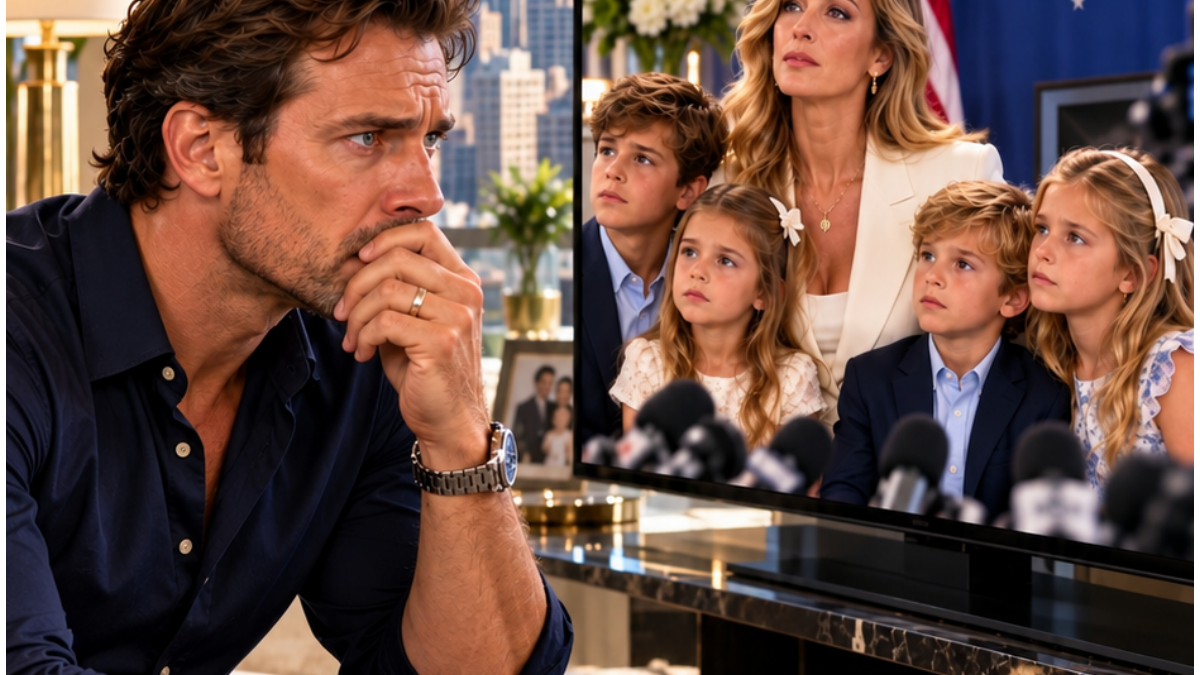
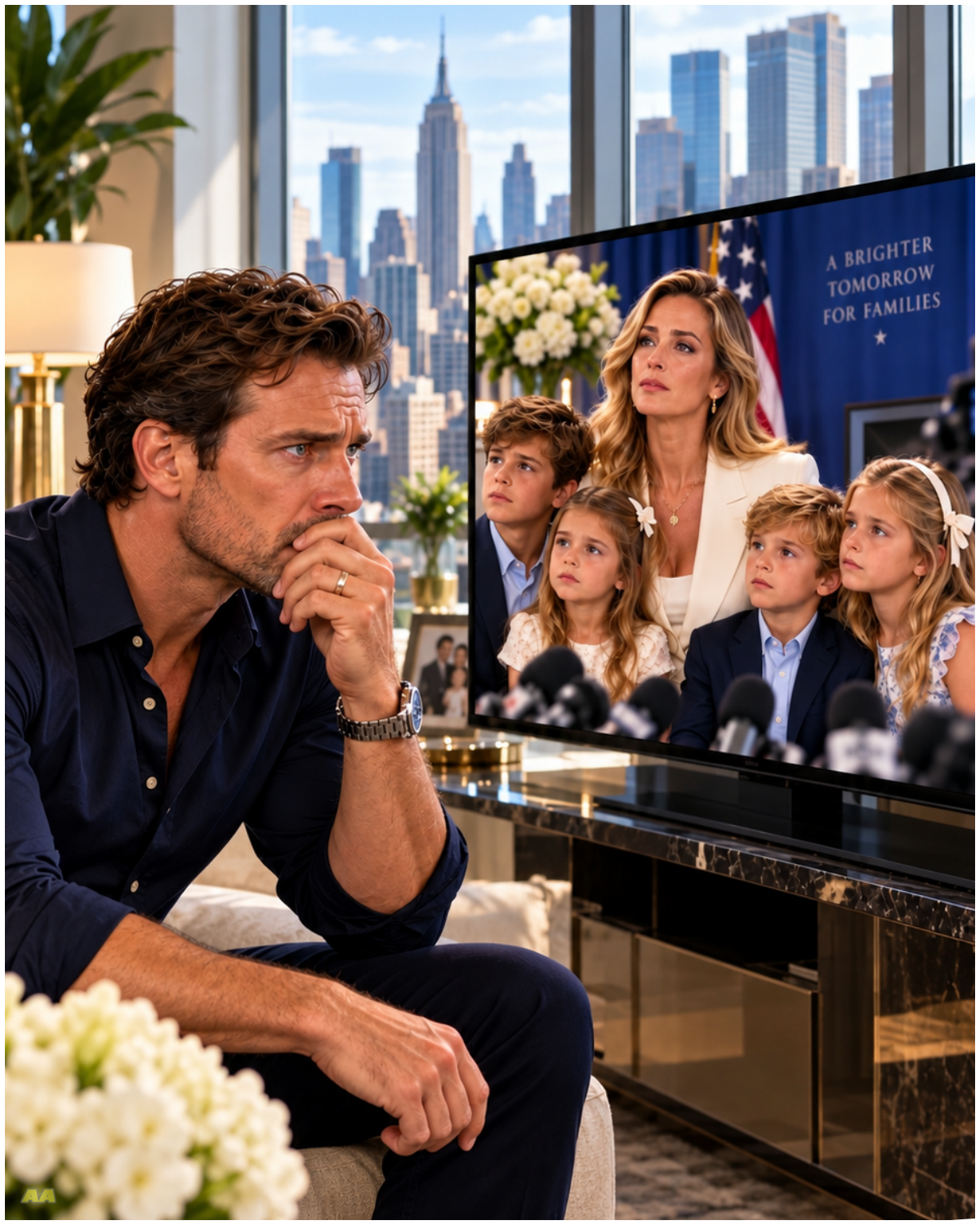
He left his wife because he believed she might never be able to give him the children he had always wanted.
Years later, convinced the chapter of his life was long over.
A television interview made him recognize the face he had spent nearly 6 years trying not to remember.
But the woman on the screen was not alone.
Four children stood beside her and the resemblance between them raised a question he could no longer ignore.
What had happened during all those years?
And why had he never known those quadruplets existed?
The 60-in television mounted in the lobby of a luxury hotel in downtown Chicago was muted, but Reed Callaway did not need sound to know the woman on the screen was Tessa Monroe.
He had just stepped out of a meeting with investors when he stopped in the middle of the marble lobby, his phone still in his hand.
The television showed a morning talk show studio, a smiling host, photographs of a successful children’s clothing company, and sitting on the couch beside the host was Tessa.
Nearly 6 years had passed since Reed had last seen his former wife’s face.
Her hair was shorter.
She still sat the same way, one hand resting on her knee, while the other moved whenever she spoke.
Even her smile looked familiar, except there was something stronger behind it now.
Tessa no longer looked like the woman who had walked out of their Chicago apartment carrying two suitcases and a silence so hard that Reed had chosen not to chase her.
Then the camera widened. Four children ran onto the set.
Reed took a step toward the television.
Two girls and two boys, all apparently around 5 years old.
One girl climbed directly into Tessa’s lap.
One boy perched on the arm of the sofa.
The other two stood beside her arguing over something outside the camera frame.
A caption appeared along the bottom of the screen.
Founder of Four Nest Kids shares how motherhood to quadruplets inspired a national brand.
Reed read the word twice.
Quadruplets.
The man beside him asked whether he was all right.
Reed did not answer.
He grabbed the remote from a low table and raised the volume.
The host was laughing.
I have to ask the question everyone asks you.
How do you raise four children the same age and build a company at the same time?
Tessa tilted her head toward the children.
At first, I thought the hardest part was never sleeping.
Then all four of them learned the same new word on the same day and decided to use it against me.
The studio audience laughed. One of the boys raised his hand.
She taught us. Tessa pulled him closer.
That is slander on live television.
Griffin.
The camera moved closer to the boy’s face for less than 2 seconds.
It was enough.
He had a small cleft in his chin.
Reed lifted his fingers to his own chin without realizing it.
His mother had always told him that Mark came from his grandfather.
He had heard the story his entire life.
A cleft chin proved nothing. Reed knew that.
He needed to know that. The host continued.
They just turned five, right? 5 years and 2 months, Tessa answered.
Reed slowly lowered his phone. 5 years and 2 months.
The calculation formed before he could stop it.
He and Tessa had separated 5 years and 11 months earlier.
For several seconds, he stared at the television as if somebody had placed an enormous question in front of him and erased every possible answer.
Then one of the girls turned sideways.
Her nose looked like Tessa’s. Her eyes did not.
Reed knew those eyes. He saw their shape every morning in his own mirror.
Pay attention here. Because Reed still did not know whether he was looking at coincidence, a hidden truth, or the greatest mistake of his life.
Before we continue, tell me in the comments where you’re watching from and what time it is there because this story has not even reached the hardest part.
Reed pulled out his phone and searched for the company.
Four nest kids appeared immediately. There were photographs of Tessa at business conferences, interviews about entrepreneurship, profiles about a single mother who had built a children’s brand after raising four infants at once, and an entire page describing how the company began.
There was no mention of the children’s father.
Reed opened an article published two years earlier.
Tessa explained that she had started sewing and modifying baby clothes at home because standard designs were impractical when dressing four babies over and over.
The article said she had raised the quadruplets with help from friends, employees, and a small support network.
No husband, no boyfriend, no man’s name anywhere.
Reed searched faster. Nothing. He called the old number he still remembered.
It was disconnected. He tried the email address he had once known by heart.
The message bounced back. That was when Reed realized something he did not like admitting.
He knew absolutely nothing about Tessa’s life anymore.
Not where she lived, not who her friends were, not when she had founded the company, not when the children had been born.
When Tessa left his life, Reed had treated the end of their marriage like a door that only needed to be closed.
Now, four children had suddenly appeared on the other side of that door, and their ages matched far too closely with a period Reed preferred to keep buried.
Nearly 6 years earlier, Tessa had been sitting in a white plastic chair inside a private fertility clinic near Northwestern Memorial Hospital, holding an envelope she did not want to open.
Reed stood beside the window. “Open it,” he said.
“I’m waiting for you to sit down.
I’m here. I know you’re here.
I’m asking you to sit.” Reed glanced at his watch.
Tessa saw it and the small movement hurt more than it should have.
Do you have a meeting? I do.
Then go. Don’t start. Tessa tightened her grip on the envelope.
I didn’t start anything. Reed placed his briefcase on another chair and sat in front of her.
At 35, he possessed the irritating confidence of a man who believed almost every problem could be solved with enough planning.
Their marriage had become the only place where planning no longer worked.
They had been trying to have a child for almost 2 years.
At first, there were pharmacy tests, calendars, and optimistic jokes.
Then came doctors, blood work, appointments, fertility windows, procedures, disappointment, and conversations that stopped whenever someone became too tired to continue.
When relatives asked when they were going to have a baby, every month added another thing neither of them knew how to say.
Tessa opened the envelope and read the first page, then the second.
Reed extended his hand. Let me see it.
She did not. It says some of my numbers are lower than expected.
How low? I don’t know. Then let me read it.
She handed him the report. Reed read far too quickly.
What did the doctor say? It means that we need to talk to him.
Did you ask before we left?
Yes. And Tessa ran her tongue over dry lips.
He said it could make things more difficult.
Reed studied the page. Difficult doesn’t mean impossible.
That’s exactly what I said. He flipped to the next sheet.
Are there more tests? Yes. And if they confirm it?
Tessa looked directly at him. Confirm what?
Reed took a second too long to answer.
That maybe we won’t be able to have children.
Tessa pulled the report from his hands.
You’re talking about a child like it’s a quarterly target.
Don’t do that. Do what? Turn every question I ask into an accusation because you never ask whether I’m okay.
You ask what the probability is.
Reed stood. Because I need to understand the problem.
I am not the problem. I didn’t say you were.
You don’t have to. A nurse opened the office door and called Tessa’s name.
The conversation ended, >> but the resentment did not.
It followed them home and settled between them during the next several weeks.
Reed researched treatment options and emailed links.
Tessa began to hate every article he sent.
He thought he was helping. She felt evaluated.
Neither had the courage to say exactly that.
The doctors ordered more tests. Some numbers improved, others remained uncertain.
There was no final diagnosis of infertility, only difficulty, possibilities, and more investigation.
Inside Reed’s family, however, possibility slowly began to sound like a sentence.
His mother, Evelyn Callaway, had talked about grandchildren since before the wedding.
She rarely insulted Tessa directly. She did something subtler.
She smiled. She would ask, “Any news from the doctor’s, sweetheart?” Or she would place baby pictures on the table during Sunday lunch.
“Look at Marjgery’s grandson, 8 lb and beautiful.
What a blessing.” Eventually, Tessa stopped attending some family gatherings.
Reed told her she was overreacting.
It would become one of the sentences he regretted moSt. The night everything finally broke, Tessa came home and found a folder on the kitchen counter.
Inside were contact details for two reproductive medicine centers and a list Reed had written.
Consultation, new testing, options, costs, timeline.
Tessa stood over those pages until Reed returned from work.
The moment he walked in, loosening his tie, he knew.
You saw it. I saw it.
I was going to talk to you after you finished building the project plan.
It isn’t a project. Tessa held up the page.
It has a timeline because some things change with age.
My age, our age, not only yours.
Your age is part of the medicine.
Tessa, that’s not an attack. She gave a short laugh without humor.
Funny. Everything you say now sounds like a board meeting.
And everything I say you treat like I’m humiliating you.
Do you want a child or do you want to be married to me?
Reed froze. The question arrived too quickly.
Tessa waited. Don’t ask me something like that.
Why? Because it isn’t fair. I only want an answer.
I want both. And if you can’t have both.
Reed dragged a hand over his face.
I don’t know. Then think. Tessa’s voice remained calm.
Think now. The kitchen suddenly seemed smaller.
Reed looked at the woman with whom he had shared 9 years of his life.
Four of them married. He remembered postponed vacations, late nights working, renovations to the apartment, jokes about future children made back when neither of them imagined those children could ever become a condition.
He also remembered losing his father young, growing up nearly alone in a large house and carrying a dream since adolescence of building the family he never felt he had.
Reed made the mistake very confident men often make when they are frightened.
He tried to be logical. I have always wanted to be a father.
Tessa lowered the paper. I know you knew that when you married me.
I wanted to be a mother, too.
I know. Then finished the sentence.
Reed looked away. I don’t know if I can give that up.
Tessa became so quiet he would have preferred shouting.
I understand. No, you don’t. I do.
You’re not saying you’re leaving. You’re saying staying depends on something.
It depends on something that’s important to me.
She folded the paper once, then again.
I thought I was important to you.
You’re twisting this. No, I’m simplifying it.
Reed stepped forward. Tessa stepped backward.
If I can never have children, will you stay?
He did not answer. This time, the silence answered for him.
Tessa walked past him into the bedroom.
That night, they slept in the same bed without touching.
3 days later, Tessa bought a pregnancy teSt. She told no one.
Her period was only slightly late, and she had experienced late cycles before.
She did not want to build another tower of hope on top of another possibility.
She took the test alone in the bathroom at the architecture firm where she worked.
Two lines appeared. Tessa sat on the closed toilet seat and stared at the small plastic stick.
She did not cry. She did not smile.
Her first thought was Reed. Her second was the question he had been unable to answer.
That evening, she placed the test inside her purse and returned home determined to show him.
Reed was waiting in the living room.
A small suitcase sat beside the couch.
Tessa stopped. What is that? I’m staying somewhere else for a few days.
She did not remove her purse from her shoulder.
Why? Because we’re destroying each other and some distance might help.
I need to think. You’ve had 3 days.
Tessa, don’t start. She closed her eyes.
Her hand slipped inside her purse and touched the pregnancy teSt. Reed continued.
My mother called today. Tessa pulled her hand back.
Of course she did. Don’t put her in the middle of this.
She put herself there a long time ago.
Is she worried about you or about the grandchildren I may never give the Callaway family?
Did she say that? No. Then don’t pretend she did.
Reed’s jaw tightened. She thinks maybe we have to accept that we want different things.
Tessa gave a faint smile. What a surprise.
This decision is mine. What decision?
Reed glanced toward the suitcase. That was when Tessa understood.
You’ve already decided. [music] I decided I need distance because of children.
Because of everything. Say it properly, Reed.
Say it. He finally met her eyes.
I don’t want to spend the rest of my life wondering whether I gave up my chance to be a father.
Tessa’s hand returned to the test inside her purse.
She almost pulled it out. AlmoSt. But in that second, something stronger than hope appeared.
Wounded pride, perhaps fear. She wanted Reed to choose to stay before knowing there was a baby.
She wanted to know whether he would choose her without a condition, without a reward, without a guarantee.
So, she left the test hidden.
Go, she said. Reed looked confused.
Tessa, you came with a suitcase packed.
Go. I don’t want it to end like this, but you want it to end.
I didn’t say that. She opened the door.
You don’t have to. Reed stood there several seconds, then picked up the suitcase.
Before entering the elevator, he turned around.
I’ll come back and we’ll talk.
Tessa held the door frame. Don’t promise something.
You’re still deciding. The elevator doors closed.
Reed returned 4 days later. Their conversation did not save the marriage.
By then, Tessa had taken another home test and a blood teSt. The pregnancy was real.
But during those four days, Reed had spoken with an attorney, with his mother, and with himself until uncertainty hardened into a decision.
He asked for a separation. Tessa listened until he finished.
The pregnancy test remained hidden in a drawer.
It was the wrong choice. Tessa knew even then that she might regret it.
She simply could not imagine the size of that regret.
In the present, Reed left the hotel before the afternoon meeting he was supposed to attend.
Through a business contact, he reached the television network and asked to speak with Tessa Monroe.
The assistant asked his reason. Personal matter.
She doesn’t work here, Mr. Callaway.
She was a gueSt. Is she still at the studio?
There was a pause. I can’t provide that information.
Reed closed his eyes. You’re right.
Thank you. He hung up. For the first time in years, he did not try to use his name or influence to force open a door.
He found four Nest kids business address online.
40 minutes later, his car stopped outside a renovated brick building in Lincoln Park.
The company logo showed four small circles around a simple Nest design.
Four. Everything about Tessa’s life now seemed built around that number.
He entered. The receptionist told him Tessa was unavailable.
Will she be back today? Do you have an appointment?
No. Then you’ll need to email her.
I’m Reed. He stopped before adding his last name.
Callaway could open many doors in Chicago.
At Tessa’s company, it might be the quickest way to close one.
I’m someone who knew her a long time ago.
The receptionist studied him. Your name, Reed.
Her expression changed slightly. A moment, please.
She picked up the phone. Reed noticed.
Has she mentioned me? The woman did not answer.
A few minutes later, she turned back.
Miss Monroe asked me to tell you she cannot meet with you.
Reed ran his tongue over his teeth.
Is she here? I didn’t say that.
You didn’t have to. Sir, I’m only doing my job.
He nodded. Okay. He left without making a scene and sat inside his car for almost 20 minutes, staring toward the entrance.
Then he saw Tessa come outside alone.
Reed opened the car door. Tessa.
She stopped. She did not look surprised, which somehow disturbed him more than anger would have.
You still have trouble accepting the word no, she said.
I accepted it. You’re waiting on the sidewalk.
I can legally stand on a sidewalk.
Progress. The sentence was soft, but landed exactly where it needed to.
Reed stepped closer. I saw you on television.
Congratulations. Don’t use that tone with me.
What tone? The tone of someone who thinks he’ll ask one question and I’m required to answer.
Reed looked toward the building, then back at her.
The children. Tessa became completely still.
No, I haven’t asked anything yet.
I know exactly what you’re going to ask.
How old are they? You heard it on television.
5 years and 2 months. Then you already know.
Tessa, look at me. I am looking at you.
Reed lowered his voice. The dates line up.
With what? With when we were still married.
You’ve always been good at math.
I remember. You made spreadsheets even when we were trying to have a baby.
Reed took the blow. Are they mine?
Tessa turned her face away. A motorcycle went past and filled the street with noise for a few seconds.
Reed waited. Tessa finally looked back.
You don’t get to appear after almost 6 years and call those children yours.
I asked whether they are, and I said, “You don’t have the right to ask that.
That’s not an answer. It’s the only answer you’re getting today.” She began walking.
Reed followed for two steps. I deserve to know.
Tessa stopped again. This time her expression changed.
You deserve to know. Reed said nothing.
She stepped close enough that her voice could remain quiet.
You left because you wanted children.
Remember? You abandoned a woman when you believed she might never be able to become a mother.
Now you see four children on television and show up here talking about what you deserve.
I was wrong. Convenient discovery. I’m not trying to erase what I did.
You’re trying to get into my life because you saw a television image because those children might be mine.
Tessa pressed her lips together. You still don’t understand.
You think the problem is finding out whether they have your blood?
Isn’t that part of it? No.
She pointed gently toward his cheSt. The problem is what you’re going to do once you know.
Reed had no answer. Tessa turned and walked toward her car.
He let her get almost to the door before asking, “Why didn’t you ever tell me?” Tessa froze.
That question changed the air between them.
She turned slowly. I did. Reed frowned.
No, you didn’t. You never told me you were pregnant.
I tried. When? More than once.
That never happened. Tessa gave a dry laugh.
Of course. Now I invented 6 years of my life.
I’m not saying that. I’m saying I never received anything.
I called. My number stayed the same for years.
I left messages. I never got them.
I sent a letter. Reed stared at her.
A letter to your office. I never saw a letter.
Some of Tessa’s certainty cracked for one second.
Reed noticed. Don’t do that, she said.
Do what? Pretend you didn’t know.
I didn’t know. You’re telling me that for almost 6 years you had no idea I gave birth to four children?
I’m telling you exactly that. Tessa gripped the car handle.
Reed moved closer. When did you find out you were pregnant?
Before you asked for the divorce, the sentence hit harder than shouting ever could.
You already knew. Yes. And you didn’t tell me.
I was going to, but you didn’t.
You arrived with a suitcase. Then you came back with a decision already made.
Even so. Even so what, Reed?
I had just heard you say you didn’t know whether you would stay married to me if I couldn’t have children.
I wanted to know whether you would choose me without a baby having to convince you.
And you decided for me. You had already decided for both of us what happened after that.
Tessa looked toward the street. I called your office twice.
Who did you talk to? Your assistant.
Which one? I don’t remember her name.
Reed curled one hand into a fiSt. And the letter?
I sent it when I found out there were four.
Why send it to the office?
Because you’d moved out and I didn’t know where you were staying.
You could have gone to my mother.
Tessa stared at him for two seconds.
I did. Reed’s entire body became rigid.
What? I went to Evelyn’s house.
You spoke to her? No. Then who?
She refused to come downstairs. A member of her household staff said she knew I was there.
I left an envelope. What was inside?
An ultrasound. A letter for you.
Reed stood motionless. When was this?
A little over 5 months after you left.
5 months? I was visibly pregnant and nobody told me.
I’m telling you what happened. I never saw an envelope.
You expect me to believe that now?
I don’t know what you’ll believe, but I never saw it.
For the first time since Reed had approached her, Tessa had no immediate response.
She opened the car door. Go home, Reed.
I am going to find out what happened.
Don’t. Why? Because you’re almost 6 years late.
If those children are mine, I’m not going to pretend I never saw them.
Do not go near them. I wouldn’t do anything without speaking to you firSt. You’ve already done many things without speaking to me.
Reed nodded slowly. I know. Tessa got into the car.
Before she closed the door, he asked one final question.
Are you certain my mother knew the envelope was for me?
Tessa looked directly into his eyes.
Her name was on the outside because it was her house.
Your name was on everything inside.
The door closed. The car drove away.
Reed remained on the sidewalk. If Tessa was lying, he needed to understand why.
If she was telling the truth.
There was a worse question. Who had decided he should never know?
That night, Reed returned to his apartment and opened a storage box he had not touched since the divorce.
Old contracts, wedding photographs, financial records, and a key from the apartment where he and Tessa had once lived.
At the bottom sat a folder from the fertility clinic.
He pulled out every report and read each page slowly.
This time, without searching only for numbers.
One report explicitly stated that the findings required followup and did not permit a definitive conclusion regarding fertility.
Reed sat on the floor. He remembered that sentence differently.
In his memory, everything had sounded much more final.
He opened old cloud backups and searched messages from the month surrounding the separation.
Some conversations were incomplete. Others had disappeared when he changed phones.
Then he found a conversation with his mother.
Reed had written, “Has Tessa tried contacting me?” Evelyn had replied less than a minute later.
“No, and I think you both should respect the decision you’ve made.
Some wounds only get worse if you keep reopening them,” Reed read it again.
At the time, he had believed her now.
The sentence felt different. 3 weeks later, another message from Evelyn appeared.
“If anyone contacts you about Tessa, tell me before you respond.
She’s very emotional and might say things just to hurt everyone.” Reed stared at the screen.
He barely remembered the message. Maybe he had read it while working.
Maybe he had not understood. Maybe he had understood exactly what he wanted to understand.
He hovered over his mother’s number.
Then closed the phone. He looked again at the television screenshot of Tessa surrounded by four 5-year-olds.
For the first time since seeing the interview, Reed stopped asking only whether those children were his.
He started asking who had worked so hard to make certain he never knew.
Reed did not call his mother that night.
He drove to her house. Evelyn Callaway still lived in the large Georgian home in Lake Forest where Reed had spent much of his childhood.
The exterior had been renovated several times, but the iron gate still made the same mechanical sound when it opened.
Evelyn entered the sitting room wearing a pale sweater and holding a glass of water.
You could have called firSt. If I had, you would have prepared your answers.
She stopped before sitting. Answers to what?
Reed placed his phone on the table and opened the television interview.
Evelyn glanced at the screen. Her face did not change.
That was worse. You saw this part of it.
Do you know those children from television?
5 years and 2 months. Mom.
Evelyn set the glass down. Read.
Don’t build fantasies around someone else’s children.
Tessa says she tried to contact me after the separation.
Several times. She was very hurt.
She says she came here for less than a second.
Evelyn became too still. Reed noticed.
Did she? Maybe. It was almost 6 years ago.
A visibly pregnant former daughter-in-law came to your house and you don’t remember.
Don’t twist things then help me not twist them.
Evelyn ran a finger around the rim of her glass.
Tessa came here once. Reed’s jaw tightened.
Pregnant. I didn’t see her. She says you refused to come downstairs.
I wasn’t going to encourage more conflict.
What conflict? You remember how that marriage ended.
I remember how I ended it.
The answer caught Evelyn offguard. Reed leaned forward.
She left an envelope. Evelyn took too long to answer.
She may have. Where is it?
I don’t know. Did you open it?
Evelyn looked away. The movement answered before her words.
Reed stood. You opened it. I needed to know what she wanted.
It was addressed to me. You were devastated.
It was mine. She knew exactly how to manipulate you.
Reed went very still. She was pregnant.
Evelyn said nothing. You saw the ultrasound papers.
An ultrasound, maybe. Four babies. Evelyn closed her eyes briefly.
My god. Don’t be dramatic. You knew.
I knew she claimed to be pregnant.
Claimed you had no proof those children were yours.
Reed hit the table once with an open palm.
She was my wife. Former wife by then.
You had asked for a divorce.
That doesn’t change who the father was.
You still don’t know that. Reed stared at her.
Evelyn realized she had gone too far.
I’m saying you didn’t have proof, so you decided I shouldn’t know.
I decided to protect you from a woman who might use a pregnancy to pull you back into a broken marriage.
Reed laughed once without humor. Do you hear yourself?
Evelyn stood. I watched you fall apart.
I made Tessa fall apart. Don’t put everything on yourself now because you saw a polished television segment.
This is not about a television segment.
Then what is it? Reed turned the photo of the children toward her.
The boy has my chin. Evelyn looked away quickly.
One of the girls has my father’s eyes.
Children resemble all kinds of people.
You notice too. Evelyn pushed the phone back.
I will not participate in this obsession.
Reed put it away. What was my assistant’s name around the divorce?
How should I know? You spoke with her.
I spoke with many people. Reed showed Evelyn the old message.
If anyone contacts you about Tessa, tell me before responding.
Evelyn read it. You preserve old text now.
I didn’t even remember it. Exactly.
Because it meant nothing. Maybe to you.
Evelyn’s patience broke. Do you want to hear something you don’t want to admit?
You decided to leave. You told Tessa you wanted to be a father.
You told me you could not spend your life trapped with a woman who might never give you that.
Reed’s voice became very quiet. I never used the word trapped.
You didn’t need to. You took the worst version of me and treated it like authorization.
Evelyn pointed at him. I did what a mother does.
No, you did what you wanted because you didn’t trust me to make a decision without guilt.
I was protecting you from going back out of obligation.
You preferred letting me live without knowing I might have four children.
I preferred preventing a pregnancy from becoming a chain.
Reed looked at the woman who had spent his entire adult life talking about grandchildren as if they were the natural continuation of the Callaway name.
Now he began to understand. Evelyn wanted grandchildren.
She simply had never wanted grandchildren that came through Tessa.
You never liked her. I liked her until you thought she couldn’t have children.
Don’t be childish. When did it change?
Tessa didn’t fit our life. What does that mean?
She resented everything connected to this family.
She resented being treated like a defect.
Evelyn picked up the glass but did not drink.
You came here to accuse me.
Have you finished? I came for the truth.
Then begin with your own. Reed became quiet.
Evelyn stepped toward him. You want to put six years on my shoulders because it hurts less than admitting you left before she could tell you.
Reed did not look away. I admit it.
Evelyn had not expected that. I abandoned a woman because I was terrified of never becoming a father.
I treated her body like a failed investment.
I let my mother turn anxiety into certainty.
All of that is mine. Reed pointed toward the table, hiding a pregnancy as yours.
Evelyn pressed her lips together. I didn’t know whether it was real.
Did you try to find out?
No. Then don’t call it protection.
Reed walked toward the door, then turned.
Does the envelope still exist? I don’t know.
Think harder. Is that a threat?
No. Reed opened the door. It’s the first time in years I’m asking you not to decide something for me.
Evelyn remained alone after the gate closed.
Only then did she sit. She did not cry.
She did not call anyone. Instead, she walked to an old cabinet in the hallway and removed a box of documents.
For years, she had told herself that what she had done was necessary.
Reed had been vulnerable. Tessa had been angry.
A pregnancy could trap two people inside a marriage already broken.
That was the version Evelyn repeated.
There was another version she avoided.
When she first saw the ultrasound, she had felt anger.
Four babies. After months of hearing that Tessa might never conceive even one, suddenly there were four.
It had felt like the universe mocking every judgment Evelyn had made.
Accepting the pregnancy meant accepting that she might have been wrong about Tessa far earlier than she wanted to admit.
Evelyn preferred believing she had protected her son because the other explanation was uglier.
She opened the box. The envelope was not there.
A small business card from the fertility clinic was on the back was a handwritten name, Dr. Malcolm Pierce.
The next morning, Tessa received a short message from Reed.
I need to talk about the contact attempts.
No children, no lawyers. If you don’t want to, I stop.
She read it during breakfast while one of the boys knocked over a glass of milk.
Griffin, grab a towel. It wasn’t me, Elsie protested.
Both of you can clean it.
Tessa turned the phone face down while the four children argued over who had touched the glass firSt. Loud, exhausting, ordinary.
That normality was exactly what she feared losing.
Later at the office, she opened Reed’s message again, but did not answer.
At 2:00 in the afternoon, another arrived.
My mother admitted you came to her house.
Tessa stood. A third followed. She saw the envelope.
Tessa sat slowly. For nearly 6 years, she had built a simple version of the past inside herself.
Reed left. She tried to tell him.
He chose to ignore her. It hurt, but it was clear.
Now, there was a crack in the story.
And Tessa hated cracks because they forced her to look again at things she had already put away.
She answered with one line. Tomorrow, 10:00 a.m.
Coffee shop behind my office. 20 minutes.
Reed arrived 12 minutes early. Tessa arrived exactly at 10:00.
20 minutes, she said as she sat down.
I remember. Then talk. Reed did not order coffee.
My mother confirmed you came to the house.
Tessa’s face remained unreadable. She opened the envelope.
Yes, I knew. She never gave it to me.
I know. I did not know you were pregnant.
Tessa leaned back. Reed continued. I’m trying to locate the assistant I had at the time.
Why? To find out whether you called.
You still need to verify everything.
I do. Of course you do.
Not because I think you’re lying.
Then why? Because if someone intercepted those attempts, I need to know how far it went.
Tessa said nothing. Reed continued. I’ve asked for archived office phone logs and administrative records.
Not everything still exists, but some records might.
You’re turning this into an investigation.
I’m reconstructing what I didn’t see.
And afterward, the same question from the sidewalk had returned.
Reed looked directly at her. Afterward, I do what you allow me to do.
Tessa gave a small laugh. That sounds good.
I’m not trying to sound good.
Then say what you actually want.
You want to know whether they’re yours?
Yes. Only that? No. Then what?
Ry took a long moment. I want to know whether I lost 5 years of my children’s lives.
Tessa rested against the chair. You’re already calling them yours without proof.
You know whether they are. I do.
Reed forgot to breathe for a second.
Are they? Tessa looked toward the window.
I’m not giving you that answer at a coffee shop.
Why? Because I’ve spent years imagining this conversation.
In none of those versions did you arrive almost 6 years late because you saw me on television?
Reed lowered his eyes. I know.
No, you don’t. Then tell me.
Tessa’s posture stiffened. You want to understand?
Fine. When I found out there were four babies, I threw up in the clinic parking garage because I was terrified.
I had just separated. I didn’t know whether I could afford everything.
My mother had died years earlier.
My father lived three states away and the man who should have been the first person I called had just left me because he believed I might never be able to give him a child.
Reed did not interrupt. I called your office.
A woman answered. She told me you did not want personal calls from me.
That was never my instruction. I had no way to know.
I know. I called again 2 days later.
Someone else told me that anything involving the divorce needed to go through attorneys.
That wasn’t my instruction either. Tessa raised her hand.
Don’t start removing your name from everything.
Reed stopped. Even if your mother interfered, you created the conditions that made it possible.
You left. You shut down. You didn’t ask questions.
I know. And I was wrong, too.
Reed looked up. Tessa wrapped her hands around her cup.
I could have pushed harder. I could have walked into your office.
I could have sent everything through my attorney.
I could have appeared in front of you and forced you to listen.
Why didn’t you? She gave a sad smile.
Because every attempt that came back to me felt like confirmation of something I had already decided to believe.
What? That you did not want to know.
Reed remained silent. Then the babies came early.
I spent weeks between the hospital and home.
Eventually surviving until the next morning became more important than chasing a man I believe did not want to be found.
Reed’s fingers tightened around the edge of the chair.
They were hospitalized. Yes. How long?
No. Tessa stopped him. You don’t get to recover 5 years and 20 minutes.
Reed nodded. Okay. Her next words were softer.
You have changed. Reed almost smiled.
Not enough. At least you’ve learned how to stop pushing.
I’m learning. Tessa checked her watch.
7 minutes left. Reed took his phone out.
I found something. He showed her Evelyn’s message telling him that anyone contacting him about Tessa should speak to her firSt. That was 3 months after the separation.
Tessa read it. Did your assistant know?
That’s what I’m trying to find out.
What about your mother? She isn’t telling me everything, so she knows more.
Probably. Tessa handed the phone back.
Do not involve the children. I won’t.
Don’t appear at their school. I don’t even know what school they attend.
Don’t try to find out. Okay.
Do not send gifts. Okay. Do not send people to photograph them.
Reed frowned. You think I’d do that?
Tessa held his gaze. I don’t know what you would do anymore.
Reed accepted the answer. Fair. She stood.
20 minutes, Tessa. She paused. If they’re mine, I only want two.
No. Her voice did not rise, but he stopped immediately.
Tessa picked up her purse. You do not enter their lives because of your regret.
If you ever enter, it will be because it is good for them.
I agree. You agree now? Make sure I can hold you to it later.
She studied him for another second and left.
Reed remained at the table. For the first time, a partially opened door seemed more frightening than a closed one.
If Tessa said no, he could blame distance.
If she said maybe, he would have to earn every inch.
Two days later, the old administrative files produced a name.
Reed’s assistant at the time had been Jenna Whitaker.
The name did not immediately bring back memories.
Then he found an old company photograph.
Jenna had worked with him for nearly 3 years and left several months after the divorce.
Her old phone number no longer worked, but Reed eventually located a professional email address.
He wrote only enough to explain the requeSt. I need to clarify whether personal calls from Tessa Monroe reached my office during my divorce.
Do you remember any? Her answer arrived that evening.
I do. Reed read the next sentence standing up, but I would rather explain by phone.
He called. Jenna answered on the third ring.
Mr. Callaway. Reed is fine after this many years.
Mr. Callaway feels strange. Do you remember Tessa calling?
Yes. How many times? Twice that I personally answered.
Reed closed his eyes. What did you tell her?
Jenna hesitated. That you did not want personal calls from her.
Did I ask you to say that?
Not directly. Then who did? Silence.
Jenna, your mother. Reed stood. My mother gave instructions inside my office.
She talked to me. Everyone knew her.
She was there frequently. And during that period, you had said divorce related matters should go through legal counsel.
Legal matters. I understand that now.
Did Tessa say why she was calling?
Not the first time. The second time she did.
Jenna fell quiet. She said she was pregnant.
Reed closed his eyes. And you didn’t tell me.
I told your mother. The answer took the air from him.
Why? Because she’d already told me to notify her if your former wife called.
Then she said she already knew.
Reed remained motionless. Jenna, think carefully.
Your mother said she already knew Tessa was pregnant.
That’s how I understood it. Yes.
Anything else? There was a letter.
Reed tightened his grip on the phone.
What letter? One arrived for you.
I remember because it wasn’t delivered through regular mail.
It came by courier. Did you open it?
No. Who took it? Another silence.
Your mother was in the office that day.
She said she would take it to you.
Did you see my name? On the front of the envelope?
Yes. Reed did not answer. Jenna spoke more softly.
I’m sorry. Did you know what was inside?
No, you never told me anything.
I was an employee. Your mother said you were fragile.
That the separation had been difficult and any contact could make things worse.
Reed laughed once bitterly. I wasn’t fragile.
I was a coward. Before hanging up, Jenna mentioned one more thing.
There was something I never understood.
What? A few days after Tessa’s second call, your mother asked whether I was absolutely sure the woman who called was Tessa.
Reed frowned. Why would she ask that?
I don’t know. What did you say that?
I was sure. I knew Tessa’s voice.
Reed thanked her and disconnected. The question stayed with him.
If Evelyn already knew about the pregnancy, why would she need confirmation that Tessa herself had called?
That same week, Tessa declined an invitation to appear with the quadruplets at another business event.
Ever since the television interview, public fascination with the four children had increased.
The publicity helped ForneSt. Tessa disliked what it did to their privacy.
Late one afternoon, as she closed her laptop, the receptionist called.
There’s a woman here to see you.
Who? Evelyn Callaway. Tessa became still.
Does she have an appointment? No.
Tell her I won’t meet with her.
Less than a minute later, the receptionist returned carrying a small envelope.
She asked me to leave this.
Tessa did not touch it. Put it there.
After the receptionist left, Tessa stared at the envelope for 5 minutes before opening it.
Inside was an old card from the fertility clinic.
On the back was one handwritten name.
Malcolm Pierce. Tessa knew it immediately.
He was one of the doctors who had reviewed their early fertility testing.
There was also a short note from Evelyn.
Before you decide you know everything, talk to him.
Tessa picked up the phone and called Reed.
He answered too quickly. Tessa, your mother came to my office.
What? She left a name. Who’s Dr. Malcolm Pierce?
Reed went quiet. The fertility doctor.
Yes. Why? I don’t know. Did she say anything?
She left. Don’t go to him alone.
Tessa closed her eyes. There you are again.
It wasn’t an order. It sounded like one.
You’re right. I’m sorry. I know how to take care of myself.
I know. His answer came quickly without defensiveness.
Tessa noticed. Did you find your old assistant?
I did. Reed paused. You called twice.
Tessa sat down. On the second call, you said you were pregnant.
Tessa closed her eyes. She told your mother.
Yes. And there’s more. What? Your letter arrived.
My mother took it. Tessa stood.
Reed. I don’t want to talk anymore tonight.
All right. I’m going to contact the doctor.
Okay, don’t come. I won’t. She disconnected.
She did not call Malcolm that evening.
She simply stared at his name.
There was a complication. Malcolm Pierce was not merely a doctor from the clinic.
He had also known Evelyn socially for years.
At the time, Tessa had assumed it was coincidence.
Now she was less certain. Across the city, Reed returned to his mother’s home.
Evelyn did not pretend to be surprised.
You spoke to Jenna. I did.
Of course. Why Malcolm Pierce? Evelyn said nothing.
You left his name for Tessa.
Why? Because maybe the two of you are looking for the villain in the wrong place.
Sit down. Reed remained standing. Then tell me.
It isn’t my story to tell.
You made it your story when you opened a letter addressed to me.
Evelyn lifted her chin. I wasn’t the only person who kept things from you.
Who else? Ask Malcolm. Ask him what.
Evelyn walked toward the window. She no longer looked like the controlled woman who had managed her family for decades.
She looked tired. When you and Tessa were undergoing testing, I spoke to Malcolm.
Reed stared at her. You did what?
I knew him. I know that.
I asked whether there was a real possibility the two of you would ever conceive naturally without our authorization.
I didn’t request her records. You asked about my wife.
I was worried. And he answered you.
Evelyn hesitated. He said her results were bad.
Reed frowned. The reports don’t say that.
It’s what he told me. When?
Before the separation. How long before?
A few weeks. Reed felt a piece shift into place.
That’s why you started telling me I might have to accept never having children with her.
Evelyn did not answer. It was, wasn’t it?
Yes. You believed you knew more than I did.
I thought I did. Reed stepped closer.
What does that mean? Evelyn turned toward him.
Asked Malcolm why he sounded so certain.
The next afternoon, Tessa obtained an appointment with Dr. Malcolm Pierce at his smaller private office near Streeterville.
When she entered, he took several seconds to recognize her.
Tessa Monroe. You remember me? I do, she said.
I want to discuss fertility testing from nearly 6 years ago.
That’s a long time. I know.
Do you have a specific concern?
I do. Tessa placed copies of her old reports on the desk.
Why did Evelyn Callaway believe I had almost no chance of becoming pregnant?
Malcolm became still. I don’t know what she believed.
She says you told her I can’t discuss private conversations about me.
Essa stared at him. You discussed my fertility with her.
Malcolm lowered his eyes. Tessa, I made a mistake.
Which mistake? I should never have commented.
Only that. He did not answer.
This report says there was no definitive conclusion.
Correct. Yes. But Evelyn left believing I probably couldn’t have children.
I don’t know exactly what she understood.
Did you tell her that? Malcolm looked toward the door.
Tessa noticed. I’m not here with an attorney.
That doesn’t make this simple. I’m here because I want to know what happened to my life.
Malcolm remained quiet. The early results did show some concerning markers.
I know, but they weren’t conclusive.
Correct. When Evelyn asked, I said the situation looked difficult.
Difficult isn’t impossible. No. She heard impossible.
Possibly. Did you correct her? Silence.
Did you? No. Why? Malcolm folded his hands.
Because I believed later testing might confirm the same pattern.
Did it? No. This went still.
Your later testing improved the picture substantially.
Did Reed know? He should have been told.
Should have? I didn’t personally continue your case.
Another physician on the team did.
Did you talk to Evelyn again?
Malcolm did not answer. Tessa felt pressure in her cheSt. Did she contact you after we separated?
Yes. Was I already pregnant? Malcolm looked at her.
Yes. What did she want? To know whether the pregnancy was medically possible.
And you told her it was?
Yes. She knew before I went to her house.
Probably. Tessa stood. Anything else? Malcolm hesitated.
It was enough. Tell me. When she came to see me, she didn’t only ask whether you could be pregnant.
What else did she ask? Whether there was any possibility Reed wasn’t the father.
Tessa did not move. Based on what?
Nothing medical. Then why would she ask?
You’ll need to ask her. Tessa left without saying goodbye and called Reed from the elevator.
I need to see you now.
They met in the parking garage of a nearby office tower.
Tessa did not want a cafe or a restaurant.
They stood between parked cars. Malcolm told your mother that my early tests weren’t definitive.
Reed tightened his hand. When before our separation, she knew knew what that I wasn’t necessarily infertile and she went back after I was already pregnant.
Reed remained silent. She asked whether the pregnancy was possible.
He told her yes. So when I went to your mother’s house, she already knew I could actually be pregnant.
Reed looked away. Tessa continued. She asked him something else.
What? Whether there was a chance you weren’t the father?
Reed stared at her. Why? I’d like to know the same thing.
You never I never cheated on you.
I know. His answer came without hesitation.
Tessa stopped. You know, 6 years ago, I might have let my mother place that doubt in my head.
Today, I know. Why? Because I remember who you were.
Essa looked down. Interesting. You didn’t remember when I needed you moSt. Reed accepted it.
I know. She looked away again.
There is something you need to understand.
If I tell you the truth about the children, it won’t repair the paSt. I don’t expect it to.
It won’t give you our marriage back.
I know. It won’t make them call you dad.
Reed swallowed. I know. Tessa looked at him for a long moment.
Stop saying you know. Reed frowned.
You don’t know what it actually hurt.
She opened her phone and showed him a photograph.
Four tiny babies inside incubators. Reed needed several seconds to process what he was seeing.
Elsie weighed less than 4 lb when she was born.
Griffin had respiratory probleMs. Theo remained hospitalized the longeSt. June was the first one strong enough to go home.
Reed did not touch the screen.
I spent nights in a hospital chair looking at four clear plastic boxes and trying to divide my fear into four pieces.
Her voice broke only slightly. And you weren’t there.
Reed lowered his head. I know I wasn’t.
No. Now you know. She put the phone away.
I’m not showing you that to punish you.
I deserve it. Don’t do that.
What? Turn your guilt into the center of the conversation.
This isn’t only about you. Reed nodded.
Okay. They do not need a desperate man trying to compensate for 5 years.
They need someone stable. I can be that.
Don’t prove it by saying it.
Then give me an opportunity to prove it.
Tessa inhaled slowly. Maybe. The word almost broke him.
Reed did not smile. Okay. But before anything happens, I need to finish understanding what happened.
So do I. And your mother does not go near them.
Agreed. No argument, none. Tessa looked at him.
You’re surprising me. Don’t say that yet.
She nearly smiled. Nearly. That night, Malcolm called Evelyn.
Tessa came to see me. I assumed she would.
I told her enough. Did you tell her everything?
No. Evelyn was silent. You need to, Malcolm said.
This has gone too far. You have no idea what will happen.
You know what I was trying to prevent.
No, you know what you were trying to control.
Evelyn disconnected. Then she opened a locked drawer in her home office.
Inside was a thin file containing a medical report.
The document was not Tessa’s. It belonged to Reed.
That was exactly why everything was about to become worse.
2 days later, Reed received a scanned copy from Malcolm without explanation.
His own name was printed at the top.
Reed read the first several lines without understanding.
Then he reached the physician’s note.
The results showed abnormalities that could also reduce male fertility and required repeat testing.
Reed sat down. For years, he had carried a memory in which the problem had belonged to Tessa.
He had never seen this report.
He called Malcolm immediately. Why did I never receive this?
The doctor remained quiet. Why? Your result was repeated later and improved.
That doesn’t answer me. Did my mother know?
Malcolm said nothing. She knew. Reed closed his eyes.
She asked you and you told her.
I should not have. She knew I might have fertility problems, too.
Yes. Reed stood and she let me believe it was Tessa.
That wasn’t my decision. You helped make it possible.
Malcolm said nothing. Reed disconnected and drove to Four NeSt. This time, he did not go inside.
He messaged Tessa. I found something you need to see.
I’ll stay downstairs unless you want me there.
10 minutes later, she appeared. Reed handed her the report.
Tessa read it once, then again.
Color left her face. This is yours.
Yes. Did you know? No. Swear to me.
I swear. Tessa tightened her grip on the paper.
So, while you were asking whether I could give you children, Reed lowered his eyes.
I also had abnormal results, and your mother knew.
Yes. Tessa gave a short, disbelieving laugh.
Of course, it’s not funny. I know.
She held up the report. Do you understand what this does to everything?
I think so. No, you don’t yet.
Tessa folded the report. I spent months believing my body had failed you.
You looked at me like I was a locked door.
I was an idiot. And someone had the key the entire time.
Reed did not defend himself. I’m going to speak to her.
I’m going to No. Tessa looked up sharply.
Reed corrected himself immediately. Sorry. What I meant is maybe you shouldn’t have to go alone.
I do not need protection. I know.
Then why? Because I need to be there.
Tessa remained silent. Because she did this to both of us.
It was the first time in nearly 6 years that Tessa heard Reed say us without sounding as though he wanted the old marriage back.
She returned the paper. Fine. The next afternoon, they arrived together at Evelyn’s house.
She was waiting. So you found out.
Tessa remained standing. You knew Reed’s tests were abnormal, too.
Yes. Reed placed the report on the table.
Why did you hide it? I didn’t hide anything.
You never told me. I am not a doctor.
Apparently, you were enough of a doctor to discuss Tessa’s fertility.
Evelyn tightened her mouth. Tessa spoke.
You needed the problem to be mine.
Don’t be dramatic. Don’t call this drama.
Reed’s later numbers improved. Yes, but when you started turning him against me, you didn’t know that.
Evelyn looked at her son. I wanted you to have options.
Reed laughed bitterly. Options. You always wanted grandchildren, so why hide four?
Evelyn became quiet. Tessa watched her.
Because this was never really about grandchildren.
Evelyn looked at her. It was about me.
The sentence settled in the room.
Evelyn folded her hands. I thought you were unstable.
Tessa stepped forward. Why? Because you always made Reed question his family.
I made him question you. Exactly.
Reed shut his eyes for one second.
Evelyn realized too late what she had admitted.
So that was it? Reed asked.
Don’t simplify. You thought I was pulling away from you because of her.
You were. I was growing up.
You call becoming disloyal to your mother growing up.
I call an adult being allowed to disagree with his mother.
Evelyn raised her voice for the first time.
I watched you change before her.
You listened to me. Tessa gave a small smile.
There it is. Evelyn turned toward her.
Don’t make that face. What face?
Like you won something. I didn’t win anything.
I raised four children without a father.
Reed closed his eyes. Evelyn went rigid.
Tessa continued, “If someone lost something here, it was them.” Evelyn answered quickly.
“I didn’t know they were his.
You knew they could be. That wasn’t enough.
It was enough to deliver the letter.
Silence. Reed looked at his mother.
Where is it? What? The letter?
I don’t have it. Did you throw it away?
Evelyn hesitated too long. Tessa noticed.
It still exists. Evelyn said nothing.
Reed moved closer. Mom, I kept it for a while.
Where? I don’t know. You do.
Evelyn breathed through her nose. Maybe in storage from the old family office.
I don’t go through six-year-old papers every day.
Tessa shook her head. It doesn’t matter.
Reed looked at her. It matters.
Not to me. Why? Because I remember exactly what I wrote.
Tessa looked at Evelyn. I wrote that I was pregnant with four babies.
I wrote that I wasn’t asking for money.
I wrote that I wasn’t asking Reed to come back.
I only wanted him to know.
Evelyn looked away. Did you read it?
No answer. You read it? Yes.
Reed’s hand closed. Then why didn’t you give it to me?
Evelyn took a long time. Because I thought she was using the children to preserve a connection to you.
Tessa became strangely calm. I wrote that I did not want him back.
Words change. Children don’t. Evelyn had no answer.
Reed’s voice was low. You didn’t trust me to make my own decision.
I knew you. No, you knew the version of me that still obeyed you.
Evelyn looked away. Tessa picked up her purse.
I’m finished. Reed turned toward her.
I know enough. She walked to the door.
Evelyn spoke behind her. You hid things, too.
Tessa stopped. I tried. Then you stopped trying.
Reed turned sharply. Mom. Tessa raised one hand.
Let her finish. Then she looked at Evelyn.
You’re right about one thing. Evelyn looked surprised.
I stopped. Tessa gripped the strap of her purse.
After the second phone call, after the letter, after being turned away from your front door, I stopped.
I was tired of begging for a man to know his own children existed.
Reed lowered his eyes. It was my choice.
I will carry my part of it.
Evelyn said nothing. Tessa opened the door, then turned back, but do not confuse my mistake with yours.
I gave up after repeatedly finding closed doors.
You closed those doors intentionally. She left.
Reed remained. Evelyn sat. Go after her.
No. His mother looked up. She asked for space.
Since when do you respect that?
Since I learned what happens when I don’t respect other people’s choices.
Evelyn opened her mouth. Reed continued.
But I’m not finished with you.
I’ve told you everything. No. He looked directly at her.
You asked Malcolm whether I might not be the father.
Why? Evelyn went still. What did you think you knew?
It was only a possibility. Based on what?
Something I heard. From whom? It doesn’t matter.
It matters. You used it for 6 years to justify what you did.
Evelyn hesitated. I heard Tessa had started seeing an old boyfriend.
Reed stared at her. Who? I don’t remember.
That’s a lie. I don’t know the name.
Who told you? Evelyn pressed her lips together.
Malcolm Reed left without another word and called the doctor that night.
Did you tell my mother Tessa had another man?
Malcolm paused. Not in those words.
Then what words? Evelyn asked whether there was any explanation for the pregnancy other than you.
I told her biologically only a paternity test could establish the father.
What about the other man? I never told her Tessa had a lover.
Reed closed his eyes. Then she invented it.
I don’t know where she got that idea.
The next day, Reed sent Tessa the information.
She replied nearly an hour later.
I know who the man was.
Reed sat up. Who? My brother.
Reed stared at the message. Tessa rarely talked about her family.
Her brother had lived in Colorado for years and came to Chicago to help her during the first months of the pregnancy.
Reed vaguely remembered him from a family gathering and the wedding.
Tall, bearded, quiet. The final piece fell into place.
Reed asked, “Did my mother know you had a brother?” Tessa took several minutes to answer.
“Yes.” One word changed everything. Evelyn had not simply mistaken him for a romantic partner.
She had chosen suspicion because suspicion was useful.
Reed returned to his mother’s house for the third time in one week.
He did not enter the sitting room.
He stayed in the foyer. You knew the man was Tessa’s brother.
Evelyn did not answer. Did you?
I wasn’t certain. You attended our wedding.
You sat near him at the reception.
I don’t remember every face, but you remembered enough to use the sight of him against her.
Evelyn folded her arMs. Reed continued.
You needed a justification for something you’d already decided to do.
I wanted to protect you from what?
A pregnant wife. From returning to a marriage because of guilt.
You had no right. I know.
The words came so quietly that Reed needed a moment to process them.
It was the first time Evelyn admitted it without a defense.
Say it again. I had no right.
Reed felt no relief. Evelyn walked to a console table, opened a drawer, and removed a small key.
There’s a storage room attached to the old family office.
The letter is there with other things from that period.
Why did you keep it? Evelyn looked at him.
Because throwing it away felt worse.
Reed took the key and drove to the storage unit that afternoon.
Inside were old contracts, newspaper clippings, correspondents, and boxes.
He found the yellowed envelope with his name written in Tessa’s handwriting.
For several seconds, he did not open it.
Then he realized the letter was no longer only his.
It belonged to the truth Tessa had already told him.
He took the sealed envelope to Forest and sent her a message.
I found it. Tessa came downstairs 30 minutes later.
Reed placed the envelope on a small conference table.
She recognized it immediately. She kept it.
Yes. Tessa touched the paper. Open it.
Reed frowned. You wrote it for you.
Open it. Reed did. Inside was a copy of the ultrasound showing four small markers in the letter.
He read slowly. There was no request for reconciliation, no demand for money, no threat.
It was simply a frightened pregnant woman explaining that she did not know what the future would look like, but believed the children deserved a father who at least knew they existed.
The final line read, “If you decide not to be part of their lives, I will respect it, but I want that choice to be yours, not something fear makes for you.” Reed stopped reading.
His hand trembled. Tessa looked toward the window.
“You wrote exactly what I needed to hear, and you never heard it.” “No.” Reed placed the letter carefully on the table.
Tessa, she turned. Are they mine?
This time she did not avoid him.
Yes. Reed became completely still. He had expected the answer, hearing it still cut through him.
All four? All four. Reed sat down.
Tessa did not move closer. He covered his mouth with one hand.
Griffin, Elsie, Theo, June. She noticed that he knew every name.
You searched for them, only public information.
You asked me not to look for private things, so I didn’t.
No schools, no address, nothing else.
Tessa nodded. Reed looked again at the ultrasound.
I’m a father biologically. Yes. He lifted his eyes.
The rest I have to earn.
If they want you to, if they want me to.
They stayed quiet. Then Tessa sat opposite him.
They know there is a father.
Reed became attentive. They do. They know he doesn’t live with us.
Do they know my name? No.
Why? Because I didn’t want to give them a name for someone who might never appear.
Reed looked toward the letter. I appeared only because I saw you on television.
I know. And now comes the part you won’t like.
Reed straightened. I’m not introducing you to all four tomorrow.
Fine. First, I’m talking with the child therapist who has known our family since they were toddlers.
Fine. Then I’ll tell them you’ve appeared.
Fine. If even one of them says they don’t want to meet you yet, you wait.
Reed tightened his fingers. Fine. No attorney.
No attorney. No using the Callaway name to pressure anything.
No. Tessa studied him. You really are different.
Reed lowered his eyes. I’m trying not to be the same man.
Her phone rang. It was the school.
Tessa answered and her expression changed.
What do you mean? Reed stood immediately.
I’m coming. She disconnected. What happened?
Theo got into a fight. Is he hurt?
I don’t know. Tessa grabbed her purse.
Reed stepped forward. Can I come?
No. He stopped. Tessa opened the door, walked two steps into the hallway, then turned back.
Reed? Yes. If I call you, answer.
He did not smile. I will.
At school, Tessa learned Theo had shoved another boy.
10 minutes later, she learned why.
The boy had shown a clip of the television interview on his phone and asked, “Where’s your dad?” Theo said he didn’t need one, the classmate laughed and said a family without a father was missing a piece.
Theo pushed him. Driving home, Tessa watched the four children through the rearview mirror.
Griffin was unusually quiet. Elsie pulled at her seat belt.
June stared out the window. Theo sat with his arms tightly crossed.
“You can’t push someone because they say something mean,” Tessa said.
“He talked about us.” He said, “A family without a dad is missing a piece.” Tessa tightened her hands on the steering wheel.
Elsie asked, “Are we missing something?” “No.” Griffin lifted his head.
“Then why do we have a father and he isn’t here?” The question arrived earlier than Tessa had planned.
She pulled onto a quiet residential street and parked.
Then she turned toward four waiting faces.
It was the moment she had postponed for years.
Suddenly, hiding the truth felt more dangerous than telling it.
“Your father has appeared. Nobody spoke.” June was firSt. “At our house?” “No, he knows about you now.” Theo immediately asked, “Now?
Yes. Why only now?” Tessa tightened her fingers around the wheel.
She had promised herself that whenever this moment came, she would not lie because adults made some wrong choices.
Did he? Theo asked. Yes. Did you?
Tessa looked directly at him. Yes.
Griffin spoke softly. Does he want to meet us?
Tessa nodded. He does. The four remained quiet.
Then Elsie asked the question Tessa did not expect.
Did he know we were in your belly?
Tessa’s throat tightened. No. Why not?
Because someone stopped him from finding out.
And later I stopped trying to tell him.
Theo crossed his arms again. So he didn’t abandon us.
Tessa took her time. He abandoned me before he knew about you.
The distinction was enormous. And for the first time, she said it aloud in a way the children could understand.
That night she called Reed. I told them.
Silence came from the other end.
About me? Yes. They have questions.
I’ll answer all of them. Some of the questions will hurt.
I’ll answer anyway. Theo is angry with me.
With everyone. Fair. Griffin wants to see a picture of you.
Reed exhaled. Okay. Elsie wants to know whether you can make pancakes.
Reed nearly laughed. I can burn them.
Tessa laughed before she could stop herself.
Both of them noticed. The silence after it felt different.
June called across the room. Mom, ask if he has a dog.
Tessa closed her eyes. Reed heard.
I don’t. Tessa called back. He doesn’t have a dog.
June shouted. Tell him he can improve.
Reed laughed. Tessa laughed too. It was the first light conversation between them in almost six years.
It lasted less than a minute.
Then Tessa returned to the serious part.
They want to meet you. Reed became silent.
All four. All four. When? Sunday in a park.
1 hour. Okay. Reed. Yes. Do not try to become their father in 1 hour.
He closed his eyes. I’ll only try to arrive on time.
Sunday. Reed arrived 20 minutes early.
He brought nothing. No toys, no gifts, no expensive gesture, only himself.
When he saw Tessa walking across the park with four children around her, he stopped.
Griffin noticed him first, then Elsie.
Theo’s face became serious. June held her mother’s hand.
Tessa approached. Kids, this is Reed.
Reed crouched so he would not tower over them.
Hi. Nobody answered. He smiled faintly.
I wouldn’t know what to say either.
Elsie pointed at him. You’re tall.
That’s useful information to start with.
Griffin stared at Reed’s chin, then touched his own.
It’s the same. Reed could not answer immediately.
Theo noticed. Are you going to cry?
Reed rubbed his face. Maybe. Adults cry quite a lot.
Theo glanced at Tessa. He talks weird.
Reed laughed. I can work on it.
June asked, “Do you have a dog?” “No.” She made a disappointed face.
“My reputation is already terrible.” Elsie laughed.
Theo did not. They spent an hour together.
Reed answered simple questions about where he lived, what food he liked, whether he could ride a bicycle, and why he wore a button-down shirt on a Sunday.
He did not tell tragic stories.
He did not ask for hugs.
He did not ask them to call him dad.
When the hour ended, Tessa announced it.
Reed stood. It was good meeting you, Griffin asked.
Are you coming back? Reed looked at Tessa before answering.
If you want me to. Theo remained serious.
What if I don’t? Reed crouched again.
Then I wait. How long? However long you need.
A year. If you need a year, 10 years, Reed felt the hit.
If that’s what you need. Theo studied his face and nodded.
Okay. When the children moved away to play for a few more minutes, Tessa stood beside Reed.
You did well. I don’t know.
You did. Theo hates me. Theo tests everyone he thinks might leave.
Reed looked toward her. Tessa realized what she had said.
That’s not only because of you, but partly because of me.
Yes. Reed lowered his voice. Thank you.
Don’t thank me yet for letting me be here.
You learned not to force things.
I learned. Tessa watched the children.
Keep learning. That night, Reed received a message from his mother.
We need to talk before you decide I’m the only person at fault.
He did not respond. The next morning, Evelyn appeared in his office without warning.
Reed allowed her inside. She placed a folder on his desk.
I found something else. I don’t want another surprise from you.
You need to see this anyway.
Reed opened the folder. Inside was a copy of a private document created several months after the quadruplets were born.
A request for preliminary genetic comparison.
Reed frowned. What is this? Evelyn said nothing.
Whose request? Mine. Reed looked up.
You ordered a test, not a full legal teSt. With whom?
I obtained enough material for a preliminary comparison.
Reed stood. You secretly tested the paternity of those children.
I needed certainty before. Before what?
Evelyn pressed her lips together. Before deciding whether to contact you, Reed went pale.
What was the result? She pointed toward the last page.
The report indicated strong familial compatibility.
It was not a court- valid paternity test, but it had been enough for Evelyn.
Reed raised his eyes. You knew after they were born, you knew they were probably mine.
Yes. And you stayed silent for 5 years.
Evelyn answered quietly. Yes. Reed closed the folder.
He did not shout. That frightened her more.
How did you get a sample?
Evelyn looked away. I went to see the babies.
Reed felt cold move through his body.
When? When they were still in the hospital.
Did Tessa know? No. You went near my children without their mother knowing.
I needed to see them. Evelyn clasped her hands.
Someone at the hospital helped me find where they were.
Reed stared at his mother like she had become a stranger.
You saw them? Yes, I didn’t.
Evelyn lowered her eyes. I know.
You saw my children before I ever did.
Silence. Reed opened his office door.
Leave. Reed. I brought this because I’m trying to correct what happened.
5 years doesn’t get corrected with a folder.
I’m your mother and they are my children.
Evelyn stopped. You wanted grandchildren so badly.
Reed pointed at the document. You had four of them in front of you.
Four. And you chose to hide them.
Her voice failed. Reed lowered his own.
Go. Evelyn attempted to touch his arm.
Reed stepped backward. No. She stopped.
For the first time, she had no argument.
She left. Reed closed the door and remained alone.
After several minutes, he photographed the document and sent it to Tessa with a message.
We need to talk. There’s something I didn’t know.
And you deserve to know before any future meeting.
Tessa called immediately. What? Reed told her.
A long silence followed. She saw my babies in the hospital.
Yes. Without my permission. Yes. And she ran some kind of teSt. Yes.
She knew they were yours. Yes.
Tessa disconnected. Reed did not call back.
Half an hour later, a message arrived.
Don’t come next Sunday. Another followed.
I need time to think, Reed replied only.
I understand. That was when the first complete piece of truth finally appeared.
Reed had not missed 5 years of his children’s lives only because he abandoned Tessa before learning about the pregnancy.
Tessa had not spent those years alone, only because she eventually stopped attempting contact.
Evelyn had known the quadruplets were almost certainly her grandchildren since they were infants.
She had seen them in the hospital, obtained confirmation of the biological connection, and chosen to remain silent.
One question remained. Why would a woman who had spent years demanding grandchildren hide four of them after becoming nearly certain they belonged to her son?
That same night, Tessa began asking the question, too.
After the children went to sleep, she sat on the bedroom floor and spread out everything she still had from those first months.
Hospital records, discharge papers, copies of tests, bills, and handwritten notes.
Among them was a sheet she had seen dozens of times without noticing one detail.
Dr. Malcolm Pierce appeared as an authorized physician who had accessed information connected to the babies during their hospitalization.
Tessa remembered his name because he had been part of the fertility clinic before the divorce.
She did not remember authorizing him to access anything after the babies were born.
She picked up the phone. This time she did not call Reed.
She called Malcolm directly. His voice sounded tired when he answered.
I knew you would call. Good.
Then save me some time. Why is your name on a hospital authorization connected to my children?
Silence. Answer me. Evelyn contacted me.
I know that. She wanted to confirm whether the children were reads and you helped her.
I thought I could prevent a disaster.
Tessa laughed without humor. You have an interesting definition of preventing disaster.
Malcolm remained silent. Did she pay you?
No. Then why? He hesitated. Because I felt guilty.
Guilty about what? His breathing changed.
The early fertility. When you and Reed began fertility evaluations.
I was too quick to interpret your first results.
I told Evelyn your situation looked worse than it actually was.
I know that. No, you know part of it.
Tessa tightened her grip on the phone.
Keep talking. Reed’s early tests had abnormalities, too.
Evelyn panicked. Why? Because Reed’s father had experienced similar probleMs. What problems?
Reduced fertility. She believed Reed might have inherited it.
And she decided the blame needed to be mine.
It was more complicated. Don’t make it complicated.
Explain it. Malcolm inhaled. Evelyn asked me not to tell Reed about his first result until the test had been repeated.
And you agreed for a short period.
How short? Long enough. Yes. The second test improved.
So you convinced yourself the problem had disappeared.
Yes. And Evelyn, she didn’t. Malcolm’s voice dropped.
When you became pregnant soon afterward, she wasn’t relieved.
She was frightened. Why? Because if those children were truly reads, then the pressure she had placed on you had been unjuSt. It also meant she had encouraged the collapse of your marriage based on certainty that had never existed.
Tessa stood motionless. There it was.
The issue was not simply rejection.
It was shame. Evelyn had built an entire story in which Tessa was the obstacle between Reed and the family he wanted.
The pregnancy threatened not only to expose that story as false, but also to destroy Evelyn’s image of herself as a mother who always knew what was best for her son.
Why did you help her after the babies were born?
Malcolm waited so long that Tessa nearly ended the call because she said she wanted confirmation before telling Reed.
And you believed her? I wanted to.
Did you know she’d hidden the letter?
Not at firSt. Later? Yes. And you stayed silent?
Yes. Tessa pressed her palm to her forehead.
So, you weren’t deceived the entire time?
No. You made a choice. I did.
Why? Because telling the truth meant admitting I had also crossed ethical lines.
There it is, Tessa said. That’s the part everyone keeps avoiding.
I can come explain everything in person.
No, I can give you a written statement.
Maybe one day. I am sorry.
Tessa paused for 2 seconds. Being sorry after 6 years is cheap.
He ended the call. The following morning, she messaged Reed.
We need to talk, just us.
They met at the same coffee shop where they’d spoken earlier.
Reed arrived without folders, attorneys, or prepared questions.
Tessa told him everything Malcolm had admitted.
Reed listened without interrupting. When she finished, he stared at the table.
So my mother knew she’d exaggerated the situation even before we separated.
Yes. And when you became pregnant, instead of correcting it, she protected the story she’d created.
Yes. Reed closed his eyes. I made that possible.
You gave her room to do it.
That’s different, is it? Yes. Tessa looked at him.
You were responsible for leaving, for treating me like my value depended on whether I could get pregnant.
For refusing to defend me when your family turned every dinner into an evaluation.
That’s yours, Reed nodded. And the rest belongs to the people who intentionally hid information.
He remained quiet. Tessa pulled her cup closer.
I also have my part. Reed opened his mouth.
She raised a hand. Don’t take it away from me.
He stopped. I could have insisted more.
I could have used my lawyer.
I could have walked into your office after the babies were stable.
I could have tried again. You were surviving.
It was still a choice. Reed looked at her.
Why did you stop? Because I didn’t want to raise four children waiting for a man to decide whether he wanted to appear.
And now Tessa took a long breath.
Now I don’t want to raise four children teaching them that adults are allowed to make terrible mistakes and then run forever.
Reed became still. You can continue seeing them.
He nearly answered too quickly but restrained himself.
How? Slowly. Okay. No huge promises.
Okay. No expensive gifts because you feel guilty.
Okay. No using money to become interesting.
Okay. And no lying about who you were.
Reed became serious. I won’t lie to them.
Not about me. Not about you.
They eventually need to understand that both of us made mistakes.
Agreed. Tessa held his gaze. But there’s one condition.
What? You’re going to speak with your mother in front of me?
Reed said nothing. Not to humiliate her.
To finish this, she won’t admit everything easily.
I know. And if she starts putting everything on you, then I answer for my part.
Reed nodded. All right. 2 days later, Evelyn arrived at Reed’s former apartment and found Tessa waiting in the living room.
Her expression hardened immediately. So, this is an ambush.
Tessa remained seated. If it were, you wouldn’t have been invited through the front door.
Reed closed it behind her. I spoke with Malcolm.
Evelyn went still. Of course you did.
He told us enough. And now you’ve decided what kind of monster I am.
Tessa answered before Reed could. No.
We’re here to let you decide how much truth you’re finally willing to say.
Evelyn laughed shortly. Very elegant. Reed refused the provocation.
You knew my fertility tests also showed abnormalities.
Yes, you knew Tessa’s results were not definitive.
Eventually, yes, and you still pressured me against her.
I was trying to keep you from wasting years trapped in treatment.
Reed’s face tightened. That word again.
Evelyn stopped. When Tessa became pregnant, you knew your certainty had been wrong.
I still couldn’t be certain you were the father.
Tessa leaned forward. You knew the man you saw with me was my brother.
Evelyn looked at her. I remembered him vaguely.
You sat beside him at part of our wedding reception.
I don’t remember every gueSt. But you remembered enough to turn him into a possible lover.
Evelyn clasped her hands. I was afraid.
Tessa did not soften. Of what?
The answer took time. Losing my son.
Reed became completely still. Evelyn looked at him.
After you married Tessa, you began saying no to me.
You moved to a different neighborhood.
You changed parts of the company without asking my opinion.
You declined family obligations. You made decisions without consulting me.
I watched you leave. Reed’s answer was quiet.
I was building an adult life without me.
Not without you, just not around you.
Evelyn’s face changed. Tessa saw the crack but felt no victory.
So, when my test results looked concerning, Tessa said, “You found proof that I didn’t belong.
I never thought of it that way.
You thought it enough to use it.
I thought you were going to hurt him, and you hurt him firSt.” Evelyn remained silent, Reed asked the question that mattered moSt. After you saw the babies and got the genetic comparison, “Why did you continue hiding them?” Evelyn took too long to answer.
“Because it was already too late.” Reed shook his head.
“It wasn’t. I could have met them at three months old, 6 months old, one year old.
You might have returned to Tessa out of guilt.
Maybe I would have. Maybe I wouldn’t.
You don’t know exactly. Reed stepped closer.
It was my choice. Evelyn looked at him.
I thought if I told you, you’d hate me.
So you preferred letting me lose my children.
Her voice wavered. I thought I could tell you later.
When everything was calmer 5 years later, Evelyn said nothing.
Reed’s voice became lower. You didn’t remain silent for me.
She looked at him. You stayed silent because every month made it harder to admit what you’d done.
Evelyn pressed her lips together. The final piece settled into place.
There had been no brilliant conspiracy, no perfect long-term plan.
There had been a proud woman who made a terrible choice, realized relatively early that it had been a terrible choice, and then postponed confession because every new day increased the price of the previous one.
Malcolm had done the same. Reed had done it when he allowed silence to replace responsibility.
Tessa, in another way, had also learned to survive inside her own silence.
Evelyn stood. I don’t expect you to understand, Tessa answered.
I do understand. Evelyn turned. That isn’t forgiveness.
I know it’s worse, Tessa said quietly.
Evelyn gripped her purse. Reed asked.
Do you want to meet them?
Tessa looked at him in surprise.
Evelyn did too eventually. Reed clarified.
Do you want to meet your grandchildren?
Evelyn swallowed. Yes. Then you will respect their pace.
I’m their grandmother. Biologically, the same word Tessa had once used with him.
Reed continued. The rest you earn.
Evelyn stood motionless for the first time.
Her son had given her a consequence without yelling, without threatening, without slamming a door.
She nodded. Okay. Reed opened the door.
Evelyn walked toward it, then turned to Tessa.
I read your letter many times.
Tessa remained quiet. Why? Because every time I thought about giving it to him, and you didn’t.
No. Tessa’s answer was low. That’s the part you’ll have to carry.
Evelyn nodded. I know. Then she left.
Reed’s next meeting with the children went badly.
Not because of Evelyn. Because of him, he had promised to take the four children with Tessa to a small interactive science museum on Saturday morning.
That same morning, a crisis erupted at Callaway Holdings.
An important contract required his attention.
Years earlier, Reed would have chosen the meeting without hesitation.
This time, he tried to do both.
He arrived 40 minutes late. Theo sat on a bench with his arms crossed.
Griffin was playing with a small toy.
Elsie had already finished her snack.
June looked at Reed and asked, “Did you forget us?” Reed stopped.
“No.” Theo answered for him. Then he decided something else was more important.
Tessa said nothing. Reed could have explained the contract, the executives, the financial stakes.
He did not. I was late.
I was wrong. Theo looked at him.
You do a lot of wrong things, more than I wish I did.
Then why should we believe you?
Reed crouched. Today you don’t have to.
Theo narrowed his eyes. What about tomorrow?
Tomorrow I try to arrive before you do.
The museum visit still happened, but Theo never held Reed’s hand near the parking lot.
Elsie ran back toward him. Can I ask you something?
Anything? She glanced toward Tessa, who was standing several feet away.
Why did you leave our mom?
Reed felt every instinct in his body demand an easy answer.
He could say adults sometimes separate.
He could say it was complicated.
He could tell her she was too young to understand.
Theo stopped adjusting his backpack. Griffin and June were listening too.
Tessa offered no help. Reed crouched.
Because I wanted very badly to become a father.
And I became afraid that I might never be one.
Elsie frowned. But you became a father.
I did. Then you left wrong.
Reed glanced at Tessa before answering.
Yes. Theo stepped closer. Did you think it was her fault?
The question hit deeper. At the time, I placed a lot of responsibility on your mother that didn’t belong there.
So, it was your fault? Not exactly.
Theo crossed his arMs. Then, whose fault was it?
Reed thought carefully. Having trouble having a baby is nobody’s fault.
My mistake was acting like someone needed to be blamed.
Griffin asked, “What if she never had us?” Reed did not answer immediately.
It was precisely the question that had destroyed his marriage.
Tessa became still. Reed looked at all four children.
I wish I could tell you I would have stayed.
But back then, I didn’t stay.
I won’t lie to you just so I sound better today.
Theo narrowed his eyes. So, you wanted children more than you loved her.
Tessa opened her mouth. Reed lifted a hand gently, asking her not to rescue him.
Maybe I believed having children was the thing that would prove I had a family.
I was very bad at understanding what family actually meant.
What do you think now? Now I know wanting a family means nothing if you hurt the person trying to build one with you.
Theo remained silent, then shrugged. Still wrong.
Still wrong. Reed agreed. Fine. Theo walked away.
Elsie stayed. I think you say sad things.
Reed laughed softly. I think so, too.
She ran after her siblings. Tessa waited until the four children were climbing into the car.
You could have given them an easier answer.
Did you want me to? I don’t know.
I don’t want them turning 15 and discovering we gave them a polished version.
They’re five. That’s why I answered with what a 5-year-old can understand.
Tessa nodded slowly. Reed placed his hands in his pockets.
I should have answered your question that way.
Which one? Whether I would stay married to you if we couldn’t have children.
Tessa looked away. It’s easy to know the right answer now.
No. Reed shook his head. What’s easy now is realizing I never had the right to make my love conditional on the answer.
Tessa stayed quiet. I don’t need you to repair that night.
She said, “I know. I need you not to ruin the next ones that I can try to do.” At the end of the day, Reed left without asking Theo to forgive him.
The following week, he arrived 30 minutes early.
The week after that, 40. On the third week, Theo showed up with a small bicycle and asked, “Do you know how to fix a chain?” Reed did.
He almost said, “Yes.” Instead, Theo stared at him and added, “No, then learn.” The two spent almost an hour watching an instructional video and getting grease on their hands.
Eventually, the chain worked. Theo climbed onto the bicycle, rode a circle, and shouted as he passed, “Thanks, Reed.” He did not call him dad.
Reed smiled anyway. Over time, Griffin began asking about the Callaway family.
Elsie discovered Reed could make tomato sauce far better than pancakes.
June decided his lack of a dog was a correctable personality defect and showed him pictures of rescue animals every time he visited.
Tessa watched without interfering more than necessary, but she did not make things easy either.
When Reed failed, she told him when he did something right, she no longer pretended not to notice.
One Saturday morning, months later, all six of them were in Tessa’s kitchen attempting lunch.
Elsie argued with Griffin about cheese.
June crawled beneath the table looking for a spoon.
Theo was trying to teach Reed the correct way to cut tomatoes.
Tessa leaned against the counter. Reed looked toward her.
“What? You used to cut onions better 6 years ago.
I had fewer supervisors.” Theo lifted his plastic knife.
“I heard that.” Reed replied. You were supposed to.
The children laughed. Tessa did, too.
For a few seconds, the kitchen was filled with exactly the sort of noise Reed had spent his life claiming he wanted.
Only now he understood that having children had never been about filling a large house.
It was about staying when the house became messy.
Showing up on time, answering painful questions without running.
After lunch, the children ran outside.
Tessa collected plates while Reed helped.
“Can I ask you something?” he said.
You just did another thing. Go ahead.
Do you still hate me? Tessa placed a plate in the sink.
No. Reed remained quiet. That’s good.
Depends. She looked at him. I also don’t trust you the way I did before.
Fair. But I trust you more than I did 6 months ago.
Reed nodded. That’s already more than I expected.
Tessa dried her hands. Do you still think we should get back together?
Reed took his time. I think part of me wanted that when I first came back.
And now, now I think it would be unfair to turn the children into a bridge between us.
Tessa watched him. So, what do you want?
I want to be here without demanding the reSt. She stayed quiet.
If someday something exists between us again, it should grow from who we are now.
Not from the marriage we loSt. And if nothing ever does, Reed answered immediately.
I still pick up the kids on Saturday.
Tessa smiled. Small and real. Finally, a correct answer.
Reed laughed. Took me six years.
You didn’t need to announce that.
Apparently, I did. He accepted the joke.
Outside, June suddenly shouted, “Dad, come look.” Reed froze.
Tessa did, too. June did not notice what she had said.
She kept pointing towards something near the tree.
Dad. Reed looked at Tessa. She did not smile.
She did not need to. She simply nodded toward the backyard.
Go. Reed walked through the door.
He did not run. He did not cry.
He simply went. June grabbed his hand and showed him a tiny ladybug sitting on a leaf.
It was a small thing, almost nothing.
But after five lost years, Reed finally understood that families rarely returned through dramatic speeches.
They returned through minutes, one at a time.
Months later, Evelyn met the quadruplets.
She did not receive automatic hugs.
Theo asked three uncomfortable questions. Griffin wanted to know why she had taken so long to appear.
Elsie asked whether she knew how to bake a cake.
June asked whether she also had no dog.
Evelyn answered whatever she could. When she could not answer, she said, “I was wrong.
It was not enough.” But it was the first time she did not attempt to explain her mistake until it sounded reasonable.
Tessa did not forget. Reed did not forget.
The children would grow up hearing a simple but truthful version appropriate to their age.
Adults had made wrong choices. Some from fear, some from pride, and now those adults had to prove through actions that they knew how to choose differently.
Malcolm Pierce eventually signed a formal statement acknowledging that he had improperly discussed confidential information and assisted Evelyn in an unauthorized attempt to establish a familial connection.
Tessa kept the document. She did not build her life around punishing him, but she also refused to pretend nothing had happened.
Some professional consequences unfolded away from the family.
At the pace such matters required for Tessa, what mattered was that her life no longer depended on his silence.
One year after the television interview that had changed everything, she returned to the same morning program.
This time she came alone. The host asked, “Did you ever imagine that first interview would change your life so dramatically?” Tessa smiled.
“No.”
“Did it change it for the better?” she thought before answering.
It changed it towards something more honeSt. At Reed’s house, all four children watched television from the couch while Reed sat on the floor trying to assemble a race car track.
Theo pointed at the screen.
“Is she talking about you?” Reed connected the wrong piece.
“I hope not.” Elsie laughed.
“Are you scared?” Very,” June jumped onto his back.
“Dad, you put it together wrong.” Reed looked down at the track.
“I know,” Griffin answered.
“Then fix it.” Reed removed the incorrect piece.
“That’s what I’m doing.”
On television, Tessa did not share the details.
She no longer needed to. Some stories stop belonging to the public once they finally begin belonging to the people who lived them.
That evening, after she came to pick up the children, Tessa found Reed at the front door.
Two of them fell asleep in the car, she said.
Which two? The two who swore they weren’t tired.
Reed laughed. Then he hesitated. You did well on television.
You watched? I was forced to by four people.
Tessa looked at him for a moment.
Want coffee? Reed took a second to answer.
Now? Now? Just coffee.
Tessa raised an eyebrow.
If you ruin the question, I’m taking it back.
Coffee sounds great. She opened the door.
Reed stepped inside. Neither of them called it a new beginning.
Not yet.
And perhaps that was the most important part because this time nobody was choosing because they were afraid to lose something.
They were choosing to stay long enough to discover what might still grow from what remained if this story stayed with you.








