He Gave Her Ring to His Mistress… So She Walked Away Forever | Victorian Romance Drama
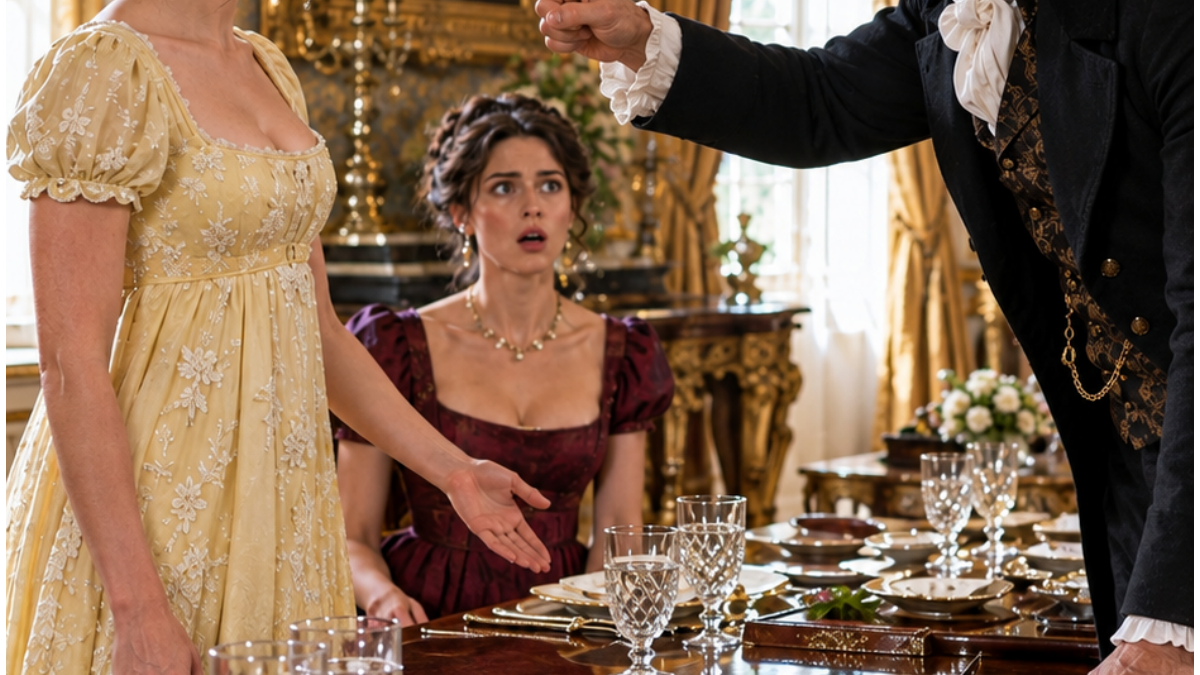
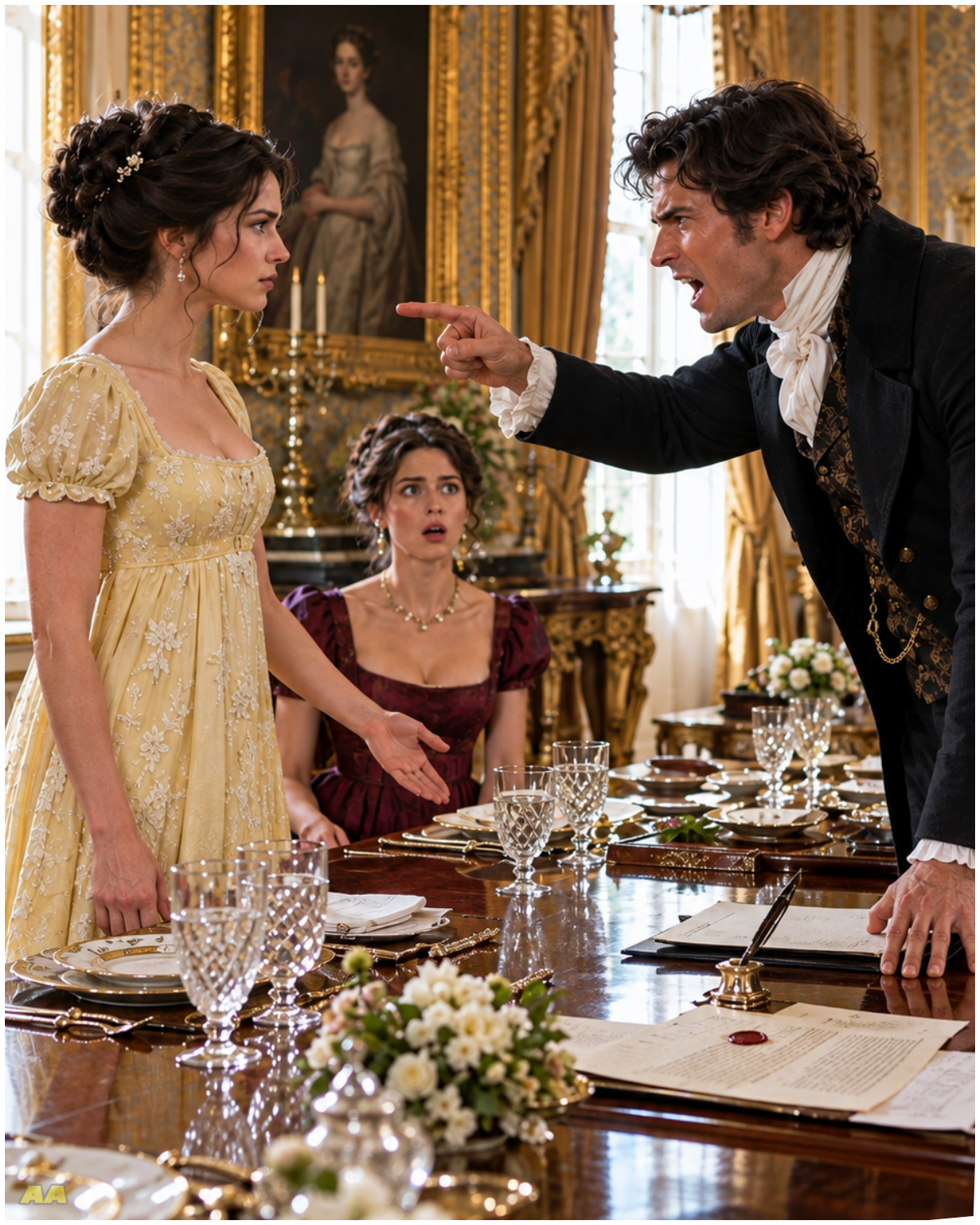
Eleanor Whitmore’s hand froze above her open jewelry box.
The velvet lining sat empty where her ring should have been.
Her heart began to pound so hard she could hear it in her ears.
She searched every corner of the small case, lifted the lining, checked the drawer beneath it, and still found nothing.
The ring that Edmund Ashford had placed on her finger the night of their engagement, the ring that had belonged to his late mother, was gone.
She sat down slowly on the edge of her bed, trying to steady her breathing.
There had to be an explanation.
Perhaps a servant had moved it.
Perhaps she herself had placed it somewhere else without remembering.
She was not a woman who panicked easily, and she refused to begin now.
Yet a cold feeling settled in her chest, a feeling she could not name, but could not ignore either.
6 months earlier, Eleanor had never imagined her life would lead to this moment.
She had grown up in a fine house on the edge of the county, the eldest daughter of a family whose name still carried respect, even as its fortune quietly crumbled behind closed doors.
Her father, Frederick Whitmore, had once been a man of considerable means.
But poor investments and a series of unfortunate decisions had left the family teetering on the edge of ruin.
Eleanor had watched her mother grow thinner with worry, watched the servants dwindle from a dozen to three, watched the fine paintings in their hallway disappear one by one, sold quietly to settle debts that never seemed to end.
When Lord Edmund Ashford had first called upon their home, Elellanor had assumed it was a matter of business between him and her father.
Edmund was known throughout the county as a wealthy landowner, charming in conversation and generous in his dealings, or so everyone believed.
He had inherited Asheford Manor along with a fortune that made him one of the most sought-after bachelors in the region.
Elellanor had not expected his visits to become frequent, nor had she expected the warmth in his eyes whenever he looked at her.
It was her father who first mentioned marriage.
Frederick had come to her one evening, his face pale and his hands trembling slightly, as he explained that Lord Ashford had asked for her hand, and that such a match would secure the family’s future for generations.
Eleanor understood immediately what was being asked of her.
She was not being given a choice so much as being handed a solution to a problem she had not created but would now be expected to solve.
She might have resented it and in truth some quiet part of her did.
Yet when she thought of Edmund himself, she found herself hoping for something more than duty.
He had a way of making her laugh even when she felt burdened by circumstance.
He listened when she spoke about the books she loved, the gardens she wished to plant, the small dreams she rarely voiced aloud.
On the evening, he placed his mother’s ring on her finger, kneeling before her in the drawing room with the fire crackling behind him.
Elellanor allowed herself to believe that perhaps fate had been kind to her after all.
The ring itself was a beautiful thing, a deep red ruby set in gold, surrounded by small diamonds that caught the light whenever she moved her hand.
Edmund had told her that his mother wore it every day of her life until her death and that she would have loved Elellanor as a daughter.
Eleanor had cried that night, moved by the weight of the gesture, believing she was being welcomed into a family, not merely a marriage.
The following weeks passed in a blur of preparation, Elellanor moved into Asheford Manor ahead of the wedding, a practical arrangement her father insisted upon so that she might grow accustomed to her new home and its staff.
The manor was grand beyond anything she had known, with wide hallways lined with portraits of Asheford ancestors, gardens that stretched toward the horizon, and a household staff that treated her with careful, practiced politeness.
Among the staff, only one woman seemed to look at Eleanor with genuine warmth rather than professional distance.
Bess, a young maid with quick eyes and a quiet manner, had been assigned to Eleanor’s personal service.
She helped Eleanor dress each morning, arranged her hair, and often stayed a few minutes longer than necessary simply to talk.
Elellanor found comfort in her company, a small friendship in a house that otherwise felt vast and unfamiliar.
Edmund, for his part, remained attentive during the day.
He took Eleanor riding through the estate, showed her the library he had inherited from his father, and spoke of the improvements he wished to make to the grounds once they were married.
He asked her opinion on matters most men would never think to raise with their intended wives.
And Elellanor found herself softening toward him more each week, allowing herself to trust that this marriage, however it had begun, might grow into something real.
Yet, even in those early weeks, small things began to catch her attention, things too minor to mention, but too persistent to entirely dismiss.
Edmund would sometimes leave the manor in the evening without explanation, returning hours later with no account of where he had been.
When Eleanor asked gently and without accusation, he would smile and speak of business matters requiring his attention, matters too dull to discuss with her.
She accepted this at first, telling herself that a man of his standing surely had responsibilities she did not fully understand.
It was during a dinner with several of the county’s prominent families that Eleanor first heard the name that would come to haunt her.
The conversation had turned, as it often did, to the latest gossip circulating through the drawing rooms of the wealthy.
An older woman, Lady Beatatrice Fenwick, mentioned in passing, a widow named Margaret Colt, who had recently taken up residence in a cottage at the edge of Asheford land.
There was something in the way Lady Beatatrice said the name, a slight rise of her eyebrows, a pause just a moment too long that made Eleanor’s attention sharpen.
She noticed, too, that Edmund’s expression had changed ever so slightly at the mention of the name, a flicker of something he quickly smoothed away with practiced ease.
He changed the subject smoothly, asking after Lady Beatatric’s garden, and the conversation moved on as though nothing had happened.
Eleanor said nothing that evening, but the name stayed with her, echoing quietly in her thoughts, long after the guests had departed.
She told herself it meant nothing.
Widows were common enough, and landowners often assisted tenants and neighbors as a matter of course.
Yet, as the days passed, Eleanor found her mind returning again and again to that brief exchange, to the flicker in Edmund’s eyes, to the careful way he had steered the conversation elsewhere.
She began without quite meaning to to watch him more closely.
One afternoon, while walking through the gardens with a book she had intended to read beneath the old oak tree, Eleanor came upon Edmund’s study window left slightly open.
She had not meant to look inside, but a letter lying open on his desk caught her eye through the gap in the curtains.
She could not read its contents from where she stood, and she quickly reminded herself that such curiosity was beneath her, that a wife should trust her husband rather than search for reasons to doubt him.
Still, the letter remained in her thoughts for the rest of the day, an unanswered question she could not quite set aside.
That evening, at dinner, she attempted to raise the subject gently, asking Edmund whether he had many tenants requiring his attention on the far edges of the estate.
He answered easily enough, speaking of a widow who had lost her husband to illness the previous winter.
A woman he had taken it upon himself to assist given her difficult circumstances.
He spoke of it as though it were the most natural thing in the world, a landowner’s simple duty toward those less fortunate.
Eleanor wanted to believe him.
She wanted more than anything to hold on to the warmth she had felt on the night he gave her the ring, to trust that the man who had knelt before her with such tenderness, was exactly who he appeared to be.
Yet something in his tone, a certain practiced smoothness, left her uneasy, in a way she could not quite explain even to herself.
As the wedding approached, preparations filled every corner of the manor.
Seamstresses arrived to fit Elanor’s gown.
Florists consulted on arrangements for the ceremony, and letters of invitation were sent to families throughout the county.
Eleanor threw herself into these tasks, finding a strange comfort in the details, in the lists and fittings and decisions that kept her mind occupied and away from the doubts that lingered at its edges.
Bess remained a steady presence throughout these weeks, and Eleanor found herself increasingly grateful for the young maid’s company.
One evening, as Bess helped brush out Eleanor’s hair before bed, Eleanor found herself asking almost without meaning to whether Bess knew anything of the widow Lady Beatatrice had mentioned.
Bess’s hands stilled for just a moment before continuing their work, and Elellanor caught the hesitation immediately.
“I know only what the other staff say, Miss” Bess answered carefully.
“And it is not my place to repeat idol talk.” Elellanar turned to face her, searching her eyes.
Please, Bess, I am not asking as your mistress.
I am asking as someone who wishes to know the truth.
Bess hesitated a moment longer before speaking, her voice low.
The stable boy has mentioned seeing his lordship’s horse tied outside a cottage near the eastern boundary.
More evenings than one might expect for a matter of simple charity.
That is all I know, miss, and I beg you not to trouble yourself over servants talk.
The words settled over Eleanor like a weight she had been expecting but had hoped never to feel.
She thanked Bess quietly and asked her to say nothing further of the matter, though she knew the conversation would remain with her long after the candle had been extinguished that night.
Sleep did not come easily.
She lay awake, staring at the canopy above her bed, turning the pieces over in her mind, the flicker in Edmund’s eyes, the letter on his desk, the widow’s name spoken with such careful weight, the stable boy’s account of evenings spent at a cottage far from any pressing estate business.
In the days that followed, Eleanor found herself observing Edmund with new and careful attention, though she was careful never to let him see the change in her.
She noted the evenings he departed without explanation, the way he seemed distracted during their conversations, his eyes occasionally drifting toward the window, as though his thoughts had already left the room.
She told herself repeatedly that she was imagining patterns where none existed.
That grief and worry over her family’s finances had made her suspicious of a man who had shown her nothing but kindness.
Yet doubt once planted does not easily wither.
It grows quietly in the mind, feeding on small observations until it can no longer be ignored.
Eleanor began to understand with a clarity that frightened her that whatever lay ahead in her marriage to Edmund Ashford, it would not be the simple peaceful life she had allowed herself to imagine on the night he placed his mother’s ring upon her hand.
She resolved, sitting alone in her chamber as the candle burned low, that she would not simply wait and wonder.
She would learn the truth of Margaret Colt, whatever that truth might cost her, before she allowed herself to walk down the aisle toward a future built on uncertainty.
Whatever waited for her beyond that resolve, she could not yet know, but she understood with growing certainty that her carefully ordered world was beginning slowly and quietly to unravel.
The following morning brought with it a letter from her father, full of gratitude and warm wishes for the coming wedding.
Full of relief that their family’s troubles would soon be behind them, Eleanor read it twice, feeling the weight of expectation pressing down upon her from every direction.
Her family’s future, her own uncertain heart, and a truth she had not yet found the courage to confront directly.
She folded the letter carefully and placed it in her drawer, then rose to begin another day of smiles and fittings and careful practiced composure.
All while the name Margaret Colt continued to echo quietly, insistently in the back of her mind.
Market day in the village brought a rare freedom Eleanor had come to treasure during her weeks at Ashford Manor.
Away from the watchful eyes of the household staff, she could walk among the stalls, examine ribbons and fabrics, and speak with ordinary people who cared nothing for her impending marriage or her family’s fading fortune.
She had asked best to accompany her that morning, and the two women moved through the crowded square with baskets over their arms, pausing here and there to admire fresh bread or fragrant bundles of lavender.
It was near the far end of the market, beside a stall selling delicate lace, that Eleanor first saw her.
A woman stood examining a length of fine white lace, her posture elegant, her dress simple but well-made, the kind of garment that suggested careful taste rather than great wealth.
She had dark hair pinned neatly beneath a modest bonnet.
And when she turned slightly, Eleanor caught sight of her face, striking in its calm confidence with sharp eyes that seemed to take in everything around her with quiet assessment.
Bess stiffened beside her, and Elellanor noticed the change immediately.
“What is it?” Elellanar asked quietly.
Bess hesitated, then lowered her voice.
“That is Mrs. Colt, Miss the widow from the Eastern Cottage.” Eleanor’s breath caught, though she kept her expression carefully neutral.
She had imagined Margaret Colt many times in the weeks since Lady Beatatrice first spoke her name, imagined a frail, grieving figure deserving of charity, or perhaps a scheming woman with obvious designs.
The reality before her fit neither picture.
Margaret Colt looked entirely ordinary, entirely respectable, the kind of woman one might pass in any market town without a second glance.
Curiosity overcame caution, and before Eleanor could stop herself, she found her feet carrying her closer to the lace stall.
Margaret glanced up as Eleanor approached, and for a moment, the two women simply looked at one another, neither speaking.
Eleanor wondered if Margaret knew who she was.
Wondered if the widow could read the tension in her carefully composed face.
That is a fine piece of lace, Eleanor said finally, gesturing toward the fabric in Margaret’s hands, choosing the safest possible words.
It is, Margaret agreed, her voice pleasant and unhurried.
Though I confess I am undecided whether it suits my purposes, I find myself needing new curtains for my parlor and find things are difficult to resist, even when practicality suggests otherwise.
“You live nearby, then?” Elellanar asked, keeping her tone light, conversational.
A small cottage on the eastern edge of the Ashford estate.
Margaret replied easily, and Elellanar noted the casual way she mentioned the estate’s name, as though it were the most natural reference in the world.
Lord Ashford has been most generous in allowing me to remain there since my husband’s passing.
He is a man of considerable kindness.
There was nothing in the words themselves to raise suspicion.
And yet, something in Margaret’s tone, a slight warmth that lingered just a moment too long on Edmund’s name, sent a chill through Eleanor’s cheSt. She forced herself to smile politely.
“I am glad to hear he has been of assistance to you,” Elellanor said.
“Grief is a difficult burden to carry alone.” Margaret’s eyes studied her for a moment, something unreadable passing behind them.
You speak as one who understands loss, though you seem young for such wisdom.
Might I ask your name?” Eleanor hesitated only briefly.
Eleanor Whitmore. If Margaret recognized the name, she gave no visible sign of it.
Though Elellanor thought she detected the faintest shift in her expression, a flicker of interest quickly masked, “A pleasure, Miss Witmore.
I hope you find whatever you are searching for at the market today.” The words carried a strange weight, and Eleanor was left wondering, as Margaret gathered her lace and moved away through the crowd, whether the widow had spoken with simple politeness or with deliberate meaning.
She stood rooted to the spot for a long moment.
Bess waiting anxiously beside her.
“Are you well, miss?” Bess asked softly.
“I am fine,” Elellanor answered, though her voice sounded distant even to her own ears.
“Let us finish our shopping and return to the manor.” The walk back felt longer than the journey out had been.
Elanor’s mind turned over every word of the brief exchange, searching for hidden meaning, for confirmation of the suspicions she had not yet allowed herself to fully acknowledge.
Margaret Colt did not carry herself as a grieving widow dependent on charity.
She carried herself as a woman entirely secure in her circumstances, comfortable enough to speak of Edmund by name to a stranger, comfortable enough to linger over fine lace, despite her supposedly modest means.
That evening, Eleanor found it difficult to maintain her usual composure at dinner.
Edmund spoke of estate matters and upcoming wedding preparations, and Eleanor answered where appropriate, though her thoughts remained fixed on the woman she had encountered at the market.
She studied Edmund’s face as he spoke, searching for any sign of the truth he might be concealing.
But he betrayed nothing, his manner as warm and attentive as ever.
“You seem distracted this evening,” Edmund observed partway through the meal, setting down his glass and regarding her with what appeared to be genuine concern.
“Forgive me,” Elellanar said, composing herself quickly.
“I encountered a woman at the market today.” Margaret Colt, I believe her name was.
She watched him carefully as she spoke the name.
And this time she was certain of what she saw.
A barely perceptible tightening around his eyes.
A fraction of a second’s hesitation before he responded.
“Ah, yes,” Edmund said, his voice carefully even.
“The widow I mentioned before.
I hope she was pleasant company.” She was, Elellanor replied, though she spoke of your kindness with a warmth that seemed almost personal rather than the gratitude one might expect toward a distant benefactor.
Edmund’s smile did not waver, though Elellanar thought she detected effort behind its steadiness.
Grief makes people express themselves strangely at times, my dear.
I assure you, my assistance to Mrs. Colt is nothing more than what any landowner might offer a tenant in need.
Elellanor wanted desperately to believe him, and for the remainder of the meal, she allowed herself to set the matter aside, choosing instead to speak of lighter things, of wedding flowers and guest lists, and the fine weather they had enjoyed that week.
Yet beneath the surface of polite conversation, her mind continued working, weighing every word, every gesture, searching for the truth she feared but needed to uncover.
Later that night, unable to sleep, Eleanor rose from her bed and made her way quietly through the darkened halls of the manor.
She told herself she was simply restless, that a walk through the gallery might settle her thoughts before returning to bed, but some part of her recognized the deeper purpose behind her wandering.
She found herself, almost without deciding to, standing outside the door to Edmund’s study, the same room where she had once glimpsed an open letter through the window.
The door was unlocked, and after a moment’s hesitation, Eleanor slipped inside, closing it quietly behind her.
The room was dark, save for the moonlight filtering through the tall windows, illuminating the heavy desk and the shelves of books lining the walls.
She knew she should not be there, knew that whatever she found might change everything between herself and the man she was meant to marry.
Yet, she could not bring herself to leave without searching further.
She moved to the desk, running her fingers lightly across its polished surface, opening drawers with careful, quiet movements.
Most contained nothing of intereSt. Ledgers and correspondence related to estate business, receipts for household expenses, letters from tenants requesting assistance with various matters.
She was nearly ready to abandon her search, to retreat to her chamber and forget the impulse that had driven her there.
When her fingers brushed against a small bundle of letters tucked beneath a false bottom in the lowest drawer, her heart pounding, Elellanor lifted the bundle carefully and untied the ribbon holding it together.
The letters were written in a woman’s hand, elegant and confident, and though the moonlight made reading difficult, Elellanor could make out enough to understand their nature.
They were letters of affection written with an intimacy that left no room for misinterpretation, signed at the bottom of each with a single name, Margaret.
Elanor’s hands trembled as she read fragments of the letters, phrases speaking of stolen evenings, of promises made and kept, of a devotion that had clearly existed for far longer than the few months since Margaret’s arrival on Asheford land.
One letter in particular caught her attention, dated several months before Edmund’s proposal to Eleanor herself, speaking of Margaret’s understanding that certain arrangements must be made for appearances, that a suitable marriage would secure Edmund’s position and fortune, while changing nothing of true importance between them.
The words blurred before Eleanor’s eyes as understanding settled over her like a physical weight.
She was not simply a wife chosen out of convenience or family obligation.
She was a carefully constructed arrangement, a solution to social expectation that Edmund intended to maintain alongside a relationship that had clearly existed long before her own involvement began.
The engagement, the ring, the tender words spoken beside the fire.
All of it had been performance layered at top a deeper hidden truth.
A sound in the hallway startled her from her thoughts.
Footsteps approaching the study door.
Eleanor hastily retied the ribbon around the letters and returned them to their hiding place beneath the false bottom, closing the drawer as quietly as her shaking hands would allow.
She had only just straightened when the door opened, revealing Edmund himself, a candle in his hand, his expression shifting from surprise to concern as he found her standing in his darkened study.
Eleanor, what are you doing here at this hour?
His voice carried genuine confusion, and Elellanor forced herself to remain calm, to keep her face composed despite the storm raging within her.
“I could not sleep,” she said, her voice steadier than she expected.
I thought perhaps a book might help settle my mind, and I recalled you keeping several volumes of poetry here.
Edmund’s expression softened, though Eleanor thought she caught a flicker of suspicion beneath his relief.
You gave me a fright, wandering about in the dark.
Come, let me light more candles and help you find something suitable.
Eleanor allowed him to guide her toward the bookshelves, playing the part of a sleepless bride to be, seeking comfort in literature, all while her mind screamed with the knowledge she now carried.
She selected a volume at random, thanked him with practiced warmth, and allowed him to escort her back toward her chamber, speaking softly of pleasant nothings along the way.
Alone again in her room, Eleanor sat by the window long into the night, the book unopened in her lap, staring out at the moonlit gardens without truly seeing them.
She understood now that she stood at a crossroads far more significant than she had previously realized.
The doubts that had troubled her for weeks were no longer doubts at all, but confirmed truth, carefully hidden truth that Edmund had gone to considerable effort to keep from her.
Yet even with this knowledge, Eleanor found herself uncertain of her next steps.
To confront Edmund directly, would require proof beyond her own word.
Proof that might be dismissed or explained away by a man skilled at maintaining appearances.
To say nothing and proceed with the marriage as planned would mean accepting a lifetime built upon deception, a fate she was no longer certain she could endure, regardless of what it might mean for her family’s finances.
She thought of her father, his hopeful letters, his relief at the prospect of their family’s salvation.
She thought of her mother, worn thin by years of worry, finally allowed a measure of peace.
The weight of their expectations pressed upon her alongside the weight of her own discovery.
Two forces pulling her in opposite directions.
And Eleanor understood, as the first light of dawn began to touch the horizon, that whatever choice she made in the coming days would shape not only her own future, but the fate of everyone who depended upon her.
She resolved, as exhaustion finally began to overtake her, that she would need more than suspicion and stolen glimpses of hidden letters.
She would need certainty, undeniable and complete, before she could decide how to proceed.
And so, as sleep finally claimed her, Eleanor made a quiet vow to herself.
She would watch, she would wait, and she would learn the full truth of Edmund Ashford and Margaret Colt, no matter what it might ultimately cost her.
Three days passed before Eleanor found the courage to act upon her resolve.
She spent those days observing Edmund with renewed intensity, cataloging his absences, his moods, the careful way he managed conversations whenever Margaret’s name arose.
She said nothing of what she had discovered in his study, maintaining instead the pleasant, dutiful manner expected of a woman preparing for marriage, though the effort of this performance left her exhausted by each day’s end.
It was during this time that an unexpected visitor arrived at Asheford Manor, a development that would prove far more significant than Eleanor could have anticipated.
William Hartley, a childhood friend of Eleanor’s family and a gentleman of modest but respectable means, had come to pay his respects ahead of the wedding.
Elellanor had known William since their earliest years, when their families had lived as neighbors before misfortune scattered both estates in different directions.
William had always harbored a quiet affection for Elellanor, one she had recognized but never encouraged given the practical realities that governed her family’s circumstances.
Seeing him again after so many months brought Eleanor an unexpected comfort.
William’s presence carried none of the careful performance that colored her interactions with Edmund.
None of the watchful uncertainty that had come to define her days at the manor.
He greeted her warmly in the drawing room, his weathered face breaking into a genuine smile that reminded Elanor of simpler times before her family’s troubles had complicated everything.
You look tired, Eleanor, William observed after they had exchanged pleasantries and settled into chairs near the window.
Forgive me for saying so plainly, but I have known you too long to pretend otherwise.
Eleanor considered deflecting his concern with polite reassurance, as she had done with everyone else in recent weeks, but something in Williams steady familiar gaze made her hesitate.
Wedding preparations are more exhausting than I anticipated, she said carefully, testing whether this partial truth might satisfy him.
William studied her for a long moment before responding.
I have heard whispers, Eleanor, traveling as they do through circles that touch both our families.
Whispers about Lord Ashford and a woman residing on his eastern lands.
I would not repeat such things if I did not care for your well-being above all else.
Eleanor’s composure nearly broke at his words.
The careful mask she had maintained for days, threatening to crumble in the presence of someone who spoke to her with such genuine concern.
She glanced toward the door, ensuring no servants lingered within earshot before lowering her voice.
“The whispers are true,” she admitted, the words feeling strange after so long spent concealing them.
“I have seen proof myself.
Hidden letters that leave no doubt of the nature of their connection.” Williams expression darkened, though he kept his voice equally low.
Then why do you remain here, Eleanor?
Why continue toward a marriage built upon such deception?
My family’s future depends upon this match, Eleanor said.
The familiar weight of obligations settling over her once again.
My father’s debts, my mother’s health, the security of everyone who depends upon me.
I cannot simply abandon them for the sake of my own wounded pride.
Your pride is not the only consideration here, William said gently.
A marriage built upon such deceit will not bring your family the security you imagine.
A man capable of such calculated dishonesty before the wedding has even taken place is unlikely to become more trustworthy afterward.
What protection can such a marriage truly offer you or your family if his affections and resources remain divided elsewhere?
Eleanor had not considered the matter in quite these terms before, and Williams words settled uncomfortably in her mind.
She had focused so intently on the immediate betrayal, the personal wound of discovering Edmund’s deception that she had not fully considered the longerterm implications for her family’s fortunes.
If Edmund maintained a secret arrangement with Margaret Colt throughout their marriage, what assurance did Elellanar have that resources meant to secure her family’s future might not be quietly diverted elsewhere toward a woman he seemed to value above his own wife?
“What would you have me do?” Eleanor asked.
Genuine uncertainty coloring her voice for the first time in their conversation.
William considered his answer carefully.
I would have you seek certainty before committing yourself irrevocably.
Gather whatever proof you can understand the full extent of the arrangement between them and then decide with clear eyes rather than hopeful assumption.
Whatever you choose afterward, at least you will choose knowing the truth completely rather than discovering it in fragments after vows have already bound you.
His counsel echoed the resolve Eleanor had already made to herself, and hearing it confirmed by someone outside her immediate circumstances, strengthened her determination.
Before William departed that afternoon, he pressed her hand gently and offered a final assurance that whatever she decided, whatever path she chose, he would remain a steady friend to her family, regardless of how matters unfolded with Lord Ashford.
Eleanor thanked him with more emotion than she had intended to show, grateful beyond words for a connection, untainted by the deceptions that had come to define her recent life.
That evening, Eleanor sought out Bess once again, this time with a specific purpose in mind.
She explained carefully and without revealing the full extent of what she had discovered, that she wished to understand more clearly the pattern of Edmund’s visits to the Eastern Cottage, the frequency and timing of his absences, anything the household staff might have observed without realizing its significance.
Bess hesitated before answering, clearly torn between loyalty to her position and genuine concern for Eleanor’s well-being.
The stable boy keeps a careful record of when his lordship’s horse is taken out and returned, “Miss, as part of his duties.” “I could ask him to share what he knows, though I fear what such knowledge might mean for you.” “I need to know, Bess,” Elellanor said firmly.
“Whatever comfort ignorance might offer, I cannot build my future upon it.” Bess returned the following morning with information gathered from the stable boy, a young man named Henry, who had proven willing to share his observations.
Once Bess explained the seriousness of the matter.
According to Henry’s careful records, Edmund had visited the eastern cottage no fewer than three times each week over the preceding two months, often remaining for several hours each visit, always departing and returning under cover of darkness.
The pattern suggested not the occasional charitable visit Edmund had described, but a sustained and deliberate relationship maintained with considerable regularity.
Armed with this information, Eleanor found herself facing a difficult decision about how best to proceed.
She could confront Edmund directly with what she now knew, though she suspected he would offer smooth denials and careful explanations designed to preserve the arrangement he had constructed.
She could seek out Margaret Colt herself, though such a confrontation carried its own risks and uncertain outcomes.
Or she could continue gathering evidence quietly, building an undeniable case before revealing her knowledge at a moment of her own choosing.
It was this final option that appealed most strongly to Eleanor’s careful, methodical nature.
She resolved to visit the eastern cottage herself, not to confront Margaret directly, but to observe from a discreet distance to understand the true nature of the relationship she was investigating before deciding how to act upon her knowledge.
The following afternoon, while Edmund attended to business matters in the village, Eleanor borrowed a modest cloak from Bess and made her way on foot toward the eastern boundary of the estate, following directions Bess had provided based on Henry’s knowledge of the property.
The walk took nearly an hour through fields and along quiet country paths that Eleanor had never before explored.
The physical distance somehow matching the emotional distance she felt growing between herself and the life she had expected to lead.
The cottage, when she finally reached it, proved smaller and more modest than she had imagined.
A simple stone structure with a well-tended garden and smoke rising gently from its chimney, Elellanor positioned herself behind a cluster of trees at a respectful distance, uncertain what exactly she hoped to observe, only knowing that she needed to see this place with her own eyes, rather than relying solely on secondhand accounts.
She had waited perhaps 20 minutes, growing increasingly uncertain about the wisdom of her impulsive expedition when the cottage door opened, and Margaret emerged into the garden, carrying a basket for gathering vegetables from a small plot near the fence.
Eleanor watched as the widow moved through her garden with practiced ease, humming softly to herself, entirely unaware of the observer hidden among the trees.
It was the arrival of a second figure that made Eleanor’s breath catch in her throat.
A small child, no more than three or four years of age, came running from the cottage door, calling out to Margaret with delighted laughter.
Margaret set down her basket immediately, scooping the child into her arms with obvious affection, spinning in a small circle that drew further peels of laughter from the little one.
Eleanor stared, her mind struggling to process what she was witnessing.
She had known of the letters, known of the visits, known of the deception that ran through her impending marriage like a hidden fault line.
She had not known, could not have imagined that a child might exist as well, a living consequence of the relationship between Edmund and Margaret that transformed the entire situation from a matter of personal betrayal into something far more complicated and far-reaching.
She remained hidden among the trees for several more minutes, watching Margaret and the child play together in the garden, watching the easy affection between them, the comfortable domesticity that suggested this arrangement had existed for considerably longer than Eleanor had previously understood.
When Margaret eventually carried the child back inside, calling out something about supper, Eleanor finally allowed herself to move, retreating carefully back along the path toward the manor, her mind reeling with the implications of what she had just witnessed.
A child changed everything. If the little one belonged to Edmund, as seemed increasingly likely given everything Elellanor had learned, then the relationship between him and Margaret was not simply an affair of convenience or passing affection, but a bond deepened by shared parenthood.
A connection that marriage vows to Eleanor herself would do nothing to sever.
She walked back toward Ashford Manor in a days, scarcely noticing the fields and paths she passed, her thoughts consumed entirely by this new and troubling discovery.
By the time she reached the manor, Elellanor had resolved that she needed more than observation and inference.
She needed direct confirmation, painful as it might prove to obtain.
That evening, feigning a headache to excuse herself from dinner with Edmund, Elellanor instead sent word to Bess, requesting that Henry be asked discreetly whether he knew anything of a child at the Eastern Cottage.
Henry’s answer, relayed through Bess the following morning, confirmed what Eleanor had already suspected.
The child, a boy named Arthur, had been born nearly 3 years earlier, shortly after Margaret’s arrival on Asheford land following her husband’s supposed passing.
Henry mentioned almost as an afterthought that some among the household staff had long speculated about the boy’s true parentage, given his lordship’s frequent visits and the striking resemblance some claimed to see between the child and Edmund himself, though such speculation had always remained carefully unspoken, given the delicate nature of the subject.
Eleanor sat with this information for a long while, turning it over in her mind, feeling the full weight of what she now understood settle upon her like a physical burden.
Edmund Ashford, the man she was meant to marry within weeks, had fathered a child with another woman, a woman he continued to visit regularly, a woman whose letters spoke of enduring affection that predated his engagement to Eleanor by a considerable margin.
The engagement itself, she now understood with painful clarity, had been arranged not out of any genuine desire for Eleanor herself, but as a calculated solution to social expectation, a marriage of appearance meant to secure his position, while changing nothing of substance in his true attachments.
The question that remained, pressing and urgent, was what Eleanor intended to do with this devastating knowledge.
She thought again of William’s counsel, of seeking certainty before acting, and she understood now that she had achieved that certainty in full measure.
What remained was the far more difficult task of deciding how to proceed, knowing that whatever choice she made would carry consequences not only for herself, but for her family’s fragile finances, for the child Arthur, whose innocent existence complicated every possible path forward, and for her own sense of dignity and self-respect, which she was no longer willing to sacrifice without careful consideration, of what such sacrifice would truly cost her.
A letter arrived from Eleanor’s father 3 days after her discovery of young Arthur, and its contents added yet another layer of urgency to the situation she now faced.
Frederick Whitmore wrote with barely contained relief, explaining that the bank holding the mortgage on their family home had agreed to extend the repayment terms based on assurances provided by Lord Ashford’s solicitor regarding the upcoming marriage settlement.
Without this extension, the letter explained, the family home would have been seized within the month.
Eleanor read the words with a growing sense of dread.
Understanding that her family’s very roof now depended directly upon a marriage she had come to view as fundamentally corrupt, she folded the letter carefully and sat for a long while at her writing desk, staring out at the gardens without truly seeing them.
The situation had grown far more complicated than a simple matter of personal betrayal.
Her family’s survival now hung upon the same arrangement that would bind her to a man who maintained a secret family elsewhere, a man whose true affections clearly belong to another woman and her child.
Whatever path Eleanor chose, the consequences would extend far beyond herself.
It was during this period of anxious deliberation that Elellanor received an unexpected visit from Mr.
Charles Peton, the solicitor who managed the legal affairs of both the Asheford and Whitmore families.
He arrived at the manor to discuss final details of the marriage settlement.
Documents requiring Eleanor’s signature ahead of the ceremony now less than 3 weeks away.
Eleanor received him in the small study Edmund had made available for her use.
Maintaining careful composure despite the turmoil churning beneath her calm exterior, Mr.
Peton spread several documents across the desk between them, explaining the terms of the settlement in the measured, professional tone of a man accustomed to such delicate discussions.
Eleanor listened carefully, her attention sharpening when the solicitor mentioned a provision she had not previously encountered, a clause establishing a separate trust fund intended for the maintenance of what the document vaguely described as certain estate dependence residing on Asheford lands.
“Might I ask what this provision refers to specifically?” Eleanor inquired, keeping her voice carefully neutral, despite the suspicion already forming in her mind.
Mr. Peton hesitated, clearly uncomfortable with the question.
It is a standard arrangement for the maintenance of tenants under his lordship’s care, Miss Witmore.
I would not trouble yourself with such minor administrative details.
Eleanor pressed further, her instincts, telling her that this provision held more significance than the solicitor was willing to acknowledge.
The amount specified seems considerable for the maintenance of a single cottage and its tenant.
Might I know more precisely how these funds will be allocated?
The solicitor’s discomfort grew visibly, and after a long pause, he answered with careful diplomacy.
The funds are intended to provide for the ongoing needs of Mrs. Margaret Colt and her son, ensuring their comfortable maintenance, regardless of any changes in circumstance that might otherwise affect such arrangements.
His lordship was quite specific in requesting this provision be included as a permanent feature of the settlement.
Eleanor sat very still, absorbing the full implications of what she had just learned.
Edmund intended not merely to continue his relationship with Margaret and their son in secret, but to formalize their financial security through the very marriage settlement meant to protect Elellanor’s own family.
The funds allocated for Margaret’s maintenance would be drawn from the same estate resources that Eleanor’s family desperately needed, meaning that her own marriage would directly finance the continued comfort of the woman and child that Edmund clearly valued above his intended wife.
I see,” Eleanor said finally, her voice steady despite the anger building within her.
“Thank you for explaining the matter so thoroughly, Mr.
Peton. I shall need some time to review these documents before providing my signature.” The solicitor seemed relieved to conclude the uncomfortable conversation, gathering his papers and departing with assurances that he remained available should Elellanar have further questions.
Once alone, Eleanor allowed herself a rare moment of unguarded emotion, pressing her hands against her face as the full weight of her circumstances threatened to overwhelm her composure entirely.
She understood now with painful clarity that Edmund had constructed an elaborate arrangement designed to serve his own interests while appearing entirely respectable to outside observers.
He would marry Eleanor, securing the social advantages and family connections such a union provided, while ensuring through carefully worded legal provisions that his true attachment to Margaret and their son would continue undisturbed, financially secured by the very marriage meant to represent his commitment to his lawful wife.
That evening, Elellanor determined that the time had come to test Edmund directly, though she was careful to approach the matter with strategic caution rather than open confrontation.
She waited until they were alone together in the drawing room after dinner, the fire casting warm light across the familiar space where he had once knelt to place his mother’s ring upon her finger.
“I met with Mr. Peton today,” Elellanor began carefully, watching Edmund’s face for any reaction.
He explained the settlement provisions, including a fund established for the maintenance of certain estate dependents.
Edmund’s expression flickered, though he recovered quickly, his voice maintaining its usual warmth.
Ah, yes, a standard arrangement, my dear.
Nothing that need concern you.
He mentioned it was intended specifically for Mrs. Colt and her son, Eleanor continued, keeping her tone light, despite the tension building within her.
I confess, I find myself curious about the connection between our marriage settlement and the well-being of a widow and child residing elsewhere on the estate.
The silence that followed stretched long enough that Elellanor began to wonder if Edmund would answer at all.
When he finally spoke, his voice carried a careful, measured quality that suggested he was choosing his words with considerable deliberation.
You ask a great many questions about matters that need not trouble a woman soon to become mistress of this estate.
I would ask you to trust that I manage such affairs with appropriate discretion and care.
Trust becomes difficult, Edmund, when explanations remain so incomplete.
Eleanor said, allowing a hint of the frustration she felt to color her words for the first time since her suspicions had first taken root.
Edmund’s expression hardened slightly, though he maintained his composed exterior.
I would ask you not to press this matter further, Eleanor.
Some questions are better left unasked for the sake of the peace we hope to build together.
The response, evasive and faintly threatening in its implication, confirmed everything Eleanor had already suspected.
Edmund had no intention of offering honest explanation, preferring instead to rely upon her deference and her family’s desperate need for the security this marriage promised to provide.
She realized, watching him across the fire lit room, that he believed her circumstances left her no real choice but to accept whatever arrangement he chose to construct, regardless of how it might wound her personally or compromise her dignity.
Eleanor excused herself shortly afterward, retreating to her chamber with her mind racing through the implications of everything she had learned and confirmed that day.
She understood now that Edmund’s deception ran deeper than she had initially realized, extending not merely to secret visits and hidden affection, but to a calculated financial arrangement that would use her own marriage to secure the comfort of his true family at the expense of resources her own family desperately needed.
The next morning brought a visit from her mother, Margaret Whitmore, who had traveled to Asheford Manor to discuss final wedding preparations and to see her daughter ahead of the approaching ceremony.
Elellanor found herself torn between her desire to confide in her mother and her awareness of how such knowledge might devastate a woman already worn thin by years of financial worry.
She chose ultimately to maintain her composure during their visit, speaking of flowers and gowns and the guest arrangements, while privately carrying the weight of knowledge she could not yet bring herself to share.
Watching her mother’s careful, hopeful expression throughout their conversation, Eleanor felt the full complexity of her situation, pressing upon her more heavily than ever.
To reveal the truth now would shatter whatever fragile piece her mother had found in the prospect of the family’s financial salvation.
To remain silent meant carrying this burden alone, continuing to play a role in a deception that grew more elaborate and more painful with each passing day.
After her mother’s departure, Eleanor sought out Bess once again, needing the comfort of someone who already understood the full truth of her circumstances.
She found the young maid in the linen room, sorting through freshly laundered items, and drew her aside to a quiet corner where their conversation would remain private.
I do not know how much longer I can continue this pretense,” Eleanor admitted, her voice barely above a whisper.
“Every day brings new evidence of how thoroughly I have been deceived.
Yet my family’s survival depends upon this marriage proceeding as planned.” Bess regarded her with genuine sympathy, setting aside the linens in her hands.
“Miss, if I may speak plainly, a marriage built upon such foundations offers no true security.
Whatever promises might be written into legal documents.
A man who deceives so thoroughly before vows are even spoken cannot be relied upon to honor those vows afterward, regardless of what papers might say.
The words echoed Williams earlier counsel, and Eleanor found herself nodding slowly, the truth of the observation settling over her with quiet, undeniable weight.
Whatever financial security this marriage promised existed only on paper, contingent upon Edmund’s continued goodwill and honesty, qualities he had already demonstrated he possessed in only the most limited and self-serving measure.
I need proof that cannot be dismissed or explained away,” Eleanor said finally, her resolve hardening, even as uncertainty continued to churn beneath it.
“Something undeniable, something that will leave no room for doubt when the moment comes to act.” Bess considered this for a moment before responding, her expression thoughtful.
There is to be a grand ball at the manor next week, miss, to celebrate the approaching wedding before family and friends throughout the county.
Perhaps such an occasion might provide the opportunity you seek, if his lordship’s carelessness or arrogance leads him to reveal what he believes remains safely hidden.
Elellanor considered this possibility carefully, feeling a strange cold clarity settle over her thoughts.
The ball meant to celebrate her impending marriage before the eyes of society might instead become the stage upon which the truth of Edmund’s deception would finally be revealed beyond any possibility of denial.
Whatever happened in the days remaining before that gathering, Elellanor understood that she was approaching a moment of reckoning from which there would be no comfortable retreat, only a choice between continued deception and painful liberating truth.
The week leading up to the ball passed in a flurry of preparation that left little time for Eleanor to dwell upon her troubled thoughts, though the underlying tension never fully left her.
Seamstresses arrived to complete final adjustments to her ball gown, a deep emerald silk that Edmund had commissioned specifically for the occasion, and florists filled the manor’s grand hall with arrangements of white roses and trailing greenery.
Lied was Elellanor moved through these preparations with practiced composure, accepting compliments on her appearance and offering gracious thanks for the elaborate arrangements being made in her honor, all while carrying the private knowledge that threatened to unravel everything the celebration was meant to represent.
Bess had suggested during one of their quiet conversations that Eleanor pay particular attention to her jewelry in the days before the ball, reasoning that Edmmonds carelessness or overconfidence might reveal itself through some small oversight regarding the ring or other tokens of their engagement.
Eleanor had taken this advice seriously, checking her jewelry box each morning and evening, though she had not truly expected to discover anything a miss so directly.
It was 2 days before the ball that Eleanor opened her jewelry box and found the ruby ring missing from its accustomed place.
Her heart pounded as she searched through every compartment, lifted every lining, checked every possible location where the ring might have been misplaced, but found nothing.
The absence felt like confirmation of something she had feared, but not yet fully allowed herself to consider, and she forced herself to breathe slowly, to think carefully before acting upon the alarm building within her.
She sent for Bess immediately, and the young maid arrived within minutes, her expression shifting to concern as Eleanor explained what she had discovered.
Together, they searched Eleanor’s chamber thoroughly.
Together, they search her within drawers along every surface where the ring might conceivably have fallen or been misplaced, but their efforts yielded nothing.
Perhaps his lordship has taken it for cleaning or repair.
Miss, best suggested, though her tone carried little genuine conviction behind the words.
Perhaps, Elellanar agreed, though she felt certain the explanation would not prove so simple.
She had not removed the ring in days, and the jewelry box had remained locked, its key kept in a drawer known only to herself and Bess.
The disappearance suggested either that someone else had access to her private chamber, or that the ring had been removed under circumstances she had not yet considered.
Elellanor confronted Edmund about the missing ring that same evening, choosing her words carefully as she watched for any sign of guilt or evasion in his response.
>> “I have discovered my ring missing from its case,” she said simply, watching his face closely as she spoke.
>> “I wondered if you might know anything of its whereabouts.” Edmund’s expression shifted through several emotions in quick succession, “Surprise!” followed by something that might have been calculation before settling into an expression of concerned reassurance.
How troubling. I shall have the entire household staff questioned immediately.
Such an heirloom must be recovered without delay.
You have no knowledge of its removal yourself, Elellanor pressed, unable to keep a note of suspicion from creeping into her voice.
None whatsoever, Edmund replied smoothly.
Though Elellanor thought she detected a slight hesitation before his answer, a fraction of a second that might have meant nothing, or might have meant everything.
I shall speak with Mr.
Peton about arranging its safe return, should it have been sent somewhere without proper communication reaching you.
The vague, unconvincing nature of his explanation, did little to ease Eleanor’s growing certainty that Edmund knew precisely where the ring had gone, even if he was unwilling to admit as much directly.
She thought immediately of Margaret Colt, of the confident, comfortable manner in which the widow had spoken of Edmund’s kindness, and wondered whether the ring, symbol of the engagement Eleanor had once believed represented genuine affection, had found its way instead into the hands of the woman who apparently held Edmund’s true devotion.
That night, unable to sleep, Eleanor rose once again to walk through the darkened halls of the manor.
Drawn by an impulse she could not fully explain toward Edmund’s study, the same room where she had previously discovered the hidden letters that first confirmed her suspicions, she found the door locked this time, a new precaution that seemed to confirm Edmund’s awareness that his secrets required more careful protection than he had previously exercised.
Standing before the locked door, Eleanor felt a strange mixture of frustration and grim satisfaction.
The lock itself represented an admission, however unspoken, that Edmund understood the danger his hidden arrangements posed, should Elellanor discover their full extent.
She returned to her chamber that night with a renewed sense of purpose, understanding that whatever proof she still required, would likely present itself at the ball, now only two days distant, when both Edmund and Margaret would necessarily move within the same social sphere, however carefully they might attempt to maintain appropriate distance.
The following day brought a visit from Lady Beatatric Fenwick, the same woman whose careless mention of Margaret Colt had first planted seeds of doubt in Elanor’s mind weeks earlier.
Lady Beatatrice arrived ostensibly to discuss final details of the ball’s guest list, though Eleanor suspected the visit carried additional motivations given the older woman’s evident fondness for gossip and social intrigue.
“You seem troubled, my dear,” Lady Beatatrice observed as they took tea together in the manor’s smaller sitting room.
“I do hope wedding preparations have not proven too exhausting.” Eleanor considered how much to reveal to a woman known throughout the county for her loose tongue, ultimately deciding that Lady Beatatric’s connections and observations might prove useful despite the risks involved.
I confess I have heard certain rumors that have caused me some concern, Elellanor said carefully.
Rumors regarding Lord Ashford and the widow residing on the eastern portion of his estate.
Lady Beatatric’s eyes widened slightly, though Eleanor could not determine whether her surprise stemmed from the topic itself, or from Eleanor’s willingness to raise it so directly.
Ah, so you have heard something of that matter.
I confess I have long wondered whether you were aware of the situation, given how openly certain parties have discussed it in circles where they believed themselves unobserved.
“What exactly have you heard?” Elellanar asked, leaning forward slightly despite her attempt to maintain composed dignity.
Lady Beatatrice glanced toward the door before lowering her voice further.
It is said that Mrs. Colt was never truly widowed at all, my dear, but rather that she arrived in this county already carrying Lord Ashford’s child, sent here under the guise of widowhood, to avoid the scandal that open acknowledgement would surely bring.
Whether this account holds truth, I cannot say with certainty, though the timing of her arrival and the boy’s age align rather suspiciously with certain events in Lord Ashford’s history that predate even his father’s passing.
The revelation added yet another troubling dimension to the situation.
Eleanor had already found overwhelming in its complexity.
If Lady Beatatric’s account held any truth, then Margaret Colt’s entire presence in the county, rested upon a foundation of fabrication, designed specifically to protect Edmund’s reputation, while allowing him to maintain his secret family close enough to visit regularly.
The elaborate deception extended further than Eleanor had previously imagined, involving not merely private letters and quiet visits, but a carefully constructed public fiction maintained for years.
I thank you for sharing this with me,” Eleanor said finally, her voice steady despite the turmoil these revelations continued to stir within her.
I would ask that you keep our conversation private, at least for the present.” “Of course, my dear,” Lady Beatatrice agreed, though Eleanor harbored some doubt about how completely the older woman would honor such a request, given her evident enjoyment of the conversation and the social currency such information might provide in other settings.
Still, Elellanor understood that whatever discretion Lady Beatatrice might or might not maintain, the truth itself had already been confirmed and expanded through this exchange, adding further weight to the case, building steadily against the man Eleanor had once hoped to love.
After Lady Beatatric’s departure, Eleanor sat alone in the sitting room for a long while, processing everything she had learned.
The missing ring, the hidden letters, the secret child, the fabricated widowhood.
Each piece added to a portrait of deception so thorough and so calculated that Eleanor found herself struggling to reconcile it with the charming, attentive man who had knelt before her with apparent sincerity, to place his mother’s ring upon her finger.
Perhaps, she reflected with bitter clarity.
That very sincerity had been performance from the beginning, a skill honed through years of maintaining an elaborate double life that required constant, careful management of appearances.
She thought of her family, of her father’s relief, and her mother’s hopeful visits, of the financial security this marriage was meant to provide.
She thought also of young Arthur, innocent of the circumstances surrounding his birth, and of Margaret herself, who perhaps had also been deceived in her own way, believing herself the true object of Edmmond’s devotion, while he simultaneously prepared to marry another woman, for reasons of social advantage and financial necessity.
The complexity of the situation offered no easy answers, no simple path forward that would satisfy every competing obligation and consideration.
Yet Eleanor understood as she prepared for the ball that would take place in just 2 days time that she could no longer continue in uncertainty and quiet suffering.
Whatever the ball revealed, whatever confirmation or further complication it might bring, she resolved that the time for passive observation had nearly reached its end.
She would need soon to make a choice, and she intended to make that choice with full knowledge of the truth, however painful that truth might prove to be.
That evening, as Bess helped her prepare for bed, Elellanor found herself asking one final question that had been weighing upon her mind throughout the day’s revelations.
Bess, do you believe a person can build genuine happiness upon a foundation of such deception, however comfortable the material circumstances that deception provides?
Bess considered the question seriously before answering her expression thoughtful in the candle light.
I believe miss that happiness built upon lies tends eventually to crumble regardless of how carefully those lies are maintained.
True comfort comes from knowing exactly where one stands, even if that place proves less grand than what deception might promise.
Eleanor nodded slowly, finding wisdom in the young maid’s simple, honest observation.
Whatever choice lay ahead of her, she understood now that she valued truth, however painful over comfortable illusion, however secure it might appear on the surface.
With this resolve settling firmly within her, Elellanor extinguished her candle and lay awake long into the night, preparing herself mentally for whatever the approaching ball might reveal, and for the difficult choices that would surely follow in its wake.
The evening of the ball arrived with a clear sky and a gentle breeze that carried the scent of roses through the open windows of Asheford Manor.
Eleanor stood before the tall mirror in her chamber, as Bess made final adjustments to her emerald gown, the fabric catching candle light, in a way that made Elellanor appear every bit the radiant bride to be the occasion demanded she portray.
Only Bess, watching her mistress’s reflection with careful attention, could see the tension held tightly behind Eleanor’s composed expression.
“You look every inch of future mistress of this estate.” “Miss,” Bess said softly, adjusting a final curl of Eleanor’s hair.
“Whatever this evening brings, you will face it with grace.” Eleanor met her own eyes in the mirror, searching for the confidence she needed to carry her through whatever the night might reveal.
Thank you, Bess. Your friendship has meant more to me these past weeks than I can properly express.
The grand hall, when Elellanor descended to join the gathering guests, had been transformed into a scene of considerable splendor.
Chandeliers blazed with hundreds of candles, their light reflecting off polished floors and elaborate floral arrangements.
Musicians tuned their instruments in one corner, while servants moved efficiently among the arriving guests, offering refreshments and directing carriages to their appropriate places.
Eleanor recognized many faces among the county’s prominent families, all gathered to celebrate a union that she now understood rested upon foundations far less solid than any of them realized.
Edmund greeted her at the base of the staircase, his appearance every bit as impressive as her own.
Dressed in fine evening attire that befit his position as host of such a distinguished gathering, he offered his arm with practiced charm, and Elellanor accepted it, maintaining the performance of devoted bride that circumstances demanded, even as her thoughts remained fixed upon the confirmation she hoped and feared this evening might provide.
You look radiant, Edmund said, his voice carrying genuine admiration that Eleanor found herself unable to fully truSt. Given everything she now knew, tonight will be remembered as one of the finest gatherings this county has witnessed in years.
Elellanor smiled in response, offering the expected pleasantries, while her eyes moved discreetly through the crowd, searching for any sign of the woman whose presence she suspected might not remain confined to the eastern cottage this particular evening.
William Hartley had arrived early, and Eleanor caught his eye across the room, finding brief comfort in his steady knowing gaze, a silent acknowledgement of the difficult circumstances, he alone among the guests fully understood.
The evening progressed through its expected rhythms, dancing and conversation flowing easily among the assembled guests.
Eleanor performed her role admirably, dancing with Edmund and several other gentlemen, exchanging pleasant conversation with ladies of the county, all while maintaining careful watch for anything that might confirm or deny the suspicions that had consumed her thoughts for weeks.
She began to wonder, as the evening wore on without incident, whether her carefully cultivated hopes for confirmation might go unfulfilled, whether Edmund’s careful management of appearances would prove sufficient to carry them through the entire evening without revelation.
It was during a pause between dances, as Elellanor stood near the edge of the ballroom, catching her breath, that she noticed a stir near the entrance, a ripple of surprised murmurss passing through nearby guests.
She turned to see what had caused the disturbance, and her heart nearly stopped as she recognized the figure who had just entered the grand hall.
Margaret Colt stood at the threshold, dressed in an elegant gown of deep blue that suited her dark hair and confident bearing perfectly.
She moved into the room with the easy grace of someone entirely comfortable in such surroundings, greeting several guests with familiar warmth that suggested previous acquaintance rather than the tentative uncertainty one might expect from a woman of modest means attending such a grand occasion for the first time.
Eleanor’s eyes moved immediately to Margaret’s hands, and there, catching the light of a thousand candles, sat the ruby ring that had disappeared from Eleanor’s jewelry box just days earlier.
The deep red stone and its surrounding diamonds were unmistakable.
The very heirloom that Edmmond’s late mother had worn throughout her life, now displayed openly on another woman’s finger at a celebration meant to honor Eleanor’s own engagement.
The shock of the site left Eleanor momentarily frozen, unable to move or speak, as the full weight of confirmation settled over her.
She had suspected, had gathered evidence, and pieced together fragments of truth over many difficult weeks.
But seeing the ring itself worn so openly and confidently at this very gathering transformed suspicion into undeniable devastating certainty.
She watched as Margaret made her way through the crowd toward Edmund, who stood engaged in conversation with several other gentlemen near the refreshment table, entirely unaware of what had just entered the room.
When Margaret reached him, laying a hand gently upon his arm to draw his attention, Eleanor watched Edmund’s expression shift from polite social engagement to something far more complicated, surprise mixing with what appeared to be genuine alarm, as he recognized the woman standing before him.
Their exchange, though conducted in lowered voices, drew increasing attention from nearby guests, several of whom exchanged knowing glances that suggested the truth, Elellanor had only recently uncovered was hardly a secret within certain circles of county society.
Edmund attempted to guide Margaret toward a quieter corner of the room, his hand at her elbow with a familiarity that betrayed far more than mere acquaintance.
But Margaret resisted, her voice rising slightly as she spoke words Elellanor could not quite make out from her distance.
Eleanor found herself moving forward almost without conscious decision.
Drawn toward the unfolding confrontation by a force she could not entirely control.
As she approached, she caught fragments of Margaret’s words spoken with an edge of frustration that suggested the widow’s patience with careful discretion had finally reached its limit.
Tired of hiding, Edmund, our son deserves acknowledgement, and I deserve better than continued secrecy while you prepare to marry another woman before the entire county.
The words carried clearly enough that several nearby guests turned with open curiosity, their conversations falling silent as they realized the significance of what was unfolding before them.
Edmund’s face had gone pale, his usual composed charm entirely absent as he attempted, with visibly failing success, to manage a situation spiraling rapidly beyond his control.
Elellanor reached the small gathering just as Edmund noticed her approach.
His expression shifting to something approaching panic as he realized his careful separation of his two lives had finally collapsed entirely and in the most public setting imaginable.
Margaret too turned to face Eleanor, her expression shifting from frustration to a complicated mixture of recognition and something that might have been guilt, though it passed quickly, replaced by a kind of defiant resolve.
Miss Whitmore, Margaret said, her voice carrying clearly enough that surrounding guests had no difficulty hearing every word.
I believe you recognize this ring.
Edmund gave it to me as a token of his affection, an affection that has endured far longer than his engagement to yourself.
The room had grown remarkably quiet, guests abandoning any pretense of continued conversation, to witness the unfolding drama with open, unabashed attention.
Eleanor felt every eye upon her felt the weight of public humiliation pressing down alongside the personal devastation of confirmed betrayal.
Yet she found to her own surprise that she possessed more composure in this moment than she might have expected.
“I recognize it,” Eleanor replied, her voice steady despite the storm raging within her.
It belonged to Lord Ashford’s mother, and he placed it upon my own finger just months ago, speaking words of devotion that I now understand held little genuine meaning.
Edmund attempted to interject, his voice carrying a note of desperate reassurance.
Elellanor, please, this is not the place for such discussion.
Allow me to explain privately.
Away from away from witnesses to your deception,” Eleanor interrupted, surprising herself with the steadiness of her own voice.
“I have spent weeks discovering the truth you worked so carefully to hide,” Edmund hidden letters speaking of enduring affection.
A child born to a woman you claimed was merely a tenant deserving charity.
A financial settlement designed to secure that woman’s comfort, using resources meant to support the very marriage you asked me to enter.
And now, finally, undeniable proof, in the form of an heirloom ring, stolen from my own chamber, and given to another woman, as though our engagement meant nothing at all.
The words poured from her with an intensity she had not planned.
Months of carefully contained suspicion, and painstakingly gathered evidence, finally finding voice in this most public of settings.
Gasps and murmurss spread through the assembled guests, as Eleanor’s revelations confirmed suspicions many had apparently harbored, but never dared voice openly, while others learned for the first time the full extent of Lord Ashford’s deception.
Edmund’s face had drained of all color, his careful composure entirely shattered as he realized the impossibility of managing this situation through charm or careful explanation.
Eleanor, I beg you, whatever arrangement exists between myself and Mrs. Colt need not affect the marriage we planned together.
Many men of standing maintain such additional arrangements, while still providing properly for their lawful wives.
The casual dismissiveness of his words, spoken as though Eleanor’s dignity and trust meant nothing compared to social convention, confirmed everything she needed to know about the character of the man she had nearly bound herself to for life.
She looked at him for a long moment, taking in his desperate expression, the panic evident beneath his usual polished exterior, and felt something within her settle into calm, unshakable resolve.
“I understand now with complete clarity exactly what kind of man you are,” Edmund Ashford, Elellanor said, her voice carrying clearly through the silent ballroom.
A man who deceives without conscience, who values his own comfort and reputation above the genuine well-being of those who trust him, who would use my family’s desperate circumstances to secure a marriage of convenience while maintaining his true attachments elsewhere.
I want nothing further to do with such deception, whatever the cost to my own circumstances.” She turned to Margaret, then, her expression softening slightly, as she considered the other woman’s own complicated position within this tangled situation.
I bear you no particular ill will, Mrs. Colt.
You two appear to have been deceived in your own fashion, believing yourself the true object of his devotion, while he simultaneously prepared to marry another.
Perhaps we have both been used by the same calculating hand.” Margaret’s expression flickered with something that might have been surprise at Eleanor’s unexpected grace, though she said nothing in response, seemingly uncertain how to navigate a confrontation that had not proceeded according to whatever expectations she had carried into the room that evening.
Eleanor removed the small strand of pearls Edmund had gifted her weeks earlier from around her neck, along with a bracelet that had accompanied it, setting both items deliberately upon the nearest table.
I will send the remainder of your gifts to Asheford Manor within the week, along with a formal letter dissolving our engagement.
I trust you will manage the necessary explanations to our guests and to the wider county without requiring my further assistance this evening.” With that, Elellanor turned and walked steadily toward the grand staircase, her back straight and her steps measured, despite the tumult of emotion churning beneath her composed exterior.
Behind her, she could hear the ballroom erupting into a cacophony of shocked whispers and hurried conversation.
The scandal she had just revealed certain to become the talk of the county for weeks to come.
William Hartley moved quickly to intercept her path, his expression carrying deep concern alongside evident admiration for the composure she had maintained throughout the devastating confrontation.
“Elanor, are you well? Might I assist you in any way?” he asked, his voice low and genuinely concerned as he fell into step beside her.
“I need only a moment to gather my thoughts,” William Eleanor replied, though she found herself grateful for his steady presence beside her as she made her way through the manor’s grand hallways, away from the scene of public revelation she had just orchestrated.
I have spoken the truth I have carried alone for weeks.
And whatever consequences follow, I find I can finally breathe freely for the first time in longer than I care to admit.
As they reached the quieter reaches of the manor, away from the continuing commotion in the ballroom behind them, Eleanor allowed herself finally to acknowledge the trembling that had begun in her hands, the delayed reaction to the enormous tension of the confrontation she had just endured.
William guided her gently to a small bench in an al cove near the library, remaining close beside her as she worked to steady her breathing and compose her scattered thoughts.
“You showed remarkable courage tonight,” William said quietly, once her trembling had begun to subside.
“Few would have found the strength to speak such truth before so many witnesses, regardless of how thoroughly it needed to be spoken.” “I do not know what becomes of my family now,” Eleanor admitted.
The practical implications of her actions finally beginning to press upon her thoughts alongside the emotional relief of confronting Edmund’s deception directly.
Our financial security depended entirely upon this marriage, William.
I have shattered that security in the same moment I reclaimed my own dignity.
William took her hand gently, his expression earnest and sincere.
Whatever difficulties lie ahead, Eleanor, you need not face them entirely alone.
I will do whatever lies within my power to assist your family through the challenges that will surely follow tonight’s revelations.
But more importantly, you have proven tonight that you possess a strength and integrity that no financial arrangement, however secure, could ever provide.
That strength will carry you through whatever comes next.
I am certain of it.” Eleanor looked at him for a long moment, finding genuine comfort in his steady, honest presence after weeks spent surrounded by careful deception and calculated performance.
Whatever uncertain future awaited her family, whatever difficult conversations and practical challenges lay ahead, she understood that she had made the only choice consistent with the dignity and self-respect she was no longer willing to sacrifice, regardless of the material security such sacrifice might have provided.
News of the previous evening’s events reached Eleanor’s parents before she herself had the opportunity to explain what had transpired at the ball.
She had returned to her family’s home early the following morning, choosing to leave Ashford Manor before facing Edmund again, and found her father waiting in the drawing room with an expression that combined confusion, worry, and barely restrained anger.
“Elanor, what have you done?” Frederick Whitmore asked, his voice tight with the strain of a sleepless night, spent processing rumors that had reached him through a hastily written note from a neighbor who had attended the ball.
I received word that you ended your engagement to Lord Ashford publicly before half the county’s finest families.
Do you understand what this means for us?
Eleanor stood before her father, feeling the full weight of his distress alongside her own certainty that she had made the only choice her conscience would allow.
I understand precisely what it means, father.
I discovered that Edmund maintained a secret relationship with a woman named Margaret Colt throughout our entire engagement, including a child born of that relationship.
He intended to continue this arrangement after our marriage, using funds from our own settlement to secure her comfort, while I remained his wife in name only.
Frederick’s expression shifted through several emotions as he absorbed this information.
His anger toward Eleanor’s public revelation giving way gradually to something approaching horrified understanding.
You are certain of this?
Not merely rumor or misunderstanding, but confirmed truth.
I hold letters in Edmund’s own hand, father, correspondence spanning years and confirming everything I have described.
I witnessed the child myself and confirmed his parentage through multiple independent sources.
And I saw with my own eyes at the ball last evening, the very ring Edmund placed upon my finger, now worn by Mrs. Colt, a gift he had stolen back from my own jewelry box to give to another woman.
The full weight of this confirmed truth settled visibly over her father, his shoulders sagging as he lowered himself into a nearby chair, his earlier anger transforming into something closer to grief.
Then I owe you an apology, Eleanor, for placing you in a position where you were forced to discover and confront such devastating deception largely alone.
I focused so entirely upon our family’s financial salvation that I failed to consider what price you might be asked to pay for securing it.
Eleanor knelt beside her father’s chair, taking his hand gently.
I do not blame you, father.
You acted from love for our family, believing this match would secure our future.
Neither of us could have known the full extent of Edmund’s deception when this arrangement was first proposed.
But what becomes of us now?
Frederick asked, voicing the practical concern that had been weighing upon Eleanor’s own thoughts throughout the sleepless hours since her confrontation at the ball.
The bank extended our mortgage based on assurances tied directly to this marriage.
Without it, I fear we shall lose our home within weeks.
This was the question Eleanor had dreaded moSt. the practical consequence of her moral stand that threatened to undo whatever satisfaction she felt at having reclaimed her own dignity.
She had spent the journey home turning this problem over in her mind, searching for some path forward that might address her family’s genuine need without requiring her to sacrifice the principles she had finally found the courage to assert.
I do not yet know the complete answer, father, Elellanor admitted honestly.
But I know with certainty that continuing toward marriage with a man who values me so little, who would use our family’s desperation to secure his own comfortable arrangement while maintaining a hidden family elsewhere, offers no true security at all.
Whatever financial protection such a marriage might have provided, would have existed only so long as Edmund chose to honor commitments he had already demonstrated he holds in little regard.
Her mother entered the room partway through this conversation, her face pale with worry as she absorbed the unfolding crisis facing their family.
Eleanor repeated her explanation for her mother’s benefit, watching as the older woman’s expression moved through shock and distress toward a grudging, painful understanding similar to that which had eventually settled over her husband.
We shall find another way,” her mother said finally, her voice carrying a determination that surprised Eleanor.
Given how thoroughly worry and worn hope had shaped her mother’s demeanor throughout recent years, “Whatever difficulties lie ahead, I would rather face them honestly than watch my daughter bound to a man capable of such calculated cruelty.” The following days brought a flurry of activity as the Whitmore family attempted to understand and address the practical implications of the broken engagement.
Mr. Peton, the solicitor, who had previously explained the troubling settlement provisions to Eleanor, arrived to formally document the dissolution of the marriage contract, his manner considerably more sympathetic than Elellanor had expected, suggesting that news of Edmund’s deception had already spread widely enough to shift public sentiment firmly against him.
I must say, Miss Whitmore, Mr.
Peton offered during their brief meeting, that many within the county have expressed considerable admiration for the courage you displayed in confronting such difficult circumstances so publicly.
Lord Ashford’s reputation has suffered greatly in the days since the ball, and I suspect he will find fewer eligible matches available to him going forward, regardless of his continued wealth and position.
This news offered Eleanor some measure of satisfaction, though it did little to address the immediate practical challenges facing her family.
The bank’s representatives, when contacted regarding the dissolved engagement, proved considerably less sympathetic than Mr.
Peton, informing Frederick that the extended repayment terms had been contingent explicitly upon the marriage proceeding as planned and that without this arrangement, the original terms of foreclosure would resume within the month unless alternative provisions could be arranged.
Eleanor found herself in the days following this discouraging news forced to confront practical questions she had never previously needed to consider.
Her family’s education and social standing had prepared her for the role of wife and mother within a household of comfortable means, not for the harder questions of how a woman of her circumstances might independently contribute to her family’s financial survival.
She spent long hours considering various possibilities, few of which offered immediate or substantial solutions to the pressing crisis they faced.
It was during this difficult period that William Hartley proved himself a steadfast friend beyond what Eleanor had anticipated, even given his earlier expressions of support.
He visited the Whitmore family regularly, offering not merely emotional encouragement, but practical assistance as well, connecting Frederick with acquaintances who might offer alternative arrangements for the outstanding mortgage, and helping Eleanor consider possibilities she had not previously imagined for her own future.
My own family’s circumstances, while modest, remain considerably more stable than they once were,” William explained during one such visit as he and Elellanor walked together through the small garden behind her family’s home.
“My father has recently expanded his business interests in the county, and I believe he would welcome the opportunity to invest in ventures that might benefit both our families, should you and your father consider such a partnership.” Eleanor listened carefully as William outlined a potential arrangement involving her father’s remaining assets and connections combined with the Hartley family’s growing business interests, a partnership that might provide sufficient stability to address the immediate mortgage crisis while establishing a foundation for more sustainable financial security going forward.
The proposal carried none of the desperate calculation that had characterized her engagement to Edmund, offered instead, in a spirit of genuine friendship and mutual benefit that Elellanar found refreshingly honest after weeks spent navigating careful deception.
Why would your family extend such generosity toward ours?
William, given the scandal now attached to my name throughout the county, Ellanar asked, genuinely curious about his motivations, even as she felt grateful for the possibility he presented.
William stopped walking, turning to face her directly, his expression earnest and unguarded.
Because I have long admired you, Eleanor, since we were children exploring these very gardens together before circumstances separated our families, and because I believe the scandal attached to your name reflects credit upon your character rather than diminishing it.
Any reasonable observer can see that you acted with courage and integrity in circumstances that would have broken lesser resolve.
I would be honored to see our families connected through mutual assistance, regardless of what others might say of the broken engagement that preceded such connection.
Eleanor felt something warm settle within her chest at these words, a feeling quite different from the anxious hope she had once carried regarding Edmmond’s affections.
Williams regard felt honest and uncomplicated, free from the calculated performance that had characterized her previous engagement, offered without expectation of immediate reciprocation or advantage.
Over the following weeks, the partnership William had proposed took shape gradually, involving careful negotiations between Frederick and Williams father regarding the specific terms of their business arrangement.
Eleanor found herself increasingly involved in these discussions as well.
Her natural aptitude for careful observation and clear thinking, skills she had developed through the painful necessity of uncovering Edmund’s deception, proving unexpectedly valuable in helping navigate the complex terms being established.
Meanwhile, news continued to reach the Witmore household regarding developments at Asheford Manor.
Edmund had reportedly attempted to salvage his reputation through various explanations offered to prominent families throughout the county.
Though these efforts met with limited success given the scale and public nature of his exposed deception, Margaret Colt, according to various accounts reaching Eleanor through Bess and other sources, had apparently pressed Edmund more forcefully for public acknowledgement following the events at the ball.
Though whether he intended to honor such demands remained unclear, given his demonstrated pattern of prioritizing convenient appearance over genuine commitment, Eleanor found herself increasingly able to view these developments with a measure of detached interest rather than the raw emotional pain that had characterized her initial discoveries weeks earlier.
The process of publicly confronting Edmund’s deception, followed by the practical work of rebuilding her family’s circumstances through honest partnership rather than calculated deception, had allowed her to process her anger and disappointment in ways that left room for genuine hope regarding her own future, separate from whatever consequences Edmund himself might face for his choices.
I find myself grateful in an unexpected way for everything that has happened these past weeks.
Eleanor confided to Bess one evening as the maid helped her prepare for bed in the smaller chamber she now occupied in her family’s home rather than the grand suite she had briefly enjoyed at Asheford Manor.
Had I proceeded blindly into that marriage, I would have spent years discovering piece by painful piece the full extent of what I now understand clearly and completely.
This path, however difficult, has allowed me to reclaim my dignity and consider possibilities for my future that I might never have imagined otherwise.
Smiled warmly at these words, clearly pleased to see her mistress finding genuine peace after such a turbulent period.
You have shown remarkable strength throughout this entire ordeal.
Miss, whatever comes next, I believe you shall meet it with the same courage and clear thinking that carried you through the discovery and confrontation of such painful truth.
As Eleanor settled into bed that evening, she found herself reflecting on the considerable distance she had traveled since first discovering the empty space where her ring should have rested in its velvet case.
That moment of alarm and confusion had launched a journey of painful discovery, difficult confrontation, and ultimately unexpected liberation from a future that would have offered only carefully maintained illusion rather than genuine partnership and honest affection.
Whatever challenges remained ahead for her family’s financial security and whatever possibilities might exist regarding her own future happiness, Eleanor understood that she faced them now with clear eyes and an unshakable commitment to truth over comfortable deception, a foundation far more solid than any settlement Edmund Ashford might once have offered her.
Two months passed following the dramatic events at Ashford Manor’s Grand Ball.
Months during which Elellanar watched her family’s circumstances gradually stabilized through the careful partnership Williams family had helped establish.
The arrangement between Frederick Whitmore and the elder Mr.
Hartley had proven successful beyond even Williams optimistic expectations, combining Frederick’s remaining social connections and modest land holdings with the Hartley family’s growing commercial interests in ways that satisfied the bank’s requirements while establishing a foundation for genuine sustainable prosperity rather than the precarious dependence that had characterized their previous circumstances.
Eleanor herself had discovered throughout this period of rebuilding unexpected aptitudes and interests that her earlier, more conventional path toward marriage might never have allowed her to explore.
She had taken an active role in managing correspondence and records related to the new business partnership, finding genuine satisfaction in the careful, methodical work of maintaining accurate accounts, and coordinating communications between the two families various interests.
Mr. Hartley, the Elder, had commented more than once on her evident talent for such organizational matters, suggesting that her contributions had proven considerably more valuable than he had initially anticipated, when first agreeing to the partnership largely as a favor to his son’s evident affection for the Whitmore family.
Her relationship with William had deepened gradually throughout these months as well, growing from the steady friendship that had sustained her through the darkest days of confronting Edmund’s deception into something warmer and more deliberate.
William never pressed her toward any particular understanding regarding their future together, allowing their connection to develop naturally through shared work and genuine conversation rather than the calculated performance that had characterized her previous engagement.
Eleanor found herself grateful for this patient, honest approach, appreciating the opportunity to build trust gradually rather than accepting hurried promises that might later prove hollow.
News regarding Edmund Ashford’s circumstances continued to reach Eleanor periodically carried through the various social connections that still linked her family to the broader county society, even as her own life increasingly centered around the practical business of rebuilding her family’s fortunes through honest partnership.
The scandal surrounding his broken engagement and exposed deception had proven considerably more damaging to his social standing than he had apparently anticipated when constructing his elaborate arrangement between his lawful marriage plans and his secret family at the Eastern Cottage.
Several prominent families who had previously courted connection with Ashford Manor withdrew their support entirely following the public revelations, unwilling to associate themselves with a man whose character had been so thoroughly exposed before the entire county’s assembled society.
Edmund’s attempts to salvage his reputation through various explanations and reassurances met with limited success, particularly once Margaret Colt herself, apparently frustrated by his continued reluctance to publicly acknowledge their son, despite the collapse of his engagement to Eleanor, began speaking more openly about the true nature of their long-standing relationship.
Eleanor learned through Bess, who maintained occasional correspondence with former colleagues still employed at Ashford Manor, that Margaret had eventually departed the Eastern Cottage entirely, taking young Arthur with her to live with relatives in a distant county, rather than continuing to depend upon Edmund’s uncertain and increasingly public support.
This development brought Eleanor a complicated mixture of emotions.
Sympathy for a woman and child caught within circumstances not entirely of their own making, alongside a certain grim satisfaction that Edmund’s carefully constructed arrangement designed to provide him comfortable access to both a respectable marriage and a hidden family had ultimately collapsed entirely, leaving him with neither the social advantages he had sought through marriage to Eleanor, nor the private devotion he had apparently valued from Margaret.
It seems his lordship has learned rather painfully that deception eventually exacts its own price.
Bess observed during one conversation as she and Eleanor sat together reviewing correspondence related to the ongoing business partnership.
Whatever comfort he imagined such careful arrangements might provide, he now finds himself with considerably less than he possessed before attempting to maintain them simultaneously.
Eleanor considered this observation thoughtfully before responding.
I find I no longer harbor the anger toward him that once consumed my thoughts so completely.
He made his choices, understanding full well the deception those choices required, and now faces the natural consequences of decisions he alone is responsible for making.
My focus lies now with building something honest and lasting for my own future rather than dwelling upon whatever difficulties his choices have brought upon him.
This shift in perspective reflected a broader transformation that had gradually taken hold within Eleanor throughout the month since her public confrontation at the ball.
Where once she had felt herself entirely defined by the painful discovery of Edmmond’s betrayal, she now understood that experience as merely one chapter within a larger story of her own resilience and capacity for honest independent thought.
The skills she had developed through careful observation and patient investigation, the courage she had discovered within herself to confront uncomfortable truth despite significant personal coSt. These qualities had proven far more valuable to her ongoing life than any security Edmunds wealth and position might once have promised.
It was on a bright autumn afternoon, nearly 3 months after the fateful ball, that William approached Eleanor with a proposal that would shape the next chapter of her life in ways she had not fully anticipated.
Despite the gradual deepening of their relationship throughout recent months, they had walked together to a favorite spot along the small river that bordered both their family’s properties, a place they had visited frequently as children before circumstances had separated their paths for so many years.
Eleanor, William began, his voice carrying a nervousness that seemed almost endearing given the steady confidence he had displayed throughout their recent months of shared work and growing friendship.
I have watched you these past months rebuild not merely your family’s circumstances, but your own sense of purpose and identity with a strength and grace that has only deepened my admiration for you beyond what I already felt as children exploring these very banks together.
Eleanor felt her heart quicken slightly, sensing the direction of his words, even before he continued further, though she found herself curious rather than anxious about what he might say next, a marked contrast to the careful, guarded uncertainty that had characterized her feelings during Edmund’s earlier proposal.
I do not wish to rush you, nor to suggest that our futures must necessarily align simply because circumstances have brought our families into closer connection through this business partnership,” William continued, his voice growing steadier as he found his footing in the conversation he had clearly prepared carefully.
But I find myself unable to imagine my future without you present within it.
Not as a calculated arrangement or convenient solution to practical difficulties, but because I genuinely value your company, your intelligence, and your remarkable capacity for honest, cleareyed courage, even in the most difficult circumstances.
Eleanor considered his words carefully, recognizing the significant difference between this proposal and the one Edmund had once offered beside a similar fire, in a similar spirit of apparent devotion that had proven in the end to be little more than carefully maintained performance.
Williams words carried none of the polished practiced quality that had characterized Edmund’s earlier declarations, offered instead with the genuine, occasionally awkward sincerity of a man speaking truthfully from his own heart rather than performing expected sentiment.
William,” Elellanar said finally, taking his hand gently within her own.
“I have learned through painful experience the difference between performance and genuine affection, between careful calculation and honest partnership.
I believe I have found in you exactly the kind of honest partnership I once hoped mistakenly that I had found elsewhere.
I would be honored to consider a future built together on foundations of truth and mutual respect rather than convenient arrangement.
Williams expression brightened considerably at her response, though he maintained the careful thoughtfulness that had characterized their entire conversation.
I would not ask you to rush toward any formal commitment, Eleanor, given everything you have endured these past months.
Take whatever time you require to feel certain of your own heart and mind before we consider any further steps together.
This patient, considerate approach, so different from the urgency and calculated performance that had characterized her previous engagement, offered Eleanor exactly the space she needed to consider her feelings, with the cleareyed honesty she had come to value above all else.
Over the following weeks, as their relationship continued to develop naturally, unhurried by external pressure or desperate financial necessity, Eleanor found herself increasingly confident that whatever future she might build with William would rest upon far more solid foundations than her previous ill- fated engagement had ever offered.
Eleanor’s family’s circumstances, meanwhile, continued their gradual improvement through the ongoing business partnership between the Witmore and Hartley families.
Frederick had regained much of his earlier confidence and vigor, finding genuine purpose in the practical work of managing their combined commercial interests, while Eleanor’s mother had begun, for the first time in years to speak of the future with genuine hope rather than anxious worry.
The family home, once threatened with imminent foreclosure, now stood secure, its future protected not through the fragile promises of a deceptive marriage arrangement, but through honest partnership and sustainable commercial enterprise.
Six months after the dramatic confrontation at Ashford Manor’s ball, Eleanor accepted Williams renewed proposal of marriage, offered this time not beside a grand fireplace in an unfamiliar manner, but in the simple familiar garden behind her family’s home, surrounded by the same roses she had tended throughout her childhood.
The ring he placed upon her finger carried none of the grand historical weight of Edmund’s family heirloom, a simple band set with a modest sapphire that William had chosen specifically for its understated elegance rather than any attempt to impress through ostentatious display.
It is not so grand as what you once wore, William said as he placed the ring gently upon her finger.
But I hope it might come to represent something far more valuable, an honest partnership built upon truth rather than performance, however humble its outward appearance might seem, in comparison to grander alternatives.
Eleanor looked at the simple ring upon her finger, feeling a warmth and certainty, entirely different from the anxious hope she had once carried regarding her engagement to Edmund.
This ring, though modest in material value, represented everything genuine and trustworthy that Edmund’s grander gift had ultimately failed to embody.
She had learned through painful and difficult experience, that true security lay not in grand gestures or wealthy arrangements, but in honest partnership built upon mutual respect and genuine affection.
Their wedding, held some months later in the small country church that had served both families for generations, carried none of the grand splendor that had characterized the preparations for her previous aborted engagement.
Instead, it offered something Eleanor had come to value far more highly, a celebration of genuine love and honest partnership, attended by family and true friends who had supported her throughout her difficult journey toward this hard one happiness.
William’s father had generously provided a comfortable, if modest, home for the newly married couple on a portion of the Hartley family’s expanding estate, close enough to both their families, that Elellanar could maintain the connections that had sustained her throughout her difficult months of discovery and rebuilding.
As for Edmund Ashford, Eleanor heard little more of his circumstances in the years that followed, though occasional reports suggested his social standing had never fully recovered from the scandal of his exposed deception.
He remained unmarried for several years afterward, apparently finding it considerably more difficult to secure another advantageous match, given the widely known circumstances of his previous engagement’s dramatic collapse.
Eleanor found she felt little curiosity about his continued fate.
Her thoughts and energy fully occupied by the genuine happiness and productive partnership she had built with William, a stark and welcome contrast to the anxious uncertainty that had characterized her earlier ill- fated engagement.
Looking back upon the difficult months following her discovery of Edmmond’s deception, Eleanor understood that walking away from that engagement, however painful and financially uncertain the choice had seemed at the time, represented the single most important decision of her life.
She had chosen truth over comfortable illusion, dignity over convenient security, and in doing so had discovered a path toward genuine happiness that her original, carefully arranged engagement could never have provided.
The empty velvet case that had once held her ring, the discovery that launched her painful but ultimately liberating journey had proven in the end to be not a moment of devastating loss, but the beginning of her true and lasting happiness, found not through grand inheritance or calculated arrangement, but through honest partnership and the courage to walk away from deception, however great the apparent cost, toward a future built upon truth.
Five years passed and the small cottage William had once offered Eleanor as their first home together had grown.
Through steady effort and the continued success of the Hartley and Whitmore business partnership into a comfortable and well-established household of their own.
Eleanor often found herself reflecting during quiet evenings spent reviewing accounts and correspondence at the writing desk William had built for her with his own hands, on how completely her life had transformed since the anxious months of discovery and confrontation that had once consumed her every waking thought.
Their household had grown alongside their fortunes.
A daughter, Clara, had arrived two years into their marriage, followed by a son, George, born just the previous spring.
Eleanor found in motherhood a satisfaction and purpose that complemented rather than replaced the practical organizational work, she continued to perform in support of the family business.
William having long since recognized and encouraged her genuine talent for such matters, rather than expecting her to abandon them for domestic duties alone.
Frederick Whitmore, Eleanor’s father, had grown considerably stronger in both health and spirit throughout these years, finding renewed purpose in his continuing partnership with the elder Mr.
Hartley. The two men had expanded their commercial interests considerably, establishing trading connections that extended well beyond the county’s borders, and Frederick often remarked during family gatherings that brought both households together with increasing regularity, that he considered the collapse of Eleanor’s engagement to Edmund Ashford, however painful at the time, to have been the fortunate turning point that ultimately secured their family’s genuine and lasting prosperity.
News of Edmund himself reached Eleanor only rarely during these years, carried occasionally through the social connections that still linked her family to the broader county, though her interest in such news had diminished considerably as her own happiness and purpose grew increasingly secure.
She learned through one such report that Edmund had eventually married a woman from a distant county, apparently unaware or unconcerned by the scandal that had followed him for years within his own community.
Though the marriage was reported to be a distant formal arrangement rather than any genuine partnership conducted largely for the practical necessity of producing an heir to secure the Asheford estate’s continued lineage.
Margaret Colt Elellanor learned through a more unexpected source had eventually built a modest but respectable life for herself and young Arthur in the distant county where they had relocated following the collapse of her arrangement with Edmund.
A letter arrived quite unexpectedly some 3 years after the events at the ball addressed to Eleanor in Margaret’s own careful hand.
Eleanor had hesitated before opening it, uncertain what sentiment such correspondence might carry after so much time and such complicated shared history.
The letter, when Elellanar finally read it, contained neither accusation nor renewed grievance, but rather a simple, heartfelt expression of gratitude for the grace Elellanor had shown toward her during that difficult evening at the ball, when Elellanor might easily have directed her anger and humiliation toward Margaret, rather than acknowledging, with unexpected generosity that both women had been deceived and used by the same calculating man.
Margaret wrote that she had since found honest work as a seamstress in her new community, that Arthur had grown into a bright and healthy child, and that she wished Eleanor every happiness in whatever life she had built following the painful events that had once connected their circumstances so closely, Elellanor found herself moved by this unexpected correspondence.
Recognizing in Margaret’s words a resilience and honest reckoning similar to her own journey through difficult circumstances toward eventual hard one stability, she wrote back briefly wishing Margaret and her son continued health and happiness.
And though the two women never corresponded further after this single exchange, Eleanor felt a quiet satisfaction in knowing that both of them had found paths toward genuine independent security.
Despite the deception that had once bound their fates together through Edmund’s calculated arrangements, William, watching Eleanor read and respond to this unexpected letter, asked gently whether such correspondence troubled her, given everything the connection to Margaret and Edmund’s deception had once caused her.
Eleanor considered the question carefully before answering, appreciating, as she often did, William’s genuine concern for her emotional well-being rather than dismissive assumption about what she should or should not feel regarding matters from her paSt. I find I feel only a quiet sense of closure, Eleanor answered honestly, setting aside her pen after completing her brief reply.
Whatever pain that period once caused me has long since transformed into gratitude for the life I have built since.
A life far richer and more honest than anything my previous engagement could have offered, regardless of its material advantages.
Learning that Margaret too has found her own measure of stability and happiness feels like a fitting conclusion to a difficult chapter we were both forced to navigate.
Their conversation was interrupted by young Clara’s excited announcement that she had successfully completed a drawing of the family’s garden, a project she had been working on with considerable determination throughout the afternoon.
William scooped his daughter into his arms, praising her artistic efforts with genuine enthusiasm, while Elellanar watched the scene with the warm contentment that had become the steady foundation of her daily life, so different from the anxious uncertainty that had once characterized her existence at Asheford Manor.
That evening, after their children had been settled for the night, and the household had grown quiet around them, Eleanor and William sat together in their small but comfortable parlor, reviewing plans for an upcoming expansion of their family’s commercial interests into a neighboring county.
Eleanor found genuine satisfaction in these collaborative discussions, appreciating how thoroughly William valued her insights and contributions, rather than expecting her to remain a passive observer of decisions that affected their shared future.
Do you ever regret how differently your life might have unfolded had you never discovered Edmund’s deception?
Or had you chosen to remain silent rather than confronting him so publicly?
William asked, not for the first time, curious about Eleanor’s continued perspective on the pivotal choice that had ultimately brought them together.
Eleanor considered the question with the same careful thoughtfulness she brought to every significant matter in her life.
I do not regret the discovery itself, nor the confrontation that followed.
Though I confess the months of uncertainty and painful revelation were among the most difficult I have ever endured.
What I have come to understand through everything that followed is that true security and happiness cannot be built upon foundations of deception, however comfortable such foundations might initially appear.
I chose truth over convenient illusion.
And though that choice caused me considerable uncertainty and difficulty in its immediate aftermath, it ultimately led me toward a life far more genuine and satisfying than anything my original engagement could have provided.
William reached for her hand, pressing it gently within his own.
I have long admired the courage that choice required, Elellanor, and I remain grateful every day that circumstances eventually brought our paths together as more than simply childhood friends reunited by unfortunate necessity.
Eleanor smiled at him, feeling the same warm certainty that had grown steadily throughout their years together.
A certainty built upon honest partnership rather than calculated performance.
I am grateful as well, William, for a partnership built upon truth, mutual respect, and genuine affection.
Exactly the foundation I once hoped mistakenly that I had found elsewhere and eventually discovered through considerable difficulty that I had been fortunate enough to find with you instead.
As the years continued to unfold, the Witmore and Hartley family’s combined fortunes grew steadily more secure, their commercial partnership expanding to provide comfortable security, not merely for Eleanor’s immediate family, but for the extended network of relatives and connections that had once faced such uncertain prospects following the collapse of her original engagement.
Eleanor often reflected during quiet moments of genuine contentment surrounded by her growing family and secure circumstances that the empty velvet case which had once held her missing ring, the moment of alarm and confusion that had launched her painful journey of discovery, had proven in the fullness of time to be not a devastating loss at all, but rather the necessary beginning of a far more genuine and lasting happiness than she could ever have imagined possible during those anxious, uncertain days at Ashford Manor.
The story of her broken engagement and public confrontation with Edmund Ashford’s deception became over the years something of a quiet legend within the county, told and retold as an example of courage and integrity triumphing over calculated deception, however grand its outward appearance might initially seem.
Eleanor herself rarely spoke of those difficult months, except when specifically asked, preferring instead to focus her energy and attention on the genuine happiness and productive partnership she continued to build with William and their children, a life founded not upon grand inheritance or elaborate arrangement, but upon the simple enduring value of truth, honest partnership, and the courage to walk away from deception, however great the apparent cost, toward a future built upon foundations s far more solid and lasting than any ring or settlement could ever provide.








