He Expected His Wife to Beg – She Bowed Once and Walked Out Forever
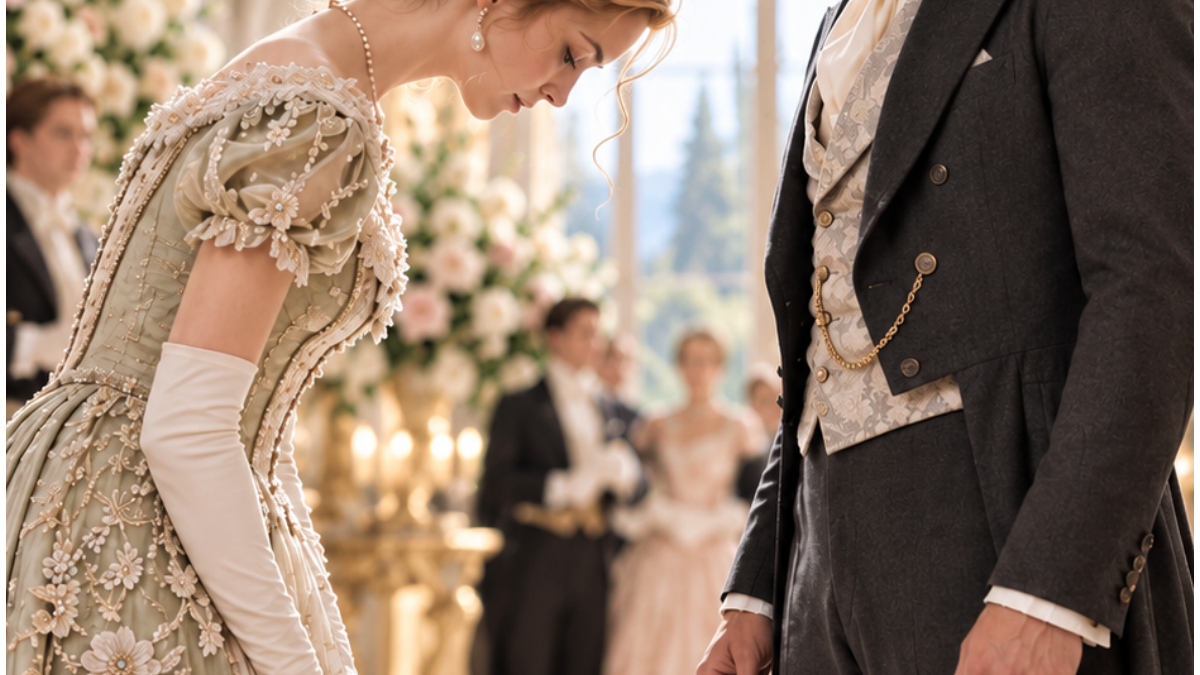
The first thing Hanora Ashkam noticed was that her husband had not opened the letters.
They lay on Edmund’s desk in a neat blue ribboned bundle exactly where she had placed them that morning.
43 petitions from Grey Haven. A widow asking for work before winter.
Two fishermen requesting time on damaged nets.
A Cooper offering timber at reduced cost if the harbor repairs began before November.
Small lives, Edmund called them once.
Matters beneath the notice of a Marquest.
Now he stood at the window of his study, hands clasped behind his back, watching rain darken the lawns of Blackmir Hall.
“From tomorrow,” he said.
“All correspondence from Grey Haven goes directly to Mr. Trenchard.”
Anora did not move. Edmund turned.
“You heard me.”
“I did.” He looked tired rather than angry.
That almost made it worse. Anger could be answered.
Weariness made a person feel like an inconvenience.
The harbor negotiations are too important for divided authority.
He continued, “Trenchard will handle the petitions, the tenants, the relief requests, all of it. You need not burden yourself any longer.”
Need not. Seven years of marriage reduced to a burden he was kindly removing from her hands.” Anora looked at the letters again.
“Did you read them?” Edmund’s jaw tightened.
“I read Trenchard’s report. That was not what I asked.”
A pause stretched between them.
Outside, the rain struck the glass harder.
“No,” he said. I did not read every petition.
I cannot spend my days sorting through every private sorrow in North umberland.
Honora felt something inside her become very still.
He expected an argument.
She knew him well enough to see it in the set of his shoulders.
Perhaps he expected tears. Perhaps he had already prepared the patient tone he used whenever he believed emotion had entered a room before reason.
Instead, Honora crossed to the writing desk.
From the chain at her waist, she removed a small brass key.
It opened the cabinet where seven years of correspondence were stored.
Names, promises, losses, births, debts, apprenticeships, repairs, and all the quiet things a great house preferred not to see.
She placed the key beside the unopened letters.
Edmund frowned. What are you doing understanding you?
His expression changed, but only slightly.
Oh, Nora. She smoothed one hand over her skirt.
Her voice remained calm. You have made your decision.
I have made an administrative decision.
Do not turn it into something larger.
That was when she finally looked directly at him.
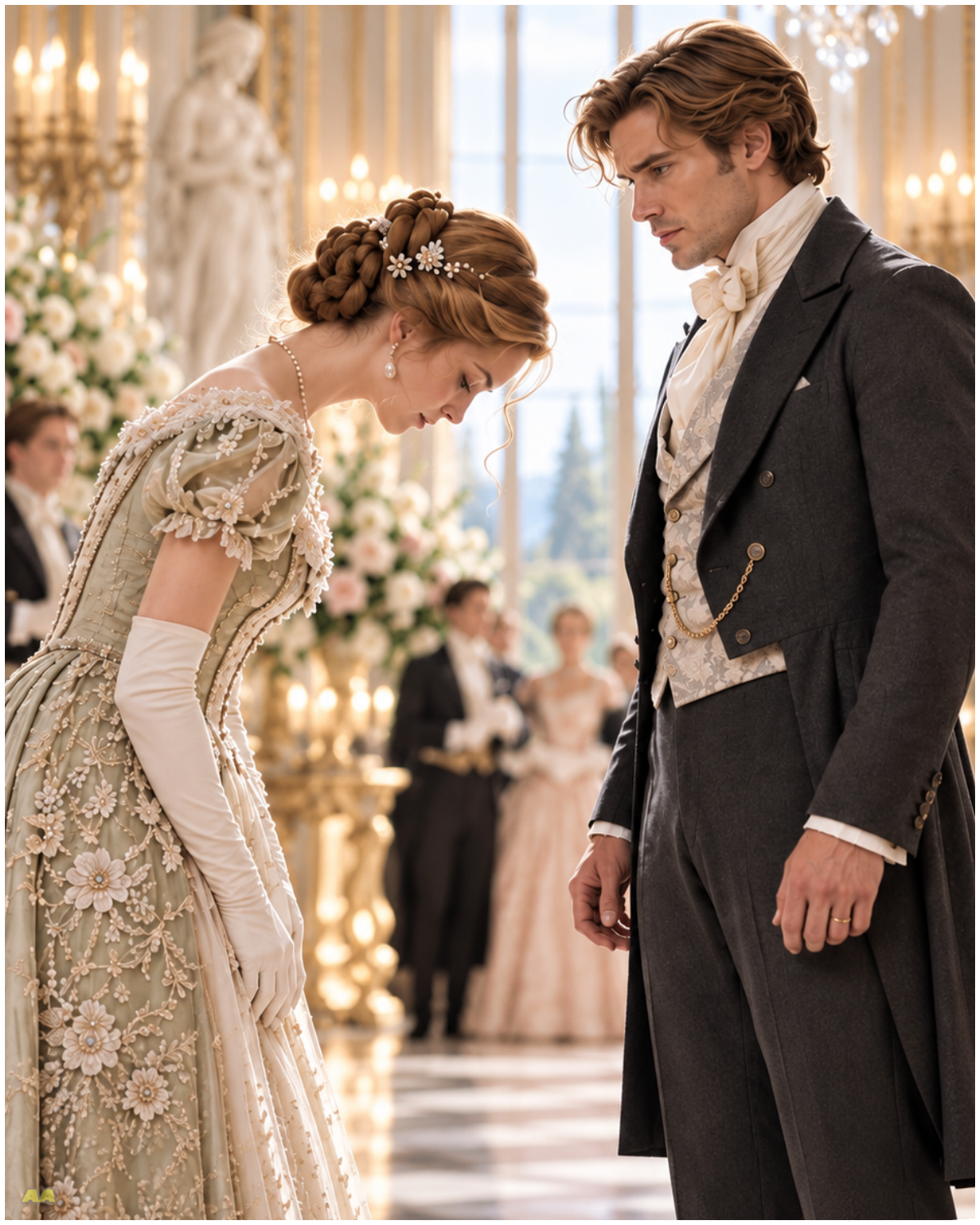
I am not, she bowed. Not deeply, not theatrically.
Only the precise, graceful inclination expected from a Martianist taking leave.
For the first time, Edmund looked uncertain.
Honor turned and walked out of the study.
By sunrise, her trunks were gone.
Edmund stood in her empty room and told the maid not to remove the flowers from the mantle.
My wife will be back before Sunday, he said.
Sunday came. Anora did not. Anora reached Greyhaven shortly afternoon under a sky the color of pewtor.
The carriage from Blackmir did not stop in front of any grand house.
There was no second estate waiting to receive a wounded Martioness.
No wealthy relation prepared to hide her from gossip.
Anora stepped down on a narrow street that smelled of salt, wet rope, coal, smoke, and fish brine.
Gulls wheeled above the harbor roofs, crying into the wind.
Agnes Rook was waiting beneath the striped awning of her chandler.
She was 57, broad-shouldered, silver-haired, and practical enough to greet a separated marchinis with neither shock nor pity.
“You have one trunk too many for a woman intending to stay three days,” Agnes said.
Anora looked at the two trunks strapped behind the carriage.
I do not intend to stay 3 days.
Agnes studied her face. No, no, that was all.
The rooms above the chandler had once belonged to Agnes’s married daughter.
They were clean, small, and warmed by a cold grate that smoked if the wind turned eaSt. Onora stood in the sitting room while the driver carried up her trunks.
A round table sat beside the window.
Without thinking, she unpacked two porcelain teacups.
She placed them side by side.
Then she stopped. For seven years, tea had appeared at 4 each afternoon in whatever room Edmund occupied.
At first they had taken it together.
He preferred strong black tea with only a little milk.
She liked hers weaker. In the early years they had talked about books, tenants, weather, absurd guests, horses, and the peculiar way Edmund’s mother used the phrase quite interesting when she meant something was intolerable.
Then their son was born. Thomas lived for 11 months.
After his death, the house became quieter.
Edmund returned to estate business within 4 days.
Honor returned to the nursery long after there was any reason to go there.
Neither of them knew how to cross the distance grief had created.
One afternoon, a tenant’s wife wrote asking whether her eldest daughter might be placed in service at Blackmir.
Anora answered because Edmund was away.
The girl found work. Then another letter came, then six, then 30.
At first, Edmund seemed relieved. “You are better with such things than I am,” he once told her.
Anora had treasured the sentence for years.
Not because it was praise, but because it sounded like truSt. Eventually, the petition stopped coming to Edmund at all.
They came to her. Anora had learned which farmers hired boys after harvest, which widows could sew sailcloth, which cooper with a lame foot, which doctor would wait three months for payment, which boat owner had more pride than money, and which families would rather starve than ask twice.
It had never felt like charity.
Charity made one person tall and another small.
Onora preferred usefulness. Now she stared at the second teacup.
Slowly, she returned it to the trunk.
Agnes entered carrying a kettle. You may keep both out, she said.
Anora glanced at her. I only need one.
Agnes set the kettle down. That is not what I said.
Honora almost smiled. AlmoSt. By evening, word had spread that Lady Blackmir was staying in Grey Haven.
Not why, just that she was there.
At dusk, someone knocked. Agnes opened the door to Mr.
Fenwick, the post carrier. He was a thin man with a permanent bend in his shoulders from 30 years of carrying other people’s news.
He removed his cap when he saw Hanora.
My lady, Mr. Fenwick, I was told you were here.
So it seeMs. He held a canvas mailbag in both hands.
Honor’s gaze fell to it. Fenwick hesitated.
These came to the hall this morning, he said.
Then three more came directly here after people heard.
Honora did not reach for the bag.
Her husband had removed the work from her.
She had left the house where that work belonged.
Yet the people had not written to Blackmir Hall.
They had written to her. Agnes watched quietly.
Anora finally took the bag. It was heavier than it looked.
Inside were letters tied with string, folded petitions, a child’s careful handwriting, two receipts, and a page stained by seaater.
Everyone bore some version of the same direction.
For Lady Blackmir, Onora stood with the bag against her chest as the wind rattled the windows.
For the first time since leaving Edmund’s study, she understood something that frightened her.
She had not only walked away from a marriage.
She had walked into a responsibility that had followed her.
At Blackmir Hall, Sunday arrived with sunshine.
Rain would have suited the house better.
Rain would have explained the silence in the breakfast room, the untouched place setting opposite his own, the way servants moved with unusual care as though sound itself had become dangerous.
Instead, sunlight poured through the tall windows and illuminated every absence.
Honor’s chair, Anora’s embroidery basket, the vase she usually filled with whatever survived the wind in the south garden.
Edmund folded the newspaper. Has Lady Blackmir sent word?
The butler, Mr. Vale, did not blink.
No, my lord. Nothing. No, my lord.
Edmund reached for his coffee. It had too much milk.
He set it down. Have the kitchen correct this.
Mr. Vale glanced at the cup.
“Yes, my lord.” Only after the butler left did Edmund realize the kitchen had not made the mistake.
Anora had always added the milk herself.
He told himself it was irrelevant.
By 10:00, he was in the estate office with Owen trenched.
Maps of Grey Haven Harbor covered the long table.
Red pencil marks showed the proposed improvements.
New stone facing on the K dredging near the eastern entrance, reinforced warehousing, and a longer landing stage capable of serving larger commercial vessels.
The Newcastle Syndicate would provide capital.
In return, they wanted preferential access for 21 years.
Edmund had spent 6 months negotiating the term down from 30.
To him, it represented compromise. To Trenchard, victory once signed, Trenchard said, tapping the lease draft.
Blackmir gains predictable revenue. The harbor gains repairs it cannot otherwise afford.
And Grey Haven gains access to traffic that currently passes south.
Edmund nodded. And the fishing families they continue to fish.
The kus increase modestly. Anora objected.
Trenchard’s expression did not change. Her ladieship objected to nearly every clause that introduced discipline.
Edmund looked up. That is unfair.
Perhaps. Trenchard adjusted his spectacles. She is compassionate.
Compassion is admirable in a private household.
Harbors are not private households. Edmund felt irritation rise, though he was not certain at whom.
Leave my wife out of it.
Trenched inclined his head. As you wish.
The meeting continued. Repair figures, projected traffic, stone prices, insurance, everything Edmund preferred, numbers that stayed where they were placed.
By noon, Miles Ashcom arrived from Alwick.
At 27, Miles was Edmund’s first cousin and heir presumptive to the Marcusate.
Society had decided this fact must make them rivals.
It had never occurred to either man.
Miles entered the library without ceremony and poured himself brandy before lunch.
I hear Hanora has left you.
Edmund stared at him. Good afternoon to you as well.
Was I meant to discuss the weather first?
She is in Grey Haven. That was not my question.
Edmund returned to the letter in his hand.
She disagreed with an administrative decision.
Miles sat opposite him and therefore packed two trunks.
Edmund said nothing. Miles leaned back.
You know, if you want me to murder you and make this a succession crisis, I require more notice.
Despite himself, Edmund [snorts] almost laughed.
AlmoSt. She will return. Miles’s humor disappeared.
Did she say that? No. Did she say she would not?
No. What did she say? Edmund remembered the brass key touching the desk.
Understanding you. He disliked the memory.
She said very little. Miles nodded slowly.
That seems worse. Before Edmund could reply, Mr.
Vale entered. Mr. Carol from Westfield.
My lord. A tenant farmer appeared in the doorway, hat crushed nervously between his hands.
Edmund knew him by sight. Carol, my lord, forgive me.
I was told to bring the lease question to the office.
What lease question? My eldest boy’s cottage.
Lady Blackmir said she thought the old Cooper’s place might be repaired rather than pulled down.
She was waiting on an estimate.
Edmund glanced toward Trenchard’s report. There was no mention of it.
I will review the matter. Carol hesitated.
Yes, my lord. He did not leave.
Edmund looked up. Is there something else?
Carol shifted his hat. Well, my lord, shall we ask Lady Blackmare what she thinks?
The question was not insolent. It was natural, as though Anora’s judgment had become part of the machinery of the estate without Edmund noticing when it happened.
Edmund looked at the farmer. How often did you ask my wife such things?
Carol blinked. When we needed to, my lord, and how often was that?
The farmer glanced at Miles, then back at Edmund.
Often enough. After he left, Edmund sat very still.
Across from him, Miles said nothing.
For the first time, Blackmir Hall did not feel empty because Hanora was gone.
It felt unfamiliar because Edmund had begun to suspect he had never understood what she had been doing while she was there.
The gale came on a Thursday.
By dawn, the North Sea had turned black beneath a low ceiling of cloud.
Wind struck Grey Haven hard enough to lift roof slates.
Waves hammered the eastern wall of the harbor and threw white water over the key.
Boats strained against their moorings, ropes snapping tight with each surge.
Anora woke to shouting below her window.
Agnes was already pulling on boots.
“East wall,” she said. “If the water gets behind it, the lower stores flood.” Honora dressed without calling for a maid.
10 minutes later, she was outside.
Men were dragging barrels from a warehouse near the key.
Women carried blankets toward the chapel.
A boy ran past with blood on his forehead and did not seem to know it.
Anora caught his sleeve. Thomas Bell, stop.
The boy stopped because she knew his name.
Where is your mother? At the netsheds.
Go to street ants. Tell Mrs. Pile to clean that cut.
Then stay there. But Thomas, he went.
Anora turned to Agnes. Which boats are still out?
Three from the North Fleet. Names?
Agnes listed them. Anora felt fear.
But fear was useless without order.
Send someone to the lookout. No wives on the pier.
If there is news, bring it to the chapel firSt. She began assigning tasks, not because anyone had appointed her, because she knew who could do what.
The Mercer brothers had two strong carts.
Old Mr. Denny’s warehouse sat above the flood line.
Mrs. Fel had spare blankets from her boarding house.
The vicer possessed the only large, dry room, not filled with fish barrels.
By 8, Grey Haven had become a machine built from names.
At 9, a black carriage appeared through the rain.
Edmund stepped down before it stopped moving.
Anora saw him from across the key.
For one suspended second, husband and wife looked at each other through wind-driven water.
Then a wave struck the outer wall.
Men shouted. Whatever existed between them would have to wait.
Edmund stroed toward the harbor master.
Report. The east wall is holding, my lord, but not if the tide turns before noon.
Warehouse 3 is taking water. How many men do you need?
20. You have 30. Edmund pointed toward laborers gathering near the carts.
Move stone to the inner breach.
Use the fishing crews. Anora crossed to him.
No. His head turned sharply. She did not lower her voice, but neither did she challenge him for the sake of being heard.
Half the fishing crews have families waiting on the missing boats.
If you put those men on stonework, they will abandon it the moment a sail appears.
Edmund looked toward the harbor mouth.
What do you suggest? The question surprised them both.
Honor answered immediately. Use Mercer’s carters and the shipyard apprentices.
Keep the fisherman on the west quay where they can work and still see the channel.
Edmund looked at the harbor master.
Do it. No argument. No wounded pride.
Onora felt something shift inside her.
Small and dangerous. For the next 3 hours, they worked side by side.
Edmund understood stone, labor, contracts, and command.
Honora understood people. When a warehouse owner refused to release timber without written guarantee, Edmund signed one.
When a fisherman’s wife began screaming that her husband’s boat had sunk, Honora took her into the chapel and stayed until the woman could breathe.
When two men fought over whose cargo should be moved first, Edmund separated them and ordered both loads stored on Blackmir Credit.
Shortly before noon, the lookout bell rang.
One sail, then another. Two missing boats entered the harbor under torn canvas.
The third did not. There was no celebration, only relief mixed with dread.
Edmund found Anora near the key wall, soaked through, writing names on a damp sheet of paper.
What is that? Households affected if the third boat does not return.
He stared at the liSt. You already know.
I know who was aboard and their families.
Yes. A harbor worker hurried toward them.
My lord, we have space in Denny’s upper store, but not enough for both grain and sailcloth.
Edmund looked toward the buildings, calculating.
Before he answered, the harbor master called from behind them.
Ask her lady ship. Edmund turned.
The man pointed at Honer’s liSt. Her lists have never failed us.
A strange silence opened between husband and wife.
The rain streamed from Edmund’s hair onto his collar.
For once, he did not look offended.
He looked curious. He looked at Hanora as if something familiar had changed shape in front of him.
“Very well,” he said. Then, quietly, so only she could hear.
“What would you do?” Honora looked at him.
It was the first real question he had asked her in years.
By late afternoon, the worst of the tide had passed.
Grey Haven looked battered, but standing.
Broken crates floated in gutters. Seaweed clung to the que stones.
Men moved with the exhausted slowness of people who had spent hours lifting more than their bodies were built to lift.
The third fishing boat had still not returned.
Onora remained at the harbor. Edmund remained, too.
He told himself it was because Blackmir owned the K.
Then he watched Anora cross toward a woman carrying a sleeping child and realized ownership had little to do with what held a place together.
Mrs. Hail, Anora said. Your room took water.
The back wall. My lady, go to Mrs. Fel’s boarding house.
She has two attic rooms dry.
The woman began thanking her. Thank Mrs. Fel.
They are her rooMs. Anora moved on before gratitude could become ceremony.
Edmund began noticing everything. A Cooper approached with a split knuckle.
Anora asked about his apprentice before his hand.
A salemaker complained that three bolts of canvas were ruined.
Anora knew which boat owner still owed him money and suggested the debt be settled in labor while his workshop dried.
Then a fisherman named Caleb Maher thanked Edmund for helping his youngest son enter the Newcastle shipyard.
Edmund accepted automatically. You are welcome.
[clears throat] Mah smiled. Her lady ship said you would approve.
Edmund glanced toward Hanora. When was this?
Last spring. Lady Blackmir arranged it.
Yes, my lord. Boy would have gone to sea otherwise.
No head for it. Sick over the side in a pond.
Mar laughed. Edmund could not. One case could be kindness.
By dusk, Edmund had counted 12, not favors purchased with money, connections, judgments, small interventions made before problems became disasters.
He had spent years measuring Blackmir and rents, yields, roads, and contracts.
Honora had been measuring it in people.
Agnes Rook found him outside the chandelier and handed him tea in a chipped mug.
Mrs. Rook. My lord, how long has my wife been doing this?
Doing what? Finding work. Arranging apprenticeships.
Keeping track of half this town.
Agnes looked toward the upstairs windows.
How long have you been married?
7 years. Then nearly 7 years.
The answer landed harder than accusation.
Why did no one tell me?
Agnes gave him a direct look.
Did you ask? Edmund said nothing.
She came here the first winter after your little boy died.
Agnes continued. Sat upstairs for three hours with a fisherman’s widow who had four children and no way to feed them.
Edmund tightened his hand around the mug.
Lady Blackmir did not give her a purse.
She found houses needing laundry, a shop needing mending, and a cart owner willing to take the eldest boy.
She never told me. Perhaps she tried.
Across the street, Honora bent to speak with a little girl holding soaked clothes.
The child listened solemnly. Honora took off her gloves and gave them to her.
What unsettled Edmund was not the gift.
It was the ease with which the child accepted it.
Trust without ceremony. He realized he had mistaken visibility for importance.
Men who spoke in meetings seemed important.
Names printed on reports seemed important.
Orders issued from Blackmir Hall seemed important.
Honora’s work left almost no signature.
Only consequences, better ones. When she finally approached, she stopped at the sight of him.
You are still here. So are you.
I live here now. The words were not cruel.
Edmund felt them anyway. Mrs. Rook tells me you have been arranging half of Grey Haven’s life for years.
Agnes exaggerates. She said you would say that.
Onora’s brows drew together. Edmmond sat down the mug.
I want to understand. She studied him.
For an instant. Hope crossed her face.
Then caution covered it. Understanding is not the same as wanting me back.
No. The answer cost him. But I think I should have understood before I ever asked you to stay.
Anora looked toward the sea. A bell sounded from the lookout once, then twice.
A sail had appeared beyond the harbor mouth.
People began running toward the quay.
Anora did not take Edmund’s arm, but when they moved toward the water, they moved beside each other.
The missing boat came in after dark.
Its mast was broken. One fisherman had a shattered wrist and another had been struck across the ribs by loose gear, but all six men were alive.
For Greyhaven, that counted as mercy.
By midnight, the injured were indoors, surviving cargo was covered, and the harbor had finally grown quiet.
Onora sat on the stone steps outside the chandler with both hands around a mug.
Her dress was still damp at the hem.
Edmund lowered himself onto the step beside her.
Not close enough to touch, close enough to share the doorways shelter.
Agnes had given them tea strong enough to polish metal for several minutes.
Neither spoke. The sea had softened to a heavy breathing sound beyond the key.
You were right about the fishermen, Edmund said.
Which fishermen? The men on the west key.
If I had put them on the wall, half would have deserted when the lookout bell rang.
Yes, you knew that. I knew their wives were standing 10 yards away pretending not to be terrified.
Edmund rubbed his thumb over the crack in his mug.
I saw workers. You saw husbands.
That is not always a weakness.
I did not say it was.
No, you used to. There had been a time when he would have defended his intention.
Tonight he was too tired for pride.
Then I was wrong. Anora looked toward him.
No triumph, only surprise. He wondered how rarely he had given her those words.
August moved through the street. Edmund shifted the lantern to block the wind from her side.
Honora noticed. She said nothing. Agnes opened the door and passed out bread and cheese.
“You are both too noble to remember supper,” she said.
“Fortunately, bread has no title.” “Anora broke one piece and handed it to Edmund.” “This feels familiar,” he said.
“What does?” “You giving me food while pretending it is not affection.” Her mouth curved.
In seven years, you never remembered lunchon during harvest meetings.
I remembered eventually. You remembered when I put a plate in front of you.
That still counts. She laughed. Small, unplanned.
Edmund had forgotten that laugh, not the polite one she offered guests.
This one, the sound that arrived before she decided whether to give it.
He looked at her too long.
Honor turned toward the harbor. The moment changed.
Not broken. Changed. Edmund reached for the teapot.
He poured her cup, then paused.
More milk than mine. Honor looked at him.
You remember, he almost said, “Of course.” Instead, he said, “Some things.” And no sugar.
I remember that, too. The silence between them was not empty now.
It felt like standing at the edge of an old bridge.
Testing whether any boards remain sound.
The next morning, work resumed. A storehouse had taken more water than expected.
Half its grain sacks needed moving before mildew set in.
Edmund organized carts. Anora changed destinations after discovering one warehouse roof was unsafe.
At noon, a laborer asked whether a family could take two displaced children until their mother returned from Newcastle.
Edmund turned automatically toward Hanora. What do you think?
She answered. Neither remarked on the question.
By afternoon, it happened repeatedly. What do you think?
Who knows this? Can they manage?
What happens if we move them there?
Edmund began to understand that Honor’s knowledge was not mysterious.
She listened. She remembered. She followed through.
That evening, they returned to the Chandler to review losses.
Onora removed a small notebook from her basket.
As she did, a bundle tied with faded blue ribbon slipped onto the table.
Edmund recognized the color, the same as the unopened petitions in his study.
He reached instinctively. Onora placed her hand over the bundle firSt. Their fingers did not touch, but they came close.
What are those? Old letters. How old?
Some six years. From Greyhaven. From everywhere.
Edmund looked at the bundle. May I read them?
Honora hesitated. The letters contain trust that belong to other people.
Not these. Edmund’s face tightened, but he did not argue.
That mattered. Anora selected one letter from the bottom.
This one, you may. She slid it across the table.
Edmund unfolded the page. It was addressed to him, yet he had never seen it before.
The letter was 6 years old.
Edmund recognized the date immediately. February, the winter after Thomas died, the handwriting belonged to a woman named Eliza Vain, the widow of a fisherman from a village north of Grey Haven.
My lord, I beg pardon for troubling your household.
Since my husband was lost, I have no rent for March and three children at home.
I do not ask the rent forgiven if there is work I can do.
The letter continued for another page.
Edmund read it twice. At the bottom was a notation in Anora’s hand.
Mrs. Vain can sew heavy canvas.
Speak to Mr. Bell regarding sale repairs.
Eldest daughter 12 reads well. Perhaps Mrs. Cole needs help with accounts.
Below that another note resolved. No remission required.
Rent paid by June. Edmund looked up.
You answered this? Yes, it was addressed to me.
You were in London. I came back.
Anora folded her hands. You did?
There was something in her voice he could not yet name.
Why did you never show it to me?
I showed you others. When? At firSt. He searched his memory.
Letters on the breakfast table. Anora asking whether a tenant might receive another month.
Anora mentioning a boy suitable for the stables.
Small things. He remembered saying yes without listening to the path that led to the requeSt. He remembered saying, “Tell Veil, tell Trenchard, handle it as you think beSt. Permission without attention, trust without curiosity.” He handed the letter back.
Outside, Grey Haven was recovering quickly enough for gossip to regain its strength.
Within a week, the news that the Martianness of Blackmir was living above a chandler had traveled beyond the harbor.
Invitations changed firSt. Lady Winterton sent Edmund a dinner card addressed only to him.
The Baris Fords postponed a visit.
A neighbor’s wife wrote Anora to ask whether she was taking the sea air for her health, a phrase so transparent that Agnes laughed aloud.
Anora did not. She knew what living apart meant.
A married woman of her rank could not simply become socially invisible without everyone deciding why.
Had Edmund been cruel? Had Honor been unfaithful?
Was she unstable? Was there another woman?
Another man? Society preferred scandal to complexity.
At Blackmir Hall, Trenchard placed three letters on Edmund’s desk.
One from the Newcastle syndicate, two from County families.
Edmund read them. The merchants asked whether domestic uncertainty at Blackmir might affect negotiations.
One acquaintance offered sympathy for Hanora’s nervous condition.
Edmund dropped the paper. She does not have a nervous condition.
I am aware. Then why is this being repeated?
Trenchard adjusted a ledger. Because an aranged Martianness requires explanation, and society manufactures one when none is supplied.
Edmund stood. What do you suggest?
The simplest course? Lady Blackmir returns to the hall.
She has declined. You are her husband.
Edmunds eyes hardened. Trenchard did not retreat.
I am speaking of appearances, not affection.
You possess considerable influence over where your household resides.
There it was. Not an order.
A fact. Edmund could send the carriage.
He could involve Hanora’s trustees. He could summon her mother’s brother.
He could make Grey Haven socially uncomfortable for anyone offering her rooMs. None of it would require physical force.
Power rarely did. Edmund thought of the blue ribbon.
Not these, Hanora had said, and of himself, wanting instinctively to reach across the table because he was accustomed to access.
No, he said. Trenchard waited. Edmund repeated it.
She comes nowhere by force. This may cost you.
Then it costs me. Trenchard’s expression remained unreadable.
Very well. He gathered the letters at the door.
He paused. You should stop reading her correspondence.
Edmund frowned. What correspondence? Trenchard looked back.
The files in the east office.
Edmund stared at him. What files?
A long silence. Trenchard seemed to realize that he had assumed knowledge where none existed.
Her ladyship’s case summaries, he said.
The correspondence abstracts. Six years of them.
Edmund stood so quickly his chair struck the floor.
Where? The east office had once been a school room.
Now it held cabinets. Seven of them, each labeled by parish, village, trade, and year.
Edmund opened the first drawer. Hundreds [snorts] of pages, not private letters, summaries, patterns, names, skills, needs, outcomes.
He pulled one sheet free. Widow, no relief requested.
Seeks paid work. Another boy 14.
Unsuitable for sea. Strong mechanical aptitude.
Another boat debt likely recoverable if repayment moved after herring season.
Edmund turned to Trenchard. You knew about this?
Of course, and you never told me.
Trenchard’s face did not change. My lord, these reports have been included in the household papers for years.
Edmund looked back at the cabinets.
The evidence had not been hidden.
It had simply been placed where a man who believed he already understood his estate would never think to look.
Edmund spent the next morning in the East office.
He expected to find evidence of generosity.
What he found was administration. Honor’s summaries were organized by need, skill, season, and outcome.
No sentimental language. No grand gestures.
Mrs. Vain. Sailcloth repair. Three households paid weekly.
Jacob Fel 14 seasick mechanically inclined placed with Wright later transferred to shipyard.
Samuel Pike, injured hand, boat payment deferred until autumn catch.
There were hundreds. Edmund began pulling files at random again and again.
The pattern repeated. Someone asked for money.
Onora tried first to find work.
Someone asked for rent forgiven. Anora looked for a temporary source of income.
Someone wanted a son placed in service.
Anora asked what the boy could actually do.
She had been solving problems he assumed required charity by using relationships he did not know existed.
By noon he had stopped sitting.
He moved from cabinet to cabinet increasingly disturbed.
Trenchard entered carrying a harbor ledger.
You have been here 4 hours.
How many of these cases became permanent relief?
Very few. How few? Trenchard considered.
Perhaps one in nine. Edmund looked at him.
That is better than the estate average.
Yes. By a considerable margin. Yes.
Then why has no one ever said that Lady Blackmir created the system?
Trenchard’s gaze sharpened. She did not create the relief system.
You know what I mean? I know exactly what you mean.
Trenchard set down the ledger. Her ladyship created a network of personal interventions, effective ones, but they depend upon memory, trust, and constant attention.
And that makes them less valuable.
It makes them difficult to scale.
Edmund walked toward another cabinet. On the top shelf sat annual estate reports bound in black leather.
He pulled down the volume from the previous year.
Under rural relief and labor stability, the report praised reduced arars, successful apprenticeships, and declining dependence on parish assistants.
Edmund read the paragraph twice. Who wrote this?
I did. It describes her work.
It describes outcomes. It does not mention her.
No. Why? Trenched met his eyes.
Because you never asked who produced them.
The answer struck with humiliating precision.
For the first time, Edmund understood why people in Grey Haven did not speak of Anora as a benefactor.
Benefactors stood above need. Anora had made herself useful inside it.
She knew which promise could be trusted because she had watched people keep small promises for years.
No report could fully capture that.
That afternoon, Edmund rode to Greyhaven.
He found Anora in a back room of the Chandler with three women and a young carpenter.
No one stopped talking when he entered.
That too was new. Honora looked at him.
What happened? Nothing. Then why are you here?
He set the black annual report on the table.
I spent the morning reading. Her eyes moved to the book.
Reports. Your files. The room went quiet.
Honora’s expression closed. Those are summaries, not private correspondence.
I know some names still concern personal matters.
I did not remove anything. Her shoulders eased by a fraction.
Edmund noticed. He hated that she had expected him to use his authority first and ask permission later.
I found Mrs. Vain, he said.
Anora waited. Enfel Pike. The Hawthorne apprenticeships.
The winter weaving arrangement at Lowarm.
The shared cart fund. The carpenter glanced at Hanora with mild amusement.
You have been busy, my lady.
Anora ignored him. Edmund continued. The annual report calls it Blackmir policy.
It is Blackmir policy. No, it is your work.
Something changed in the room. Honora looked almost uncomfortable.
I did not do it alone.
I am beginning to understand that.
He opened the report, but I received credit for it.
She looked at the page. I never asked for credit.
That does not make taking it acceptable.
For the first time, Anora had no immediate reply.
Edmund closed the book. I am sorry.
Not for the marriage. Not yet.
For this. I thought you were giving people things.
I did not understand that you were building something.
Anora’s gaze softened, then hardened again.
You still intend to sign the harbor lease?
Edmund paused. Yes. The warmth vanished.
Honora nodded once. Then you understand my work better than yesterday.
She returned to the carpenter, but not yet what it is for.
For the next 3 weeks, Edmund came to Grey Haven without asking Anora to return.
That mattered more than any apology could have.
He attended meetings in rooms too small for his shoulders and listened while fishermen interrupted him.
He walked warehouse lanes with Agnes Rook.
He learned that a boat could be profitable on paper and still leave its owner unable to buy new nets before the next season.
Most importantly, he began asking Anora questions before he formed conclusions.
Not always, but often enough for her to notice.
One afternoon, they walked the West Key while Masons inspected storm damage.
Edmund carried a notebook. Anora carried nothing.
“You were right about the landing dues,” he said.
She looked at him. “That sounds painful.
It is unbearable.” She almost smiled.
He continued. Trenchard calculated them against average annual catch.
Yes, you objected because poor weather makes the average meaningless to a family paying week by week.
Exactly. Why did you never explain it to me that way?
Anora stopped walking. I did. The answer killed his amusement.
When last November in your library, Edmund searched his memory.
A fire. A stack of parliamentary papers.
Honora standing beside his desk. He remembered telling her he had already reviewed the figures.
He remembered none of what came after.
His face changed. Onora saw it.
You remember now? I remember not listening.
They continued walking. The admission stayed between them.
At the end of the K, a little boy was trying to untangle rope around a poSt. Edmund crouched and helped him without being asked.
Honor watched. The boy thanked him and ran away.
You are improving, she said. At rope?
At noticing when someone needs help before issuing a policy about it.
He laughed. The sound startled her.
For years, Edmund’s laughter had become rare at home, as though seriousness were part of his title.
They reached the seaw wall. Wind lifted Hanora’s bonnet ribbon.
Edmund caught the loose end before it struck her face.
His fingers brushed the fabric near her cheek.
Neither moved for a second. Attraction arrived not as lightning but memory.
The shape of his hands, the familiar gray in his eyes, the knowledge that once long ago she had wanted him to touch her without hesitation.
Edmund let the ribbon go. Forgive me for catching it, for taking liberties.
You are still my husband. The sentence came out more softly than she intended.
He looked at her, and yet I find I would rather be invited.
Honora felt the words somewhere deep.
They resumed walking. That evening, Agnes insisted Edmund stay for supper because the road to Blackmir was slick with rain.
They ate stew at the small table above the shop.
No servants, no silver, no formal course.
Edmund cut bread while Agnes argued with him about harbor stone.
Honora watched him listen, not pretend to listen.
Listen. When Agnes retired, Edmund remained by the window.
The hall feels very large now, he said.
Anora folded a napkin. It [clears throat] was always large.
I did not notice. No, he turned.
Do you miss it? The question was dangerous.
Anora answered honestly. I missed the library in the morning, the South Garden, Mrs. Veale’s plum preserves.
And me? He regretted asking the moment the words left him.
Honora looked down. Yes. His breath changed.
She continued before Hope could mislead either of them.
Missing you is not the same as being able to live as we did.
I know. This time she believed he might.
When he left, he did not kiss her hand.
He only said good night. Onora stood at the window and watched his carriage disappear.
For the first time since leaving Blackmir, she wondered whether something new could exist between them.
The next morning, she went to the harbor office to review storm repair costs.
A document lay open on Edmund’s temporary desk.
She recognized the Newcastle Syndicate seal.
At the bottom was a proposed signing date.
3 weeks away. Honor read the lease heading twice.
The room seemed suddenly colder. All the listening, all the questions, all the quiet dinners.
And still, when the final decision came, Edmund intended to sign the agreement that had driven her from Blackmir.
She heard footsteps behind her. Edmund entered.
His expression changed when he saw what she was holding.
Honora set the document down carefully.
So that is what all this was.
His face tightened. No, you listen to me because you wish to understand how to manage the consequences.
That is not fair. Is it untrue?
Edmund did not answer quickly enough.
Hope, Anora discovered, could hurt more sharply than disappointment.
Edmund left Greyhaven angry. Nodded Anora.
That would have been easier. He was angry because her accusation had found a place inside him where he had no defense.
He had listened. He had changed.
And he still intended to sign.
In his mind, those facts were compatible.
The Newcastle lease was imperfect, but it provided capital Blackmir could not easily raise against settled land.
The harbor wall needed rebuilding. Warehouses needed reinforcement.
Delay had costs. He told himself Anora was confusing moral discomfort with financial possibility.
Then he heard her voice. You listened to me because you wish to understand how to manage the consequences.
By the time he reached Blackmir, he wanted someone else to be wrong.
Trenchard was in the estate office.
Edmund threw the annual report onto the desk.
You removed her name from everything.
Trenchard looked at the book. I reported results.
You reduced six years of her work to statistics.
Yes. Why? Because that is how you instructed me to report.
Edmund stared at him. I gave no such instruction.
Trenchard was silent for a moment.
Then he unlocked the bottom drawer of his desk.
He removed a folded sheet of paper yellowed at the edges.
I kept this because it altered how the office functioned.
Edmund took it. The handwriting was his.
The date was 5 years earlier, 3 months after Thomas died.
Mr. Trenchard, in future reports, provide conclusions only.
I do not require petitions copied at length, nor accounts of individual grief, illness, domestic hardship, or personal history.
Such particulars cloud judgment and consume time.
State the problem, cost, recommendation, and result.
E. Ashcom. Edmund read it once.
Then again, the room became very quiet.
I wrote this. Yes, I was grieving.
So was everyone in that house.
Edmund looked up sharply. Trencher did not apologize.
You asked me to remove what you called noise, he continued.
I built reports accordingly. And Anora.
Her lady ship continued supplying case summaries.
I extracted figures where useful. You knew they were hers.
Yes, you knew. I believed the improved relief figures came from a state policy.
They did come from a state policy.
Her work occurred under Blackmir authority.
That is a lawyer’s answer. It is an administrator’s answer.
Edmund dropped into the chair. For weeks, he had been constructing a comfortable explanation.
Trenchard had hidden Honor’s value. Trenchard had treated people like numbers.
Trenchard was the cold machine Edmund had mistakenly trusted.
Now the machine was speaking in Edmund’s own voice.
Bring me conclusions. Spare me grief.
Remove personal histories. He remembered the months after Thomas died.
Every bererieved mother had seemed unbearable.
Every sick child an accusation. Every widow proof that loss could enter any house without permission.
He had not wanted to be cruel.
He had wanted silence. So he built silence around himself and Anora had lived inside it.
Why did she keep doing the work?
Edmund asked. Trenchard’s answer was immediate.
Because people kept writing. Edmund closed his eyes.
That evening, he walked through Blackmir Hall alone.
He entered the nursery for the first time in almost 5 years.
The room had been changed long ago.
The cradle was gone. The walls repapered.
A desk stood where a rocking chair once sat.
Yet he could still see Honor there, holding Thomas against her shoulder.
He remembered telling her after the funeral, that they must endure.
He had thought endurance meant continuing.
For Anora, perhaps it had meant remaining human.
The next morning, Edmund returned to Grey Haven without a secretary.
He found her on the seaw wall.
She looked at him wearily. I owe you an answer, he said.
To what? To whether I listened only so I could manage the consequences.
He handed her the old instruction.
Anora read it. Her face did not change.
That frightened him more than anger.
You remember this? He asked. Yes.
You saw it? Not then. I learned the rule later.
Edmund looked toward the sea. I blamed Trenchard.
You wanted to? Yes. He forced himself to meet her eyes, but he did what I asked.
Anora folded the paper. Edmund’s voice lowered.
I made a world in which no one had to bring me grief.
She looked at him for a long time.
Then she said the one thing he had not prepared himself to hear and left me to receive all of it.
For several seconds, Edmund could not speak.
The sea moved below them, gray and relentless, breaking against the wall in long sheets of white.
Anora still held the paper, his paper, his order, the neat proof that he had once decided pain was an administrative inefficiency.
“I thought I was protecting us,” he said.
Anora looked toward him. From what?
He almost said, “Grief, but the word was too small.” From being consumed by it.
Her expression softened, though not with forgiveness.
Edmund, I was already consumed. The honesty in her voice stripped away the last defense he had.
They had not spoken Thomas’s name in years.
Not properly. Not since the small coffin left Blackmir in winter rain.
Edmund had spent the months afterward managing tenants, timber, leases, drainage, roads, anything that had numbers and edges.
Anora had drifted through rooms carrying a silence he mistook for strength.
I could not go into the nursery, he said.
I know. I thought if I kept moving, you would.
I did move. He looked at her.
Anora’s eyes were wet now, but her voice remained steady.
I moved toward everyone else who was hurting.
The sentence broke something in him.
She continued, “Every widow who wrote reminded me that grief did not end because a house stopped speaking of it.
Every mother asking for medicine reminded me that fear did not become less real because men found it inconvenient.” Edmund flinched.
Honora saw it. “I am not saying you did not suffer.
I know you loved him. Yes, so did I.” The tears finally came.
Not dramatically. No collapse. Just two lines down her face as she looked out at the sea.
And you left me alone inside it.” Edmund breathed in sharply.
There was no answer that could make the past better.
No explanation noble enough. I did.
She pressed the old letter against the stone wall beside her.
For years, Edmund had imagined apology as language.
Now he understood that sometimes apology was refusing to escape the truth.
“I am sorry,” he said. Anora closed her eyes.
He did not reach for her.
Every instinct told him to, but touch would have been another way to make the moment easier for himself.
So he waited. Wind pulled at the edge of her cloak.
A gull cried somewhere above them.
Then Anora turned her hand, palm upward on the wall between them.
The movement was so small he almost missed it.
Edmund looked down slowly. He placed his hand in hers.
Her fingers closed around his. For the first time in years, they spoke about Thomas.
Not the funeral, not the physician.
Thomas. The way he hated wool caps.
The way he laughed when Edmund sneezed.
The curl of dark hair above one ear.
The absurd wooden horse Miles had bought him.
The morning he said something almost like, “Papa!” And Edmund had pretended not to be ridiculously proud.
Honor laughed through tears. Then Edmund did too.
They stood on the seaw wall holding hands and grieving a child who had been gone 5 years.
Nothing was repaired. Yet something had finally been opened.
That evening, Edmund stayed for tea upstairs.
Anora brought out both porcelain cups.
He noticed. She noticed him noticing.
Neither commented. They sat near the window while rain began again.
No plans, no harbor figures, no trenched, just two people who had once loved each other badly because they had not known how to suffer together.
When Edmund rose to leave, Anora walked him to the door.
He wanted to kiss her. He did not.
“May I come tomorrow?” he asked.
She looked surprised. He almost smiled.
You see, I am learning to ask.
A faint warmth entered her face.
Yes. He reached for his coat.
Then Hanora said his name. He turned.
I need you to understand something.
He waited. This does not mean I am coming back to Blackmir.
Hope and pain moved through him at once.
I know. No, she said gently.
I do not think you do.
She stepped closer, though not close enough to touch.
I may forgive you. I may love you still.
And I may never live in that house again.
The sentence landed with terrifying clarity.
For weeks, Edmund had assumed the goal was to bring his wife home.
Now he understood there were two different desires.
To recover Anora and to restore the old life.
He might not be allowed both.
Anora opened the door. Outside his carriage waited.
Edmund looked once toward the small room behind her, then back at his wife.
For the first time, he wondered whether loving her would require him to stop asking her to return to the place where she had disappeared.
By March, the harbor problem had become impossible to postpone.
The winter storms had weakened the eastern wall further.
Two engineers agreed that repairs must begin before summer traffic increased.
Stone had to be ordered. Labor contracts had to be signed.
Credit had to be secured. The Newcastle syndicate sent its final terMs. signed by the 1st of April or they would invest elsewhere.
Trenchard placed the letter before Edmund without comment.
Edmund read it twice. How much can we raise without the lease?
Against your private income? Some. How much?
Not enough. Against Blackmir Land. Trenchard shook his head.
Not simply. The core estate is constrained by settlement.
You cannot treat it like an unlocked purse.
Edmund knew that. He simply wanted the law to become more convenient because he had finally developed better intentions.
It refused. What if we delay the outer landing stage?
Then commercial traffic remains limited. What if we repair only the wall?
We survive. We do not grow.
Edmund leaned back. Survive. Grow. The same choices looked different when each number had a face.
In Grey Haven, Anora faced a different problem.
The alternative scheme she had been building informally depended on commitments from dozens of people.
Fishermen could pay higher dues after good catches, but not in advance.
Ship owners could contribute materials, but only if they received dependable access.
Tradesmen could defer some invoices, but not indefinitely.
Everyone could give something. No one could give enough.
Then another storm hit. Not a great gale.
Just two nights of brutal wind.
It broke a section of temporary timber bracing along the Kay and flooded one storehouse that had only recently reopened.
Anora stood in ankle deep water while Agnes watched men carry ruined sacks outside.
We cannot keep patching this. Agnes said, “I know.
Do you?” Honor returned. Agnes’ face was tired.
Fairfireness is easier to defend when the roof is not falling in.
Anora understood the warning. “You think Edmund should sign?
I think people with children sometimes prefer an unfair certainty to a noble disaster.
The words hurt because they were true.” That afternoon, Onora reviewed her figures again.
She cut repair phases, moved dates, reduced ambitions.
Nothing closed the gap. For the first time, she wondered whether Trenchard had been right.
Not morally. Practically, a community could possess courage, skill, and willingness, and still lack capital.
Dignity did not purchase stone. Edmund arrived near dusk.
He found Anora alone at the long table in the harbor office.
She looked exhausted. How bad? Bad enough.
He removed his gloves. I can guarantee part of the supplier credit personally.
Not enough. I know. She looked at him.
That mattered. He no longer arrived.
Pretending he could solve everything. Edmund sat across from her.
If I sign with Newcastle, I can preserve local access clauses.
For how long? 7 years at guaranteed rates.
And after he did not answer.
Honor looked down. Then perhaps Agnes is right about what?
Survival being better than fairness. Edmund studied hair.
You do not believe that. I believe hungry families have little use for my principles.
He was silent. Then he said, “Do not become me simply because I have finally begun becoming less like myself.” Anora looked up sharply.
A tired laugh escaped her. It almost became a sobb.
Edmund reached across the table, then stopped.
She closed the distance and placed her hand in his.
They sat that way until the room darkened.
The next morning, Hanora began sorting old harbor papers to clear the office.
If Newcastle took control, much of the material would be transferred.
At the bottom of a drawer, she found a packet sealed with black wax.
Her handwriting ran across the front for Lord Blackmir.
Private Harbor Proposal. The date was 6 months earlier.
Before she left, before the storm, before Edmund began listening.
Honor frowned. She remembered sending it to Blackmir with three other papers.
The seal was unbroken. A cold sensation moved through her.
She carried the packet to Agnes.
This should have been opened. Agnes examined it.
Then someone did not think it worth opening.
Anora stared at the date. 6 months ago.
She had believed she was asking Edmund to hear her.
She now realized he had never even seen what she was asking him to hear.
Inside that sealed packet was not another proteSt. It was the plan she had stopped believing could work.
Honora waited until Edmund arrived before opening the packet.
That surprised Agnes. You have every right to read your own proposal.
I know. Then why wait? Anora looked at the black seal.
Because if this matters, I do not want him hearing about it after I have already decided what it proves.
Agnes nodded once. Good. Edmund came before noon.
He saw the packet immediately. What is that?
Something I sent you 6 months ago.
He read the direction. His face changed.
I never received this. I know.
Anora broke the seal. Inside were 23 pages.
Not a letter, a plan, maps, lists of contributors, projected dues, seasonal payment schedules, pledges of labor, material estimates, letters of conditional commitment from ship owners, fish merchants, craftsmen, and warehouse holders.
Edmund sat down. You prepared all this with help.
When last autumn he turned pages faster.
Honora stopped him. Read it. He looked up then he slowed.
The proposal did not ask Blackmir to pay for Grey Haven.
That was the first surprise. It divided repair costs into phases.
Blackmir would fund engineering and guarantee some supplier credit.
Larger ship owners would accept increased dues in exchange for protected landing windows.
Fishing families would pay lower base dues with seasonal search charges after profitable runs.
Local cart owners pledged transport days.
Stone suppliers offered delayed settlement if Blackmir guaranteed payment dates.
Warehouse tenants agreed to contribute to drainage improvements tied to their own leases.
The plan was complicated. Messi, dependent on cooperation, but not sentimental.
Edmund reached the final calculations. This could work.
Onora did not smile. Yes. Why did Trenchard reject it?
I never knew he had. Edmund looked at the unbroken outer envelope.
He did not reject it. He buried it.
They went to Blackmir that afternoon.
Anora had not crossed the threshold since leaving.
She stopped at the front steps.
Edmund noticed. You do not have to come inside.
She looked at the doorway. 7 years of marriage lived beyond it.
So did the version of herself she had refused to become again.
I will come as far as the office.
Nothing more. Edmund accepted the boundary.
Trenchard was waiting. He looked at the packet then at Hanora.
So it has surfaced. Edmund went still.
You knew. Yes. Why was it never opened?
Because I reviewed the duplicate. Honora spoke before Edmund could.
Trenchard folded his hands and I judged it too fragile.
On what basis? On the basis that 27 independent commitments are not capital.
23. Which proves my point. Remove four and the structure shifts.
Anora stepped closer to the table, then strengthened the structure with what?
Longer supplier guarantees, tiered dues, reserve access.
Trenchard shook his head. You are still treating willingness as security, and you are treating concentrated control as the only form of security.
Edmund watched them. For months, he had thought the conflict was compassion versus discipline.
It was not. It was two different theories of resilience.
Trenched trusted enforcable contracts with powerful parties.
Honora trusted distributed obligations among people whose survival depended on keeping them.
Neither was foolish. That made the choice harder.
Trencher turned to Edmund. The Newcastle agreement gives certainty.
Anora answered, “For Blackmir, for everyone?” “No, it gives certainty that Grey Haven survives as a harbor, not that Greyhaven survives as itself.” Silence.
Edmund looked back at the proposal, then at the annual reports, then at Honora.
A realization came slowly. When you asked me to read the petitions before signing the lease, I was not asking you to cancel repairs.
You were trying to show me this.
Yes, I thought you wanted exceptions.
I wanted a structure built around reality.
The original argument rearranged itself in his mind.
He had believed Anora wanted emotion to overrule reason.
In fact, she had been offering him different evidence.
Evidence carried in letters instead of columns.
He looked at Trenchard. Why did you not bring this to me?
Trenchard’s answer was quiet. Because 6 months ago, you would have chosen certainty.
Edmund stared at him. The accusation was unbearable because it was true.
And now? Trenchard looked from Edmund to Anora.
Now I do not know. Edmund turned toward the window.
The Newcastle deadline was the next morning.
For the first time, the problem was not whether Onora had been right.
It was whether he was willing to stake Blackmir’s future on a kind of judgment he had spent years teaching himself not to truSt. The final meeting was set for 10 the next morning.
By 9, the counting room above Grey Haven Harbor was already full.
Edmund stood at one end of the table with Trenchard.
Anora stood at the other with Agnes and three local representatives.
Between them lay the Newcastle lease and Anora’s alternative proposal.
The problem was simple to describe and difficult to solve.
Newcastle offered money now. Grey Haven offered commitments over time.
The merchants wanted certainty. Anora’s plan required truSt. Before the meeting began, Trenchard placed a leather folder on the table.
What is that? Edmund asked, supporting correspondence.
Honor’s attention sharpened. Trenchard opened the folder.
Letters, private ones. Statements from families describing debts, illnesses, lost boats, sons needing work, rent problems, promises to contribute if the harbor remained locally accessible.
Anora crossed the room. No. Trenched looked at her.
These demonstrate why the local commitments are credible.
They also contain things never written for a merchants’s inspection.
We can redact names. Not enough.
Edmund watched her. This was the easiest path to proving her point.
The letter showed years of reliability.
Who repaid late but always repaid?
Which families kept promises? Which ship owners supported apprentices after poor seasons.
The very human knowledge Edmund had ignored could now become evidence strong enough to win the argument.
Anora closed the folder. We will not use them.
Trenchard’s patience finally cracked. You may lose the harbor.
Then we lose without betraying people who trusted me.
You are asking Blackmir to risk thousands of pounds on trust while refusing to show why that trust is justified.
I am refusing to convert private suffering into collateral.
Trenchard turned to Edmund. My lord, this was the moment.
Months earlier, Edmund would have ordered the folder opened.
He had the authority. The papers had passed through estate offices.
A clever solicitor could likely defend their use.
He looked at Honora. She did not plead.
That mattered. She had left Blackmir because she was tired of asking for the right to be taken seriously.
Edmund closed the leather clasp himself.
We do not use them. Trenchard stared at him.
Then what do you propose to show the merchants?
Only commitments whose authors consent. Honor looked at Edmund.
He continued, “We have an hour.” “Ask.” Grey Haven moved.
Messengers ran from the harbor office.
Agnes went to the ship owners.
A clerk went to the cartmen.
Anora sent notes to suppliers. Warehouse tenants, fish merchants, and tradesmen.
No one was told they must agree.
No one was promised favor. By 9, replies began returning.
Mr. Denny consented to publication of his warehouse contribution.
The Mercer brothers signed their transport pledge in front of witnesses.
Two ship owners allowed their seasonal dues commitments to be shown.
A stone supplier refused. Anora accepted the refusal.
Another offered stronger terms if Blackmir personally guaranteed payment.
Edmund did. Trenchard watched the documents accumulate.
This is still insufficient. It may be.
Edmund said, “You are prepared to risk the lease?” “Yes, for hair.” Edmund looked at Hanora.
“No.” The answer startled everyone. He turned back to Trenchard.
“If I do this merely for my wife, then I have learned nothing.
I am doing it because the plan deserves judgment on its merits.” Anora’s face changed.
That recognition meant more than public praise.
Edmund picked up the Newcastle lease.
The guaranteed access clause expires in 7 years.
Yes. After which Grey Haven becomes dependent on terms set elsewhere.
Yes. And your objection to Anora’s proposal is that its risk is distributed.
That is one objection. Then perhaps that is also its strength.
Trenchard said nothing. At 10, the Newcastle representatives entered.
The negotiations lasted 3 hours. No speeches, no dramatic revelations.
Figures objection revisions. One merchant called the local plan unstable.
Honora showed repayment history using anonymized aggregate figures.
Another questioned labor pledges. Agnes produced signed commitments.
A third challenged the phased construction schedule.
Edmund called in the engineer who confirmed it was slower but feasible.
At one point the merchants stood to leave.
Edmund let them. That was the coSt. He did not chase certainty down the stairs.
When the door closed, the room went silent.
Trenchard looked at the unsigned lease.
You understand what you have done?
Edmund nodded. Yes. Honor stood across the table.
For the first time, neither of them knew whether the choice they had made would succeed.
There was no triumph, only consequence.
Then a clerk rushed up the stairs carrying a message from the stone supplier who had refused earlier.
He had reconsidered, not because Blackmir had ordered him, because six Grey Haven businesses had agreed to guarantee one another’s first payments.
Anora read the message twice. Edmund watched her.
The plan was still fragile, but it had begun to hold.
Grey Haven did not save itself in a single morning.
That was the first truth Edmund insisted.
Everyone remember the second was that the Newcastle syndicate had not disappeared.
2 days after walking out, its representatives returned with modified terMs. Less control, higher interest, shorter preference rights.
Trenchard called the new offer sensible.
Anora agreed. That surprised Edmund. You would take part of it if part strengthens the harbor without owning it.
Yes. He looked at her. Months ago, he might have interpreted that as surrender.
Now he understood it as judgment.
The final structure became a hybrid.
Blackmir guaranteed limited supplier credit from Edmund’s private income.
Grey Haven businesses contributed phased dues and labor.
Ship owners received defined landing access without exclusivity.
A Newcastle banking house financed part of the stonework at commercial interest, but received no long-term control of the key.
No one got everything. That was why it worked.
The formal decision was made in the harbor counting room.
No chandeliers, no orchestra, no audience waiting for humiliation.
Only people whose livelihoods would live inside the agreement.
Trenchard presented the final figures. He did so flawlessly.
When he finished, Edmund remained standing.
There is one matter before we sign.
Honora looked at him. Edmund placed the annual Blackmir report on the table.
For 6 years, these reports credited the estate with improvements in relief, apprenticeship placement, Aar’s recovery, and labor stability.
Trenchard’s face became unreadable. Edmund continued, “The figures were accurate.
The attribution was not. Honora went still.
I benefited from work I did not understand and therefore did not value.
She shook her head slightly. Edmund.
He did not stop. Not because he wanted to embarrass her, because silence had already taken too much.
The network behind those results was built largely by Lady Blackmir.
With the cooperation of people in this room and across the estate, he looked at Agnes, Mrs. Rook, at the harbor master, Mr.
Ly at two tradesmen, others whose names should have appeared long before mine.
No applause followed. The acknowledgement was too serious for that, but Hunter’s eyes filled.
Edmund turned to Trenchard. You served Blackmir faithfully according to the structure I demanded.
Trenchard inclined his head once. But that structure must change.
I assumed so. I am ending your authority over social relief and local correspondence.
A muscle moved in Trenchard’s jaw.
Edmund continued. I am not dismissing you in disgrace.
If you wish to remain through the harbor works as financial commissioner, I will honor the term of your contract.
Anora looked at him. This mattered too.
No villain destroyed for audience satisfaction.
Trenchard had been wrong. He had also been useful, disciplined, and in many ways loyal.
After a long silence, he said, “I will remain through construction.” Then he looked at Honora.
“I still think your system untidy.” She smiled faintly.
It is made of people. Yes, he said.
That is the untidy part. It was the closest they would come to reconciliation.
The papers were signed. When the others left, Edmund and Anora remained.
The afternoon light lay pale across the table.
He did not reach for her.
Come home had lived at the back of his throat for months.
He let it die there. Anora touched the edge of the signed agreement.
We did it. We began it.
She smiled. You have become irritatingly precise.
I had a difficult teacher. The smile faded into something warmer.
Edmund took a breath. I have something else to say.
Anora waited. I will never again ask you to live where you must disappear in order to belong.
Her eyes lifted to his. He continued.
If Blackmir Hall is not home to you, I will not make your love for me the price of returning to it.
Onora’s face changed. For all his apologies, this was the first one that asked nothing in return.
Then where do you intend to live?
She asked. Edmund almost smiled. That depends.
On what? On whether there is anywhere you would permit me to begin again.
Anora looked out the window toward Grey Haven.
The harbor was still damaged. Stone stacks blocked half the quay.
Ropes hung drying from posts. Nothing looked romantic.
Everything looked real. There is an old house near the north road.
She said Blackmir owns it. The harbor agents house.
It has been empty 3 years.
The roof leaks. So did Agnes.
One chimney draws badly. I have survived worse.
Edmund looked at her. Are you asking me to move into a leaking house?
No. Anora stepped closer. I am allowing you to ask me.
For once in his life, Edmund understood the difference.
Anora Ashcom, he said quietly. Will you build a home with me?
Her eyes filled again. This time she did not bow.
Yes, by autumn, the harbor agents house no longer leaked, mostly.
One upstairs window still rattled whenever the wind came from the northeast, and the kitchen chimney smoked on damp mornings despite repeated repairs.
Edmund claimed the flaws gave the house character.
Anora told him character was what wealthy men called defects after paying to fix them.
They were happy. Not continuously, not perfectly.
They had learned happiness was not a permanent condition granted after the correct apology.
It was a practice. Blackmir Hall remained the ancestral seat.
Edmund rode there 3 days each week for estate business.
Formal dinners still took place there when required.
The archives, legal offices, and much of the staff remained.
Anora never moved back. At first, county society treated that as temporary eccentricity.
Then it became scandal. By the sixth month, people had discovered something else to discuss.
Life continued. Miles remained air presumptive.
No miraculous pregnancy changed the succession.
No hidden fortune transformed Anora into an ays.
Her separate income remained modest and protected under her marriage settlement.
She used some of it for household expenses and refused Edmund’s first attempt to buy every piece of furniture.
You cannot furnish your way into equality.
She told him, “I was trying to buy chairs.
You were trying to buy 12.
We may have guests. We own four.
That proves my point. They compromised on six.
Compromise became another practice. So did asking.
Edmund asked before reading correspondence. Anora asked before committing his private funds.
They disagreed over harbor dues, apprentices, road repairs, and whether Agnes Rook should be permitted to bully an engineer twice her size.
Agnes considered the last question insulting.
The Grey Haven works progressed slowly.
The eastern wall came first, then drainage, then warehouse reinforcement.
The longer landing stage was postponed until spring.
Some commitments failed. A fish merchant went bankrupt.
One ship owner withdrew after a poor season.
The system bent. It did not collapse.
Other contributors adjusted. That was the strength Anora had understood before anyone else.
Distributed responsibility did not remove risk.
It kept one failure from becoming everyone’s failure.
Trenchard remained through construction. His reports changed.
One day, Edmund noticed a paragraph beneath a set of figures.
Four households affected. Temporary employment arranged through Grey Haven Network.
No rent remission presently required. He carried the report home.
Honor read it. Do not look so pleased.
He wrote a human sentence. He will recover.
There were quieter victories. Eliza Vain’s eldest daughter became a bookkeeper.
Jacob Fel wrote from Newcastle that he had been promoted at the shipyard.
Thomas Bell began an apprenticeship with the harbor carpenter.
None would enter the history of Blackmir.
Anora no longer cared. Being seen did not require celebration by everyone.
It required not being erased by the person beside you.
One October morning, Mr. Fenwick arrived carrying the poSt. He placed a canvas bag on the table.
“For Blackmir,” he said. Edmund looked at Hanora.
For Lady Blackmir?” she asked. Fenwick shook his head.
“For both.” After he left, Anora opened the bag.
“Letters, petitions, invoices, a widow asking whether her son might find winter work.
A fisherman requesting revised repayment dates.
A warehouse owner complaining at great length about drainage.” Edmund picked up the last one.
This man uses 14 words where three would suffice.
Anora poured tea. You once said, “Private histories consume time.” I was younger.
You were 38. Tragically young. She handed him his cup.
Strong, little milk. He handed hers back.
Weaker. No sugar. On the far side of the room stood two desks.
They had tried one large shared desk for a week.
It nearly ended the marriage a second time.
Edmund spread the letters between them.
Years earlier, he would have sent the bag to Trenchard.
Years earlier, Anora would have opened it alone.
Now he looked at his wife.
Shall we? Outside, Grey Haven Harbor shone beneath a pale autumn sunrise.
The rebuilt wall caught the morning tide.
Men were already moving along the K.
Somewhere beyond the rooftops, a bell marked the hour.
Anora remembered the brass key on the desk at Blackmir.
The bow, the carriage, the second teacup she had packed away.
She had believed leaving meant the end of their marriage.
In one sense, it had. That marriage had been built on assumption, silence, and love.
Neither knew how to protect. This one was different.
No one had given it back to them.
They had chosen it. Anora pulled out the chair beside her.
Edmund sat together.
They opened the first letter.








