He Asked for a Simple Mail Order Bride – But the Beauty Who Arrived Changed His Life Forever
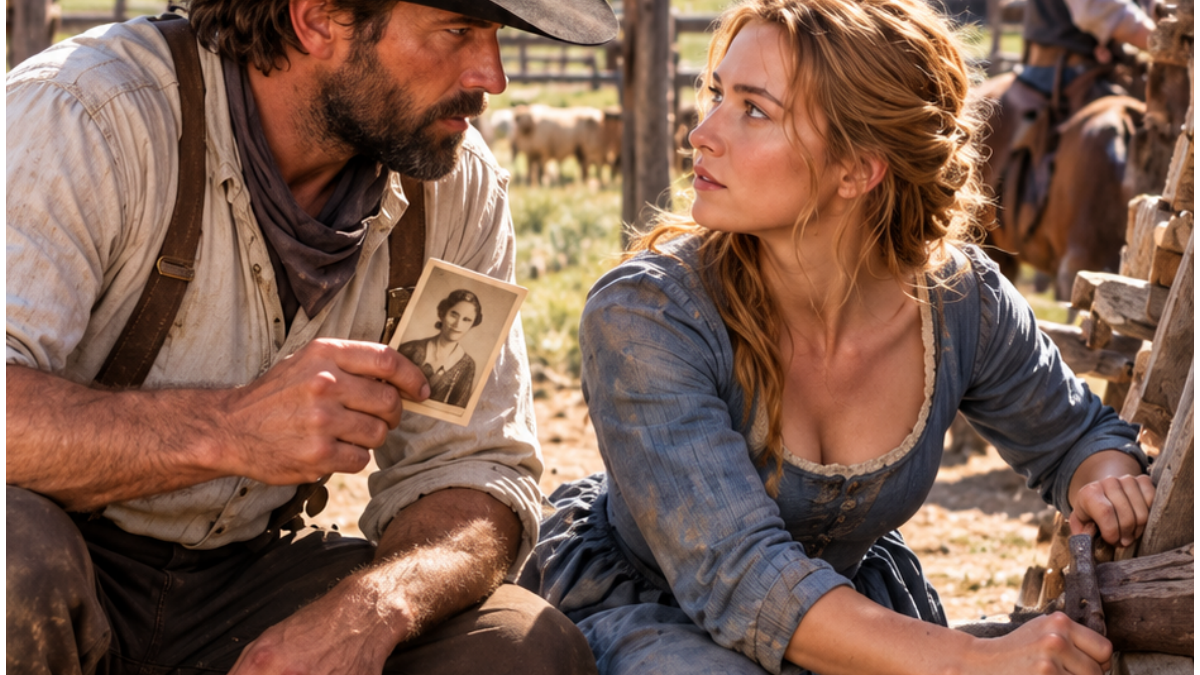
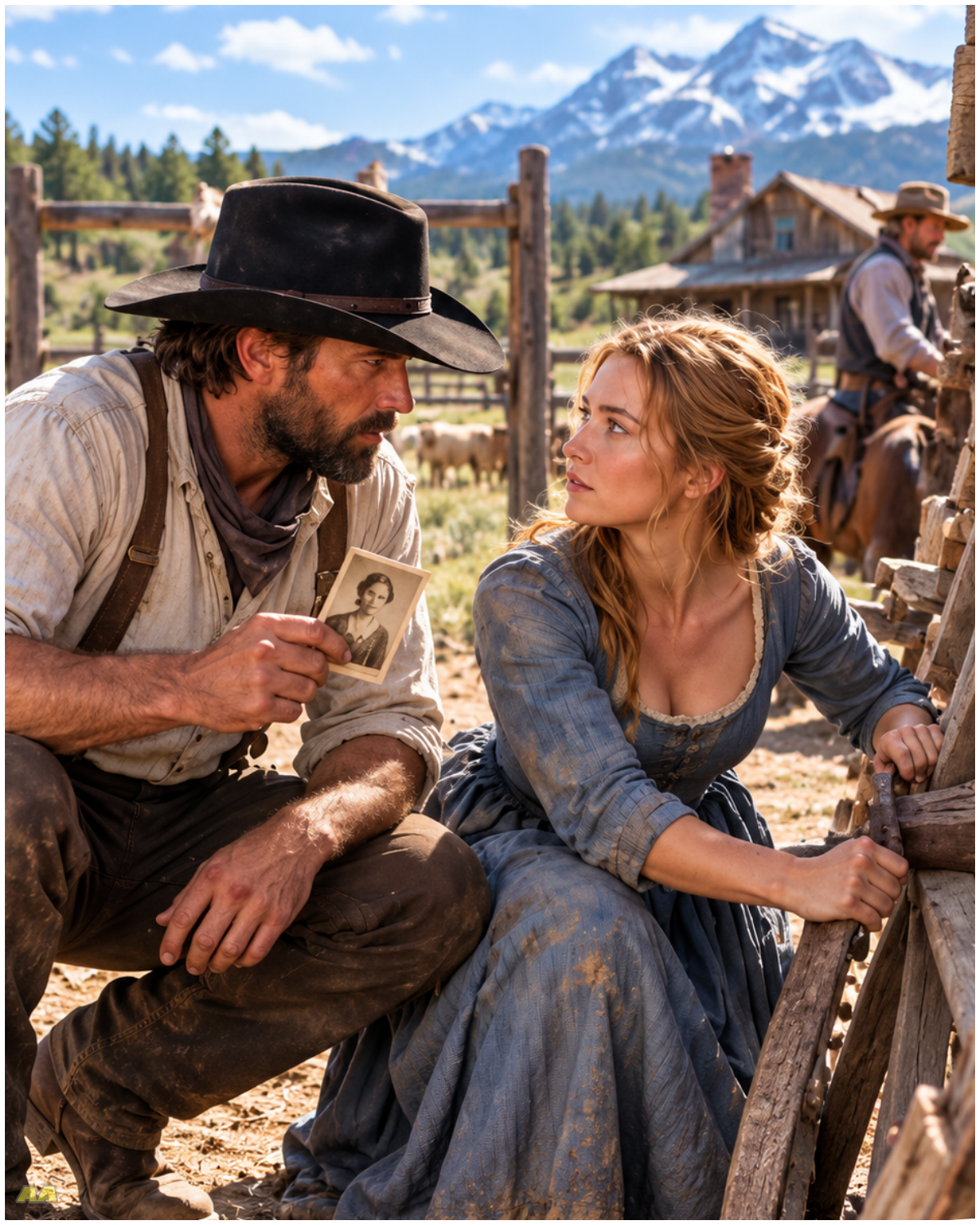
The freight wagon lost its wheel 50 yards from Amos Reed’s gate, scattering three crates into the Montana grass.
Before Amos could reach it, a woman in a blue traveling dress was already under the axle, her shoulder braced against the wood.
Lift when I say.
The driver stared at her.
Amos stopped beside the wagon, still holding the small photograph the marriage agency had mailed him.
The woman in that photograph had dark hair pulled tightly back, plain features, and a serious mouth.
Amos had chosen her because nothing about the picture suggested trouble.
The woman beneath the wagon had golden brown hair escaping from beneath a dusty hat and a face half the men in Mile City would turn to watch.
She looked up at Amos.
You planning to stand there?
He folded the photograph into his coat pocket.
What needs doing? She pointed toward the broken wheel.
Driver fits the pin.
You and I raised the axle.
Amos removed his coat.
They lifted together.
The woman did not pretend the weight was easy.
Her boots slid several inches through the dry grass, but she reset her feet and kept pushing until the driver forced the repaired wheel into place.
When the axle dropped back down, she brushed dust from her sleeves.
“Thank you,” Amos nodded. The driver climbed onto his seat.
“You two know each other?”
“No,” Amos said.
The woman looked directly at him.
“I believe we are supposed to marry.”
The driver turned so quickly that his hat nearly fell off.
Amos said nothing. She reached into the wagon and pulled out a battered traveling case.
“CL Bennett.”
Amos took the photograph from his pocket again.
Clara glanced at it. That was taken 3 years ago.
You look different. So do most people when someone pays a photographer to make them sit like a corpse.
The driver covered a laugh with a cough.
Amos studied the picture, then Clara.
He had written the agency carefully.
He wanted a practical woman, healthy, willing to work, no concern for fashion, no expectation of town society.
He had even used the word plain.
He had believed plain meant sensible, safe.
Clara lifted her case. If this is a problem, Mr.
Reed, say it before that wagon leaves.
The driver suddenly became very interested in tightening his reigns.
Amos looked toward his ranch.
Beyond the gate stood a low house, a weathered barn, two shearing sheds, and several hundred sheep scattered across the slopes.
He had spent four years building a life where every object had a purpose.
Now, a woman he had never expected stood beside his fence.
The agency must have made a mistake.
Clara’s mouth tightened slightly. They made several.
Amos looked back at her.
She continued, “They listed you as 36.”
I was 36 when I first wrote them.
That was 4 years ago.
They are not quick. One corner of her mouth moved.
That much we agree on.
The driver clicked his tongue at the horses.
Amos stepped toward him. Hold on.
He removed several coins from his pocket and handed them up.
If Miss Bennett chooses to return east, this should cover the wagon back to town and part of the rail fair.
I’ll provide the reSt. Clara stared at him.
You are sending me back.
I’m giving you the choice because I am not plain.
The driver looked straight ahead.
Amos wished he would leave.
I requested a certain kind of arrangement.
You requested a wife based on a photograph.
I requested someone practical. Clara looked at the repaired wagon wheel.
Apparently, I have failed that test already.
That is not what I meant.
Then explain it. Amos glanced toward the house.
He had expected awkwardness. He had not expected interrogation.
I run a sheep ranch.
The work is hard. Town is 12 mi away.
Winter lasts longer than anyone admits.
I have no use for people coming out here expecting something grand.
Clara lifted her case again.
Neither do I. The wagon driver cleared his throat.
I should be moving. Clara stopped him.
One week. Amos looked at her.
She faced him squarely. I stay 7 days.
I work. I learn the ranch.
You learn whether I am capable of more than standing beside a station platform looking troublesome.
I did not call you troublesome.
You paid my return fair before I reached your gate.
Amos had no answer ready.
Clara continued. For 7 days, when the work involves something I understand, I get an equal voice.
At the end of the week, either of us can end this before vows are spoken.
Amos looked at the road behind her.
Then at the ranch, a week was measurable.
He trusted measurable things. Agreed.
The driver left before either of them could change their minds.
Clara carried her own case through the gate.
Amos let her inside the house.
She accepted the small bedroom without complaint.
She placed her case beside the bed, washed road dust from her hands, and returned to the yard within 10 minutes.
Show me what keeps this place alive.
Amos almost told her to reSt. Instead, he led her toward the shearing shed.
The smell of lenoline grew stronger as they entered.
Stacks of bundled fleece lined one wall.
Loose fibers clung to rough boards and floated in shafts of afternoon light.
Clara stopped beside the first stack.
When was this graded? Spring.
By whom? Silus vein. She pressed her fingers into a bundle.
Amos watched her pull several fibers free.
She rubbed them between her thumb and forefinger, stretched them, then reached toward another bale.
What are you doing? Comparing.
They are the same grade.
No. Amos crossed his arMs. Vain has bought wool in this county 20 years.
That does not make these the same.
She held out both hands.
The wool in her left hand looked finer.
The fibers in her right were shorter and coarser.
Amos could see a difference once she put them beside each other.
He disliked that fact immediately.
Fleece varies across the flock.
Yes. So Vain averages it.
Clara shook her head. Good buyers separated.
He pays by the finished lot.
He pays you by what he says the finished lot is worth.
Amos took the better sample from her.
You worked with wool? 6 years.
That was not in your agency letter.
My letter said warehouse work.
It did not say grading.
They asked whether I could cook, sew, and keep poultry.
They did not ask whether I could price a fleece.
Amos looked toward the stacked bundles.
How much difference? I don’t know yet.
She moved deeper into the shed.
For the next hour, Clara opened older bundles while Amos brought down stored tags from wall pegs.
She worked without rushing. Each time she found fleece from a different season, she separated a small sample.
Amos began noticing patterns. The strongest wool carried nearly the same marks as weaker batches.
Outside, sheep bells moved across the slope.
The sound normally told him everything was in order.
Now it irritated him. Clara found a faded grading mark from the previous year, then another.
She set two handfuls of fleece beneath them.
Amos leaned closer. What? Clara looked from the fibers to the old marks.
Then she met his eyes.
If these records are right, your sheep are not the reason this ranch earns so little.
Amos said nothing. Clara placed one finger on the first grading mark.
Mr. Reed, I think someone has been paying you less than your wool is worth.
She touched the second, and I think it has been happening for years.
Amos did not sleep well.
Before sunrise, he carried three fleece bundles into the kitchen and placed them across the table where Clara was cutting bread.
She looked at the wool, then at him.
You decided I might be right.
I decided I want to know.
That is not the same thing.
It is close enough before breakfaSt. Clara wiped her hands and pulled the first bundle toward her.
Amos remained standing. For the next hour, she showed him what she had learned in the textile warehouse back eaSt. Not with speeches.
She pulled fibers apart and made him feel the difference.
Length. He compared them. Strength.
She stretched another strand until it broke.
Cleanliness. A third sample carried more dust and vegetable matter between the fibers.
Amos frowned. You can tell all that with your fingers.
Your hands know when a rope is worn before your eyes do.
That is different. Only because someone taught you rope.
He looked at her. Then he sat down.
By midm morning, they had separated six stored bundles into three groups.
Amos marked each pile himself.
Clara did not correct his handwriting.
That irritated him less than it should have.
Later, they walked the flock together.
Amos pointed out the use that consistently produced heavier fleece.
Clara asked which bloodlines they came from, which pastures they used, and whether he kept their wool separate after shearing.
He did not. Why not?
Vain buys by lot. That explains his system.
What does that mean? It means his system benefits him.
Amos stopped beside the fence.
That is an accusation. No, it is arithmetic.
He almost argued. Instead, he looked toward the sheep.
Years of breeding, years of feed, years of choosing stronger animals and culling weaker ones.
If Clara was right, he had improved the flock while accepting prices that treated every improvement as worthless.
2 days into her oneweek agreement, Amos loaded four sample bundles into the wagon.
Clara climbed beside him. You are coming.
You need someone who knows what he is looking at.
I know what wool looks like.
You know what your wool looks like?
Amos took the reinss. That sounded like an insult.
It was instruction. He glanced at her.
She faced forward, but he saw the corner of her mouth move.
Miles City appeared beneath a clear afternoon sky.
Wagons stood outside the general store.
Freight crates crowded the boardwalk.
Men moved between harness shops.
Feed merchants and the rail office.
Silus Vain conducted business from a warehouse near the stock pens.
He was a broad man with a trimmed gray beard and a brown coat too clean for the yard around him.
When Amos entered carrying the samples, Vain smiled.
Reed, shearing again, testing something.
Vains eyes moved to Clara.
Amos noticed the pause. This is Clara Bennett, my intended wife, he added.
Clara looked briefly at Amos.
It was the first time he had introduced her that way.
Vain bowed slightly. Welcome to Montana.
Thank you. Amos placed the wool on the counter.
Price these separately. Vain raised an eyebrow.
They came from the same flock.
Price them separately. Vain ran each sample through his hands.
He worked quickly. Too quickly, Clara thought.
He marked three nearly identical numbers on a scrap of paper.
Your usual grade. Clara stepped closer.
This one has longer staple.
Bane looked at her. It also carries grease.
So does that one. He smiled.
You worked wool for 6 years.
Back eaSt. Yes. Eastern mills like tidy categories.
Out here we buy what the range gives us.
Clara lifted the strongest sample.
Does the range shorten fiber after it reaches your warehouse?
The room became still. Amos watched vain smooth one finger along the edge of his account book.
No offense, ma’am, but ranch wool is not warehouse cloth.
I know, Clara replaced the sample.
That is why I am talking about raw fleece.
Veins smile thinned. Amos gathered the bundles.
We are finished. Outside, Clara walked half a block before speaking.
You did not ask me what I thought.
I heard what you thought.
That is new. Amos stopped beside the wagon.
What would you do? Clara studied him.
He waited. There is an independent buyer coming through the railroad sighting.
Amos nodded toward a printed notice tacked outside the general store.
He had seen it before.
Direct wool inspection. Eastern purchasing agent 12 days from the posted date.
Now nine remained. We take properly separated bales to him, Clara said.
And if Vain is right, then you lose wagon time.
And if you are right, you stop letting another man decide what your work is worth.
Amos looked toward Vain’s warehouse.
Not only mine. Clara followed his gaze.
Three small ranchers waited beside the loading doors with wool tied behind their wagons.
Amos knew every one of them.
That evening, he brought the account books to the kitchen.
Clara was mending a torn work glove.
He placed one chair beside his usual seat, then another.
She looked up. You moved the table.
I moved a chair for you.
That may be the larger event.
He ignored that. Show me the numbers.
They worked until the lamp burned low.
Clara compared old sale weights with the grades she had found in the shed.
Amos calculated feed costs, freight rates, and what the ranch still owed the merchant for winter grain.
Near midnight, he leaned back.
If the higher grade holds, we can repair the north shed and clear most of the feed debt.
He studied the page again.
You are certain? No. That answer made him look up.
Clara closed the account book.
I am certain your wool deserves an honest grading.
The buyer at the railroad decides the reSt. For the first time since she arrived, Amos smiled without trying to stop it.
The next morning, he hired four local teamsters for shipping day.
By afternoon, two neighboring ranchers had heard about Clara’s grading.
By evening, they were standing inside Amos’ shearing shed, asking her to examine their fleece.
She did. The following day, three more came.
Amos watched men who had never asked his advice about wool listened carefully while Clara separated their samples.
No one mentioned her face.
No one cared about the marriage agency.
They cared about her hands and what she could prove with them.
That night, Clara found Amos outside repairing a gate latch.
You have been quiet. I have been wrong.
She waited. He tightened the last screw.
I thought people would see you and bring trouble.
Clara rested her arms on the top rail and they saw you.
He tested the latch. You brought work.
She laughed. The sound surprised both of them for a few seconds.
Neither moved. Then Amos said, “I am sorry about the first day.” Clara looked toward him.
That sounded painful. It was good.
He almost laughed again. Two mornings later, Amos rode to town to confirm the wagons.
The first teamster avoided his eyes.
Can’t do it. You agreed.
Something changed. At the second yard, he received the same answer.
Then the third. By the fourth refusal, he stopped asking for excuses.
He walked to the freight board outside the general store.
The railroad notice remained pinned there.
6 days until inspection. Behind him, wagon spaces that should have held his contracted teams stood empty.
Every teamster he had hired had canled.
Amos returned from town after dark.
Clara was in the shearing shed, stacking freshly graded wool beneath chalk marks.
She looked at his face before he spoke.
They canled. All of them?
All four. Clara set down the bundle in her hands.
Vain probably. Can you prove it?
No. Then we do not waste time trying.
Amos removed his gloves. I can haul six bales myself.
Maybe eight if I take the lighter wagon.
Clara stared at him. You have 32.
I know. And the others?
Amos looked toward the neighboring stacks.
Three small ranchers had left wool at his place after Clara graded it.
They will have to decide for themselves.
Clara wiped loose fibers from her skirt.
They already did. Amos said nothing.
They trusted us enough to refuse Vain’s price.
That was their choice. Yes.
And now I have to save this ranch.
Clara stepped closer. By leaving every other rancher behind, by moving what I can control?
Her eyes stayed on him.
That is exactly what Vain expects.
Amos turned toward the open shed door.
Cold evening air moved across the yard.
He cannot stop me from driving my own wagon.
No, he only has to make sure you drive it alone.
Amos looked back. What are you suggesting?
We haul together. With what teams?
With our own. Half those wagons have not gone 20 m in years.
Then we repair them. And if one breaks on the road, we fix it.
If we miss the train, then we miss it.
After trying something that can work, Amos folded his arMs. That is not a plan.
Clara crossed to the workt.
She pulled a sheet of paper toward her, then helped me make one.
For the next 2 hours, they listed every available wagon, horse, mule, and sound harness among the neighboring ranches.
By morning, Amos had ridden to each family.
Some refused, most did not.
Men who had spent years complaining about Vain’s prices stood beside tired wagons and asked where they should report.
Amos put them to work.
One wagon needed two spokes replaced.
Another had a cracked tongue.
Harness leather had to be cleaned, stitched, and doubled in weak places.
Clara organized loads by weight.
Heavy bales went onto the strongest wagons.
Older wagons carried fewer. Amos checked every knot after someone else tied it, then checked it again.
On the third wagon, Clara caught him.
You know Jed has hauled hay 20 years.
I know. Then why are you retightening his rope?
Because I am standing here.
That is not a reason.
It is enough of one.
She walked away without arguing.
That bothered him more. 3 days remained.
The caravan formed before sunrise on the fourth morning.
Seven wagons, 11 ranchers, 38 bales of wool.
The wheels rolled east through cold gray light.
Clara rode beside Amos. For the first few miles, no one spoke much.
Wooden rims struck hard ground.
Harness chains clicked. Sheep country opened around them in long, pale slopes.
By noon, the sun had burned away the morning chill.
They stopped beside a shallow creek to water the teaMs. That was when Silus Vain arrived.
He rode alone. Amos watched him approach.
Vain dismounted beside the first wagon and looked along the line.
This is ambitious. No one answered.
His eyes settled on Amos.
Walk with me. Amos did not move.
Say it here. Vain smiled.
This is business. So is this.
Vain glanced toward Clara, then toward the other ranchers.
Very well. He opened a small notebook.
I will buy your entire lot, Amos, today.
Amos said nothing at a price higher than the railroad agent is likely to offer.
Clara looked at him. Vain named the number.
The men nearby went quiet.
It was enough to pay the feed debt.
Enough to repair the north shed.
Enough to leave Amos safe before winter.
Vain continued. You turn your wagons around.
I take your wool. We are done.
Amos looked toward the bales behind him.
What about theirs? Vain closed the notebook.
They may deal with me separately.
Clara said nothing. Amos knew why.
She wanted the choice to be his.
Vain stepped closer. You have spent your whole life carrying other people’s mistakes.
Read. Do not make theirs yours now.
The words hit harder than Amos expected.
He looked toward Clara. She was watching the creek, not him.
That night, the caravan stopped beside a low ridge.
Small fires burned between the wagons.
Amos sat apart, repairing a strap.
Clara joined him. You knew?
Knew what? That Vain would make that offer.
I thought he might. You did not warn me.
If I had, you would have spent the whole road preparing to refuse.
Maybe I should have. Then it would not have been your choice.
Amos pulled the leather through the buckle.
My father injured his back when I was 15.
Clara waited. I had two brothers younger than me.
A mother who could not keep the farm alone.
He tightened the strap. Every promise someone made eventually became something I had to finish.
Clara sat beside him. So you stopped trusting promises.
I stopped building plans around them.
She picked up the root paper.
Tomorrow’s path was marked in charcoal.
A narrow wash out lay between them and the rail siding.
She handed the paper to Amos.
Then decide what this is.
He looked at it. A route?
No. She stood. It is 11 people depending on each other.
The caravan moved again before dawn.
By midday, dark smoke from a locomotive showed faintly beyond the planes.
The rail line was close.
Then a wagon behind Amos cracked hard enough for every team to stop.
He climbed down. Jed Miller’s rear wheel leaned inward.
The hub had split. Jed stared at it.
Damn. Clara crouched beside the axle.
We can redistribute the load.
That takes time, Amos said.
Jed looked toward the rail smoke.
You go. No one spoke.
Amos’s own wagon stood near the front.
His best bales were already positioned to reach Miles City firSt. He could make the sighting.
So could Clara, the others might not.
Amos stared eaSt. Then he looked at Jed’s broken wagon.
For years, he had built his life around one rule.
Carry only what you can control.
He turned to Clara. Take the strongest four wagons.
She held his gaze. Amos, get them to the sighting.
What about you? He reached for the damaged hub.
I am staying. The locomotive smoke thickened in the distance.
Clara climbed onto the lead wagon.
Amos stepped aside as half the caravan began moving east without him.
Clara did not look back until the broken wagon disappeared behind the rise.
Four wagons still moved with her.
The rail smoke ahead had thickened into a dark line above the plains.
Miles city was close. Not close enough.
Keep the strongest team in front, she called.
One of the ranchers nodded.
The road narrowed where dry ruts cut through the earth.
Clara shifted the lighter bales from one wagon to another, keeping the weight even whenever they stopped.
No one argued with her now.
At the ranch, Amos had questioned every correction she made.
Here, men who had worked livestock twice as long as she had waited for her signal before moving another bail.
The locomotive whistle carried across the open country.
Clara looked eaSt. We have less time than I thought.
They pushed on. Behind them, Amos knelt beside Jed Miller’s wagon with the split hub resting across two blocks of wood.
Jed held the damaged wheel steady.
You should have gone. Amos worked a length of rawhide through the brake.
So should you. It is my wagon and their wool.
Two other ranchers were already removing the heaviest bales.
Amos pointed toward the strongest remaining wagon.
Move three there. It will overload.
Not after we shift the feed sacks.
He cut open one sack.
We leave half. Jed stared.
That is winter grain. It is grain we can replace if the wool gets sold.
For once, Amos did not inspect every knot himself.
He handed the rope to Jed.
Tie it, Jed did. Amos looked at the knot once, then climbed onto his wagon.
Move. At the Mile City sighting, Clara saw the freight cars before she saw the buyer.
Workers rolled handcarts across the platform.
Steam hissed beside the locomotive.
A narrow man in a dark vest stood near a hanging scale, checking tags against a clipboard.
Clara jumped down. “You the wool inspector?” He looked at the four wagons.
I am. We have more coming.
How much more? 14 bales.
He checked the station clock.
The freight closes when loading begins.
When? Soon. Clara looked toward the road.
Nothing. The inspector pointed to the first wagon.
If you want these examined, get them down.
Clara turned. Do not mix the marks.
Fine grade to the north side.
Medium beside it. Keep every ranch name separate.
The ranchers moved. Bales hit the platform with heavy thuds.
Wool dust rose into the morning light.
Clara pulled her brass weight from her pocket and set it beside the samples.
The inspector noticed. You graded these?
Yes. He took a sample from the first bail.
His fingers moved through the fibers.
Who taught you? My uncle’s warehouse in Ohio.
He checked the staple length, then the cleanliness.
Clara waited. Your first mark is right.
No one celebrated. There was too much work left.
They opened the next bail.
Then another. The inspector changed two grades slightly.
Most he left exactly as Clara had written them.
One rancher whispered, “She was right.” Clara ignored him.
She kept watching the road.
Sh. Then Silus Vain arrived.
His wagon carried no wool.
He stepped onto the platform as though he owned part of it.
I hear we are experimenting today.
The inspector did not look up.
Vain examined the graded bales.
Then he turned to the ranchers.
I will improve my standing offer.
No one answered. He named a price higher than before.
One man shifted his weight.
Vain saw it. You take my money today.
No freight uncertainty, no eastern delays, Clara said.
They can compare now. Vain looked at her.
This is still business, Mrs. Bennett.
Not yet. His eyes narrowed.
Clara continued. I am not married yet.
Before Vain could answer, wagon wheels sounded from the weSt. Everyone turned.
Amos appeared firSt. His wagon moved fast enough to throw dust behind it.
Jed’s damaged wagon followed, riding unevenly but still moving.
The final two wagons came behind them.
Clara stepped off the platform.
For the first time all morning, she stopped giving orders.
Amos pulled the team to a halt.
We late? Not yet. He looked toward the remaining bales already sorted beside the tracks.
You did all that? We did.
The freight crew began unloading the last wagons.
Amos helped until the final bail reached the scale.
Only then did he notice Vain.
Silas repeated his offer. This time, none of the ranchers moved.
The independent buyer finished the last inspection.
He wrote the figures on his sheet.
Then he named the prices.
Jed Miller laughed once sharply.
Another rancher removed his hat and rubbed both hands across his hair.
Amos looked at Clara. Her estimate had been close, very close.
Their own wool would clear the feed debt, repair the north shed, and leave enough to begin winter without borrowing from vain.
The buyer looked at Amos.
Who separated your grades? Amos pointed at Clara.
She did. Clara looked at him.
He did not add anything.
He did not explain that it was his flock, his ranch, or his shipment.
He simply stepped aside. Vain closed his account book.
You think one freight load changes this county?
Amos looked toward the other ranchers.
No, Jed answered for him.
But next season will. Before leaving the sighting, the ranchers agreed to share freight costs the following year.
No speeches, no celebration, just names, wagon capacity, and a date written on paper.
Vain rode away before they finished.
That evening, Amos and Clara stood beside the empty wagon.
Their oneweek agreement had expired 2 days earlier.
Neither had mentioned it. Clara finally did.
So, what happens now? Amos leaned against the wheel.
I asked for a wife because I thought I needed another worker.
Clara waited. I was wrong.
That could mean several things.
He looked at her. I do not want you here because of what you can do for this ranch.
She said nothing.
I want you here because every time I tried to carry something alone, you showed me what happened when I let someone stand beside me.
Clara studied him for a long moment.
And if I say no, I take you wherever you want to go.
She nodded once. Good. Amos almost smiled.
Then Clara held out her hand.
I am staying. Months later, the repaired shearing shed smelled of fresh cut boards and clean wool.
Clara stood on a short ladder beneath the center beam, fastening a new balance scale into place.
Amos held the ladder steady.
You could let me do that.
I know. He did not reach for the tool.
When she finished, Clara extended one hand downward.
Amos placed her old brass wool weight into her palm.
Beneath them sat the first bale of the new season.
Two names were stencled across the canvas, Reed and Bennett.








