Emotional Twist: Kate Unveils Camilla’s Long-Hidden Secrets at the Palace | Emotional Stories
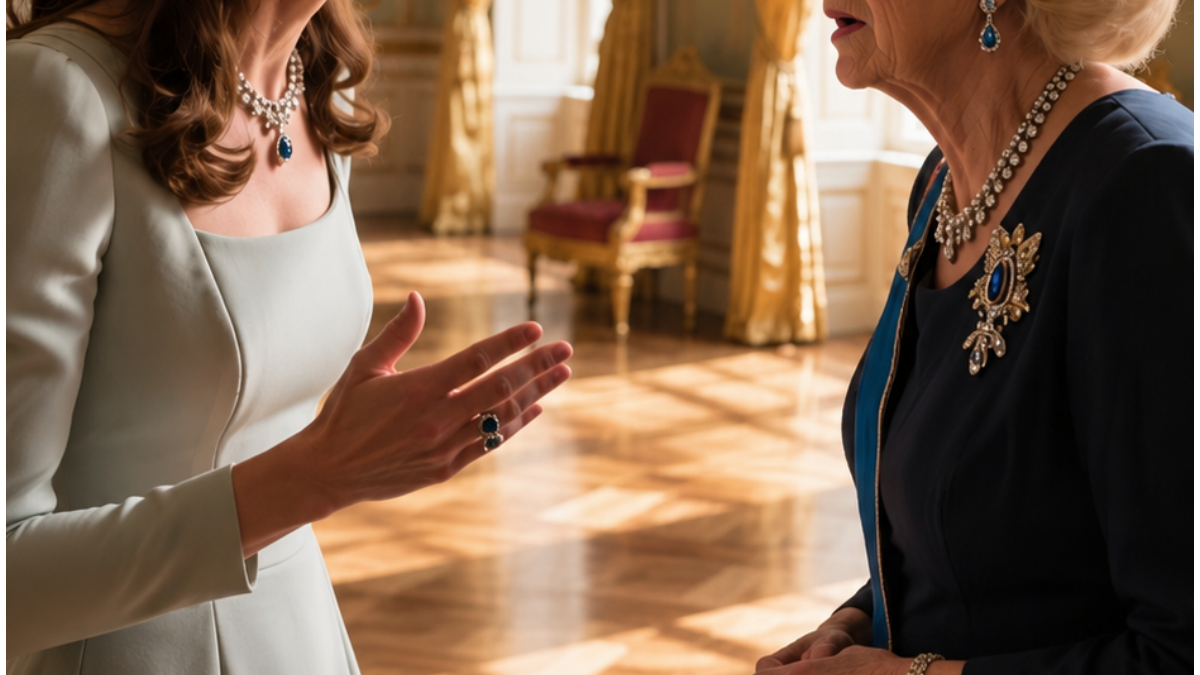
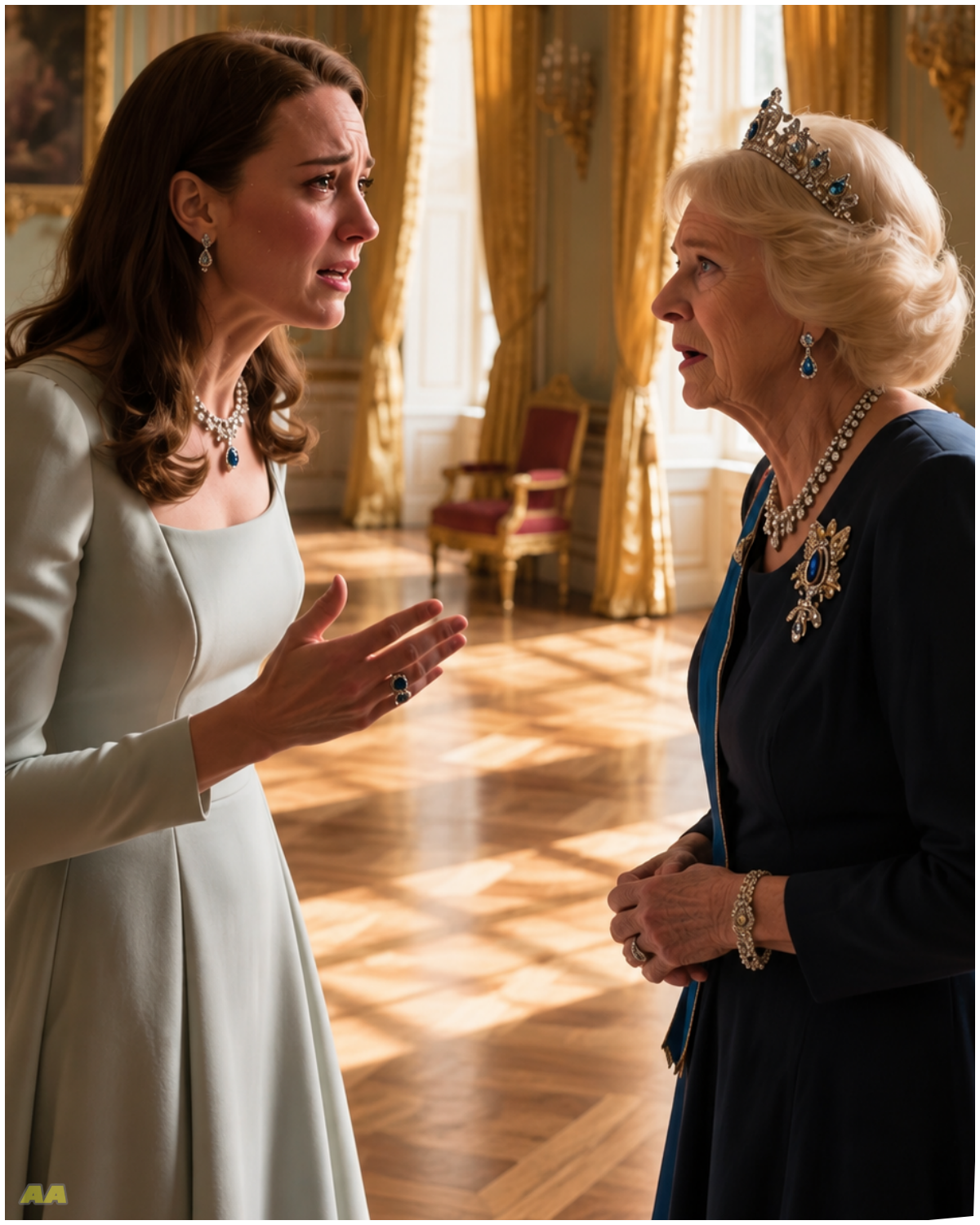
Kate walked through the grand corridors of the palace, her footsteps echoing against the marble floors.
The morning light filtered through the tall windows, casting long shadows across the ornate walls adorned with centuries old paintings.
She had always felt a sense of unease within these walls.
But today, something felt different.
There was a heaviness in the air, a tension that seemed to cling to every corner of the ancient building.
As she made her way to the library, Kate noticed several staff members whispering in hushed tones, their conversations stopping abruptly whenever she passed.
Their eyes followed her with a mixture of curiosity and something else she couldn’t quite identify, perhaps pity or maybe fear.
The atmosphere was thick with unspoken secrets, and Kate felt as though she was walking through a minefield of hidden truths.
The palace had always been a place of mystery and intrigue, but Kate had learned to navigate its complexities over the years.
She understood the unwritten rules, the careful dance of protocol and politics that govern daily life within these walls.
Yet today, everything felt different.
The familiar routine seemed disrupted, as if some invisible force had shifted the very foundation of the world she thought she knew.
In the library, Kate found herself drawn to a particular section of books that dealt with the history of the royal family.
She had often wondered about the stories that weren’t told in the official biographies.
The human dramas that played out behind closed doors.
The sanitized versions of events that were presented to the public always seemed incomplete, lacking the emotional complexity that must have existed in reality.
As she pulled down a leatherbound volume, a small piece of paper fluttered to the ground.
Kate bent to pick it up.
Noticing that it appeared to be a handwritten note yellowed with age.
The writing was elegant but hurried as if someone had been in distress when they wrote it.
The words were difficult to make out at first, but as Kate studied them more carefully, she began to understand their significance.
The note mentioned meetings that had taken place in secret, decisions that had been made without consultation, and arrangements that had been hidden from those who should have been informed.
Kate felt her heart rate quicken as she realized that this small piece of paper might be the key to understanding the strange atmosphere that had been building in the palace over recent weeks.
She looked around the library to make sure she was alone before carefully tucking the note into her jacket pocket.
The weight of it seemed disproportionate to its size, as if it carried the burden of years of concealed truth.
Kate knew that she was holding something significant, something that could change everything she thought she understood about her life and the people around her.
The remainder of her morning was spent in a state of distracted contemplation.
During meetings with various staff members and advisers, Kate found herself studying their faces, searching for signs that they might know more than they were saying.
Every glance seemed loaded with meaning.
Every pause in conversation felt pregnant with unspoken implications.
Lunch was served in the small dining room, a more intimate space than the grand hall where formal meals were typically held.
Kate sat across from other family members, engaging in the usual polite conversation about upcoming events and charitable obligations.
Yet, she couldn’t shake the feeling that there were layers of meaning beneath every seemingly innocent comment.
As the afternoon progressed, Kate decided to do some investigating of her own.
She had always been observant, a trait that had served her well in navigating the complexities of royal life.
Now she applied that same attention to detail to understanding what was really happening around her.
She began to notice patterns in the behavior of those around her.
Subtle signs that suggested there were conversations happening that she wasn’t privy to.
The palace staff, normally efficient and discreet, seemed unusually nervous.
Maids would stop talking when she entered a room, and even the most senior advisers appeared to be choosing their words more carefully than usual.
Kate realized that she was being kept out of some important loop, and the exclusion felt both insulting and concerning.
Evening brought no relief from the growing tension.
At dinner, the conversation was stilted and formal, lacking the warmth that usually characterized family meals.
Kate noticed that certain topics were carefully avoided, and when she attempted to steer the conversation toward palace business, there was a noticeable shift in the atmosphere.
Everyone seemed to be walking on eggshells, afraid to say the wrong thing.
After dinner, Kate retreated to her private study, a sanctuary where she could think clearly without the constant surveillance that seemed to follow her everywhere else in the palace.
She pulled out the note she had found earlier, and studied it again under the bright light of her desk lamp.
The more she examined it, the more convinced she became that it was authentic and significant.
The handwriting was unmistakably that of someone from within the royal household, someone who had access to information that was typically closely guarded.
The content of the note suggested that there had been a series of meetings and decisions that had been kept secret from certain family members, including herself.
Kate felt a mixture of anger and hurt at the realization that she had been deliberately excluded from important discussions about matters that affected her directly.
As she sat in the quiet of her study, Kate began to piece together various incidents from recent months that now seemed to take on new meaning.
Conversations that had ended abruptly when she entered a room, documents that had been quickly shuffled away when she approached, and the subtle but noticeable change in the way certain people interacted with her.
All of these things now seemed connected, part of a larger pattern of deception and concealment.
The night stretched on as Kate continued her analysis, cross-referencing the information in the note with her own observations and memories.
She began to see connections that she had previously missed, links between people and events that painted a picture of a complex web of secrets that had been carefully maintained for what appeared to be a considerable period of time.
By the time she finally went to bed, Kate had made a decision.
She would not confront anyone directly.
Not yet. Instead, she would continue to investigate quietly, gathering more information before taking any action.
She knew that if she was right about what the note implied, then she was dealing with something much larger and more serious than a simple misunderstanding or oversight.
The next morning brought with it a renewed sense of purpose.
Kate approached her daily routine with new eyes, paying attention to details that she might have previously overlooked.
Every interaction became an opportunity to gather information.
Every conversation a chance to probe gently for clues about what was really going on behind the scenes.
During her morning meetings, Kate noticed that several key advisers seemed unusually distracted.
They would glance at each other meaningfully when they thought she wasn’t looking.
And there were several instances where she caught them in what appeared to be silent communication.
The more she observed, the more convinced she became that there was indeed a conspiracy of silence surrounding some important matter.
The breakthrough came during a chance encounter in one of the palace’s many corridors.
Kate overheard a fragment of conversation between two senior staff members who didn’t realize she was nearby.
The words they spoke were few, but they confirmed what she had begun to suspect.
There were indeed secrets being kept from her, and they involved decisions that had been made at the highest levels of the royal hierarchy.
Kate felt a surge of determination as she realized that her investigation was beginning to bear fruit.
She was no longer working with just suspicions and theories.
She now had concrete evidence that something significant was being concealed from her.
The challenge now was to uncover the full extent of the deception and understand why she had been kept in the dark.
As the day progressed, Kate found herself viewing everything through the lens of her new understanding.
The palace, which had once felt like a home, despite its grandeur and formality, now seemed like a stage set, where elaborate performances were being conducted for her benefit.
She began to question everything she thought she knew about the people around her and the institution she was part of.
The weight of her discovery was beginning to take its toll.
Kate found herself feeling isolated and uncertain about whom she could truSt. The note that had started everything was still hidden safely in her study, but she knew that eventually she would need to take action based on what she had learned.
The question was when and how to proceed without causing unnecessary damage to the delicate relationships that held the royal family together.
Evening found Kate once again in her study, pouring over the note and her own observations.
She had begun to keep detailed records of everything she had noticed, creating a comprehensive picture of the deception that appeared to surround her.
The more she documented, the more complex and troubling the situation became.
As she prepared for bed that night, Kate realized that she stood at a crossroads.
She could choose to ignore what she had discovered and return to the comfortable ignorance of her previous life, or she could pursue the truth regardless of the consequences.
The decision she made would not only affect her own future, but potentially the future of the entire royal family.
The gravity of the situation was not lost on her.
Kate understood that the secrets she was uncovering had been carefully guarded for good reason, and that exposing them could have far-reaching implications.
Yet, she also felt that she deserved to know the truth about matters that affected her life so directly.
The conflict between her desire for truth and her responsibility to the institution created a tension that would only grow stronger as her investigation continued.
The following week brought unexpected developments that would change everything for Kate.
While attending what she thought would be a routine meeting about upcoming charitable events, she stumbled upon a conversation that wasn’t meant for her ears.
Hidden behind an ornate pillar in the meeting room’s anti chamber, she heard voices discussing matters that made her blood run cold.
Two senior advisers were speaking in urgent, hushed tones about documents that needed to be secured before certain family members could access them.
They mentioned names, dates, and locations that seemed to connect directly to the mysterious note Kate had found.
More disturbing still was their discussion about maintaining what they called the arrangement and ensuring that certain individuals remained unaware of the full situation.
Kate pressed herself closer to the pillar, her heart pounding as she strained to hear every word.
The advisers spoke of meetings that had taken place years ago, decisions that had been made without proper consultation, and ongoing efforts to maintain secrecy about matters that should have been transparent.
They referenced files that were kept in a secure location, documents that contained information that would be damaging if exposed.
When the advisers finally moved away, Kate remained hidden for several more minutes, processing what she had heard.
The implications were staggering. It appeared that there was an active conspiracy within the palace to keep certain information hidden, and that this conspiracy involved people she had trusted completely.
The casual way in which the advisers had discussed maintaining deception suggested that this was an ongoing operation, not a recent development.
Returning to her private quarters, Kate felt overwhelmed by the magnitude of what she was uncovering.
The note she had found was clearly just one small piece of a much larger puzzle.
She began to understand that the strange atmosphere in the palace, the whispered conversations, and the careful way people spoke around her were all part of an elaborate effort to keep her from learning the truth about something significant.
That evening, Kate made the decision to expand her investigation.
She couldn’t simply wait for more clues to fall into her lap.
She needed to actively seek out information.
Using her knowledge of the palace’s layout and routines, she began to plan how she might access areas and documents that were typically off limits to her.
The palace’s record room was located in the basement level behind several locked doors that required special access.
Kate knew that certain historical documents and correspondents were stored there, including materials that might shed light on the secrets she was investigating.
Getting access would require careful planning and perfect timing, but she was determined to find out what was being hidden from her.
Over the next few days, Kate observed the routines of the staff members who had access to the restricted areas.
She noted when the record room was likely to be unattended and identified the times when she could move through the palace without being noticed.
The plan she developed was risky, but her need to know the truth outweighed her concerns about the potential consequences of being discovered.
The opportunity came on a Thursday evening when many of the senior staff were attending a formal dinner that didn’t require Kate’s presence.
She waited until the palace had settled into its evening routine before making her way to the basement level.
The corridors were dimly lit and eerily quiet, creating an atmosphere that heightened her sense of doing something forbidden.
The record room door was secured with an electronic lock, but Kate had observed one of the archavists entering the code earlier that week.
With trembling fingers, she entered the numbers and felt a surge of relief when the lock disengaged with a soft click.
The heavy door swung open to reveal rows upon rows of filing cabinets and document storage boxes stretching back into the shadows.
Kate used the small flashlight on her phone to navigate through the organized chaos of historical records.
The files were meticulously labeled and categorized, but finding what she was looking for required patience and systematic searching.
She focused on documents from the time period referenced in the note she had found, looking for anything that might provide context or additional information.
After nearly an hour of searching, Kate discovered a section of files that immediately caught her attention.
The documents were filed separately from the main collection in a locked cabinet that required a different access code.
However, the lock on this cabinet appeared to have been damaged at some point and hadn’t been properly repaired.
With gentle pressure, Kate was able to open the cabinet and access its contents.
Inside, she found a collection of correspondence, meeting notes, and official documents that painted a picture of events she had never heard about.
The papers detailed a series of negotiations, agreements, and decisions that had been made without the knowledge or input of certain family members.
More shocking still were documents that suggested some of these decisions had been made specifically to benefit certain individuals at the expense of others.
Kate photographed each document with her phone, being careful to capture every detail.
The information she was uncovering was more extensive and troubling than anything she had imagined.
There were financial arrangements that seemed questionable, agreements that appeared to violate established protocols, and evidence of deliberate deception that had been ongoing for years.
One document in particular caught her attention.
It was a formal agreement that had been signed by several senior family members and advisers, but notably excluded certain individuals who should have been involved in such decisions.
The agreement outlined arrangements for property, financial assets, and official responsibilities that directly affected Kate’s position and future role within the family.
As Kate continued to photograph the documents, she began to piece together a timeline of events that revealed a pattern of exclusion and deception.
Decisions had been made about her life and future without her knowledge or consent, and these decisions had been deliberately concealed from her.
The scale of the betrayal was breathtaking, involving people she had trusted completely and considered family.
The sound of footsteps in the corridor above reminded Kate that she needed to be cautious about the time she was spending in the record room.
She quickly finished photographing the remaining documents and carefully returned everything to its original position.
The cabinet door was gently closed and she made sure that there was no evidence of her presence in the room.
Leaving the record room required the same careful attention to avoiding detection that had gotten her inside.
Kate moved quietly through the basement corridors, listening carefully for any sounds that might indicate the presence of others.
The return journey to her private quarters felt like the longest walk of her life.
Every shadow potentially hiding someone who might discover what she had been doing.
Back in the safety of her study, Kate began the process of reviewing the photographs she had taken.
Each image revealed new layers of the deception that had been practiced around her.
The documents provided names, dates, and specific details that transformed her suspicions into concrete knowledge of wrongdoing.
The most disturbing revelation was the extent to which her own future had been planned and arranged without her involvement.
Decisions about her role, her responsibilities, and even her personal relationships had been made by others and then presented to her as if they were natural developments or her own choices.
The manipulation had been subtle but pervasive, affecting virtually every aspect of her life within the royal family.
Kate spent hours that night analyzing the documents and cross-referencing them with her own memories and experiences.
Incidents that had seemed strange or unexplained at the time now made perfect sense when viewed in the context of the hidden arrangements and secret agreements.
She realized that she had been living within a carefully constructed fiction, a version of reality that had been designed to keep her compliant and unaware.
The emotional impact of these discoveries was overwhelming.
Kate felt betrayed, manipulated, and deeply hurt by the realization that people she had trusted had been deceiving her for years.
The palace that had been her home now felt like a prison, and the family that had welcomed her now seemed like a group of strangers who had been playing elaborate roles for her benefit.
Yet, alongside the hurt and anger, Kate also felt a growing sense of determination.
She now had concrete evidence of wrongdoing, and she was no longer operating on suspicion alone.
The question was what to do with this information and how to confront the people who had been deceiving her without causing irreparable damage to the relationships and institutions involved.
As Dawn approached, Kate realized that she had reached a point of no return.
The knowledge she now possessed couldn’t be ignored or forgotten.
She would have to decide how to proceed, knowing that whatever action she took would have consequences, not just for herself, but for everyone involved in the deception.
The documents she had discovered painted a picture of a complex web of secrets that extended far beyond what she had initially suspected.
Financial improprieties, abuse of power, and deliberate manipulation were all part of a pattern that had been carefully hidden from public scrutiny.
Kate understood that exposing these secrets would not be simply a matter of confronting those responsible.
It would require careful planning and consideration of the broader implications.
The weight of responsibility that Kate now carried was enormous.
She held information that could potentially damage the reputation of the royal family and the institution itself.
Yet, she also had a responsibility to herself and to the principles of truth and transparency that she believed in.
The conflict between these competing responsibilities would shape every decision she made going forward.
As the morning light began to filter through the windows of her study, Kate made a preliminary decision about her next steps.
She would continue to gather information, but she would also begin to prepare for the possibility of confronting those responsible for the deception.
The time for passive investigation was coming to an end, and the time for action was approaching.
The next phase of Kate’s investigation took an unexpected turn when she decided to reach out to someone who might have information about the historical context of what she had discovered.
Margaret, the palace’s head librarian, had worked within the royal household for over 30 years and had access to records and institutional memory that could prove invaluable.
Kate approached Margaret carefully, not wanting to reveal the full extent of what she had already uncovered.
During a seemingly casual conversation about historical research, she mentioned her interest in understanding more about the administrative processes and decision-making structures that governed royal family operations.
Margaret’s response was more revealing than Kate had expected.
The elderly librarians eyes showed a flash of recognition when Kate mentioned certain time periods and administrative arrangements.
Margaret spoke carefully, but her words carried undertones that suggested she was aware of irregularities that had occurred over the years.
She mentioned that certain documents had been reclassified at various times and that access to historical records had become more restricted in recent years.
More significantly, Margaret revealed that she had been asked on several occasions to remove or relocate specific documents from the main archive.
These requests had come from senior adviserss and had been presented as routine administrative reorganization, but Margaret had always found them suspicious.
She had kept detailed records of these requests, including copies of documents that had been moved or restricted.
Kate realized that Margaret might be a valuable ally in her investigation.
The librarian’s position gave her access to information and historical perspective that could help Kate understand the broader pattern of deception she was uncovering.
More importantly, Margaret seemed to share Kate’s concerns about the lack of transparency in certain palace operations.
Over the course of several carefully orchestrated conversations, Kate gradually revealed more about her discoveries to Margaret.
The librarian’s reaction confirmed Kate’s worst suspicions.
The irregularities she had uncovered were part of a long-standing pattern of administrative manipulation and information control.
Margaret had witnessed these practices for years, but had felt powerless to challenge them due to her position within the palace hierarchy.
Margaret provided Kate with access to documents and records that had been removed from the main archive.
These materials painted an even more disturbing picture of systematic deception and manipulation that extended back decades.
Financial arrangements that benefited certain family members at the expense of others, agreements that violated established protocols, and evidence of deliberate efforts to control information and limit transparency.
The scope of what Kate was discovering continued to expand.
What had started as suspicions about recent events was now revealed to be part of institutional practices that had been in place for years.
The royal family and its administration had developed sophisticated methods for controlling information, managing public perception, and making decisions without proper consultation or transparency.
One of the most troubling discoveries was evidence of financial improprieties that involved the misuse of public funds and charitable donations.
Documents showed that money that was supposed to support public causes had been diverted to personal accounts and private investments.
The amounts involved were substantial, and the methods used to conceal these transactions were sophisticated and deliberate.
Kate also uncovered evidence of influence pedalling and the use of royal position for personal gain.
Certain family members had used their status to secure business deals, investment opportunities, and other financial advantages that were not available to ordinary citizens.
These activities had been carefully hidden from public scrutiny and from other family members who might have objected.
The emotional toll of these discoveries was enormous.
Kate felt betrayed not just by individuals, but by the entire system she had become part of.
The institution that was supposed to represent public service and moral leadership was revealed to be corrupt and self-serving.
The people she had trusted and respected were shown to be willing participants in deception and manipulation.
Yet Kate also felt a growing sense of moral clarity about what she needed to do.
The evidence she had gathered was too significant to ignore and the wrongdoing too serious to allow it to continue unchecked.
She began to understand that she had a responsibility not just to herself, but to the public who trusted and supported the royal family.
Margaret became an important collaborator in Kate’s investigation, helping to locate additional documents and providing historical context for the patterns of behavior they were uncovering.
The librarians knowledge of palace operations and her access to archived materials made her an invaluable resource in building a comprehensive picture of the systematic deception.
As they worked [clears throat] together, Kate and Margaret developed a careful system for documenting and preserving evidence.
They created copies of important documents, maintained detailed records of their findings, and established secure methods for communicating about their investigation.
Both women understood that they were engaging in activities that could have serious consequences if discovered by the wrong people.
The investigation took on new urgency when Kate discovered evidence that suggested some of the financial improprieties were ongoing.
Money was still being diverted from legitimate purposes, and new arrangements were being made that would further benefit certain individuals at the expense of others.
The systematic nature of the wrongdoing meant that simply exposing past transgressions wouldn’t be sufficient.
Active measures would be needed to prevent future abuses.
Kate began to consider her options for taking action.
She could confront the individuals involved directly, but this approach risked allowing them to destroy evidence or create new cover-ups.
She could take her findings to external authorities, but this would likely result in a public scandal that could damage the institution beyond repair.
She could also try to work within the system to address the probleMs. But her investigation had shown that the system itself was compromised.
The complexity of the situation was compounded by the personal relationships involved.
Some of the people implicated in the wrongdoing were family members with whom Kate had close personal bonds.
The prospect of exposing their misconduct would not only damage their reputations, but also destroy relationships that had been important to her.
Margaret counseledled patience and careful planning.
She had seen other attempts to address irregularities within the POW system, and she knew that success would require strategic thinking and perfect execution.
Rushing into confrontation or public exposure without adequate preparation would likely result in failure and potentially severe consequences for those involved in the investigation.
As Kate continued to gather evidence, she began to identify key individuals who appeared to be at the center of the deceptive practices.
These were senior family members and advisers who had been involved in making and implementing the questionable decisions.
Some of them were people Kate had trusted completely and their involvement in the conspiracy felt like a personal betrayal.
The evidence also revealed the sophisticated methods that had been used to maintain secrecy and prevent discovery.
Communication had been carefully controlled.
Documents had been systematically hidden or destroyed and access to information had been restricted to only those who were part of the conspiracy.
The level of organization and planning involved suggested that the deceptive practices had been institutionalized rather than improvised.
Kate began to understand that confronting this level of systematic deception would require more than simply presenting evidence to those responsible.
The entire culture of secrecy and manipulation would need to be addressed and this would require fundamental changes in how the royal family operated.
The challenge was enormous, but Kate felt that the stakes were too high to accept anything less than complete reform.
The psychological pressure of carrying this knowledge was beginning to affect Kate’s daily life.
She found it difficult to maintain normal relationships with people she knew were involved in the deception, and the constant need for secrecy about her investigation was emotionally exhausting.
She felt isolated and burdened by the responsibility of deciding how to proceed.
Margaret provided crucial emotional support during this difficult period, helping Kate process the implications of what they were discovering and providing perspective on the historical context of palace operations.
The librarian’s experience and wisdom were invaluable in helping Kate understand that the problems she had uncovered were systemic rather than personal, and that addressing them would require institutional rather than individual solutions.
As the investigation continued, Kate began to develop a clearer picture of how the deceptive practices had evolved over time.
What had started as relatively minor departures from established procedures had gradually expanded into a comprehensive system of information control and financial manipulation.
The gradual nature of this development had made it easier for participants to justify their involvement and harder for others to recognize the overall pattern.
The evidence Kate had gathered was now substantial enough to support serious allegations of misconduct.
But she knew that having evidence and being able to act on it effectively were two different things.
The next phase of her investigation would need to focus on developing a strategy for using the information she had gathered to create meaningful change while minimizing the potential for damage to innocent parties and important institutions.
The breakthrough in Kate’s investigation came when she discovered a hidden communication system that had been used to coordinate the deceptive activities she had been uncovering.
While reviewing documents in Margaret’s secure collection, she found references to meetings and discussions that had taken place using encrypted messaging and private communication channels that bypassed normal palace protocols.
Margaret revealed that she had always suspected the existence of such a system because certain decisions seemed to be made and implemented without any corresponding documentation in the official records.
The librarian had noticed patterns in scheduling and administrative changes that suggested coordination was happening through unofficial channels, but she had never been able to prove it.
Kate realized that accessing this hidden communication system could provide the final piece of evidence she needed to fully understand the scope and organization of the conspiracy she was investigating.
However, gaining access to encrypted communications would require technical expertise and resources that she didn’t currently possess.
She would need to find allies who could help her overcome these technical challenges.
The search for technical assistance led Kate to James, a young IT specialist who worked on the palace’s computer systems and had a reputation for both technical competence and discretion.
Kate approached him carefully, initially discussing general concerns about information security and the need to ensure that palace communications were properly protected from external threats.
James’s response to these conversations revealed that he had his own concerns about irregularities in the palace’s information systeMs. He had noticed unauthorized access to certain databases, unusual patterns in data backup and storage, and evidence that some communications were being routed through systems that weren’t part of the official Palace network.
His technical expertise confirmed Kate’s suspicions about the existence of hidden communication channels.
Working with James, Kate was able to gain access to the encrypted messaging system that had been used to coordinate the conspiracy.
The messages they uncovered provided unprecedented insight into how the deceptive practices had been planned, implemented, and maintained over time.
The communications revealed a level of sophistication and organization that was far greater than Kate had imagined.
The encrypted messages showed that the conspiracy involved not just senior family members and palace staff, but also external advisers, financial consultants, and legal representatives who had helped design and implement the deceptive practices.
The network of participants was extensive, and their activities had been carefully coordinated to minimize the risk of discovery while maximizing the benefits to those involved.
More disturbing still were messages that discussed Kate herself and strategies for managing her potential discovery of the conspiracy.
The participants had been monitoring her activities, anticipating her questions, and developing responses designed to deflect her suspicions.
They had even discussed contingency plans for dealing with the possibility that she might uncover evidence of their activities.
Kate felt violated and angry as she read discussions about manipulating her perceptions and controlling her access to information.
The people she had trusted had been treating her as a problem to be managed rather than a family member deserving of honesty and respect.
The level of premeditation and calculation involved in deceiving her was breathtaking.
The encrypted communications also revealed ongoing plans for future activities that would further benefit the conspiracy participants at the expense of others.
Financial arrangements were being planned that would divert even more resources away from their intended purposes, and new methods of concealment were being developed to make detection even more difficult.
James proved to be not just a technical resource, but also a valuable ally in analyzing and understanding the implications of the communications they were accessing.
His technical background helped him identify patterns and connections that might not have been obvious to someone without his expertise, and his position within the Palace IT system gave him insights into how the deceptive practices were being implemented technically.
As Kate reviewed the extensive communications archives with James’s assistants, she began to understand the true scale of what she was confronting.
This wasn’t simply a matter of a few questionable decisions or minor financial irregularities.
It was a comprehensive system of corruption and deception that had become institutionalized within the royal family’s operations.
The evidence Kate now possessed was overwhelming in both quantity and quality.
She had documented proof of financial misconduct, abuse of power, systematic deception, and conspiracy involving multiple participants over an extended period of time.
The information was more than sufficient to support serious legal action and would likely result in significant consequences for those involved.
Yet, Kate also realized that the very comprehensiveness of the conspiracy made it more difficult to address effectively.
The participants had built extensive networks of mutual protection and support, and they had invested heavily in maintaining the systems that enabled their activities.
Exposing the conspiracy would likely trigger aggressive defensive responses designed to discredit Kate and protect the participants.
Margaret and James became crucial partners in helping Kate develop a strategy for using the evidence she had gathered.
All three understood that they were dealing with powerful individuals who had demonstrated their willingness to engage in sophisticated deception and manipulation.
Any approach to confronting them would need to be carefully planned and expertly executed.
The team began by analyzing the personalities and relationships of the key conspiracy participants, trying to understand their motivations and vulnerabilities.
They identified potential pressure points that might be used to encourage cooperation or confession, and they considered various scenarios for how the participants might respond to being confronted with evidence of their activities.
Kate faced a particularly difficult decision about whether to approach any of the participants individually before taking broader action.
Some of the people involved were family members with whom she had close personal relationships and she wondered whether a private conversation might result in voluntary cooperation and reform.
However, the evidence suggested that the participants were deeply committed to maintaining their deceptive practices and might be more likely to respond with additional deception rather than honest cooperation.
The psychological pressure of carrying this knowledge while maintaining normal relationships with the conspiracy participants was enormous.
Kate found herself analyzing every interaction, looking for signs that the participants suspected her investigation or were taking counter measures.
The constant vigilance required to maintain secrecy while continuing her investigation was emotionally exhausting.
James provided valuable technical support by helping to secure the evidence Kate had gathered and ensuring that it couldn’t be detected or destroyed by the conspiracy participants.
He implemented sophisticated encryption and backup systems that would protect the information even if the participants discovered Kate’s investigation and attempted to destroy the evidence.
Margaret’s historical perspective proved crucial in understanding how similar situations had been handled in the past and what approaches were most likely to be effective.
Her knowledge of palace politics and institutional dynamics helped the team anticipate potential obstacles and develop strategies for overcoming them.
As the team continued to analyze the evidence and develop their strategy, they began to consider the broader implications of exposing the conspiracy.
The scandal would likely have significant impact not just on the individuals involved but on the institution of the royal family itself.
Public trust could be severely damaged and the political and constitutional implications could be farreaching.
Kate struggled with the weight of this responsibility.
Knowing that her decisions could affect not just her own life but the lives of many others and potentially the stability of important institutions.
The evidence clearly showed serious wrongdoing that needed to be addressed.
But the potential consequences of exposure were also serious and far-reaching.
The team began to explore various options for how to proceed, ranging from private confrontation with the participants to public exposure through media or legal channels.
Each approach had advantages and disadvantages, and the choice would depend on what outcome Kate ultimately wanted to achieve.
Private confrontation might result in voluntary reform and minimal damage to relationships and institutions, but it also risked allowing the participants to cover up their activities more effectively or to retaliate against Kate.
Public exposure would ensure that the wrongdoing couldn’t be covered up, but it might also cause damage that would be difficult to repair.
As Kate weighed these options, she realized that her decision would be influenced not just by strategic considerations, but also by her personal values and her vision for what the royal family should represent.
The conspiracy she had uncovered represented a fundamental betrayal of the principles of public service and moral leadership that were supposed to guide royal family activities.
The evidence Kate had gathered was now organized into a comprehensive dossier that documented the full scope of the conspiracy and provided detailed proof of the various illegal and unethical activities that had been taking place.
The dossier represented months of careful investigation and analysis, and it would serve as the foundation for whatever action Kate ultimately decided to take.
As she prepared to move from investigation to action, Kate knew that she was crossing a point of no return.
Once she began to confront the conspiracy participants or expose their activities publicly, there would be no going back to the relative innocence and simplicity of her previous life.
The knowledge she possessed and the responsibility it carried would shape every aspect of her future relationship with the royal family and its institutions.
The moment of truth arrived on a crisp autumn morning when Kate decided she could no longer delay taking action on the evidence she had gathered.
After weeks of careful planning with Margaret and James, she had developed a strategy that would maximize the impact of her revelations while minimizing the potential for retaliation or cover up attempts by those involved in the conspiracy.
Kate’s approach was methodical and decisive.
She began by securing multiple copies of all evidence in different locations, ensuring that the conspiracy participants couldn’t destroy or suppress the information even if they discovered her investigation.
James had helped her create encrypted digital archives that were stored both locally and in secure cloud storage systems that couldn’t be accessed by palace IT administrators.
The first confrontation took place in Kate’s private study where she had arranged to meet with the senior adviser who appeared to be the primary coordinator of the conspiracy activities.
She had chosen this individual carefully, believing that his central role in organizing the deceptive practices would make him the most valuable person to confront firSt. When the adviser arrived for what he believed would be a routine meeting about upcoming events, Kate presented him with a comprehensive overview of the evidence she had gathered.
The documents, communications, and financial records were laid out systematically, creating an undeniable picture of systematic deception and misconduct that had been ongoing for years.
The adviser’s reaction was initially one of shock and denial.
But as Kate continued to present evidence, his response shifted to anger and then to attempts at justification and deflection.
He tried to minimize the significance of the activities Kate had uncovered, arguing that they were necessary for protecting the royal family’s interests and maintaining stability within the institution.
Kate refused to accept these justifications, pointing out that the activities she had documented involved clear violations of law, ethics, and the basic principles that were supposed to guide royal family operations.
She made it clear that she possessed comprehensive evidence that could not be dismissed or explained away and that she was prepared to take action if voluntary reform was not forthcoming.
The confrontation lasted for several hours during which the adviser attempted various strategies for managing the situation.
He tried to negotiate, offering Kate increased responsibilities and benefits in exchange for her silence.
He attempted to intimidate her by suggesting that exposing the conspiracy would damage her own position and reputation.
He even tried to turn the situation around by accusing Kate of improper behavior and conducting her investigation.
Kate remained firm throughout these attempts at manipulation, making it clear that she would not be deterred by threats, bribes, or attempts to shift blame.
She had anticipated these responses based on her analysis of the adviser’s personality and previous behavior, and she was prepared with counterarguments and additional evidence that undermined each of his defensive strategies.
The meeting ended with Kate presenting the adviser with an ultimatum.
Either the conspiracy participants would voluntarily confess their activities and take steps to reform the practices she had uncovered or she would expose the evidence publicly through media and legal channels.
She gave him 24 hours to discuss the situation with the other participants and provide a response.
Following the confrontation with the adviser, Kate implemented additional security measures to protect herself and her evidence from potential retaliation.
She informed Margaret and James about the meeting and activated contingency plans they had developed for dealing with aggressive responses from the conspiracy participants.
The next 24 hours were among the most tense of Kate’s life.
She maintained her normal routine as much as possible while remaining vigilant for signs that the conspiracy participants were taking counter measures.
She monitored communications, watched for unusual activities within the palace, and prepared herself for various possible responses to her ultimatum.
The adviser’s response came exactly 24 hours later, delivered through a formal letter that was both a rejection of Kate’s demands and a declaration of war against her investigation.
The letter denied the validity of her evidence, questioned her motives for conducting the investigation, and threatened legal action against her for unauthorized access to confidential information.
Kate had expected this response and was prepared to implement the next phase of her plan.
She had already made preliminary contact with investigative journalists and legal authorities who specialized in cases involving corruption and institutional misconduct.
These external allies would provide the platform and protection she needed to expose the conspiracy publicly.
The decision to go public was not made lightly.
Kate understood that once she released her evidence to external parties, she would lose control over how the information was used and what consequences would result.
The scandal would likely dominate news coverage for months and the impact on the royal family’s reputation would be severe and longlasting.
Yet Kate also realized that the conspiracy participants had made this choice inevitable through their refusal to address the problems voluntarily by rejecting her offer of private reform and threatening retaliation.
Instead, they had demonstrated that they were more committed to protecting their corrupt practices than to serving the public intereSt. The public revelation began with a carefully coordinated release of information to multiple media outlets and legal authorities simultaneously.
Kate worked with experienced journalists who understood how to present complex evidence in ways that would be comprehensible to the public while maintaining the highest standards of accuracy and verification.
The initial media coverage focused on the most serious allegations supported by the clearest evidence, the financial misconduct that had diverted public funds and charitable donations for personal use.
These allegations were easy for the public to understand and were supported by documents that provided concrete proof of wrongdoing.
As the story developed over subsequent days and weeks, additional aspects of the conspiracy were revealed in careful sequence.
The systematic deception, the abuse of power, the violation of public trust, and the sophisticated methods used to conceal these activities were all documented with the extensive evidence Kate had gathered.
The public reaction was swift and overwhelming.
Citizens who had supported and trusted the royal family felt betrayed and angry about the systematic deception that had been practiced against them.
Political leaders called for investigations and reforms, and legal authorities began formal proceedings against those involved in the documented misconduct.
The conspiracy participants initially attempted to discredit Kate and minimize the significance of her revelations, but the comprehensive nature of her evidence made these defensive strategies ineffective.
The encrypted communications she had accessed provided irrefutable proof of coordination and intent.
While the financial records documented the specific amounts and methods involved in the misconduct, as the scandal continued to unfold, additional victims of the conspiracy came forward with their own evidence and experiences.
Palace staff members who had been pressured to participate in cover-ups, charitable organizations that had been defrauded, and other family members who had been excluded from important decisions, all provided testimony that corroborated and expanded upon Kate’s initial revelations.
The legal consequences for the conspiracy participants were severe.
Criminal charges were filed for fraud, conspiracy, and abuse of power, while civil lawsuits sought to recover the funds that had been diverted from their intended purposes.
Several participants were arrested and faced the prospect of significant prison sentences if convicted.
The institutional consequences were equally significant.
The royal family was forced to implement comprehensive reforms designed to prevent future abuses and restore public truSt. New transparency requirements, independent oversight mechanisms, and accountability measures were established to ensure that similar conspiracies could not develop in the future.
Kate found herself at the center of a historical moment that would reshape the royal family and its relationship with the public.
While she took no pleasure in the destruction of relationships and institutions that had been important to her, she felt vindicated in her decision to prioritize truth and accountability over personal comfort and institutional stability.
The personal cost to Kate was substantial.
Her relationships with family members involved in the conspiracy were permanently damaged, and her position within the royal family was fundamentally changed.
She could no longer participate in the institution with the same innocence and trust that had characterized her previous involvement.
Yet, Kate also experienced a sense of moral clarity and purpose that had been absent from her life before she uncovered the conspiracy.
She had chosen to prioritize principles over personal relationships, public service over institutional loyalty, and truth over comfort.
These choices had come at a high price, but they had also aligned her actions with her deepest values and beliefs.
As the immediate crisis began to resolve and the new reform measures were implemented, Kate reflected on the lessons learned from her investigation and its aftermath.
The experience had taught her that institutions and relationships that appear stable and trustworthy can be undermined by hidden corruption and that individuals have a responsibility to act when they discover serious wrongdoing regardless of the personal coSt. The royal family that emerged from the scandal was smaller, more transparent, and more accountable than the one Kate had originally joined.
While the institution had been damaged by the revelations, it had also been given an opportunity to rebuild itself on a foundation of honesty and genuine public service.
Kate’s courageous decision to expose the conspiracy had ultimately served the long-term interests of both the royal family and the public it was meant to serve.
In the months that followed, Kate worked to establish her new role within the reformed royal family, focusing on charitable work and public service that reflected the values she had fought to uphold.
While the scars from the scandal would never completely heal, the experience had given her a deeper understanding of her own principles and a stronger commitment to using her position to serve the public Good.








