A Joke Sealed Them in the Library – the Duke of Penhallow Announced the Engagement Before Dawn
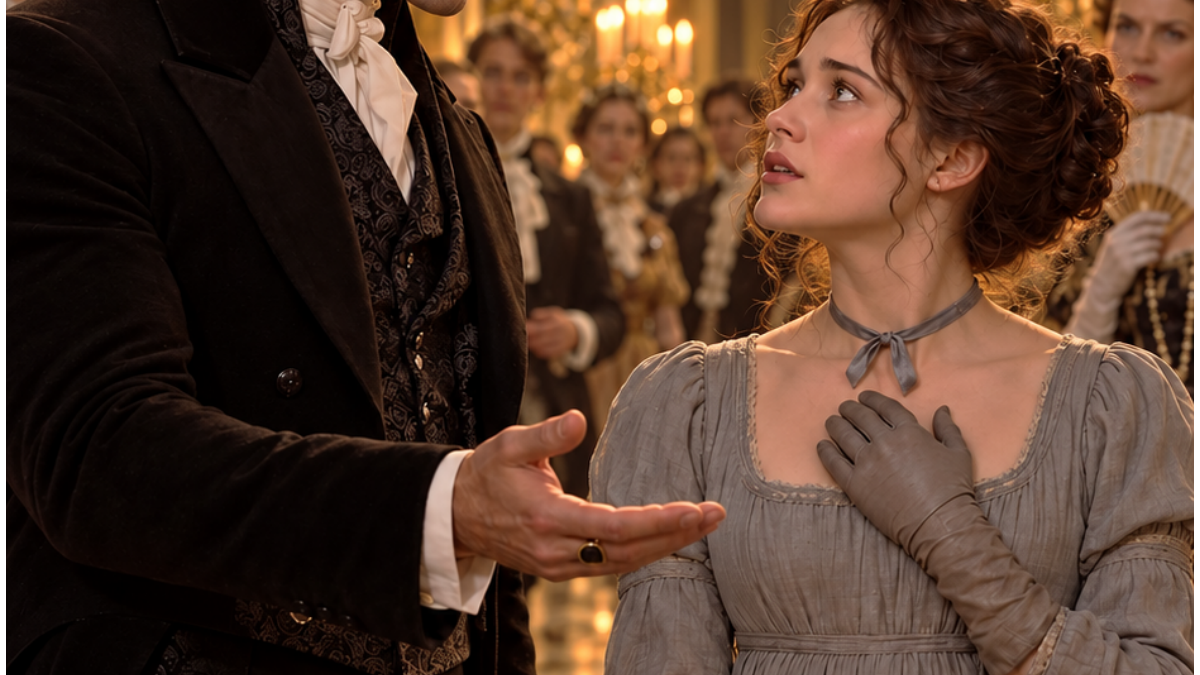
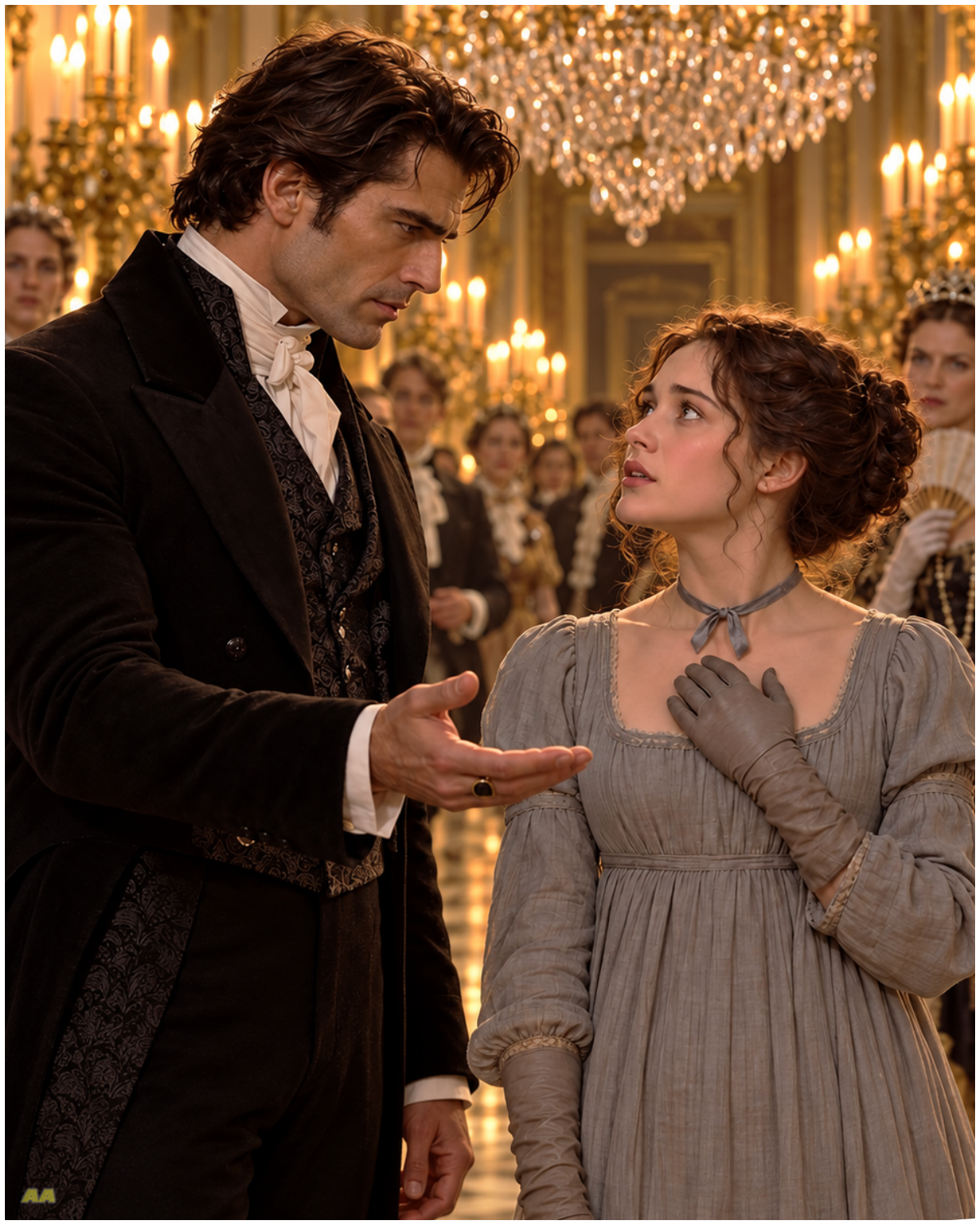
Turn the key, and I swear I shall have every one of you scrubbing the stables till my Elmer’s.
The Duke of Penhallow did not raise his voice when he said it, which was precisely why the three young men on the other side of the library door laughed all the harder.
Peragrine Vain, 9th Duke of Penhalo, had a voice built for silencing a room from 40 ft, and he had learned long ago that its power lay entirely in never spending it.
He pressed his palm flat against the carved oak panel and felt beneath his hand the small definite cook of a lock being turned against him.
Too late your grace came the muffled delighted answer of his nephew Freddy, a young fool of two and 20 who had drunk exactly enough madiraa to think himself a wit.
You told us at dinner that no force on earth could compel you into matrimony.
We are merely conducting an experiment, Freddy.
An experiment in confinement, added another voice thick with mirth.
Historical precedent, your grace.
Lord Ash K was found in a summer house with the Everly girl and married her within the fortnight.
A single night, a single lady, a single scandal, and even you must bend.
Araine turned from the door with the slow, controlled economy of a man who did not slam things because he had never in 9 and 30 years needed to.
And it was then, only then, that he saw he was not alone in the room.
She was standing beside the tall east window with a ledger clasped against her chest like a shield, and she was watching him with an expression he could not immediately name, not fear, which was the expression he was accustomed to receiving.
Not the fluttering, calculating hope he saw on the faces of the mothers who paraded their daughters through his ballroom each spring.
Something quieter and far more disarming, she looked, he thought as though she were trying very hard not to laugh and failing by a narrow margin.
They’ve locked us in, she said.
So it would appear, both of us.
So it would appear, he said again, and heard through the door a fresh gale of laughter and the unmistakable scrape of a heavy chair being dragged across the corridor and wedged, no doubt, beneath the handle.
The young woman looked down at the ledger in her arms, then up at the door, then at the Duke, and something crossed her face that he recognized after a moment as swift, practical calculation.
She was not thinking of scandal.
She was thinking he would have wagered his best hunter of the precise mechanics of the situation and of how quickly she might extract herself from it.
“There is a servant’s passage,” she said, “behind the far shelf, the one with the atlases.”
It lets out by the stillroom.
She was already moving toward it, her plain gray skirts whispering over the parket, her dark hair coming loose at the temple from what had plainly been an efficient rather than a fashionable arrangement.
If you would be so good as to help me shift the case, your grace, we need neither of us spend the night as the joke of your nephew’s dinner.” Peraggreen did not move.
He was, for perhaps the first time in a decade, genuinely surprised, and he found the sensation not unwelcome.
“You know the passages of my house better than I do.”
“I know this one.”
She set the ledger down on the reading table, and pressed her shoulder against the great mahogany bookcase, which did not so much as tremble.
I have been counting the linens in the east wing since Tuesday, and one learns the quick ways about a house when one has 40 pairs of sheets to reconcile, and a housekeeper who counts each candle.
You are not one of my staff.
He knew every face that drew a wage under his roof, and hers was not among them.
No, I am the seamstress’s daughter from the village, and I am here on hire until the wedding party disperses.
Because Mrs. Foss is short of hands and my needle is quick.
She pushed again at the case uselessly and blew a strand of hair from her eyes.
My name is Iris Pentreth before you ask which men of your rank never do.
And this bookcase weighs as much as a carriage horse.
I don’t suppose your reputation for terrifying strength extends to furniture.
There was not one grain of insolence in it.
That was what held him where he stood.
It was not the pertinence of a girl playing at boldness to catch his eye.
He had seen that game performed a thousand ways and could recite its every move.
This was something else entirely, a person simply speaking to him as though he were a person addressing the problem in front of her, with a clear head and a dry wit, entirely unconcerned with whether he approved.
He could not remember the last time anyone had spoken to him so, and he was almost disappointed to cross the room and set his own shoulder to the case, because it meant the passage would open and she would be gone.
They pushed together. The great bookcase groaned, shivered, and moved perhaps the width of two fingers before it fetched up hard against something and stopped.
“Blocked,” she said, breathless, stepping back and pressing the heel of her hand to the small of her back.
From the other side.
Your nephew is thorough.
My nephew said, peragrain is about to discover exactly how thorough I can be.
He crossed to the door and struck it once with the flat of his hand.
Not a knock, but a summons, the sound of a man who owned the wood and the wall and the house around it.
Frederick Vain, there is a woman in this room who has done nothing to deserve being made the subject of your idiocy.
“Open this door at once, and I will pretend for the sake of your mother, that I have forgotten your name by mourning.” The silence that answered him was worse than the laughter.
“They’ve gone,” Iris said.
She had drifted to the window and was looking down into the dark of the gardens, where two lanterns bobbed and merged and disappeared toward the distant, blazing gold of the ballroom.
Faint music reached them, a country dance, the thread of a violin.
They’ve gone back to the ball your grace and they’ve taken the key with them and I would wager my week’s wages they’ve told a very amusing story to a very great many people by now.
Peragrine stood with his hand still against the door and understood with the cold clarity that had made him formidable at cards and in the house of lords alike precisely how the board was set.
The window was 40 ft above a flagged terrace.
There was no descending it that did not end in a broken neck.
The passage was blocked, the door was locked, and beyond it a corridor his nephew had emptied of any servant who might have opened it.
And in the ballroom at this very moment the story was traveling from mouth to mouth like fire along a fuse, the great, cold, unmarriageable Duke of Penhalo, sealed for the night in his own library with a girl.
It did not matter in the smallest degree that he had never touched her.
It did not matter that he had learned her name 90 seconds ago.
By morning, the only two facts anyone would trouble to remember were that a door had been locked and that Dawn had found them both behind it.
He turned. She was watching him again, and this time she was not fighting a smile.
Her chin was up, and her dark eyes were steady, and she had the look of a woman doing arithmetic she did not like the sum of.
You’ve understood it, too, he said.
I understood it before you did.
Your grace, if you’ll forgive me.
I understood it the moment the key turned.
She sat down quite deliberately in the worn leather chair beside the cold hearth, folding her hands in her lap with a composure that he found he admired against his will.
You are ruined by mourning or you are inconvenienced by mourning.
For you it is an inconvenience.
Dukes are not ruined. They are gossiped about and then they are forgiven because the world cannot afford to be crossed with the man who owns half of it.
She looked up at him. It is I who am ruined.
A village girl found at dawn behind a locked door with a duke does not become a duchess.
She becomes a story mothers tell to frighten their daughters into caution.
She goes home to pen hallow under the hill and the vikar’s wife stops nodding to her in the lane and no honest man will have her and her own mother weeps to see the ribbon go out of her.
She said it all without a tremor as a woman reads out a butcher’s bill.
So you will forgive me if I am not laughing quite as hard as your nephew.
The fire was out. The candles were burning low in their branches, three of them, throwing a shifting amber light across the long room, and the thousand spines of books that no one but he had opened in 20 years.
Peragrine looked at this woman sitting so straight in his chair, so holy without hope, and so holy without self-pity, and felt something move in him that he had believed long dead, not desire, though she was lovely in the honest way of fire light, but a kind of furious protective attention.
The sensation of a great slow animal lifting its head.
“You will not be ruined,” he said.
“You cannot prevent it. You cannot unturn a key or untell a tail.” She smiled, and it was a sad, kind smile, the smile of a person comforting another for a loss that was in truth her own.
You needn’t look so grim on my account, your grace.
It is not your doing. I have been in worse rooms on worse nights, and at least this one is warm and full of books.
If we are to be ruined together, we may as well be ruined comfortably.
Do you suppose there is anything to read?
And Perager Vain, ninth Duke of Pen Harow, who had not laughed aloud in the hearing of another soul since the year his brother died, felt the sound rise in his chest before he could stop it, a short, startled, entirely genuine bark of a laugh that surprised him more than it surprised her.
There are, he said, 11,000 books.
My grandfather bought them by the yard to impress a bishop and never read a page.
You may have your pick. 11,000.
She rose and went to the nearest shelf, tilting her head to read the spines.
And the low light caught the loose dark strand at her temple and turned it to bronze.
And you have read most of them.
Then you are not the man they say you are.
Your grace. She drew out a volume, considered it, and slid it back.
A wicked, cold, unfeilling tyrant does not read 11,000 books.
He has no patience for them.
He wants only for people to be afraid.
And afraid people are terribly boring, and boring is the one thing a man of 11,000 books cannot abide.” She glanced back at him over her shoulder, and there was mischief in it now, warm and unafraid.
I think you have let them believe a great many things about you, because it is easier than being known.
I think the fearsome Duke of Penhallow is a fiction you wear the way I wear a mended glove because it does the job and because no one troubles to look close enough to see the darning.
He should have been offended. A duchess who had said half so much to him would have found herself cut at every dinner in the county.
Instead, he stood in the ruin of his own reputation at the wrong end of the strangest night of his life, and discovered that he wanted, more than he had wanted anything in years, to hear what this seamstress’s daughter would say next.
“Sit down, Miss Pentreth,” he said.
“The night is long, and the fire is out, and it seems we are to be ruined together, whether we like it or no.
You may as well tell me how you came to know the passages of a house you set foot in on Tuesday, and I will tell you, if you like, the truth about the darning, she sat.
Outside, far below, the violin found the end of its tune, and the great house went on blazing and turning and gossiping the dark, wholly unaware that its master had just, in the space of an hour, begun to fall.
The darning first, Iris said, drawing her chair, it’ll nearer the cold great as though the fire might be persuaded to remember its duty.
You promised a gentleman keeps his promises, or so I am told by ladies who have never met one.
Peraggreen considered her across the shadowed room.
He had spent his life among people who wanted things from him, a favor, a vote, a marriage, a debt forgiven, and who dressed there wanting in flattery so thick he had long since stopped hearing the words at all.
“This woman wanted nothing from him that he could see, unless it was the truth, which was the one commodity no one had asked of him in years.” “My brother was the one they loved,” he said, and was mildly astonished to hear himself say it.
Julian, older than me by four years and made of sunlight.
He could walk into a room of enemies and leave it a room of friends.
And he did it without effort, the way you or I breathe.
He was to be the Duke.
He was born to it, not the title.
Any fool can be born to a title, but the loving people wanted to please Julian.
They would have followed him into the sea.
He turned the sinet ring on his smallest finger.
A habit older than memory. I was the spare, the quiet one, the one who read in corners while Julian filled the doorways.
And when the fever took him, he was 1 and 20, and I was 17.
The whole county came to the funeral, and I stood at the head of the grave, and understood that they had all come to bury the wrong brother, and that every one of them knew it, and that not one of them would ever say so aloud, because now I was the Duke, and one does not tell a duke that the world would have preferred his brother.
Aris said nothing. She had gone very still watching him and there was no pity in her face which he found he could bear.
Pity he could not have borne attention he could.
So I gave them what they had already decided to feel.
He went on they wanted a cold man in Julian’s warm chair.
Very well. I would be the coldest man in England.
If they were to be disappointed in me, they would at least be disappointed on my terms and not stand about my table murmuring that poor Julian would have done it better.
A feared man is not compared to anyone, Miss Pentreth.
A feared man stands alone. It is lonely, but it is quiet, and after enough years, one forgets there was ever anything else to want.
He looked up. That is the darning.
I have worn the fearsome Duke so long that I had half forgotten there was a man underneath doing the wearing.
You saw it in an hour.
I confess I do not entirely know how because I was not afraid of you, she said simply.
Fear is a fog, your grace.
It sits over a man, and you cannot see his shape through it.
But I had no room to be afraid.
I was too busy being ruined.
And so the fog lifted, and there you were.
She tilted her head. You loved him very much, your brother, more than I have loved anything since.
The words came out rough, unpolished, and he did not smooth them.
There now you know the whole of it which is more than my own steward knows after 30 years.
Your turn, Miss Pentreth, the passages and the mended glove.
You spoke of a mended glove as though you knew the wearing of one.
She laughed low and rofal and pulled off the gray kid glove on her right hand to show him the neat invisible line of stitches across two fingers so fine he had to lean forward in the failing light to see them at all.
My best pair turned and mended twice.
My mother says, “A woman may be poor as a ren and still keep her hands like a ladies if she is clever with a needle, and I am clever with a needle.
It is the only thing I have ever been proud of.
God forgive me the vanity.” She drew the glove back on.
As for the passages, my mother sued for the last duchess.
Your mother, that would be. When I was small, before she married my father, the drawing master, she was under seamstress here.
And on the days she could not leave me, she brought me up the servant’s stairs and set me in the sewing room with a basket of pins.
And I ran wild in the walls of this house, while the great folk danced above.
I know the passages your grace, because I was a child in them, though you would never have seen me.
Children of my station are furniture to children of yours.
We are moved about and not remarked.
Peraggreen sat with that a moment.
You were in this house as a child and I never knew your face.
You were away at your school being made into a gentleman while I was underfoot being made into nothing in particular.
She said it without bitterness which somehow made it land the harder.
It is how the world is arranged.
I do not lie awake over it.
But it is why I know that the atlas shelf hides a passage, and why I know that the third stair from the top of the east flight sings like a robin if you tread on the left of it.
And why, she stopped and a slow, wicked light came into her eyes.
Why, I know that the lock on door is old, and that the last duchess kept the spare key in a Chinese jar on the mantel of her private sitting room, three doors down, because she was forever locking herself out, and would not admit it to the housekeeper.
That does us no good if we cannot reach the sitting room.
No, Iris agreed. But it does us a great deal of good to know that the lock is old and English and simple and not one of your new German contrivances.
She rose, crossed to the reading table, and lifted from beside her abandoned ledger a small tin case which she opened to reveal a bristling regiment of pins and needles and a pair of embroidery scissors and two slender steel hooks she used, she explained, for drawing thread through the closest work.
A seamstress carries her tools, your grace, and a lock, when you come down to the truth of it, is only a very small and stubborn kind of button hole.
He was on his feet before he had decided to be.
You mean to pick the lock?
I mean to try. My uncle was a locksmith in Truro before the drink took him.
And he taught me the trick of it one wet winter when I was 12, and would not leave off pestering him.
I have not done it in years, and I make you no promises.
She was already kneeling at the door, holding one hook to the candlelight, squinting.
But if it works your grace, then no dawn finds us here, and no story need be true, and by breakfast you are only the duke who dined dull and retired early, and I am only the seamstress who counted the sheets, and neither of us is ruined at all.
Bring the candle nearer, if you would, and be so good as to stop looming.
You loom your grace. It is a great fault in a man asked to hold a light.
Perigrine brought the candle. He knelt beside her on the parquet floor of his own library.
A duke of nine and 30 years in his evening blacks, holding a guttering taper for a village seamstress, while she worked two steel hooks into the wards of an ancient lock and bit the tip of her tongue between her teeth in contration.
Had anyone told him at dinner that he would end the night so he would have had them removed from the house, and yet he could not at that moment have said where else in England he would rather have been.
The strand of hair had come fully loose now and hung against her cheek.
A smudge of hearth suit marked her jaw.
Her brow was furoughed in ferocious concentration, and she was, he thought, with a quiet interior astonishment that he had no intention of ever voicing aloud, entirely and unarguably beautiful, not in the arranged, powdered, presented way of the ballroom below, but in the way a thing is beautiful when it is holy itself, and wholly unaware of being watched.
There is a tumbler here that will not oblige me, she muttered.
Old and rusted. Hold steady. Do not breathe on my hands.
I would not dream of it.
You are breathing on my hands.
Your grace. I am 9 and 30.
Breathing is a habit I have found difficult to break.
She laughed, a real laugh surprised out of her, that made the hook slip in the lock, and turned her face up to him, and for one suspended moment they were very close, her upturned face and his lowered one, the single candle flame between them doubling in her dark eyes.
Neither of them moved. Somewhere below the violin had begun again, sweet and far away, a waltz, this time, and Peragrin was aware of his own heartbeat in a way he had not been aware of it in 20 cold and orderly years.
Then Iris looked back at the lock, and the moment folded itself away, and she said in a voice not quite so steady as before, “You are still breathing on my hands.
I shall endeavor to stop. See that you do,” she worked the hook again.
Deep in the door, something gave a small, promising click, and then immediately a second and far less promising snap.
Iris drew her hand back and looked at the thin broken end of her steel hook lying in her palm.
“Ah,” she said. Ah, my hook has broken off in the wards, which means your grace that this lock is now not merely locked, but jammed, and that I have made our situation considerably worse rather than better, and that we are now trapped in a way that not even the spare key in the Chinese jar could remedy.
She sat back on her heels and looked at the broken tool and then at him and to his everlasting bewilderment she again helplessly to laugh great gasping unladylike gusts of it.
One hand pressed to her mouth, tears standing in her eyes.
Oh. Oh, forgive me. It is only that I have spent my whole life being so very careful, so very good never a foot wrong.
Never a word out of place because a poor girl cannot afford a single mistake.
And now here I am, sealed in a duke’s library, having personally welded the door shut with my own two hands, and there is nothing, nothing whatever to be done about any of it.
It is the most spectacular ruin.
I could not have arranged it better if I had tried.
And Peragra, kneeling on the floor beside her with the candle in his hand, found the laughter catching, found it rising in his own chest against every instinct of two decades, and let it come.
The two of them laughing together in the wreckage of both their reputations, the great cold duke and the seamstress’s daughter, while the walts played on below for dancers who did not know that the most extraordinary thing in the hall of Penhalo that night was happening in a locked room.
On a cold hearth, over a broken hook and a jammed lock, and the ruin of everything either of them had planned.
“Well,” said Peragrine at last, wiping his eyes with the heel of his hand, a gesture he had not made since boyhood.
Then it seems, Miss Pentreth, that we are well and truly bound, and since neither of us can mend it, I propose we do the only sensible thing left to two ruined people on a long, cold night.” He rose, and offered her his hand to rise as well, and she took it, and her mended glove was warm against his palm.
We shall build the fire, and we shall find something to eat, for I know where the housekeeper hides her seed cake, and you shall tell me everything about yourself that a duke would never think to ask.
Beginning, if you please, with why a woman clever enough to pick a lock and read a ledger, and see through a man in an hour is spending her days counting my linens for a housekeeper’s wage.” Iris looked up at him, her hand still in his, the lost of the lot fading into something more careful and more true.
That, she said, is a longer story than you know, and it does not end well, your grace, but if you truly wish to hear it, build your fire.
It is a story best told warm.
He built the fire with his own hands, which he had not done since he was a boy at his tutor’s cottage, and made a clumsy business of it, and would not let her help.
And in the end, she helped anyway, and it caught.
The seed take was where he had said it would be, in a Tim Hind the folio Bibles on the low shelf, put there years ago by a housekeeper, long dead and replenished, he suspected, by the current one, who believed her master did not know she wept over novels in this room on a half days.
They ate it sitting on the hearthrug like children, the fire light climbing the walls of books, and Peragrine listened.
My father was a gentleman, Iris said.
Not a great one, a drawing master, but a gentleman born, the younger son of a Somerset squire, and he married my mother, the seamstress for love, which his family never forgave.
We were poor, but we were happy.
And I was taught to read, and to draw, and to speak as you hear me speak, and to keep my chin up.
And my father used to say that a pentreth might mend gloves, but a pentthre never begs and a pentth never lies.
She turned a crumb over in her fingers.
He died when I was 15.
A chill on the lungs 3 days and gone.
And it came out when the lawyers had done that he had gone shorty for his brother’s debts.
My uncle the gambler, not the locksmith, and the everything we had.
The little house and the good furniture and my mother’s savings for my portion.
All of it was owed to men who did not care that a girl of 15 and a widow were turned into the road.
We lost the house at Lady Day.
My mother took in sewing. I took in sewing.
And that your grace is why the seamstress’s daughter counts your linens for a wage.
Because a gentleman’s blood and a gentleman’s manners do not buy bread, and pride is a poor supper, and my mother’s eyes are failing, and someone must earn.
Peraggreen said nothing for a long moment.
The fire snapped. How old are you now?
3 and 20. 8 years then.
8 years of the needle since you were 15.
It is not so terrible as you make it sound.
But her voice had thinned and she looked into the fire rather than at him.
There is honest satisfaction in good work.
And I have my mother and she has me and we have a roof small as it is.
And there are women a great deal worse placed than the penitrits of penal under the hill.
Do not pity me your grace.
If you pity me, I shall have to leave.
And I cannot leave because you have observed the door is jammed.
I do not pity you. He said it with such flat certainty that she looked up.
I have sat at tables with a hundred men who inherited more than your father ever owed and squanded it on cards and horseses and mistresses and called themselves gentlemen.
You lost everything at 15 through no fault of your own.
And you did not break. And you did not beg and you did not lie.
And you learn to pick a lock and read a ledger and mend a glove so fine a man cannot see the darning.
That is not a thing to be pied, Miss Pentth.
That is a thing to be.
He stopped, hunting the word, and found it plain and true, honored.
She went very quiet. In the fire light, he saw to his alarm that her eyes had filled.
You must not say kind things to me, she said.
Lo, I have had 8 years of practice at unkind ones, and I am proof against those.
But kindness, kindness undo me your grace, and I have a long night yet to get through with my dignity intact.
And I should like not to weep on your grandfather’s hearth rug over a slice of seedcake.
She dashed the back of her mended glove across her eyes and produced with visible effort a smile.
Tell me something to laugh at instead.
You must have a wholeseller of absurdities, a man who owns 11,000 books he did not choose.
Tell me the worst thing a marriage hunting mama has ever done to secure you for her daughter.
I have heard the servants hall version.
I should dearly love the true one.
So he told her. He told her of the dwagger who had arranged for her daughter to faint into his arms at a garden party, and how the daughter, a sensible girl, had winked at him as she went limp, and how he and the girl had become the only kind of friends a man and woman in their world were permitted to be, which was to say co-conspirators in the great tedious war of the marriage market.
He told her of the letters, the anonymous verses, the miniature portrait that had arrived in a box of his own snuff.
He made her laugh until she had to hold her side, and he found this was the strangest discovery of a strange night, that making her laugh was the most satisfying thing he had done in longer than he could recall, that he was hoarding her laughter the way a miser hordes coin, that he had begun, without deciding to to arrange his sentences for the sole purpose of earning it.
The candles guttered and died one by one, until only the fire lit them.
The music below thinned and stopped.
Carriages ground away over the gravel.
The great house settled towards sleep.
And still they talked of books, of her father’s drawing lessons, of the county and its follys, of the sea which she loved and he had not looked at properly in years, of everything and nothing.
Two people in a warm island of fire light while the cold dark house turned around them.
At some point she drew her knees up and wrapped her arms about them.
At some point he fetched a carriage rug from the window seat and laid it over her shoulders without asking.
And she let him and said only, “Thank you, your grace.” In a voice gone soft with the late hour.
“Perigrine,” he said. She blinked at him.
“My name, it is Peragrine. No one uses it.
My mother when she lived. My brother, that is the whole liSt.” He looked into the fire.
It seems a foolish thing to insist upon at 4 in the morning to a woman I shall in all likelihood have ruined by breakfaSt. But if we are to be the scandal of the county together, Miss Pentreth, it seems absurd that you should go on your gracing me as though we’d met over teacups.
My name is Peragrine, I should like once to hear it in a voice that is not afraid of me.
The fire crackled. Iris drew the rug closer about her shoulders and looked at him across the small, warm space between them for a long moment, and when she spoke his name, it was quiet and clear and entirely unafraid.
Peragrain, he had not known a name could sound like that.
He had heard his own name spoken 10,000 times, barked by tutors, murmured by servants, announced by footmen, hissed by rivals in the lords, and it had never once sounded like anything but a burden he was expected to carry with dignity.
In her mouth, it sounded like a thing a person might be glad of.
It sounded like it belonged to someone worth knowing.
He looked away first because he did not trust his own face.
“Thank you,” he said. “You are welcome, Peraggreen.
There was the ghost of mischief back in it now, gentle and warm.
Though I warn you, I shall only do it when we are alone, or the whole county will think me the boldest hussy in the West Country, and my mother will have to move to Bristol from shame.
I shall never tell. No, she agreed, and her eyes were soft on the fire.
No, I don’t believe you will.
That is the strangest part of this whole strange night, Peragrine, that I would trust you with it.
I have known you 5 hours.
I have known men 5 years and not trusted them to pass the salt.
And here you are, the most feared man in the county, and I would put my mother’s failing eyes and my own good name in your hands and not lie awake over it.” She shook her head slowly.
“It makes no sense. It is against all sense.” And yet there it is.
Outside beyond the tall east window, the black of the sky had begun, almost imperceptibly to gray.
Peragrine saw it before she did, and felt something in his chest tighten.
Not dread exactly, but the awareness that the island of the night was ending, that beyond this door lay a house full of servants who would soon be waking, and a nephew who would soon be sniggering, and a county that would soon be talking, and that everything he had begun to want in this room would have to survive the daylight or die of it.
Iris, he said, her name for the first time, and it felt like stepping off a height.
Look at the window. She looked, she saw the gray.
She understood at once, as she understood everything at once, and the ease went out of her posture, and the careful woman came back into her face.
The one who had done arithmetic she did not like the sum of.
It is nearly morning, she said.
It is nearly morning. They will find us, she drew a breath.
A maid will come to lay the fires.
Or your steward, or your nephew, God help us.
Wanting to see how his joke landed.
And whoever it is will find the great Duke of Penhello and a village seamstress alone in a locked room at dawn.
And there will be no unsaying it.
No matter how innocent, no matter that we did nothing but eat seed cake and talk of the sea, she wrapped the rug tight.
I told you at the start how it ends for me.
Peragrain, I go home ruined. There is no help for it now.
There is one help for it, he said.
Something in his voice made her go still.
She turned to look at him full.
The gray light and the fire light meeting on her face, and whatever she saw there made her draw a slow, careful breath, as a person does at the edge of a great height.
“No,” she said softly. “No, Peraggreen, do not say the thing I think you’re about to say.
You are the Duke of Penhalla, and I am a seamstress with a mended glove, and men of your rank do not repair a knight’s foolishness by throwing away their whole lives.
And you would come to hate me for it by my kilmas, and I would rather be ruined and free than wed and resented.
Do not say it, please. I have not said anything yet, said Peragrine.
He rose and went to the window, and looked out over the gray gardens of the house that had made him cold and lonely and feared, and felt for the first time in 20 years entirely certain of what he wanted.
But when they come, and they will come within the hour I am going to.
And I should like you to know before I do that it will not be to repair a night’s foolishness, and it will not be a thing I shall come to hate you for, and it will not be because a door was locked.
He turned. The door being locked is the best thing that has happened to me since my brother died, and I intend to spend a considerable amount of my life thanking my idiot nephew for it.
Now hush and let me think how to do this properly because I have only one chance to do it and I find to my very great surprise that it is the most important thing I have ever done.
They came sooner than the hour he had promised himself.
The gray in the window had scarcely warmed to the first true gold of morning when Peragrin heard in the corridor beyond the jammed door the small domestic sounds of a house waking, the distant clutter of a cold scuttle, a maid’s voice, the tread of feet.
Iris heard them too, and rose from the hearth rug, folding the carriage rug with quick, precise hands, and setting it back upon the window seat, smoothing her gray skirts, tucking the loose strand of hair behind her ear, with a gesture that he understood, watching her, was armor being buckled on.
She was making herself neat for her own execution.
She meant to be found composed, to give the gossips nothing, to walk out of his house ruined but upright, and the sight of her doing it, chin-lifted, hand steady, saying nothing of the fear he knew she felt, undid him more thoroughly than any tears could have.
Iris is do not, she said, not unkindly, not looking at him, still smoothing, still tidying.
Whatever you mean to do, peragreen, do not do it out of chivalry, for I could not bear to be a good deed.
Let me be found. Let them talk.
I have survived worse mornings than this, and I will survive the walk home, and in a year it will be an old story, and in two it will be forgotten, and I shall be, her voice caught, only for an instant, and she mastered it.
I shall be perfectly well. Only, do not throw your life after my reputation.
That is not a bargain I will let you make.
There were voices directly outside the door now, a rattle at the handle, a muffled, familiar oath.
His steward, Mr. Bllye, a man of 60 who had served the house since before Peraggreen was born, and who now, from the sound of it, had discovered that the library was locked and jammed and would not open.
Then another voice, younger, higher, threaded with an anxiety that had entirely burned off the previous evening’s madera, Freddy, come to see the fruit of his cleverness, and finding it in the cold light of morning considerably less amusing than it had seemed over the wine.
Uncle Freddy’s Freddy’s voice small through the oak.
Uncle Peragrin are you? Is anyone the door has stuck?
Blie, it has stuck. It will not, Uncle say something.
I beg you. This has gone very wrong.
Stand away from the door, said Peragrine.
There was a scuffle. A scrape of the wedged chair being hauled clear and then silence, the particular silence of several people on the other side of a door, realizing all at once that the Duke of Penhal’s voice had come from inside the locked library at 7:00 in the morning and doing the arithmetic.
And not liking the sum of it any better than Iris had, Blerigreen went on in the level tone that had silenced the House of Lords, the lock is jammed with a broken pin and will not answer a key.
Send Kum for his tools, and have the door off its hinges, and be quick, for there is a lady within who has been kept from her bed by my nephew’s idiocy, and I will not have her kept a moment longer than necessary.
A beat and bl the whole household is by now aware that this room was locked overnight.
I will not have it whispered up and down the servants hall like a Scolans romance.
You will assemble the household, all of it, the guests as well, in the great hall within the half hour.
I have something to say to every soul under this roof, and I will say it once, and I will say it plainly, and there will be an end to whispering.
Is that understood? Your your grace.
Blie’s voice was faint with the effort of not asking the thousand questions rioting behind it.
It is understood. Go. Feet hurried away, and in the sudden quiet of the locked room, Iris turned on him with a face gone white.
What have you done? She breathed.
The household, the guests. You mean to gather them?
Peraggreen. No. No. Whatever this is, do not make it a spectacle.
A quiet story dies. A story told to 50 people in a great hall lives forever.
You have just guaranteed that every soul in the county knows by nightfall.
You have made it worse. You have made it.
She pressed both hands to her mouth.
Oh, you foolish, foolish man. You have taken a small ruin I could have carried home in my April and made it a great one I shall never outrun.
Yes, said Peraggreen calmly. I have and now you cannot stop me because you cannot pick the lock and you cannot climb from the window and you cannot reach the door before Kum takes it off its hinges.
And so you must stand there, Iris Pentreth, and let a duke do a thing you have forbidden him, which I imagine is a novel experience for a woman who has spent 8 years forbidding herself everything.
He crossed to her and he did not touch her because he was a gentleman and the room was about to fill with witnesses.
But he stood close enough that she had to lift her chin to hold his eyes.
You told me last night that a pentth never begs and a pentth never lies.
Well, I am a vain and I will tell you what a vain does.
A vain when he finds the one true thing in a life full of false ones does not let it walk home in an apron because the neighbors might talk.
Trust me one hour. That is all I ask.
1 hour. And if at the end of it you still wish to walk home ruined and free, I will carry your bags to the gate myself and never trouble you again.
But give me the hour firSt. She stared at him.
Whatever she meant to say, she did not have time to say it, for at that moment a rhythmic knocking began at the base of the door.
The carpenter prizing at the great brass hinges with his bar, and the room was in a matter of minutes no longer theirs alone.
The door came away with a shriek of old iron and a shower of paint flakes.
And the morning poured in, and with it a crowd, bl gray-faced and rigid, Freddy hovering behind him, ringing his hands, his handsome young face a study in dawning horror.
Two of Freddy’s laughing friends of the night before, laughing no longer, a knot of housemaids and footmen craning at the back, and worst of all, a clutch of the wedding guests who had risen early and been swept up in the summons.
Among them the sharped Lady Meu, a widow of vast fortune and vaster tongue, who took one look at the tableau within, and set her lord net to her eye with the relish of a woman who has been handed the season’s finest gift.
Perigine watched Iris under all those eyes, and saw her do the bravest thing he had ever seen a person do.
She did not cringe. She did not flush and hide.
She stood in the center of his ruined library in her plain gray gown, with her mended glove and her hair coming down.
A seamstress before a duke’s assembled household, and she lifted her chin and looked back at them, everyone, as though it was she who owned the house, and they who had intruded.
It was magnificent. It was, he thought, exactly the thing his brother Julian had been able to do with effort, and that Peragrine had never once managed to fill a doorway, to make a room decide to like her, except that Iris did it not with charm, but with sheer unbroken dignity.
And it was better than charm.
It was truer, and half the housemaids at the back were already gazing at her with something close to worship.
Well, said Lady Meu into the ringing silence, her log net traveling from Iris to the Duke and back.
How very cozy. I confess, Penhello, when your good nephew mentioned at cards last evening that he meant to test your resolve against matrimony.
I did not imagine the test would prove so thorough.
Tell me, is one to wish you joy or merely to pity the poor creature?
One likes to know which face to put on before breakfaSt. It was cruel, not the cartoon cruelty of a villain, but the ordinary careless, well-b bred cruelty of a bored woman who had never once in her life imagined that a seamstress might have feelings that mattered.
And it was Peragrine understood the pivot of the entire morning.
Everyone in the doorway was watching to see how he would answer it.
If he was cold, if he was ashamed, if he distanced himself by so much as a syllable.
Iris was destroyed, and Lady Meu would carry the tale of the Duke’s disgraceful knight to every drawing room from here to London, and the seamstress in the story would be the of it, and the Duke the fool.
Every instinct of 20 careful years told him to be smooth, to deflect, to say something dry and dismissive that would make Lady Meu laugh and the story shrink.
He looked instead at Iris. She was watching him too, and in her dark eyes he read the plea she would not say aloud, “Let me go home ruined and free.” “Do not throw your life after me.
Do not.” He turned back to Lady Meu, and he smiled, an expression so rare on his face that Blige actually startled.
And when he spoke, he spoke not quietly, not for the doorway, but in the full carrying voice he had spent his life hoarding, the voice built to silence a room from 40 ft, so that not one soul in the hall beyond could pretend afterward they had not heard.
You are to wish me joy, Lady Meridu, said the Duke of Penhallow, for I mean to marry her.
The words landed in the crowded doorway like a stone in still water, and the ripples ran outward through the great hall beyond.
A gasp, the swift, bright hiss of 50 people turning to their neighbors to be certain they had heard a right.
Lady Maridu’s log came down. Freddy made a small sound that might have been a laugh or a sob.
And Iris. Iris went so pale that Peragrine took an involuntary step toward her, thinking she might faint, before he saw that she was not fainting at all, but furious that her eyes had gone black and bright with it, that she was holding herself so rigid it was a wonder she did not crack a word.
Your grace, she said low and even in private, and she did not wait for his answer, but turned her heel and walked straight back and unhurrieded through the wreck of the doorway and into the great hall, where she stopped beneath the enormous chandelier.
A thing of 10,000 crystal drops that his grandfather had borne pressed the same bishop as the books and stood waiting for him in the pooling morning light, a small gray figure alone in the center of a vast gilded room, while the household ranged itself around the walls to watch.
There would be no privacy. She had known that when she chose the hall, he understood it a beat later.
She had walked into the most public room in the house precisely so that he could not soften his words for her ears alone, so that whatever passed between them now would pass before every witness, so that he could not later say he had been carried by the heat of the moment in a quiet corner.
She was giving him a stage and daring him to mean it.
She was, he thought, with a surge of something that was very near to a calling his bluff.
He crossed the hall to her.
The crystal drops of the chandelier turned slowly overhead, throwing splinters of light across the black and white marble and across her upturned face, and the assembled household held its breath.
“You should not have said it,” she told him, quiet for him, though the whole room strained to hear.
“You have made it real now.
A thing said in a locked room to one woman can be unsaid.
A thing said to Lady Meridu before the household cannot.
You have burned the ship, Peragrain.
There is no going home now for either of us.
Not the going home you meant to spare me.
And not the quiet bachelor’s life you have hidden inside for 20 years.
Why? Tell me why and tell me true.
For these good people will hold you to it.
And so God help me will I.
Peragrine looked at her, and then he looked past her at the ring of watching faces, the maids, the footmen, the guests, his stricken nephew, the avid widow, and he found that for the first time in his life, he did not care in the smallest degree what any of them thought of him.
The fear he had worn for 20 years, the coldness, the careful distance, the whole architecture of the man, they called the terror of the county.
It had been built to keep him from being compared to a dead brother, and he saw now, standing beneath his grandfather’s vulgar chandelier, that it had also kept him from every warm thing a life could hold.
It had kept out the cold, and it had kept out everything else besides.
And a woman he had known for 11 hours had walked through the whole of it in an evening, cuz she had come to him with nothing to gain and nothing to fear, and had simply looked at him and seen a man where everyone else saw a monument.
Because you called me peragrain, he said, and it did not sound like a burden.
The room was utterly silent. Iris’s lips parted.
For 20 years, he went on.
And though he did not raise his voice now, it carried to every corner of the great hall.
I have been the Duke of Penhalo, and it has been a cold thing to be, and I made it colder on purpose, because cold was safe.
I told myself I wanted nothing because to want is to risk the wanting, and I had had enough of losing the things I loved.
And then my fool of a nephew locked me in a room with the one person in England who was not afraid of me, and I discovered in the course of a single night that I had been starving so long I had forgotten the word for hunger.
He drew a breath. You are right that I could unsay it.
You are right that I have burned the ship.
I burned it on purpose, Iris, in the loudest room in my house, before every soul I employ and every guest I could gather, so that you would know past all doubting that this is no chivalry and no pity and no repair of a night’s foolishness.
I am not marrying you because a door was locked.
I am asking to marry you because you are the truest and bravest and dearest person I have met in 9 and 30 years, and because a life with you in it is the first thing I have wanted since I was 17.
And because I would rather be talked of forever as the Duke who married his seamstress than spend one more year being feared and admired and entirely alone in a house full of books, I read to keep from hearing the silence.
He went down then the Duke of Penhello.
On the black and white marble of his own great hall, on one knee before a village girl in a mended glove, while the housemaids gasped, and Lady Meredu’s mouth fell open, and Freddy began helplessly to weep.
I have no ring worthy of you.
I have only my name, which you have already made sound like something worth having, and my house, which you know better than I do, and my whole life, which until last night I did not think worth offering to anyone.
Marry me, Iris Pentreth. Not to save your reputation, to ruin mine.
I find I should like nothing better than to be ruined for the rest of my days by a woman who is not afraid of me.
Iris stood above him beneath the turning crystal, and the morning light lay across her face, and Peragrine watched the fury go out of her by degrees, and something else come in.
Disbelief first, and then a terrible, careful hope, the hope of a woman who had trained herself for 8 years, never to hope for anything she could not earn with her own two hands, and who did not know how to hold a thing given freely.
“They will never forgive you,” she whispered.
Society, the county, your equals. A duke does not marry a seamstress.
They will cut you. They will laugh.
Your children, she faltered. Your children will be the grandchildren of a drawing master and a needlewoman, and every drawing room in England will remember it.
Then every drawing room in England may go hang said the Duke of Penhalo and my children shall be the grandchildren of a woman who lost everything at 15 and did not break which is a finer thing to be than the grandchild of half the fools in dretz and I shall tell them so and they shall be proud of it.
He held up his hand to her palm open the sit ring catching the light.
You are keeping me on my knees on cold marble iris and I am 9 and 30 and it is very hard on the joints.
Have pity on an old duke and answer him an iris pentth who had walked into that hall meaning to refuse him for his own good who had spent 8 years learning that hope was a luxury she could not afford who had told him plainly not once but three times not to throw his life after her reputation.
Looked down at the open hand, and the man kneeling beneath the chandelier of the house she had run wild in as a forgotten child, and Peragrine saw the exact moment the arithmetic she had been doing all night finally, against every rule she had ever set herself, came out in his favor.
“You are quite mad,” she said, and her voice broke on it, and she was smiling and crying both at once.
You are the maddest man in the West Country, and you have ruined us both past all mending, and I have known you 11 hours, and my mother will faint dead away.” And I, she put a mended hand into his open one, and her fingers were trembling, and her chin was high, and I find that I should like nothing better than to be mad along with you.
Yes. Yes, Peraggreen, get up off that cold floor before you take a chill, you great fool of a duke.
Yes. The great hall of Penelo erupted, whether it was seemly or not, whether their stations permitted it or not, the assembled household, the maids and the footmen and the boot boy, and the cook who had come up to see what the noise was, burst into cheering, ragged and delighted, and entirely without precedent, and even old Bllye was seen to press his knuckles hard against his mouth, and Freddy was weeping openly and laughing at once, and only Lady Meridu stood apart with her log net forgotten in her and looking as though she had come to a play expecting a far and been handed without warning something that made her chest ache in a way she had not felt in 30 years.
Peragrine rose and he did not let go of Iris’s hand and beneath the turning crystal of his grandfather’s vulgar chandelier before the whole cheering household of a house that made him lonely.
The Duke of Penhalo looked at the seamstress’s daughter and understood that he had never in his life been less alone.
The trouble with burning a ship, Peragrine discovered, over the days that followed, is that one must then live among the ashes, and the ashes have opinions.
The first ash to voice one was Iris herself.
She had said yes beneath the chandelier, with the whole household cheering, and she had let him hand her into his own carriage to be driven the three miles to Penhalo under the hill, so that she might tell her mother before the gossip did.
And somewhere on that gravel drive, with the great house falling away behind them, and the small ordinary world of the village rising ahead, the arithmetic began to run backward.
“You must give me a way out,” she said.
They were alone in the carriage.
He had sent his own coachman ahead on foot and taken the re himself, which no duke did, so that they might speak without ears.
“Not for my sake, Peragine, for yours.” This morning you were splendid and I was overwhelmed and the household was cheering and it all felt like a thing out of a ballad.
But ballads end at the wedding.
They do not show you the 20 years after the dinners where I use the wrong fork and your friends exchange glances.
The sons are eaten whose school fellows call their mother a needlewoman.
The slow grinding weight of a whole world that has decided you married beneath you.
You cannot see it now because you are happy.
But you will feel it day on day, year on year.
And one morning you will look across the breakfast table at a seamstress in a duchess’s chair, and you will remember that you chose this in the heat of an hour, and I will see it in your face, and it will kill me by inches.” She looked straight ahead at the horse’s ears, her chin high, her hands folded.
So I’m giving you a way out now while it is easy.
Set me down at my mother’s door.
Let the story be that you offered like a gentleman, and I refused like a sensible woman, which will make you the hero and me the wise one, and both of us free.
I will not think the less of you, I will think the more.” Peraggreen drove in silence for a moment.
The lane was green and close, Hazel and Hawthorne arching overhead, and the June morning was full of bird song, and he was aware that he was being handed for the second time in a day a clean and honorable exit from the whole extraordinary business.
Which fork? He said, she turned.
I beg your pardon. You said you would use the wrong fork at dinner.
Which fork do you fear? Let us have the specific terror out where we can look at it.
For I find your general terrors have a way of being made of fog.
And fog, as you taught me, lifts when a person is not afraid.
I, she stopped, thrown, the fish fork, the oyster fork.
The 11 small silver instruments your class deploys against a single unfortunate soul.
I do not know their order.
I should shame you, Iris. He drew the horse to a walk.
I have dined at the tables of men who knew every fork and could not have picked a lock, comforted a stranger, mended a glove, or looked Lady Meu in the eye without wetting themselves.
Forks are a code, and codes are learned in an afternoon by a woman who taught herself to open a lock at 12.
You will have the whole silver arsenal by my and you will deploy it more coldly than any duchess in England and it will terrify them and I shall enjoy it enormously.
He looked at her sidelong. You are not offering me a way out because you fear the forks.
You are offering me a way out cuz someone taught you at 15 that everything good will be taken from you.
And so you have learned to give the good thing away yourself first quickly before the world can do it.
Because a loss you choose does not hurt.
So much as a loss that is done to you.
I know the trick, Iris. I invented my own version of it 20 years ago.
It is called being feared before you can be pied.
He stopped the carriage entirely there in the green lane and turned to face her.
I am not going to be taken from you.
And you are not going to give me away to spare yourself the fear of it.
We are neither of us going to do the cowardly, clever, self-protecting thing ever again because we have both been doing it for half our lives, and it has made us lonely, and I am tired, Iris.
I am so tired of being clever and safe and alone.
Aren’t you? She looked at him, and her composure, which had survived the locked room and the assembled household and Lady Meu’s log, finally broke not into tears, but into a kind of helpless, wondering laugh.
The laugh of a person setting down a weight she has carried so long she has forgotten it was heavy.
Yes, she said. Oh, God help me.
Yes, I am so tired, Peragrine.
I did not know how tired until you said it.
Then stop, he said gently. Just for once stop giving the good thing away.
Let me drive you to your mother’s door and let us tell her together and let us be foolish and happy and talked about and let us find out what the 20 years hold instead of frightening ourselves with the worst of them.
That is all I ask. Not certainty.
I cannot promise you certainty. No one can.
Only that we find out together.
Instead of you finding out alone in a cottage, having sent me away for my own good.
He picked up the re again.
Now which door is your mother’s?
For I have never in my life driven a carriage into a village, and I am given to understand I shall cause a considerable stir, and I find I am rather looking forward to it.
Mrs. Pentrie’s cottage stood at the end of the village street, a low whitewashed place with a garden riot in roses and a window full of the diamond pained glass that meant a house older than its owner’s fortune.
She was in that window when the ducal carriage drew up.
A small upright woman with her daughter’s dark eyes gone soft and clouded with the failing sight Iris had spoken of.
A length of sewing in her lap and a magnifying glass in her hand.
And Peragrin watched through the diamond pains as she rose and set down the work and came to her own door and understood in an instant the way clever women understand things precisely what a duke’s carriage at her gate must mean.
He had rehearsed nothing. He came round and handed Iris down, and Iris ran the last three steps into her mother’s arms, and the two women held each other in the rose choked doorway while the whole village street pretended not to watch from behind its curtains.
And then Iris drew back and said in a rush, all the wrong things in all the wrong order.
Mother, I was locked in. It was Freddy.
Nothing happened. We only talked and then before the whole household, he Oh, mother, I know it makes no sense.
I have known him a day.
And Mrs. Pentreth, who had lost a gentleman husband and a fine house and a comfortable life, and had raised a daughter through eight years of the needle without once letting the girl see her weep, looked past her daughter at the Duke of Penhello, standing in hand at her garden gate, and said the only thing that mattered.
Do you love her? The village street held its breath.
So did Iris. Ma’am, said Peragrine, I have known your daughter for a single day and a single night, and I am aware how that sounds, and I will not insult you or her by claiming a settled and tested love that time alone can earn.
But I will tell you what I know.
I know that she picked a lock with a needle and comforted me for a grief.
I have carried 20 years and refused three times to let me ruin my life for her sake, because she cared more for my future than her own good name.
I know that she is the bravest and truest person I have met in nine and 30 years, and that in her company I became for one night, a man I had forgotten how to be, and that I do not intend to forget him again.
If that is not love, Mom, then it is the ground that love grows from, and I mean to spend the rest of my life tending it.
And I know one thing more, he glanced at Iris, then back to her mother.
I know that your eyes are failing and that Iris earns for you both and that she has been afraid she will not say it.
But she has of what becomes of you when her sight goes too.
That fear ends today. Whatever else you think of me, ma’am, and whatever you decide about my suit, you will neither of you sue for a wage another hour of your lives, and you will have the finest physician in London to your failing eyes within the week.
And that is not a bargain and not a bribe.
It is simply what a man does for the family of the woman he means to marry, and it would be true whether she had me or refused me.
I have more money than is decent and no good use for it.
Let me put it to the one use that would mean anything.
Mrs. Pentth looked at him for a long moment through her clouded eyes.
Then she looked at her daughter’s face, and whatever she read there, the fear, and beneath the fear, unmistakable and new, the hope made her own weathered face crumple at laSt. Well, she said, dashing at her eyes with the back of a work roughened hand, exactly as her daughter had done over the seedcake, you had best come in out of the road your grace, before the whole of Pen Hollow under the hill dies of curiosity in their windows.
I have no seedcake fit for a duke mind.
Only the plain kind, ma’am, said Perigine gravely, following her into the rose choked cottage, while the village street exhaled as one, and the curtains dropped.
The plain kind is the only kind worth having.
I ate a slice of your daughter’s opinion of me last night over a Duke’s stale seedcake, and I have not been the same man since.
The county did not know what to do with them, and the county’s confusion was peragrine found, a source of considerable private entertainment.
Word had gone out. It went out, in fact, faster than any express rider, born on the delighted tongues of 50 wedding guests scattering back to their own halls, that the great cold Duke of Penhalo, the terror of three seasons, the man who had turned away the daughters of Earls, had been sealed overnight in his library by his own nephew, and had emerged engaged to a seamstress.
It was, everyone agreed, the most scandalous thing to happen in the West Country since the old baron ran off with the opera dancer, and everyone agreed further that it could not possibly last, that the Duke would come to his senses, that the girl was plainly a scheming little adventurous who had arranged the whole thing, and that one simply must must secure an invitation to see how it played out.
So the invitations to Penhello were for the first time in 20 years accepted in mass.
And Peragrine, understanding perfectly that they were all coming to sneer at Iris and to watch her fail, did the thing that a lifetime of being underestimated had taught him to do.
He set a trap and baited it with a dinner.
“They are coming to see you drown,” he told her the evening before in the long gallery where the vain ancestors frowned down from their frames.
Iris had been three weeks at the great house now installed with her mother in the comfortable Daer cottage within the park under the fierce chapron of his widowed aunt Hanoria who had arrived to lend the engagement respectability had instead fallen so thoroughly under Iris’s spell that she now defended her against all comers with the ferocity of a mastiff.
Lady Meridu will lead them. She will be gracious to your face and lethal underneath.
And she will steer the conversation to books you cannot have read and places you cannot have been and people you cannot have known.
And she will do it smiling.
And she will wait for you to expose yourself.
That is her sport. She is very good at it.
She has ended reputations across a dinner table before the fish was cleared.
Then I shall drone, said Iris, examining a portrait of a particularly disagreeable looking vein in a rough.
I have not read the books or been to the places or known the people.
Peragrine. I have counted linens. I cannot become a woman of the world by Thursday despite Lady Mero.
No, he agreed. So do not try.
That is the trap, Iris, and I want you to walk straight into it with your eyes open cuz I have seen you do it once already, and it was the finest thing I ever watched.
He turned her from the portrait to face him.
When they crowd you, do not pretend to know what you do not know.
Do the opposite. Be exactly precisely unashamedly what you are.
A seamstress’s daughter with a gentleman’s education and a locksmith’s hands and a needle finer than any ladies in that room, and dare them to find it wanting.
They expect a fraud eing her betters.
Give them instead a woman entirely at peace with who she is, and watch what happens.
A fraud can be exposed. A woman with nothing to hide cannot be touched.
You taught me that in a locked room.
Now teach it to Lady Maidu.
The dinner was everything he had promised.
Two and 20 of the county’s finest came in their silks and their diamonds, and they were gracious.
Oh, they were exquisitly gracious, and beneath the grace, the knives came out with the soup.
It was Lady Maidu who struck first, of course, turning to Iris across candle lit table with her most charming smile.
Miss Pentreth, do settle a small dispute for us.
Lady Ankrram here holds that singer Bocarini’s later quartets surpass the earlier while I maintain the reverse.
You will have your own view.
I am sure one hears the Duke’s library is very fine.
No doubt his intended has been improving herself among the scores.
It was beautifully done. There was no possible answer.
To claim an opinion was to be caught in a lie the moment a follow-up question came.
To confess ignorance was to be the drowning fraud they had come to watch.
The table leaned in. Forks poised and peragrine at the head, forced himself to be still and to trust her.
Iris set down her fishfork, the correct one.
He saw Lady Meridu note it, and note her disappointment at it, and smiled with perfect, unhurried warmth.
I am afraid I cannot settle it, Lady Meu, for I have never in my life heard a note of Signalor Bocarini, later or earlier, and I should be a great fool to have an opinion about music I have not heard merely to seem clever at your table.
A small appalled stir ran round the company.
This was not how the game was played.
One did not simply admit it.
Iris went on unbothered, buttering a morsel of bread.
What? I know something of his thread.
I could tell you from across a ballroom whether a lady’s gone is French silk or the good English imitation.
And I could tell you which of the seamstresses of three counties set the sleeve, for we each have a hand as particular as a signature.
And I could tell you that the exquisite lace at your own throat tonight was worked in Honetan by a woman named Suki Truin, who is going blind by candlelight for four shillings the yard, so that it might grace a great lady’s collar.
She met Lady Meredus eyes pleasantly.
That is my accomplishment, ma’am place of the quartets.
I dare say it is a smaller thing to know than music, but it is true, and it is mine, and I earned it with my own two hands, and I find I would not trade it for all the borrowed opinions in England.” She lifted her glass a quart inch.
“Now do tell me of the quartets, for I should genuinely like to learn from a lady who truly knows them, rather than pretend to a knowledge I have not got.” Which do you prefer, and why?
Teach me. I am a very quick study, my father always said, and I have never yet met, a subject I was ashamed to be ignorant of, only subjects I had not yet been taught.
There was a silence at the table of a quality peragreen had never heard there before.
Every knife had been drawn to cut a fraud.
And there was no fraud to cut.
Only a woman who had answered a trap by declining to be trapped, who had turned the whole cruel machinery of the thing inside out by the simple, unanswerable expedient of being honest, and who had then astonishingly invited her attacker to teach her something, thereby making Lady Meu before the whole company the choice between being generous and being seen to refuse a humble and gracious requeSt. There was no move on the board that did not lose.
And Lady Meridu, who was cruel from boredom and not from any deep malice, and who was beneath the boredom cleverer than she was cruel, looked at the seamstress’s daughter for a long moment across the candles and the crystal, and then she began softly to laugh.
“Oh, you dreadful girl,” she said, and there was no venom in it now, only a kind of dawning delight.
You wretched, magnificent creature. You have just done to me across my own favorite dinner table precisely what I do to everyone else.
And you have done it better and you have done it kindly, which is a weapon I confess I never thought to deploy.
She turned to Peragrine, and her smile was ruthful and real.
Penhello, you owe your nephew a debt you can never repay.
I came here tonight to watch you make the mistake of your life, and I find instead that you have made the only clever decision I have ever known you to make.
This one will do. She lifted her own glass to Iris.
You may sit at my table any day you please, my dear, and you may tell every fine lady in three counties who worked her lace, and how much the poor creature is paid for it, and I shall enjoy every appalled face enormously.
The later quartets are the finer, whatever Lady Ankram says.
And I shall lend you the scores, and you shall come to me on Tuesdays, and I shall teach you, and God help the county when I am done, for you will be more of a duchess than any of us.” The table, taking its cue from the fiercest woman in it, exhaled and softened, and within the quarter hour, was competing to be charmed.
By the time the covers were drawn, three separate ladies had begged Iris’s opinion on their own medicists.
By the time the gentleman rejoined the ladies, young Freddy, who had spent three weeks in a purgatory of remorse, and had been permitted to the dinner only on his aunt Hanoria’s parole, had been seen bringing Miss Pentreth her coffee with the reverent care of a boy serving at an altar, and Peragrine, watching from the doorway as the woman he loved held a drawing room that had come to destroy her entirely in the palm of her mended hand, understood that he had not, after all, needed to protect her at She had never needed protecting.
She had only needed to be let stop hiding.
He had spent a lifetime learning to be feared.
She was teaching him dinner by dinner the far greater art of being unafraid.
You have not looked at the sea in years.
Iris said, “You told me so that first night, and I have thought of it every day since, and I have decided it will not do.
A man cannot own 30 mi of the finest coast in England and refuse to look at it come.” Aunt Honoria has fallen asleep over her tatting and will not miss us for an hour.
And it is the sort of gold evening that only comes a dozen times a summer.
And I mean to make you look at your own sea whether you like it or no.
This was Peragrine reflected as she towed him by the hand down the cliff path with her bonnet strings loose and her skirts caught up out of the gor, the shape his life had taken in the six weeks since the locked room, and he could not remember ever being happier.
She had turned out to be a tyrant in the matter of his happiness.
She took a personal and ruthless interest in it, hunting down the small joys he had denied himself for 20 years, and forcing them upon him one by one.
She had made him ride out out at dawn, which he had loved as a boy and abandoned as a duke.
She had made him read aloud to her in the evenings, which he did badly, and then, under her frank criticism, less badly, and finally, with a warmth in his own voice that startled him to hear.
She had opened his own house to him, like a woman opening shutters in a shutup room.
And everywhere the light came in, he found things he had forgotten he owned, a happiness, a foolishness, a capacity for delight that 20 careful years had not, after all, entirely killed.
They came out onto the headland, where the turf ran green to the very lip of the cliff, and the whole Atlantic lay spread below them.
Molten gold under a westering sun, the swell-breaking white on the black rocks a 100 f feet down, and the gulls hanging motionless on the wind.
Iris let go his hand and went to the edge, nearer than he liked.
His heart lurched and flung her arms wide and simply breathed it, her whole face lift to the light, and Peragrine stood a little behind her and did not look at the sea at all.
He looked at her. “You are not looking at the sea,” she said without turning round.
I can feel you not looking at it.
I have brought you three mi and down a wretched path for the express purpose of looking at the sea peragrain and you are looking at the back of my bonnet.
I am looking, he said, at the finest view in England, and I assure you it is not the water.
She turned at that, and the gold light was full on her face, and for a moment she did not have any clever answer at all, which was rare enough that he counted it a victory.
The wind pulled a loop of dark hair loose across her cheek.
He crossed the turf, and cuz he was permitted to now, because 6 weeks and his aunt’s chapron, and a public engagement had earned him the right, he lifted his hand and tucked the strand of hair back behind her ear.
The way he had watched her do a hundred times, and let his fingers rest a moment against her jaw, where 6 weeks ago there had been a smudge of hearth suit.
I have wanted to do that, he said, since the night you knelt at my lock and told me to stop breathing on your hands.
You did breathe on my hands.
It was very distracting. It is largely your fault that the hook broke and we were ruined.
She had not moved away from his hand.
Her eyes were very dark and very steady on his peragreen.
Yes, I have something to confess and have been putting it off because I am a coward about the things that matter which you know and because once I say it I cannot take it back which frightens me which you also know.
She drew a breath and the sea wind took it.
When you asked me under the chandelier, I said yes because you were splendid and the household was cheering and I was overwhelmed and it seemed for one bright mad moment as though the ballad might be true.
And then I spent 3 weeks in your carriage and your gallery and your drawing rooms waiting the way I have waited my whole life for the good thing to be taken away.
Waiting for you to look across the breakfast table and remember you had chosen in the heat of an hour.
Waiting to catch the flicker in your face that would tell me it was over.
I could not help it. It is how I am made.
I gave everything away first my whole life to spare myself the losing of it.
Her voice was not quite steady.
And it has been 6 weeks now, Peragrain, and I have watched you every day, and the flicker has never come.
You have only got warmer. You have got warmer and warmer until I do not know myself in the light of it.
And so I must tell you the thing before I lose my nerve, because you have earned it, and because a pentth does not lie even about this, especially about this.
She put her mended hand flat against his chest over his heart.
I did not love you under the chandelier.
I said yes to a splendid moment.
But I love you now. I have loved you a little more every day.
And I love you now on this cliff in this gold light more than I ever loved anything or anyone, more than the sea, more than my own pride, which as you know is considerable.
And it is not because you are a duke.
And it is not because you saved my mother’s eyes, and it is not because of the ballad.
It is because you are the man under the darning.
It is because you let me see him and he is the dearest man in England and I get to keep him.
She was crying now and laughing at herself for it.
There it is said you may do with it what you like.
Peragrine stood on the headland of his own coast with the gold sea at his back and the woman he loved weeping and laughing under his hand.
And he found that the thing rising in his chest was too large for any of the careful guarded 20 years of silence words he had at his command.
And so he did not reach for words at all.
He drew her in and she came and he held her against him with her wet face turned up and the wind snapping her loose hair against them both.
And he kissed her for the first time 6 weeks after he had promised the whole county he would marry her on a cliff above a gold sea chastely and thoroughly and with his whole reclaimed heart.
And it was, he thought distantly, the single least guarded thing he had done since he was 17 years old.
And it did not frighten him at all.
I loved you under the chandelier, he said when he could.
His voice was rough. “I want that on the record, Iris Pentreth, since we are confessing.
You said yes to a splendid moment,” I asked in deadly earneSt. “I loved you over the seed cake when you told me not to pity you.” “I loved you when the hook broke and you laughed until you wept at the spectacular ruin of it.
I have been 6 weeks pretending to a woman I was already lost to.
Going slow because you were skittish as a hawk.
And I did not want to frighten you off.
And it has been the longest and the happiest 6 weeks of my life.
And I would not undo one hour of it.
Not even the hours you spent waiting for me to stop loving you.
Because every one of them was an hour I got to spend proving that I would not.
He pressed his lips to her hair.
I am never going to stop Iris.
That is the whole of it.
That is the thing I have to confess back to you.
I am never going to look across the breakfast table and remember I chose in the heat of an hour because it was not an hour and it was not heat.
It was the one clear-headed thing I have ever done.
Freddy locked me in a room with the truth and I recognized it and I am not fool enough to let it walk home in an apron.
I told you that in the first hour and have not changed a syllable of it since.
She laughed wet and helpless against his coat.
Your idiot nephew, my blessed, blessed idiot nephew.
I have settled an income on him he does not deserve, and I have not the smallest intention of telling him why.
He drew back to look at her, holding her face in both hands, the gold light going amber now as the sun sank toward the water.
Marry me for real, Iris. Not to save your name, and not because I said it before the county.
Marry me because you love the man under the darning and I love the woman with the needle and because neither of us is going to give the good thing away ever again.
Say yes to me twice. Once was an accident.
Let the second time be a choice.
Yes, she said, and this time there was no fury in it and no fear in it, and nothing overwhelmed about it at all.
Only a great steady certain gladness.
The gladness of a woman who has decided at last to keep the good thing.
Yes, peragrain. On purpose this time.
With my eyes open, yes, behind them the sun touched the sea and spilled fire clear across the water to the foot of the cliff, and the goals turned gold in it, and neither of them looked because they were looking at each other and had at last no reason left in the world to look away.
“A duchess must dance,” Anton Honoria announced at breakfast, in the tone of a general declaring a campaign.
And this one cannot. Do not look at me so child.
There is no shame in it.
One learns to dance in a ballroom or one does not.
And you were counting lenins at the age the rest of us were being drilled by dancing masters.
But you will be presented and there will be balls and the cow will forgive a seamstress a great deal.
But it will never, so long as the world turns, forgive a duchess who cannot get through a quadril without treading on an ambassador.
We begin today. Peragrine, you will partner her, for it is your fault she must learn, and you may as well suffer for it.
And besides, you dance beautifully when you can be got to do it, which is once a decade at gunpoint.
So it was that Peragrine found himself on a wet September afternoon, with the rain streaming down the tall windows in the long gallery under the frowning portraits of his ancestors, teaching his betrothed to dance while his aunt hammered out a country tune on the old Spanet, and criticized them both without mercy.
Iris was, it must be said, a disaster.
“You have hands that can pick a lock in the dark and fingers that set a stitch a man cannot see,” Peraggreen said, catching her for the third time as she went the wrong way through the figure.
“And yet you cannot tell your left from your right when there is music playing.” “It is the most extraordinary thing.
How is it possible?” “I do not know,” said Iris, breathless and pink and laughing.
“But I begin to think dancing is a great deal harder than lockpicking.” And no one warned me.
In lockpicking, paragrine, the lock stays where you put it.
It does not glide off in the wrong direction, humming a tune.
Antonoria, if you play any faster, I shall have to marry the spinet instead, for I shall certainly die trying to keep up with it.
Again, said Antonoria, playing faster on purpose from the top.
And peragrine, do stop laughing. You are meant to be the picture of grave ducal instruction, and instead you look like a boy at a fair.
He was laughing. He could not help it.
He had danced a thousand cold and correct dances in a thousand glittering rooms, holding a succession of well- drilled young ladies at the regulation distance, and thinking of nothing but how soon he might decently stop.
And now here he was in an empty gallery with the rain on the glass, holding a seamstress, who could not tell her left from her right, and who laughed at her own blunders until she had to stop and catch her breath against his shoulder.
And it was without any question the finest dancing of his life.
He drew her back into the figure slower now, his hand at her waist and hers in his, and this time he did not correct her with words, but simply turned her gently the right way, so that her body learned from his where the music wanted it to go, he murmured.
You see, you need not count it.
Stop counting, Iris. You count everything, linens and candles, and the odds against you and the years of the needle.
And here just here in this one thing you may stop.
Let me count. Let me have the arithmetic for once.
All you must do is trust that when I turn you there will be floor beneath your foot.
And there will be. I promise you there will be.
He turned her again and this time she did not stumble.
This time she flowed with him.
Her skirts belling out her face lifting in surprise and then in delight as she felt the thing catch.
Felt the music take her. Felt her feet find the floor exactly where he had promised it would be.
Oh, she breathed. Oh, oh, like that, like that.
And then, for a handful of turns, with the rain silvering the windows and Aunt Honoria’s tune spinning out warm and old, and the ancestors frowning down on a scene the like of which the gallery had surely never held.
They danced, truly danced. The great Duke of Penhalo and the seamstress’s daughter alone but for one fierce to spin it.
And Iris was radiant and Peragrine could not look away from her, and neither of them said a word because there was no word for it, he thought as he turned her through the gold gray afternoon light of the ballroom on the night they met.
The blaze of it, the crush of silks and diamonds, the marriage market turning under the great chandelier, all the well-rilled daughters of all the ambitious mothers, and himself moving cold and untouched through the middle of it, choosing no one, wanting no one, the terror of three seasons.
He thought of how, on that night, the one person in the whole blazing house worth choosing had been sealed away from it in a locked library, counting linens, unremarked and unpresented, a girl the ballroom would never have let past its doors.
And he thought of the day he would bring her down into that ballroom as his duchess, with the whole county watching to see whether the seamstress could dance, and she would not merely get through the quadril.
She would outshine every diamond in the room, and she would do it not because Anora had drilled her, but because she would be dancing with a man who loved her, and there was no accomplishment on earth that outshone that.
“You have gone somewhere,” Iris said softly, still turning in his arMs. “I can feel it.
Where have you gone, Peraggreen?” “To a ballroom,” he said.
“The night we met, you were locked away from it, counting sheets, and I was in the middle of it, choosing nothing.
And neither of us knew that three floors and one locked door away was the only person in the house worth crossing a room for.
He drew her closer than the figure strictly allowed, and Antonoria at the spinnet tactfully found a great many wrong notes to occupy herself with.
I am going to take you down into that ballroom Iris this winter at the pen hello ball before the whole county.
And I am going to lead you out for the first dance in front of every soul who came to watch you drown.
And I am going to choose you publicly deliberately in the middle of all of them the way I should have been able to choose you that first night if the world were arranged with any sense at all and they will watch a duke cross a crowded ballroom past every eligible lady in three counties and stop before a seamstress’s daughter and bow and offer his hand and that my darling is why you won’t to learn to dance if it kills us both in Anora besides not so that you will not shame me, so that when I choose you before them all, you can take my hand and dance like the happiest woman in England, because you will be, and let them make of it what they will.” Iris had stopped dancing.
She stood very still in the circle of his arms in the gray light with the rain on the glass, and looked up at him, and her eyes had filled.
“You are doing the kindness thing again,” she said, unsteady.
“I told you. Kindness undo me.
I was managing the dancing quite well and now I shall have to sit down and cry into Antonora’s spinet and it is entirely your fault.
Then sit down and cry, said Peragrine gently.
And then get up and let us go again from the top because you have a ballroom to conquer and a county to astonish and I find I cannot wait to watch you do it.
He lifted her mended hand and kissed it again.
Iris, from the top. Stop counting.
Let me count. I will not let you fall.
Again, agreed Antora briskly from the spinnet, dabbing at her own eyes with entire lack of subtlety.
From the top, and this time peragreen, at least attempt to look like a duke, and not like a man in love, though I begin to fear that particular campaign is lost past all recovery.
Holy lost, aunt, said the Duke of Penhello, and set his hand again at his betrod’s waist, and nodded for the music, and danced.
There is a very large and very old carriage coming up the drive, said Iris at the gallery window, with a crest I do not recognize, and four black horses and outr rididers, and it looks perigrine like nothing so much as a hearse that has decided to go visiting.
Should I be alarmed? Peragra came to the window, looked, and felt his stomach perform a maneuver it had not performed since he was a boy summoned to the headmaster.
“You should be extremely alarmed,” he said.
That is my great aunt Augusta, the Daaja Duchess of Wexmore.
She is 81 years old. She has buried three husbands and outlived two kings.
She is the head of my mother’s family and the terror of mine.
And she has not left her house in Wexmore in 11 years for anything short of a coronation or a funeral.
If she has come to Penhalo Iris, she has come for one reason only, and it is to stop our wedding.
And I must tell you honestly that in the whole of my life I have never known anyone, myself included, to successfully oppose her at anything.
Ah,” said Iris, watching the hearse-like carriage grind to a halt below the final examination.
I had wondered when it would come.
She smoothed her skirts, the good gray silk now, not the plain gray stuff, though she had refused every attempt to dress her in colors she felt she had not yet earned.
Lady Meredu came to see me drown and stayed to teach me quartets.
Perhaps your great aunt will surprise us both.
Iris, he caught her hand. Augusta is not Lady Meu.
Lady Maridu is cruel from boredom and can be charmed.
Augusta is not cruel at all.
That is what makes her so formidable.
She genuinely believes to the bottom of her soul, that the order of the world is sacred, and that a duke marrying a seamstress tears a hole in it through which chaos pours.
And she believes it not from malice, but from 80 years of watching the order hold the world together.
You cannot charm a conviction. You cannot argue 80 years.
And she controls this matters. I am sorry to say it matters.
She controls the whole of my mother’s family, the Wexmore connection, the oldest and greatest of the two houses I spring from.
And if she sets her face against you, then half of England that I might have brought round will follow her.
Cuz when Aust Wexmore disapproves, disapproval becomes fashionable.
He pressed her fingers. I am marrying you regardless.
Understand that firSt. There is no examination you can fail that changes it.
But I would spare you 80 years of a great old woman’s shoulder if I can, and I do not know how because I have never once in my life known how to move her.
Iris looked down at the carriage from which a tiny ion straight figure in unreieved black was being handed with immense ceremony, leaning on an ebony stick, refusing every offered arm.
“Then do not try to move her,” Iris said slowly.
“You told me that yourself on this very spot before Lady Meus dinner.” “Do not try to be what she wants.
Be exactly what I am, and dare her to find it wanting.” She drew a breath.
“Only this one is harder because you are right.
She is not wrong from spite.
She is wrong from love of the order.
And there is no answering that with wit.
So I shall not try wit.
A curious still expression had come over her face.
The look she got when she was doing arithmetic.
Peragrine. You said the Wexmore connection is your mother’s family.
Your mother the last duchess here.
My own mother sued for her before I was born when she was under seamstress in this house.
What was your mother’s name? Cordelia he said puzzled.
Cordelia Vain, born Cordelia Fanshaw of the Wexmore Fansaw, Augusta’s favorite niece.
She died when I was 11.
Why? Iris didn’t answer at once.
She was looking at the tiny black figure below with a strange dawning intentness.
Because, she said softly, I think I may know something about your great aunt that your great aunt does not know that I know.
Go down and meet her, Peragine.
Be beautiful and grave, and let her say her terrible things.
And when she demands to see the seamstress who has bewitched her nephew, and she will send for me, but send for me to my mother’s cottage first, for there is a thing I must fetch, and I must ask my mother a question, and I think I am not certain, but I think that your great aunt Augusta, and I may not be quite the strange as she believes us to be.
She would say no more. She kissed his cheek and was gone down the servant’s stare.
She still used them from old habit, and he had stopped objecting, and Peraggreen went down the great stair to face his great aunt, with no idea in the world what his betrothed intended, and for the first time in weeks a flutter of real fear.
The Doa Duchess of Wexmore received him in his own drawing room, as though it were hers, seated bolt upright in the best chair with both hands folded on the head of her ebony stick, and she did not waste a syllable on greeting.
“You will end this, peragrain,” she said.
Her voice was thin and dry as old paper, and utterly without hesitation.
I have come a great and disagreeable distance to see that you do.
I do not blame the girl.
Adventurouses are only doing their trade, and a duke who locks himself in libraries with them has invited the bill.
But you are the last of Cordelia’s blood, and I will not sit in Wexmore and watch you pour 400 years into the lap of a needle woman, because a foolish boy turned a key.
You will pension the creature handsomely.
You will make her a settlement that leaves her better placed than any seamstress in England.
And you will marry a woman of your own order before I die, so that I may go to your mother and tell her that her son did not in the end disgrace her.
That is all. It is not a request, Aunt Augusta.
It is not a discussion either.
The stick came down once sharply on the floor.
Where is she? I will see her.
I will look at the face that has cost my family 400 years and then I will go home and you will do as I say because you have always in the end done as I say because you are a beautiful boy under all that duke thunder and we both know it send for her.
Peraggreen sent for her and they waited the old woman rigid and cold.
The duke standing at the cold hearth with his heart in his throat for the better part of an hour until at last the doors opened and Iris came in.
She was carrying something wrapped in soft linen, cradled in both arMs. She crossed the long room under the old woman’s terrible gaze without a tremor, and she did not curtsy low and creeping as an adventurous would, nor stride bold as a hussy would, but came to a stop a respectful distance from the great chair, and inclined her head with a quiet dignity.
And then she knelt, not in submission peragrain saw, but so as to be at eye level with the seated old woman, and she unwrapped the linen bundle in her lap.
Inside was a christening gown, yellowed with age, but exquisite, a cloud of the finest lace over silk gone the color of old ivory, so fine that even in the dim room it seemed to hold light, and worked all over at the hem, with a design of tiny interwoven flowers that peragreen did not recognize, but that made his great aunt or Gusta go all at once entirely and terribly white.
Where? Said the DA Duchess of Wexmore in a voice that had lost for the first time in Peraggreen’s memory its iron.
Did you come by that? My mother made it, said Iris quietly.
Her name is Mary Pentreth, though when she worked in this house, as under seamstress to the Duchess Cordelia.
She was Mary Trelone and she was 18 years old and she sat up three nights running to finish this gown in time because the Duchess Cordelia had asked for it particularly and had said my mother remembers it still word for word for it was the proudest commission of her life.
She had said make it fine enough for a fanshaw Mary for my aunt Augusta will be godmother and she has a terrible eye.
Iris looked up into the white and stricken face above her.
It was made for a christening that never happened.
The child was born too soon and did not live a week, and the Duchess Cordelia could not bear to see the gown again, and gave it back to my mother, and told her to keep it, or burn it, whichever gave her peace.
My mother kept it. She has kept it two and 30 years, wrapped in linen, lavender, because she said, “A thing made with that much love ought not to be burned, even for grief.” She held it up gently in both hands toward the old woman.
The flowers at the hem are wex more bells.
Do you see? My mother did not know their proper name.
She copied them from a spray the duchess gave her and called them only my lady’s little bells.
But you know their name, your grace, for they grow only on the Wexmore land, and they were your sister’s flower.
And the Duchess Cordelia chose them for her lost child’s gown, so that a piece of Wexmore should be christened along with the babe.
Her voice was very soft now.
I did not come here to charm you.
Peragrin says one cannot charm a conviction.
And he is right. I came to bring you this.
And to tell you that the seamstress who has cost your family 400 years is the daughter of the woman who made with her own two young hands and three sleepless nights and all the love she had.
The last and finest thing your beloved niece ever asked for in this world.
We are not the strangers. You believed your grace.
Your family’s grief and my family’s needle have been bound together for 2 and 30 years, and neither of us knew it until an hour ago, and I thought, I hoped, you would rather know it than not.
The Daaja, Duchess of Wexmore, reached out one thin, ringed, trembling hand, and touched the yellowed lace, and traced with one fingertip the tiny interwoven bells that her dead niece had chosen for a child that never drew a second breath.
And the whole iron edifice of 80 years and 400 years and the sacred unbreakable order of the world came down silently all at once in the wet that filled her ancient eyes and spilled at last unchecked down a face that Peragrine had never in his life seen anything but dry.
The old woman wept, and Iris knelt and let her, holding the christening gown between them like a bridge across two and 30 years, and Peragrine stood at the cold hearth, and did not dare to move for fear of breaking whatever was mending in the room.
At last the doua duchess of Wexmore drew a long shuddering breath and mastered herself and produced from her reticular handkerchief of Honetan lace, worked peragine thought with a strange lurch by some suki truing going blind for four shillings the yard and pressed it once to each eye and looked at the girl kneeling before her with an expression he could not read.
“Stand up,” she said. Her voice had its iron back, but the iron had a crack in it now.
You will ruin that silk kneeling on my nephew’s floor and it is very good silk.
Stand up and let me look at you properly since you have gone to such elaborate lengths to make an old woman cry before her nunchion.
Iris rose the gown folded over her arm and stood.
You did not do that to move me.
The old woman said it was not a question.
You said as much. You said one cannot charm a conviction.
And you were right. And you did not try.
You brought me a dead child’s christening gown and the name of the girl who sued it.
And you did not ask me for one single thing in return.
Not my blessing, not my silence, not my leaving off.
You simply thought I would rather know it than not.
She studied Iris’s face with her terrible eye.
The eye Cordelia had warned Mary Trelone of 2 and 30 years before.
Why? Because it was true, said Iris simply, and because you loved her, and because a person who has lost someone would rather have one more true thing about them, however small and however sad, than be spared it, and left with a little less.
My father died when I was 15, your grace.
If a stranger came to me tomorrow with one true thing about him that I did not know, one more sleepless night he sat up for love of someone, one more flower he chose, I would give a year of my life for it, and I would not care in the smallest degree whether it made me weep.
Grief does not want to be protected.
Grief wants to be fed. I only thought you might be hungry the way I am hungry, the way Paragrine is hungry for his brother.
That is all. There was no cleverness in it.
It was the plainest thing in the world.
The Daja Duchess of Wexmore was silent for a long moment.
Then she turned her head slowly to her great nephew at the hearth.
Ha, Pound Augusta. Ah, I came here to save 400 years.
She turned the ebony stick between her thin hands.
Considering it, I find I had the arithmetic backward.
400 years of fans shores and veins have produced at the last exactly one duke wise enough to want a woman who feeds grief instead of fleeing it.
And I very nearly bullied him out of it in the name of the order.
The order she made a small dry sound that Peragrine realized after a moment was a laugh.
The order gave my niece three sound husbands and a christening gown for a baby that did not live and told her to be grateful and be silent and not to speak of the little one again because it distressed the company.
I have kept the order 80 years and has kept me warm as a stone keeps her hand warm.
This child, she nodded at Iris, kept a dead bab’s gown in lavender for 2 and 30 years for no reason, but that love ought not to be burned.
I know which of us understands the sacred thing better, and it is not the one who has been guarding the order.
She struck the stick once softly on the floor, but it was a benediction this time, not a command.
You will marry her, perigrain. You will marry her with my blessing, which I give freely, and which I will defend against any drawing room in England that dares to sniff, and God help the sniffing fool, for I have not had a good fight in 11 years, and I find I am spoiling for one.
And you to Iris. We’ll bring your mother Wexmore before the summer is out.
For I have not thanked Mary Trelone for the finest thing anyone ever made for my niece, and it is 2 and 30 years past time, and I do not intend to dieing that debt.
Someone send for tea, and someone send for that weeping nephew who started all this, for I am told there is a boy in this house who locked a duke in a library, and I find I should like to shake his hand.
They sent for Freddy. He came in white and stammering, having been told nothing except that the Daaja Duchess of Wexmore wished to see him, and being of the entirely reasonable belief that his brief life was about to end, and the old woman looked him up and down and said, “Only, you are the boy who turned the key,” and Freddy, past all hope of dignity, says, “Your grace, and I have never been sorryer for anything, and I have tried every day for two months to think how to make it right, and there is no making it night.
I only nearly destroyed two people for a joke over the madera, and I shall carry it to my grave.
Sit down and stop bleeding, said the daager not unkindly.
You did not nearly destroy them.
You are 22 and a fool, and you meant a cruel, silly thing, and it turned through no word of your own, into the best thing your family has done in a century.
That is not a sin to carry to your grave, boy.
That is a debt to spend your life deserving.
You want to make it right?
She fixed him with her eye.
Then be worth the accident. Go and become a man who would never turn that key again.
And live long enough to tell your grandchildren how you locked the Duke of Penalo in a library and married him to the best woman in England by mistake.
And make certain when you tell it that you tell it against yourself and for them.
That is your penance and your inheritance both.
Now pour the tea. My hands are old and yours are shaking, and it will do you good to have an occupation.” And Freddy, weeping and laughing much as he had wept and laughed in the doorway two months before, poured the tea.
And Iris sat by the old dagger, and was made to whole tale of the locked library from the beginning, at which the daaga laughed until she had to be revived with a second cup.
And Peragrine sat among them all in his own drawing room, his fearsome, cold, echoing drawing room that had held nothing warmer than his own silence for 20 years, and watched it fill impossibly with family, and did not tr himself to speak.
The physician from London came the following week, as Peragrine had promised, on the first morning.
He was the finest oculist in England, and he spent two long careful days at the Daer Cottage, and at the end of them he told Mary Pentreth gently, that her failing sight was not the incurable clouding they had all feared, but a think a cataract ripe for the couching, and that with a small operation, and a period of care, she might have back a great measure of the sight, she had spent two and 30 years surrendering to fine work by a poor candlelight.
The operation was done a fortnight later in the best light of the best room in the great house.
And Peragrine stood outside the door with his betrod’s hand crushing his and did not breathe until the surgeon came out smiling.
And when the bandages came off a week after that, and Mary Pentreth opened her eyes in a shaded room, and saw truly sore, for the first time in years, her daughter’s face bending over her, she made a sound that Peragrine heard only once before in his life at his brother’s grave, except that this sound was made of joy, and it undid him where he stood.
“Oh,” said Mary Pentreth, reaching up to touch her daughter’s face with wondering fingers.
Oh, Iris, you have grown so like your father.
I had forgotten. The clouds took your father’s face from me by inches, and I did not even know I had lost it until Oh, child, I can see you.
I can see you. And she wept, and Iris wept, and old Mrs. Foss, the housekeeper, who had let it be known she considered the whole match a disgrace, and had then contrived to be present at every warm moment of it, wept into her aon in the corner, and pretended to be dusting.
The wedding was set for the last week of September in the small gray Norman church of Pen Harlow under the hill where the Pentrrets had worshiped in the free seats at the back for 8 years.
Iris would have nothing grander. Peraggreen, who could have filled the cathedral at Exitter and half the puridge with it, discovered that he wanted nothing grander either, that the thought of the small church where she had sat unremarked among the poor, now filled to its ancient rafters with everyone who loved them, was finer to him than any cathedral.
Lady Meidu undertook the flowers and terrorized three parishes into contributing their beSt. The Dija duchess of Wexmore announced that she would attend, breaking 11 years of seclusion, which guaranteed that every soul of consequence in the West Country would move heaven and earth to be invited, so that the little church that had held Iris in its free seats for 8 years would hold on her wedding day, more coronets than it had seen since the conquest, all of them come in the end, not to sneer, but to see.
Freddy was to stand up with his uncle.
Aunt Honoria wept for a fortnight in advance from sheer happiness and had to be issued a special ration of handkerchiefs and Iris made her own gown.
She would not be dissuaded. Peragrine offered her the finest modest in London, the finest silks in lie on anything, everything.
And she thanked him and kissed him and quietly declined and sat up through the September evenings in the good light of the great house with her mother.
Her mother, who could see again to thread a needle, and the two of them made between them with their own four hands that had counted linens and mended gloves and sworn for four shillings the yard, the wedding gown of the next Duchess of Penhall.
It was not the grandest gown the county had ever seen.
But there was not a stitch in it that had not been set with love.
And there was worked into the hem where only she and her mother, and one day he would know to look for it, a design of tiny interwoven flowers, wex more bells, my lady’s little bells.
Set the Iris told him softly the night before the wedding, so that a piece of the Duchess Cordelia, who had wanted so badly for her son to be loved, and had not lived to see it, should walk with them down the aisle.
After all, the morning of his wedding, the Duke of Penhall rose before dawn, as he had risen before dawn every day since a girl had made him love the hour again, and went alone to the library.
The door had long since been rehung, the jammed lock replaced, though not at his particular instruction, with one of the new German contrivances.
He had kept it English and old and simple, for reasons he did not fully examine, and did not need to.
He let himself in by the gray light of the east window, and crossed to the reading table, where a small object now sat beneath a dome of glass, mounted like a relic on a card of dark velvet, a broken end of steel, no longer than a lady’s fingernail, the snap tip of an embroidery hook.
Beside it, in Iris’s fine copper plate, a card read, the instrument by which the Duke of Penallow was sealed into his own good fortune.
It had been her gift to him on the day the bands were first read.
He had laughed until he wept, which he did easily now, and had a cabinet maker mount it that same week, and it would stand on that table he had privately resolved, for as long as there were veins at pen hello to wonder at it.
He stood a while in the room where his life had turned.
The fire was cold as it had been that first night.
The 11,000 books climbed the walls in the growing light, and Perigraine Vain, ninth Duke of Penhalo, who two months and some weeks ago had been the loneliest man in the West Country, and had not even known it for loneliness, stood in the middle of it all, and felt rising in him an emotion so large and so unfamiliar that it took him a moment to give it its name.
It was gratitude. Plain, enormous, undignified gratitude to a foolish nephew, to a jammed lock, to a broken hook, to a woman who had knelt at that lock and told him to stop breathing on her hands, and had, in the doing of it, breathed a whole dead man back to life.
He had spent 20 years believing that everything he loved would be taken from him, and had built a fortress against the taking, and a seamstress with a mended glove had walked through the fortress in a single night, not by storming it, but by simply not being afraid of it, and had shown him that a fortress and a tomb are built the very same plan, and that the only cure for the fear of losing everything is to be fool enough to love anyway.
He was going to be fool enough.
He was going to be the greatest fool in England, in the little gray church at the foot of the hill, in front of every coronet in the county and every soul in the village.
In about 4 hours time, he could not wait.
The bells of Penhall under the hill began to ring at 10, and did not stop.
The little Norman church was so full that they had opened the great west door and set benches in the churchyard among the leaning stones.
And still the village came, and the county came, and the coronets came.
The whole glittering world that had assembled two months before to watch a seamstress drone arrived now in its silks and its diamonds to watch her wed, and finding many of them to their own surprise that they were glad.
Lady Meridu sat near the front in defiance of all precedence and dared anyone to move her.
The Doa Duchess of Wexmore, breaking 11 years of seclusion, sat in the very first pew in unrelieved black, bolt upright on her ebony stick, and had let it be known that she would personally see to the social ruin of any person who so much as raised an eyebrow, and no one raised an eyebrow.
Aunt Honoria had wept through the entire drive, and started fresh at the latch gate.
Freddy stood beside his uncle at the chancel step, pale and proud, and holding the ring as though it were the crown jewels, having practiced the passing of it, Peragrine happened to know some 200 times.
And Peragrine stood at the chancel step of the small gray church, where the woman he loved had once sat unremarked in the free seats at the back, and waited, and was not brooding, and was not cold, and was not afraid.
Then the organ changed its note, and the whole church rose and turned, and Iris came in on her mother’s arm.
She wore the gown she had made, the gown that was not the grandest the county had ever seen, and was peraggreen thought, as his heart stopped and started again.
The most beautiful thing he had ever looked upon, because there was not a stitch in it that had not been set by love, and because he knew, though no one else in that vast company did, that at its hem were worked the little bells of Wexmore, so that his mother walked with them after all.
Her dark hair was dressed with a few late roses from her own cottage garden.
Her chin was high, as it was always high, and she carried herself down the aisle of the church that had held her among the poor for 8 years, not as a woman raised above her station, but as a woman who had never for one moment believed her station lower than anyone’s, and the whole glittering assembly, watching her come, understood all at once, coronets and villagers alike, that they were not watching a seamstress marry above herself.
They were watching a duke marry at long last, and by the grace of a locked door, up to the level of the finest woman in the room, her mother placed her hand in his.
Mary Pentth’s eyes that had been given back to her, were streaming, and she could see every moment of it, and she would not have traded that sight for the crown of England.
“You are certain,” Peragrine murmured for her ears alone as she came to his side, the old jest between them now worn smooth and dear with use.
There is still time to walk home ruined and free.
I would carry your bags to the gate myself.
I gave the good thing away my whole life.
Your grace, Iris murmured back and her mended hand tightened in his unglloved one, warm and sure.
I do not intend to start again at the altar.
You are quite stuck with me.
Do try to bear it with dignity.
I shall make no promises, said the Duke of Penhalo, about the dignity.
They were married in the plain old words in the plain old church, while the September light came slantwise through the ancient glass and lay in colored pools across the worn stone floor.
When the moment came for the ring, Freddy passed it with such trembling ceremony that a soft laugh ran warmly through the congregation, and the boy went scarlet, and Peragrine caught his nephew’s eye and gave him before them all a slow and deliberate nod, absolution and gratitude in one, and Freddy’s chin came up.
And something in him settled that would never be quite so foolish again.
And when the Vikar spoke the words that made them one, and Peragrine turned to lift the veil from his bride’s face, and found her looking up at him with her dark eyes shining and entirely gloriously unafraid.
He heard her say his name, not for the whole church, but for him low the way she had said it that first night over the dying fire.
Peraggreen, just that, his own name that had been a burden for 20 years, spoken in the one voice in all the world that made it sound like a thing a person might be glad of.
He had told her on the first night that he wished to hear his name once in a voice that was not afraid of him.
He was going to hear it now every day for the rest of his life.
And he did not know how a man was meant to bear so much good fortune, and he intended to spend the rest of his days finding out.
He kissed his wife in the little gray church.
And the bells broke out overhead, and the whole company, coronets and villagers, the Digger and Lady Meridu and Freddy and weeping Aunt Honoria and Mary Pentreth with her given back eyes, rose to its feet as one, and made a sound of pure unruly joy that shook 200 years of dust from the ancient rafters, and would be spoken of in pen hallow under the hill for 50 years to come.
They walked out together into the September sun under an arch of the whole villages raised hands through a storm of rose petals that Lady Meaidu had bullied three parishes into providing and Peragrine handed his duchess up into the open carriage and took his place beside her and did not take up the re himself this time for he found he did not wish to look at anything in the world but her.
Where are we going? Iris asked, laughing as the horses started and the churchyard fell away behind them in a wake of cheering and petals and peeling bells.
To the sea, said the Duke of Penhalo, to the headland where you made me look at it.
I have had a small foolish thing built there.
You will see a little pavilion glassed against the weather with two chairs and a shelf of books, so that a man and his wife might sit above 30 mi of gold water and read to one another badly on gold evenings for the next 50 years.
It is the most sentimental thing I have ever done.
I blame you entirely. I was a perfectly respectable, cold-hearted tyrant before you knelt at my lock, and now I am building glass houses on cliffs and mounting broken hooks under domes and weeping at christristening gowns.
And I have never in my life been happier, and I do not care in the smallest degree who knows it.” He lifted her mended hand.
She had made new gloves for the wedding, the finest work of her life.
But he found he loved the old mended pair the more and had asked her to keep them always, and she had pressed his lips to her knuckles.
You told me once that the fearsome Duke of Penhallow was a fiction I wore, because no one troubled to look close enough to see the darning.
You looked close, Iris. You are the only one who ever did, and you found under all the darning.
Not the monster they promised you, and not the disappointment I promised myself, but only a man who had been waiting 20 years for someone to lock him in a room with the truth.
He smiled at her, his rare, real, undignified smile, the one only she had ever earned.
“Thank my idiot nephew, my darling.”
“He turned the key on the hole of my good fortune, and I have spent every day since thanking God he was too foolish to know it.”
Iris laughed and leaned her head against his shoulder as the carriage climbed toward the sound of the sea, and the September sun laid its gold across the water ahead of them, all the way to the foot of the cliff.
“Then here is to jammed locks,” she said softly, “and broken hooks, and foolish boys, and men who are brave enough to be fools.
And here is to the darning peragreen.
May we spend 50 years being the only two people in England who know exactly where it is.
50 years, said the Duke of Pen Hollow, and gathered his wife close against him under the gold and open sky, and found that he believed it, believed for the first time since he was 17, and stood at the head of the wrong grave, that a thing he loved might not be taken from him after all, that he might simply be allowed to keep it, and cherish it, and grow old beside it, above the sound of the sea.
50 years, and every one of them warm.
I promise you, Iris, on my name, which is yours now, too, and sounds in your keeping, like the finest thing a man was ever given to carry.
50 years, and not one of them alone.
And the bells of Penhalo under the hill rang on behind them, and the sea shone gold before them.
And the Duke of Penllo rode up to the headland with his duchess in his arms and every reason in the world at last to








