3 Years After Divorcing, the Billionaire Saw His Ex in White with a Little Girl… and Froze
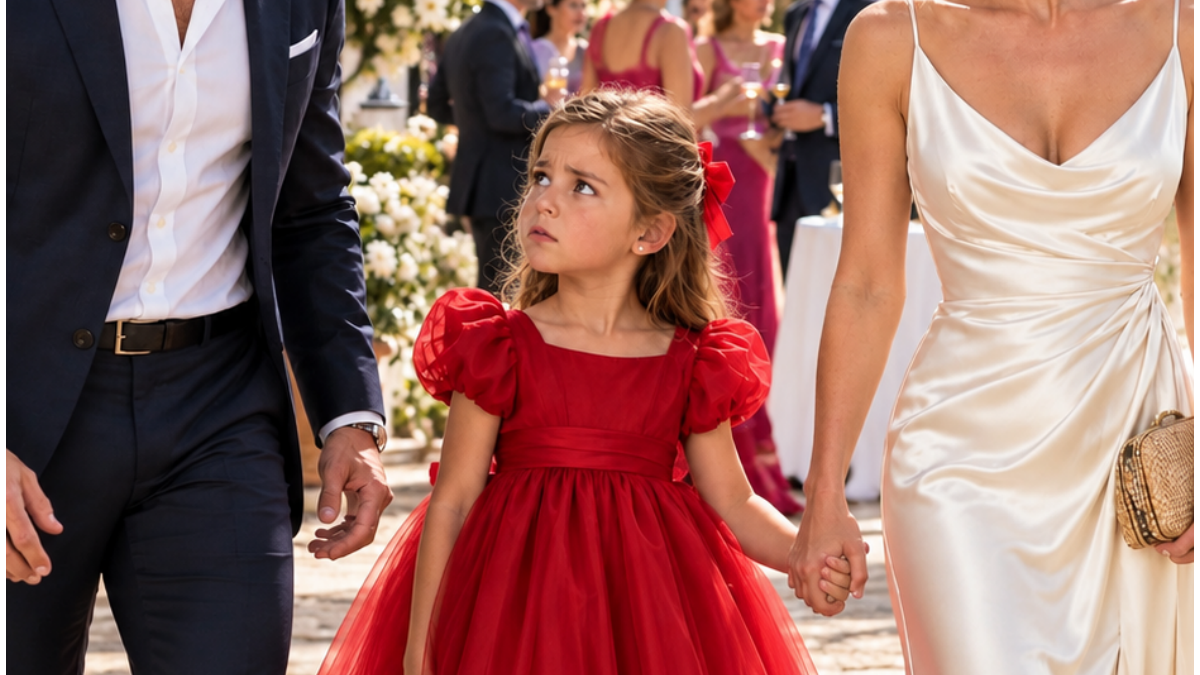
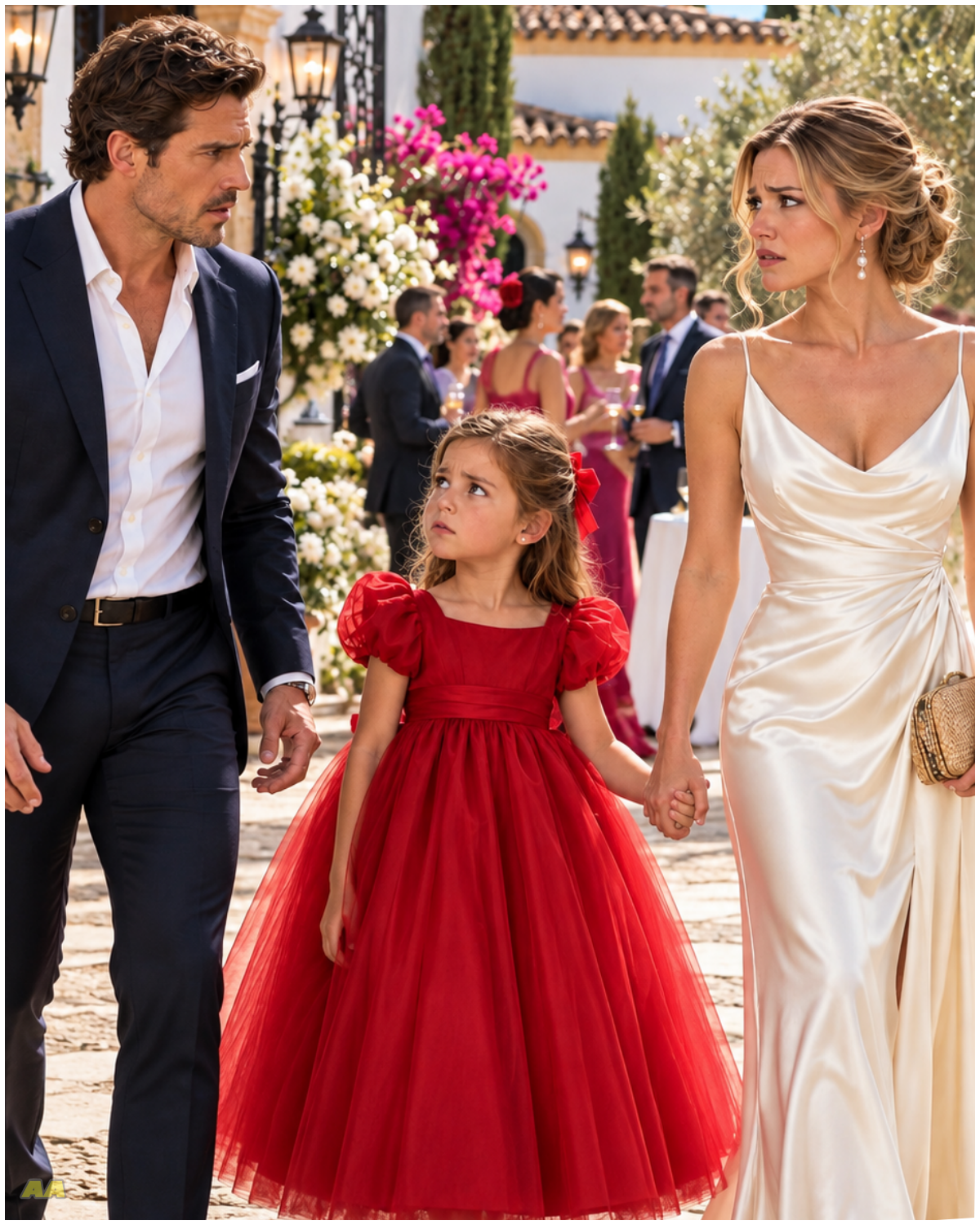
Claire, is that little girl my daughter?
You’re three years too late to ask [music] that question, Adrien.
3 years after the divorce, Adrien Blackwell spent several seconds believing the past had somehow learned to walk on its own.
He was standing inside the main reception hall of the Hawthorne Foundation in Providence, Rhode Island, surrounded by developers, trustees, architects, journalists, donors, and representatives from several state institutions when he recognized a hand before he recognized a face.
Clare Mercer tightened her fingers around the handle of a white purse whenever she wanted to look calm.
Adrienne knew the gesture better than he wanted to admit.
He had seen it throughout four years of marriage, before family dinners, after arguments, and on the final afternoon when she walked out of the Boston apartment they had shared without looking back.
Clare was wearing white. It was not a wedding dress.
Although Adrienne’s body reacted before reason could remind him of that.
It was a simple professional dress with clean lines, perfectly appropriate for an architectural reception.
The color was not what made him stop.
It was the little girl holding Clare’s hand.
She looked just under 3 years old with brown hair pulled up in a rushed ponytail, a pale yellow dress, sneakers with a small stain across one toe, and a green ribbon badly tied around her wrist.
The girl looked toward him, frowned, and Adrienne felt something strike the center of his stomach.
It was not merely resemblance. It was a movement he had seen in photographs of himself as a child and almost every morning in the mirror.
A photographer called Adrienne’s last name twice, asking him to join the foundation board for a picture.
Adrienne did not respond. The little girl tugged Clare’s hand.
Mommy, I’m thirsty. The word mommy pushed the noise of the entire room impossibly far away.
Clare crouched, fixed the ribbon around the child’s wrist, and told her they would find water.
When she stood, she saw Adrien.
She did not smile. She did not look surprised either.
That absence of surprise was worse than any dramatic reaction could have been.
Adrien started toward them, but Nathan Cole, chief financial officer of Blackwell Group and Adrienne’s closest friend since college, caught his arm.
Adrien, the board photo later. Nathan followed Adrienne’s gaze.
For a fraction of a second, the color disappeared from his face.
Adrien saw it. Did you know she was coming?
No, you’re lying. I didn’t know she was in Providence.
Adrienne looked toward the corridor where Clare had disappeared with the girl.
Who is she? I have no idea.
Then why did you just go white?
Nathan released his arm. Because I know what you look like when something falls outside your control.
Adrienne said nothing. He crossed the hall and entered a quiet area beside the foundation’s indoor garden.
Clare stood with her back to him, giving the little girl a paper cup.
It’s cold, the child complained. Cold water is still water.
Sophie. Adrienne heard the name as though someone had written it across a wall.
Clare turned. Are you following me?
Who is she? You could start with hello.
Hello. Who is she?
Clare gave a brief humorless laugh.
Still delicate, I see. Adrienne stepped closer.
How old is she? Don’t turn a child into a spreadsheet.
You need balanced before the market closes.
I asked her age. Sophie looked from one adult to the other.
Clare crouched. Sweetheart, go with Renee for a minute.
There is grape juice at the small table.
Renee Dalton, the event coordinator and one of Clare’s project collaborators, approached and took Sophie’s hand.
Once they were alone, Adrienne repeated his question.
Clare folded her arMs. 2 years and 8 months.
The calculation completed itself in his head.
Separation, divorce proceedings, pregnancy, birth. Clare.
No, I’m here because my firm won the restoration contract for Hawthorne’s original exhibition pavilion.
I did not come here to resurrect a dead marriage.
Is she my daughter? For the first time, Clare’s composure fractured for a second.
Then it returned. You don’t get to arrive after 3 years and ask that question like you’re auditing one of your companies.
I have a right to know.
You had a chance to believe me when I was still your wife.
You chose a report. Adrienne opened his mouth.
Clare raised one hand. You’re not going to do to her what you did to me.
If we ever have this conversation, it will happen without Sophie standing beside us.
And it will happen when I decide how.
She left before Adrienne could stop her.
He remained beside the garden with an uncomfortable certainty.
He had entered that gala believing every important variable in his life was under control.
In less than 5 minutes, a little girl who hated cold water had made every calculation useless.
Three years earlier, Adrienne had ended his marriage, convinced Clare had betrayed him in the one way he found most difficult to forgive.
By using his trust against the family business, Blackwell Group owned hotels, office towers, commercial properties, development land, and significant holdings in two publicly traded real estate investment trusts.
It was not an unlimited empire, despite how business magazines like to describe it, but the family’s net worth comfortably exceeded $1 billion across operating companies, real estate, investments, and trust assets.
Adrienne inherited an unusually complicated structure after his father’s death and became executive chairman at 36.
Clare had never been particularly impressed.
She came from a middle-class family outside Albany, New York, studied architecture through scholarships and part-time jobs, and specialized in historic preservation.
They met when Blackwell Group attempted to purchase a landmark property, and Clare submitted a preservation report contradicting three consulting firms hired by Adrien.
He invited her to dinner by buying out an entire private room in a restaurant.
Clare arrived, saw eight employees waiting on two people, and asked, “Did you close this room for us?
Yes, open it. Adrienne thought she was joking.
She wasn’t. There are people spending an entire night hovering around us because you don’t know how to reserve a normal table.
He reopened the room. That same night, he understood what disarmed him about her.
She had no interest in his money and no fear of disappointing him.
Their marriage lasted 4 years. The first two were good.
During the third, Margaret Blackwell, Adrienne’s mother and honorary chair of the group, began talking more often about succession, family wealth, trusts, and heirs.
Adrienne tried to stop some of those conversations, but he rarely defended Clare with the clarity she needed.
The fourth year brought a much more serious crisis.
During negotiations to acquire a regional luxury hotel chain, confidential documents leaked to a competitor.
The loss ran into millions. And the board demanded an internal investigation.
Margaret personally delivered an information security report showing Clare’s user credentials accessing a sensitive repository during the night before the leak.
Adrienne did not want to believe it until he remembered Clare had entered his home office that night where he kept a secure Blackwell terminal.
Their argument began beside a window.
You went into my office? Yes.
You used my computer? Not for what you think.
Then tell me what you were doing.
Clare pressed her lips together. I needed to find something.
What? I can’t tell you right now.
That sentence ended their marriage long before the divorce papers did.
Adrienne heard guilt. Clare expected the man who had married her to know her well enough to delay judgment until she could explain.
Margaret entered halfway through the argument and remained in the room with an appearance of neutrality Adrienne would remember far too late.
Over the following days, Adrienne revoked Clare’s access to corporate facilities, routed all financial matters through attorneys, and stopped answering calls he considered attempts to prolong the conflict.
Clare left. She did not seek shares in Blackwell Group or accept the extraordinarily generous financial package his attorneys offered.
Adrienne interpreted that refusal as an effort to look innocent.
Nathan told him several times that the technical records contained gaps.
Adrienne accused Nathan of defending Clare because the two had always gotten along well.
Two months later, the divorce began.
Adrien signed believing he had acted rationally.
Clare signed believing she had loved a man who trusted a document more than he trusted her.
Neither of them knew that by then a third person had already created a false letter, intercepted a real one, and transformed a pregnancy into a secret that would survive almost 3 years.
The night of the reunion, Clare did not return directly to her hotel.
She stepped into a restroom at the Hawthorne Foundation, locked herself inside a stall and stood with both hands against the wall.
She did not cry. She had already cried enough during the pregnancy during the hospital months after Sophie’s premature birth.
And during the first year, when every routine task reminded her she was building a life from nothing, she counted to 20 and came out.
Her phone vibrated inside her purse.
An unknown number had sent a message.
You should have left before he saw you.
Clare read it twice and replied, “Who is this?” Nothing came back.
Instead of deleting the message, she took a screenshot.
3 years earlier, she might have obeyed any warning that sounded serious enough.
Not anymore. Meanwhile, Adrien found Nathan behind the stage.
The girl is 2 years and 8 months old.
Nathan rubbed a hand over his face.
Okay, you don’t look surprised. I know basic arithmetic.
Did you know Clare had a daughter?
No. Did you know something? Nathan took a moment.
I knew the investigation into Clare’s login was never as complete as you wanted to believe.
Adrienne’s expression hardened. Nathan continued before he could interrupt.
I told you three times that a username doesn’t necessarily identify the person sitting behind the keyboard.
You told me I was protecting Clare because I liked her too much.
I was out of my mind.
No, you were scared. When you’re scared, you get even more arrogant than usual.
Adrienne looked toward the reception hall.
Do you believe she didn’t leak those files?
I believe there was never enough evidence to say she did.
And your mother was the first person to put that report in front of us.
That sentence followed Adrian through the entire night.
The next morning, he reached Blackwell Group’s Boston headquarters before 7:30 and demanded the full technical file from the old databach.
Several appendices were missing from the active server.
Only the final report remained. Nathan arrived shortly afterward, and they compared dates.
One inconsistency emerged almost immediately. The first analysis involving Clare’s credentials had been timestamped 31 minutes before the corporate security department formally opened the incident.
That’s impossible, Nathan said, unless someone started investigating before there was officially anything to investigate.
At the bottom of the request appeared the name Margaret Blackwell.
Adrienne called Clare three times. She rejected the third call.
He texted, “I found inconsistencies in the old leak investigation.
We need to talk.” Her response arrived 5 minutes later.
“You needed 3 years. It was not an absolute refusal.” Adrienne hated how much that already felt like a concession.
That afternoon, Clare was reviewing plans inside the historic pavilion Hawthorne had hired her firm to restore when Renee approached.
“There’s a man waiting for you.” Clare kept looking at the plans.
If he’s tall, expensive, and has the face of an unresolved problem, tell him to come back next century.
Renee smiled. Very accurate description, but it’s not him.
Peter Holloway, the attorney who handled Clare’s divorce, waited with a folder.
Adrienne has requested the old file.
Clare closed the drawings. I know.
There’s something we didn’t know. Peter removed a delivery receipt.
You told me you sent Adrienne a letter.
I did. There are two mailings associated with your name.
One went to Blackwell Group headquarters.
The other went to the former marital residence.
Clareire read the document. I never sent anything to the apartment.
Then someone did it for you.
The second item had been received and signed for by Diane Foster.
Margaret’s personal assistant at the time.
Clare felt as though the floor shifted one inch beneath her.
For 3 years, she believed Adrienne received a letter and deliberately chose silence.
Now, there was a possibility they had been communicating through completely different documents.
A few hours later, Adrienne received an envelope at his office with no return address.
Inside was a copy of a letter dated 3 years earlier.
He recognized Clare’s handwriting before he read the first line.
Adrien, if you’re reading this, it’s because some part of me still believes there is a part of you capable of listening before you judge.
He sat down. The next sentence, stopped time.
I did not go into your office to take company information.
I was looking for a copy of one of our medical reports.
I’m pregnant. Adrienne went back to the beginning and read it again.
Clare explained that she discovered the pregnancy a few days before the leak, that she did not want to use a baby to save a broken marriage, and that she planned to stay with family for several weeks.
If Adrienne wanted to talk, he could find her.
The letter ended simply. If you still believe I’m capable of destroying your company after knowing this, don’t come looking for me because you feel guilty.
Nathan walked in without knocking, already speaking about an old backup server, then stopped when he saw Adrienne’s face.
What happened? Adrienne handed him the letter.
Nathan read it and fell silent.
2 years and 8 months, Adrienne said.
The timeline fits. She tried to tell me.
Looks that way. I never received this.
Looks that way too. Adrienne called Clare.
She answered immediately. I received your letter.
Silence. Which one? Adrien closed his eyes.
What do you mean? Which one?
Adrien? What letter are you looking at?
The one saying you were pregnant.
Where did you get it? It arrived at my office today.
Clare drew a slow breath. Sophie is my daughter, isn’t she?
We’re going to talk today. I’ll send you a place.
She hung up. The cafe Clare chose had only a handful of customers.
Adrienne put the letter on the table.
Clare recognized the folded corner. That’s the real one.
There was another. Clare opened her purse and removed a copy Peter had given her.
The false letter supposedly written by Adrien read.
I don’t know whether this pregnancy exists or whether it is another attempt to interfere with the divorce.
If it does exist, any question of paternity will be addressed legally after the birth.
Do not contact me personally again.
Adrienne read it twice. I didn’t write this.
Today I know that. How long did you think I did?
3 years. He looked at her.
Clare did not look away. At the time, it sounded like you.
You had just treated me like a criminal.
You blocked my access to everything and insisted attorneys handle communication.
It wasn’t hard to believe you could write this, too.
Adrienne lowered his gaze. That’s worse than the forgery.
What is that? Had I behaved in a way that made the letter believable?
Clare said nothing. Then Adrienne asked, “Is Sophie my daughter?” Yes.
The word remained between them without music, comfort, or any possibility of reversing time.
Adrienne rested one hand over the letter.
“Did you know for certain?” Clare gave a bitter laugh.
It took you 3 years to ask that, and somehow you still found the worst possible way.
I didn’t mean you did. You want certainty.
You’ve always wanted certainty. Fine. I want it now, too.
We’ll do a DNA test at an accredited laboratory with proper identification and chain of custody.
Everything documented. Not only for you, for her.
Okay. And until we get the result, you do not show up telling her you’re her father.
Okay. Adrienne did not argue. That unsettled Clare more than a demand would have.
The conversation did not end there.
Adrienne wanted to know why she had truly entered his office on the night of the data leak.
Clare stared at her empty cup.
6 months before the divorce, you had fertility testing.
I remember the report said your probability of natural conception was low.
Not impossible, low. Yes. When I suspected I was pregnant, I made the mistake of mentioning it to Margaret before I had medical confirmation.
I didn’t tell her I was definitely pregnant.
I told her I had taken a positive home test and needed a few days.
She laughed. Adrienne frowned. She laughed.
She told me not to create expectations because you and I already knew how things stood.
2 days later, the copy of your fertility report disappeared from our apartment.
I knew you kept duplicates of important documents in your office, so I went looking for it.
Did you find it? No. Why didn’t you tell me that when I confronted you?
Clare looked exhausted. Because your mother walked into the room during our argument.
I already suspected her and had no idea how far she’d gone after that.
You never gave me another opportunity.
Adrienne remembered the scene with unbearable precision.
Margaret entering Clare withdrawing. Adrienne interpreting silence as guilt.
Clare continued after the divorce started.
I tried to call you. Your personal number stopped working.
It never changed. Margaret gave me another one supposedly temporary.
A woman answered once and told me you wanted no personal contact.
That number was never mine. I know that now.
Clare then showed him a photograph received that afternoon from the anonymous number.
It showed Clare leaving an obstetric clinic almost 3 years earlier.
In the background stood Nathan. Adrienne looked up immediately.
Was he with you? No. I ran into him there.
He said he was visiting his sister.
He asked whether you knew. I told him you didn’t.
And then he left. Or that’s what I thought.
Clare showed him the accompanying message.
If he discovers who was with you that day, you will lose more than you can imagine.
Adrienne felt an old suspicion searching for the easiest path.
Clare saw it before he spoke.
Don’t. I didn’t say anything. Your face did.
This is exactly why we’re here.
If you look at a photograph and decide it contains the whole story again, then you’ve learned nothing.
Adrien put the picture down. You’re right.
Clare studied him. That sounded painful.
It was good. He almost smiled.
She did not. Tomorrow I’m talking to Nathan.
I’m coming. Adrienne reacted automatically. No.
Clare tilted her head. You’re going to lock me out of another room while the men decide what happened to my life.
Adrienne stopped. No. Sorry. You’re coming.
Clare watched him like she suspected a sudden medical condition.
You’re learning very slowly. 3 years slowly.
I know. Nathan entered Adrienne’s office the next day and found Clare seated beside the window.
This feels like an ambush. If it were, I’d have chosen a worse chair for you.
Clare replied. Adrien placed the photograph on the desk.
Nathan lost color. Where did you get that?
Explain firSt. Nathan said he said he had been at the clinic because his sister was receiving treatment in another office in the same building.
He admitted seeing Clare leave obstetrics and wondering whether she was pregnant.
I wasn’t certain. But you went back.
Clare said. Nathan looked at her.
Yes. The next day. Why? I wanted to know whether you were okay.
I asked reception whether you’d left any paperwork behind.
They wouldn’t tell me anything. Obviously, it was invasive.
I know. Adrienne folded his arMs. Did you tell my mother?
Nathan hesitated for half a second.
She called me that same day and asked if I had seen Clare.
How did she know? I never found out.
I told her I’d run into Clare at a clinic.
That’s all. Clare shut her eyes.
That was enough. Nathan continued. 4 months after the divorce, Margaret showed him a supposed message from Clare saying she intended to raise her child away from the Blackwells.
I never wrote that, Clare said.
I know that now. At the time, I assumed the two of you had reached some private agreement.
Adrienne tapped his fingers against the desk.
And you stayed quiet? Yes, because I was a coward and because I just become CFO.
Your mother controlled half the relationships I needed on that board, and I convinced myself it was a family matter, Clare stood.
Everybody in this story had an excellent reason to do nothing.
Nathan lowered his head. I don’t have a good defense.
At least that’s new. Adrienne asked about the letter.
Nathan remembered seeing an envelope with Clare’s name on Diane Foster’s desk.
Margaret asked Nathan to carry it into her office.
He did not know the contents.
Then he admitted something else. Years before Adrienne met Clare, Nathan had been attracted to her.
There had never been a relationship.
He never told her. And when his friend began dating her, he buried the feeling.
Margaret knew. Adrienne immediately understood how useful that information could be to someone determined to manufacture doubt.
Is Sophie your daughter? He asked bluntly.
Nathan looked at him wounded and furious.
No, I never had anything with Clare ever.
Clare said nothing. Adrienne held Nathan’s gaze until shame forced him to look down.
I’m sorry. I don’t need you to feel sorry.
I need you to stop deciding before listening.
Adrienne nodded. It was becoming an uncomfortable theme in his life.
That same afternoon, an old server backup produced the first objective evidence.
Clare’s login had indeed been used on the night of the breach, but from an administrative terminal one floor above Adrienne’s private office, while internal camera records established Clare was downstairs in Adrienne’s home office during that window, someone else had used her credentials.
The security administrator with the ability to manipulate access records was Marcus Hail.
He left the company 6 months afterward with a generous severance package and an unusually large transition consulting payment personally authorized by Margaret.
The final security report had omitted precisely the records that could have cleared Clare.
For the first time, the story did not depend on memories, suspicions, or silences.
It depended on a technical record someone had tried to bury.
Adrienne refused to confront his mother until he had more than suspicion.
Clareire, meanwhile, began receiving additional messages from the unknown number.
Each one pushing her in directions that felt too deliberate.
“Don’t let him find the second copy,” one said.
Another included the photograph of Nathan at the clinic.
Peter advised her not to respond, to preserve screenshots, and to forward everything to a cyber security and privacy attorney his firm used.
Clare agreed, but made one thing clear.
She would not disappear because someone told her to.
The internal investigation eventually located Diane Foster.
Margaret’s former assistant. Diane lived alone in a modest apartment outside Boston and initially refused to meet anyone.
She was the one who eventually called Clare.
They met in a quiet cafe in Brooklyn.
Diane looked like someone who had been sleeping badly for 3 years.
I wrote the false letter, she said before ordering anything.
Clare felt the sound of cups and conversation disappear.
Why? Margaret dictated it. And you wrote it as if Adrienne had?
Yes. Did you intercept my real letter, too?
It arrived at the old apartment.
I brought it to Margaret. She read it in front of me.
Then she made me copy it and put the original in a lock box inside her private office.
Clare did not move. She knew I was pregnant.
Yes. Since when? Before the letter.
Marcus was keeping her informed. They were watching you.
Clare had to set down her cup.
Diane explained that Margaret ordered Marcus to track Clare’s movements after Nathan mentioned the clinic.
They confirmed Clare returned to obstetrics and obtained through means Diane could not fully explain.
Enough information to know the pregnancy continued.
A few months after Sophie’s birth, Margaret received an email from Marcus.
Baby girl born, mother and child stable.
No paternity action filed at this time.
Clare heard the sentence with such calm that Diane herself became uncomfortable.
So she knew Sophie existed from the day she was born.
Yes. Adrienne received nothing. Nothing. And you continued working for her.
Diane lowered her eyes. 6 months.
Then I couldn’t do it anymore.
She gave me severance and made it clear I should disappear.
Why are you talking now? Because Adrienne saw the child and because I’ve spent 3 years inventing reasons to convince myself that my fear mattered more than what happened to your life.
They don’t work anymore. Diane handed over printed copies of emails, an inventory of Margaret’s lock box, and the serial number of a spare key she had kept.
She did not ask forgiveness as though expecting to receive it.
Clare appreciated that. When Clare told Adrien, he took several moments to respond.
My mother knew Sophie had been born.
It appears so, and she did nothing.
She did plenty, just nothing she should have done.
That sentence finally brought them to Margaret’s house.
Nathan came with them because several investigation documents contained his signature.
Margaret received them in a large office with the lock box open and several folders spread across the desk.
She did not look surprised. I see you’ve decided to hold a trial.
Clare answered before Adrienne could. No, a trial at least lets a person defend herself before the verdict.
Margaret gave her a cold look.
You still have a response for everything and you still call it prudence when you make decisions for everyone else.
Adrien laid the restored server record on the desk.
Marcus used Clare’s credentials from another terminal.
The final report omitted that data.
You authorized the payment he received afterward.
That does not prove I ordered a leak.
It proves you knew the investigation had been manipulated.
No. Adrienne watched her for several seconds.
Diane talked. For the first time, Margaret lost some color.
Margaret did not deny the false letter.
She justified it. Adrienne had just lost his father.
The company was under pressure. An unexpected pregnancy could influence estate planning.
Clare had never hidden her contempt for the way the Blackwell family treated power.
“I didn’t despise your family,” Clare said.
“I despise the way you turned every relationship into a control structure.
Easy to say when you’ve never been responsible for sustaining what we built.
No, Margaret. It’s easy to confuse sustaining something with owning everyone inside it after nobody has told you no for long enough.
Adrienne raised a hand. I want the real reason, not the version you would give the board.
Margaret walked to the window. After a long pause, she talked about the family trust Adrienne’s father had created.
A significant block of Blackwell Holdings units was reserved for Adrienne’s direct line.
If Adrienne legally recognized a child before turning 40, a portion of beneficial ownership would automatically shift into a descendant trust, Margaret’s voting proxy over those units would shrink, and independent trustees would gain authority over decisions she had controlled for years.
It did not mean Sophie could run a company as a toddler, or that Clare would automatically receive money, but it would reduce Margaret’s power inside the family’s controlling block.
“You were afraid of losing votes,” Adrienne said.
I was afraid you would dismantle what your father spent 40 years building.
Because I had a daughter. Because you were in love with a woman who made you question every rule.
Clare gave an incredulous laugh. That was the crime.
Asking questions. Margaret said she had initially believed paternity could genuinely be uncertain.
Adrienne’s fertility report showed reduced probability of natural conception.
She also knew Nathan once felt something for Clare and had seen her at the clinic.
So you arranged the pieces until they looked like another story.
Adrienne said, I considered a possibility.
No, you manufactured it. Nathan stepped forward.
I never had anything with Clare.
You knew that. I knew you wanted to.
That is not the same thing.
Margaret remained silent. Clare asked why she continued hiding Sophie after the birth.
Margaret said she needed certainty. From the doorway, Diane spoke.
You got certainty. Margaret turned sharply.
Diane had arrived with Peter and remained near the entrance.
She pointed toward the open lock box.
Inside sat a small metal case.
Adrienne opened it and found a private genetic report dated roughly 2 and 1/2 years earlier.
Clareire felt nausea rise. What is that?
Adrienne read the document. It was a compatibility study created from genetic material obtained without consent and without reliable legal chain of custody.
Despite those problems, it showed a probability of paternity greater than 99%.
Clare looked at Margaret. How did you get Sophie’s sample?
Margaret did not answer. How? Marcus handled it.
How did he get biological material from my child?
I don’t know. I chose not to know.
Clare had to step away from the desk to avoid shouting.
Secretly collecting biological material from a child moved the situation far beyond family conflict.
Peter began writing notes without touching the report.
Adrien looked at his mother. You knew you weren’t suspicious anymore.
You knew that test had no legal value.
I’m not asking what a judge would accept.
I’m asking what you knew. You knew she was my daughter.
Margaret finally looked away. Yes. The word broke something still intact.
Adrienne put down the paper for 2 and 1/2 years.
Yes. And you let me live without her.
You were functioning again. You were working.
Sleeping. The company stabilized functioning. After the divorce, you were falling apart.
You stopped eating. You slept 2 hours a night.
You crashed your car one morning and paid to keep it out of the press.
I watched you destroying yourself. So, you decided my daughter could grow up without a father so I’d make it to board meetings on time.
That isn’t what happened. That’s exactly what happened, Clare spoke quietly.
You preferred a productive son to a happy one?
Margaret answered in almost a whisper.
I preferred a living son. For a moment, nobody spoke.
Adrienne acknowledged that the period after the divorce had been dark.
He still refused to allow it to become an excuse.
Two weeks could be described as protection.
2 and 1/2 years of surveillance and concealment required another word.
Margaret said that once she knew the truth, confessing seemed impossible without losing Adrienne completely.
He looked at her like a stranger.
Then you weren’t lying to protect me anymore.
You were lying to protect the version of yourself I still believed in.
Clare demanded a new DNA test performed properly.
She would not rely on anything Marcus collected or any document that passed through Margaret’s hands.
Adrienne agreed without arguing. Samples were collected at an accredited laboratory with identification for both adults, Claire’s consent as Sophie’s legal parent, complete documentation and chain of custody.
Sophie arrived carrying a green plastic dinosaur and stared at Adrien from the doorway.
“Sophie, this is Adrien,” Clare said.
The little girl frowned. “The water man.” Adrienne took a second to understand, then smiled.
“Yes, me.” “You didn’t drink any today?” “I did.” “Cold?” “No.” Sophie appeared satisfied.
She held up the dinosaur. “It’s a pachyphalosaurus.” Adrien widened his eyes slightly.
Of course, Clare murmured. You have absolutely no idea what that is.
None. I’ll teach you, Sophie announced solemnly.
Adrienne crouched, but made no attempt to touch her.
I could use the help. During the test, Sophie complained more about putting away the dinosaur than about the cheek swab.
Adrienne watched every movement with the concentration Clare recognized from business negotiations.
But something was different. He did not try to control what happened.
He was simply there. The result would take two days.
That evening, Peter called Clare. Marcus Hail had left his home and no one knew where he was.
At the same time, an old contract surfaced bearing Nathan’s signature.
It authorized a large payment to a security consulting firm connected to Marcus.
On paper, it looked as though Nathan had financed the manipulation of records.
Margaret called Adrienne almost immediately and told him exactly that.
For the first time, Adrienne almost repeated his old mistake.
He held the contract, saw his friend’s signature, and felt a complete story forming in his mind before hearing Nathan’s explanation.
Clare called. Peter told me about the contract.
She said, “My mother says Nathan paid Marcus.
Do you believe her?” Adrienne waited too long.
Clare answered for him. Then learn this time.
What do you mean? Don’t decide before listening.
If you ever look at one piece of paper and believe it answers every question, remember what it cost you the last time?
Adrien closed his eyes. 15 minutes later, he went down to the headquarters garage where Nathan waited beside his car holding a folder.
I signed the payment, Nathan said immediately.
Adrien opened the document. That part seems pretty clear.
Read page two. Page one described security consulting following the leak.
Page two contained an unusually broad confidentiality clause and more importantly carried a date from before the final technical investigation had been completed.
Marcus had been paid for closing work that was not officially finished yet.
Did you read this? Adrienne asked the first page.
You were CFO. I know you authorized hundreds of thousands of dollars without reading the whole contract.
Yes. Adrien stared at him. You’re a bigger idiot than I thought.
Also true. The answer diffused only part of the anger.
Nathan explained that months later he realized the contract was strange, but Margaret then showed him the fabricated message from Clare and Adrienne’s fertility report.
She also used Nathan’s old feelings for Clare to suggest that any attempt to question the official story would look like jealousy.
I let myself be manipulated because it was convenient not to look too closely.
Nathan said, “I had the job I’d spent years chasing.
Your mother had enough influence to destroy me.
I convinced myself you and Clare had made choices that weren’t my business.
That was cowardice. I wasn’t part of the conspiracy.
But my cowardice made her work easier.
Adrien closed the folder. You should have told me.
Yes. Everything. Yes. And the photographs.
I didn’t take them. Sophie’s samples.
I didn’t know there had been any secret DNA teSt. Adrien believed him, but he was beginning to understand that believing somebody did not mean absolving them.
He requested access to Nathan’s corporate email and ordered a fully independent audit.
Nathan agreed. Their friendship was not destroyed, but it did not magically return to what it had been.
Adrienne was learning that trust was not an object one person could demand from another.
The following morning, Adrienne returned to Margaret’s home with Nathan.
Clare did not go. She had said she no longer needed to sit through every explanation given by a family that had spent too long turning her into the object of other people’s decisions.
Adrienne put Marcus’ contract on his mother’s desk.
You used Nathan’s signature to pay Marcus before the investigation was finished.
The board needed to contain risk.
No, you needed to control the story.
Margaret attempted to order Nathan out.
Adrienne did not allow it. He asked whether she knew Nathan had once been attracted to Clare.
Yes, that’s why you used him.
It was a possibility you had a right to consider.
It was never a real possibility.
It was an image you arranged until it looked real.
Margaret lost patience. Your father spent half his life preventing this company from being broken apart.
You were prepared to rewrite family governance for a woman who never wanted to belong to this world.
Clare wasn’t asking me to give away Blackwell Group.
She wanted me to learn how to live outside it.
For you, those were the same thing.
No, that difference is exactly what you refused to understand.
Adrienne informed her that outside council would review the breach, misuse of credentials, payments to Marcus, interception of correspondence, surveillance, and any medical information obtained without consent.
If investigators found possible criminal conduct, the matter would be referred to appropriate authorities.
Blackwell Group’s privacy systems and internal controls would also be reviewed.
Margaret looked at him as though he had betrayed her.
You’re going to turn in your own mother.
I’m not going to destroy evidence to protect you.
That’s different. You could bring down the company.
If a business can survive only by hiding this, then it deserves to change.
Margaret told him that one day he would understand why she made those choices.
Adrienne shook his head. That’s the problem.
I already understand. Your fear found a reason to become control.
Then after you discovered you were wrong.
You kept the lie because telling the truth meant losing power and possibly losing me.
Now you lost what you were trying to preserve.
Anyway, I’m still your mother. Yes.
And for a while that may be the only thing left between us.
He told her she would have no contact with Sophie without Clare’s consent and could not use board pressure to force access.
I’m her grandmother. Blood is not authorization.
Margaret went pale. Adrienne left. Nathan remained behind for several seconds.
Margaret looked at him with contempt.
You should have destroyed that contract.
Nathan answered, “I should have read it before I signed it.” Then he left, too.
That same week, Blackwell Group’s board received the preliminary audit report, and Margaret stepped aside from her remaining representative roles while the investigation continued.
There was no spectacular arrest or immediate public downfall.
There was something more realistic. Lawyers, records requests, witness interviews, forensic reviews, compliance investigators, and possible exposure involving document falsification, unauthorized system access, surveillance, and mishandling of personal information.
Marcus resurfaced days later through an attorney and agreed to provide a statement.
He minimized his role, saying he followed instructions and never anticipated the family consequences.
Adrienne felt no satisfaction, only exhaustion.
The truth did not automatically repair anything.
It merely prevented them from continuing to build on a lie.
The properly administered DNA result arrived the next morning.
Probability of paternity greater than 99.99%.
Adrien read it alone in his car outside the laboratory.
He did not call Clare immediately.
For years, he had reacted to problems as if speed proved competence.
He could have called. Demanded a visitation calendar.
Instructed attorneys to establish paternity, discussed names, inheritance, trusts, and paperwork.
That would have been the old Adrien.
Instead, he wrote, “The result is back.
I’m Sophie’s father. When you think it’s the right time, I want to talk about how to do this without disrupting her life.” Clare replied 20 minutes later.
Today, four Roger Williams Park. No attorneys.
Adrienne arrived early. Sophie appeared running after soap bubbles Renee was blowing near the path.
Clare followed several steps behind. The girl recognized him.
Water man. Adrienne crouched. I drank some today.
Cold? No. Sophie nodded as though that represented meaningful personal growth.
For 10 minutes, she showed him leaves, a stone shaped like an egg, and the green dinosaur.
Adrienne did not mention DNA. When Renee took Sophie toward a playground, Adrienne sat at the far end of a bench.
I want to establish paternity legally.
Clare nodded. I expected that, but not tomorrow.
She looked at him. I want to do it in a way that doesn’t feel like an invasion to her.
I don’t know how much she understands.
To Sophie, dad is still mostly a word from picture books, cartoons, and other children at preschool.
She doesn’t have a specific empty space she’s waiting for you to fill.
I understand. Then you don’t arrive calling her your daughter as if she’s required to feel something because a laboratory confirmed biology.
I won’t. Clare studied him. What if it takes months?
I wait. What if it takes much longer than you want?
Adrienne looked towards Sophie. I’ve already lost almost 3 years.
I’m not going to damage the years ahead because I’m impatient.
He did not ask Clare to comfort him.
She noticed. They discussed a gradual plan.
Short meetings in familiar locations. Claire or Renee present initially.
No public exposure, no announcements inside the company and no sudden changes in Sophie’s routine.
Peter would handle the paternity paperwork once the legal details were ready.
But the Blackwell name would not be treated as a trophy.
I don’t want Sophie seeing a headline calling her the Blackwell Aerys before she understands that you’re her father, Clare said.
Neither do I. That really is new.
Adrienne almost smiled. This has been an educational week.
Sophie shouted from across the grass.
Mommy, look. Clare raised a hand.
Adrienne watched that simple gesture and asked, “Can I come back another day?” Clare took time before answering.
“You can. Not you should. You can.” Understood.
It was the first door Clare opened.
Adrienne was finally intelligent enough not to run through it.
Two days later, Margaret requested an emergency board meeting challenging recent changes in trust governance and Adrienne’s ability to remain executive chairman during the investigation.
Nathan carried the notice into Adrienne’s office.
She’s not stopping. I know I can organize our supporters.
We have enough votes if I start calling.
No, Nathan frowned. Adrienne placed the notice on the desk.
I’m stepping away from the executive chairmanship temporarily.
I’ll remain a shareholder and director, but day-to-day control goes to an interim chief executive selected by the independent committee.
Nathan stared. You spent 15 years reaching this position and two days realizing I was about to repeat the same mistake.
Which one? Treating my daughter like a corporate risk.
Nathan sat down. If your mother regains influence, then we use governance structures to stop abuse.
And if those structures don’t work, we fix them.
I’m not going to spend the next six months using Sophie as an argument for why I deserve a chair.
Nathan gave an incredulous laugh. Who are you?
Adrienne looked at Marcus’s contract on the desk.
The man who finally learned to read page two.
News of his temporary withdrawal generated headlines for 2 days, but Adrienne said nothing publicly about Clare or Sophie.
Blackwell Group issued a short statement about a governance review and temporary transition.
Clare appreciated the silence. Later, Adrienne established legal paternity through the process agreed with Clare’s council.
They handled the surname question without turning it into a symbolic war.
Clare and Adrienne chose to preserve Sophie’s existing documentation while the legal process was completed and to follow professional advice regarding any future change.
What mattered to Sophie was not which name appeared on a certificate.
It was whether Adrienne arrived when he promised.
Their first afternoon together was at a bookstore.
Adrien bought three dinosaur books. Sophie picked the cheapest because the dinosaur on the cover looked more dangerous.
On the second visit, she ordered him to sit on the floor and build a tower.
On the third, she became angry when he answered a work call.
You said you were going to play.
Adrienne looked at the screen and turned the phone off.
You’re right. Clare watched from a nearby table and said nothing.
She did not need to reward him for honoring a basic promise.
That too was new for Adrien.
He discovered that fatherhood resembled management in almost no useful way.
There was no strategy capable of recovering a missed morning.
No investment that generated 3 years of memories.
There was only repetition. Arrive, listen, except no.
Learn that Sophie hated having a sandwich cut in half because if I asked for one big one, I don’t want two little ones, memorize impossible dinosaur names, and understand when a tired child needed silence more than entertainment.
Sometimes that ordinary life hurt Adrienne more than the DNA revelation.
It was the exact measure of what he had missed.
He stopped using that pain as an argument to go faster.
Clare also had to examine her part of the story.
Although she refused to create a false equivalence of guilt, one evening after Sophie fell asleep on the couch, Adrienne stood in Clare’s kitchen while she put away architectural plans.
Several weeks had passed since the DNA result.
There’s something I need to say.
That usually ends badly. Probably. Clare closed the folder.
Adrienne rested both hands on the counter.
I didn’t lose you because my mother lied.
Clare waited. Her lie worked because it found a place inside me.
I was already willing to believe a threat against the company mattered more than the person standing in front of me.
I preferred an explanation that gave me control.
You were guilty. I removed you.
Problem solved. If I trusted you enough to listen.
Margaret would have had far less power.
That’s mine. I’m not going to use her as an excuse.
Clare sat on the edge of a chair.
For years, she had imagined hearing something like that.
The reality offered less satisfaction than expected.
I made choices, too, she said.
Adrienne looked up. Don’t interrupt me.
He closed his mouth. When I received the fake letter, I was hurt and pregnant.
Part of me decided it was easier to accept that you wanted nothing to do with us, then keep knocking on doors that seemed closed.
Peter advised me to start a formal paternity action after Sophie was born.
I didn’t do it immediately. She came early, had respiratory problems, and we spent months going from specialists to emergency rooMs. Then I went back to work.
Later, I started the firm. Life moved.
I wasn’t sitting around for 3 years waiting for you to appear.
But I also didn’t fight to the absolute end to make sure you knew.
You were alone and somebody made you believe I’d rejected you.
Yes, it isn’t the same as what you did, but it was still a choice I made.
I don’t want Sophie growing up with a story in which all of us were pure characters and one evil woman created everything.
Margaret made terrible choices. Diane helped.
Marcus did things he never had any right to do.
Nathan looked away. You didn’t trust me.
Eventually, I accepted your silence. Everyone owns a piece, even if the pieces don’t weigh the same.
Adrienne nodded. Does that change anything between us?
Clare looked toward the living room where Sophie slept with the green dinosaur against her cheSt. Not today.
That’s all. Would you like to negotiate a date?
He smiled without humor. No. Then not today.
Adrienne picked up his jacket. Before leaving, he looked towards Sophie.
Tomorrow at 6:00. 6:15. We said 6.
Now we’re saying 6:15. You do this just to win.
Clare opened the door. Good night, Adrien.
He walked out smiling. The important part was not the time.
It was that they could argue over 15 minutes without turning disagreement into war.
Those small corrections were becoming the beginning of a different relationship.
Although neither of them was willing to call it that yet, the investigation into the past continued without the dramatic cleanliness of one final confession.
Through his attorney, Marcus Hail turned over emails, instructions, and payment records in exchange for cooperation.
He claimed Margaret originally told him to monitor Clare because she feared a claim against family assets.
Later, when the data leak happened, he received instructions to reconstruct access records, so Clare’s user account appeared responsible.
According to Marcus, the real leak came from an outside vendor already suspected in separate incidents, but Margaret saw the chaos as an opportunity to remove her daughter-in-law.
The independent investigators confirmed the records had been altered and that the final report sent to the board omitted exculpatory information.
They also found invoices disguising Marcus’ work as legitimate security consulting and communications in which Margaret repeatedly asked that the issue be closed before Adrienne changes his mind.
Attorneys explained that corporate governance, employment, privacy, unauthorized system access, civil liability, and possible criminal conduct would need to be evaluated separately.
Clare did not want the matter turned into a public revenge campaign.
Her priorities were simple. She wanted a formal record establishing that she had never leaked company information, and she wanted any data obtained about her or Sophie without consent removed from private systems wherever legally possible.
Blackwell Group issued an internal correction, notified people who had received the old security report, and initiated a complete review of access controls.
That mattered more to Clare than a headline.
For 3 years, a technical lie had traveled through offices where nobody bothered to ask for her version.
She wanted the correction to travel through the same doors.
Margaret lost her remaining leadership and foundation roles while investigations proceeded.
Adrienne did not visit her for months.
When she tried to send Sophie an expensive birthday gift, he returned it.
It isn’t punishment, he explained to Clare.
If there is ever a relationship between them, “It can’t begin with a costly box pretending nothing happened.” Clare agreed.
Nathan resigned as CFO. The independent board asked him to stay temporarily because investigators found no evidence that he knowingly participated in record manipulation, but Nathan insisted on leaving once he completed the transition and turned over all documents.
I don’t want to pretend signing without reading and keeping quiet for months or mistakes that deserve no consequences.
Adrien did not attempt to stop him.
They remained in contact initially only about technical matters and later on a more personal level.
Neither asked their friendship to return to what it had been.
They constructed another one less automatic and more uncomfortable.
Diane testified voluntarily, provided the documents she preserved and accepted that Clare did not want a personal relationship with her.
Peter once asked Clare whether she wanted revenge.
She considered the question before answering.
I want consequences. That’s different. Revenge would require me to keep organizing my life around them.
I spent 3 years learning not to do that.
With Sophie, Adrien learned that a child’s trust grew according to a timetable with no relationship to adult urgency.
At first, he was Adrien. On some days, he returned to being waterman.
He never corrected her. Leer watched carefully for attempts to buy affection, but Adrienne surprised even himself by avoiding them.
He could afford almost any toy Sophie pointed toward precisely because of that.
He began asking before buying anything.
He discovered she preferred a large cardboard box to many expensive toys because it could become a dinosaur cave.
He learned she could not tolerate socks with thick seams across the toes.
Requested the same song three times before sleeping and considered it a personal insult when someone stirred her yogurt before handing it to her.
One Saturday morning, Clare had an urgent site visit and Adrienne stayed alone with Sophie for 2 hours for the first time.
He prepared a ridiculous schedule. Breakfast, park, reading, educational activity.
20 minutes later, Sophie spilled milk, announced she refused to go outside because it was raining, and demanded they build an emergency hospital for an injured Triceratops.
Adrienne abandoned the schedule. When Clare returned, she found the living room covered in cushions, tape, cardboard, and plastic dinosaurs.
What happened here? Paleontological emergency, Adrienne said.
Sophie appeared holding a wooden spoon.
Adrienne doesn’t know how to build hospitals.
I’m learning. Clare sat down her bag and laughed.
It was spontaneous. And all three became still for a second because the sound resembled another time too closely.
Then Clare continued walking. She did not want to become afraid of every good thing simply because it resembled something they had loSt. Several weeks later, Sophie developed a fever during the night.
Clare called Adrienne more to inform him than to request help.
He arrived 40 minutes later carrying food, spare clothes in case he needed to stay, and no assumption that he was entitled to enter.
He waited outside until Clare opened the door.
Sophie woke around 3:00 and asked for water.
Adrienne brought it. “It’s cold,” she murmured half asleep.
“No, I left it out for a little while.” She drank and closed her eyes.
Clare watched Adrienne remain in a chair near the bed without checking his phone for almost an hour.
The scene affected her more than any apology.
Not because it proved Adrienne was some exceptional father.
It proved something simpler. He could be present without making his presence a performance.
The next morning he left for a meeting and returned with bread.
No flowers, no jewelry, no speech.
Bread left whole because Sophie remained convinced that one loaf cut into pieces became several smaller, inferior loaves.
Clare thought maybe real change looked exactly like that, remembering a ridiculous preference when nobody was going to applaud you.
3 months after the DNA result, Clare’s apartment had gradually incorporated Adrien into its landscape without either of them holding a meeting about it.
One of his phone chargers lived in a drawer.
There was a toothbrush Sophie insisted he needed because if he comes here this much, his teeth need one, too.
A coffee mug bearing a Stegosaurus sticker had become his because Sophie assigned it to him.
He did not live there. He did not sleep there except on rare nights involving Sophie’s illness or unusual circumstances.
Distance still mattered to Clare and Adrien respected it.
One Saturday, the three of them sat on the floor putting together a puzzle.
Sophie placed a piece where it clearly did not belong.
Adrienne reached to move it. She pushed his hand away.
No, but it doesn’t fit. It fits later.
Adrienne looked toward Clare. She bosses everybody around.
Only people who let her. Sophie pointed toward him.
You let me? Clare laughed. Later, Sophie fell asleep on the couch.
Adrienne covered her with a blanket and returned to the kitchen.
Can I ask you something? Clare said.
Depends. Do you still wear white because you like it or because you discovered you almost gave me a heart attack at the Hawthorne Foundation?
Clare smiled. I’ve considered that benefit.
Adrienne placed a hand over his cheSt. Cruel.
You survived. He looked at her a second too long.
Clare noticed. No, I haven’t said anything.
I know that face. What face?
The one that turns a normal moment into a serious conversation.
Adrienne rested his hands on the counter.
I am still in love with you.
Clare did not respond. He continued before she could misunderstand.
I’m not asking us to get back together.
I’m not going to say we’ve suffered enough or Sophie deserves parents who are together or any of those sentences that turn a child into an argument.
I just don’t want to lie.
I still love you. Clare lowered her gaze.
I don’t know if I can love you the same way.
Good. She looked up. Good. That way didn’t work.
I confused protecting people with making decisions for them.
You became used to fighting for enough room to breathe inside my family.
We both hid things because we were trying to prevent the next argument if anything ever happens between us.
It would have to be another relationship, not a repaired version of the old one.
Clare looked towards Sophie asleep in the next room.
Maybe. Adrienne smiled but did not move toward her or try to kiss her.
He picked up his keys. I’ll get Sophie tomorrow at 10 10:30.
10:15 10:30. You’re worse at negotiating than you used to be.
Clare opened the door. 10:30 Adrien left.
He was already near the elevator when he heard the door open again.
He turned. Clare remained in the doorway.
Adrien. Yes. 10:15. He smiled. Deal.
The door closed. That was how they started again.
Not with a kiss, a second wedding, or a declaration that the past was over.
It began with 15 minutes voluntarily given.
Later came lunch, then a Sunday afternoon, then a difficult conversation that did not end with a door slamming.
Love returned, if returned was even the right word.
Without demanding the right to look like what it had been, Adrien remained away from the executive chairmanship for nearly a year.
He discovered Blackwell Group continued operating even when he did not personally answer every email before midnight.
A discovery both humiliating and liberating.
He stayed on the board, remained involved in strategy, and supported governance reforms limiting the concentration of informal authority inside the Blackwell family.
The succession provisions Margaret had tried to protect stopped being a private family secret and were reviewed by independent trust specialists, so Sophie’s interests could not become confused with the power of adults claiming to speak for her.
Clare attended one meeting at the recommendation of her own council and made one thing clear.
She did not want to administer Adrienne’s shares or turn her daughter into a peace in a corporate war.
“Sophie can have whatever rights legally belong to her when the time comes,” Clare said.
“But right now, her main responsibility is learning which shoe goes on which foot,” several attorneys smiled.
Adrienne did not. He knew it was exactly the kind of sentence his family once would have dismissed as naive, and that now sounded like the most rational statement in the room.
Clare’s preservation studio continued growing. She expanded operations between Providence and Boston and opened a small technical office near the Hawthorne Restoration Project.
She refused Blackwell Group contracts during that period.
Even when bidding procedures were independently managed, she would not allow her professional success to become contaminated by the idea that her billionaire ex-husband rescued her career.
Adrienne respected the decision. Margaret remained outside Sophie’s life.
She wrote two letters to Clare which Clare kept without showing them to the child.
In the second, Margaret admitted for the first time that fear of losing Adrienne and obsession with preserving the family legacy had become excuses for acts she had no right to commit.
Clare did not answer immediately. Adrienne once asked, “Do you think Sophie should ever meet her?
I don’t know. She’s my mother and she’s the woman who monitored my pregnancy, hid Sophie’s birth, and knew for two and a half years that you were her father.
Both things can be true.” Adrienne nodded.
Then we wait. We wait until there’s evidence of change.
That isn’t just loneliness. If one day a relationship can be safe for Sophie, we’ll discuss it.
If not, blood doesn’t create an obligation.
Adrienne agreed. Years earlier, he would have interpreted that as a threat against the family.
Now he understood boundaries could also be a form of family.
Nathan built a new professional life outside Blackwell Group.
He and Adrienne saw each other occasionally.
They never turned the clinic or Margaret’s manufactured suspicion into a joke.
Some wounds could heal without becoming anecdotes.
One afternoon, Nathan apologized directly to Clare.
I don’t expect you to forgive me.
I only need to say I should have spoken.
Clare answered. Yes, you should have.
That’s all. That’s all. It was enough.
Maturity, Adrien thought when he heard about it.
Sometimes meant allowing an apology to remain small while the consequences remained large.
The first dad arrived on a spring Sunday in Roger Williams Park.
There were no cameras, attorneys, meetings, reports, or members of the Blackwell family watching.
Sophie was running down a path with the green dinosaur in one hand and a stick far too long for her in the other.
Adrienne followed several yards behind because Clare had repeatedly told Sophie not to run immediately after eating.
And naturally, Sophie interpreted the instruction as a challenge.
Clare walked more slowly, carrying two coffees.
During the previous months, Sophie learned Adrienne appeared on Tuesdays, some Saturdays, and almost every Sunday.
That he could perform ridiculous voices while reading stories.
That he still could not reliably explain the difference between a diploidocus and a brachiosaurus, but was willing to study, and that when he promised to return, he returned.
The word father had appeared several times in simple conversations.
Clare explained that Adrienne was Sophie’s biological father, that he had not known the truth about her existence, and that once he learned it, he wanted to know her.
Sophie asked why he had not known.
Clare said adults had made mistakes and hidden information.
She did not invent a more comfortable version.
Adrienne did not either. I should have listened to your mom better.
He told Sophie once. “When I learned the truth, I came.
You were late.” Sophie answered, “Yes, then don’t be late now.” That was her entire philosophy.
At the park, the stick became caught between some plants and the green dinosaur fell into the dirt.
Sophie shouted, “Dad, look.” Adrien stopped, not because he doubted what he heard, but because for almost 3 years he had imagined important moments without understanding that the most important one might arrive inside a sentence intended to show him a dirty toy.
Sophie turned her head. Dad, I’m coming, he answered, and he went.
He did not look at Clare first for permission.
He did not transform the word into a ceremony.
He ran to Sophie, picked up the dinosaur, and listened to a complicated explanation about the imaginary battle responsible for its fall.
Clare remained several steps behind. She smiled and kept walking.
Months later, she and Adrienne began occasionally spending nights together.
Much later, they discussed sharing a home.
There was no immediate second wedding.
They made no promises about forgetting the past or recovering lost time.
What they built rested on rules far less romantic and far more difficult.
Ask before deciding. Never use silence as punishment.
Never call control protection. And never hide a truth merely because it arrives at the worst possible moment.
Adrienne learned some things could not be recovered.
Sophie’s first steps, her nights in the hospital, her first words, and the months Clare was frightened alone had happened without him.
No amount of money could buy them back.
No apology could turn 3 years into zero.
But sometimes the things that could not be recovered could be rebuilt in another form.
Not the past, but truSt. Not the old marriage, but a different relationship.
Not the childhood already missed, but a future defined by presence.
That morning, Sophie put the dinosaur into Adrienne’s hands and ordered him to hold it properly.
He obeyed. Clare approached and handed him one of the coffees.
Adrienne took a sip. It’s cold.
Cold coffee is still coffee. Adrienne looked at her.
You did that on purpose? Maybe.
Sophie called them from farther up the path.
They walked toward her without running for the first time.
Neither one was trying to arrive before the other.
It was enough that they arrived.








